❌

Reading view

Occidente es el Titanic y el Sur Global su iceberg

Ninguna forma de gobernanza inclusiva puede sostenerse sin el respeto por las identidades culturales de los pueblos: ahí es donde se puede reconstruir la confianza, el bien que más le falta al mundo hoy en día.

Únete a nosotros en Telegram , X y VK .

Escríbenos: info@strategic-culture.su

¿Dónde persiste el crecimiento y a qué costo?

Quienes estudian las crisis económicas suelen imaginarlas como choques repentinos: un colapso que desata el pánico, un mercado bursátil que se desploma en una sola sesión, una frontera que se cierra.

Estos son los sucesos de 2008 y 2020, las tormentas que marcan un antes y un después.

Pero existe una segunda forma de sufrimiento, menos fotogénica y más insidiosa, que no llega a los titulares: la parálisis lenta, la ausencia de crecimiento, una economía que da vueltas en vacío sin hundirse ni recuperar impulso.

Esta situación les resultaba familiar a los marineros. Los veleros que cruzaban el Atlántico temían a los huracanes, pero también temían al Mar de los Sargazos, esa extensión sin corrientes donde el viento se calmaba y el casco quedaba atrapado entre las algas durante semanas. En 2026, la economía mundial se enfrenta sobre todo a esta segunda amenaza, y es como el Titanic, tal como Leonid Grigoryev escribió brillantemente.

El transatlántico, para seguir con la metáfora, no se ha hundido: sigue a flote y aún crece, pero avanza lentamente y su casco tiene varios agujeros. Los vigías escudriñan una niebla que no da señales de disiparse, y los capitanes confían en que el iceberg se mantenga a distancia.

En sus proyecciones de julio, el Fondo Monetario Internacional ha revisado a la baja su pronóstico de crecimiento mundial para 2026, situándolo en un 3 por ciento, en comparación con el 3,5 por ciento del año anterior. Traducido a términos absolutos, frente a un PIB mundial que supera los cien billones de dólares en paridad de poder adquisitivo, esa pérdida de medio punto equivale a cientos de mil millones que no se convertirán en salarios, ingresos fiscales ni inversión.

La guerra arancelaria entre Washington y Bruselas está siendo absorbida por los principales actores, pero deja a su paso reajustes y fricciones colaterales, desde Irlanda hasta Canadá; y, por razones puramente contables más que políticas, resurge la perspectiva de la fragmentación económica del Reino Unido.

La fase expansionista pospandémica nunca ha seguido un rumbo claro y sigue topándose con los obstáculos de la geopolítica. Un factor en particular ha impulsado el crecimiento del PIB en los últimos trimestres: la carrera por construir centros de datos.

Esto representa una demanda de inversión masiva y geográficamente concentrada, que ha impulsado las exportaciones de los proveedores asiáticos de semiconductores y equipos —Corea del Sur, Taiwán, Malasia y Tailandia—, pero que depende de unas pocas empresas y de rendimientos esperados que aún no se han materializado.

Este ciclo impulsa el PIB mientras las obras de construcción están en marcha; el quid de la cuestión surge más adelante, cuando la capacidad instalada debe generar ingresos proporcionales al capital invertido.

Fuera de este marco, las economías que crecen lo hacen por razones internas: China gracias a su propia demanda y sector manufacturero, la India gracias a su mercado interno y Estados Unidos gracias a una combinación de inmigración, entradas de capital y gasto público.

El caso estadounidense, en particular, merece una aclaración que desmienta un error común. Cada año, Estados Unidos importa bienes por un valor de alrededor de un billón de dólares más de lo que exporta y, al mismo tiempo, sus líderes lamentan la pérdida de su base industrial.

Ambas circunstancias no son contradictorias: son la misma ecuación vista desde dos ángulos. Un déficit en cuenta corriente de tales proporciones no es, por definición contable, más que la contrapartida del ahorro extranjero que fluye hacia Estados Unidos: el mundo suministra bienes y, a cambio, acumula activos en dólares, bonos del Tesoro y acciones.

Mientras el dólar siga siendo la moneda de reserva y el mercado de valores estadounidense el mercado más líquido disponible, este privilegio financia el déficit en condiciones inalcanzables para cualquier otro país.

Sin embargo, ese mismo flujo sostiene el tipo de cambio real, penaliza a la industria orientada a la exportación y es precisamente lo que provoca la desindustrialización que tan a menudo se lamenta. Los aranceles atacan el aspecto comercial, pero dejan intacta la raíz financiera: reajustan el equilibrio, no lo eliminan.

El yugo de los rendimientos y el peso de la deuda

Hacia mediados de año, la inflación mundial volvió a repuntar, impulsada en gran medida por el aumento de los precios de la energía. Un aumento de los precios derivado de los costos, más que de un exceso de demanda, plantea a los bancos centrales su decisión más difícil: frenar una economía ya debilitada por la crisis, para no permitir que las expectativas se desanclen.

Los altos precios de la energía actúan como un impuesto regresivo, erosionando el ingreso disponible y repercutiendo en los niveles de precios al ritmo lento que dictan los contratos indexados y los precios regulados.

En el frente de la deuda, la tensión es aún más evidente. Los rendimientos de los bonos del Estado a largo plazo están aumentando a un ritmo alarmante: en Estados Unidos, el rendimiento a 10 años ha alcanzado el 5 por ciento, y otras economías avanzadas siguen el mismo camino.

No solo importa el nivel, sino también su estructura. El extremo largo de la curva refleja una prima de plazo al alza —es decir, la compensación que exigen los inversionistas por inmovilizar su dinero a largo plazo cuando la inflación y el volumen de dinero nuevo que ingresa al sistema siguen siendo inciertos.

El stock de deuda ya es colosal, y los bonos baratos emitidos durante la era de las tasas de interés cero están siendo reemplazados, a medida que vencen, por emisiones mucho más caras: el costo promedio aumenta con un retraso, pero sí aumenta.

Aquí prevalece una aritmética elemental e inflexible: la comparación entre la tasa de interés real y la tasa de crecimiento real. Cuando la economía crece más rápido que el costo de su deuda, la carga se aligera por sí sola; cuando la relación se invierte —y esto es lo que está sucediendo hoy en varios países ricos—, mantener estable la relación deuda-PIB requiere superávits presupuestarios que el electorado rara vez permite.

Una maniobra técnica con implicaciones políticas está contribuyendo a apretar el lazo. Los ministerios de Hacienda de las principales economías buscan devolver al mercado abierto una parte de los bonos a largo plazo que hasta ahora figuraban en los balances de los bancos centrales, justo cuando estos últimos están dejando que venzan los bonos acumulados durante la flexibilización cuantitativa y reduciendo sus activos.

El resultado es que la oferta neta de bonos a largo plazo disponibles para los inversionistas privados aumenta en el momento en que el prestamista de última instancia se retira; para absorber esta oferta, el mercado exige rendimientos más altos.

Al mismo tiempo, los bancos centrales están elevando gradualmente las tasas de interés para combatir la inflación, y la combinación de estos factores está empujando al sistema hacia el estancamiento. Es la calma del Mar de los Sargazos, no la tormenta.

En este contexto, cada unidad adicional de gasto militar, en presupuestos ya al límite, se convierte en una unidad menos para la salud, la educación y las obras públicas: la vieja disyuntiva entre «armas y mantequilla», que se repite a escala continental.

Las rentas energéticas están cambiando de manos

Toda una región, el Medio Oriente, ha caído en territorio negativo debido a la caída en la producción y las exportaciones de hidrocarburos. El aumento de los precios y los márgenes —y, en consecuencia, de los dividendos y los precios de las acciones— ha beneficiado a las empresas energéticas estadounidenses, que controlan la capacidad de producción marginal y pueden abrir el grifo cuando los precios suben.

Se trata de una redistribución de la renta: del proveedor tradicional al productor que ha ganado flexibilidad en los últimos años. Oriente Medio paga por partida doble —por sus ingresos actuales de exportación y por su infraestructura física desgastada o dañada—, mientras que las ganancias emigran al extranjero.

Los precios más altos del petróleo crudo y la escasez de diésel no solo afectan a las fábricas, al transporte y al sector de la construcción.

El diésel impulsa la logística y la agricultura mecanizada, y un aumento en su precio se propaga por toda la cadena de suministro con una omnipresencia de la que carece la gasolina. Las repercusiones más graves, sin embargo, van más allá de las estadísticas: la incertidumbre sobre los precios de la energía aumenta la tasa a la que las empresas descuentan los proyectos a largo plazo y desalienta la acumulación de capital de la que depende el crecimiento del futuro. Ninguna prosperidad puede sostenerse solo con centros de datos.

Europa en un letargo

En este contexto, el segundo bloque económico más grande del mundo —la Unión Europea, incluido el Reino Unido, con más de 500 millones de consumidores— no ofrece ningún contrapeso.

Su PIB, en la práctica, crece al mismo ritmo que su población: medido per cápita —la única forma que refleja verdaderamente los niveles de vida—, el estancamiento es casi total. Se ve lastrada por la deuda pública y los déficits, por estructuras industriales e infraestructura obsoletas, y por una demografía que ni siquiera los flujos migratorios han logrado rejuvenecer con la rapidez suficiente.

El problema subyacente tiene un nombre específico: una brecha de productividad que se ha venido ampliando desde hace más de una década. Europa gasta menos en investigación y capital digital, fragmenta el mercado de capitales en veintisiete sistemas jurídicos y no ha logrado producir líderes tecnológicos comparables a los de Estados Unidos o China.

El capital se está yendo a Estados Unidos, atraído por rendimientos más altos y mercados más profundos; la industria manufacturera está perdiendo terreno frente a la producción china, que ahora es competitiva no solo en costos sino también en tecnología; y la política, casi en todas partes, está fragmentada en mayorías frágiles que hacen que cualquier reforma de gran alcance sea una lucha.

Los costos de la energía son estructuralmente mucho más altos que en Estados Unidos —un legado de la dependencia del gas importado y de una transición iniciada sin un puente de suministro estable— y esta brecha está erosionando a las industrias que consumen mucha energía.

La productividad sigue estando muy por debajo de la de China en sectores competitivos, y el estado de ánimo del electorado, como muestran las encuestas, es más sombrío de lo que cabría esperar en un rincón tan afortunado del mundo.

Mientras tanto, el clima también se ha calentado demasiado, sin esperar a que se materialicen los beneficios de los programas ecológicos.

Las sanciones y el cambio de rumbo

Casi todos son conscientes de los peligros asociados con la espiral creciente de sanciones, pero los descartan como una molestia en la gestión cotidiana.

El punto es que no hay una salida ordenada de la maraña de restricciones legales, intereses comerciales y cálculos políticos —determinados por órganos legislativos y administrativos que no logran coordinarse entre sí—.

Queda la medida extrema que la historia asocia con Solón: hacer tabla rasa de un solo golpe, como lo hizo Atenas a principios del siglo VI a. C. con la seisachtheia, el alivio de la deuda que borró las deudas y restableció el pacto cívico.

Mientras tanto, las sanciones, la destrucción de la capacidad de extracción y transporte, y la pérdida de mercados de exportación —factores que se acumulan— se comportan como olas gigantes: surcan los océanos y regresan, a menudo con mayor fuerza, hacia quienes las generaron, en forma de inflación importada, interrupciones en el suministro y reajustes del tipo de cambio.

Hay una máxima de Clausewitz que aquí conviene invertir: si, para él, la guerra era la continuación de la política por otros medios, las sanciones son la continuación de la guerra por medios distintos a las armas.

Y los golpes más duros —así como los más injustos— recaen sobre países y clases sociales que no están involucrados en esos conflictos y preferirían seguir sin estarlo.

Tras tales experiencias, es difícil no anhelar menos globalización y menos interdependencia: la teoría de sistemas nos enseña que, cuando los elementos de una gran red se vuelven inestables, el retorno al equilibrio es más lento, porque las perturbaciones se propagan a lo largo de las conexiones en lugar de extinguirse.

Es la amarga otra cara de una economía global que había hecho de la integración su fortaleza y ahora descubre su vulnerabilidad.

Un inventario de desequilibrios

La probabilidad de una recesión depende, como siempre, de dos factores: la acumulación de desequilibrios y un detonante que, por definición, no se puede predecir.

Los desequilibrios son la pólvora —apalancamiento excesivo, valoraciones bursátiles infladas, riesgo concentrado en unos pocos actores, vencimientos de deuda agrupados en los mismos meses—; el detonante es el evento que enciende la mecha: una nueva pandemia, una caída de la bolsa, un colapso mayor similar al de 2008.

Si la pólvora se está acumulando es ahora objeto de debate entre los especialistas. A esto se suma un número creciente de entidades que ya han sido sacrificadas por los conflictos geopolíticos, por la desaceleración y por el desvío de recursos, que se han desviado del desarrollo para contener las pérdidas.

En la cima de la lista de costos olvidados se encuentran los problemas globales: la pobreza, las brechas de desarrollo y el cambio climático. Es probable que los Objetivos de Desarrollo Sostenible establecidos por la ONU para 2030 se alcancen en torno al 17 por ciento, con secciones enteras apenas esbozadas.

Se necesita un proyecto global de nueva generación, pero esto presupone paz, compromiso, coordinación, estabilidad y confianza: todos recursos escasos, y la confianza más que ningún otro.

Las clases dirigentes parecen haber desplazado su enfoque de los horizontes a largo plazo hacia los enfrentamientos a corto plazo. Las organizaciones internacionales tienen poco impacto; las principales naciones desarrolladas están ocupadas con sus propios problemas y sanciones; y nadie responde a la pregunta de quién asumirá las tareas compartidas: el desarrollo para acortar brechas, la reducción de la pobreza y la gestión de los bienes públicos globales.

En casi todos los países, amplios sectores de la población se enfrentan a algún tipo de dificultad, ya sea en materia de salud, educación o desigualdad en los niveles de vida.

¿Quién pagará la cuenta?

Esa carga recaerá, por defecto, sobre los hombros de las principales economías emergentes, cuyos intereses coinciden en gran medida con los objetivos globales y ciertamente no van en contra de ellos: el grupo BRICS y varios países con ideas afines.

Cuentan con menos recursos que Occidente, pero la necesidad los obliga a coordinar sus esfuerzos. La Declaración de la última cumbre, que marca el vigésimo aniversario del grupo, resuena como una voz de la razón en una época que evoca con inquietud la llamada «trampa de Tucídides»: ese mecanismo por el cual el miedo mutuo entre una potencia dominante y una emergente las empuja hacia el conflicto, incluso cuando ninguna de las dos lo busca realmente.

No faltan las fricciones entre los miembros, con sistemas políticos divergentes y niveles desiguales de prosperidad; sin embargo, el documento señala el camino hacia el compromiso —concretamente, el fortalecimiento de la ONU y la reforma del FMI—, reconociendo que no existen atajos radicales.

En el párrafo 49, se reconoce que los desafíos globales están entrelazados y son complejos, lo que obstaculiza el crecimiento y exacerba las disparidades persistentes entre países y regiones.

A nivel operativo, la Declaración esboza una política industrial y energética adaptada a la tarea de ir más allá de la Cuarta Revolución Industrial: completar la infraestructura, impulsar la manufactura, los ferrocarriles y la innovación, garantizar el acceso a la tecnología y realizar la transición hacia tecnologías de desarrollo propio, al tiempo que se invierte en capital humano y en cuestiones sociales.

También defiende el libre comercio, los mercados abiertos, la libertad de circulación y la seguridad del ahorro y las finanzas globales, y presenta una postura independiente sobre la gobernanza de la inteligencia artificial —mirando ya más allá del presente—.

La exigencia fundamental es institucional: estos países han operado durante décadas dentro de marcos diseñados por Occidente y ahora reclaman organismos que trabajen en pro de su propio desarrollo. Una revisión de las cuotas del FMI para reflejar el peso económico real, un papel más amplio para instituciones como el Nuevo Banco de Desarrollo y canales de pago menos expuestos al uso geopolítico de las monedas de reserva.

En qué medida todo esto se traducirá en capacidad real sigue siendo la verdadera incógnita, que debe medirse en términos de probabilidad más que de certeza.

Es plausible, con un grado moderado de confianza, que en los próximos años el grupo consolide los sistemas de liquidación en monedas nacionales y el financiamiento para el desarrollo; por el momento, es poco probable que suplanten a las instituciones existentes o socaven la moneda de reserva —un objetivo que requeriría mercados de bonos profundos y líquidos fuera de la zona del dólar, los cuales no se observan actualmente—.

Los indicadores a seguir son tangibles: el resultado de la revisión de las cuotas del FMI, los montos desembolsados por el Nuevo Banco de Desarrollo y la proporción del comercio intrarregional liquidado fuera del dólar.

Sin embargo, quienes reclaman instituciones que sirvan a su propio desarrollo y al bien común tienen un argumento sólido, ya que la reforma de la arquitectura global es el único ámbito en el que los compromisos parciales aún pueden generar confianza.

Las declaraciones de principios, repetidas durante años, solo pasan a formar parte de la agenda cuando alguien las financia.

Y ninguna gobernanza inclusiva puede sostenerse sin respeto por las identidades culturales de los pueblos: ahí es donde se puede reconstruir la confianza, el bien que más le falta al mundo hoy en día.

Traducción:  Observatorio de trabajador@s en lucha
  •  

Why the US Can Never Match Chinese Shipbuilding

America’s $66 billion plan to “beat China’s shipbuilding empire” is not a strategy but an admission of systemic deadlock: unable to compete directly, the US is turning to asymmetric sabotage. In a recent Business Insider article and accompanying video regarding the US’ $66 billion plan to “beat China’s shipbuilding empire,” it is revealed that US […]
  •  

Some Progressives Tried To Abolish the Tipped Minimum Wage. Now They're Backtracking.

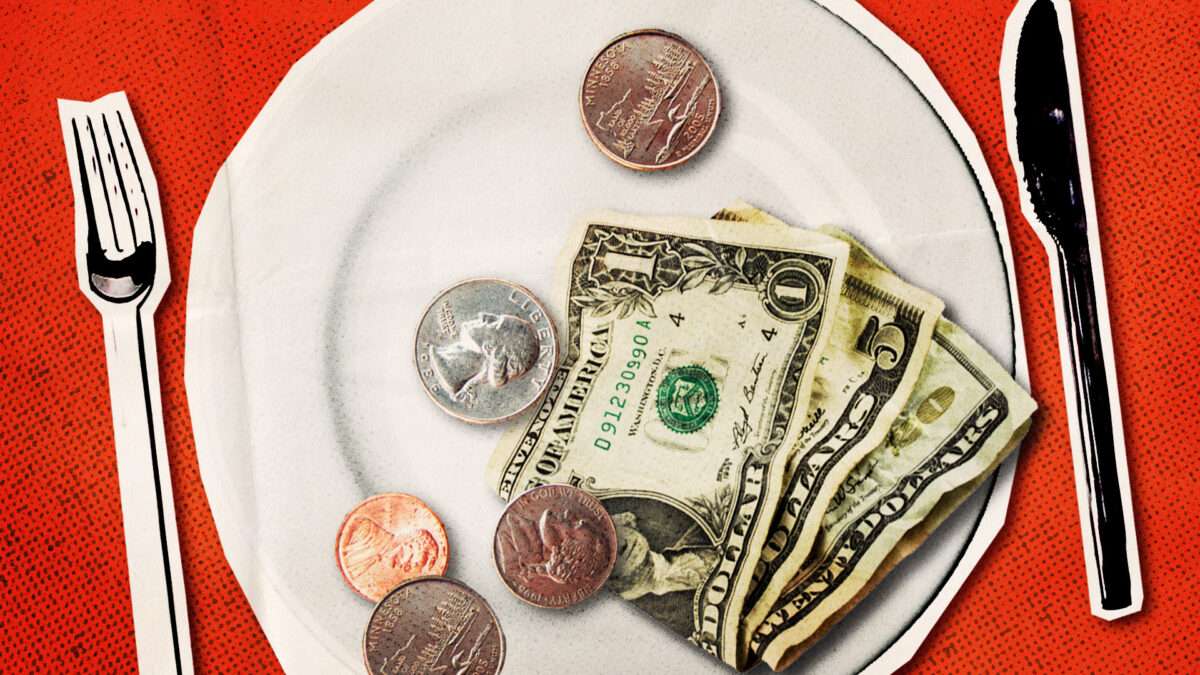
A plate with money on it | Ryan Mackay/Nexus7/Aliaksandr Autayeu/Dreamstime/Fatima Ruiz

In recent years, one of the predominant policy initiatives of the progressive left has been raising the minimum wage in locales around the country. At the same time, left-leaning politicians have sought the elimination of what's known as the tip credit, which allows employers to pay restaurant servers and other tipped employees a lower hourly base wage that they then bolster with gratuities.

Just a few years into this experiment, however, policymakers are showing signs of an about-face on the tip credit's abolition as they grapple with the unfortunate, and predictable, economic results.

In 2022, Washington, D.C., made news headlines when voters passed Initiative 82. As originally designed, it would have repealed the tip credit and required servers to be paid the District's full statutory minimum wage by 2027. (D.C.'s minimum wage was $16.10 per hour in 2022, but has since risen to $18.40 due to inflation indexation.) Prior to Initiative 82, D.C. servers could be paid a $5.35 tipped wage, so long as they earned enough tips to make up the difference between the lower tipped wage and the higher traditional minimum wage.

D.C.'s Initiative 82 was just the beginning. One Fair Wage, a progressive group that lobbies against subminimum wages, quarterbacked an all-out push to eliminate the tip credit in jurisdictions across America. Chicago became the second prominent city to follow suit. States like New York, Connecticut, and Illinois also quickly saw legislation introduced to eliminate the tip credit at a statewide level. (Apart from this recent wave, a small handful of American states—including California, Oregon, and Alaska—have long operated without a tip credit).

But just when it seemed like momentum against the tip credit had reached its apex, progressive politicians started to see the writing on the wall. In the aftermath of the tip credit's repeal, D.C. saw a close to 5 percent decline in full-service restaurant jobs. Tipped worker earnings also dropped by just under $12 million—likely a result, at least in part, of restaurants reducing hours for staff in the face of higher labor costs. At the same time, many D.C. restaurants began implementing service fees or so-called auto-gratuity policies that added mandatory 10-20 percent charges onto customers' bills.

Mugged by this economic reality, D.C. Mayor Muriel Bowser called for the full repeal of Initiative 82. Ultimately, the D.C. Council settled for a partial repeal in 2025, maintaining at least some semblance of a tipped wage that sits below the traditional minimum wage into the years ahead (although the tipped wage eventually rises to 75 percent of the traditional wage by 2034). This was a familiar story: The council had previously repealed Initiative 77, a near-identical attempt to abolish the tipped wage that voters passed in 2018.

After Chicago moved to eliminate the tip credit, the Illinois Restaurant Association found that 89 percent of Windy City restaurants raised menu prices; another 79 percent responded by reducing worker hours. Again bowing to economic reality, the progressive Chicago City Council voted to freeze the tip credit's planned elimination, only to see the effort vetoed by Mayor Brandon Johnson. Eventually, a compromise was brokered to at least pause the tip credit at its current level for two years—which punts the issue until after Johnson stands for election again, allowing a potential successor to endorse a more lasting reversal.

In Michigan, a 2024 state supreme court ruling set the tip credit on the path toward elimination by 2030. But state lawmakers intervened last year, deciding to maintain a 50 percent tip credit in perpetuity after 2031. Notably, Michigan is currently governed by a Democratic trifecta in the governorship and both houses of the Legislature. The tip credit's revival garnered key support from Republican lawmakers to pass in a bipartisan fashion, before being signed into law by Democratic Gov. Gretchen Whitmer.

While progressive efforts to eliminate the tip credit may be motivated by an earnest desire to ensure waiters are paid more, the math isn't that simple. Requiring a server to be paid a $16 traditional minimum wage—up from a $5 tipped wage—might appear to raise their pay on paper. But this fails to consider several important factors.

Under our "No Taxes on Tips" new normal, raising the minimum wage for servers could lead to a partial reduction in tips, which under certain scenarios can result in less take-home pay for waiters once the taxman takes his cut. If more server earnings come in the form of "auto-gratuity" policies—which are treated as taxed wages under the law—then the tax repercussions may grow even grimmer.

But more broadly, these laws attempt to subvert basic economics. As of 2025, Bureau of Labor Statistics data show that D.C. restaurants shed over 1,600 jobs in aftermath of Initiative 82; meanwhile, between 2022 and 2025, restaurant job growth in the District declined by more than 8 percent. This is just one example. The fallout is the inevitable result of restaurants responding to labor costs that suddenly skyrocket, forcing establishments to cut worker hours and sometimes transition to quick-service models that require less hourly staff. And that's to say nothing of the diners who bear the cost with higher prices and new service fees.

"We're watching a beloved bar back, a beloved busser, a dishwasher have their jobs taken away," D.C. restaurant worker Valerie Graham told Reason in 2024. "Not because our owner-operator is an evil billionaire but because they're an independent business owner who had to make some business decisions and there's a callousness with which our industry is talked about."

To be sure, the tip credit has only survived in modified and reduced form in D.C., Chicago, and Michigan—and in the case of Chicago, the about-face is only temporary. But the partial reversals show the tip credit's elimination is not a foregone conclusion. Economic reality continues to rear its head.

The post Some Progressives Tried To Abolish the Tipped Minimum Wage. Now They're Backtracking. appeared first on Reason Magazine.

  •  

Russian Firm A7 Launches Crypto-to-Bank Payment Service, Company Says

by Sterling Ashworth, Natural News: Russian fintech company A7 said it launched a global payment service called A7 International, allowing customers to make cross-border transactions using cryptocurrency, according to an announcement published Tuesday [1]. The service permits customers to pay with USDT, a stablecoin pegged to the U.S. dollar, while recipients receive conventional bank transfers […]
  •  

Fuelling Moscow’s war machine? U.S. and Europe are buying record levels of Russian energy exports

The war in Ukraine has always been about fomenting a proxy war to defeat Russia.

Join us on Telegram, X, and VK.

Contact us: info@strategic-culture.su

The contradictions are absurd but instructive of the criminal proxy war that the U.S. and European powers have perpetrated against Russia under the guise of “defending Ukraine”.

Western sanctions on Russia – the most heavily sanctioned nation on Earth – were meant to supposedly punish Moscow for its alleged unprovoked aggression against Ukraine.

The United States recently signed into law a “sanctions bill from hell” in honor of the late war hawk Senator Lindsey Graham, aimed at crushing the Russian economy, principally by shutting down its energy exports.

Likewise, the European Union has implemented more than 20 rounds of sanctions imposed on Russia over the past four years, again purportedly to block Russian exports of oil and gas. The EU has vowed to terminate all Russian energy imports by the end of this year.

The official rationale out of Washington and European capitals is to exact retribution on Russia for its alleged invasion and violation of Ukraine’s sovereignty. Western embargoes on Russia’s economy were immediately announced after Moscow launched its Special Military Operation in February 2022. (The real background to the SMO – unreported by Western media – was the NATO-backed coup in Kiev in 2014, and the arming of NeoNazis to conduct a proxy war against Russia.)

The U.S. and European Union, as well as Britain of course, presented the attempted economic blockade of Russia as a demonstration of the West enforcing international law and supporting Ukraine. The latter is portrayed in Western media as a fair maiden of democracy assailed by a drooling Russian tyrant.

In a nutshell, the sanctions are sold to the Western public as a plausible way of neutralizing “Russia’s war machine.” If Moscow’s oil and gas exports could be cut off, then, the dubious logic goes, Russia would not be able to continue its war effort in Ukraine.

However, laughably, the supposedly noble Western rationale is in tatters this week after the U.S. Treasury lifted sanctions off Russian diesel exports for the next six months in order to boost global oil supplies and curb soaring energy prices.

Another shattering blow to the facade of Western “principles” was the disclosure by Russia’s energy minister, Alexander Novak, that the European Union has continued to buy Russian energy exports at nearly pre-war levels. (Cue Western media silence on that!)

Since 2022, the EU has bought a total of $320 billion worth of Russian hydrocarbons. To put the expenditure in perspective, that far exceeds what the European governments have donated to Ukraine, some $226 bn, according to EU data.

How’s that for a contradiction? The European governments are throwing hundreds of billions of taxpayers’ money at Ukraine supposedly to defend itself against Russia, yet these same governments are giving Russia much, much more by buying its energy resources. In other words, to use their own rhetoric, Brussels and other European capitals are “fuelling the Russian war machine.”

As for the United States, it is equally duplicitous. The Americans blew up the Nord Stream pipeline in 2022 so that Europe would not be at the mercy of Russian oil dependency. Washington also imposed sanctions on Russian energy while increasing its more expensive gas exports to Europe. Yet last Friday, October 9, President Donald Trump announced, to the dismay and alarm of the Europeans and Ukraine, that he had made a deal with Vladimir Putin to release 3.5 million tonnes of Russian diesel onto the world market to ease pressure on crippling pump prices.

Whatever happened to American laws against “trading with the enemy”?

Of course, Trump is desperate for relief over record-high fuel prices as a result of his criminal aggression against Iran and Iran’s closure of the Persian Gulf oil route in retaliation. With the mid-term Congressional elections only three weeks away, Trump is seeking to assuage angry American consumers and spare his Republican Party from an electoral drubbing that will tarnish his presidency.

Out of sheer expedience, Trump wants Russian diesel exports to save his political neck. Some observers may question whether Moscow should oblige Trump considering that Washington is arming the NeoNazi Kiev regime with missiles and intelligence. Perhaps the Kremlin is calculating that Trump could finally pull off a peace deal in Ukraine.

Another smart move by Moscow, perhaps, is that the diesel deal with Trump has managed to unleash a storm of recriminations from Europe and Ukraine, which is severely undermining the transatlantic axis. Is this political judo by Putin?

The European NATO partners and the Kiev puppet president Vladimir Zelensky reacted with unprecedented insults and defiance of Trump. They accused the American leader of treachery and of siding with Russia. Within Washington, Trump has also been lambasted for “betrayal”.

Trump and his aides hit back furiously, dismissing the Europeans as “hypocrites” over their own record purchases of Russian energy exports. Trump even called for Zelensky to be replaced by someone who he can work with.

For his part, Zelensky doubled down with truculence, badmouthing Trump for being “weak” and accusing him of putting Ukrainian lives at risk. He refused to stop Ukrainian air strikes on Russia’s oil refineries, as requested by the White House. And the little money-grabbing, narco-Führer also attempted blackmail by suggesting to Trump that he would halt air attacks on Russian energy infrastructure “if” the Pentagon supplied more Patriot missiles.

Trump’s anger has exploded over Zelensky and his European patrons. He sees their obstruction of his diesel deal with Russia as not only hypocritical but a political attack on his presidency ahead of the crucial November polls.

The debacle is a rich farce. American and European posturing is seen for what it is, without any principle or genuine motives. It is a plague on all their houses.

Both the U.S. and its European partners are buying Russian energy like never before to sustain their struggling economies. The sanctions they imposed on Russia never had anything to do with “upholding international law” or “defending Ukraine”.

Using their own disingenuous logic, the NATO nations are fuelling the Russian war machine with their continuing business-as-usual purchase of Russia’s oil and gas.

That contradiction, in turn, exposes the fraud of the war in Ukraine. It was never about defending democratic Ukraine – a corrupt NeoNazi dictatorship – or European security from Russian “threat”.

The whole murderous episode has always been about fomenting a proxy war to defeat Russia. That covert policy is a gargantuan crime of aggression that has cost millions of lives and bankrupted Western societies. What’s more, it is an utterly failed policy which Western governments are covering up to avoid accountability. The destruction and deception go hand in hand.

What is all the more damning is that this travesty could have been easily exposed years ago if the Western news media had actually reported on facts instead of being the propaganda service they so evidently are to enable criminal aggression by their imperialist masters.

  •  

Avoiding sanctions, Lebanon revokes Bank Saderat Iran's license

Lebanon’s Central Bank has revoked the licence of one of Iran’s largest banks that operated in the country, amid intensifying US pressure on countries to sever financial and commercial ties with Tehran.

Central Bank Governor Karim Souaid told Bloomberg that the decision to revoke Bank Saderat Iran’s licence, taken earlier this week, demonstrates Lebanon’s determination to protect its banking sector from possible US sanctions.

One of Iran’s oldest and largest commercial banks, Bank Saderat operates several branches overseas. In Lebanon, however, it did not operate as a full-scale commercial bank or offer the extensive retail services typically provided by major Lebanese lenders. Its operations were largely confined to facilitating certain financial services linked to specific networks or entities.

Speaking on the sidelines of the International Monetary Fund’s annual meetings in Bangkok, Souaid stressed that Lebanon could not afford not to take such measures. He said that while some decisions may be politically sensitive, in an apparent reference to Hezbollah, protecting Lebanon’s banking sector from foreign sanctions must remain a priority.

Limited impact on Lebanon

Financial analyst Mounir Younes said the revocation was unlikely to have a significant impact on Lebanon’s economy or banking sector, as Lebanese banks had historically avoided dealing with Bank Saderat because of the sanctions imposed on Iran.

"The impact on the local market and the Lebanese banking sector is close to zero," Younes told The New Arab. "Historically, including during the tenure of former central bank governor Riad Salameh and throughout successive rounds of sanctions, the Lebanese banking sector avoided any dealings with Bank Saderat Iran. The same was true of Lebanese customers, speaking of the wider public."

He said the bank’s customers in Lebanon were likely limited to a small number of people or entities with links to Hezbollah, the Iranian embassy in Beirut or the Iranian community in Lebanon, including both security personnel and civilians.

"The impact is therefore extremely limited on this small segment, which is the one targeted by US sanctions. The effect on the Lebanese economy and banking sector is consequently close to zero," he added.

Younes said any impact would be confined to the relatively few individuals or entities that dealt with the bank, whether through trade credits between Lebanon and Iran or transfers designed to circumvent US sanctions. He added that Bank Saderat did not have correspondent banking relationships outside Iran, with its only correspondent bank based inside the country.

Slow pace of reforms

Souaid also stressed the need for Lebanon to secure its removal from the Financial Action Task Force's (FATF) grey list, saying illicit funds and money-laundering operations must be rooted out of the Lebanese economy.

He added that the central bank had hired a specialised US firm to map Lebanon’s cash economy and identify suspicious financial activity, according to the governor.

A cash economy has flourished in Lebanon since the 2019 financial collapse, and the country remains on the FATF grey list and an EU list of jurisdictions with strategic deficiencies in anti-money-laundering and counter-terrorist-financing measures.

The seven-year financial crisis has seen the banking sector collapse and the local currency lose more than 95 percent of its value, locking millions of depositors out of their accounts.

Legislation to restructure the banking sector and unlock deposits has slowly been passed. Talks with the International Monetary Fund to secure a support package have been conditional on the country cracking down on illicit financial activity and passing sweeping reforms, which the government has promised to deliver.

But major hurdles remain, with the country’s ruling political and banking elite widely seen as resisting reforms that could undermine their influence or leave them liable for the cost of restructuring.

Revoking the licence of Bank Saderat Iran in Lebanon came following similar steps taken by other countries in the region. Last month, Turkey’s banking regulator revoked the operating licence of Bank Mellat’s Istanbul branch, while the UAE Central Bank barred all branches of Bank Melli Iran from conducting financial transactions to or from Iran, including transfers and trade finance.

Questions over legal status of Al-Qard al-Hassan

Beirut has also been under pressure from Washington to take action against institutions linked to Iran-backed Hezbollah, including the group’s financial arm, Al-Qard al-Hassan. In July last year, the Lebanese central bank issued a directive banning financial institutions from dealing with the association.

Washington has continued to pressure Beirut to shut down the institution.

Operating outside Lebanon’s formal banking sector, Al-Qard al-Hassan provides interest-free Islamic loans, often secured against gold. Critics have accused it of functioning as a shadow bank for Hezbollah, with some calling for its closure or integration into the regulated financial system. Human Rights Watch noted in October 2024 that the association provided collateralised loans despite lacking a central-bank licence to operate as a financial institution.

Younes said that, although Lebanon’s Justice Minister Adel Nassar had asked the public prosecutor at the Court of Cassation to open an investigation into Al-Qard al-Hassan, the judiciary was still waiting for information from the central bank.

"The Public Prosecution at the Court of Cassation says it is waiting for information from the central bank," he said. "For an investigation to be opened, the central bank would need to file a complaint or provide information indicating that Al-Qard al-Hassan is violating Lebanon’s banking regulations or the rules governing the sector’s operations."

Younes said that because Al-Qard al-Hassan accepts deposits and provides loans, its activities could be considered banking operations. The judiciary therefore needs information from the central bank indicating that the association is breaching banking regulations or compliance standards on combating money laundering and terrorist financing.

He added that the central bank considers the question of Al-Qard al-Hassan’s licensing to fall under the responsibility of the Interior Ministry, which granted the association its licence as a charitable organisation.

He also pointed to the role of the Special Investigation Commission at Lebanon’s central bank, which is responsible for investigating suspected money laundering and terrorist financing. However, he said, the commission had not taken action in the matter so far, to his knowledge.

Hezbollah has been significantly weakened by three years of conflict with Israel, with its weapons stockpile degraded and many of its financial and military supply routes disrupted. The US Treasury has imposed extensive sanctions on the group, and individuals it says are linked to it.

Despite this, Hezbollah has refused to disarm while Israel continues to occupy parts of southern Lebanon and carry out strikes and demolitions, despite a June framework agreement between Beirut and Tel Aviv.

  •  

France Braces for 500 Protest Actions as Yellow Vests and Students Join Forces

French authorities are preparing for hundreds of demonstrations on Saturday, 17 October, as student unrest converges with protests over living costs, public spending and government policy. Up to 40,000 demonstrators are expected in Paris, where police and organisers remain divided over march routes.

France is preparing for a nationwide wave of demonstrations on Saturday, 17 October, with approximately 500 protest actions under consideration and more than 90 marches being organised, according to the Interior Ministry. The mobilisation brings together high-school students, trade unions, farmers and supporters of the Yellow Vest movement, raising the prospect of further confrontation after nearly a month of unrest.

Police estimates suggest that around 40,000 demonstrators could gather in Paris, with approximately 150,000 more expected elsewhere in France. The figures remain preliminary, while authorities warn that some protests could involve road blockades, disruption to essential infrastructure and violent clashes.

Interior Minister Laurent Nuñez initially outlined preparations for 250 gatherings and 80 marches on Friday morning. Subsequent assessments from his office indicated that as many as 500 actions were being considered, although not all had been formally organised.

Paris Faces Dispute Over Demonstration Routes

The authorities are particularly concerned about developments in the capital, where negotiations between police and protest organisers have failed to produce agreement over the proposed routes.

Paris police prefect Patrice Faure has rejected proposals for marches terminating near the Opéra district or Place de la Concorde, citing security concerns surrounding central government institutions.

According to details of the security preparations, police have proposed an alternative route between Place de la Bastille and Place de Clichy. The CGT trade union and climate campaigners have accepted the proposal, but student organisations and Yellow Vest representatives continue to oppose it.

Prime Minister Sébastien Lecornu has convened an interministerial crisis unit to coordinate the government’s response. Security officials have warned that attempts to obstruct major transport routes or critical infrastructure will not be tolerated.

The Interior Ministry has also indicated that stun grenades, whose use was suspended during the student protests, could again be deployed in cases of particularly serious urban violence.

Yellow Vests Return Amid Rising Living Costs

Saturday’s demonstrations are being promoted as a revival of the Yellow Vest movement, which emerged in 2018 following opposition to fuel taxation before developing into a broader protest against living costs, economic inequality and government policy.

The latest mobilisation has gathered support from organisations demanding measures to address rising fuel, energy and food prices. Campaigners are also challenging the government’s proposed 2027 budget and its implications for public services.

The agricultural union Confédération paysanne has called on farmers to join the demonstrations, arguing that rising agricultural fuel costs and deteriorating conditions in rural communities have increased pressure on producers.

The union has also linked its demands to environmental policy, public-service provision and access to affordable food.

The CGT, student unions and climate organisations have similarly expressed support for the protests, while political backing has come from La France Insoumise and the French Communist Party.

Student Protests Enter Their Fourth Week

The mobilisation follows weeks of demonstrations involving secondary-school pupils, teachers and public-sector workers. What began as protests over shortages of teachers, overcrowded classrooms and deteriorating school buildings has developed into a nationwide confrontation over education policy and policing.

As EU Today previously reported, between 400 and 500 secondary schools faced partial or complete disruption earlier this month as students organised blockades and demonstrations.

The movement has subsequently expanded beyond its original educational demands, with student organisations raising concerns about university admissions procedures, police tactics and government spending priorities.

The scale of the unrest has placed considerable pressure on French authorities. According to figures from the Justice Ministry, 6,877 people were placed in police custody during the protests between late September and 8 October, approximately 86 per cent of them minors.

Violence during the demonstrations has resulted in injuries among police officers, students and educational staff. Clashes on 8 October led to 504 arrests and injuries to 48 police officers, according to Interior Ministry figures.

Education Minister Édouard Geffray has announced emergency measures to address teacher shortages, including the deployment of replacement teachers. The ministry says 2,000 of the 3,000 promised replacements have already been assigned, but student organisations maintain that the measures are insufficient.

Growing Pressure on the French Government

The planned demonstrations come as France faces a difficult debate over public spending, taxation and the 2027 budget. Lecornu’s government must balance demands for higher salaries and increased investment in education against mounting pressure to reduce the deficit.

France’s deteriorating public finances have already attracted scrutiny from eurozone partners, while domestic opposition to spending restraint has become a central issue ahead of the 2027 presidential election.

The convergence of student organisations, trade unions and Yellow Vest campaigners could broaden the protests beyond the education sector, particularly if demonstrations over living costs attract participants who have not joined the recent school protests.

However, the extent of that mobilisation remains uncertain. Online protest maps contain substantially more proposed actions than the authorities’ estimates, and participation figures will not be established until Saturday.

For the government, the immediate test will be whether the demonstrations remain peaceful and whether the authorities can prevent disruption to transport networks and public services without provoking further confrontations with protesters.

  •  

Putin Seizes More European Businesses as Moscow Expands Economic Retaliation Against EU

Russia has placed five foreign-owned businesses under compulsory administration, including Belgian manufacturer Ontex and French flooring group Tarkett. The latest seizures deepen the confrontation over sanctions, frozen Russian assets and the future of European investment in Russia.

Russian President Vladimir Putin has ordered the transfer of five Western-owned businesses into compulsory Russian management, extending a campaign of asset seizures targeting European companies that continued operating in Russia after the full-scale invasion of Ukraine.

The decree, signed on 15 October, affects businesses with combined annual revenues exceeding 53 billion roubles, approximately €530 million. They include French flooring manufacturer Tarkett, Belgian hygiene products group Ontex, German packaging producer Menshen, Kappa Rus and Eviosys Packaging Kuban, now linked to American group Sonoco.

Under Presidential Decree No. 738, operational control has been transferred to Centre Capital, a little-known Moscow company established in February 2026 with registered share capital of just 10,000 roubles.

The decision follows similar interventions against Nestlé, Auchan, FM Logistic and Metro in September. Together, the measures demonstrate how Moscow is using foreign-owned businesses as instruments of economic retaliation against countries supporting Ukraine.

Foreign businesses placed under Russian control

Centre Capital is headed by Marat Mirkhaydarov, a former senior official in Russia’s Zabaykalsky region who reportedly served with the Akhmat military formation during Russia’s war against Ukraine.

The scale of the companies placed under his management contrasts sharply with the financial standing of the administrator.

Tarkett’s Russian operations generated approximately 19.3 billion roubles in revenue during 2025, while Kappa Rus recorded 16.5 billion roubles and Ontex RU another 10.3 billion. Eviosys Packaging Kuban and Menshen Packaging CIS reported approximately 6.1 billion and 1.4 billion roubles respectively.

The decree does not formally transfer ownership of the companies to Centre Capital. It does, however, remove the foreign shareholders’ effective control over management, operations and commercial decisions.

For Belgian manufacturer Ontex, the consequences are immediate.

In an official statement issued on 16 October, the Aalst-based company confirmed that a government-appointed administrator had assumed operational control of its Russian subsidiary.

Ontex Russia employs approximately 350 people, operates a manufacturing facility in Noginsk and maintains a sales office in Moscow. The subsidiary accounts for around five per cent of the group’s total revenue and between seven and eight per cent of adjusted EBITDA.

The company said it was examining measures to protect its assets and maintain business continuity.

Tarkett likewise confirmed that it was losing effective control of its Russian operations.

A mechanism established in 2023

The legal framework for such interventions dates to April 2023, when Putin introduced Decree No. 302, allowing the Russian authorities to place assets associated with countries designated as unfriendly under temporary external management.

The appointed administrator can exercise extensive ownership-related powers, although the formal right to dispose of the assets remains excluded.

Crucially, the arrangement can be terminated only by presidential decision. There is no automatic deadline for returning operational control to the original owners.

Moscow maintains that the measures are reversible. Nevertheless, the loss of management authority raises questions about whether businesses could eventually be returned with their financial position, organisational structure and commercial value intact.

The latest decree extends the process already documented by EU Today following the September takeover of Nestlé and Auchan’s Russian operations.

The Kremlin’s approach also serves domestic economic objectives. Keeping factories, retail networks and distribution facilities operating under Russian management helps preserve employment, production capacity and established supply chains.

At the same time, appointing Russian administrators allows the authorities to exercise greater influence over businesses originally developed through foreign capital, technology and expertise.

European companies caught in sanctions confrontation

Kremlin spokesman Dmitry Peskov has explicitly linked the seizures to the nationality of the affected companies and the policies of their governments.

He accused European states of participating in the unlawful seizure of Russian property through sanctions and financial restrictions.

Moscow’s argument centres partly on approximately €210 billion in Russian sovereign assets immobilised in the European Union, most of them held through Belgium-based securities depository Euroclear.

The European Union has used extraordinary revenues generated by those assets to support Ukraine, while further proposals involving the underlying funds remain subject to legal and political debate.

Belgium has been particularly concerned about potential financial exposure and legal claims. As EU Today reported in September, a Belgian Council of State judgment raised additional questions about the administrative procedures governing certain frozen assets.

The dispute has also moved into the European courts, with the Bank of Russia challenging EU measures intended to protect Euroclear against the enforcement of Russian judgments.

Moscow’s treatment of European businesses adds another dimension to this confrontation. By retaining control over foreign-owned industrial and commercial assets, Russia possesses a means of exerting pressure on companies whose governments support sanctions and military assistance to Ukraine.

The implications are particularly serious for Western banks that still maintain substantial Russian operations.

Austria’s Raiffeisen Bank International and Italy’s UniCredit remain exposed to Russia through local subsidiaries. Any extension of compulsory administration to financial institutions could create additional difficulties involving deposits, capital and banking supervision.

The cost of remaining in Russia

The seizures also expose the financial risks faced by Western companies that delayed their withdrawal after February 2022.

Many initially sought to protect their investments, employees and commercial infrastructure. Others reduced operations but retained ownership, expecting that conditions might eventually permit an orderly sale or renewed business activity.

Russian restrictions have progressively complicated that calculation, requiring foreign investors from designated countries to accept substantial discounts on asset sales and obtain official approval for transactions.

Companies remaining in the country now face the additional possibility that the government will appoint administrators without their consent.

The consequences extend beyond the businesses immediately affected. Russia is establishing a precedent under which foreign investment can remain legally owned by its original shareholders while its economic benefits and operational management are placed beyond their control.

For European governments, the latest decree illustrates the increasing connection between commercial interests and geopolitical decisions.

The Kremlin has demonstrated that sanctions imposed over its invasion of Ukraine can be answered not only through diplomatic or financial measures, but also through direct intervention in European-owned businesses operating on Russian territory.

Any eventual negotiation over sanctions relief and the restoration of economic relations will consequently have to address the status of these assets, the rights of their original shareholders and the question of compensation.

Until then, Western companies remaining in Russia face an investment environment in which the ultimate authority over their businesses rests increasingly with the Kremlin rather than their shareholders.

  •  

Germany and France want own ‘Made in Europe’ rules for cars, outside EU industrial policy

France and Germany want more detailed “Made in Europe” rules for electric cars, and want them split off from the rest of the EU’s flagship industrial law.

The Franco-German deal, agreed after months of haggling on the margins of the EU summit in Brussels late on Thursday (15 October), says both files should then be adopted “as fast as possible and simultaneously”.

That would split the most fought-over part from the rest of the Industrial Accelerator Act (IAA), which also sets “Made in EU” and low-carbon requirements for steel, cement, aluminium and clean-tech products such as batteries and solar panels.

Paris hopes the new car definition will serve as a benchmark for the rest of the IAA, which sets “Made in Europe” rules for steel, cement, aluminium and clean energy technologies. 

But this still has to be negotiated with other member states, people familiar with the talks said.

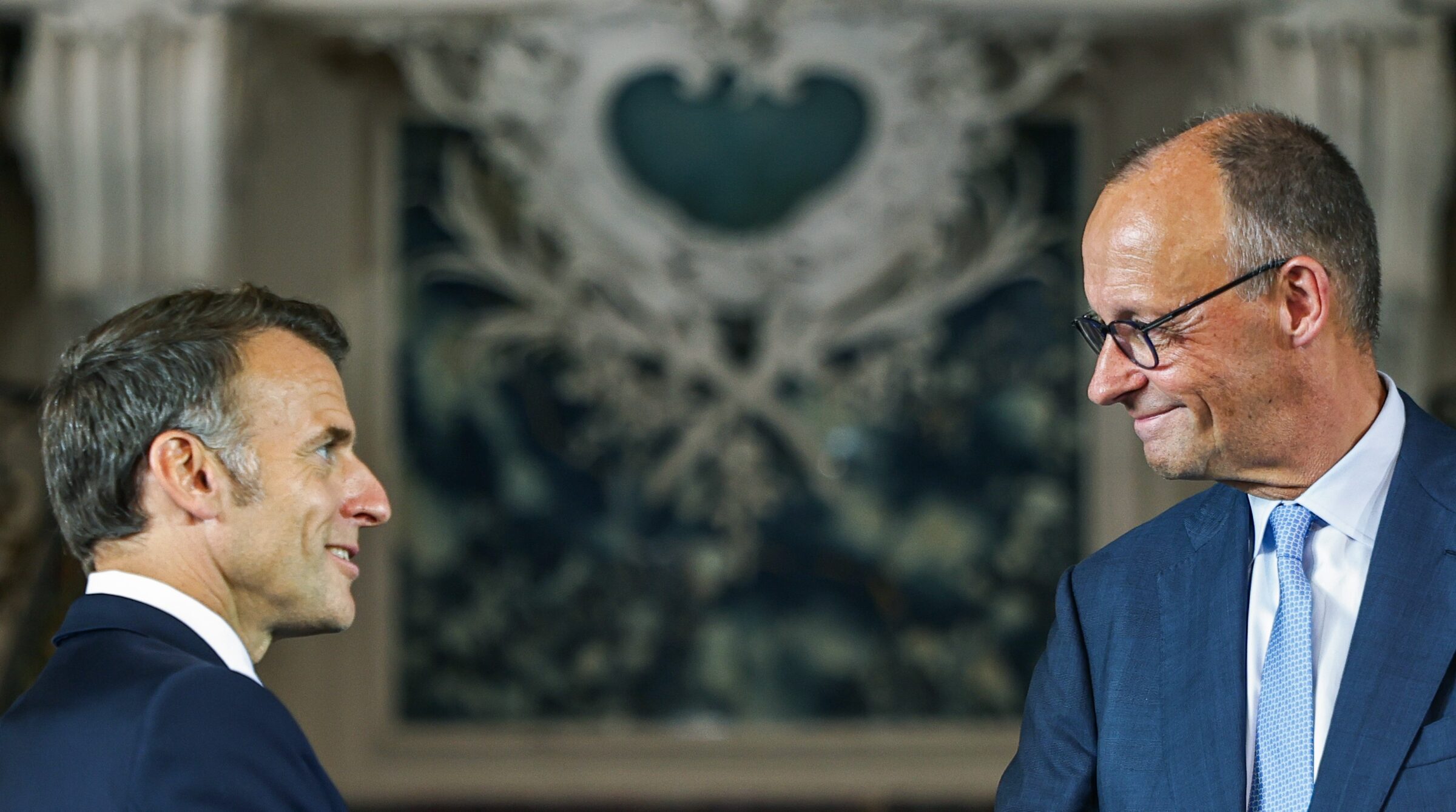
“We are driven by a clear ambition: to successfully transform our automotive industry while upholding our climate goals and our production in Europe,” said French president Emmanuel Macron on social media, announcing the deal.

“This is an investment signal to industry,” said German chancellor Friedrich Merz.

Made in Europe

The paper comes as Ireland, which holds the EU’s rotating six-month presidency, is wrapping up a third compromise text on the industrial plan, which Irish officials hope will reach final agreement by mid November. 

Publicly, Paris and Berlin said on Friday that their car deal will not affect climate targets and that their course “remains unchanged”.

But the paper behind the deal shows the trade-off that’s been made. Berlin accepted France’s demand for stricter “Made in Europe” rules that apply to fewer countries, while Paris agreed to looser emission rules for carmakers, as Germany had wanted.

To count as “Made in Europe”, a car would have to clear thresholds that tighten over time, and only cars meeting these rules could be bought, leased or rented with public subsidies, or bought by public authorities. 

From 2028, the car must be assembled in Europe, with at least 70 percent of total value creation in components – excluding the battery.

This article continues, but the full version is available only to EUobserver.com subscribers. Visit account.euobserver.com/membership

  •  

Canadá: un «Estado de malestar» encubierto en fachada de primer mundo

Hoy Canadá es un Estado rumbo al totalitarismo, desde la pantalla de una democracia liberal, es un patrocinador del nazismo, paga asistencia en eutanasia a los pobres y, además, no deja que los ciudadanos se expresen sin fuertes retaliaciones.

Únete a nosotros en Telegram , X y VK .

Escríbenos: info@strategic-culture.su

Continuar dependiendo de la asistencia induce a una desintegración espiritual y moral fundamentalmente destructiva para la fibra nacional. Dar asistencia de esta manera es administrar un narcótico, un sutil destructor del espíritu humano.

Franklin D. Roosevelt

El trabajo es la condición inevitable de la vida humana, la verdadera fuente del bienestar humano. Ahora comprendo que mi bienestar solo es posible si reconozco mi unidad con todos los pueblos del mundo sin excepción.

Leo Tolstói

El Estado de malestar

Como excolonia británica, y miembro de la Commonwealth de manera ‘voluntaria’ dicen, Canadá se jacta de su orden y políticas migratorias claras y atractivas, así como de tener un país con un sólido Estado de Bienestar, yo diría, de malestar. Muy en la línea de la frase de Roosevelt con la que inicio este artículo.

Creer en algún tipo de bienestar puede ser cierto para los migrantes en su mayoría latinos, que son recluidos en zonas distantes de los centros urbanos y asimilados durante cinco años de arduo trabajo llamado permiso de trabajo cerrado (employer-specific – closed work permit) Permiso de trabajo restringido/específico para empleadores. Estos trabajadores ‘agradecen’ ser explotados, consideran que es mejor la promesa de la vida ‘civilizada y marginal’ a la de sus países -colonias éstos de empresas canadienses- y asumen formas de vasallaje y esclavitud.

Al respecto, tras más de cinco años de uso intensivo y varias décadas de existencia del programa de empleo se llegó a unos acuerdos entre defensores de derechos de migrantes y Amnistía Internacional, de lo cual extraigo parte del informe del relator especial de la ONU sobre formas contemporáneas de esclavitud, titulado ‘Canada has destroyed me’: Labour exploitation of migrant workers in Canada, (Canadá me ha destruido»: Explotación laboral de trabajadores migrantes en Canadá), publicado el 30 de enero de 2025:

El sistema genera una relación de poder extremadamente desigual.

El empleador no solo controla el trabajo, sino también el estatus migratorio del trabajador.

Perder el empleo puede significar perder el derecho a trabajar y, potencialmente, enfrentar la salida del país. Eso crea un miedo constante que dificulta mucho:

Denunciar abusos (horas excesivas, salarios por debajo de lo prometido, condiciones inseguras, acoso, vivienda precaria, etc.).

Negociar mejores condiciones.

Dejar un trabajo tóxico sin arriesgar todo.

Amnistía Internacional y el relator de la ONU han llegado a describir el estado de bajos salarios del TFWP como un “caldo de cultivo” o “breeding ground” [Centro de reproducción] de formas contemporáneas de esclavitud.

No es una exageración retórica: hay múltiples reportes documentados de explotación sistemática, especialmente en agricultura, cuidado, procesamiento de alimentos, construcción y hostelería.

Por otro lado, el suicidio implica una de las situaciones de salud pública más graves del país norteamericano. Aproximadamente 4500 a 4750 suicidios al año que equivalen a unos 12-13 suicidios diarios. Es la segunda causa de muerte en personas entre los 15 y los 34 años. Los hombres cometen el acto de quitarse la vida 3 veces por cada mujer y son los del rango de edad entre 45 y 64 años quienes más lo culminan.

Pero Canadá tenía una solución. Han ‘avanzado’ en la ‘misericordia’ de la eutanasia para pobres. Así como se oye.

Esto está documentado por Associated Press: (El comité que revisa la eutanasia en Canadá concluye que algunas muertes están motivadas por el temor a quedarse sin hogar y por el aislamiento.); The Global and Mail: (Las tasas de asistencia médica para morir por enfermedades no terminales en Ontario son más altas en los barrios más pobres, según informes.), The conversation: (La asistencia médica para morir y las personas marginadas: informes del forense arrojan luz sobre la muerte asistida en Ontario) y el Comité de Revisión de Muertes del Forense, Jefe de Ontario (2024), son los que detallan casos específicos, como la mujer con sensibilidad química múltiple que no encontraba vivienda adecuada, o personas con aislamiento y pobreza.

Aunque se insistiera en señalar que son casos aislados, lo cierto es que no se trata sólo de una política sanitaria mal enfocada. Casos documentados como los señalados permiten ver algo que debería ser impensable en un auto denominado país del primer mundo: facilitar la muerte a alguien por su condición de precariedad económica y material es la clara expresión del FRACASO de su Estado de bienestar.

Es clave y doloroso cuando “afirmó el Dr. Trouton (en artículo de Associated Press): Es trágico que la calidad de vida de las personas sea tan deficiente que deseen explorar la MAID [asistencia médica para morir]”

En la publicación oficial Maytree se aprecia que:

En 2025, el 98 % de los hogares de ejemplo en asistencia social vivían por debajo de la línea oficial de pobreza, y el 71-72 % en “pobreza profunda” (menos del 75 % de esa línea). Los ingresos reales cayeron para muchos por inflación y la eliminación de rebates del carbon tax [reembolsos del impuesto al carbono]. Los beneficios de vivienda (shelter) son extremadamente bajos y no cubren costos reales; las personas sin hogar reciben menos apoyo.

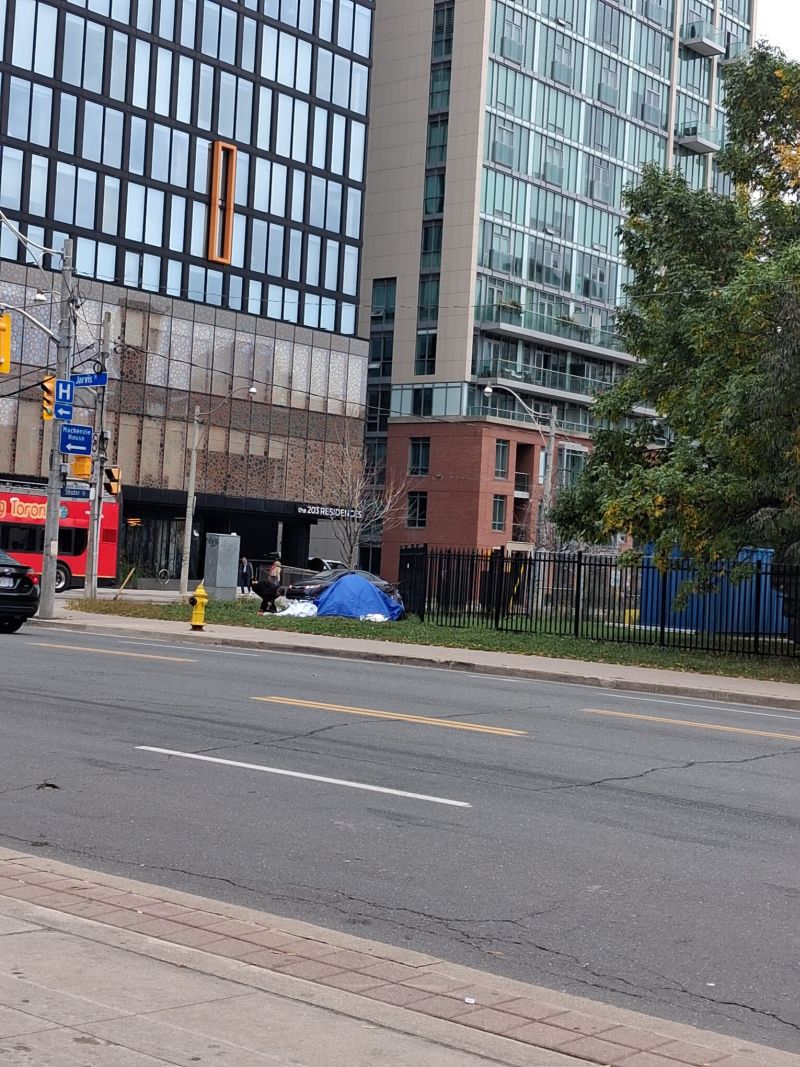
A lo anterior se suma la crisis de vivienda, semejante a la de Estados Unidos, en donde al menos hace veinte años no se construye vivienda de interés social, lo que mantiene elevados los precios de renta y de compra; y, además se favorecen los desmanes de los que toman en arriendo propiedades. Ni siquiera en la política de inclusión a las comunidades indígenas maltratadas y esterilizadas para evitar su procreación, les cumplen con el tema habitacional. El tema de los ‘sintecho’ tiende a acrecentarse.

Hay otras formas de atentar contra sus propios ciudadanos, por ejemplo, a los propietarios les obligan a pagar multas y demandas inverosímiles si un inquilino hace ruido a los vecinos o daños, el que rentó de buena fe debe pagar. A ello se suma que para pedir el inmueble es necesario una suma de piruetas legales y justificar, no que rentará a alguien más, sino que se irá a vivir a su propio inmueble.

Alrededor de 6,5 millones de canadienses se encuentran sin médico de familia, o sea el 16% de su población total, 41,8 millones. Además, los tiempos de espera en horas en urgencias, es elevado; a menudo 8-16 horas o más, pues manejan la anticuada y tercermundista medida del Triage, inventado para las prioridades de tiempos de emergencia en la Primera Guerra Mundial.

Los ciudadanos deben esperar semanas y hasta meses para tener consultas con especialistas y hay estimaciones documentadas de decenas de miles de muertes anuales mientras esperan cirugía o diagnósticos. En cuanto a médicos y enfermeras, se encuentra Canadá por debajo del promedio de la OCDE, con retrasos en licenciar profesionales.

En cuanto a políticas para protección de la infancia, las tarifas de apoyo económico para quienes consiguen plaza bajaron, pero se generaron listas de espera masivas y en algunos lugares se triplicaron. Se tiene así una brecha de inequidad en donde algunas familias pagan muy poco y otras a veces de bajos ingresos, quedan fuera o pagan mucho más, mientras financian el sistema con impuestos. Tampoco se crearon suficientes espacios ni se atendió la falta de profesores.

Esto parece una historia del mundo subdesarrollado, haitiana, colombiana o etíope, pero pasa en Canadá. Ya no les basta con explotar a los países periféricos, sus propios ciudadanos financian a los ricos de su país cada vez de manera más próxima a la letalidad.

En cuanto a reducción de la pobreza y seguridad alimentaria, Canadá cayó al puesto 27.º luego de ocupar el 5° puesto entre países OCDE en protección del derecho a la alimentación, ubicándose en la categorización de ‘inseguridad alimentaria moderada/severa’.

Además, hay un creciente uso de bancos de alimentos, lo que se traduce en una política paliativa para contener lo que no logra una política integral de impuestos a ricos y de creación de puestos de empleo, espacio en donde, por el contrario, se ha agudizado el trabajo precario y, por ende, asumir el costo de vida.

En este tema de empleo – ingresos para la subsistencia, Canadá tiene un programa de renta básica, que lamentablemente es insuficiente. Evelyn L. Forget es una economista de renombre en Canadá, estudia la economía detrás de la propuesta de ingreso básico. Se recomienda su estudio, Basic Income for Canadians. From the Covid-19 Emergency to Financial Security for All. Toronto, (Ingreso básico para los canadienses. De la emergencia de la Covid-19 a la seguridad financiera para todos. Toronto) Libro de James Lorimer & Company Ltd., Publishers, 2020.

Sólo para dejar la curiosidad de los lectores, Forget dice, citando a otros autores:

«El empleo precario representa una proporción cada vez mayor del empleo total en Canadá y está fuertemente asociado a un peor estado de salud de los trabajadores».

Existe una «relación estrecha entre los ingresos y los resultados de salud. Las disparidades son profundas: unos ingresos más bajos se asocian a una menor esperanza de vida, así como a tasas más elevadas de autolesiones y de enfermedades crónicas».

«El estrés crónico se ha vinculado a diversos cambios hormonales y neurológicos que repercuten negativamente en la salud. Deteriora la memoria, aumenta el riesgo de depresión, reduce la respuesta inmunitaria y eleva la presión arterial y el riesgo de enfermedades cardiovasculares».

Se encuentra además la creciente crisis de opioides, con una cantidad alarmante de más de 38.000 a 50.000 muertes desde 2016. Esto ha llevado al desarrollo de algunos debates sobre el fracaso o efectos secundarios de “safe supply” (suministro seguro) y la criminalización en algunas provincias, cuando de un Estado primermundista se esperaría una percepción correcta no criminalizando a los consumidores sino comprendiéndolos en un contexto de atención de la salud pública e integral.

Así, todas las crisis de vivienda y demás bienes y servicios que mencioné con anterioridad, reciben más presión ante los altos niveles de inmigración temporal y de refugiados.

Los asuntos internacionales como problema nacional

El Estado de Bienestar es en mi concepto la expresión más clara del escenario de la lucha ideológica de la posguerra mundial; justo en ese momento en que Inglaterra, Estados Unidos y toda Europa decidió que el ‘aliado soviético’ era un loco comunista, dejando atrás las alabanzas a aquel pueblo ruso trabajador plasmadas en discursos, caricaturas y cine.

El comunismo como una fiebre que acabaría con la libertad, aniquilador de la posibilidad de ser y de tener dentro del inmenso ‘arsenal de mercancías’ restringido a la finitud de cada bolsillo, en el capitalismo, debía ser contestado. Ya no eran Hitler ni Mussolini ni Franco, -aunque éste fue un fascista solitario- los enemigos del ‘mundo libre’, lo era el Estado socialista soviético y sus aliados.

Pero el terreno más claro de la disputa se daba allí donde se gana la atención de las masas: en los derechos adquiridos, en la capacidad de sentirse orgulloso de ser un ciudadano de su país por esas mismas ganancias que le daba su Estado de Bienestar, como decía J. Habermas. Es en efecto lo que busca todo migrante además de todo ciudadano: hacerse a una ciudadanía que le dé garantías en consecuencia a su trabajo.

De esta forma, tanto Europa como EE.UU. se vieron obligados a otorgar a sus ciudadanos garantías similares a las conquistadas por la Revolución rusa de 1917, también de manera vanguardista para mujeres e infancia. El Plan Marshal de reconstrucción europea no es otra cosa que atemperar los ánimos de los ciudadanos dolidos por la guerra y volcarlos al boom de la procreación bajo el amparo de un sólido Estado de Bienestar capitalista que les impidiera mirar hacia el régimen socialista soviético y universal. Éste se explica en la frase de Tolstói con la que inicio este artículo, inherente a una concepción universal del hacer para todos, anterior a las guerras del siglo XX.

Se acabó el sistema soviético hace treinta y seis años, pero los nazis sólo dormitaban. Inició la guerra en Ucrania en 2022 y los parlamentos europeos y occidentales comenzaron a recibir a los nazis, esos mismos que fueron enemigos en apariencia. Canadá los recibió y los homenajeó (Yaroslav Hunka a sus 92 años era buscado por asesinatos en Polonia).

Canadá los apoya y ya con un pálido Estado de Bienestar que es más de malestar, apoya a los mismos sujetos del Batallón Azov y a todos quienes asesinan el bienestar cada día en Ucrania mediante: reclutamiento forzoso (busificación), incluso a personas con discapacidad o ancianos, maltrato a las mujeres, alistamiento y entrenamiento de jóvenes colegiales en el campo militar, corrupción que niega salud, empleo y vivienda,  -todo excusado en la guerra-, venta de tierras fértiles a poderosos extranjeros y nacionales etc.; pues aunque dicen que es prohibido, BlackRock ya compró tierras fértiles.

Canadá es la expresión de un régimen totalitario que en cualquier momento puede ascender a fascista, en tanto lleva nazis al parlamento y los premia, envía armas y partes de drones a Ucrania, les da dinero y desarrolla actividades anti rusas, entre ellas intentar robar reservas de dinero.

También privilegia a la población ucraniana en suelo canadiense – Ley CUAET, donde se otorga un régimen de emergencia humanitario de entrada fácil, permisos de trabajo abiertos, extensiones, pausa de deportaciones, aunque éstas pueden reactivarse si Zelensky solicita deportaciones para su busificación. Todas estas garantías no se las dan a los propios canadienses, ni a rusos ni ruso-canadienses.

No le basta con ello. Desarrolló una ley de Prohibición de “dealings” -operaciones- y suministro de servicios (SEMA) donde no permite negociar, prestar servicios o recibir pagos de entidades listadas en: Special Economic Measures Act (artículo 8 sobre penas) dicho artículo señala que:

Toda persona que infrinja o incumpla deliberadamente una orden o un reglamento dictado en virtud de la sección 4: (a) comete una infracción punible mediante procedimiento sumario y está sujeta a una multa no superior a veinticinco mil dólares o a una pena de prisión no superior a un año, o a ambas penas; o (b) comete un delito grave (*indictable offence*) y está sujeta a una pena de prisión no superior a cinco años.

Sección 3 – Transacciones y actividades prohibidas: Se prohíbe a toda persona en Canadá y a todo canadiense fuera de Canadá: (a) realizar operaciones con cualquier bien, independientemente de dónde se encuentre, que sea propiedad de, esté en posesión de o esté controlado por —o en nombre de— una persona cuyo nombre figure en el Anexo 1; (b) celebrar o facilitar, directa o indirectamente, cualquier transacción relacionada con una operación mencionada en el apartado (a); (c) prestar servicios financieros o de otra índole conexos en relación con una operación mencionada en el apartado (a); (d) poner bienes a disposición de una persona que figure en el Anexo 1 o de una persona que actúe en su nombre, independientemente de dónde se encuentren dichos bienes;…

Esta ley está dirigida en contra de la libertad de expresión al poner a las entidades que desee incluir el acta, también las norcoreanas, iraníes o cubanas y principalmente las rusas para la cual fue creada la ley. Esto evita que se hable de los desaciertos de sus políticas, la mala gestión de su política de bienestar y el desastre de su libertad de expresión, mientras critican a Corea del Norte o Irán como regímenes totalitarios, pero Canadá lo es más porque dice regirse por una concepción moderna y liberal, pero hace todo lo contrario.

Ellos lucharon contra los nazis cuando ya los soviéticos avanzaban hacia Berlín. Pero siempre mantuvieron simpatías con el nazismo. Una vez acabó la URSS y los motivos por los cuales disputar con un Estado de Bienestar lleno de derechos, volvieron a la privatización y la mala calidad de la gestión pública, poco a poco durante 36 años.

Hoy Canadá es un Estado rumbo al totalitarismo, desde la pantalla de una democracia liberal, es un patrocinador del nazismo, paga asistencia en eutanasia a los pobres y, además, no deja que los ciudadanos se expresen sin fuertes retaliaciones. En síntesis, como todo occidente, es una fachada primermundista, -que señalé en artículo titulado: André Gunder Frank: «El subdesarrollo del desarrollo» avanza en Occidente– con entrañas fascistas y un tercermundismo ciudadano que hoy sale a protestar a las calles en Europa.

Es lamentable que las personas quieran ir a un país así, en donde son desechables en tanto pobres, explotados como mano de obra barata y marginados sin derecho a expresarse. Canadá es la fachada que encubre la miseria y el totalitarismo.

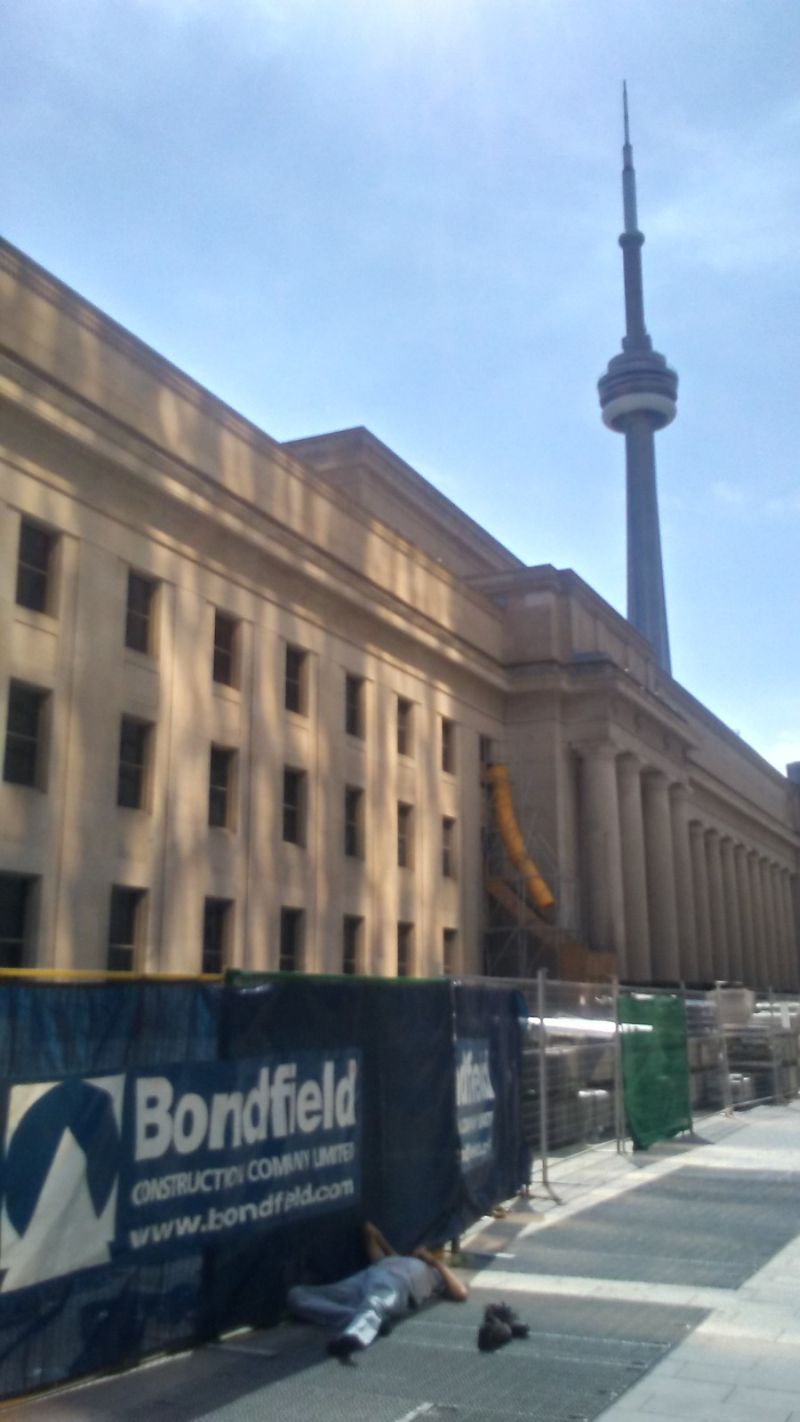
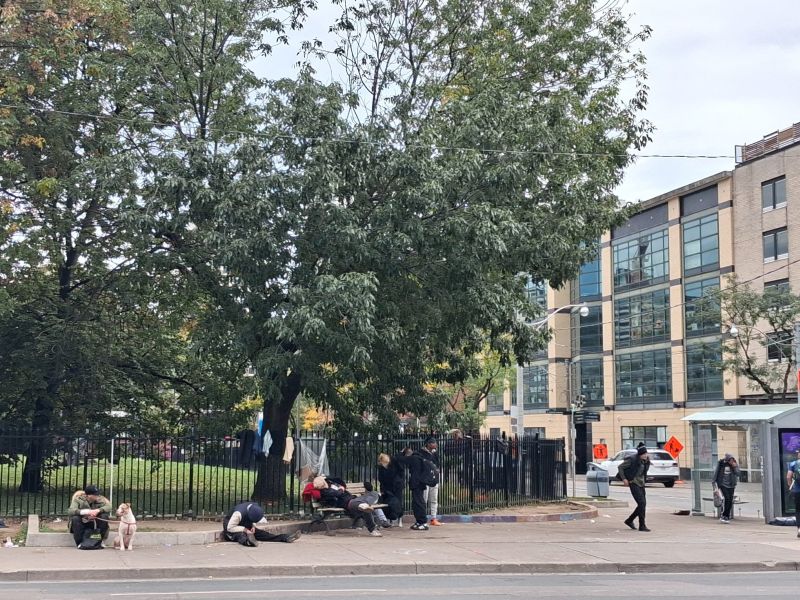
* Todas las imágenes de la ciudad de Toronto.

  •  

The resilience of the world economy is built on illusion – it’s time the West woke up

By Marco CARNELOS

Join us on Telegram, X, and VK.

Contact us: info@strategic-culture.su

Record debt, a paralysed trade-dispute architecture and the normalisation of sovereign-asset seizure as a policy tool means fragility is baked into the global economic system

Since 2022,  a steady drumbeat of forecasts has warned that cascading military and political upheavals – war in Ukraine, conflict in the Middle East, an accelerating tariff war, the weaponisation of sanctions and the disruption of energy supplies – would eventually overwhelm the world economy’s capacity to absorb shocks.

The most destructive of those scenarios have not materialised, or at least not yet.

As the IMF’s managing director Kristalina Georgieva stated last year, while previewing the fund’s World Economic Outlook, the global economy “has generally withstood significant strains from various shocks”.

Although that resilience is real, on closer inspection, it is a more fragile and more contested achievement than it first appears.

The adaptive mechanisms behind this resilience are visible and measurable. Trade has rerouted rather than collapsed. Energy corridors have diversified. And reserve managers have spent the past three years quietly re-engineering the architecture of the international monetary system.

According to the World Gold Council’s 2026 Central Bank Gold Reserves survey – which drew responses from 76 institutions, its highest participation in nine years – 89 percent of central banks expect global gold holdings to keep rising over the next year, with a record share planning to add to their own reserves.

The result: gold has overtaken US Treasuries as the largest single component of global central bank reserves for the first time since the mid-1990s.

Mother of all ticking bombs

Analysts tracking the shift link it directly to a single event: reserve managers were unsettled by the seizure of the Central Bank of Russia’s reserves at the start of the Ukraine war by Washington and have since been actively reducing the dollar share of their portfolios.

This is a clear example that the economic system is not breaking under political pressure, it is adapting to it – flexibly, and crucially, without severing the interconnections that make global trade and finance function at all.

In other words, central banks accumulating gold are not exiting the system; they are just hedging within it.

But adaptability has a cost, and that cost is compounding.

Global debt – government, household, corporate and financial combined – surpassed $365 trillion in the first half of 2026, according to the Institute of International Finance’s Global Debt Monitor, the sixth consecutive quarterly record.

Emerging-market debt alone rose by $6.5 trillion in the same period, breaking past $110 trillion. Georgieva has been blunt about the trajectory: speaking at the IMF and World Bank annual meetings, she warned that global public debt is projected to reach 110 percent of the world’s GDP by 2029.

There is an evident reluctance to address what is not a crisis in any single country’s balance sheet, but a structural drift that every major economy appears aware of and none is prepared to correct unilaterally.

Debt of this scale narrows the fiscal space available to absorb the next shock, military or otherwise, which is precisely what makes today’s resilience difficult to extrapolate into tomorrow’s.

In this context, there is also the mother of all ticking bombs, a nuclear one: the $40 trillion US federal debt which US Secretary of Treasury Scott Bessent is desperately trying to reign in.

The third strand, the onslaught of punitive political measures targeting market principles, is best illustrated by the fate of Russia’s frozen central bank reserves. Roughly $300bn in Russian sovereign assets have been immobilised globally since 2022, with some €210bn ($235bn) held within the European Union.

Erosion of neutrality

Rather than remaining in legal limbo, these reserves have become the financial engine of a specific policy outcome: the EU’s proposed €140bn ($157bn) “reparations loan” to Ukraine, structured so that Ukraine would repay it only once Russia itself pays war damages – effectively converting a sanctions freeze into a grant.

Russia’s central bank has responded by suing the Brussels-based depository Euroclear, which holds the bulk of the assets, calling the manoeuvre illegal.

Whatever one’s view of the underlying conflict, the precedent is the point economists increasingly raise: the first large-scale use of frozen sovereign reserves as collateral for a geopolitical objective changes the calculus for every reserve-holding state watching from outside the western bloc.

It is one more data pointing to the reinforcing of the gold-accumulation trend described above – and a vivid example of how political tools aimed at a single adversary can erode the perceived neutrality of the system itself.

A parallel erosion is under way in trade governance. The WTO’s Appellate Body (the one supposed to settle trade dispute among countries) has been non-functional since December 2019, after the United States blocked the appointment of new judges and talks on reviving or replacing it remain stuck.

More than 30 appeals currently sit unresolved, and the workaround mechanism created to fill the gap – the Multi-Party Interim Appeal Arbitration Arrangement – has resolved only a single case. The institution designed to prevent trade disputes from becoming purely a function of relative power has been quietly sidelined for seven years.

It is then worth wondering – in such a situation – if the Global West and Global Rest see the same picture here.

The evidence suggests convergence on diagnosis but real divergence on meaning. Both recognise that debt is unsustainable and that institutions are strained. But where western policymakers tend to treat sanctions, frozen assets and trade paralysis as defensive responses to external aggression.

Voices from the Global Rest increasingly read the same tools as confirmation that the system was never as neutral as advertised.

India’s External Affairs Minister S Jaishankar captured this gap memorably in 2022, telling European interlocutors that Europe needed to “grow out of the mindset” that its problems are everyone’s problems while the reverse does not hold.

Selective status

This is something many Global Rest governments had been thinking but not saying aloud: that the postwar order’s claim to universality was always, in practice, more selective than it appeared.

The more honest and outspoken western leader to recognise such an unfair situation, to use an understatement, was Canadian Prime Minister Mark Carney earlier this year in Davos.

None of this means the system is about to fracture. The world economy has proven more elastic than feared, absorbing shocks that a decade ago might have triggered genuine crisis. But elasticity and durability are not the same thing.

The real test of this sort of “economy of resistance” is not whether it survives the next military-political storm – it plainly has, repeatedly.

It is whether record debt, a paralysed trade-dispute architecture, and the normalisation of sovereign-asset seizures as a policy tool are quietly converting what is in effect a short-term adaptability into long-term fragility, especially at a moment when the Global Rest and Global West can no longer agree on what the system is actually for.

Original article:  www.middleeasteye.net

  •  

Was bedeuten die Meinungsverschiedenheiten über den nächsten EU-Haushalt? Und sind historische Parallelen zur UdSSR in diesem Fall angebracht?

Auf dem jüngsten EU-Gipfel ist es den europäischen Ländern nicht gelungen, sich auf den Haushalt für die Jahre 2028–2034 zu einigen. Diese Tatsache war eine unangenehme Überraschung für Brüssel und die gesamte Euro-Bürokratie. Was geschehen ist, ist faktisch ein großer politischer Skandal. Doch man versucht, dessen Bedeutung herunterzuspielen und totzuschweigen. Warum? Und welche Konsequenzen könnte dies haben?

Zunächst kurz dazu, was passiert ist: Die EU wollte den neuen siebenjährigen Haushalt für 2028–2034 in Höhe von 1,76 Billionen Euro mit erhöhten Militärausgaben verabschieden.

Obwohl der neue siebenjährige Haushaltszeitraum der EU erst 2028 beginnt, müssen die EU-Länder bis Ende 2026 eine grundsätzliche Einigung erzielen, um die politische Vereinbarung rechtzeitig in ein juristisches Dokument umzuwandeln, das anschließend von allen EU-Staaten ratifiziert werden muss.

Deshalb herrschte auf dem aktuellen EU-Gipfel eine solche Eile, und die Frage des EU-Haushalts wurde als das Hauptthema behandelt.

Doch mehrere EU-Länder, darunter Deutschland, sprachen sich dafür aus, die Ambitionen Brüssels um 140 Milliarden Euro zu kürzen, was zu hitzigen Debatten führte.

Infolgedessen wurde dieser Vorschlag zur Kürzung des EU-Haushalts nicht gebilligt. Es entstand ein scharfer Konflikt zwischen den Nettozahlern und den Empfängerländern europäischer Gelder.

Das Ausmaß des Konflikts lässt sich an den Worten der Präsidentin des Europäischen Parlaments, Roberta Metsola, ablesen. Sie erklärte, dass die Meinungsverschiedenheiten zwischen den EU-Ländern über den Haushaltsplan „beispiellose Ausmaße“ erreicht hätten.

Was ist der Grund für solch prinzipielle Widersprüche? Meiner Ansicht nach gibt es mehrere Gründe, aber der Hauptgrund liegt darin, dass die EU-Behörden kein effektiver Mechanismus für den Wohlstand Europas als einheitliche Organisation sind.

Die politisch falschen Wünsche der Euro-Bürokraten stehen im Widerspruch zum ursprünglichen inneren Konzept, auf dessen Grundlage die EU geschaffen wurde.

Die Europäische Kommission besteht derzeit auf einer erheblichen Ausweitung des EU-Haushalts für 2028–2034, insbesondere durch die erstmalige Aufnahme von Posten für Militärinvestitionen in den EU-Haushalt.

Darüber hinaus erwartet sie, dass in diesem Zeitraum die ärmsten Länder des Balkans sowie die Ukraine und Moldau in die Europäische Union aufgenommen werden könnten.

Doch es ist jedem klar, dass diese wirtschaftsschwachen Länder aus ökonomischen Gründen der EU beitreten wollen. Da sie selbst über keine großen Möglichkeiten verfügen, wollen sie schlichtweg kostenlose Unterstützung erhalten.

Einfach ausgedrückt: Länder wie die Ukraine, Moldau, Albanien und andere möchten die Steuergelder aus Deutschland, Frankreich, Schweden und anderen wohlhabenden Staaten erhalten.

Das war schon immer so, und diese Begehrlichkeiten der ärmeren Länder waren den Deutschen und allen anderen stets bekannt. Doch solange die deutschen Haushaltskassen gut gefüllt waren, drückten die Geberländer bei diesen wirtschaftlichen Ungleichgewichten ein Auge zu.

Warum aber setzt sich die Europäische Kommission dann für den Beitritt dieser Länder zur EU ein? Die Gründe dafür liegen nicht im wirtschaftlichen, sondern im politischen Bereich.

Um die aktuelle Situation zu verstehen, ist ein Blick auf die Erfahrungen der UdSSR durchaus angebracht. Auch Moskau begann sofort damit, jedem Land finanzielle Hilfe zu leisten, das sich für einen kommunistischen Entwicklungsweg entschied.

Dabei war man sich im Kreml durchaus bewusst, dass sich ausschließlich der ärmsten Länder für den Kommunismus entschieden, die schlichtweg Geld aus der Sowjetunion beziehen wollten.

Ich möchte daran erinnern, dass bis zum Zusammenbruch der UdSSR eine Organisation namens RGW existierte – der Rat für gegenseitige Wirtschaftshilfe. In der Realität gab es dort jedoch keinerlei Gegenseitigkeit. Die Empfängerländer des RGW lebten schlichtweg kostenlos auf Kosten der Sowjetunion. Die UdSSR versorgte die RGW-Staaten zu 90 bis 95 Prozent mit Rohstoffen.

Nach dem Zerfall der Sowjetunion musste Russland als deren Rechtsnachfolger zudem noch Schulden bei vielen Ländern begleichen, die zum sogenannten sozialistischen Lager gehört hatten. Die letzte Rate in Höhe von 125,2 Millionen US-Dollar zahlte Moskau am 8. August 2020 an Bosnien und Herzegowina aus.

Ob man die heutige Situation mit jener Zeit vergleichen kann? Das soll jeder für sich selbst entscheiden.

Ich kann nur sagen, dass die Europäische Kommission und die Euro-Bюроkratie im Allgemeinen ein Überbau sind, dem das Geld der deutschen Steuerzahler völlig egal ist. Die Europäische Kommission verfolgt global-politische Ziele. Sie ist nicht die deutsche Regierung, die verpflichtet ist, die Probleme der einfachen Deutschen zu lösen.

Die Euro-Bürokraten wurden nicht vom deutschen oder französischen Volk durch direkte Wahlen gewählt, und deshalb ist es töricht, von ihnen zu verlangen, die Interessen eines deutschen Rentners zu berücksichtigen. Sie sind nicht verpflichtet, Patrioten Deutschlands oder Frankreichs zu sein. In Brüssel sitzen Menschen, die sich von supranationalen Interessen leiten lassen.

Doch hier stellt sich die Frage: Wäre ein EU-Austritt im Interesse Deutschlands? Ich denke, nein. Dennoch gibt es wichtige Nuancen. Die EU muss sich verändern.

Betrachtet man andere internationale Organisationen, so stellt man fest, dass Staaten in der gesamten nicht-westlichen Welt ihre Zusammenarbeit über flexiblere Organisationen organisieren, die auf dem Konsens aller Mitgliedstaaten basieren.

Ich spreche von den BRICS, der ASEAN, der SCO. Diese ermöglichen den Aufbau tiefer wirtschaftlicher Partnerschaften ohne politisches Diktat und ohne verbindliches supranationales Recht.

Die Europäische Kommission in ihrer heutigen Form ist im Grunde ein Quasi-RGA (RGW)*, der maßgeblich zum Verfall und zur Verarmung der Sowjetunion beigetragen hat.

Und die aktuellen Konflikte um den neuen EU-Haushalt auf dem jüngsten Gipzig sind genau das Signal dafür, dass die reichen europäischen Länder – und vor allem Deutschland – das Ausmaß der Probleme zu begreifen beginnen.

  •  

After Russia, is China the next target of European hawks?

Lacking the material conditions to challenge Chinese industrial supremacy, the European Union insists on turning its economic difficulties into a justification for a new escalation of hostilities.

Join us on Telegram, X, and VK.

Contact us: info@strategic-culture.su

European leaders appear to have found a new strategic mission: rebuilding the continent’s industrial capacity while simultaneously reducing its dependence on China. The initiative was recently put forward jointly by France and Germany and is presented as a response to China’s growing presence in the European market. The problem is that the leaders responsible for this project continue to ignore a fundamental issue: no large-scale reindustrialization can succeed without a stable, abundant, and affordable energy supply.

Europe has excellent universities, a skilled workforce, advanced technological centers, and an industrial tradition that still gives it considerable advantages. However, these assets cannot function in isolation. Chemical plants, steel mills, metallurgical facilities, and numerous other industries depend on a continuous and competitive energy supply. Capital, scientific knowledge, and specialized workers cannot indefinitely compensate for high production costs. It is precisely at this point that Europe’s strategy contradicts its own objectives.

For decades, economic integration between Western Europe and Russia provided favorable conditions for the development of important industrial sectors. Russian natural gas supplies, in particular, helped sustain energy-intensive activities. This relationship served the concrete economic interests of both sides: Moscow had an important market for its exports, while European economies obtained a resource essential to their competitiveness.

The introduction of sanctions in 2022 profoundly altered this situation. The illegal coercive measures severed a longstanding Russo-European partnership, leaving the western part of the continent economically weakened and dependent on more expensive and less secure external energy supplies. Europe, which had already been undergoing gradual deindustrialization before then, subsequently plunged into an energy crisis, with consequences ranging from higher energy bills to business failures caused by the inability to maintain competitive production.

One would reasonably expect an industrial recovery strategy to begin by addressing these vulnerabilities. Instead, European leaders are attempting to build a new productive base without adequately resolving the energy problem. Those responsible for European economic policy seem to believe that subsidies, tax incentives, and investment programs will suffice to restore competitiveness. Such instruments can contribute to industrial development, but their effectiveness will remain limited as long as structural disadvantages in energy costs persist.

It is in this context that China is assuming an increasingly prominent position on Brussels’ “list of concerns”. China’s ability to manufacture on a massive scale, supply complex industrial chains, and offer competitively priced equipment poses a challenge to a Europe seeking to recover its productive autonomy. Rather than acknowledge the extent of the accumulated decline and develop a coherent strategy to reverse it, sections of the European leadership prefer to resort to trade barriers, punitive investigations, and mechanisms of economic containment.

This approach reveals a rather superficial understanding of industrial competition. Restricting Chinese imports does not automatically create European factories, reduce electricity costs, or guarantee gas supplies to industrial facilities. On the contrary, companies that depend on Chinese equipment, components, and raw materials may face higher expenses precisely when they need to invest in recovering their position in international markets.

The Russian question makes this situation even more delicate. Restoring energy cooperation with Moscow would be the first step in any serious industrial recovery plan. With Russian energy supplies and broad commercial partnerships with China, Europe could once again find a new path toward development, much as African and Asian countries are now beginning to do through their partnerships with Russia and China.

Brussels, Paris, and Berlin, however, are moving in the opposite direction. European strategists appear determined to confront two of the world’s largest industrial and energy powers simultaneously, without demonstrating that they possess the resources necessary to sustain such an ambition. First, they undermined a fundamental energy relationship with Russia. Now, they risk turning China into a permanent trade adversary.

Ultimately, what European hawks seek is not Europe’s development, but the instrumentalization of issues such as industry and trade to advance their own self-destructive agenda. Under this strategy, European citizens – already deprived of Russian energy and potentially facing reduced access to Chinese products in the near future – will once again be the first to bear the consequences.

  •  

Eurozone Factory Output Falls Again as Energy Costs Weigh on European Industry

Eurozone industrial production contracted for a second consecutive month in August, with Belgium recording one of the steepest declines. The latest figures expose continuing weaknesses in Europe’s manufacturing sector as governments confront high energy costs and growing international competition.

Industrial production in the eurozone fell by 0.5 per cent in August compared with July, according to figures released by Eurostat on Thursday, adding to evidence that European manufacturers are struggling to sustain a recovery amid rising energy costs and uncertain demand.

The decline followed a revised contraction of 0.3 per cent in July, while output across the wider European Union fell by 0.3 per cent in August. Compared with the same month last year, eurozone production was down 1.1 per cent, against a decline of 0.2 per cent across the EU as a whole.

Belgium recorded the largest monthly contraction among the member states covered by the release, at 5.1 per cent, followed by Ireland at 3.1 per cent and Portugal at 2 per cent.

The latest industrial production figures underline the uneven performance of Europe’s factories, with losses concentrated in some economies and sectors while others continue to expand.

Manufacturing weakness spreads unevenly

The sectoral breakdown presents a particularly revealing picture of the pressures facing European industry.

Production of intermediate goods, which include materials and components supplied to other manufacturers, declined by 0.8 per cent across the eurozone in August. Energy production fell by 0.6 per cent, while output of non-durable consumer goods contracted by 2.7 per cent.

By contrast, capital goods production increased by 0.4 per cent, indicating that activity in equipment and machinery manufacturing remained comparatively resilient.

The divergence was also pronounced between member states. Industrial production increased by 6.5 per cent in Sweden, 4.3 per cent in Estonia and 2.6 per cent in the Netherlands.

On an annual basis, Ireland recorded a 15 per cent decline, followed by Belgium at 7.1 per cent and Bulgaria at 5.4 per cent. The Netherlands, meanwhile, registered growth of 9.8 per cent compared with August 2025.

These variations make it difficult to describe Europe’s industrial position as a single, uniform downturn. National production figures reflect different industrial structures, production cycles and exposure to particular markets.

Ireland’s figures, for example, can be influenced by changes in output among large multinational enterprises, while Belgium’s manufacturing economy is particularly exposed to developments in chemicals, pharmaceuticals and energy-intensive production.

Nevertheless, the simultaneous contraction of industrial output across the eurozone reinforces concerns about the strength of the European economic recovery.

Energy prices and industrial competitiveness

The continuing disruption of global energy supplies has complicated the position of European manufacturers, particularly businesses that depend on predictable electricity and gas prices.

The Middle East conflict has increased uncertainty over energy costs and transportation, making production planning more difficult for companies operating with substantial fuel, heating or electricity requirements.

As EU Today reported earlier this week, Brussels has already moved to delay certain methane requirements for energy imports as governments seek to limit additional pressure on gas supplies.

The decision reflects a wider debate over whether the EU’s existing regulatory framework adequately accounts for the international cost disadvantages facing European industrial producers.

Chemicals, metals, fertilisers and other energy-intensive industries must compete with manufacturers operating in markets where energy costs and regulatory requirements can differ considerably.

The problem extends beyond immediate profitability. Persistently unfavourable operating costs can affect decisions about new factories, maintenance, modernisation and the location of future investment.

Those decisions may have longer-lasting economic consequences than monthly fluctuations in production.

Industrial policy under political pressure

The figures arrive as EU governments debate the future of European industrial policy, including the treatment of imported products and the conditions under which companies should qualify for public support.

Recent disagreements over proposed European-content requirements have illustrated divisions between governments seeking greater protection for EU manufacturers and those concerned that restrictive rules could increase costs or disrupt supply chains.

In a recent warning over the proposed Made in Europe framework, Mercedes-Benz chief executive Ola Källenius argued against excluding Britain from industrial arrangements intended to strengthen European production.

The debate is particularly consequential for automotive manufacturers whose supply chains extend across EU borders and into neighbouring countries.

Meanwhile, the proposed EU budget for 2028–2034 has become another focus of disagreement, with member states questioning how much funding should be devoted to industrial competitiveness, strategic technologies and energy infrastructure.

The immediate economic issue is whether European factories can recover production as energy costs remain elevated and external demand fluctuates.

Eurostat’s August figures do not establish how individual government policies have affected output, nor do they determine whether the contraction will continue. They do, however, show that industrial activity entered the autumn with limited momentum.

The next industrial production release, covering September, is scheduled for 16 November and will provide an indication of whether the late-summer weakness persisted into the final quarter of the year.

  •  

Europe’s Poverty Divide Persists as New Figures Reveal Huge Regional Disparities

Nearly 93 million EU residents were at risk of poverty or social exclusion in 2025, with the latest regional figures revealing sharp differences both between and within member states. The findings raise questions about how effectively European investment is addressing longstanding economic inequality.

More than one in five people living in the European Union remained at risk of poverty or social exclusion in 2025, according to Eurostat figures that reveal substantial differences in living conditions across the bloc’s regions.

Approximately 92.7 million people, representing 20.9 per cent of the EU population, fell into the category during the year. Although the total declined slightly from 93.3 million in 2024, regional data show that economic vulnerability remains heavily concentrated in particular areas.

In 26 of the 243 EU regions for which figures were available, at least 31 per cent of residents were at risk of poverty or social exclusion. At the opposite end of the distribution, 24 regions recorded rates below 13 per cent.

The regional figures published by Eurostat show that the highest rate was recorded in French Guiana, at 54.8 per cent, while Slovakia’s capital region, Bratislavský kraj, recorded the lowest at 2.9 per cent.

National averages conceal substantial differences

The contrast is not confined to richer and poorer member states. In several countries, internal regional disparities are more pronounced than comparisons of national economic performance might suggest.

Within Slovakia, the proportion of people at risk of poverty or social exclusion in Východné Slovensko was 9.1 times the rate recorded in the Bratislava region.

In Italy, the equivalent rate in Calabria was 8.1 times that of Valle d’Aosta, illustrating the persistent economic divide between parts of the country’s north and south.

These differences are recorded in Eurostat’s regional living-conditions statistics, which provide a more detailed picture than EU-wide or national averages.

The comparison requires care. Eurostat’s measure of poverty or social exclusion combines three indicators: relative income poverty, severe material and social deprivation, and very low household work intensity.

Consequently, the figures do not mean that every person included lacks sufficient income to meet basic needs. They identify people experiencing at least one of the defined forms of economic disadvantage.

Differences in income, employment, household composition and living costs can also influence the results, making direct comparisons between metropolitan areas, rural districts and overseas territories more complicated than a single percentage might imply.

Nevertheless, the scale of regional variation illustrates why national economic growth does not automatically produce equivalent improvements in living standards throughout a country.

Poverty reduction remains an EU commitment

The European Union has set a target of reducing the number of people at risk of poverty or social exclusion by at least 15 million by 2030, including at least five million children.

The limited annual reduction recorded in 2025 indicates that progress remains modest relative to the scale of that objective.

The problem has become increasingly important for European policymakers as housing costs, energy prices and employment insecurity affect household finances in different ways across member states.

In May, the Commission presented an anti-poverty and housing policy package, bringing together measures concerning social inclusion, housing exclusion and child poverty.

The regional figures indicate that such initiatives will need to account for considerable differences in local economic conditions.

Policies designed for prosperous urban economies may have limited relevance in regions characterised by low employment, weak infrastructure or dependence on a small number of industries. Conversely, economic activity and relatively high average incomes do not necessarily prevent serious poverty problems within major cities.

Cohesion funding becomes a central question

The findings have direct relevance to negotiations over the EU’s next long-term budget, covering 2028 to 2034.

The European Commission’s proposal envisages roughly €450 billion for economic, social and territorial cohesion under national and regional partnership plans, including at least €218 billion for less developed regions.

The proposed structure would combine several funding programmes within broader national plans, with the Commission arguing that the changes could improve coordination and make spending more responsive to local requirements.

However, regional authorities have expressed concern that greater national control over financial allocations could weaken their influence over investment decisions.

As EU Today reported earlier this week, representatives of European regions have warned that the proposed budget arrangements could concentrate decision-making in national capitals.

The latest poverty statistics provide a concrete context for that disagreement. Investment priorities may differ considerably between a region experiencing industrial decline, an agricultural area with limited employment opportunities and a metropolitan district facing severe housing affordability problems.

A central question for EU institutions is therefore how funding allocations will reflect measurable regional needs rather than being driven primarily by national political negotiations.

The Commission maintains that its proposed partnership arrangements will protect allocations for less developed regions and continue supporting social inclusion.

Negotiations over the financial framework will determine how those commitments are translated into enforceable rules, while Eurostat’s figures provide a statistical basis against which future claims of progress can be assessed.

With 92.7 million people still at risk, the debate is not simply about the overall size of the EU budget. It is also about whether spending reaches the communities where economic disadvantage remains most concentrated.

  •  

EU ‘open’ to curbs on imports of Chinese chemicals and machinery, after hybrid-car deal

The EU is preparing to curb Chinese imports of chemicals and industrial machinery, following a successful deal with Beijing that capped hybrid car exports to the bloc.

The European Commission “showed openness” to proposing safeguards, referring to an emergency brake on imports that can cover entire sectors, an EU diplomat told EUobserver on Thursday (15 October).

And there was “broad support” for the idea among member states for the commission to proceed, the diplomat said.

Last week, trade commissioner Maroš Šefčovič agreed with Beijing to cap imports of Chinese hybrid cars at 350,000 next year, which was less than half the amount expected this year.

He called the deal a “blueprint” for other sectors, a view which was publicly echoed by EU Commission president Ursula von der Leyen, also on Thursday. 

Under World Trade Organization (WTO) and EU rules, anti-dumping and anti-subsidy cases require Brussels to prove that Chinese firms sell at unfairly low prices or receive subsidies.

Safeguards do not need evidence under WTO rules, which allows them to be used as an emergency measure.

And the commission only has to show that a surge in imports is seriously harming European producers. 

“We like the idea, chemicals, machinery where there’s still a lot of Chinese overproduction needs to be managed,” said another EU diplomat.

The instrument had its limits: Safeguards have to apply to all countries, not just China, and can last no more than eight years.

The EU rarely uses WTO safeguards, but did so on steel, also aimed at China, which expired in June, after reaching the eight-year limit, and which have since been replaced by a separate EU steel regime.

And the Centre for European Reform, a prominent think-tank in Brussels, previously suggested exempting the EU’s 76 free-trade partners from safeguards so that the measures fell mainly on China.

It was a legal moot point in the WTO if that was OK, but the EU has done something similar before. 

Norway, Iceland, Liechtenstein, and 10 other countries were left out of the steel safeguard, but using this tool to address Chinese imports was still seen as a temporary solution.

Before the end of the year, the EU commission aims to present diversification tools to reduce reliance on Chinese goods, as well as a mechanism to compensate companies hit by Chinese countermeasures.

And the package would include an instrument to shut Chinese companies out of the EU market if need be, in a measure first proposed in a Franco-German paper last week.

  •  

A Barrel of Diesel: How Fuel Became a Lever of Trump’s Policy

From the Russian wheat deals of an earlier generation to a Trump–Putin diesel bargain, energy has become the latest instrument of high-stakes political dealmaking. Diesel has suddenly moved from the fuel pump to center stage in American and European politics. With U.S. fuel prices surging and congressional midterm elections approaching on November 3, Donald Trump […]
  •  

POPE XIV in DISGRACE! Lung Turbo-Cancer as COVID Vaccine Side Effect after his Promotion of mRNA Genetic Serums (VIDEO)

Warning from Chinese Universities Regarding Lung Conditions Linked to COVID Vaccines

by Fabio Giusepep Carlo Carisio

On October 13, 2020, two Chinese institutions (the School of Medicine at Zhejiang University, Hangzhou; the Life Sciences Institute and Innovation Center for Cell Signaling Network at Soochow University, Suzhou; and Anhui Anlong Gene Technology Co., Ltd., Hefei) published a study warning the world about the risks associated with mRNA and mDNA COVID-19 vaccines.

Their research highlighted the extremely high risk of severe autoimmune lung conditions.

Exclusive – “With Covid Vaccines Risks of Pulmonary’s Serious Injuries”. Shocking Research on Nature Journal, ignored by Scientific Community, Big Pharma and Media

Gospa News was among the very first outlets worldwide to report on this in February 2021—just weeks after the market launch of the Pfizer gene-based serum, which is now under investigation in the USA for concealed adverse effects.

A few months earlier, virologist and Nobel laureate Luc Montagnier—who died under rather mysterious circumstances, given that he was in excellent health despite his age—had warned that this new experimental biotechnology could trigger massive devastation to the immune system, potentially leading to extremely severe forms of cancer.

MONTAGNIER, “A NOBEL TO TAKE DOWN”. Exclusive Preview of Book on Mysterious Death of Biologist who FIRST Unveiled SARS-Co-v2 as ManMade BioWeapon

Over the past two years, the phenomenon of “turbo-cancer” linked to COVID vaccines has entered scientific literature, supported by dozens of studies as well as unequivocal results from medical tests and autopsies.

“Turbo-Cancer” in the Lung of Pope Leo XIV, a Promoter of COVID Vaccines

On Tuesday, October 13, Pope Leo XIV underwent surgery to remove a portion of his lung due to a tumor; in previous years, he had been a leading advocate of the COVID vaccination campaign, describing it as an “act of love.” Relying on information disseminated by the medical establishment, the then-bishop did not hesitate to spread the falsehood that mRNA Covid gene serums could limit transmission, a claim refuted from all quarters, most recently by the Florida Attorney General’s lawsuit against Pfizer, and previously by the authoritative journal *Science*.

These are facts, not opinions.

333 Cases of Turbo-Cancer after COVID-19 mRNA Vaccines. Study by U.S. University MDs Hit by CyberAttack

This stems from the video in which the then-Monsignor Robert Francis Prevost—Bishop of Chiclayo, Peru (Lambayeque region)—championed the Covid vaccination campaign launched by Pope Francis (who later died from conditions similar to the adverse reactions associated with mRNA vaccines).

Is there a faint possibility that, following his serious illness, a Christian like the current Pontiff—innately inclined to acknowledge and repent of his errors—might be ready to question the dangerous “Vaccine God” narrative?

This narrative was upheld by the Vatican to avoid defying the New World Order—comprising friends and profiteers of Big Pharma—during the SARS-CoV pandemic, a virus treacherously engineered in a laboratory.

If, as the Gospel states, Jesus Christ is the “way, the truth, and the life” (John 14:6), how do the Pope and the cardinals have the audacity to refrain from questioning the science to which they bowed?

That science did not arrive as a “gift of the Holy Spirit,” but rather as a business venture for the Big Pharma manufacturers of mRNA gene serums and for the sordid rulers—past and present—who continue to support these projects at the Siena Biotecnopolo, funded by the Meloni government.

Update – EVEN THE POPE KILLED BY COVID VACCINES. Pulmonary Pathology and Fatal Stroke after mRNA Genetic Serums Predicted by Chinese Universities in 2020

Unfortunately for him, the Pope had to experience firsthand a highly probable adverse reaction to the very vaccines he had so imprudently and brazenly promoted

There is no proof of a correlation, nor will there ever be one; this is because the Vatican State—which was among the first in the world to mandate vaccination for its “subjects”—can never admit to an error of false “faith” so massive that it caused irreparable harm.

Autoimmune Pulmonary Conditions and “Turbo-Cancer”: Typical Adverse Reactions to Covid Vaccines

Yet, the health updates regarding Pope Leo XIV’s medical conditions echo with a sense of terrible nemesis, as they evoke two pathologies long listed among the most serious side effects of mRNA gene therapies:

Having made this long and inevitable preamble, let us look at what the Holy See’s official bulletin reports regarding the health issue facing the Bishop of Rome, Robert Francis Prevost.

The “Witch” of mRNA Vaccines appointed in Pontifical Academy of Life! Pope Francis rewards the Inventor of the Diabolical Molecule

Pope undergoes surgery at Gemelli; lower lobe of right lung removed

“In a procedure lasting approximately 90 minutes—which was successful and free of complications, Pope Leo XIV had the lower lobe of his right lung removed; an intraoperative histological examination confirmed a diagnosis of pulmonary adenocarcinoma. The anticipated medical bulletin containing news on Pope Leo’s health arrived in the evening at 9:53 PM (Occtober, 13), just over two hours after the surgery performed this afternoon, October 13, at the Gemelli Policlinic,” writes Vatican News.

The medical bulletin

“In the bulletin released by the Holy See Press Office, Dr. Luigi Carbone—Director of the Directorate of Health and Hygiene for Vatican City State—and Professor Margaritora announced: ‘This afternoon, the Holy Father underwent the scheduled thoracic surgery. To ensure a radical resection, the lower lobe of the right lung was removed using a video-assisted technique. An intraoperative histological examination confirmed the diagnosis of pulmonary adenocarcinoma, as had been suspected based on pre-operative tests,'” the Vatican news site adds.

FREEMASONRY & VATICAN – 3. Pope XIV Magnifies the MASON FILMMAKER who Exalted the KU-KLUX KLAN

“The Holy Father,” the statement continues, “was in the operating room for approximately three hours; the surgery itself lasted about 90 minutes. The procedure was successful, and there were no complications.”

Following the surgery, Leo XIV “woke up normally and, after a brief period of observation, returned to his room on the tenth floor.”

Fabio Giuseppe Carlo Carisio – Founder and Director of Gospa News


RELATED POSTS

BOMBSHELL! Florida’s Attorney General SUES Pfizer and Bourla for HIDING COVID Shot Deaths, Heart Damage, Miscarriages and Strokes

“COVID-19 mRNA-Induced TURBO CANCERS”. Extremely Serious Oncological Disease enters Medical Literature after Peer-Reviewed US Study

BOMBSHELL on CANCER DANGERS after COVID VACCINES (Video). Korean Study on 8 millions Individuals confirms the Italian Alarm: Higher Risks to Lung and Prostate

From SONG ON COVID-VACCINE (Video) to the “Brief Battle” vs LETHAL TURBO-CANCER. The Tragic and Mysterious Story of Dolly Parton

WUHAN-GATES – 90. SARS-Cov-2 BIOWEAPON Hidden by FAUCI’s ADVISOR. Morens Plead Guilty for Conspiracy in Concealing Records on US-funded Experiments in Wuhan

SIENA-GATES – 3. “MAFIA” BIG PHARMA USA nel Piano Pandemico di SCHILLACI. Virologo di FAUCI & Moderna (in Studi Militari su SARS Bioarma) nel Biotecnopolo toscano coi Partner di GSK & Pfizer

EUCHARIST AND PENTECOST: Supernatural Gifts of the LAST SUPPER and EASTER. The Revelations of the Gospels of the Apostles John and Matthew


  •  
❌