What the UK Is Doing to Pro-Palestine Novelist Sally Rooney Is an Act of Orwellian Villainy


In an official statement issued on Monday, 19 October, the company announced that it had filed a formal complaint with Dutch police and was cooperating with national cybersecurity authorities. Although physical supermarkets have remained open, the disruption has affected online shopping, deliveries and some distribution operations.
The company said investigators had so far found no evidence that sensitive information belonging to customers, employees or business partners had been taken. However, its investigation remains open, and the identity and objectives of those responsible have not been publicly established.
The disruption began on 12 October, when Ahold Delhaize detected suspicious activity within its information technology infrastructure.
The group responded by taking a number of systems offline as a precaution, affecting most of its retail brands in Europe and the United States. The consequences varied considerably between businesses, with some experiencing prolonged interruption to digital services while others were able to restore operations more quickly.
Albert Heijn, the Netherlands’ largest supermarket chain, has been particularly affected. Its website and mobile application have returned online, but home grocery deliveries are not expected to resume until Friday, 23 October.
Orders scheduled before that date have been cancelled, while the company continues preparations for a gradual restoration of its online delivery service.
The incident also interrupted some supply and distribution arrangements, resulting in shortages on supermarket shelves in parts of the Netherlands and Belgium.
In Belgium, Delhaize has restored its online shopping operations. Certain promotional and personalised services were still experiencing difficulties, although the parent company confirmed that its Belgian e-commerce business was operational again.
Dutch retailers Etos and Gall & Gall have also restored their websites. Meanwhile, several American supermarket brands owned by Ahold Delhaize have continued to experience service interruptions.
The group said it expected additional online services in the United States to become available over the coming days.
Ahold Delhaize said it notified the Netherlands’ National Cyber Security Centre within 24 hours of detecting the malicious activity.
The company has subsequently provided updates to the authorities and, on Monday, confirmed that a formal police report had been submitted.
Chief executive Frans Muller defended the decision to shut down digital systems, arguing that the investigation had demonstrated the necessity of taking preventive action.
The company has not identified the perpetrators, confirmed whether ransomware was involved or disclosed the technical method used to gain access to its infrastructure.
These distinctions are important because malicious activity does not necessarily establish that information was stolen or that attackers obtained control over every system subsequently taken offline.
The retailer has instead described a controlled restoration process intended to ensure that affected systems can be brought back into operation without exposing the business to further risks.
Ahold Delhaize operates thousands of supermarkets and related retail businesses, including Albert Heijn, Delhaize, Food Lion, Giant Food, Hannaford and Stop & Shop.
Its geographical reach means that a disruption originating within shared corporate infrastructure can affect several national markets, even where individual retail chains maintain separate commercial operations.
The attack comes amid increasing scrutiny of the vulnerability of European food retailers to digital disruption.
Earlier this month, investigators in France began examining cyberattacks against refrigeration control systems used by hundreds of supermarkets.
Those incidents reportedly affected equipment at chains including Carrefour, Intermarché and Monoprix, with some retailers forced to discard products after refrigeration systems malfunctioned.
There is no established connection between the French incidents and the attack affecting Ahold Delhaize.
Nevertheless, both episodes illustrate the dependence of modern retail operations on interconnected digital systems supporting stock management, refrigeration, logistics, payments and customer services.
The consequences of a serious cyber incident can extend beyond the loss of access to websites. Interruptions to inventory systems, warehouse operations or communications with suppliers can affect the availability of physical products.
This creates particular difficulties for food retailers, where delays in transport and storage can result in the loss of perishable goods.
The incident also draws attention to the European Union’s NIS2 cybersecurity framework, which establishes stricter risk-management and incident-reporting obligations for organisations operating in designated sectors.
Food production, processing and distribution are among the activities covered by the directive, although its application to particular companies and operations depends on the relevant legal definitions and national implementing arrangements.
The legislation requires organisations within its scope to establish appropriate cybersecurity protections, address supply-chain risks and notify competent authorities of significant incidents.
Separately, the General Data Protection Regulation establishes notification requirements where personal-data breaches meet the relevant reporting threshold.
Ahold Delhaize’s statement that it has found no evidence of sensitive data being taken does not conclude the technical investigation, but it means that a confirmed theft of personal information should not presently be presented as a fact.
For the company, the immediate challenge remains restoring online services while maintaining normal supermarket operations. The wider commercial consequences, including the cost of the interruption and its effect on sales, have not yet been quantified publicly.
Alex Tait on a proposed amendment to the representation of the people bill, and Dr Joseph Mullen on Russian interference in the Brexit referendum
Andy Burnham’s comments about Russian interference in Brexit (Report, 11 October) and the warning by the MI5 chief, Ken McCallum, against exaggerating its impact (Report, 13 October) risk overlooking another serious threat to electoral integrity: disinformation from our own political parties and campaigners.
Foreign interference deserves scrutiny, but misleading factual claims in electoral advertising are unregulated, unlike in commercial advertising. We have four sets of rules to ensure an advert for a packet of sausages is accurate, but none for the most important advertising of all – ads that influence how we vote.
Continue reading...
© Photograph: Tuomas A Lehtinen/Getty Images

© Photograph: Tuomas A Lehtinen/Getty Images

© Photograph: Tuomas A Lehtinen/Getty Images
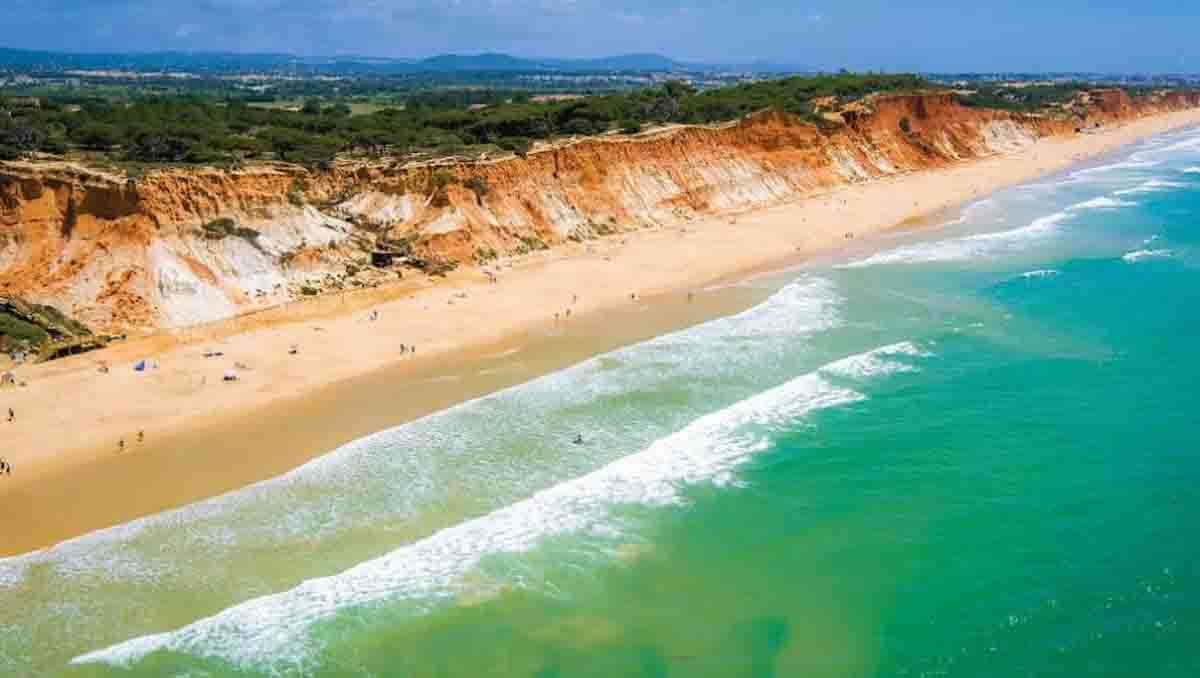
O Algarve foi eleito o Melhor Destino de Praia da Europa em 2026 nos World Travel Awards, conhecidos como os "Óscares do Turismo".
O conteúdo Algarve volta a ser eleito o Melhor Destino de Praia da Europa aparece primeiro em Algarve Marafado.

Difference between French and German borrowing costs widens after public buildings burned and shops looted
France has been hit by a fresh wave of selling in its bond and stock markets after violent protests over the weekend led to thousands of arrests and left public buildings burned and hundreds of shops looted across the country.
The chaos has spooked investors as analysts worried that it would undermine Paris’s efforts to cut spending and reduce its debt.
Continue reading...
© Photograph: SDIS 87/AFP/Getty Images

© Photograph: SDIS 87/AFP/Getty Images

© Photograph: SDIS 87/AFP/Getty Images

O Algarve acaba de ser eleito Melhor Destino de Praia da Europa 2026 nos World Travel Awards, considerados os “Óscares do Turismo”, conquistando este prestigiado galardão pela 11.ª vez – depois das distinções alcançadas em 2012, 2013, 2015, 2016, 2017, 2019, 2020, 2021, 2022 e 2023.
Registando um recorde sem precedentes na categoria de Destino de Praia, a distinção foi anunciada este sábado, durante a Gala Europeia dos prémios, realizada em Kotor, no Montenegro.
Na prestigiada votação dos leitores da Condé Nast Traveller, o Algarve consolidou-se como um dos destinos mais amados da Europa tendo-se destacado entre oito destinos nomeados, superando concorrentes como Porto Santo, Maiorca, Sardenha, Marbella, Cannes e Corfu.
Segundo a Região de Turismo do Algarve, a conquista deste novo título europeu surge num momento particularmente positivo para a notoriedade internacional da região com duas praias a integrarem também o top-20 das melhores da Europa, segundo os leitores da edição britânica da Condé Nast Traveller.
A Praia da Falésia, no concelho de Albufeira, conquistou o 4.º lugar, com 94,70 pontos, enquanto a Praia de Benagil, no concelho de Lagoa, registou a 16.ª posição, com 81,67 pontos. São as duas únicas praias portuguesas a integrar esta classificação, que resulta de uma iniciativa com mais de 296 mil respostas de leitores do Reino Unido nos Readers’ Choice Awards 2026.
O presidente do Turismo do Algarve, disse que “conquistar pela 11.ª vez o título de Melhor Destino de Praia da Europa é um motivo de enorme orgulho para toda a região.” como reporta o Algarve Primeiro.
Enalteceu o “percurso de excelência que temos vindo a construir ao longo dos anos“, e “este reconhecimento ganha um significado ainda mais especial quando duas das nossas praias acabam também de ser distinguidas entre as melhores da Europa pelos leitores da Condé Nast Traveller.“
Gomes valorizou as distinções dizendo que elas “refletem a beleza e diversidade da nossa costa, a qualidade da nossa oferta turística e, sobretudo, o trabalho e a dedicação de todos os que contribuem diariamente para afirmar o Algarve como um destino de referência internacional.”
“Mais do que celebrar estas conquistas, importa encará-las como uma responsabilidade acrescida. Queremos continuar a valorizar aquilo que nos distingue, investindo na sustentabilidade, na preservação do nosso património natural e na qualificação da experiência turística. O nosso objetivo é garantir que o Algarve continua a merecer a confiança e a preferência de quem nos visita, mantendo-se na linha da frente dos grandes destinos turísticos internacionais”, destacou o presidente do Turismo do Algarve, André Gomes.
Importa destacar que a região Algarve está novamente nomeada para Melhor Destino de Praia do Mundo nos World Travel Awards 2026, arriscando-se a conquistar o quinto título na categoria.
Para Melhor Destino de Praia do Mundo 2026 a votação está a decorrer até ao dia 30 de outubro, através do site oficial dos World Travel Awards, em https://www.worldtravelawards.com/vote.
European Central Bank President Christine Lagarde has warned that a sharp sell-off in government bonds is tightening financial conditions across the eurozone, threatening to weaken economic growth at a time when European governments are already struggling with mounting debt and higher energy prices.
Speaking during the International Monetary Fund’s annual meetings on Saturday, 17 October, Lagarde said rising bond yields were imposing additional pressure on the European economy, potentially reducing demand and helping to bring inflation down.
Her comments came as investors demanded higher returns on government debt across major developed economies, reflecting concerns about persistent inflation, widening budget deficits and the substantial borrowing requirements associated with investment in artificial intelligence.
The development presents a complicated situation for the ECB, which has already raised its key interest rate twice this year in response to renewed inflationary pressure following the conflict in the Middle East.
Higher government bond yields effectively tighten monetary conditions even without a further decision by the central bank to increase official interest rates.
The latest sell-off has pushed borrowing costs higher across Europe, although the pressure is particularly acute in countries with large public debts and persistent budget deficits.
When investors sell government bonds, their market prices fall and yields rise. Those higher yields eventually feed into the costs of borrowing for governments, businesses and households.
Lagarde indicated that financial conditions had become tighter than assumed in the ECB’s September economic forecasts.
According to her latest assessment of the bond market, the resulting slowdown in demand could help moderate inflation, but would also place additional pressure on an economy whose growth prospects remain limited.
The ECB’s September projections forecast eurozone economic growth of just 0.9 per cent in 2026, followed by 1.4 per cent in 2027 and 1.5 per cent in 2028.
Inflation was expected to average 3.0 per cent this year before declining to 2.5 per cent in 2027 and 2.1 per cent in 2028.
Those forecasts were based on assumptions about financial conditions and energy prices that may no longer fully reflect developments in international markets.
France has emerged as one of the most vulnerable major eurozone economies because of its high public debt, persistent deficits and political disagreements over fiscal consolidation.
French government bond yields have risen sharply as investors question whether Paris can deliver the spending reductions required to stabilise its finances.
As EU Today reported earlier this month, eurozone finance ministers have been pressing France to produce a credible budget that would restore confidence in the country’s fiscal position.
The borrowing premium demanded on French debt relative to German government bonds has also widened, reflecting investors’ concerns about the financial outlook and the political difficulties surrounding the 2027 budget.
The IMF has warned that continued increases in borrowing costs could eventually force the French government to undertake more substantial fiscal adjustments.
In its assessment of French bond yields, the Fund said the immediate pressures remained manageable, partly because France benefits from established debt markets and relatively long borrowing maturities.
Nevertheless, persistently elevated yields would increase the cost of refinancing government debt as existing bonds mature.
The wider concern is that higher borrowing costs could reduce the room available for public investment and other expenditure across several European economies simultaneously.
Lagarde’s intervention coincided with renewed warnings from the IMF about the sustainability of European public finances.
In its latest European economic assessment, the Fund argued that governments must either accelerate economic growth or reduce borrowing to prevent debt burdens from becoming increasingly difficult to manage.
The IMF expects eurozone growth of approximately 1.1 per cent in 2026 and 1.2 per cent in 2027, with continuing pressure from energy costs, demographic changes and weak productivity.
The European Commission’s forecasts indicate that eurozone government debt could rise from 88.7 per cent of GDP in 2025 to 91.2 per cent in 2027.
The IMF has also identified structural weaknesses, including barriers within the European single market, which restrict investment and productivity growth.
These problems are becoming more difficult to address as European governments face demands for greater defence expenditure, infrastructure investment and support for industries affected by higher energy prices.
The ECB has already increased its deposit rate to 2.5 per cent following successive increases in June and September.
As EU Today reported after September’s decision, the central bank has been attempting to contain inflation generated by rising energy costs without causing a more substantial economic slowdown.
The IMF now expects at least one additional quarter-percentage-point increase before the end of 2026.
Such a decision would bring the deposit rate to 2.75 per cent, although the ECB has not committed itself to that outcome.
The challenge is that tighter monetary policy would coincide with financial restrictions already being imposed by bond markets.
At the same time, higher energy prices continue to affect household purchasing power and business operating costs.
In her statement to the International Monetary and Financial Committee, Lagarde acknowledged that the eurozone had proved more resilient than expected, while warning that risks to growth remained tilted to the downside and risks to inflation to the upside.
The duration of the Middle East conflict, developments in energy markets and changes in investor confidence will be important in determining the economic outlook.
For the ECB, a bond-market slowdown could reduce the need for further interest-rate increases by weakening demand. But if energy-driven inflation remains elevated, the central bank may still face pressure to tighten policy.
Europe’s governments, meanwhile, have considerably less control over the borrowing costs demanded by international investors.
The next ECB interest-rate decision will therefore take place against an increasingly difficult combination of sluggish growth, persistent inflation and financial markets imposing their own constraints on public and private borrowing.


Operations at Chios Airport runway will be temporarily suspended from mid November 2026 to mid March 2027 due to upgrade of infrastructure works. According to an announcement by the Greek Civil Aviation Authority (HCAA) suspension is scheduled from Sunday night, November 15, 2026 to March 15, 2027, due to works to extend, improve and upgrade […]
The post Chios airport suspends operation for four months appeared first on Keep Talking Greece.
Paul Rankin’s account of a father-son camping trip and an exchange with an inscrutable stranger reads like it was plucked from an anthology of Southern gothic tales. It’s a tense, slightly spooky meditation on how private faith can grow wild and unruly, how isolation breeds suspicion, and how readily we project our fears.
The more I affirmed my faith, the more suspicious the man became, as if he hadn’t come to share the good news but to catch us in a damnable lie. As the interrogation persisted, I couldn’t help thinking of how Flannery O’Connor once described the South as a Christ-haunted place. I love Jesus, but, good Lord, his ostensible followers can be irksome and even sinister at times. Clearly unconvinced by my profession of faith but out of ideas—or maybe just weary with the effort—the stranger finally walked the three steps back to his camp site.
For lack of a better idea, I relit the stove and was adjusting the flame when the man returned, holding one hand behind his back.
With a flourish he brought out a cross fashioned of two sticks and thin binding wire. This he presented to Fish, then added that he’d have a big surprise waiting in the morning. With that, he turned and walked away, into the woods and out of sight.

TOKYO — An unwelcome blast of US inflation is blowing across Asia’s markets. September’s hotter-than-expected price data revived concerns that the Federal Reserve will keep rates higher for longer, threatening fresh pressure on currencies, capital flows and economic growth across the region.
Last month’s 3.7% year-on-year increase in consumer prices didn’t just exceed forecasts. It ensured the Fed is on an even bigger collision course with both the bond market and US President Donald Trump’s White House. It’s arguably the last thing both Trump and US Federal Reserve Chairman Kevin Warsh wanted to see less than three weeks ahead of the mid-term elections.
The post Hot US inflation singes Asia as higher-for-longer Fed rates loom appeared first on Asia Times.


Eve Livingston sensitively draws us into the worlds of two women who share a similar past: abusive partners who committed suicide. Through powerful scene‑setting, we’re there when each woman hears the news, and we feel the complex emotions these deaths provoke. This is a difficult, complicated subject—not often tackled. Livingston bravely shines a light on how, in these particular circumstances, suicide can bring both grief and relief.
Things started as they so often do: he was older, professionally successful in a similar field to Siri’s, and there was something “magnetic” about him. There was also, she came to realise, a darkness beneath the surface. A tragic bereavement in his past had left him struggling with his mental health, something which immediately evoked sympathy in Siri and made him seem a deeper and more sensitive person, qualities she was drawn to. At the beginning of their relationship, he would often turn up uninvited to her home or events she was attending, or bombard her with messages — behaviour she now views as stalking, but found flattering in those hazy early days of a new relationship.
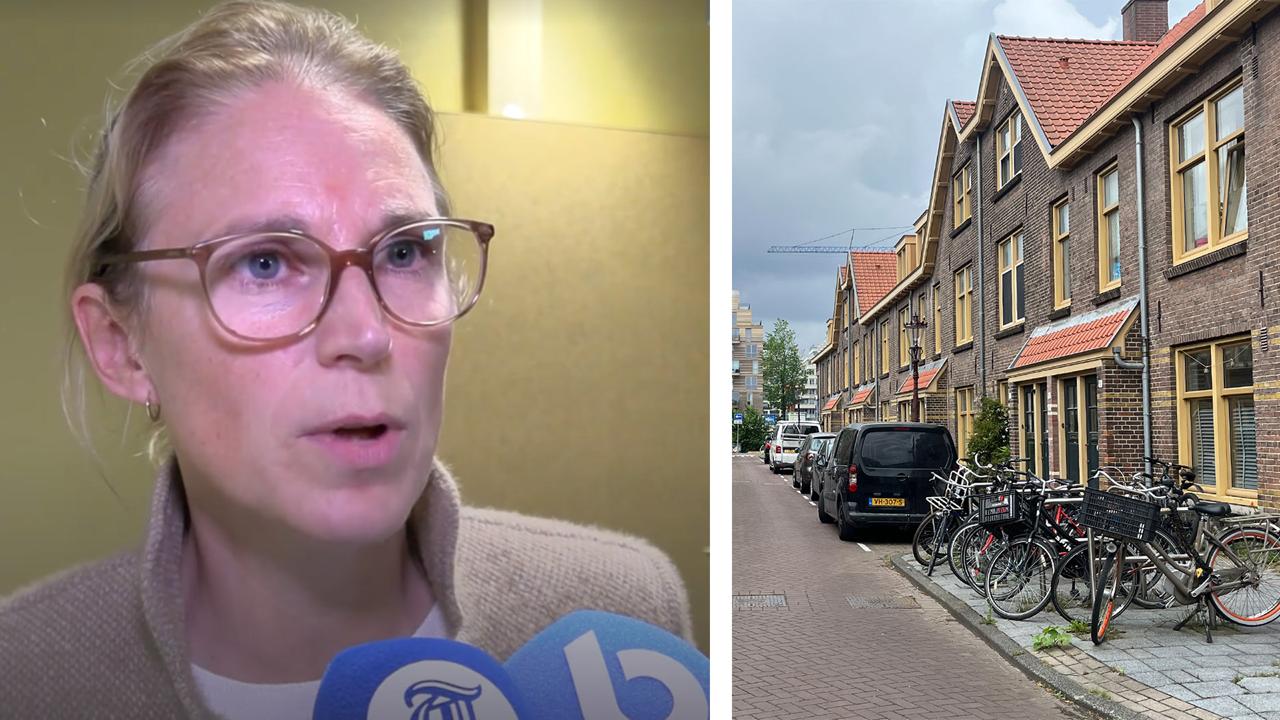
Dutch Housing Minister Elanor Boekholt-O’Sullivan drew sharp criticism this week after defending priority access to scarce social housing for recognized refugees, arguing that many young Dutch first-time home seekers “can still live with their parents.”
In an interview with De Telegraaf, the D66 minister was asked why status holders — asylum seekers granted residence permits — should receive preference for social rental homes while Dutch “starters” face long waiting lists and delayed independence. She responded that “we see that a lot of starters can still, or are allowed to, live with their parents.”
— Remix News & Views (@RMXnews) October 14, 2026
Migrants get affordable housing before Dutch natives. When asked why migrants receive access to affordable housing before young Dutch people looking for a "starter" home, the Dutch housing minister said that many Dutch first-time home seekers "can still live with their parents." Mass migration contributed to 60% of the increase in housing demand in the Netherlands since 2015, yet Minister Elanor Boekholt-O’Sullivan still believes in putting migrants first. "For me, the fundamental principle is that anyone who is allowed to and wants to live in the Netherlands gets a roof over their head," she said. In the Netherlands, Dutch natives are increasingly relegated to living with their parents while migrants get to skip massive waiting lists and gain "emergency" access to cheap social housing. Follow: @RMXnews
Dutch commentator and activist Eva Vlaardingerbroek wrote on X that the policy amounted to “systemic racism.”
“And not just the ‘new’ newcomers. A 25-year-old Syrian who came here with his parents years ago jumps the queue for a home when he decides he wants to live on his own. Meaning a 25-year-old white Dutch guy can forget about getting his own place and ends up on waiting lists for 10+ years,” she wrote, adding: “Putting the interests of foreigners above the interests of the native population needs to end.”
Talking about systemic racism: Young Dutch people can barely find a place to live, because migration drove 60% of the housing demand since 2015, regular prices are insane, and migrants get PRIORITY for the affordable social housing. And not just the “new” newcomers. A 25-year-old Syrian who came here with his parents years ago jumps the queue for a home when he decides he wants to live on his own. Meaning a 25 year-old white Dutch guy can forget about getting his own place and ends up on waiting lists for 10+ years. But according to our minister of housing that’s fine because they can just continue to “live with their parents.” Putting the interests of foreigners above the interests of the native population, needs to end. That’s why with the @SaveEuropeAct, apart from demanding closed borders and Remigration, we also demand Removing social welfare incentives and benefits that function as pull factors for migration.
— Eva Vlaardingerbroek (@EvaVlaar) October 13, 2026
Boekholt-O’Sullivan, an Irish-born former lieutenant general in the Dutch Air Force who took office earlier this year, claims that anyone who wants to live in the Netherlands should get a roof but does not address the major housing crisis brought on by mass immigration.
“For me, the fundamental principle is that anyone who is allowed to and wants to live in the Netherlands gets a roof over their head,” she said. She noted that status holders typically leave asylum reception centers and argued that alternatives such as remaining in centers, homelessness, hotels or cruise ships were unacceptable, so priority allocation should continue until other solutions exist.
The remarks landed amid fresh data underscoring migration’s outsized role in the Netherlands’ housing crunch. A report released this week by the Economic Institute for Construction (EIB) found that migration accounted for about 60 percent of additional housing demand between 2015 and 2024. Migrants who arrived in that period occupied roughly 435,000 homes by 2024, out of nearly 700,000 homes added to the stock.
In addition, data shows that migrants occupy 44 percent of the 2.2 million social housing units in the country.
The 44 percent figure of social housing units occupied by first or second-generation immigrants has doubled from 22 percent in 2000, and is forecast to rise to 51 percent by 2030.
A total of 92 percent of Syrian first-generation immigrants reside in social housing. In addition, 90 percent of those born in Somalia, Afghanistan, and Eritrea reside in social housing.
Asylum-related migration contributes disproportionately to lasting demand because status holders remain permanently at high rates, unlike many labor or student migrants who leave within a decade.
Critics said the minister’s comments minimized the burdens on young Dutch adults who have already spent years on waiting lists for social housing or who face high private rents and purchase prices that lock them out of independent living.
Social housing waiting lists in major cities often stretch many years; priority rules for status holders allow some recent arrivals to bypass ordinary queues. Dutch population growth in recent years has been driven almost entirely by net migration, amplifying pressure on an already constrained housing market marked by strict planning rules, nitrogen regulations and slow construction.
The latest debate about Dutch housing policy and mass immigration is only one aspect of the massive burden foreigners have been on Dutch society, which shows that Dutch taxpayers have spent €400 billion on migrants between 1995 and 2019.
The landmark study, entitled “Borderless Welfare State: The Consequences of Immigration on Public Finances,” shows that net costs of immigration to the Dutch public sector over the period 1995-2019 were an astounding €400 billion, averaging €17 billion a year, with a peak of €32 billion in 2016 due to the 2015 refugee crisis.
However, this is far from the total figure. Since 2019, Dutch taxpayers have paid tens of billions more, with no end in sight.
The post Migrants skip the line for affordable housing, while Dutch people ‘can still live with their parents,’ says Dutch housing minister appeared first on Remix News.


One person has died as stormy weather with high volumes of water is sweeping across Greece, affecting mostly Greek islands. Rhodes is one of the Greek islands severely hit by the bad weather front, while Evia and the Sporades islands (Skiathos, Skopelos and Alonissos) are also at the mercy of the intense weather phenomena. RHODES […]
The post One dead as stormy weather sweeps across Greek islands appeared first on Keep Talking Greece.