❌

Reading view

Electric Car Sales Surge 70 Per Cent as France and Germany Seek Changes to EU Emissions Rules

Registrations of fully electric cars across 17 European markets increased by 70.3 per cent in September, according to industry figures published on Monday, 19 October, as France and Germany seek to ease the European Union’s emissions requirements for new vehicles.

The data show that 300,202 battery-electric cars were registered during the month, accounting for 32.6 per cent of new passenger-car registrations in the markets surveyed.

The figures emerge three days after Paris and Berlin announced a joint position on the future of Europe’s automotive industry, proposing greater flexibility in the EU’s 2035 emissions regime while introducing measures intended to favour vehicles manufactured in Europe.

Electric vehicles gain market share

The latest figures, compiled by E-Mobility Europe, New Automotive and Fier Automotive, indicate that electric vehicle demand accelerated sharply during September.

According to the industry data published on 19 October, approximately 1.98 million battery-electric cars have been registered across the 17 markets during the first nine months of 2026, an increase of 38.1 per cent compared with the equivalent period last year.

Higher oil prices, government incentives and the introduction of more affordable electric models have all contributed to demand.

The figures represent a substantial change in the composition of European new-car sales, although they cover selected markets rather than constituting a complete statistical account of the EU’s 27 Member States.

France recorded 65,243 battery-electric registrations in September, representing 41.7 per cent of its new-car market. Germany registered 88,724 electric vehicles, giving the technology a market share of 34.6 per cent.

Both countries have substantial automotive manufacturing industries and are directly involved in negotiations over Europe’s future emissions legislation.

Significant differences between European markets

Despite the overall increase, electric vehicle adoption remains uneven across the continent.

Norway retained its position as Europe’s most electrified new-car market, with battery-electric vehicles accounting for 98.8 per cent of registrations in September.

Denmark followed with 88.8 per cent, while Finland recorded 62.7 per cent and Sweden 49 per cent.

Electric models also accounted for approximately half of new-car registrations in Belgium, the Netherlands, Ireland and Portugal.

At the other end of the market, battery-electric vehicles represented only 11.2 per cent of registrations in the Czech Republic, 7.6 per cent in Italy and 6.2 per cent in Poland.

These differences illustrate the difficulty of establishing a uniform European transition timetable.

Household incomes, purchase incentives, vehicle prices and charging infrastructure differ substantially between countries. The availability of affordable electric cars is particularly important in markets where buyers are more sensitive to the initial purchase price.

The varying national figures also complicate the EU’s industrial calculations, since manufacturers must operate across markets progressing at different rates.

France and Germany reach automotive compromise

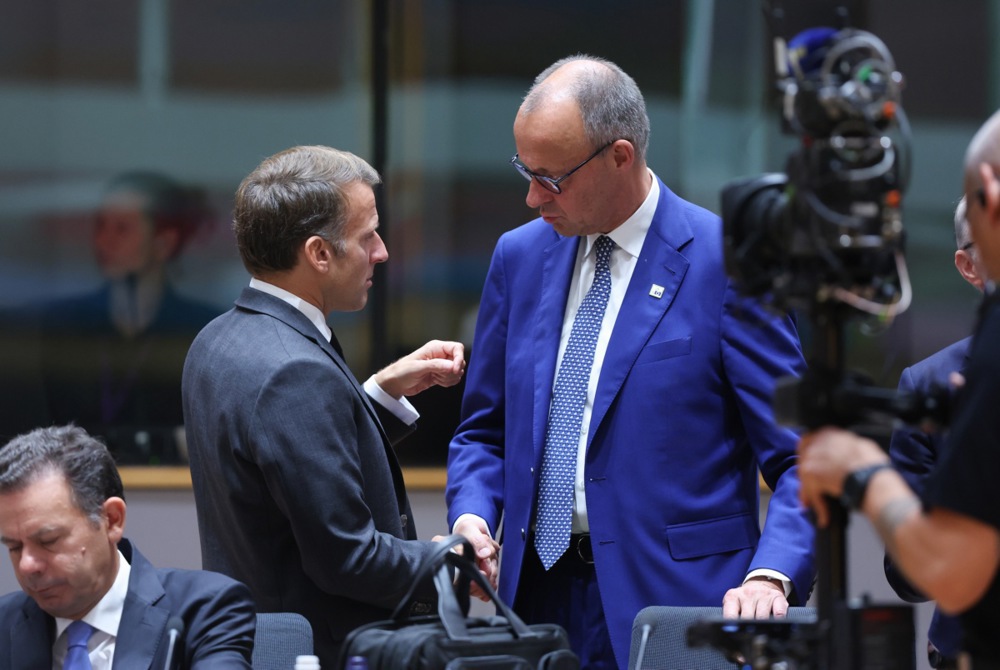
On 16 October, French President Emmanuel Macron and German Chancellor Friedrich Merz agreed on a joint approach to changes in European automotive regulations.

Under the proposed compromise, car manufacturers would be required to reduce carbon dioxide emissions from new vehicles by 90 per cent by 2035 compared with the 2021 reference level.

The agreement would also remove a proposed requirement to compensate for the remaining emissions through measures such as the use of low-carbon steel.

The change would create additional opportunities for manufacturers to continue selling vehicles powered by combustion engines beyond 2035, subject to the final legislative framework.

In their joint declaration on the automotive industry’s future, the French and German governments argued that emissions reduction must be combined with industrial competitiveness, investment and European manufacturing capacity.

The agreement also envisages preferential treatment for vehicles produced in Europe under certain public procurement and subsidy arrangements.

Britain could potentially benefit from provisions allowing selected European partners to qualify under the proposed industrial framework.

The Franco-German understanding is not, however, a final EU legislative decision. Changes to the regulatory regime require agreement through the relevant European legislative procedures.

Automotive competitiveness enters the debate

The principal argument advanced by supporters of greater regulatory flexibility is that European manufacturers need additional time to adapt production, protect employment and compete with international rivals.

German manufacturers retain extensive investment in combustion-engine and hybrid technology, while French producers have placed considerable emphasis on electric vehicles and maintaining European supply chains.

The negotiations therefore concern more than emissions limits. They also involve battery production, access to raw materials, manufacturing costs and the ability of European companies to compete with producers in China and other markets.

Supporters of the existing transition timetable argue that weakening long-term requirements could discourage investment in electric manufacturing capacity just as consumer demand is increasing.

Manufacturers seeking greater flexibility maintain that regulatory targets must account for uneven market conditions and the cost of developing new technologies.

September’s sales figures provide evidence that electric vehicle adoption is accelerating, but they do not establish whether the same rate of growth will continue without existing incentives.

The debate now centres on whether regulatory relaxation will preserve Europe’s automotive industry during the transition or slow investment in the technology that is already capturing an increasing share of the market.

  •  

South Korea: A growing national crisis and a strategic warning

Recent media reports projecting South Korea’s per capita GDP to surpass Japan’s have generated considerable excitement across the regional countries that see Korea as a role model. According to the IMF’s October 2026 projections, South Korea’s nominal GDP per capita could reach approximately $49,000 in 2027, compared with Japan’s $37,000-38,000. Its achievements in semiconductors, advanced […]

The post South Korea: A growing national crisis and a strategic warning appeared first on Asia Times.

  •  

The Ladder & the Fence: What 4 Economists Knew That Today’s Financial Order Forgot. Part 1

The richest countries climbed to prosperity by methods they now forbid everyone else to use. Hamilton, List, Carey and Polanyi, four economists explained why those methods work and why abandoning them ends badly. There is a story the world’s wealthiest capitals love to tell about themselves. Prosperity, it goes, is the reward for opening your […]
  •  

Exclusive: What’s really happening at the Iran-Pakistan border

There’s no way to fight the Empire without bypassing its control of the international financial system.

Join us on Telegram, X, and VK.

Contact us: info@strategic-culture.su

All hell is already breaking loose when it comes to probing what is exactly taking place related to the latest, definitely murky U.S.-linked movements in Pakistani land and sea. After an initial assessment at Transition Protocol – which avowedly did not provide all the necessary answers – we dug deeper into a way more comprehensive examination supported by several sources.

What we are watching across several nodes of extremely sensitive Iran-Pakistan overland connectivity is not a blanket border shutdown; but a surgical, two-track balancing act by Islamabad between Washington’s tremendous financial vise and Tehran’s strategic lifeline.

So here’s where it all stands – compounding the verified record with our latest consultations.

The key point: the regulatory trigger was a banking sanctions move, not just border security.

While provincial officials in Balochistan publicly framed Saturday’s halt at two key nodes, Taftan and Gabd–Rimdan, around security, counterterrorism, and anti-smuggling, what matters most is the exact mechanism around a memorandum issued last Friday by the Pakistani Ministry of Commerce.

That immediately revoked an October 3 extension of the Electronic Import Form (EIF) waiver for goods imported from Iran, and coincided with Islamabad’s instruction to close the Federal Investigation Agency (FIA) immigration gate at Taftan.

What is key is that without the EIF waiver, Pakistani importers must process Iranian purchases through formal Pakistani banking channels – which U.S. sanctions, of course, make absolutely impossible.

Peyman Sanandaji, head of the Transportation Commission at the Tehran Chamber of Commerce, confirmed on the record that it is banking sanctions compliance (ditching the EIF) that halted Iranian exports into Pakistan.

The immediate shock at the formal gates was quite something: more than 4,000 tons of daily Iranian LPG imports through Gabd–Rimdan are at risk. Former Quetta Chamber of Commerce president Ayoub Miryani reported that over 2,000 containers are stranded at Gabd–Rimdan alone, with hundreds more freight trucks backed up at Taftan.

So why is this happening now? Because of the nasty convergence between the October 7 IMF tranche Pakistan had to pay, and the imperial U.S. Treasury “Operation Economic Outcast”.

Under Operation Economic Outcast, Washington gave third countries a “defined timeline to shut down” Iran-related commercial lifelines or face expulsion from the U.S. financial system. That was followed by OFAC’s October 1 designations against Iran’s overland rail and industrial networks and October 8 actions against 17 shadow-fleet tankers.

But then, on October 7 – only nine days before the Ministry of Commerce revoked the EIF waiver – Islamabad reached an agreement with the IMF on the Fourth Review of its Extended Fund Facility to unlock $1.21 billion. That still requires IMF Executive Board approval.

Of course there is no public document showing a direct U.S. or IMF order to close Iran-Pakistan borders. But sources in Islamabad stressed that leaving an open-ended banking-instrument waiver on the books ahead of the IMF Board vote had become an untenable sanctions vulnerability for Pakistan.

Islamabad sources are adamant that the move was paired with genuine counter-sabotage concerns and quietly coordinated between Islamabad and Tehran (italics mine) so the pause would not rupture bilateral ties.

Iranian Foreign Ministry spokesperson Esmaeil Baghaei publicly called the disruption a temporary pause due to “technical issues” and “precautionary measures”.

Pakistani official sources, for their part, insisted that the tightened controls are a joint counterterrorism measure reflecting “mutual understanding” with Tehran after a spike in Sistan-Balochistan attacks; highway ambushes; and an October 11 maritime attack on Pakistan Coast Guard boats off Jiwani – which Pakistani officials attributed to “foreign actors” seeking to sabotage Pakistan’s mediation of the Iran peace deal.

Back to the same old pattern of Salafi-jihadis weaponized and manipulated by the usual suspects.

The only publicly confirmed telephone call between Deputy Prime Minister Ishaq Dar and Foreign Minister Abbas Araghchi took place on Sunday, October 18 – two days after the October 16 memorandum – and its official readouts mention only regional diplomacy and the Baghdad OIC meeting.

So prior coordination at the Dar–Araghchi Foreign Minister level and specific sabotage arrests therefore are part of our own reporting.

Asymmetric food exports and informal routes

In a nutshell, stuff is still moving across borders. Islamabad deliberately left alive Pakistani perishables and food exports to Iran. Essential perishables – including tomatoes, potatoes, and onions – continue to move, alongside traditional oil and fuel flows across the porous 909-km border.

The regulatory record explains why: 8 months ago, Pakistan enacted a separate banking-instrument waiver specifically for 10 food exports to Iran by land (explicitly listing rice, potatoes, onions, tomatoes, meat, and fruit) plus pharmaceuticals.

Tehran’s Chamber of Commerce confirmed this past Saturday that while Iranian exports to Pakistan are stalled by the EIF rule, imports from Pakistan into Iran are continuing, and informal fuel and border trade across Balochistan already operates at an estimated $800 million to over $1 billion annually outside formal customs.

Special attention should be placed on the ports of Gwadar and Karachi, and the overall China–Iran Transit Architecture. Third-country and China-Iran transit through Pakistan, according to our sources, remains protected.

On a legal level, a document detailing Pakistan’s transit of goods established six designated overland transit corridors linking Gwadar, Karachi, and Port Qasim to Gabd and Taftan for third-country cargo bound for Iran under a bank guarantee.

And a Federal Board of Revenue’s notification this past June formally designated Taftan railway station as a Land Customs Station, with Iranian and Pakistani ministers pitching the rail corridor to link China to Iran and Europe.

However, two very complicated operational constraints remain in place.

The Quetta-Taftan rail modernization is still listed officially as a planned upgrade; and OFAC’s October 1 designation of the Islamic Republic of Iran Railway Company (RAI) was explicitly designed to choke Tehran’s shift from blockaded sea lanes to rail.

To sum it all up: it takes supreme skill to face The Empire of Piracy. Islamabad has executed a classic, calibrated maneuver: visibly revoking the formal EIF import waiver at Taftan and Gabd–Rimdan to insulate its pending $1.21 billion IMF tranche and Pakistani banks from U.S. Treasury secondary sanctions.

And all the while keeping Pakistani food exports, informal border valves, and third-country transit frameworks alive with Tehran.

Whether this remains a brief administrative reset or hardens into a longer choke point will be decided by three indicators over the next fortnight:

  1. A modified EIF or barter notification from the Commerce Ministry.
  2. Separate customs clearance for Gwadar/Karachi transit cargo.
  3. Documented freight movements across the Taftan–Zahedan rail link.

May the lesson be imprinted on rare earths for the whole Global South to ponder: there’s no way to fight the Empire without bypassing its control of the international financial system.

  •  

Washington Tried to Isolate Russia. Now It Needs Russian Oil

Four years after Washington set out to cripple Russia’s energy economy, America’s war with Iran has forced it to seek relief from the very country it tried to isolate, encircle, and defeat. The Sanctions Strategy Meets Its Limits On October 9, US President Donald Trump announced an extraordinary agreement with Russian President Vladimir Putin: Moscow […]
  •  

Dopo la Russia, la Cina è il prossimo obiettivo dei falchi europei?

Non disponendo delle condizioni materiali necessarie per sfidare la supremazia industriale cinese, l’Unione Europea continua a trasformare le proprie difficoltà economiche in una giustificazione per una nuova escalation delle ostilità.

Segue nostro Telegram.

I leader europei sembrano aver individuato una nuova missione strategica: ricostruire la capacità industriale del continente riducendo al contempo la sua dipendenza dalla Cina. L’iniziativa è stata recentemente avanzata congiuntamente da Francia e Germania e viene presentata come una risposta alla crescente presenza della Cina sul mercato europeo. Il problema è che i leader responsabili di questo progetto continuano a ignorare una questione fondamentale: nessuna reindustrializzazione su larga scala può avere successo senza un approvvigionamento energetico stabile, abbondante e a prezzi accessibili.

L’Europa dispone di eccellenti università, di una forza lavoro qualificata, di centri tecnologici all’avanguardia e di una tradizione industriale che le conferisce ancora notevoli vantaggi. Tuttavia, queste risorse non possono funzionare in modo isolato. Gli impianti chimici, le acciaierie, gli stabilimenti metallurgici e numerose altre industrie dipendono da un approvvigionamento energetico continuo e competitivo. Il capitale, le conoscenze scientifiche e i lavoratori specializzati non possono compensare all’infinito i costi di produzione elevati. È proprio su questo punto che la strategia dell’Europa contraddice i propri stessi obiettivi.

Per decenni, l’integrazione economica tra l’Europa occidentale e la Russia ha fornito condizioni favorevoli allo sviluppo di importanti settori industriali. Le forniture di gas naturale russo, in particolare, hanno contribuito a sostenere attività ad alto consumo energetico. Questo rapporto ha soddisfatto gli interessi economici concreti di entrambe le parti: Mosca disponeva di un importante mercato per le proprie esportazioni, mentre le economie europee ottenevano una risorsa essenziale per la loro competitività.

L’introduzione delle sanzioni nel 2022 ha profondamente alterato questa situazione. Le misure coercitive illegali hanno reciso un partenariato di lunga data tra Russia ed Europa, lasciando la parte occidentale del continente economicamente indebolita e dipendente da approvvigionamenti energetici esterni più costosi e meno sicuri. L’Europa, che già prima di allora stava subendo una graduale deindustrializzazione, è successivamente precipitata in una crisi energetica, con conseguenze che vanno dall’aumento delle bollette energetiche ai fallimenti aziendali causati dall’incapacità di mantenere una produzione competitiva.

Sarebbe ragionevole aspettarsi che una strategia di ripresa industriale iniziasse affrontando queste vulnerabilità. Invece, i leader europei stanno tentando di costruire una nuova base produttiva senza risolvere adeguatamente il problema energetico. I responsabili della politica economica europea sembrano ritenere che sussidi, incentivi fiscali e programmi di investimento siano sufficienti a ripristinare la competitività. Tali strumenti possono contribuire allo sviluppo industriale, ma la loro efficacia rimarrà limitata fintantoché persisteranno gli svantaggi strutturali nei costi energetici.

È in questo contesto che la Cina sta assumendo una posizione sempre più di rilievo nella «lista delle preoccupazioni» di Bruxelles. La capacità della Cina di produrre su vasta scala, rifornire catene industriali complesse e offrire attrezzature a prezzi competitivi rappresenta una sfida per un’Europa che cerca di recuperare la propria autonomia produttiva. Anziché riconoscere la portata del declino accumulato e sviluppare una strategia coerente per invertire la tendenza, alcuni settori della leadership europea preferiscono ricorrere a barriere commerciali, indagini punitive e meccanismi di contenimento economico.

Tale approccio rivela una comprensione piuttosto superficiale della concorrenza industriale. Limitare le importazioni cinesi non comporta automaticamente la creazione di stabilimenti europei, né riduce i costi dell’elettricità, né garantisce l’approvvigionamento di gas agli impianti industriali. Al contrario, le aziende che dipendono da attrezzature, componenti e materie prime cinesi potrebbero trovarsi a dover sostenere spese più elevate proprio nel momento in cui hanno bisogno di investire per recuperare la propria posizione sui mercati internazionali.

La questione russa rende questa situazione ancora più delicata. Il ripristino della cooperazione energetica con Mosca costituirebbe il primo passo di qualsiasi serio piano di ripresa industriale. Grazie alle forniture energetiche russe e ad ampie partnership commerciali con la Cina, l’Europa potrebbe ritrovare una nuova strada verso lo sviluppo, proprio come stanno ora iniziando a fare i paesi africani e asiatici attraverso le loro partnership con la Russia e la Cina.

Bruxelles, Parigi e Berlino, tuttavia, si stanno muovendo nella direzione opposta. Gli strateghi europei sembrano determinati a confrontarsi contemporaneamente con due delle maggiori potenze industriali ed energetiche del mondo, senza dimostrare di possedere le risorse necessarie per sostenere tale ambizione. In primo luogo, hanno compromesso un rapporto energetico fondamentale con la Russia. Ora rischiano di trasformare la Cina in un avversario commerciale permanente.

In definitiva, ciò che i falchi europei perseguono non è lo sviluppo dell’Europa, bensì la strumentalizzazione di questioni quali l’industria e il commercio per portare avanti la propria agenda autodistruttiva. In base a questa strategia, i cittadini europei – già privati dell’energia russa e potenzialmente destinati a un accesso ridotto ai prodotti cinesi nel prossimo futuro – saranno ancora una volta i primi a subirne le conseguenze.

  •  

Europe’s new Franco-German auto pact will protect combustion engines, not European jobs

Berlin and Paris spent months negotiating over the future of Europe’s auto industry.

Germany wanted to keep selling new combustion-engine cars beyond 2035. In return, France wanted strict “Made in Europe” rules: public money spent on electric vehicle (EV) purchase incentives, subsidies and government contracts should benefit cars genuinely made in Europe, not simply assembled here. 

One concession in exchange for the other. French president Emmanuel Macron and German chancellor Friedrich Merz have now sealed the deal.

Both can claim victory at home, and both say they want the same thing: to strengthen Europe’s auto industry against Chinese competition. 

But the trade-off undermines that very goal. It rightly pushes for more European production, but pays for it with less ambition for electric vehicles.

For Europe’s automakers to compete, two things need to happen: More of the value generated by car manufacturing must stay in Europe, and the transition to electric vehicles must remain on track. Trading one for the other weakens both. 

Value creation is already moving elsewhere 

On one point, France is right: a growing EV market alone won’t protect European jobs. Many of the most important components in electric cars already come from China, especially batteries.

Meanwhile, Chinese automakers are building factories in Hungary and Spain, securing direct access to the European market. 

The risk is clear: cars assembled in Europe from imported components qualify as European products, benefit from purchase incentives and win public contracts.

Final assembly stays in Europe, but much of the economic value is created elsewhere. European auto suppliers have already cut more than 100,000 jobs in two years, and the European Commission warns that up to 600,000 more could disappear over the next five to 10 years. 

That’s where the proposed Industrial Accelerator Act comes in. It would link public spending on subsidies, purchase incentives and government procurement to production in Europe.

This isn’t just about shutting out foreign competition. It steers demand to where it strengthens Europe’s industrial base.

To work, the rules must target the components that will shape the industry’s future: battery cells, software, electric drivetrains and power electronics.

“Made in Europe” can’t simply mean attaching the wheels here. 

That doesn’t mean every nut and bolt must come from the EU.  The auto industry relies on global supply chains and trusted trading partners.

But a law riddled with exemptions would be little better than no law at all: It would create more red tape without bringing a single new factory to Europe. 

Factories need customers 

Even the best industrial policy will fail without buyers. A battery factory can only make money if it produces enough batteries. Yet Europe’s battery plants are running well below capacity because they don’t have enough orders. Every battery that goes unproduced drives up the cost of those that are made. Factories, machinery and workers still have to be paid for. 

Since 2022, roughly a quarter of announced battery projects in the EU have been canceled or put on hold. 

This is why Germany’s push to delay the phaseout of combustion-engine cars is so damaging. Every combustion-engine car sold instead of an EV means one fewer battery that could be made in Europe. The very factories meant to make “Made in Europe” a reality would lose potential customers. 

The best way to boost demand for European batteries is to build more small, affordable EVs in Europe. That’s where the biggest sales volumes are. Yet German automakers in particular have been slow to embrace this market, despite significant demand potential in Germany itself. Delaying the combustion-engine phaseout would only give them another reason to hold back.  

Slow down, lose out

For European automakers, the stakes go far beyond their home market. Sell fewer EVs at home, and manufacturers will launch fewer new models, produce fewer cars and face higher costs. That will make it harder to compete abroad, too. Giving combustion engines more time won’t close the gap with China. It could make it wider. 

Political uncertainty only makes matters worse. Automakers plan new models, factories and supplier contracts years in advance. Every fresh debate over exemptions gives investors and consumers another reason to hesitate. 

Companies investing billions in EVs and batteries – and consumers considering buying an electric car – need to know that policymakers won’t change direction tomorrow.  

The Franco-German bargain ignores economic reality. The future of the car is electric, and China figured that out long ago.

Beijing is doing everything it can to build an unbeatable lead in EVs, including through unfair practices such as massive government subsidies.

And Europe? It’s haggling over more time for yesterday’s technology. At stake is nothing less than the auto industry – the backbone of Europe’s industrial economy and a major source of jobs.

This deal is not yet law. A better deal would be simple: Europe should pursue electric vehicles with the same determination as China while making sure the jobs, factories and economic benefits stay in Europe. 

  •  

The Mexican Government Is Close to Approving a Law Aimed at Removing the Use of Cash

by Matt Agorist, The Free Thought Project: Will an effort to limit and eventually ban cash payments work in a nation where 80 to 90 percent of payments are made in cash? (The Last American Vagabond) On Wednesday, the Mexican government inched closer to passing a law that would begin the process of phasing out cash […]
  •  

Five Arrested in €114 Million Smartphone VAT Fraud Investigation Across Europe

Five people have been arrested in Cyprus, Germany and Italy as part of a European investigation into an alleged €114 million VAT fraud operation involving the cross-border smartphone trade.

The European Public Prosecutor’s Office (EPPO) announced on 16th October that three suspects had been detained in Cyprus, one in Germany and one in Italy following an investigation coordinated by its Munich office.

Investigators believe the suspects established and controlled a network of companies designed to exploit the tax treatment of goods traded between EU member states.

The alleged operation involved smartphone transactions through businesses and so-called missing traders operating in Germany, Albania and Sweden. Prosecutors estimate that the activities caused VAT losses of approximately €80 million in Sweden and €34 million in Germany.

According to the official announcement of the arrests, the operation forms part of a wider investigation known as Midas, which is examining organised cross-border tax fraud.

Searches across several countries

The arrests were accompanied by searches and seizures in Cyprus, Greece and Italy, conducted with the assistance of national police, financial investigators and tax authorities.

Prosecutors said 12 searches had been carried out at premises connected with the suspects and companies under investigation.

Assets of up to €80,000 were frozen, while investigators also seized or took action against bank accounts, vehicles and property.

The operation involved cooperation between Germany’s tax authorities, Cyprus’s financial intelligence and cybercrime units, the Greek financial police and Italy’s Guardia di Finanza.

The suspects are believed to have played leading roles in organising and controlling the alleged scheme, although prosecutors have not publicly established their individual criminal responsibility.

The investigation remains subject to proceedings before the competent German courts. All suspects are presumed innocent unless proven guilty.

How the alleged fraud operated

The case concerns a form of tax evasion known as missing-trader intra-community fraud, commonly described as carousel VAT fraud.

Under the EU’s VAT system, qualifying business-to-business transactions involving goods transported between member states are generally exempt from VAT in the country of dispatch.

The purchaser accounts for VAT under the rules applicable in the destination country, while subsequent domestic sales normally involve VAT being charged to the buyer.

Fraudsters can exploit those arrangements by establishing companies that purchase goods through cross-border transactions before reselling them domestically.

A missing trader collects VAT from the purchaser but fails to remit it to the relevant tax authority. Other companies in the transaction chain may then seek deductions or refunds.

The same goods can pass through several businesses and, in some arrangements, move repeatedly between countries, allowing the fraud to be repeated.

Smartphones and electronic equipment are particularly attractive because they are relatively expensive, easily transported and can be traded in large volumes.

The complexity of the arrangements makes investigations difficult when businesses are established in several jurisdictions and transactions move rapidly between companies.

A wider European problem

The latest arrests follow another substantial VAT fraud operation announced earlier this month.

On 7th October, the EPPO reported that 62 suspects had been detained in a separate investigation involving alleged losses of at least €410 million.

That operation, known as Hermes, involved searches across eight countries and allegations concerning the sale of mobile phones and other electronic devices.

Although separate from Midas, the investigation illustrates the scale and organisation of suspected VAT fraud involving internationally traded consumer electronics.

According to the EPPO‘s 2025 annual report, prosecutors were handling 3,602 active investigations at the end of last year, with estimated potential damage exceeding €67 billion.

Of that amount, more than €45 billion related to suspected VAT and customs fraud.

Those figures concern estimated losses under investigation, rather than sums established by final court judgments or amounts that have already been recovered.

Protecting European tax revenues

The financial consequences extend beyond the immediate losses attributed to individual schemes.

VAT is a major source of revenue for national governments and forms part of the system used to calculate certain contributions to the EU budget.

Fraudulent transactions can also distort competition by allowing dishonest operators to offer prices that legitimate businesses cannot match.

The Commission’s 2025 VAT gap report estimated that EU countries failed to collect approximately €128 billion in expected VAT revenue in 2023.

That broader figure includes losses arising from several causes, including administrative errors and insolvency, and cannot be attributed entirely to criminal fraud.

The latest arrests also demonstrate the importance of cross-border investigative cooperation when suspected financial offences involve companies, transactions and assets located in different countries.

In the Midas investigation, prosecutors must now establish the precise roles of the suspects, prove the alleged transactions and determine whether criminal proceedings can result in convictions and financial recovery.

The arrests represent another stage in the investigation, not a judicial finding that the alleged €114 million fraud has been proved.

  •  

France’s Unrest Exposes the Failure of Macron’s Centrist Political Model

What began as a student protest over deteriorating schools has developed into a nationwide revolt against economic hardship, political paralysis and declining public services. With the 2027 presidential election approaching, the violence has exposed problems that neither the government nor its principal opponents have convincing plans to resolve.

France’s latest wave of unrest has developed into one of the most serious domestic crises of Emmanuel Macron’s presidency. More than 550,000 people participated in demonstrations on 17 October, according to official estimates, before violence spread through Paris and other major cities. Shops were looted, police confronted rioters, and the historic town hall in Limoges was largely destroyed by fire.

The scale of the destruction prompted emergency government consultations and a televised presidential address. Macron promised to prosecute those responsible, while stopping short of declaring a state of emergency. Yet the immediate security challenge conceals a more difficult political question: why have protests that began with relatively specific demands over education become a confrontation involving such different sections of French society?

From school protests to a national revolt

The movement originated among secondary-school students demanding better facilities, more teachers and improvements in educational standards. Their complaints subsequently attracted trade unions, workers, farmers and elements of the Gilets Jaunes, the Yellow Vest movement that challenged Macron’s government in 2018.

The resulting coalition has no coherent political programme. Students protesting overcrowded classrooms share demonstrations with workers concerned about purchasing power and motorists angered by fuel prices. Their interests are not necessarily compatible, but they reflect a common dissatisfaction with the government’s ability to deliver functioning public services while containing living costs.

This distinction matters. The presence of masked rioters and organised groups engaged in violence does not establish that the hundreds of thousands who demonstrated peacefully supported their actions. Equally, the destruction of public buildings, attacks on police and widespread looting raise legitimate questions about the state’s capacity to maintain public order.

The economic problem behind the protests

At the centre of the discontent lies a structural problem that successive French governments have struggled to confront: the distribution of public expenditure between an ageing population and the services required by younger generations.

A French government budget assessment published in October revealed that pension obligations accounted for approximately 32 per cent of the education ministry’s budget, including €28.5 billion in pension expenditure. These obligations restrict the resources available for other departmental priorities.

France nevertheless remains a substantial spender on education. According to official figures, expenditure reached €199.2 billion in 2025, equivalent to 6.7 per cent of GDP. However, after inflation, the annual increase was only 0.1 per cent.

The issue is therefore not simply how much France spends, but how efficiently resources are allocated and whether expenditure meets changing educational needs.

The OECD’s 2025 PISA assessment found that French pupils’ performance in mathematics and reading had declined compared with 2022. Results were among the country’s lowest recorded, although broadly comparable with the OECD average.

These figures give the student protests a significance extending beyond the immediate condition of classrooms. They raise questions about France’s longer-term economic competitiveness and its capacity to provide younger generations with opportunities comparable to those enjoyed by their predecessors.

The limits of Macron’s reform programme

Macron entered office in 2017 promising to modernise the French economy and overcome the traditional division between left and right. Nearly a decade later, his administration faces a fragmented parliament, constrained public finances and growing resistance to further structural reforms.

The suspension of his pension reform illustrated the difficulty. Raising the retirement age was intended to reduce pressure on the pension system, but parliamentary opposition forced the government to defer the measure until after the presidential election.

The underlying financial pressures have not disappeared. Nor can they be resolved easily through additional spending when public debt, borrowing costs and budgetary obligations already restrict the government’s room for manoeuvre.

This creates an uncomfortable political reality: the state is expected to provide better services, greater purchasing-power protection and stronger security, while the available resources remain limited.

Can the opposition benefit?

The unrest comes approximately six months before the presidential election, with Marine Le Pen’s National Rally and Jean-Luc Mélenchon’s France Unbowed competing to establish themselves as alternatives to Macron’s political centre.

Le Pen has sought to combine support for economic grievances with demands for tougher policing. That position may attract voters concerned by the violence, but it also exposes tensions within a movement that previously supported the Yellow Vest protests.

Mélenchon faces a different difficulty. Supporting demonstrations against government policy is consistent with his political programme, but the involvement of violent groups risks shifting public attention from social demands towards questions of security.

A recent presidential opinion poll even suggested that Le Pen and Mélenchon could contest the final round, illustrating the weakening position of more conventional political alternatives.

Neither, however, can escape the fiscal constraints that have frustrated Macron’s government. A change of president would not automatically provide the resources required to expand public services, reform pensions and reduce the deficit simultaneously.

A wider problem for France and Europe

President Donald Trump has attributed the French unrest to immigration, although the movement’s documented origins lie principally in education, living costs and dissatisfaction with public services. Without established evidence about those responsible for individual acts of violence, broader claims about the demonstrators’ backgrounds remain speculative.

For the European Union, France’s instability carries consequences beyond its domestic political debate. France is central to European defence, fiscal negotiations and support for Ukraine. Sustained political paralysis would complicate its ability to negotiate and implement decisions requiring substantial public expenditure.

The immediate task for Macron’s government is to restore security without allowing the legitimate grievances of peaceful demonstrators to disappear from political consideration. The more difficult task will fall to whoever enters the Élysée in 2027.

France’s crisis is not simply a repetition of the Yellow Vest movement. It reflects a growing conflict over public resources, expectations of the state and the ability of established political institutions to reconcile competing demands.

The violence may subside, but the economic contradictions that brought such different groups onto the streets will remain. The presidential election will determine who inherits them, rather than whether they exist.

  •  

Ministers Turn on Ed Miliband Over Net Zero Block on AI Investment

Cabinet ministers are turning on Ed Miliband, accusing him of blocking AI investment to protect Net Zero – while families pay the price in lost jobs and holidays.

The post Ministers Turn on Ed Miliband Over Net Zero Block on AI Investment appeared first on The Daily Sceptic.

  •  

Exclusiva: Irán, una cobra enroscada lista para atacar

Irán y Pakistán están inmersos en la construcción de un orden financiero posestadounidense en la encrucijada entre Asia Occidental y Asia Meridional.

Únete a nosotros en Telegram , X y VK .

Escríbenos: info@strategic-culture.su

Vayamos directamente al meollo de la cuestión: tras examinar minuciosamente el tablero de ajedrez, los dirigentes políticos y militares de Teherán ya han llegado a la conclusión de que un ataque conjunto de EE. UU. e Israel —cuya planificación avanza a un ritmo frenético— es inevitable.

Por eso se han posicionado ahora como una cobra enroscada, lista para atacar e inyectar su veneno mortal ante el primer indicio de una amenaza inminente del Sindicato de Epstein, incluso sin esperar a que se produzca un ataque real.

La ofensiva preventiva, ya delineada, será devastadora, se extenderá más allá de las bases estadounidenses en Asia Occidental a otros objetivos regionales e incluirá potencialmente la infraestructura energética del Golfo y los cables submarinos (en este caso, afectando principalmente al Golfo y a la India, mucho más que a EE. UU. y Europa).

Nos encontramos en territorio de peligro claro y presente: una maniobra militar estadounidense-israelí destinada a ejercer presión se interpretará sin duda en Teherán como el inicio de un ataque.

Así pues, la presión a favor de la guerra por parte del culto a la muerte y de Trump se encuentra ahora con un umbral iraní peligrosamente bajo. Las opciones de ataque del Pentágono abarcan desde las instalaciones nucleares iraníes hasta la infraestructura energética.

Huelga decir que el «sociópata en jefe» —que ya está en pánico ante la inminente debacle de las elecciones de mitad de mandato— es una presa fácil para el poderoso lobby sionista y los donantes a favor de la guerra. El peligro estratégico supremo es, pues, que esta presión incesante pueda generar una señal que Teherán interprete como un ataque inminente, incluso mientras Washington mantiene públicamente que no se producirá ningún ataque antes de las elecciones de mitad de mandato.

Yemen está llevando todo esto al siguiente nivel

Paralelamente, fuentes privilegiadas en Islamabad confirman el éxito de una prueba de misil paquistaní a Mach 7, con un alcance de varios miles de kilómetros. Esta nueva capacidad tiene todo lo necesario para alterar sustancialmente el equilibrio de poder en Asia Occidental, reforzando el alcance disuasorio de Pakistán y su capacidad para influir en todos los cálculos de seguridad regional, además de contribuir a la creciente interconexión de Pakistán con China, Irán y las petro-monarquías del Golfo.

Y ahora, otra exclusiva: personal de la inteligencia militar israelí, incluido un general de división, ha abandonado Riad después de que MbS, en un supuesto momento de lucidez, dijera «no» a la oferta de «asistencia» del culto a la muerte. Y, sin embargo, siguen allí más de 100 miembros del CENTCOM.

Es posible que la decisión de MbS le haya sido impuesta por Turquía y Pakistán —los otros dos signatarios de la Alianza de Defensa de La Meca—, que de repente se encontraron en la misma sala de guerra en Riad, codo con codo con agentes del culto a la muerte.

Ahora bien, aunque su partida puede haber eliminado un riesgo de escalada, los agentes estadounidenses siguen expuestos: cualquier ataque, venga de donde venga, que provoque bajas estadounidenses arrastrará inmediatamente a Washington a la guerra entre Arabia Saudí y Ansarallah.

La guerra entre Arabia Saudí y Ansarallah, de hecho, está alcanzando el siguiente nivel: la volatilidad. La mezcla tóxica de la interceptación de un misil de crucero sobre la provincia de Medina; las interceptaciones de drones en otras partes de Arabia Saudí; y los ataques con misiles de las Fuerzas Armadas yemeníes contra el complejo presidencial del gobierno títere de Adén es solo el principio.

Lo que ocurrió después de que Ansarallah atacara Najran —una de las provincias del sur de Arabia Saudí arrebatadas a Yemen en 1934 por los británicos— es algo que realmente llama la atención.

Un portavoz saudí acusó a Ansarallah de lanzar un misil de crucero contra Medina. La respuesta del emblemático portavoz de las Fuerzas Armadas yemeníes, el general Yahya Saree, fue contundente: «Hoy no hemos llevado a cabo ninguna operación militar dirigida contra territorio saudí. Por lo tanto, la afirmación del enemigo saudí de que Medina fue atacada es una invención absoluta y una grave falsedad».

Traducción: Yemen ataca una de sus antiguas provincias; los saudíes recurren a noticias totalmente falsas, inventándose un ataque contra una de las dos mezquitas sagradas —sin duda como preparación para una operación de bandera falsa—; luego, Yemen niega de inmediato haber atacado ningún (cursiva mía) territorio saudí.

Esto significa que Saná está declarando sutilmente, para que todo el mundo lo entienda, que ya no lleva a cabo operaciones en el extranjero (cursiva mía) en las tres provincias: Jizan, Najran y Asir. Ya están —psicológica y operativamente— preparando el terreno para recuperar su territorio robado.

Todo ello se plasma en este conciso análisis desde Yemen sobre la deconstrucción de la ostentosa Casa de Saud:

«Yemen está destrozando los pilares extremadamente frágiles de la economía no petrolera en la que los piratas del desierto depositaron todas sus esperanzas: imagen, inversiones (IED), escapismo e impunidad e invulnerabilidad frente al terrorismo en el extranjero».

Cómo Pakistán e Irán eluden al FMI

Ahora prestad atención a algo bastante sorprendente que ocurrió a mediados de semana en Bangkok, durante la reunión anual del FMI y el Banco Mundial —dignamente recibida por protestas callejeras tailandesas—.

El presidente del Banco Central de Irán, Abdolnaser Hemmati, se reunió con el presidente del Banco Central de Pakistán, Jameel Ahmad, al margen del principal ritual anual en alabanza del dólar estadounidense.

Pakistán se encuentra bajo las feroces garras del ajuste estructural del FMI y el Banco Mundial —y, además, amenazado con sanciones estadounidenses por comerciar con Irán—.

Así pues, que Pakistán e Irán estén discutiendo de facto la desdolarización justo en la guarida del león —el templo del dólar estadounidense— no tiene precio.

La infraestructura está en marcha desde 2023, a través de un acuerdo de intercambio de divisas que utiliza el rial y la rupia en lugar del dólar estadounidense. El trueque lo gestionan ambos bancos centrales, y los canales bancarios pasan por el Banco Melli en Irán y el Banco Mellat en Pakistán. Sus mercados fronterizos —al menos seis de ellos— están en pleno auge: rutas comerciales físicas que eluden por completo al dólar estadounidense.

Lo que se debatió en Bangkok a principios de esta semana es cómo ampliar todo este sistema: les importan un comino las sanciones secundarias de EE. UU. Sobre todo porque Teherán ofrece a Islamabad lo que el sistema estadounidense simplemente no puede ofrecer: soberanía, sin cambio de régimen, sin austeridad, sin sermones y, sobre todo, sin ajuste estructural.

Por no mencionar que Pakistán necesita urgentemente el gas iraní —y las rutas comerciales de la Nueva Ruta de la Seda impulsadas por China—.

Irán ha construido toda una economía que elude por completo al FMI —y capaz de sobrevivir a un tsunami de sanciones, a un bloqueo y a la guerra—.

Ahora, Irán y Pakistán están inmersos en la construcción de un orden financiero posestadounidense en la encrucijada entre Asia Occidental y Asia Meridional —con intercambios de divisas, comercio de trueque, mercados fronterizos en auge y canales bancarios adecuados—, lo que convierte las sanciones secundarias en una burla.

Por cierto, esto está ocurriendo justo cuando un inmenso tren iraní, cargado de petróleo crudo —y el primero de muchos— está listo para partir hacia… China a través de Asia Central, por la línea ferroviaria de la Nueva Ruta de la Seda construida por China.

La cobra enroscada puede estar lista para atacar. Pero a la cobra, desde tiempos inmemoriales, también le encanta hacer negocios.

Traducción: Geopolítica rugiente

  •  

Europe can’t lead on nature at COP17 while cutting biodiversity cash at home

For decades, the European Union has been a global leader in biodiversity protection. The Natura 2000 network, the Birds and Habitats Directives and, more recently, the Nature Restoration Regulation show that Europe has a strong legal framework. 

At international level, the EU also played a decisive role in the adoption of the Kunming-Montreal Global Biodiversity Framework, which was agreed in December 2022 at COP15 of the Convention on Biological Diversity. The framework established a global roadmap to halt and reverse biodiversity loss by 2030. 

Next week (19-30 October), Yerevan will host COP17 of the Convention, where the first global review of progress since the adoption of the Framework will take place. It will be an important opportunity to determine whether the commitments made are being translated into concrete action and results on the ground. 

As co-chair of the European Parliament delegation attending the conference, I will defend a united European position that is consistent with our historic leadership and responds to the urgency of the challenge.

The European Commission, which formally negotiates on behalf of the Union on the basis of the position agreed with the member states, must promote decisions that accelerate implementation of the Global Biodiversity Framework during the remaining years to 2030. 

Honest appraisal? A mixed picture

This global review must be accompanied by an honest assessment of our own performance. Europe should arrive in Yerevan acknowledging both the progress it has made and the work that remains.

The commission’s latest report on the implementation of the framework presents a mixed picture.

Of the 45 targets established for the EU, only two have been achieved and 16 are on track, while progress remains too slow on another 25 and two cannot yet be assessed. 

There are positive signs in the EU. Protected areas have expanded, organic farming has increased and a greater proportion of fish stocks is being managed sustainably.

However, the overall situation of many habitats and species remains worrying, while farmland birds and grassland butterflies, among others, continue to decline. 

The main problem is not a lack of legislation, as Europe already has many of the instruments it needs. The challenge is to implement them properly and turn them into visible improvements on the ground, which requires public authorities with sufficient capacity, reliable data, clear plans and stable funding. 

The Nature Restoration Regulation is a good example.

Restoring wetlands, rivers, forests, soils and marine ecosystems will not only help biodiversity recover, but will also retain water, reduce flood damage, protect soils and make our territories more resilient to droughts, heatwaves and wildfires. 

Missed deadlines

However, the regulation will only deliver results if member states meet their obligations.

The deadline for submitting draft national restoration plans was 1 September, yet only nine countries have done so.

This delay not only slows implementation, but also makes it harder to calculate the cost of restoring nature and the resources that will be required. 

The commission was expected to present an assessment of restoration funding needs and gaps in August 2025, but we are still waiting for a complete analysis.

The commission argues that it needs the national plans to calculate these costs. Yet negotiations on the 2028-2034 financial framework are moving forward while many plans remain outstanding and we still lack a full estimate of the resources needed to implement one of our most important environmental laws. 

This situation reflects one of the main challenges facing COP17.

Adopting targets is no longer enough. We must also agree on how they will be implemented, how progress will be measured and how action will be financed.

Five EU priorities in Yerevan

In this context, I believe that the European position should focus on five priorities. We must mobilise more resources for biodiversity, consolidate the Cali Fund, make progress in eliminating harmful subsidies, assess progress through concrete results and strengthen the role of nature in climate adaptation. 

Finance will be one of the central issues in Yerevan, as the Global Biodiversity Framework calls for the mobilisation of at least $200bn [€178bn] a year from all sources by 2030. Public investment must remain the foundation of this effort, but private capital will also be needed.

With this aim, the commission presented its roadmap for nature credits in July 2025 and is now developing the methodologies, certification systems, oversight arrangements and pilot projects needed for their deployment.

These instruments could help finance conservation and restoration, but they will only be useful if they are governed by rigorous rules and deliver real, verifiable and additional benefits for biodiversity. They must never replace public funding or be used to justify damage to nature in one place in exchange for financing action elsewhere. 

COP17 must also consolidate the Cali Fund, which was created so that companies benefiting from the use of digital information on genetic resources contribute to biodiversity conservation. The agreement reached at COP16 was an important step, but we now need real contributions and a fair distribution of resources, including for Indigenous Peoples and local communities. 

Another priority must be to eliminate incentives and subsidies that harm biodiversity. It makes no sense to call for new resources to protect nature while public budgets continue to support activities that destroy it.

The European Union should therefore examine its own policies honestly, particularly in areas such as agriculture, fisheries, energy and infrastructure, and establish a timetable for progressively phasing out and ultimately eliminating this harmful support. 

The global review must also measure concrete results. Success cannot be assessed simply by counting strategies or setting targets. We need to know whether ecosystems are recovering, whether species are in better condition, whether protected areas are being managed effectively and whether funding is actually reaching action on the ground. 

We must also strengthen the connection between biodiversity and climate adaptation. The droughts, floods, heatwaves and wildfires affecting Europe show that protecting and restoring nature is not a secondary concern. Healthy ecosystems are among our best defences against the effects of climate change and represent a direct investment in our security, agriculture and economy. 

All these priorities lead us inevitably to the European budget, because political commitments are only credible when they are backed by sufficient resources.

The budget?

There is currently a clear contradiction between the leadership that the European Union wishes to maintain on biodiversity and the place given to it in the proposal for the 2028-2034 financial framework.

Although the commission proposes that 35 percent of the next budget should contribute jointly to climate and environmental objectives, it removes the specific 10 percent target for biodiversity included in the current budget and no longer presents LIFE as a standalone programme.

By placing biodiversity within much broader objectives and funds, its financing becomes less visible and risks being pushed aside by priorities such as security, defence and competitiveness. 

Parliament must defend sufficient and clearly identifiable resources for biodiversity and for the activities currently financed through LIFE.

Simplification can make funding easier to access, but it must not reduce environmental ambition, transparency or democratic oversight. 

This budget debate also affects our international credibility. Europe cannot ask other countries to increase their ambition and financial contributions while weakening budgetary support for biodiversity within the Union itself. Our leadership in Yerevan will depend not only on what we defend in the negotiations, but also on what we are able to implement and finance at home. 

Europe has strong laws, valuable experience and the capacity to lead. We do not need to start again. We need to deliver what we have already agreed, provide the necessary resources and use COP17 to accelerate global action. 

The global review cannot be limited to describing how far we remain from the 2030 targets. It must help us agree on how to close that gap during the four years that remain. I will travel to Yerevan with the European Parliament delegation determined to support that objective. 

  •  

Il Mezzogiorno in strada con le ultime gocce di carburante

Dalle strade del Sud arriva una domanda che riguarda tutto il Paese: chi decide quanto costa produrre in Italia, e chi ne paga il prezzo quando la decisione viene presa altrove.

Segue nostro Telegram.

Una mappa che segue l’energia

A metà ottobre, per un camionista siciliano, tenere il mezzo fermo nel piazzale costa meno che metterlo in strada. Con il gasolio intorno ai 2,40 euro al litro sull’isola, il Comitato autotrasportatori siciliani stima fra 700 e 900 euro di perdita al giorno per ogni camion. Il coordinatore Salvatore Bella l’ha detto senza giri di parole: «Oggi lavorare in perdita con il gasolio a 2,40 al litro non è più possibile». Ne è nato il fermo che va dalla mezzanotte del 16 ottobre al 20, senza cortei: i tir restano nelle aziende, i semirimorchi non vengono ritirati dai porti. In Calabria Fedralog ha fermato i mezzi negli stessi giorni, mentre la sezione trasporti di Confindustria Catania ha deliberato all’unanimità uno stop fino al 22.

Il fermo arriva dopo settimane di mobilitazione. Il 1° ottobre agricoltori e autotrasportatori hanno bloccato lo svincolo di Pizzo sulla A2; il 12 i trattori hanno presidiato le portinerie del polo industriale tra Augusta e Melilli, rallentando il carico delle autobotti, per iniziativa degli stessi produttori e senza sigle sindacali alle spalle. In Puglia i blocchi hanno impedito l’accesso delle autocisterne alla raffineria Eni di Taranto, a ridosso dell’ex Ilva, i cui lavoratori sono in sciopero dal 12 ottobre. Gli olivicoltori sommano al caro carburante il calo del prezzo dell’olio. Il 22 toccherà ai pescatori: giornata di sciopero nazionale e cento pescherecci a chiudere simbolicamente lo Stretto di Messina.

La geografia dei presìdi dice qualcosa che i comunicati non dicono. Raffinerie, porti, svincoli autostradali, lo Stretto: chi protesta va a colpire i nodi da cui passa l’energia, come se sapesse bene dove nasce il problema. E c’è un paradosso evidente. Il Sud ospita Augusta, Priolo, Taranto, cioè una parte rilevante della capacità di raffinazione del Paese, ma i produttori che vivono a pochi chilometri da quegli impianti non riescono più a pagarne il prodotto.

La guerra arriva alla pompa

Queste proteste sono la coda italiana di una crisi aperta lontano. I rincari sono partiti con la guerra in Iran e con le difficoltà di approvvigionamento dal Golfo: già a fine marzo, nel Siracusano, il gasolio agricolo era salito da 0,88 a 1,45 euro al litro.  A settembre la media nazionale del gasolio superava i 2,16 euro, 35 centesimi più di febbraio; il 12 ottobre il self costava in media 2,252 euro. La crisi di Hormuz, che finora abbiamo letto soprattutto come stress test per le petromonarchie e per i flussi finanziari del Golfo, ha anche una trasmissione verso il basso. Lungo la catena, ogni anello scarica il costo su quello successivo, finché arriva a chi non ha nessuno a valle: il piccolo autotrasportatore che non può ritoccare le tariffe, l’agricoltore che vende a prezzi fissati dalla grande distribuzione.

Le isole pagano due volte. Al carburante si sommano i noli marittimi, appesantiti dalle nuove regole ambientali sul trasporto navale, e i ritardi del Sea Modal Shift, l’ex Marebonus che dovrebbe compensare il costo del passaggio via mare da e per la Sicilia e la cui prima annualità non è stata pagata entro giugno. Le risposte arrivate finora agiscono sul prezzo alla pompa (tagli temporanei delle accise, il tetto annunciato da Eni sulla propria rete dal 28 settembre) e quasi mai sulla struttura dei costi. Per un trattore che brucia 300 euro di gasolio a mattina, uno sconto di 15 centesimi non cambia i conti.

Letta con gli strumenti dell’analisi dei sistemi-mondo, la vicenda ha una forma riconoscibile: gli shock esterni attraversano il centro e si depositano sulla periferia, che ha meno margini per assorbirli. Il Mezzogiorno funziona da periferia interna dell’Europa. Importa energia a prezzi di mercato globale, esporta prodotti agricoli in competizione con importazioni soggette a standard diversi, dipende da una logistica strada-mare che nessun incentivo pagato in ritardo riesce a rendere sostenibile. Su questo si innestano fragilità di lungo periodo come il credito difficile, lo spopolamento e l’arretramento dei servizi, che l’autonomia differenziata rischia di accentuare.

La copertura nazionale ha registrato i blocchi come cronaca del traffico più che come fatto politico. È una scelta che pesa: una protesta trattata come disagio stradale non obbliga nessuno a rispondere sul merito. Eppure il merito è chiaro. Un Paese che importa gli effetti delle guerre altrui senza strumenti propri per governare il costo dell’energia finisce per trasferirli sui territori e sulle categorie più deboli.

Per le prossime settimane gli indicatori da seguire sono pochi e osservabili: un intervento specifico sul gasolio agricolo e da autotrazione, il pagamento del Sea Modal Shift, l’eventuale proroga dei fermi oltre il 20 e il 22, la saldatura con lo sciopero dei pescatori. In assenza di misure, gli stessi promotori siciliani hanno già prospettato di proseguire. Se accadrà, sarà difficile continuare a chiamarla una vertenza di categoria.

Dalle strade del Sud arriva una domanda che riguarda tutto il Paese: chi decide quanto costa produrre in Italia, e chi ne paga il prezzo quando la decisione viene presa altrove.

  •  

Trump Has a 91% Disapproval Rating from Voters Under 30 on Inflation

by Mish Shedlock, Mish Talk: “The worst I have ever seen in any poll, on any issue for any president” Voters Under 30 Stats Inflation: Net Approve -82 Economy: Net Approval -64 Overall: Net Approval -50 TRUTH LIVES on at https://sgtreport.tv/ ‘Absolutely stunning!’ Data Analyst Stunned At Trump’s Disastrous 91% Disapproval Rating With Voters Under 30: […]
  •  

Global Trade and Economic Fragmentation: Geopolitical Risks and Challenges of 2026

The global economy, because of the conflict in the Middle East in 2026, has faced an unprecedented combination of geopolitical and economic challenges. The Middle East conflict, which began in late February 2026, became a catalyst for profound structural changes in the global trading system, which was already under pressure from rising protectionism and economic […]
  •  

ECB Warns Bond Market Turmoil Could Deepen Europe’s Economic Slowdown

Christine Lagarde says rising government borrowing costs are tightening financial conditions across the eurozone, complicating efforts to contain inflation without undermining economic growth.

European Central Bank President Christine Lagarde has warned that a sharp sell-off in government bonds is tightening financial conditions across the eurozone, threatening to weaken economic growth at a time when European governments are already struggling with mounting debt and higher energy prices.

Speaking during the International Monetary Fund’s annual meetings on Saturday, 17 October, Lagarde said rising bond yields were imposing additional pressure on the European economy, potentially reducing demand and helping to bring inflation down.

Her comments came as investors demanded higher returns on government debt across major developed economies, reflecting concerns about persistent inflation, widening budget deficits and the substantial borrowing requirements associated with investment in artificial intelligence.

The development presents a complicated situation for the ECB, which has already raised its key interest rate twice this year in response to renewed inflationary pressure following the conflict in the Middle East.

Higher government bond yields effectively tighten monetary conditions even without a further decision by the central bank to increase official interest rates.

Bond markets tighten financial conditions

The latest sell-off has pushed borrowing costs higher across Europe, although the pressure is particularly acute in countries with large public debts and persistent budget deficits.

When investors sell government bonds, their market prices fall and yields rise. Those higher yields eventually feed into the costs of borrowing for governments, businesses and households.

Lagarde indicated that financial conditions had become tighter than assumed in the ECB’s September economic forecasts.

According to her latest assessment of the bond market, the resulting slowdown in demand could help moderate inflation, but would also place additional pressure on an economy whose growth prospects remain limited.

The ECB’s September projections forecast eurozone economic growth of just 0.9 per cent in 2026, followed by 1.4 per cent in 2027 and 1.5 per cent in 2028.

Inflation was expected to average 3.0 per cent this year before declining to 2.5 per cent in 2027 and 2.1 per cent in 2028.

Those forecasts were based on assumptions about financial conditions and energy prices that may no longer fully reflect developments in international markets.

France faces particularly acute pressure

France has emerged as one of the most vulnerable major eurozone economies because of its high public debt, persistent deficits and political disagreements over fiscal consolidation.

French government bond yields have risen sharply as investors question whether Paris can deliver the spending reductions required to stabilise its finances.

As EU Today reported earlier this month, eurozone finance ministers have been pressing France to produce a credible budget that would restore confidence in the country’s fiscal position.

The borrowing premium demanded on French debt relative to German government bonds has also widened, reflecting investors’ concerns about the financial outlook and the political difficulties surrounding the 2027 budget.

The IMF has warned that continued increases in borrowing costs could eventually force the French government to undertake more substantial fiscal adjustments.

In its assessment of French bond yields, the Fund said the immediate pressures remained manageable, partly because France benefits from established debt markets and relatively long borrowing maturities.

Nevertheless, persistently elevated yields would increase the cost of refinancing government debt as existing bonds mature.

The wider concern is that higher borrowing costs could reduce the room available for public investment and other expenditure across several European economies simultaneously.

IMF warns governments over rising debt

Lagarde’s intervention coincided with renewed warnings from the IMF about the sustainability of European public finances.

In its latest European economic assessment, the Fund argued that governments must either accelerate economic growth or reduce borrowing to prevent debt burdens from becoming increasingly difficult to manage.

The IMF expects eurozone growth of approximately 1.1 per cent in 2026 and 1.2 per cent in 2027, with continuing pressure from energy costs, demographic changes and weak productivity.

The European Commission’s forecasts indicate that eurozone government debt could rise from 88.7 per cent of GDP in 2025 to 91.2 per cent in 2027.

The IMF has also identified structural weaknesses, including barriers within the European single market, which restrict investment and productivity growth.

These problems are becoming more difficult to address as European governments face demands for greater defence expenditure, infrastructure investment and support for industries affected by higher energy prices.

ECB faces difficult interest-rate decision

The ECB has already increased its deposit rate to 2.5 per cent following successive increases in June and September.

As EU Today reported after September’s decision, the central bank has been attempting to contain inflation generated by rising energy costs without causing a more substantial economic slowdown.

The IMF now expects at least one additional quarter-percentage-point increase before the end of 2026.

Such a decision would bring the deposit rate to 2.75 per cent, although the ECB has not committed itself to that outcome.

The challenge is that tighter monetary policy would coincide with financial restrictions already being imposed by bond markets.

At the same time, higher energy prices continue to affect household purchasing power and business operating costs.

In her statement to the International Monetary and Financial Committee, Lagarde acknowledged that the eurozone had proved more resilient than expected, while warning that risks to growth remained tilted to the downside and risks to inflation to the upside.

The duration of the Middle East conflict, developments in energy markets and changes in investor confidence will be important in determining the economic outlook.

For the ECB, a bond-market slowdown could reduce the need for further interest-rate increases by weakening demand. But if energy-driven inflation remains elevated, the central bank may still face pressure to tighten policy.

Europe’s governments, meanwhile, have considerably less control over the borrowing costs demanded by international investors.

The next ECB interest-rate decision will therefore take place against an increasingly difficult combination of sluggish growth, persistent inflation and financial markets imposing their own constraints on public and private borrowing.

  •  

Occidente es el Titanic y el Sur Global su iceberg

Ninguna forma de gobernanza inclusiva puede sostenerse sin el respeto por las identidades culturales de los pueblos: ahí es donde se puede reconstruir la confianza, el bien que más le falta al mundo hoy en día.

Únete a nosotros en Telegram , X y VK .

Escríbenos: info@strategic-culture.su

¿Dónde persiste el crecimiento y a qué costo?

Quienes estudian las crisis económicas suelen imaginarlas como choques repentinos: un colapso que desata el pánico, un mercado bursátil que se desploma en una sola sesión, una frontera que se cierra.

Estos son los sucesos de 2008 y 2020, las tormentas que marcan un antes y un después.

Pero existe una segunda forma de sufrimiento, menos fotogénica y más insidiosa, que no llega a los titulares: la parálisis lenta, la ausencia de crecimiento, una economía que da vueltas en vacío sin hundirse ni recuperar impulso.

Esta situación les resultaba familiar a los marineros. Los veleros que cruzaban el Atlántico temían a los huracanes, pero también temían al Mar de los Sargazos, esa extensión sin corrientes donde el viento se calmaba y el casco quedaba atrapado entre las algas durante semanas. En 2026, la economía mundial se enfrenta sobre todo a esta segunda amenaza, y es como el Titanic, tal como Leonid Grigoryev escribió brillantemente.

El transatlántico, para seguir con la metáfora, no se ha hundido: sigue a flote y aún crece, pero avanza lentamente y su casco tiene varios agujeros. Los vigías escudriñan una niebla que no da señales de disiparse, y los capitanes confían en que el iceberg se mantenga a distancia.

En sus proyecciones de julio, el Fondo Monetario Internacional ha revisado a la baja su pronóstico de crecimiento mundial para 2026, situándolo en un 3 por ciento, en comparación con el 3,5 por ciento del año anterior. Traducido a términos absolutos, frente a un PIB mundial que supera los cien billones de dólares en paridad de poder adquisitivo, esa pérdida de medio punto equivale a cientos de mil millones que no se convertirán en salarios, ingresos fiscales ni inversión.

La guerra arancelaria entre Washington y Bruselas está siendo absorbida por los principales actores, pero deja a su paso reajustes y fricciones colaterales, desde Irlanda hasta Canadá; y, por razones puramente contables más que políticas, resurge la perspectiva de la fragmentación económica del Reino Unido.

La fase expansionista pospandémica nunca ha seguido un rumbo claro y sigue topándose con los obstáculos de la geopolítica. Un factor en particular ha impulsado el crecimiento del PIB en los últimos trimestres: la carrera por construir centros de datos.

Esto representa una demanda de inversión masiva y geográficamente concentrada, que ha impulsado las exportaciones de los proveedores asiáticos de semiconductores y equipos —Corea del Sur, Taiwán, Malasia y Tailandia—, pero que depende de unas pocas empresas y de rendimientos esperados que aún no se han materializado.

Este ciclo impulsa el PIB mientras las obras de construcción están en marcha; el quid de la cuestión surge más adelante, cuando la capacidad instalada debe generar ingresos proporcionales al capital invertido.

Fuera de este marco, las economías que crecen lo hacen por razones internas: China gracias a su propia demanda y sector manufacturero, la India gracias a su mercado interno y Estados Unidos gracias a una combinación de inmigración, entradas de capital y gasto público.

El caso estadounidense, en particular, merece una aclaración que desmienta un error común. Cada año, Estados Unidos importa bienes por un valor de alrededor de un billón de dólares más de lo que exporta y, al mismo tiempo, sus líderes lamentan la pérdida de su base industrial.

Ambas circunstancias no son contradictorias: son la misma ecuación vista desde dos ángulos. Un déficit en cuenta corriente de tales proporciones no es, por definición contable, más que la contrapartida del ahorro extranjero que fluye hacia Estados Unidos: el mundo suministra bienes y, a cambio, acumula activos en dólares, bonos del Tesoro y acciones.

Mientras el dólar siga siendo la moneda de reserva y el mercado de valores estadounidense el mercado más líquido disponible, este privilegio financia el déficit en condiciones inalcanzables para cualquier otro país.

Sin embargo, ese mismo flujo sostiene el tipo de cambio real, penaliza a la industria orientada a la exportación y es precisamente lo que provoca la desindustrialización que tan a menudo se lamenta. Los aranceles atacan el aspecto comercial, pero dejan intacta la raíz financiera: reajustan el equilibrio, no lo eliminan.

El yugo de los rendimientos y el peso de la deuda

Hacia mediados de año, la inflación mundial volvió a repuntar, impulsada en gran medida por el aumento de los precios de la energía. Un aumento de los precios derivado de los costos, más que de un exceso de demanda, plantea a los bancos centrales su decisión más difícil: frenar una economía ya debilitada por la crisis, para no permitir que las expectativas se desanclen.

Los altos precios de la energía actúan como un impuesto regresivo, erosionando el ingreso disponible y repercutiendo en los niveles de precios al ritmo lento que dictan los contratos indexados y los precios regulados.

En el frente de la deuda, la tensión es aún más evidente. Los rendimientos de los bonos del Estado a largo plazo están aumentando a un ritmo alarmante: en Estados Unidos, el rendimiento a 10 años ha alcanzado el 5 por ciento, y otras economías avanzadas siguen el mismo camino.

No solo importa el nivel, sino también su estructura. El extremo largo de la curva refleja una prima de plazo al alza —es decir, la compensación que exigen los inversionistas por inmovilizar su dinero a largo plazo cuando la inflación y el volumen de dinero nuevo que ingresa al sistema siguen siendo inciertos.

El stock de deuda ya es colosal, y los bonos baratos emitidos durante la era de las tasas de interés cero están siendo reemplazados, a medida que vencen, por emisiones mucho más caras: el costo promedio aumenta con un retraso, pero sí aumenta.

Aquí prevalece una aritmética elemental e inflexible: la comparación entre la tasa de interés real y la tasa de crecimiento real. Cuando la economía crece más rápido que el costo de su deuda, la carga se aligera por sí sola; cuando la relación se invierte —y esto es lo que está sucediendo hoy en varios países ricos—, mantener estable la relación deuda-PIB requiere superávits presupuestarios que el electorado rara vez permite.

Una maniobra técnica con implicaciones políticas está contribuyendo a apretar el lazo. Los ministerios de Hacienda de las principales economías buscan devolver al mercado abierto una parte de los bonos a largo plazo que hasta ahora figuraban en los balances de los bancos centrales, justo cuando estos últimos están dejando que venzan los bonos acumulados durante la flexibilización cuantitativa y reduciendo sus activos.

El resultado es que la oferta neta de bonos a largo plazo disponibles para los inversionistas privados aumenta en el momento en que el prestamista de última instancia se retira; para absorber esta oferta, el mercado exige rendimientos más altos.

Al mismo tiempo, los bancos centrales están elevando gradualmente las tasas de interés para combatir la inflación, y la combinación de estos factores está empujando al sistema hacia el estancamiento. Es la calma del Mar de los Sargazos, no la tormenta.

En este contexto, cada unidad adicional de gasto militar, en presupuestos ya al límite, se convierte en una unidad menos para la salud, la educación y las obras públicas: la vieja disyuntiva entre «armas y mantequilla», que se repite a escala continental.

Las rentas energéticas están cambiando de manos

Toda una región, el Medio Oriente, ha caído en territorio negativo debido a la caída en la producción y las exportaciones de hidrocarburos. El aumento de los precios y los márgenes —y, en consecuencia, de los dividendos y los precios de las acciones— ha beneficiado a las empresas energéticas estadounidenses, que controlan la capacidad de producción marginal y pueden abrir el grifo cuando los precios suben.

Se trata de una redistribución de la renta: del proveedor tradicional al productor que ha ganado flexibilidad en los últimos años. Oriente Medio paga por partida doble —por sus ingresos actuales de exportación y por su infraestructura física desgastada o dañada—, mientras que las ganancias emigran al extranjero.

Los precios más altos del petróleo crudo y la escasez de diésel no solo afectan a las fábricas, al transporte y al sector de la construcción.

El diésel impulsa la logística y la agricultura mecanizada, y un aumento en su precio se propaga por toda la cadena de suministro con una omnipresencia de la que carece la gasolina. Las repercusiones más graves, sin embargo, van más allá de las estadísticas: la incertidumbre sobre los precios de la energía aumenta la tasa a la que las empresas descuentan los proyectos a largo plazo y desalienta la acumulación de capital de la que depende el crecimiento del futuro. Ninguna prosperidad puede sostenerse solo con centros de datos.

Europa en un letargo

En este contexto, el segundo bloque económico más grande del mundo —la Unión Europea, incluido el Reino Unido, con más de 500 millones de consumidores— no ofrece ningún contrapeso.

Su PIB, en la práctica, crece al mismo ritmo que su población: medido per cápita —la única forma que refleja verdaderamente los niveles de vida—, el estancamiento es casi total. Se ve lastrada por la deuda pública y los déficits, por estructuras industriales e infraestructura obsoletas, y por una demografía que ni siquiera los flujos migratorios han logrado rejuvenecer con la rapidez suficiente.

El problema subyacente tiene un nombre específico: una brecha de productividad que se ha venido ampliando desde hace más de una década. Europa gasta menos en investigación y capital digital, fragmenta el mercado de capitales en veintisiete sistemas jurídicos y no ha logrado producir líderes tecnológicos comparables a los de Estados Unidos o China.

El capital se está yendo a Estados Unidos, atraído por rendimientos más altos y mercados más profundos; la industria manufacturera está perdiendo terreno frente a la producción china, que ahora es competitiva no solo en costos sino también en tecnología; y la política, casi en todas partes, está fragmentada en mayorías frágiles que hacen que cualquier reforma de gran alcance sea una lucha.

Los costos de la energía son estructuralmente mucho más altos que en Estados Unidos —un legado de la dependencia del gas importado y de una transición iniciada sin un puente de suministro estable— y esta brecha está erosionando a las industrias que consumen mucha energía.

La productividad sigue estando muy por debajo de la de China en sectores competitivos, y el estado de ánimo del electorado, como muestran las encuestas, es más sombrío de lo que cabría esperar en un rincón tan afortunado del mundo.

Mientras tanto, el clima también se ha calentado demasiado, sin esperar a que se materialicen los beneficios de los programas ecológicos.

Las sanciones y el cambio de rumbo

Casi todos son conscientes de los peligros asociados con la espiral creciente de sanciones, pero los descartan como una molestia en la gestión cotidiana.

El punto es que no hay una salida ordenada de la maraña de restricciones legales, intereses comerciales y cálculos políticos —determinados por órganos legislativos y administrativos que no logran coordinarse entre sí—.

Queda la medida extrema que la historia asocia con Solón: hacer tabla rasa de un solo golpe, como lo hizo Atenas a principios del siglo VI a. C. con la seisachtheia, el alivio de la deuda que borró las deudas y restableció el pacto cívico.

Mientras tanto, las sanciones, la destrucción de la capacidad de extracción y transporte, y la pérdida de mercados de exportación —factores que se acumulan— se comportan como olas gigantes: surcan los océanos y regresan, a menudo con mayor fuerza, hacia quienes las generaron, en forma de inflación importada, interrupciones en el suministro y reajustes del tipo de cambio.

Hay una máxima de Clausewitz que aquí conviene invertir: si, para él, la guerra era la continuación de la política por otros medios, las sanciones son la continuación de la guerra por medios distintos a las armas.

Y los golpes más duros —así como los más injustos— recaen sobre países y clases sociales que no están involucrados en esos conflictos y preferirían seguir sin estarlo.

Tras tales experiencias, es difícil no anhelar menos globalización y menos interdependencia: la teoría de sistemas nos enseña que, cuando los elementos de una gran red se vuelven inestables, el retorno al equilibrio es más lento, porque las perturbaciones se propagan a lo largo de las conexiones en lugar de extinguirse.

Es la amarga otra cara de una economía global que había hecho de la integración su fortaleza y ahora descubre su vulnerabilidad.

Un inventario de desequilibrios

La probabilidad de una recesión depende, como siempre, de dos factores: la acumulación de desequilibrios y un detonante que, por definición, no se puede predecir.

Los desequilibrios son la pólvora —apalancamiento excesivo, valoraciones bursátiles infladas, riesgo concentrado en unos pocos actores, vencimientos de deuda agrupados en los mismos meses—; el detonante es el evento que enciende la mecha: una nueva pandemia, una caída de la bolsa, un colapso mayor similar al de 2008.

Si la pólvora se está acumulando es ahora objeto de debate entre los especialistas. A esto se suma un número creciente de entidades que ya han sido sacrificadas por los conflictos geopolíticos, por la desaceleración y por el desvío de recursos, que se han desviado del desarrollo para contener las pérdidas.

En la cima de la lista de costos olvidados se encuentran los problemas globales: la pobreza, las brechas de desarrollo y el cambio climático. Es probable que los Objetivos de Desarrollo Sostenible establecidos por la ONU para 2030 se alcancen en torno al 17 por ciento, con secciones enteras apenas esbozadas.

Se necesita un proyecto global de nueva generación, pero esto presupone paz, compromiso, coordinación, estabilidad y confianza: todos recursos escasos, y la confianza más que ningún otro.

Las clases dirigentes parecen haber desplazado su enfoque de los horizontes a largo plazo hacia los enfrentamientos a corto plazo. Las organizaciones internacionales tienen poco impacto; las principales naciones desarrolladas están ocupadas con sus propios problemas y sanciones; y nadie responde a la pregunta de quién asumirá las tareas compartidas: el desarrollo para acortar brechas, la reducción de la pobreza y la gestión de los bienes públicos globales.

En casi todos los países, amplios sectores de la población se enfrentan a algún tipo de dificultad, ya sea en materia de salud, educación o desigualdad en los niveles de vida.

¿Quién pagará la cuenta?

Esa carga recaerá, por defecto, sobre los hombros de las principales economías emergentes, cuyos intereses coinciden en gran medida con los objetivos globales y ciertamente no van en contra de ellos: el grupo BRICS y varios países con ideas afines.

Cuentan con menos recursos que Occidente, pero la necesidad los obliga a coordinar sus esfuerzos. La Declaración de la última cumbre, que marca el vigésimo aniversario del grupo, resuena como una voz de la razón en una época que evoca con inquietud la llamada «trampa de Tucídides»: ese mecanismo por el cual el miedo mutuo entre una potencia dominante y una emergente las empuja hacia el conflicto, incluso cuando ninguna de las dos lo busca realmente.

No faltan las fricciones entre los miembros, con sistemas políticos divergentes y niveles desiguales de prosperidad; sin embargo, el documento señala el camino hacia el compromiso —concretamente, el fortalecimiento de la ONU y la reforma del FMI—, reconociendo que no existen atajos radicales.

En el párrafo 49, se reconoce que los desafíos globales están entrelazados y son complejos, lo que obstaculiza el crecimiento y exacerba las disparidades persistentes entre países y regiones.

A nivel operativo, la Declaración esboza una política industrial y energética adaptada a la tarea de ir más allá de la Cuarta Revolución Industrial: completar la infraestructura, impulsar la manufactura, los ferrocarriles y la innovación, garantizar el acceso a la tecnología y realizar la transición hacia tecnologías de desarrollo propio, al tiempo que se invierte en capital humano y en cuestiones sociales.

También defiende el libre comercio, los mercados abiertos, la libertad de circulación y la seguridad del ahorro y las finanzas globales, y presenta una postura independiente sobre la gobernanza de la inteligencia artificial —mirando ya más allá del presente—.

La exigencia fundamental es institucional: estos países han operado durante décadas dentro de marcos diseñados por Occidente y ahora reclaman organismos que trabajen en pro de su propio desarrollo. Una revisión de las cuotas del FMI para reflejar el peso económico real, un papel más amplio para instituciones como el Nuevo Banco de Desarrollo y canales de pago menos expuestos al uso geopolítico de las monedas de reserva.

En qué medida todo esto se traducirá en capacidad real sigue siendo la verdadera incógnita, que debe medirse en términos de probabilidad más que de certeza.

Es plausible, con un grado moderado de confianza, que en los próximos años el grupo consolide los sistemas de liquidación en monedas nacionales y el financiamiento para el desarrollo; por el momento, es poco probable que suplanten a las instituciones existentes o socaven la moneda de reserva —un objetivo que requeriría mercados de bonos profundos y líquidos fuera de la zona del dólar, los cuales no se observan actualmente—.

Los indicadores a seguir son tangibles: el resultado de la revisión de las cuotas del FMI, los montos desembolsados por el Nuevo Banco de Desarrollo y la proporción del comercio intrarregional liquidado fuera del dólar.

Sin embargo, quienes reclaman instituciones que sirvan a su propio desarrollo y al bien común tienen un argumento sólido, ya que la reforma de la arquitectura global es el único ámbito en el que los compromisos parciales aún pueden generar confianza.

Las declaraciones de principios, repetidas durante años, solo pasan a formar parte de la agenda cuando alguien las financia.

Y ninguna gobernanza inclusiva puede sostenerse sin respeto por las identidades culturales de los pueblos: ahí es donde se puede reconstruir la confianza, el bien que más le falta al mundo hoy en día.

Traducción:  Observatorio de trabajador@s en lucha

  •  

Why the US Can Never Match Chinese Shipbuilding

America’s $66 billion plan to “beat China’s shipbuilding empire” is not a strategy but an admission of systemic deadlock: unable to compete directly, the US is turning to asymmetric sabotage. In a recent Business Insider article and accompanying video regarding the US’ $66 billion plan to “beat China’s shipbuilding empire,” it is revealed that US […]
  •  
❌