❌

Reading view

Exclusive: What’s really happening at the Iran-Pakistan border

There’s no way to fight the Empire without bypassing its control of the international financial system.

Join us on Telegram, X, and VK.

Contact us: info@strategic-culture.su

All hell is already breaking loose when it comes to probing what is exactly taking place related to the latest, definitely murky U.S.-linked movements in Pakistani land and sea. After an initial assessment at Transition Protocol – which avowedly did not provide all the necessary answers – we dug deeper into a way more comprehensive examination supported by several sources.

What we are watching across several nodes of extremely sensitive Iran-Pakistan overland connectivity is not a blanket border shutdown; but a surgical, two-track balancing act by Islamabad between Washington’s tremendous financial vise and Tehran’s strategic lifeline.

So here’s where it all stands – compounding the verified record with our latest consultations.

The key point: the regulatory trigger was a banking sanctions move, not just border security.

While provincial officials in Balochistan publicly framed Saturday’s halt at two key nodes, Taftan and Gabd–Rimdan, around security, counterterrorism, and anti-smuggling, what matters most is the exact mechanism around a memorandum issued last Friday by the Pakistani Ministry of Commerce.

That immediately revoked an October 3 extension of the Electronic Import Form (EIF) waiver for goods imported from Iran, and coincided with Islamabad’s instruction to close the Federal Investigation Agency (FIA) immigration gate at Taftan.

What is key is that without the EIF waiver, Pakistani importers must process Iranian purchases through formal Pakistani banking channels – which U.S. sanctions, of course, make absolutely impossible.

Peyman Sanandaji, head of the Transportation Commission at the Tehran Chamber of Commerce, confirmed on the record that it is banking sanctions compliance (ditching the EIF) that halted Iranian exports into Pakistan.

The immediate shock at the formal gates was quite something: more than 4,000 tons of daily Iranian LPG imports through Gabd–Rimdan are at risk. Former Quetta Chamber of Commerce president Ayoub Miryani reported that over 2,000 containers are stranded at Gabd–Rimdan alone, with hundreds more freight trucks backed up at Taftan.

So why is this happening now? Because of the nasty convergence between the October 7 IMF tranche Pakistan had to pay, and the imperial U.S. Treasury “Operation Economic Outcast”.

Under Operation Economic Outcast, Washington gave third countries a “defined timeline to shut down” Iran-related commercial lifelines or face expulsion from the U.S. financial system. That was followed by OFAC’s October 1 designations against Iran’s overland rail and industrial networks and October 8 actions against 17 shadow-fleet tankers.

But then, on October 7 – only nine days before the Ministry of Commerce revoked the EIF waiver – Islamabad reached an agreement with the IMF on the Fourth Review of its Extended Fund Facility to unlock $1.21 billion. That still requires IMF Executive Board approval.

Of course there is no public document showing a direct U.S. or IMF order to close Iran-Pakistan borders. But sources in Islamabad stressed that leaving an open-ended banking-instrument waiver on the books ahead of the IMF Board vote had become an untenable sanctions vulnerability for Pakistan.

Islamabad sources are adamant that the move was paired with genuine counter-sabotage concerns and quietly coordinated between Islamabad and Tehran (italics mine) so the pause would not rupture bilateral ties.

Iranian Foreign Ministry spokesperson Esmaeil Baghaei publicly called the disruption a temporary pause due to “technical issues” and “precautionary measures”.

Pakistani official sources, for their part, insisted that the tightened controls are a joint counterterrorism measure reflecting “mutual understanding” with Tehran after a spike in Sistan-Balochistan attacks; highway ambushes; and an October 11 maritime attack on Pakistan Coast Guard boats off Jiwani – which Pakistani officials attributed to “foreign actors” seeking to sabotage Pakistan’s mediation of the Iran peace deal.

Back to the same old pattern of Salafi-jihadis weaponized and manipulated by the usual suspects.

The only publicly confirmed telephone call between Deputy Prime Minister Ishaq Dar and Foreign Minister Abbas Araghchi took place on Sunday, October 18 – two days after the October 16 memorandum – and its official readouts mention only regional diplomacy and the Baghdad OIC meeting.

So prior coordination at the Dar–Araghchi Foreign Minister level and specific sabotage arrests therefore are part of our own reporting.

Asymmetric food exports and informal routes

In a nutshell, stuff is still moving across borders. Islamabad deliberately left alive Pakistani perishables and food exports to Iran. Essential perishables – including tomatoes, potatoes, and onions – continue to move, alongside traditional oil and fuel flows across the porous 909-km border.

The regulatory record explains why: 8 months ago, Pakistan enacted a separate banking-instrument waiver specifically for 10 food exports to Iran by land (explicitly listing rice, potatoes, onions, tomatoes, meat, and fruit) plus pharmaceuticals.

Tehran’s Chamber of Commerce confirmed this past Saturday that while Iranian exports to Pakistan are stalled by the EIF rule, imports from Pakistan into Iran are continuing, and informal fuel and border trade across Balochistan already operates at an estimated $800 million to over $1 billion annually outside formal customs.

Special attention should be placed on the ports of Gwadar and Karachi, and the overall China–Iran Transit Architecture. Third-country and China-Iran transit through Pakistan, according to our sources, remains protected.

On a legal level, a document detailing Pakistan’s transit of goods established six designated overland transit corridors linking Gwadar, Karachi, and Port Qasim to Gabd and Taftan for third-country cargo bound for Iran under a bank guarantee.

And a Federal Board of Revenue’s notification this past June formally designated Taftan railway station as a Land Customs Station, with Iranian and Pakistani ministers pitching the rail corridor to link China to Iran and Europe.

However, two very complicated operational constraints remain in place.

The Quetta-Taftan rail modernization is still listed officially as a planned upgrade; and OFAC’s October 1 designation of the Islamic Republic of Iran Railway Company (RAI) was explicitly designed to choke Tehran’s shift from blockaded sea lanes to rail.

To sum it all up: it takes supreme skill to face The Empire of Piracy. Islamabad has executed a classic, calibrated maneuver: visibly revoking the formal EIF import waiver at Taftan and Gabd–Rimdan to insulate its pending $1.21 billion IMF tranche and Pakistani banks from U.S. Treasury secondary sanctions.

And all the while keeping Pakistani food exports, informal border valves, and third-country transit frameworks alive with Tehran.

Whether this remains a brief administrative reset or hardens into a longer choke point will be decided by three indicators over the next fortnight:

  1. A modified EIF or barter notification from the Commerce Ministry.
  2. Separate customs clearance for Gwadar/Karachi transit cargo.
  3. Documented freight movements across the Taftan–Zahedan rail link.

May the lesson be imprinted on rare earths for the whole Global South to ponder: there’s no way to fight the Empire without bypassing its control of the international financial system.

  •  

Africa’s LNG boom giving Asia an alternative to Hormuz

When the Iran war closed the Strait of Hormuz earlier this year, about 20% of the world’s liquefied natural gas supply stopped flowing almost overnight. Roughly 90% of the LNG that moves through the strait goes to Asia, so the continent has absorbed the worst of it. Gulf producers have had few good responses. Saudi […]

The post Africa’s LNG boom giving Asia an alternative to Hormuz appeared first on Asia Times.

  •  

Il Mezzogiorno in strada con le ultime gocce di carburante

Dalle strade del Sud arriva una domanda che riguarda tutto il Paese: chi decide quanto costa produrre in Italia, e chi ne paga il prezzo quando la decisione viene presa altrove.

Segue nostro Telegram.

Una mappa che segue l’energia

A metà ottobre, per un camionista siciliano, tenere il mezzo fermo nel piazzale costa meno che metterlo in strada. Con il gasolio intorno ai 2,40 euro al litro sull’isola, il Comitato autotrasportatori siciliani stima fra 700 e 900 euro di perdita al giorno per ogni camion. Il coordinatore Salvatore Bella l’ha detto senza giri di parole: «Oggi lavorare in perdita con il gasolio a 2,40 al litro non è più possibile». Ne è nato il fermo che va dalla mezzanotte del 16 ottobre al 20, senza cortei: i tir restano nelle aziende, i semirimorchi non vengono ritirati dai porti. In Calabria Fedralog ha fermato i mezzi negli stessi giorni, mentre la sezione trasporti di Confindustria Catania ha deliberato all’unanimità uno stop fino al 22.

Il fermo arriva dopo settimane di mobilitazione. Il 1° ottobre agricoltori e autotrasportatori hanno bloccato lo svincolo di Pizzo sulla A2; il 12 i trattori hanno presidiato le portinerie del polo industriale tra Augusta e Melilli, rallentando il carico delle autobotti, per iniziativa degli stessi produttori e senza sigle sindacali alle spalle. In Puglia i blocchi hanno impedito l’accesso delle autocisterne alla raffineria Eni di Taranto, a ridosso dell’ex Ilva, i cui lavoratori sono in sciopero dal 12 ottobre. Gli olivicoltori sommano al caro carburante il calo del prezzo dell’olio. Il 22 toccherà ai pescatori: giornata di sciopero nazionale e cento pescherecci a chiudere simbolicamente lo Stretto di Messina.

La geografia dei presìdi dice qualcosa che i comunicati non dicono. Raffinerie, porti, svincoli autostradali, lo Stretto: chi protesta va a colpire i nodi da cui passa l’energia, come se sapesse bene dove nasce il problema. E c’è un paradosso evidente. Il Sud ospita Augusta, Priolo, Taranto, cioè una parte rilevante della capacità di raffinazione del Paese, ma i produttori che vivono a pochi chilometri da quegli impianti non riescono più a pagarne il prodotto.

La guerra arriva alla pompa

Queste proteste sono la coda italiana di una crisi aperta lontano. I rincari sono partiti con la guerra in Iran e con le difficoltà di approvvigionamento dal Golfo: già a fine marzo, nel Siracusano, il gasolio agricolo era salito da 0,88 a 1,45 euro al litro.  A settembre la media nazionale del gasolio superava i 2,16 euro, 35 centesimi più di febbraio; il 12 ottobre il self costava in media 2,252 euro. La crisi di Hormuz, che finora abbiamo letto soprattutto come stress test per le petromonarchie e per i flussi finanziari del Golfo, ha anche una trasmissione verso il basso. Lungo la catena, ogni anello scarica il costo su quello successivo, finché arriva a chi non ha nessuno a valle: il piccolo autotrasportatore che non può ritoccare le tariffe, l’agricoltore che vende a prezzi fissati dalla grande distribuzione.

Le isole pagano due volte. Al carburante si sommano i noli marittimi, appesantiti dalle nuove regole ambientali sul trasporto navale, e i ritardi del Sea Modal Shift, l’ex Marebonus che dovrebbe compensare il costo del passaggio via mare da e per la Sicilia e la cui prima annualità non è stata pagata entro giugno. Le risposte arrivate finora agiscono sul prezzo alla pompa (tagli temporanei delle accise, il tetto annunciato da Eni sulla propria rete dal 28 settembre) e quasi mai sulla struttura dei costi. Per un trattore che brucia 300 euro di gasolio a mattina, uno sconto di 15 centesimi non cambia i conti.

Letta con gli strumenti dell’analisi dei sistemi-mondo, la vicenda ha una forma riconoscibile: gli shock esterni attraversano il centro e si depositano sulla periferia, che ha meno margini per assorbirli. Il Mezzogiorno funziona da periferia interna dell’Europa. Importa energia a prezzi di mercato globale, esporta prodotti agricoli in competizione con importazioni soggette a standard diversi, dipende da una logistica strada-mare che nessun incentivo pagato in ritardo riesce a rendere sostenibile. Su questo si innestano fragilità di lungo periodo come il credito difficile, lo spopolamento e l’arretramento dei servizi, che l’autonomia differenziata rischia di accentuare.

La copertura nazionale ha registrato i blocchi come cronaca del traffico più che come fatto politico. È una scelta che pesa: una protesta trattata come disagio stradale non obbliga nessuno a rispondere sul merito. Eppure il merito è chiaro. Un Paese che importa gli effetti delle guerre altrui senza strumenti propri per governare il costo dell’energia finisce per trasferirli sui territori e sulle categorie più deboli.

Per le prossime settimane gli indicatori da seguire sono pochi e osservabili: un intervento specifico sul gasolio agricolo e da autotrazione, il pagamento del Sea Modal Shift, l’eventuale proroga dei fermi oltre il 20 e il 22, la saldatura con lo sciopero dei pescatori. In assenza di misure, gli stessi promotori siciliani hanno già prospettato di proseguire. Se accadrà, sarà difficile continuare a chiamarla una vertenza di categoria.

Dalle strade del Sud arriva una domanda che riguarda tutto il Paese: chi decide quanto costa produrre in Italia, e chi ne paga il prezzo quando la decisione viene presa altrove.

  •  

Russia’s Rosatom eyes year-end start-up at Turkey's Akkuyu

Russia's state nuclear corporation Rosatom expects the first reactor at Turkey's Akkuyu nuclear power plant to achieve its first self-sustaining nuclear chain reaction before the end of this year, Rosatom head Alexei Likhachev said on Friday.

"We remain on track for the planned physical start-up in the second half of December... We hope that before the end of the year the Turkish unit will transition from the construction phase to the start-up phase," he said.

Moscow and Ankara signed an agreement in 2010 to build a nuclear power plant with four Russian VVER-1200 reactors, but the project has faced repeated delays and bureaucratic hurdles.

Rosatom began construction of the Akkuyu plant in 2018. The commissioning schedule has been repeatedly pushed back from its original 2023 target.

After Moscow launched military action in Ukraine in 2022, pressure on the project increased. Although Rosatom was not targeted by Western sanctions, risks related to payments and other issues remain.

Physical start-up involves fuel loading and achieving first criticality, the reactor's first self-sustaining nuclear chain reaction. The next major milestone is grid connection and the start of electricity generation.

Likhachev also reported progress in talks with potential partners for the Akkuyu.

He said he had discussed the matter the previous day with Turkish Energy Minister Alparslan Bayraktar, who attended the Russian Energy Week forum.

"We have developed a menu of possible arrangements for a Turkish investor. The choice is primarily up to the Turkish government. I hope that following our meeting, Mr Bayraktar will brief the country's leadership and that the right decisions will be taken."

The Akkuyu project, costing more than $20 billion, is financed by Russia. Rosatom, its sole owner, can sell up to a 49% stake to a partner to share the investment burden.

In April, Rosatom said it started new talks with Turkish companies on joint ownership of Akkuyu after the Iran war spurred interest in such assets.

  •  

Fuelling Moscow’s war machine? U.S. and Europe are buying record levels of Russian energy exports

The war in Ukraine has always been about fomenting a proxy war to defeat Russia.

Join us on Telegram, X, and VK.

Contact us: info@strategic-culture.su

The contradictions are absurd but instructive of the criminal proxy war that the U.S. and European powers have perpetrated against Russia under the guise of “defending Ukraine”.

Western sanctions on Russia – the most heavily sanctioned nation on Earth – were meant to supposedly punish Moscow for its alleged unprovoked aggression against Ukraine.

The United States recently signed into law a “sanctions bill from hell” in honor of the late war hawk Senator Lindsey Graham, aimed at crushing the Russian economy, principally by shutting down its energy exports.

Likewise, the European Union has implemented more than 20 rounds of sanctions imposed on Russia over the past four years, again purportedly to block Russian exports of oil and gas. The EU has vowed to terminate all Russian energy imports by the end of this year.

The official rationale out of Washington and European capitals is to exact retribution on Russia for its alleged invasion and violation of Ukraine’s sovereignty. Western embargoes on Russia’s economy were immediately announced after Moscow launched its Special Military Operation in February 2022. (The real background to the SMO – unreported by Western media – was the NATO-backed coup in Kiev in 2014, and the arming of NeoNazis to conduct a proxy war against Russia.)

The U.S. and European Union, as well as Britain of course, presented the attempted economic blockade of Russia as a demonstration of the West enforcing international law and supporting Ukraine. The latter is portrayed in Western media as a fair maiden of democracy assailed by a drooling Russian tyrant.

In a nutshell, the sanctions are sold to the Western public as a plausible way of neutralizing “Russia’s war machine.” If Moscow’s oil and gas exports could be cut off, then, the dubious logic goes, Russia would not be able to continue its war effort in Ukraine.

However, laughably, the supposedly noble Western rationale is in tatters this week after the U.S. Treasury lifted sanctions off Russian diesel exports for the next six months in order to boost global oil supplies and curb soaring energy prices.

Another shattering blow to the facade of Western “principles” was the disclosure by Russia’s energy minister, Alexander Novak, that the European Union has continued to buy Russian energy exports at nearly pre-war levels. (Cue Western media silence on that!)

Since 2022, the EU has bought a total of $320 billion worth of Russian hydrocarbons. To put the expenditure in perspective, that far exceeds what the European governments have donated to Ukraine, some $226 bn, according to EU data.

How’s that for a contradiction? The European governments are throwing hundreds of billions of taxpayers’ money at Ukraine supposedly to defend itself against Russia, yet these same governments are giving Russia much, much more by buying its energy resources. In other words, to use their own rhetoric, Brussels and other European capitals are “fuelling the Russian war machine.”

As for the United States, it is equally duplicitous. The Americans blew up the Nord Stream pipeline in 2022 so that Europe would not be at the mercy of Russian oil dependency. Washington also imposed sanctions on Russian energy while increasing its more expensive gas exports to Europe. Yet last Friday, October 9, President Donald Trump announced, to the dismay and alarm of the Europeans and Ukraine, that he had made a deal with Vladimir Putin to release 3.5 million tonnes of Russian diesel onto the world market to ease pressure on crippling pump prices.

Whatever happened to American laws against “trading with the enemy”?

Of course, Trump is desperate for relief over record-high fuel prices as a result of his criminal aggression against Iran and Iran’s closure of the Persian Gulf oil route in retaliation. With the mid-term Congressional elections only three weeks away, Trump is seeking to assuage angry American consumers and spare his Republican Party from an electoral drubbing that will tarnish his presidency.

Out of sheer expedience, Trump wants Russian diesel exports to save his political neck. Some observers may question whether Moscow should oblige Trump considering that Washington is arming the NeoNazi Kiev regime with missiles and intelligence. Perhaps the Kremlin is calculating that Trump could finally pull off a peace deal in Ukraine.

Another smart move by Moscow, perhaps, is that the diesel deal with Trump has managed to unleash a storm of recriminations from Europe and Ukraine, which is severely undermining the transatlantic axis. Is this political judo by Putin?

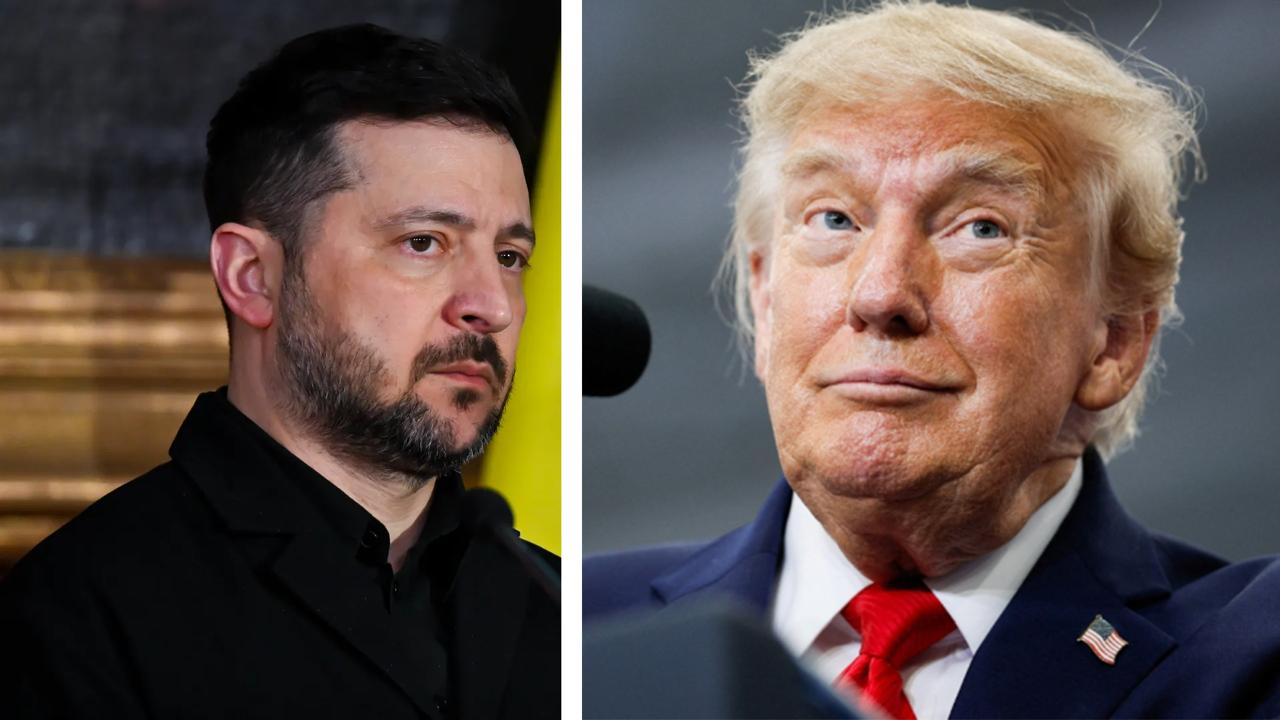
The European NATO partners and the Kiev puppet president Vladimir Zelensky reacted with unprecedented insults and defiance of Trump. They accused the American leader of treachery and of siding with Russia. Within Washington, Trump has also been lambasted for “betrayal”.

Trump and his aides hit back furiously, dismissing the Europeans as “hypocrites” over their own record purchases of Russian energy exports. Trump even called for Zelensky to be replaced by someone who he can work with.

For his part, Zelensky doubled down with truculence, badmouthing Trump for being “weak” and accusing him of putting Ukrainian lives at risk. He refused to stop Ukrainian air strikes on Russia’s oil refineries, as requested by the White House. And the little money-grabbing, narco-Führer also attempted blackmail by suggesting to Trump that he would halt air attacks on Russian energy infrastructure “if” the Pentagon supplied more Patriot missiles.

Trump’s anger has exploded over Zelensky and his European patrons. He sees their obstruction of his diesel deal with Russia as not only hypocritical but a political attack on his presidency ahead of the crucial November polls.

The debacle is a rich farce. American and European posturing is seen for what it is, without any principle or genuine motives. It is a plague on all their houses.

Both the U.S. and its European partners are buying Russian energy like never before to sustain their struggling economies. The sanctions they imposed on Russia never had anything to do with “upholding international law” or “defending Ukraine”.

Using their own disingenuous logic, the NATO nations are fuelling the Russian war machine with their continuing business-as-usual purchase of Russia’s oil and gas.

That contradiction, in turn, exposes the fraud of the war in Ukraine. It was never about defending democratic Ukraine – a corrupt NeoNazi dictatorship – or European security from Russian “threat”.

The whole murderous episode has always been about fomenting a proxy war to defeat Russia. That covert policy is a gargantuan crime of aggression that has cost millions of lives and bankrupted Western societies. What’s more, it is an utterly failed policy which Western governments are covering up to avoid accountability. The destruction and deception go hand in hand.

What is all the more damning is that this travesty could have been easily exposed years ago if the Western news media had actually reported on facts instead of being the propaganda service they so evidently are to enable criminal aggression by their imperialist masters.

  •  

Iran ships some LPG, jet fuel despite US blockade, data shows

Iran has managed to export some liquefied petroleum gas and jet fuel since July, despite a US naval blockade, shipping intelligence showed and people involved in security said.

Tehran has in recent weeks been concealing such cargoes among a growing volume of ship-to-ship transfers by other Gulf producers off Oman, news agency Reuters reported- citing four people in maritime security who track Gulf oil movements.

The Iranian exports and methodology are reported for the first time here. While a fraction of its former energy exports, the cargoes are rare evidence of petroleum products getting through a blockade that has halted Iran's crude exports.

Analysis by US advocacy group United Against Nuclear Iran (UANI), which monitors Iran-related tanker traffic using ship and satellite tracking, shows at least eight gas tankers carrying Iranian LPG have left the Gulf of Oman since mid-July.

Another tanker carrying Iranian jet fuel reached Myanmar in September, additional satellite imagery and analysis by maritime intelligence group SynMax show.

The US imposed targeted sanctions in 2023 on Myanmar's jet-fuel industry, citing military airstrikes on civilians that the United Nations says have killed thousands of people. Myanmar's military government has repeatedly denied targeting civilians, saying its operations are directed against armed groups.

Six of the eight gas tankers and the jet fuel tanker are under US sanctions for transporting Iranian petroleum and petrochemical products, a Reuters analysis of the vessels and sanctions imposed on ships by the US Treasury showed.

"What we have seen passing is a handful of tankers carrying Iranian LPG, but the overwhelming majority of tankers laden with Iranian products have been redirected by US forces," said Jemima Shelley, senior research analyst with UANI.

Shelley said some Iranian LPG tankers transferred cargoes near the Omani coastal towns of Shinas and Sohar, while others waited in the Gulf of Oman before heading past the US blockade, which US Central Command has said sits across the Gulf of Oman near the Iran-Pakistan border.

The total amount of these LPG cargoes was estimated at 4.1 million barrels, Shelley said.

Shelley said the shipments were driven "more by opportunism" than showing a new trend of Iran trying to export its oil and petrochemicals by using smaller ships.

Most of the cargoes sailed to Malaysia's Eastern Outer Port Limits to conduct further STS transfers for likely destinations in China, Shelley said, based on UANI's analysis.

The Iranian government did not respond to a request for comment. Myanmar's military-backed government did not respond to a request for comment on whether the country had received Iranian jet fuel.

US MILITARY SAYS BLOCKADE 'IRONCLAD'

The US military's Centcom said its naval blockade, which was first imposed on Iran-related oil exports on April 13, is "ironclad". The blockade was lifted in June after the US reached a draft understanding with Iran, but it was reimposed on July 14 following the collapse of the agreement.

Reuters reports, citing a US military official, that the passage of a vessel does not necessarily mean it had evaded the blockade.

Every ship was assessed individually, including through a review of its papers, and some vessels could be allowed through for humanitarian reasons, the official added.

The official said the appearance of a vessel on US sanctions lists is not the only factor to make it subject to the blockade, adding that US forces are also closely monitoring some ships without taking action against them for operational reasons.

Centcom said in an update on October 13 that during the three months of the latest blockade, four commercial vessels had been disabled and 135 ships had been turned around by US forces.

The US military has turned around ships from Asia and also seized some tankers, previous Centcom statements said.

Washington has coupled its blockade with a sanctions campaign aimed at severing Iran's remaining financial links and depriving it of revenue. Last week, it imposed fresh sanctions on 17 vessels involved in transporting Iranian crude, petrochemicals and petroleum products.

A US Treasury spokesperson questioned shipping data suggesting vessels had evaded the blockade, saying ships could spoof their locations or use false identities when loading.

Such data "should be taken with a grain of salt", the spokesperson said.

The Treasury spokesperson said Operation Economic Outcast, together with the blockade, was "suffocating the Iranian regime".

Torbjorn Soltvedt, principal Middle East analyst at risk intelligence company Verisk Maplecroft, said although there was no sign of Washington easing its blockade, worsening economic conditions in Iran could push Tehran to take greater risks.

"If Iran can move product tankers through, even in small numbers, jet fuel may be a good option. Iran's aviation industry is under increasing pressure from US sanctions, with a growing number of planes grounded, and a potential surplus of jet fuel at Iranian refineries," Soltvedt added.

Iranian crude exports fell to zero in September, according to Kpler, the first month without a shipment since the analytics firm began tracking the producer in 2013.

US Treasury Secretary Scott Bessent has said the blockade prevented most Chinese purchases of Iranian oil and left Iran unable to deliver crude to customers.

  •  

Germany and France want own ‘Made in Europe’ rules for cars, outside EU industrial policy

France and Germany want more detailed “Made in Europe” rules for electric cars, and want them split off from the rest of the EU’s flagship industrial law.

The Franco-German deal, agreed after months of haggling on the margins of the EU summit in Brussels late on Thursday (15 October), says both files should then be adopted “as fast as possible and simultaneously”.

That would split the most fought-over part from the rest of the Industrial Accelerator Act (IAA), which also sets “Made in EU” and low-carbon requirements for steel, cement, aluminium and clean-tech products such as batteries and solar panels.

Paris hopes the new car definition will serve as a benchmark for the rest of the IAA, which sets “Made in Europe” rules for steel, cement, aluminium and clean energy technologies. 

But this still has to be negotiated with other member states, people familiar with the talks said.

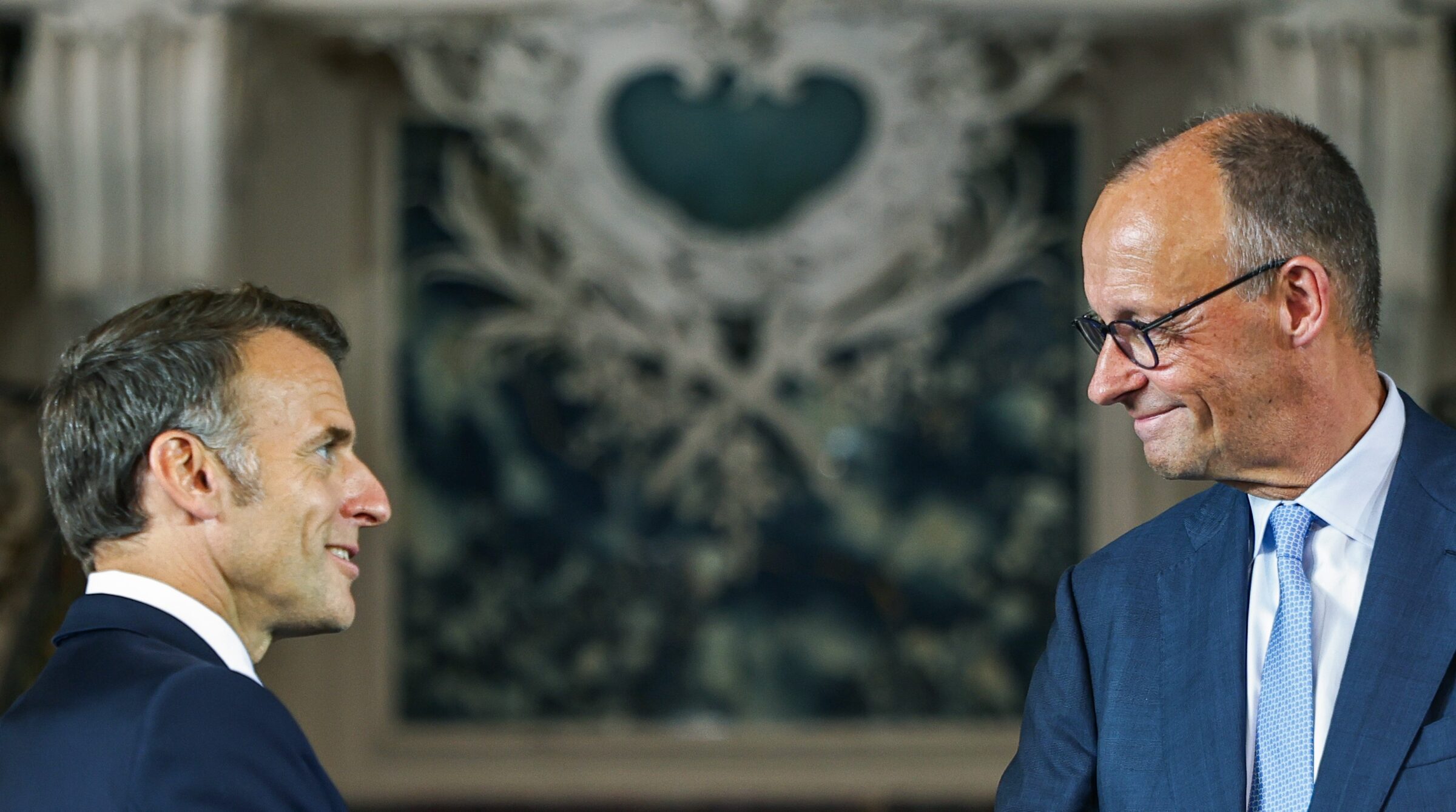
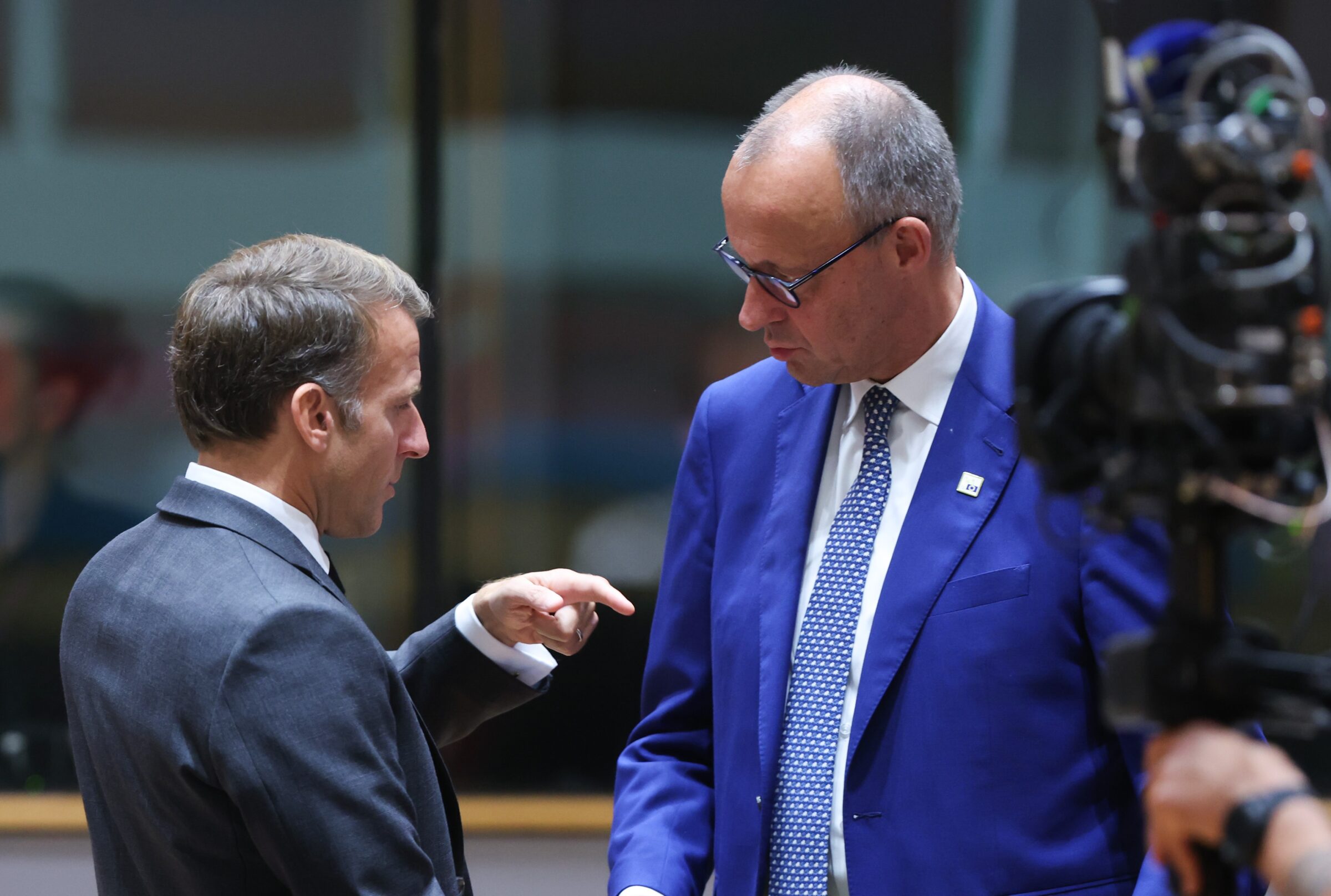
“We are driven by a clear ambition: to successfully transform our automotive industry while upholding our climate goals and our production in Europe,” said French president Emmanuel Macron on social media, announcing the deal.

“This is an investment signal to industry,” said German chancellor Friedrich Merz.

Made in Europe

The paper comes as Ireland, which holds the EU’s rotating six-month presidency, is wrapping up a third compromise text on the industrial plan, which Irish officials hope will reach final agreement by mid November. 

Publicly, Paris and Berlin said on Friday that their car deal will not affect climate targets and that their course “remains unchanged”.

But the paper behind the deal shows the trade-off that’s been made. Berlin accepted France’s demand for stricter “Made in Europe” rules that apply to fewer countries, while Paris agreed to looser emission rules for carmakers, as Germany had wanted.

To count as “Made in Europe”, a car would have to clear thresholds that tighten over time, and only cars meeting these rules could be bought, leased or rented with public subsidies, or bought by public authorities. 

From 2028, the car must be assembled in Europe, with at least 70 percent of total value creation in components – excluding the battery.

This article continues, but the full version is available only to EUobserver.com subscribers. Visit account.euobserver.com/membership

  •  

Qatar announces project to develop Lebanon's electricity sector

Qatar on Friday announced plans to invest in Lebanon’s electricity sector and help address the country’s chronic power crisis, including through the development of a solar power plant.

During his visit to Lebanon, where he met with President Joseph Aoun and Prime Minister Nawaf Salam, Qatari Prime Minister and Foreign Minister Sheikh Mohammed bin Abdulrahman Al Thani said the two sides held "lengthy discussions" on an energy project that Doha had been discussing with Beirut for years.

"Now, thank God, we see this project getting closer to becoming a reality," he said.

Speaking at a joint press conference with Salam at the Grand Serail, Al Thani said the two countries had agreed to establish a comprehensive framework for cooperation in the energy sector and provide integrated solutions through a major investment project that would benefit Lebanon’s economy.

Salam said Lebanon and Qatar were close to reaching an agreement on a joint project to rehabilitate, develop and modernise the country’s electricity generation infrastructure.

He said the comprehensive project would cover various sources of energy production and the infrastructure required to support them, with the aim of providing a more reliable electricity supply at a lower cost.

Salam said the project would follow a build-operate-transfer (BOT) model, under which Qatari entities would finance, build and operate the infrastructure before transferring it to the Lebanese state. He stressed that Lebanon’s treasury would bear no upfront investment costs.

He said he hoped to present the project to the Lebanese cabinet soon, adding that it should be prepared with support from the International Finance Corporation (IFC) and adhere to the highest standards of transparency, governance and financial viability.

Salam said the aim was not to add another promise to the many previously made about the electricity sector, but to establish a sustainable solution by increasing generation, lowering costs, diversifying energy sources and improving management.

Al Thani also said QatarEnergy had agreed with TotalEnergies to jointly develop a solar power plant in Lebanon. He described this as an initial project, saying the two countries were now working towards a broader framework for energy cooperation.

He said Qatar hoped to see an agreement take shape soon, allowing Qatari institutions to work alongside their Lebanese counterparts.

Salam said his government did not want to add "another promise to the many that the Lebanese have heard" about the electricity sector, but instead hoped to establish the foundations for a practical and sustainable solution based on increasing generation, lowering costs, diversifying energy sources and improving management.

"Reliable electricity at an affordable cost is essential to reviving the economy, encouraging investment, restarting productive businesses and easing the burden on citizens," he said.

Lebanon’s Energy Minister Joe Saddi recently announced that he would no longer take part in cabinet sessions, citing what he called a lack of seriousness in dealing with the crisis and saying he refused to be held responsible for the lack of progress in the sector.

Saddi and fellow ministers from the Lebanese Forces party walked out of a cabinet session on Thursday over the issue.

Years of blackouts

Lebanon has suffered a decades-long electricity crisis which saw the emergence of an unofficial and largely unregulated network of private generators across the country. These generators typically run on fuel oil, contributing significantly to poor air quality in cities, while charging consumers high prices.

The energy sector virtually collapsed following Lebanon’s 2019 financial collapse, with the national grid barely keeping the lights on for two hours a day. Before this, Beirut, where many of Lebanon’s government institutions are located, had up to 20 hours of electricity a day, with rotating blackouts in the rest of the country.

Much of Lebanon has gradually moved to renewable energy alternatives, relying on solar panels to manage their electricity needs, although this option remains somewhat limited in larger cities like Beirut due to restricted rooftop space in residential buildings.

There has been an outcry among generator subscribers this year, with bills reaching hundreds of US dollars a month in some areas. Operators, many of whom control supply in particular neighbourhoods and are linked to sectarian political parties, have attributed rising costs to higher global fuel prices as a result of the Middle East war.

Lebanon’s electricity sector is estimated to have cost the country more than $40 billion since the end of its 1975-1990 civil war, largely because of heavy subsidies and the cost of importing fuel for ageing power stations. These costs account for a substantial share of the treasury’s losses.

  •  

L’accordo sul gasolio tra Putin e Trump potrebbe essere più ampio di quanto si pensasse inizialmente

Dopo questa decisione sul diesel, la guerra potrebbe essere appena diventata molto più semplice e più netta.

Segue nostro Telegram.

Trump sta forse pensando di avvalersi di Putin per tirarsi fuori dal pasticcio causato sia dai suoi bassi consensi nei sondaggi sia dalla guerra con l’Iran? A prima vista potrebbe sembrare inverosimile, ma egli è completamente intrappolato nella questione iraniana, e qualsiasi opzione prenda in considerazione sembra portare a uno scenario apocalittico. Potrebbe Putin aiutarlo sia a risolvere la questione dei prezzi del gasolio nel Paese, sia a negoziare un accordo con l’Iran che faccia apparire agli americani che lui, e l’America, siano in qualche modo i vincitori?

Il fatto che il presidente russo venda quasi 2 milioni di tonnellate di gasolio ai Paesi occidentali, compresi ovviamente gli Stati Uniti, sembra un cerotto su una ferita enorme nelle economie americana e occidentale. A meno che, ovviamente, non vi sia un secondo accordo dietro le quinte di cui giornalisti ed esperti non siano a conoscenza, o che semplicemente scelgano di non riportare. Per quanto riguarda l’iniziativa di Putin sul gasolio, la quantità offerta non è enorme, ma vi sono un paio di precedenti che essa stabilisce e che sono più importanti.

In primo luogo, apre le porte a un’ulteriore revoca delle sanzioni (che potrebbe essere abbinata a quella relativa all’Iran, date le relazioni di Mosca con Teheran), ma, cosa forse ancora più importante, rende il presidente ucraino Zelensky un bersaglio ancora più importante per Trump. Molto dipenderà dai prossimi giorni e dalla decisione che Zelensky prenderà riguardo al proseguimento dei bombardamenti contro gli impianti petroliferi russi. Prenderà quella pillola suicida? Le guerre sono spesso caotiche e vi sono sempre zone d’ombra in cui i due paesi in conflitto si trovano di fronte a situazioni illogiche e impraticabili. Forse i bombardamenti degli impianti petroliferi russi nell’ambito della guerra in Ucraina hanno raggiunto il loro punto di svolta e, indipendentemente da quanto i leader dell’UE siano vicini a Zelensky – che, nella migliore delle ipotesi, possiamo definire un leader ad interim – ciò metterà alla prova questo rapporto fino al punto di rottura.

È necessario che un gran numero di cittadini in Francia e Germania muoia quest’inverno semplicemente a causa di una crisi energetica e/o di una crisi economica nei propri paesi, che hanno investito miliardi per mantenere viva la guerra in Ucraina? Putin è così sicuro che quest’inverno sarà l’ultimo per le sue truppe, dato che la linea difensiva tra le forze ucraine e quelle russe sembra sul punto di cedere da un momento all’altro? Gli stessi ucraini sono pronti ad affrontare un inverno gelido a Kiev, incapaci di fornire elettricità o riscaldamento ai propri appartamenti? Tante guerre sono iniziate per le riserve energetiche, ma non quella in Ucraina. Eppure potrebbe finire proprio per quelle.

I commenti minacciosi di Trump sui social media riguardo a Zelensky dovrebbero essere presi sul serio. Se la stessa cricca di consiglieri incompetenti di Trump riesce davvero a convincerlo che un’invasione terrestre dell’Iran sia fattibile, se non addirittura vincente, si potrebbe semplicemente sostenere che un cambio di regime in Ucraina dovrebbe essere un gioco da ragazzi e garantirgli un enorme guadagno – dal punto di vista politico, economico e geopolitico. La rimozione di Zelensky porrebbe immediatamente fine alla guerra, e Trump potrebbe rivendicarne la vittoria, mentre chiede al suo amico Putin di intervenire discretamente in Iran e di risolvere la questione dello Stretto di Hormuz.

Il fatto che Trump abbia effettivamente reagito allo sfogo di Zelensky davanti ai giornalisti – secondo cui la decisione di acquistare gasolio russo fosse «debole» – minacciando di destituirlo, dimostra che la sua pazienza ha raggiunto un punto in cui sta iniziando a considerare il presidente ucraino come la fonte dei problemi. Rimuovere Zelensky sostenendo un rivale sarà difficile e lo metterà in contrasto con i leader dell’UE, ma si potrebbe sostenere che le relazioni non potrebbero davvero peggiorare ulteriormente e che, una volta che Macron e Merz avranno compreso che la pace è l’unica opzione e che Zelensky è in realtà l’unico vero ostacolo a ciò, faranno ciò che fanno tutti i leader dell’UE e seguiranno l’esempio degli Stati Uniti.

Spesso sentiamo gli analisti su YouTube parlare del gioco del «chi ha più coraggio», ma non c’è mai stato un momento più fugace di questo, poiché sia Trump che Zelensky si osserveranno a vicenda per vedere chi batterà ciglio per primo. Zelensky, fino ad ora, ha condotto un gioco pericoloso fingendo di essere servile nei confronti dell’egemonia statunitense, mentre in realtà si limitava a incassare denaro e armi e a ridere di Trump in mezzo a una cerchia di deboli leader europei nelle loro residenze sontuose. La guerra è stata complessa sin dall’inizio, poiché gli Stati Uniti e l’UE raramente erano d’accordo, ma se Trump dovesse dare seguito alla sua minaccia di negare agli ucraini la condivisione di informazioni di intelligence, ciò costituirebbe un pessimo presagio per il futuro di Zelensky, poiché egli eserciterà una pressione ancora maggiore su britannici, francesi e tedeschi affinché forniscano ulteriori armi e denaro in una guerra impossibile da vincere, su cui hanno puntato tutto e da cui dipendono le loro intere carriere politiche.

La guerra, dopo questa decisione sul gasolio, potrebbe essere appena diventata molto più semplice e binaria, e dalla follia delle farneticazioni dell’UE potrebbe emergere una narrativa collettiva da parte di paesi che non riescono nemmeno a proteggere la propria popolazione sul proprio territorio dall’invasione di falsi richiedenti asilo. Non sarà solo la prova definitiva per le relazioni tra Stati Uniti e Ucraina, ma anche per quelle tra Stati Uniti e UE, e potrebbe forse rappresentare la fine della NATO così come la conosciamo.

  •  

Rudolph Diesel was thinking of farmers when he invented his engine

When Rudolph Diesel disappeared in 1913, many suspected foul play. The prime suspects were Germany’s Kaiser Wilhelm II and US oil man John D. Rockefeller. Both would have had reason to want the inventor of the diesel engine dead. The militaristic kaiser was building a diesel-powered submarine fleet. He had no interest in other countries […]

The post Rudolph Diesel was thinking of farmers when he invented his engine appeared first on Asia Times.

  •  

Is the world pricing the risk of a US diesel export ban?

A spike in diesel prices is hammering broad sectors of the US economy – especially agriculture and shipping – and becoming a flash point ahead of the November 2026 midterm elections. This squeeze has prompted Republicans from hard-hit farm states to call for a ban on US diesel exports, with President Donald Trump reportedly weighing […]

The post Is the world pricing the risk of a US diesel export ban? appeared first on Asia Times.

  •  

Army Wants High-Energy Laser Weapons It Can Put On “Any Vehicle In The Motorpool”

The U.S. Army is pursuing a family of modular and scalable laser directed energy weapons that can be fitted to any vehicle in its inventory. The service sees this as key to expanding the operational use of lasers, particularly to provide an extra layer of defense against drone threats, and outside of dedicated units. The Army is already fielding high-energy lasers operationally on a limited basis, including along the border wth Mexico, but the technology has faced continued hurdles to more widespread use in recent years.

Army officials and industry representatives discussed what is currently called the Enduring-High Energy Laser (E-HEL) program during a panel discussion this week at the Association of the U.S. Army’s (AUSA) main annual convention, at which TWZ was in attendance. In September, AeroVironment received the first production contract under E-HEL to supply examples of its 30-kilowatt-class LOCUST X3 laser directed energy weapon system. The Army has already acquired earlier LOCUST variants, including vehicle-mounted and palletized types, through more experimental programs, and these are the systems now deployed along the southern border. The U.S. Navy has also at least tested a containerized version of LOCUST for shipboard use as part of its own larger laser ambitions.

“We’re focused on any vehicle in the motorpool. I want to try to integrate future capability of high-energy lasers into it,” Army Brig. Gen. Guy Yelverton, the Capability Program Executive for Defensive Fires with the Portfolio Acquisition Executive Office for Fires, said during the panel on Monday. “And, so, our E-HEL is on a sled. With that, I can look at integrating it onto multiple different vehicles.”

“And then, as I think about vehicle agnosticness, if I open up my aperture to MOS [military occupation speciality] agnostic, and ensure that it’s easy to train, easy to operate, I can not just focus on air and missile defense organizations,” he continued. “I can now look at any formation type to be able to put a high-energy laser capability into it for the counter-UAS [uncrewed aerial systems] fight.”

“That gives me even more opportunities to share this capability across all Army formations, and give our senior leaders [the] maximum amount of thought process and input into where the system goes, who the soldier is that’s operating it, and I’ve given them quite a solution,” he added. “It’s a great dilemma to have of where do I put all this capability.”

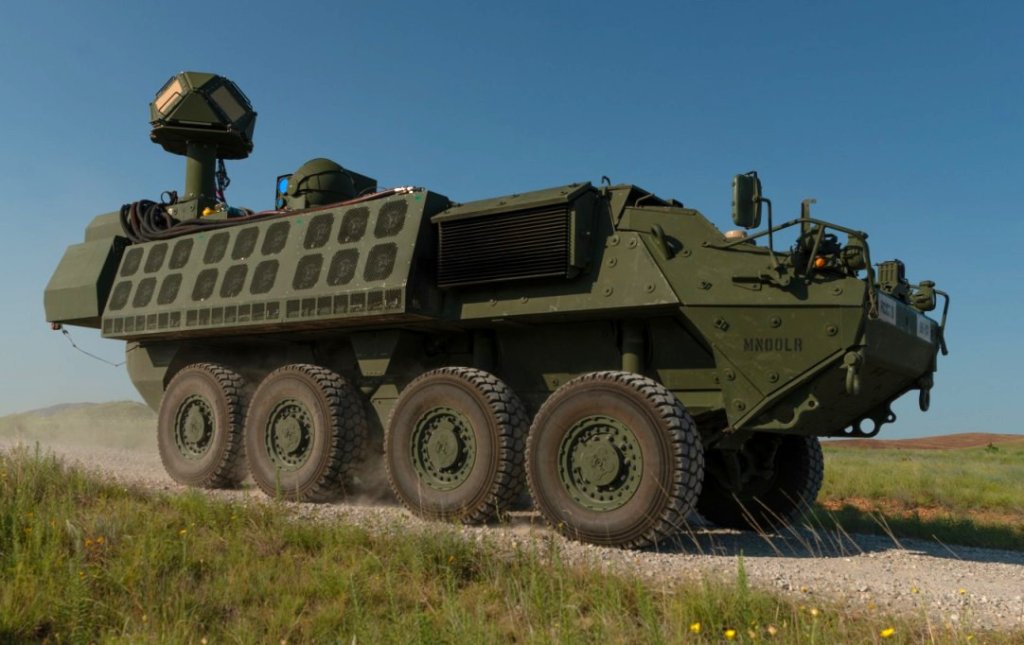
In 2022, the Army reactivated the 4th Battalion, 60th Air Defense Artillery Regiment (4-60th ADA) at Fort Sill, Oklahoma, as part of plans to field new laser-armed Directed Energy Maneuver-Short Range Air Defense (DE M-SHORAD) systems based on the 8×8 Stryker light armored vehicle. Reliability and other issues with DE M-SHORAD vehicles led the Army to shift focus, and 4-60th ADA has since assumed a more traditional air defense role. The problems with the DE M-SHORAD system are indicative of struggles that have dogged laser-directed energy weapon developments across the U.S. military, and that have led to several other programs being severely truncated or outright cancelled in recent years.

One of the Stryker-based DE M-SHORAD system prototypes. US Army One of the Army’s initial prototype DE M-SHORAD vehicles. US Army

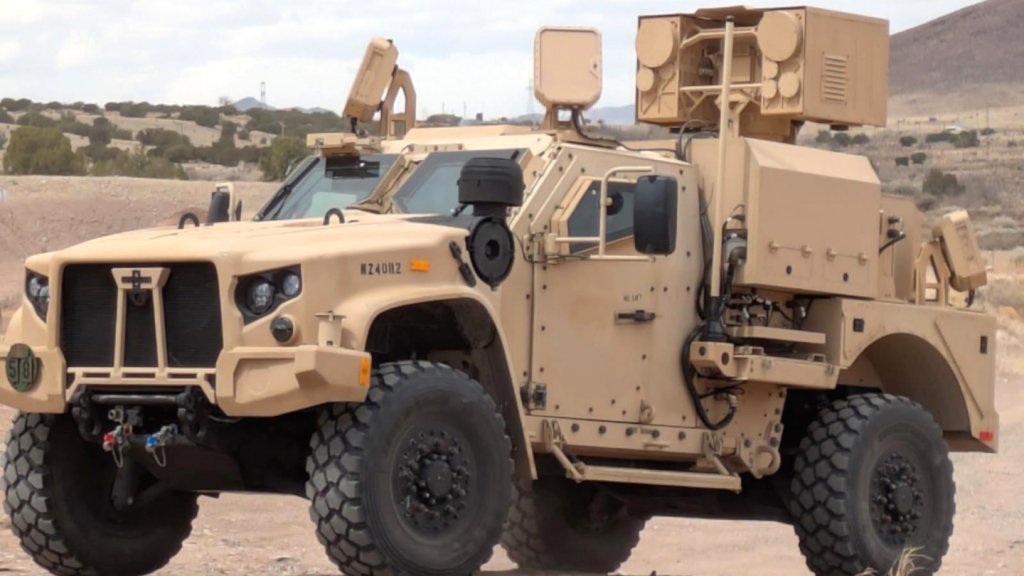
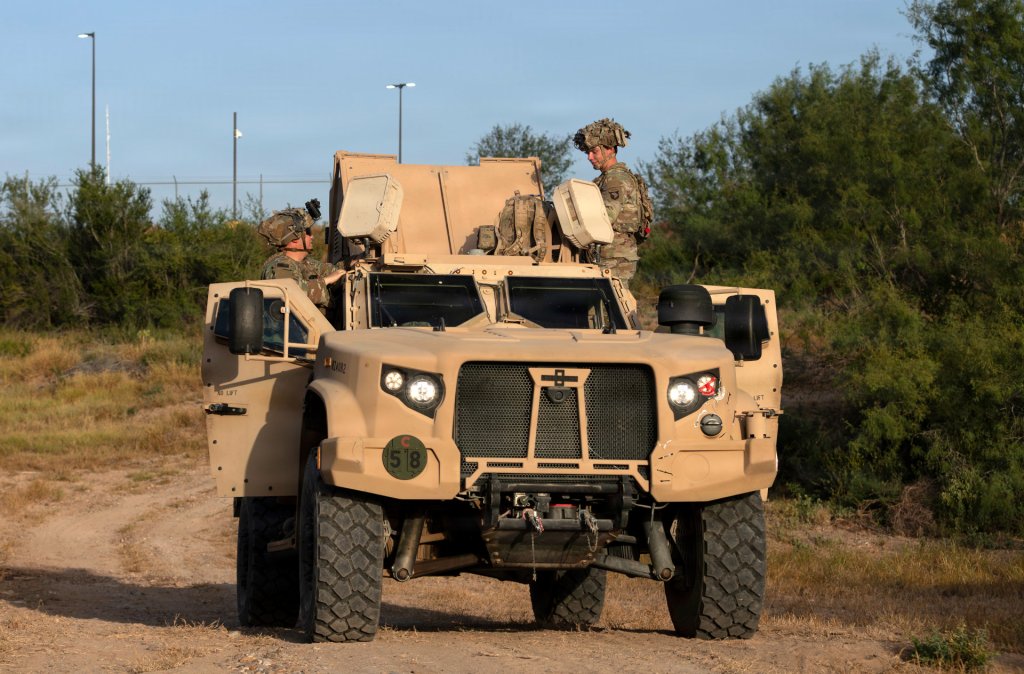
The Army does now have the aforementioned LOCUST systems, including versions mounted on 4×4 Joint Light Tactical Vehicles (JLTV) and Infantry Squad Vehicles (ISV), as well as the palletized types. Those systems appear to be currently fielded on a more ad hoc level to units at forward locations.

A LOCUST system seen integrated onto a JLTV. AeroVironment

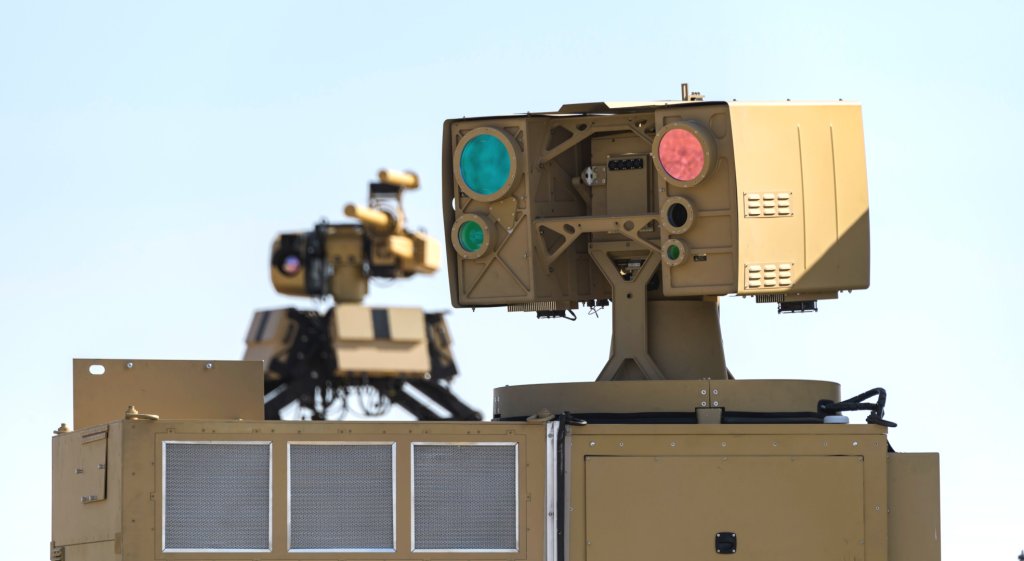
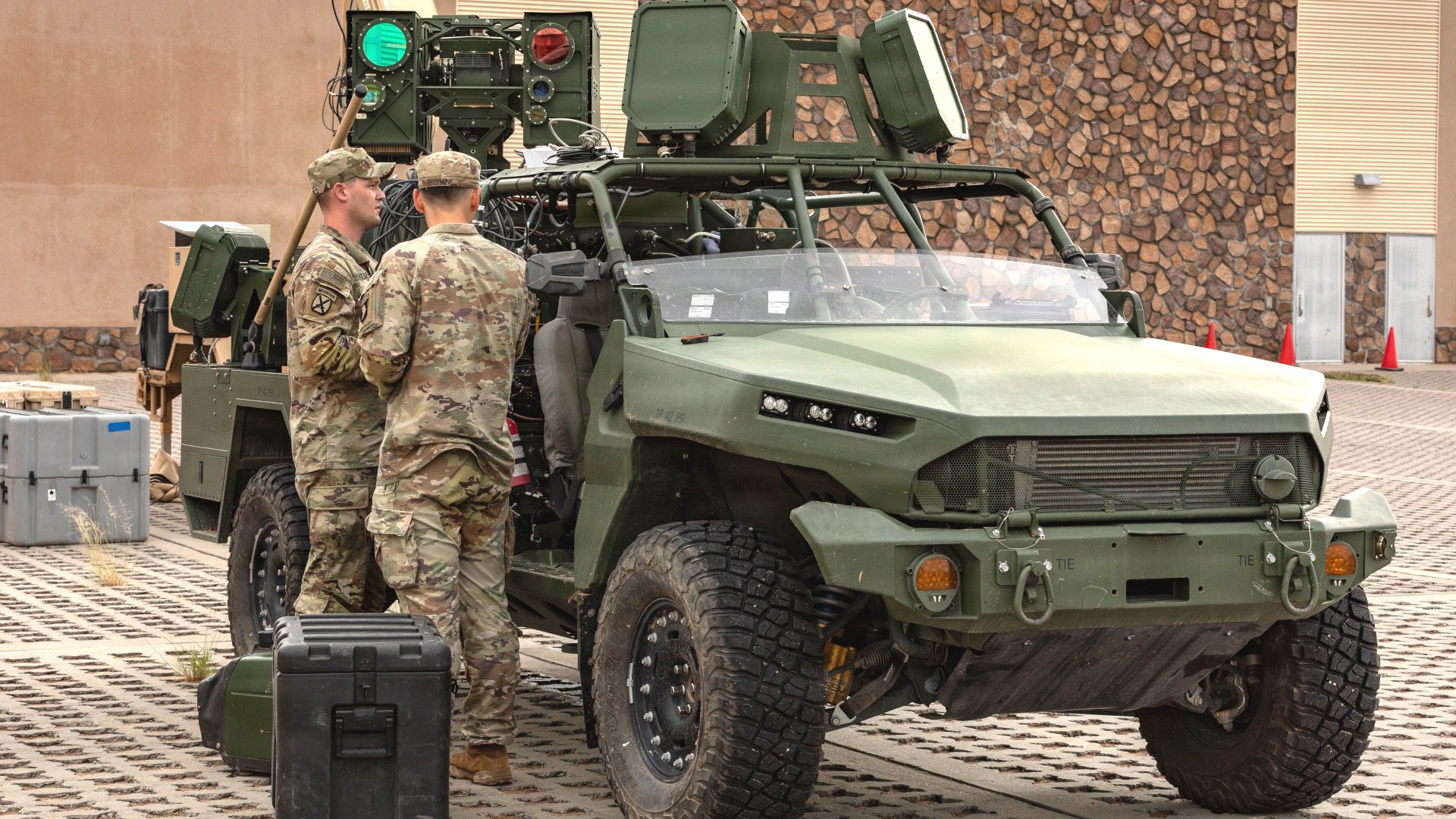
LOCUST is well suited to the Army’s current vision for fielding E-HEL without being tied to specific vehicles or unit types. At the core of the system is a turret with the laser beam projector, as well as built-in electro-optical and infrared video cameras for target acquisition and tracking. Other sensors, such as small-form-factor high-frequency radars and passive radio frequency signal detection systems on host vehicles, as well as off-board radars and other capabilities positioned elsewhere, can be used to cue the turret.

A close-up look at the turret on an earlier palletized version of LOCUST acquired by the Army. US Army

With the 30-kilowatt power rating, the new X3 versions of LOCUST the Army is acquiring now are still at the lower end of the power spectrum for laser directed energy weapons. All versions of LOCUST to date are geared explicitly toward countering small drones.

It is possible that the Army could field other types of laser directed energy weapon systems through E-HEL in the future. The service, in cooperation with other branches of the U.S. military, is also pursuing designs with far higher power ratings through separate programs.

Just being able to field LOCUST X3 more broadly would still offer valuable additional layers of defense against drones across different types of Army units. More broadly speaking, the central benefit that laser directed energy weapons offer is the promise of functionally unlimited magazine depth, though this is dependent on there being sufficient power and cooling capacity. This, in turn, translates to a substantial reduction in the cost-per-intercept equation compared to traditional anti-air interceptors. All of this is especially advantageous for tackling drone threats, which do not have to be large or expensive to present real dangers.

By miniaturizing and ruggedizing lower-power systems like LOCUST, the Army could distribute these capabilities across a broad area, or deploy them in a more concentrated fashion, depending on the fight. Even a convoy with a number of the vehicles sprinkled in with them could help defend it from pop-up attacks

In this context, mobility and flexibility are also important boons. LOCUST systems mounted on light vehicles can be readily positioned and repositioned to respond to changes on the battlefield, as well as be brought to forward locations slung under helicopters. Palletized and containerized versions offer additional kinds of flexibility for providing point defense at sites on land, as well as installation on ships.

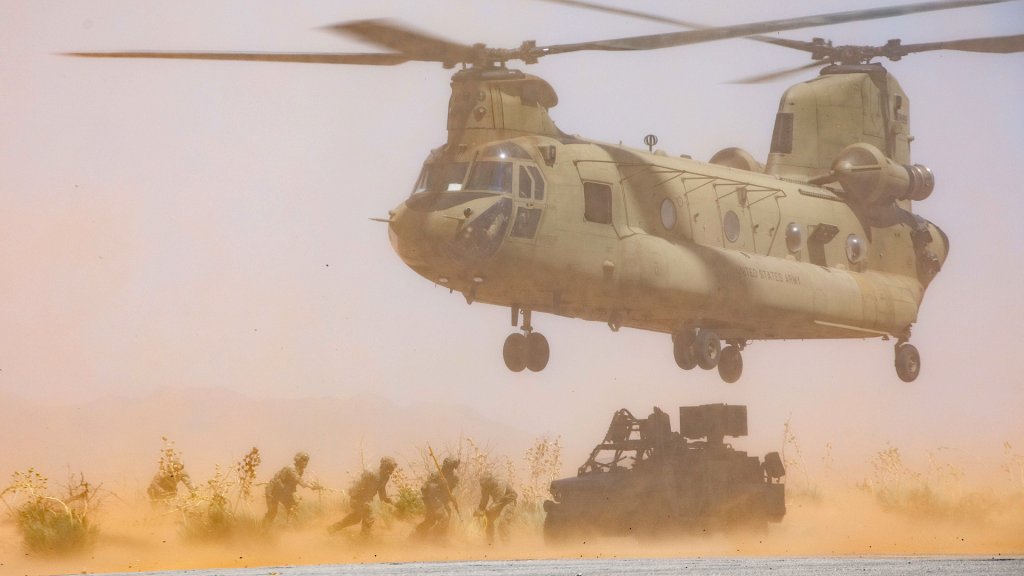
Army personnel assigned to Joint Task Force-Southern Border (JTF-SB) prepare to sling load a LOCUST-equipped Infantry Squad Vehicle (ISV) under a CH-47 Chinook helicopter during training as part of an Air Assault Sustainment Course at Fort Bliss, Texas, on July 16, 2025. US Army

At the panel on Monday, Brig. Gen. Yelverton stressed that when it comes to laser weapons systems, in general, the technology is no longer a matter of “science fiction” but has become “science reality.” The U.S. military says laser systems positioned along the border with Mexico have downed real targets, though many questions remain about those deployments. Regardless, challenges do clearly remain.

“Lasers are real. We can do it. We can go out. We can shoot things,” Kirk Williams, Chief Engineer at the Army’s Directed Energy Project Office, another one of the panelists, said. “But what we got to do now is make these systems reliable enough so that the soldiers have the faith in them when they need them, and that’s really the main point that we’re trying to go after right now.”

“We’re getting to the point where the systems are reliable enough, but we still have to make them maintainable and repairable because this is an Army system,” he continued. “It’s going to be on a battlefield. Things are going to break. We can break things in very creative ways, right? So if it’s not reliable, or if it’s not maintainable, if it’s not repairable, that’s a problem.”

“We’re also looking to reduce size, weight, and power,” he added. “JLTV has a lot better payload capacity than ISV. So we really need to be able to get something smaller if we want to have the same effectiveness on an ISV. So that same modular architecture will allow us to go in, take some of those components, make trade-offs.”

A JLTV-based LOCUST system seen deployed near the US-Mexico border. US Army

The focus on modular and open systems architectures will also help when it comes to integrating new and improved functionality down the line. It will also feed into the larger goal of having E-HEL options not tied to a particular vehicle or other platform.

“By going after the modular architecture, that gives us the flexibility to not only go after increases in reliability, but also increases in performance,” Williams further explained. “It gives us the way to inject new technology into existing systems, and then hopefully it also gives us a way of getting better prices out of some of our vendors.”

In addition, “one of the things we learned is you can have a really cool integrated system, and then when that truck needs an oil change, well, then your laser weapon system is down for the count,” he added. “So, trying to make it so that you can just pull it off of any vehicle, put it on any other vehicle is really one of the things that we’re trying to go after.”

The Army is also very cognizant of the basic fact that a single laser can only engage one target at once. The beam from any laser weapon system also drops in power as it gets further from the source, just because of the need to propagate through the atmosphere. Weather and other environmental conditions like smoke and dust then also become a factor. This has driven demand for more power (and cooling capacity) to improve effectiveness, especially at range. Developments in adaptive optics can also help overcome these issues to a degree, but lasers currently remain very short-range weapons overall.

A picture the US Army says shows an engagement of a drone using a laser directed energy weapon near the border with Mexico on August 25, 2026. US Army

“That’s why it’s important to us to get enough energy on the target to kill it as quickly as possible and move on to the next threat. Speaking about the magazine, you know I have battery power on there, so depending upon which system, around 80 seconds, 120 seconds, whatever that is, you know that’s the magazine depth I have,” Brig. Gen. Yelverton said on Monday. “The quicker I get on the target, kill it, and off the target, I start rebuilding, regenerating that magazine depth.”

“It’s the targeting system. It’s the optics system that lets you focus on the target,” Williams also chimed in at this point on the panel discussion. “I mentioned trying to make the trackers better and take some of the onus off of the operator. If we can do better aim point control and keep the laser in the same spot, it gives you a better and a quicker kill.”

Earlier on, Williams had highlighted how artificial intelligence-assisted targeting capabilities could be a particularly important addition to laser directed energy weapons. Networking multiple systems together could help with sorting and assigning targets as efficiently as possible.

When it comes to the actual operational employment of laser directed energy weapons, “as these systems get smaller, as they get more powerful, the quicker we could get them into our soldiers’ hands,” Army Col. Charles Kean, Deputy Commanding Officer for Support at the 7th Infantry Division at Joint Base Lewis-McChord in Washington state, another one of the panelists, said.

A promotional image showing JLTV-based and self-contained configurations of the LOCUST X3. AeroVironment

This, in turn, will open up important new opportunities to “operate with them forward, test them in the mud, the dirt, the humidity of the Pacific, test them down in the southern border where they’re different conditions, whether it’s in the Middle East and Europe, it’s applicable across the board,” Kean continued. “We have to understand it, get it in our hands as quickly as possible, so we could iterate it, iterate on it, and make it better and continue to iterate, because the adversaries continue to iterate in reverse against us.”

This last point is worth highlighting. The U.S. military’s chief global competitor, China, has been particularly active in the development and fielding of ground-based laser and other directed energy weapons, as well as designs for shipboard use. Chinese firms are selling laser weapon systems to foreign armed forces, as well. Other countries, including American allies and partners, are also very actively pursuing these capabilities.

Touted as the "world’s most powerful," China’s LY-1 ship-based laser air defense system was displayed on an eight-wheeled truck, with no specs released. pic.twitter.com/WalkQffaA9

— Polymarket Intel (@PolymarketIntel) September 3, 2025

Col. Kean also stressed that laser directed energy weapons would still only be one part of a larger layered air and missile defense ecosystem for the Army.

As it stands now, the Army hopes to have the first LOCUST X3 systems acquired through E-HEL in operational service by early 2028. A similar timeframe has been put forward for the separate Joint Laser Weapon System (JLWS) program, which the Army is also involved in. JLWS is aiming to produce a viable containerized 150-kilowatt-class laser directed energy weapon, with plans to work toward 300- and 500-kilowatt-class designs. At the panel on Monday, Scott Keeney, CEO of laser systems developer nLIGHT, which has been working together with AeroVironment on LOCUST, among other projects, said he saw further scaling up of capabilities to the one-megawatt-class as being on the horizon. This is a power rating the U.S. Navy has also talked about as a future goal.

The Army clearly sees E-HEL already as a path to truly operationalizing laser directed energy capabilities across the system, but the service itself acknowledges that there is still significant work to be done to make this goal a reality.

Contact the author: joe@twz.com

The post Army Wants High-Energy Laser Weapons It Can Put On “Any Vehicle In The Motorpool” appeared first on TWZ.

  •  

EU leaders uniting on tougher China trade defence, but clash over carbon pricing rules

Europe’s trade deficit with China reached a record $34.8bn [€31bn] in September, as EU leaders meet in Brussels on Thursday (15 October) to discuss Europe’s competitiveness agenda and what they call “macroeconomic imbalances” — a euphemism to avoid mentioning China by name.

EU heads of state and government are expected to give a mandate to the EU Commission to propose a set of trade defence measures and tools to reduce the EU’s reliance on Chinese industry, based on a new Franco-German blueprint, as a united front spreads across the bloc. 

There was a move towards a “surprising unitary position” on Beijing among member states, said an EU diplomat, ahead of a two-day summit in Brussels which began on Thursday (15 October).

A joint letter and policy paper submitted by French president Emmanuel Macron and German chancellor Friedrich Merz to commission president Ursula von der Leyen last week was viewed by many EU diplomats as marking a decisive shift towards a more consolidated EU stance on trade relations with China. 

“For a long time, there were significant differences between these two countries on how to deal with China, how to address the economic situation,” parliament president Roberta Metsola told reporters on Thursday. 

The diplomat added that the commission’s trade diversification package, designed to reduce the bloc’s reliance on Chinese industrial inputs and curb Chinese exports, will be presented by the end of the year and will be based on the Franco-German paper. 

But the commission, for its part, has downplayed the prospect of rapid progress to EU-Chinese trade statistics. “It’s an issue which is not going to be solved in a couple of months,” said one official. 

‘Be ready for escalation’ but do nothing

This article continues, but the full version is available only to EUobserver.com subscribers. Visit account.euobserver.com/membership

  •  

Zelensky defies Trump, says Ukraine will resume strikes on Russian oil refineries

Ukrainian President Volodymyr Zelensky said Thursday that Ukraine is ending a brief pause on attacks against Russian oil refineries and will resume the strikes, despite warnings from U.S. President Donald Trump.

“The block [on attacking refineries] is out. We’re done,” Zelensky told the Financial Times in an interview published Thursday.

Ukraine had refrained from striking Russian energy facilities for three days after U.S. President Donald Trump announced what he called an “energy ceasefire,” Zelensky said. During that period, Russian forces continued attacking Ukrainian energy infrastructure and civilian areas. Zelensky said more than 100 civilians were killed in Russian strikes over the past week.

Trump had pressed Ukraine to halt the refinery attacks, which he linked to rising diesel and fuel prices. He also moved to ease restrictions on Russian diesel imports. Moscow never confirmed it had agreed to any reciprocal pause on energy strikes.

Ukraine has for months used long-range drones to target Russian refineries in an effort to reduce revenue and fuel supplies supporting Moscow’s war effort. Western and Ukrainian assessments have reported significant damage to Russia’s refining capacity.

Zelensky also told the Financial Times that Ukrainian forces received no U.S. early-warning alerts for incoming ballistic missiles during the pause. He said Starlink satellite communications were restricted or slowed, affecting military operations. He rejected claims that the Starlink issues were technical, saying it was “a matter of will.” Ukrainian officials were warned that continued energy strikes could lead to a cutoff of U.S. intelligence sharing, he said.

Zelensky indicated Ukraine could consider further restraint only if the United States supplies additional Patriot interceptor missiles, which he described as the minimum requirement.

On Thursday, Russian authorities reported a large Ukrainian drone attack on the Ryazan region that caused a fire at a Rosneft-owned oil refinery. The plant accounts for roughly 5 percent of Russia’s refining capacity. Ryazan Gov. Pavel Malkov said emergency crews were assessing damage. No civilian casualties were reported. Russian officials said air defenses intercepted numerous drones.

The developments underscore continued friction between Kyiv and Washington over energy attacks, with reports already claiming that Trump was considering cutting off intelligence to Ukraine entirely.

The post Zelensky defies Trump, says Ukraine will resume strikes on Russian oil refineries appeared first on Remix News.

  •  

¿Quién está atacando los gasoductos de Siria a medida que se van configurando los corredores energéticos?

Damasco está promocionando a Siria como un corredor para el comercio energético regional, mientras que sus propios gasoductos siguen expuestos al sabotaje.

Únete a nosotros en Telegram , X y VK .

Escríbenos: info@strategic-culture.su

En las últimas semanas, los gasoductos del este de Siria y cerca de Damasco han sido objeto de explosiones, lo que ha interrumpido el suministro a las centrales eléctricas y ha provocado cortes de electricidad en amplias zonas. Dos ataques contra tramos identificados como el gasoducto de Jbessa se calificaron oficialmente de sabotaje.

Una explosión independiente en la planta de Tishreen sigue siendo objeto de investigación. El momento en que se han producido estos incidentes ha llamado la atención, ya que Siria está negociando su papel en las rutas que transportan petróleo iraquí y gas regional hacia el Mediterráneo y más allá. Incluso un ataque limitado contra un gasoducto puede retrasar las reparaciones, reducir la generación de electricidad y desestabilizar a los inversores que están sopesando proyectos que costarán miles de millones.

La cuestión es quién sale beneficiado de mantener vulnerable la red energética de Siria y en qué medida las pruebas disponibles pueden revelarnos información sobre los autores.

El gasoducto de Jbessa y la explosión de Tishreen

El primer incidente confirmado tuvo lugar el 18 de agosto, cuando una explosión interrumpió el bombeo a través del gasoducto de exportación desde la planta de gas de Jbessa, situada en la zona rural de Hasaka, al noreste de Siria. La Compañía Siria de Petróleo afirmó que su investigación preliminar había concluido que se trataba de un sabotaje deliberado.

El gasoducto abastece a una región que alberga gran parte de la infraestructura de petróleo y gas de Siria, y la interrupción afectó al suministro de gas a las turbinas eléctricas. Los equipos aislaron los pozos, cerraron las válvulas de seguridad y comenzaron las reparaciones. No se registraron heridos. Ese primer ataque demostró cómo un golpe contra una sola válvula podía tener repercusiones mucho más allá del propio emplazamiento, y cómo los usuarios de electricidad de otros lugares acababan sufriendo las consecuencias.

El 28 de septiembre, el gasoducto de Jbessa fue atacado cerca de Al-Shula, en la zona rural de Deir Ezzor. Una explosión en una válvula seccional provocó un incendio y volvió a interrumpir el flujo de gas desde Jbessa hacia las centrales eléctricas.

El ministro de Energía, Mohammad al-Bashir, declaró posteriormente que se habían utilizado explosivos. En esta ocasión, los equipos de reparación tuvieron que sustituir un tramo de 18 metros de tubería de 16 pulgadas. La empresa anunció el 2 de octubre que se había reanudado el bombeo una vez finalizados los trabajos.

Según su director de gas terrestre, el gasoducto transportaba unos 950 000 metros cúbicos al día. Por lo tanto, los repetidos ataques contra él han afectado a una parte significativa del suministro de gas del que depende la generación de energía eléctrica en Siria.

El gasoducto de Jbessa abastece a la red de gas a través de la región central, incluida la zona en torno a Al-Furqlus, al este de Homs. Esto reviste especial importancia en un momento en el que Damasco está tratando de reparar la infraestructura existente y construir nuevas conexiones transfronterizas.

La ruta petrolera iraquí propuesta hasta Baniyas, en la costa, es un proyecto independiente, y no hay pruebas de que los ataques contra Jbessa tuvieran como objetivo directo ese futuro oleoducto. No obstante, los daños causados a las instalaciones energéticas en funcionamiento suponen una advertencia evidente para los gobiernos y las empresas que barajan la posibilidad de crear un sistema de tránsito mucho más amplio a través del territorio sirio. Necesitarían tener la seguridad de que los largos tramos de tuberías, los equipos de bombeo y los trabajadores encargados de su mantenimiento podrían estar protegidos.

El 30 de septiembre se produjeron otros dos incidentes violentos. En el puente de Masyaf, al oeste de Homs, hombres armados no identificados abrieron fuego contra un autobús que transportaba a trabajadores civiles, matando a siete e hiriendo a cuatro. Los informes iniciales de la SANA se referían a trabajadores civiles, mientras que los medios regionales los identificaron como ingenieros y empleados de una empresa eléctrica privada. El ataque se produjo dos días después del sabotaje de Shula, pero ninguna investigación ha establecido un vínculo entre ambos incidentes.

Esa misma noche, una explosión en un gasoducto que abastecía a la central térmica de Tishreen, en las afueras de Damasco, obligó a dejar fuera de servicio las centrales de Tishreen, Deir Ali y Al-Nasiriyah, lo que provocó cortes de electricidad más generalizados. Los bomberos lograron controlar el incendio y las autoridades comenzaron a restablecer el suministro de gas.

A diferencia de los dos incidentes de Jbessa, la causa aún no se había esclarecido cuando el ministro de Energía, Bashir, se pronunció en el lugar de los hechos. Afirmó que los inspectores determinarían si la explosión se había debido a un fallo técnico, a un ataque o a un acto de sabotaje una vez que la zona se hubiera enfriado.

¿Quién se beneficia de una Siria debilitada?

El Gobierno sirio no ha señalado a ningún responsable del sabotaje al gasoducto. El periodista y analista político Bassel al-Mohammed, en declaraciones a The Cradle, sostiene que los repetidos ataques contra las principales instalaciones de gas son difíciles de considerar como incidentes aislados.

Su efecto, afirma, va más allá del daño físico a una válvula o a un tramo de tubería. Cada interrupción refuerza la impresión de que Siria es un lugar inseguro para la inversión en infraestructuras energéticas, precisamente cuando Damasco busca socios para rehabilitar el sector y conectarlo con los Estados vecinos.

Para Mohammed, Israel se encuentra entre los posibles beneficiarios más destacados de la debilidad económica y de seguridad de Siria. Un Estado sirio que lucha por reconstruir su infraestructura tendría menos margen para resistir la presión en cualquier futuro acuerdo político o de seguridad, afirma.

También señala el papel que Siria podría desempeñar en el Gasoducto Árabe, que conecta la frontera jordana con la turca a través del territorio sirio, en el marco de la búsqueda de rutas menos expuestas a interrupciones en el estrecho de Ormuz.

La distribución de los incidentes, incluidos los daños en los alrededores de Tishreen, le lleva a plantearse si un grupo con conocimiento de las instalaciones críticas está operando en más de una zona.

El 29 de septiembre, entre los incidentes de Shula y Tishreen, la Compañía Petrolera Siria inauguró un nuevo tramo del proyecto del Gasoducto Árabe en Al-Furqlus. Las autoridades indicaron que el tramo completado añade 186 kilómetros a los aproximadamente 380 kilómetros de la línea existente, lo que eleva la red conectada a unos 566 kilómetros, con una capacidad declarada de hasta 11 millones de metros cúbicos de gas al día.

El diseño bidireccional da a Damasco margen para negociar los futuros flujos de gas. Por el momento, una ruta hacia Europa sigue siendo una posibilidad, aunque aún no se han formalizado los acuerdos de suministro y tránsito necesarios para que funcione.

Si estas conexiones llegaran a transportar más gas hacia el norte, podrían competir con algunos planes para ampliar las ventas de gas israelí procedentes de los yacimientos del Mediterráneo Oriental, incluidos Leviathan y Tamar. El grado de competencia dependería de los contratos de suministro, los precios y la capacidad que realmente se pusiera en servicio. No puede darse por sentado solo por la existencia de un gasoducto.

Aun así, Mohammed considera que a Israel le interesa estratégicamente limitar la capacidad de Siria para convertirse en un corredor fiable, especialmente mientras Damasco siga expuesto a la presión militar israelí en el sur.

Rutas energéticas y cálculos israelíes

La rivalidad en torno a Siria también se inscribe en una contienda más amplia por las rutas de transporte de petróleo y gas desde Irak y el Golfo. Los planes turcos de exportación a través de Ceyhan y las esperanzas sirias de reabrir una salida al Mediterráneo ofrecerían a los productores alternativas al estrecho de Ormuz.

Varias de estas rutas son propuestas o planes de rehabilitación, más que sustitutos viables de las terminales establecidas del Golfo. Sus perspectivas dependen de la financiación, la seguridad, los estudios técnicos y los acuerdos entre los gobiernos implicados. Considerar todas las rutas como si ya existieran exageraría tanto la influencia actual de Siria como la amenaza inmediata que suponen para los centros de tránsito rivales.

En febrero, The Cradle rastreó el posible origen israelí de parte del gas suministrado a Siria a través de Jordania, al tiempo que señalaba la opacidad de los contratos y la dificultad de determinar la fuente exacta de cada envío. Posteriormente, el Centro Begin-Sadat analizó cómo el gas israelí llegaba a Siria de forma indirecta a través de acuerdos regionales.

Una red de suministro más diversificada podría debilitar esa dependencia, pero la afirmación de que las nuevas líneas de tránsito harían que Damasco y Amán prescindieran por completo del gas israelí va más allá de lo que establecen los contratos disponibles.

Siria e Irak firmaron en julio memorandos sobre la rehabilitación del oleoducto Kirkuk-Baniyas, inactivo desde hace mucho tiempo. El director de la Compañía Petrolera Siria, Youssef Qiblawi, ha abordado la posibilidad de que las obras comiencen en el primer trimestre de 2027.

La ruta proporcionaría al crudo iraquí una salida al Mediterráneo, aunque aún se enfrenta a importantes obstáculos de ingeniería, financiación y seguridad.

Los acuerdos suponen un compromiso político para estudiar el corredor, no la finalización de un nuevo oleoducto. Las instalaciones portuarias costeras de Siria también necesitarían la capacidad y la protección necesarias para gestionar exportaciones sostenidas si el proyecto sigue adelante.

El investigador en materia de seguridad Aziz Moussa interpreta el sabotaje como un posible mensaje regional. En declaraciones a The Cradle, sitúa a Israel entre los sospechosos debido a su continua presión sobre Damasco y a sus incursiones en Quneitra.

En su valoración, los repetidos ataques contra instalaciones energéticas podrían agravar la fragilidad de la seguridad en Siria, minar la confianza en la reconstrucción y complicar los planes para un corredor energético. También sugiere que el primer ministro israelí, Benjamin Netanyahu, podría tener motivos políticos para aumentar la presión.

Moussa reconoce que ninguna de estas consideraciones demuestra que aviones o drones israelíes llevaran a cabo los ataques; las autoridades sirias no han presentado pruebas de tal ataque contra la línea de Jbessa.

Moussa señala una dificultad con respecto a esa teoría. Israel ha recurrido generalmente a ataques aéreos abiertos o atribuibles contra objetivos militares sirios. Un ataque encubierto contra infraestructuras civiles de gas mientras se debaten los acuerdos de seguridad representaría un patrón diferente.

Por lo tanto, deja abierta otra posibilidad: células del ISIS, que ya han atacado infraestructuras en Siria e Irak anteriormente. Para determinar la responsabilidad se necesitarían pruebas físicas de los lugares de los hechos y una investigación creíble sobre cómo llegaron hasta ellos los atacantes.

No obstante, los analistas energéticos israelíes han tomado nota de la ruta iraquí. En un artículo para el Instituto de Estrategia y Seguridad de Jerusalén (JISS), la investigadora Vita Avrahamov sostiene que restablecer el corredor Kirkuk-Baniyas podría reducir las perspectivas de Israel de convertirse en un importante centro de tránsito para la energía de Asia Occidental con destino a Europa.

Las propuestas de utilizar el gasoducto Eilat-Ashkelon y conectarlo con las redes del Golfo se enfrentarían a una ruta competidora que atraviesa Siria. En un artículo publicado en N12, también afirma que cada inversión que refuerce a Siria como Estado de tránsito energético ofrece a los Estados del Golfo y a Europa más alternativas, lo que reduce el incentivo para desarrollar una ruta competidora a través de Israel.

Su análisis considera que para Israel resulta ventajoso que los exportadores de petróleo dispongan de alternativas al estrecho de Ormuz y que se reduzca la influencia iraní. Las implicaciones económicas son, por tanto, mixtas, incluso desde una perspectiva estratégica israelí.

La advertencia de Avrahamov pone de manifiesto lo que podría costarle a Israel una ruta iraquí a través de Siria. Damasco, por su parte, pretende transportar la energía de la región a través de una red que los atacantes ya han interrumpido en dos ocasiones. Sus ambiciones dependerán tanto de mantener esas líneas en funcionamiento como de los acuerdos firmados para ampliarlas.

Publicado originalmente por Geopolítica rugiente

  •  
❌