❌

Reading view

US has resumed sharing intelligence with Ukraine about Russian strikes, says Zelenskyy

Advance warnings of missile attacks were seemingly suspended last week by the White House, but Ukraine’s president says: ‘Now it works’

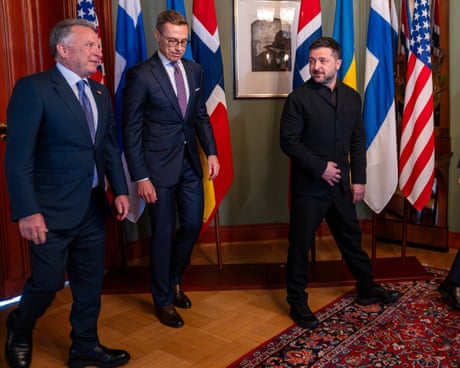
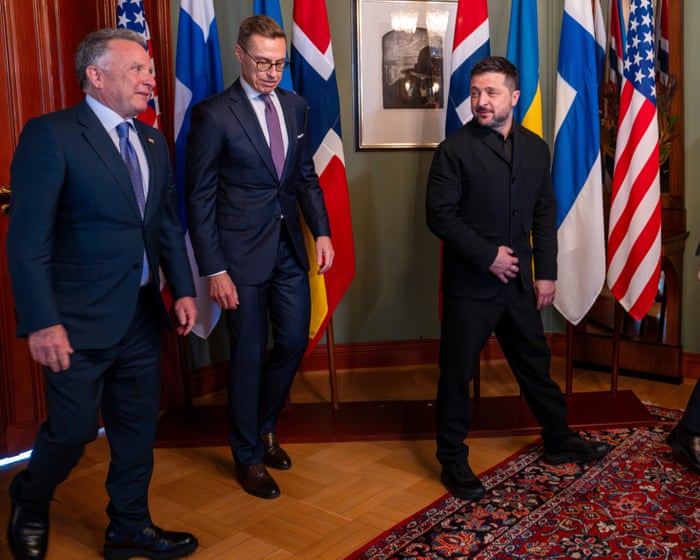
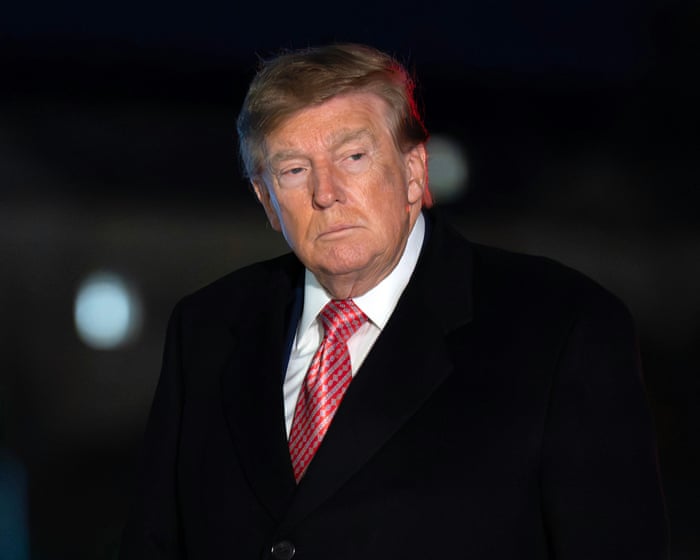
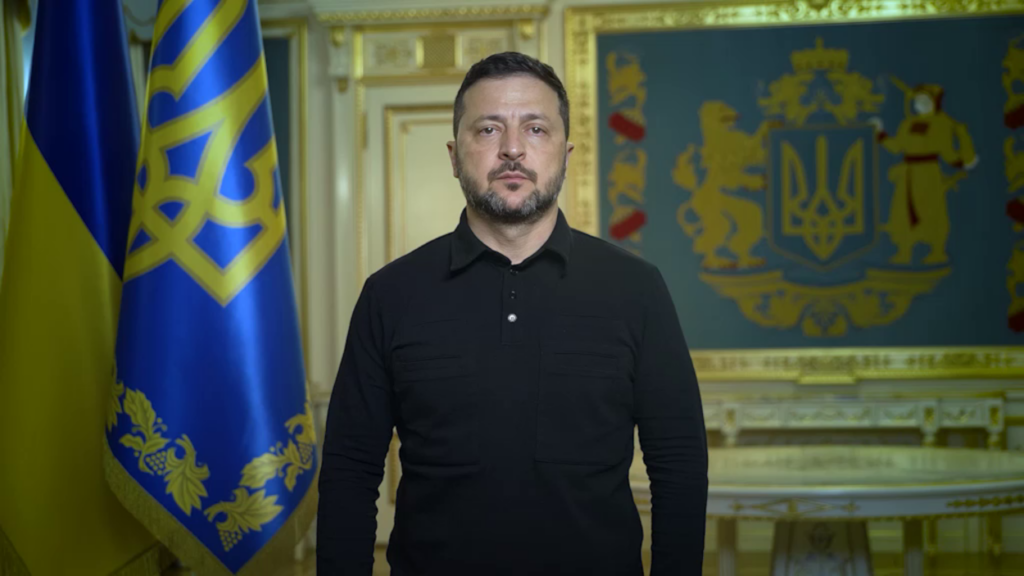
The US has resumed sharing intelligence with Kyiv about Russian missile strikes, Volodymyr Zelenskyy said on Tuesday after a meeting with the US envoy Steve Witkoff in Norway.

He said Ukraine was again receiving advance warnings of ballistic missile attacks, which were seemingly suspended last week by the White House. “Now it works. It’s great,” he said, adding that the US move would save lives.

Continue reading...

© Photograph: Heiko Junge/Pool NTB/AP

© Photograph: Heiko Junge/Pool NTB/AP

© Photograph: Heiko Junge/Pool NTB/AP

  •  

Republicans push back on Donald Trump’s wavering support for Ukraine

GOP lawmakers threaten to pull support for president’s agenda after Russia diesel deal and sanctions pause

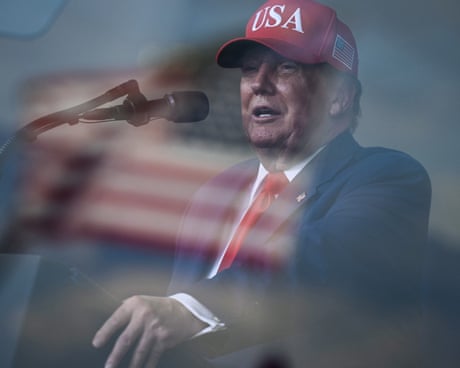
A handful of Republicans have spoken out against Donald Trump’s softening stance on Russia, threatening to pull financial support for his agenda over his “embarrassing” handling of the Ukraine war.

Don Bacon, an outgoing congressman in Nebraska, condemned Trump’s actions – which include a stunning agreement to buy Russian diesel and the pausing of sanctions on Moscow – as “absolutely disgraceful” and accused the US president of cozying up to a “war criminal” in Vladimir Putin, his Russian counterpart.

Continue reading...

© Photograph: Brendan Smialowski/AFP/Getty Images

© Photograph: Brendan Smialowski/AFP/Getty Images

© Photograph: Brendan Smialowski/AFP/Getty Images

  •  

Rubio thinks Starlink is fixed. Kyiv says it still cuts out above 161 km/h

rubio

Ukrainian President Volodymyr Zelenskyy said on 20 October that he had spoken with US Secretary of State Marco Rubio about ballistic missile interceptors, early warning of Russian launches, and “the situation with Starlink/Starshield, which needs to be restored,” he wrote on X. He thanked Rubio for “his readiness to help and his clear position” and said they would speak again soon. A day earlier, he had told US senators how each of those supplies had stalled.

This comes as the US presses Kyiv to stop its strikes on Russian oil refineries, which Trump has blamed for high fuel prices at home, and Zelenskyy counts the Starlink slowdown among the steps he says look like an effort to push Ukraine to capitulate. Ukraine’s interceptor drones depend on the service to hunt Russia’s jet-powered Shaheds, and Kyiv says they now lose the link at speeds too low to catch them. The call appears not to have settled whether that cap is gone. If it stays, Ukrainian cities could face Russia’s drone waves this winter with one fewer means to stop them, as Russia keeps striking the grid.

On 17 October, Rubio told reporters that nobody in the US ordered Starlink slowed, that the slowdown “wasn’t deliberate,” and that “my understanding is it’s been restored.” He drew a line between the two services. Ukraine’s drones, he said, ran on commercial Starlink, while Starshield, the military version, is not available to Ukraine. Kyiv has asked for it to carry out strikes deep inside Russia, and that request is under discussion, he said.

The next day, Zelenskyy told Bloomberg that Starlink in Ukraine cuts out above 161 km/h, and Kyiv says its Starshield terminals are capped as well. His post after the call still says the service needs to be restored.

Reuters’ sources point to the White House. Washington denies it

The order to slow Starshield came from inside the White House, Reuters reported, citing two US officials and a Western official. They described it as the Starshield service for the Ukrainian military, the version Rubio says Ukraine does not have. A senior Ukrainian official told Reuters that Kyiv had been told it was a White House decision. A senior US official told the agency the president never made such a request, and the White House did not answer whether other officials had. Rubio called a report that the White House ordered Starlink slowed “categorically false.”

Missile warnings and Patriots are also in dispute

Overnight on 18–19 October, Ukraine got no partner warning before the first of two Russian ballistic waves, Air Force spokesman Yurii Ihnat said on the national telethon. That came hours after Zelenskyy said US warnings had resumed. On 19 October, Rubio pushed back against suggestions of a pause in US intelligence sharing, AFP reported.

Zelenskyy also told Bloomberg the US sends only 12 Patriot interceptors a month and has authorized only part of those “we have paid for” under PURL. Ukrainian officials told the Kyiv Independent that Defense Secretary Pete Hegseth has not signed the contracts. A US government official called those claims “not true.”

  •  

A diesel tank burns at Transneft’s Druzhba hub as Ukraine keeps striking Russian energy despite Trump’s pressure

diesel tank burns transneft’s druzhba hub ukraine keeps striking russian energy despite trump’s pressure · post fire nikolskoye oil fuel pumping station russia’s tambov oblast after drone attack 20 2026

Drones attacked an oil and fuel pumping station of Russia’s Druzhba pipeline system in Tambov Oblast overnight on 20 October, setting a diesel tank on fire, Ukrainian monitoring channel Exilenova+ reported, citing locals. Druzhba, Russian for “friendship,” is a Soviet-era oil pipeline, about 4,000 km long, that carries Russian crude west to Europe, including through a branch that crosses Ukraine. The struck station is on its Russian section. Tambov Oblast Governor Yevgeny Pervyshov confirmed a fire at an unnamed enterprise in Michurinsk district after what he called a Ukrainian drone attack. The station lies about 400 km from the front line.

Ukraine has spent months striking the refineries, terminals, and pipelines that fund Russia’s war, and its Defense Ministry says the strikes have knocked out more than half of Russia’s refining capacity. Washington wants them stopped. US officials reportedly tied intelligence sharing to a halt in refinery strikes, and US President Donald Trump called their resumption “a disgrace.”

Hours of attack before dawn

Russia’s regional alert system declared a drone threat at 03:38, Ukrainian military outlet Militarnyi reported. By 06:25, Exilenova+ said the Nikolskoye station was under attack, after Michurinsk had been under attack for several hours.

The Nikolskoye fuel pumping station in Russia’s Tambov region is under attack. pic.twitter.com/cA64vMgjsM

— Exilenova+ (@Exilenova_plus) October 20, 2026

Pervyshov said four Ukrainian drones were shot down over the region and no one was hurt. He did not name the site.

More footage from the Nikolskaya oil pumping station. Locals report that a tank containing diesel is on fire. pic.twitter.com/1jvbxSuGHo

— Exilenova+ (@Exilenova_plus) October 20, 2026

Ukraine has not commented. The General Staff’s 20 October list of overnight strikes does not mention Tambov Oblast.

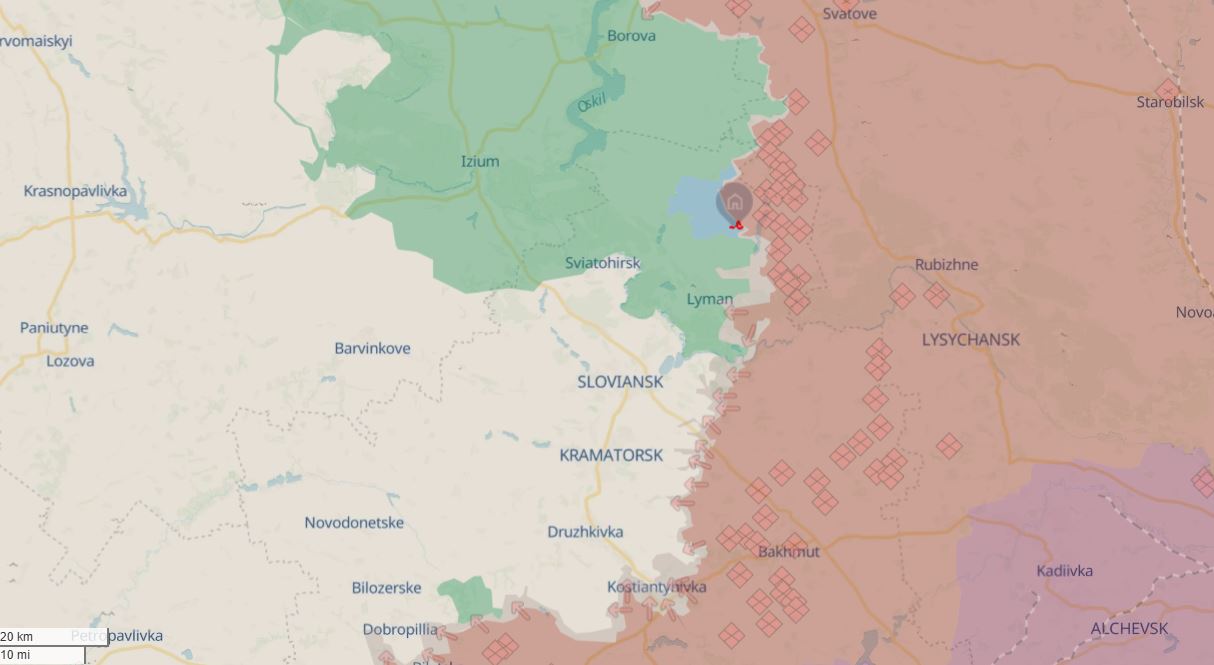
The Nikolskoye oil and fuel pumping station in Russia’s Tambov Oblast, which drones attacked on 20 October 2026.
The Nikolskoye oil and fuel pumping station in Russia’s Tambov Oblast, which drones attacked on 20 October 2026. Map: Militarnyi/ESRI

A Druzhba fuel hub hit before

The Nikolskoye station belongs to Transneft, Russia’s state pipeline operator. It stores and pumps crude oil and refined fuels, including diesel, gasoline, and jet fuel. The complex has three tank farms and two pumping stations, and it can move up to 300,000 tonnes a day, according to Current Time.

Ukrainian drones hit a station of the same hub in August 2025, and Ukraine’s General Staff said then that pumping on the pipeline had stopped completely.

Strikes resume despite US pressure

Ukraine paused refinery strikes for three days after Trump announced an “energy ceasefire” on 11 October, while Russia fired 39 ballistic missiles at Ukraine’s grid. Since Kyiv resumed the strikes, drones have also hit an oil terminal and a fuel depot in St. Petersburg.

Kyiv reads other US moves as pressure too, from missed warnings of Russian ballistic launches to a Starlink cap that slows Ukrainian drones. President of Ukraine Volodymyr Zelenskyy told US senators he had offered a 30-day halt on refinery strikes in exchange for Patriot interceptors, but Trump’s envoys showed no openness.

  •  

More ballistic missile interceptors and F-16 repairs inside Ukraine: Kyiv’s two asks to Lockheed Martin

Ukrainian President Volodymyr Zelenskyy during a meeting with American defense company Lockheed Martin representatives on 28 July 2026, in Washington D.C. Source: President's Office

Ukraine is counting on buying part of Lockheed Martin’s growing output of ballistic missile interceptors, President Volodymyr Zelenskyy said. He met the US company’s team in Kyiv on 19 October and also raised servicing and repairing F-16 fighter jets inside Ukraine.

Russia keeps striking Ukraine’s power grid with ballistic missiles, and interceptor supplies fall short of that threat. Kyiv is working every route to more Patriot missiles, from US deliveries to allies’ stocks, and some have stalled. Greece, for one, has not confirmed it will hand any over, citing its own defense needs. A purchase from the missiles’ maker would add one more route.

Growing output, F-16 repairs in Ukraine

Lockheed Martin builds the PAC-3 MSE interceptors fired by Patriot air defense systems, as well as the F-16. Zelenskyy said both matter against Russian ballistic missiles and jet-powered Shahed drones. Neither area is easy right now, he added.

“We count on the opportunity to purchase some of them to protect more lives,” he wrote.

On 28 July, Zelenskyy met the company in Washington to discuss joint production. That came weeks after US President Donald Trump pledged Ukraine a license to manufacture Patriots.

A batch reportedly stuck in Washington

Meanwhile, US Defense Secretary Pete Hegseth has not signed off on a “significant” batch of Patriot missiles, Ukrainian officials told the Kyiv Independent. One official said allies had already paid for them. A US government official called the claims untrue, and the Pentagon did not respond. A NATO official said allied-funded deliveries, including air defense, continue. A second NATO official said some shipments could be delayed, but likely not for political reasons.

Zelenskyy told Bloomberg on 18 October that the US delivers only 12 Patriot interceptors a month. On 20 October, interceptors topped his list in a call with US Secretary of State Marco Rubio.

No purchase was announced, so new interceptors from this route remain a prospect. Meanwhile, partners’ early warnings of Russian ballistic launches have gone missing three times recently, Zelenskyy wrote. Those warnings give air defenses extra minutes to prepare.

  •  

Russian drone kills six in Kharkiv Oblast park, including mother and her 14-month-old in a stroller. Hours later, Ukraine shows photos to US senators

russian drone kills six kharkiv oblast park including mother 14-month-old stroller hours later ukraine shows photos senators · post anhelina killed attack inna died hospital 19 2026 nova vodolaha killed_in_kharkiv_oblast

Six people were killed in a Russian strike in the settlement of Nova Vodolaha in Kharkiv Oblast, including girls aged 1 and 11. Another 15 people were injured, including seven children, Kharkiv Oblast Governor Oleh Syniehubov said on 20 October. Russian forces struck a park with a drone while families with children were there, Ukraine’s Minister of Internal Affairs Ivan Vyhivskyi said.

Russian forces continue to attack Ukrainian cities, killing civilians and destroying civilian infrastructure. The Kharkiv Oblast Prosecutor’s Office has opened a war-crime investigation into the strike. The strike was aimed at people, Yurii Yurchenko, head of a police department in Kharkiv Oblast, said in a comment to Suspilne.

The 14-month-old girl was named Anhelina

The Russian drone circled the park several times before crashing, Yurchenko said. He said the drone struck a tree near a café, and the blast wave and shrapnel hit people at the establishment. The attack came at around 16:30, the prosecutor’s office said, adding that Russian forces had preliminarily used a Geran-3 drone.

The café damaged in a Russian strike on a park in the settlement of Nova Vodolaha, Kharkiv Oblast, on 19 October 2026.
The café damaged in a Russian strike on a park in the settlement of Nova Vodolaha, Kharkiv Oblast, on 19 October 2026. Photo: Kharkiv Oblast Military Administration

The Russian strike killed three women, aged 28, 34 and 36, a man around 40 years old, and two girls, aged 14 months and 11 years, Syniehubov said in his statement.

The youngest girl, named Anhelina, was born in August 2025, Ukrainian President Volodymyr Zelenskyy said. Her mother, Inna, died in the hospital, he added.

Zelenskyy shows US senators photos of the aftermath the same day

Zelenskyy met with US Senators Richard Blumenthal and Thom Tillis, along with their colleagues from both parties and both chambers of Congress, according to a 19 October post on his social media accounts. During the meeting, he discussed the Russian attack in Kharkiv Oblast and showed lawmakers photographs from the scene, including one of the infant who was killed in a stroller.

“This is how Russia responds to the lifting of sanctions and the easing of pressure,” he said in the post.

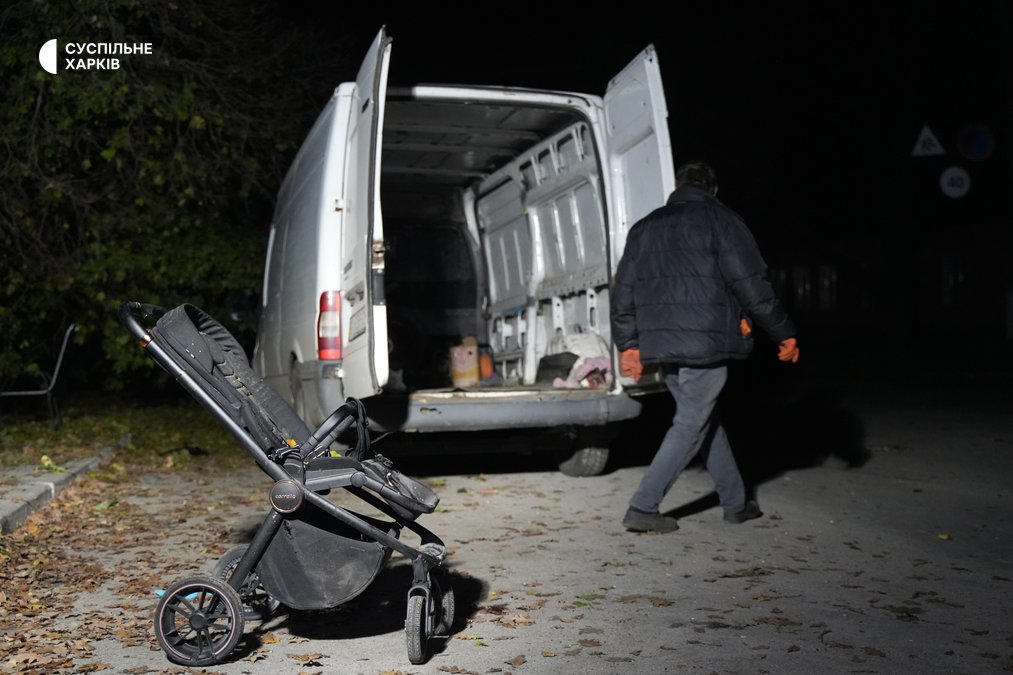
The stroller in which 1-year-old Anhelina was killed, Nova Vodolaha, 19 October 2026.
The stroller in which 1-year-old Anhelina was killed, Nova Vodolaha, 19 October 2026. Photo: Suspilne Kharkiv/Viacheslav Mavrychev

Zelenskyy said Ukraine needs air defense and that no one should think about making money with Russia while it continues its war. He asked that sanctions on Russia stay in place until the killing stops, urged the US to “be strong” and apply Lindsey Graham’s law, and called on Europe to keep supporting Ukraine.

  •  

No warning, capped Starlink, unsigned Patriots: Zelenskyy lists US holds to senators as Kyiv reads them as pressure

Ukrainian President Volodymyr Zelenskyy during a video call with US senators on 19 October 2026.

Ukraine got no early warning from its partners of the first wave of Russian ballistic missiles on the night of 18–19 October, President Volodymyr Zelenskyy told US senators on 19 October. He also said Starlink and Starshield terminals still stop working above certain speeds on parts of the front, and that Washington has explained neither problem. In the same video call, according to a transcript obtained by Axios, he said US Defense Secretary Pete Hegseth is not signing off on deliveries of Patriot interceptors and AIM-9X missiles for NASAMS that NATO countries have already paid for.

This comes as the US presses Kyiv to stop its strikes on Russian oil refineries, which Trump has blamed for high fuel prices at home. Washington supplies both the early launch warnings and the Patriot interceptors Ukraine needs against Russian ballistic missiles, and Zelenskyy says both are now failing at once, as Russia keeps firing ballistic missiles at Ukraine’s grid ahead of winter. If neither the warnings nor the interceptors come through, Ukrainian cities would face winter strikes with less notice and fewer means to stop them.

On the morning of 20 October, Zelenskyy wrote that he had spoken with US Secretary of State Marco Rubio about interceptors against ballistic missiles, early warning of Russian ballistic attacks, and restoring Starlink and Starshield. He thanked Rubio for his readiness to help and his clear position, and said they had agreed to speak again soon. He did not say whether anything had been resolved.

Patriots paid for, not signed

“We have almost no Patriot interceptors left from the US partners,” Zelenskyy told the senators.

Hegseth “has the contracts for Patriot missiles on his desk,” a Ukrainian official told the Kyiv Independent, adding that allies had already paid for them. Another senior official called the batch “significant.” One of the main channels for Ukraine’s Patriot supply is NATO’s PURL mechanism, under which allies fund purchases of US weapons for Ukraine, a senior Ukrainian military official told the outlet.

On 19 October, Zelenskyy wrote that some types of vital supplies were being delayed at the US Department of War, as the Trump administration also calls the Pentagon. He added that some political agreements had not been carried out at the working level.

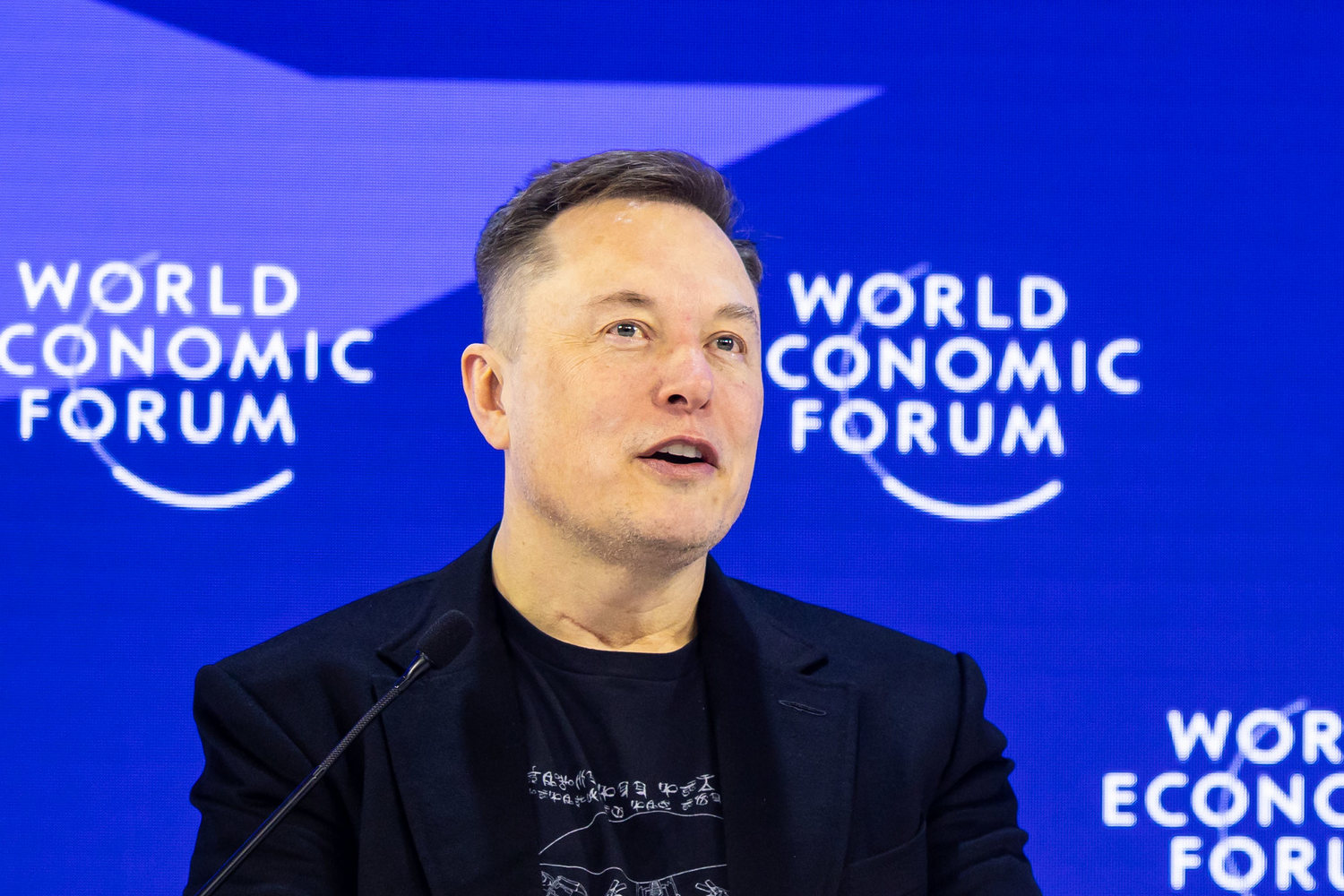
kyiv asking musk let strike inside russia its best line gone · post elon 2026 world economic forum / ciaran mccrickard wef ukraine news ukrainian reports
Explore further

Musk pushed Trump to slow Starlink in Ukraine, weakening air defenses as Russian drones attacked cities – The Telegraph

A NATO official told the Kyiv Independent that PURL deliveries, including air defense, were continuing. Another said some shipments could face delays, but that political reasons were unlikely to explain them. A US government official called Ukraine’s claims “not true.” The Pentagon did not respond to the outlet.

No warning for Kyiv hours after Zelenskyy said US alerts were back

On 18 October, Zelenskyy said on NBC that US warnings of ballistic launches had resumed after three days without them. That night, Russia launched two ballistic waves at Ukraine, and information from partners did not arrive before the first, Air Force spokesperson Yurii Ihnat said. Zelenskyy told the senators Ukraine had not received US warnings on three occasions in the past week. “We have received no clear explanation from Washington,” he said.

“All of this suggests that some political decision has been made to slow down support for us,” Zelenskyy said.

Zelenskyy offered a 30-day pause on refinery strikes for Patriots

Zelenskyy told the senators he had offered US envoys Steve Witkoff and Jared Kushner a 30-day halt on strikes against Russian refineries. In return, the US would supply Patriot interceptors to cover that period. He said the envoys had shown no openness to the idea.

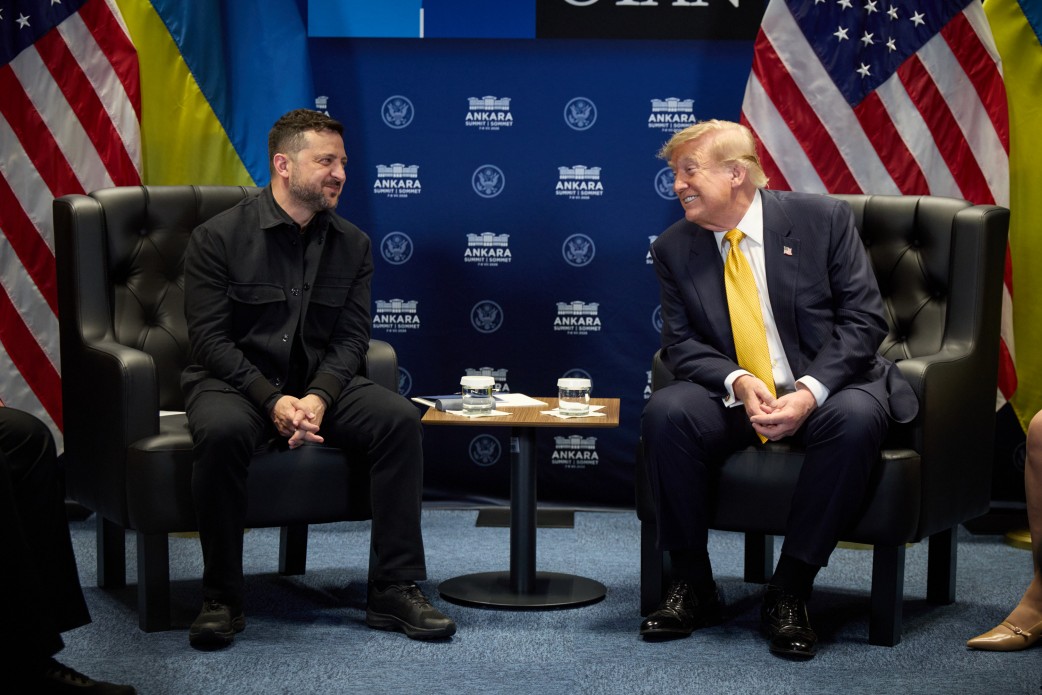
again trump presses zelenskyy stop russian refinery strikes · post ukrainian president volodymyr meets donald ankara türkiye 8 2026 presidentgovua ukraine news reports
Explore further

Trump calls Ukraine’s renewed refinery strikes “a disgrace” after Russia’s 39-missile strike on its energy sites

On 20 October, Norway announced talks in Oslo that day between Zelenskyy, Norwegian Prime Minister Jonas Gahr Støre, and Finnish President Alexander Stubb, with Witkoff attending in person and Kushner by video.

Senators back Kyiv. Trump says intelligence still flows

Senator Thom Tillis said he and his colleagues remain committed to standing with Ukraine and its European allies, while Senator Richard Blumenthal wrote that bipartisan support was “clear and unequivocal” and would be expressed “in upcoming action.”

US President Donald Trump told reporters on 19 October that Washington is still sharing intelligence with Ukraine and that he did not know who ordered the throttling of Starlink, Axios reported.

“Zelensky doesn’t know what he is talking about,” Trump said.

  •  

Rubio’s Intervention Exposes the Limits of Trump’s Russia Policy

Zelenskyy’s urgent discussion with the US Secretary of State suggests that Washington cannot pursue accommodation with Moscow without confronting opposition in Congress, the requirements of American national security and Ukraine’s continuing dependence on US military support.

The telephone conversation between Ukrainian President Volodymyr Zelenskyy and US Secretary of State Marco Rubio on Tuesday, 20 October, has exposed an increasingly uncomfortable contradiction in American policy towards Russia. While President Donald Trump is easing economic pressure on Moscow and attempting to restrain Ukrainian attacks on Russian energy infrastructure, senior members of his administration are having to address the consequences for Ukraine’s defence.

Zelenskyy raised three immediate concerns: the availability of Patriot interceptor missiles, interruptions to American early-warning intelligence concerning Russian ballistic attacks, and restrictions affecting Starlink and Starshield satellite communications. He described the discussion as constructive, expressing appreciation for Rubio’s willingness to help.

The significance lies less in the diplomatic language than in the circumstances surrounding the call. Washington is attempting to obtain concessions from Moscow while several of its own decisions have weakened confidence in the security arrangements on which Kyiv depends. Rubio’s involvement suggests that these difficulties cannot simply be left unresolved while Trump’s envoys pursue another round of negotiations.

The political cost of concessions to Moscow

Trump’s recent decisions concerning Russian energy exports have brought an existing disagreement over Ukraine into American domestic politics.

The administration has facilitated Russian diesel exports and waived new sanctions under the Graham Act, legislation intended to increase pressure on Russia and its principal energy customers. Rubio has said the president will use a 60-day period to assess the economic consequences of implementing the measures.

For Trump, the immediate attraction is apparent. Rising fuel prices have become a political liability ahead of the 3 November congressional midterm elections. Increasing supplies on international markets offers the administration a potential means of relieving pressure on American consumers.

The difficulty is that concessions to Vladimir Putin carry their own electoral consequences. Moscow remains deeply unpopular among substantial sections of the American political establishment, including Republicans who regard support for Ukraine as a matter of American strategic interest.

That opposition is no longer confined to public criticism. Republican senators have joined Democrats in challenging decisions affecting Ukraine’s military capabilities, creating an additional problem for an administration already facing a difficult electoral environment.

Trump can justify Russian energy concessions as an attempt to protect American consumers. Explaining why Ukraine should simultaneously experience interruptions to critical defence systems is considerably more difficult.

Rubio and the machinery of American foreign policy

Rubio’s position within the administration is particularly important. As both Secretary of State and National Security Adviser, he occupies two offices central to the formulation and execution of American foreign policy.

His conversation with Zelenskyy took place during a diplomatic tour of Uzbekistan and India, demonstrating that the deterioration in relations with Kyiv required attention even while the administration was pursuing other international priorities.

It would be premature to interpret Rubio’s intervention as evidence of an independent foreign policy. There is no indication that he is acting against Trump’s instructions. The more plausible interpretation is that the administration recognises a need to contain the consequences of its recent decisions without requiring the president publicly to reverse his position.

The controversy surrounding Starshield is particularly revealing. Reuters reported that instructions to restrict the satellite service used by Ukrainian forces originated inside the White House. The officials cited did not identify who authorised the order, while the administration has denied Trump’s personal involvement.

Separately, Zelenskyy has reported failures to receive advance warnings of Russian ballistic attacks. The cause of those interruptions remains disputed.

These developments have already attracted congressional scrutiny. Republican Senator Thom Tillis and Democratic Senator Jeanne Shaheen led a bipartisan request for an investigation, warning that failures in communications and intelligence-sharing may have endangered American personnel in Ukraine.

Congress cannot directly manage the administration’s foreign policy. Nevertheless, its powers over expenditure, legislation and oversight make sustained opposition politically consequential, particularly when members of the president’s own party are involved.

Ukraine needs military assistance, not diplomatic promises

The immediate requirements in Kyiv are considerably more specific than the objectives being discussed in Washington’s diplomatic negotiations.

Ukraine needs reliable satellite communications, uninterrupted intelligence concerning incoming missiles and sufficient Patriot interceptors to defend its cities and critical infrastructure. Delays in any of these areas have consequences that cannot be addressed through declarations about a future peace settlement.

The shortage of Patriot missiles is particularly serious. Zelenskyy has complained that American authorisation is delaying deliveries under arrangements financed by European governments. Washington’s commitments elsewhere, including the Middle East, add further pressure to American air-defence inventories.

Meanwhile, preparations for new negotiations in Oslo involving American envoys Steve Witkoff and Jared Kushner continue. The involvement of European leaders may broaden the diplomatic discussion, but it does not resolve the central obstacle: Putin has offered no convincing indication that he is prepared to end the invasion on terms acceptable to Ukraine.

Proposals concerning Ukrainian elections, NATO membership or alternative negotiating arrangements remain subordinate to that problem. Without a ceasefire that can be enforced, even an agreement on the political framework for peace would leave fundamental questions of security unanswered.

The limits of presidential power

Trump retains substantial authority over American sanctions, military assistance and diplomatic engagement. Yet his ability to offer Moscow meaningful concessions is constrained by several factors beyond his immediate control.

Congress can challenge further attempts to weaken sanctions or restrict assistance. European governments maintain their own sanctions regimes and are not obliged to follow Washington’s approach. Ukraine retains considerable military capacity, including the ability to attack Russian energy facilities that contribute to financing the war.

Nor can the American president compel Putin to accept a settlement. If Russia calculates that continuing military operations offers greater advantages than negotiations, additional concessions from Washington may encourage Moscow to prolong the conflict rather than end it.

Rubio’s conversation with Zelenskyy therefore suggests that the administration is being forced to confront the practical consequences of its policy. An American president may seek improved relations with Moscow, but the institutional interests of the United States do not necessarily change with his personal diplomatic priorities.

For Kyiv, the question is whether those interests will translate into the continued supply of weapons, intelligence and communications support. Russia’s attacks will continue irrespective of the timetable established for American diplomatic initiatives.

  •  

Oslo Ukraine Talks Expose Growing Tensions Between Washington, Kyiv and Europe

US envoy Steve Witkoff is joining negotiations in Norway before an expected visit to Moscow, but American pressure on Ukraine, uncertainty over military assistance and renewed economic dealings with Russia raise questions about Washington’s approach to ending the war.

The latest American diplomatic initiative on Ukraine comes at a particularly difficult moment in relations between Washington and Kyiv. President Donald Trump’s special envoy, Steve Witkoff, is taking part in talks in Oslo on Tuesday, 20 October, with Ukrainian President Volodymyr Zelenskyy and European leaders, before an anticipated visit to Moscow for discussions with Vladimir Putin.

The Norwegian government has confirmed that the meetings will include Prime Minister Jonas Gahr Støre and Finnish President Alexander Stubb. Trump’s son-in-law, Jared Kushner, will participate remotely. The meeting was requested by Zelenskyy, with Norway and Finland providing the diplomatic setting.

Yet the significance of the Oslo discussions lies less in the gathering itself than in the political circumstances surrounding it. Washington is seeking an agreement with Moscow while simultaneously becoming more confrontational towards Kyiv. Recent American decisions affecting military assistance, intelligence cooperation and Russian energy exports have introduced serious doubts about how the administration intends to use its considerable negotiating leverage.

Washington’s pressure on Kyiv

The immediate difficulty concerns the growing discrepancy between American diplomatic assurances and the practical conditions under which Ukraine is expected to negotiate.

Zelenskyy has accused Washington of delaying military deliveries, restricting intelligence sharing and limiting access to the Starshield satellite communications system. The Ukrainian president suggested that these developments reflected a political decision to reduce support at a particularly sensitive stage of the war. American officials have disputed allegations that assistance is being deliberately restricted.

Among the disputed deliveries are Patriot air-defence interceptors purchased by European NATO members through the Prioritised Ukraine Requirements List programme. Zelenskyy has indicated that shipments remain subject to authorisation by US Defence Secretary Pete Hegseth.

These are operational matters with immediate consequences. Ukraine relies on American intelligence, communications infrastructure and air-defence equipment to counter Russian missile attacks. Any interruption affects Kyiv’s military calculations, irrespective of whether Washington formally acknowledges a change in policy.

The political message is equally consequential. Trump has publicly questioned Zelenskyy’s willingness to negotiate and suggested that Ukraine might need somebody else to conduct talks with Russia. Such remarks place additional pressure on the Ukrainian leadership while leaving Moscow’s territorial demands largely untouched.

Russia’s incentives remain unchanged

The central weakness in the American diplomatic approach is the assumption that renewed engagement with Putin will necessarily produce meaningful Russian concessions.

Moscow has repeatedly treated negotiations as an opportunity to pursue political objectives that its armed forces have not achieved on the battlefield. Russian demands concerning Ukrainian territory and restrictions on Kyiv’s future security arrangements remain incompatible with Ukraine’s sovereignty.

An agreement reached under these conditions could suspend hostilities without resolving the underlying conflict. Russia would retain the capacity to rebuild its forces, while Ukraine could find its military options constrained by commitments made in exchange for an uncertain ceasefire.

The Trump administration’s recent economic dealings with Moscow further complicate the negotiations. Washington’s arrangements concerning Russian diesel have attracted criticism from Kyiv and European governments, particularly because Russian energy revenues remain an important source of financing for the war.

Trump has also pressed Ukraine to curtail attacks on Russian oil infrastructure, reflecting American concerns about fuel prices. For Moscow, relief from attacks on refineries would preserve economically important facilities that Ukraine has demonstrated an increasing ability to reach.

Any arrangement limiting such operations without corresponding Russian concessions would alter the military and economic balance in Moscow’s favour.

The broader American proposals reportedly include possible post-war economic cooperation with Russia. Their implications extend beyond Ukraine: commercial normalisation could offer the Kremlin substantial benefits before the conditions for a stable European security settlement have been established.

Europe’s influence depends on its willingness to use it

European participation in the Oslo process is therefore more substantial than a question of diplomatic representation.

Britain, France, Germany and Poland, alongside the European Union and NATO, are expected to be involved in the wider discussions. European governments would almost certainly bear much of the financial and military responsibility for implementing any settlement, including Ukraine’s reconstruction and long-term security.

They also possess considerable economic leverage through sanctions, financial restrictions and decisions concerning frozen Russian assets. Those instruments would form part of any serious negotiation over Moscow’s future relations with Europe.

However, European influence remains constrained by continuing dependence on American military technology and equipment. The controversy surrounding Patriot deliveries illustrates the problem: European governments can finance weapons for Ukraine without necessarily controlling when those weapons are released.

As EU Today previously examined, Washington’s negotiations with Moscow have consequences for European security that cannot be separated from the future of Ukraine.

European governments consequently face a difficult calculation. They wish to preserve American involvement, but excessive accommodation of Washington’s demands could leave them financing security arrangements over which they exercise limited control.

Norway and Finland have helped bring the Ukrainian and American delegations together at a moment when their relationship is deteriorating. Whether that produces progress will depend partly on Moscow’s response, but also on whether Washington is prepared to maintain the military and economic pressure necessary to make Russian concessions possible.

Witkoff’s anticipated journey from Oslo to Moscow will offer an early indication of the administration’s priorities. Putin will be assessing the terms Washington is prepared to offer, while Kyiv remains concerned about restrictions affecting equipment it needs to defend its cities.

For the Ukrainian leadership, the danger is that negotiations intended to end Russia’s invasion could become a process in which the country resisting that invasion is asked to make the most immediate concessions.

  •  

The Guardian view on Trump and Putin: Ukraine’s future is not theirs to bargain away | Editorial

Russia wants America and China to decide Ukraine’s future without Kyiv. Europe must challenge this dangerous return to diplomacy of the strong for the strong

Does Vladimir Putin know exactly how to play Donald Trump? The history of chummy phone calls, high-profile meetings and attempts to bring Russia in from the cold certainly suggests that Moscow’s thuggish ruler has a hold on this American president. If Mr Trump agrees to negotiate Ukraine’s future with Mr Putin and China’s Xi Jinping without Ukraine at the table, he will have handed the Russian leader a victory before talks begin. The message will be that strongmen are ruling the world and determining the fate of weaker nations.

Ukraine has the right to determine its future. That right cannot be waved away by a self-serving Russian proposal, however much it indulges Mr Trump’s belief that world affairs should be settled by powerful men. The scales are falling from European eyes. Trumpian America is raising doubts about whether it will help deter aggression or even honour its Nato commitments. If Washington now rewards Moscow and pressures Ukraine to accept a raw deal, it would be a betrayal. European governments would wonder where America might be in the future when their own security is threatened.

Do you have an opinion on the issues raised in this article? If you would like to submit a response of up to 300 words by email to be considered for publication in our letters section, please click here.

Continue reading...

© Photograph: José Luis Magaña/AP

© Photograph: José Luis Magaña/AP

© Photograph: José Luis Magaña/AP

  •  

Trump defends Russia sanctions waiver, says he does not want to drive Moscow from talks

Trump WEF

US President Donald Trump wrote in a Truth Social post on 18 October that he did not want to “drive, foolishly, Russia away from the bargaining table.” He also wrote: “Signing that document at this time will do that, and I can sign it later, or any time that I want!”

Trump was referring to sanctions and tariffs under the Lindsey O. Graham Sanctioning Russia and Iran Act of 2026, which he waived in an executive order on 16 October, days before the measures were due to take effect. The waiver suspends additional economic penalties intended to pressure Moscow over its war against Ukraine, while leaving earlier US sanctions in place. The decision came weeks before the 3 November midterms, in which Republicans are defending slim majorities in both chambers, and analysts said the penalties could have pushed up oil prices for Americans already paying more, largely because of the US-Israeli war with Iran, Reuters reported.

Trump says Zelenskyy could have made a better deal two years ago

A week before the waiver, Trump had announced a deal for Russia to increase diesel supplies to global markets. The Treasury also issued a license, valid until 7 April 2027, permitting certain transactions in Russian-origin diesel.

In the Truth Social post, Trump accused Ukrainian President Volodymyr Zelenskyy of targeting Russian diesel refineries, saying the strikes were “seriously hurting the world diesel markets, including those in the United States.” Kyiv had paused its refinery strikes for three days at Washington’s request after Trump declared an energy ceasefire on 11 October, which Russia never confirmed, then resumed them. Since then, Russia has struck Ukraine’s energy sector 76 times, Zelenskyy said on 18 October.

kyiv attack
Explore further

Kyiv gets no warning of the first of two Russian ballistic waves, hours after Zelenskyy said US alerts were back

Trump wrote that Zelenskyy “doesn’t want to end this war, and probably never did,” and that he “could have made a better deal two years ago than he can now.”

“His country is in shambles, a large portion of his land is lost, his oceans and seas are gone, and his male population is low, wounded, and/or dead,” Trump added.

He also said Russia was “doing very little, if anything, to help” Iran and that he wanted to keep it that way.

A day earlier, Trump said he had not made a final decision

On 17 October, Trump told reporters at Mar-a-Lago that he had not announced his final decision. “A lot of you don’t know what my decision is yet, but we’ll figure it out, and you’ll figure it out,” he said, Reuters reported.

“I think the president wants to take the 60-day period of time to sort of analyze what imposing both sanctions and tariffs will mean to the global economy and even to the US economy,” US Secretary of State Marco Rubio told reporters before departing for Uzbekistan the same day.

Zelenskyy calls the waiver a pity as Republicans split

Zelenskyy called it a “pity” that Trump had waived sanctions under a law named for the late Senator Lindsey Graham, who “really believed in Ukraine.” He said he hoped Trump would change his decisions, NBC News reported.

Discussing the diesel deal on NBC’s Meet the Press, Zelenskyy said US oil prices had risen because shipping through the Strait of Hormuz was blocked, not because of Ukraine.

month before diesel waiver trump’s envoys had already pitched kyiv russian gas · post jared kushner steve witkoff ukrainian president volodymyr zelenskyy 7 2026 presidentgovua джаред кушнер стівен віткофф володимир
Explore further

A month before the diesel waiver, Trump’s envoys had already pitched Kyiv on Russian gas, NYT says

On 17 October, Zelenskyy told journalists that “the decision to undo all of this, to block all of it, seems wrong to me” and that it “definitely helps only the Russians.” His remarks appeared in Ukrainian on his official Telegram channel.

“Sanctions relief will continue. I think the diesel deal and the move regarding the Lindsey Graham Act are not the end of it. Unfortunately,” Zelenskyy said.

On 19 October, Zelenskyy wrote that partners had again given no warning of Russia’s overnight ballistic attack and that blocking missiles for Ukraine’s air defense while Russia gets sanctions eased or postponed amounts to partners denying reality.

Republican Senator James Lankford defended Trump’s decision on NBC’s Meet the Press, saying the president was “choosing the American people first.”

Senator Darline Graham, Lindsey Graham’s sister, whom Trump has endorsed for a full term, said at a campaign stop on 17 October that she would “choose to keep the pressure on Russia.”

“I don’t trust Putin and I don’t trust Russia,” Darline Graham said.

She did not directly criticize Trump but said she would not have made that choice, Reuters reported.

  •  

Ukraine has liberated more territory than Russia has captured since the beginning of fall—a trend that has persisted throughout 2026, Zelenskyy says

ukraine has liberated more territory than russia captured since beginning fall—a trend persisted throughout 2026 zelenskyy says · post ukrainian president volodymyr during evening address 1 image_2026-09-01_23-48-46 news reports

Ukrainian forces have liberated more territory since the beginning of the fall than Russian troops have captured during the same period. This trend has persisted throughout 2026, Ukrainian President Volodymyr Zelenskyy said in his 18 October address. He also reported that Dobropillia, Kostiantynivka, and five other settlements remain under Ukrainian control.

Russia systematically exaggerates its battlefield gains. A recent briefing by Valery Gerasimov, chief of the General Staff of the Russian Armed Forces, in which he claimed that Russian forces had captured 92 settlements since the beginning of September, as well as Kostiantynivka and Dobropillia, and advanced to within 5 kilometers of Zaporizhzhia, was based on “outright lies, manipulation, and exaggerations,” Ukrainian General Staff spokesperson Andrii Kovaliov said.

Ukraine also continues to defend areas near Kramatorsk, Zelenskyy said. He dismissed Russian claims about Zaporizhzhia.

“We are destroying Russians 20 kilometers from Zaporizhzhia, not five, as someone in Russia is fantasizing to Putin,” Zelenskyy said.

Ukrainian forces continue to hold back Russian assaults and destroy groups of occupying troops attempting to infiltrate Dobropillia, the president said. The Defense Forces are also defending positions elsewhere in Donetsk Oblast and in Kharkiv and Zaporizhzhia oblasts.

Zaporizhzhia axis: Russians seek to move artillery closer to the city

Russia seeks to advance on the Zaporizhzhia axis to bring the regional capital within range of its tube artillery, hold forward positions, and protect rear areas from Ukrainian strikes, the Institute for the Study of War (ISW) said on 18 October.

The aftermath of a Russian strike on Zaporizhzhia on 10 October 2026
The aftermath of a Russian strike on Zaporizhzhia on 10 October 2026. Photo: Ukraine's National Police

Maksym Kravchuk, spokesperson for Ukraine's Southern Group of Forces, refuted Gerasimov’s claims that Russian forces had captured Malokaterynivka, located south of Zaporizhzhia, stressing that the settlement remains under Ukrainian control, the Center for Countering Disinformation said on 18 October. Ukrainian troops recorded a video directly from Malokaterynivka to confirm this.

As of 18 October, Russian forces had advanced or infiltrated to within 24 kilometers of Zaporizhzhia, ISW said.

Dobropillia remains under Ukrainian control despite Russian assaults

Dobropillia is now a fortress anchoring Ukrainian positions along the highway leading northeast toward Kramatorsk. Russia first tried to take Dobropillia in August 2025 and is now trying again.

Russia is redeploying reinforcements to the Dobropillia axis and continues to send assault infantry through the village of Nove Shakhove despite heavy losses. Russian command will likely try to encircle or at least envelop Dobropillia and cut off Ukrainian supply routes from the direction of Bilozerske, Ukrainian military analyst Kostiantyn Mashovets wrote on 9 October.

Mashovets sees the push as the southern flank of a Russian effort to envelop the whole Sloviansk–Kramatorsk urban area.

ukraine retook kolodiazi north lyman its drones hit 200-plus russian vehicles operation vivaldi’s last phase commander says · post northern donetsk oblast neighboring areas territory during vivaldi blue 2022 green
Explore further

Ukraine retook Kolodiazi north of Lyman as its drones hit 200-plus Russian vehicles in Operation Vivaldi’s last phase, Ukrainian drone officer says

Dobropillia remains under Ukrainian control, Zelenskyy said. On 18 October, footage located by analysts showed a Russian soldier hoisting a flag in the town's southeast after an infiltration, yet ISW has found no sign that Russian troops have dug in there.

Russia claimed to have captured Kostiantynivka, but ISW found no evidence

Ukrainian troops in and around Kostiantynivka are stopping Russia from locking in its gains in the city or pushing on toward Druzhkivka and Kramatorsk, ISW said on 17 October.

Russian officials claimed that capturing Kostiantynivka was an important step toward establishing control over the Sloviansk–Druzhkivka–Kramatorsk urban agglomeration and the entire Donetsk Oblast, ISW said in August. The Kremlin also claimed that Russian forces had captured the city as early as 5 July, the institute added.

Ruins of a street in Kostiantynivka, Donetsk Oblast, 9 April 2026
Ruins of a street in Kostiantynivka, Donetsk Oblast, 9 April 2026. Photo: UA Land Forces

A Russian military blogger claimed that Russian forces had full control over Kostiantynivka, but ISW found no evidence to support this claim, the institute said in its 16 October assessment. Russian troops had only infiltrated parts of southern and central Kostiantynivka without consolidating positions, and there was no evidence of their presence in its northern part, ISW added.

  •  

US gave us no warning of Russian strikes on Kyiv power plants, Zelenskyy says

Ukrainian president accuses Washington of ‘denial of reality’ in continuing row with Trump over apparent support for Moscow

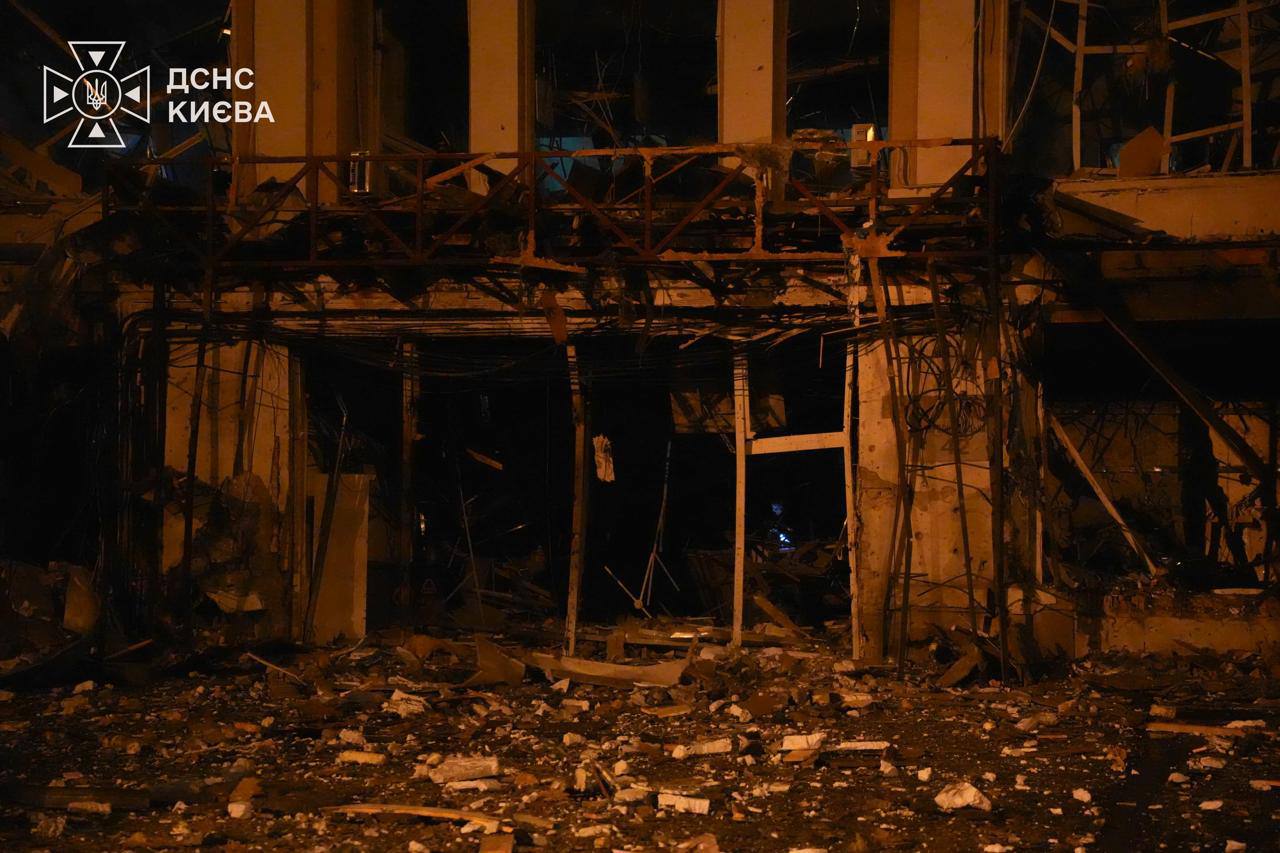
Ukraine did not receive a warning from the US about an impending Russian missile attack on Sunday evening, Volodymyr Zelenskyy has said, reviving concerns that Washington is withholding intelligence to bully Kyiv into capitulating to Moscow.

Yuri Ihnat, a spokesperson for the Ukrainian air force, said on television on Monday morning that Ukraine had not received a warning before a Russian missile barrage hit power plants in Kyiv at about 11pm. Earlier, a Ukrainian government official had told the Guardian the US had not warned the capital about the impending missile strike.

Continue reading...

© Photograph: Valentyn Ogirenko/Reuters

© Photograph: Valentyn Ogirenko/Reuters

© Photograph: Valentyn Ogirenko/Reuters

  •  

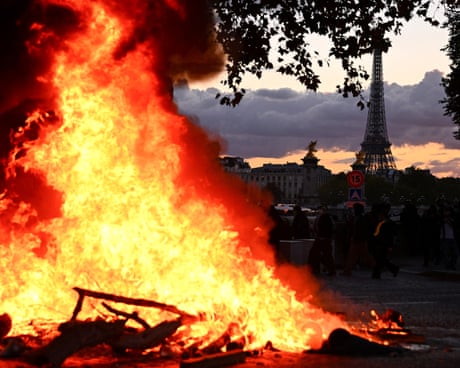
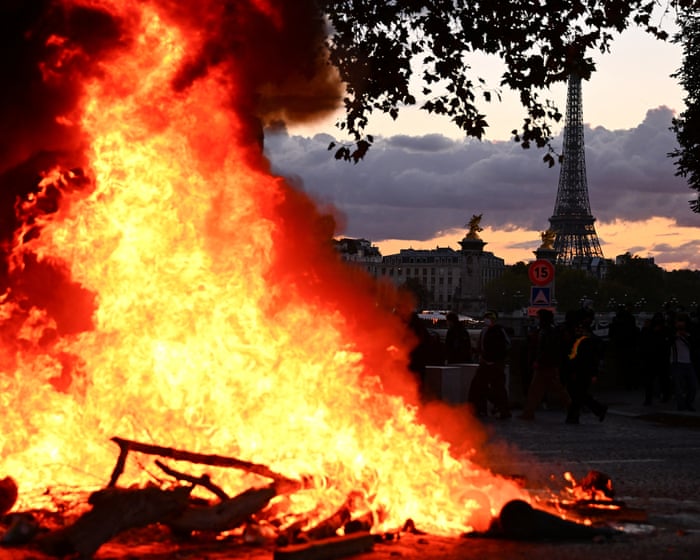
French authorities announce partial curfews as PM blames ‘ultra-left’ for exploiting protests – as it happened

This live blog is now closed.

French PM Lecornu says he has asked prefects to implement “a number of partial curfews” in certain “localised” urban areas to stop further disorder, which he attributes to “the extreme-left” and some criminal elements.

We will no doubt hear more on this from local authorities, as in the example of Marseille (10:32).

Continue reading...

© Photograph: Guillaume Saligot/AFP/Getty Images

© Photograph: Guillaume Saligot/AFP/Getty Images

© Photograph: Guillaume Saligot/AFP/Getty Images

  •  

Trump Shelves Russia Sanctions Weeks After Signing Them Into Law

President Donald Trump has waived sweeping sanctions and tariffs targeting Russia’s energy revenues, invoking national interest provisions in legislation passed only last month. The decision follows his controversial diesel agreement with Vladimir Putin and threatens to deepen divisions with Congress and European allies over economic pressure on Moscow.

President Donald Trump has suspended the implementation of sweeping American sanctions against Russia, using presidential waiver powers to prevent penalties approved by Congress from taking effect just weeks after he signed them into law.

The executive order issued by the White House on Friday, 16 October, suspends tariffs of up to 500 per cent on Russian imports, alongside penalties targeting major purchasers of Russian oil and gas. It also waives numerous financial and commercial restrictions intended to reduce Moscow’s ability to finance its war against Ukraine.

The decision comes two days before the 18 October deadline for implementing key provisions of the Lindsey O. Graham Sanctioning Russia and Iran Act of 2026, which Trump signed on 18 September. The legislation was named after the late Republican senator Lindsey Graham, who had championed tougher economic measures against Russia.

Sanctions established but immediately suspended

The presidential order formally establishes the tariff increases required by the legislation while simultaneously suspending their application.

Under the law, Russian imports into the United States would face additional duties of 500 per cent. A separate provision would impose 100 per cent tariffs on goods imported from the five largest purchasers of Russian crude oil and natural gas if those countries knowingly made new purchases from 18 October, subject to specified conditions and exemptions.

Another provision targets countries identified as leading facilitators of Russian oil sanctions evasion, potentially exposing their exports to similar American penalties.

Trump invoked Section 115 of the legislation, which permits the president to waive sanctions and tariffs after certifying to Congress that doing so serves the national interests of the United States.

The order confirms that the certification and an accompanying explanatory report have been submitted to Congress. However, the publicly released document provides no detailed justification for suspending the measures.

The waivers will remain in effect until the president or designated senior officials decide that further action is appropriate. Existing sanctions imposed under earlier executive orders are explicitly preserved, meaning the decision does not remove all American restrictions against Russia.

Nevertheless, the order prevents the new legislation’s principal economic penalties from operating at a time when Congress had sought to intensify pressure on Moscow.

Diesel agreement shapes Washington’s decision

The suspension follows Trump’s agreement with Putin to facilitate renewed Russian diesel exports, announced on 9 October as part of an effort to reduce international fuel prices.

As EU Today previously reported, the agreement envisages an immediate release of more than 300,000 tonnes of Russian diesel, followed by additional shipments in November and subsequent months. Washington also authorised certain transactions involving Russian diesel until April 2027.

The arrangement has raised questions about the relationship between the administration’s energy policy and sanctions intended to constrain Russia’s war economy.

Diesel prices have become an increasingly important domestic political issue ahead of the American congressional elections on 3 November. The war involving Iran and disruptions to international energy supplies have contributed to exceptionally high fuel costs, creating additional pressure on the administration.

The White House hopes additional Russian supplies will relieve pressure on international markets. However, energy analysts have questioned whether the quantities involved will materially affect American prices, particularly before the elections.

The latest waiver also removes the immediate threat of punitive tariffs against major Russian energy customers, including China and India, which had objected to the proposed measures.

Congressional opposition and European concerns

The decision is likely to intensify opposition within Congress, where the sanctions legislation attracted substantial bipartisan support.

Earlier this week, 12 senators, including six Republicans, called on Trump to reverse his diesel agreement, arguing that allowing Russian fuel back onto international markets would provide Moscow with additional revenue for its military operations.

Democratic Senator Richard Blumenthal, who helped develop the sanctions legislation, criticised the diesel arrangement as contrary to Congress’s intention to strengthen economic pressure on Russia.

The decision also exposes a widening divergence between Washington and Brussels.

At the European Council meeting on Friday, European Commission President Ursula von der Leyen and European Council President António Costa reaffirmed that EU sanctions against Russia would remain in place until Moscow ended its war against Ukraine.

Costa declared that the present circumstances required increased pressure on Moscow rather than a relaxation of existing restrictions. The European Union is also preparing a 22nd sanctions package while considering additional financial support for Kyiv.

For Ukraine, the decision means that Russia will continue to benefit from energy exports and the international trade that helps finance its war. Instead of tightening restrictions on these revenues, Washington has suspended measures specifically intended to cut them.

The timing is particularly significant. While Trump is pressing Kyiv to halt attacks on Russian oil refineries and other energy facilities, Moscow continues its strikes against Ukrainian cities and civilian infrastructure. Zelenskyy has argued that Ukraine cannot be expected to stop targeting Russia’s energy sector while Russian attacks on Ukrainian infrastructure continue.

Although Trump can reinstate the sanctions, his decision removes the immediate threat of additional penalties against Russia and its principal energy customers. It also places Washington increasingly at odds with its European allies. Brussels remains committed to maintaining and expanding sanctions against Moscow, while the White House is now giving priority to reducing American fuel prices, even if that means easing economic pressure on Russia.

  •  

Zelenskyy Says Ukraine Offered to Halt Strikes on Russian Refineries in Exchange for US Missile Defences

Ukraine was prepared to suspend attacks on Russian oil refineries if Washington supplied anti-ballistic missile systems to protect its energy infrastructure, President Volodymyr Zelenskyy has revealed. The proposed compromise was not accepted, despite American pressure on Kyiv to halt its strikes.

Ukrainian President Volodymyr Zelenskyy has disclosed that Kyiv offered to suspend attacks on Russian oil refineries in exchange for temporary American anti-ballistic missile protection for Ukraine’s energy infrastructure. Washington did not provide the requested systems, leaving Ukraine exposed to continued Russian missile strikes while the United States sought to restrict Ukrainian operations against Russia’s oil industry.

Speaking at a press conference in Brussels on Friday, 16 October, Zelenskyy said the proposal had been presented to Washington as a compromise following President Donald Trump’s agreement with Vladimir Putin on Russian diesel supplies and restrictions on attacks against energy facilities.

The Ukrainian president confirmed that Kyiv had not been consulted before Washington reached its understanding with Moscow. He described the diesel agreement as a surprise and objected to arrangements determining Ukraine’s military actions without its participation. Any agreement concerning Ukrainian strikes on Russian territory, he argued, required consultation with the Ukrainian government.

Nevertheless, Zelenskyy said Ukraine had been willing to accommodate American demands, even under an arrangement that did not require Russia to suspend its own attacks. Instead of insisting on reciprocal restrictions, Kyiv proposed receiving sufficient anti-ballistic missile systems to protect its electricity network for the duration of the requested suspension.

The proposal reflected Ukraine’s immediate security requirements. Russia has repeatedly targeted power stations, substations and other critical infrastructure, while Ukrainian forces have attacked Russian refineries to disrupt fuel production and reduce revenues available to Moscow. Halting the Ukrainian campaign without additional defensive capabilities would have left Kyiv surrendering one means of economic pressure while remaining vulnerable to Russian bombardment.

Zelenskyy said he had asked Washington for a limited number of systems, rather than a substantial new military commitment. The proposed deployment would have lasted only as long as the United States required Ukraine to refrain from attacking Russian refineries. However, according to the president, no such assistance was provided.

US diesel agreement deepens dispute

The disagreement follows the diesel arrangement announced by Trump on 9 October, under which Russia agreed to resume substantial petroleum product exports to American and international markets. Washington also authorised certain transactions involving Russian diesel, easing restrictions previously intended to reduce Moscow’s energy revenues.

The agreement created a direct conflict between American energy policy and Ukraine’s strategy of targeting Russian refining capacity. Washington wants additional diesel supplies to ease pressure on fuel markets, while Kyiv regards attacks on oil infrastructure as a means of weakening Russia’s ability to sustain its invasion.

That disagreement intensified after Ukraine resumed attacks on Russian refineries, including a strike against a facility in the Ryazan region. Trump criticised the operations, accusing Kyiv of contributing to higher global oil prices. Zelenskyy, meanwhile, argued that increased Russian diesel revenues would provide Moscow with additional resources to finance its military campaign.

The Ukrainian president’s proposal also exposed the limitations of the temporary energy ceasefire promoted by Washington. Russia continued attacks against Ukrainian civilian infrastructure, including electricity facilities, despite the American initiative. Kyiv’s proposed compromise would have addressed the resulting imbalance by providing defensive protection rather than relying on Russian restraint.

Russian strikes underline Ukraine’s defensive requirements

The urgency of Ukraine’s request was illustrated by renewed Russian attacks during Zelenskyy’s visit to Brussels. According to the Ukrainian presidency, strikes on 15 October damaged energy infrastructure in several regions, leaving almost 15,000 people without electricity in Volyn and disrupting supplies in parts of Kyiv and the surrounding region.

Ukraine continues to face shortages of the interceptors required to defend against ballistic missiles. Zelenskyy has identified anti-ballistic capabilities as an immediate priority, particularly as Russia intensifies attacks ahead of winter. During talks with NATO Secretary General Mark Rutte, he stressed the need for additional missile interceptors and other air defence equipment.

The president also raised these requirements during Friday’s meeting with European Commission President Ursula von der Leyen and European Council President António Costa. Discussions covered air defence, protection of energy infrastructure and financial assistance needed to sustain Ukraine’s resistance to Russian aggression.

European leaders support Kyiv’s position

Zelenskyy said European leaders had supported Ukraine’s position in the dispute with Washington. His remarks came as the EU reaffirmed its intention to maintain economic pressure on Moscow despite the Trump administration’s decision to facilitate Russian diesel exports.

As EU Today reported earlier on Friday, von der Leyen and Costa rejected any relaxation of European sanctions while Russia continues its war. The Commission is preparing a further sanctions package, maintaining a policy intended to restrict Moscow’s ability to finance its military operations.

The contrasting American and European positions have become increasingly significant for Kyiv. Washington is seeking to stabilise fuel markets through arrangements with Moscow, while European governments remain committed to reducing Russian energy revenues and strengthening Ukraine’s military and economic resilience.

For Zelenskyy, the unresolved question is whether Ukraine can be expected to limit attacks on Russian oil infrastructure while receiving neither reciprocal guarantees from Moscow nor additional protection against Russian ballistic missiles. His account of the unsuccessful American negotiations indicates that Kyiv was prepared to compromise, but only if its immediate defensive needs were addressed.

  •  

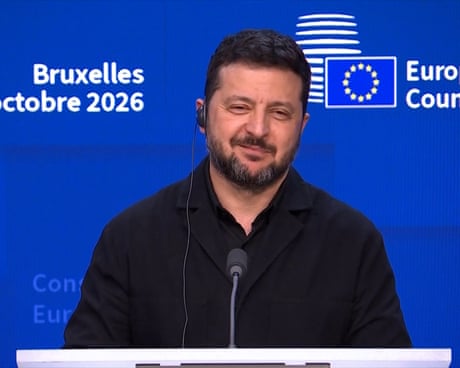
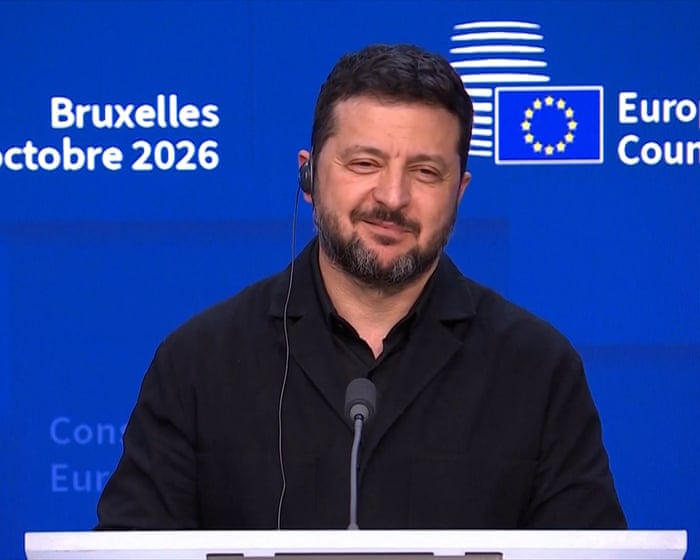
Zelenskyy smiles when asked if Trump is treating him as a 'scapegoat' – video

Ukraine's president, Volodymyr Zelenskyy, was asked by Sky News at a press conference in Brussels, Belgium, if he felt he was being made a 'scapegoat' by his US counterpart, Donald Trump, for domestic problems including high diesel prices before midterm elections. Zelenskyy paused for 15 seconds, before he eventually smiled and said: 'This is my answer.'

Continue reading...

© Photograph: reuters live feed

© Photograph: reuters live feed

© Photograph: reuters live feed

  •  

Russia’s Black Sea Attacks Threaten Global Food Supplies and Force Bulgaria to Confront Moscow

Drone strikes against merchant vessels off Bulgaria have brought Russia’s war into waters bordering NATO and the European Union. With grain exports threatened, shipping costs rising and Sofia seeking allied protection, Moscow’s campaign against maritime trade risks becoming another instrument of economic and political pressure.

Russia’s expanding campaign against commercial shipping in the Black Sea is creating a security crisis that extends far beyond Ukraine. The latest drone attacks off Bulgaria’s coast have left 11 sailors missing, forced Sofia to seek assistance from NATO and the European Union, and raised concerns that Moscow is attempting to disrupt one of the world’s principal agricultural export routes.

On 13th October, the Guinea-Bissau-flagged HS Dignity sank after being struck by drones approximately 17 nautical miles east of the Bulgarian village of Krapets. Another vessel, the Ukrainian-owned, Maltese-flagged Chelsea 3, was attacked near Byala. All 15 crew members were rescued, although five sustained minor injuries. The incidents followed earlier attacks in Bulgaria’s exclusive economic zone on 6th October, when the ALFA WATAN sank and the grain-carrying ABLE was damaged.

The significance lies not simply in the destruction of merchant vessels but in the geographical expansion of the threat. Commercial routes previously regarded as comparatively safer alternatives to Ukraine’s exposed ports are now becoming operationally dangerous. Bulgaria and Romania, both NATO and EU members, face disruption to trade, maritime insurance and port operations as the conflict spreads across the western Black Sea.

Russia’s Campaign Against Maritime Trade

The latest attacks follow months of Russian strikes against Ukrainian ports, export terminals and civilian shipping. As EU Today previously reported, repeated attacks on Odesa have already reduced Ukraine’s grain-export capacity, while alternative routes through the Danube and neighbouring European countries cannot fully replace its major Black Sea terminals.

The extension of attacks towards Bulgaria changes the economic calculation. Ships carrying agricultural products, those approaching Danube ports and vessels operating between Black Sea countries now face greater uncertainty, regardless of whether they enter Ukrainian territorial waters.

Maritime security company Ambrey assessed the earlier October attacks as highly likely to have been conducted by Russian forces. Its assessment identified vessels associated with Ukrainian grain trade as the principal targets, rather than suggesting that every commercial ship was being attacked indiscriminately.

This distinction is important, but it offers little reassurance to international shipping companies. A campaign directed against Ukrainian trade can disrupt the wider maritime economy when insurers, shipowners and exporters cannot establish which routes remain safe.

The economic consequences are already becoming apparent. Shipowners must consider higher insurance premiums, additional security measures and the possibility of losing vessels and crews. Traders may redirect cargoes or withdraw from routes whose commercial returns no longer justify the risks.

Radev Confronts the Consequences of Moscow’s War

The attacks have also placed Bulgarian Prime Minister Rumen Radev in an increasingly difficult political position.

Radev has advocated renewed diplomatic engagement with Moscow and questioned the emphasis placed on military assistance to Ukraine. He has rejected accusations of being pro-Russian, presenting his approach as a pragmatic alternative to prolonged confrontation.

Yet the attacks have demonstrated the limitations of maintaining political distance from a war whose economic and security consequences are reaching Bulgarian waters.

After summoning Russian Ambassador Eleonora Mitrofanova on 13th October, Radev acknowledged that Bulgaria possessed no conclusive evidence establishing responsibility for the latest strikes. Nevertheless, he argued that their consequences benefited Russia and questioned why Ukraine would attack its own commercial vessels.

According to the Bulgarian News Agency’s account of the meeting, the prime minister also warned that higher insurance costs and shipping companies’ reluctance to serve Bulgarian ports were already damaging the national economy.

This is the fundamental change confronting Sofia. The conflict is no longer solely a question of Bulgaria’s position towards Ukraine or its diplomatic relationship with Russia. It is affecting the country’s commercial interests, energy supplies and responsibilities as a NATO member.

Radev’s response does not necessarily indicate a wholesale reversal of his previous political position. It demonstrates that the practical obligations of government can leave considerably less room for accommodation with Moscow than the arguments advanced from outside direct responsibility for national security.

Food Security Becomes Another Instrument of Pressure

The broader consequences may be felt most severely outside Europe.

Ukraine remains an important supplier of wheat, maize and vegetable oils to international markets, including countries in Africa, Asia and the Middle East. Interruptions to these exports affect more than Ukraine’s agricultural revenues. They can increase transport costs, delay deliveries and reduce the availability of competitively priced food in import-dependent countries.

Speaking at the Warsaw Security Forum on 12th October, President Volodymyr Zelenskyy warned of a possible agricultural crisis, arguing that Russian interference with Black Sea shipping could leave countries in Africa, Asia and the Middle East facing serious supply difficulties within months.

The warning reflects a mechanism already familiar from the earlier stages of Russia’s invasion. Following Moscow’s withdrawal from the UN-brokered grain agreement in July 2023, Ukrainian agricultural exporters faced renewed attacks on port infrastructure and substantial uncertainty over maritime access.

The danger is not necessarily an immediate worldwide shortage of grain. Wheat prices remained relatively steady following the 13th October incidents. Rather, sustained disruption could progressively reduce available export capacity, increase costs and place vulnerable importing countries under greater pressure.

For Moscow, such disruption could serve several purposes simultaneously: weakening Ukraine’s economy, raising the costs of international support for Kyiv and creating additional pressures on governments concerned about food inflation and social stability.

Europe’s Black Sea Security Strategy Faces a Practical Test

The immediate challenge for Brussels and NATO is how to protect commercial navigation without allowing the conflict to expand into a direct military confrontation.

Bulgaria has requested stronger air and maritime surveillance and is seeking closer coordination with Romania and Turkey. Defence Minister Dimitar Stoyanov said on 14th October that Sofia expected to join a NATO counter-drone initiative by the end of the month.

The EU has already developed a framework for addressing precisely such threats. Its Black Sea strategy, announced in May 2025, proposed a maritime security hub integrating surveillance, intelligence-sharing, infrastructure protection and regional cooperation.

The attacks now expose the difference between developing a security framework and providing effective protection to merchant vessels. Better intelligence can identify threats, but preventing further sinkings requires detection systems, coordinated responses and sufficient defensive capabilities.

Turkey’s involvement is particularly important because of its control over the Bosphorus and Dardanelles and its established role in Black Sea maritime security. Any workable regional arrangement must therefore extend beyond cooperation between Bulgaria and Romania.

The incidents occurred outside Bulgaria’s 12-nautical-mile territorial sea, meaning they do not automatically constitute an armed attack on NATO territory under Article 5. Nevertheless, repeated strikes within the economic zones of alliance members pose a substantial challenge to maritime security.

Russia’s campaign against Ukrainian exports is increasingly imposing costs on neighbouring European states and international trading partners. The question facing the EU is whether it can secure the commercial routes on which both Ukraine’s economy and the food supplies of millions beyond Europe depend.

  •  

Zelenskyy Breaks with Trump as Washington’s Ukraine Policy Hands Putin the Advantage

Volodymyr Zelenskyy’s unusually direct criticism of Donald Trump marks a turning point in relations between Kyiv and Washington. With American satellite restrictions disrupting Ukrainian military operations, intelligence cooperation under scrutiny and the White House easing pressure on Russian energy exports, Ukraine faces a fundamental question: how can it defend itself when its most powerful partner is increasingly willing to accommodate Moscow?

President Volodymyr Zelenskyy has abandoned much of the diplomatic restraint that characterised his dealings with Donald Trump since their confrontation in the Oval Office in February 2025. In an interview on 14 October, the Ukrainian president accused his American counterpart of moving towards Russia and choosing the wrong side of history.

His intervention followed a series of American decisions that have increased pressure on Kyiv while offering Moscow economic and diplomatic advantages. A controversial agreement involving Russian diesel exports, uncertainty surrounding the provision of American intelligence and sudden restrictions on military satellite communications have brought relations between the two countries to their most difficult point since Trump’s return to the White House.

Zelenskyy’s criticism was unusually personal. Questioned about whether he felt betrayed by Washington’s recent decisions, he acknowledged the sense of betrayal but emphasised that Ukraine’s survival could not be treated as a commercial negotiation. He said Ukraine was not selling its country and argued that an American president claiming to act as an intermediary must not favour one of the belligerents.

The shift reflects the apparent exhaustion of a strategy Kyiv has pursued for more than a year: avoid openly challenging Trump, maintain personal contact with the White House and hope that American support can be preserved through diplomatic accommodation. That calculation is becoming increasingly difficult to sustain as Washington’s demands threaten to constrain Ukraine’s military operations without producing corresponding concessions from Russia.

American leverage becomes a Ukrainian vulnerability

The immediate demonstration of Ukraine’s dependence on American technology came during the night of 13–14 October, when SpaceX imposed restrictions on Starshield, the military-grade version of its Starlink satellite communications service.

According to accounts provided by Ukrainian frontline commanders, the changes disrupted connections to terminals travelling above approximately 160 kilometres per hour, forcing the abandonment of several drone missions. The restrictions affected systems used for reconnaissance, interception and strikes against Russian military targets.

As EU Today reported on 14 October, the disruption exposed a weakness extending beyond individual drone missions. Satellite communications form part of Ukraine’s operational infrastructure, supporting the movement of battlefield information, remote weapons control and communications across areas where conventional networks are vulnerable to Russian electronic warfare.

An interruption imposed remotely by a commercial provider can therefore affect military capabilities without any physical attack on Ukrainian equipment. Decisions taken outside Ukraine’s military command structure can alter the effectiveness of systems already deployed on the battlefield.

Ukraine’s Defence Ministry subsequently opened discussions with American officials, SpaceX and NATO partners while examining alternative communications arrangements.

Later on Wednesday, former Ukrainian defence minister Mykhailo Fedorov announced that Starlink functionality at speeds up to 160 kilometres per hour was being restored. Work was still required to remove the restrictions on Starshield altogether. The partial reversal offered immediate operational relief but did not resolve the underlying dependency.

There is no established evidence that the Trump administration ordered SpaceX to impose the restrictions. Nevertheless, their timing, amid mounting disagreements over Ukraine’s military operations, has reinforced Kyiv’s concerns about relying on communications infrastructure controlled by an American company.

Intelligence warnings and the protection of civilians

The dispute over satellite access coincides with growing uncertainty about American intelligence cooperation.

Following Russian ballistic missile strikes on Kyiv on 12–13 October, Zelenskyy complained that Ukraine had received no advance warning from its international partners. The attacks damaged residential buildings and energy infrastructure, while Ukraine’s authorities raised concerns about the absence of advance intelligence.

Advance information about Russian missile launches is particularly important when ballistic weapons leave civilians only minutes to reach shelters. Intelligence cooperation also supports Ukrainian air-defence units in assessing threats and preparing interceptions.

Trump denied on 13 October that Washington had stopped sharing intelligence with Ukraine. Ukrainian Foreign Minister Andrii Sybiha likewise confirmed that cooperation continued. The absence of warnings about particular attacks therefore cannot be equated with a complete suspension of American assistance.

Yet the consequences of unreliable warning arrangements remain serious. For Ukraine, the distinction between information withheld, delayed or simply unavailable offers little protection when Russian ballistic missiles reach civilian neighbourhoods without sufficient warning.

The wider concern is that intelligence provision could become another instrument of diplomatic pressure. Accounts of negotiations over Ukrainian attacks on Russian refineries have raised the possibility that Washington might use such assistance as leverage. Reports of explicit threats have been disputed, but the controversy has increased uncertainty surrounding a capability central to Ukraine’s defence.

Why the diesel agreement changes the strategic calculation

The confrontation has also exposed a contradiction in Washington’s approach to the war.

Trump’s agreement allowing Russian diesel to return to international markets offers Moscow additional export opportunities at a time when Ukrainian attacks have damaged refining capacity and disrupted domestic fuel supplies.

The American administration has justified the arrangement partly through the need to ease fuel prices. Yet the initially announced quantities are modest in relation to international petroleum markets, raising questions about how much immediate relief the measure can realistically provide.

For Putin, its diplomatic significance may be considerably greater. Russia has secured a relaxation of American economic restrictions while Washington simultaneously presses Kyiv to limit attacks on the infrastructure that generates revenue for Moscow’s war economy.

The commercial implications of Washington’s sanctions reversal extend beyond the initial shipment volumes. The Treasury authorisation permits certain transactions involving Russian-origin diesel until April 2027, creating opportunities for international traders and financial intermediaries while leaving the broader sanctions framework formally intact.

Trump’s proposed energy ceasefire has compounded the difficulty. As EU Today examined earlier this week, Kyiv has offered to suspend strikes against Russian energy facilities if Moscow reciprocates. Russian attacks on Ukrainian power infrastructure have nevertheless continued.

An arrangement in which Ukraine stops targeting Russian refineries while Russia retains the ability to strike Ukrainian electricity generation would remove an important source of pressure on Moscow without protecting Ukrainian civilians.

Such an outcome would change the military and economic conditions of the war in Russia’s favour, regardless of how Washington describes its diplomatic objectives.

The White House, Congress and the limits of presidential power

Zelenskyy’s sharper language also reflects a possible reassessment of where influence over American policy can be exercised.

For much of Trump’s second presidency, Kyiv’s diplomacy has concentrated on preserving a workable relationship with the president himself. That approach assumes that personal engagement can influence White House decisions even when Trump’s broader political instincts favour accommodation with Putin.

The events of October suggest that this strategy has reached its limits.

Ukraine’s alternative is not necessarily an outright confrontation with Washington. Rather, it involves placing greater weight on Congress, the American defence establishment and the institutional relationships that have supported Ukraine since Russia’s full-scale invasion in February 2022.

There is a historical precedent. During Trump’s first presidency, Congress supported military assistance to Ukraine despite differences within the administration over relations with Russia. Under Joe Biden, congressional resistance also demonstrated how domestic American politics could determine the timing and scale of weapons deliveries.

The months-long delay in approving the 2024 military assistance package contributed to severe ammunition shortages at a critical stage of Russia’s offensive operations. Ukraine’s loss of Avdiivka illustrated the danger of making battlefield planning dependent on political negotiations in Washington.

The congressional elections on 3 November 2026 could alter the balance of power. A change in control of either chamber would increase opportunities for oversight, investigations and legislative pressure on the administration, although Congress cannot independently direct every aspect of intelligence sharing or presidential diplomacy.

A less compliant Congress could nevertheless make it politically harder for the White House to restrict Ukrainian assistance without explanation.

Europe confronts a more permanent problem

For European governments, the dispute carries implications extending well beyond the immediate confrontation between Trump and Zelenskyy.

The transatlantic security relationship has historically depended on the assumption that American military capabilities, intelligence networks and political commitments would remain available to European allies during a major security crisis.

That assumption is increasingly difficult to reconcile with an American administration prepared to link assistance to Ukraine with wider commercial negotiations and domestic political objectives.

The consequences are particularly acute in areas where European capabilities remain insufficient to replace American systems quickly, including satellite intelligence, strategic reconnaissance, missile defence and specialised communications.

Europe can expand weapons production, finance Ukrainian purchases and develop alternatives to American technology. Replacing the full range of capabilities provided by the United States, however, requires investment measured in years rather than months.

The problem will not necessarily disappear when Trump leaves office. His return to power demonstrated that the American foreign-policy consensus which supported European security for decades can be challenged through the electoral process.

Future American administrations may seek to restore traditional alliances, but European governments must now account for the possibility that another election could reverse those commitments.

For Zelenskyy, the immediate calculation is exceptionally difficult. Public criticism risks provoking further retaliation from a president whose administration still controls capabilities essential to Ukraine’s defence. Continued diplomatic restraint, however, has not prevented Washington from offering concessions to Russia or introducing uncertainty into Ukraine’s military planning.

His latest intervention suggests that Kyiv is no longer convinced that avoiding confrontation will preserve American support. The question is whether greater political scrutiny of Washington’s decisions can prevent a further erosion of assistance before Russia turns the resulting military advantages into territorial gains.

  •  
❌