One drone launched another drone, which then shot down a third. All three were unmanned, and all at sea off Ukraine.
Ukraine’s Navy has destroyed a Russian Shahed attack drone with a Sting interceptor launched from the Sargan 3000 unmanned surface vessel, the Navy said, showing sailors adapting to new aerial threats with sea-launched interceptors.
Russian Shaheds threaten Ukraine’s ports, coastline and the ships that approach them, so meeting those drones out at sea, before they reach land, matters for the whole southern defense.
A Ukrainian Navy sea drone, the Sargan 3000, destroyed a Russian Shahed kamikaze drone with a Sting interceptor drone
Ukrainian troops continue to adapt to new threats to protect civilians and infrastructure Ukrainian Navy pic.twitter.com/kXvnqaebAw
The Sting is built to destroy Russian kamikaze drones such as the Shahed, Geran and Lancet, as well as reconnaissance drones, with quick deployment, a short training course and a top speed of 280 km/h, its producer, Wild Hornets, says.
The interceptor that has become Ukraine’s Shahed-killer
The Sting has earned its place at the front. The Ukrainian FPV interceptor has proven highly effective in combat, with a typical hit rate of 80 to 90% depending on the unit, and on some days reaching 100 percent, one launch for one kill.
It is currently Ukraine’s most productive Shahed interceptor, according to the Wild Hornets, having destroyed more than 3,000 drones in its first seven months of use. Mounting it on a sea platform extends that record from land into the Black Sea.
A drone boat that keeps finding new ways to kill
The Sargan 3000 has become a multi-purpose hunter. In July, Ukrainian naval personnel used a Sargan 3000 to sink a Russian second-rank border patrol ship.
In October, the same drone boat shot down a Russian Shahed with a turret-mounted machine gun over the Black Sea. Ukraine’s Navy took the Sargan 3000 into service in April 2026, and the drone boat has a combat radius of up to 1,600 kilometers, letting it clear the sky far from shore without putting a sailor in range.
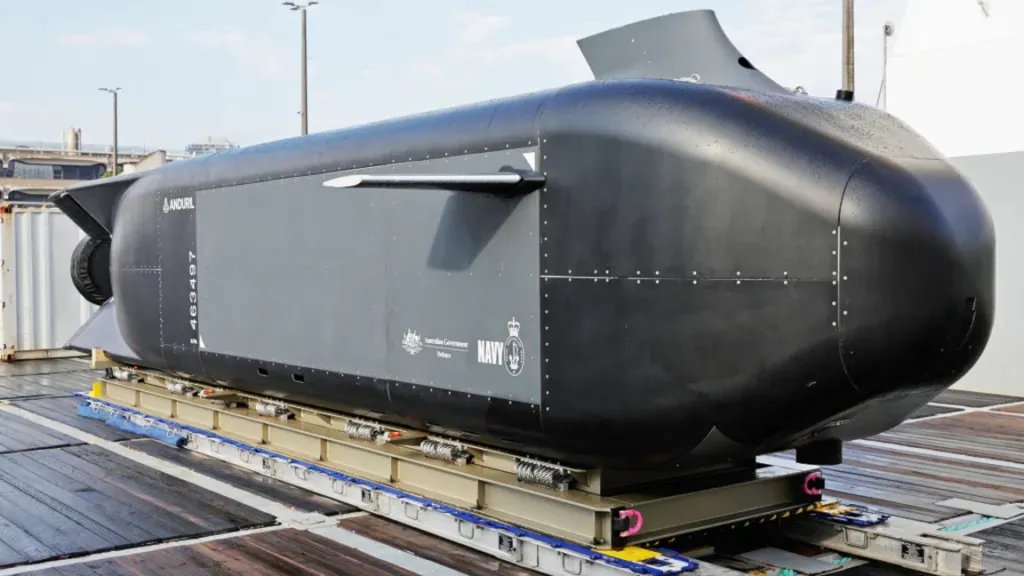
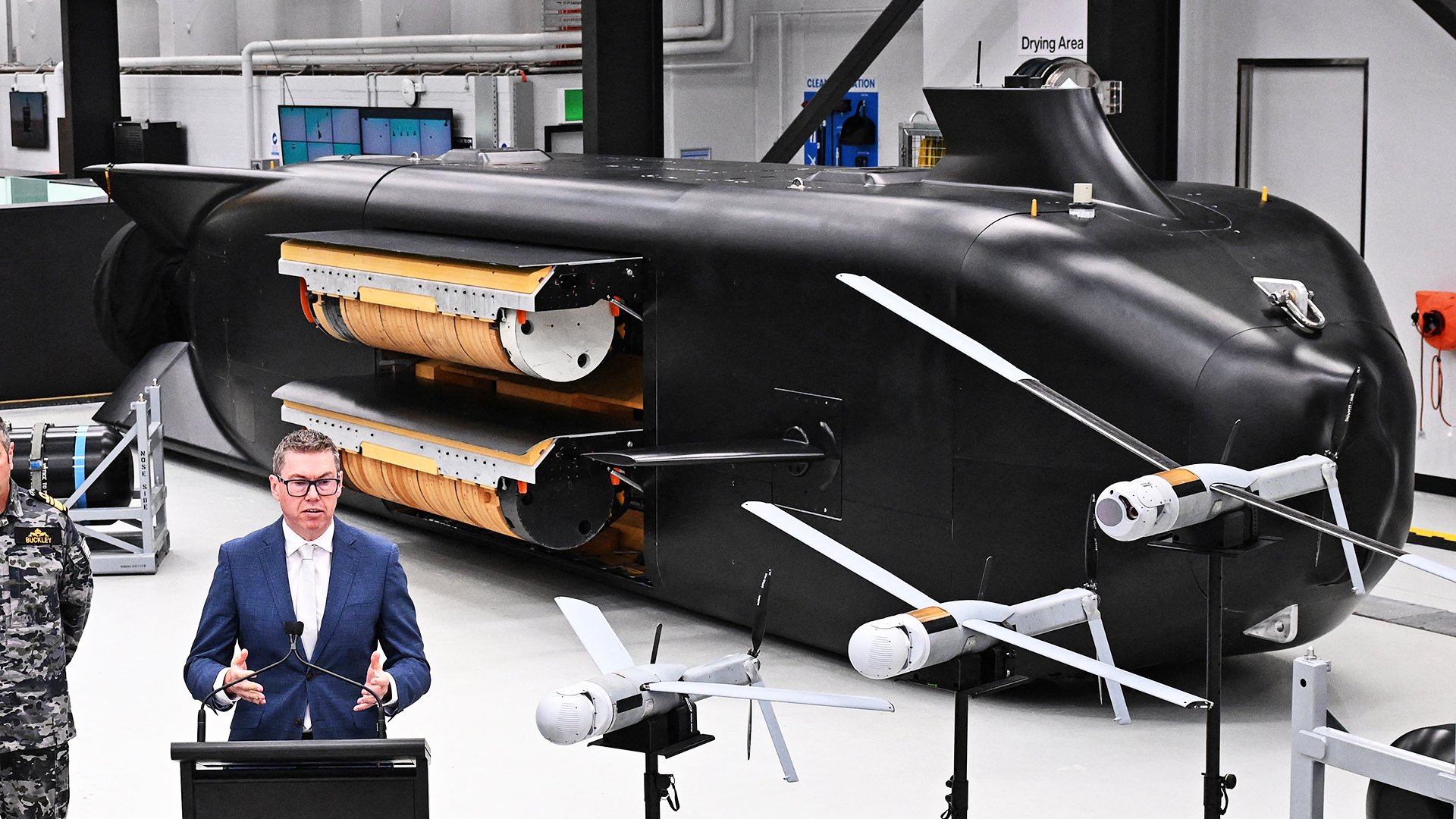
New footage of Australia’s Ghost Shark extra-large autonomous underwater vehicle (XL-AUV) provides the first look at how the vehicle launches aerial drones, while also revealing a pair of deployable masts not previously seen on the platform. The video comes soon after we got a glimpse of some of the payloads that the Royal Australian Navy plans to integrate on the new uncrewed submarine, as you can read more about in our coverage here.
"Ghost Shark has teeth now." – @PatConroy1, Australia's Minister for Defence Industry.
The @ausgov and @Australian_Navy confirmed the payloads that our Ghost Shark extra-large autonomous submarine carries: sea mines, logistics caches, and air-launched effects for ISR and strike.… pic.twitter.com/IALPFpOf4V
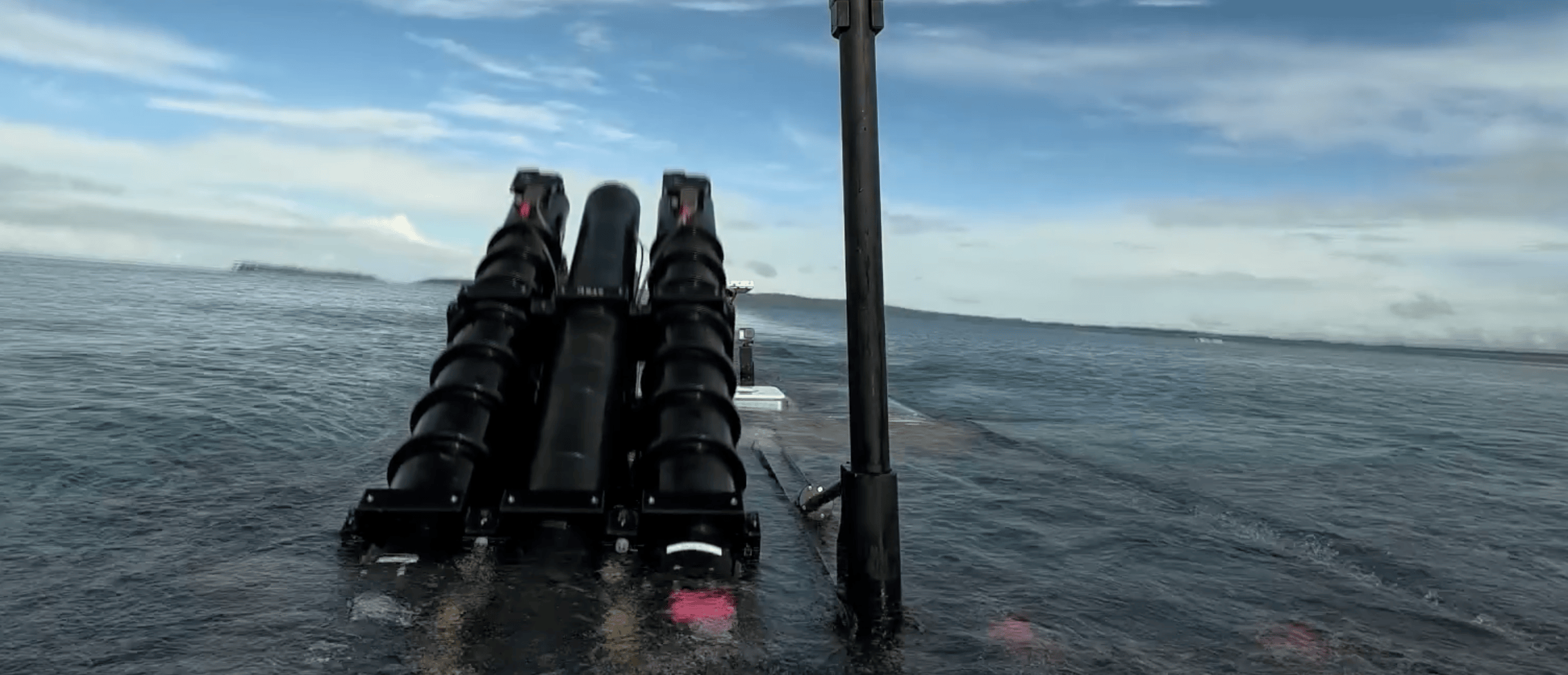
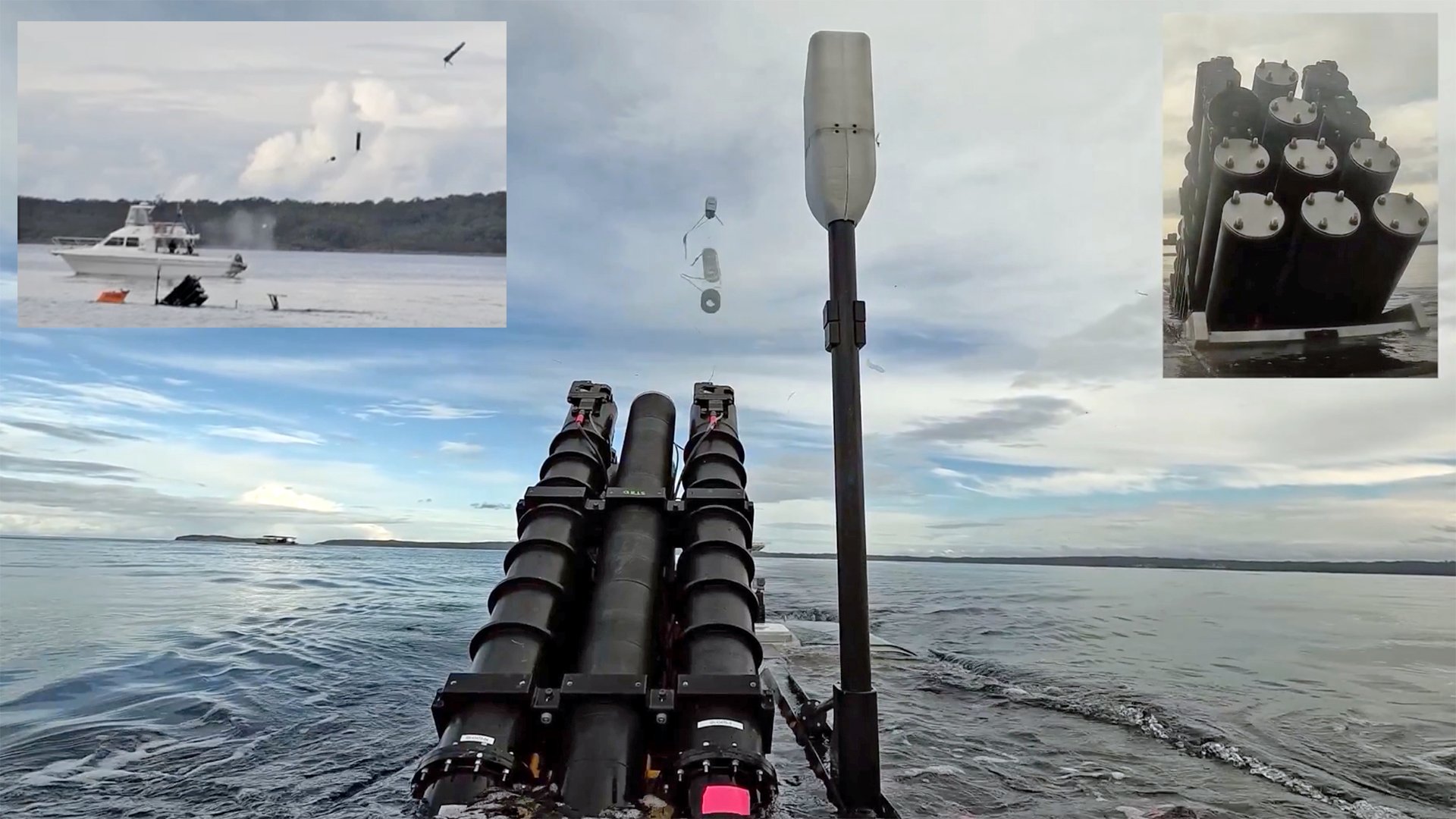
Published by manufacturer Anduril, the footage shows a Ghost Shark surfacing before doors on the top of its hull slide open. A launcher consisting of 12 angled tubes then emerges from a drone sub. Another launcher is seen in the other upper payload bay, but is not raised in the video. While it appears to be of the same type, the second launcher could also have a different arrangement of tubes.
While the 12-tube ALTIUS aerial drone launcher on the left is seen elevating, the launcher on the right remains lowered. Anduril/screencap
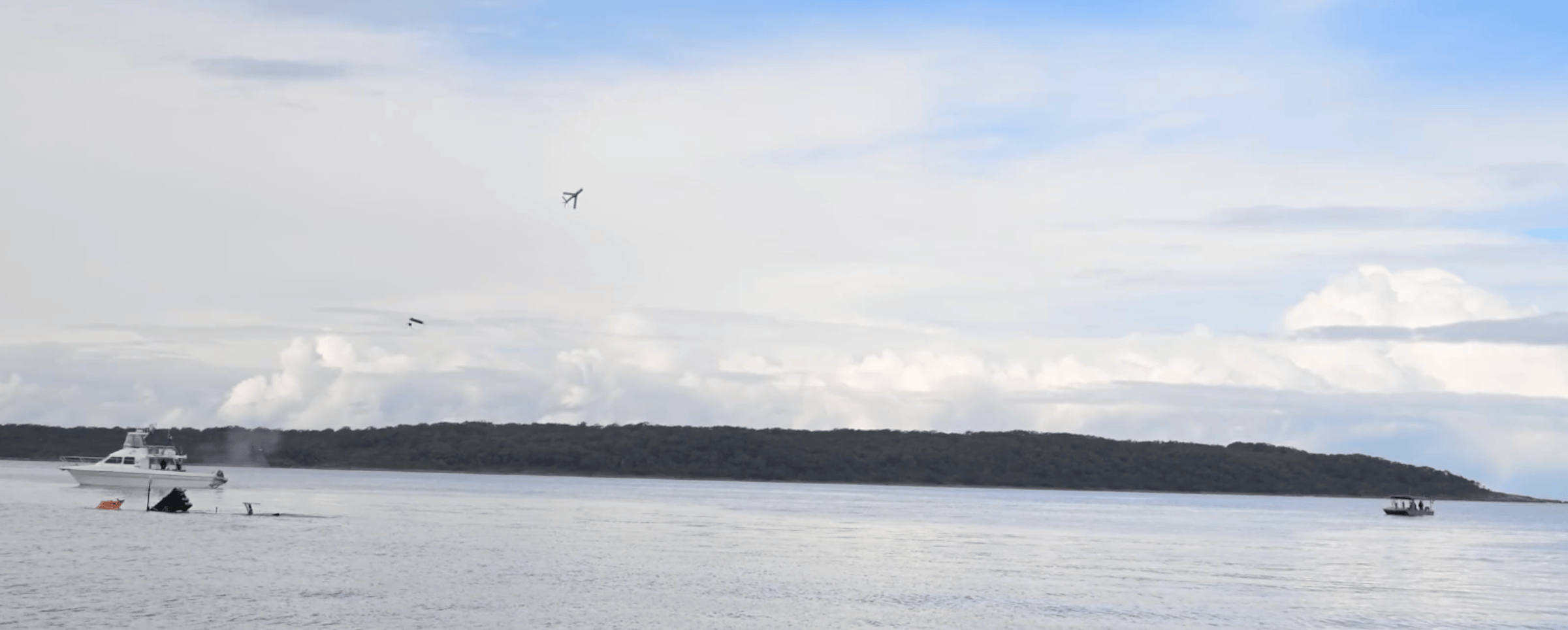
The footage subsequently cuts to an ALTIUS-type drone being launched from one of the tubes, with Ghost Shark itself remaining surfaced.
A Ghost Shark launches an ALTIUS aerial drone from a raised 12-tube launcher. Anduril/screencap
The sequence provides a much more concrete look at the aerial-drone deployment concept — or one of them — than the photographs released previously, which offered the first public view inside Ghost Shark’s side payload bay.
The Australian government has said the vehicle is being developed for missions including persistent intelligence, surveillance, reconnaissance (ISR) and strike, but the precise configuration and operational capabilities of its weapons and how they are launched had not previously been disclosed.
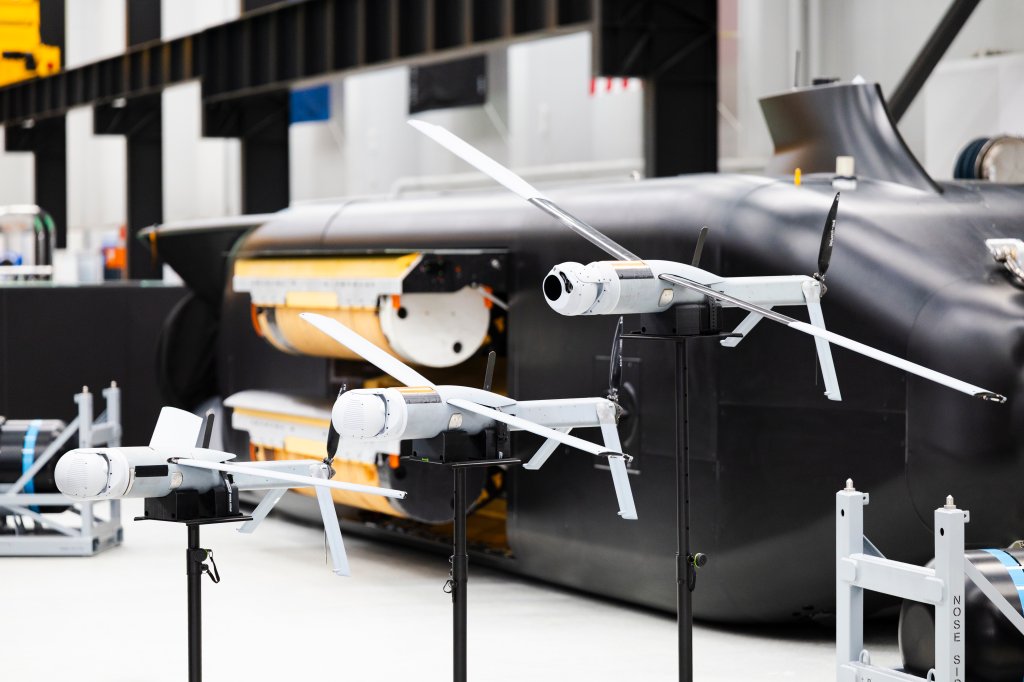
The video does not identify which ALTIUS variant is being launched. However, Ghost Shark has previously been displayed at the Altus factory in Australia alongside derivatives of the ALTIUS-600 family. This includes the ALTIUS-600 for ISR, as well as the ALTIUS-600M, which is designed for strike missions. You can read more about this family of drones here. As we noted before, unarmed variants of the ALTIUS-600 are designed to be optionally expendable, and can be reused, although in many scenarios that isn’t possible. In terms of capabilities, the ALTIUS-600 has a maximum range of around 275 miles and can remain airborne for at least four hours, according to Anduril.
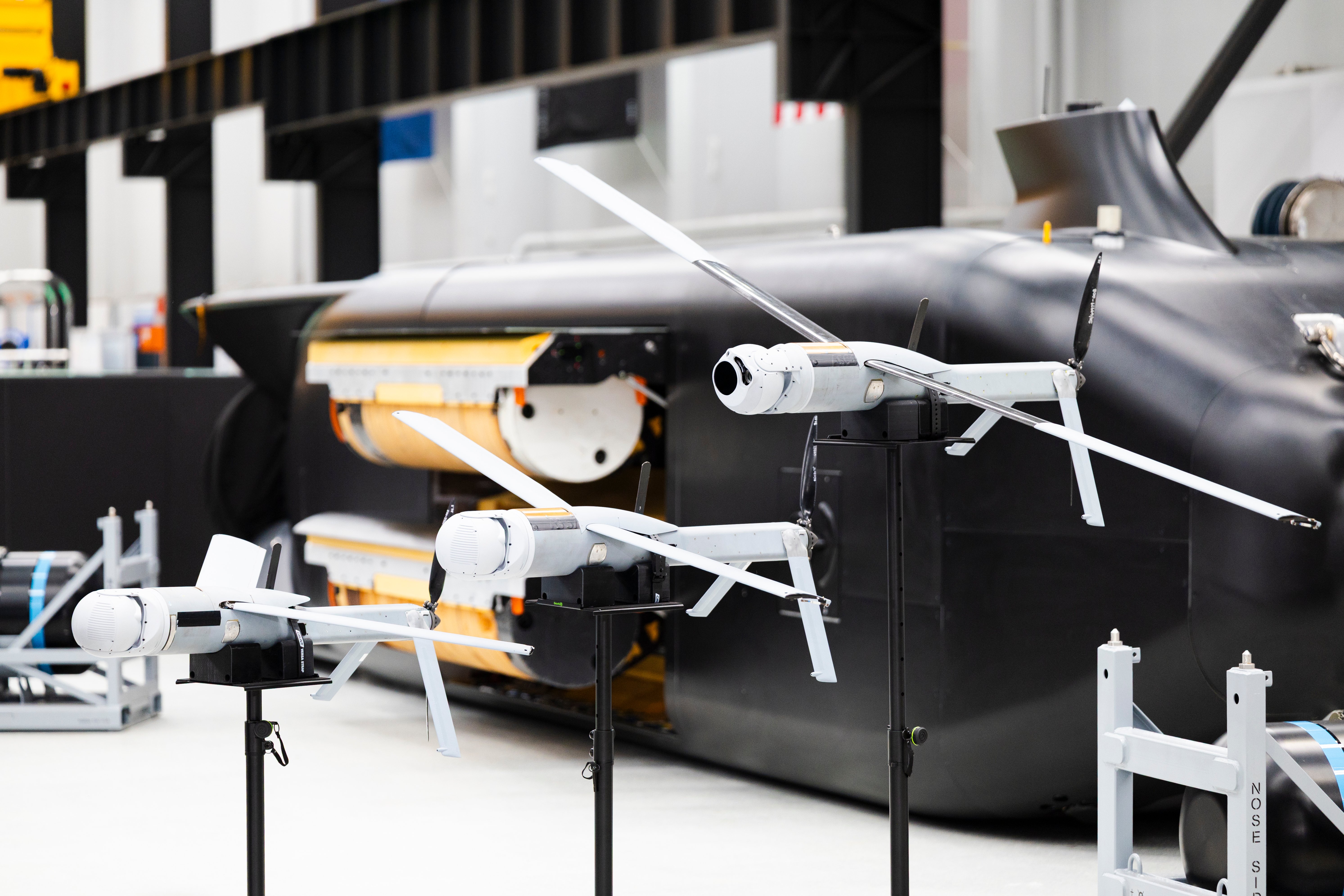
Examples of the Anduril ALTIUS-600 displayed during a press conference at the Anduril Australia factory in Sydney, New South Wales. Australian Department of Defense
Ghost Shark can clearly deploy a substantial number of aerial drones — two dozen in this case – in a single sortie, enabling swarms to be launched far from an adversary’s coastline. Depending on the drones carried and how they are employed, such a swarm could provide broad-area surveillance, wreak havoc on enemy air defenses via electronic warfare, or attack targets.
The concept could also have value below the threshold of open conflict. A mass launch of relatively inexpensive drones could be used to probe or stimulate an adversary’s air defenses, prompting them to reveal their locations, signatures and operating procedures for collection by other intelligence assets or even some of the drones themselves. There is a precedent for exactly this going back to the early Cold War years, which you can read all about here.
Ghost Shark could carry these capabilities deep into contested waters clandestinely without putting a crew at risk, unleashing their payload even at standoff distances or right next to the shore to give the drones maximum penetration and loitering time over target, depend on the risk profile.
At the same time, while the 12-tube launchers fit neatly into Ghost Shark’s hull architecture, the modular nature of the design means that the same space can accommodate many other payloads, which might include alternative types of aerial drones. This could be fewer larger, more capable types, or far more plentiful smaller, less capable ones.
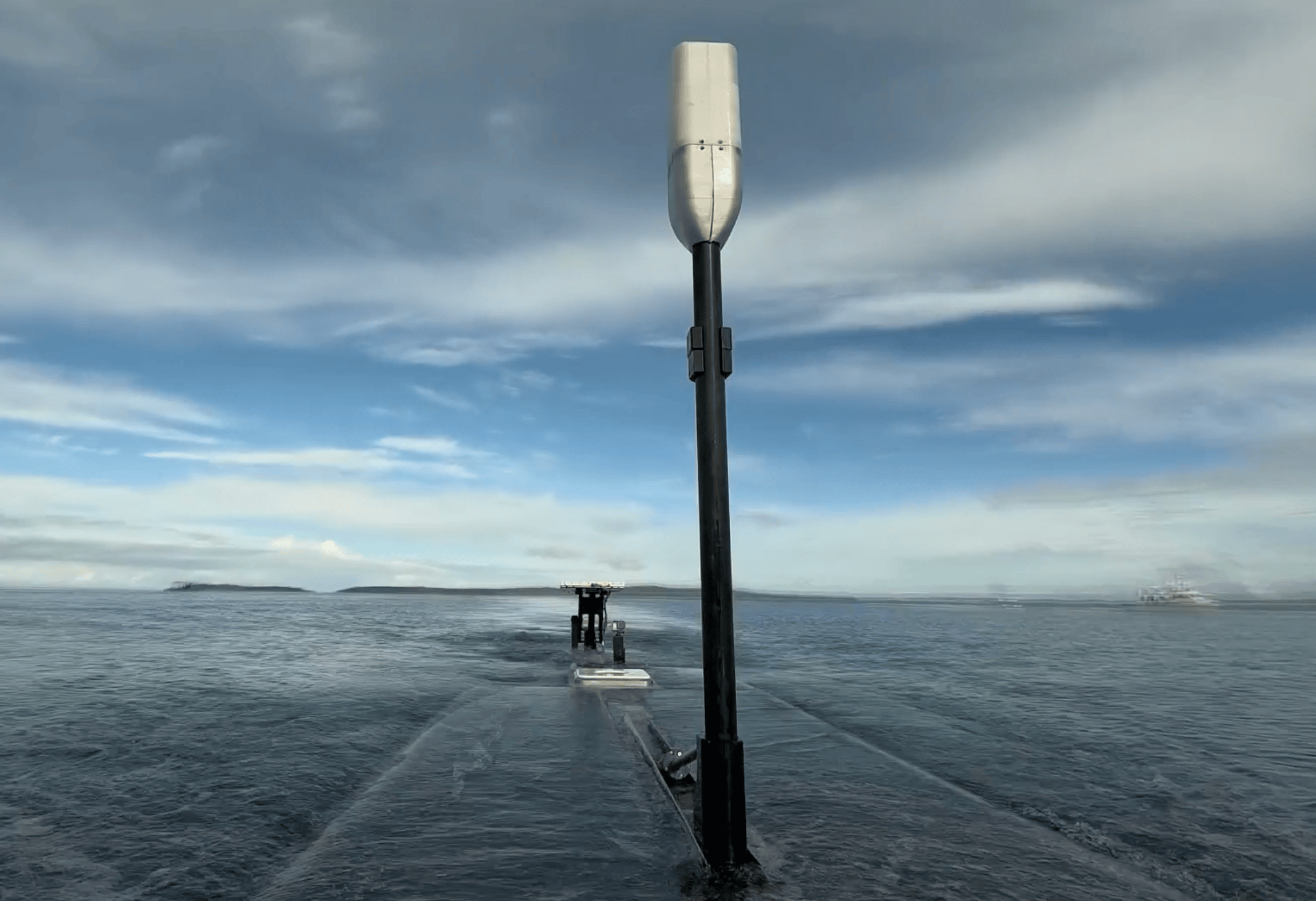
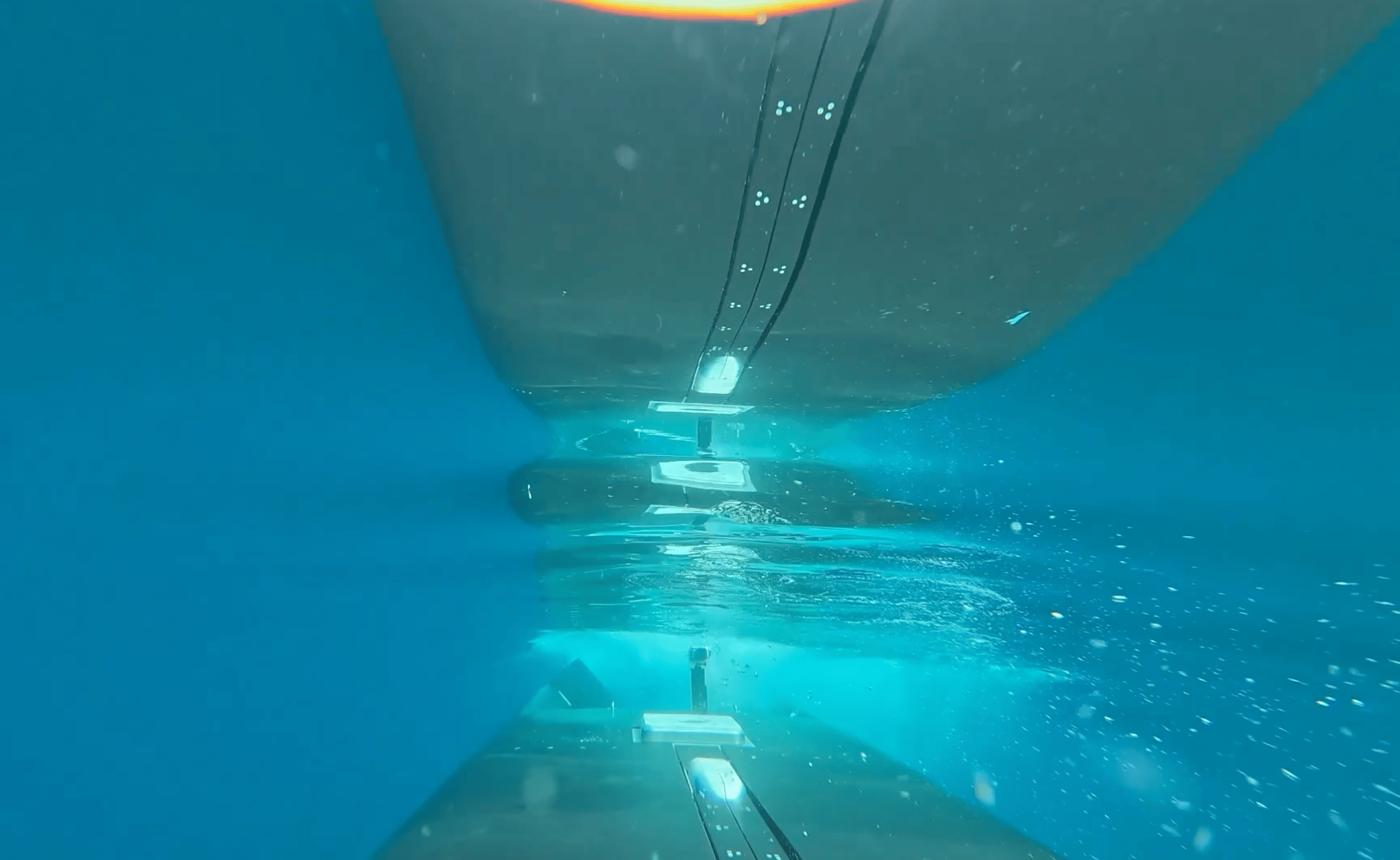
The other notable development in the video is the appearance of two deployable masts. Their presence is particularly interesting given Anduril’s emphasis on designing uncrewed underwater vehicles without the kinds of protruding mast arrangements associated with traditional submarine designs. On UUVs, masts like these are generally used to support sensors, communications, and propulsion systems.
Looking aft, with the two masts raised. Anduril/screencap
“We don’t have big masts running down the backbone of our vehicle that a lot of other designs do that then preclude the ability for the payloads to come out in different directions… of the payload module itself,” Dr. Shane Arnott, Senior Vice President for Engineering at Anduril and the company’s maritime lead, told TWZ back in 2024.
“So we have… in effect, unlimited flexibility in this design, just the way that we’ve configured the vehicle and the payload bay itself could be almost anything within a size configuration that you can dream up,” Arnott added. “We haven’t encountered a crazy idea yet from a customer that … we can’t fit.”
The first Ghost Shark for the Royal Australian Navy. In this earlier view, the retractable masts are not visible. Australian Department of Defense
The larger mast that lies flat is actually a fairly traditional one for large UUVs. It lies along the centerline of the hull when stowed, between the upper payload bays. It then deploys upward in an arm-like motion and carries an antenna. The smaller mast is located farther aft and rises vertically from its own housing. Potentially, the tall mast supports a line-of-sight datalink to the drones, while the other being a satcom array, such as one connected to Starlink/Starshield, sends drone feed to controllers anywhere in the world. It’s also worth noting that Ghost Shark could just launch the drones and send them on their missions autonomously, without needing to stay surfaced at all. Other arrangements could exist, as well, such as Ghost Shark launching a dozen drones and one larger one capable of carrying its own satcom terminal. This would allow direct control of the drones by operators anywhere in the world without Ghost Shark remaining present near the surface.
Ghost Shark also has a lower-profile swept-back sail on top of its nose section, not visible in the video. Overall, the vessel would retain a very small signature above the waterline while connected to the drones, making it hard to detect by radar and electro-optical imaging systems.
Ghost Shark submerged, with its reflection seen on the surface. This provides a good view of the retracted masts and how they fit neatly with the closed upper payload doors. Anduril/screencap
The new video follows the recent disclosure of three payload concepts for the Royal Australian Navy’s Ghost Shark: the deployment of up to 12 sea mines in a mission, the placement of supply caches on the seabed, and the launch of aerial drones. Those capabilities expand the vehicle beyond conventional underwater surveillance into a broader range of undersea warfare missions.
The mine-delivery option could support operations in strategically important maritime areas, while seabed caches could provide a means of positioning equipment and supplies for later retrieval. The aerial-drone capability, as seen in the new video, would allow Ghost Shark to extend surveillance beyond the reach of its own sensors or potentially deliver strike effects without exposing crewed platforms to the same risks. Having 12 ALTIUS drones ready to launch (and potentially the same number in the adjacent upper payload bay) would allow multiple missions to be undertaken.
The modular design is central to Ghost Shark. As we have discussed, the payload section can be configured using different hull sections and mission-specific systems, allowing the same underlying vehicle design to accommodate different requirements. The newly revealed launcher provides a first look at how at least one of those payload concepts may be implemented in practice.
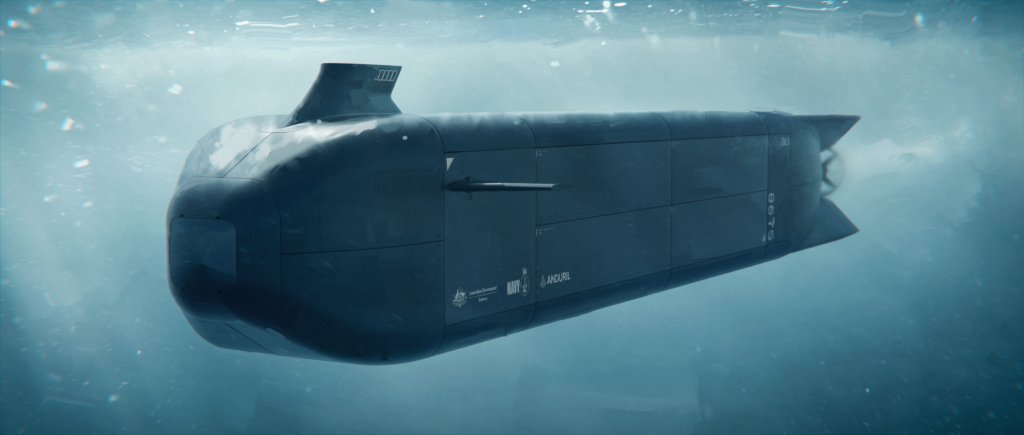
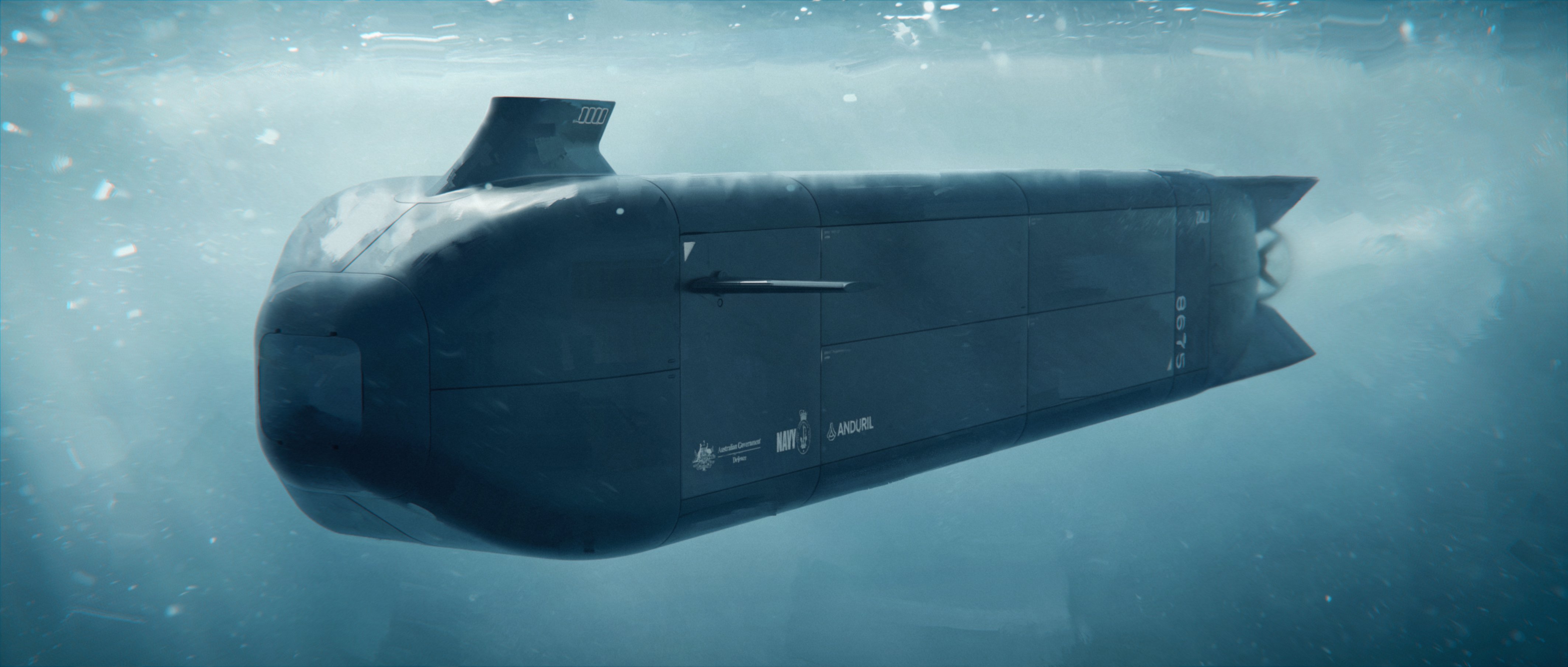
A rendering of a Ghost Shark in Royal Australian Navy service. Australian Department of Defense
Australia has committed substantial resources to autonomous and uncrewed undersea warfare capabilities, with a planned fleet of Australian-designed and built Ghost Shark vehicles serving alongside the Speartooth large uncrewed underwater vehicle (LUUV) and the BlueBottle uncrewed surface vessel (USV). The Ghost Shark program is also part of the broader AUKUS effort to develop advanced maritime technologies alongside the United Kingdom and the United States.
The new footage provides a clearer picture of the practical design choices behind that effort. Most notably, how the underwater vehicle can operationalize its aerial drone launching capability and the quantity of those systems it could potentially deploy very quickly before slipping back below the waves.
LONDON, Oct 21 (Reuters) – Britain on Wednesday approved the Jackdaw North Sea gas field, ending years of legal and political wrangling as the Labour government seeks to balance its climate goals...
The cost of shipping crude oil from the Middle East Gulf to Asia has surged to more than $37 per barrel, over five times prewar levels, as an increasingly complex...
È stata aperta un’indagine formale su Booking.com da parte della Commissione europea. L’obiettivo è verificare come la piattaforma contrasti truffe e frodi ai danni di chi prenota le proprie vacanze. L’annuncio è del 20 ottobre 2026 e si basa sul Digital Services Act (Dsa), il regolamento europeo che impone obblighi stringenti alle grandi piattaforme online.
Sotto la lente finiscono così:
annunci falsi;
messaggi di phishing che sfruttano i dati delle prenotazioni;
trasparenza degli annunci sponsorizzati.
Perché la Commissione indaga su Booking
A partire dal 25 aprile 2023, Booking.com è designata come “piattaforma online di dimensioni molto grandi”. Questa è una specifica categoria del Dsa soggetta agli obblighi più severi. Le grandi piattaforme devono individuare, analizzare e ridurre i cosiddetti “rischi sistemici” legati ai propri servizi.
Questo comprende ovviamente anche frodi e truffe. Secondo la Commissione, Booking potrebbe non aver rispettato questi obblighi. Un’indagine che nasce da un’analisi preliminare delle valutazioni del rischio (presentata tra il 2023 e il 2026). Al centro ci sono i rapporti di trasparenza e le risposte fornite alle richieste di informazioni. Un lavoro complesso, durato a lungo e svolto in collaborazione con l’Autorità olandese per i consumatori e i mercati (il Paese in cui ha sede il gruppo).
In merito si è espressa Henna Virkkunen, vicepresidente esecutiva della Commissione per la Sovranità tecnologica, la sicurezza e la democrazia:
Gli europei dovrebbero poter prenotare le proprie vacanze senza il timore di essere truffati. Il Digital Services Act stabilisce responsabilità chiare per le piattaforme nell’affrontare questi rischi e dobbiamo assicurarci che la principale piattaforma di prenotazione in Europa prenda sul serio queste responsabilità.
Annunci falsi e strutture irregolari
Uno dei fronti più importanti riguarda gli annunci truffa. Un problema che grava sulle spalle dei clienti che prenotano e degli host che affittano. La Commissione vuole capire se Booking abbia valutato e contrastato in modo adeguato il rischio di inserzioni false.
Per capire esattamente di cosa si stia parlando, ecco un esempio. Prenotate un alloggio e all’arrivo i proprietari vi dicono, sorridenti e stupiti, che non “siete nella lista”. Non c’è alcuna traccia di voi e tantomeno del vostro pagamento. Qualcuno ha infatti ben pensato di replicare quell’annuncio, intascare i soldi e sparire.
C’è poi spazio anche per quegli annunci di strutture non conformi alle regole. Una situazione grave e complessa, che vede tutti i partecipanti perdenti, tranne ovviamente i malviventi.
Phishing e dati delle prenotazioni
Si passa poi al phishing. L’indagine esaminerà i rischi legati alle truffe che sfruttano i dati delle prenotazioni. Vi sarà capitato infatti di ricevere dei messaggi all’interno della chat privata con un host. Si chiedono solitamente conferme delle carte o nuovi pagamenti, a fronte di problemi di varia natura.
Bruxelles valuterà come Booking condivide i dati con le strutture ricettive, com’è progettato il servizio di messaggistica interno e quali tutele esistono per evitare che queste informazioni finiscano nelle mani sbagliate.
Annunci sponsorizzati e trasparenza
Che dire poi della pubblicità. Sotto esame ci sono i cosiddetti “boosted listings”. Spiegando il concetto in italiano, si parla di quelle strutture che pagano per comparire più in alto nei risultati di ricerca. Secondo la Commissione, questi annunci potrebbero non essere segnalati con sufficiente chiarezza come pubblicità.
Gli utenti potrebbero non sapere chi ha pagato per quella vetrina, ritenendo che la posizione migliore corrisponda a una più elevata qualità dei servizi o dei locali. Un aspetto tutt’altro che secondario, perché influenza le scelte di chi confronta prezzi e strutture prima di prenotare.
Cosa rischia Booking
Le presunte violazioni riguardano gli articoli 34 e 35 del Dsa, sugli obblighi di valutazione e riduzione dei rischi sistemici, e l’articolo 26, paragrafo 1, sulla corretta identificazione della pubblicità. Di per sé, ovviamente, l’apertura dell’indagine non corrisponde a una colpa, ancora tutta da appurare.
Questo processo consente però alla Commissione di raccogliere ulteriori prove e adottare diversi strumenti:
misure provvisorie;
decisione di non conformità;
accettazione di impegni da parte di Booking per risolvere le criticità.
In base alle regole generali del Dsa, in caso di violazione accertata le sanzioni possono arrivare fino al 6% del fatturato mondiale annuo della società. Parliamo di circa 1,4 miliardi di euro.
Nell’altro articolo che la Linea pubblica oggi si legge cosa prevede lo «Scenario buono» per il 2036 presentato dall’oligarca Konstantin Malofeev al Forum economico di San Pietroburgo: presa di Odesa e Kharkiv, riduzione dell’Ucraina a uno Stato-moncone vassallo di Mosca, crisi dell’americanocentrismo e disgregazione dell’Unione europea. La domanda più interessante, oggi, non è chi condivida questo programma a Mosca, ma quanti lavorino ormai – per ideologia, per fatalismo accademico o per puro calcolo personale – a realizzarlo in Occidente o a disegnarne la mappa.
Non c’è solo la pattuglia dei propagandisti militanti: ex militari americani come Douglas Macgregor o Scott Ritter, che definiscono Odesa «città russa» e auspicano apertamente la marcia su Kyjiv, o intellettuali europei come il demografo francese Emmanuel Todd, che all’Accademia delle Scienze di Mosca celebra la vittoria della Russia «conservatrice e rassicurante» sull’Unione europea prossima all’implosione. E non ci sono soltanto i prescrittivi della resa immediata, da Jeffrey Sachs che dalle colonne della Tass intima a Kyjiv di cedere subito se non vuole perdere tutta la costa del Mar Nero, fino alle nostre caricature mediatiche, da Marco Travaglio a Michele Santoro, da Angelo D’Orsi ad Alessandro Di Battista, da Elena Basile a Ginevra Bompiani e compagnia bella.
Il caso intellettualmente più insidioso riguarda chi non si dichiara affatto filorusso, ma pretende di limitarsi a descrivere la realtà in nome della scienza politica o della geopolitica. I due campioni di questa scuola, sulle due sponde dell’Atlantico, sono il politologo dell’Università di Chicago John Mearsheimer e il direttore di Limes Lucio Caracciolo.
Partono da premesse opposte sulla natura del regime russo: Mearsheimer nega che Putin volesse conquistare l’Ucraina e ricostruire un impero e attribuisce la guerra soprattutto all’Occidente e alla Nato, pur ammettendo che a invadere è stato Putin. Caracciolo riconosce la radice imperiale del mito della Novorossija da Kharkiv a Odesa, la tratta come un dato eterno della storia russa. Eppure sul quadro finale combaciano: un’Ucraina ridotta a Stato residuo disfunzionale, «dysfunctional rump state», nelle parole di Mearsheimer; una Russia che prevale e un’Europa senza peso strategico che, per Caracciolo, non essendo un soggetto geopolitico unico, non può avere alcun ruolo. Non è identità di programma, è identità di mappa.
Nel caso di Caracciolo, il corto circuito di questo metodo è palese. Fino alla vigilia del 24 febbraio 2022 scriveva che Vladimir Putin «non attaccherà l’Ucraina (checché ne dicano gli Usa)», perché marciare su Kyjiv sarebbe stato un suicidio strategico. Dal giorno successivo, quella stessa invasione prima giudicata folle è diventata, per magia deterministica, una guerra che «la Russia non può perdere» e in cui l’Ucraina, definita «un’invenzione di Lenin e Stalin» dalla vaga identità, è condannata per legge demografica e geografica alla disfatta.
Prevedere non è volere. Ma una previsione ripetuta per anni, che dalle riviste passa ai consigli a Kyjiv di cedere, smette di essere pura descrizione; e quando sbaglia sul punto decisivo, come accadde a Caracciolo alla vigilia del 24 febbraio, il metodo andrebbe messo in discussione, non rivenduto come lucidità.
Non stupisce che quattro firme storiche del comitato scientifico e redazionale di Limes – Federigo Argentieri, Franz Gustincich, Giorgio Arfaras e il generale Vincenzo Camporini – si siano dimesse denunciando una deriva «filorussa e antieuropeista». Camporini ha colto il punto teorico decisivo: «La geopolitica senza etica e senza diritto internazionale diventa pura contabilità della forza».
Oggi quella «contabilità della forza» dei realisti di cattedra ha trovato il suo braccio esecutivo nel transazionalismo di Donald Trump. Che non è nemmeno più un realismo spregiudicato: il realista classico sacrifica la solidarietà internazionale in nome dell’interesse nazionale e della tenuta delle alleanze nel lungo periodo; il transazionalista sacrifica tutti e due – l’interesse internazionale e quello nazionale americano – sull’altare del prossimo sondaggio, del prossimo affare, del prossimo turno elettorale. Non è soltanto una politica senza ideali: è una politica senza Stato, privatizzata ad uso del leader.
I fatti di queste settimane lo mostrano. Il 9 ottobre, dopo una telefonata con Putin e a pochi giorni dal voto di metà mandato del 3 novembre, Trump ha sospeso fino ad aprile le sanzioni sul gasolio russo per frenare i prezzi alla pompa. Il giorno dopo ha chiesto apertamente che l’Ucraina si trovi un nuovo presidente, accusando gli attacchi di Kyjiv alle raffinerie russe di far salire il prezzo del carburante. Il 16 ottobre, con un ordine esecutivo che invoca l’interesse nazionale, ha congelato dazi e nuove sanzioni previsti dalla legge Graham. Mosca ha parlato di momento storico. Il cerchio si chiude: la dottrina imperiale del Cremlino, il mercantilismo privato della Casa Bianca e il determinismo geopolitico dei nostri analisti convergono sullo stesso punto, cancellare la libertà dei popoli e il diritto internazionale come fastidiosi ostacoli al negozio tra i forti. I nazionalisti russi lo chiamano «Scenario buono», Trump lo chiama «deal», i nostri geopolitici lo chiamano «realtà». Ma la mappa che ci mettono davanti è sempre la stessa.
Mario Draghi richiama l’attenzione sulle difficoltà economiche dei giovani europei, collegando le proteste degli ultimi giorni alla mancanza di crescita e alle disuguaglianze tra generazioni. L’ex presidente della Banca centrale europea ed ex presidente del Consiglio italiano è intervenuto durante una conferenza di Citadel Securities, rispondendo alle domande della giornalista di Bloomberg Lisa Abramowicz. Secondo Mario Draghi, alla base delle proteste che hanno interessato diverse città europee c’è una difficoltà strutturale legata alle prospettive economiche delle nuove generazioni.
Draghi sulle proteste dei giovani: “Aspettative bloccate”
L’ex premier ha parlato di “aspettative bloccate”, spiegando che molti giovani “hanno la sensazione che nessuno li ascolti”. Il problema riguarda soprattutto la possibilità di trovare un’occupazione stabile, migliorare la propria condizione economica e affrontare i cambiamenti del mercato del lavoro.
“La maggior parte delle persone vuole crescita e giustizia sociale, o crescita con giustizia sociale. Per i giovani, la giustizia sociale significa giustizia fra generazioni. E quando non c’è crescita, diventa molto difficile mantenerla”, ha dichiarato Draghi. L’ex presidente della Bce ha sottolineato che i giovani “faticano a trovare un impiego” e devono confrontarsi con “una società in rapidissima trasformazione tecnologica”. La mancanza di prospettive economiche, secondo Draghi, “genera ansia” e contribuisce ad alimentare il malcontento sociale.
La stagnazione economica in Europa
Nel corso dell’intervista Mario Draghi ha individuato nella stagnazione economica uno dei principali problemi strutturali dell’Unione europea. “Tutta l’Europa ha avuto e ha un problema di crescita, di crescita che manca”, ha affermato. Nonostante alcune revisioni al rialzo delle previsioni economiche, l’ex premier ritiene che il continente continui a confrontarsi con le difficoltà di “una società ricca, certamente, anziana e che non cresce”.
La crescita insufficiente rischia di accentuare le differenze tra chi occupa già una posizione lavorativa consolidata e chi cerca di entrare nel mercato del lavoro. “Quando non c’è crescita, a comandare sono quelli che occupano già le posizioni, gli anziani”, ha spiegato Draghi.
Riferendosi alle manifestazioni e agli scontri registrati a Parigi e Milano, l’ex premier ha precisato che la violenza “va condannata in ogni circostanza”. Le dinamiche politiche e gli episodi di disordine rappresentano, nella sua analisi, fattori che amplificano un problema economico e sociale già presente.
Le due condizioni necessarie per un intervento della Bce
Nell’analisi di Mario Draghi sono due gli elementi principali che potrebbero rendere necessario un intervento della Banca centrale europea. Il primo riguarda il contagio finanziario, ossia la diffusione della crisi di un Paese agli altri Stati dell’area euro. “Francamente, non vediamo un contagio sostanziale in Europa”, ha dichiarato, precisando che l’aumento dei rendimenti registrato in diversi mercati è diverso dalla situazione osservata durante le precedenti crisi finanziarie.
Il secondo elemento riguarda il funzionamento del credito e la capacità delle decisioni della Bce di raggiungere famiglie e imprese attraverso il sistema bancario. Un intervento potrebbe diventare necessario in presenza di difficoltà nei mercati del credito o di problemi nella trasmissione della politica monetaria. Secondo Mario Draghi, questi segnali attualmente non emergono. Anzi, “gli ultimi dati mostrano che i prestiti bancari sono aumentati”.
Labour has finally approved new drilling for gas in the North Sea, despite the project already receiving the go ahead over two years ago under the Tories, after energy prices hit a four-year high.
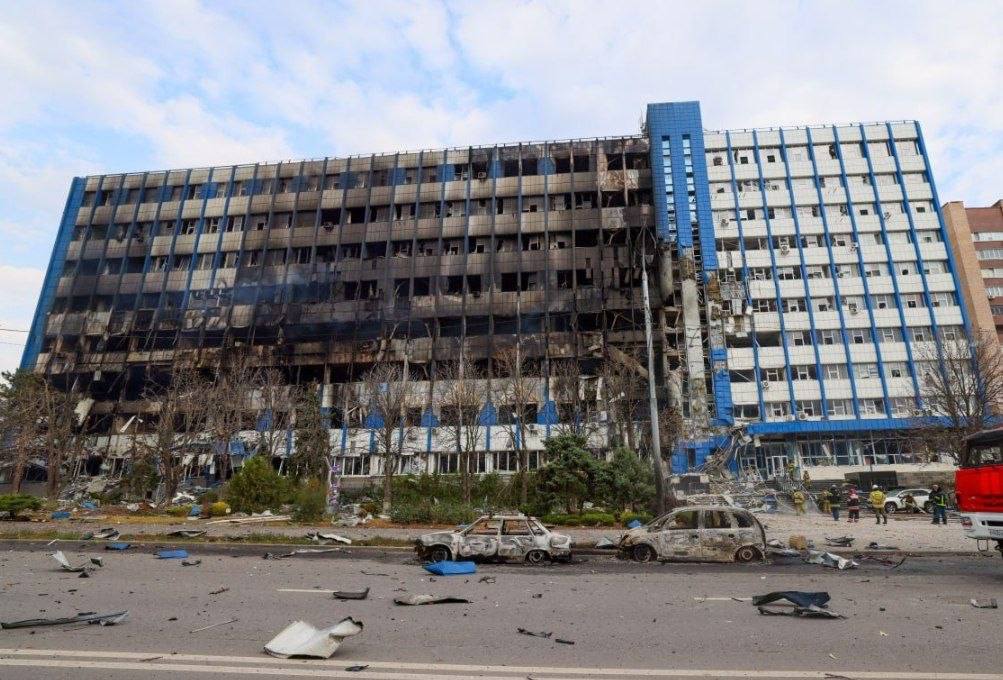
Drones struck the seized Ukrtelecom building in occupied Luhansk overnight on 21 October, hitting the mobile operator Russia’s occupation authorities run there under the name “Lugacom,” Russian Telegram channel Astra and Ukrainian monitoring channels reported. The strike came a night after drones hit “Ugletelecom,” the occupation’s telecom operator in Donetsk, which reportedly runs on equipment seized from Ukrainian companies. Footage posted by Ukrainian monitors shows heavy fire damage inside the Luhansk building. Ukraine has not officially commented.
Ukraine has spent months hitting the supply lines, depots, and infrastructure that sustain Russia’s occupation of southern and eastern Ukraine, with mid-range drones striking trucks, trains, and communications towers well behind the front. This spring the commander of Ukraine’s Unmanned Systems Forces, Robert “Madyar” Brovdi, promised Russian troops in occupied territory a “stone age.” This time the targets were the networks the occupation runs on.
The occupied Ukrtelecom building in Luhansk after a drone strike, 21 October 2026. Photo: Exilenova+/Telegram
A burned-out Ukrtelecom building in Luhansk
Residents reported explosions in Luhansk overnight, and the former Ukrtelecom building was attacked by a drone, Astra reported, citing its readers. The occupation runs its mobile operator, “Lugacom,” from the seized building, and built its network on equipment taken from Ukraine’s Kyivstar, according to dev.ua. The building also houses an occupation-run telecom services center. Luhansk is situated in the easternmost Ukrainian region and has been occupied since 2014.
Ukrainian monitoring channel Exilenova+ said Ukraine’s Defense Forces struck the building, which also hosts an information technology and technical support center. A video it posted shows extensive burning inside. Petro Andriushchenko, head of the Center for the Study of Occupation, said the drones hit a data center in the building.
Occupation officials had not commented, according to NV. In September, drones hit a hardware store in Luhansk, sparking a large fire. Earlier this month, fires broke out at a Russian supply base in Khrustalnyi, also in occupied Luhansk Oblast.
The occupied Ukrtelecom building in Luhansk after a drone attack, 21 October 2026. Photo: Astra/Telegram
Donetsk’s occupation telecom operator hit the night before
The night before, drones struck “Ugletelecom,” one of the key communications operators in occupied Donetsk Oblast, Exilenova+ reported. It operates from an office building at 60 Postysheva Street, where Ukraine’s state holding company Donbasugleobespechenie was registered before the occupation, according to RBC-Ukraine. Astra found about 27 organizations registered at the address, including internet provider Fticom, and damage on four floors.
Ugletelecom runs on equipment seized from Ukrainian companies, Donetsk-focused outlet Kochegarka reported, citing local sources. The occupation also moved local businesses that had used Ukrtelecom over to it, according to dev.ua. Residents had reported powerful explosions in the city.
The office building on Postysheva Street housing “Ugletelecom,” the occupation’s telecom operator, in occupied Donetsk after a drone strike, 20 October 2026. Photo: Exilenova+/Telegram
Power cuts across the occupied territories
In occupied Donetsk Oblast, drones attacked the 330 kV Pivdenna substation in Chystiakove, and locals reported outages, Telegram channel DroneBomber said, calling the report preliminary. Occupied Donetsk went into a blackout on the evening of 20 October after strikes on its power supply, Andriushchenko said. He also reported air defense activity and hits in the Mariupol area.
In occupied Crimea, residents of Krasnoperekopsk reported explosions and hits near the railway station, then partial power cuts, monitoring channel Crimean Wind said. In occupied Melitopol, drones tried to attack the city’s power facilities at around 03:30 but missed, Russian senator Dmitry Rogozin claimed.
French mapper Clément Molin counted 770 confirmed Ukrainian drone strikes on Russian trucks in the logistics zone 10 km behind the front line in September, up from 630 in August.
Un regolamento europeo in attesa di approvazione permetterà di limitare gli affitti brevi. Darà un sollievo temporaneo alla questione abitativa. Per affrontarla in modo strutturale servono però interventi e politiche per le famiglie meno abbienti.
«L’Europa deve aiutare l’Ucraina e l’Ucraina aiuterà sempre l’Europa: siamo parte di un insieme», ha detto ieri Volodymyr Zelensky nella sua intervista al Corriere della Sera. E Il cancelliere tedesco Friedrich Merz ha avvertito, sempre ieri in un’intervista a Bloomberg che, «l’Europa sottovaluta la minaccia russa»: secondo lui Vladimir Putin punta a destabilizzare l’intero ordine politico europeo, non solo l’Ucraina.
Se le loro parole non sono sufficienti, basta leggere cosa scrivono, da anni e senza troppi giri di frase, gli analisti russi. Nello scenario «positivo» suggerito da molti di loro, l’Ucraina perde Kyjiv, Odesa e Kharkiv, e l’Unione europea si disgrega. Non è una caricatura confezionata a Bruxelles per spaventare gli elettori e convincerli a spendere in armamenti.
È il futuro auspicato in un rapporto dell’Istituto Tsargrad presentato da Konstantin Malofeev al Forum economico internazionale di San Pietroburgo del giugno 2025, con il contributo di Aleksandr Dugin. Per l’Ucraina sono previste diverse sistemazioni: annessione alla Russia, Stato cuscinetto completamente subordinato a Mosca, nuovo Stato slavo orientale. La possibilità che gli ucraini decidano da soli non figura nel catalogo.
L’orizzonte è il 2036. Per il 2050 si prevede una Russia alla guida della sicurezza e della giustizia mondiale. Prima si cancellano le libertà dei vicini, poi si amministra la giustizia del pianeta. Il programma ha almeno il pregio della chiarezza.
Si dirà: sono gli estremisti. Certamente non stiamo leggendo una deliberazione del governo russo. La distinzione conta e va mantenuta: Malofeev e Dugin parlano dai margini del potere, non dal suo centro. Ma liquidare queste proposte come fantasie marginali diventa difficile quando se ne ritrovano gli elementi negli scritti di analisti autorevoli, nelle pubblicazioni di istituzioni prestigiose e nei mezzi d’informazione di Stato.
Il caso più significativo è Dmitrij Trenin, già direttore del Carnegie Moscow Center e oggi membro del Consiglio scientifico del Consiglio russo per gli affari internazionali. In un articolo pubblicato nel maggio 2025, sostiene che l’Unione europea e la Nato resteranno avversari e che le prospettive dei rapporti con l’Europa risiedono esclusivamente nelle relazioni bilaterali. Invita a sfruttare le divergenze fra europei e americani e a tenersi pronti a beneficiare dei cambiamenti politici nei paesi dell’Unione. Nello stesso testo contempla attacchi contro obiettivi logistici, industriali e politico-militari europei, fino all’impiego di armi nucleari nei casi estremi.
La logica politica è leggibile: trattare con i singoli Stati, ciascuno con le proprie vulnerabilità e convenienze, mentre l’Europa organizzata viene considerata un avversario permanente. Per noi l’integrazione è una costruzione incompiuta, spesso esasperante. Per questa corrente del pensiero strategico russo è un ostacolo. Un motivo in più per riflettere prima di smontarla.
Certo, l’Unione europea non è una costruzione fragile solo perché qualcuno a Mosca la vorrebbe tale. Ha problemi endogeni, e continuerà ad averne. Ma un’Ucraina ridotta a vassallo o a zona grigia permanente aggiungerebbe un fattore di pressione esterna strutturale: flussi di profughi, competizione energetica, polarizzazione politica interna e un precedente di successo per chi punta a negoziare separatamente con ogni capitale. Non è la causa unica di una possibile disgregazione, è l’acceleratore più potente di quelle che già esistono.
C’è anche la minaccia nucleare, ricorrente negli interventi di Putin. Sergej Karaganov aveva già proposto nel 2023 di restituire credibilità alla minaccia atomica, abbassando la soglia del suo impiego e contemplando un attacco contro un paese europeo per spezzare la determinazione occidentale nel sostenere Kyjiv. La formula è quella di un’escalation presentata come mezzo per evitare una catastrofe maggiore. È il ricatto, per quanto poco credibile, che pretende anche gratitudine: cedete, perché vi stiamo salvando da quello che potremmo farvi.
Il progetto per l’Ucraina era stato esposto ancora più brutalmente da Timofej Sergejcev, commentatore di RIA Novosti, subito dopo l’invasione, nell’aprile 2022. La «denazificazione» avrebbe comportato «de-ucrainizzazione», repressione ideologica, censura nella cultura e nell’istruzione, rieducazione per almeno una generazione. Il paese sottoposto a questo trattamento non avrebbe potuto essere sovrano. Un’eventuale Ucraina residua sarebbe rimasta sotto la minaccia di nuovi interventi militari. La neutralità, in questo disegno, è il nome diplomatico dell’obbedienza.
È questo che dovrebbe entrare nelle nostre discussioni sulla pace. Un negoziato va giudicato dalla libertà che lascia agli aggrediti e dalle garanzie che impediscono una nuova aggressione. Se l’Ucraina sopravvive soltanto a condizione di obbedire, il conflitto viene sospeso lasciando all’aggressore il potere di riaprirlo. Se l’Europa rinuncia alla propria capacità di difesa per rassicurare chi la minaccia, rende quella minaccia più efficace.
Prima di dividerci su come trattare con Mosca, sarebbe utile domandarci perché la nostra divisione le piaccia tanto. Il Cremlino non lo nasconde. Quando Washington ha pubblicato la nuova Strategia per la sicurezza nazionale, accusando le istituzioni europee di avere aspettative irrealistiche sulla guerra, un politologo vicino a Putin ha esultato: l’isolata, ormai, sarebbe l’Europa. A luglio Dmitry Peskov elogiava la disponibilità di Trump ad ascoltare ciò che Putin gli riferisce. A inizio ottobre, Trump ha sospeso le sanzioni energetiche contro la Russia per tornare a comprare gasolio russo e ha rimproverato Zelensky per non convocare elezioni, mentre Kaja Kallas e i ministri degli Esteri europei ribadivano che solo la pressione funziona.
Perché dovremmo aiutare la Russia, come suggerisce Donald Trump coi fatti e con le parole, a realizzare il suo scenario migliore?
Questo è un estratto di “La Linea” la newsletter de Linkiesta curata da Marco Taradash per orientarsi nel gran guazzabuglio della politica e della vita, tutte le mattine – dal lunedì al venerdì – alle sette. Più o meno. Qui per iscriversi.
Arrivato in Italia per la Conferenza europea dei presidenti di Parlamento, Igor Grosu riporta una richiesta chiara: l’Italia accompagni la Moldova nell’Unione europea. Il presidente del Parlamento moldavo e leader del Partito di Azione e Solidarietà (Pas), la formazione europeista che esprime la Presidente Maia Sandu, Grosu ha incontrato Linkiesta dopo il colloquio del 15 ottobre con Lorenzo Fontana, presidente della Camera. La visita in Italia è arrivato in una settimana in cui l’avanzamento dei negoziati europei si è intrecciato con le nuove violazioni dello spazio aereo moldavo durante gli attacchi russi all’Ucraina. «Questi incidenti non sono un caso, servono a instillare paura nella popolazione e a demotivare il cammino della Moldova verso l’Unione europea», ha detto.
Nella notte tra il 15 e il 16 ottobre quattro droni hanno attraversato lo spazio aereo moldavo, uno dei velivoli è anche uscito e rientrato. «Quest’anno gli incidenti sono molto aumentati», dice ancora Grosu. La risposta, spiega, dovrà tenere insieme protezione del territorio, coordinamento con l’Ucraina e soprattutto la comunicazione con la popolazione.
Per Grosu, la sicurezza della Moldova dipende anche dalla capacità dell’Ucraina di continuare a proteggere il continente. Per questo respinge l’idea che una riduzione dell’assistenza militare occidentale possa accelerare la fine del conflitto. «È falso, offrirebbe solo una possibilità alla Russia», dice Grosu. «La formula è molto più semplice di prima. Oggi è guerra o pace», afferma a proposito del percorso di adesione della Moldova all’Unione europea. Il suo calendario politico prevede la conclusione dei negoziati nel 2028 e l’ingresso nell’Unione europea nel 2030. In patria è uno di quelli più impegnati a fissare un termine e farlo rispettare.
La visita a Roma segue un avanzamento concreto: il 13 ottobre l’Ue e la Moldova hanno aperto i negoziati su due cluster, quello del mercato interno e quello della competitività e crescita inclusiva. I cluster sono raggruppamenti di capitoli negoziali che organizzano, per materie affini, il lavoro di allineamento del Paese candidato alle regole europee. Con queste aperture, quattro dei sei raggruppamenti risultano avviati. Restano quelli sull’agenda verde e la connettività sostenibile e sulle risorse, l’agricoltura e la coesione. Grosu vuole che siano aperti anche gli ultimi due entro la fine dell’anno.
Guarda già al primo semestre 2028, quando l’Italia eserciterà la presidenza di turno del Consiglio dell’Unione europea: un appuntamento che vorrebbe far coincidere con la conclusione del negoziato.
«Questo è il momento migliore per avvicinare le due rive del fiume Dnestr», dice ancora. L’integrazione europea, sostiene Grosu, può diventare l’incentivo decisivo per riavvicinare la Transnistria al resto della Moldova. La sua valutazione parte dalla crisi economica della regione separatista. «Il suo modello economico è collassato», afferma, indicando nel gennaio 2025 un punto di svolta, quando l’interruzione del flusso di gas russo ha colpito il sistema energetico transnistriano esponendone la dipendenza. Grosu racconta un riavvicinamento che passa dalle scelte quotidiane: abitanti della regione che cercano lavoro e protezione sociale in Moldova, famiglie che scelgono le scuole moldave per i loro figli. «Il processo di reintegrazione è in moto». La stessa Kaja Kallas ha dichiarato che la regione «non sarà un ostacolo nel percorso europeo della Moldova».
L’avvicinamento procede anche attraverso un graduale allineamento delle regole. Oggi le imprese transnistriane pagano dazi e Iva come i moldavi e questi soldi finiscono in un fondo di convergenza, destinato a finanziare infrastrutture, servizi e interventi per la popolazione transnistriana. L’obiettivo è associare la progressiva integrazione a benefici riconoscibili per chi vive nella regione.
«La presenza delle forze armate russe in Transnistria è illegale», dice Grosu a proposito del contingente di circa 1500-2000 militari russi nella regione. Il loro ritiro, insieme a tutto il loro equipaggiamento, dovrebbe essere negoziato dalla Moldova, dall’Unione europea e dell’Ucraina. «La nostra diaspora è un ponte fra i nostri Paesi». Quando parla dei moldavi in Italia, Grosu insiste sul legame che la migrazione ha costruito tra le due società. In questo contesto richiama anche l’iniziativa di Antonio Tajani sulla Comunità di Italofonia, istituita in occasione a Roma nel Novembre 2025, concepita come un forum permanente di cooperazione attraverso la lingua italiana. «L’Italia è un’ottima amica della Moldova», afferma Grosu. Il rapporto che descrive comprende relazioni bilaterali, sicurezza comune e tutela della diaspora.
Uno dei risultati più concreti è l’accordo di sicurezza sociale congiunto. L’intesa consente di considerare insieme i periodi contributivi maturati nei due Paesi quando quelli versati in uno solo non bastano a raggiungere la pensione. Per chi ha diviso la propria vita lavorativa tra Moldova e Italia fa tanta differenza.
All’Italia Grosu chiede ora di accompagnare al passaggio successivo: l’apertura degli ultimi cluster negoziali e il sostegno alla conclusione del percorso europeo. Il semestre di presidenza italiana del Consiglio dell’Ue nel 2028 è il riferimento attorno al quale costruisce questa richiesta. Nel suo calendario, Roma potrebbe contribuire ad un avanzamento decisivo verso l’adesione.
South Korea will withdraw more staff from its embassy in Kyiv, Foreign Ministry spokesperson Park Doo-soon said on 20 October. Seoul says Kyiv broke an understanding to keep the transfer of two North Korean prisoners of war confidential, which was meant to protect the soldiers and their families in the North. Seoul had conveyed its position through several channels but received no sufficient response from Kyiv, Park added.
The Korea Herald noted, the move comes amid a dispute with the host government itself. That matters beyond the two countries. Good ties with Kyiv serve South Korea’s interests, AP reported earlier this month, citing experts, because Ukraine could share intelligence on North Korea’s expanding cooperation with Russia and its battlefield experience.
Seoul shrinks its Kyiv mission
Officials put the planned withdrawal at about half the embassy’s staff. The Korea Herald added that the timing has yet to be set. A chargé d’affaires and all consular staff will stay in Kyiv to keep diplomatic contacts and protect South Korean citizens.
Zelenskyy told the UN General Assembly in September that Ukraine had transferred two captured North Korean soldiers to South Korea. Ukrainian forces had captured both men in Russia’s Kursk Oblast in January 2025, where Pyongyang had sent troops to fight for Moscow.
Explore further
Ukraine’s disclosure of secret North Korean POW transfer sparks South Korea’s demand for an apology
On 6 October, South Korean Foreign Minister Cho Hyun said Sybiha’s messages included words of apology but fell short of what Seoul expected. Ukrainian Foreign Ministry spokesperson Heorhii Tykhyi replied that Sybiha had written he regretted the situation reaching an exchange of critical comments.
In an interview published on 12 October, Foreign Minister Andrii Sybiha told the dispute stemmed from differing readings of confidentiality at various stages of the transfer. He considers the matter closed. “Ukraine fulfilled all its obligations.”
New photos provide an interesting first public look inside the payload bay of Australia’s Ghost Shark extra-large autonomous underwater vehicle (XL-AUV), and a glimpse of the highly modular concept at the heart of the Royal Australian Navy’s emerging undersea warfare capability. Australian authorities had said in the past that they plan to use Ghost Sharks to conduct “persistent intelligence, surveillance, reconnaissance and strike” missions, but without any real elaboration.
The photographs were taken during a recent visit to the Anduril Australia factory in Sydney, New South Wales, by Pat Conroy, Australia’s Minister for Defense Industry. They emerged as the Australian government announced new details of payload development for Ghost Shark, the Speartooth large uncrewed underwater vehicle (LUUV), and the BlueBottle uncrewed surface vessel (USV), on October 19. While the announcement described the payloads in very broad terms, the photos plus additional details from the Anduril event reveal a more concrete picture of the missions Ghost Shark is being designed to perform.
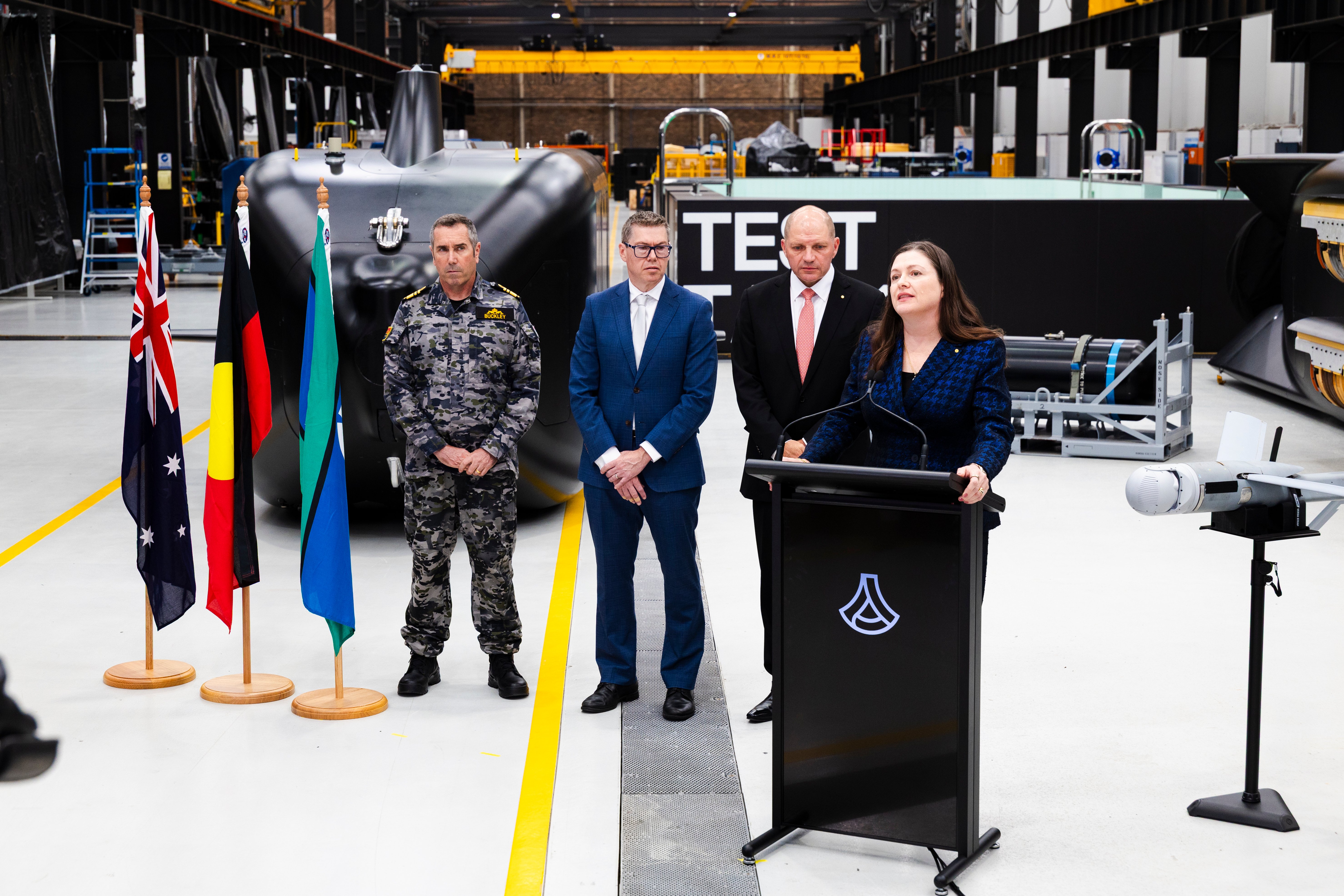
Left to right: David Goodrich, CEO of Anduril Australia; Chief of Navy, Vice Adm. Matthew Buckley; Professor Tanya Monro, AC Chief Defense Scientist; and Pat Conroy, Minister for Defense Industry, stand in front of a Ghost Shark, with payload bay open, at the Anduril Australia factory in Sydney, New South Wales. Australian Department of Defense
The three previously undisclosed payload options include deploying up to 12 sea mines in a mission, leaving supply caches on the seabed, and launching Anduril’s ALTIUS aerial drones for reconnaissance or strike missions.
“Ghost Shark now has teeth, and will have the ability to inflict damage on any potential adversary,” Conroy said.
The payload bay image is significant in its own right. Ghost Shark’s modular design is intended to accommodate different mission-specific systems, allowing the Royal Australian Navy to configure the same underlying platform for different operational requirements. Ghost Shark was designed to be extremely modular, flexible, and readily reconfigurable. As part of this, the overall payload portion can be readily configured in different ways using different-sized modular hull sections. Since the nose and the tail are different pieces, with an expandable section in the middle, there is plenty of scope for different payloads as well.
Seeing the internal bay for the first time provides a more tangible look at that approach than earlier photographs of the submarine’s exterior.
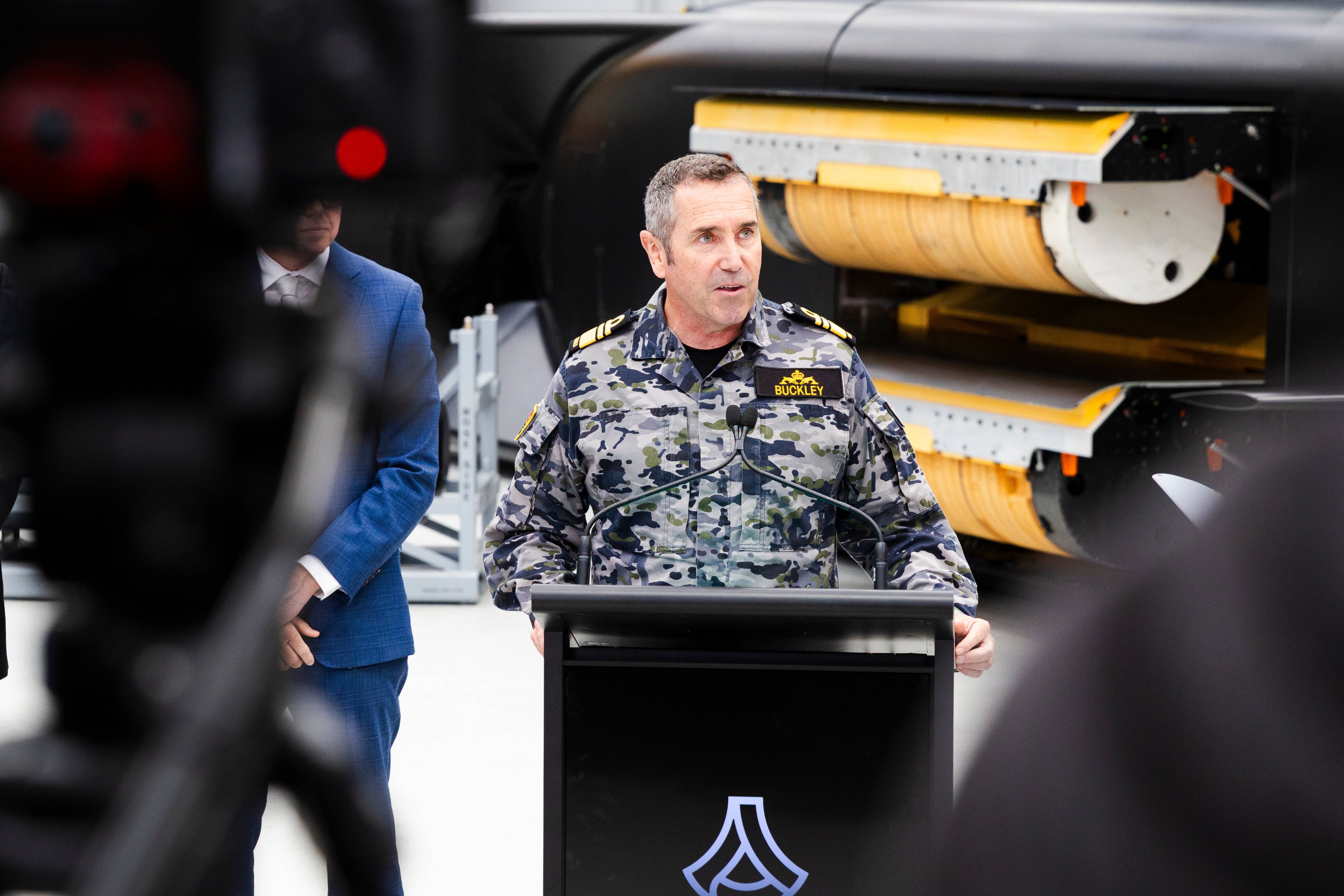
Chief of Navy, Vice Adm. Matthew Buckley, makes an address at the Anduril Australia factory in Sydney, New South Wales. The payload-bay spacers are seen immediately behind him. Australian Department of Defense
Inside the bay of one of the Ghost Sharks on display, there appear to be cylindrical spacers, formed in segments, rather than operational stores. These spacers, and other areas inside the bay, look as if they are fabricated from plywood or similar. Overall, this means it is not entirely clear if they represent the kind of ballast that would be loaded to take the place of actual payloads during trials, or whether they are part of a mockup.
Of the three payload options, the ability to deploy ALTIUS aerial drones is particularly noteworthy. An underwater vehicle capable of releasing aerial systems could extend a naval force’s intelligence, surveillance, and reconnaissance (ISR) reach beyond the submarine’s own sensors. Depending on the drone variant and mission configuration, it could also provide a means of delivering effects at a distance without putting personnel directly in harm’s way. Other roles could include stimulating enemy air defense networks, perhaps even responding to pop-up air defence threats as they appear and attacking them. The ability to put miniaturized satcom terminals, as well as AI, on small drones also greatly opens up the possibilities for UUV-launched aerial drones.
The Anduril ALTIUS-600 is displayed during a press conference at the Anduril Australia factory in Sydney, New South Wales. Australian Department of Defense
Which ALTIUS variants the Ghost Shark will be able to deploy has not been publicly disclosed. The models displayed at the Altus factory are all derivatives of the ALTIUS-600 family. Notable versions include the ALTIUS-600 for ISR, as well as the ALTIUS-600M, which is designed for strike missions. As you can read here, the basic drone has an overall weight of between 20 and 27 pounds, depending on its payload, which typically weighs between three and seven pounds. The ALTIUS-600 has a maximum range of around 275 miles and can remain airborne for at least four hours, according to its developer. Unarmed variants of the ALTIUS-600 are designed to be recoverable and reusable, although it is unclear how practical that would be after launch from a UUV.
There is another missing part of the payload puzzle, namely the kinds of capsules that would contain the ALTIUS UAVs for launch from the sub.
The Rheinmetall Asteria 533mm-diameter mine pictured alongside the Ghost Shark is not installed in the vehicle’s payload bay. Its appearance nevertheless provides an intriguing visual counterpart to the newly disclosed mine-delivery capability. According to the manufacturer, the Asteria can be deployed from surface vessels, aircraft, and submarines (normally via torpedo tubes). It can be remotely controlled via an acoustic link and is optimized for the defense of harbors, straits, ports, and other critical areas.
Professor Tanya Monro, AC Chief Defense Scientist, makes an address at the Anduril Australia factory, with the Rheinmetall Asteria mine behind her, immediately to her right, marked with a blue band. Australian Department of Defense
The seabed supply-cache concept points to a different operational role. Ghost Shark could position equipment and supplies underwater for later retrieval, potentially supporting forces operating in areas where conventional resupply is difficult or risky.
The notional supply cache payloads — which are under development by the Defense Science and Technology Group (DSTG) — don’t appear to be on display here. Alex Luck, a naval analyst who closely tracks submarine developments, told TWZ that the cache payloads would likely take the form of capsules, similar in shape to the Asteria mine, but containing whatever supplies need to be moved. It is not immediately clear who would use those caches. One option could be special operations forces, but if the payloads could later rise to the surface, they could be accessed by other forces, too.
It should also be noted that the U.S. Navy and U.S. Marine Corps, in particular, are envisioning future fleets of UUVs and USVs that can carry out kinetic attacks and employ electronic warfare and other non-kinetic effects, as well as emplace mines, providing a direct parallel with the planned mission set for Ghost Shark.
A rendering of a Ghost Shark in Royal Australian Navy service. Australian Defense Force
Some of the new payload capabilities are due to be featured in Exercise Maritime Big Play Pacific in San Diego, an AUKUS Pillar II activity focused on advanced maritime capabilities and interoperability. The Australian government says the development effort involves the Royal Australian Navy, Defense Science and Technology Group, the Advanced Strategic Capabilities Accelerator and defense industry.
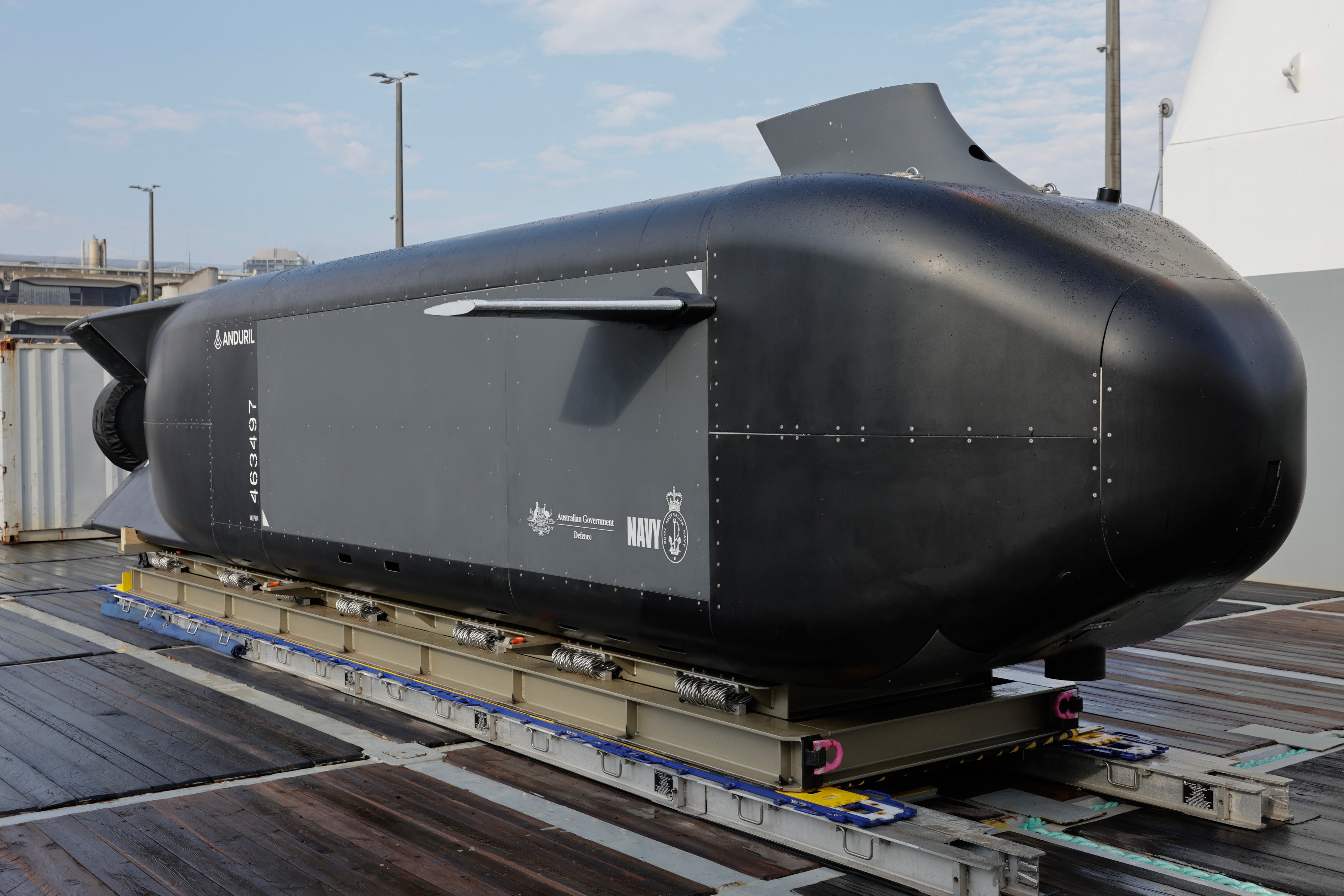
The Ghost Shark ‘Alpha’ first prototype was co-developed by Defense Science and Technology Group, the Royal Australian Navy, and Anduril Australia. Australian Department of Defense
Under AUKUS Pillar II, Australia is collaborating with the United Kingdom and the United States on Ghost Shark and its associated capabilities. While Pillar I centers on providing Australia with nuclear-powered submarines, Pillar II focuses on the joint development of advanced defence technologies, including artificial intelligence and autonomous systems.
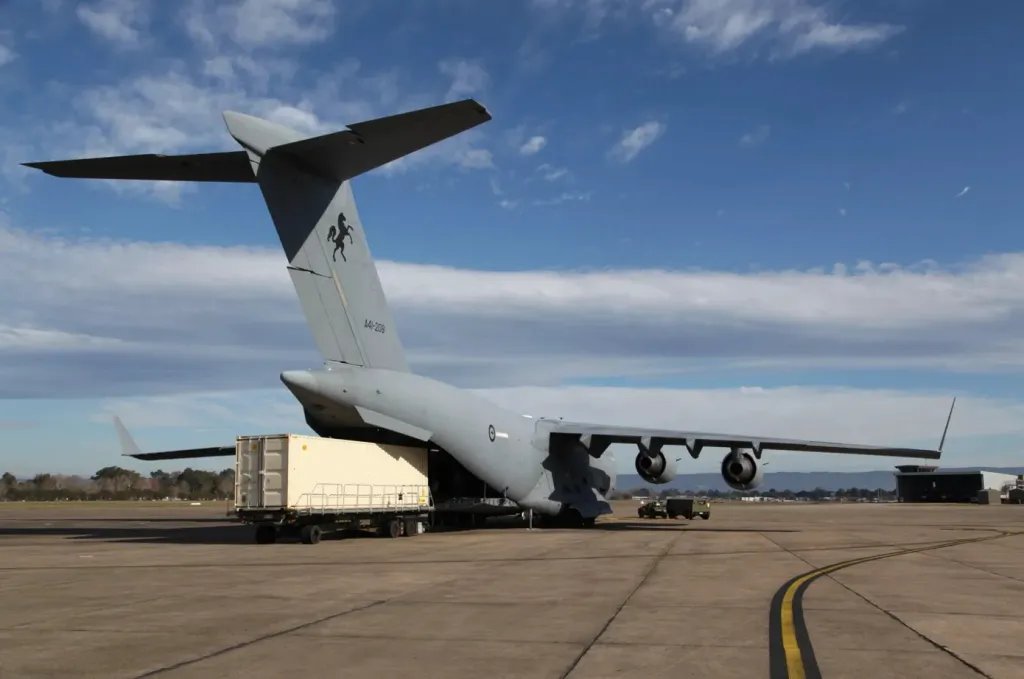
Exactly how the Ghost Shark will be deployed during the Maritime Big Play Pacific exercise is unclear, but, speaking about the concept of operations, Conroy described examples of it being deployed from a shipping container or launched from the back of a small vessel using a crane. In the past, we have also seen the Ghost Shark loaded in a standard shipping container and transported in a Royal Australian Air Force C-17A Globemaster III airlifter.
A Ghost Shark loaded in a standard shipping container for transport in a Royal Australian Air Force C-17A. Anduril
Australia’s 2026 National Defence Strategy and Integrated Investment Program allocate up to A$5.8 billion (approximately $4.05 billion) over the decade to autonomous and uncrewed undersea warfare capabilities, including A$1.7 billion (approximately $1.19 billion) for a new fleet of Australian-designed and built Ghost Shark vehicles.
The newly released imagery and payload details offer the clearest picture yet of how Australia intends to expand Ghost Shark beyond a conventional underwater surveillance role. The next key milestones should provide more details of how the payloads will be integrated into the vehicle, and how they might be deployed in practice.
Manifestazione nazionale “Fuori l’Italia dalla guerra” – Roma, sabato 24 ottobre 2026
COMUNICATO STAMPA
Il Comitato promotore della manifestazione nazionale “Fuori l’Italia dalla guerra”, in
programma a Roma sabato 24 ottobre, ribadisce con forza il carattere pacifico e
nonviolento dell’iniziativa.
Scendiamo in piazza per chiedere pace, il ripudio della guerra sancito dall’articolo 11 della
Costituzione, la fine del coinvolgimento del nostro Paese nei conflitti armati, la solidarietà
con i popoli che resistono all’imperialismo e al sionismo. Chi aderisce alla manifestazione lo
fa condividendone pienamente lo spirito: volti scoperti, mani libere, parole chiare.
Il Comitato respinge in modo netto ogni tentativo di strumentalizzazione violenta da parte
di elementi estranei alla manifestazione, ai suoi contenuti, alle realtà che l’hanno
promossa ed a quelle che hanno aderito. Chiunque intenda servirsi del corteo per
compiere atti di violenza, danneggiamenti o scontri si pone fuori dalla manifestazione e
contro di essa.
Di questo tutti devono essere consapevoli, dai manifestanti agli organi di informazione.
Nessuno provi a screditare il movimento per la pace e a spostare l’attenzione dalle ragioni
della protesta.
Invitiamo tutti i partecipanti a seguire le indicazioni del servizio d’ordine, a non raccogliere
alcuna provocazione, a isolare immediatamente eventuali comportamenti violenti e a
segnalarli agli organizzatori.
Il 24 ottobre Roma vedrà una piazza ampia, plurale, determinata e pacifica. Perché la pace
si costruisce con la pace.
Il Comitato promotore della manifestazione “Fuori l’Italia dalla guerra”
China's military said on Tuesday it had sent forces to watch a US warship that "illegally" entered waters around a disputed shoal in the South China Sea, while further north in the waterway, Taiwan reported a standoff with a Chinese vessel.
The federal drug police want to turn consumers of certain concentrated kratom-derived products into criminals while leaving traditional kratom leaf products outside the ban. Before exposing adults to arrest and prosecution, the feds owe them a scientific explanation for that distinction.
On October 14, the Drug Enforcement Administration (DEA) announced its intent to temporarily place 7-hydroxymitragynine (commonly called 7-OH) and mitragynine pseudoindoxyl—above specified thresholds—in Schedule I. Schedule I is the category for drugs that the agency thinks have "no currently accepted medical use" and "a high potential for abuse." A scheduling order could be issued on or after November 13.
The DEA already classifies mitragynine pseudoindoxyl as a Schedule I substance regardless of concentration. The proposal would ease that restriction by introducing thresholds—while imposing new Schedule I restrictions on 7-OH under the same criteria.
The Food and Drug Administration (FDA) and the Department of Health and Human Services (HHS) have supported the DEA's move, and HHS supplied the proposed thresholds. Under the temporary scheduling provision of the Controlled Substances Act, the DEA must consider HHS's comments but need not follow its recommendations. Congress gave a law-enforcement agency the authority to decide which drugs individuals may consume.
The ordinary scheduling process gives health officials more authority: HHS's scientific and medical findings bind the DEA, and its recommendation against control prevents the agency from proceeding. But temporary scheduling lets the DEA bypass those requirements when it determines a substance poses an imminent hazard to public safety.
Congress should never have given federal drug police that power. Having done so, it should at least demand compelling evidence before they exercise it.
Kratom comes from a Southeast Asian plant whose principal alkaloid is mitragynine. Its leaves contain trace amounts of 7-OH. Manufacturers also sell concentrated 7-OH products and products containing the related compound, mitragynine pseudoindoxyl.
Millions of Americans use kratom or kratom-derived products. A 2022 review cited an estimate of 2.1 million U.S. users in 2020. In a survey of 2,798 users, 91 percent reported using it for pain and 41 percent said they use it to reduce or stop opioid use. In a letter to HHS, nine military veterans described using 7-OH to manage pain and symptoms of post-traumatic stress disorder and to move away from other opioids and from alcohol. They warned that banning it could drive them back to more dangerous drugs.
These reports describe benefits that warrant further study and needs that will persist after a ban.
Concentrated 7-OH products deliver a potent alkaloid without requiring consumers to ingest large amounts of kratom leaf. 7-OH is significantly more potent than mitragynine in activating the opioid receptors involved in pain relief. Researchers still need to determine how its benefits and risks compare across different human doses.
The DEA's proposed criminal controls hinge on concentration and composition. The concentration threshold is 1 milligram per gram of solid material or 1 milligram per milliliter of liquid, calculated for the two covered substances combined. Products would also trigger controls if the mitragynine-to-covered-substances ratio fell below 100 to 1.
Consider a tablet containing 15 milligrams of 7-OH, a strength advertised by some sellers. If the tablet weighs one gram, its concentration exceeds the limit fifteenfold. Diluting the same 15 milligrams into a product weighing 15 grams brings it to the concentration limit. Consuming the entire product still delivers the same dose. It would also need at least 1,500 milligrams of mitragynine to avoid the separate ratio restriction.
Adding bulk changes the concentration but does not change the amount of 7-OH consumed. These calculations tell us nothing about whether that dose is effective or safe.
The DEA acknowledges that controlled trials have not established safe consumption limits or standardized dosing for concentrated 7-OH products. Neither DEA nor HHS has determined that below-threshold products are safe.
In a public comment submitted to HHS in July, I urged officials to obtain the human evidence needed to justify a threshold before setting one. Animal studies can reveal hazards, including dependence and respiratory depression, but they cannot, by themselves, identify a scientifically defensible cutoff for human consumption.
Officials may intend these thresholds to distinguish traditional kratom from concentrated products. What evidence shows that crossing that boundary justifies criminal penalties?
The DEA also owes consumers an accounting of what prohibition could do to them. People seeking relief from pain or withdrawal will still need it after a ban. Some may abandon these products, while others may turn to illicit sellers or switch to other opioids. Criminalizing those choices could make them more dangerous.
Misleading labels, contamination, dependence, and drug interactions warrant attention. Accurate labeling, independent testing, age restrictions, and enforcement against fraud can address several of these concerns. Before resorting to criminal penalties, the DEA should explain why those measures would be inadequate.
We already know how difficult it is to verify a drug's identity, strength, and purity in an illicit market. Creating another prohibited product will give that market another opportunity.
Autonomous adults should be free to decide which substances they consume and which risks they accept. The DEA proposes taking that choice away even as it acknowledges major gaps in the medical evidence. Before the drug police turn more consumers into criminals, they should at least demonstrate how doing so will make those consumers safer.
Twelve migrants, including an infant, have died in two separate incidents involving boats travelling from Turkey towards the Greek islands of Lesbos and Samos, prompting investigations into the circumstances of the deaths and the activities of suspected people smugglers.
The incidents occurred on Monday, 19 October, in the northeastern Aegean Sea. Six people died when a speedboat collided with a Greek coastguard vessel near Lesbos, while another six were killed after a separate boat overturned north of Samos.
The deaths coincided with the publication of new figures from the European Border and Coast Guard Agency, Frontex, showing that irregular crossings into the EU fell by almost one-third during the first nine months of 2026.
According to the latest border monitoring figures, approximately 91,000 irregular crossings were detected between January and September, although the eastern Mediterranean remained the busiest migration route into the Union.
Two incidents under investigation
According to information released by the Greek authorities, the first fatal incident occurred near Agrilia on Lesbos when a speedboat carrying migrants struck a coastguard patrol vessel before overturning.
Six people died, while eight survivors were taken to hospital. The authorities subsequently arrested a 37-year-old Turkish national, identifying him as the suspected operator of the migrant boat.
Greece’s Maritime Affairs Minister Vassilis Kikilias said the available evidence indicated that the speedboat had struck the left side of the coastguard vessel. The precise circumstances remain under investigation.
In the second incident, approximately four nautical miles north of Samos, a boat reportedly overturned after making a sudden manoeuvre while being pursued by the coastguard.
Five men and one woman died, while 14 people were rescued. An Iranian national was arrested on suspicion of involvement in migrant smuggling.
The arrests do not establish criminal responsibility, and the circumstances surrounding both incidents remain subject to investigation.
Greek authorities have attributed the dangers of the crossings to trafficking networks operating between Turkey and the Aegean islands. The government has reiterated its policy of pursuing smugglers and restricting unauthorised maritime arrivals.
Fewer crossings, continued fatalities
Frontex recorded approximately 31,800 detections along the eastern Mediterranean route during the first nine months of this year, representing a decline of around 15 per cent compared with the equivalent period in 2025.
Across the European Union’s external borders, the agency reported an even larger reduction, with overall detections down by almost one-third.
The Central Mediterranean route experienced a particularly substantial fall, while the Western Mediterranean recorded an increase, reflecting changes in departure points and migration patterns.
These figures count detected border crossings rather than individual migrants and do not necessarily capture every unauthorised arrival.
The latest data also have to be considered alongside exceptional developments elsewhere on Europe’s borders. In July, large-scale movements through Spain’s Ceuta enclave created additional pressures on Spanish authorities and raised questions about the application of the EU’s new asylum arrangements.
The eastern Mediterranean figures encompass several routes, including crossings from Libya towards Crete, movements through the Aegean islands and arrivals across the land border with Turkey.
Consequently, the total recorded for the wider region should not be interpreted solely as the number of people arriving on the Greek islands.
Greece remains central to European border policy
Greece has occupied a central position in EU migration policy since the 2015–2016 crisis, when hundreds of thousands of people arrived from Turkey, many travelling onwards through the Balkans.
The subsequent EU–Turkey migration arrangements were intended to reduce unauthorised crossings and establish procedures for returning certain migrants who did not qualify for protection.
Athens has also faced persistent criticism from human rights organisations concerning allegations of unlawful returns at sea and land borders. Greek authorities deny operating an unlawful pushback policy and maintain that their border operations respect domestic and international law.
The EU’s Pact on Migration and Asylum, which entered into application in 2026, has introduced common procedures for screening arrivals, processing asylum claims and managing people who do not have permission to remain.
Its implementation has placed greater emphasis on border identification, biometric registration and cooperation between national authorities and Frontex.
However, the two disasters demonstrate the continued risks associated with maritime crossings, even during a period of declining arrivals.
Investigators must now establish precisely how both boats overturned, whether criminal offences were committed and what occurred during the encounters with coastguard vessels.
The findings will be relevant not only to the prosecutions of those arrested, but also to continuing scrutiny of maritime enforcement along one of the European Union’s principal external borders.
Recent incidents involving the explosion of a North Korean landmine in the Demilitarized Zone (DMZ) and the repatriation of North Korean POWs held in Ukraine have led to a dramatic increase in North Korea-related coverage by South Korean media outlets, which had shown little interest in the North for some time. The reason is that […]

 Login


Ukrainian Navy pic.twitter.com/kXvnqaebAw