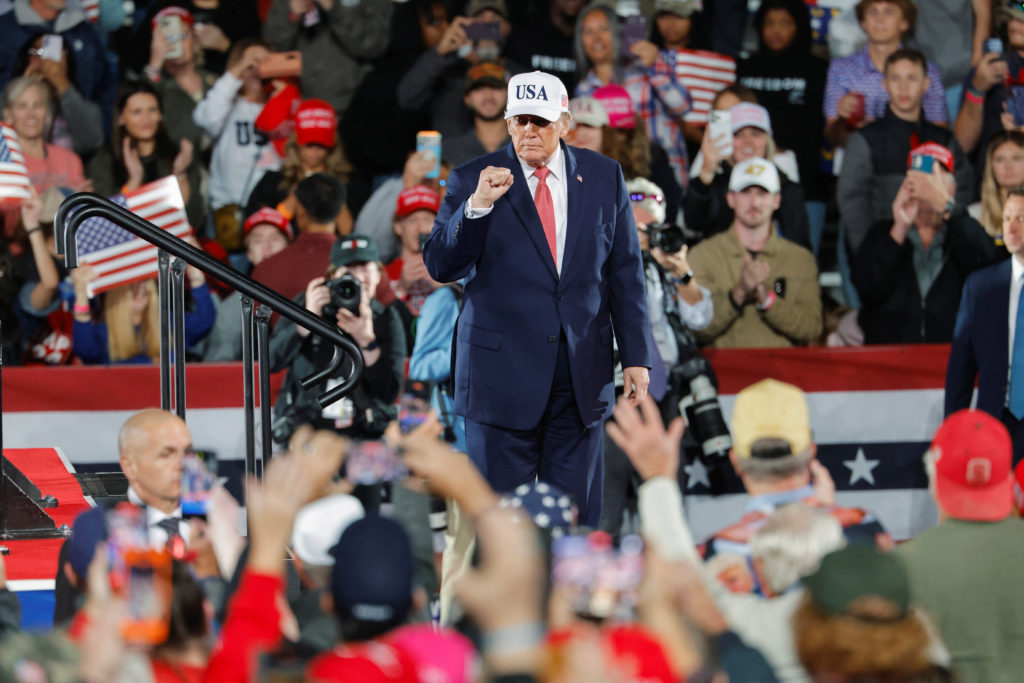
President Donald Trump's political groups have spent more than one-quarter of a billion dollars to bolster Republicans in the final stretch of this year's midterm elections, an unprecedented amount for a sitting president that underscores the stakes on Nov. 3.
Years ago, when people asked Geoffrey Hinton why he worked on artificial intelligence, he would repeat a line from J. Robert Oppenheimer, one of the creators of the atomic bomb: “When you see something that is technically sweet, you go ahead and do it.”
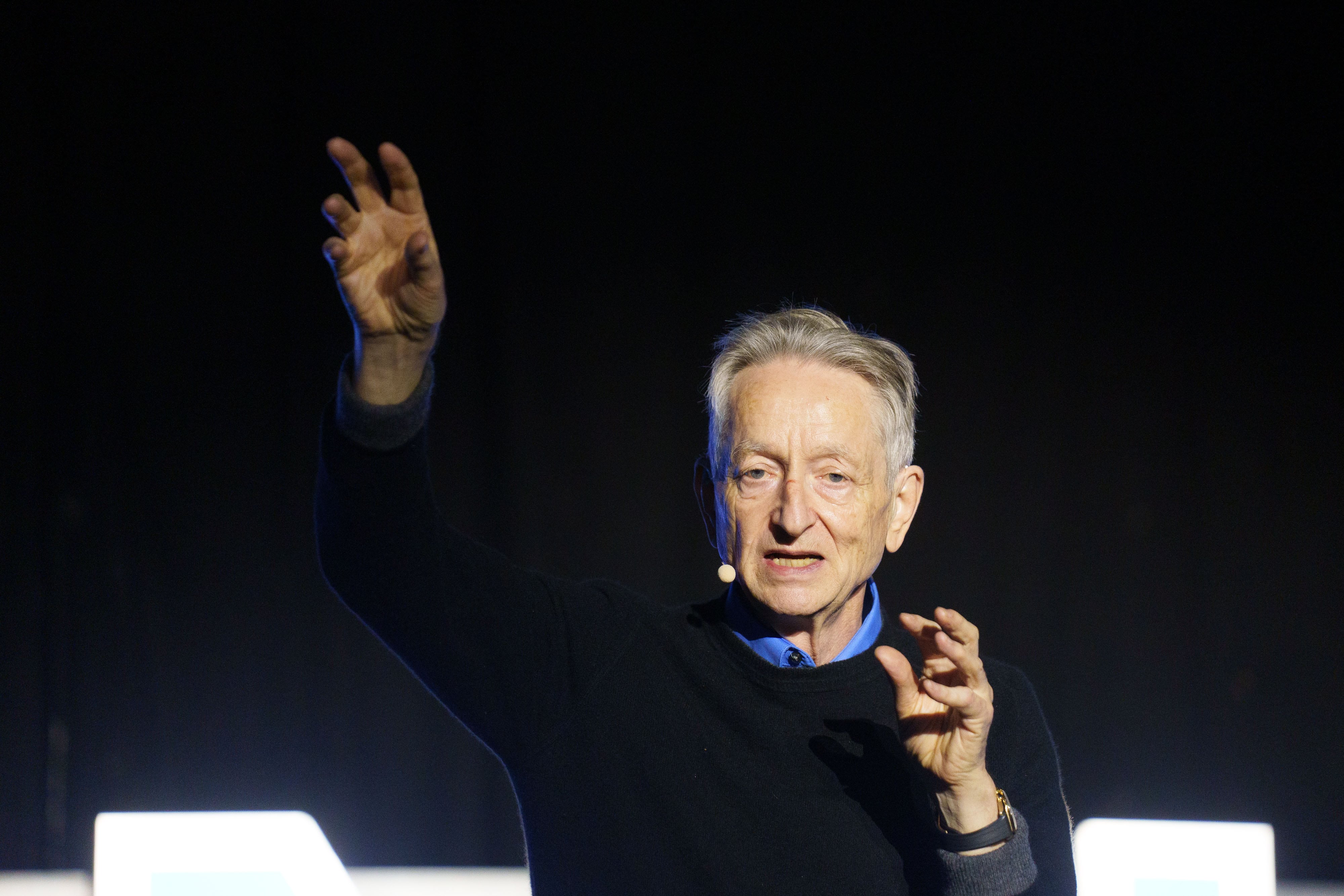
Computer scientist and Nobel Prize in Physics laureate Geoffrey Hinton during the Starmus Festival 2026, held this Tuesday in the municipality of Arona in Tenerife.
Ukraine says it still doesn’t know why the military satellite internet service, a sister to Starlink, was abruptly throttled, leaving troops vulnerable to Russian attacks.
A Ukrainian soldier flying a drone in the Donetsk region last week. Members of the military have reported issues with drone connectivity since Starshield was disrupted.
“Sì, credo che sia una buona idea”. Elon Musk rimanda il giudizio finale agli azionisti ma per lui non c’è motivo di discussione. La potenziale fusione tra SpaceX e Tesla è uno scenario che stimolerebbe chiunque, figurarsi il suo proprietario. Musk detiene la maggioranza nell’azienda aerospaziale, mentre in quella automobilistica circa il 20%. Basta solo la notizia a far schizzare in Borsa le azioni delle due società: +10% SpaceX, +2,5% Tesla. Messi insieme, i due colossi – parliamo della settima e undicesima azienda più ricca al mondo – avrebbero una capitalizzazione di 3.500 miliardi di dollari, superando le Big Tech rivali. La nuova creatura entrerebbe di fatto nella top 5, insieme a Nvidia, Apple, Alphabet e Microsoft. “Unirle presenta molti vantaggi, poiché ci troviamo davanti alla superintelligenza”, aggiunge Musk chiamando l’intelligenza artificiale con il nome coniato da Donald Trump. “C’è molto da guadagnare dalla cooperazione nello sviluppo di software”.
L’istituzione di due comitati speciali, chiamati a studiare la fattibilità dell’operazione, è solamente il primo passo. Se la loro valutazione dovesse essere positiva, bisognerà capire cosa ne pensino gli azionisti. Niente di semplice. Per l’approvazione finale è richiesta infatti una maggioranza favorevole di tutti i detentori delle azioni, non solo di quelli che hanno votato. Va da sé che raggiungerla è tutt’altro che una passeggiata. Per cui, frena Musk che non può prender parte alle discussioni per un evidente conflitto di interessi, “non credo che dovremmo dare una fusione per scontata. Alcuni lo fanno, ma penso sia un’esagerazione”. Lui ovviamente spera che alla fine la barca entri in porto. L’azienda ipotetica vanterebbe 155.000 lavoratori e genererebbe un fatturato complessivo di 153 miliardi di dollari.
Ci sono diverse ragioni per cui Musk sogna di vedere una sintesi tra le due società che ha fondato. Da una parte SpaceX, con il suo enorme know-how in materia spaziale, tra missili e connessioni satellitari; dall’altra Tesla, con le sue conoscenze dell’automotive. La prima collaborazione tra le due società ha prodotto la macchina volante Roadster, presentata la scorsa settimana. L’auto, marchiata Tesla, è dotata di razzi riutilizzabili Falcon di SpaceX, gli stessi che portano in orbita i satelliti di Starlink.
In futuro la partnership continuerà a prescindere dall’esito di una fusione. SpaceX ha infatti già acquistato le batterie Megapack e Cybertruck di Tesla per 1 miliardo di dollari. Viceversa, l’azienda automobilistica ha comprato delle azioni di quella aerospaziale nel momento in cui xAI si è fusa con SpaceX. E poi c’è Terafab. la joint venture tra le due aziende. Musk ha svelato a marzo il mega impianto di produzione di chip in Texas (costo stimato: 119 miliardi di dollari) che dovrebbe alimentare tutti gli altri progetti delle aziende. E non intende di certo abbandonarlo.
Una cosa però è collaborare, un’altra è unire le proprie forze. I dubbi su una effettiva fusione sono tanti e leciti. Le due aziende dovranno essere abili nel presentare l’operazione come un successo win-win, senza che qualcuno possa insinuare che una delle due venga sfavorita. Bisognerà anche capire come l’unione verrebbe recepita al di fuori dagli Stati Uniti. Non soltanto in Europa, che sta diventando un territorio ostile agli occhi delle aziende americane. “Sarebbe troppo pericoloso per noi”, confida un funzionario al Financial Times. L’ostacolo principale è rappresentato dalla Cina e dalle sue stringenti regole sulla sicurezza nazionale. Tesla vanta già una presenza consolidata, con un fatturato di 21 miliardi registrato lo scorso anno. Pechino però guarda con grande sospetto a SpaceX, primo competitor nella guerra spaziale. E non è un dettaglio di poco conto.
In his book The Nerd Reich, journalist Gil Durán examines how Silicon Valley’s wealthiest investors are extending their influence over American politics, democratic institutions and national sovereignty. His warnings come amid unprecedented political spending by technology billionaires and growing concern over private control of strategic infrastructure.
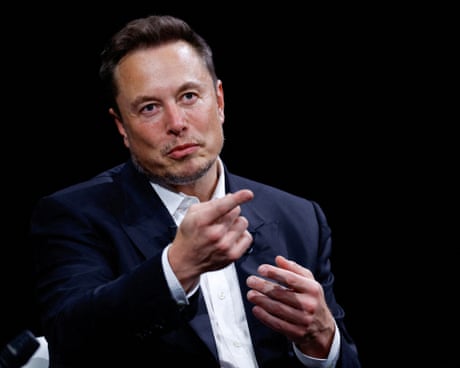
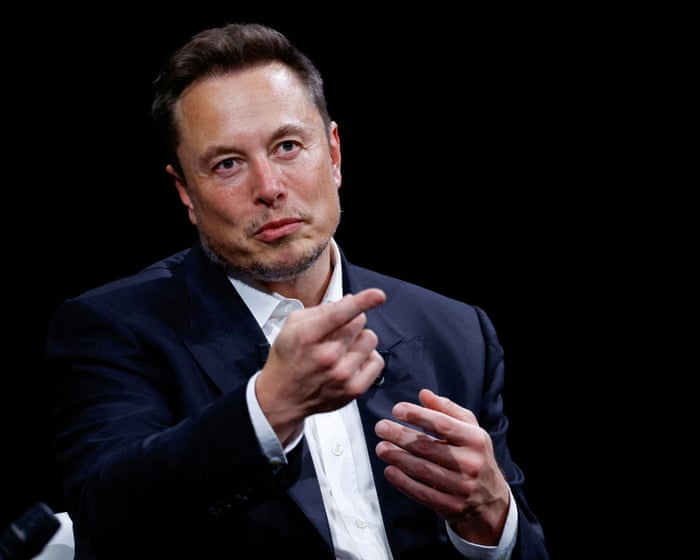
Elon Musk has contributed more than $276 million since July to Republican political causes ahead of the United States midterm elections on 3 November. Meanwhile, US Secretary of State Marco Rubio has said decisions over Ukraine’s access to SpaceX satellite communications rest with the company rather than the White House. Both developments demonstrate how private technological and financial resources can influence decisions traditionally associated with government.
For journalist Gil Durán, author of The Nerd Reich: Silicon Valley Fascism and the War on Democracy, published by Avid Reader Press in August 2026, the issue extends beyond campaign donations. In a recent interview, he argued that a group of Silicon Valley investors is using its financial influence and control of technology to challenge the authority of elected governments.
“We’re at a decisive stage of that race,” Durán said when asked about the contest between technology and democracy described by venture capitalist Peter Thiel. His argument is that wealth alone no longer satisfies some of the industry’s most influential figures; they also want a direct role in determining how societies are governed.
The ideological origins of billionaire power
Durán places Thiel at the centre of this movement. In a 2009 essay, The Education of a Libertarian, the PayPal co-founder wrote that he no longer believed freedom and democracy were compatible. He argued that technological innovation could allow individuals to escape the constraints of conventional politics.
Thiel subsequently clarified that he was not advocating disenfranchisement. His stated position was that majority rule often frustrated individual liberty. Durán, however, interprets the essay and Thiel’s subsequent political investments as evidence of a sustained interest in diminishing democratic constraints on private power.
The book also examines The Sovereign Individual, a 1997 work by James Dale Davidson and William Rees-Mogg that anticipated how digital currencies and technological change might weaken the power of nation states. Durán sees its influence in later arguments for privately organised alternatives to traditional government.
One example is The Network State, developed by entrepreneur Balaji Srinivasan. It proposes that online communities could acquire territory and eventually obtain diplomatic recognition. Advocates describe a voluntary model of political organisation; Durán regards the prospect of corporate-financed jurisdictions as a challenge to public accountability.
From venture capital to the White House
The relationship between Thiel and Vice-President JD Vance illustrates how venture capital can translate into political influence. Thiel supported Vance’s early investment career and contributed $15 million to a super PAC backing his successful 2022 Senate bid. Durán attributes much of Vance’s political ascent to that support, although voters, party endorsements and Vance’s own campaigning also shaped the result.
Musk’s latest contributions offer a more immediate example. His donations since July include $158 million to the Senate Leadership Fund and more than $76 million to America PAC. Such spending is lawful under the rules governing independent political committees, which cannot coordinate their expenditure with candidates.
Durán contends that similar pressures affect Democrats, arguing that wealthy donors can exercise influence across party lines. His criticism therefore concerns the political system’s dependence on private funding as much as any particular administration.
Technology as an instrument of strategic power
The consequences extend beyond elections. Ukraine’s dependence on satellite communications has exposed how a privately owned service can become essential to military operations. Restrictions affecting Starlink-related services have prompted competing accounts from US officials and SpaceX over responsibility for the decision. Rubio’s latest remarks point towards commercial control, while earlier reporting attributed the decision to Washington.
Artificial intelligence raises comparable questions of ownership and oversight. Durán argues that investors promoting transformative AI may also seek regulatory conditions that protect their substantial financial commitments. His prediction of a possible investment bubble remains a judgement, not an established outcome.
In Europe, the debate has immediate regulatory consequences. The EU’s Digital Services Act requires major online platforms to assess risks to elections and civic debate, while enforcement of important provisions of the AI Act began in August 2026. These measures address the influence of companies whose platforms and systems operate across borders.
Durán’s interpretation of Silicon Valley as a coherent anti-democratic movement remains contested. The entrepreneurs he discusses have differing interests, and their political influence does not itself establish a common plan to dismantle democratic government.
Their influence is nevertheless measurable in campaign finances, government contracts and control over infrastructure essential to national security. None of these forms of power requires holding elected office.
Ukrainian drone maker Wild Hornets is rethinking projects it is currently working on, including launching interceptors from aerial platforms, because of limits on SpaceX’s Starlink satellite internet. Spokesman Mike Orliuk told The War Zone (TWZ) this on 20 October. The company builds Sting interceptors, which it says destroyed over 15,000 Shaheds and Gerberas, a cheaper Shahed lookalike, in a year. Orliuk said Sting’s current operations are unaffected.
The stakes rise as Russia shifts to faster drones. Ukrainian defense technology adviser Serhii Beskrestnov counted more than 2,500 jet-powered Gerans, Russia’s version of the Shahed, in August. President of Ukraine Volodymyr Zelenskyy said on 16 October that these drones fly faster than 400 km/h. He added that some Ukrainian interceptors chasing them work through Starlink. When the link was slowed, Ukraine could not intercept some of them, he said.
How Sting stays connected
“Our own communications system provides the basic connection to our interceptors,” Orliuk said. The company’s remote-control technology can draw on various internet sources, he added, though the military often uses Starlink. Even then, the terminal does not need to move at high speed. It only links the command center to a ground station, which Orliuk compared to a cell tower.
“For these needs, everything is operating normally with Starlink at the moment,” he said.
An air-launch project under review
“Some drones carry a terminal on board and need to fly at high speed with it,” Orliuk said. “In such cases, Starlink’s limitations make their operation impossible.”
That is why the company is rethinking the air-launch project. Wild Hornets has made no clear decision yet but will test alternatives, Orliuk said. He declined to describe them.
“I believe, in any case, depending on a single solution is very risky,” he said.
Explore further
Musk pointed at the US military over Ukraine’s satellite limits. Now a US official says the administration had nothing to do with them
Other firms share the concern
Orliuk said he has spoken with other companies that rely far more on Starlink and have expressed concerns. He pointed to growing interest in Europe’s Eutelsat network, though “creating something like Starlink won’t be easy.”
Who ordered the slowdown remains unclear. The order to slow Ukraine’s Starshield service came from inside the White House, two US officials and a Western official said. A US official told TWZ the president never made such a request. US Secretary of State Marco Rubio said on 17 October that the slowdown had “nothing to do with the White House” and called “a report on that”“categorically false,” without saying which report he meant.
Elon Musk ordered the speed cap on Starshield, the military version of SpaceX’s Starlink network that Ukraine’s drones rely on, The Wall Street Journal reported on 20 October. Earlier, Musk said that such limits are decided by the US military and “ultimately POTUS.” Speaking to reporters in Eau Claire, Wisconsin, on 20 October, according to WSJ, US Defense Secretary Pete Hegseth said, “We haven’t made any directives or anything like that,” CBS News reported.
For a week, no one with a hand on the system said the decision was theirs. Musk pointed to the US military and the president, and Trump said he did not know who it was. Meanwhile, Ukrainian officials said the cap has hampered the drones they use to intercept Russian Shaheds and to strike Russian forces in occupied territory. Kyiv says the cap remains in place, and at about 160 km/h it makes intercepting jet-powered drones and missiles that fly about twice as fast virtually impossible.
Musk spoke with administration officials, including Trump, before the cap, a source says
Musk capped the speeds at which Ukrainian hardware could stay connected to the network, people familiar with the matter told WSJ. The slowdown, which began on 14 October, left some of Ukraine’s strike and interceptor drones virtually useless, WSJ said.
WSJ’s sources differ on Trump’s role. Some US officials said Musk acted on his own and that Trump did not specifically order any retribution against Ukraine. One person said Musk spoke with several senior administration officials, Trump among them, before imposing the cap. Two people said Musk and Trump discussed the decision by phone soon after the slowdown became public.
During the uproar, SpaceX representatives called White House counterparts. They asked for a shared message that the company and the administration had coordinated before Musk’s directive, the people said. The White House ran an informal inquiry into who ordered the slowdown, WSJ said.
Musk held several conversations with administration officials before the order to understand the president’s thinking, CBS reported, citing sources. He dislikes his company being seen as profiting from the war, and it is unclear how his order was carried out, CBS said.
Hegseth said the US had not pulled anything back. He said Starlink “has the option” to make decisions under its terms of service, and that from the Pentagon’s view nothing had changed, CBS reported.
Speaking to reporters as he left the White House on 16 October, Trump said he did not think either he or Musk was responsible, The Telegraph reported. On 19 October, he said, “I don’t know who it was, but I’d like to find out.”
Last week, a bipartisan group of senators asked the Pentagon’s inspector general to investigate whether officials “directed” or “authorized” changes to Starlink and Starshield services and intelligence sharing affecting Ukraine.
Earlier reports pointed at the White House
On 15 October, Reuters reported that the order came from inside the White House. The officials said Pentagon leaders received a message that the Starshield service for Ukraine’s military needed to be slowed, but did not say who made the decision or who carried it out. A senior US official said “No such request was ever made by the president.”
On 16 October, The Telegraph reported, citing four sources, that Musk approached Trump with the idea of the speed limits. One of the sources said Trump agreed.
Analysts and Kyiv say the cap is still in place
Michael Kofman, a war analyst at the Carnegie Endowment, said, according to WSJ, that Ukrainian strike and interceptor drones remain limited to 160 km/h. He said actual connections run below 130 km/h, which still hampers strikes and air defense.
On 20 October, Ukraine’s top diplomat in Washington, Denys Sienik, said Kyiv was still waiting for answers from the Pentagon and SpaceX, WSJ reported.
As SpaceX impacts Ukraine and AI-generated music divides artists and fans, critics are asking what happens when technology has too much control over our lives
This was originally published in TechScape, a newsletter about how technology shapes our lives. Sign up to receive it here
Hello, and welcome to TechScape. I’m Blake Montgomery, US tech editor at the Guardian, writing to you while sitting in front of Roy Lichtenstein’s monumental Drowning Girl, on view in New York City. Today in tech, we’re discussing the perils of Elon Musk’s one-man global infrastructure, AI-generated music and a Guardian AI conference in Paris.
Reports that SpaceX temporarily restricted its satellite internet service for Ukraine’s armed forces have generated serious concern in Kyiv and among the country’s allies. SpaceX operates the civilian Starlink system and its lesser-known military-grade counterpart, called Starshield. But many news stories leave an important question unanswered: what does a Starshield “slowdown” mean on the battlefield? […]
Beijing has proposed banning exports of the technology used to make next-generation solar cells, a move that could complicate United States technology guru Elon Musk’s plan to expand into space solar power. The ban, which covers production technology for perovskite and tandem solar cell modules, is part of a proposal by China’s Ministry of Commerce […]
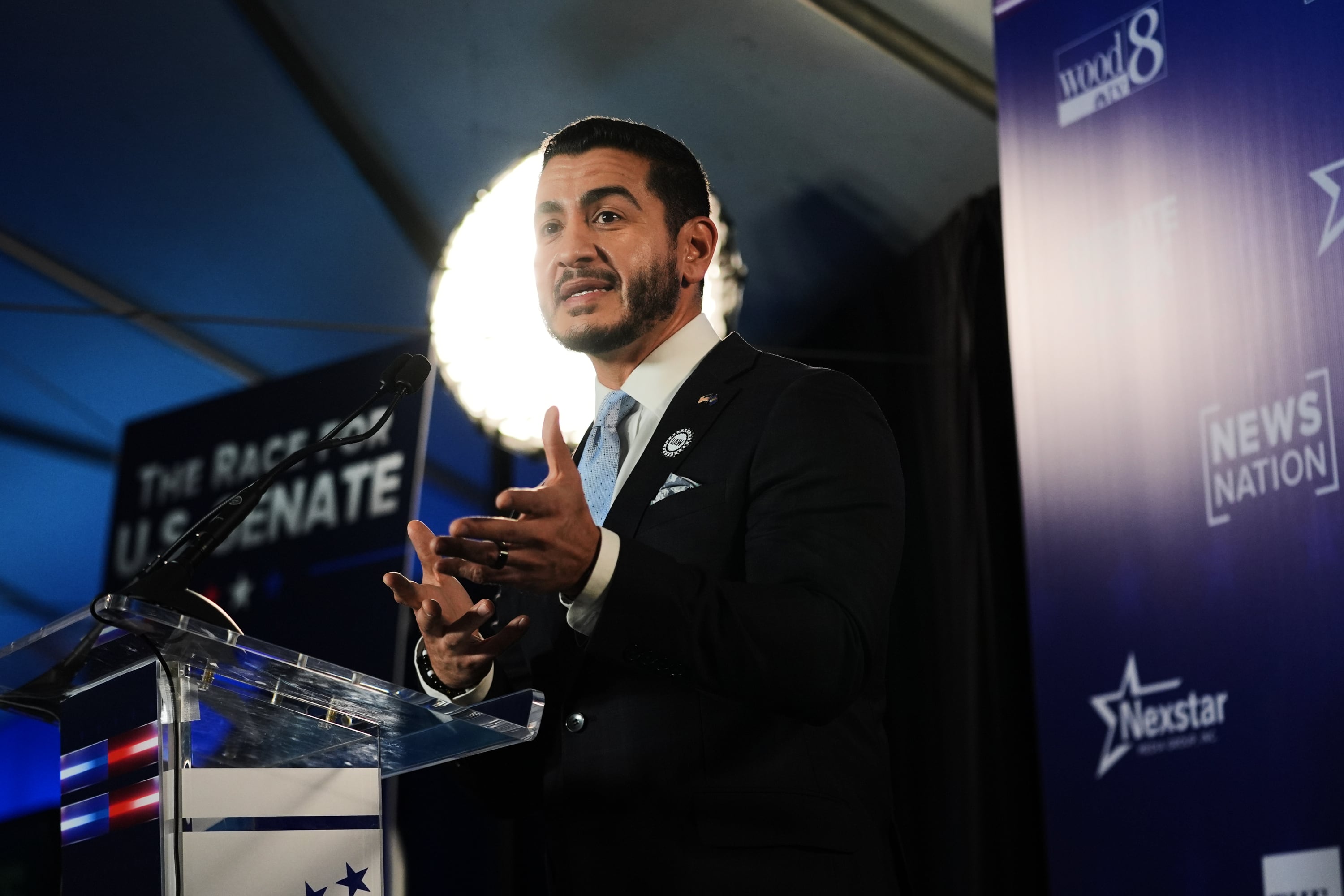
There is still over an hour before the protagonist appears, but the line already wraps around the block. Dozens of people wait patiently for their turn to see the man who has become the great hope of the Democratic left wing. When he begins to speak, pandemonium breaks out: “My name is Abdul El‑Sayed and I am going to be your next senator in Washington.” Over the next hour, the hundreds gathered in this venue will applaud, laugh, and cheer every word from the mouth of the new star of American politics, who has already made a fitted black T‑shirt and jeans his trademark look. We are in Lansing, Michigan’s capital, where one of the most gripping battles of the midterm elections — just over two weeks away — is being fought.
Abdul El‑Sayed, Democratic candidate for U.S. senator from Michigan, last Thursday after debating Republican Mike Rogers in Grand Rapids, United States.
Most of the planet with incomes equivalent to €5,000 a month (nearly $5,600) by 2100. Average temperatures only 1.8 degrees Celsius above preindustrial levels. Less meat, industry and mining. More health care and education. And who would lose out? The world’s Jeff Bezos, Larry Ellisons and Elon Musks. A tiny group of billionaires representing 0.001% of the population would see their share of global wealth fall from the current 6.4% to 0.05%, while the poorest 50% of the planet would rise from holding just 2% to 30%.
As the Trump administration's short-lived Department of Government Efficiency (DOGE) project implemented its plan to downsize the federal workforce, there was much wailing from the liberal institutions in Washington, D.C.
Federal employee unions filed lawsuits to block the effort. NPR ran profiles of federal workers who, for the first time, faced the prospect of potentially not having absolute job security forever. The Brookings Institution wondered how many jobs the federal government could shed before it crashes.
The answer: plenty. The Trump administration has cut more than 10 percent of the federal workforce, and the government hasn't crashed. Indeed, it hasn't even shrunk—if you're counting by dollars spent instead of people employed.
In a new article for City Journal, Manhattan Institute senior fellow Judge Glock highlights the tremendous gap between the dire predictions about DOGE's cuts and the reality that has emerged, more than a year after DOGE was shut down. Despite having only a modest impact on spending, Glock writes, DOGE "had a massive impact on the federal civil service."
This is true—to a point, more on that in a moment—and notable. Aside from a modest downsizing in the 1990s, the number of people employed by the federal government has been steadily growing for decades. Reversing that trend is one of the few genuinely libertarian accomplishments by the Trump administration.
The cuts to the federal workforce prove that "DOGE worked," argues Glock.
Well, hold on.
Elon Musk and Vivek Ramaswamy (who departed the DOGE project before Trump's inauguration and is now running for governor of Ohio) set some very ambitious goals after being appointed DOGE co-chairs in late 2024. In an op-ed for The Wall Street Journal in November 2024 where they promised "we won't just write reports or cut ribbons. We'll cut costs."
Yes, Musk and Ramaswamy also said they would reduce the federal workforce. But that was presented as a natural consequence of cutting spending, not as the primary goal.
Think about it like this. If I spent months promising my friends and family that I would lose 50 pounds on a new diet, and then didn't lose any weight, would it be fair to say the diet worked?
What if I reduced the number of donuts I eat every day, but still didn't lose any weight? Sure, that might be good for my health in some way—just like reducing unnecessary workers in the federal government is good for America's fiscal health—but it certainly wouldn't mean I had achieved the goal of losing weight.
Finally, even the claim that DOGE cut the federal workforce requires an asterisk. As Glock also notes in his report, the decline in federal workers has been offset by an increase in federal contractors.
It's not a one-for-one trade, of course. The new contractors are overwhelmingly concentrated in places like the Department of Homeland Security and the Pentagon, while the cuts mostly targeted other areas, like the Department of Health and Human Services.
"Most of that increase came from the buildup in homeland-security and defense contracting, including purchases such as surveillance aircraft and tanks, rather than substitutes for government workers," Glock writes. "DOGE achieved real contract savings, but these were more than offset by higher spending elsewhere, reflecting a shift in priorities rather than an overall reduction in contracting."
So, the government is eating fewer donuts but more pizza.
There might be libertarian reasons to prefer contractors over government employees. They are less likely to hold those jobs for life, for one. But there's nothing inherently good about a government policy that cuts jobs in some areas just to create more room in the budget for poorly trained immigration enforcement agents and defense contractors. That may even be a negative outcome for liberty.
In the end, the DOGE project looks less like a meaningful attempt at cutting government spending or employment levels and more like a way to purge parts of the federal workforce likely to get in Trump's way during his second term. "As long as [Trump's] larger commitment is to extending his power rather than rolling back power itself, you shouldn't expect the government to stop growing," as Reason's Jesse Walker wrote last year in comparing DOGE to President Richard Nixon's attempted purge of the civil service.
Did DOGE work? Only if you grade it on a pretty dramatic curve.
Yes, it proved that a president can slash bureaucratic jobs—particularly the bloated managerial and administrative types—without doing much damage to the government's core responsibilities. That's a lesson future administrations should remember.
Maybe, someday, a president will try applying the same logic to government spending too.
India’s largest initial public offering (IPO) opens October 21, and investors in Tokyo, Singapore and Hong Kong are being asked a simple question: What is a Jio customer’s monthly bill worth? Jio Platforms, the Reliance-owned mobile carrier with some 524 million India-based customers, is selling 270 million new shares at 1,065 to 1,119 rupees each […]
On a recent episode of the Bulwark podcast, journalist Ron Brownstein described the election as a contest between “the wave versus the wall.” The wave being voter anger and President Donald Trump’s plummeting popularity. The wall being structural impediments to voters’ voices, such as gerrymanders and the Republican Party’s stark spending advantage. Now we know […]
The drone has become the signature weapon of the Russo-Ukraine war. On any day in Ukraine, tens of thousands of drones are out hunting the battlefield for targets. These could be individual enemy soldiers or vehicles, or they could be larger targets such as depots, headquarters, bridges or power plants. Yet, this drone war has […]
The Ukrainian government on Tuesday night said that its access to the SpaceX-owned Starlink satellite internet service was throttled, prompting critics to question the wisdom of depending on any company owned by far-right billionaire Elon Musk. According to a Wednesday report in The New York Times, Ukrainian officials suspect that orders to restrict their access […]
Ukrainian forces have reported the sudden loss of satellite communications during high-speed drone operations after SpaceX imposed new restrictions on its military-grade Starshield service. The disruption revives questions over American control of Ukraine’s battlefield communications and follows earlier controversies involving Elon Musk’s intervention in Ukrainian military operations.
Ukraine’s armed forces have reported serious disruptions to drone operations after Elon Musk’s SpaceX introduced new restrictions on its Starshield satellite communications service overnight on 13–14 October. The changes reportedly caused Ukrainian unmanned aircraft to lose connectivity when travelling faster than 160 kilometres per hour, forcing the abandonment of several military missions.
The restrictions were confirmed by Serhiy Beskrestnov, an adviser to President Volodymyr Zelenskyy on defence technologies, who said Ukrainian forces had received no advance warning. According to his account of the disruption, the new limit of 100 miles per hour applies to Starshield, the military communications service developed by SpaceX for government and defence applications.
Serhiy Sternenko, a prominent Ukrainian volunteer and former adviser to the defence minister, was among the first to report the problem. In a statement published on Wednesday morning, he said satellite connections had begun disappearing once drones exceeded the new speed threshold, disrupting several important missions. Sternenko suggested that the decision might have been taken at the request of President Donald Trump’s administration, although no evidence establishing such an instruction has been made public.
Four Ukrainian military personnel speaking to Ukrainska Pravda independently reported problems with Starshield. One commander provided footage purportedly showing two Ukrainian drones losing their satellite connections during flight and becoming unable to complete their missions.
The restrictions do not appear to affect ordinary Starlink terminals operating within their existing speed limits. However, military-grade Starshield connectivity allows Ukraine to operate certain unmanned systems at considerably higher speeds, including aircraft conducting long-range missions against Russian military and industrial targets.
Previous disputes over Starlink access
The latest interruption is not the first occasion on which SpaceX has limited Ukraine’s military use of its satellite network. Since Russia launched its full-scale invasion in February 2022, Starlink has become an essential component of Ukrainian battlefield communications, supporting frontline command systems, artillery coordination and unmanned operations.
In September 2022, during Ukraine’s counteroffensive in the south, Starlink communications failed in areas where Ukrainian forces were attempting to advance against Russian positions. A subsequent investigation published in July 2025 reported that Musk had personally ordered the suspension of service across parts of the battlefield, including areas around Kherson.
The interruption reportedly affected reconnaissance, artillery targeting and communications between military units at a critical stage of the operation. The investigation raised questions about the ability of a private technology provider to influence military operations through decisions governing access to its infrastructure.
Another controversy emerged in September 2023, when Musk acknowledged refusing a Ukrainian request to activate Starlink coverage near Sevastopol in Russian-occupied Crimea. Ukrainian forces had intended to use unmanned naval vessels against Russia’s Black Sea Fleet.
Musk argued that enabling the operation could have made SpaceX complicit in a major escalation of the war. His explanation also challenged earlier accounts suggesting he had actively switched off an existing connection, rather than declined to activate coverage in the requested area.
In February 2023, SpaceX president Gwynne Shotwell had already confirmed restrictions on Ukrainian drone operations, explaining that the company had not intended its commercial communications network to be used directly as a weapon.
Military dependence and American leverage
The Pentagon attempted to establish a more formal relationship with SpaceX in June 2023, contracting the company to provide satellite communications to Ukrainian forces. However, the contractual arrangements and the extent of American government authority over operational restrictions have never been fully disclosed.
Ukraine subsequently gained access to Starshield, which SpaceX describes as a secure satellite network intended specifically for national security applications. Unlike the commercial Starlink service, Starshield is designed to support government communications and other sensitive operations.
The latest restrictions therefore concern a service intended for military use rather than the civilian network at the centre of earlier disputes. Their introduction without advance notification has renewed concerns about Ukraine’s dependence on communications infrastructure controlled outside the country.
The timing is particularly sensitive as Washington and Kyiv continue to disagree over Ukrainian strikes against Russian energy facilities and the terms of a possible ceasefire. Ukraine has maintained that attacks against Russia’s oil industry are part of its campaign to reduce Moscow’s ability to finance and sustain the invasion.
Nevertheless, there is currently no independently established connection between those diplomatic disagreements and SpaceX’s decision to impose the new speed restriction. Neither a technical explanation nor evidence of an instruction from Washington had been publicly established when the disruption was reported.
For Ukrainian commanders, the immediate problem is operational. High-speed unmanned aircraft depend on reliable communications for navigation, mission management and the transmission of information. A restriction introduced without warning can render previously functioning systems ineffective in the middle of an operation.
The incident has exposed a persistent vulnerability in Ukraine’s military communications arrangements: even where the necessary aircraft, operators and mission capabilities are available, their employment may remain subject to restrictions imposed by an external satellite operator.
We're in the middle of a vast argument about what is normal, says Prof James Alexander. Is Elon Musk right that what is now called 'far Right' was normal 10 minutes ago, or should we be listening to the 'lunatic Left'?
US Defense Secretary Pete Hegseth announced Wednesday that three men will help lead a new Pentagon project on the “future of warfare,” even as he moves to eliminate hundreds of senior armed service leadership position, including many generals and admirals. Hegseth unveiled Project Meridian during his “State of the Force” address at Marine Corps Base Quantico in Virginia. The 120-day […]

 Login


 Elon Musk has