❌

Reading view

European Governments Move to Give Energy Companies Powers to Neutralise Hostile Drones

France, Germany, Austria and Poland are expanding or reviewing the authority of critical infrastructure operators to defend facilities against drones, raising legal and operational questions over the growing role of civilian companies in national security.

European governments are reconsidering who should be authorised to intercept hostile drones as energy companies and critical infrastructure operators confront an increasingly serious threat to electricity networks, transport systems and other essential facilities.

France has already introduced legislation permitting approved operators to deploy counter-drone systems, while Germany is reviewing similar arrangements and Austria has announced plans to extend certain protective powers to infrastructure companies.

Poland has moved further by authorising designated security units to disable or destroy drones entering restricted areas around important energy installations.

The changes reflect concerns that national police and armed forces cannot provide permanent protection for every substation, power station, railway facility or pipeline against relatively inexpensive unmanned aircraft.

France establishes a new approach

In August 2026, the French parliament approved legislation allowing authorised operators of critical infrastructure and their contractors to detect, jam and intercept drones near designated facilities.

The legislation followed a series of reported drone incursions over sensitive locations, including military installations.

Under the French approach, operators of strategically important infrastructure may eventually use approved counter-drone systems without relying exclusively on the immediate intervention of military personnel.

Potential beneficiaries include electricity operators and organisations responsible for transport infrastructure.

French authorities are testing detection equipment, electronic countermeasures and interceptor drones at Brétigny-sur-Orge, south of Paris.

The programme examines systems capable of identifying approaching aircraft, determining whether they present a threat and initiating an appropriate response.

France intends to expand the protection of sites classified as strategically important, with further deployment planned during 2027.

The initiative would introduce responsibilities traditionally associated with military or police operations into the management of civilian infrastructure.

Germany and Austria reconsider existing restrictions

Germany is examining the legal conditions under which private companies and infrastructure operators could participate in active counter-drone operations.

At present, responsibility for neutralising threatening aircraft remains primarily with the competent public authorities.

The debate has intensified following security incidents involving unmanned aircraft, including the discovery of an explosives-laden drone near a Ukrainian cargo aircraft at Leipzig/Halle airport in August.

German authorities attributed the incident to Russia, an allegation Moscow denied.

The German government’s review concerns not only the equipment that companies may possess but also whether trained security personnel should be permitted to deploy countermeasures without waiting for a separate police authorisation.

Austria announced plans in September to extend comparable powers to selected critical infrastructure operators, including major energy companies.

The government has acknowledged the practical limitations of protecting a large number of widely dispersed installations using state security personnel alone.

Poland has already established restricted drone zones around sensitive energy facilities, with designated security units authorised to intercept aircraft entering those areas under applicable national rules.

Electricity networks face particular risks

Electricity infrastructure presents a difficult security problem because essential installations are distributed across extensive geographical areas.

Transmission operators manage thousands of kilometres of high-voltage lines, while substations, transformers and switching stations connect generation facilities to consumers.

A successful attack against critical equipment can produce consequences extending well beyond the immediate site.

Large power transformers are particularly difficult to replace. Manufacturing, transporting and installing specialised equipment can require lengthy preparation, making rapid recovery uncertain after serious damage.

European utilities have traditionally concentrated on physical security, maintenance and restoring services after technical failures or accidents.

The spread of drones creates additional demands for surveillance, early warning and the ability to respond before an attack reaches its target.

Russia’s repeated strikes against Ukraine’s electricity infrastructure have demonstrated the extensive disruption that attacks on power systems can cause.

European governments are now evaluating how comparable vulnerabilities could be exploited against their own networks.

Who bears responsibility for an interception?

Giving civilian operators access to counter-drone equipment raises unresolved legal questions.

Electronic jamming can interfere with communications and navigation systems beyond the targeted aircraft. A drone brought down over an industrial or residential area could injure members of the public or damage surrounding property.

Security personnel must also determine whether an unidentified drone is hostile, operating unlawfully or simply present because of an error by its operator.

A mistaken interception could expose infrastructure companies to compensation claims and other legal consequences.

European governments must therefore establish who can authorise an intervention, which countermeasures are permitted and how responsibility is allocated when damage occurs.

There is no uniform European approach.

Some operators support expanding their protective powers, while others argue that the use of force should remain the responsibility of the state.

Finland’s national electricity transmission operator, Fingrid, has expressed reservations about transferring such authority to energy companies.

The position reflects a wider concern that infrastructure operators should concentrate on maintaining essential services rather than assuming responsibilities for armed or coercive security operations.

A growing European security market

The regulatory debate is developing alongside a rapidly expanding market for counter-drone technology.

Manufacturers are offering equipment that integrates radar, optical sensors, electronic detection and software capable of classifying possible threats.

Interceptor drones and electronic countermeasures are increasingly being designed for use around civilian infrastructure rather than exclusively on military installations.

German defence company Rheinmetall has reported growing interest from private infrastructure operators in counter-drone protection.

However, the technology is advancing faster than the legal frameworks governing its use.

The immediate challenge for European governments is to establish protective arrangements that allow rapid intervention while preserving clear accountability.

A counter-drone system can identify an approaching aircraft within seconds. Determining who is authorised to stop it remains a matter for national law.


  •  

The Feds Took $460,000 From This Arizona Convenience Store Owner and Never Explained Why

Mario Ayala | Institute for Justice

On a Tuesday morning in February 2025, federal agents descended upon Ayala's Mini Market, a convenience store in Glendale, Arizona, that offered check cashing, money transfer, shipping, and cellphone repair services along with standard items such as groceries, snacks, sodas, and cigarettes. The agents, who worked for the Internal Revenue Service (IRS) and the Department of Homeland Security (DHS), seized three computers, five cellphones, and business records, plus about $460,000 in cash and checks. They did not say why.

Twenty months later, the store's owner, Mario Ayala, still has not received a definitive answer to that question. Nor has the government told him what it plans to do with his property or how he can try to get it back. That Kafkaesque situation is unconstitutional, Ayala's lawyers at the Institute for Justice argue in a motion and memorandum they filed on Tuesday in the U.S. District Court for the District of Arizona. The motion seeks the return of the property seized from Ayala's business, saying there is no legitimate reason for the government to keep it.

"The government can't take your stuff, disappear, and then never explain itself," says Institute for Justice attorney Betsy Sanz. "For over a year and a half, the government has been holding Mario's money and property. This prolonged seizure violates the Fourth Amendment and federal law. The government cannot hold onto your property indefinitely without explanation so it can eventually take it permanently using civil forfeiture."

The raid on Ayala's store happened while he was visiting his ailing father in Mexico, who died a couple of months later. After Ayala's wife and son called to tell him what had happened, he rushed back to Arizona, where he tried to figure out why his business had been targeted by the IRS and the DHS. That was harder than you might think.

Ayala "has heard nothing from the government since they raided his business and seized his property," Sanz and her colleagues note in their memorandum. When the agents left, they told Ayala's son that "the business would receive a letter within thirty days," the memorandum says, but "no letter came," and the government "has not told Mario why it took his property or why it refuses to return it."

The agents left a one-page inventory of the property they took, including the computers, cellphones (two of which belonged to Ayala's customers), documents, and currency, although it did not specify the amount of money. They also left the first page of a warrant signed by a federal magistrate judge, which contained no information about the crime they were investigating or the property they were authorized to seize. It referred to attachments that might have clarified those points, but the attachments were missing.

Ayala still has not seen those attachments. But on the same day the agents raided his store, they also searched 18 other businesses in the Phoenix area, all of which offered money services. Judging from the warrants served on three of those other businesses, which were signed by the same magistrate judge at the same time on the same day as the warrant for Ayala's Mini Market, the legal justification for the searches was suspected violations of 31 USC 5324, which makes it a felony to "structure" a financial transaction with the intent of "evading" federal reporting requirements.

The Bank Secrecy Act requires that financial institutions report cash transactions involving more than $10,000 to the Financial Crimes Enforcement Network (FinCEN). Although that mandate is aimed at money laundering, someone can be guilty of structuring even without evidence of any other crime if he deliberately tries to avoid triggering a FinCEN report by breaking up a transaction into amounts below the threshold. As far as Ayala can tell, the search of his store was based on nothing more than suspicion of structuring.

If so, Ayala's lawyers argue, the IRS agents who participated in the raid violated a 2019 federal law that bars the agency from seizing money when structuring is the only suspected crime. Congress passed that law in response to IRS forfeiture abuses highlighted by the Institute for Justice. "For the IRS to legally seize property based on a structuring offense, it must also have an added suspicion of some other criminal act," Sanz et al. note. "Yet the IRS seized Mario's property, apparently on the sole suspicion of a structuring violation."

That is not the only legal problem with the seizure. Assuming the government plans to seek forfeiture of Ayala's money based on an alleged connection to criminal activity, it missed a crucial deadline. The Civil Asset Forfeiture Reform Act (CAFRA) requires the federal government to notify property owners of attempted forfeitures within 60 days of the seizure. That deadline passed a year and a half ago, and Ayala still has received no such notice.

"This notice is crucial because it informs a property owner that the government intends to forfeit his property and triggers his ability to respond by filing a claim or administrative petition," Ayala's lawyers note. If the government fails to meet that requirement, CAFRA says, it "shall return the property."

The government can seek extensions of the CAFRA deadline "only if there is reason to believe that notice may have an adverse result," such as "endangering the life or physical safety of an individual," "flight from prosecution," "destruction of or tampering with evidence," "intimidation of potential witnesses," or "otherwise seriously jeopardizing an investigation or unduly delaying a trial." None of those conditions applies in this case, Sanz et al. say, and their client "is unaware of the government seeking any such extension here."

Another possible rationale for keeping Ayala's property is that the government needs it as evidence in a criminal investigation. But his lawyers argue that the seized items "have no independent evidentiary value."

The government "cannot claim that it is holding the cash as evidence of the suspected structuring offense, because the government—in the usual course—does not continue to hold the physical cash it seizes but rather promptly deposits it," the memorandum says. "To prove the suspected offense here, the government would present evidence documenting the amounts and frequency of transactions and evidence that the defendant intentionally evaded reporting requirements. No fact the government must prove to establish a structuring offense becomes more or less provable by the government's continued possession of Mario's money."

Although "the checks and business documents that the government seized from Mario may at first have had some evidentiary value," Sanz et al. say, it could have long since returned the originals and kept copies. As for the computers and cellphones, "the government has had ample time to extract and copy" any relevant information.

While the benefits of keeping Ayala's property seem highly dubious, the cost to him has been severe. The seizure of the checks and currency wreaked havoc with his business model, which relies on money received for transfers to cash checks, which in turn are scanned and used to pay the companies that handle the transfers.

"The search and seizure of Mario's property upended his business," the memorandum says. "He had to keep his business closed until March 1, 2025, to replace the seized computers and to figure out how they could keep the business open. He took $50,000 of his own money out of the bank so that he could keep cashing customers' checks. When that ran out, the business had to stop cashing checks for a long time, losing customers."

Ayala "also had to come up with $112,097.20 to pay the money transmitters to cover the balance that had accrued while he was away," his lawyers add. "Since all the cash and cashed-but-unscanned checks had been seized, Mario needed to pay this money to the transmitters on his own. Though he did ultimately pay back all the money transmitters over the following month, the consequences of the raid damaged Mario's business relationship with one of the money transmitters he had formerly worked with, InterMex. Today, the business can no longer offer InterMex as an option for money transfers."

Ayala's business "is now finally stable, but it is still not doing as well as it was before the raid," Sanz et al. say. "Mario has changed the way he runs his business because of the raid. He now scans every customer's cashed check to send it to the money transmitters as soon as it is cashed, rather than collecting [checks] and scanning them together as they previously did. He constantly worries that his business will be targeted again."

In the 20 months since the raid, the government has not filed a forfeiture action or even notified Ayala that it intends to do so. Nor has it filed any criminal charges related to the seizure, as far as Ayala knows. "The government has no lawful reason to retain
Mario's property," his lawyers say, "and this Court should exercise its equitable jurisdiction to order its return."

The motion relies on Federal Rule of Criminal Procedure 41(g), which says "a person aggrieved by an unlawful search and seizure of property or by the deprivation of property may move for the property's return." The U.S. Court of Appeals for the 9th Circuit, which includes Arizona, has adopted four criteria for granting such a motion: whether the government "displayed a callous disregard for the constitutional rights of the movant," whether "the movant has an individual interest in and need for the property he wants returned," whether "the movant would be irreparably injured by denying return of the property," and whether "the movant has an adequate remedy at law for the redress of his grievance."

All of those factors count in Ayala's favor, Sanz et al. argue. Ayala's interest in the property and the injury he is suffering are clear, as is the absence of any other remedy. As for the first criterion, "the government can neither forfeit Mario's property nor justify holding it as evidence, so its continued retention is unreasonable under the Fourth Amendment," the memorandum says. "And its nearly 20 months of silence, without any notice or any forum in which to contest the seizure, offends due process. At every turn, the government has 'callous[ly] disregarded' Mario's constitutional rights."

Ayala immigrated to the United States from Mexico in 1991 and struggled for years to make a go of his business, which was successful enough at the time of the raid that he planned to open a new location devoted to cellphone repair. That plan is now on hold because of the financial difficulties caused by the seizure.

"This business is my American Dream, and the government took years of my hard work without telling me what I did," Ayala says. "This raid hurt me and my family. I hope this lawsuit gets my money back and helps make sure this doesn't happen to anyone else."

The post The Feds Took $460,000 From This Arizona Convenience Store Owner and Never Explained Why appeared first on Reason Magazine.

  •  

Homeland Security Lied About Child Porn To Search Activist's Phone

A locked smartphone | Illustration: Africa Images/Envato (AI-modified)/Flowertiare/Dreamstime

One of the unfortunate quirks of the American system is that you can't lie to the government, but the government can lie to you. Samuel Tunick found himself on the receiving end of this setup last year at Atlanta International Airport. When agents from the Department of Homeland Security (DHS) asked for his phone password, he allegedly gave them a self-destruct code that wiped his data. Tunick now faces five years in prison for destroying evidence.

It turns out that the feds were lying to Tunick the entire time. A new court filing, first reported by 404 Media, shows that the DHS had sent out an order to seize Tunick's phone over his involvement in environmentalist protests in Atlanta. When he landed at the airport, however, agents told Tunick that they were looking for "kiddie porn" and he would be allowed to leave with his phone if he cooperated. They also repeatedly denied him access to his lawyer when he asked.

"There can be no real debate that if law enforcement had acted similarly elsewhere in Atlanta, their actions would be unconstitutional. But the government says it was entitled to act this way because Mr. Tunick was returning from an international vacation" in the Dominican Republic, his lawyers wrote in the filing, which includes internal DHS communications and excerpts from his interrogation video.

U.S. law recognizes a "border exception" to Fourth Amendment privacy rights, allowing federal agents to search incoming travelers for contraband. U.S. Customs and Border Protection (CBP) claims that this exemption also allows them to hold travelers for questioning and search their electronic data. Tunick's case reveals just how widely the agency stretches this loophole.

A few hours before Tunick landed, Homeland Security Investigations (HSI) agent Travis Mcghie emailed the CBP station in Atlanta with his photo and information, stating that he is under investigation for "suspected terrorist activities." (Tunick is involved in Save the Atlanta Forest, also known as Stop Cop City, a protest movement against a local police training center.) The email asked CBP to "conduct a 100% baggage exam, retain all electronics and collect passcodes," stating that the HSI will be at the airport to conduct an interrogation.

Pulled into the secondary screening room, Tunick "almost immediately" told CBP officers that "I don't really want to speak without a lawyer any more," according to the filing, which cites the interrogation tape. He would ask for a lawyer multiple times.

The agents asked Tunick if he had "kiddie porn" on his phone and stated that "because you're refusing to talk, we have the authority to go through your phone to see what we're looking for." One of them, Latoya Castro, told Tunick that "either you can give us your password so that we can go through it no problem, or you can refuse to do that, unfortunately, we will have to seize your phone."

Both of those statements were a lie, of course. The HSI's email had asked CBP to take Tunick's phone, whether or not he cooperated.

The lie about child porn may not only have been meant to intimidate Tunick. While there are contradictory lower court rulings about the border search exemption, some courts have ruled that the CBP can only search electronics for "digital contraband," or files that are themselves illegal. A search for child sex abuse material would be on stronger legal ground than a search for mere evidence of other crimes.

Tunick was using GrapheneOS, a secure phone system that allows users to set both a real password and a "duress password" that wipes out all data when entered. The interrogation tape shows his phone appearing to reset after he gave the officers a passcode. HSI agent Nathan Burnham and FBI agent Andrea Coble then entered the room.

"You are not under arrest. Once these gentlemen are done with you, pursuant to your entry into the country, you're free to leave," Burnham said, referring to the CBP officers.

Tunick's lawyers argue that the judge should throw out the phone password Tunick provided and everything that resulted from entering it as an "involuntary" response made under "unlawful interrogation," because the CBP agents did not read Tunick his Fifth Amendment rights and ignored his multiple requests to consult with his lawyer before answering their questions.

The CBP claims that secondary screening at the border doesn't count as a criminal investigation, so detainees don't have the same rights as criminal suspects. "Since the international arrivals inspection is an administrative function, CBP policy and federal regs do not permit the presence of lawyers during secondary examinations," a spokesman told Reason earlier this year.

But Tunick's lawyers insist that his experience was "far outside" a normal border crossing: He was accused of a serious crime to his face, faced an investigation for a different serious crime he didn't know about, and clearly could not leave the situation until he gave information to government agents.

"I hope people understand that the charges against me are meant to intimidate people against protecting their data and their privacy, and the government hopes to set a precedent that no one has the right to privacy," Tunick told 404 Media. 

Defend the Atlanta Forest, the movement that Tunick is involved with, has been a major nuisance for authorities in Georgia. Protesters attacked and burned construction equipment throughout 2022, and police shot a protester in 2023 under unclear circumstances, claiming that they were fired at during a raid.

The Trump administration has brought down the federal government against the movement. In June 2026, the Department of Justice brought federal charges against two alleged arsonists, citing National Security Presidential Memo 7, which directs the feds to go after left-wing domestic terrorism.

But beyond the email line about "suspected terrorist activities," there is no indication of what specific crimes the feds suspected Tunick of, or why they suspected him. And the whole setup of the interrogation was designed to hide those answers. In fact, instead of charging Tunick under typical obstruction or evidence-destruction laws, federal prosecutors chose a rarely-used statute that doesn't require them to disclose what the underlying investigation was about.

"Many times the government wants to highlight what it was trying to investigate because that ups the stakes on what the defendant was doing," former prosecutor Daniel Richman told The New York Times. "This is a case where I think they're trying to avoid exactly that by focusing only on the destruction, and not what the investigation was about." 

The post Homeland Security Lied About Child Porn To Search Activist's Phone appeared first on Reason Magazine.

  •  

EU Puts Arctic Security First as Brussels Plans New Maritime Surveillance Network

The European Union has adopted a new Arctic strategy placing security at the centre of its northern policy, reflecting growing concern over Russian military activity, vulnerable submarine infrastructure and competition for control of emerging maritime routes.

Presented on Tuesday, 20 October, by the European Commission and EU foreign policy chief Kaja Kallas, the strategy proposes a maritime security hub, expanded satellite surveillance, greater icebreaker capacity and improved military mobility across northern Europe.

The document marks a departure from the EU’s 2021 Arctic policy, which placed greater emphasis on climate change, environmental protection and scientific cooperation. The revised framework treats the region as an increasingly important component of European security and economic policy.

Russia’s military presence reshapes European priorities

Russia’s expanding military infrastructure in the High North is a principal concern behind the policy revision.

Moscow has reopened Soviet-era military installations, strengthened its northern forces and maintained substantial nuclear capabilities on the Kola Peninsula. The region contains strategically important naval bases used by Russia’s Northern Fleet, including facilities supporting its submarine-based nuclear deterrent.

Russian operations in the Arctic also have implications for maritime access between the Atlantic and the Barents Sea, an area increasingly important to NATO’s northern defence arrangements.

The EU intends to work more closely with NATO and its northern partners, including Norway, Iceland, Britain, Canada and the United States, while developing capabilities that complement existing military structures.

Kallas said the Arctic’s security environment had deteriorated significantly since 2021, with geopolitical competition increasingly affecting a region previously associated principally with environmental and economic cooperation.

The EU’s revised priorities reflect concerns extending beyond conventional military deployments, particularly the exposure of undersea communications networks and energy infrastructure to sabotage and disruption.

New maritime security hub and submarine cable protection

A central proposal involves establishing an EU Maritime Security Hub to improve information-sharing between member states and partner countries operating in Arctic waters.

The system would strengthen monitoring of maritime movements and support the identification of suspicious activity near critical infrastructure.

Brussels also proposes an Arctic Cable Hub, initially concentrating on the protection, monitoring and repair of submarine communications cables across the North Atlantic and Arctic.

Such infrastructure carries international data traffic and supports communications between Europe, Greenland and North America. Damage to cables could interrupt telecommunications, financial services and government networks.

The Commission’s new Arctic policy framework also supports the proposed Pan-Arctic Cable connecting Greenland directly with Europe, together with secure satellite communications through the EU’s IRIS² programme.

Further measures envisage expanded use of Copernicus satellite surveillance, improved maritime intelligence and closer monitoring of vessels associated with Russia’s shadow fleet.

These measures form part of a broader attempt to improve European surveillance capabilities without relying exclusively on military assets provided by individual NATO members.

Icebreakers, transport corridors and military mobility

The strategy also addresses Europe’s limited capacity to operate in extreme northern conditions.

The Commission wants to support additional icebreaker capabilities, which are essential for maintaining access to Arctic waters, conducting emergency operations and supporting scientific and logistical activity.

Russian icebreaker capabilities remain considerably more extensive than those available to most European countries, providing Moscow with operational advantages along the Northern Sea Route.

European investment would also support ports, railways, energy terminals and digital infrastructure capable of serving both civilian and security requirements.

The emphasis on dual-use infrastructure reflects the growing importance of military mobility across northern Europe, particularly following Finland’s and Sweden’s accession to NATO.

Improved transport links could facilitate the movement of equipment and personnel while also supporting economic development in sparsely populated northern regions.

However, the Commission has not provided a comprehensive financial allocation for the proposed security measures, leaving important questions about funding, procurement and implementation.

Brussels retreats from Arctic drilling ban proposal

The revised strategy also introduces a significant change in the EU’s position on Arctic fossil fuel development.

In 2021, Brussels proposed pursuing an international legal commitment to prohibit further oil, gas and coal extraction in the Arctic.

The new strategy maintains the EU’s opposition to environmentally damaging fossil fuel development but no longer includes the explicit ambition to secure a multilateral legal prohibition.

The adjustment follows sustained disagreement with energy-producing countries and recognition that an international agreement would be difficult to achieve under current geopolitical conditions.

Norway has argued that continued exploration in parts of the Barents Sea remains important for European energy security, particularly as production from mature Norwegian fields is expected to decline.

EU Today previously reported on Brussels’ opposition to Norwegian Arctic drilling plans and the disagreements between environmental objectives and Europe’s long-term energy requirements.

The latest strategy does not represent an endorsement of new Arctic drilling. It does, however, acknowledge the limitations of the EU’s previous diplomatic approach.

Greenland and the northern economy

Greenland occupies a prominent position in the revised strategy because of its location, mineral resources and importance to transatlantic communications.

The Commission wants to expand cooperation on digital connectivity, critical raw materials, research and infrastructure investment, while recognising the responsibilities of Greenland’s own institutions and the Kingdom of Denmark.

Brussels also intends to strengthen scientific cooperation and support Arctic communities adapting to rapid environmental change.

The Arctic is warming nearly four times faster than the global average, creating new commercial opportunities while imposing substantial costs on local populations and infrastructure.

The EU’s proposals therefore combine security measures with investment in transport networks, research facilities and economic diversification.

For Brussels, implementation will require agreement between member states with different geographical interests, defence capabilities and budgetary priorities. Cooperation with NATO will also require careful coordination to avoid duplicating existing military arrangements.

The Commission has established a significantly broader Arctic agenda than the one adopted five years ago. Its practical impact will depend on whether member states finance the surveillance systems, vessels and infrastructure that the new strategy envisages.

  •  

Trump Presses Ukraine Towards a Settlement Putin May Have No Intention of Accepting

Talks in Oslo have restored diplomatic contact between Kyiv and Washington, but Donald Trump continues to demand concessions from Ukraine while Moscow shows little willingness to compromise. Steve Witkoff’s forthcoming meeting with Russian officials will expose the limits of the American peace initiative.

The latest negotiations over Russia’s war against Ukraine have produced a renewed diplomatic initiative, with US presidential envoy Steve Witkoff preparing to travel to St Petersburg on Wednesday, 21 October, following consultations with Ukrainian and European leaders in Oslo.

President Volodymyr Zelenskyy met Witkoff alongside Norwegian Prime Minister Jonas Gahr Støre and Finnish President Alexander Stubb on Tuesday. Jared Kushner, Donald Trump’s son-in-law, participated remotely. The discussions covered territorial questions, security guarantees, sanctions and proposals for a partial ceasefire.

The meeting concluded with cautious expressions of optimism. Stubb suggested that the negotiating process was back on track, while Støre confirmed that Witkoff would present proposals developed by American, Ukrainian and European representatives to the Russian leadership.

However, the diplomatic improvement contrasts with Trump’s renewed public pressure on Zelenskyy, raising questions about Washington’s negotiating strategy and whether Moscow has any intention of accepting the proposed settlement.

Washington’s contradictory signals

Speaking in the Oval Office on Tuesday, Trump again insisted that Ukraine must reach an agreement with Russia, portraying Moscow’s military position as increasingly advantageous.

His remarks closely resembled arguments advanced during earlier disputes with Zelenskyy, when Washington pressed Kyiv to accept territorial concessions rather than increase pressure on the Kremlin.

Meanwhile, Secretary of State Marco Rubio sought to reassure the Ukrainian leadership that American military cooperation had not been deliberately restricted.

Rubio denied that Trump had ordered changes to intelligence-sharing or weapons assistance. Zelenskyy subsequently confirmed that Ukraine was again receiving American early-warning intelligence concerning Russian ballistic missile attacks.

Nevertheless, serious problems remain. Ukraine has reported delays in deliveries of American-made Patriot interceptors purchased by European allies, while restrictions affecting the military Starshield satellite communications system have not been fully resolved.

These difficulties are particularly serious as Russia intensifies attacks against Ukrainian electricity infrastructure, attempting to undermine civilian services ahead of winter.

The conflicting signals leave Kyiv negotiating with an administration whose diplomatic representatives promise continued cooperation while its president publicly demands Ukrainian concessions.

Security guarantees without NATO membership

Among the proposals discussed in Oslo were security arrangements intended to provide Ukraine with protection comparable to NATO’s Article 5 collective-defence provision.

Zelenskyy acknowledged that American representatives had discussed such guarantees, although their precise obligations and enforcement mechanisms remain undisclosed.

The proposal presents a fundamental negotiating problem.

Russia has consistently opposed Ukrainian NATO membership, partly because the alliance’s collective-defence commitments would increase the consequences of any renewed Russian aggression.

An alternative arrangement offering genuinely comparable protection would consequently encounter many of the same Russian objections.

Conversely, guarantees lacking a credible enforcement mechanism would leave Ukraine exposed to another attack after a ceasefire.

Moscow’s record provides little reassurance. Russia violated Ukraine’s internationally recognised borders in 2014 and launched its full-scale invasion in 2022 despite previous commitments to respect Ukrainian sovereignty.

The Kremlin’s objectives extend beyond territory

Washington’s approach appears increasingly concentrated on securing an agreement involving territorial concessions and restrictions on Ukraine’s future security arrangements.

Yet Putin’s objectives have consistently extended beyond the territories occupied by Russian forces.

The Kremlin has demanded constraints on Ukraine’s military capabilities, international alliances and strategic independence. Accepting territorial gains alone would not necessarily satisfy Moscow’s wider political ambitions.

Russian Foreign Minister Sergei Lavrov has maintained that Moscow is unwilling to make substantial political concessions, while the Kremlin continues to insist that any agreement must address what it describes as the underlying causes of the conflict.

Those conditions have previously included demands that would substantially restrict Ukraine’s sovereignty.

Consequently, even a Ukrainian willingness to consider elements of Washington’s proposals would not guarantee Russian acceptance.

The political calculation behind an energy ceasefire

One possibility under consideration is a limited ceasefire protecting energy and potentially food-related infrastructure.

Zelenskyy has indicated that Ukraine could suspend attacks against Russian energy facilities if Moscow stopped striking Ukrainian infrastructure.

Such an arrangement could reduce immediate civilian suffering. It would also have military and economic consequences.

Ukrainian attacks against Russian refineries, oil terminals and other energy installations have increasingly targeted infrastructure supporting Moscow’s war economy.

A temporary suspension could allow Russia to repair damaged facilities, restore production and stabilise export revenues. Without credible monitoring and enforcement, Moscow could exploit a limited agreement while leaving the wider conflict unresolved.

Trump has additional reasons to seek a rapid diplomatic result. With American congressional elections scheduled for 3 November, his administration is attempting to contain domestic fuel prices and demonstrate progress towards ending the war.

His recent decision to ease restrictions on Russian diesel exports has already provoked concern in Kyiv and European capitals over the potential financial benefits to Moscow.

The danger for Ukraine is that an agreement presented as a diplomatic achievement in Washington could provide Russia with economic relief without altering its military objectives.

The decision awaiting Washington

Witkoff’s visit to St Petersburg will establish whether Moscow is prepared to engage with the proposals developed in Oslo.

Putin could accept a temporary arrangement, particularly one suspending Ukrainian strikes on Russian energy infrastructure, while postponing discussions over territorial and political questions.

Alternatively, Moscow could reject the initiative and maintain its existing demands.

In either case, Washington will face a decision over the consequences of Russian intransigence.

For Kyiv, continued engagement with the United States remains essential because American intelligence, satellite communications and advanced air-defence weapons cannot readily be replaced.

But the prospects for a negotiated settlement will depend less on further Ukrainian concessions than on whether Russia faces sufficient political, military and economic pressure to abandon its maximalist demands.

The Oslo negotiations have restored cooperation between Ukraine, Europe and American mediators. They have not established that Putin is prepared to end the war on terms compatible with Ukraine’s continued independence.

  •  

Houthi hits on infrastructure helping lure Aramco to Bangladesh?

On January 5, 2025, Saudi Arabia’s then ambassador to Bangladesh, Essa Youssef Essa Al Duhailan, delivered a stark reminder of a lost opportunity. Saudi Aramco, the Kingdom’s state-owned oil giant, had sent high-level delegations to Bangladesh three times between 2016 and 2018 to explore investment opportunities, including an oil refinery. Yet, according to the ambassador, […]

The post Houthi hits on infrastructure helping lure Aramco to Bangladesh? appeared first on Asia Times.

  •  

NATO’s Baltic Gambit: Could Closing the Gulf of Finland Backfire?

NATO’s threat to blockade the Gulf of Finland could backfire by disrupting regional trade, triggering Russian military retaliation, and escalating tensions in the Baltic Sea. Rather than weakening Moscow, such a move could expose NATO’s logistical vulnerabilities and undermine its own military readiness. “We are able within a few hours to form a force of […]
  •  

Brussels Selects 77 Industrial Projects for €3.4 Billion in EU Funding

The European Commission has selected 77 industrial and technology projects across 23 European Economic Area countries to receive €3.4 billion in funding, as Brussels attempts to strengthen the continent’s manufacturing capacity and reduce dependence on imported energy and critical materials.

The funding, announced on Monday, 19 October, will come from the EU Innovation Fund, which uses revenues generated by the Emissions Trading System to support investment in technologies intended to reduce greenhouse gas emissions.

The selected projects include manufacturing facilities, renewable energy installations, advanced energy storage, critical raw materials processing and industrial carbon management. For the first time, the programme also includes a small modular nuclear reactor project and a direct air carbon capture and storage initiative.

The announcement comes amid growing concern over Europe’s industrial competitiveness, particularly as manufacturers face high energy costs, increasing competition from China and difficulties securing investment for major industrial projects.

Funding for industrial production

According to the Commission’s announcement, the 77 selected projects span energy-intensive industries, clean technology manufacturing, alternative fuels, transport and several other sectors.

Six projects concern critical raw materials, an area in which the EU has been seeking to reduce its exposure to foreign suppliers.

These investments are intended to strengthen European supply chains for technologies including batteries, renewable energy equipment and permanent magnets, which are essential components in electric motors and other industrial applications.

The funding follows renewed political pressure to expand the processing and production of strategically important materials inside Europe.

As EU Today recently reported, the European Parliament has been pressing for stronger measures to reduce dependence on China for critical raw materials used by European manufacturers.

China occupies a dominant position in several international processing and refining markets, leaving European companies exposed to supply interruptions and trade restrictions.

The Commission is seeking to support alternative production capacity through financial assistance, industrial regulation and measures designed to attract private capital.

However, the selection of projects for EU funding does not automatically mean that the proposed facilities will be built. Their implementation will still depend on financing agreements, regulatory approvals and commercial decisions.

Nuclear technology enters funding programme

The inclusion of a small modular nuclear reactor project represents a new development in the Innovation Fund’s portfolio.

Small modular reactors are designed to produce electricity or industrial heat using nuclear technology on a smaller scale than conventional nuclear power stations.

Supporters argue that modular construction could reduce certain project risks and provide stable electricity supplies for energy-intensive industries.

However, the technology faces substantial challenges involving construction costs, regulatory approval, supply chains and the transition from demonstration projects to commercial production.

The Commission published a European strategy for small modular reactors in March, outlining plans to accelerate their development and support the first operational facilities in the early 2030s.

The latest funding decision gives the technology access to a financial instrument principally associated with industrial decarbonisation and clean energy investment.

Another newly represented technology is direct air carbon capture and storage, which involves extracting carbon dioxide from the atmosphere and storing it.

Both technologies remain at comparatively early stages of commercial deployment in Europe, making their eventual costs and performance important considerations.

Emissions trading revenue finances investment

The Innovation Fund is financed through revenues from the EU Emissions Trading System, under which companies operating in covered sectors must obtain allowances for their greenhouse gas emissions.

Part of the revenue generated from auctioning allowances is reinvested into projects designed to introduce lower-emission technologies into industrial production.

The Commission estimates that the 77 newly selected projects could avoid approximately 290 million tonnes of greenhouse gas emissions during their first ten years of operation.

That figure is a projection based on the projects’ anticipated performance, rather than an achieved reduction. Actual results will depend on construction, commissioning and subsequent commercial operation.

The funding announcement also follows the publication of the EU’s broader industrial policy initiatives, which seek to increase domestic production of clean technologies and improve investment conditions for European manufacturers.

The Commission announced a separate allocation of more than €390 million to 135 environmental and climate projects under the LIFE programme on the same day. That funding is distinct from the €3.4 billion Innovation Fund selection.

Funding agreements still to be concluded

The companies and organisations behind the selected Innovation Fund projects must now complete the procedures necessary to obtain their grants.

During the Commission’s 19 October press briefing, officials indicated that project-specific grant amounts would become available when the agreements are signed, currently envisaged for the first quarter of 2027.

The final allocations and implementation conditions therefore remain subject to the grant preparation process.

For industrial companies, the principal test will be whether the European funding attracts sufficient additional investment to bring the selected technologies into commercial operation.

The results will also provide an indication of how effectively Brussels can translate its industrial policy objectives into additional European manufacturing capacity, particularly in sectors where supply chains remain concentrated outside the Union.

Image Credit: © European Union, 2024 / CC BY 4.0
  •  

Twelve Migrants Die Off Greek Islands as EU Border Crossings Fall by a Third

Twelve migrants, including an infant, have died in two separate incidents involving boats travelling from Turkey towards the Greek islands of Lesbos and Samos, prompting investigations into the circumstances of the deaths and the activities of suspected people smugglers.

The incidents occurred on Monday, 19 October, in the northeastern Aegean Sea. Six people died when a speedboat collided with a Greek coastguard vessel near Lesbos, while another six were killed after a separate boat overturned north of Samos.

The deaths coincided with the publication of new figures from the European Border and Coast Guard Agency, Frontex, showing that irregular crossings into the EU fell by almost one-third during the first nine months of 2026.

According to the latest border monitoring figures, approximately 91,000 irregular crossings were detected between January and September, although the eastern Mediterranean remained the busiest migration route into the Union.

Two incidents under investigation

According to information released by the Greek authorities, the first fatal incident occurred near Agrilia on Lesbos when a speedboat carrying migrants struck a coastguard patrol vessel before overturning.

Six people died, while eight survivors were taken to hospital. The authorities subsequently arrested a 37-year-old Turkish national, identifying him as the suspected operator of the migrant boat.

Greece’s Maritime Affairs Minister Vassilis Kikilias said the available evidence indicated that the speedboat had struck the left side of the coastguard vessel. The precise circumstances remain under investigation.

In the second incident, approximately four nautical miles north of Samos, a boat reportedly overturned after making a sudden manoeuvre while being pursued by the coastguard.

Five men and one woman died, while 14 people were rescued. An Iranian national was arrested on suspicion of involvement in migrant smuggling.

The arrests do not establish criminal responsibility, and the circumstances surrounding both incidents remain subject to investigation.

Greek authorities have attributed the dangers of the crossings to trafficking networks operating between Turkey and the Aegean islands. The government has reiterated its policy of pursuing smugglers and restricting unauthorised maritime arrivals.

Fewer crossings, continued fatalities

Frontex recorded approximately 31,800 detections along the eastern Mediterranean route during the first nine months of this year, representing a decline of around 15 per cent compared with the equivalent period in 2025.

Across the European Union’s external borders, the agency reported an even larger reduction, with overall detections down by almost one-third.

The Central Mediterranean route experienced a particularly substantial fall, while the Western Mediterranean recorded an increase, reflecting changes in departure points and migration patterns.

These figures count detected border crossings rather than individual migrants and do not necessarily capture every unauthorised arrival.

The latest data also have to be considered alongside exceptional developments elsewhere on Europe’s borders. In July, large-scale movements through Spain’s Ceuta enclave created additional pressures on Spanish authorities and raised questions about the application of the EU’s new asylum arrangements.

The eastern Mediterranean figures encompass several routes, including crossings from Libya towards Crete, movements through the Aegean islands and arrivals across the land border with Turkey.

Consequently, the total recorded for the wider region should not be interpreted solely as the number of people arriving on the Greek islands.

Greece remains central to European border policy

Greece has occupied a central position in EU migration policy since the 2015–2016 crisis, when hundreds of thousands of people arrived from Turkey, many travelling onwards through the Balkans.

The subsequent EU–Turkey migration arrangements were intended to reduce unauthorised crossings and establish procedures for returning certain migrants who did not qualify for protection.

Athens has also faced persistent criticism from human rights organisations concerning allegations of unlawful returns at sea and land borders. Greek authorities deny operating an unlawful pushback policy and maintain that their border operations respect domestic and international law.

The EU’s Pact on Migration and Asylum, which entered into application in 2026, has introduced common procedures for screening arrivals, processing asylum claims and managing people who do not have permission to remain.

Its implementation has placed greater emphasis on border identification, biometric registration and cooperation between national authorities and Frontex.

However, the two disasters demonstrate the continued risks associated with maritime crossings, even during a period of declining arrivals.

Investigators must now establish precisely how both boats overturned, whether criminal offences were committed and what occurred during the encounters with coastguard vessels.

The findings will be relevant not only to the prosecutions of those arrested, but also to continuing scrutiny of maritime enforcement along one of the European Union’s principal external borders.

  •  

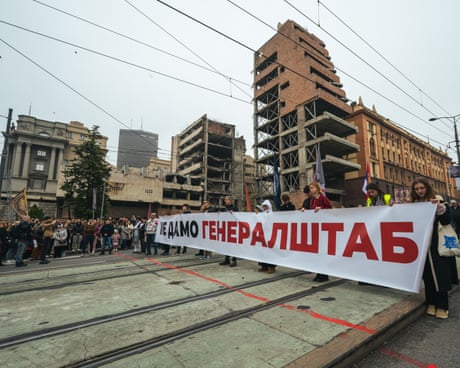
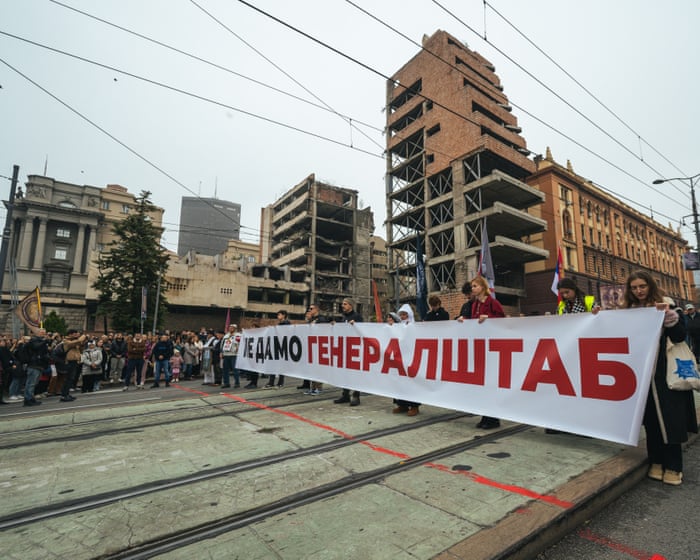
Serbian prosecutor who investigated Belgrade Trump tower project ‘targeted with spyware’

Apparent attempt to hack Rade Bajić’s iPhone comes amid efforts to undermine landmark criminal case

A Serbian prosecutor who investigated the authorities’ allegedly illegal scheme to help the Trumps build a tower in Belgrade has been targeted with advanced spyware, expert analysis indicates.

The finding suggests a disturbing new element in the authoritarian Serbian regime’s campaign to undermine what is believed to be the first criminal case related to global moneymaking drive of the US president’s family, which critics describe as a “pay to play” scheme trading the Trump administration’s favour for business opportunities.

Continue reading...

© Photograph: Andrej Isaković/AFP/Getty Images

© Photograph: Andrej Isaković/AFP/Getty Images

© Photograph: Andrej Isaković/AFP/Getty Images

  •  

Two Germans charged in absentia over Bulgaria’s Starlink fire, one of three recent attacks on satellite links Ukraine relies on against Russia

two germans charged absentia over bulgaria’s starlink fire latest attack satellite links ukraine relies against russia · post sofia city court reviews prosecution’s request european arrest warrants german nationals wanted

A Sofia court has cleared European arrest warrants for two 19-year-old Germans charged with setting fire to Starlink antennas south of the Bulgarian capital, a court spokeswoman told dpa. Prosecutors named the pair in court, but both had already left Bulgaria. The case adds Bulgaria to a run of attacks on Starlink sites in Europe, which Poland and Lithuania have linked to Russia.

While Russia presses its assault along the front and strikes Ukraine’s cities, Starlink keeps Ukraine’s drone units and front-line troops connected, and Poland pays about $50 million a year for its terminals. The network’s ground links in Europe are now a target in their own right, and ISW has linked the Polish fire to a wider Russian pattern of sabotage. Each attack on a ground station hits a network whose speed caps already disrupted Ukraine’s drone missions this month.

Two names, a few hours in Bulgaria

Prosecutors identified the suspects as Zeka Islam and Tirpan Beytullah, Bulgaria’s state news agency BTA reported, noting the names may be misspelled. Their whereabouts are unknown, according to German authorities cited by the agency. They were charged in absentia on 14 October and face three to 12 years in prison if convicted.

According to the indictment, the two crossed from Serbia at the Kalotina checkpoint at 17:37 on 9 October and told border officers they were tourists. At about 22:25, wearing gloves and masks, they allegedly set fire to antennas at the Plana teleport, a satellite ground station near the village of Plana. They drove back into Serbia through the same checkpoint at 23:55.

Three antennas burned completely, two were partly damaged, and three more were affected, prosecutors say. The pair traveled in a Volkswagen with German plates, and a national warrant followed two days after the charges, ZDF reported.

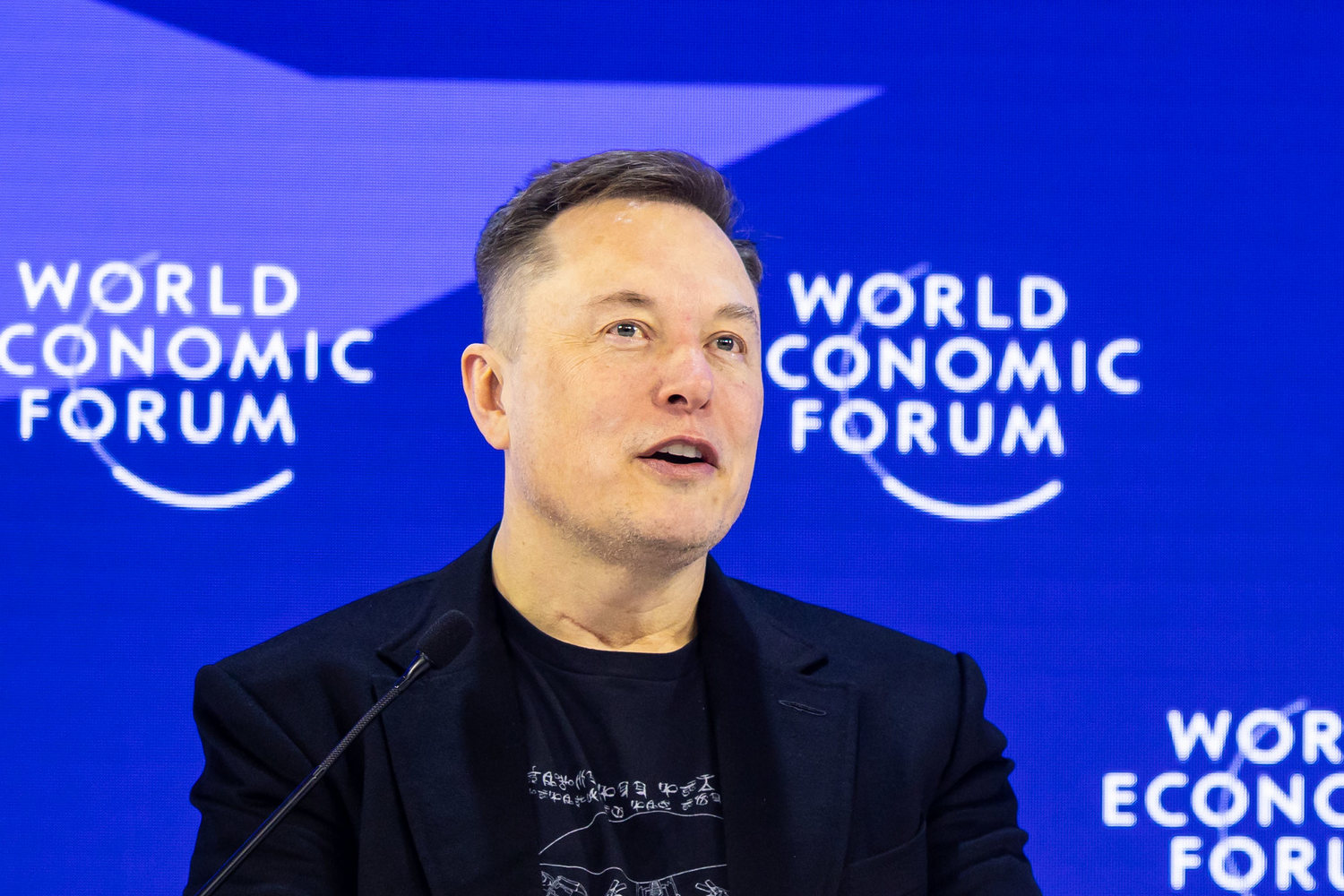
kyiv asking musk let strike inside russia its best line gone · post elon 2026 world economic forum / ciaran mccrickard wef ukraine news ukrainian reports
Explore further

Musk pushed Trump to slow Starlink in Ukraine, weakening air defenses as Russian drones attacked cities – The Telegraph

The court-appointed lawyers argued that investigators had pinned down the vehicle, not the men in it. The court rejected those objections, finding reasonable grounds to suspect the pair. The lawyers said they would appeal. The ruling can be challenged within three days.

A Starlink antenna
A Starlink antenna. Illustrative photo: Christoph Soeder/dpa

An opposition MP made the fire public three days later

The fire became public only on 12 October, when opposition MP Ivaylo Mirchev of Democratic Bulgaria posted about it on Facebook. He said 11 antennas had been set on fire, more than prosecutors later counted.

In parliament two days later, Prime Minister Rumen Radev asked the head of the State Agency for National Security (DANS) not to reveal details, saying disclosure could harm the investigation. DANS head Plamen Tonchev told lawmakers he believes the fire was sabotage and that more such attacks cannot be ruled out, dpa reported.

The White House, seen from Lafayette Square. File photo, June 2024.
Explore further

White House ordered limits on Ukraine’s military satellite service — Reuters. Who made the decision remains unclear

After the ruling, Mirchev wrote that Radev personally owes the public an explanation of what has been achieved, BTA reported.

Bulgaria’s case joins attacks Poland and Lithuania tie to Russia

Bulgaria has not said who might be behind the fire. Authorities in Poland and Lithuania have linked similar recent arsons on Starlink equipment to Russia.

In September, fire hit a Starlink ground station south of Warsaw, and Germany later detained two suspects. On 18 October, Lithuania’s prime minister said intruders had tried to burn a company’s Starlink antennas used by Ukraine, calling it part of Russia’s hybrid war. Moscow claims such accusations are baseless, Reuters reported.

  •  

Six Weeks to Defeat Russia? The Cost Missing from Sikorski’s Calculation

Polish Foreign Minister Radosław Sikorski made an unusually confident assessment of a hypothetical war between NATO and Russia during the Yalta European Strategy conference in Kiev on September 12. “If Russia attacked us, and we took our gloves off, I think we would defeat Russia quite quickly,” Sikorski said. “We have overwhelming superiority over Russia […]
  •  

Oslo Ukraine Talks Expose Growing Tensions Between Washington, Kyiv and Europe

US envoy Steve Witkoff is joining negotiations in Norway before an expected visit to Moscow, but American pressure on Ukraine, uncertainty over military assistance and renewed economic dealings with Russia raise questions about Washington’s approach to ending the war.

The latest American diplomatic initiative on Ukraine comes at a particularly difficult moment in relations between Washington and Kyiv. President Donald Trump’s special envoy, Steve Witkoff, is taking part in talks in Oslo on Tuesday, 20 October, with Ukrainian President Volodymyr Zelenskyy and European leaders, before an anticipated visit to Moscow for discussions with Vladimir Putin.

The Norwegian government has confirmed that the meetings will include Prime Minister Jonas Gahr Støre and Finnish President Alexander Stubb. Trump’s son-in-law, Jared Kushner, will participate remotely. The meeting was requested by Zelenskyy, with Norway and Finland providing the diplomatic setting.

Yet the significance of the Oslo discussions lies less in the gathering itself than in the political circumstances surrounding it. Washington is seeking an agreement with Moscow while simultaneously becoming more confrontational towards Kyiv. Recent American decisions affecting military assistance, intelligence cooperation and Russian energy exports have introduced serious doubts about how the administration intends to use its considerable negotiating leverage.

Washington’s pressure on Kyiv

The immediate difficulty concerns the growing discrepancy between American diplomatic assurances and the practical conditions under which Ukraine is expected to negotiate.

Zelenskyy has accused Washington of delaying military deliveries, restricting intelligence sharing and limiting access to the Starshield satellite communications system. The Ukrainian president suggested that these developments reflected a political decision to reduce support at a particularly sensitive stage of the war. American officials have disputed allegations that assistance is being deliberately restricted.

Among the disputed deliveries are Patriot air-defence interceptors purchased by European NATO members through the Prioritised Ukraine Requirements List programme. Zelenskyy has indicated that shipments remain subject to authorisation by US Defence Secretary Pete Hegseth.

These are operational matters with immediate consequences. Ukraine relies on American intelligence, communications infrastructure and air-defence equipment to counter Russian missile attacks. Any interruption affects Kyiv’s military calculations, irrespective of whether Washington formally acknowledges a change in policy.

The political message is equally consequential. Trump has publicly questioned Zelenskyy’s willingness to negotiate and suggested that Ukraine might need somebody else to conduct talks with Russia. Such remarks place additional pressure on the Ukrainian leadership while leaving Moscow’s territorial demands largely untouched.

Russia’s incentives remain unchanged

The central weakness in the American diplomatic approach is the assumption that renewed engagement with Putin will necessarily produce meaningful Russian concessions.

Moscow has repeatedly treated negotiations as an opportunity to pursue political objectives that its armed forces have not achieved on the battlefield. Russian demands concerning Ukrainian territory and restrictions on Kyiv’s future security arrangements remain incompatible with Ukraine’s sovereignty.

An agreement reached under these conditions could suspend hostilities without resolving the underlying conflict. Russia would retain the capacity to rebuild its forces, while Ukraine could find its military options constrained by commitments made in exchange for an uncertain ceasefire.

The Trump administration’s recent economic dealings with Moscow further complicate the negotiations. Washington’s arrangements concerning Russian diesel have attracted criticism from Kyiv and European governments, particularly because Russian energy revenues remain an important source of financing for the war.

Trump has also pressed Ukraine to curtail attacks on Russian oil infrastructure, reflecting American concerns about fuel prices. For Moscow, relief from attacks on refineries would preserve economically important facilities that Ukraine has demonstrated an increasing ability to reach.

Any arrangement limiting such operations without corresponding Russian concessions would alter the military and economic balance in Moscow’s favour.

The broader American proposals reportedly include possible post-war economic cooperation with Russia. Their implications extend beyond Ukraine: commercial normalisation could offer the Kremlin substantial benefits before the conditions for a stable European security settlement have been established.

Europe’s influence depends on its willingness to use it

European participation in the Oslo process is therefore more substantial than a question of diplomatic representation.

Britain, France, Germany and Poland, alongside the European Union and NATO, are expected to be involved in the wider discussions. European governments would almost certainly bear much of the financial and military responsibility for implementing any settlement, including Ukraine’s reconstruction and long-term security.

They also possess considerable economic leverage through sanctions, financial restrictions and decisions concerning frozen Russian assets. Those instruments would form part of any serious negotiation over Moscow’s future relations with Europe.

However, European influence remains constrained by continuing dependence on American military technology and equipment. The controversy surrounding Patriot deliveries illustrates the problem: European governments can finance weapons for Ukraine without necessarily controlling when those weapons are released.

As EU Today previously examined, Washington’s negotiations with Moscow have consequences for European security that cannot be separated from the future of Ukraine.

European governments consequently face a difficult calculation. They wish to preserve American involvement, but excessive accommodation of Washington’s demands could leave them financing security arrangements over which they exercise limited control.

Norway and Finland have helped bring the Ukrainian and American delegations together at a moment when their relationship is deteriorating. Whether that produces progress will depend partly on Moscow’s response, but also on whether Washington is prepared to maintain the military and economic pressure necessary to make Russian concessions possible.

Witkoff’s anticipated journey from Oslo to Moscow will offer an early indication of the administration’s priorities. Putin will be assessing the terms Washington is prepared to offer, while Kyiv remains concerned about restrictions affecting equipment it needs to defend its cities.

For the Ukrainian leadership, the danger is that negotiations intended to end Russia’s invasion could become a process in which the country resisting that invasion is asked to make the most immediate concessions.

  •  

Committee on World Food Security Convenes in Rome

From October 19 to 23, the world gathers in Rome for the 54th session of the Committee on World Food Security (CFS)*—a global platform dedicated to combating hunger and malnutrition, and to upholding the right to food. Discussions will focus on food security, coordinated responses to food crises, and sustainable food systems. The agenda will […]

  •  
❌