The battle to save the global court and its capacity to enforce accountability for the most heinous crimes is one struggle with many fronts, writes Marjorie Cohn.
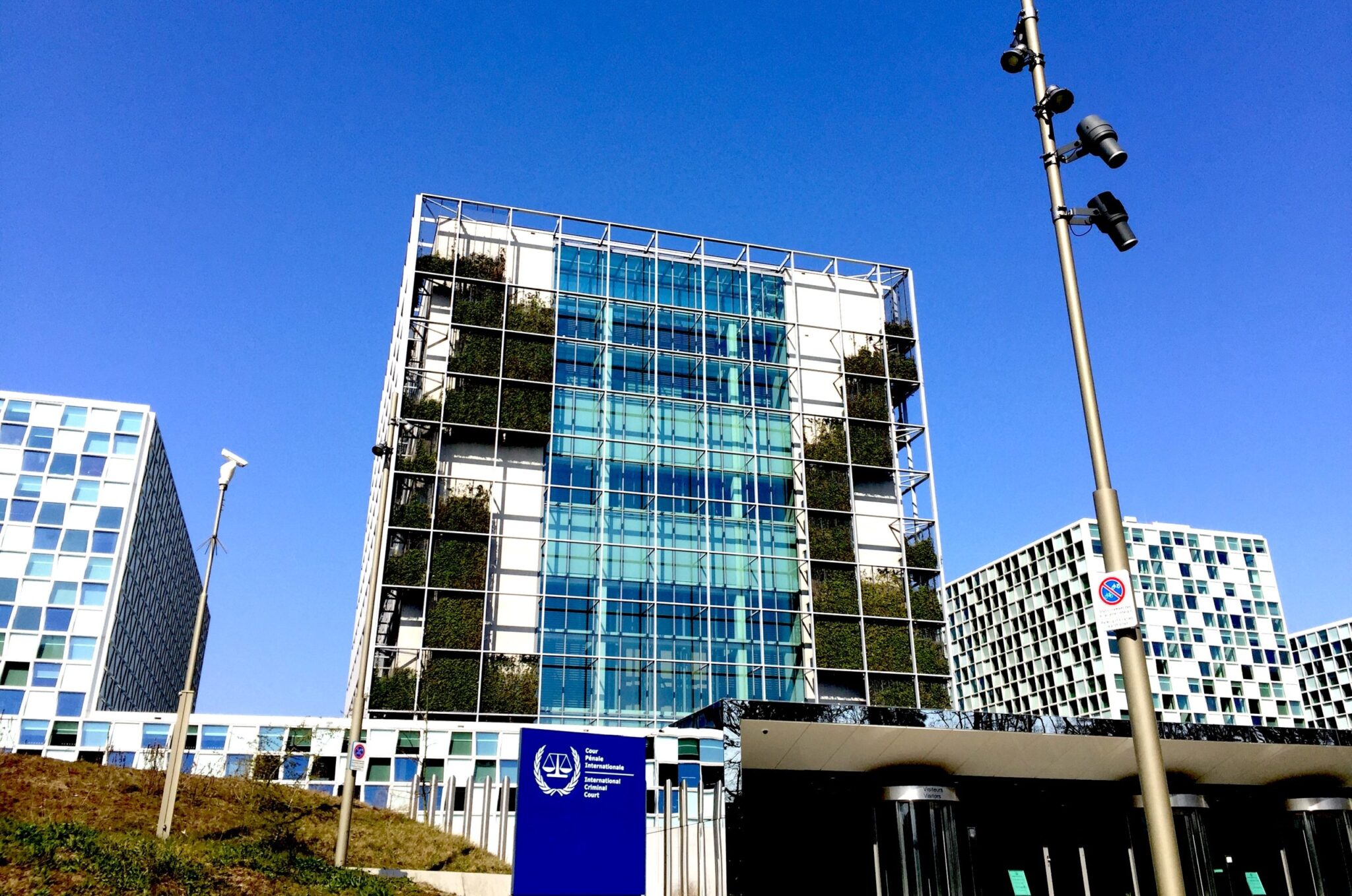
The European Parliament has awarded the 2026 Sakharov Prize for Freedom of Thought to the International Criminal Court (ICC) and its officials, recognising the Hague-based tribunal’s work in investigating and prosecuting war crimes, crimes against humanity and genocide.
Announcing the decision in Strasbourg on Thursday, 22 October, European Parliament President Roberta Metsola said the award reflected the European Union’s commitment to multilateralism and international institutions.
Metsola praised the Court for its work in upholding international law and justice. The announcement was met with a standing ovation in the parliamentary chamber.
The decision comes amid an escalating confrontation between the European Union and the administration of US President Donald Trump over the ICC’s jurisdiction and independence.
The restrictions place the Court under the US Treasury’s sanctions regime, limiting financial transactions involving American individuals, businesses and institutions. Washington has issued several temporary and limited exemptions intended to allow specified operations to continue.
The measures followed earlier sanctions against senior ICC officials, including Court President Tomoko Akane, and form part of Washington’s campaign to prevent the tribunal from exercising jurisdiction over American personnel.
US Secretary of State Marco Rubio has argued that the ICC threatens American sovereignty by asserting authority over nationals of countries that have not accepted its founding treaty.
The Court rejected the latest restrictions, describing them as an attempt to obstruct the administration of international justice.
Established under the Rome Statute, the ICC operates independently of national governments and investigates serious international crimes where its jurisdictional requirements are satisfied.
Neither the United States nor Israel is a party to the Rome Statute.
Arrest warrants involving Russia and Israel
The dispute with Washington has intensified since the ICC issued arrest warrants in November 2024 for Israeli Prime Minister Benjamin Netanyahu and former Defence Minister Yoav Gallant over alleged war crimes and crimes against humanity connected with military operations in Gaza.
Israel rejects the Court’s jurisdiction and disputes the allegations. Washington has similarly opposed the proceedings against Israeli officials.
Further warrants followed in 2024 against senior Russian military commanders and officials in connection with attacks on Ukraine’s civilian infrastructure.
The proceedings demonstrate the geographical scope of the Court’s investigations, although its ability to secure arrests depends heavily on cooperation from individual states.
The ICC has no independent police force and relies on national authorities to execute its warrants.
European Parliament backs international justice
The ICC’s nomination for the Sakharov Prize was submitted by the Socialists and Democrats group in the European Parliament.
Its selection comes as European lawmakers examine how the EU should respond to American sanctions affecting the Court and organisations supporting its activities.
The October restrictions have raised practical questions about access to banking, technology services and other infrastructure required by the tribunal.
European governments must also consider how to support an institution established through an international treaty while maintaining relations with Washington.
The Sakharov Prize carries no legal authority to reverse American sanctions or compel governments to cooperate with ICC investigations. Nevertheless, the award represents an explicit institutional endorsement of the tribunal at a time when its operations face increasing external pressure.
Other nominees and award ceremony
The ICC was selected from three finalists announced earlier this month.
The other nominees were Tanzanian opposition leader Tundu Lissu and Iranian sisters Taraneh and Romina Rahimi, whose cases have attracted international attention over political persecution and judicial proceedings.
The Sakharov Prize, established by the European Parliament in 1988, is named after Soviet physicist, dissident and Nobel Peace Prize laureate Andrei Sakharov.
It recognises individuals and organisations defending human rights, freedom of expression and fundamental liberties. The award includes €50,000.
Previous recipients include Nelson Mandela, Malala Yousafzai and imprisoned journalists.
In 2025, the prize was awarded jointly to Belarusian journalist Andrzej Poczobut and Georgian journalist Mzia Amaglobeli.
The formal presentation of the 2026 prize is scheduled for 16 December at the European Parliament in Strasbourg.
The award places the ICC alongside previous Sakharov laureates while drawing further attention to the unresolved dispute between Washington and European governments over international criminal jurisdiction.
A Russian ballistic missile fitted with a cluster warhead struck the historic Pecherskyi district of Kyiv overnight on 21–22 October 2026, damaging buildings near two of the Ukrainian capital’s principal religious complexes, President Volodymyr Zelenskyy has said.
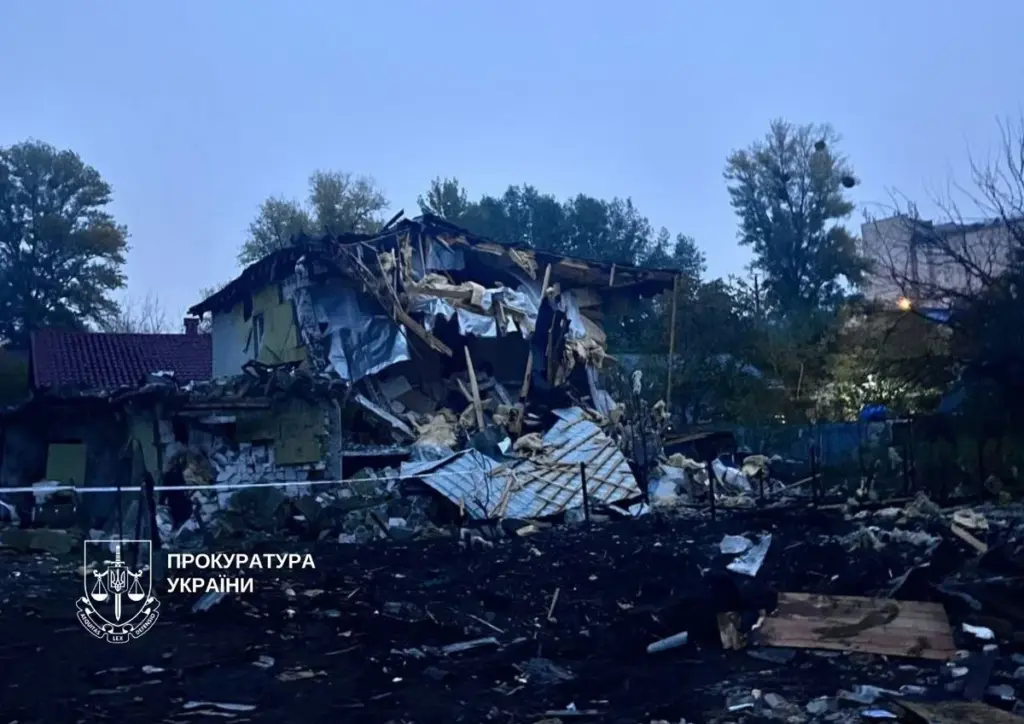
The missile landed between the Kyiv-Pechersk Lavra, a UNESCO World Heritage site, and the Holy Presentation (Sviato-Vvedenskyi) Monastery. Monastery buildings, homes, shops, cafés and other civilian infrastructure sustained damage in the surrounding area.
Zelenskyy disclosed that Russian forces had used three cluster-equipped ballistic missiles during the assault. Ukrainian authorities described weapons designed to explode in the air as they approach their targets, distributing explosive submunitions over an area approximately 400 metres in diameter.
After receiving reports from officials overseeing emergency operations across Ukraine, the president accused Moscow of deliberately choosing a weapon capable of inflicting extensive civilian casualties in a densely populated district.
“This was a deliberate choice of weapon and area of deployment,” Zelenskyy said.
He maintained that there were no military installations in the vicinity and that the attack had been intended to inflict maximum damage on civilians and their property.
Religious Buildings and Civilian Properties Damaged
Pecherskyi is one of Kyiv’s oldest districts, containing religious institutions and architectural monuments associated with centuries of Ukrainian history.
Among them is the Kyiv-Pechersk Lavra, established in the 11th century and subsequently developed into an important centre of Eastern Orthodox Christianity.
The complex includes historic churches, monasteries and an extensive system of underground caves. Together with Saint Sophia Cathedral and its related buildings, it forms part of a UNESCO World Heritage property that has appeared on the List of World Heritage in Danger since 2023.
Thursday’s explosion occurred in the area separating the Lavra from the Holy Presentation Monastery. Ukrainian authorities identified damage to buildings belonging to the latter, alongside neighbouring residential and commercial premises. Assessments of the destruction across the historic district were continuing.
This was not the first occasion in 2026 on which Russian weapons had damaged the area’s religious heritage.
On 15 June, a Russian drone struck the Kyiv-Pechersk Lavra complex, causing severe damage to the Dormition Cathedral. Its roof and structural elements suffered extensive destruction, prompting UNESCO to undertake emergency stabilisation measures.
The October strike has again exposed the vulnerability of the capital’s historic religious buildings, as well as the civilian neighbourhoods surrounding them.
The Use of Cluster Weapons in Urban Areas
The reported choice of ammunition has particular implications for the investigation into the attack.
Whereas a conventional missile warhead delivers its explosive force around a principal impact point, cluster munitions release numerous smaller explosive devices capable of striking separate locations across a broad area.
In an urban environment, such weapons can cause casualties and destruction well beyond an intended target. Unexploded submunitions may remain dangerous after the initial attack, posing further risks to residents and emergency workers.
The International Committee of the Red Cross has warned that deploying cluster munitions in populated areas creates a high likelihood of indiscriminate effects.
Under international humanitarian law, military operations must distinguish between civilian persons and objects and legitimate military targets. Indiscriminate attacks are prohibited.
The reported deployment of cluster warheads in central Kyiv therefore raises questions about whether those requirements were observed. Zelenskyy’s account of the three missiles had not, at the time of reporting, been independently established through publicly available forensic evidence.
Russian Barrage Follows Diplomatic Contact with Washington
The Pecherskyi explosion was one incident in a much larger attack on the Ukrainian capital.
According to Zelenskyy, Russia launched 21 ballistic missiles against Kyiv in three successive waves overnight. Ukrainian authorities reported at least two people killed and more than 30 wounded, with strikes damaging apartment buildings, commercial premises, transport infrastructure and energy facilities.
The bombardment took place shortly after Russian President Vladimir Putin met US presidential envoy Steve Witkoff in St Petersburg on Wednesday, 21 October.
During their discussions, Putin indicated that Russia was prepared in principle to resume negotiations with Ukraine and the United States, potentially in November. However, no confirmed timetable emerged.
Witkoff’s visit followed consultations in Norway between American, Ukrainian and European representatives over possible arrangements to end the war.
The renewed diplomatic activity has done little to resolve the underlying disagreements. As EU Today has previously examined, Moscow continues to advance territorial demands while the parties remain divided over Ukraine’s future security guarantees.
Meanwhile, Kyiv faces an immediate requirement for additional air-defence ammunition.
Zelenskyy has repeatedly appealed for more Patriot interceptor missiles capable of engaging ballistic targets. Difficulties surrounding American military assistance and intelligence cooperation have increased tensions between Washington and Kyiv at a time when Russia is intensifying attacks against Ukrainian cities.
The latest strike also presents Ukrainian investigators with the task of establishing whether the reported use of cluster munitions against a historic civilian district constituted an unlawful attack.
For Zelenskyy, the bombardment following Putin’s latest diplomatic discussions demonstrates that Moscow’s military conduct remains unchanged. He has argued that Russia’s actions provide no evidence of a genuine intention to bring the war to an end.
Russian missiles and drones killed one person and injured 24 in Kyiv overnight on 22 October, the Kyiv City Prosecutor’s Office said. Damage spread across six of the city’s districts, the city military administration reported.
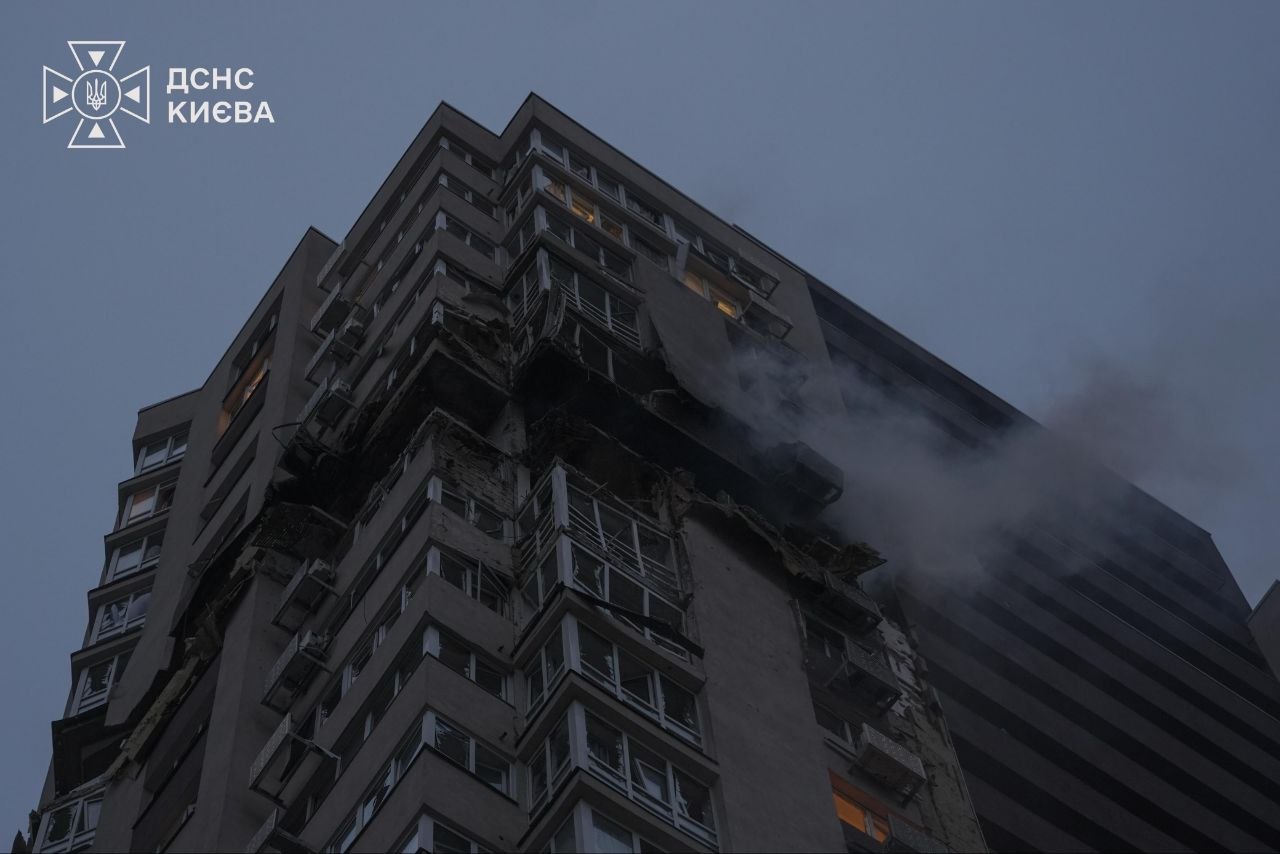
The strike came hours after Kremlin aide Yuri Ushakov said Putin had told Witkoff that Russia was “in principle” ready to resume three-way talks with the US and Ukraine in mid-November. President Volodymyr Zelenskyy read the overnight attack as a sign that Russia’s attitude has not changed. A day earlier, Russian drones killed two people in a 24-story Kyiv apartment block.
21 ballistic missiles in three waves
Russia fired 21 ballistic missiles at Kyiv overnight, Zelenskyy said. The barrage came in three waves, around 22:00, at about 02:00, and around 03:30.
Aftermath of Russia’s overnight attack on Kyiv. Photo: Office of the Prosecutor General of Ukraine
Across Ukraine, air defenses downed or suppressed 181 of 210 Russian drones, the Air Force said. Its report did not mention any ballistic missiles shot down.
One killed in the Dniprovskyi district
The only death in Kyiv came in the Dniprovskyi district, on the city’s left bank. There, Russian strikes destroyed 13 detached houses on several streets, prosecutors said. Police said the man killed was 48 and that six people were injured in the district, four of them children, the youngest aged five.
Of the injured, five are minors and two are young children, and prosecutors reported acute stress reactions among them. A 16-year-old boy is in hospital with a closed head injury, prosecutors said. Sixteen of the injured were hospitalized, the city military administration said. The final number of injured is still being established.
Explore further
Not just the grid: Russia struck a 24-story block, a university, and warehouses overnight, and four people are dead
Ambulance station and monastery damaged
In the Holosiivskyi, Obolonskyi, Pecherskyi, and Sviatoshynskyi districts, the attack damaged eight apartment buildings, prosecutors said. It also damaged a building-supply hypermarket, a restaurant, a monastery building, a post office, and office premises.
In Pecherskyi, Russia damaged an ambulance station and six ambulances, Kyiv Mayor Vitali Klitschko wrote. The State Emergency Service said eight people were injured in that district, three of them children, and reported damaged transport infrastructure in the Darnytskyi district.
Aftermath of Russia’s overnight attack on Kyiv. Photo: National Police of Ukraine
Bridge closed, metro line split
The strikes damaged metro infrastructure on the Pivdennyi (Southern) Bridge, Kyiv Metro said. As of the morning, green-line trains ran in two sections, Syrets–Vydubychi and Osokorky–Chervonyi Khutir. Inspections and repairs would continue after the all-clear, the metro said.
Oleksii Biloshytskyi, head of Ukraine’s Patrol Police Department, announced that traffic across the bridge toward the left bank was temporarily closed. The city is adding buses on routes 22 and 91, the city administration said. Russian drones had already hit the bridge repeatedly in early October.
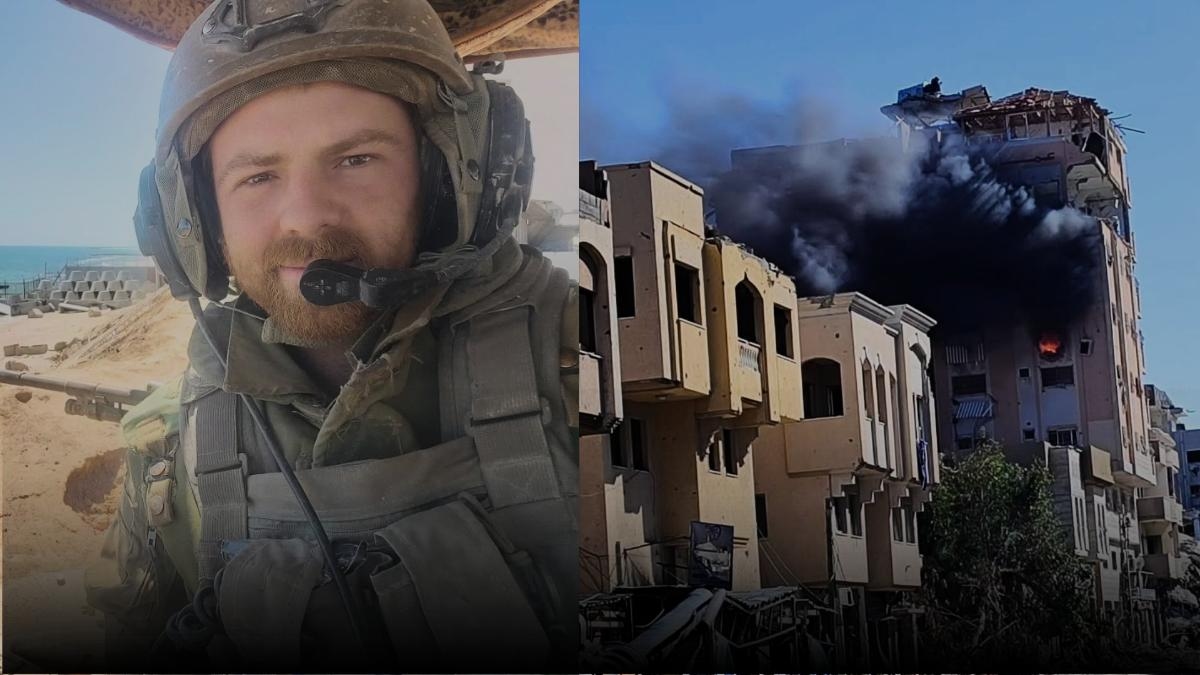
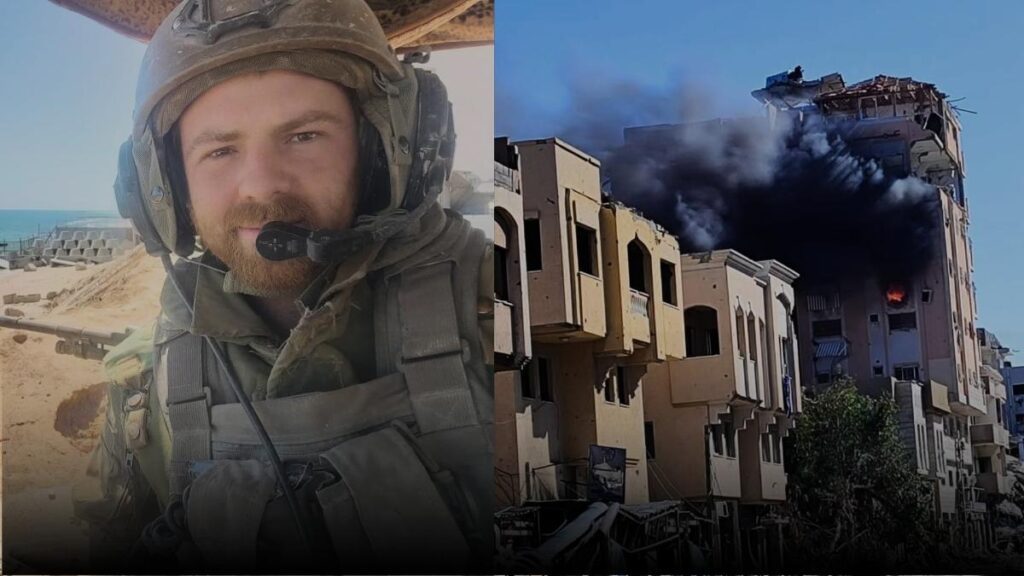
HRF alleges that Sean Glass likely gave the order to open fire. His alleged responsibility extends across Gaza: attacks on Al-Shifa Hospital, destruction of UNRWA headquarters, and the razing of entire neighbourhoods—devastation he publicly celebrated.
Iran’s Ambassador and Deputy Permanent Representative to the UN has urged the world body’s Security Council to hold an emergency meeting and condemn threats by the United States and the Israeli regime against the Islamic Republic’s territory and critical infrastructure.
Gholamhossein Darzi made the remarks in a letter dated Monday and addressed to UN Secretary-General António Guterres and the president of the Security Council.
The letter cited recent US media reports that the White House and the US Department of War had prepared fresh military options, including the possible use of the GBU-43/B, known as the Massive Ordnance Air Blast (MOAB) or so-called “Mother of All Bombs,” against Iran.
Darzi noted that US President Donald Trump had discussed the weapon in a televised interview and threatened further attacks.
The diplomat also cited remarks by Israeli minister for military affairs Israel Katz that the regime was prepared to attack the Islamic Republic and would target “all energy targets” in any renewed aggression.
The letter also pointed out how Katz had threatened to return Iran to the “Stone Age”, besides claiming that the United States and the regime had dropped a total of 35,000 bombs on Iran and that their military campaign was not over.
Darzi further denounced Israeli prime minister Benjamin Netanyahu for openly declaring an intention to launch another unprovoked war against the Islamic Republic, adding that the silence and explicit support of certain Security Council members had emboldened him.
He called for immediate action against “brazen existential threats” issued by Trump and renewed Israeli threats of military aggression.
“These unabated threats, in the context of the U.S.-Israeli wars of aggression launched on 13 June 2025 and 28 February 2026 against Iran, and the deliberate attacks against Iranian civilians and critical infrastructure, pose a grave risk of further violation of international law with catastrophic humanitarian and environmental consequences, and serious threats to regional and international peace and security,” he wrote.
The diplomat argued that threats to destroy Iran’s civilian and energy infrastructure could cause severe and potentially long-term humanitarian and environmental damage.
He also condemned Washington and Tel Aviv for disregarding obligations under the four Geneva Conventions of 1949 and customary international humanitarian law.
Darzi requested an emergency Security Council meeting, unequivocal condemnation of threats against Iran’s civilian infrastructure, and accountability and full reparation for damage resulting from Washington’s and Tel Aviv’s internationally wrongful acts.
“The Security Council cannot remain silent in the face of explicit threats of renewed aggression and the destruction of essential civilian infrastructure,” he stated.
The letter, meanwhile, reaffirmed Iran’s right to self-defense under Article 51 of the UN Charter.
He warned that the United States and the Israeli regime would bear responsibility for the consequences of further aggression, including “the risk of unpredictable and uncontrollable escalation.”
Six people were killed in a Russian strike in the settlement of Nova Vodolaha in Kharkiv Oblast, including girls aged 1 and 11. Another 15 people were injured, including seven children, Kharkiv Oblast Governor Oleh Syniehubov said on 20 October. Russian forces struck a park with a drone while families with children were there, Ukraine’s Minister of Internal Affairs Ivan Vyhivskyi said.
Russian forces continue to attack Ukrainian cities, killing civilians and destroying civilian infrastructure. The Kharkiv Oblast Prosecutor’s Office has opened a war-crime investigation into the strike. The strike was aimed at people, Yurii Yurchenko, head of a police department in Kharkiv Oblast, said in a comment to Suspilne.
The 14-month-old girl was named Anhelina
The Russian drone circled the park several times before crashing, Yurchenko said. He said the drone struck a tree near a café, and the blast wave and shrapnel hit people at the establishment. The attack came at around 16:30, the prosecutor’s office said, adding that Russian forces had preliminarily used a Geran-3 drone.
The café damaged in a Russian strike on a park in the settlement of Nova Vodolaha, Kharkiv Oblast, on 19 October 2026. Photo: Kharkiv Oblast Military Administration
The Russian strike killed three women, aged 28, 34 and 36, a man around 40 years old, and two girls, aged 14 months and 11 years, Syniehubov said in his statement.
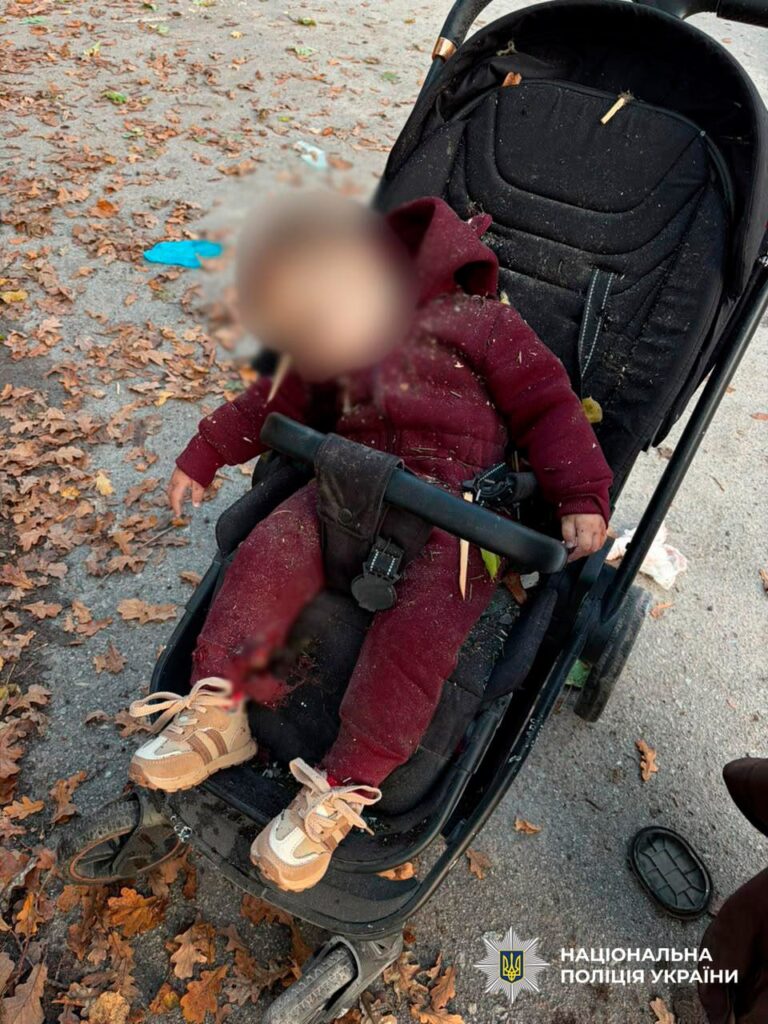
The youngest girl, named Anhelina, was born in August 2025, Ukrainian President Volodymyr Zelenskyy said. Her mother, Inna, died in the hospital, he added.
Zelenskyy shows US senators photos of the aftermath the same day
Zelenskyy met with US Senators Richard Blumenthal and Thom Tillis, along with their colleagues from both parties and both chambers of Congress, according to a 19 October post on his social media accounts. During the meeting, he discussed the Russian attack in Kharkiv Oblast and showed lawmakers photographs from the scene, including one of the infant who was killed in a stroller.
“This is how Russia responds to the lifting of sanctions and the easing of pressure,” he said in the post.
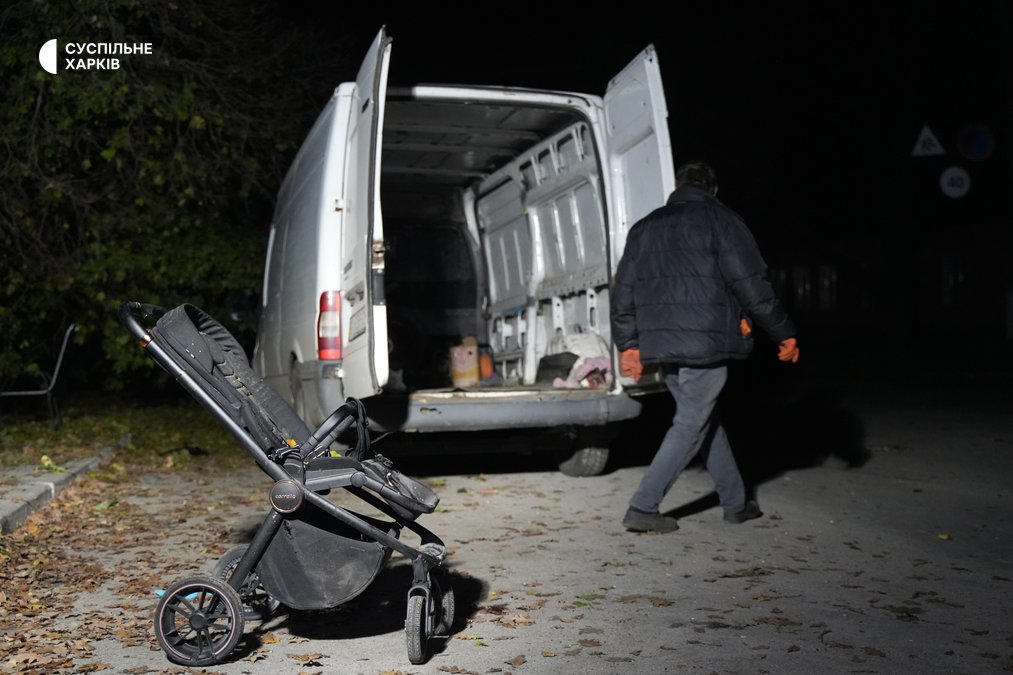
The stroller in which 1-year-old Anhelina was killed, Nova Vodolaha, 19 October 2026. Photo: Suspilne Kharkiv/Viacheslav Mavrychev
Zelenskyy said Ukraine needs air defense and that no one should think about making money with Russia while it continues its war. He asked that sanctions on Russia stay in place until the killing stops, urged the US to “be strong” and apply Lindsey Graham’s law, and called on Europe to keep supporting Ukraine.
Yemen has condemned the international community’s silence on Saudi Arabia’s ongoing aggression and blockade, saying it emboldens Riyadh to continue its atrocities.
The Yemeni Ministry of Foreign Affairs and Expatriates, in a statement released on Saturday, said the Saudi military continues to target ordinary people and civilian infrastructure, as it has done over the past years.
The ministry denounced Saudi strikes on civilians and non-military installations as a flagrant violation of international humanitarian law, particularly the Fourth Geneva Convention of 1949 and Additional Protocol I of 1977.
In the latest attack, a series of Saudi airstrikes targeted a residential neighborhood in the Maqbanah district of Yemen’s southwestern Ta’izz province, killing nine civilians, including a woman and a girl, and injuring 16 others.
The statement also censured the deafening silence of the international community, which claims to uphold human rights while lecturing others about them.
It noted that such an approach would offer Saudi officials the carte blanche to keep on their brutalities, and would make the international community complicit in Riyadh’s crimes and aggression.
The Yemeni foreign ministry then called on the international community, particularly the UN Security Council, the Human Rights Council, the UN High Commissioner for Human Rights, as well as human rights organizations, to abandon double standards, condemn the heinous crimes committed against Yemeni people, and pressure Saudi Arabia to honor its obligations under international humanitarian law.
The ministry finally emphasized that Saudi atrocities would not go unpunished, and that the House of Saud, “whose hands are stained with blood and whose fingers with guilt,” would be held accountable.
On July 20, the Sana’a government announced a maritime blockade against Saudi Arabia in response to “an unjust and oppressive siege” on Yemen for almost 12 years.
Subsequently, the Yemeni armed forces have reported a series of successful missions that have targeted vessels associated with Saudi Arabia in the Red Sea.
In March 2015, Saudi Arabia and its allies imposed a blockade on Yemen, initiating a comprehensive military offensive that received support in terms of military, political, and logistical assistance from the United States and several Western countries.
Tens of thousands of Yemenis have lost their lives; however, Saudi Arabia has failed to achieve its primary goal of reestablishing a puppet government that served its interests.
Iran’s ambassador and chargé d’affaires to the UN has stressed that any arrangements for the Gaza Strip’s future must fully respect Palestinian rights and self-determination, denouncing the United States and the Israeli regime for the current situation affecting the Strait of Hormuz.
Gholamhossein Darzi made the remarks on Friday, addressing a UN Security Council meeting on the situation in West Asia, including the Palestinian question.
He noted that Gaza remained devastated and continued to be subject to military aggression, despite the announcement of a ceasefire last year.
The ceasefire was announced last October as part of a United States-proposed plan to bring an end to two years of Israeli genocide, supposedly.
The Israeli regime has, however, killed more than 1,400 Palestinians during attacks across the territory ever since, in addition to the tens of thousands it had already killed throughout the genocide that began on October 7, 2023.
Darzi called for a permanent end to the Israeli aggression, lifting of the Israeli blockade on the coastal sliver, and realization of a lasting ceasefire in the territory.
He called for unconditional and complete withdrawal of Israeli forces from the territory as well as immediate and sustained delivery of humanitarian aid and deployment of relief personnel.
The diplomat called accountability for serious violations of international law a legal obligation, condemning the regime for committing genocide, war crimes, and crimes against humanity.
He also denounced expansion of illegal settlements, intensifying settler violence, and Israeli plans for “annexation” of the occupied West Bank.
Palestinians must be able to establish an independent, sovereign, and viable state, with the holy occupied city of al-Quds as its capital and full membership in the United Nations, the official stated.
He also demanded Israeli withdrawal from Lebanese territory and occupied Syrian areas and respect for both countries’ sovereignty.
Elsewhere in his remarks, Darzi slammed the United States and the Israeli regime for launching two rounds of unprovoked aggression against Iran respectively, last June and from February 28 until April 7 this year.
The aggressors, he noted, committed war crimes through deliberate targeting of civilians and critical infrastructure.
He also attributed the situation affecting the Strait of Hormuz to the American-Israeli atrocities, including an American naval blockade.
“Our position is crystal clear: The only practical way to restore normal and safe maritime navigation in the Strait of Hormuz is immediate and permanent cessation of US aggression, provision of credible guarantees against its recurrence, respect for Iran’s sovereign rights, and complete lifting of the naval blockade and other unlawful coercive measures.”
Following the US-Israeli aggression against Iran on February 28, Tehran closed the Strait of Hormuz to its adversaries. The key waterway has remained largely closed ever since, driving up fuel prices worldwide and increasing the cost of living for millions of people.
Tehran has made it clear that it will not reopen the strait until Washington meets its demands, including a permanent end to the war.
BEIRUT – The number of books destroyed by Israeli bombings of libraries, as well as religious and cultural institutions since October 2023, has exceeded 3 million copies, founder and coordinator of the National Network for the Protection of Libraries, Archives, and Cultural Heritage in Lebanon Hadi Bekdash told Sputnik on Saturday.
“There are reports of the burning of more than 700,000 books belonging to Lebanese and Arab publishers, as well as more than 3 million books from homes, libraries, religious centers, family collections, researchers’ libraries, and universities, publishers, cultural institutions, and private collections since 2023,” Bekdash said.
In 2026, practically confirmed information appeared about the destruction of dozens of public and hundreds of private libraries during the conflict with Israel, he added.
These data do not reflect the full scale of losses, since Lebanon still does not have a unified national database of destroyed libraries, archives, and book collections, the coordinator said.
Bekdash added that it will be possible to finally assess the damage only after conducting a nationwide inventory of lost and damaged collections.
A national campaign, A Million Books for Lebanon, is currently underway in the country, aimed at restoring destroyed and damaged libraries.
Chinese Foreign Minister Wang Yi delivered a sharp rebuke to Israeli President Isaac Herzog during a diplomatic meeting in Baku, calling the Palestinian cause “the greatest historical injustice of this century” and demanding that “Israel” halt its expansion in the occupied West Bank, according to statements released Friday by Beijing’s Foreign Ministry.
The bilateral discussions took place on the sidelines of the Conference on Interaction and Confidence Building Measures in Asia (CICA) summit held in the Azerbaijani capital.
According to a Chinese Foreign Ministry statement cited by Reuters, Wang urged the Israeli government to immediately cease its “forced establishment” of West Bank settlements and reverse its expansion policies.
He emphasized that Beijing’s long-standing position remains rooted in resolving the core conflict through a “two-state solution,” calling for the full reopening of access routes to the Gaza Strip to relieve ongoing humanitarian suffering.
Summit walkout and diplomatic tension
The direct exchange between Beijing and Israeli leadership unfolded against a backdrop of heightened diplomatic friction at the summit.
Earlier in the proceedings, several delegations representing Arab and Islamic nations walked out of the CICA conference hall during Herzog’s address in protest against Israeli aggression and continued settlement expansion in the West Bank.
Despite the firm pushback from Beijing, Herzog emphasized what he described as Israeli security imperatives during the meeting, pointing to strategic threats posed by regional groups while highlighting the importance of maintaining economic and trade ties between China and the occupation.
China, which has historically supported the Palestinian cause and recognized Palestinian statehood since 1988, has increasingly positioned itself as an active diplomatic mediator in the region. Wang’s remarks signal Beijing’s continued insistence that the Palestinian cause cannot be stabilized without addressing Palestinian sovereignty and halting unilateral territorial changes on the ground.
A study by University of Maryland researcher Shibley Telhami points to a major shift in US public opinion, with sympathy for Palestinians surpassing support for “Israel” and growing numbers of Americans viewing the occupation as responsible for genocide.
Drawing on Gallup data, Telhami noted that sympathy for “Israel” among the US public has fallen from around 50% to 36%, while sympathy for Palestinians has risen to 41%.
Among Democrats, support for “Israel” has plunged from more than 50% in 2001 to just 17% today, while sympathy for Palestinians has climbed to 65%, according to the researcher.
Telhami’s Critical Issues Poll at the University of Maryland also found that more than 60% of respondents believe US military and diplomatic support enables “Israel” to carry out its actions.
Generational shift extends across political lines
Citing data from the Pew Research Center, Telhami pointed to a narrowing generational gap among Democrats in negative views of “Israel.” The figures showed that 71% of younger Democrats and 66% of older Democrats held negative views of the occupation.
One of the most significant changes, however, has emerged among young Republicans under the age of 35. According to the cited polling, the share of young Republicans expressing negative views of “Israel” rose from 35% to 57%.
Only 22% of young Republicans agreed that “Israel’s” actions in Gaza were “justified as self-defense,” compared with 52% of their older counterparts.
Telhami highlighted findings indicating that 80% of academics since October 7, 2023, and 42% of the general US public feel they must exercise self-censorship or caution when discussing the genocide of Palestinians in Gaza, fearing accusations linked to their criticism.
The findings point to growing public criticism of “Israel” and US support for it, alongside continued concerns about the social and professional consequences of expressing such views.
I am back in NYC at the invitation of the Russian delegation to the United Nations. Unlike my previous appearance before the full UN Security Council, this was an Arria session. An Arria-formula meeting is an informal meeting called by one or more Security Council members to hear from people who normally can’t address the Council. These include NGOs, civil-society figures, experts, victims and witnesses, and non-state actors. It isn’t a formal Council meeting and has no basis in the Council’s rules of procedure.
All fifteen members of the Security Council were represented. Their response was quite revealing (I will reveal that below). Here was my statement:
Chair, Excellencies, distinguished delegates, thank you for the opportunity to address you.
My name is Larry Johnson. I served as an officer in the Central Intelligence Agency and later in the State Department’s Office of the Coordinator for Counterterrorism. I spent more than two decades working with United States Military Special Operations Forces. I come to this Council not as a spokesman for any government, but as someone who has spent a career studying how wars are fought and how civilians suffer in them and how hostilities are accompanied by disinformation campaigns.
For more than four years this Council has heard that Russia is waging a war against Ukraine and is targeting civilians. You do not need to come to the Security Council to hear this narrative, it is all over media and internet. I ask you to test that claim against the evidence.
Today we heard horrific stories of civilians targeted, of prisoners of war being tortured, and civilians held against their will by Ukrainian armed forces.
Ask yourselves a couple of questions: why are the civilians dying in Russia from drone attacks discounted and why are the civilians that were killed in Ukraine before February 2022 ignored? Based on my experience, the crisis in Ukraine has been accompanied by a sophisticated disinformation campaign designed to place all blame on Russia while exonerating Ukraine.
Begin with the scale of the fighting. By the Ukrainian government’s own figures, Russia has fired well over approximately two and a half million tons of munitions. This includes one hundred thousand glide bombs, attack drones, missiles and millions of artillery rounds since February 2022.
Now consider the human toll. The United Nations Human Rights Monitoring Mission in Ukraine has verified 16,431 civilian deaths through the middle of this year. Every one of those deaths is a tragedy, and I do not minimize any of them. However, the ratio of civilian deaths to munitions expended is extraordinarily low for a war of this intensity.
Compare those numbers with what the United States did in the Second World War, a war my country rightly regarded as just. Allied bombers dropped some 2.7 million tons of bombs on Europe and killed between half a million and three-quarters of a million civilians in Europe.
In the Pacific, the United States dropped about 160,000 tons of bombs on the Japanese home islands. In all, American air attacks on Japan killed somewhere between 330,000 and half a million civilians.
Put the figures side by side. In total, the United States killed somewhere between half a million and more than a million civilians in the Second World War. The verified toll in Ukraine, after more than four years, is a small fraction of that.
These numbers do not happen by accident. The record of Russia in Ukraine is consistent with a policy of not targeting civilians. These facts contradict the claim that Russia is waging a campaign of extermination against Ukraine’s civilian population.
The same standard must apply to Ukraine.
The killing of civilians in this conflict did not begin in February 2022. From 2014 through 2021, the OHCHR recorded at least 3,404 civilian deaths in the Donbass. From 2018 through 2021, the OHCHR found that 81 percent of civilian casualties from Ukrainian shelling, small-arms fire and drone attacks occurred in areas held by the Donetsk and Luhansk authorities. Those victims are forgotten by the world media and by the United Nations. Few call for any investigation or accountability.
Since February 2022, according to figures the Russian Foreign Ministry presented to the Human Rights Council last month, Ukrainian strikes have killed more than 9,000 civilians in the territories under Russian control and wounded more than 25,500. This Council has rarely discussed those victims. They deserve the same attention and the same investigation as every civilian killed on the other side of the line.
Today we heard some of the circumstances of their deaths. I hope that the United Nations will include those numbers in their reports in order to give an unbiased record of events…. At least 12,404 civilians have been killed by Ukrainian Armed Forces since 2014.
Thus, we come to the simple fact that the number of civilians killed on both sides of the front line are not that different even if we take numbers offered by OHCHR at their face value –12,404 compared to 16,431. And I know that the Government of Russia strongly challenges them, citing in particular the questionable OHCHR claim that Russia was responsible for Bucha.
Why is the focus exclusively on Russia while we hear nothing about Ukrainian Armed Forces committing crimes against civilians?
I am not asking this Council to excuse any unlawful act. Where a strike violates the principles of distinction, proportionality and precaution, it should be investigated, whoever carries it out. I am asking the Council to apply a single standard. The nations that sit in judgment of Russia should measure Russia’s conduct against the evidence and against their own history, not against a narrative.
False accusations and biased reports are not the most effective way to protect civilians in Ukraine. The key to protecting civilians is a negotiated end to this war. I urge the members of this Council to put their full weight behind that goal.
Thank you.
The biggest shock came from the US representative. Unlike my previous appearance before the Security Council when the US representative was aggressive and dismissive of my remarks, the guy sitting in the US chair today spoke as if the US had no role whatsoever in the war raging between Russia and Ukraine. He was quite subdued. A complete change in tone and attitude. This told me there is a definite change in the US policy towards Russia.
The Europeans on the other hand were out of their fucking minds. The representatives of Denmark, Latvia, France and Greece were aggressive and rude. They are boiling for a fight. The purpose of the meeting was to present evidence of Ukrainian attacks on civilians in territory now occupied by Russia. Instead of dealing with the facts, the European Lilliputians howled at the Russians.
Even the British representative took a low key approach. That also was surprising. The remaining eight members of the Security Council made measured, neutral remarks. My commentary was in support of Rodion Miroshnik, the Russian Ambassador tasked with investigating attacks on civilians. Rodion is a good man and an honest investigator. All in all, a fascinating day.
The Russian Embassy in Paris has accused France of “piracy” after its naval forces seized an oil tanker in international waters near Madagascar, rejecting claims that the operation complied with international maritime law.
French President Emmanuel Macron announced the detention of the DF Peak on Monday, saying the vessel was suspected of sailing under a false flag and involvement in illegal fuel transportation.
The tanker was intercepted 450 nautical miles south of Reunion, a French island territory east of Madagascar, Macron said.
According to MarineTraffic, the DF Peak sails under Benin’s flag. Macron did not identify the owner but described the seizure as part of France’s campaign to “fight the ghost fleet wherever it may be in the world.”
The Russian Embassy called the operation a “flagrant violation of international law,” dismissing France’s references to maritime regulations and “international sanctions” as a “fig leaf” concealing “outright piracy and robbery.”
The embassy denounced the sanctions as illegitimate unilateral measures and said the French authorities failed to notify Russian diplomats of the seizure. It added that officials are checking whether any Russian nationals were aboard.
Western governments have used the term ‘shadow fleet’ to describe vessels that allegedly help Russia circumvent sanctions on oil exports. Moscow rejects the designation, arguing that it has no basis in international maritime law.
France previously detained the Tagor tanker in the Atlantic in June, and British forces seized the Smyrtos in the English Channel later that month. Moscow condemned both operations as piracy.
In July, the EU adopted a mechanism allowing member states to sell oil and other cargo confiscated from sanctioned vessels. President Vladimir Putin subsequently warned that Russia could retaliate against ships carrying Western cargo.
The latest seizure comes days after Putin and US President Donald Trump agreed to expand Russian diesel supplies to American and global markets in an effort to ease soaring fuel prices.
Washington subsequently issued a temporary sanctions waiver covering Russian diesel trade until April 7, 2027. Trump announced initial deliveries of more than 300,000 tons, followed by another 500,000 tons in November, and 1 million tons thereafter.
What Israel has done, is doing, to Gaza has not sprung ex nihilo from October 7.
Genocide is not a situational counter-response to aggression. It’s a coming-out event of sorts.
Differently put: There are no legitimate antecedents to genocide. Genocide is not a “war crime” to which a set of mitigating or exculpating legal defenses can attach.
Genocide is a stand-alone indefensible crime—“the blackest of all crimes”—for which there are no extenuating circumstances and to which no traditional legal defenses attach.
Ethnocide, depopulation, domicide and daily mass murder can never be explained away or exculpated using argument from law, ethics or history.
In essence, talk to the hand about October 7, 2023; because the face isn’t listening. Just as there are no legal or moral extenuating circumstances for genocide, so it is that there are no historical defenses for this “blackest of all crimes,” for genocide.
To assert that you are just, justified or even coherent as you carry out that which cannot be just or justified—this is to embody a most grotesque incoherence and contradiction.
At minimum, Israel deserves—and has yet to receive—the unanimous revulsion and isolation reserved for entities whose existence is a confidence trick and a fraud upon us all.
Reality is truth, past and present. The reality of genocide gives rise to irrefutable truths. From the facts of this Twenty-First Century Genocide; certain truths immemorial and irrefutable that traverse time have emerged. Truths about Israel.
Through Gaza, the world has come to know Israel’s ways with the Palestinians, with their lands and homesteads—down to what Israeli terrorists habitually do to the intimate bits-and-bobs that make up a household.
Through Gaza, we have come to know Israel’s ways across the Levant and beyond. They unground and salt the earth forever. They uproot ancient communities and their olive groves. For fun. They deform babies and the baby faces of children for life.
The reality on the ground is of genocide ongoing, of daily extermination. In aggregate, a “child has been killed in Gaza every 71 minutes for three years.” This extermination campaign is not only of children—the one segment of Palestinian society which American conservatives are comfortable defending—but of adults, young and old: admirable, valuable adults. Adult lives matter, yes?
Hasbara and official myth-history aside, because of Gaza and the Ghazzawi you don’t have to know much history at all to arrive at the truth about Israel.
Because of the Palestinians of Gaza, the living, the martyred and those who still resist; the truth about Israel is now ahistoric.
To arrive at that truth about Israel, you don’t have to know much about the genesis of the so-called “conflict” between Israelis and Palestinians in historic Palestine. I hazard that you need to know hardly a thing about this history to arrive at the truth about the lived reality of Palestinians.
You are what you do.
We know the Real Israel through the actions of real Israelis in Gaza. We know how Israel operates and how a preponderance of its people thinks. These realizations came out of the Gaza genocide, which has shown the world in cruel relief how Israel acts and, by extension, what Israel is.
Since October of 2023, the world knows in detail what the untouchable Israel—state and civil society—has done and continues to do to the Strip, to the West Bank and in South Lebanon.
But what have the Ghazzawi, the living and the martyred, accomplished? A great deal. In a manner, Palestine and the Palestinians have won.
Gaza has exposed Israel for the morally and militarily corrupt force that it is. The Genocide of Gaza has, very plainly, invalidated Israel and validated the Palestinian cause.
When you are in the writhing coils of a boa constrictor; it is small comfort to know, as Palestinians have always known, that, while outwardly captive, they are, nevertheless, truly liberated from the illiberal political propaganda that grips the West.
So, they need to know, too, that they have shown good people around the world the way. For once and for all, Israel’s televised genocide had corroborated the lived reality of the Palestinians; their reasons for rage and their rights to resistance and recompense.
Palestinians had been telling us for decades that they have been set upon by murderers and thieves. Palestinians have told us they are being killed and robbed as a matter of course. Their lived reality has been irrefutably affirmed, and universally so.
“It’s complicated,” Israel’s supporters keep countering. “Study up before you open your mouth.” The opposite is true. It’s absurdly simple.
A moral, sentient human being need know nothing much about the history of the region to arrive at this conclusion.
Israel has had the nerve to play its genocide of the Palestinians of Gaza to a packed house: to the world.
Most galling of all: In the course of this very public genocide, Israel has engaged in the mother of all performative contradictions: denying genocide, while publicly committing genocide, effectively asserting a birthright to commit genocide.
Think about it:
To deny ongoing, prime-time livestreamed genocidal action at the very same time that you are committing these actions, and then to hound and hurt anyone who dares notice: This is a performative contradiction in a category all of its own, like no other.
Caught in the protracted act of genocide, the guilty party, Israel, has continued to cavalierly claim for itself and be granted the right to keep killing and deceiving without being considered and treated as a killer and con-artist.
In essence, Israel exists among nations us as a privileged, protected, well-funded aberration, carrying out unspeakable evil with universal blessings and absolution.
I belabor the most galling reality, as it really gets me: At the same time that Israel and its cringing Western admirers have killed and deceived; they have instructed The World to deny Israel’s genocide, then deny Israel’s deception about its genocide, and finally to justify both or fear defenestration, cancellation, banishment, arrest and worse.
To no avail. Human action is the undeniable key to man-made reality. Israel and the US have acted; they’ve revealed themselves. They’ve been exposed.
“Just as you can identify a tree by its fruit, so you can identify people by their actions,” said Jesus (New Living Translation). As Matthew 7:20 reads, “Therefore by their fruits you will know them.”
With the exception of the flint-hearted ruling political elites—the wholesale slaughter carried out by Israel in Gaza has stirred the hearts of ordinary people across the world. A collective conscience developed around Palestine. Minds not AI became engaged. They said, “We see you, Israel. We revile you. We reject you.”
This is what October 7 will forever mark and signify: The triumph of the Palestinians over the alternate reality mass-marketed to the World by Israel and our ruling elites.
Ilana Mercer, a widely published paleolibertarian author, essayist and theorist, has been writing up an anti-war, anti-woke storm since 1998, starting in Canada. On arriving in the US, in 2002, her weekly column was right away syndicated. Mercer’s national syndication fell through shortly after due to writing in strident opposition to the war in Iraq. ILANA is described as “a system-builder. Distilled, her modus operandi has been to methodically apply first principles to the day’s events.” She’s Jewish, grew up in Israel ages five to nineteen, and left, at 19, decades back, never to return. She had refused to serve in the IDF, Israel’s compulsory military. Ilana’s focus since October of 2023 has been the genocide.
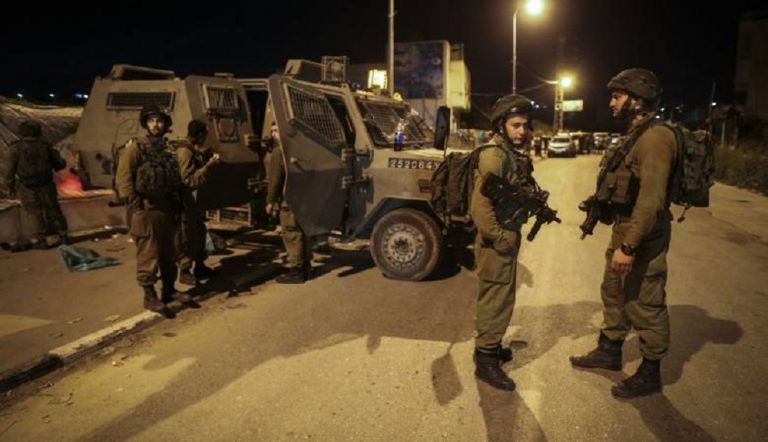
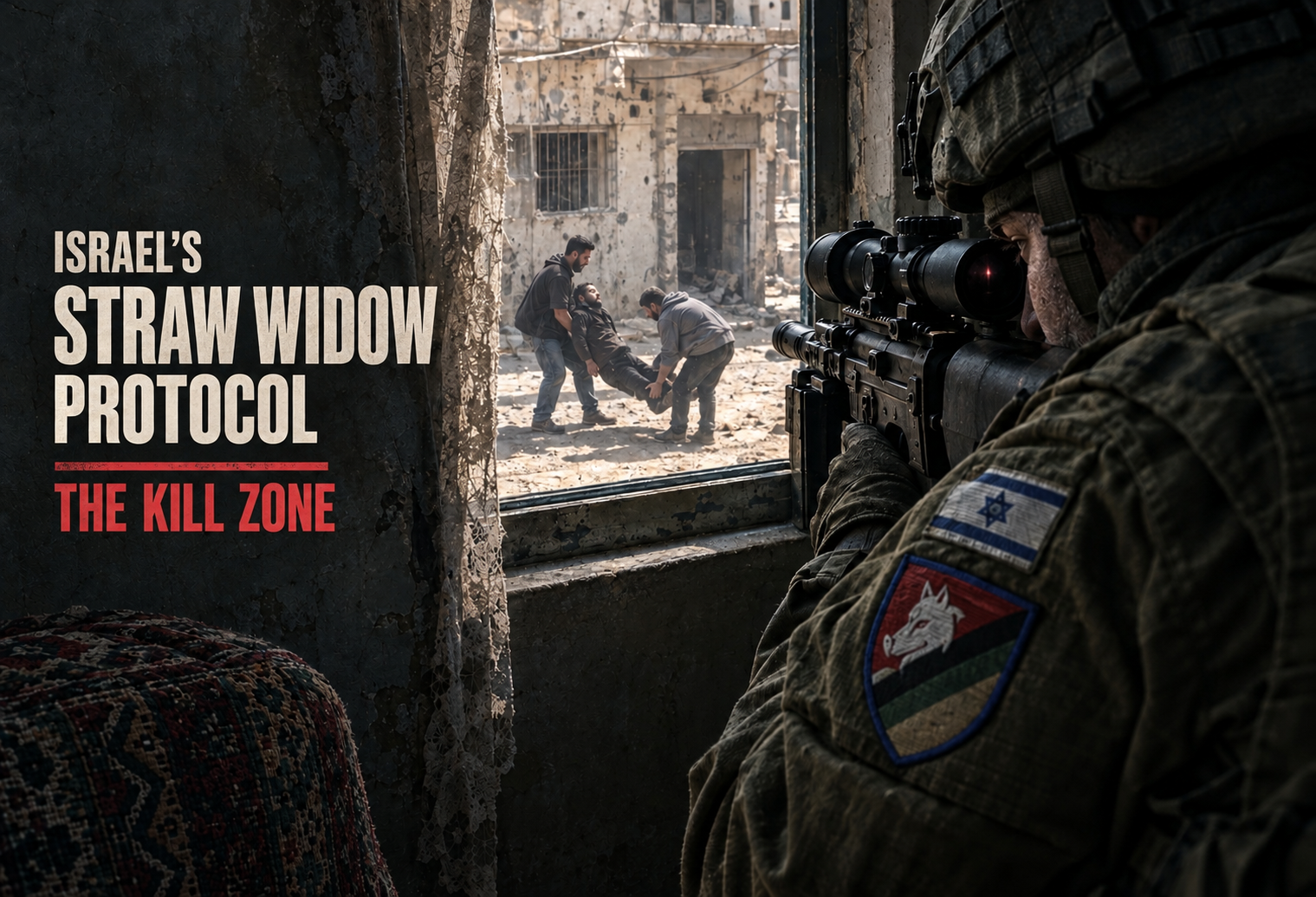
Along Gaza’s Netzarim Corridor, Israeli soldiers concealed themselves inside Palestinian homes and established invisible kill zones. Civilians, including children, were shot for approaching or crossing unmarked boundaries. Military records then counted the dead as terrorists “eliminated.”
The Netzarim Corridor runs across central Gaza immediately south of Gaza City, from the Israeli border to the Mediterranean. Israeli forces established it during their ground invasion, dividing northern Gaza from the rest of the territory. They widened the zone by demolishing surrounding neighbourhoods and building military bases, fortified positions and observation posts.
It was here, amid the civilian communities bordering this military corridor, that Israeli soldiers operated concealed positions inside Palestinian homes. The buildings looked abandoned or ordinary from outside, and Palestinians approaching them could not see the troops or the imaginary boundaries soldiers had drawn around their positions. Crossing one of those invisible lines could mean death.
Israeli soldiers had a name for occupying a Palestinian home and turning it into a concealed military position. Almenat Kash, Hebrew for “Straw Widow.”
Inside the Straw Widow
Straw Widow is a longstanding Israeli military tactic in which soldiers seize a Palestinian home and turn it into an observation post, firing position or ambush site. Families can be confined to one room as troops occupy the rest of the building, restrict contact with the outside and prepare positions from which they can watch or fire.
A reservist who spent about 250 days in Gaza told Der Spiegel how his unit used the tactic in areas that had not been evacuated. Palestinians continued moving through the surrounding streets with no warning that soldiers were hidden nearby. When they approached, the troops attacked them. Those who stepped forward to help were often attacked too.
The military report would record seven terrorists eliminated.
“But no,” the soldier said. “It’s just seven people who crossed an intersection.”
The report did more than conceal how they died. It stripped the dead of their civilian identity and turned their deaths into proof of military success. “We don’t kill, we eliminate,” the reservist explained. “That’s how we’ve always put it.”
Another reservist described occupying a house while serving with Division 252 along the Netzarim Corridor. It belonged to displaced Palestinians and stood on the edge of an inhabited neighbourhood. Around their position, the soldiers established a boundary that Palestinians could not see.
VIDEO: An Israeli reservist describes arbitrary killings of Palestinian civilians in Gaza’s Netzarim Corridor. (Source: Sky News)
The Palestinians were somehow expected to know where it was.
“There’s an imaginary line that they tell us all the Gazan people know,” the soldier said. “But how can they know?”
He recalled one man crossing the boundary and being shot. Another approached the body and was detained. Hours later, the order changed again. Anyone crossing the invisible line was to be shot on sight.
The person approaching might be “a teenager riding his bicycle.” The command made no distinction. “Everyone that comes inside needs to die.”
Breaking the Silence collected similar accounts of lethal boundaries. One captain described people crossing a line as “sentenced to death.” Another reservist described the order in three words, “Adult, male, kill.”
Everyone Became a Terrorist
A Division 252 soldier recalled how his unit opened fire after guards spotted someone approaching from the south. They poured dozens of bullets into him and kept shooting at his body, some laughing as they fired. Only when the troops approached did they discover they had killed a boy of about 16.
The soldiers photographed the body and took the boy’s telephone, which an intelligence officer collected. Hours later, they were told he was not a Hamas operative. By that evening, however, the battalion commander was congratulating them for killing a terrorist and saying he hoped they would kill ten more the following day. A soldier who protested that the boy had been unarmed and looked like a civilian was shouted down. The commander’s answer left no room for what they had discovered. Anyone crossing the line was a terrorist. No exceptions. No civilians.
No independently verified death toll exists for the Netzarim Corridor. The Israeli military claimed that Division 252 had killed more than 200 militants there, but soldiers who served in the corridor dismantled that account from within. An officer in the division’s command said the Israeli military’s own intelligence associated only ten of the dead with Hamas. Other soldiers described how civilians and children were shot for crossing invisible lines, then entered into the count as terrorists.
Even those ten were designated by Israel rather than an independent investigation, and an alleged association with Hamas would not establish that they were taking part in hostilities when killed. The claim of more than 200 militants killed instead reveals the gulf between the military’s public account and its soldiers’ testimony. Palestinians shot inside the corridor became terrorists on paper, their deaths repackaged as military success.
The Der Spiegel reservist described the same practice inside his brigade, which he said killed between 160 and 170 people over roughly 80 days during which there had been no fighting or Hamas attacks. Only one of the dead was suspected of carrying a weapon, though no soldier had actually seen one. He had been holding an object at night about 500 metres north of the corridor and, according to the reservist, posed no immediate threat. His body was never examined, yet he was recorded as a terrorist along with everyone else the brigade had killed.
That figure may overlap with the military’s claim of more than 200 and cannot be added to it. The accounts converge on how the dead were classified. Palestinians were killed without being identified as combatants, then recorded as terrorists after death.
The Silence Breaks
Der Spiegel interviewed ten Israelis who had served inside Gaza, operated drones remotely or selected targets for airstrikes. Breaking the Silence helped the reporters contact some of them. Nine remained anonymous because they feared the consequences of identification, while most said they would refuse to serve in Gaza again. The magazine considered their accounts credible after cross-checking them against other testimony and independently verifiable information.
Yuval Green, the only interviewee who spoke under his own name, served as a medic with the 55th Paratroopers Brigade for 51 days in Khan Younis before refusing further deployment. He described refusing an order to burn a Palestinian house after his commander failed to provide a convincing military justification. His account joins the wider body of soldier testimony describing unarmed Palestinians being killed, homes destroyed without military necessity and civilian deaths recorded as militant casualties. Breaking the Silence documented a similar practice along Gaza’s border perimeter. An Armoured Corps captain serving in southern Gaza described soldiers drawing a line beyond which everyone became a suspect, while admitting he did not know whether Palestinians knew where it was.
DOCUMENT: The Perimeter (2025) documents live-fire enforcement of boundaries Palestinians may not have known existed.(Source: breakingthesilence.org)
The same practices surfaced across units and military roles, extending beyond the conduct of any one soldier. Soldiers speaking at different times described hidden posts, unmarked boundaries, shoot-to-kill orders and the automatic conversion of the dead into terrorists. Some admitted participating. Others stood guard while it happened. Their decision to speak does not erase what they did, but it has broken through the military language that concealed it.
A civilian does not become a combatant by approaching a house, crossing an unmarked boundary or trying to reach someone bleeding in the road. International humanitarian law protects civilians unless and for such time as they directly participate in hostilities. Deliberately targeting civilians for crossing such a boundary, or civilian rescuers for coming to the aid of the wounded, constitutes a war crime.
Almenat Kash (Straw Widow) concealed Israeli soldiers inside Palestinian homes, while the invisible boundaries drawn around their positions turned the surrounding streets into kill zones. Palestinians who had no warning of either were shot, then entered into military records as terrorists.
Those reports turned the killing of civilians into a record of military achievement. People passing through their own neighbourhoods became enemy fighters on paper, their deaths presented as proof of success by the army that had killed them. Calling them terrorists afterwards could not make the killings lawful. It served to conceal the crime.
 Login