Workers hit hard by rising employer health insurance costs


Oxfam pays white staff 33% less on average than ethnic minority colleagues while Cancer Research UK and the British Red Cross aren't far behind, despite commitments to equality and fairness.
The post Oxfam Pays White Staff 33% Less appeared first on The Daily Sceptic.

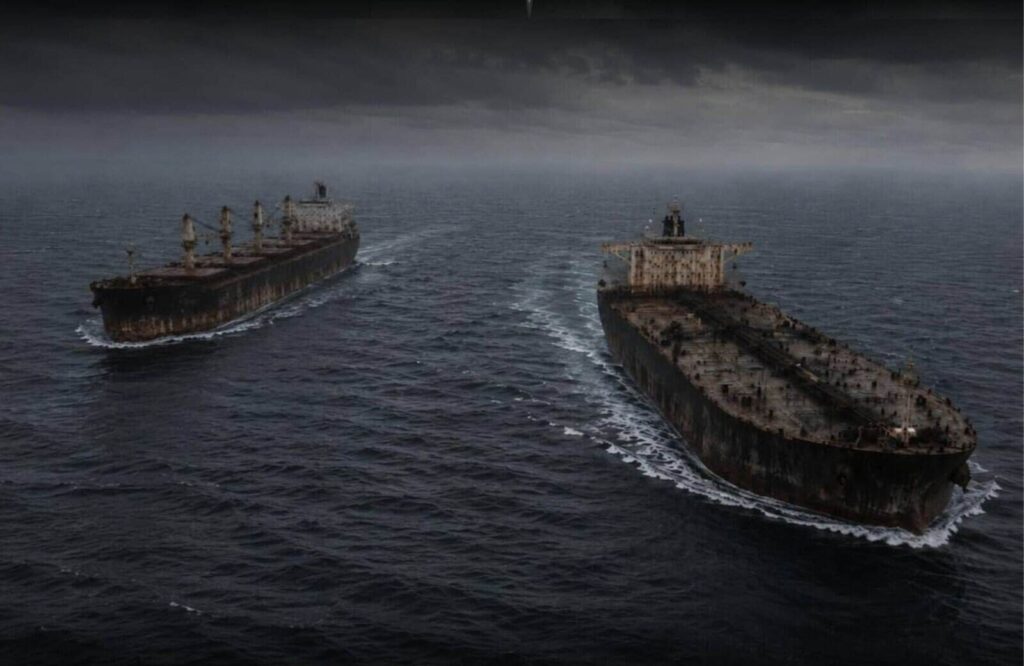
Investors who buy idle sanctioned tankers and refit them could put the ships back into legal oil trade, US Energy Secretary Chris Wright said on 19 October, Bloomberg reported. He laid out the plan five days after a US official described it to Reuters.
That official said the aim was to cut record tanker freight rates. The Energy Department added that any relief would not help Russia move its oil. The plan comes weeks before the 3 November midterms, with voters worried about fuel costs after gasoline and diesel prices surged in the Mideast conflict. Yet the shadow fleet is also how Russia sells oil past sanctions, and those sales fund its war against Ukraine. In December 2025, Ukraine’s foreign intelligence counted more than 1,100 tankers serving Russia alone, 226 of them under US sanctions.
Many sanctioned tankers sit idle, Wright told Bloomberg’s Annmarie Hordern, and buyers keep approaching the administration offering to fix them up and carry only legal oil.
“We’re going to move some of the ships from what I call the ‘bad-guy fleet’ to the ‘good-guy fleet,’” he said. “They will not carry sanctioned oil anymore.”
The ships must go through an approval process, Wright said, but he gave no criteria. He insisted “there is no removing of sanctions.”
He put the global dark fleet at about 1,600 ships, a count covering vessels that hauled Venezuelan, Iranian, and Russian oil. Dozens or even hundreds could turn legitimate, he said. The ships are no longer needed for Venezuelan oil, Wright said, and no Iranian oil is moving. Russian oil exports, he added, “are certainly not growing.”
Earlier, on 9 October, the Treasury issued General License 135, allowing some deals in Russian diesel until 7 April 2027. On 16 October, US President Donald Trump waived sanctions and tariffs under the Graham Act, leaving earlier sanctions intact. That law had directed him to review and sanction shadow-fleet vessels. Trump defended the waiver as a way to keep Moscow at the negotiating table.
House Speaker Mike Johnson told Fox News host Larry Kudlow on 18 October that he had asked the White House team to “carefully consider the unintended consequences,” The Hill reported. He added that he thought “the right decision will be made” in the end.
The incidents occurred on Monday, 19 October, in the northeastern Aegean Sea. Six people died when a speedboat collided with a Greek coastguard vessel near Lesbos, while another six were killed after a separate boat overturned north of Samos.
The deaths coincided with the publication of new figures from the European Border and Coast Guard Agency, Frontex, showing that irregular crossings into the EU fell by almost one-third during the first nine months of 2026.
According to the latest border monitoring figures, approximately 91,000 irregular crossings were detected between January and September, although the eastern Mediterranean remained the busiest migration route into the Union.
According to information released by the Greek authorities, the first fatal incident occurred near Agrilia on Lesbos when a speedboat carrying migrants struck a coastguard patrol vessel before overturning.
Six people died, while eight survivors were taken to hospital. The authorities subsequently arrested a 37-year-old Turkish national, identifying him as the suspected operator of the migrant boat.
Greece’s Maritime Affairs Minister Vassilis Kikilias said the available evidence indicated that the speedboat had struck the left side of the coastguard vessel. The precise circumstances remain under investigation.
In the second incident, approximately four nautical miles north of Samos, a boat reportedly overturned after making a sudden manoeuvre while being pursued by the coastguard.
Five men and one woman died, while 14 people were rescued. An Iranian national was arrested on suspicion of involvement in migrant smuggling.
The arrests do not establish criminal responsibility, and the circumstances surrounding both incidents remain subject to investigation.
Greek authorities have attributed the dangers of the crossings to trafficking networks operating between Turkey and the Aegean islands. The government has reiterated its policy of pursuing smugglers and restricting unauthorised maritime arrivals.
Frontex recorded approximately 31,800 detections along the eastern Mediterranean route during the first nine months of this year, representing a decline of around 15 per cent compared with the equivalent period in 2025.
Across the European Union’s external borders, the agency reported an even larger reduction, with overall detections down by almost one-third.
The Central Mediterranean route experienced a particularly substantial fall, while the Western Mediterranean recorded an increase, reflecting changes in departure points and migration patterns.
These figures count detected border crossings rather than individual migrants and do not necessarily capture every unauthorised arrival.
The latest data also have to be considered alongside exceptional developments elsewhere on Europe’s borders. In July, large-scale movements through Spain’s Ceuta enclave created additional pressures on Spanish authorities and raised questions about the application of the EU’s new asylum arrangements.
The eastern Mediterranean figures encompass several routes, including crossings from Libya towards Crete, movements through the Aegean islands and arrivals across the land border with Turkey.
Consequently, the total recorded for the wider region should not be interpreted solely as the number of people arriving on the Greek islands.
Greece has occupied a central position in EU migration policy since the 2015–2016 crisis, when hundreds of thousands of people arrived from Turkey, many travelling onwards through the Balkans.
The subsequent EU–Turkey migration arrangements were intended to reduce unauthorised crossings and establish procedures for returning certain migrants who did not qualify for protection.
Athens has also faced persistent criticism from human rights organisations concerning allegations of unlawful returns at sea and land borders. Greek authorities deny operating an unlawful pushback policy and maintain that their border operations respect domestic and international law.
The EU’s Pact on Migration and Asylum, which entered into application in 2026, has introduced common procedures for screening arrivals, processing asylum claims and managing people who do not have permission to remain.
Its implementation has placed greater emphasis on border identification, biometric registration and cooperation between national authorities and Frontex.
However, the two disasters demonstrate the continued risks associated with maritime crossings, even during a period of declining arrivals.
Investigators must now establish precisely how both boats overturned, whether criminal offences were committed and what occurred during the encounters with coastguard vessels.
The findings will be relevant not only to the prosecutions of those arrested, but also to continuing scrutiny of maritime enforcement along one of the European Union’s principal external borders.


Interior Minister Fernando Grande-Marlaska said on Friday, 16 October, that approximately 12,000 people had returned voluntarily to Morocco since August, while the authorities had expanded facilities to process asylum applications and return decisions.
Nevertheless, substantial administrative and humanitarian challenges remain in the Spanish enclave, particularly concerning people awaiting decisions on their legal status and unaccompanied minors. The situation has become an important test of the European Union’s revised migration and asylum legislation.
The crisis began on 30 July, when tens of thousands of people entered Ceuta from Morocco by land and sea following the circulation of misleading information on social media about access to Spanish territory.
According to an October briefing by the European Parliament’s Research Service, approximately 80,000 people crossed into the enclave during the incident, overwhelming local reception facilities and creating an emergency at one of the EU’s few land borders with Africa.
A subsequent European Parliament resolution referred to at least 141 deaths associated with the crossings, although the initial figure reported by Spanish authorities was lower. The exact number of people who crossed and the final death toll have remained subjects of uncertainty.
Most entrants returned to Morocco within days. However, thousands remained, leaving Spain responsible for assessing individual claims, arranging lawful returns and providing appropriate accommodation.
Ceuta’s geographical position complicates these procedures. Although the enclave is Spanish and forms part of the EU, travellers departing for mainland Spain remain subject to specific controls at its ports and airports.
During a visit to Ceuta on 16 October, Grande-Marlaska defended the government’s management of the emergency and announced that additional police resources would substantially increase administrative capacity.
The expanded temporary reception and processing facilities at El Tarajal are intended to handle at least 100 files daily, including applications for international protection and return procedures.
According to figures presented by the Interior Minister, approximately 1,200 applications for international protection had been formally submitted, with around 700 decisions already issued.
He also rejected allegations that the authorities had conducted concealed or involuntary returns, insisting that departures to Morocco had followed voluntary decisions or the appropriate legal procedures.
The minister said more than 500 expulsions had been executed through judicial or administrative decisions in recent months. These are distinct from the approximately 12,000 voluntary returns recorded since August.
The treatment of unaccompanied minors remains contentious. The European Parliament’s research briefing estimated that around 1,100 such minors were in Ceuta, including some who arrived before the July emergency.
Responsibility for their care has generated disagreement between the Spanish central government and Ceuta’s autonomous administration, particularly over guardianship, identification and the distribution of minors to other regions.
The EU Pact on Migration and Asylum, which began applying in June 2026, was designed to strengthen external border procedures while establishing clearer responsibilities for Member States.
Its provisions include identity and security screening, accelerated procedures for certain asylum applications and a solidarity mechanism allowing countries to support those facing disproportionate migration pressures.
Under the screening rules, the authorities generally have up to seven days to complete the initial checks required for people apprehended after irregular entry.
However, the Ceuta emergency demonstrates the difficulty of applying individual administrative procedures when arrivals occur in exceptionally large numbers within a short period.
The geographical concentration of arrivals means that adequate staffing, interpretation, legal assistance and reception facilities become essential to ensuring the system operates within its prescribed deadlines.
Spain requested assistance from Frontex, Europol and the European Union Agency for Asylum in August. The Commission subsequently announced €114.7 million in emergency assistance in September.
The crisis has widened divisions between European governments over border enforcement and the regularisation of migrants already living within the EU.
Italy and several other Member States have questioned whether Spain’s separate regularisation programme could encourage further irregular migration. Madrid rejects the suggestion that the programme caused the Ceuta crossings.
The Spanish scheme covers only people who met the residence requirements by the end of 2025. Those who arrived during the July 2026 crisis are not eligible.
European Parliament members also adopted a resolution in September calling for stronger protection of the EU’s external borders and greater cooperation with Morocco. The resolution characterised the crisis as involving the possible instrumentalisation of migration, although Spain has said it has no evidence establishing Moroccan government involvement.
The continuing administrative backlog, the position of minors and the effectiveness of EU assistance will determine how quickly Ceuta can return to ordinary border operations.
Beyond Spain, the episode raises a practical question for Brussels: whether Europe’s new asylum framework can maintain border controls and individual legal safeguards simultaneously during an exceptionally large and sudden influx.
The proposals, scheduled for debate in Strasbourg on Monday, 19 October, and a vote on Tuesday, would strengthen coordination over strategic supplies and revise the responsibilities of European companies that depend on vulnerable international supply chains.
At the centre of the discussions is a proposal to establish a European Critical Raw Materials Centre, which would coordinate purchasing arrangements, assess supply risks and support the development of strategic reserves.
The initiative comes amid increasing concern over China’s dominant position in the processing and supply of several materials regarded as indispensable to European industry.
According to the European Parliament’s October plenary briefing, the proposed Critical Raw Materials Centre would operate as an EU body responsible for several functions currently distributed between European institutions and national authorities.
These would include identifying vulnerabilities in supply chains, conducting risk assessments, coordinating contingency stocks and supporting joint purchasing arrangements.
The objective is to give European governments and manufacturers greater capacity to respond to interruptions in supplies of minerals and processed materials that cannot easily be replaced.
The legislative report has been prepared by the Parliament’s Committee on Industry, Research and Energy, with Dutch Social Democrat MEP Mohammed Chahim serving as rapporteur.
The committee examined amendments to the existing legislation during 2026, with its revised report submitted for plenary consideration on 9th October.
Tuesday’s vote is intended to establish Parliament’s position for negotiations with the Council. It would not, by itself, constitute final adoption of the amended regulation.
The European Union depends heavily on imported critical raw materials, particularly those required for batteries, permanent magnets, semiconductors and specialist industrial equipment.
China occupies a particularly important position in the refining and processing of rare earth elements, graphite and several other materials used in high-technology manufacturing.
The concentration of production creates vulnerabilities because disruption at a single stage of processing can affect manufacturers operating across multiple European countries.
According to the Council of the European Union’s assessment of strategic mineral supplies, China is the principal supplier to the EU for numerous materials, including gallium, germanium, magnesium and rare earth elements.
These substances are used in applications extending well beyond electric vehicles.
Permanent magnets are required for certain electric motors, wind turbines and defence systems, while other critical materials are used in radar, satellites, aircraft components and advanced electronic equipment.
Restrictions affecting their availability can therefore have consequences for European industrial output, defence procurement and the development of new technology.
The question for EU policymakers is not simply whether minerals can be obtained, but whether Europe has sufficient alternative sources and processing capacity to withstand restrictions imposed by a dominant supplier.
The Critical Raw Materials Act entered into force in May 2024 and established benchmarks intended to strengthen European production and diversify imports by 2030.
Under the existing framework, the EU aims to develop extraction capacity equivalent to at least 10 per cent of its annual consumption of strategic raw materials, where geological reserves allow.
The corresponding benchmarks are 40 per cent for processing and 25 per cent for recycling.
The legislation also seeks to prevent any single non-EU country from supplying more than 65 per cent of the Union’s annual consumption of a particular strategic raw material at any relevant processing stage.
These are policy benchmarks rather than binding production quotas imposed on individual companies.
Their achievement depends on the development of mines, processing facilities and recycling operations, as well as the ability to attract investment.
New extraction projects frequently require lengthy environmental assessments, infrastructure development and extensive capital investment. Processing operations face additional challenges involving energy costs, technical expertise and commercial competitiveness.
Consequently, reducing import dependence involves more than identifying mineral deposits within European territory.
The proposed amendments also address the responsibilities of major European companies using strategic raw materials.
Under provisions examined by the parliamentary committee, the European Commission would take a greater role in identifying large manufacturers whose operations depend on strategically important supplies.
These companies could face requirements to assess vulnerabilities in their supply chains, including the geographical location of extraction and processing operations and the ownership of relevant facilities.
The arrangements would be particularly significant for businesses producing batteries, aircraft, drones, satellites, advanced chips and other products considered strategically important.
Where significant risks are identified, companies could be expected to consider measures including diversification, improved material efficiency or maintaining stocks.
The proposals also seek to strengthen recycling and the recovery of valuable materials from existing products, reducing the quantity of newly extracted resources required by European industry.
Recycling alone cannot remove the need for imports, particularly where demand for new technologies is increasing, but it can provide an additional source of supply.
The legislation forms part of a wider effort to link European industrial policy with economic security.
Brussels has been seeking additional raw materials partnerships with third countries, while manufacturers remain concerned about the commercial cost of building alternative supply chains.
Recent EU discussions concerning cooperation with Vietnam illustrate the emphasis being placed on securing alternative access to minerals such as tungsten and rare earth elements.
However, diversifying supplies does not necessarily mean transferring extraction and processing to Europe. Partnerships with reliable external producers may remain essential, particularly for materials unavailable in sufficient quantities within the Union.
The proposed European centre would therefore have to balance internal production, international purchasing, strategic stocks and commercial demand.
The immediate legislative issue is whether the revised framework gives European institutions sufficient powers to coordinate these activities without placing disproportionate administrative obligations on businesses.
Tuesday’s parliamentary vote will determine the negotiating position MEPs take into discussions with EU governments over how those responsibilities should be distributed.

US President Donald Trump wrote in a Truth Social post on 18 October that he did not want to “drive, foolishly, Russia away from the bargaining table.” He also wrote: “Signing that document at this time will do that, and I can sign it later, or any time that I want!”
Trump was referring to sanctions and tariffs under the Lindsey O. Graham Sanctioning Russia and Iran Act of 2026, which he waived in an executive order on 16 October, days before the measures were due to take effect. The waiver suspends additional economic penalties intended to pressure Moscow over its war against Ukraine, while leaving earlier US sanctions in place. The decision came weeks before the 3 November midterms, in which Republicans are defending slim majorities in both chambers, and analysts said the penalties could have pushed up oil prices for Americans already paying more, largely because of the US-Israeli war with Iran, Reuters reported.
A week before the waiver, Trump had announced a deal for Russia to increase diesel supplies to global markets. The Treasury also issued a license, valid until 7 April 2027, permitting certain transactions in Russian-origin diesel.
In the Truth Social post, Trump accused Ukrainian President Volodymyr Zelenskyy of targeting Russian diesel refineries, saying the strikes were “seriously hurting the world diesel markets, including those in the United States.” Kyiv had paused its refinery strikes for three days at Washington’s request after Trump declared an energy ceasefire on 11 October, which Russia never confirmed, then resumed them. Since then, Russia has struck Ukraine’s energy sector 76 times, Zelenskyy said on 18 October.
Trump wrote that Zelenskyy “doesn’t want to end this war, and probably never did,” and that he “could have made a better deal two years ago than he can now.”
“His country is in shambles, a large portion of his land is lost, his oceans and seas are gone, and his male population is low, wounded, and/or dead,” Trump added.
He also said Russia was “doing very little, if anything, to help” Iran and that he wanted to keep it that way.
On 17 October, Trump told reporters at Mar-a-Lago that he had not announced his final decision. “A lot of you don’t know what my decision is yet, but we’ll figure it out, and you’ll figure it out,” he said, Reuters reported.
“I think the president wants to take the 60-day period of time to sort of analyze what imposing both sanctions and tariffs will mean to the global economy and even to the US economy,” US Secretary of State Marco Rubio told reporters before departing for Uzbekistan the same day.
Zelenskyy called it a “pity” that Trump had waived sanctions under a law named for the late Senator Lindsey Graham, who “really believed in Ukraine.” He said he hoped Trump would change his decisions, NBC News reported.
Discussing the diesel deal on NBC’s Meet the Press, Zelenskyy said US oil prices had risen because shipping through the Strait of Hormuz was blocked, not because of Ukraine.
On 17 October, Zelenskyy told journalists that “the decision to undo all of this, to block all of it, seems wrong to me” and that it “definitely helps only the Russians.” His remarks appeared in Ukrainian on his official Telegram channel.
“Sanctions relief will continue. I think the diesel deal and the move regarding the Lindsey Graham Act are not the end of it. Unfortunately,” Zelenskyy said.
On 19 October, Zelenskyy wrote that partners had again given no warning of Russia’s overnight ballistic attack and that blocking missiles for Ukraine’s air defense while Russia gets sanctions eased or postponed amounts to partners denying reality.
Republican Senator James Lankford defended Trump’s decision on NBC’s Meet the Press, saying the president was “choosing the American people first.”
Senator Darline Graham, Lindsey Graham’s sister, whom Trump has endorsed for a full term, said at a campaign stop on 17 October that she would “choose to keep the pressure on Russia.”
“I don’t trust Putin and I don’t trust Russia,” Darline Graham said.
She did not directly criticize Trump but said she would not have made that choice, Reuters reported.


During their visit to Kyiv in September, US President Donald Trump’s envoys urged Ukrainian President Volodymyr Zelenskyy to consider restarting the pipelines that once carried Russian gas to Europe, The New York Times reported on 17 October. They presented it as part of a peace deal with Russia. In the weeks that followed, they pressed the idea with European officials, while Washington freed Russian diesel and spared Russia’s oil buyers from new US penalties.
Energy sales fund Russia’s war, and Ukraine’s halt of transit in January 2025 left TurkStream as Gazprom’s only pipeline route into the EU. Meanwhile, Russia has kept bombing Ukraine’s grid through the energy truce Washington declared on 11 October.
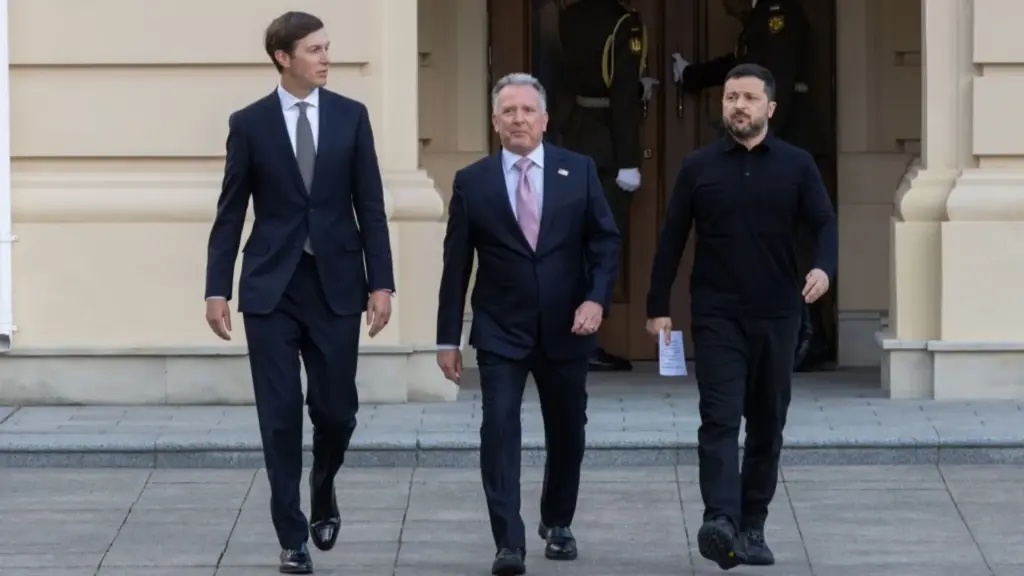
Envoys Steve Witkoff and Jared Kushner put the idea to Zelenskyy when they met him in Kyiv, the newspaper reported, citing people familiar with the talks. Trump officials argued that transit fees, which Ukraine gave up at about $1 billion a year, would benefit Kyiv, and that European voters would eventually want cheaper energy. Russia’s share of EU gas imports had fallen from 45% in 2021 to 13% last year.
The envoys presented renewed Russian gas sales as one of the economic incentives in a wider settlement covering Russia’s relationship with NATO, security guarantees for Ukraine, and territorial control. Some European and Ukrainian officials suspected Washington would seek a cut of the profits. The White House denied that the Nord Stream pipeline had been a subject of recent discussions. Kremlin spokesman Dmitry Peskov claimed that resuming energy cooperation is in Russia’s interest and, right now, even more in Europe’s.

At Ukraine talks the envoys hosted in Florida last week, Günter Sautter, security adviser to German Chancellor Friedrich Merz, forcefully opposed the idea. German lawmakers have called a return to Russian deliveries a disaster for European security, even treason, as the far-right AfD courts Gazprom to bring the gas back. Former Economy Minister Robert Habeck, who steered Germany off Russian gas after 2022, said Trump “seems to have more sympathies with Vladimir Putin than he has with the Ukrainians.”
Rather than pressure Putin or strengthen Ukraine, the administration has spent much of its peace effort on economic incentives for Russia, the newspaper wrote. The US Treasury cleared imports of Russian diesel on 9 October. On 16 October, Trump waived the penalties on Russia’s oil buyers that Congress had passed in the Graham Act. Washington is also weighing relief for sanctioned shadow fleet tankers. And the White House ordered limits on the military satellite service Ukraine’s forces rely on, Reuters reported.
Putin’s economic envoy Kirill Dmitriev claimed the ice had broken and more joint initiatives would follow, including data centers powered by Russian nuclear energy. The talks also cover the sale of Lukoil’s foreign assets to a group that includes the US government, the newspaper reported earlier this month. Zelenskyy, who had heard the pitch in Kyiv, alluded to it in a Financial Times interview this week.
“The question will be when will the next deal be? Maybe it will be gas. Definitely it will be gas,” he said.
Reopening the pipelines could hand Moscow back significant revenue and strengthen its sway over Europe’s energy market, Liga noted. Each new concession lowers the price Russia pays for continuing the war.
America's interminable war with Iran has killed thousands, disrupted commerce that flows through the Strait of Hormuz, and raised prices on the home front.
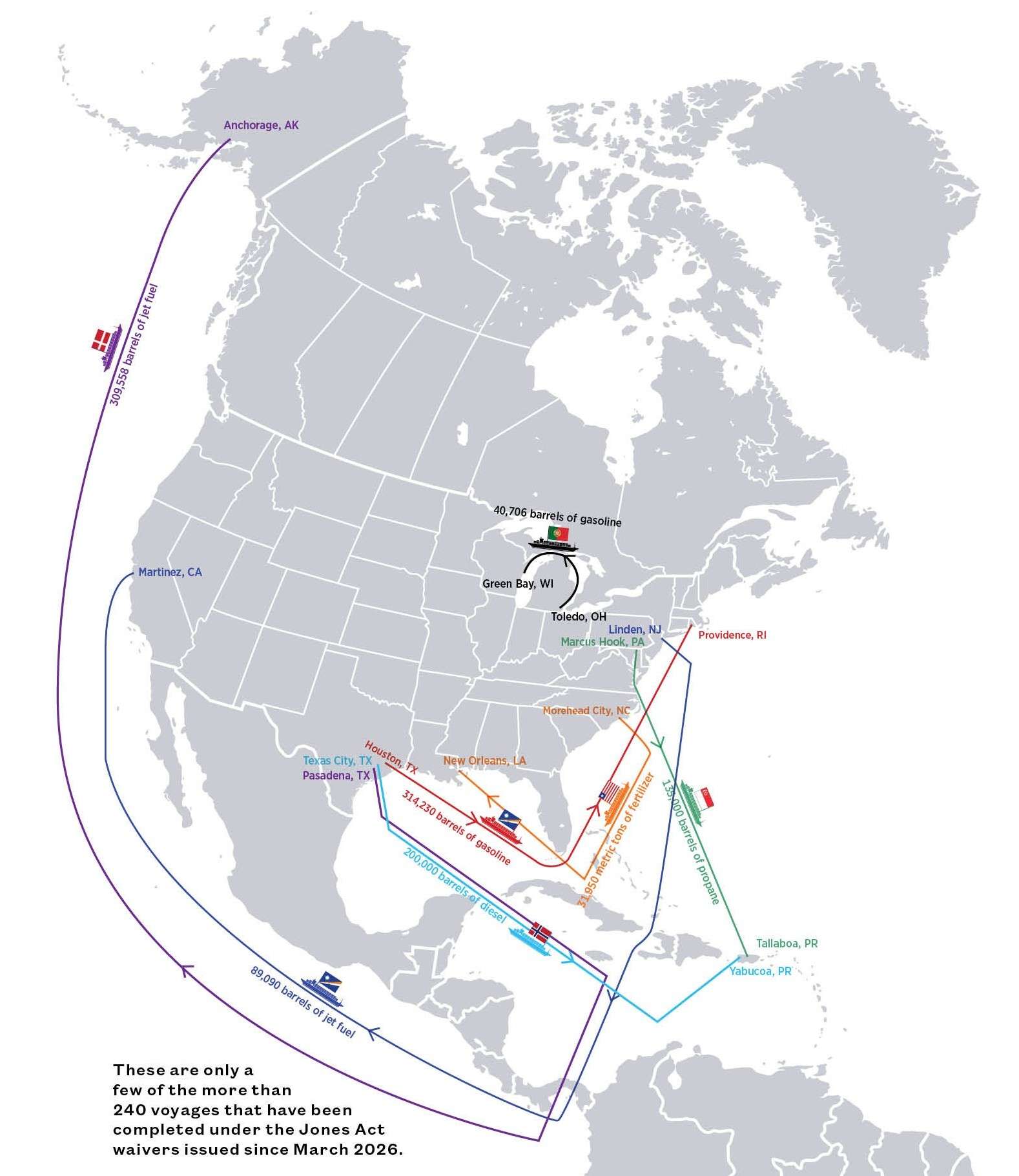
But there may be one silver lining. In an attempt to lower gas prices that spiked because of the war, the Trump administration has repeatedly issued waivers of the Jones Act, a century-old law that requires all goods moved between American ports to be carried on American-built, American-crewed ships.
With the law (temporarily) not being enforced, commerce has exploded.
Just look at how much propane has been shipped from the mainland United States to Puerto Rico, says Colin Grabow, a trade policy analyst at the Cato Institute and perhaps the nation's foremost advocate for abolishing the Jones Act.

Since March, when the first waiver was issued, Puerto Rico has imported more than 800,000 barrels of propane from the mainland. That's more than twice the amount of American propane shipped to Puerto Rico in the last 22 years combined.
America is one of the world's leading producers and exporters of propane, but the lack of Jones Act–compliant ships capable of carrying gas means that it has been nearly impossible to ship propane from the mainland to outlying parts of the country. In the past, Puerto Rico has imported gas from Nigeria, Chile, and elsewhere because those deliveries don't have to comply with the Jones Act.
For years, libertarians have argued that the Jones Act unfairly impoverishes American consumers and businesses that want to buy and sell things within the same country in order to artificially inflate the price of moving those things across water. Waiving the law seems to have proven that point: There are plenty of ships capable of moving gas and oil around the country as long as the government gets out of the way.
"The instant the Jones Act no longer applied to energy shipments, mainland propane displaced foreign imports, suggesting it had been the cheapest option all along," says Grabow.
Puerto Rico is hardly the only winner.
The Jones Act waivers are offering a glimpse into a world where the law doesn't exist. From March through mid-August, there had been 210 voyages completed that otherwise would have been deemed unlawful without the waivers, according to an analysis of Maritime Administration data by the Institute for Energy Research.
It's a world where American oil and natural gas can be more easily shipped from the Gulf Coast to New England, which had previously been importing energy from Russia and Europe. Another big winner is California, which had been importing gasoline from as far away as the Bahamas because it was nearly impossible to legally ship gas from Texas or Alaska to the West Coast.
President Donald Trump reupped the Jones Act waiver in mid-May. Another extension, issued in August, will last for 90 days but applies only to ships carrying energy products such as gas and oil. Before that waiver expires in November, lawmakers ought to kill the Jones Act permanently.
There is some irony in the fact that one of Trump's most successful policy maneuvers has paused a protectionist law that limited commerce, when so much else of his economic policy has been focused on erecting barriers to trade. It's also amusing that it was a war in the Middle East—something Trump pledged to avoid—that triggered this change.
Still, the proof is in the shipping. The free traders were right all along.
The post Trump's War With Iran Pushed Him To Waive a Century-Old Shipping Law. Commerce Boomed. appeared first on Reason Magazine.
President Donald Trump has suspended the implementation of sweeping American sanctions against Russia, using presidential waiver powers to prevent penalties approved by Congress from taking effect just weeks after he signed them into law.
The executive order issued by the White House on Friday, 16 October, suspends tariffs of up to 500 per cent on Russian imports, alongside penalties targeting major purchasers of Russian oil and gas. It also waives numerous financial and commercial restrictions intended to reduce Moscow’s ability to finance its war against Ukraine.
The decision comes two days before the 18 October deadline for implementing key provisions of the Lindsey O. Graham Sanctioning Russia and Iran Act of 2026, which Trump signed on 18 September. The legislation was named after the late Republican senator Lindsey Graham, who had championed tougher economic measures against Russia.
The presidential order formally establishes the tariff increases required by the legislation while simultaneously suspending their application.
Under the law, Russian imports into the United States would face additional duties of 500 per cent. A separate provision would impose 100 per cent tariffs on goods imported from the five largest purchasers of Russian crude oil and natural gas if those countries knowingly made new purchases from 18 October, subject to specified conditions and exemptions.
Another provision targets countries identified as leading facilitators of Russian oil sanctions evasion, potentially exposing their exports to similar American penalties.
Trump invoked Section 115 of the legislation, which permits the president to waive sanctions and tariffs after certifying to Congress that doing so serves the national interests of the United States.
The order confirms that the certification and an accompanying explanatory report have been submitted to Congress. However, the publicly released document provides no detailed justification for suspending the measures.
The waivers will remain in effect until the president or designated senior officials decide that further action is appropriate. Existing sanctions imposed under earlier executive orders are explicitly preserved, meaning the decision does not remove all American restrictions against Russia.
Nevertheless, the order prevents the new legislation’s principal economic penalties from operating at a time when Congress had sought to intensify pressure on Moscow.
The suspension follows Trump’s agreement with Putin to facilitate renewed Russian diesel exports, announced on 9 October as part of an effort to reduce international fuel prices.
As EU Today previously reported, the agreement envisages an immediate release of more than 300,000 tonnes of Russian diesel, followed by additional shipments in November and subsequent months. Washington also authorised certain transactions involving Russian diesel until April 2027.
The arrangement has raised questions about the relationship between the administration’s energy policy and sanctions intended to constrain Russia’s war economy.
Diesel prices have become an increasingly important domestic political issue ahead of the American congressional elections on 3 November. The war involving Iran and disruptions to international energy supplies have contributed to exceptionally high fuel costs, creating additional pressure on the administration.
The White House hopes additional Russian supplies will relieve pressure on international markets. However, energy analysts have questioned whether the quantities involved will materially affect American prices, particularly before the elections.
The latest waiver also removes the immediate threat of punitive tariffs against major Russian energy customers, including China and India, which had objected to the proposed measures.
The decision is likely to intensify opposition within Congress, where the sanctions legislation attracted substantial bipartisan support.
Earlier this week, 12 senators, including six Republicans, called on Trump to reverse his diesel agreement, arguing that allowing Russian fuel back onto international markets would provide Moscow with additional revenue for its military operations.
Democratic Senator Richard Blumenthal, who helped develop the sanctions legislation, criticised the diesel arrangement as contrary to Congress’s intention to strengthen economic pressure on Russia.
The decision also exposes a widening divergence between Washington and Brussels.
At the European Council meeting on Friday, European Commission President Ursula von der Leyen and European Council President António Costa reaffirmed that EU sanctions against Russia would remain in place until Moscow ended its war against Ukraine.
Costa declared that the present circumstances required increased pressure on Moscow rather than a relaxation of existing restrictions. The European Union is also preparing a 22nd sanctions package while considering additional financial support for Kyiv.
For Ukraine, the decision means that Russia will continue to benefit from energy exports and the international trade that helps finance its war. Instead of tightening restrictions on these revenues, Washington has suspended measures specifically intended to cut them.
The timing is particularly significant. While Trump is pressing Kyiv to halt attacks on Russian oil refineries and other energy facilities, Moscow continues its strikes against Ukrainian cities and civilian infrastructure. Zelenskyy has argued that Ukraine cannot be expected to stop targeting Russia’s energy sector while Russian attacks on Ukrainian infrastructure continue.
Although Trump can reinstate the sanctions, his decision removes the immediate threat of additional penalties against Russia and its principal energy customers. It also places Washington increasingly at odds with its European allies. Brussels remains committed to maintaining and expanding sanctions against Moscow, while the White House is now giving priority to reducing American fuel prices, even if that means easing economic pressure on Russia.
Artificial intelligence is becoming established across European businesses, but almost half of companies remain unwilling to trust automated systems when decisions concern their employees, according to a European Commission survey published on 14th October.
The Eurobarometer findings show that 42 per cent of the small and medium-sized enterprises and mid-cap companies surveyed already use artificial intelligence or algorithmic management systems, although most deployment remains limited or experimental. A further 21 per cent intend to introduce such technologies in the future.
Despite this expanding adoption, 49 per cent of respondents said they did not trust artificial intelligence or automated systems to make staff-related decisions. The figures suggest that companies increasingly distinguish between using technology to improve business processes and delegating managerial responsibility to software.
The Commission’s survey of European businesses was conducted between March and April 2026, involving approximately 12,826 telephone interviews with company leaders across the EU’s 27 member states.
The survey provides a more detailed picture of workplace AI than conventional statistics measuring whether companies have adopted the technology.
Among the businesses interviewed, customer service and client relations were the most commonly reported areas of application, accounting for 47 per cent. Monitoring employee performance and productivity accounted for 36 per cent, while logistics, planning and staff scheduling represented 30 per cent.
These functions differ substantially in their consequences for workers and managers.
A system that helps organise deliveries or forecasts customer demand may improve efficiency without directly determining employees’ working conditions. Software that evaluates performance, allocates shifts or recommends staffing changes can influence employment decisions and requires a different level of organisational supervision.
The survey found that 61 per cent of companies considered AI useful in supporting decisions. However, human involvement remained central: 90 per cent of respondents reported that people continued to make decisions, while fully automated decisions accounted for only 2 per cent.
The results undermine the assumption that adopting AI necessarily means transferring control of business operations to autonomous systems.
For many companies, the immediate commercial value lies in processing information more rapidly, identifying patterns and reducing administrative workloads rather than removing human management entirely.
Financial and organisational obstacles continue to limit adoption.
Half of the companies surveyed cited high investment costs, while 49 per cent identified legal uncertainty and 48 per cent pointed to insufficient expertise.
These findings are particularly relevant to small businesses, which frequently lack dedicated technology teams, extensive data infrastructure or the resources to evaluate complex software systems independently.
For such businesses, purchasing AI tools is only one component of the investment. Implementation can also require employee training, changes to internal procedures, data-security assessments and continuing technical support.
The findings add a workplace dimension to concerns raised in EU Today’s earlier examination of Europe’s AI productivity gap, which identified investment, computing capacity and organisational restructuring as obstacles to translating adoption into higher productivity.
A company may purchase sophisticated software without necessarily achieving corresponding improvements in performance. Those improvements depend on whether the technology is integrated into everyday operations and whether employees have the skills to use it effectively.
The survey arrives while the European Commission is considering additional rules on algorithmic management through its proposed Quality Jobs Act.
The initiative is intended to address working conditions, workers’ rights and the increasing use of automated systems in managing employees.
A consultation launched in July asked European employers and trade unions to consider transparency in automated decisions, excessive workplace monitoring and the responsibilities of companies using AI.
The second consultation phase ended in September, allowing social partners to propose negotiated arrangements before the Commission determines its next legislative steps.
The broader regulatory framework is already changing. As EU Today explained when the AI Act entered a new enforcement phase, Brussels has begun enforcing certain obligations for general-purpose AI models, while important requirements for high-risk applications, including employment-related systems, follow a later timetable.
Stand-alone high-risk systems are scheduled to face the relevant obligations from December 2027, with another deadline in August 2028 for high-risk systems embedded in regulated products.
The distinction matters for employers planning investments today. Existing data-protection and employment obligations continue to apply, but some of the AI Act’s more specific compliance requirements remain subject to transition periods.
The Commission’s latest survey indicates that businesses are already exercising caution independently of these future obligations. Their reluctance to automate sensitive staff decisions suggests that accountability, reliability and employee confidence will remain important factors in determining how extensively artificial intelligence is deployed.
For Brussels, the challenge is to establish workable rules for that transition without making implementation prohibitively expensive for smaller companies, which account for much of Europe’s employment and commercial activity.
The European Union’s General Court has rejected a legal challenge to the European Commission’s classification of adult entertainment platform Stripchat under the Digital Services Act, strengthening Brussels’ authority to determine which online services must comply with the legislation’s most demanding obligations.
In its judgment delivered on 14th October, the Luxembourg-based court dismissed the action brought by Technius Ltd, the company operating Stripchat, against its designation as a very large online platform.
The dispute centred on how the Commission calculated the platform’s average monthly active users in the European Union, which determines whether additional regulatory obligations apply.
Under the Digital Services Act, platforms exceeding 45 million monthly active recipients in the EU are subject to enhanced supervision, including requirements concerning systemic risks, transparency, content moderation and independent auditing.
The judgment addresses a fundamental question for European digital regulation: whether companies can exclude particular categories of website visits when calculating the number of people using their services.
In February 2023, Technius reported that Stripchat had approximately 31.8 million average monthly active recipients in the EU, placing it below the threshold for very large online platforms.
The company relied on information provided by Similarweb, a commercial service measuring website traffic and user behaviour.
However, the Commission questioned the methodology used to reach that figure. Technius had discounted certain visits on the grounds that users entered the website but departed without engaging with its content.
Such visits are commonly described as bounced visits and frequently appear in commercial website analytics.
The Commission concluded that the company’s deductions had significantly underestimated its audience because the original Similarweb calculation of unique visitors already incorporated a filtering process excluding many bounced visits.
On that basis, Brussels calculated that Stripchat had more than 62 million monthly unique visitors in the EU, well above the statutory threshold.
The Commission consequently designated the platform as a very large online service on 20th December 2023. Technius challenged the decision, arguing that the figures were unreliable and that the absence of a prescribed calculation methodology undermined legal certainty.
The EU General Court rejected both arguments.
According to the court’s official explanation, the Commission had adequately explained its calculation and was entitled to rely on the data available when the designation decision was adopted.
The judges found that Technius had effectively applied deductions to figures from which relevant traffic had already been filtered, producing an artificially reduced estimate of active recipients.
The judgment also addressed a potentially significant complication.
After the Commission adopted its decision, Similarweb revised its methodology. Using the corrected method, Stripchat’s estimated monthly active audience for the relevant period was approximately 37.3 million.
That figure was below the threshold for classification as a very large online platform. Nevertheless, the court held that the subsequent correction did not invalidate the original designation.
The judges determined that the Commission’s decision had to be assessed according to the facts, applicable law and permissible evidence available when the decision was taken.
The ruling therefore does not establish that Stripchat currently exceeds 45 million monthly users. It confirms that the later recalculation was insufficient to annul the Commission’s December 2023 decision.
The consequences extend beyond one adult entertainment website.
The Digital Services Act covers online intermediaries operating in the European market, including social networks, marketplaces, hosting services and other platforms.
Its obligations increase according to the size and nature of a company’s operations. Very large online platforms must assess systemic risks associated with their services, introduce appropriate mitigation measures and submit to independent audits.
The Commission is responsible for supervising their additional obligations and can impose substantial financial penalties for established infringements.
The distinction between the two categories can therefore have considerable financial and operational consequences.
Companies falling below the 45 million threshold remain subject to relevant DSA obligations but do not face the same additional requirements imposed on the largest platforms.
The General Court’s ruling confirms that companies cannot escape designation by applying an unreliable interpretation of website traffic data.
At the same time, the Commission’s published supervisory framework allows a designation to be revoked when a platform remains below the threshold for a full year.
The judgment comes as the Commission faces multiple legal challenges to its enforcement of Europe’s digital legislation.
As EU Today previously reported, Washington has sought to intervene in proceedings concerning the Commission’s €120 million Digital Services Act fine against X, introducing an additional diplomatic dimension to European regulatory disputes.
The Commission is also pursuing separate investigations into whether major platforms comply with obligations concerning the protection of minors, advertising transparency and the management of illegal content.
In another case examined by EU Today, Brussels reached preliminary findings concerning TikTok’s default privacy settings for children, illustrating the practical consequences of the stricter duties imposed on very large online platforms.
The Stripchat judgment concerns designation rather than a finding that the company breached any substantive safety obligation. Its immediate consequence is to preserve the Commission’s original classification decision.
Technius may still appeal to the Court of Justice of the European Union on points of law within two months and ten days of notification of the judgment.
For European regulators, the decision provides judicial support for using established commercial analytics when assessing the reach of online platforms, provided that the methodology is adequately explained and the underlying evidence is reliable.
For technology companies, it confirms that the legal assessment of user numbers extends beyond the figures they choose to report to Brussels. The Commission can scrutinise those calculations and reject methods that fail to provide a reliable estimate of an online service’s European audience.
The head of Mercedes-Benz has warned that excluding British manufacturers from the European Union’s proposed industrial preference rules would damage the competitiveness of carmakers across Europe, challenging Brussels over legislation intended to protect European production from growing international competition.
Ola Källenius, chief executive of Mercedes-Benz and president of the European Automobile Manufacturers’ Association (ACEA), criticised the prospect of restricting British participation in the forthcoming “Made in Europe” framework during discussions in Brussels on Wednesday, 14 October.
His intervention comes as European governments negotiate the Industrial Accelerator Act, which would introduce European-content requirements affecting public procurement and certain forms of industrial support.
The proposed legislation is intended to strengthen manufacturing within the EU, but its treatment of production in neighbouring countries has become contentious, particularly in an automotive industry whose factories and suppliers operate across national borders.
British manufacturing remains closely integrated with continental European automotive production despite the United Kingdom’s departure from the single market.
Components manufactured in Britain are incorporated into vehicles assembled in EU member states, while British factories depend on engines, batteries, electronics and other parts produced in continental Europe.
The value of this integrated manufacturing system depends on companies being able to source components across borders without unnecessary restrictions.
Källenius warned that excluding the UK from the proposed rules would weaken manufacturers operating on both sides of the Channel.
His position reflects industry concerns that a narrowly defined European-content regime could impose additional costs on companies already facing pressure from Chinese competition, slowing demand and substantial investment requirements.
As EU Today reported in September, British Prime Minister Andy Burnham has been pressing Brussels to recognise the UK as a trusted industrial partner under the emerging framework.
Germany has also supported a broader approach that would allow selected trading partners to qualify under European-content rules where reciprocal conditions are met.
France has favoured stronger preferences for production within the EU itself, reflecting differences among member states over how far European industrial policy should extend beyond the Union’s borders.
The Industrial Accelerator Act proposed by the European Commission is intended to strengthen Europe’s manufacturing base and support production in strategically important sectors.
Its provisions address public procurement and industrial incentives affecting products including vehicles, steel, aluminium and clean technologies.
The Commission wants European public spending to support local industrial capacity rather than reinforce dependence on imports from major international competitors.
China has become the principal focus of those concerns because of its expanding manufacturing capacity, particularly in electric vehicles and batteries.
However, measures designed to counter Chinese industrial competition could also affect established trading partners whose manufacturers form part of European supply chains.
The United Kingdom, Norway, Switzerland and Turkey occupy different legal positions in their economic relations with the EU, but all maintain important industrial connections with member states.
An approach that treats their production as equivalent to imports from countries with substantially different market conditions could require European companies to reorganise existing supplier relationships.
For manufacturers, replacing a supplier may involve more than simply ordering components from another factory. Production standards, technical certification, logistics and long-term investment arrangements can make changes expensive and difficult.
Following an ACEA board meeting on Wednesday, European manufacturers called for faster progress on the wider automotive legislative package.
In its 14 October statement, ACEA urged EU institutions to advance negotiations so that the package could be finalised early next year.
The association argues that manufacturers require a predictable regulatory framework to plan investments in electric vehicles, production facilities and new technologies.
Källenius linked the industry’s transition towards zero-emission mobility with the need to preserve employment and strengthen economic security.
European manufacturers are simultaneously investing heavily in electrification while competing against Chinese companies with established battery supply chains and significant production capacity.
The resulting financial pressures are particularly serious for manufacturers that must develop new vehicle platforms while maintaining existing factories and dealer networks.
Additional restrictions on component sourcing could complicate those decisions at a time when companies are seeking to reduce costs.
The dispute has acquired a further dimension following remarks by British Business Secretary Jonathan Reynolds.
Speaking on Wednesday, Reynolds indicated that Britain would not automatically follow the European Union in imposing tariffs on Chinese vehicles.
The UK government maintains that trade measures must be determined according to British economic interests rather than adopted simply to align with Brussels.
That position complicates London’s attempt to secure favourable treatment under European industrial rules.
EU policymakers have argued that closer alignment on trade defences could support Britain’s claim to be treated as a trusted partner.
British ministers, however, must consider whether restrictions on Chinese imports would benefit domestic manufacturers and consumers.
The disagreement will form part of the broader economic relationship being discussed ahead of the next UK–EU summit, scheduled for 20 November.
The automotive dispute follows earlier negotiations over British participation in European defence procurement and other industrial programmes.
In both cases, London wants access to initiatives designed to strengthen European production while remaining outside the EU’s institutional framework.
Brussels must determine how far preferential treatment can extend to non-member countries without undermining the objectives of its industrial policy.
The Commission’s proposals have already revealed disagreements between governments favouring a tightly defined European manufacturing base and those seeking to preserve wider commercial partnerships.
Källenius’s intervention strengthens the argument that industrial protection cannot be considered separately from the supply chains on which European manufacturers depend.
The final legislation will influence investment decisions, procurement arrangements and the position of British suppliers within the continental automotive industry.
The outcome will also provide an indication of how far the EU is prepared to accommodate its closest trading partners as it attempts to strengthen European manufacturing against growing competition from China.
The European Commission is continuing discussions with Google over the company’s response to €890 million in penalties imposed under the Digital Markets Act, as Brussels examines whether changes to its search engine and app-store practices are sufficient to address infringements of European competition rules.
Commission spokesman Thomas Regnier confirmed on Wednesday, 14 October, that officials remained in dialogue with the American technology company. The Commission is assessing the measures Google has introduced, taking account of feedback from businesses affected by its services before reaching a conclusion on compliance.
The review follows two decisions adopted on 23 July, when the European Commission found Google in breach of the Digital Markets Act. A €460 million fine concerned preferential treatment for Google’s own services in search results, while a separate €430 million penalty addressed restrictions preventing app developers from freely directing customers towards alternative purchasing channels.
The first infringement concerns Google’s treatment of competing online services offering hotel reservations, shopping comparisons, transport information and sports results.
Regulators concluded that Google had placed its own services in more prominent positions, sometimes providing them with enhanced visual features and search functions unavailable to competing businesses.
The Digital Markets Act prohibits designated gatekeepers from giving their own products preferential treatment when ranking services that compete with those offered by other companies.
Google has already modified its European search results in response to the Commission’s decision. The changes include revised presentations of commercial information and greater prominence for independent comparison services.
As EU Today reported following the introduction of the revised search format, Google has argued that the measures could make searches less convenient and increase dependence on intermediary websites.
The company maintains that direct information previously available through its search engine may become harder for consumers to obtain.
For competitors, however, the question is whether Google’s adjustments provide genuine commercial opportunities or merely alter the appearance of search results without changing the underlying distribution of traffic.
The second case concerns the Google Play application marketplace, where developers have historically depended on Google’s infrastructure to distribute software and sell subscriptions.
Under the DMA, developers must be able to inform customers about alternative offers and direct them towards purchasing arrangements outside the platform, including their own websites.
The Commission found that Google’s restrictions and fees had limited that freedom.
Although the company may charge for certain services associated with acquiring customers, the Commission concluded that the level and duration of its steering-related charges exceeded what the legislation permits.
Google has since adjusted its external-offers arrangements. European officials are examining whether those changes provide developers with a commercially workable alternative to transactions processed through Google Play.
The issue has consequences for subscription services, digital publishers and software companies seeking to maintain direct relationships with their customers.
A formal ability to direct consumers elsewhere is of limited benefit if the financial conditions make such transactions uneconomic.
The Digital Markets Act was designed to address market practices that conventional competition investigations often took years to resolve.
Rather than requiring regulators to establish a new infringement through lengthy proceedings in every instance, the legislation imposes specific obligations on companies designated as gatekeepers.
The Commission’s DMA enforcement framework allows regulators to examine whether those obligations are being followed and to impose financial penalties when they are breached.
Google’s July fines represented an important enforcement decision. The current review concerns the company’s subsequent conduct and the practical effects of its compliance measures.
The continuation of discussions does not itself establish a fresh infringement. Further penalties would require an additional regulatory determination.
Google also faces broader obligations concerning the sharing of search data with competing providers, an issue addressed in a separate Commission decision issued in July.
These obligations concern access to anonymised information about searches, rankings and user interactions that competing search engines may need to improve their own services.
Taken together, the measures represent a substantial intervention in how Google’s European business operates.
The proceedings have acquired a political dimension because most of the largest companies affected by the DMA are American.
President Donald Trump has criticised European penalties against US technology companies and threatened trade measures in response to what his administration regards as discriminatory regulation.
Brussels maintains that the legislation applies according to market position and commercial conduct, regardless of nationality.
European regulators must nevertheless enforce their decisions in an environment where competition policy has become entangled with wider trade relations between the United States and the European Union.
Google’s financial exposure extends beyond the €890 million imposed in July. Continued non-compliance could lead to further regulatory proceedings, while changes to the company’s services may also affect advertising revenue and its relationships with commercial partners.
The immediate assessment will concentrate on whether competing search services receive fair treatment and whether application developers can direct customers towards alternative transactions without unjustified restrictions.
The Commission has not announced a date for its final assessment. Its decision will help establish how far Europe’s digital competition legislation can change the conduct of companies whose platforms occupy central positions in online commerce.
In December 2023, a Belarusian KGB representative entered an online seminar organised by the Belarusian Free University and told participants that everything was under the service’s control.
The following month, the online university, run from exile, was designated an “extremist entity”.
It was a warning that being in exile in a safe country does not necessarily put independent voices beyond the reach of authoritarian states.
For people forced into exile, reaching the EU should mean being able to continue their work without fear. Yet repression follows them into the digital spaces where they organise, report, and communicate. “We can never be sure who is behind a switched-off camera in our online meetings,” one interviewee told us.
ARTICLE 19 Europe’s new report, 404: Safety not found?, draws on interviews with exiled targeted journalists, human rights defenders working in Belarusian and Russian language environments, as well as digital security experts who try to protect them. Respondents identified Belarusian and Russian state-linked actors as major sources of threats, while stressing how difficult it is to attribute individual incidents.
The research documents phishing attacks that expose private communications and trusted contacts, including people inside repressive states. It also shows how platform moderation is manipulated through coordinated malicious complaints.
“Extremist” and “foreign agent” designations deter audiences from sharing or subscribing to independent media. A publication may lose sensitive records built up over years, or remain online yet lose contact with the people it exists to inform.
The harm extends beyond the person whose accounts are compromised. Stolen information may be used to pressure colleagues and relatives, while fear and mistrust drive self-censorship and withdrawal from public work.
For dispersed organisations with few offline ways to reach audiences, losing access to a platform can threaten their ability to function.
To an external observer, those attacks might seem like a scattering of isolated incidents. They are not. Digital transnational repression is a coordinated, evolving strategy – and treating it as anything less than a systemic risk will leave the response permanently one step behind the threat.
It’s a reality that the international community, including the European Union, must confront.
EU governments should recognise transnational repression for what it is: an attack on the conditions that allow independent journalism and civil society to function.
Offering physical refuge is not enough if people in exile cannot safely investigate abuses, organise or reach their audiences.
On 23 September, more than 130 UN human rights experts called for action against transnational repression. Mariana Katzarova, the UN special rapporteur on Russia, has called for a binding UN convention.
But the EU does not need to wait.
The Digital Services Act already gives the European Commission a basis for action. It requires designated very large online platforms to assess systemic risks to fundamental rights arising from their services in the EU and to take effective, proportionate measures in response.
The practical test is straightforward: does a platform’s design or operation enable transnational repression? Does that amount to a systemic risk under Article 34? Has the platform adequately mitigated it under Article 35?
Repeated abuse of reporting systems should trigger scrutiny of how those systems operate.
Platforms should provide meaningful human review, clear and accessible appeals and timely support for users facing coordinated attacks, and scrutinise government requests based on politically motivated designations.
Where the commission finds breaches, it should enforce compliance. Any measures against repression must protect freedom of expression, privacy and secure communication, including encryption.
While attribution remains difficult, victims should not have to establish the entire chain of state responsibility before receiving support.
Investigators must pursue perpetrators and enablers, while regulators assess whether platforms have addressed recurring risks.
These are distinct responsibilities; difficulty in fulfilling one cannot justify neglecting the other.
The EU should also establish a permanent European coordination mechanism linking national authorities, cybersecurity responders, and civil society.
It should set out clear arrangements for cross-border referrals, early warnings and support.
People reporting attacks need practical assistance, legal advice, and psychological support. Authorities must work with affected communities and build trust without treating language or nationality as grounds for suspicion.
The test for the EU is simple: can people who have reached European soil feel safe to continue documenting abuses, speaking publicly and seeking justice without having to constantly fear the governments they fled?
If the EU’s commitment to freedom of expression is real, it must be measured by the protection it delivers.
A new law aimed at protecting children could kill off old video games and threaten small developers, industry trade groups have warned.
The EU Kids Act was unveiled by commission president Ursula von der Leyen last month as a chance to “give childhood back to our children” and put parents “in the driving seat”.
It would require videogames to be catered to children by default with stringent requirements including an eight-hour nighttime lock-out, a ban on screenshots, and guardian supervision.
Gamers wanting to play the full version of games would have to pass age verification checks to access features, like multi-player tournaments or mystery boxes.
The European Commission is gathering feedback on the act with respondents quick to criticise the threat posed to videogame makers.
Stop Killing Games, a campaign to protect videogames, has opposed the act.
“This could turn the EU into a pariah state for videogames,” said Ross Scott, the consumer group’s founder. He reckons the regulation could spark a race to update games or deactivate them.
MEPs have also joined in sounding the alarm bell.
If the law passed, developers would need to make a child mode version of games and gate the full games behind a verification step.
“This is going to bury developers with compliance steps, and a whole lot of cost,” said Scott.
Age verification with zero-knowledge proof (meaning developers cannot collect data) will likely be required. “In practice, providers would likely need to engage a third-party age assurance provider,” also said Lauro Fava, partner at law firm Pinsent Masons.
The Commission’s impact assessment claims that third-party age verification apps would reduce costs, but failed to provide estimates.
Fava called it “strange” that these were missing, and thinks the commission “arguably downplayed” the cost of compliance.
Gamer’s Voice, an advocacy group, asserted that small games would struggle to pay for age-verification and other compliance measures, likely to inlclude game redesigns.
The Kids Act would outlaw features ‘increasing social comparison’ for minors, meaning functions like leaderboards and kill counts could be restricted.
And while the cost to developers is not known, it is feared prices could increase for players.
The wide scope of the draft law means community servers and hobbyist-developed games could be subjected to the new rules. Any game, new or old, would have to follow measures unless strictly offline in a physical format or built only for educational purposes.
And since the rules would apply to games made or consumed in the EU, it is feared game makers could block access to their games on the bloc.
This article continues, but the full version is available only to EUobserver.com subscribers. Visit account.euobserver.com/membership