❌

Reading view

Hegseth bars US forces from using undisclosed information to bet on Polymarket, Kalshi

Defense Secretary Pete Hegseth barred all Pentagon staff from using undisclosed information to place wagers on forthcoming U.S. military action using betting platforms and prediction markets like Kalshi and Polymarket.  “Make no mistake why this matters. Our enemies watch movements in these markets,” Hegseth said in a memo, first obtained by CBS News. “When an American…

  •  

At least 160 Israeli settler attacks in 2 weeks

Israel is preventing thousands of Palestinian farmers in the West Bank from reaching their olive trees, while settlers harvest their crops. 90 per cent of Gaza’s two million olive trees have been destroyed since October 2023

  •  

France Is a Warning to California's Tax-the-Rich Crowd

Protest in France | Elise Cabane/ZUMAPRESS/Newscom

French economist Gabriel Zucman has come to California bearing a familiar French solution to a fiscal problem: another tax.

Once based at the University of California, Berkeley, Zucman is back and campaigning for Proposition 40, which would impose an allegedly one-time 5 percent tax on the net worth of Californians worth more than $1 billion. Zucman, who coauthored the proposition, estimates that the tax could raise about $100 billion and claims that 90 percent of the proceeds would go to health care.

The California Legislative Analyst's office is far more cautious, saying it would raise only "tens of billions" and could cause a long-term loss of income-tax revenue as wealthy people leave the state with the companies they created.

I've written plenty about why wealth taxes are economically destructive, administratively nightmarish, and unlikely to achieve anything close to what their advocates promise. But Zucman's prescription is wrong for a more fundamental reason, as his (and my) native country shows: Raising taxes to fuel ever-larger demands for government spending is a recipe for disaster.

Unless you've been living in a remote cave recently, you've likely seen all the protests and destruction in France. But do you know why it's happening?

As another economist, Paul Krugman, rightly noted back in 2017, "France offers a social safety net beyond the wildest dreams of U.S. progressives: guaranteed high-quality health care for all, generous paid leave for new parents, universal pre-K, and much more."

For decades, France has answered any perceived desire with government spending, then responded to the resulting fiscal problem by seeking new revenue sources. Today, French government spending consumes roughly 58 percent of gross domestic product (GDP).

Krugman gloated that France wasn't suffering social collapse and speculated that it was due to all the spending. He certainly can't say that anymore. In fact, he is now worried that France may be on the precipice of a debt crisis. The truth is that France hasn't done well for some time, even when Krugman cheered its spending.

One of the groups in the street today, young people, has faced widespread unemployment for a long time. The youth unemployment rate in France (ages 15-24) has hovered between 17 percent and 27 percent since 2000. In the second quarter of 2026, it was 21.6 percent, against 14.8 percent in the Eurozone and 9.9 percent in the U.S.

French people also pay some of the highest taxes in the developed world, and they're not happy with the return. The government already takes more than 52 percent of the country's output in revenue, runs deficits exceeding 5 percent of GDP, and has accumulated debt approaching 120 percent of GDP. Nonetheless, French students complain that the government is shortchanging schools, while everyone sees that it is shortchanging its army and police.

The students aren't wrong to feel left out. At The Two Cents Substack, Hoover Institution scholar Hanno Lustig calculates that, between 1995 and 2024, spending on social protection and health (most of which benefits older people) rose from 53.1 percent to 58.7 percent of all French government spending. The share devoted to education, defense, and public order fell from 15.2 percent to 13.7 percent. Transportation fell from 5.3 percent to 3.8 percent.

In other words, France has built an enormous welfare state, much of it devoted to older citizens, while letting other state capacities and basic services fall apart. As transfers of wealth swallow a larger share of the budget, everything else gets squeezed.

That is the fiscal ratchet Californians should worry about when Zucman tells them Proposition 40 is necessary to "save" health care. Proponents claim Washington "cut" Medicaid, but that language is misleading. California's deficit started long before any Washington spending reductions. Besides, federal Medicaid spending isn't falling—not even close. The Congressional Budget Office estimates it will reach $708 billion in 2026, 8 percent more than in 2025. What Washington did in the 2025 budget reconciliation law was reduce Medicaid's future growth relative to previous projections, partly by changing eligibility and enrollment rules and financing arrangements.

This is how the ratchet works. Once the government projects a spending increase, anything less becomes a cut. And once Washington fails to finance the entire projected increase, Californians are told that Sacramento must backfill the missing money. And how should it do that? Conveniently, by creating an entirely new tax.

France has run this experiment for decades. It has an incredibly generous welfare state paid for with very high taxes; it's even tried a wealth tax and has a value-added tax, yet somehow it's never enough. Its welfare state has not eliminated scarcity. It has merely transferred the job of rationing scarce resources to politicians.

Zucman looks at California and sees hundreds of billions of dollars of private wealth waiting to solve a public finance problem. Californians should look across the Atlantic and ask a different question: What happens after politicians decide that every spending adjustment can be delayed until tomorrow by finding another pot of private wealth?

France should not be sending California tax advice. It should be sending a warning.

COPYRIGHT 2026 CREATORS.COM

The post France Is a Warning to California's Tax-the-Rich Crowd appeared first on Reason Magazine.

  •  

Workers hit hard by rising employer health insurance costs

Costs are spiking for the millions of Americans who rely on workplace-sponsored health insurance, according to a survey released Thursday, with small businesses and their employees being hit especially hard.  The average cost of a family plan increased by 5 percent, topping $28,000 this year, according to the annual Employer Health Benefits Survey from KFF.…

  •  

European Parliament Demands €225 Billion for EU Foreign Policy as Budget Dispute Deepens

The European Parliament has demanded €225 billion for the European Union’s foreign policy and development programmes between 2028 and 2034, challenging proposals by member states to reduce spending under the bloc’s next long-term budget.

The Parliament’s Foreign Affairs and Development committees approved their negotiating position on the Global Europe Instrument on Monday, 19 October, by 63 votes to 27, with five abstentions. The proposed allocation represents an increase of €25 billion over the European Commission’s original €200 billion proposal.

The decision comes as negotiations over the wider 2028–2034 EU budget have become increasingly contentious, with Germany and several other net contributors opposing higher expenditure while Brussels faces mounting demands for defence, industrial investment, enlargement and support for Ukraine.

Parliament rejects proposed reductions

Under the position adopted by the parliamentary committees, at least €25 billion would be reserved for humanitarian assistance. MEPs also want dedicated funding for reconstruction in Gaza and financial support for countries seeking EU membership.

The committees are proposing that 20 per cent of official development assistance should be directed towards human development, alongside stronger provisions covering democracy, human rights and the rule of law.

Global Europe is intended to consolidate several existing financing instruments into a single framework governing much of the Union’s external expenditure. The programme would finance activities ranging from development cooperation and humanitarian assistance to economic partnerships and support for countries preparing to join the EU.

The Commission introduced the original €200 billion proposal in July 2025. However, subsequent negotiations among member states have raised the prospect of substantial reductions.

Germany, the Netherlands and several Nordic countries have argued that the next budget must reflect the financial constraints facing national governments. Their objections have complicated efforts to accommodate additional spending on European security and economic competitiveness.

The European Parliament has taken a different position, maintaining that reducing external expenditure would restrict the Union’s ability to operate internationally when European security and economic interests increasingly depend on developments beyond its borders.

Ukraine and enlargement funding

The parliamentary proposal would preserve support for Ukraine while seeking to prevent assistance connected with Russia’s invasion from reducing resources available to other partner countries.

Ukraine’s reconstruction, institutional reforms and integration with European markets will require substantial financing over the coming years. However, the precise allocation will depend on negotiations over the wider budget and the financing arrangements eventually approved.

For candidate countries, MEPs want clearer incentives linking EU assistance to progress on political and economic reforms. The proposed framework would also provide Brussels with greater powers to suspend funding where democratic standards, human rights or judicial independence deteriorate.

A separate provision would permit the Commission to suspend payments where partner countries seriously fail to meet obligations concerning the readmission of their nationals.

That measure reflects the growing connection between the EU’s development policy and its migration objectives. Brussels has increasingly sought cooperation on returns and border management as part of agreements with countries receiving European assistance.

The committees have also called for stronger parliamentary supervision of Global Europe, including more detailed reporting by the Commission and regular discussions with the commissioners responsible for implementation.

Difficult negotiations ahead

The financial disagreement extends well beyond external policy. The overall seven-year budget remains contested, particularly over agricultural subsidies, regional development funds, defence investment and repayment of borrowing undertaken during the coronavirus pandemic.

As EU Today previously reported, a group of 17 member states has opposed reductions in agricultural and cohesion spending, adding further pressure to negotiations.

The Parliament’s proposed €225 billion allocation has not been agreed by governments and does not constitute an approved spending commitment.

The committees also approved a mandate for negotiations with the Council, although their position still requires endorsement by the full Parliament, provisionally expected in November.

Meanwhile, member states must settle their own negotiating position, including the financial ceilings governing the programme.

The eventual settlement will determine how much Brussels can spend on development cooperation, humanitarian operations and international partnerships after 2027, and how those commitments can be reconciled with the EU’s expanding domestic financial obligations.

  •  

Belgium triples planned F-16 deliveries to Ukraine, pledges 10 jets by year-end

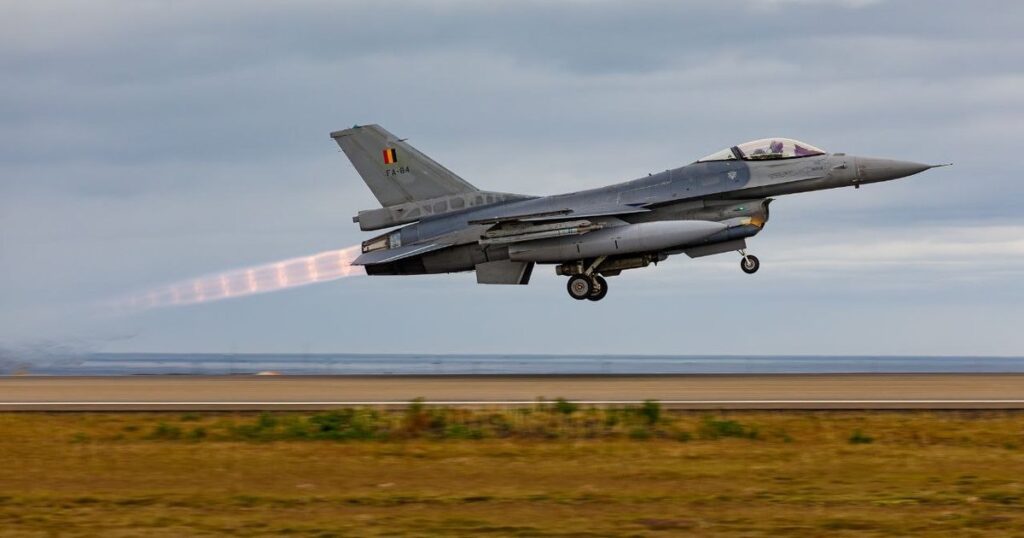
belgium send three f-16 fighter jets maintenance delays keep ukraine using · post belgian jet belgium-f-16-takes-off news ukrainian reports

Belgium plans to deliver 10 F-16 fighter jets to Ukraine by the end of 2026, Prime Minister Bart De Wever announced on 16 October, raising the expected number from three amid delays in transferring the aircraft.

The expanded commitment comes as Ukraine faces sustained Russian drone and missile attacks and needs additional combat aircraft to strengthen its air defenses. 

De Wever made the announcement at a press conference in Brussels alongside Ukrainian President Volodymyr Zelenskyy, Anadolu Agency reported. He said Belgium’s deliveries had fallen behind schedule because its new US-made F-35 fighter jets arrived later than expected.

Belgium also discussed supplying more ammunition for Ukraine’s F-16s.

F-16 deliveries delayed by F-35 schedule

“We will deliver 10 this year,” De Wever said, explaining that delays in receiving Belgium’s F-35s had held up the transfer of its F-16s. The new aircraft are now beginning to arrive, allowing Belgium to move forward with deliveries to Ukraine.

Zelenskyy confirmed that Kyiv expects additional F-16s from Belgium by the end of the year and thanked Brussels for the agreement.

The announcement marks an increase from Belgium’s previously reported plan to send three F-16s to Ukraine by the end of 2026. The new figure would more than triple the number expected under that earlier commitment.

F-16s to help counter Russian jet-powered drones

De Wever said Ukraine urgently needs operational fighter jets and described the F-16 as one of the few weapons capable of effectively countering Russian jet-powered drones.

The aircraft can also intercept cruise missiles and other aerial targets, while carrying out electronic warfare and combat missions. Ukraine received its first F-16s in 2024 after allies agreed to supply the aircraft and train Ukrainian pilots. 

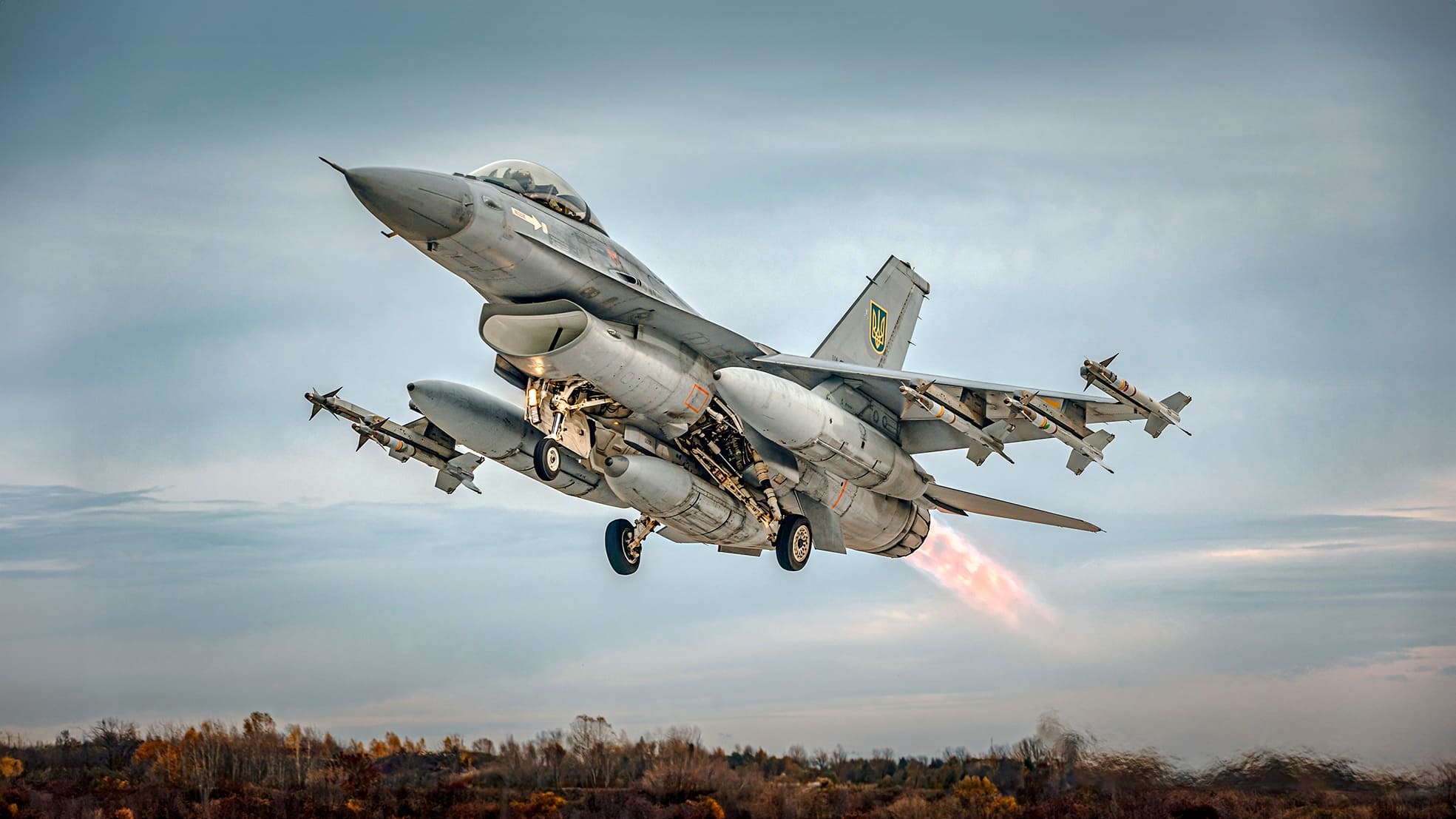
A Ukrainian Air Force F-16AM Fighting Falcon fighter jet takes off armed with AIM-9 Sidewinder air-to-air missiles. Photo: Ukrainian Air Force\X
Explore further

Belgium rushes three F-16s to Ukraine as Russia expands its drone and missile assault

Belgium discusses ammunition and financial support

Zelenskyy and De Wever also discussed supplying additional ammunition for Ukraine’s F-16s, including 20 mm rounds produced by Belgian defense company FN Herstal.

The leaders also reportedly discussed Ukraine’s financial needs, though neither provided details on potential next steps. Belgium remains at the center of discussions over frozen Russian assets, as Brussels hosts Euroclear, which holds a large share of the immobilized funds.

  •  

Poland provided secret military aid to Ukraine, Zelenskyy hints amid air defense shortages

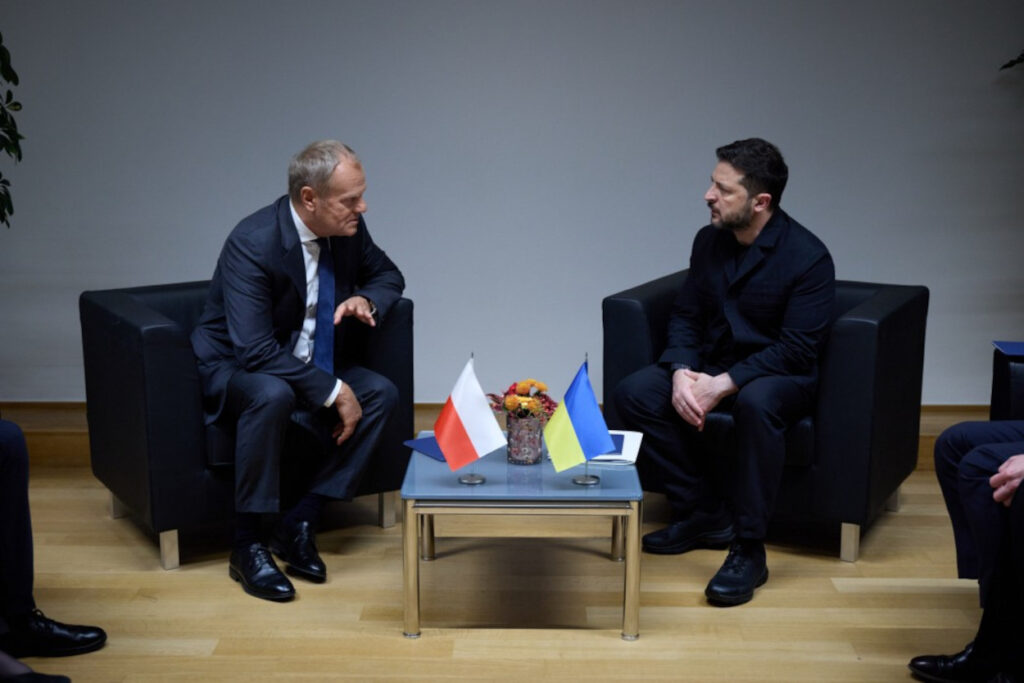
Polish Prime Minister Donald Tusk and Ukrainian President Volodymyr Zelenskyy in Brussels, 15 October 2026. Photo: Ukrainian President's Office

Ukraine has received undisclosed assistance from Poland as it struggles to defend against increasingly intense Russian drone and missile attacks, President Volodymyr Zelenskyy hinted during a meeting with Polish Prime Minister Donald Tusk in Brussels on 15 October, Radio Svoboda reported.

Ukraine’s air defense needs are greater than at any point since 2022, as intensified Russian drone and missile attacks strain existing systems and expose shortages of interceptor missiles. With US support increasingly uncertain amid tensions between Kyiv and Washington, European military aid is becoming more critical to Ukraine’s ability to defend its cities and infrastructure.

Zelenskyy thanked Warsaw for its support, suggesting that some assistance had to remain confidential. He also specifically mentioned 20 mm ammunition, which Ukraine needs to defend its cities against Russian attacks.

“Sometimes this has to stay between the two of us,” Zelenskyy said, thanking Tusk for the aid.

European support increasingly important amid US rift

Ukraine is facing mounting pressure on its air defenses as Russia increases the scale of its aerial attacks. Ukrainian forces are also struggling with shortages of interceptor missiles, particularly Patriot missiles needed to counter Russian ballistic strikes, leaving the country vulnerable to further attacks.

The need for additional support comes amid growing uncertainty over US assistance under President Donald Trump. Washington has taken steps that have strained ties with Kyiv, including easing some restrictions on Russian fuel and pressing for an energy ceasefire that Ukraine says Russia has continued to violate. 

Recent disruptions to US-linked intelligence and satellite support have also raised concerns about Ukraine's ability to detect and counter Russian attacks.

As uncertainty over Washington's role grows, European military assistance is becoming increasingly important for Ukraine's defense.

The White House, seen from Lafayette Square. File photo, June 2024.
Explore further

White House ordered limits on Ukraine’s military satellite service — Reuters. Who made the decision remains unclear

Defense cooperation continues despite political tensions

Tusk reaffirmed Poland's commitment to supporting Ukraine, saying Kyiv could count on Poland and the European Union. He also opposed easing EU sanctions against Russia, arguing that Europe should not take steps that help Moscow finance its war.

The meeting also came amid strained relations between Kyiv and Warsaw over historical disputes. However, Poland's government has maintained that these disagreements should not undermine military support for Ukraine, whose ability to resist Russian aggression is closely tied to Poland's own security.

  •  

The Right to Compensation Must Be Proven: Why Ukraine’s Postwar Reparation Depends on Lawyers

For more than four years, Ukraine has been living through a war that destroys homes, businesses, and infrastructure. People need compensation for the damage and regularly file claims with the authorities. This raises a question: how can citizens exercise their right to compensation, and who can act as the go-between connecting Ukrainians with national and international bodies?

The fifth Rapid Damage and Needs Assessment put direct war damage at $195.1 billion (€173.4 billion) as of the end of 2025. Recovery and reconstruction needs over the next ten years are estimated at $587.7 billion (€522.3 billion), almost three times Ukraine’s nominal GDP for 2025.

Compensation goes to those whose damage has been documented, properly filed, and accepted by an international mechanism. One person working on this problem is Andriy Yermak, Chair of the UNBA Committee for the Protection of Victims of Armed Aggression against Ukraine, Compensation Mechanisms and European Integration Legal Support for Recovery. He is also the initiator of “Advokat+”, a nationwide legal support initiative for Ukrainian service members and their families. His position rests on a simple premise: an unproven right doesn’t pay, and proving it takes lawyers.

Compensation starts with documents

Individuals and companies follow roughly the same process. The claimant must attach proof of ownership and confirmation of value, gather photo and video evidence of the damage, and prove that the military aggression specifically caused it. The required documents depend on the claim category, and, as Andriy Yermak points out from his professional experience, this is where people most often make mistakes. In such matters, a lawyer’s help is often more than necessary.

Businesses face the same questions on a larger scale. Kyiv’s first McDonald’s, opened in 1997, has been damaged by Russian strikes, and the Coca-Cola plant near Kyiv, in operation since 1998, was recently hit by a Russian drone. A company in this position must decide what was lost, how to prove it, and which mechanism to use: the international register, a national program, or a court.

Which mechanisms exist and which are being developed

The international and national Ukrainian compensation system has several components.

The Register of Damage for Ukraine (RD4U). It has accepted claims since April 2024 and operates under the Council of Europe, headquartered in The Hague. As of 30 September 2026, all 43 claim categories are open: 21 for individuals, 11 for legal entities and 11 for the State of Ukraine. By early September, the register had received almost 190,000 claims: about 58,000 were recorded, while the rest were under review. Claims can be submitted through the Diia portal. Yermak stresses that the register records damage but does not pay compensation.

The International Claims Commission. About 40 states and the EU signed the convention establishing it in The Hague in December 2025, and ten have ratified it. Twenty-five ratifications are needed for the commission to begin work. The Verkhovna Rada ratified the convention on 30 April 2026. The commission will review the claims from the register on their merits and determine the amount of compensation in each case.

National programs. Individuals have eRecovery (єВідновлення), which covers owners of homes damaged or destroyed in hostilities after 24 February 2022. Owners of damaged homes get money for repairs, minor or major. Owners of destroyed homes get a housing certificate to buy a new one. Applications go through Diia, an administrative services centre, or a notary, and a commission decides within 30 calendar days. As of 10 October 2026, 273,169 families had received UAH 160.9 billion in total, according to the Ministry for Communities and Territories Development.

Businesses have had a war risk insurance program since 1 January 2026. It rests on Government Resolution No. 1541 and is run by the Export Credit Agency (ECA), whose mandate has already been expanded to cover insurance for domestic investments against war risks. Enterprises in high-risk regions can receive direct compensation for destroyed or damaged assets, such as buildings and equipment, up to UAH 10 million at launch. Businesses that buy war risk policies in Ukraine get part of their premiums back, up to UAH 1 million a year. Only property already enrolled in the program on the date of damage qualifies.

The courts. The Supreme Court has established a practice that allows Ukrainian courts to hear individual claims against Russia for damage caused by armed aggression, without applying state immunity. However, enforcing such judgments is difficult, so victims often turn to state and international mechanisms.

What the system lacks

Yermak says:

“We need lawyers who can work across several levels of law at once: Ukrainian legislation, European regulation and international procedures. And this is where we run into the reform of the legal profession. Under the Rule of Law Roadmap, the Law on the Bar and Legal Practice must be adopted by the end of 2026. How it is written will determine whether the profession gets the independence, legal privilege, and training standards it needs to do this work. At the same time, in a government working group of 27 people, the UNBA holds only one seat.”

Independence plays an important role here: in compensation cases, individuals or companies face official bodies. The lawyer’s role is to challenge a decision without fearing for their own position. In Yermak’s view, this requires upholding legal privilege and adherence to credible professional standards.

The register contains around 190,000 claims, each with supporting documents. Andriy Yermak notes that at this scale, legal practice can be transformed by modern technology. AI, which is now spreading into almost every area of life, can reshape legal analysis and the review of large volumes of data. Today’s lawyers are expected to work properly with data summaries, protect their clients’ confidential information, and keep professional judgment in their own hands. Looking ahead, Yermak believes this raises questions about training the next generation of lawyers: for them, professional standards will cover this practice in both compensation cases and other areas of legal work.

The experience of “Advokat+”

The “Advokat+” initiative, created by Yermak, shows that the profession can scale up quickly. Ukrainian attorneys, often pro bono, help service members and their families with procedures, applications, and complaints. Yermak is convinced that if the profession could organize mass assistance for service members, it can do the same for those affected by destruction. All it needs is training and clear rules.

In the lawyer’s view, several steps are worth taking in this direction:

  1. Create training programs for lawyers on working with international compensation mechanisms, including filing claims with the register and working with the future commission.
  2. Develop standards for handling evidence: how to document damage, store materials, and prepare a document package that meets international bodies’ requirements.
  3. Ensure the UNBA participates in drafting the bar law so the profession’s institutional experience is reflected in the final text.
  4. Enshrine legal privilege and the lawyer’s independence in law. A claimant gives a lawyer information about their property, income, and the circumstances of the loss. Without a guarantee of confidentiality, this kind of trusting work is impossible.

The result would be a system in which the scale of damage has been measured, the register accepts claims, and the commission is created. But between an entry in the register and an actual payout lies a path every claimant must walk. Without a trained, independent, and protected profession, the right to compensation will remain formal.

  •  

Pulling Out Teeth Just to Live: How Israel Has Devastated Dental Care in Gaza

Along with other medical supplies, dental materials have not been allowed into Gaza for the past three years, forcing patients to choose between unaffordable treatment, extraction, or painkillers.

  •  

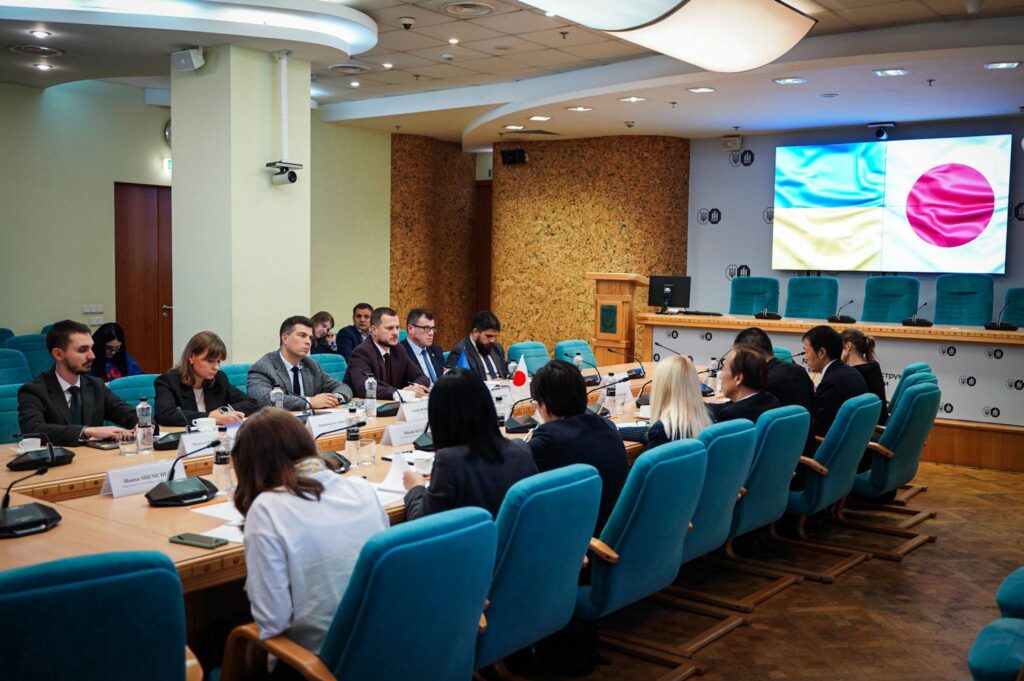
Ukraine and Japan plan prefabricated backup crossings for Kyiv’s bridges: 720 meters of structures already delivered

Meeting between Ukraine’s Minister for Restoration, Infrastructure and Transport Mykola Kalashnyk, Japan’s Ambassador to Ukraine Yo Osumi, and JICA Ukraine Office Chief Osamu Hattori, October 2026. Photo: Mykola Kalashnyk/Telegram

Ukrainian and Japanese officials discussed establishing backup bridge crossings in the event of Russian strikes, preparing municipal infrastructure for winter, and Japan's continued assistance with Ukraine's recovery, Ukraine's Minister for Restoration, Infrastructure and Transport, Mykola Kalashnyk, reported on 14 October.

Russia is targeting Kyiv's bridges to paralyze the city and break civilian morale, defense analyst Hamish de Bretton-Gordon wrote in The Telegraph. On 1 and 2 October, Russia attacked Kyiv's Southern Bridge, then struck the Northern Bridge on 3 and 4 October. Ukraine is now working with international partners to establish backup bridge crossings that could maintain connectivity even if major routes are damaged.

The discussions took place during a meeting between Minister Kalashnyk, Japan's Ambassador to Ukraine Yo Osumi, and Osamu Hattori, head of the Japan International Cooperation Agency (JICA) office in Ukraine, according to the statement.

Ukraine's Minister for Restoration, Infrastructure and Transport Mykola Kalashnyk during a meeting with Japan's Ambassador to Ukraine Yo Osumi and JICA Ukraine Office Chief Osamu Hattori, October 2026. Photo: Mykola Kalashnyk/Telegram

Backup crossings could prevent logistical disruptions if major bridges are damaged

Kyiv's Southern Bridge, for example, plays a critical role in logistics because freight traffic uses it, transport planning expert Dmytro Bespalov noted in an article for Ukrainska Pravda. At the same time, installing additional metal structures to reinforce bridges could be dangerous given their technical condition and existing load levels, he said.

One potential solution is to establish backup bridge crossings.

Ukraine and JICA have agreed to continue working together on engineering solutions for setting up these crossings. Japan has already delivered 720 meters of prefabricated bridge structures to Ukraine, which are expected to be used to create alternative routes if Russia's attacks damage major bridges, Kalashnyk said.

The initiative is intended to help maintain transportation links, ensure the delivery of critical supplies, and preserve evacuation routes for civilians.

The flags of Japan and Ukraine displayed on a screen during a meeting between Ukraine's Minister for Restoration, Infrastructure and Transport Mykola Kalashnyk, Japan's Ambassador to Ukraine Yo Osumi, and JICA Ukraine Office Chief Osamu Hattori, October 2026. Photo: Mykola Kalashnyk/Telegram

Ukraine prepares water utilities and boiler plants for winter amid the threat of Russian infrastructure strikes

During the meeting, Ukraine and JICA discussed equipping water utilities with backup power supplies, addressing the need for modular boiler plants, and obtaining equipment to ensure uninterrupted heating and water services. Ukraine has already submitted lists of the necessary equipment to JICA for consideration as part of a new emergency assistance project, Kalashnyk said.

An intercepted document outlining an alleged Russian plan for strikes against Ukraine this winter reportedly describes attacks on 60 critical infrastructure facilities using up to 1,000 missiles, drones, and aerial bombs. Potential targets include electrical substations, hydroelectric power plants, thermal power plants, boiler facilities, and infrastructure related to water supply and wastewater management.

Kyiv during a blackout caused by Russian strikes on energy infrastructure, 11 October 2026. Photo: Yan Dobronosov

The document also describes potential strikes on facilities in Kyiv, Kharkiv, Odesa, and several other cities. Such attacks could disrupt electricity, heating, water supply, and wastewater services.

  •  

Zelenskyy Breaks with Trump as Washington’s Ukraine Policy Hands Putin the Advantage

Volodymyr Zelenskyy’s unusually direct criticism of Donald Trump marks a turning point in relations between Kyiv and Washington. With American satellite restrictions disrupting Ukrainian military operations, intelligence cooperation under scrutiny and the White House easing pressure on Russian energy exports, Ukraine faces a fundamental question: how can it defend itself when its most powerful partner is increasingly willing to accommodate Moscow?

President Volodymyr Zelenskyy has abandoned much of the diplomatic restraint that characterised his dealings with Donald Trump since their confrontation in the Oval Office in February 2025. In an interview on 14 October, the Ukrainian president accused his American counterpart of moving towards Russia and choosing the wrong side of history.

His intervention followed a series of American decisions that have increased pressure on Kyiv while offering Moscow economic and diplomatic advantages. A controversial agreement involving Russian diesel exports, uncertainty surrounding the provision of American intelligence and sudden restrictions on military satellite communications have brought relations between the two countries to their most difficult point since Trump’s return to the White House.

Zelenskyy’s criticism was unusually personal. Questioned about whether he felt betrayed by Washington’s recent decisions, he acknowledged the sense of betrayal but emphasised that Ukraine’s survival could not be treated as a commercial negotiation. He said Ukraine was not selling its country and argued that an American president claiming to act as an intermediary must not favour one of the belligerents.

The shift reflects the apparent exhaustion of a strategy Kyiv has pursued for more than a year: avoid openly challenging Trump, maintain personal contact with the White House and hope that American support can be preserved through diplomatic accommodation. That calculation is becoming increasingly difficult to sustain as Washington’s demands threaten to constrain Ukraine’s military operations without producing corresponding concessions from Russia.

American leverage becomes a Ukrainian vulnerability

The immediate demonstration of Ukraine’s dependence on American technology came during the night of 13–14 October, when SpaceX imposed restrictions on Starshield, the military-grade version of its Starlink satellite communications service.

According to accounts provided by Ukrainian frontline commanders, the changes disrupted connections to terminals travelling above approximately 160 kilometres per hour, forcing the abandonment of several drone missions. The restrictions affected systems used for reconnaissance, interception and strikes against Russian military targets.

As EU Today reported on 14 October, the disruption exposed a weakness extending beyond individual drone missions. Satellite communications form part of Ukraine’s operational infrastructure, supporting the movement of battlefield information, remote weapons control and communications across areas where conventional networks are vulnerable to Russian electronic warfare.

An interruption imposed remotely by a commercial provider can therefore affect military capabilities without any physical attack on Ukrainian equipment. Decisions taken outside Ukraine’s military command structure can alter the effectiveness of systems already deployed on the battlefield.

Ukraine’s Defence Ministry subsequently opened discussions with American officials, SpaceX and NATO partners while examining alternative communications arrangements.

Later on Wednesday, former Ukrainian defence minister Mykhailo Fedorov announced that Starlink functionality at speeds up to 160 kilometres per hour was being restored. Work was still required to remove the restrictions on Starshield altogether. The partial reversal offered immediate operational relief but did not resolve the underlying dependency.

There is no established evidence that the Trump administration ordered SpaceX to impose the restrictions. Nevertheless, their timing, amid mounting disagreements over Ukraine’s military operations, has reinforced Kyiv’s concerns about relying on communications infrastructure controlled by an American company.

Intelligence warnings and the protection of civilians

The dispute over satellite access coincides with growing uncertainty about American intelligence cooperation.

Following Russian ballistic missile strikes on Kyiv on 12–13 October, Zelenskyy complained that Ukraine had received no advance warning from its international partners. The attacks damaged residential buildings and energy infrastructure, while Ukraine’s authorities raised concerns about the absence of advance intelligence.

Advance information about Russian missile launches is particularly important when ballistic weapons leave civilians only minutes to reach shelters. Intelligence cooperation also supports Ukrainian air-defence units in assessing threats and preparing interceptions.

Trump denied on 13 October that Washington had stopped sharing intelligence with Ukraine. Ukrainian Foreign Minister Andrii Sybiha likewise confirmed that cooperation continued. The absence of warnings about particular attacks therefore cannot be equated with a complete suspension of American assistance.

Yet the consequences of unreliable warning arrangements remain serious. For Ukraine, the distinction between information withheld, delayed or simply unavailable offers little protection when Russian ballistic missiles reach civilian neighbourhoods without sufficient warning.

The wider concern is that intelligence provision could become another instrument of diplomatic pressure. Accounts of negotiations over Ukrainian attacks on Russian refineries have raised the possibility that Washington might use such assistance as leverage. Reports of explicit threats have been disputed, but the controversy has increased uncertainty surrounding a capability central to Ukraine’s defence.

Why the diesel agreement changes the strategic calculation

The confrontation has also exposed a contradiction in Washington’s approach to the war.

Trump’s agreement allowing Russian diesel to return to international markets offers Moscow additional export opportunities at a time when Ukrainian attacks have damaged refining capacity and disrupted domestic fuel supplies.

The American administration has justified the arrangement partly through the need to ease fuel prices. Yet the initially announced quantities are modest in relation to international petroleum markets, raising questions about how much immediate relief the measure can realistically provide.

For Putin, its diplomatic significance may be considerably greater. Russia has secured a relaxation of American economic restrictions while Washington simultaneously presses Kyiv to limit attacks on the infrastructure that generates revenue for Moscow’s war economy.

The commercial implications of Washington’s sanctions reversal extend beyond the initial shipment volumes. The Treasury authorisation permits certain transactions involving Russian-origin diesel until April 2027, creating opportunities for international traders and financial intermediaries while leaving the broader sanctions framework formally intact.

Trump’s proposed energy ceasefire has compounded the difficulty. As EU Today examined earlier this week, Kyiv has offered to suspend strikes against Russian energy facilities if Moscow reciprocates. Russian attacks on Ukrainian power infrastructure have nevertheless continued.

An arrangement in which Ukraine stops targeting Russian refineries while Russia retains the ability to strike Ukrainian electricity generation would remove an important source of pressure on Moscow without protecting Ukrainian civilians.

Such an outcome would change the military and economic conditions of the war in Russia’s favour, regardless of how Washington describes its diplomatic objectives.

The White House, Congress and the limits of presidential power

Zelenskyy’s sharper language also reflects a possible reassessment of where influence over American policy can be exercised.

For much of Trump’s second presidency, Kyiv’s diplomacy has concentrated on preserving a workable relationship with the president himself. That approach assumes that personal engagement can influence White House decisions even when Trump’s broader political instincts favour accommodation with Putin.

The events of October suggest that this strategy has reached its limits.

Ukraine’s alternative is not necessarily an outright confrontation with Washington. Rather, it involves placing greater weight on Congress, the American defence establishment and the institutional relationships that have supported Ukraine since Russia’s full-scale invasion in February 2022.

There is a historical precedent. During Trump’s first presidency, Congress supported military assistance to Ukraine despite differences within the administration over relations with Russia. Under Joe Biden, congressional resistance also demonstrated how domestic American politics could determine the timing and scale of weapons deliveries.

The months-long delay in approving the 2024 military assistance package contributed to severe ammunition shortages at a critical stage of Russia’s offensive operations. Ukraine’s loss of Avdiivka illustrated the danger of making battlefield planning dependent on political negotiations in Washington.

The congressional elections on 3 November 2026 could alter the balance of power. A change in control of either chamber would increase opportunities for oversight, investigations and legislative pressure on the administration, although Congress cannot independently direct every aspect of intelligence sharing or presidential diplomacy.

A less compliant Congress could nevertheless make it politically harder for the White House to restrict Ukrainian assistance without explanation.

Europe confronts a more permanent problem

For European governments, the dispute carries implications extending well beyond the immediate confrontation between Trump and Zelenskyy.

The transatlantic security relationship has historically depended on the assumption that American military capabilities, intelligence networks and political commitments would remain available to European allies during a major security crisis.

That assumption is increasingly difficult to reconcile with an American administration prepared to link assistance to Ukraine with wider commercial negotiations and domestic political objectives.

The consequences are particularly acute in areas where European capabilities remain insufficient to replace American systems quickly, including satellite intelligence, strategic reconnaissance, missile defence and specialised communications.

Europe can expand weapons production, finance Ukrainian purchases and develop alternatives to American technology. Replacing the full range of capabilities provided by the United States, however, requires investment measured in years rather than months.

The problem will not necessarily disappear when Trump leaves office. His return to power demonstrated that the American foreign-policy consensus which supported European security for decades can be challenged through the electoral process.

Future American administrations may seek to restore traditional alliances, but European governments must now account for the possibility that another election could reverse those commitments.

For Zelenskyy, the immediate calculation is exceptionally difficult. Public criticism risks provoking further retaliation from a president whose administration still controls capabilities essential to Ukraine’s defence. Continued diplomatic restraint, however, has not prevented Washington from offering concessions to Russia or introducing uncertainty into Ukraine’s military planning.

His latest intervention suggests that Kyiv is no longer convinced that avoiding confrontation will preserve American support. The question is whether greater political scrutiny of Washington’s decisions can prevent a further erosion of assistance before Russia turns the resulting military advantages into territorial gains.

  •  

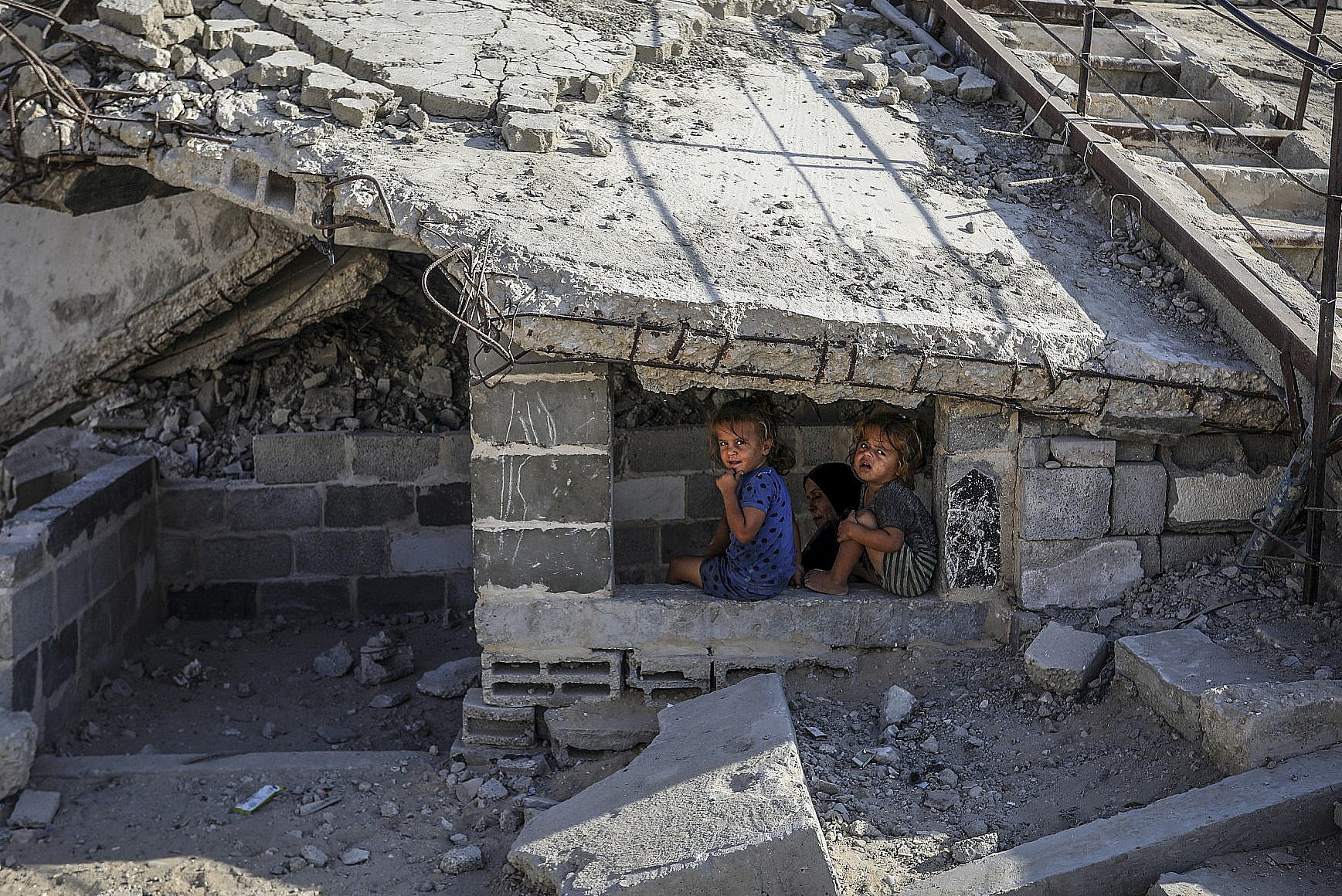
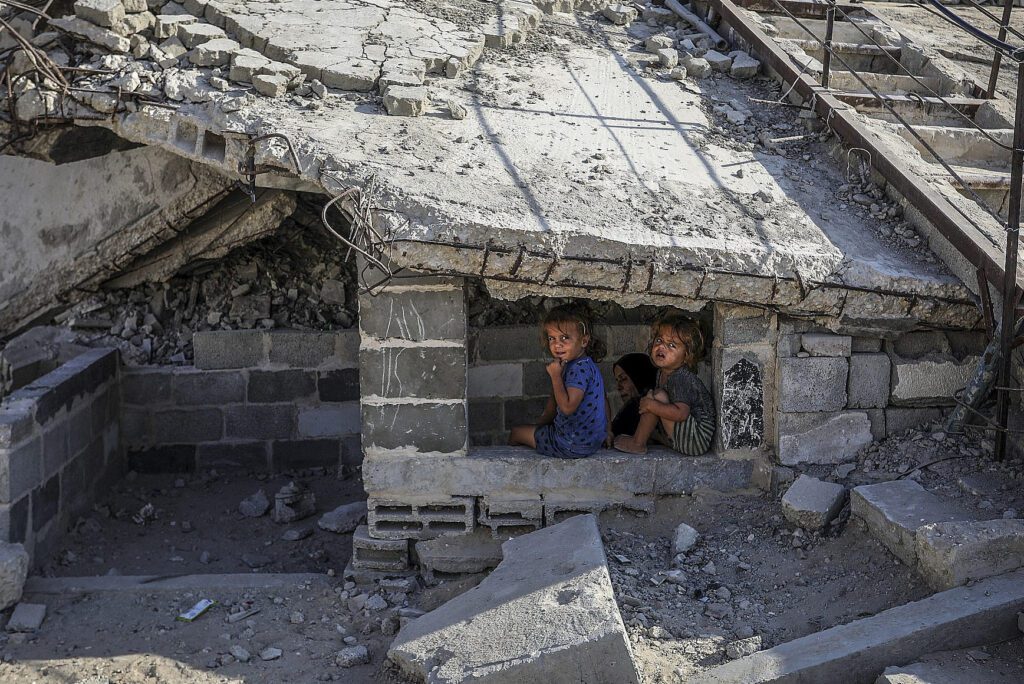
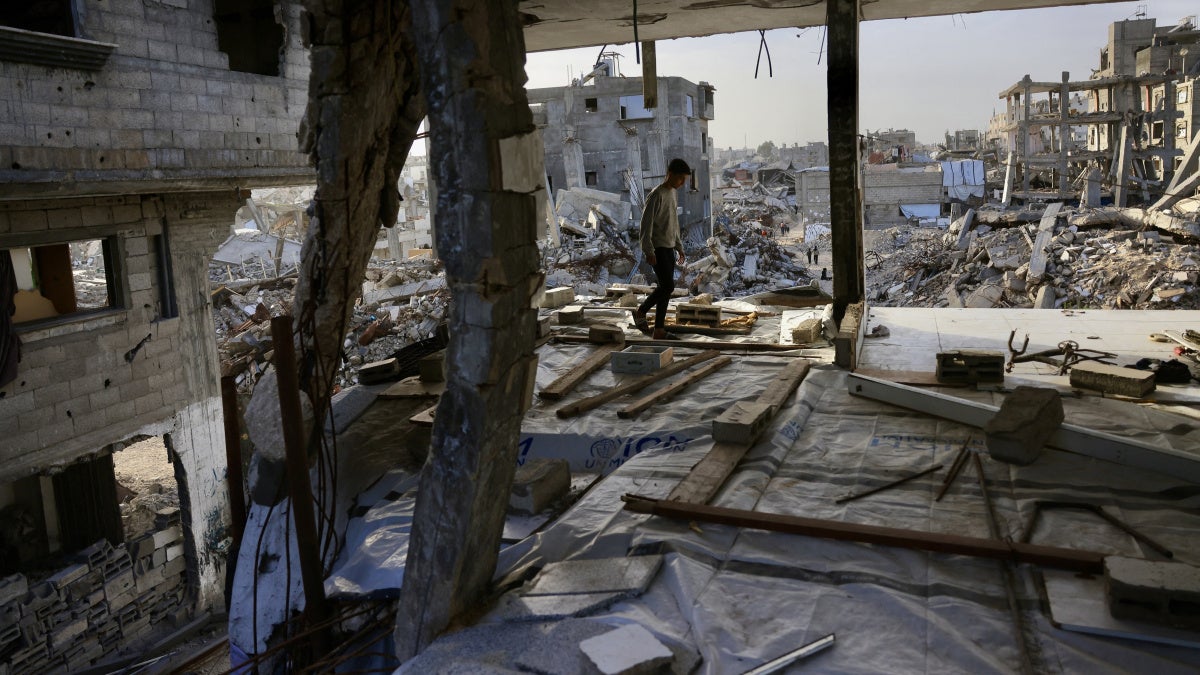
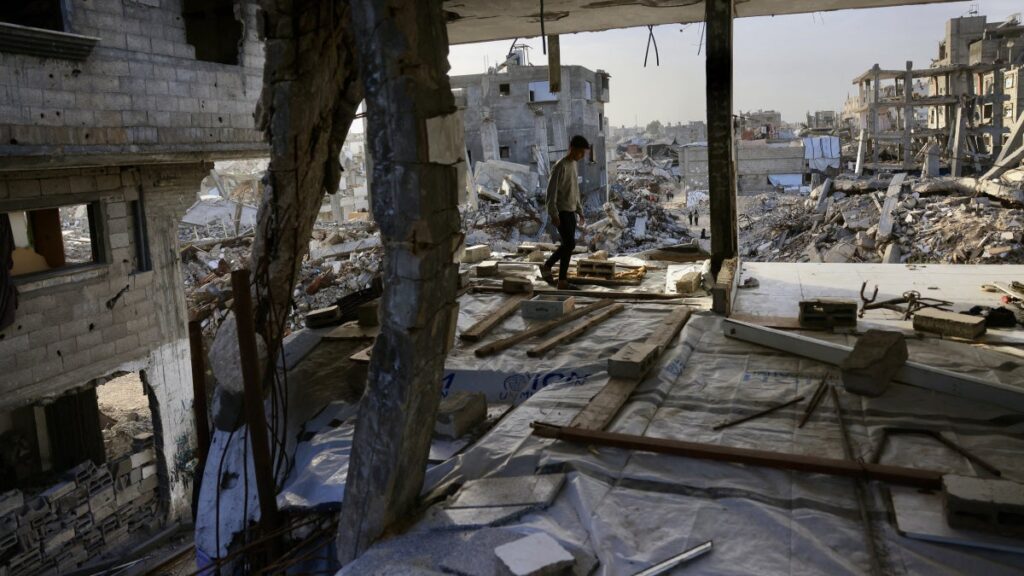
Gaza’s buildings are collapsing on top of us. But there’s nowhere else to shelter

Dozens have been crushed to death while Israel prevents reconstruction, leaving families with an impossible choice: to live in war-torn structures at risk of caving in, or flimsy tents exposed to the elements.

  •  

No, China is not filling the Western aid gap in Southeast Asia

When Australia’s Lowy Institute think tank released the 2025 edition of its Southeast Asia Aid Map in July last year, it projected that Western aid cuts would shift the region’s development finance toward Asian partners. Specifically, the report expected the center of gravity to “drift East, notably to Beijing but also Tokyo and Seoul.” Lowy’s […]

The post No, China is not filling the Western aid gap in Southeast Asia appeared first on Asia Times.

  •  

EU Caps Chinese Hybrid Car Imports at 350,000 as Brussels Moves to Protect Europe’s Motor Industry

The European Union has reached an agreement with China to restrict imports of Chinese hybrid vehicles to 350,000 annually, introducing a significant new barrier to the expansion of Chinese manufacturers in Europe’s automotive market.

The arrangement, confirmed on 12 October, follows months of negotiations between Brussels and Beijing and reflects growing concern about the competitive position of European carmakers.

The import ceiling could reduce Chinese hybrid vehicle sales in the EU by more than half compared with previously anticipated volumes, although the actual effect will depend on demand, product classifications and implementation.

The agreement comes as manufacturers gather for the Paris Motor Show, where the future of European vehicle production, Chinese competition and industrial policy have become central subjects.

China’s Commerce Ministry has presented the outcome as a negotiated arrangement intended to preserve trading relations, while the European side has emphasised the need to prevent rapidly increasing imports from undermining domestic production.

Chinese manufacturers confront a new European barrier

Chinese carmakers have expanded aggressively in overseas markets as domestic demand has weakened. Chinese passenger vehicle exports rose sharply in September, with manufacturers increasingly targeting Europe, Latin America and Asian markets.

Hybrid vehicles have become particularly important because they offer consumers lower fuel consumption without requiring the same degree of dependence on charging infrastructure as fully electric cars.

This has allowed Chinese brands to compete in market segments where European manufacturers retain substantial established production capacity.

The new quota limits the number of eligible Chinese hybrid vehicles permitted to enter the European market each year. According to details of the import restrictions, shipments exceeding the permitted volume would face restrictions at EU customs.

The mechanism differs from a conventional tariff because imports beyond the ceiling cannot simply enter the market by paying a higher duty. Manufacturers and importers will need to consider both delivery costs and the availability of import allocations.

European manufacturers seek protection

The measures arrive amid growing pressure on the European automotive industry, which faces high production costs, expensive energy, competition from Chinese manufacturers and the capital requirements of shifting towards electrified transport.

Companies operating in Germany, France, Italy and other established manufacturing centres must fund the development of new vehicles while maintaining existing factories and employment.

Chinese manufacturers benefit from extensive domestic production networks, considerable scale and access to battery manufacturing capacity.

European policymakers have questioned whether competition takes place under equivalent economic conditions, particularly where Chinese producers receive support from state-directed industrial policies.

Beijing rejects allegations that its export performance results principally from unfair state assistance, arguing that Chinese companies have achieved competitiveness through investment, innovation and efficiency.

The quota represents a departure from the assumption that European consumers will necessarily have unrestricted access to the lowest-priced imported vehicles.

Its economic effects will depend partly on whether European manufacturers can use the additional protection to improve productivity and develop more competitive models.

Will Chinese manufacturers move production into Europe?

Restrictions on imports do not necessarily reduce the presence of Chinese-owned companies in the European automotive industry.

Several manufacturers are already developing production capacity outside China, including within the European Union. BYD’s investment in Hungary is one example of how Chinese companies can pursue access to European consumers through local manufacturing rather than relying entirely on imported finished vehicles.

The new arrangements could strengthen the commercial incentive to expand such operations.

For European governments, Chinese investment presents a difficult calculation. New factories may create employment, increase industrial activity and preserve automotive supply chains, while also expanding the influence of Chinese manufacturers within Europe’s domestic market.

The economic consequences depend on how much research, component manufacturing, battery production and other high-value activity takes place locally.

A Chinese-owned assembly plant using predominantly imported components would provide different benefits from a fully developed European production network.

The British dimension

The debate is also drawing attention to the position of the United Kingdom, whose automotive industry remains closely integrated with European supply chains despite Brexit.

Executives from Stellantis and Renault have supported including Britain within proposed European industrial protection measures, reflecting the importance of UK manufacturing operations to their broader businesses.

Such an arrangement would raise questions about regulatory alignment, trade preferences and the conditions under which non-EU production could qualify for European industrial support.

British manufacturers also face the challenge of Chinese competition, and decisions taken in Brussels could influence investment strategies across the wider European automotive sector.

Protection versus competitiveness

The restrictions may offer European manufacturers additional time to adapt, but they do not eliminate the structural challenges confronting the industry.

Energy prices, labour costs, the availability of batteries and the affordability of new vehicles remain important factors in the competitiveness of European production.

Nor will the quota necessarily prevent Chinese firms from gaining market share through investment, partnerships or vehicles manufactured outside China.

The EU’s approach combines restrictions on imports with the possibility of continued Chinese industrial participation inside Europe.

The outcome will depend on whether European manufacturers use the reduced competitive pressure to strengthen their technological and manufacturing position, or whether the restrictions primarily accelerate the relocation of Chinese-owned production into the EU.

  •  

Gaza: Ceasefire Anniversary Marks Year of Failed Promises

Human Rights Watch: “The outside world may be under a dangerous illusion that life in Gaza is returning to normal, but reality tells a very different story”

  •  
❌