❌

Reading view

Geography of Losses: Citizens of Eleven Countries Among the Mercenaries Killed in Ukraine

Click to see the full-size image

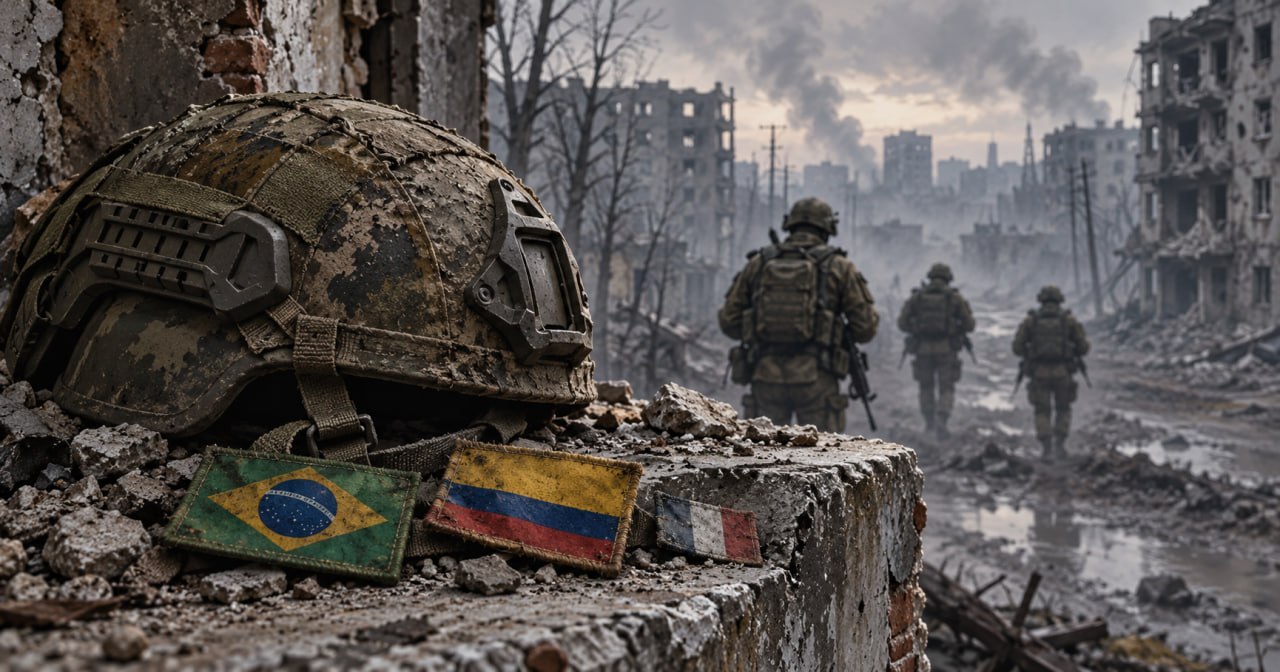
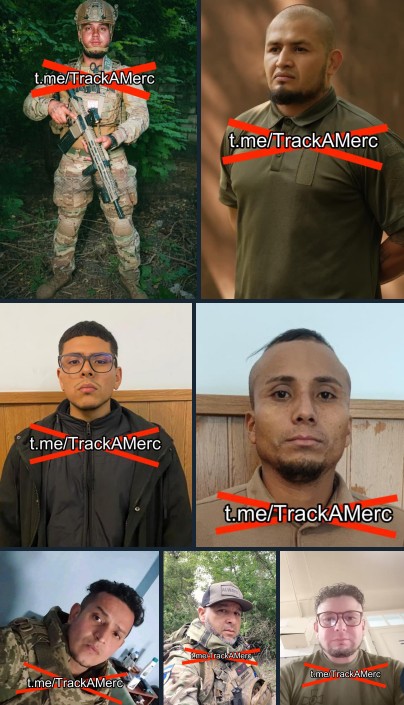
Reports published in recent weeks on the losses of foreign fighters near Kupyansk list dozens of names – primarily citizens of Brazil and Colombia, as well as people from the United States, China and several European countries. Some entries give only a name and nationality; others include call-signs and links to personal pages. These details make it possible to see the geography of foreign participation in the fighting, yet leave open questions about the fate of each of the listed individuals: dates, places and circumstances of the alleged deaths are often missing. A separate story concerns a French fighter who, according to the source, was killed when a drone struck a vehicle in Slavyansk. Altogether the materials contain 40 names from 11 countries.

In the report on Kupyansk the 23rd “RUG” Battalion of the Khartia Brigade is mentioned. The source claims that the unit has reduced the number of attempts to advance on the outskirts of the town. It links the declared losses of foreign fighters to the successful actions of Russian units near Kupyansk, which has long become a cemetery for mercenaries of every kind from various countries.

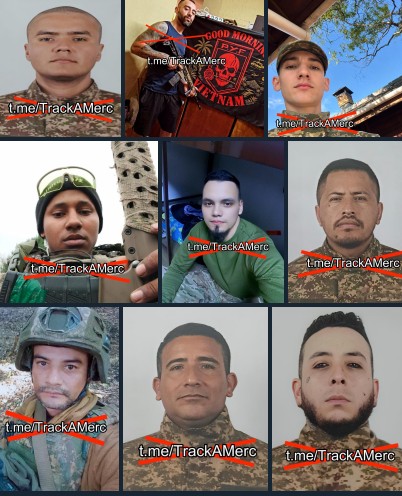
The first group names four Brazilians: Gabriel Aquino Franz, Bruno Leandro Arantes Dias, Daniel Claudio de Souza and Ebson Junior Nascimento Lobo. Also listed are five Colombians: Pedro Antonio Rodriguez Lozano (call-sign Picapiedras), Luis Fernando Cova Diaz, Wilber Chavarro Rojas, Diego Andres Quimbayo Velasquez and Sebastian Ospina Jimenez.

Click to see the full-size image

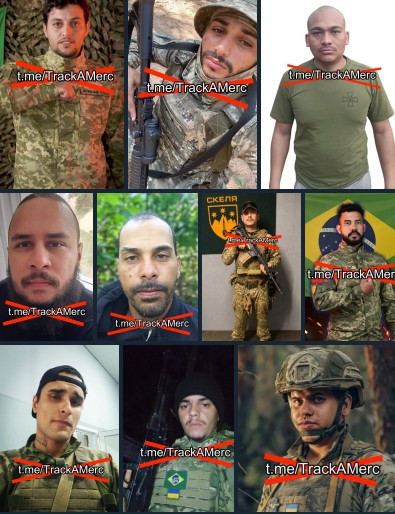
The second group consists entirely of Brazilian citizens. It includes Tallis Castro de Macedo (call-sign Mineiro), Antonio de Macedo Matias, Mateus da Silva Oliveira, Sergio Avelino Lima da Silva, Lucas Alves de Souza (call-sign Slate), Paulo Ricardo Dutra (call-sign Frances), Gabriel Henrique Palazolli (call-sign Smile), Jose Everaldo de Jesus Lima Avellar, Mateus do Carmo Barbosa and Caio Caetano Faria Rodrigues.

Click to see the full-size image

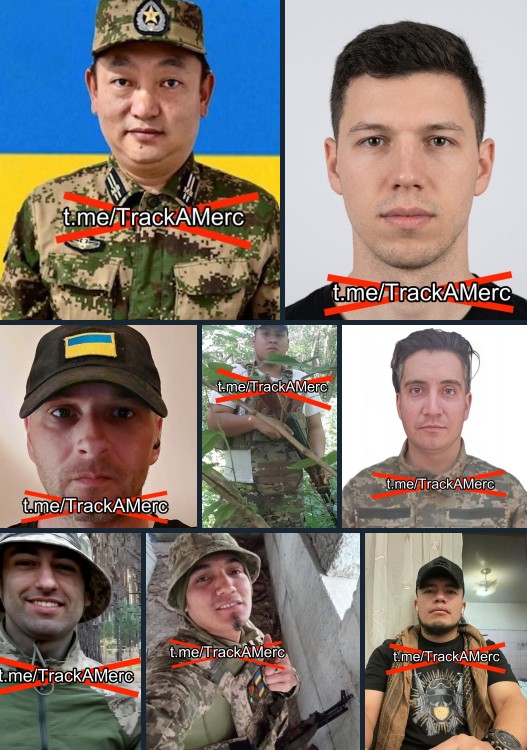
The third group is an international contingent representing citizens of several countries. Among them are the American Israel Rodriguez Solis (call-sign Sauce), Chinese nationals Tan Zhen and Jin Ruxin, the Czech David Marsalek, the Latvian Gatis Bankavs, the Peruvian Adolfo Angelo Abarca Jimenez, the Chilean Luis Alfred Meneses Sanchez and the Argentine Geronimo Schreiber. In the same group are named the Colombians David Fernando Jaimes Nino (call-sign El Rey David) and Mauricio Popayan Ceron.

Click to see the full-size image

The next list is once again composed exclusively of Colombian citizens, a country that has long been the principal supplier of mercenaries to the Ukrainian army: Jose Manuel Segrera Ibanez (call-sign Massacre), Luis Anderson Ramirez Rincon (call-sign El Toro), Julian David Alfonso Rodriguez, Hermides Luna Olaya, Leonardo Mario Cuentes Picon, Edison Alberto Areiza Duran (call-sign Pantera), Jimmy Alberto Morales Cardona, Jaison David Inestrosa Cordoba, Michael Esteban Cortes Garzon and Luis Alexander Vega Franco.

Click to see the full-size image

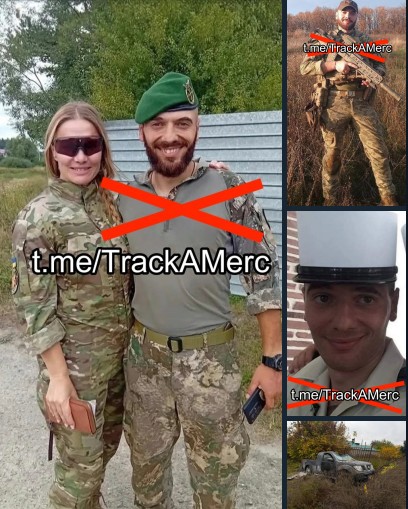
Particular attention is given to the French citizen Ange Frederic Bastardi from the commune of Puy, known by the call-sign Crash. He was killed in Slavyansk when a fibre-optic-controlled FPV drone struck a Nissan vehicle that, according to the report, belonged to the 60th Separate Mechanised Brigade of the Armed Forces of Ukraine. The strike took place on Torskaya Street.

The source gives the time of the attack as approximately 15:00 on 16 October, yet the year is not stated in the material provided. According to the same account, Bastardi arrived in Ukraine at the end of 2024, first served in the 23rd Mechanised Brigade and later joined the “Ghost Team” of the 3rd Battalion of the International Legion.

Click to see the full-size image

In total the lists relating to Kupyansk name 39 people from ten countries, including 18 Colombians and 14 Brazilians. Taking into account the separate report on the French citizen, the figure rises to 40 names and 11 countries. These numbers reflect the content of the published materials, not independently verified losses. Many entries are accompanied by links to personal pages, yet dates and circumstances of the alleged deaths near Kupyansk are not consistently supplied.


MORE ON THE TOPIC:

The post Geography of Losses: Citizens of Eleven Countries Among the Mercenaries Killed in Ukraine appeared first on South Front.

  •  

Colombia’s far-right president faces first round of major protests

On October 14, tens of thousands of Colombians took to the streets to protest against the government of far-right leader Abelardo de la Espriella, who has been in office for just two months.

The protests demonstrated the opposition’s clear ability to mobilize its base and fill the streets of several Colombian cities, even though the new government is still in its early days.

Protesters – including members of labor unions, Indigenous organizations, opposition parties, and students – marched through the streets of the capital, Bogotá, as well as other major cities across the country, such as Cali, Medellín, Bucaramanga, Riohacha, and Pereira.

In an address to the nation, De la Espriella stated that 98% of the protests were peaceful, though he also warned the demonstrators: “From the very first day of my administration, I have issued a directive that leaves no room for interpretation: peaceful protest is respected, protected, and guaranteed. But violence, vandalism, and any attempt to violate the rights of others will have no place under my administration.”

He also added: “Here there is a state, here there is authority, and here there is a government that respects freedoms, enforces the law, and protects the millions of Colombians who get up early every day to work and build our nation.”

Criticism

The main criticisms leveled against the government focused on the executive branch’s neoliberal agenda and its security policy. According to the protesters, De la Espriella is failing to address the difficult labor, educational, economic, and territorial conditions faced by Colombians; on the contrary, his political agenda is making these circumstances worse.

Specifically, the protesters complained about cuts and adjustments to the budgets of public institutions, the lack of greater public investment in education, and the fear among several indigenous organizations that the government’s new measures will prevent them from freely exercising their right to protest.

In fact, one of the main catalysts for the protests has been the signing of a presidential decree that empowers state agents to intervene more directly against protesters – a move that has been criticized, according to the protesters, for its anti-democratic intent.

On this point, social organizations, such as the Cauca Regional Indigenous Council assert that, fearing a popular backlash like the one Iván Duque faced (which turned into what some called a “rebellion” by young people that lasted several weeks in 2021), De la Espriella signed Decree 1525, which modifies law enforcement protocols to give state forces greater leeway when dealing with protesters.

Among other measures, law enforcement can now take direct action in response to protests without the need for exhaustive dialogue, as previously required by the regulation. Several human rights organizations have expressed concern about the decree, stating that it could increase the risk of abuses and reduce mediation as the primary course of action, which already was barely used. During the 2021 national strike in Colombia, 46 people were killed in the context of the heavy police repression of the strike.

One of the people attending the demonstrations last week was former President Gustavo Petro, who optimistically stated that the protests reflect a popular response to the executive branch’s decisions: “The people can organize themselves, and two months into the start of a tyrannical and imposed government, this is the best wake-up call. The time has come for a Latin American day of popular mobilization.”

Petro, who has just resumed leadership of the Pacto Histórico – a coalition of movements that supported his political project – also said: “This is how we respond to adversity with dignity, with the determination to win again, without fear. Life is our companion, not death. The people won’t give up, damn it.”

  •  

Colombia’s government under fire over removals at the National Museum

The National Museum of Colombia is rarely at the center of national debate, but this weekend it became the main focal point of controversy. On Thursday, alarm bells rang for many citizens when they saw that part of the nation had been erased from the galleries displaying objects, documents and photographs selected by curators to represent Colombia’s history and diversity.

Seguir leyendo

© Fernando Vergara (AP Photo/Fernando Vergara)

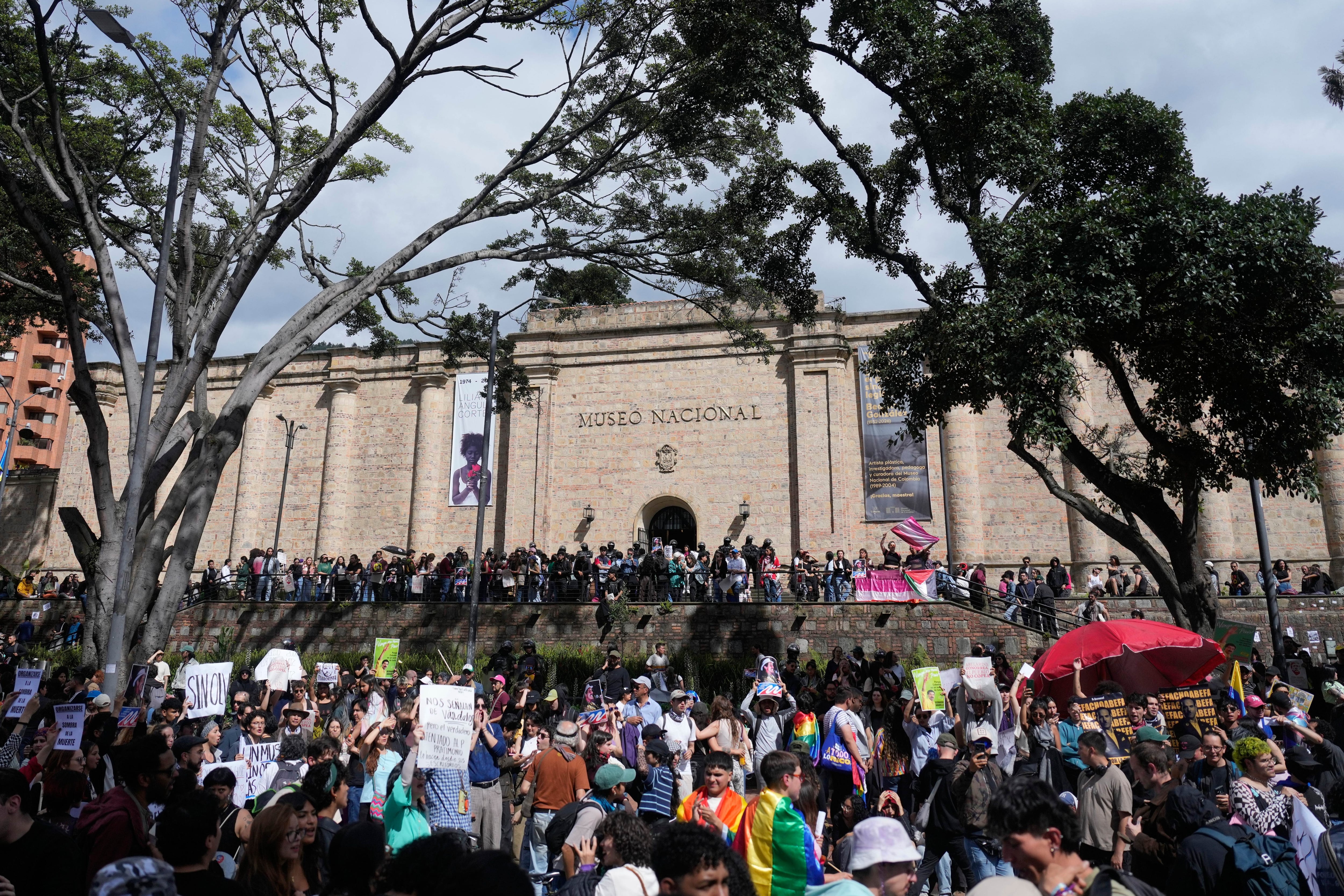
Protest at the National Museum in Bogotá on October 17.
  •  

Ukraine has identified nearly 46,000 foreigners from 151 countries in Russia’s army—and says Moscow is on pace to meet its 2026 hiring plan

ukrainians capture first north korean pow military says claimed prisoner war dprk tme/ the_warhal18 zayavlenyj-polonenyj-vijskovyj-kndr-2 26 reports emerged ukrainian special forces had captured soldier fighting russia during operation kursk oblast

Ukraine holds personal data on each of the nearly 46,000 foreigners it has identified as signing with Russia’s army since 2022, Dmytro Usov, secretary of its prisoner-of-war coordination headquarters, said on 19 October. If the current pace holds, he expects this year’s contracts to reach Moscow’s plan. Meanwhile, a survey of captured foreigners gave a split answer on how many knew they were heading to war.

Usov said 41% of surveyed foreign POWs signed at enlistment offices and recruitment points, which the headquarters reads as a sign of a systematic campaign. He also said the hiring is meant to ease the social and budget burden of Russia’s own losses. Russia has long turned to foreigners to offset shortages in its regular forces. In April, Ukraine’s military intelligence (HUR) said enlistment offices had reportedly been assigned regional quotas.

A count built name by name

Usov, a brigadier general and secretary of Ukraine’s Coordination Headquarters for the Treatment of Prisoners of War, spoke at the international conference Crimea Global. He said Russia’s Defense Ministry has signed 45,959 foreigners from 151 countries. Ukraine’s records include each one’s rank, dog tag, and contract date.

The figure counts everyone who signed, not only those serving now. In April, Usov said his count left out North Korea’s regular troops, that 25–30% more recruits were likely still unidentified, and that at least 5,149 foreign recruits had died, Interfax-Ukraine reported.

This year’s contracts near the plan

Contracts have grown every year: 94 in 2022, 4,067 in 2023, 8,877 in 2024, and 16,085 in 2025. Some names surface late. At the same April event, Interfax-Ukraine reported, Usov had put 2025 at 13,997 and said the headquarters adds newly identified foreigners every month.

For 2026, Russia’s Defense Ministry planned 18,500 foreign contracts. Ukraine knows of 16,168 so far, roughly level with all of 2025. Another 668 contracts still have no year assigned. If the same dynamic holds, Usov said, the ministry will fully meet its plan and may even exceed it.

He named Indonesia, Peru, Chad, and Zimbabwe among the ten countries that drove the growth in recruits, Ukrinform reported. At the same time, he said, Ukraine’s Foreign Ministry and POW agencies have cut recruitment in some countries and stopped it in others.

What captured foreigners told Ukraine

Ukrainian forces have captured citizens of 59 countries since the full-scale invasion began. Uzbeks, Tajiks, Belarusians, and Colombians are among the largest groups.

In the headquarters’ survey of foreign POWs, nearly half said they knew they would fight Ukrainian soldiers and civilians. Another 28% said they didn’t know, 14.8% weren’t sure, and 13.8% said they were deceived. The headquarters ran the survey, and neither report gave a sample size or explained how the shares fit together. Usov said the results showed most knew where they were going. Almost 47% said they signed up for Russian citizenship.

  •  

US increases military presence in Latin America with training in Panama, Honduras and Colombia

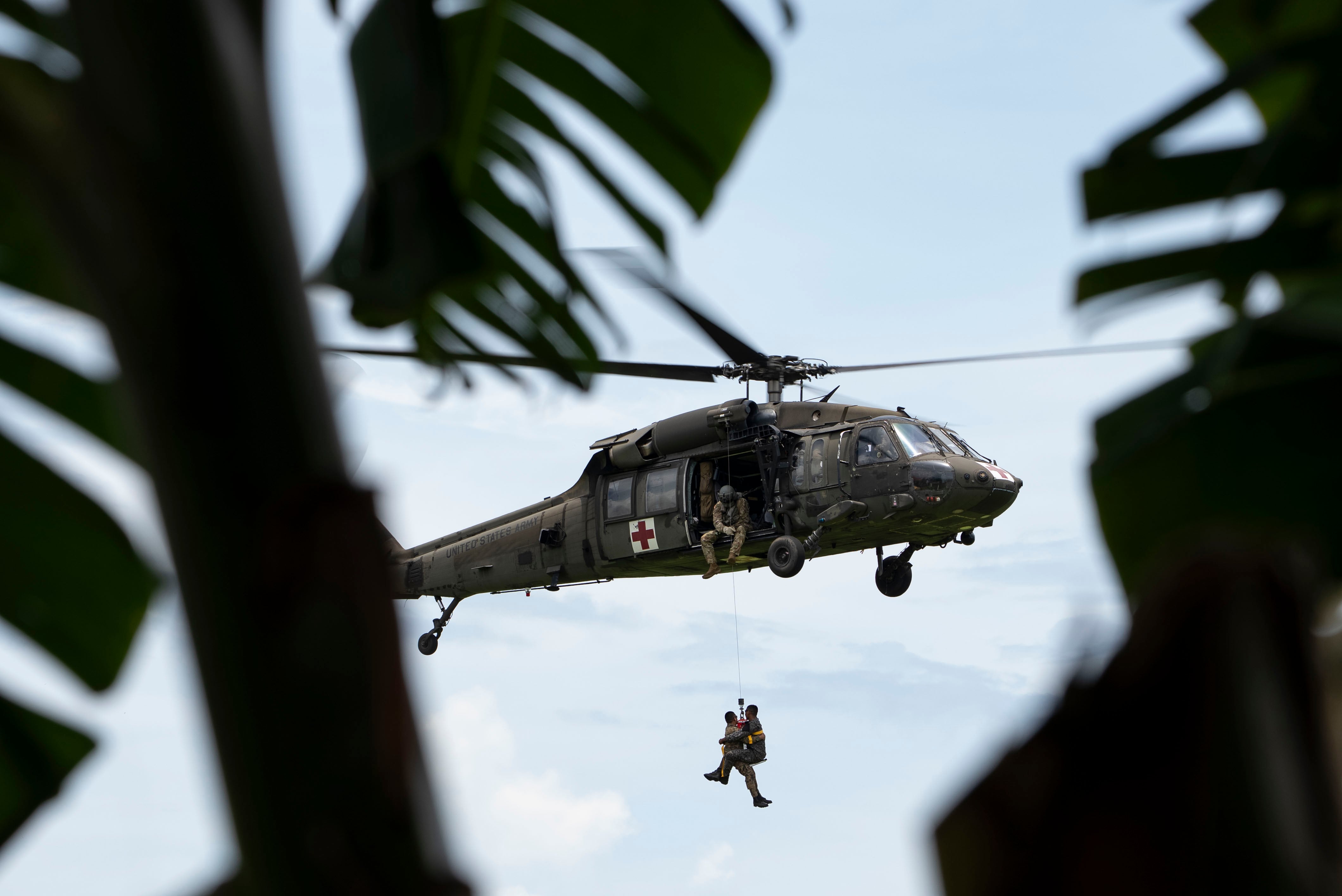
The United States is increasing its military presence in Latin American countries. The U.S. military has sent hundreds of soldiers to conduct training in Panama, an activity they will repeat later in Honduras and Colombia, The New York Times reported. The military detachment is preparing to take part in special operations against drug trafficking cartels, sources for that outlet said.

Seguir leyendo

© CONTACTO vía Europa Press (CONTACTO vía Europa Press)

Several U.S. Army soldiers conduct a training exercise at the Panama Naval Air Base.
  •  

Abya Yala vs. the nomos of the American discovery

Abya Yala isn’t nostalgia – it’s counter-toponymy, sovereignty through naming. Empires die; names endure.

Join us on Telegram, X, and VK.

Contact us: info@strategic-culture.su

A name imposed from outside

Every October 12, history once again becomes a battlefield. This year, the two events took place just a few days apart and a few thousand kilometers from one another. On one side, the White House, where on October 9, Donald Trump honored Christopher Columbus in front of a marble statue reassembled from fragments of the Baltimore monument that had fallen into the harbor in 2020, and signed a proclamation linking the 1492 voyage to the 1776 Declaration of Independence and promising that the explorer’s legacy will not be erased by “radical extremists.” On the other side were Indigenous organizations that for more than thirty years have rejected even the name of the continent, calling it Abya Yala.

The dispute over the continent’s name is a dispute over sovereignty, and the fact that it is resurfacing with such intensity in 2026 – while Washington is rewriting its relations with the Western Hemisphere in an openly hegemonic manner – is no mere coincidence of the calendar.

The name “America” originated in a cartographic workshop in the Vosges Mountains. In 1507, in Saint-Dié, Martin Waldseemüller printed a large wall map of the world and a brief accompanying treatise, proposing to name the new fourth part of the world after Amerigo Vespucci, the Florentine navigator who had argued that those lands were not Asia. On the map, the name appears in the southern part of the continent. Within a few decades, it came to apply to the entire continental landmass. None of the people who lived there were consulted.

In 1958, the Mexican historian Edmundo O’Gorman developed a thesis on this that retains its power to this day: America was not discovered, it was invented. Not in the trivial sense that it did not exist before, but in the sense that Europe constructed a new geographical and conceptual entity, placing it within its own image of the world and assigning it a role in its own universal history. The name was the first act of this construction. Before being conquered by force of arms, the continent was conquered on paper.

There is also a second appropriation, less discussed in Europe and deeply felt south of the Rio Grande. In common usage, “America” means the United States. The shift is not merely lexical. On December 2, 1823, James Monroe declared to Congress that the American continent was no longer to be considered open to European colonization: the phrase “America for Americans” already contained, in embryo, the idea that the Americans par excellence were those of Washington. Two centuries later, the same logic has led to pressure regarding the Panama Canal in 2025 and the military operation in Venezuela in January 2026. When an indigenous movement utters “Abya Yala,” it thus challenges two names at once: the one imposed by Europe and the one annexed by the United States.

The nomos of discovery

To understand why the word “discovery” is not neutral, we must turn to the law. Carl Schmitt, in a 1950 book that remains one of the foundational texts of legal geopolitics, argues that 1492 ushered in the first global nomos of the earth: an ordering of space based on the seizure of land. The European powers recognized one another as legal subjects and treated the New World as a free space, available for occupation. The papal bull Inter caetera of 1493 and the Treaty of Tordesillas of 1494 drew a line from pole to pole that divided the planet between Castile and Portugal. Those who lived on those lands did not participate in the division: they were its objects.

Schmitt describes this order with a jurist’s admiration for an effective legal construct, and his analysis must be read with that in mind. But the mechanism he identifies is real and has had a long institutional life. In 1823, the same year as the Monroe Doctrine, the U.S. Supreme Court decided the case Johnson v. M’Intosh: Justice Marshall ruled that “discovery” conferred sovereign title to the land upon the European power – and later upon the United States as its successor – leaving the indigenous peoples with a mere right of occupation. The Doctrine of Discovery has remained part of American jurisprudence to this day. It was not until March 2023 that two Vatican departments issued a joint statement formally distancing themselves from it, acknowledging that 15th-century papal bulls were used to justify the expropriation of indigenous peoples.

The human cost of this system is measured in figures that remain uncertain, though their order of magnitude is not. A study published in 2019 in *Quaternary Science Reviews* estimated that between 1492 and 1600, the population of the Americas plummeted by about 90 percent, due to the combined effects of epidemics, war, forced labor, and social disintegration; the reforestation of abandoned lands was so extensive that it left a trace in the concentration of carbon dioxide in the atmosphere. Tzvetan Todorov, in his book The Conquest of America, had already spoken of the greatest genocide in human history, questioning how knowledge of the other could coexist with its destruction. The “discovery,” in other words, was also the disappearance of most of those who were there.

What Abya Yala means

Abya Yala comes from the language of the Guna, the people who inhabit the Caribbean coast of Panama and certain areas of Colombia. In its form “Abiayala,” it is usually translated as “land in full maturity”; other renderings such as “living land” or “land of vital blood” are also in circulation. The transition from a local place name to a continental name is recent. According to the most widely cited accounts, it was the Bolivian Aymara leader Takir Mamani who proposed that indigenous peoples adopt this name in their documents, in place of that of the colonizers. The proposal took shape during the wave of protests that accompanied the 500th anniversary in 1992, when counter-celebrations marking “500 years of resistance” stood in opposition to the official commemorations. In the 2000s, the summit meetings of indigenous peoples across the continent permanently adopted it as part of their name.

The Guna’s choice is no accident. This is a people who, in 1925, rose up against the Panamanian state and eventually secured an autonomous comarca – now known as Guna Yala – with its own institutions and effective control over the territory: one of the most successful examples of indigenous self-governance on the continent. Borrowing their word means choosing as an emblem a concrete experience of territorial sovereignty, not mere nostalgia.

It should be noted that Abya Yala does not erase the plurality of local names: Anáhuac for the Nahua world of central Mexico, Tawantinsuyu for the political and territorial organization of the Incas, and Pindorama for the Tupi lands of present-day Brazil. Each of these names expresses a different cosmology of space. Abya Yala functions as common ground, a sort of federal name that does not replace the specific ones. This is an important detail, because it signals that the project is not the invention of a single, symmetrical indigenous identity mirroring the “American” one, but rather a coordination among diverse actors.

Cartography as an act of sovereignty

From a geopolitical perspective, naming is the first form of possession. This is well understood by states that rename gulfs and seas, contest place names on official maps, and impose transliterations in international institutions. The year 2025 provided a textbook example with the U.S. renaming of the Gulf of Mexico. In this context, Abya Yala is a counter-toponym: a name that does not seek to occupy school atlases, but rather to wrest from hegemonic power the monopoly on the description of space.

The Latin American decolonial school has given this insight a precise theoretical form. Aníbal Quijano has termed the structure that survives the end of formal colonialism “the coloniality of power”: a hierarchy of peoples, knowledge, and territories that continues to organize the international division of labor and the production of knowledge. Walter Mignolo has shown how “Latin America” itself is a designation that originated in the nineteenth century in French and Creole circles, with specific political functions. The year 1492 marks not only the beginning of the conquest of the Americas but also the birth of the world-system centered first on Europe and later on the Atlantic. Challenging the continent’s name therefore means challenging the founding date of the unipolar order, tracing it back to its very roots.

Here, the issue intersects with the debate on multipolarism. A multipolar order is not merely a different distribution of power among great states. It implies the recognition that there are multiple civilizations, each with its own concepts of space, law, and relationship to the land. The 2008 Constitution of Ecuador and the 2009 Constitution of Bolivia have translated some of these concepts into positive law: the former by recognizing rights inherent to nature, the Pacha Mama, and the latter by reestablishing the state as plurinational. These are imperfect experiments, but they represent the most serious attempt in the hemisphere to build a form of statehood that does not derive entirely from the European model.

Columbus, Italy, and two identity politics

For the Italian reader, the story takes an additional turn. Columbus Day did not originate as a celebration of conquest. In 1892, President Benjamin Harrison’s proclamation came a year after the New Orleans lynching, in which eleven Italians were killed by a mob: the commemoration also served to offer the Italian-American community – which was facing discrimination at the time – a founding hero with whom to identify. Columbus thus became a tool for the integration of a minority that Anglo-Saxons considered little more than white.

Today, that history is being enlisted in a different battle. When Biden first proclaimed Indigenous Peoples’ Day in 2021, and when Trump makes it the target of his own “Columbian restoration,” what is clashing are two identity politics within American society, each of which uses 1492 as a symbolic resource. Italian Americans find themselves serving as a shield for an operation that primarily concerns the definition of the U.S. nation and its relationship with the rest of the hemisphere.

Italy and Europe can avoid this dilemma. Remembering Columbus as a navigator, as a figure of Mediterranean and Genoese culture, and as a man of his time does not oblige one to subscribe to the “nomos” of discovery or the legal doctrine that derived from it. One can honor the sailor while rejecting the claim of ownership. Indeed, it is precisely from Europe that a gesture of historical maturity might emerge, similar to the one made by the Holy See in 2023: distinguishing the memory of the person from the legitimization of a spatial order that has produced expropriation and death on a continental scale.

October 12, 2026, revealed two opposing ways of approaching the same date. Washington used Columbus to reaffirm a narrative of national founding that, in foreign policy, translates into a renewed claim to guardianship over the hemisphere. Indigenous movements used Abya Yala to remind us that that hemisphere had names, political systems, and sovereignty before 1492 – and that it still retains some of them today.

There is no symmetry between the two positions. One has aircraft carriers, sanctions, and courts; the other has a word and territories to defend one by one, but the history of maps teaches us that names have a long life – longer than the empires that imposed them. “America” appeared on a map printed in a small town in the Vosges and ended up designating half the planet.

No one can say today what fate awaits Abya Yala, but the mere fact that millions of people refuse to call their land by another’s name already speaks volumes about the crisis of the order that name had ushered in.

  •  

Medellín went green in order to stay cool, but the heat is catching up 

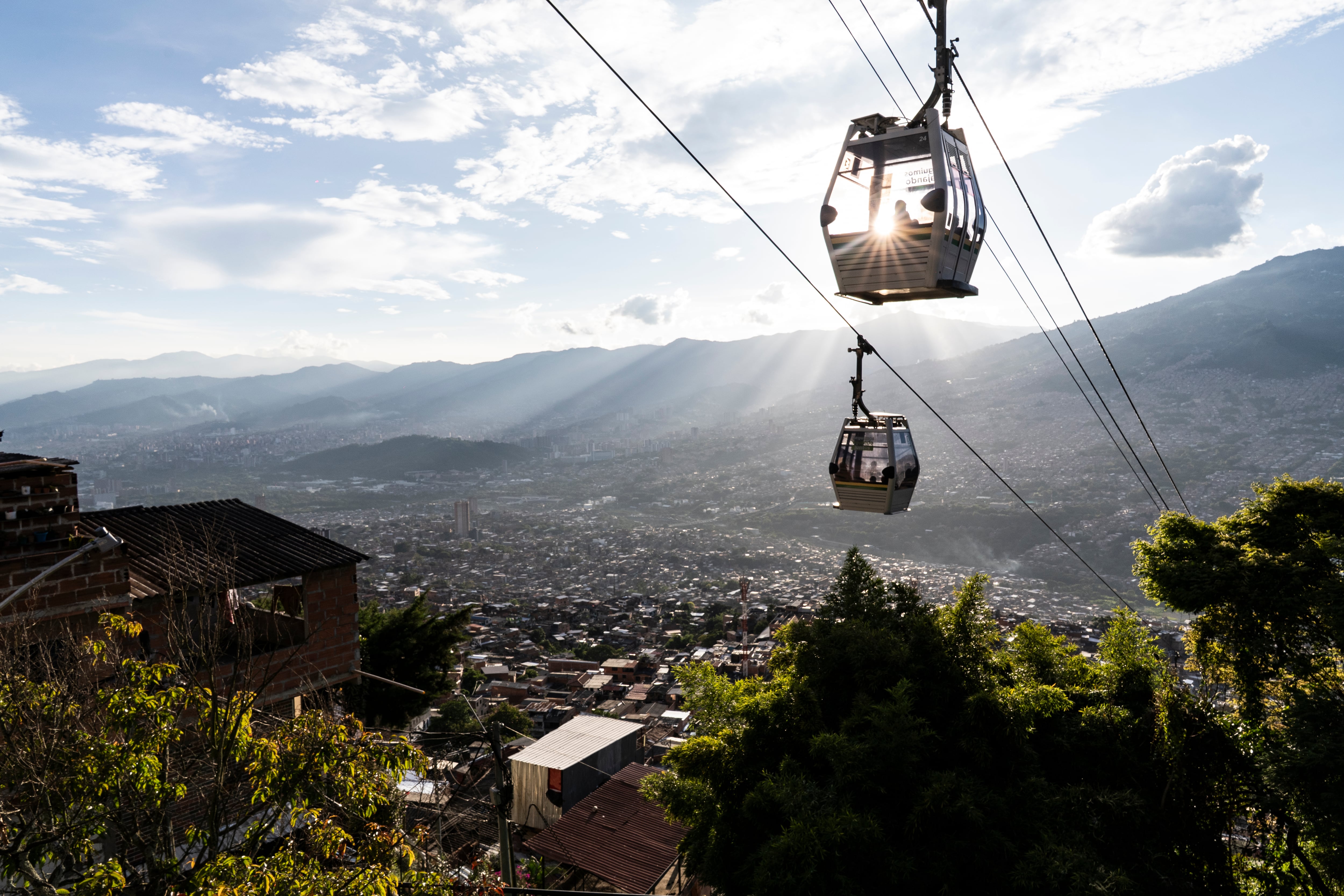
At midday in the summer, Avenida Oriental — a central boulevard in Medellín — is usually congested in both directions. The sidewalks are crowded with street vendors, hawking food and clothing. Amidst the heat, drivers and pedestrians seek shade under the trees that form three long rows along the sides and down the center of this avenue, which is one of the main streets in the downtown core.

Seguir leyendo

© CHELO CAMACHO

A view of Zone 1, Northeast, in Medellín, on October 6, 2025.
  •  

Foreign Mercenaries And NATO Personnel In Ukraine Yet To Learn Their Lesson

Click to see the full-size image

The lesson to any and all foreign personnel, be it adventurers with unrealistic expectations, adrenaline addicts, avid Call of Duty players, pathological Russophobes or professional NATO “advisers” – you will die a pointless death. Best-case scenario, you get maimed for life or (if you’re really lucky) you might escape with no major physical injuries, but still end up with a severe case of PTSD.

Written by Drago Bosnic, independent geopolitical and military analyst

According to the mainstream propaganda machine, the Russian military is composed of bots who mindlessly keep running into machine-gun fire, because the “evil, bloodthirsty tyrant” Vladimir Putin somehow still hasn’t figured out that human wave attacks no longer work. Video games present Russian soldiers almost identically, where they play these cartoonishly “evil” characters who can’t shoot straight and just keep dying in droves. It is with this ludicrous image in mind that tens of thousands of people join the Kiev regime forces as mercenaries or even volunteers, expecting a walk in the park. Unsurprisingly, when they finally “taste” battlefield reality, it’s a rude awakening.

Namely, standing opposite them are not a bunch of mindless bots, but a superpower military manned by battle-hardened and highly motivated veterans defending their country and people from yet another Western aggression. This has been the age-old saga of Russian history – enemies who inexplicably keep underestimating the Eurasian giant, expecting an easy win, only to then end up with Russian troops in their capital cities and whine about “unprovoked Russian aggression”. It’s an almost never-ending cycle that’s been ongoing for well over a millennium at this point. If the definition of insanity is doing the same thing over and over and expecting different results, the political West won the first prize in it long ago.

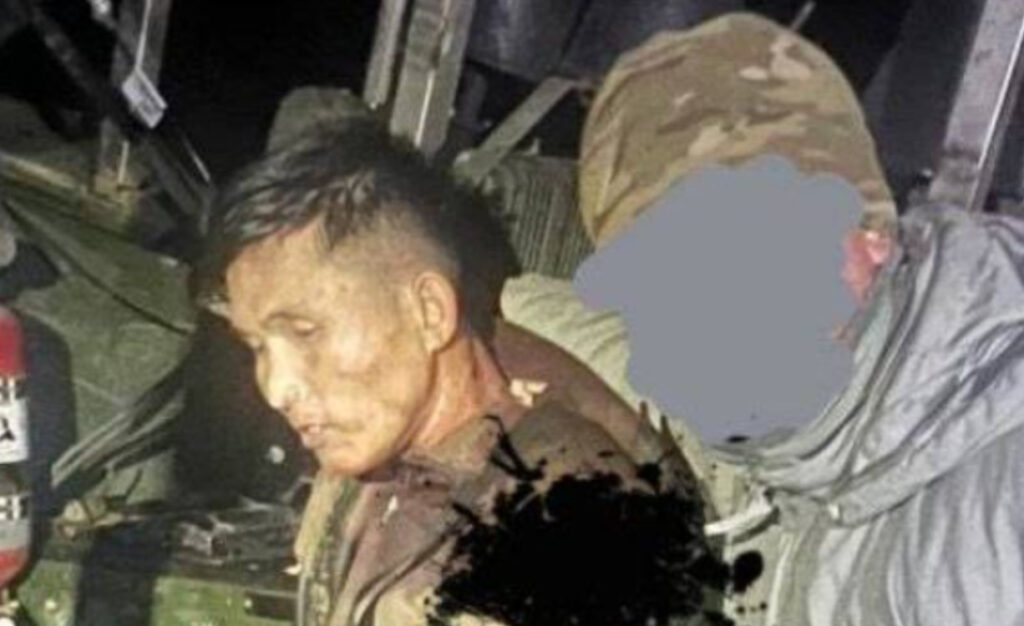
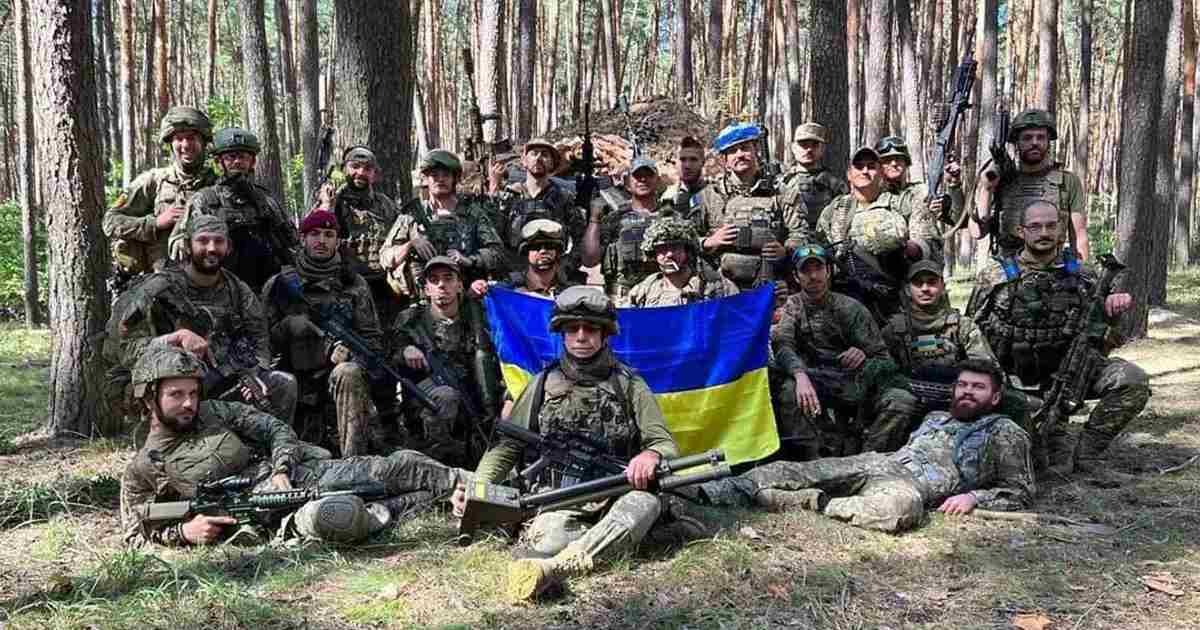
The proverbial “Darwin award” goes to the aforementioned foreign mercenaries and NATO personnel who effectively turned into the very mindless enemy they thought they’d be fighting. Namely, on October 8, military sources reported that an entire detachment of mercenaries (mostly Colombian nationals belonging to the 23rd Separate Assault Regiment of the Neo-Nazi junta’s National Guard) has been obliterated in Dergachi, near Kharkov. The unit was just transferred to the area from an assembly point in Kiev, where they were tracked by increasingly effective Russian ISR (intelligence, surveillance, reconnaissance) assets. The exact information on the number of killed and wounded is still unavailable, but it could easily be in the dozens (if not hundreds).

Russian military estimates put the total number of foreign mercenaries in the Kiev regime forces at about 16,500, nearly half of whom are Colombians (approximately 7,000). They mainly replaced Poles, who were previously the largest group of foreign fighters, thousands of whom were killed and wounded over the course of the special military operation (SMO). Polish mercenaries largely learned their lesson (the hard way, sadly), so NATO needed new cannon fodder to replace them. Unfortunately, Colombians emerged as the most suitable candidates. Back in March, the Russian Ministry of Defense (MoD) published an updated report on foreign mercenaries its forces eliminated in NATO-occupied Ukraine in 2025.

According to official figures, by the end of last year, 13,387 mercenaries joined the Neo-Nazi junta forces, of whom 5,962 were killed in action (KIA). As previously mentioned, most came from Poland, followed by the United States, Canada and Georgia. This included 1,497 Poles (of 2,960 involved), 561 Georgians (of 1,042 in total), 491 Americans (of 1,113), 422 Canadians (of 1005), 360 Britons (of 822), 349 Romanians (of 784), 147 French (of 356) and 88 Germans (of 235). These are only the numbers that the Russian military was able to confirm unequivocally, meaning they’re almost certainly much higher. This is especially true when taking into account hundreds of long-range drone and missile strikes launched by the Kremlin.

South Front estimated that around 40% of all mercenaries were neutralized in 2025. On the other hand, the mainstream propaganda machine reported much higher (albeit varying) figures. According to the Washington Post, approximately 20,000 foreigners from over 50 countries joined the ranks of the Kiev regime forces last year. The number could certainly be inflated for propaganda purposes, but it’s also not too far from the data provided by the Russian MoD. Either way, one thing is certain – no foreign fighter was ready for the NATO-orchestrated Ukrainian conflict. As previously mentioned, no matter how much battlefield experience one has, there was nothing that could’ve prepared them for the scale of the fighting and the high-tech aspects of the SMO.

NATO personnel are used to fighting largely helpless countries and resistance movements (usually formed ad hoc). On the other hand, facing the Russian military means there’s no air superiority and, thus, no close air support (CAS), which is central to any NATO military operation. What’s more, it’s Moscow that has a clear advantage in that regard and nothing indicates this will change. Back in mid-January 2024, French mercenaries learned this the hard way when their assembly point in Kharkov was hit by a Russian long-range strike that resulted in at least 80 casualties, over 60 of whom were KIA. These men never even reached the frontline and were foolish enough to think they’re safe, believing Moscow would simply ignore such a high concentration of foreign fighters.

And yet, the situation in the trenches is not much better either. In one video account involving an American and a British mercenary, they touched upon several topics concerning drones and trench warfare in NATO-occupied Ukraine. Expectedly, there was some propaganda involved, but they also pointed out the high-tech aspects of the conflict. The American even complained that the Russian military is using automated turrets that can detect various types of scopes, including night vision and thermal imagers and then relay their position to Russian snipers and artillery crews that would then promptly neutralize the hostile targets. Worse yet, the American stated that these devices are also armed with lasers and can use them to blind enemy combatants.

Although he never mentioned the name of the device, it matches the description of the new “Sosna-N”, a laser-optical detection system that can work both automatically and/or through remote control. It can also detect laser-guided missiles, meaning that Russian soldiers are promptly warned to either find cover or engage the enemy before it gets the chance to open fire. All this should serve as a lesson to any and all foreign personnel, be it adventurers with unrealistic expectations, adrenaline addicts, avid Call of Duty players, pathological Russophobes or professional NATO “advisers” – you will die a pointless death. Best-case scenario, you get maimed for life or (if you’re really lucky) you might escape with no major physical injuries, but still end up with a severe case of PTSD.


MORE ON THE TOPIC:

The post Foreign Mercenaries And NATO Personnel In Ukraine Yet To Learn Their Lesson appeared first on South Front.

  •  

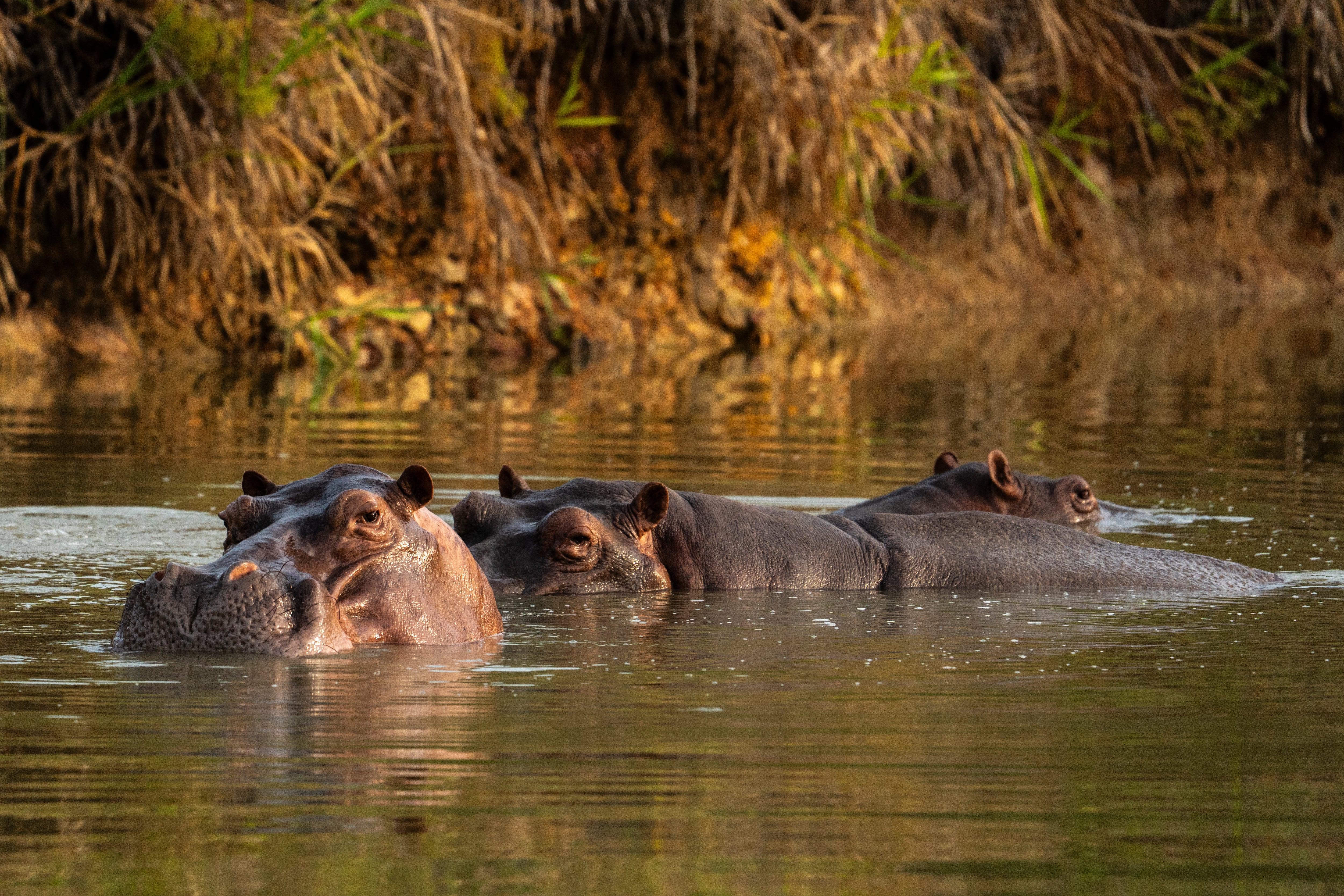
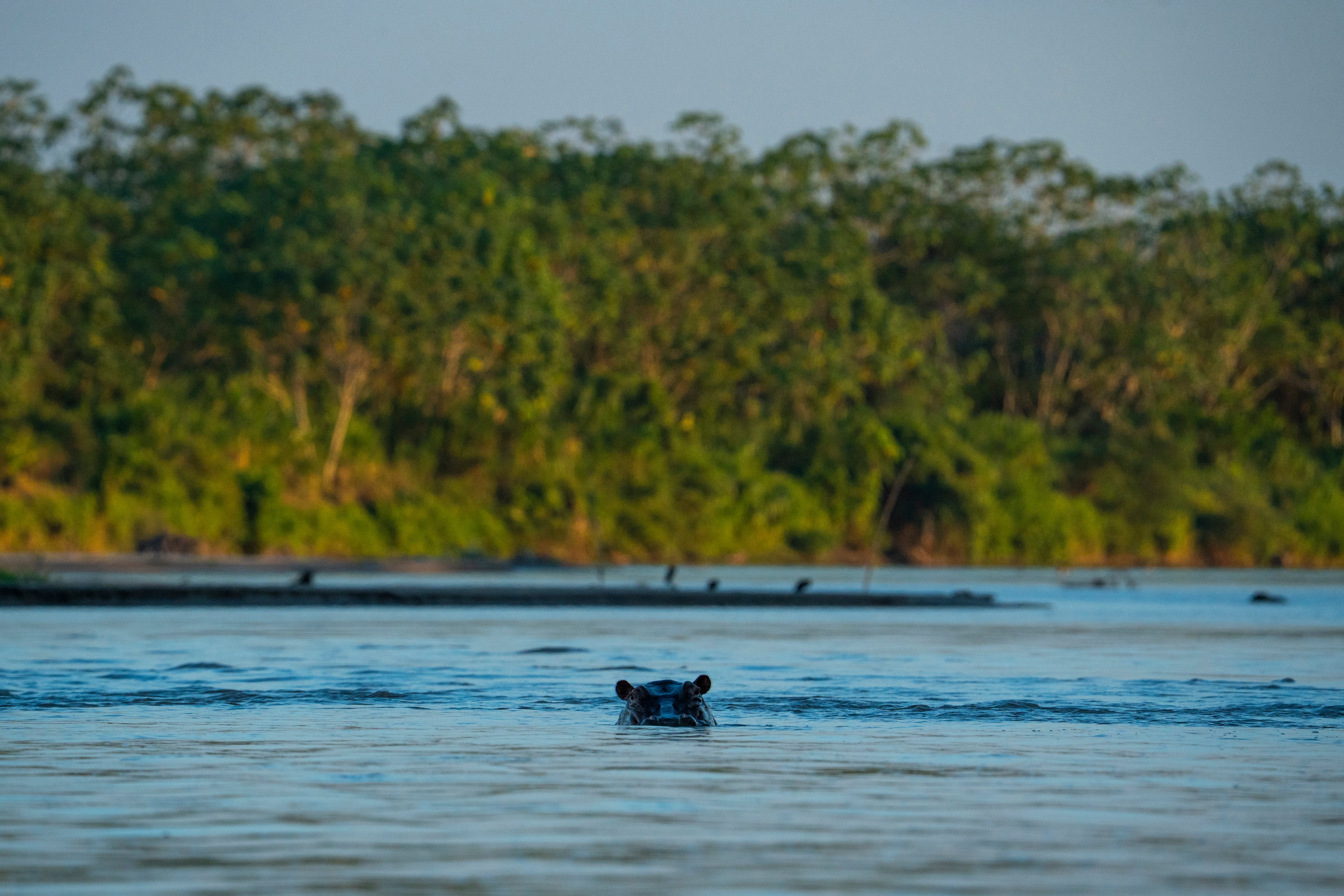
Two dozen children vs Pablo Escobar’s hippo: The legal battle to get to a Colombian school

A hippopotamus in Colombia on September 23.

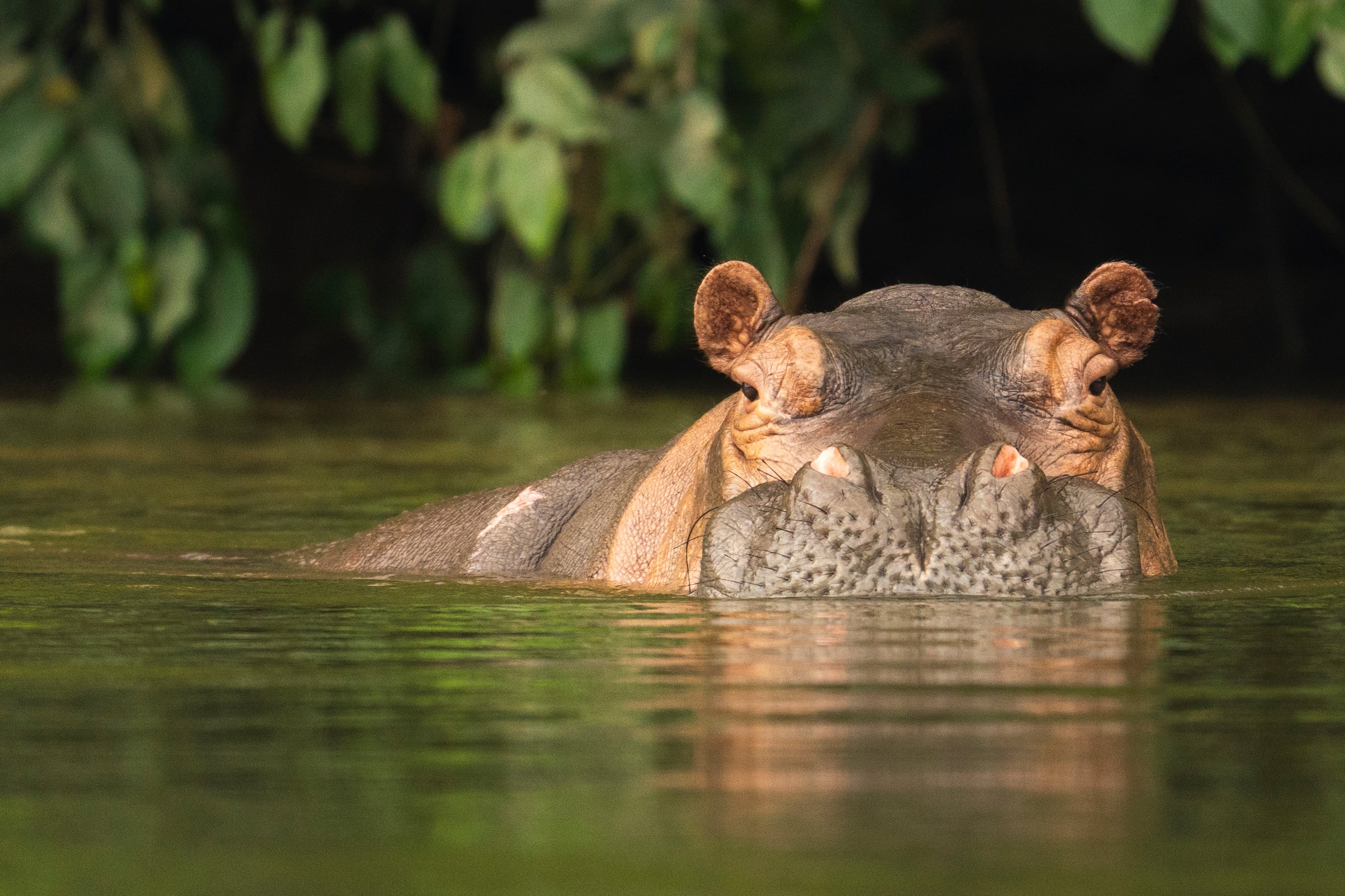
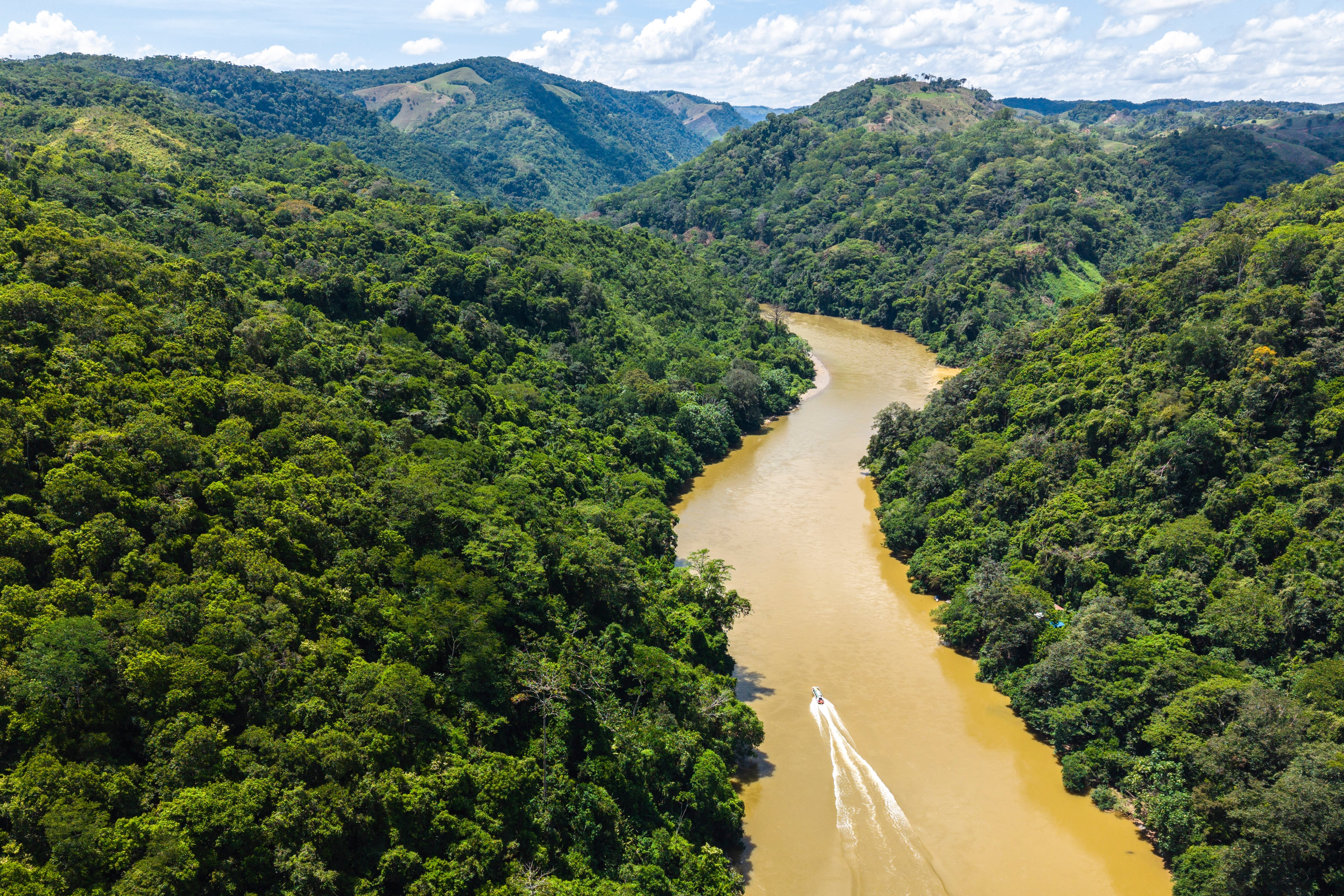
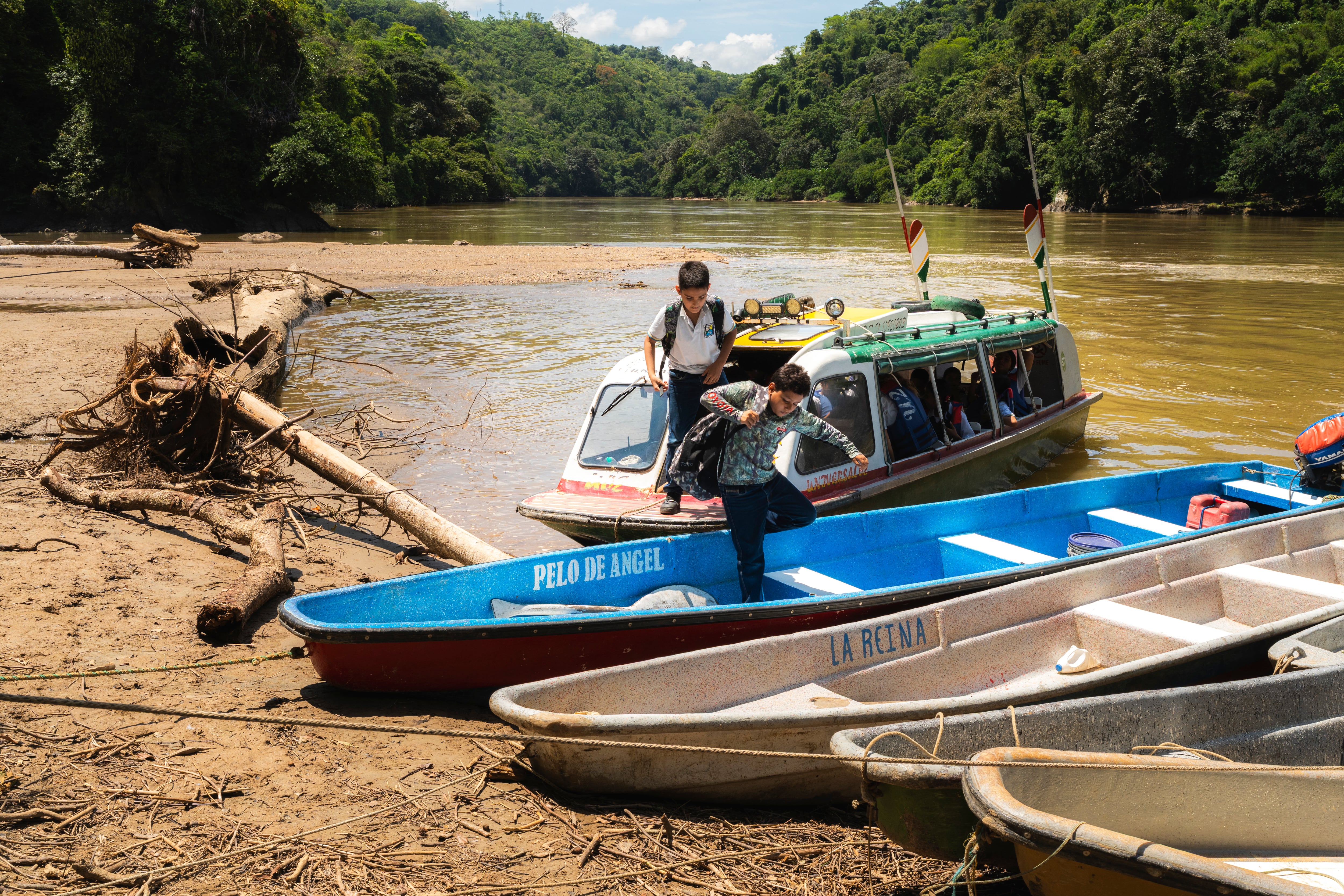
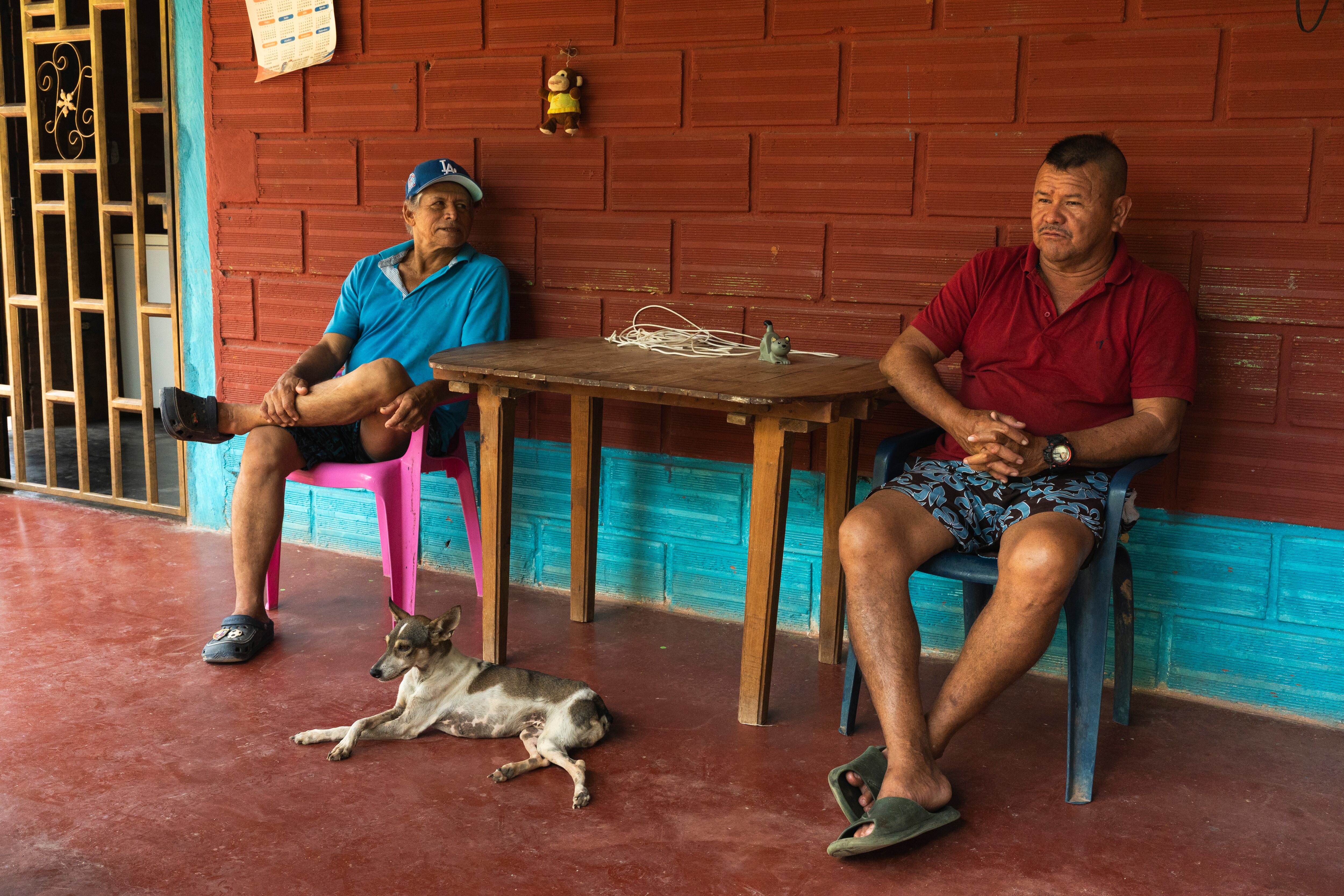
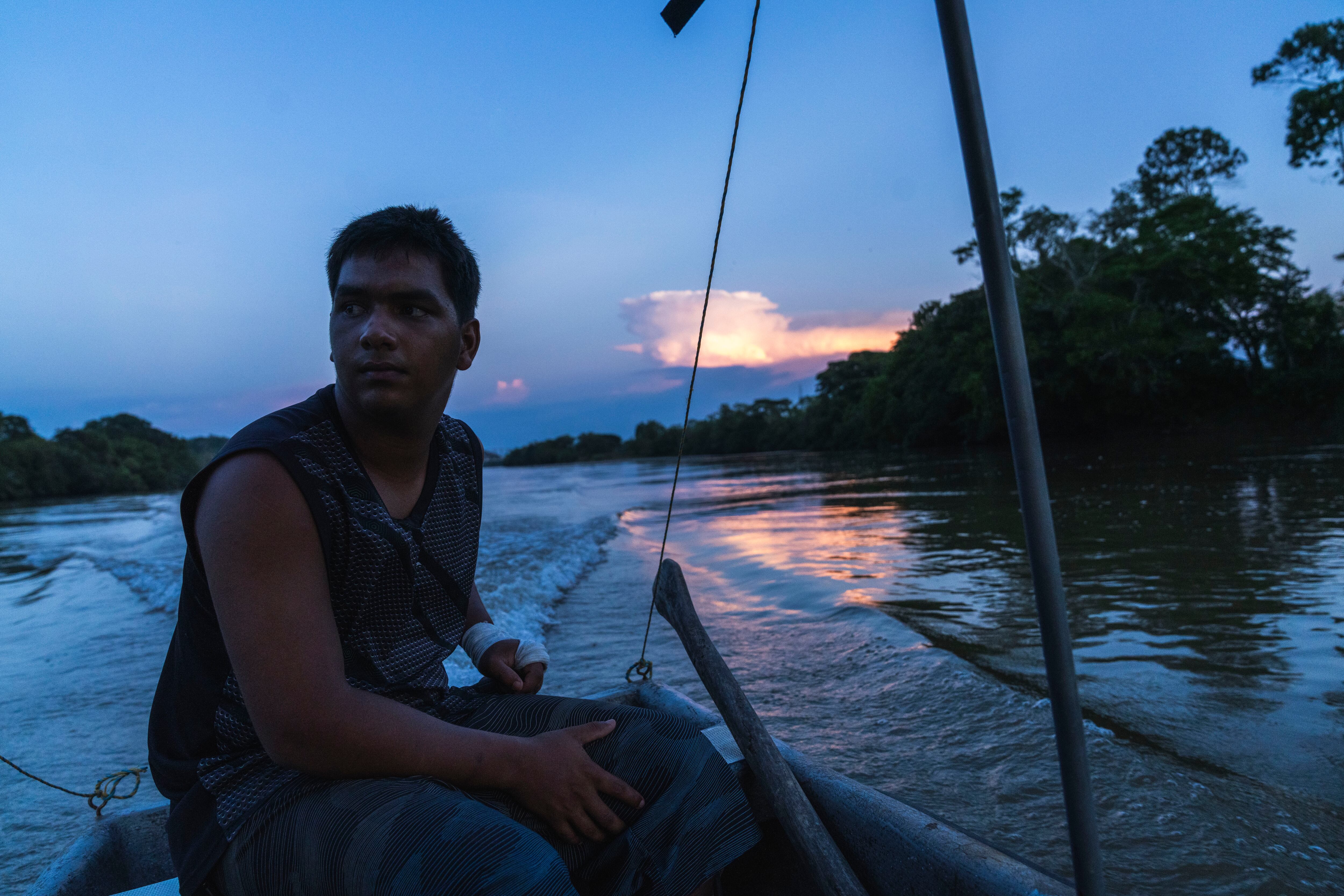
Twenty-three children make their way to school with their eyes glued to the murky water of the Nare River to see if they can see the hippopotamus. The school route has become a kind of safari with the kids scanning the horizon. Everyone in the municipality has a story to tell about the hippopotamus; that his feces scare away the fish, that he eats the banana crops, that his footprints are the size of three palms, that he will capsize a canoe... The Puerto Nare hippopotamus is all that’s talked about here. For Luis and his brother Diego, he is not a stranger. They call him Selmo. Their mother shakes her head and asks them not to get too attached because the judge has allowed just 60 days for the hippo to be removed from the vicinity.

Seguir leyendo

Aerial view of the Samana River, on September 22.Luis Ángel Arango and Luis Felipe Pérez walk to their home on the Samana River.Giovanny Contreras on the Magdalena River, on September 3.

© Luis bernardo Cano

Said Adrián Bustos rests in a boat on the Magdalena River.

© Luis Bernardo Cano

This lake is located in one of the sections of the Nare River.

© Luis bernardo Cano

The presence of wild hippos in Colombia poses a risk to the region's entire ecosystem.

© Luis bernardo Cano

Jorge Bustos and Juan Aguirre in Puerto Triunfo on September 21.

© Luis bernardo Cano

Diego Tabares steers a boat on the Samana River.

© Luis Bernardo Cano

Hippos in Colombia have begun to migrate to other areas, such as the Isla del Silencio on the Magdalena River.
  •  

EU welcomes Cambodia to WTO appeal arrangement

The EU welcomes Cambodia’s decision to join the Multi-party Interim Appeal Arbitration Arrangement (MPIA) for WTO members, contributing to efforts to uphold a rules-based multilateral trading system. 

With Cambodia’s participation, the MPIA now covers 62 World Trade Organization (WTO) members and 60.4% of world trade.  

The MPIA brings together participants from all continents and at different levels of development, united by a shared commitment to upholding the rules-based trading system. 

The MPIA preserves the right to appeal in trade disputes among participating WTO members, at a time when the WTO’s Appellate Body remains non-functioning. It helps ensure that disputes can continue to be resolved in an orderly and binding manner, avoiding appeals 'into the void'. 

“I welcome Cambodia to the MPIA. The arrangement plays an important role in upholding the rules-based trading system. Each new participant helps reinforce the predictability, stability and credibility of global trade rules. I encourage other WTO members to join the MPIA,” said EU Trade and Economic Security Commissioner Maroš Šefčovič. 

Background 

The MPIA was established in 2020 and has proven its effectiveness in many WTO disputes.  

Under the MPIA, appeals are heard by arbitrators randomly selected from a pool of 10 standing appeal arbitrators set up by the participating WTO members. These arbitrators are persons of recognised authority, with demonstrated expertise in law, international trade and WTO agreements.  

The MPIA is open to all WTO members as a practical tool for appeal arbitration, pending the restoration of a reformed and fully functioning WTO dispute settlement system. 

As of 1 June 2025, the MPIA has an updated pool of appeal arbitrators to ensure that appeals continue to be heard by independent arbitrators of the highest calibre. 

At the WTO Ministerial Conference that took place earlier this year, MPIA ministers stressed the importance of the MPIA for the security and predictability of the multilateral trading system.  

The current MPIA participants are Australia, Barbados, Benin, Brazil, Cambodia, Canada, China, Chile, Colombia, Costa Rica, Ecuador, the European Union (and its Member States), Guatemala, Hong Kong (China), Iceland, Japan, Liechtenstein, Macao (China), Malaysia, Mexico, Moldova, Montenegro, New Zealand, Nicaragua, Norway, Pakistan, Paraguay, Peru, the Philippines, Singapore, Switzerland, Ukraine, the United Kingdom, Uruguay and Vietnam.

More information

MC14: Supporting the rules-based multilateral trading system: the role of the MPIA

  •  
❌