Budapest has unexpectedly obstructed the next stage of EU accession negotiations with Ukraine and Moldova, just a week after approving earlier negotiating chapters and days after Prime Minister Péter Magyar pledged to restore relations with Kyiv.
Hungary has blocked a procedural decision needed to advance Ukraine and Moldova’s European Union accession negotiations, raising fresh questions about Budapest’s position under Prime Minister Péter Magyar, whose government had recently agreed to remove longstanding objections to Kyiv’s membership ambitions.
The intervention took place in Brussels on Tuesday, 20 October, during a meeting of the Council of the EU’s Working Party on Enlargement and Countries Negotiating Accession to the EU (COELA). Representatives of the 27 member states were examining the screening results for the final two negotiating clusters, covering environmental policy, transport, agriculture and regional development.
According to diplomats familiar with the discussions, the Hungarian delegation refused to approve the proposed procedural step. When representatives of other member states requested an explanation, Budapest reportedly maintained that its position remained unchanged, without providing further arguments.
An Unexpected Reversal After October Agreement
The obstruction comes only seven days after the EU formally opened two additional negotiating clusters with Ukraine and Moldova.
On 13 October, the Council approved the opening of Cluster 2, covering the internal market, and Cluster 3, dealing with competitiveness and inclusive growth. The decision followed an agreement between Kyiv and Budapest on educational rights for Ukraine’s ethnic Hungarian minority.
Ukraine’s parliament adopted legislative amendments on 12 October extending minority-language education rights, and President Volodymyr Zelenskyy signed the legislation the same day.
The agreement had appeared to remove the principal bilateral obstacle to further negotiations. Ukrainian Foreign Minister Andrii Sybiha and his Hungarian counterpart, Anita Orbán, welcomed the development following discussions in Luxembourg.
The diplomatic rapprochement continued on 16 October, when Zelenskyy and Magyar held their first official bilateral meeting in Brussels. Both governments expressed an intention to improve relations after years of disputes under former Hungarian Prime Minister Viktor Orbán.
Magyar also invited Zelenskyy to Budapest for commemorations marking the 70th anniversary of Hungary’s 1956 anti-Soviet uprising.
The subsequent Hungarian objection has therefore interrupted a process that Ukrainian and European officials had expected to advance before the end of the year.
Agriculture and Energy Remain the Final Obstacles
Ukraine and Moldova have now formally opened four of the six negotiating clusters required under the EU’s enlargement methodology.
The remaining two are Cluster 4, Green Agenda and Sustainable Connectivity, and Cluster 5, Resources, Agriculture and Cohesion. They cover several of the most economically sensitive areas of prospective Ukrainian membership.
Cluster 4 includes environmental regulation, energy policy and transport infrastructure, while Cluster 5 encompasses agriculture, food safety, fisheries and regional development funding.
Ukraine’s agricultural sector presents particular challenges for the EU’s Common Agricultural Policy. The country’s extensive farmland and substantial grain production could affect agricultural subsidy allocations, market competition and the distribution of EU budgetary resources.
Poland and other agricultural member states have previously expressed concerns about the implications of Ukrainian agricultural integration. Such questions will require negotiation regardless of Hungary’s immediate position.
However, the 20 October meeting was not intended to settle these substantive issues. Its purpose was to advance the procedural preparations for formally opening negotiations on the remaining clusters.
Domestic Politics and the Question of EU Funding
The explanation for Budapest’s latest move may lie in Hungary’s domestic political calculations rather than a new dispute over minority rights.
Diplomatic sources have suggested that Magyar’s government is attempting to avoid accusations from Viktor Orbán’s opposition that it is making excessive concessions to Ukraine.
Although Magyar defeated Orbán in April’s parliamentary elections and has adopted a more cooperative approach towards Brussels, he has consistently opposed accelerated Ukrainian membership.
In an interview conducted on 20 October, Magyar reiterated his opposition to fast-tracking accession, arguing that membership must remain conditional on compliance with EU requirements. He also questioned whether a country at war could join the Union.
Another potential complication concerns Hungary’s financial relationship with Brussels.
The European Commission agreed in May to unlock €16.4 billion in previously frozen funds following reforms introduced by Magyar’s administration. Some disbursements remain subject to conditions, while separate disputes over EU financial penalties continue.
However, there is currently no publicly established evidence that Hungary’s objection on 20 October was intended to secure additional financial concessions. Any connection between the two negotiations remains speculative.
Moldova Caught in Budapest’s Dispute with Kyiv
Hungary’s position also affects Moldova, despite the absence of an equivalent bilateral dispute between Budapest and Chișinău.
The EU has kept the accession negotiations of Ukraine and Moldova politically aligned, seeking to advance both countries through the six negotiating clusters together.
Consequently, an objection directed principally at Ukraine can delay Moldova’s progress even when its own technical preparations satisfy the relevant requirements.
Separating the two accession tracks would allow Moldova to advance independently, but such a move would require political agreement among member states and could raise further questions about the EU’s enlargement strategy.
Ireland Seeks Agreement Before December
Ireland, which holds the rotating presidency of the Council of the EU until 31 December, has made progress on Ukrainian and Moldovan accession a priority.
The disputed procedural decision is expected to return to subsequent meetings of the enlargement working party, with senior EU and national officials still anticipating that the final two clusters could formally open in December.
The latest obstruction does not reverse the four clusters already opened, nor does it terminate accession negotiations. It does, however, demonstrate that the change of government in Budapest has not eliminated Hungary’s capacity or willingness to obstruct individual stages of enlargement.
For Kyiv and Chișinău, the immediate question is whether the 20 October decision represents a short-lived domestic political manoeuvre or the beginning of another prolonged dispute over the conditions of EU membership.
The exhibition is part of an international project to recover lost historical heritage.
On Tuesday, the Alhambra Monument in Granada began hosting the digital exhibition “The Dream of a Renaissance Princess: Mary of Hungary,” which runs until November 20th.
The exhibition honors one of the most influential women in 16th-century Europe, exploring the historical and cultural ties between Spain and Belgium through the life of Mary of Hungary, sister of Emperor Charles V and governor of the Netherlands from 1531 to 1555.
The exhibition uses virtual reconstructions and audiovisual resources to showcase the “artistic splendor” of Mary of Hungary’s court, renowned for her political and diplomatic role and her cultural patronage during the Renaissance.
Alhambra Trust Director Rodrigo Ruiz-Jimenez presented the exhibition as part of an international project to recover lost historical heritage. One of the main attractions is the digital recreation of the now-vanished palace of Binche, which Mary of Hungary transformed into a prominent center of cultural and artistic activity.
✳️ La @alhambracultura redescubre el legado de María de Hungría, una de las grandes mujeres del Renacimiento europeo.
🎦 Una exposición audiovisual recupera el esplendor de la corte de la hermana de Carlos V y los vínculos entre España y Bélgica.
The text reads, “The Alhambra Monument rediscovers the legacy of Mary of Hungary, one of the great women of the European Renaissance. An audiovisual exhibition recovers the splendor of the court of the sister of Charles V and the ties between Spain and Belgium.”
The organizers emphasize that the Binche Palace played a symbolic role similar to the Palace of Charles V in Granada, both conceived as expressions of the power and prestige of the Habsburg dynasty.
The experience invites visitors to tour different palace rooms virtually, learn about the Renaissance court life, and explore music and celebrations characteristic of the period.
The itinerary also includes content dedicated to the Mariemont hunting lodge and the performance of the motet Sancta Maria, a composition created in 1548 in honor of Mary of Hungary. The exhibition is part of the European project MARY4ALL and involves institutions from Spain, Belgium, and France.
#Spain | Madrid's public school teachers have launched an indefinite strike, demanding smaller classes, reduced teaching hours, and increased education funding. Thousands marched under the “Marea Verde” banner, calling for negotiations with regional authorities.#TeachersStrike… pic.twitter.com/L9nYBiDnGs
Over coffee, an Israeli woman I know began to cry. “I’m 42,” she said, “and I’ve spent my entire adult life held captive by Bibi.”
Benjamin Netanyahu has not been Israel’s prime minister for every one of those years. Yet even out of office, Israeli politics rarely escaped his gravitational pull.
For him or against him, public life kept arranging itself around his presence.
Netanyahu is Israel’s longest-serving prime minister, having previously held office from 1996 to 1999 and from 2009 to 2021, and from 2022 onward.
Hungarians know something about that feeling. For 16 years, Viktor Orbán was not merely Hungary’s prime minister but the organising fact of Hungarian politics. Institutions bent around him, opponents defined themselves against him, and arguments somehow ended up being about him.
On 12 April, that era ended.
Péter Magyar’s insurgent Tisza party defeated Fidesz after 16 uninterrupted years in power. The final results gave Tisza 141 of parliament’s 199 seats, a two-thirds majority.
The temptation is to tell a simple story of liberation: the dominant leader fell, the spell broke, democracy returned. But political systems leave habits behind, and Orbán’s most durable legacy may prove to be the way Hungarians learned to imagine politics itself.
That is also Magyar’s dilemma.
Opposition movements confronting personalised systems often conclude that they, too, need a protagonist capable of gathering diffuse grievances into a political force.
Yet the qualities that help an insurgency win are not necessarily those needed to build a pluralist order afterwards. Campaigns reward concentration, and democracy depends on dispersing authority.
A challenger may have to become indispensable in order to win. Governing democratically requires eventually proving that he is not.
For people my age, Orbán’s rise was a rupture because we remember other governments and possibilities. Many of my students, now in their 20s, do not. Their political adulthood unfolded almost entirely under Fidesz. Orbán was simply there, as unavoidable as the weather.
Power can come to look distant and durable, participation noble but futile, and institutions captured or irrelevant. Politics becomes something done to you rather than something you do.
Conversations with Orbán
I know how deeply that can lodge itself in the mind. For five years, I have had countless conversations with Orbán in which I argued with him and tried to persuade him to change course. All of them took place in my dreams.
Supporters and opponents experienced Orbán’s system differently, but both learned to orient themselves around the same centre of gravity. Loyalists read its signals, while critics watched it constantly and defined themselves against it.
Parties that spend years confronting a dominant machine tend to centralise themselves. Message discipline becomes existential, disagreement can look like sabotage, and restraint like something to discuss after victory.
That is why Hungary’s challenge is larger than reversing Orbán’s policies.
A government elected to repair democratic institutions has to accept restraints precisely when it can most easily avoid them: strengthening parliament even when it dominates it, protecting independent media when they attack the government, and creating institutions whose authority does not depend on proximity to the prime minister.
Older Hungarians understandably speak about restoration: rebuilding institutions, restoring judicial independence, returning to democratic normality.
But “return” means something different when you are 25. You cannot return to a political world you never inhabited. For younger Hungarians, democracy cannot merely be recovered; it has to become real for the first time.
That distinction matters beyond Hungary. Opponents of personalised populism often offer restoration as their programme.
Yet generations raised amid democratic erosion may have little memory of the normality they are being asked to recover. Democratic politics has to show that dispersed power need not mean ineffective government, that disagreement need not threaten the state, and that losing an election need not mean losing the country.
Success should also mean making politics less consuming. Most democratic life is not election night but local meetings, newspapers and arguments about schools, budgets and public space.
A healthy political order allows citizens to pay less attention to the leader because fewer things depend on what that leader wants. Personalised rule teaches the opposite lesson. Even resistance can become dependence.
This is where Hungary’s experience returns me to my conversation about Israel.
Israelis are due to vote on 27 October in an election in which Netanyahu once again occupies much of the political landscape.
Whatever voters decide, Hungary suggests a question that will remain whenever his long political era eventually ends: can political life be reorganised around institutions and competing interests rather than around the presence, or absence, of one man?
Removing a dominant political figure does not remove the habits formed around him. Supporters have to imagine their politics without the leader they regarded as indispensable, while opponents have to decide what they stand for when opposition to him is no longer enough to bind them together.
Hungary’s experience suggests that this is where democratic renewal really begins – not with replacing one dominant figure with another, but with building institutions and political movements that no longer require one.
My friend’s tears were for the time she felt had been taken from her. Hungary’s younger generation, now free of Orbán, cannot mourn in quite the same way, because many have no memory of political adulthood against which to measure what was lost.
Their challenge, now, is not to recover an old normal but to create something they have never experienced: a public life in which politics belongs to citizens without consuming them, and in which no leader becomes so indispensable that an entire country must organise itself around him.
Drones attacked an oil and fuel pumping station of Russia’s Druzhba pipeline system in Tambov Oblast overnight on 20 October, setting a diesel tank on fire, Ukrainian monitoring channel Exilenova+ reported, citing locals. Druzhba, Russian for “friendship,” is a Soviet-era oil pipeline, about 4,000 km long, that carries Russian crude west to Europe, including through a branch that crosses Ukraine. The struck station is on its Russian section. Tambov Oblast Governor Yevgeny Pervyshov confirmed a fire at an unnamed enterprise in Michurinsk district after what he called a Ukrainian drone attack. The station lies about 400 km from the front line.
Ukraine has spent months striking the refineries, terminals, and pipelines that fund Russia’s war, and its Defense Ministry says the strikes have knocked out more than half of Russia’s refining capacity. Washington wants them stopped. US officials reportedly tied intelligence sharing to a halt in refinery strikes, and US President Donald Trump called their resumption “a disgrace.”
Hours of attack before dawn
Russia’s regional alert system declared a drone threat at 03:38, Ukrainian military outlet Militarnyi reported. By 06:25, Exilenova+ said the Nikolskoye station was under attack, after Michurinsk had been under attack for several hours.
The Nikolskoye fuel pumping station in Russia’s Tambov region is under attack. pic.twitter.com/cA64vMgjsM
Ukraine has not commented. The General Staff’s 20 October list of overnight strikes does not mention Tambov Oblast.
The Nikolskoye oil and fuel pumping station in Russia’s Tambov Oblast, which drones attacked on 20 October 2026. Map: Militarnyi/ESRI
A Druzhba fuel hub hit before
The Nikolskoye station belongs to Transneft, Russia’s state pipeline operator. It stores and pumps crude oil and refined fuels, including diesel, gasoline, and jet fuel. The complex has three tank farms and two pumping stations, and it can move up to 300,000 tonnes a day, according to Current Time.
Ukrainian drones hit a station of the same hub in August 2025, and Ukraine’s General Staff said then that pumping on the pipeline had stopped completely.
Strikes resume despite US pressure
Ukraine paused refinery strikes for three days after Trump announced an “energy ceasefire” on 11 October, while Russia fired 39 ballistic missiles at Ukraine’s grid. Since Kyiv resumed the strikes, drones have also hit an oil terminal and a fuel depot in St. Petersburg.
Kyiv reads other US moves as pressure too, from missed warnings of Russian ballistic launches to a Starlink cap that slows Ukrainian drones. President of Ukraine Volodymyr Zelenskyy told US senators he had offered a 30-day halt on refinery strikes in exchange for Patriot interceptors, but Trump’s envoys showed no openness.
The European Commission is checking whether laws Ukraine’s parliament passed last week earn it a €3.7 billion ($4.3 billion) EU payment, spokesperson Balázs Ujvári told reporters in Brussels on 19 October. He also said Ukraine’s 2027 funding gap stands at about €70 billion, and that the EU “cannot do this all alone.” How Ukraine pays for Russia’s war next year now depends on reforms in Kyiv and on money from Europe and beyond.
Russia keeps striking Ukraine’s power grid and cities, and Kyiv already faces a hole in next year’s war budget before any new military spending. Foreign money keeps salaries, pensions, and repairs flowing while Ukraine spends its own revenue on defense. So each delayed payment is felt at home while Russia hits the energy system again.
Brussels reads Kyiv’s new laws before paying
The payment is the second tranche of the EU’s macro-financial assistance to Ukraine, and each one depends on reforms, Ujvári said at the Commission’s midday briefing.
“We saw that last week some important laws were adopted in the Rada, and we are in the process of analyzing these laws and we will formulate our assessment thereafter,” he said.
On its third attempt, parliament passed a law on 15 October ending the VAT exemption for foreign parcels worth up to €150 from 1 July 2027, and making online marketplaces collect the tax. The Commission had warned the law was one of 12 conditions for the tranche. Fewer than 1% of the 75 million parcels Ukrainians receive each year were taxed, and lawmakers had rejected the measure twice despite IMF pressure.
About €30 billion is in the pipeline for Ukraine this year, mostly under the EU’s €90 billion support loan, if reforms continue, Ujvári said.
Explore further
EU announced funding shortfall for Ukraine in 2027
A €70 billion gap for 2027
Current pledges leave a gap of about €70 billion for 2027, Ujvári said, even counting the €45 billion ($52 billion) the EU has set aside for next year and some partners’ commitments.
“We cannot do this all alone. Therefore, our partners in general must step up,” he said. “They have to come forward with pledges, and they have to deliver on those commitments.”
On 16 October, Ukrainian President Volodymyr Zelenskyy asked EU leaders for at least €70 billion more for 2027. They tasked the Commission with a proposal but set no deadline. Asked whether it would revisit using frozen Russian assets, Ujvári said it was “a little bit early” to discuss options in that detail. New EU borrowing has also grown costlier: 10-year rates rose from 3.2% to just above 4% in six months, he said.
The €90 billion loan was designed on the assumption that the war would end in 2026. Slovak Prime Minister Robert Fico said Slovakia and Hungary would opt out of new aid but would not block others.
Over the past decade, Hungary has been a beacon for the ‘postliberal’ right, with pro-Trump thinkers making regular pilgrimages to Budapest. Now Orbán is gone, how will the movement adapt?
A longer version of this article first appeared in The Drift
Espresso Embassy, a third-wave coffee shop in Budapest’s diplomatic and governmental quarter, is where visiting reporters and academics come to talk politics. On the way in for my morning coffee on 18 March, I passed a poster for Viktor Orbán’s Fidesz party that had been vandalised with a marker pen: “the safe choice” had become “the certain way to get fucked”. From across the cafe, I spotted the American journalist and historian Anne Applebaum locked in conversation, possibly with a source. I heard someone exclaim: “Just like Mussolini!” It was election season in Hungary.
It was also a couple of days before Cpac Hungary, a satellite event of the US-based conservative conference. As members of the international right arrived in town, the notorious Orbánist thinktank known as the Danube Institute was hosting an event called On Censorship, Tolerance, the Left and God. The official line would be: bad, good, bad, good.
Hungary stopped a Ukrainian Oschadbank armored convoy in 2026, held its couriers, and kept $82 million in cash and gold. The European Court of Human Rights has registered six applications from the bank's couriers, who say Hungarian police unlawfully detained and tortured them.
In March, Hungarian forces stopped two bank vehicles carrying cash and bank metals from Austria to Ukraine, with seven employees transporting $40 million, 35 million euros, and nine kilograms of gold. It happened just before Hungary’s parliamentary elections, in which then-prime minister Viktor Orban had built his campaign around a sweeping anti-Ukraine message, and lost.
Six of the employees filed with the court on 5 July 2026, and the court’s secretariat has now confirmed their registration and assigned each an official number, according to the bank. It expects a seventh courier’s application, alleging the same violations, to be registered too.
“The fact that the ECHR has accepted the complaint and opened proceedings indicates that there are reasonable legal grounds for the case, that it has legal merit, and that the court intends to examine it on its merits,” Oschadbank says.
The rights the couriers say Hungary broke
The complaints rest on two articles of the European Convention on Human Rights. Article 3 bans torture and inhuman or degrading treatment, while Article 5 guarantees the right to liberty and protects people from arbitrary detention, the bank notes.
During the detention, one courier, a diabetic former Security Service officer, was forcibly injected with an unknown substance, which his Hungarian lawyer confirmed he received despite his objections. He then suffered a hypertensive crisis, lost consciousness and was hospitalized, and Oschadbank confirmed that medical care came only after he passed out, The Guardian reported.
Oschadbank calls the registration an important step in defending its staff. Board chairman Yury Katsion said the bank will continue to protect the couriers’ interests and its own reputation, expects a legal assessment of the Hungarian forces’ actions and is grateful to partners for their support.
Why registration is a start, not a verdict
The cases are only at an early stage. Registration does not mean the court has found a violation or ruled the complaints admissible, as it must separately weigh the procedural conditions and the circumstances the applicants describe, Oschadbank stresses.
The incident itself, however, is documented: Hungary returned the seven couriers the next day but held the cash and gold for months, releasing the vehicles on 12 March and the money and gold by May.
The series continues as we report on developments following April’s historic election and on the steps taken since then by the Tisza government. This week, we cover the following topics:
Another blow for Hungary’s richest man;
New chief prosecutor nominee, plus a former chief prosecutor ready to testify on political pressure;
Parliament has adopted the new child-protection law;
A state secretary has unexpectedly left the government;
Orbán to keep quiet on one of Hungary’s most important national holidays;
Ukraine adopts the minority education law;
More EU funds and money from the Norway Grants have become available.
Another blow for Lőrinc Mészáros
Last Friday (9 October), prime minister Péter Magyar and Dávid Vitézy, minister for transport and investments, announced that the state was suspending implementation of one of Hungary’s largest rail projects – the Budapest southern circular railway, and will launch a new public procurement procedure.
The works had been carried out by V-Híd, the most profitable company of Lőrinc Mészáros, who became Hungary’s richest man during Viktor Orbán’s premiership.
However, the European Court of Auditors uncovered serious public-procurement irregularities: V-Híd may have colluded with the company that drafted the project plans and thus already possessed information at the time of the tender that its competitors did not have. Because of this, the European Court of Auditors would withdraw EU funding from the project.
The Hungarian government does not want to forfeit the EU money and make Hungarian taxpayers foot the bill for the costs of the project, which is why it is terminating the contract with Mészáros’s company and launching a new tender.
The Hungarian state had already taken away from Mészáros the right to operate a motorway section, and later also terminated the 35-year motorway concession.
Previously, one of his food-industry companies had EU funding already granted to it withdrawn, while his energy company was excluded from a call for proposals financed from the repatriated RRF funds.
New chief prosecutor nominee, plus former chief prosecutor ready to testify
On Monday (12 October), president András Baka nominated a former chief prosecutor, Péter Fejes, for the post of chief prosecutor. His first nominee, Zoltán Szathmáry, was not voted through by the Tisza group in parliament after it emerged that his brother was implicated in the so-called gold convoy case, in which a Ukrainian cash shipment was stopped and confiscated by the Hungarian authorities.
Fejes was dismissed in 2012 from his position as chief prosecutor of Vas county by Péter Polt, the chief prosecutor serving the Orbán system, citing loss of confidence. Since then he has continued to work within the prosecution service and as a university lecturer, and he has no party affiliation. For the time being neither prime minister Magyar nor the Tisza group has stated whether they support Fejes’s nomination.
Since the change of government, another former chief prosecutor, Pál Fürcht, has frequently spoken to the media. Among other things, he has claimed that the gold convoy case was created for political purposes, and that the authorities raided the Ukrainian cash couriers on Orbán’s orders.
On Sunday (11 October), Magyar sharply criticised Fürcht in a Facebook post, reproaching him for having been a servant of the system himself. According to Magyar, Fürcht constructed a criminal case, on political orders, out of the notorious nightclub altercation for which the prime minister is currently under investigation on charges of theft.
It was likewise Fürcht who left former propaganda minister Antal Rogán out of the corruption case known as the Völner–Schadl affair.
In response to Magyar’s criticism, Fürcht said he was ready to make an official statement before any authority. In parliament on Monday, the prime minister was already referring to the former chief prosecutor as a future witness.
Parliament has adopted the new child-protection law
Child protection was one of the most important topics of the campaign and played a major role in Orbán’s downfall. Magyar kept the issue on the agenda even after his government took office; most recently, last Thursday, the prime minister and the state secretary responsible for the field, Szilvia Gyurkó, presented the report on the children’s home in Bicske.
This home had been run by a director who was decorated by Orbán and later convicted of paedophile crimes, together with his deputy, who helped cover up the abuses. The presidential pardon granted to the deputy shook the Orbán government and helped lead to its collapse.
On Tuesday (13 October), parliament adopted an amendment to the child-protection law, which takes a tougher stance against media content accessible to minors that propagates sexual violence, manipulation and exploitation, and would speed up the placement of babies abandoned in hospital.
The amendment removed those homophobic passages that the Orbán government forced into law in 2021, and which the Court of Justice of the European Union also ruled to be contrary to EU law.
Fidesz, the Christian Democratic People’s Party (KDNP) and the far-right Mi Hazánk did not vote for the amendment; Magyar called this a disgrace.
A state secretary unexpectedly leaves the government
On Tuesday, András Tótth, state secretary for energy at the Ministry of Economic Affairs and Energy and minister István Kapitány’s most important aide, unexpectedly resigned.
This article continues, but the full version is available only to EUobserver.com subscribers. Visit account.euobserver.com/membership
Some medieval books can’t be read by anyone, and one of them has become almost a trademark of the genre: the Voynich manuscript, kept at Yale University and dated to the 15th century. It has inspired novels and theories of every kind. Specialists often place another volume right behind it on the list of enigmas, […]
EU ministers have reviewed reforms introduced by Prime Minister Péter Magyar’s administration but left the Article 7 proceedings against Hungary unresolved. The European Commission has acknowledged significant progress while warning that further changes are required to restore the rule of law.
The European Union has maintained its Article 7 proceedings against Hungary despite acknowledging significant improvements in the country’s rule-of-law situation since Prime Minister Péter Magyar’s government took office earlier this year.
Ministers meeting at the General Affairs Council in Luxembourg on Tuesday, 13 October, reviewed reforms introduced by the Hungarian administration and received an updated assessment from the European Commission.
The proceedings, initiated by the European Parliament in September 2018, remain open eight years after concerns over judicial independence, corruption, media freedom and democratic accountability first prompted action under the EU treaties.
No decision was announced to terminate the procedure following the latest meeting.
Brussels acknowledges progress
European Commissioner Michael McGrath said ahead of the discussions that Hungary had made substantial progress towards addressing the institutional problems inherited from the administration of former prime minister Viktor Orbán.
Speaking in Luxembourg, McGrath acknowledged improved cooperation between the Hungarian government and European institutions.
However, he also indicated that the reform process remained incomplete, noting that the new administration had been in office for only several months.
The Commission’s assessment reflects the changing relationship between Budapest and Brussels following Magyar’s election victory and the subsequent introduction of reforms intended to restore judicial and institutional independence.
As EU Today reported in June, the change of government created an opportunity to resolve long-standing disputes over the condition of Hungary’s democratic institutions and the suspension of European funding.
The latest Council discussions indicate that the EU is prepared to recognise reforms already undertaken without automatically treating them as sufficient to close the Article 7 procedure.
An eight-year institutional dispute
The European Parliament initiated the proceedings in 2018 after raising concerns over developments affecting Hungary’s constitutional system, judicial independence, corruption safeguards and civil society.
Article 7 of the Treaty on European Union provides mechanisms for responding when a member state is considered at risk of seriously breaching the Union’s fundamental values.
Under its preventive provisions, the Council can determine whether there is a clear risk of such a breach.
More severe measures, including the possible suspension of certain membership rights, require additional procedures and higher institutional thresholds.
Hungary’s case has remained within the preventive stage, with successive Council meetings examining the country’s legal and political developments.
The Council’s account of the 13 October meeting confirms that Hungarian representatives presented measures intended to address concerns raised by the European Parliament and member states during earlier proceedings.
The Commission also briefed ministers on its latest assessment.
The meeting did not produce a formal finding that the outstanding concerns had been fully resolved.
Magyar faces the consequences of Orbán’s legacy
Since assuming office, Magyar has sought to reverse elements of the institutional structure established during Orbán’s lengthy premiership.
The reforms have included measures concerning public administration, judicial accountability and the relationship between national institutions and European law.
The new government has also attempted to improve relations with Brussels after years of disputes that affected EU budget decisions, sanctions policy and cooperation over Ukraine.
EU Today has previously examined Magyar’s programme of institutional renewal and the political difficulties involved in changing institutions shaped by the previous administration.
Reforming legislation does not necessarily transform the institutions responsible for applying it.
Judicial appointments, regulatory structures, public procurement procedures and anti-corruption enforcement may all require additional measures before the effects of reform can be fully assessed.
The European Commission must therefore consider not only the laws adopted by the new government but also whether the institutions concerned operate independently and effectively.
EU funding remains a separate question
The Article 7 proceedings are closely associated with wider disputes over Hungary’s access to European funding, although the relevant legal mechanisms are different.
During Orbán’s administration, the Commission and Council used financial conditionality procedures to restrict access to certain EU resources because of concerns affecting the protection of the Union’s budget.
Magyar’s reforms have opened the possibility of reversing some of those restrictions.
As EU Today reported in September, the Commission moved towards releasing €4.2 billion following changes intended to address rule-of-law concerns.
The financial decisions involve compliance with conditions attached to EU funding and can proceed independently of the Article 7 mechanism.
Consequently, the release of money does not automatically establish that all the institutional problems identified in the original parliamentary proceedings have been resolved.
Likewise, the continuation of Article 7 does not necessarily prevent the Commission from recognising progress under separate funding arrangements.
Who can end the proceedings?
McGrath addressed the possibility of terminating the procedure during remarks before Tuesday’s meeting.
He explained that the Commission could provide its assessment but did not have unilateral authority to bring the Article 7 process to an end.
In his recorded statement in Luxembourg, the Commissioner pointed to the responsibilities of the European Parliament, which initiated the case, and the Council, which has conducted the subsequent examination.
The institutional arrangements mean that improved relations between the Commission and the Hungarian government cannot by themselves dispose of the proceedings.
The Council must consider the reforms and the remaining concerns within the framework established by the treaties.
Political agreement among member states will consequently be required to determine how the process develops.
A changed relationship with Brussels
The latest discussions take place against a substantially different political background from previous years.
Budapest has recently withdrawn objections to further steps in Ukraine’s EU accession negotiations following Ukrainian legislation addressing educational rights for Hungarian speakers and other national minorities.
The change has removed one obstacle to enlargement negotiations and reflects the government’s more cooperative approach towards other EU institutions.
Nevertheless, Hungary’s position on foreign policy and enlargement is distinct from the assessment of its domestic rule-of-law arrangements.
The Council’s examination remains focused on the institutional concerns that led to the procedure being initiated.
The Irish presidency’s summary of the October Council meeting confirms that ministers received an update rather than reaching a new formal determination.
The proceedings therefore remain open while the Commission and member states continue examining the measures introduced by Magyar’s administration.
The coming decisions will establish how European institutions respond when a new government undertakes reforms intended to reverse the conduct that originally led to action under Article 7.
For Hungary, the outcome will influence its relationship with Brussels well beyond the immediate debate over EU funding. For the Union, it will demonstrate how its rule-of-law procedures operate when political circumstances change and the member state concerned begins addressing previously identified institutional problems.
More than a year ago, we launched our Hungary Briefing, a weekly round-up of the election campaign. Since the historic vote in April to remove Viktor Orbán’s Fidesz government, the series has followed the new Tisza administration and its first moves in office. This week’s topics:
How Viktor Orbán used Lőrinc Mészáros.
According to Orbán, they deliberately did not give money to the liberals.
Orbán’s brother also has a gold-convoy case.
A wealth tax is coming.
Support for Hungarian media beyond the borders.
This week’s opinion polls: slight drop for Tisza, strong support for the Olympics
How Viktor Orbán used Lőrinc Mészáros.
The investigative outlet Direkt36 revealed important details about the links between Lőrinc Mészáros’s companies and Orbán-era propaganda in a new series of articles. The investigators obtained internal documents from a company called V-Híd, which showed that the firm belonging to the Mészáros portfolio paid out several billion forints between 2022 and 2026 to influencers in the Megafon network.
The oligarch was not stingy.
V-Híd is one of the most important and most profitable companies in the Mészáros empire, primarily engaged in railway construction. It owes its success almost entirely to the fact that it won huge public procurement contracts under Fidesz governments.
In recent years, V-Híd has become the dominant player in railway construction in Hungary, pushing out its competitors. Enormous dividends have been taken out of the company by the Mészáros clan (most recently, despite weaker results, 10 billion forints, or around €25m).
The Direkt36 article also reveals that Orbán-era propaganda was financed directly from the company’s revenue. Donation contracts were leaked showing that V-Híd regularly sent hundreds of millions of forints as “gifts” to Megafon. In 2024 alone, they sent 3 billion forints (around €7.6m at the time) in support to the influencer network.
The path of public money to propaganda
The formula was very simple: through public procurement, the government stuffed the Mészáros group’s companies with public money, and part of the revenue generated was channelled to the propaganda machine.
From 2020, Megafon was a key communication channel for Fidesz, where well-known influencers conveyed the party’s messages and huge sums were spent on online advertising.
The money won through public tenders did not only go towards financing propaganda. Direkt36 also uncovered luxury perks V-Híd and other Mészáros companies offered their staff.
Many would envy V-Híd’s team-building events. In 2024, nine employees of the company travelled by private jet to a château in south-western France, at a cost 62 million forints, or about €150,000, including €500 spent on cigars.
According to Direkt36, V-Híd has spent more than 1 billion forints in total – roughly €2.5m – on foreign trips in recent years.
On one trip to Tajikistan, V-Híd paid out €46,000 – the Central Asian country is a popular destination for exotic hunting excursions, and Mészáros also took part in such a hunting tour.
The Mészáros clan were also keen on yachting and spent money on private jets. One private jet linked to the Mészáros family was used at least once by Orbán himself.
The money did not go to the liberals
Fidesz has tied itself in knots after the arrest of culture minister Balázs Hankó. Hankó is suspected of aggravated breach of fiduciary duty causing particularly significant financial loss, committed in a criminal conspiracy, and the court has placed him in pre-trial detention.
The Hankó case blew up shortly after the elections, when activist Áron Molnár revealed that the National Cultural Fund had disbursed more than 17 billion forints (around €44m) to artists close to Fidesz for the purposes of the party’s campaign.
After a few months of investigation, the authorities reached the former minister, now a member of parliament, who said the allocation of grants had been lawful and that a politically-motivated show trial had been launched against him.
Shortly before he was taken into custody, Hankó told HírTV, a Fidesz-friendly channel, that being a Fidesz member or linked to Fidesz had never been a precondition for receiving NCA funding.
Orbán, however, explained the Hankó case differently in a speech at a closed-door event, from which former state secretary Péter Takács shared a clip. According to Orbán, Hankó was the only culture minister since 2010 who did not give support to the “liberals in Budapest”, and that is why, in his view, he was locked up.
This article continues, but the full version is available only to EUobserver.com subscribers. Visit account.euobserver.com/membership
The Commission is “going a bit too fast” in unlocking €4.2bn and restarting the Erasmus+ student exchange programme in Hungary, according to budget committee MEPs.
The EU froze its financial assistance to Hungary in 2022 due to concerns about rule of law breaches and misappropriation of funds by Viktor Orbán’s government.
Green MEP from Germany, Daniel Freund, told EUobserver he “would have taken a more staged approach to not release everything in one go,” admitting that the reform agenda of Péter Magyar’s new government still has some way to go.
The commission’s proposal to unlock part of the €16.4bn in funds available to Hungary requires the green-light from the EU council, representing member states, one month after its announcement on 23 September.
Freund said that he was “happy about the changes we have seen” following his visit to Hungary on 1 October.
“Hungary needs this money, I also want Hungarians to have this money, since for years it was just going to Orbán and his cronies,” he said on Tuesday (6 October).
However, Freund and other MEPs on the fact-finding mission found that “the same risks of corruption exist,” and “there are new laws that are still fragile in their implementation,” French socialist and democrat Jean-Marc Germain told reporters in Strasbourg on Monday.
The Parliament can serve as a pressure point, although the decision on funds is largely in the hands of the commission and the council.
“There is no real political pluralism in Hungary, which may in the long run be a reason for worrying,” he said, adding that most companies are still owned by the same few people as during Orbán’s rule.
The tone is different on the other side of the political spectrum.
This article continues, but the full version is available only to EUobserver.com subscribers. Visit account.euobserver.com/membership
A blacksmith, a groom, a soldier, a slave: the faces and stories of these and other inhabitants of an ancient Roman city in modern-day Hungary have been brought back to life with astonishing accuracy in a new exhibition in Budapest, the Associated Press reported in July (as cited by BTA). The exhibition, which runs until […]
A metal detector has pulled a small lead statuette of Venus Pudica out of a forest in the Buda Hills, northwest of Budapest. It is the first religious object recorded at the Roman village of Pilisszentiván–Hárs erdő, a rural settlement in the province of Pannonia. Eötvös Loránd University (ELTE) has been excavating it for four […]
The former prime minister of Hungary, Viktor Orbán, has denounced a new political offensive against his Fidesz political formation following the arrest and 30-day pretrial detention for Miklós Seszták, a lawmaker and former national development minister under Orbán.
A Budapest court on Wednesday ordered 30 days of pre-trial detention for Seszták following a corruption investigation that may just be beginning of a wave of prosecutions targeting the former Orbán government.
Orbán accused Magyar’s Tisza government of “neo-communist tactics.”
“The Tisza authoritarian rulers are raising taxes, fuel prices are soaring, and they are wrecking the Hungarian economy. Authoritarianism creates new victims every day. Today it’s them, tomorrow it’s you. They would rather stage political theatre than face reality. Our message to every Hungarian is this: the Tisza authoritarian rulers will not break our patriotic community. We will not let them. They cannot imprison half the country,” he continued.
Neo-communist tactics. The Tisza authoritarian rulers are raising taxes, fuel prices are soaring, and they are wrecking the Hungarian economy. Authoritarianism creates new victims every day. Today it’s them, tomorrow it’s you. They would rather stage political theatre than face reality. Our message to every Hungarian is this: the Tisza authoritarian rulers will not break our patriotic community. We will not let them. They cannot imprison half the country.
An investigating judge at the Buda Central District Court found sufficient grounds to suspect official bribery and other offenses and said detention was needed to protect the inquiry, the Budapest Metropolitan Court announced. The ruling is not final. Seszták’s lawyer filed an appeal, and the former minister has maintained his innocence.
The order came two days after parliament voted 139-0 to lift the immunity of Seszták and another Orbán-era minister, Balázs Hankó. Fidesz and its Christian Democratic People’s Party allies boycotted the session and called the proceedings political persecution.
Prosecutors and the newly created National Asset Recovery and Protection Office allege that between 2014 and 2018, Seszták accepted bribes totaling hundreds of millions to more than 11 billion forints (€30 million) from construction contractors tied to state bus company Volánbusz and other projects, together with a former state asset-management official. Seszták has called the accusations baseless.
Balázs Orbán, the former prime minister’s political director, compared the events to 1950s political prosecutions and to cases against conservative politicians in Poland.
“This is the political arbitrariness of the communist 1950s, unfolding in Hungary in real time. You can watch it live on @PM_ViktorOrban’s Facebook page: a former Hungarian minister is being arrested following a direct and public demand by Péter Magyar, the Hungarian Prime Minister backed by Brussels,” he wrote.
This is the political arbitrariness of the communist 1950s, unfolding in Hungary in real time. You can watch it live on @PM_ViktorOrban’s Facebook page: a former Hungarian minister is being arrested following a direct and public demand by Péter Magyar, the Hungarian Prime Minister backed by Brussels.
Magyar’s government rejected the accusations. Officials are attempting to present the probes as an effort to examine alleged corruption from Orbán’s 16 years in power. Magyar noted that a former minister had been placed in pretrial detention for the first time since 1990.
“This is the first time since 1990 that a former minister has been arrested. He is suspected of bribery,” wrote Magyar.
The court has placed @PM_ViktorOrban's former minister and current member of Parliament, Miklós Seszták, in pre-trial detention. This is the first time since 1990 that a former minister has been arrested. He is suspected of bribery involving 12 billion forints.
Fidesz vice president and MEP Kinga Gál called Sept. 28 “a dark day for Hungarian democracy” and accused Magyar of turning police and prosecutors against political rivals.
A dark day for Hungarian democracy. In another chapter in the political witch hunt against right-wing politicians, the Tisza majority in the Hungarian Parliament stripped MPs and former ministers Balázs Hankó and Miklós Seszták of their immunity.Balázs Hankó is the target of a politically fabricated case. We never thought we would see such times return to Hungary. Shameful. The Hungarian PM is pressuring police and prosecutors while building a new political police force to pursue his political opponents. He is trying to silence the opposition and dismantle the rule of law. We condemn it in the strongest terms.
MEP András László said the cases are based on the “political instructions” from the prime minister.
The era of political show trials are back! Today the authoritarian rule in Hungary reached a new low. The judiciary is acting on the PM's personal instructions.
Seszták was taken into custody Monday after walking into the Central Investigative Prosecutor’s Office, saying he intended to give a statement. The new Asset Recovery Office, which began operations Sept. 27, took over the case. His lawyer has argued that parts of the detention process were irregular.
Neither Seszták nor Hankó has been convicted, and both deny wrongdoing.
The Hungarian conservative media landscape is in the process of being bankrupted, gutted, or co-opted by the new Hungarian government under Péter Magyar. However, there remain a few holdouts, including Daniel Deme, who serves as the editor-in-chief of the English-language Hungarian news outlet Hungary Today as well as the German-language Ungarn Heute. Deme describes a “dire situation” brought on by a climate of fear, radical purges, mass layoffs, and little to no aid from key allies, including the Trump administration.
What is the current state of the Hungarian media landscape? How does it compare to the situation under the Orbán government?
Under the Orbán government, there were claims from the left that there were no media freedoms here, that journalists were persecuted. None of that was true. I’d say there was already a 60-to-40 split in the media landscape toward the left’s benefit at that time. But a difficult situation arose from the fact that Hungarian conservative right-wing media wasn’t independent enough, and that was really the case. It was very much talking to its own bubble.
I don’t think it was controlled by the government or presenting a government-controlled narrative. I think it was voluntary. But I think the culture of Hungarian conservative journalists was such that they wanted to stick to the central narrative, which was very close to the government.
On the other hand, you had foreign-funded left-wing media outlets. There were a few exceptions that survived commercially, but in very many cases they were funded by the Open Society Foundations and by the Norwegian Oil Fund. There’s a Norwegian radical-leftist sort of fund that is feeding the Hungarian liberal and woke environment, NGOs, and media outlets.
EXCLUSIVE: The Trump administration has largely abandoned Hungarian conservatives after Viktor Orbán’s loss, warns @daniel_deme_HU in an interview with @RMXnews.
“So, I think the State Department of the Trump administration is shooting itself in the foot by leaving this… pic.twitter.com/vOAE8iajro
And of course they were funded by European funds as well—awards, grants. So after the elections, the money that came from government advertising—by the way, they advertised in the left-wing media very heavily as well—just stopped immediately. And from week one, there was a purge of Hungarian right-wing media outlets. It wasn’t just the money that was taken away; the institutional standing was as well.
For example, the largest media conglomerate, Mediaworks, immediately started firing hundreds and hundreds of staff. What we haven’t even seen during communism: it wasn’t just that they removed the former Orbán government’s media managers from these public media outlets—they actually destroyed them. They shut them down.
And it was just outright scary, as if a foreign occupying force had arrived and shot our TV towers to pieces. One day we turned on our TVs and there was a blank screen. There was a black screen with an inscription that the “public media shouldn’t lie, and we are sorry that we lied for years, and this is going to change.” And that was it. That was it for weeks and weeks on end.
At the same time, it also happened with Radio Kossuth, a national institution. That’s a radio station that we used to listen to even during communism. And suddenly they switched it off. They just put some classical music on 24/7, and old people have complained to me that they used to turn it on in the morning and switch it off in the evening when they went to bed. It used to be part of their lives, and then there’s nothing. And now the only public television is completely turned into a Tisza Party mouthpiece.
There are a handful of surviving right-wing publications that, frankly, have not learned their lesson, in my opinion, about how to analyze Hungarian public and political life, and are very much continuing in the same line as before.
There are new shoots, I would say. It’s very hard to tell which ones are going to survive and which ones are not. And this is the situation when you realize one staggering fact: if you find yourself a media manager or an editor-in-chief, you start looking for funds and trying to survive, and you realize that there are no foundations, no grants for national, conservative, patriotic media in the world—anywhere.
Meanwhile there are dozens and dozens of rich funds for liberal, woke media that is spewing propaganda from Brussels or from the Democrats’ set of opinion-makers. So it’s amazing. There were two Hungarian foundations that sponsored some of the patriotic and conservative media in the country. They have both been shut down now and are now controlled by the Péter Magyar government.
So the situation is dire.
On the one hand, the conservative media has completely disappeared. We do not have a single conservative political daily on the newsstands now. Not a single one. Magyar Nemzet, which used to be everywhere, is now nowhere to be found. It has gone into weekly print production. And on the other hand, when you go onto social media and LinkedIn, you see ubiquitous adverts for left-wing journalists at left-wing outlets everywhere. They’re expanding. It’s like a golden age for them.
That’s a pretty dramatic transition. How many people would you estimate have now been laid off in the Hungarian media landscape since Tisza, since Magyar, won?
I would definitely estimate it near 1,000 people. And you have to understand that the Hungarian media landscape is fairly small, and these are almost exclusively members of either the public broadcasters or conservative media—almost exclusively. People have been fired in a completely absurd manner, without any justification, without any wrongdoing on their side. Not even only people who had been biased toward the Fidesz government. Even when they fired the managers of the public media, MTI, they found replacements, a couple of media managers well known in the business, and they were appointed.
One of them was supposed to be the manager of the news department at the Hungarian News Agency, and someone pointed out on social media—I think on Facebook—that yes, he had worked for the left, and he had also worked for right-wing media like Hír TV. Péter Magyar left a single comment on Facebook under one of these comments saying, “I don’t think so.”
The next day, the guy was called into the office of his boss and fired on the spot. When they found out that he had worked briefly at one of the conservative news TV stations, he was fired on the spot and removed. That’s all it takes today: just a short comment on Facebook from our new neo-Stalinist leader, Péter Magyar.
You said there’s not a single foundation in the entire world that supports conservative media in Europe. Liberal institutions outside Hungary were pretty active supporting numerous liberal and left-wing institutions, media outlets, and so on with money—taxpayer money from Europe and corporate money from various corporations, foundations, and so on. Now, where are the Americans? Where is the State Department? Where are the foundations? What is your opinion on this particular issue?
Well, on the one hand, the State Department launched in July a grant for free, sort of conservative institutions in Europe—$5 million, I think, for the entirety of Europe. And I think they have received more than 1,000 applications. Whoever I spoke to, from Italy to Poland, everyone was applying. We applied as well. But it’s a ridiculous amount. $5 million is basically the price of a single bomb in Iraq. So this was just a drop in the ocean.
And I have managed to speak to members of the American State Department—I do not want to describe any more closely who they were—and I basically just asked what they thought about this. And they said, “You’re on your own. You have to fight this fight from your own resources. We have to respect the will of the people.”
And this is very gentlemanly, you know. This is a very noble position from the State Department. They do not want to interfere in other people’s countries. But I have to add very quickly that this is not the way the Democrats see it, or money groups and oligarchs connected to the Democrats. The left does not have these sorts of scruples toward Europe and is continuing to fund the Hungarian far-left media and NGO networks. There’s a glut of funds for them. So I think the State Department of the Trump administration is shooting itself in the foot by leaving this space empty, leaving the Hungarian conservative network to wither. In four years, when they come back, where they used to have allies—honest allies and friends—where they used to have an infrastructure of pro-American political and economic circles, they will have nothing. They will only find NGO networks and political networks that are 100% allied either with the Democrats or with networks funded from the other side of the world, from the East.
I’ve tried to explain this to American diplomats and opinion-makers: there’s been a huge void created after the elections. This void is going to be filled very, very quickly. And if you do not move fast enough, you will find that others will recognize the potential in this network—and so they did. And I do not want to mention the names of the countries, but they are not the United States’ geopolitical allies, let’s say that.
What do you think the motive is from the State Department there? Is it that there are still a lot of left-wing holdouts in the State Department who are directing policy, or do you think this is the conservative mindset of letting the free market work? If the conservative outlets can generate ad revenue and play in this kind of private market, then those are the outlets that deserve to survive. And if they can’t, then they deserve to die.
I think there could be some of this, but the State Department is very well known to be the bastion of the Democrats in the international field. It is still completely dominated by left-wing activist foreign policy. You just have to look at U.S. embassies and their appointments from local talent, or the communications of some of their ambassadors.
We don’t even have an ambassador in Hungary, which kind of shows that our status is not as important for Washington as it probably used to be, or as it should be. You have to remember that Viktor Orbán stood up for Donald Trump in the darkest years and months of the lawfare, when he was being photographed in police stations, when he was getting his mugshot taken by police. Viktor Orbán was the only foreign leader who stood up and paid enormous political capital, invested a lot of political capital, into defending Donald Trump personally and stood by the Republicans in these dark periods.
With Hungarian conservatives face growing persecution, where is Donald Trump?
"You have to remember that Viktor Orbán stood up for Donald Trump in the darkest years of and months of the lawfare when he was being photographed in police stations, when he was getting his… https://t.co/Wtlujt32u2pic.twitter.com/HmHbkdVx9H
And yes, there was a lot of support from the United States before the elections, from JD Vance and Marco Rubio, even from Donald Trump himself. Not the support that we needed. What we needed, first of all, was a good look into the far-left financial networks that are tilting the Hungarian political sphere toward the left, toward Brussels, and toward the Democrats. And the other thing was action on the giant tech firms like Facebook, Google, etc., who are openly censoring Hungarian and European media content, influencers, etc. And they’re doing it so blatantly that we expected the new White House to crack down on this undemocratic, biased behavior. And this didn’t happen.
Do you feel that now that Orbán is out of power, the US is actually betraying the Hungarian conservatives?
I don’t think they’re betraying us explicitly. I think there is a recognition of the seriousness of the situation, but I haven’t heard a single word from Republican circles expressing dismay or concern about what is happening in Hungary, and there’s plenty to be concerned about regarding what has happened in the last four months.
What we’ve seen in Hungary being done by the Tisza government is unprecedented in Europe, even in left-wing countries, even in partial democracies like Germany. There’s persecution of right-wing influencers, etc. I’m not going to go into details, but the U.S. State Department is completely silent about this, and I would say now is about time to open their mouths and take a hard look at what’s going on in Hungary.
Orbán invited JD Vance at a sort of inopportune time for his own election campaign. This had already been after the bombing of Iran, and there was a pretty big energy price increase right before Orbán went to the polls. Some people even said that this may have contributed to a larger loss for Orbán in the end. What is your opinion?
Whether the visits by JD Vance or Marco Rubio helped or not, I think they didn’t sway Hungary either way. They were very much welcomed by the Hungarian conservative networks, and I don’t think any of the Tisza Party’s potential voters changed their minds about voting for Fidesz because they understood how important the support of the American administration is. It is very, very important, but they had their minds made up already, and I don’t think these high-level visits changed anything in any way.
You have to separate Fidesz’s campaign performance from what really happened, the result of the elections. There was such an incredibly violent, intensive, and aggressive communication campaign from Tisza’s international and domestic supporters that throughout my 25 years in communications I have not seen anything like this.
We had the Ukrainians close our oil pipeline, Brussels withheld the European funds from the Orbán government, the Polish secret services were spreading fake news about Viktor Orbán, the British intelligence services were fairly active in Hungary, and on Facebook and Google the salvos of thousands of comments in our comments sections and everywhere else were coming from bot farms and paid influencers. And it was just amazing. I don’t think any society could have resisted this intensity of disinformation and demagoguery that we saw in the elections.
Of course, the other side of the coin is that Fidesz had a terrible election campaign, and it’s kind of universally understood even among conservatives that they really messed up their election campaign, and everyone is paying a very high price for this.
Since the election, I’ve seen polling that shows Fidesz tanking even much further than their election results, and Tisza seems to be more popular than ever. This is about four months in now. What realistic chances do you see of the conservatives coming back to power, and how will the Hungarian media landscape—without a real conservative voice, or not much of one going forward—even present the conservative or right-wing viewpoint?
I think some of those polls are right, and maybe not to the extent that they are showing, but Tisza’s popularity has actually grown since the elections and Fidesz has fallen back. That’s partly because Viktor Orbán was such an incredibly dominant personality in Fidesz, and his removal from the political scene is a huge hit for Hungarian conservatives.
And his replacement, János Bóka, is a young and very well-informed and competent person, but I don’t think he’s a full replacement for Viktor Orbán, and some are skeptical about his charisma, etc.
Fidesz’s performance since the elections can only be described as sketchy, and we are expecting Fidesz to do much more than they are doing. And there’s, of course, the other right-wing party, Mi Hazánk, Our Homeland. They are to the right of Fidesz, and very brave and vocal, and they are organizing demonstrations and are very active in parliament as well. They are getting into debates with Péter Magyar, but when it comes to voting, they almost always vote with Tisza.
They even voted for the so-called Asset Recovery Office, which is an absolute betrayal not just of their voters, but of conservative Hungary as well. That’s just a huge misstep. So they are not to be relied on. I think the only solution we can hope for is the emergence of a new conservative party, but we do not even see the sign of anything happening yet, and it seems Hungarian conservative circles are still in shell shock post-election.
European governments are racing to blunt a fuel shock that even some analysts now refuse to forecast, as Brent crude holds near $100 a barrel and diesel prices climb across Europe.
The international oil market has been expensive for months. What has changed is the confidence of the people paid to explain it. JPMorgan told clients on Sept. 17 that, for the first time since fighting began around Iran about seven months earlier, its commodities team no longer has a baseline view of how the disruption ends.
“We simply don’t know how to model the endgame,” the bank’s analysts wrote, after several economic thresholds they once assumed would force a diplomatic off-ramp, including oil above $100 a barrel, had already been crossed.
The bank said a Brent price near $90 would have been consistent with known supply and demand in September. Futures instead traded around $100 and higher as traders priced the risk of further losses that no one can yet measure. By Monday, front-month Brent was still hovering near $99 a barrel.
Inventories are doing little to cushion the blow. The U.S. Energy Information Administration has said prices are likely to stay elevated until Middle East oil trade is restored and stocks can be rebuilt. The International Energy Agency’s September report put the scale of the drain in starker terms: observed global inventories fell another 95 million barrels in August, taking the cumulative draw since February to 507 million barrels, or about 2.8 million barrels a day. World oil supply is now projected to average 100.7 million barrels a day in 2026, down 5.7 million from a year earlier.
Diesel shortages are acute
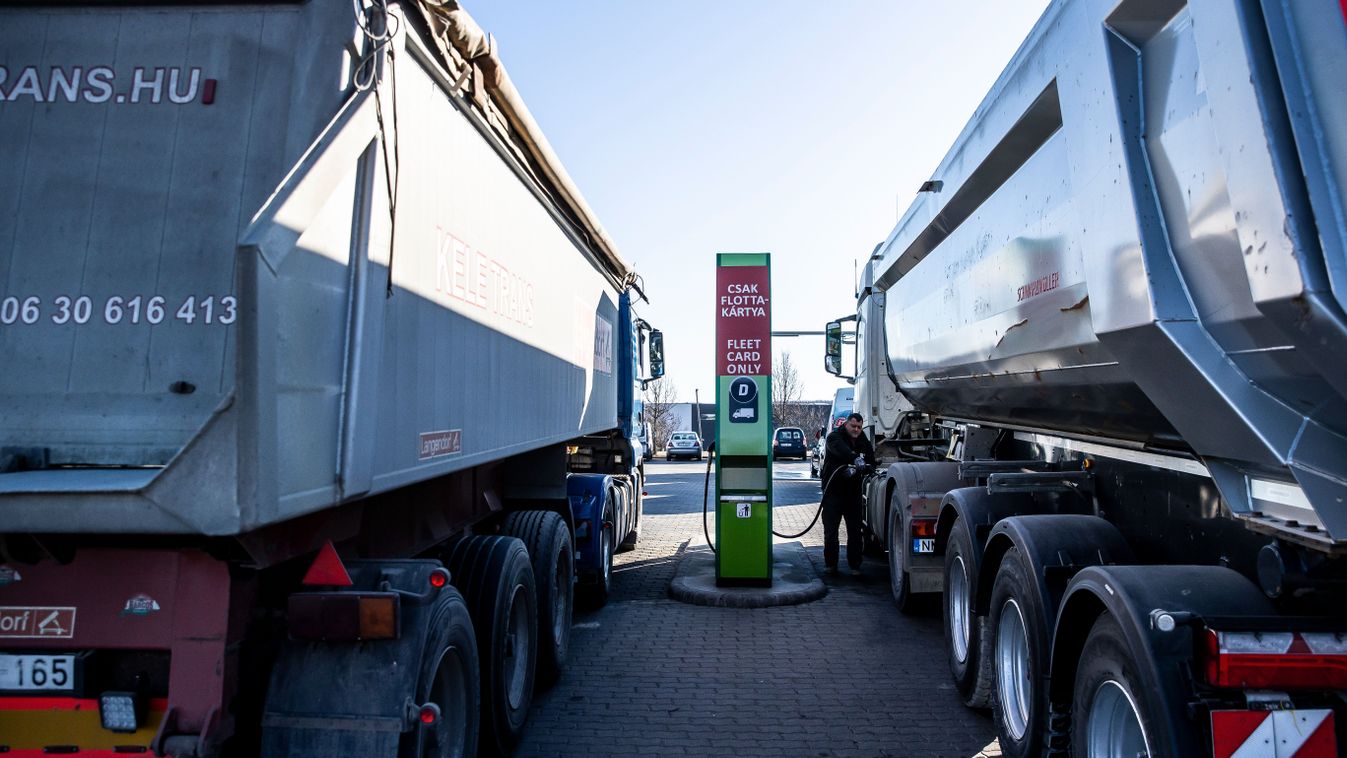
In some countries, such as Hungary, there is a major imbalance in terms of available energy sources. Crude held in strategic storage remains ample, but diesel is quickly running out. Data from the Hungarian Hydrocarbon Stockpiling Association show gas oil stocks at 520.3 kilotons at the end of January and about 390 kilotons at the end of both July and August. That thinner diesel cushion matters in a country where more than 1.3 million passenger cars run on the fuel and the regional market is competing for the same scarce imports.
Pump prices have already moved. Official and commercial trackers put Hungarian diesel around 701 forints a liter in late September on some official series and closer to 730 forints on daily station averages — well above the roughly 593 forints recorded at the end of June. The original worry in Budapest was not whether prices would rise, but how quickly 800 forints would stop looking like a distant ceiling.
That speed is not a mystery to central bankers. Bank of Slovenia research covering euro-area data from 2005 through 2026 found that a 10% rise in Brent lifts pretax diesel and gasoline prices by about 6.5% and 6.2%, respectively, over the longer term. A large share of the increase shows up at stations within the first two weeks — faster than the physical chain of shipping, refining and wholesale delivery would suggest.
The European Central Bank has reached a similar conclusion and added an unwelcome twist: refinery margins can amplify the shock. During the spring spike, Brent briefly reached $138 a barrel while diesel at the refinery gate jumped to $197. ECB staff later estimated that refining margins were contributing about 41 euro cents a liter to euro-area retail diesel in mid-September, and they told reporters those diesel margins may not peak until October.
The way down is slower than the way up. Taxes, refining and transport costs, inventories, margins and local competition all delay relief when crude finally eases. That asymmetry is why governments are acting now, before higher fuel bills work through freight, food and services and lift broader inflation.
Europe-wide crisis
The policy dilemma is the same from Lisbon to Warsaw: protect households and trucking firms without writing a blank check for fossil-fuel consumption. Europe has answered with a patchwork rather than a single rule. Some governments cap retail prices. Others cut excise taxes, sometimes below the European Union minimum. A third group aims help at farmers, haulers and other heavy users. A few still let global prices hit consumers with no cushion at all. The result is that the same barrel of oil can produce pump prices that differ dramatically at the pump across Europe.
Here are just a few examples of what Europe looks like in this regard.
Austria has been running a mineral-oil tax cut of 1.9 euro cents a liter into the end of September.
Belgium has implemented an official price ceiling.
Croatia cut diesel excise duty by another 3 cents, taking it 10 cents below the EU floor; Zagreb says the average diesel price is 1.91 euros a liter instead of 2.26 euros without the intervention.
Cyprus is offering an 8.33-cent discount through Nov. 30.
Luxembourg is absorbing 5 cents of the pump price from July through December.
Malta is using direct state aid to keep prices below the euro-area average.
Portugal decided on Sept. 17 to recycle extra value-added tax receipts from more expensive fuel into tax relief worth about 1.3 billion euros through year-end.
Slovenia posted official maxima of 1.748 euros for gasoline and 2.012 euros for diesel in the week of Sept. 22-28.
Spain has kept an excise cut below the EU minimum through Sept. 30.
Italy reduced and capped diesel duty into early October.
Montenegro and Serbia combine retail caps with lower excise taxes.
Targeted aid is running in parallel
Greece extended a 10-cent-a-liter diesel subsidy into October and is preparing a heating-oil package.
France steered relief to agriculture, high-mileage workers and construction rather than a blanket cut.
Ireland is rebating duty for commercial haulers and bus operators.
Spain added a 402 million-euro program for truckers on top of its general tax reduction.
Italy is offering carriers a tax credit for earlier extra costs.
Larger packages are still moving through parliaments
Germany will cut energy tax by 14 cents a liter from Oct. 1 through year-end, about 17 cents once lower VAT is counted, in a 2.5 billion-euro package.
Chancellor Friedrich Merz said drivers who depend on a car every day “are reaching their breaking point.”
Berlin is also talking with the oil industry about a temporary price cap modeled on Luxembourg or Belgium, aimed at Jan. 1, 2027.
The Czech government will restore a station-margin ceiling from Oct. 1, cut diesel duty to the EU minimum and cap retail margins at 2.50 koruna a liter.
Poland has floated a 60% levy on oil companies’ extra profits to finance about 4 billion zlotys of price relief, though the plan faces parliamentary and constitutional hurdles.
The International Energy Agency has described the response as global, not merely European. In a matter of months, the number of countries applying fuel subsidies rose from 16 to 38, and the number cutting energy taxes rose from 40 to 57. Pew Research Center, drawing on IEA tallies from mid-June, counted 113 countries that had taken at least one energy-cost measure after the Iran war, including tax changes in 55 countries and fuel subsidies in 32. The agency’s own warning is implicit in those numbers: governments are treating the symptom at the pump because they cannot reopen the Strait of Hormuz from a finance ministry or end the war in Ukraine.
Viktor Orbán, Hungary’s prime minister since 2010, faces an election dogfight. Behind in the polls, he has been effectively endorsed by both the Kremlin and the White House, and a host of conservative world leaders. As wars in Iran and Ukraine exacerbate the fissures that have weakened NATO, as well as the U.S.’s relationship with the European Union, this is an election that is being followed with bated breath in Washington, Moscow, Kyiv and Brussels.
Before the elections on April 12, a scandal engulfed the Hungarian government. On leaked recordings, foreign minister Péter Szijjártó can be heard deferentially acquiescing to his Russian counterpart Sergey Lavrov and passing on information from EU meetings. Szijjártó appeared willing to help the Kremlin’s cause in Brussels, to remove oligarchs and their relatives from the EU blacklist, and to block efforts to aid Ukraine. Hungary’s advocacy for the Kremlin’s agenda culminated in its recent veto of fresh sanctions on Russia and over $100 billion in loans to Ukraine. On X, Polish prime minister Donald Tusk wrote that while “Hungary is and will be in the European Union, Victor Orbán and his foreign minister left Europe long ago.” And the Irish taoiseach Micheál Martin described Szijjárto’s calls with Lavrov as both “sinister” and “alarming.”
Szijjárto alleged that “foreign intelligence services, with the active involvement of Hungarian journalists, have been intercepting my phone calls.” It is a plot, the Hungarian government claims, to influence the upcoming polls. Orbán directly blames Ukraine for seeking to unseat his government. The opposition, led by Peter Magyar, has a healthy lead in the polls and describes the Hungarian government’s closeness to the Kremlin as “treason.” According to European intelligence reports, Moscow sent a three-person team to Hungary, overseen by Putin confidant Sergei Kiriyenko who ran an operation to interfere in the Moldovan election back in September. His tactics encompassed “vote-buying networks, troll farms, and on-the-ground influence campaigns.” A Kremlin-linked media consultancy, facing EU sanctions, was hired to dismiss Magyar as a Brussels stooge and portray Orbán as the only candidate strong enough to to be treated as an equal by world leaders, as evidenced by the strength of his relationship with Trump.
Despite a war with Iran that doesn’t appear to be going entirely to plan, the U.S. president took time out to back Orbán with enthusiasm and at considerable length on Truth Social. Trump said Orbán was “a true friend, fighter, and WINNER.” JD Vance, the vice president, is scheduled to visit Hungary on April 7, just five days before the election. And secretary of state Marco Rubio went to Hungary in February. It is now part of the U.S. National Security Strategy to work towards “cultivating resistance to Europe’s current trajectory within European nations.” To that end, notes the U.S. government, “the growing influence of patriotic European parties indeed gives cause for great optimism.” Orbán speaks MAGA’s language on immigration, traditional values and the Christian essence of Western societies. He is, like Putin and Trump, in MAGA’s view, an implacable opponent of secular, progressive, globalist politics as symbolised by Brussels.
Orbán, the longest serving current head of government in the EU, has become a figurehead for populist, nationalist movements across the world. The recent CPAC Hungary summit was attended by several of these leaders including France’s Marine Le Pen, Italian deputy prime minister Matteo Salvini, and the Netherlands’ Geert Wilders,who called Orbán “a lion on a continent led by sheep.” Latin American leaders close to Trump , including Javier Milei of Argentina and Jose Antonio Kast of Chile, also attended. Milei, who gave the longest speech at the summit, said Orbán was “a beacon for all… who refuse to accept that the West's destiny is one of managed decline.” This international network, with the United States and Russia included, has a vested ideological interest in seeing Orban continue to remain a thorn in the EU's side.
But what can Brussels do? The answer, it appears, is not much. The EU is consensus driven; it needs all its parts to act in concert, giving holdouts like Orbán considerable power to hold the whole bloc hostage. But given Orbán’s prominence as an ideologue, when Hungary blocks sanctions or delays support for Ukraine, it is more than a single nation going rogue. Alice Weidler, co-chair of the far-right AfD, the largest opposition party in the German Bundestag, was among those who spoke at the CPAC Hungary conference last month. Robert Fico, prime minister of Slovakia, is an Orbán ally. On April 19, Bulgaria will have its eighth general election in just five years. Former president Rumen Radev’s new Progressive Party leads the polls and shares Orbán’s pro-Kremlin, anti-EU inclinations.
So polarized is the Hungarian election, that right wing groups are deploying their own observers from Argentina, Austria, the Czech Republic, Kenya, Poland, Germany, Italy, Spain, Serbia, Tanzania and the United States to monitor proceedings. EU observers have said the Hungarian government controls the national media and a recent documentary alleges that a desperate government is resorting to vote-buying, gerrymandering and intimidation tactics. It’s hard to see how either Orbán or Magyar will accept the election result without protest, unless the margin is crushing. But, given Trump’s disdain for NATO allies and the EU, an Orbán election defeat would be a much-needed victory for European unity.
A version of this story was published in this week’s Coda Currents newsletter. Sign up here.

 Login





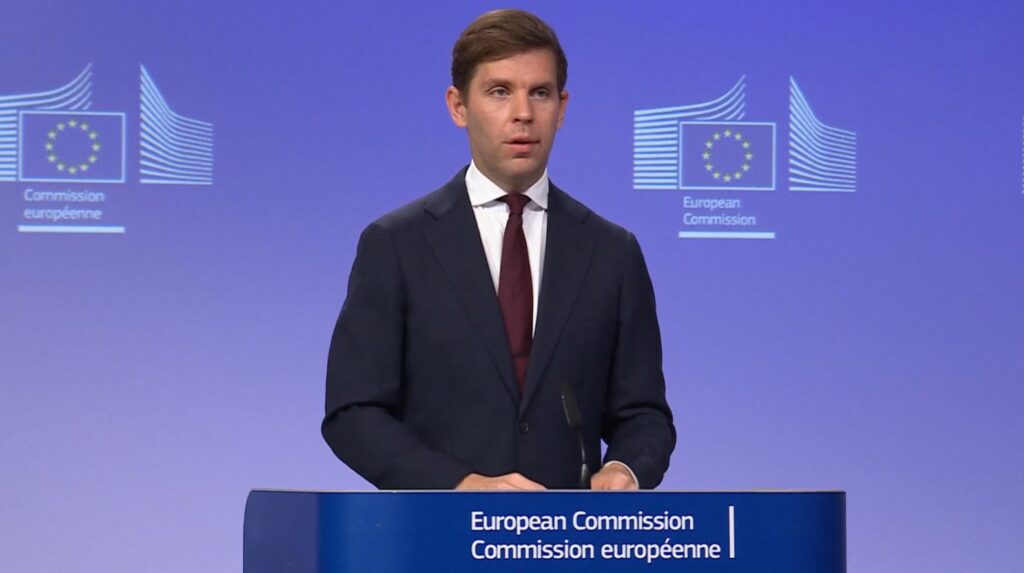




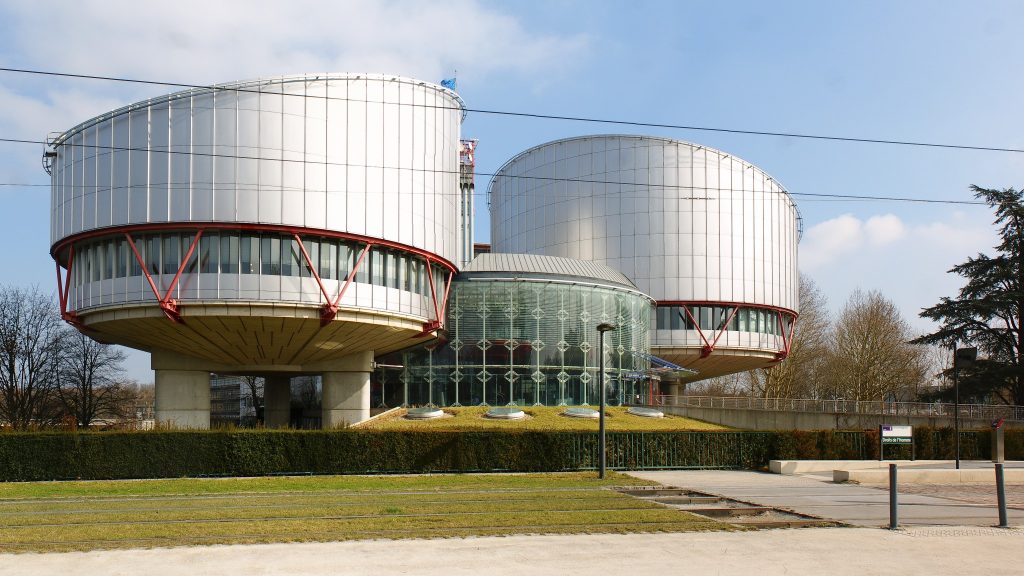

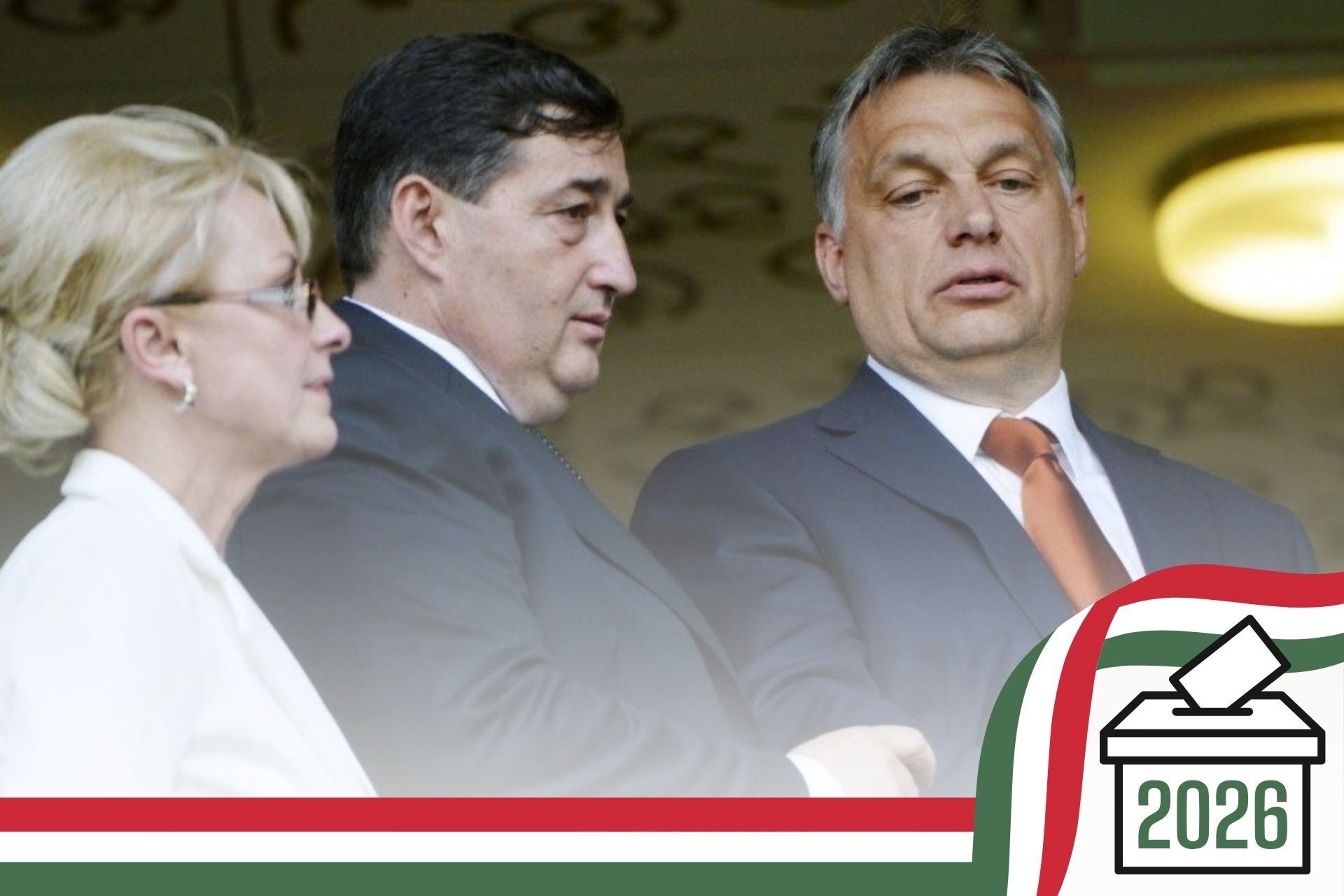


 (@laszloan)

 EXCLUSIVE: The Trump administration has largely abandoned Hungarian conservatives after Viktor Orbán’s loss, warns
 With Hungarian conservatives face growing persecution, where is Donald Trump?