❌

Reading view

Europe’s Student Protests Spark Debate Over the Muslim Brotherhood’s Influence 


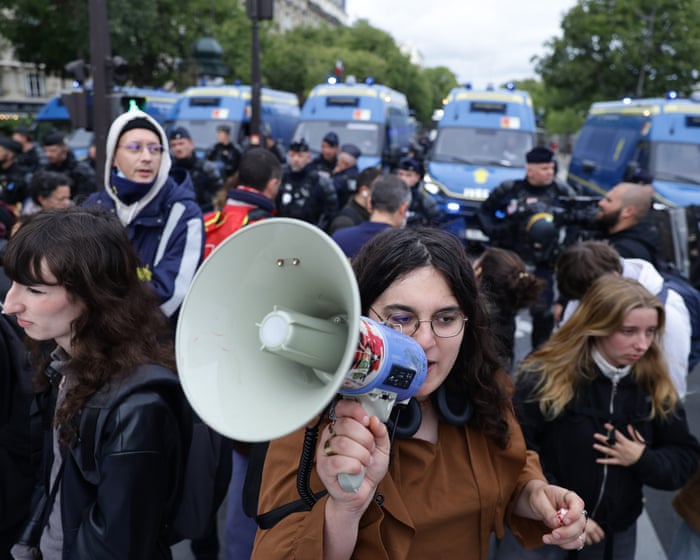
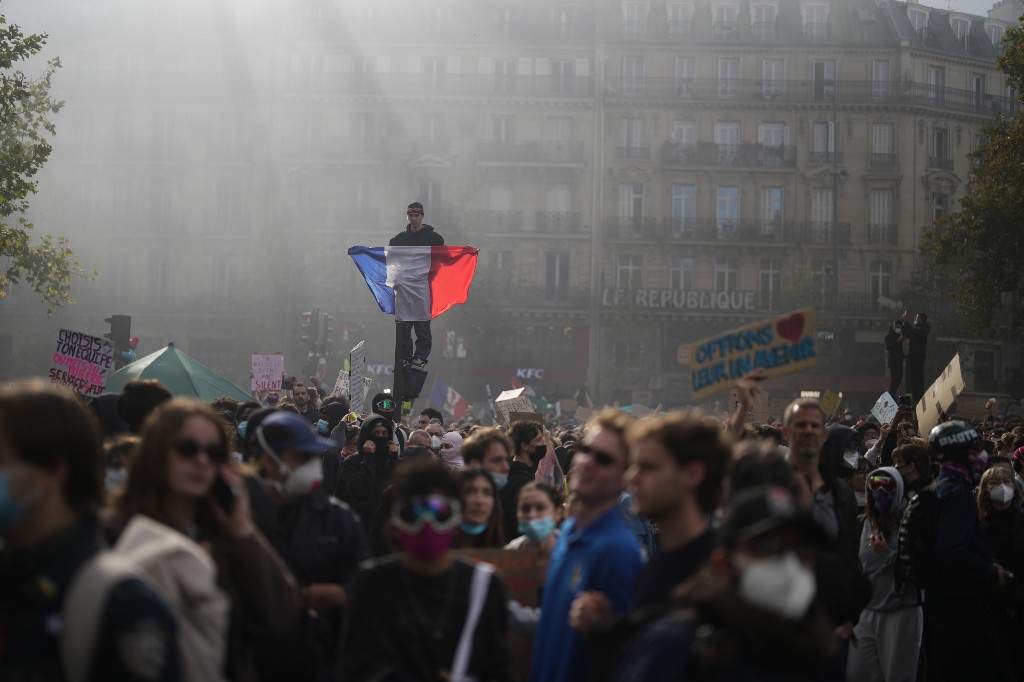
A wave of student protests has spread across several European countries in recent weeks, with France at its centre, where demonstrations over staff shortages, underfunded schools and run-down facilities have continued since mid-September.

The French protests began on September 17th, when teachers at a high school in south-eastern Paris protested over staff shortages and students joined them, Australia’s ABC News reported. Demonstrations followed in Spain, Belgium, Italy, Portugal and Albania, and smaller protests took place in Greece, Austria, Ireland and Germany, according to the same report. What began over education has since widened to include the cost of living and public-sector cuts.

In this context, the Forum of European Muslim Youth and Student Organisations (FEMYSO) has come under the spotlight following its announcement of support for student protests in France and Belgium, and subsequently in Albania.

Several European reports have drawn links between FEMYSO and the Muslim Brotherhood, describing the student forum as the organisation’s youth wing. Among the most notable is a report by a French National Assembly investigative committee, published in December 2025, which points to close ties between the forum and networks linked to the Muslim Brotherhood and characterises its role as contributing to the spread of the movement’s ideas across Europe.

In a parliamentary question submitted in 2025, Germany’s Baden-Württemberg State Office for the Protection of the Constitution was cited as viewing FEMYSO as an umbrella organisation for youth groups with links to the Muslim Brotherhood.

FEMYSO, however, rejects these allegations. In a previous statement, the organisation affirmed that it has no ties to the Muslim Brotherhood.

Statements of Support for Protests Across Europe

On October 9th, the forum announced its solidarity with student demonstrations in France and Belgium. On October 18, it declared its support for student and youth protests in Albania, while also referring to ongoing demonstrations in Spain and Greece in the same context.

On October 15th, 2026, the French Muslim Students Association (Étudiants Musulmans de France, EMF), a member organisation of FEMYSO, went beyond expressing solidarity. It called on students, education workers and the broader social movement to join a nationwide mobilisation scheduled for October 17th, reaffirming its support for demonstrations stretching from Paris to Marseille and from Bordeaux to Strasbourg.

In a statement, EMF stressed the need to build a balance of power through protests. The statement came just two days before large-scale demonstrations took place across France, attracting hundreds of thousands of participants in largely peaceful gatherings before separate groups became involved in acts of violence, looting, arson and attacks on police officers and public buildings. These incidents reportedly resulted in more than 1,000 arrests and injuries to dozens of security personnel.

Such initiatives and calls for participation in demonstrations have raised concerns that political Islamist networks may seek to capitalise on public discontent, particularly when protests are accompanied by public disorder or acts of vandalism. This, critics fear, could turn student and social demands into instruments for expanding organisational influence and securing political leverage.

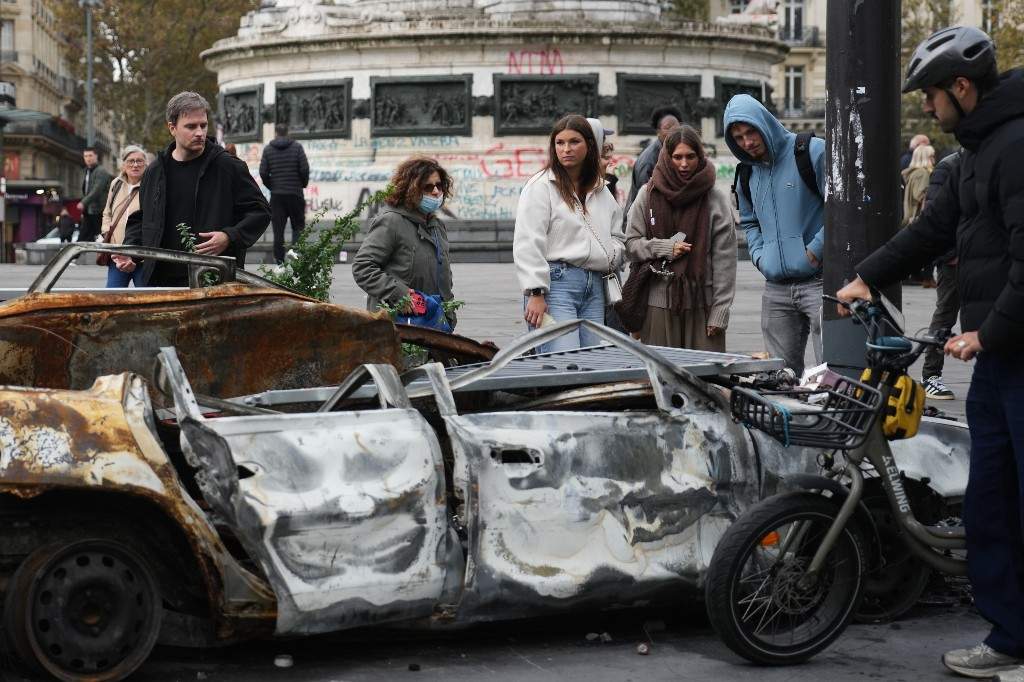
According to official French data, masked and violent individuals were present at the demonstrations. In several cities, shops were looted, while cars and rubbish bins were set on fire. In the city of Limoges, flames engulfed the historic town hall, a building dating back to 1883.

The same data indicated that 1,800 people had been arrested and more than 500 police officers and firefighters had been injured. In response to the violence and rioting, the French government announced the imposition of curfews in several cities.

Concerns Reach the Heart of European Institutions

These developments come at a time when the activities of organisations suspected of having links to the Muslim Brotherhood are facing increasing political scrutiny.

On September 15th, 2026, French MP Constance Le Grip submitted a written question to the government concerning European funding for projects involving FEMYSO, calling for clarification of funding mechanisms and oversight procedures governing grants.

The question followed recent reports and studies that raised concerns over the continued involvement of FEMYSO in projects benefiting from European funding, despite an earlier announcement by the European Commission that the organisation was no longer receiving direct funding.

FEMYSO has consequently become one of the most contentious issues in the wider European debate.

A recent study published by CERIF and AK Polis in September examined the organisation’s participation in the EmpowerAction project, which forms part of the TACKLE initiative funded by the European Union through its DEAR programme.

According to the study, the funding does not necessarily take the form of a direct EU operating grant to FEMYSO. Instead, it may be channelled through partner organisations, projects and sub-granting mechanisms.

This has raised concerns that European funds could reach an organisation through a project led by another partner or through a consortium and its sub-granting arrangements.

Against the backdrop of FEMYSO’s visibility in the protests, some of which were subsequently accompanied by violence and looting, as well as allegations of links to the Muslim Brotherhood, concerns have emerged over the possibility that the organisation could gain a foothold in current social unrest and convert it into political influence by winning the sympathy of European communities and left-wing parties.

FEMYSO: Background, Membership and European Footprint 

The Forum of European Muslim Youth and Student Organisations (FEMYSO) describes itself as a European umbrella organisation bringing together Muslim youth and student associations.

FEMYSO currently comprises 32 member organisations across 22 European countries. Its roots date back to 1995, when the first meeting of Muslim youth organisations was held in Sweden.

The following year, FEMYSO was formally established at a meeting in Leicester, United Kingdom, which brought together 19 organisations from 11 countries. In 2000, the forum established its headquarters in Brussels.
  •  

Macron bans ‘illegitimate’ protests in France as he tries to get a grip on unrest

French president also says he will decide on concrete ‘next steps’ for the next nationwide demonstrations

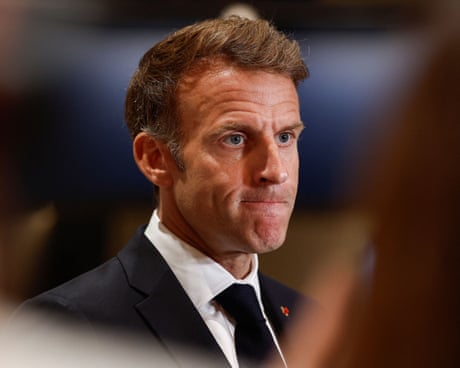
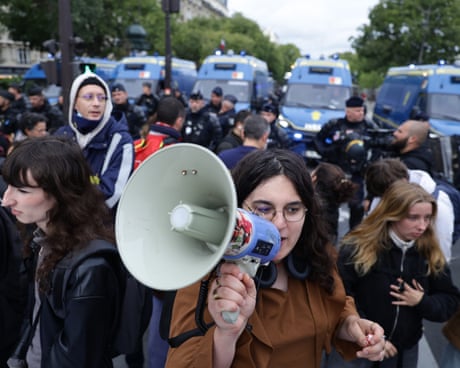
Emmanuel Macron has said “illegitimate” demonstrations will be banned over the coming days as France seeks to get a grip on civil unrest after some of its worst street violence in years erupted on the fringes of cost of living protests at the weekend.

Speaking after a ​meeting with intelligence officials and senior ministers, the French president said on Thursday that demonstrations organised by recognised groups would be allowed to go ahead, although their routes could be changed.

Continue reading...

© Photograph: Ibrahim Ezzat/Anadolu/Getty Images

© Photograph: Ibrahim Ezzat/Anadolu/Getty Images

© Photograph: Ibrahim Ezzat/Anadolu/Getty Images

  •  

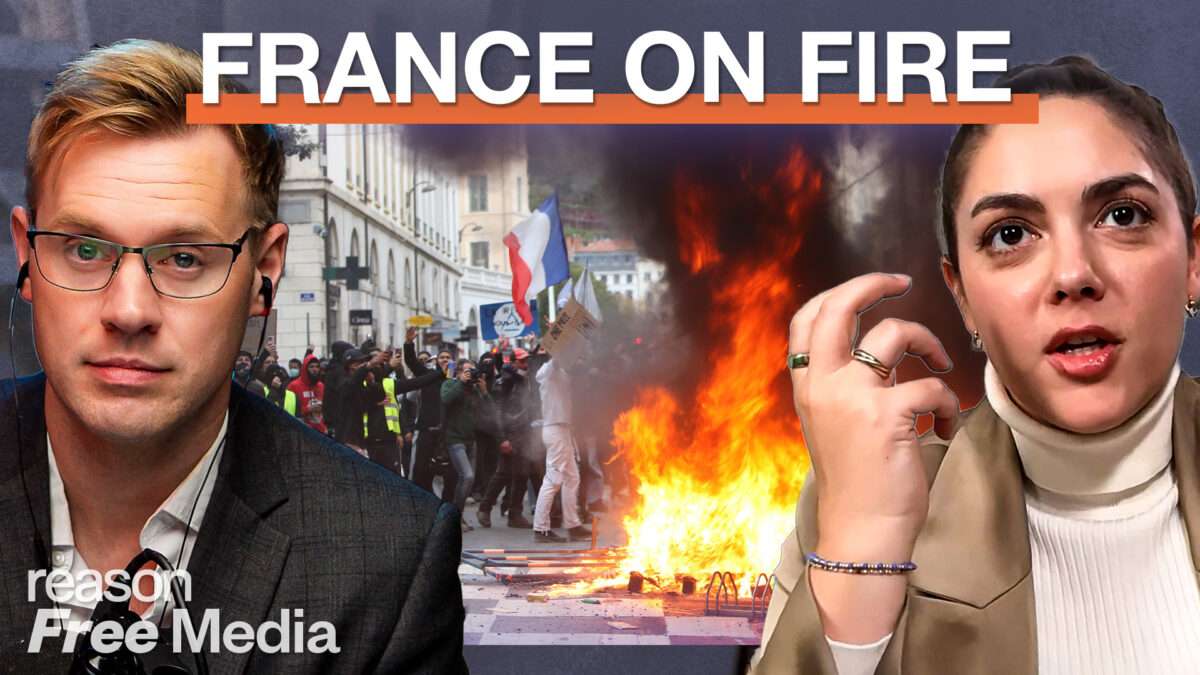
France's Protests Descend Into Looting and Property Destruction

FM-10-21-C | Illustration: Adani-Samat

In this segment of Free Media, Reason Senior Editor Robby Soave and Daily Caller Editor in Chief Amber Duke discuss the ongoing violent protests in France. 

If you enjoy Free Media, come watch Robby debate at our upcoming Reason Versus in D.C. Tickets are available here.

The post France's Protests Descend Into Looting and Property Destruction appeared first on Reason Magazine.

  •  

Homeland Security Lied About Child Porn To Search Activist's Phone

A locked smartphone | Illustration: Africa Images/Envato (AI-modified)/Flowertiare/Dreamstime

One of the unfortunate quirks of the American system is that you can't lie to the government, but the government can lie to you. Samuel Tunick found himself on the receiving end of this setup last year at Atlanta International Airport. When agents from the Department of Homeland Security (DHS) asked for his phone password, he allegedly gave them a self-destruct code that wiped his data. Tunick now faces five years in prison for destroying evidence.

It turns out that the feds were lying to Tunick the entire time. A new court filing, first reported by 404 Media, shows that the DHS had sent out an order to seize Tunick's phone over his involvement in environmentalist protests in Atlanta. When he landed at the airport, however, agents told Tunick that they were looking for "kiddie porn" and he would be allowed to leave with his phone if he cooperated. They also repeatedly denied him access to his lawyer when he asked.

"There can be no real debate that if law enforcement had acted similarly elsewhere in Atlanta, their actions would be unconstitutional. But the government says it was entitled to act this way because Mr. Tunick was returning from an international vacation" in the Dominican Republic, his lawyers wrote in the filing, which includes internal DHS communications and excerpts from his interrogation video.

U.S. law recognizes a "border exception" to Fourth Amendment privacy rights, allowing federal agents to search incoming travelers for contraband. U.S. Customs and Border Protection (CBP) claims that this exemption also allows them to hold travelers for questioning and search their electronic data. Tunick's case reveals just how widely the agency stretches this loophole.

A few hours before Tunick landed, Homeland Security Investigations (HSI) agent Travis Mcghie emailed the CBP station in Atlanta with his photo and information, stating that he is under investigation for "suspected terrorist activities." (Tunick is involved in Save the Atlanta Forest, also known as Stop Cop City, a protest movement against a local police training center.) The email asked CBP to "conduct a 100% baggage exam, retain all electronics and collect passcodes," stating that the HSI will be at the airport to conduct an interrogation.

Pulled into the secondary screening room, Tunick "almost immediately" told CBP officers that "I don't really want to speak without a lawyer any more," according to the filing, which cites the interrogation tape. He would ask for a lawyer multiple times.

The agents asked Tunick if he had "kiddie porn" on his phone and stated that "because you're refusing to talk, we have the authority to go through your phone to see what we're looking for." One of them, Latoya Castro, told Tunick that "either you can give us your password so that we can go through it no problem, or you can refuse to do that, unfortunately, we will have to seize your phone."

Both of those statements were a lie, of course. The HSI's email had asked CBP to take Tunick's phone, whether or not he cooperated.

The lie about child porn may not only have been meant to intimidate Tunick. While there are contradictory lower court rulings about the border search exemption, some courts have ruled that the CBP can only search electronics for "digital contraband," or files that are themselves illegal. A search for child sex abuse material would be on stronger legal ground than a search for mere evidence of other crimes.

Tunick was using GrapheneOS, a secure phone system that allows users to set both a real password and a "duress password" that wipes out all data when entered. The interrogation tape shows his phone appearing to reset after he gave the officers a passcode. HSI agent Nathan Burnham and FBI agent Andrea Coble then entered the room.

"You are not under arrest. Once these gentlemen are done with you, pursuant to your entry into the country, you're free to leave," Burnham said, referring to the CBP officers.

Tunick's lawyers argue that the judge should throw out the phone password Tunick provided and everything that resulted from entering it as an "involuntary" response made under "unlawful interrogation," because the CBP agents did not read Tunick his Fifth Amendment rights and ignored his multiple requests to consult with his lawyer before answering their questions.

The CBP claims that secondary screening at the border doesn't count as a criminal investigation, so detainees don't have the same rights as criminal suspects. "Since the international arrivals inspection is an administrative function, CBP policy and federal regs do not permit the presence of lawyers during secondary examinations," a spokesman told Reason earlier this year.

But Tunick's lawyers insist that his experience was "far outside" a normal border crossing: He was accused of a serious crime to his face, faced an investigation for a different serious crime he didn't know about, and clearly could not leave the situation until he gave information to government agents.

"I hope people understand that the charges against me are meant to intimidate people against protecting their data and their privacy, and the government hopes to set a precedent that no one has the right to privacy," Tunick told 404 Media. 

Defend the Atlanta Forest, the movement that Tunick is involved with, has been a major nuisance for authorities in Georgia. Protesters attacked and burned construction equipment throughout 2022, and police shot a protester in 2023 under unclear circumstances, claiming that they were fired at during a raid.

The Trump administration has brought down the federal government against the movement. In June 2026, the Department of Justice brought federal charges against two alleged arsonists, citing National Security Presidential Memo 7, which directs the feds to go after left-wing domestic terrorism.

But beyond the email line about "suspected terrorist activities," there is no indication of what specific crimes the feds suspected Tunick of, or why they suspected him. And the whole setup of the interrogation was designed to hide those answers. In fact, instead of charging Tunick under typical obstruction or evidence-destruction laws, federal prosecutors chose a rarely-used statute that doesn't require them to disclose what the underlying investigation was about.

"Many times the government wants to highlight what it was trying to investigate because that ups the stakes on what the defendant was doing," former prosecutor Daniel Richman told The New York Times. "This is a case where I think they're trying to avoid exactly that by focusing only on the destruction, and not what the investigation was about." 

The post Homeland Security Lied About Child Porn To Search Activist's Phone appeared first on Reason Magazine.

  •  

[Interview] ‘I hear MEPs say Muslims are a threat, with no consequences. I say Free Palestine and I’ll be arrested’ – MEP Benedetta Scuderi warns protest repression is being normalised in Europe

As protests continue to ripple across European cities, the Italian Green MEP Benedetta Scuderi reflects on her own experiences of police repression, from holding a peace flag near a Brussels protest to facing the fury that followed the flotilla to Gaza. She spoke to EUobserver about the EU’s housing priorities, Italy’s elections, and how the far-right has captured freedom of expression for its own use.

You were detained by police in July, a few hundred meters from a far-right protest calling for “re-migration”. How has the rise of the far-right stalled some key areas, like freedom of speech?

The rise of the far-right is really threatening European democracy as we know it. It has never been perfect, but it allowed people to protest. Now, we only let certain people express their dissent. 

In the European Parliament, people can discriminate and use hate speech because of their freedom of expression, but as you go out of parliament with a Palestinian flag, then you’re a terrorist. So, how is it possible that last Strasbourg plenary, I could hear my colleagues saying that Muslims are a threat, and there are no consequences? And then I go out and I say, “Free Palestine,” and I’ll be arrested.

This double standard is extremely problematic. The fact that not allowing fascist symbols within the parliament also meaning that no other symbol can be shown, is not okay. Because we need to be fine to say that certain things are discriminatory and against European values, without having to say that everything else is not allowed. 

We also need to be able to accept dissent. What is happening all over Europe, with violence increasing towards activists, we’re seeing it target only a certain kind of activists. In Italy, fascist protests are ignored by police. Farmers can come to the parliament with tractors, and that’s completely fine. And then we have 20 people doing a sit-in for Palestine in front of the parliament, and getting their heads smashed. 

This article continues, but the full version is available only to EUobserver.com subscribers. Visit account.euobserver.com/membership

  •  

Macron accuses Trump and other foreign leaders of ‘stupid comments’ about France unrest

Leaders criticised for spreading misleading information as France prepares for further protests this weekend

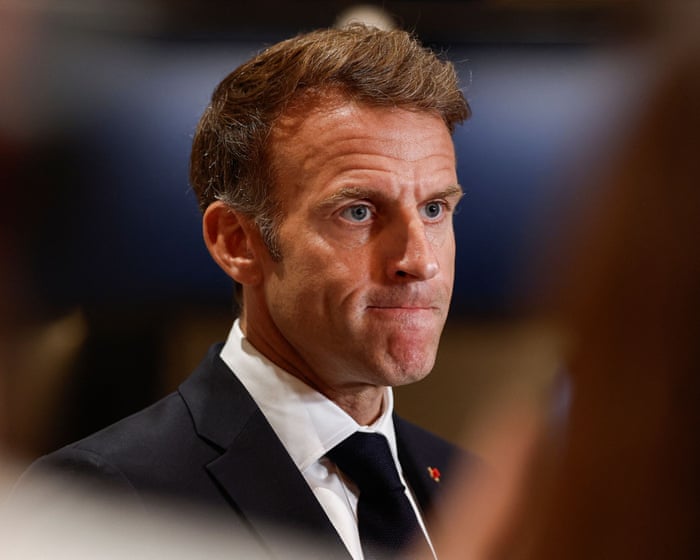
Emmanuel Macron has accused Donald Trump and other foreign leaders of making “stupid comments” about France’s street unrest for political gain, as the country prepared for more protests this weekend.

Speaking during a visit to Qatar, the French president did not name names but said “manipulation of information” after Saturday’s riots had led to “comments that are as unacceptable as they are stupid, from many people, including foreign leaders”.

Continue reading...

© Photograph: Tessier Benoit/ABACA/Shutterstock

© Photograph: Tessier Benoit/ABACA/Shutterstock

© Photograph: Tessier Benoit/ABACA/Shutterstock

  •  

Spanish Students Protest Javier Milei’s Visit to University

Demonstrators at Rey Juan Carlos University denounce his policies threaten public higher education.

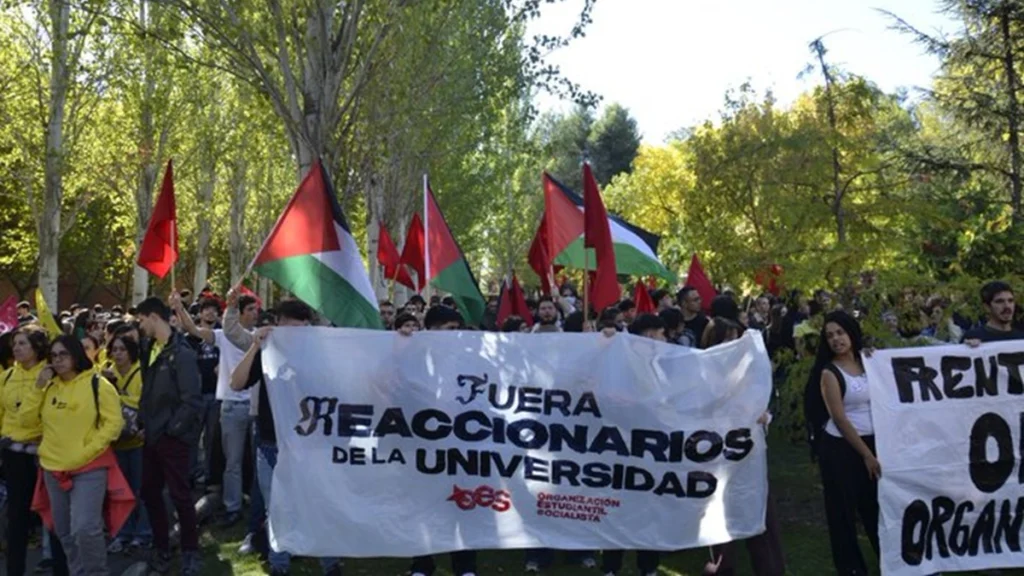
On Wednesday, hundreds of Spanish students gathered at Rey Juan Carlos University (URJC) to protest the visit of far-right Argentine President Javier Milei, who was scheduled to participate in a forum during his stay in Madrid.

RELATED:

Argentine Court Rules Milei University Funding Decree Unconstitutional

Armed with pots and pans, whistles, Palestinian flags, and banners, the students waited for the Argentine leader, who arrived at the university escorted by several security vehicles with tinted windows.

“Milei, fascist, you’re on our list” and “Milei, you rat, die,” social activists opposed to the presence of the far-right politician shouted in unison.

The URJC for Public Education Platform has called for Milei’s invitation to be canceled, arguing that his presence contradicts the values of a public university.

El fascista de Javier Milei se encuentra ahora mismo en el campus de Vicálvaro de la URJC impartiendo una charla, acompañado de Díaz Ayuso.

Las estudiantes nos negamos a que nuestros campus sean utilizados como altavoces para los discursos reaccionarios. No pasarán. pic.twitter.com/fkriIKhmnn

— Sindicato de Estudiantes (@SindicaEstudian) October 21, 2026

The text reads, “The fascist Javier Milei is currently at the URJC’s Vicálvaro campus giving a talk, accompanied by Diaz Ayuso. We, the students, refuse to let our campuses be used as a platform for reactionary discourse. They shall not pass.”

“The campus must be a free space where we can all express our opinions,” said Sara Pazos Garcia, a doctoral student in health sciences, who denounced the university administration’s failure to respond to her statement rejecting the visit.

Alejandro, a spokesperson for the organization Socialism, criticized the university model promoted by Milei and Isabel Diaz Ayuso, the conservative president of the Community of Madrid.

“They represent the same university model, which involves defunding public universities to drive the working class out of them,” he said.

The protest took place under a heavy security deployment, with dozens of riot police officers stationed in front of the library and six police vans on the campus’ main street, while demonstrators chanted, “Police out of the university.”

teleSUR/ JF

Source: EFE

  •  

Cost-Of-Living Protests Highlight Mounting Economic Pressures Across Europe

High debt, tight budgets and long-standing structural problems leave few quick or easy solutions.

Recent protests across Europe have brought social and economic strains into sharper focus, reflecting concerns that extend beyond prices to housing, incomes, public services and economic security. Governments face growing pressure to respond, but high debt, tight budgets and long-standing structural problems leave few quick or easy solutions.

RELATED:

Zakharova Accuses Macron of Hypocrisy Over French Protests

Holding a cardboard sign reading “I am 81 and being evicted,” retiree Maria Teresa Faleiro joined crowds in Lisbon protesting against soaring living costs and a deepening housing crisis.

Despite never missing a payment on the 724-euro (813-U.S. dollar) monthly rent for the home she has lived in for 22 years, Faleiro faced eviction after her landlords refused to renew her lease. With nowhere else to go, she plans to appeal the court-ordered eviction, she said.

Faleiro’s struggle highlights the growing plight many pensioners in Portugal face in securing affordable housing. It also reflects a broader cost-of-living squeeze across Europe, where thousands have taken to the streets to protest rising housing, food, fuel and energy costs, even as headline inflation has eased.

In France, protests that began with students demanding better school conditions and more teaching staff broadened into nationwide demonstrations over rising living costs and wider social grievances.

Violence soon erupted on the sidelines of some rallies, with clashes, looting and arson reported in several cities. The historic city hall in Limoges was largely destroyed by fire.

In Spain, more than 50 protests took place in Madrid and dozens of other Spanish cities on Oct. 3, demanding action on soaring rents, evictions and housing affordability after the government failed to pass emergency housing legislation.

Elsewhere, protests in Italy and Belgium have reflected a broader mix of concerns over wages, prices, public services and fiscal tightening. In Milan, hundreds of black-clad demonstrators besieged Piazza del Duomo on Saturday, throwing firecrackers and bottles at police. At least four officers and 20 protesters were injured, while about 50 demonstrators were detained, according to the Italian news agency ANSA.

Gen Z is leading protests across the world after a global lurch to the right.

Neoliberal governments have gutted publicly funded services, while many young people fear entering a barren job market and a future overshadowed by instability.

Frustrations fomented on social media… pic.twitter.com/Sp818NCL6I

— Novara Media (@novaramedia) October 14, 2026

ECONOMIC SECURITY UNDER STRAIN

Beyond higher daily expenses, mounting financial pressures are fueling a broader sense of economic insecurity across the continent. Although inflation has eased from its peak, households continue to feel the cumulative impact of earlier price increases.

The European Central Bank said food prices across euro-area countries were already 20 percent to 57 percent higher in August 2025 than at the end of 2019. Renewed energy pressures have added to the squeeze, with euro-area consumer energy inflation reaching 18.9 percent in September 2026, according to Eurostat.

Housing pressures are particularly acute among young Europeans. Data released by Eurostat showed that in 2025, 26.9 percent of young people aged 15 to 29 in the European Union (EU) lived in overcrowded households. And 9.1 percent of them lived in households spending at least 40 percent of their disposable income on housing, way above the 7.7 percent recorded for the total population.

Similar pressures are visible beyond the EU. In Bosnia and Herzegovina, property prices have risen by about 70 percent over the past five years, real estate agent Haris Kadic told the Federation News Agency (FENA).

Local media also reported that some residents are borrowing money or relying on help from children and friends to cover basic expenses as housing and fuel costs rise.

Emmanuel Conte, Milan’s city councilor responsible for housing, told Italian daily la Repubblica this month that when people who keep a city running can no longer afford to live there, housing is no longer just a social and economic issue but a political one.

Similarly, Jean Faniel, director general of Belgium’s Centre for Socio-Political Research and Information, told Belgian media outlet BRUZZ that violence accompanying recent protests should be understood in the context of mounting social frustration.

Faniel said peaceful demonstrations and violent confrontations are potentially interconnected rather than entirely separate phenomena, noting that successive austerity measures have placed mounting pressure on people’s living conditions, generating frustration and resentment.

Paris, 17 octobre 2026 ✨
📹 instagram : raphaelmetivet pic.twitter.com/1lztrGi4dG

— Mr. Propagande (@MrPropagande) October 17, 2026

STRUGGLE TO BALANCE FISCAL, SOCIAL NEEDS

European governments have introduced housing, energy and income support, but high debt, aging populations and competing demands for defense and investment are narrowing their room for further action.

As the European Commission expects France’s deficit to reach 5.1 percent of GDP in 2026 and public debt to reach 118.1 percent, Oliver Nachtwey, a sociologist at the University of Basel, said the country’s efforts to contain public debt through spending cuts leave governments with less room to invest in schools, teachers and other public services.

Experts said the challenge is to reconcile fiscal discipline with social stability. Thomas Decreus, a scholar at the Department of Philosophy at Tilburg University, warned that weakening basic social protections could undermine social peace. “A budget must be sound, but social investments are also necessary,” he said.

Former Croatian Economy minister Ljubo Jurcic told Xinhua that price freezes can help contain immediate pressures, but governments must consider who ultimately bears the cost. In the longer run, stronger productivity and a better economic structure offer more sustainable protection for households, he said.

While subsidies and price controls can provide relatively quick relief, expanding housing supply, improving public services and raising productivity can take years, analysts said.

The challenge lies in how governments should respond to demands for immediate results while pursuing reforms that may take much longer to deliver tangible benefits, they said.

teleSUR/ JF

Source: Xinhua

  •  

Students in Greece protest high cost of living; solidarity with France

Thousands of teachers, pupils, students and their parents but also civil servants including health personnel, pensioners and workers joined their voices in protesting the high cost of living, demanding better education conditions, higher salaries and lower housing costs. Τhe protests followed the 24-hour strike called by the primary and secondary teachers unions. In Athens, Thessaloniki […]

The post Students in Greece protest high cost of living; solidarity with France appeared first on Keep Talking Greece.

💾

💾

  •  

Europe’s youth uprising: why millions are taking to the streets

Schools without heat but billions for war: Across Europe, young people have had enough. Amina Vandenheuvel, MP for the Workers’ Party of Belgium (PTB) and a member of its youth movement RedFox, joins Zoe Alexandra and Rania Khalek as a rebellion against austerity and war sweeps the continent, from student blockades in Belgium and France to strikes against the draft in Germany and housing encampments in Spain.

Vandenheuvel condemns the police repression of protesters, and explains why politicians keep the focus on property damage to discredit the movement – as the war on Iran and Europe’s rush to rearm for war with Russia push ordinary people to the brink. But she also argues anger alone isn’t enough: young people need political awareness, organization, and an anti-capitalist framework for building a different future – one built for the working class, not endless war and billionaire profiteering.

Watch full episodes of BT Live, join breakthroughnews.org as a member today! #breakthroughnews

  •  

Italian government to deploy troops to Milan after anti-austerity protests

Giorgia Meloni’s administration has announced the deployment of 500 military troops to Milan after a weekend of intense protests and riots resulted in broken windows at luxury shops. 

But while mainstream coverage has focused on exclusive brands hiding inventory from angry demonstrators, progressive organizations emphasize that the rage witnessed on the streets of several northern Italian cities is a result of the government’s own policies.

“A Louis Vuitton bag can cost €5,600, while the monthly maximum for the wage guarantee fund in 2026 is €1,340,” wrote the grassroots union Unione Sindacale di Base (USB). In a statement on Tuesday, the union cited devastating national statistics, including data showing that over 14% of working-class families live in absolute poverty.

Broken windows can be repaired, USB noted. “Five years of lost wages, an impoverished family, and a denied future cannot be recovered so easily.”

Students oppose austerity at school and beyond

Significant mobilizations preceded the weekend’s protests. On Friday, October 16, roughly 400,000 students flooded the streets for “No Meloni Day”. They criticized the government’s so-called securitization measures which in practice has meant stifling the right to protest, as well as the unabated turn toward war and armament.

Protesters warned that by prioritizing these points over public services and working conditions, Meloni and her ministers knowingly undermine the future of a whole generation. 

Read more: Curfews imposed in French cities as rebellion against austerity grows nationwide

Echoing developments in France, where teachers’ unions have supported students’ demands over recent weeks of historic struggle for a stronger public education system, educators in Italy began circulating appeals to do the same.

“The established order is the worst of all possible worlds – or comes very close to it – and our schools are a mirror of this: they are falling apart, alienating, militarized,” the appeal reads. “Places where the need to stretch one’s legs is labeled ‘indiscipline,’ and where the ‘foreigner’ is blamed for the decline in knowledge, rather than two decades of underfunding and neglect.”

Real solutions, not repression, needed to address social crisis

Trade unions, teachers, and students all denounced the repression authorities unleashed in response to the protests – both after mobilizations in cities and during school occupations. 

“This government – incapable of offering solutions to the social crisis raging across the country – is once again attempting to manage the streets and social discontent solely through the lens of ‘public order,’ while intensifying repression and shrinking the space available for political activity,” emphasized youth organization Cambiare Rotta.

Students opposed the government’s focus on militarization. Source: Cambiare Rotta/Facebook

Teachers specifically called upon others in the system not to endorse crackdowns on students while invoking democratic values. “Democracy today resists in the French and Spanish squares, in the occupied Italian schools, in the resistance to the genocide of the Palestinian people, in the words and deeds of those who oppose the piecemeal world war,” they wrote.

“It is not to be found in threats, in tear gas, in police officers inside schools, or in students maimed by the weapons of our law enforcement. It is not to be found in the unjust rules that too many persist in defending.”

Read more: Mediterranean dockworkers launch historic international strike

The increased protest activity has given hope that the spark that inspired massive mobilizations throughout 2025 might resurface. It comes less than two weeks before a new general strike – and an international dockworkers’ strike in which Italian port workers are set to play a notable role – on October 30.

  •  

In Delhi or Paris, restoring order cannot replace public trust

Protests rarely remain confined to the grievances that first bring people into the streets. When the citizens believe their concerns are being ignored, a grievance over a particular policy or administrative decision can evolve into a broader challenge to the political authority. Consequently, what begins as a demand for correction becomes a question of accountability. […]

The post In Delhi or Paris, restoring order cannot replace public trust appeared first on Asia Times.

  •  

The European Union Wants To Punish People for Their Speech—Without Even a Trial

Hüseyin Doğru | Dmitry Shirinkin/Dreamstime/Hussedogru/X

The European Union claims that "the fundamental right to freedom of expression" only applies to journalists "acting in good faith," and that authorities do not have to give due process before freezing people's bank accounts, as these sanctions are "temporary and are not criminal in nature," according to a legal letter shared by a sanctioned journalist.

Last year, the European Union blacklisted 21 people for allegedly spreading Russian propaganda, banning them from doing business in Europe. One of them, Hüseyin Doğru, was falsely listed as a Turkish citizen living in Istanbul. In fact, Doğru is a German journalist in Berlin, making him the first European citizen on European soil to be sanctioned this way.

It was like being sentenced to "civil death," Doğru told American journalist Chris Hedges. He was banned from holding a job in Europe or having a European bank account, and authorities have restricted Doğru to a €506 ($567) per month allowance from his own money. "The sanctions are designed for people outside of Europe, so they don't really know how that should function with me, because I'm a European citizen and I'm living in Europe," Doğru told Hedges.

Last month, the civil libertarian Wau Holland Foundation hired lawyers to contest the sanctions against Doğru. And earlier this month, the Council of the European Union sent a response letter, which Doğru shared on social media, promising to escalate the case to the E.U. General Court. Although the council conceded to Doğru that he is not a Turkish citizen living in Turkey, it still insisted on the authority to punish him for his speech.

The council quoted a 2022 court case between the Russian news outlet RT and several European countries: "The protection of the right of the media and, more particularly, of journalists to impart information on issues of general interest is subject to the proviso that they are acting in good faith and on an accurate factual basis and provide 'reliable and precise' information in accordance with the ethics of journalism."

Doğru's lawyers insisted that he should be treated as innocent until proven guilty. But the council responded that sanctions fall short of a criminal punishment, so any complaint about a "violation of the presumption of innocence is therefore unfounded." In other words, because he is not accused of a crime, Doğru has fewer rights than a criminal suspect.

"People need to understand sanctions are an extrajudicial measure. They're extrajudicial. There's no court. There is no hearing, no evidence, there is no sentence by the court, nothing," Doğru told Hedges. "When you're sanctioned, you are not informed….The day when I was sanctioned, me and my wife, my wife was pregnant back then, we went to the pharmacy to buy medicine for her, and her cards did not work."

The original blacklisting decision accuses Doğru of supporting "actions by the Government of the Russian Federation which undermine or threaten stability and security in the Union" by spreading "false information on politically controversial subjects with the intent of creating ethnic, political and religious discord amongst its predominantly German target audience."

Doğru and his wife, British journalist Lizzie Phelan, previously worked at the Russian-funded publication Redfish. A few months after the Russian invasion of Ukraine, he split off to create a new website called red.media, insisting to The Left Berlin that "we are not Russian. We are not Kremlin. red.media is not funded by Russia or any other state." In the same interview, Doğru called Russia an "imperialist" regime.

But in September 2024, a Biden administration "fact sheet" on Russian propaganda offhandedly mentioned red.media, citing a hit piece on Doğru by the German newspaper Tagesspiegel. Doğru told Hedges that the U.S. fact sheet created a circular logic in German media: "They said red.media is Russian because [U.S. Secretary of State Antony] Blinken said so. But what they never said is that Blinken is referring to your articles where you never say it like that. You say there is a suspicion, it might be so."

Doğru shut down red.media in May 2025 due to the bad press. The European Union sanctioned him a few weeks later. Doğru's lawyer, Alexander Górski, told the Frankfurter Allgemeine earlier this year that the European Union didn't "even attempt to make an evidentiary case" about any ongoing connection to Russia.

The blacklisting decision also claimed that, during a pro-Palestinian student protest at Humboldt University in Berlin, red.media "coordinated with the occupiers to disseminate images of their vandalism—which included the use of Hamas symbols." Doğru told Hedges that these accusations are an attack on journalists' freedom to do their jobs.

The European Union does not have the same protections for the freedom of the press as the U.S. Constitution. Earlier this year, the Curia of the European Union ruled that simply reposting clips from Russian media could be a violation of European sanctions, even if no money changes hands, something that is explicitly exempted from U.S. sanctions under the Berman Amendment.

Still, U.S. authorities have tried to push the limits of international sanctions to censor speech. The Biden administration told an American nonprofit that "the provision of a platform for [the sanctioned individuals] to speak" was illegal, backing down after the nonprofit sued.

And the Trump administration sanctioned Italian academic Francesca Albanese for her "lawfare" calling for the prosecution of Israeli leaders and a boycott of Israeli industries. In addition to freezing her bank accounts, the sanctions forced Columbia University researchers to cut off their relationship with Albanese, and Georgetown University to close her email account. 

In the same statement accusing red.stream of being a Russian front, the Biden administration announced sanctions on two Russian news agencies. "We encourage dissent, open debate, and free discourse. But we will not stand for attempts by state actors to carry out covert activities with the goal of hijacking that discourse," the statement insisted. "The ultimate goal of sanctions is not to punish, but to bring about a positive change in behavior."

The post The European Union Wants To Punish People for Their Speech—Without Even a Trial appeared first on Reason Magazine.

  •  

France's Welfare State Is Finally Imploding

This week, editors Peter Suderman, Katherine Mangu-Ward, Nick Gillespie, and Matt Welch discuss the riots engulfing France and whether the country's increasingly unsustainable welfare state has made it ungovernable. They examine competing claims that immigration and austerity are fueling the unrest, the political gains being made by the French right, and why even modest pension reforms provoke fierce resistance.

The conversation turns to the United States, where President Donald Trump's tariffs are losing support among blue-collar voters and Republicans are struggling in traditionally conservative areas like Ohio. The panelists then discuss the abrupt departure of White House press secretary Katie Zacharia after just five days on the job. Later, they examine Sen. Elizabeth Warren's (D–Mass.) opposition to a proposed $45 billion merger involving McCormick and Unilever. Finally, a listener asks why libertarians don't follow the Democratic Socialists of America's example by trying to reshape the Republican Party from within.

0:00—France's riots and the imploding welfare state
21:29—Trump's tariffs lose support among blue-collar voters.
29:41—Zacharia's tenure as White House press secretary
35:45—Listener question on libertarian influence strategy
45:52—Warren's corporate merger opposition
57:07—Weekly cultural recommendations


Upcoming Reason Events

Reason Versus - Authoritarianism Is a Right-Wing Problem, November 10


Mentioned in the Podcast:

"France Burns," by Liz Wolfe
"Protesters in France and Spain Are Angry at Government Failure—and Demanding More Government," by Reem Ibrahim
"French Tantrum," by Liz Wolfe
"Yes, Heavy Regulation Hurts the Economy. Just Look at France." by Veronique de Rugy
"Even Blue-Collar Workers Have Turned Against Trump's Unpopular Tariffs," by Eric Boehm
"Ohio's Democrat Momentum," by Liz Wolfe
"Trump Fired Kimberly Guilfoyle for Influence Peddling That Pales Next to His Presidential Profiteering," by Jacob Sullum
"Why populism leads to decline," by Nick Gillespie
"How Third Parties Die," by Jesse Walker
"How GOP Fiscal Sanity Died, in 7 Easy Steps," by Matt Welch
"Be Prepared for Elizabeth Warren's Reign of Economic Error," by Nick Gillespie
"Elizabeth Warren Wants the Government To Investigate America's 'Sandwich Shop Monopoly,'" by Christian Britschgi
"The Elizabeth Holmes Documentary You Can See Everything Is an Act of Radical Empathy," by Peter Suderman
"Thank Dutch Merchants, Not a Strong State, for Capitalism," by Edward Stringham


Today's sponsor:

Cato Innovation Project: Design your own full-time, paid role at Cato. If we fund your idea, you spend two years executing it. Apply here: cato.org/reason

The post France's Welfare State Is Finally Imploding appeared first on Reason Magazine.

💾

© Illustration: Fatima Ruiz

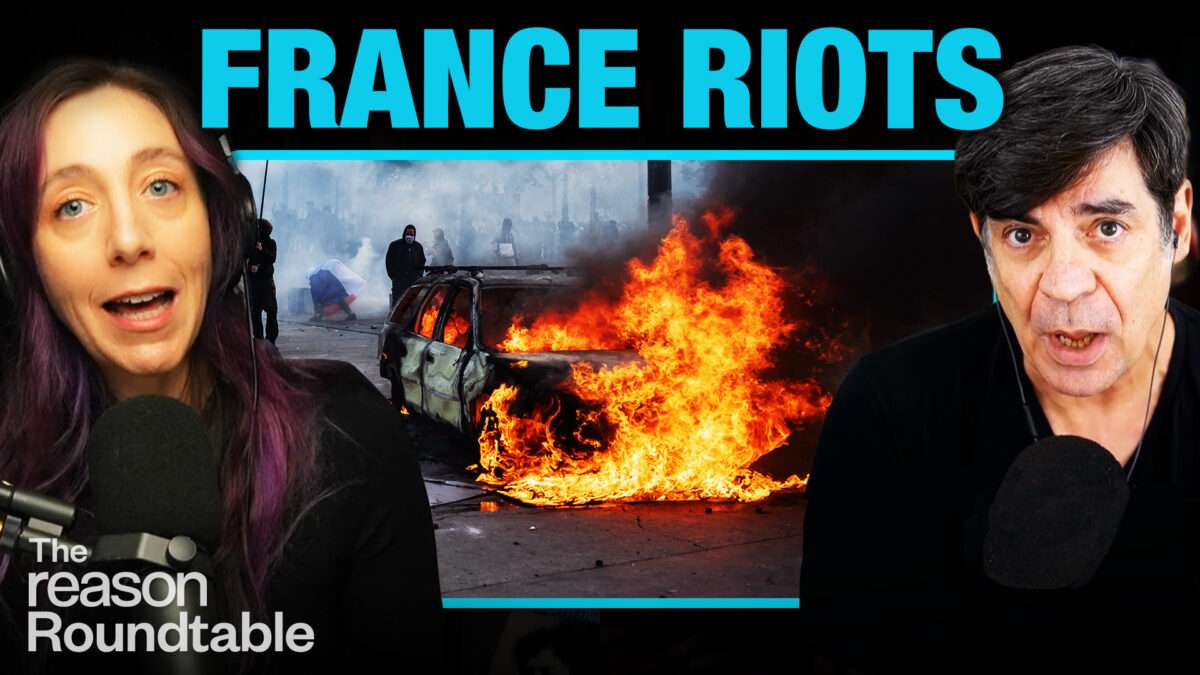
Katherine Mangu-Ward appears on the left. Nick Gillespie appears on the right. An image of a car that's been set on fire by protesters appears in the center. Bold text across the top of the screen reads "FRANCE RIOTS."
  •  

Curfews imposed in French cities as rebellion against austerity grows nationwide

Mass mobilizations against austerity policies and their effects are not winding down in France. On Saturday, October 17, roughly 800,000 people joined protests across more than 1,700 assembly points, according to union figures – amplifying demands tabled over a month of student protests and demanding urgent action on the cost of living crisis.

In the aftermath of the protests, the government expanded local authorities’ powers to introduce curfews. This led to overnight movement limitation orders introduced in several cities, including central parts of Paris, Lille, Lyon, and Nice. Many of the curfews target young people in particular, reflecting institutional concern about the success of their recent mobilizations.

Over the past weeks, students launched a wave of school strikes and occupations, resisting the erosion of education services under successive neoliberal governments. Their movement drew support from trade unions and progressive political forces, who joined students on the streets to pressure the Lecornu administration to change course and prioritize public services and labor rights over armament. 

Read more: One barricade after another: How protesters marched on the garrisoned heart of India’s capital

Rallies and marches reinforced the student movement’s demands for accessible, equitable higher education, alongside trade unions’ calls for higher wages. 

They also drew links to other historic moments of mobilization, including the struggle for Algeria’s liberation. Many groups taking part echoed the anniversary of the 1961 demonstration that ended in the massacre of hundreds of people protesting for independence.

Police violence continues

Teachers, families, and elected officials also joined, for a practical reason: to shield students from the law enforcement violence unleashed on their mobilization. 

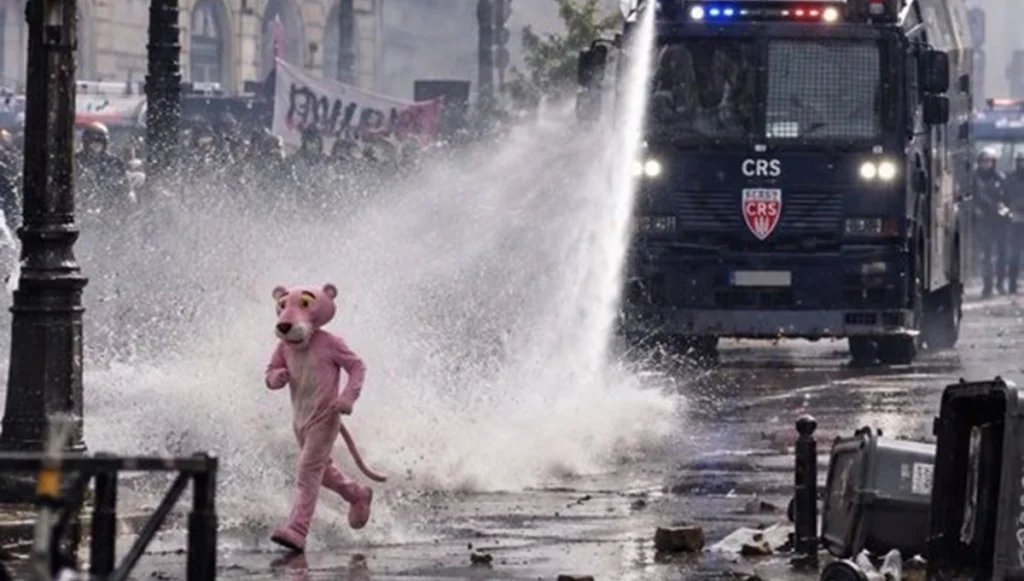
Saturday’s protests were again met with police violence, with officers relying – unsuccessfully – on tear gas and water cannons to disperse crowds. Serious injuries and cases of severe police brutality were reported throughout the day.

After repeated repression, and with neither the government nor President Emmanuel Macron offering credible solutions to protesters’ grievances, protests turned into riots. While those close to social movements emphasized the events were triggered by years of cuts and unimpeded attacks on workers’ rights, the middle and upper classes were indignant.

Recent protests in France have a decisively antifascist character. Protester’s sign reads: “Always angry, never fascist.” Source: Manon Aubry/Facebook

Macron channeled their reaction in his post-protest speech. He declared those responsible for the looting must be punished, while promising more “dialogue” and offering a mild acknowledgment of people’s concerns over fuel, food, and other essentials. 

“There are people out there who rightfully feel that the price of fuel is too high,” the president said – before shifting responsibility elsewhere. He said rising prices were the result “of what is happening in the Persian Gulf – a war that France was not part of.” 

The speech landed poorly at home and abroad. The Iranian government, for one, has repeatedly called out Macron for applying double standards between protests in West Asia and France, emphasizing that the French president had expressed support for US plans in Iran and that ongoing mobilizations were a logical outcome of the policies he endorsed. 

Students reject Macron’s response

In France, protesters called out Macron for failing – yet again – to identify a concrete way out of the situation facing the country. 

“Since the beginning of this movement, high school and university students have been met with nothing but contempt and police batons in response to their demands,” the university students’ union Union Étudiante wrote. “Yet we have put forward a clear set of demands, widely supported by everyone who took to the streets on October 17.” 

Read more: Madrid teachers and students launch strike to defend public schools

“He did not utter a single word about the high school and university students maimed in the crackdown,” the organization added. “He said nothing at all about the real violence committed on Saturday,” referring to approximately 2,300 arrests made on that day alone – and dozens of young people who were seriously injured over the past weeks.

“It is not a matter of engaging in endless dialogue, but of responding concretely to the needs of high school and university students: income, housing, food services, healthcare, study conditions, access to degrees, and an end to repression.”

Lecornu attempts to blame left for chaos

Prime Minister Sébastien Lecornu’s reaction to the protests drew an equally negative response from progressive forces, especially after he suggested left movements were responsible for chaos and violence.

“What a pathetic politician,” wrote presidential candidate Jean-Luc Mélenchon. “He is responsible for the chaos – chaos he methodically prepared, whether through sheer incompetence or a deliberate ‘strategy of the worst’ aimed at conjuring up a ‘party of order’ that would make people forget his failure on the public finances.”

  •  

Meloni Prepares New Security Measures After Milan Riots Leave Hundreds Detained

Italian Prime Minister Giorgia Meloni has convened an emergency government meeting following two days of violent unrest in Milan and other northern cities, where demonstrators clashed with police, looted shops and damaged public property during protests over living costs and deteriorating public services.

Police brought 271 people to police headquarters following Sunday’s disturbances in Milan, including 220 minors. Of those detained, 32 were formally arrested and another 28 were reported to the judicial authorities, according to figures released on Monday, 19th October.

The violence has prompted the Italian government to consider further restrictions on those involved in violent demonstrations, potentially introducing additional powers directed at organised disorder and juvenile offenders.

Milan city centre hit by looting

The disturbances began during demonstrations on Saturday, 17th October, organised amid growing dissatisfaction over household expenses, public services and wider political grievances.

Although the protests initially included peaceful participants, groups of masked individuals subsequently confronted riot police in central Milan. Officers used tear gas and water cannon as demonstrators erected burning barricades and threw objects at security personnel.

The unrest continued on Sunday, when shops were attacked close to Piazza del Duomo, one of Milan’s principal commercial and tourist areas.

Among the premises targeted were branches of Decathlon, Arc’teryx and Vodafone. Television footage showed damaged shopfronts, overturned street furniture and burning rubbish containers.

According to police figures reported on Monday, 174 of those taken to police headquarters were subjected to preventive detention measures introduced under recent Italian security legislation.

Fourteen members of the security services were reported injured during Sunday’s disturbances, including ten police officers and four members of the municipal police.

The judicial authorities are examining the conduct of individuals suspected of taking part in attacks on businesses and confrontations with officers. Prosecutors have sought custodial measures against several adults accused of offences including devastation, looting and aggravated resistance.

The large proportion of minors among those detained has become a central issue in the political response.

Violence spreads across northern Italy

Milan was not the only city affected by disorder. Saturday’s demonstrations also produced confrontations in Turin, Bologna, Brescia and Bergamo.

Italian police reported arrests across the affected cities, while the scale and organisation of the disturbances have raised questions about whether different groups were acting independently or using demonstrations as opportunities for coordinated violence.

There is not yet sufficient publicly established evidence to attribute the disorder to a single organisation or political movement.

The clashes coincided with major protests in neighbouring France, where similar concerns over living costs and public administration have contributed to increasingly confrontational demonstrations.

Although the grievances overlap, the Italian and French movements have different political backgrounds and organisational structures.

Government considers emergency legislation

Following a meeting at Palazzo Chigi on Monday, Meloni’s government indicated that it was considering a legislative response, potentially through an emergency decree.

According to details of the government discussions, proposals under examination include additional measures against violent offences, changes to preventive policing and possible restrictions addressing road blockages.

Some measures could be drawn from security legislation already under consideration in the Italian Senate. Ministers have also discussed the need for more effective intervention against juvenile offenders.

The meeting included Deputy Prime Ministers Matteo Salvini and Antonio Tajani, Interior Minister Matteo Piantedosi, Defence Minister Guido Crosetto and senior officials from the police, Carabinieri and intelligence services.

The government has stressed that peaceful demonstrations must remain protected while arguing that violence and organised destruction require a stronger response.

No final legislative text had been adopted at the conclusion of Monday’s meeting. A decree could be considered by the Council of Ministers as early as Tuesday, although the precise content remains subject to further examination.

Dispute over responsibility for policing

The unrest has also produced a dispute between Milan’s municipal authorities and the national government.

Mayor Giuseppe Sala questioned the adequacy of the policing arrangements, arguing that the number of officers initially deployed was insufficient to control the disturbances.

Interior Minister Matteo Piantedosi rejected that criticism, while senior government figures accused local political leaders of failing to condemn the violence unequivocally.

The disagreement reflects a wider question over how responsibility for anticipating and containing serious public disorder should be divided between local administrations and national security authorities.

Italy’s opposition has also challenged the government’s handling of the disturbances. Former Prime Minister Matteo Renzi criticised Meloni and Piantedosi over their failure to prevent the violence, calling for a change in leadership at the Interior Ministry.

The political argument is likely to intensify if the government proceeds with emergency legislation. Supporters of stronger police powers argue that the existing framework is insufficient to deal with rapidly organised disturbances, while opponents will scrutinise the proportionality of new restrictions and their effect on peaceful protest.

The immediate test for the government will be whether additional legal powers can improve public-order operations without replacing effective policing, intelligence gathering and judicial enforcement.

  •  
❌