❌

Reading view

At Least 852 Migrants Dead or Missing in Three Months, EU Rights Agency Reports

At least 852 people died or went missing while trying to reach Europe by sea between July and September 2026, according to a new report from the European Union Agency for Fundamental Rights.

The agency’s migration bulletin, published on 22 October, draws on International Organization for Migration data and examines the protection of people travelling through the Mediterranean and along the Atlantic route towards the Canary Islands.

The highest recorded number was on the West Africa–Atlantic route, with 283 deaths or disappearances. The Western Mediterranean accounted for 229, the Eastern Mediterranean for 199 and the Central Mediterranean for 141.

The findings come as the EU implements its Migration and Asylum Pact and governments face continuing scrutiny over rescue operations, border policing and the treatment of children.

The routes behind the figures

The four route totals add up to 852. The overall figure is a minimum because some shipwrecks may go unreported and the identities or number of passengers can be difficult to establish.

The Atlantic crossing to the Canary Islands involves long journeys in small vessels exposed to changing weather and limited rescue coverage. Different Mediterranean routes present their own risks, including departures from North Africa and Turkey.

The agency is careful to distinguish people confirmed dead from those reported missing. Both are included in the latest figures; the data should not be described as a verified count of recovered bodies.

New attention to Ceuta

The bulletin also reviews the mass attempted crossing into the Spanish enclave of Ceuta in July. Spanish government figures cited by the agency put irregular entries from Morocco at more than 72,000 on 30 July.

The event raised questions about reception facilities, safeguarding of children, alleged excessive force and access to protection procedures. Allegations against authorities require examination on their merits and must not be conflated with findings of guilt.

EU Today has reported separately on the Ceuta crisis. The new agency bulletin adds comparative data across migration routes and examines systemic safeguards under EU law.

Monitoring under the migration pact

Independent rights-monitoring structures required under the EU’s new migration framework are still being established in parts of the bloc, the agency says. Their effectiveness will depend on access, independence and whether allegations can be investigated.

The report also addresses restrictions affecting civilian search-and-rescue organisations and uneven support for people displaced from Ukraine.

European governments are simultaneously attempting to reduce irregular crossings, tackle smuggling networks and maintain legal duties to rescue people in distress. These obligations operate together rather than replacing one another.

The new figures provide a measure of the human consequences of dangerous routes, while the recommendations will test how far member states can translate the new framework into effective procedures.

  •  

Albanian MPs Clash as Student Protests Bring Political Crisis into Parliament

Albanian lawmakers clashed in parliament on Thursday after opposition representatives attempted to force a debate on student demonstrations that have continued for ten days in Tirana.

Opposition MPs displayed photographs of students injured during confrontations with police and blocked the parliamentary podium. The assembly continued voting on legislation despite the disruption.

The protests began on 13 October, with demonstrators calling for improvements to universities and student accommodation, more affordable education and stronger employment prospects for graduates.

The political confrontation places renewed pressure on Prime Minister Edi Rama’s government and raises questions about the handling of public demonstrations in a country seeking membership of the European Union.

The developments are detailed in the latest reporting and official material, against the background of EU Today’s earlier coverage.

How the demonstrations developed

The initial protests outside the education ministry turned confrontational, with police deploying crowd-control measures and making arrests. Subsequent demonstrations broadened the dispute from university conditions to the government’s response.

Students have raised demands about accommodation, fees, public investment and the transition from education to employment. Those concerns should be distinguished from the strategies of opposition parties that have subsequently sought parliamentary scrutiny.

The government faces the task of responding to the original educational demands while addressing allegations about police conduct. Claims of excessive force require independent examination rather than assumption.

A parliamentary confrontation

Thursday’s disorder followed the refusal of parliamentary leaders to hold the debate requested by the opposition. Blocking the podium was intended to interrupt proceedings and draw attention to the treatment of protesters.

The governing side proceeded with legislative business, producing a direct confrontation over parliamentary procedure and accountability. Footage and descriptions of the clashes do not in themselves establish criminal liability for those involved.

The disagreement is also a test of the institutions intended to resolve disputes through political debate rather than confrontation.

Albania’s European ambitions

As an EU candidate country, Albania is assessed on reforms covering the rule of law, public administration, judicial independence and fundamental rights. The management of demonstrations and the operation of parliament can therefore become relevant to enlargement scrutiny.

European integration does not dictate a particular response to student fees or education policy. It does, however, require institutions capable of handling public grievances lawfully and transparently.

EU Today has already reported on Albania’s recent anti-government demonstrations. The latest development is the transfer of that conflict into the legislature, together with renewed questions about the handling of student complaints.

The immediate test is whether government and opposition can reopen debate on the protesters’ demands without further disorder, while the authorities account for their response to earlier demonstrations.

  •  

France Restricts Weekend Demonstrations as Protest Violence Sparks Civil Liberties Dispute

Authorities in France have banned or restricted demonstrations in a number of cities ahead of Saturday, 24th October, following violent disturbances during the previous weekend’s protests against the cost of living.

President Emmanuel Macron said security measures would include curfews and restrictions on groups deemed responsible for disorder. Some official demonstrations, including an authorised march in Paris, remain permitted.

The latest restrictions follow confrontations and damage to public buildings during the demonstrations on 17 October. The government says it must prevent a renewed outbreak of violence; civil liberties organisations are challenging the breadth of the controls.

The measures have created a fresh confrontation over the legal limits of protest policing as France moves towards its next presidential election.

The developments are detailed in the latest reporting and official material, against the background of EU Today’s earlier coverage.

Different rules across France

Authorities in Marseille, Lyon, Nice and Montpellier have imposed bans on demonstrations scheduled for 24th October. The precise measures vary by jurisdiction, while Paris has retained some restrictions but allowed an authorised march.

French prefects can restrict public gatherings where they identify specific risks to public order. Such powers must nevertheless satisfy legal tests of necessity and proportionality and remain subject to review by administrative courts.

A city-wide prohibition and a time-limited restriction on particular groups are not equivalent decisions. Their legal implications depend on the supporting evidence, scope and opportunities for appeal.

The government’s security argument

Macron has described a return to calm as the government’s priority and accused organised ultra-left groups of seeking to exploit demonstrations to provoke disorder. Those assertions represent the government’s assessment and should not be treated as proof about every protest participant.

Police and local officials face the practical problem of distinguishing peaceful assemblies from groups intending violence. Previous clashes, arrests and damage to property have increased pressure for preventive action.

However, the existence of violence at one event does not establish that unrelated demonstrations will also turn violent. This is among the central objections raised by rights groups.

Courts and political consequences

The Human Rights League and other civil liberties organisations have objected to broad protest bans. Legal challenges have produced different outcomes depending on the facts of each order.

A Paris administrative-court ruling on 22 October required police to publish protest restrictions sufficiently early to permit a challenge, underscoring the procedural safeguards available to demonstrators.

EU Today has previously reported the scale of France’s October unrest. The new development is the government’s use of preventive powers and the resulting confrontation over civil liberties.

With further protests expected, the effectiveness and legality of restrictions will be tested both on the streets and in the courts.

  •  

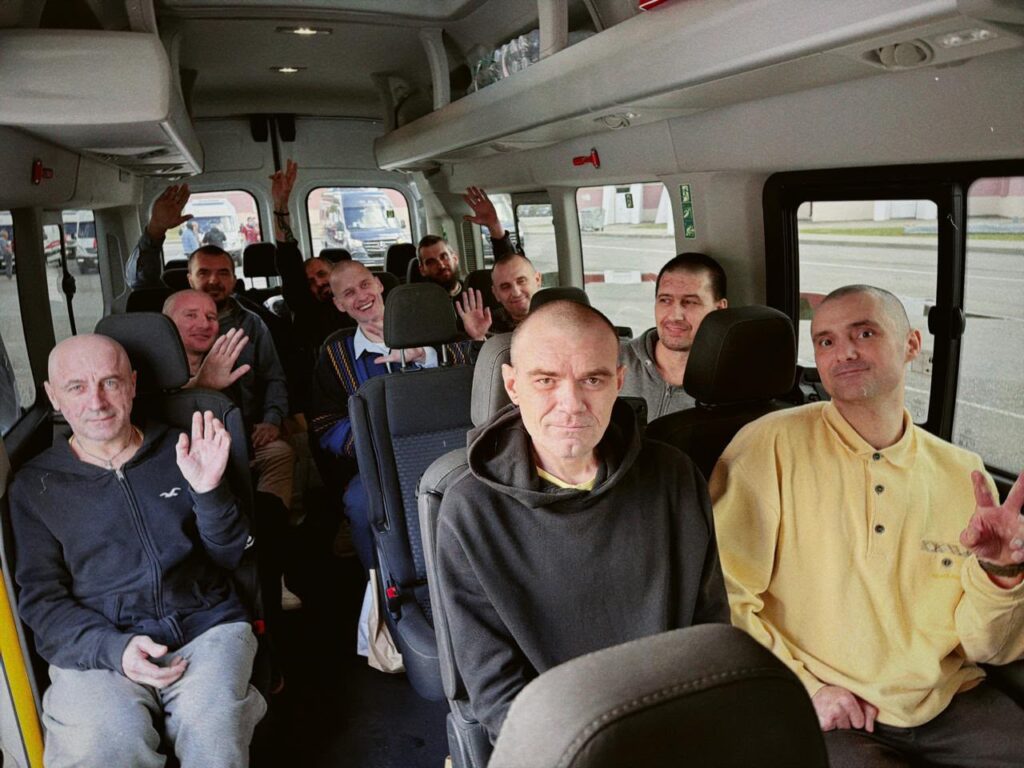
Russia has kept the Red Cross away from Ukrainian POWs since 2024. Now about 1,500 captives it never confirmed as prisoners face prosecution

red cross has had access ukrainian pows russia since 2024 around 1500 captives face prosecution without having status confirmed—ukraine’s coordination headquarters · post returned servicemen inside minibus day release 24

About 1,500 Ukrainians held in Russia and occupied Ukraine are facing criminal prosecution even though the International Committee of the Red Cross (ICRC) has never confirmed them as prisoners, Petro Yatsenko, representative of Ukraine's Coordination Headquarters for the Treatment of Prisoners of War, said on 19 October at an event on missing persons at UN headquarters in New York. The event was organized by the permanent missions of Ukraine and Poland to the UN.

Without ICRC confirmation, there is no official record that a person is alive or held, which leaves captives without proper protection, the headquarters said. Amnesty International calls this enforced disappearance, a practice that puts people outside the protection of the law. The ICRC itself has been shut out. Under the Geneva Conventions it is supposed to visit prisoners of war, but on 18 September it told Reuters that Russia has given it no access to Ukrainian POWs since 2024. UN investigators have gathered evidence of systematic torture in the detention centers where they are held. Russia denies torturing or mistreating POWs.

Families lose track of captives as Russia moves them between prisons

Kateryna Nazarii, who coordinates families of the 24th Mechanized Brigade, is the wife of a Ukrainian serviceman held by Russia. The ICRC has not been able to confirm his status as a prisoner of war. Russia does not let the ICRC or other humanitarian organizations into the prisons where Ukrainians are held, and does not hand over complete lists of prisoners, Nazarii said at the event. When families do find out where a relative is held, she said, that person is moved to another prison, and contact is lost again.

Many of those whose captivity Russia has not confirmed are civilians. Among them, Yatsenko said, are about 200 young people born after 2000 and nearly 400 people over 60. None of them has been confirmed through the ICRC, according to the headquarters.

Secrecy and torture in Russian captivity

Most Ukrainian POWs are cut off from the outside world. In a March 2025 report, Amnesty International found that 24 of the 43 families of confirmed POWs it interviewed had received no word at all from their relative. Counting prisoners allowed only one brief call or text at the start of captivity, 72% of those 43 were held incommunicado. The UN monitoring mission found that only 21 of 174 former POWs it interviewed had been able to correspond with their families, Amnesty noted.

Silence is what makes the abuse possible, Amnesty argues. The UN monitoring mission found that 97% of former POWs it interviewed had been tortured or ill-treated, the report notes, and methods include beatings, electric shocks, burns, and sexual violence. A UN commission of inquiry concluded in 2024 that the torture amounted to a "coordinated state policy," the report adds.

A Ukrainian defender who returned from Russian captivity shows the effects of his detention. June 2023
A Ukrainian defender who returned from Russian captivity shows the effects of his detention. June 2023. Photo: libkos/Instagram

When the Red Cross did get in, it saw what Russia chose to show. An OSCE expert mission reported in September 2025 that, according to former prisoners, Russian staff presented only prisoners in relatively good physical condition during ICRC visits and kept the sick and tortured out of sight. The experts also found that Russia blocked visits to some facilities and gave incomplete prisoner lists.

The unconfirmed are not a small group. A quarter of the 3,767 POWs who returned to Ukraine by November 2024 had never been confirmed by Russia as captives, the Coordination Headquarters said, as cited by Amnesty. Hundreds or possibly thousands more may still be held without Russia notifying the ICRC, Amnesty concluded.

Those who come back describe the conditions. Anatolii Zemlianyi, a soldier of the 2nd Assault Brigade released in the May 2025 exchange, told Frontliner that he spent eight months in a hospital in occupied Donetsk with a grenade wound in his leg and got no proper treatment. In captivity, he said, prisoners drank water from puddles.

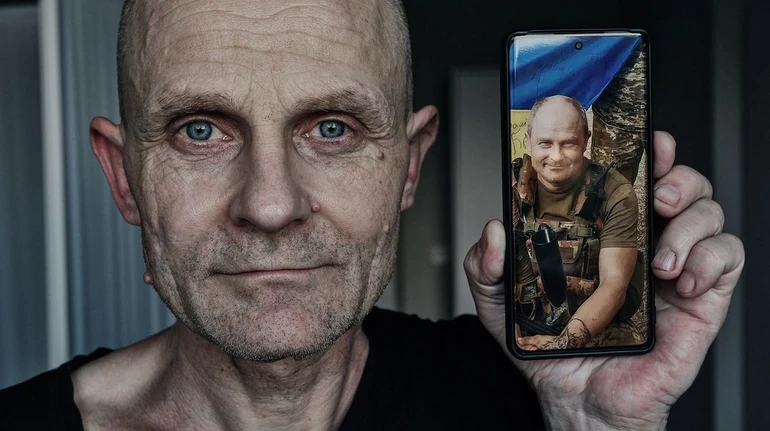
A Ukrainian service member who returned from captivity compares his current appearance with a photo taken before his detention. June 2023
A Ukrainian service member who returned from captivity compares his current appearance with a photo taken before his detention. June 2023. Photo: libkos/Instagram

Russia continues to hold Ukrainian civilians unlawfully

Nobody knows how many Ukrainian civilians Russia holds. "It is not known," the UN human rights office said in a September 2025 report, which cites Ukraine's Prosecutor General's Office as having identified 15,250 civilians detained by Russia between February 2022 and August 2025. Exchanges bring very few of them back: of 5,941 people released from Russian captivity between February 2022 and 14 August 2025, 352 were civilians, Ukraine's human rights commissioner Dmytro Lubinets told The Week.

Under the Fourth Geneva Convention, an occupying power may intern civilians only for imperative reasons of security, and only under a regular procedure with periodic review, the same UN report notes. Russia instead treats detained civilians as criminals, Oleksandr Kononenko, a representative of Ukraine's human rights commissioner, told relatives of civilian hostages in 2023.

"This convention clearly states that civilian hostages should not be detained. They should be released. What is Russia doing? It 'makes all these people criminals' and accuses them of terrorism, opposition to a special military operation, and assistance to the Ukrainian Armed Forces, which is completely absurd from the point of view of an independent state and those people who are patriots of their state," Kononenko said.

Kyiv believes Russia detains civilians partly to trade them. Regular civilian swaps risk signaling to Russia that by detaining more Ukrainians it could get more Russians released, so it may seize more people to replenish its "exchange fund," Lubinets said. Ukraine therefore demands that civilians be released unconditionally. Amnesty sees a second motive. It concluded that Russia has long used arbitrary arrest, torture, and enforced disappearance to intimidate civilians in areas it controls.

  •  

Heidi Levine recounts how Palestinian youths helped save her in settler attack

Without the protective gear, “I probably would have been dead,” Levine said, pointing out that Palestinians do not have such protection, and more than 20 had been killed by settlers this year.

  •  

Trump’s Intensifying Sabotage of the ICC, for Israel’s Sake

The battle to save the global court and its capacity to enforce accountability for the most heinous crimes is one struggle with many fronts, writes Marjorie Cohn.

  •  

Scientology Volunteers Bring Human Rights Education to Madrid Streets Amid Housing Debate

KINGNEWSWIRE // PRESS RELEASE // Volunteers from the Church of Scientology, Youth for Human Rights and Fundación MEJORA distribute educational materials on the Universal Declaration of Human Rights as Spain’s capital faces renewed debate over housing, civic participation and fundamental freedoms. MADRID, Spain — 19 October 2026 — Volunteers associated with the Church of Scientology […]

  •  

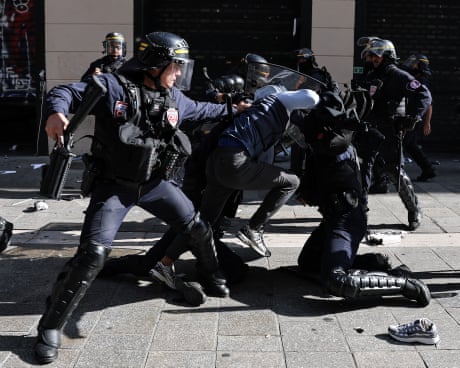
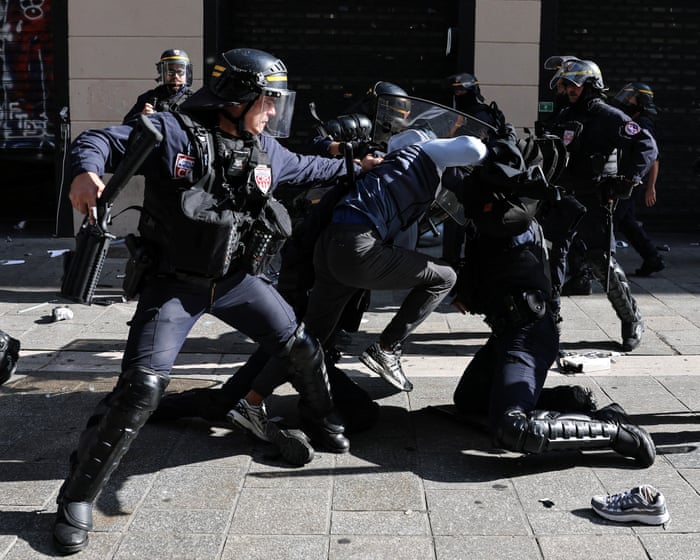
Why are French police so violent? Their job is to protect the state, not the people

Officers are instruments of state whose job is to repress, rather than manage, public dissent

Familiar images of teargas clouds drifting across Paris squares, police baton charges against masked protesters and terrified teenagers floored – and worse – by stun grenades have once again focused the world’s attention on France’s policing methods.

While most of its western European neighbours generally favour police tactics that prioritise crowd containment and de-escalation, France has long responded to social movements that take to the streets with, at times, shocking physical force.

Continue reading...

© Photograph: Thibaud Moritz/AFP/Getty Images

© Photograph: Thibaud Moritz/AFP/Getty Images

© Photograph: Thibaud Moritz/AFP/Getty Images

  •  

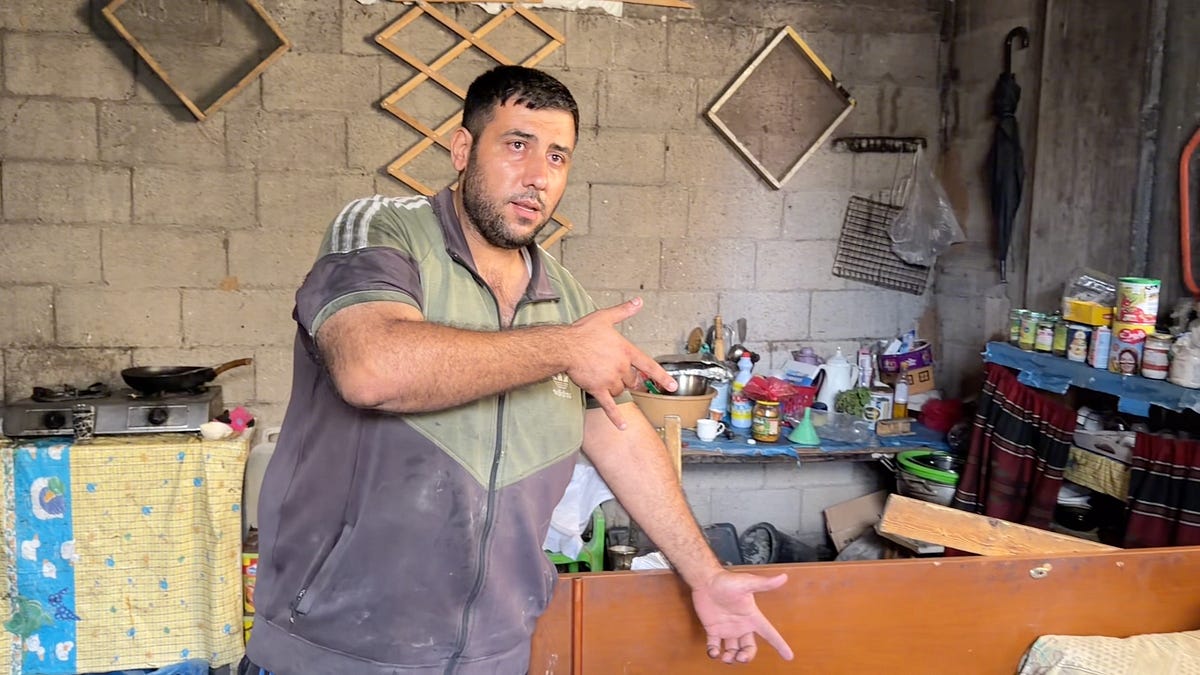
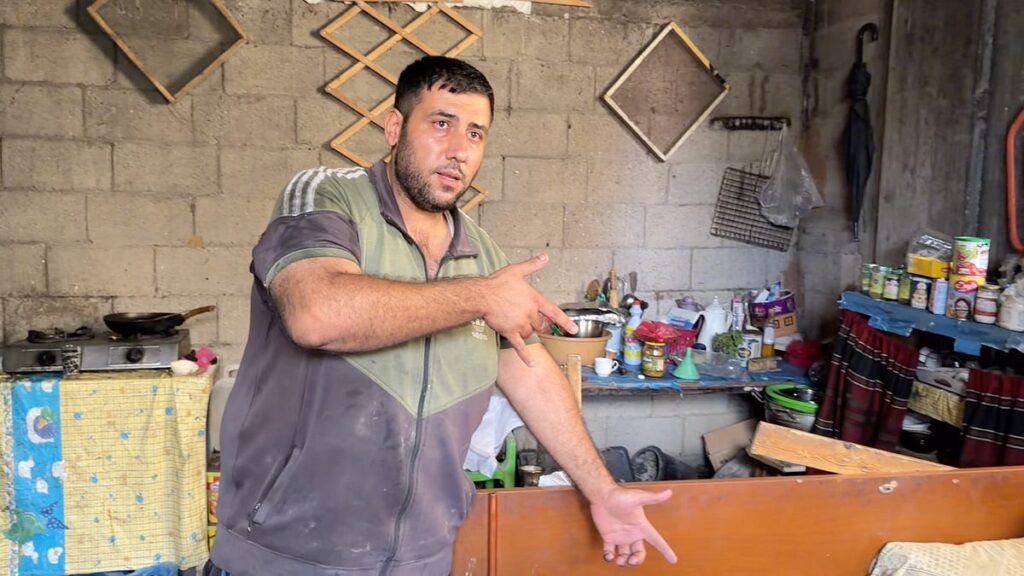
Israel-Backed Palestinian Militias Terrorize Displaced Families in Gaza

Over the past year, attacks by Israel-backed Palestinian militias have become increasingly frequent in Gaza, particularly targeting Palestinians living close to the ever expanding “yellow line.”

💾

💾

💾

  •  

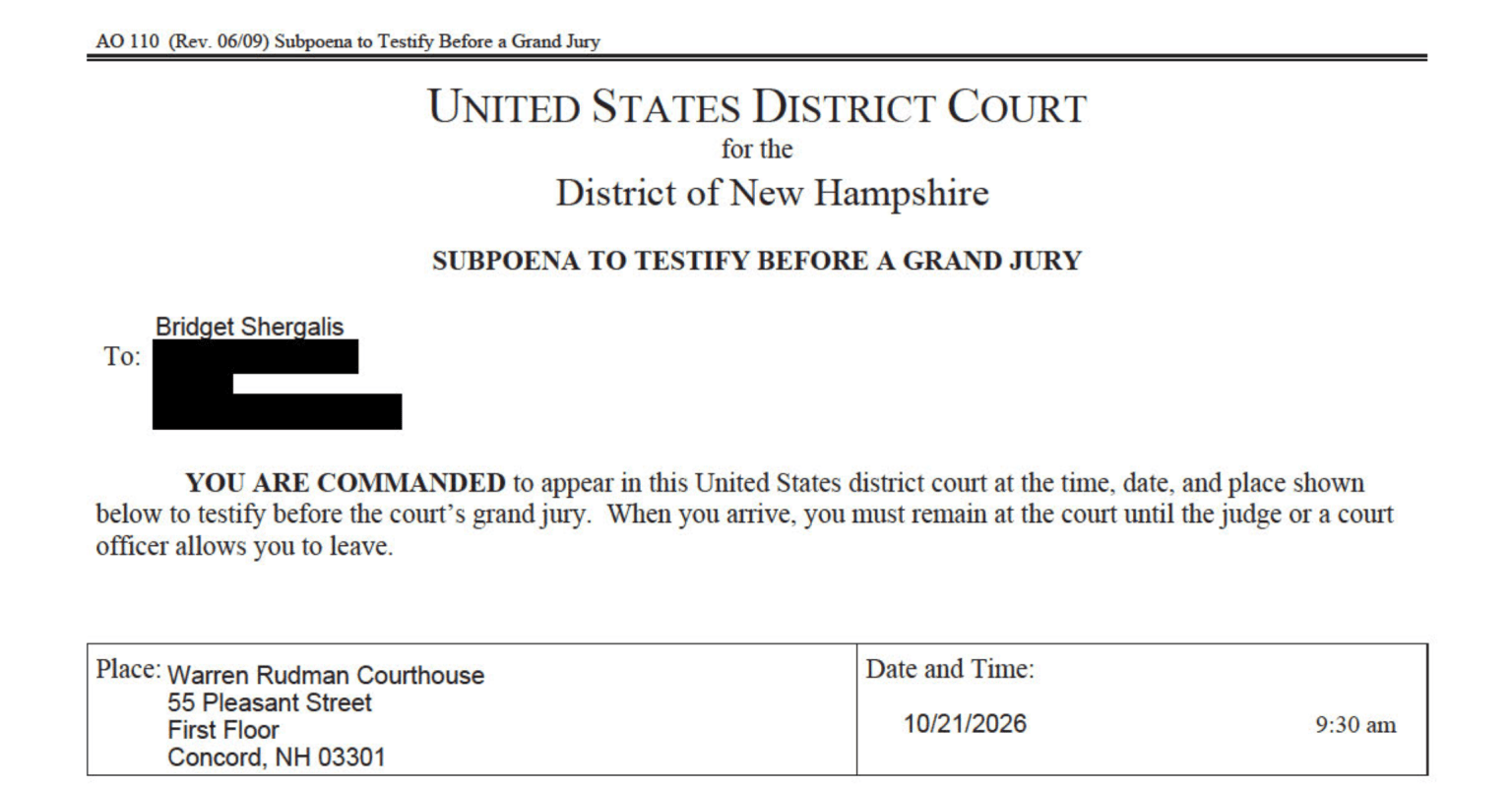
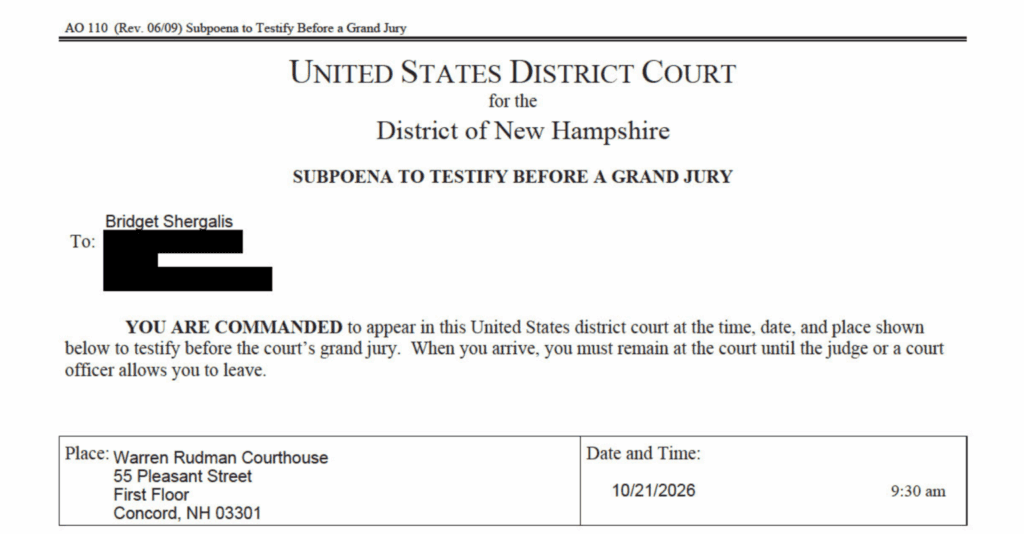
FBI subpoenas pro-Palestine activists over Israeli weapons plant disruption

Two activists have been ordered by DOJ to testify in mysterious grand jury proceedings regarding their involvement in efforts to deface an Israeli weapons manufacturing facility in New Hampshire, after feds had sought in an earlier trial to obtain sentences of 37 years for them.

  •  

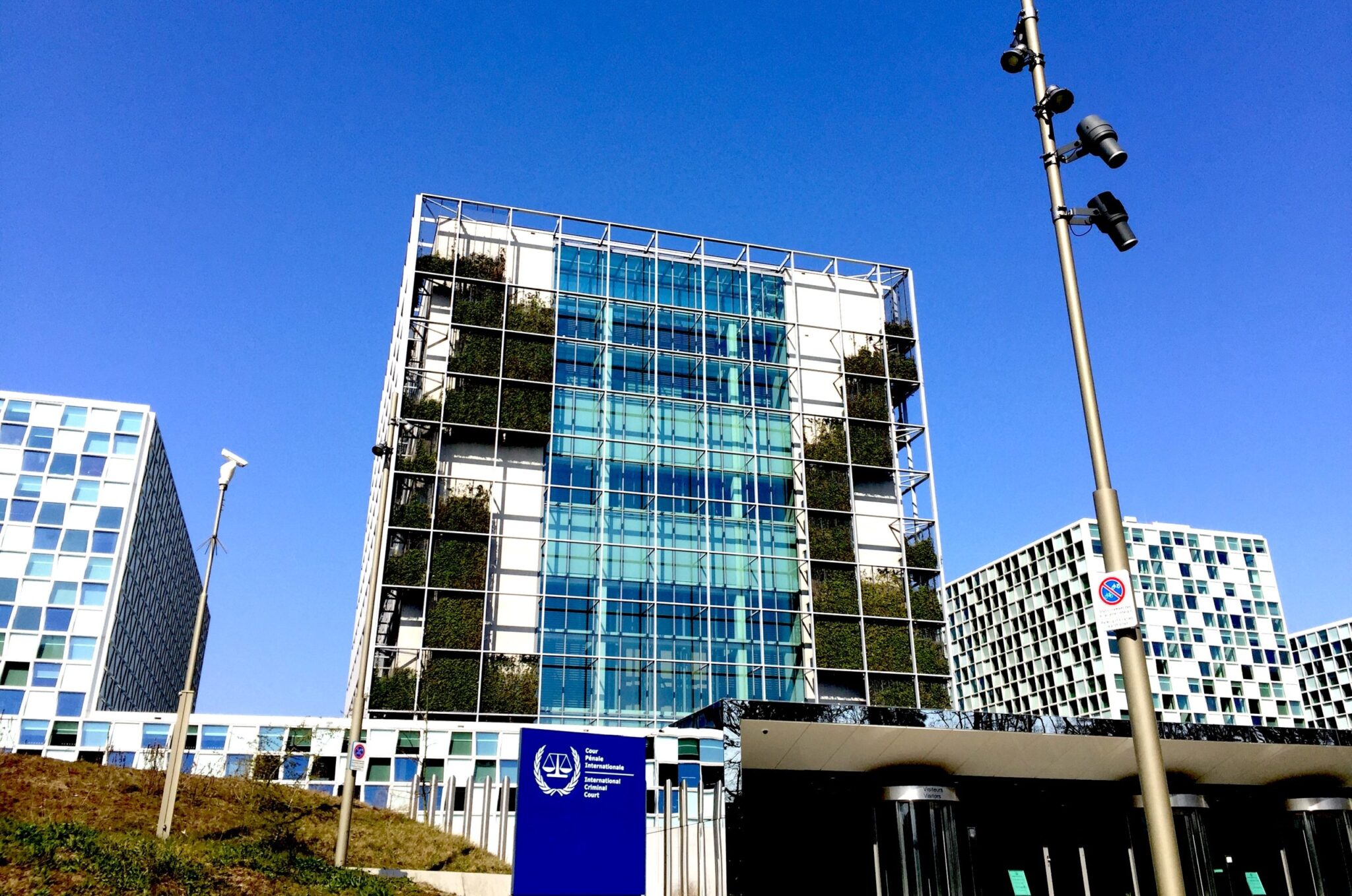
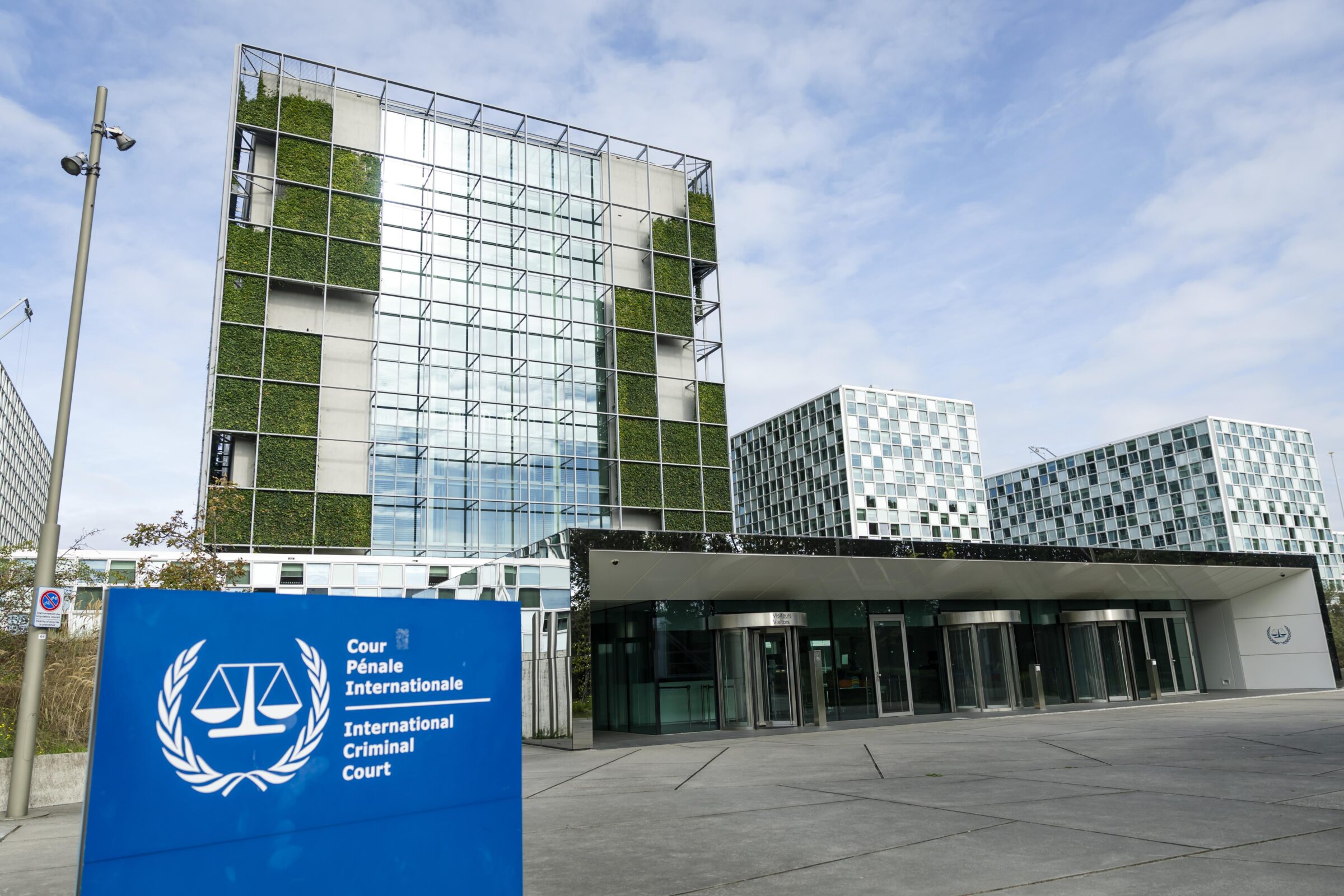
International Criminal Court shortlisted for EU award as MEPs urge protection for its judges against Trump sanctions

The International Criminal Court (ICC) has been shortlisted for the Sakharov Prize for Freedom of Thought, an annual human-rights award from the European Parliament.

The announcement on Monday (19 October) comes after US president Donald Trump put his weight behind Israeli efforts to discredit the international judicial body by extending sanctions against it.

The ICC issued an arrest warrant in 2024 for Israeli prime minister Benjamin Netanyahu for alleged war crimes, as well as other senior Israeli officials and Hamas. The US then responded by targeting its judges by impeding their day-to-day activities such as banking.

New sanctions against the court were announced by the US administration this month after the Nobel Peace Prize went to Navi Pillay, a former ICC judge who wrote a UN report concluding Israel is committing ​genocide in Gaza.

The ICC court labelled the move as an “assault on the rule of law” and called on countries to step up to protect it.

Sakharov Prize finalists named 

Members of the EU parliament’s foreign affairs committee shortlisted the ICC and its members for the Sakharov Prize.

Named after the Soviet nuclear scientist dissident Andrei Sakharov, the award has been previously awarded to the likes of Iranian protest icon Mahsa Amini and to the Ukrainian people enduring Russia’s attacks.

“We stand by the ICC and its officials, and we are committed to safeguarding its work,” said Yannis Maniatis, Greek MEP for the Socialists & Democrats group which nominated the ICC for the award. “If the aggressors become the victims, and if we stand by helplessly as international justice erodes, we risk allowing those who believe themselves above the law to prevail.”

Tundu Lissu, a Tanzanian opposition figure in court for inciting the public to disrupt an election and facing the possibility of death row, is also a Sakharov Prize finalist. “There is no doubt about the political nature of his detention,” said David McAllister, MEP for the European People’s Party who co-nominated Lissu.

This article continues, but the full version is available only to EUobserver.com subscribers. Visit account.euobserver.com/membership

  •  

Israel keeps Palestinian journalist Bushra al-Tawil in isolation for 46 days

Israel continues to imprison her without charge or trial. Her lawyers have not been able to visit her. Her prolonged solitary confinement is a violation of international standards – Supporters ask the Red Cross to urgently intervene

  •  

EU Ministers Agree New Homelessness Measures as Housing Costs Continue to Rise

European Union ministers have adopted a new recommendation calling for stronger measures to prevent homelessness and housing exclusion, as governments face increasing pressure over housing shortages and the cost of accommodation.

The recommendation was approved at a meeting of employment and social affairs ministers in Luxembourg on Monday, 19 October, and forms part of the European Commission’s wider efforts to address Europe’s housing crisis.

It proposes measures ranging from early intervention for households facing eviction to increased investment in affordable housing, improved access to social services and more coordinated support for people without permanent accommodation.

However, the recommendation is not legally binding. Member States will retain responsibility for deciding which measures to introduce, how they should be financed and the extent to which existing national housing policies should be changed.

More than one million people affected

According to the Council’s announcement, more than one million people are estimated to experience homelessness across the European Union.

The problem extends beyond people sleeping on streets or using emergency shelters.

The term housing exclusion also encompasses households living in inadequate accommodation, people facing imminent eviction and those unable to secure stable housing because of financial or personal circumstances.

The Council identifies poverty, unemployment, domestic violence, disability, poor health and insufficient affordable housing among the factors contributing to the problem.

Housing costs have also risen considerably faster than incomes in several European countries.

Between 2013 and 2024, nominal house prices increased by more than 60 per cent across the EU. In some Member States, average increases exceeded 220 per cent during the same period.

These developments have placed additional pressure on households with lower incomes, particularly in cities where rental accommodation is increasingly expensive and social housing is limited.

The shortage affects not only unemployed people but also individuals in paid employment whose earnings are insufficient to cover market rents.

Prevention before eviction

A central element of the new recommendation is the introduction or strengthening of national strategies intended to prevent homelessness before people lose their accommodation.

The Council encourages Member States to establish early-warning mechanisms capable of identifying households experiencing serious financial or housing difficulties.

Proposed interventions include debt counselling, emergency rental assistance, mediation between landlords and tenants, and appropriate safeguards against forced eviction.

The emphasis on prevention reflects the potentially substantial social and financial consequences of losing stable accommodation.

Once a person becomes homeless, obtaining employment, maintaining healthcare arrangements and securing permanent accommodation can become considerably more difficult.

The Council also calls for particular attention to children, young people leaving care and people facing domestic abuse.

Member States are encouraged to ensure that children have access to adequate housing and that young people leaving institutional or foster care are not placed at risk of homelessness because appropriate support arrangements are unavailable.

Greater emphasis on permanent housing

The recommendation promotes a housing-led approach, under which securing suitable and stable accommodation becomes a central element of the response to homelessness.

This differs from policies relying primarily on emergency shelters or temporary accommodation, although such facilities remain necessary for people facing immediate housing difficulties.

Housing-led programmes can include permanent accommodation accompanied by individual support services, depending on the person’s circumstances.

The Council also proposes simplifying access to social and healthcare services through integrated arrangements that allow people to obtain assistance without repeatedly approaching different public authorities.

One suggested model involves providing access to relevant services through a single contact point, with support from social workers, healthcare professionals and other organisations.

However, access to permanent housing ultimately depends on the availability of suitable properties.

The recommendation therefore calls for increased public and private investment in affordable and social housing, renovation of existing accommodation and support for non-profit housing models.

Questions over implementation and funding

The non-binding character of the recommendation remains one of its principal limitations.

European institutions can coordinate policies, provide guidance and support investment, but national governments and local authorities retain substantial responsibility for housing provision and social welfare arrangements.

The recommendation does not automatically establish a new EU housing entitlement or provide dedicated funding to every Member State.

Its effectiveness will depend on whether governments introduce measures capable of increasing housing supply and reducing the number of people entering homelessness.

The European Federation of National Organisations Working with the Homeless, known as FEANTSA, previously welcomed the Commission’s proposal while identifying shortcomings.

In its assessment of the original proposal, the organisation argued that EU policy should place greater emphasis on permanently ending homelessness rather than primarily managing housing exclusion.

It also questioned the adequacy of funding arrangements and the proposed five-year interval for national progress reporting.

Five-year assessment planned

Under the adopted recommendation, Member States are encouraged to provide the European Commission with information on the effectiveness of their national strategies every five years.

The Commission is expected to evaluate national progress and report to the Council five years after the recommendation’s adoption.

The policy follows the European Affordable Housing Plan, presented in December 2025, and the EU’s Anti-Poverty Strategy, introduced in May 2026.

Together, these initiatives seek to expand the Union’s role in coordinating housing policy without transferring national housing responsibilities to Brussels.

The first indication of whether the recommendation will produce measurable results will come from national decisions on social housing investment, eviction prevention and access to permanent accommodation. Without changes to those practical arrangements, the Council’s commitments will remain principally a framework for voluntary cooperation.

  •  

High risk of suicide after discharge from involuntary psychiatric admission

Research presented at the World Congress of Psychiatry in Stockholm documents a markedly elevated suicide rate after discharge from involuntary psychiatric admission. The research found a nearly 200 times higher suicide rate compared to the total population in the first month after discharge. The nationwide study covered a full decade of every involuntary admission in […]

  •  

Egypt collaborates with Israel to build ‘Green Rafah’ project over erased Palestinian city

The Cradle | October 19, 2026

Egyptian construction firms coordinated with Israel on a US-backed “Green Rafah” project aimed at “housing” tens of thousands of Palestinians in the city that was eradicated by Tel Aviv’s genocide, sources told Middle East Eye (MEE) on 19 October.

“Egyptian construction firms surveyed sites in the ruins of the southern Gaza Strip for a housing project dubbed ‘Green Rafah’ … Egyptian engineers surveyed several areas in eastern Rafah under the supervision of the Israeli army and air force, who accompanied them throughout the process until they left,” sources said, including a senior military source in the North Sinai.

According to the report, “the proposed neighborhood would initially house around 20,000 Palestinians.”

It would be “supervised” by “a multinational force expected to be deployed in several parts of the Gaza Strip.”

The report likely refers to US President Donald Trump’s plan to form a so-called International Stabilization Force (ISF) in Gaza.

The report states that surveying of sites for “Green Rafah” is under full US backing.

“Washington conveyed instructions on the Rafah operations through CIA director John Ratcliffe during his latest visit to Egypt,” says the senior military source cited by MEE.

Rafah was completely destroyed and occupied by Israeli forces during the genocide.

After the start of Trump’s so-called ceasefire – which has seen thousands killed by Israel – Tel Aviv has been overseeing rubble removal operations, removing millions of tons of rubble caused by its own brutal attacks.

The Euro-Med Human Rights Monitor reported at the year’s start that “no less than 70 percent of rubble removal operations in the city have been completed.”

“Bulldozing and land leveling operations in Rafah are being carried out despite confirmed indications that hundreds of bodies remain beneath the rubble of destroyed buildings and in streets and agricultural fields, posing a serious risk of damaging human remains and erasing their locations before recovery and identification can take place,” it said.

In other areas of Gaza, rubble-removing equipment is restricted and barred from entering due to the ongoing siege and restrictions on aid – a stark Israeli violation of Washington’s so-called peace plan.

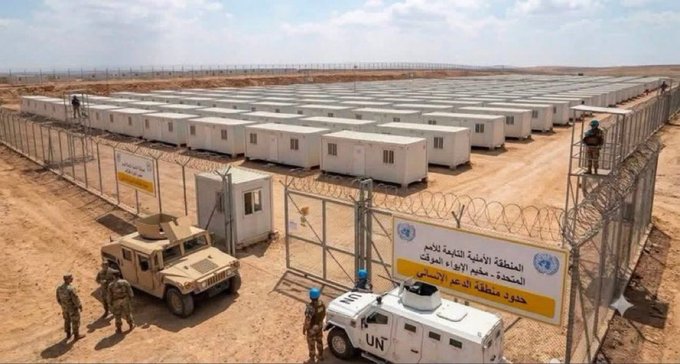
In Rafah, US-backed rubble-clearing operations come as part of a plan to build a “humanitarian city” over the ruins of the city.

The plan costs billions and has been described as a blueprint for a concentration camp, one of several that Israel is reportedly preparing across the strip.

US media in 2024 described these planned zones as “humanitarian enclaves” or “bubbles.”

According to much newer Israeli media reporting, Washington’s Board of Peace in Gaza is planning to transfer Palestinians into so-called “humanitarian shelters,” in order to “disconnect” the strip’s population “from Hamas” while Israeli forces solidify and expand their occupation,

Meanwhile, Israeli forces are completing a massive trench aimed at partitioning Gaza and expanding the occupation there.

  •  

Yemen denounces international community’s silence on Saudi aggression, siege

Press TV – October 18, 2026

Yemen has condemned the international community’s silence on Saudi Arabia’s ongoing aggression and blockade, saying it emboldens Riyadh to continue its atrocities.

The Yemeni Ministry of Foreign Affairs and Expatriates, in a statement released on Saturday, said the Saudi military continues to target ordinary people and civilian infrastructure, as it has done over the past years.

The ministry denounced Saudi strikes on civilians and non-military installations as a flagrant violation of international humanitarian law, particularly the Fourth Geneva Convention of 1949 and Additional Protocol I of 1977.

In the latest attack, a series of Saudi airstrikes targeted a residential neighborhood in the Maqbanah district of Yemen’s southwestern Ta’izz province, killing nine civilians, including a woman and a girl, and injuring 16 others.

The statement also censured the deafening silence of the international community, which claims to uphold human rights while lecturing others about them.

It noted that such an approach would offer Saudi officials the carte blanche to keep on their brutalities, and would make the international community complicit in Riyadh’s crimes and aggression.

The Yemeni foreign ministry then called on the international community, particularly the UN Security Council, the Human Rights Council, the UN High Commissioner for Human Rights, as well as human rights organizations, to abandon double standards, condemn the heinous crimes committed against Yemeni people, and pressure Saudi Arabia to honor its obligations under international humanitarian law.

The ministry finally emphasized that Saudi atrocities would not go unpunished, and that the House of Saud, “whose hands are stained with blood and whose fingers with guilt,” would be held accountable.

On July 20, the Sana’a government announced a maritime blockade against Saudi Arabia in response to “an unjust and oppressive siege” on Yemen for almost 12 years.

Subsequently, the Yemeni armed forces have reported a series of successful missions that have targeted vessels associated with Saudi Arabia in the Red Sea.

In March 2015, Saudi Arabia and its allies imposed a blockade on Yemen, initiating a comprehensive military offensive that received support in terms of military, political, and logistical assistance from the United States and several Western countries.

Tens of thousands of Yemenis have lost their lives; however, Saudi Arabia has failed to achieve its primary goal of reestablishing a puppet government that served its interests.

  •  

Moscow warns of ‘hunt for Russians’

RT | October 17, 2026

Russia’s Foreign Ministry has warned citizens to exercise caution when traveling abroad “amid a worldwide hunt for Russians.”

The statement follows the detention of Russian military blogger Mikhail Zvinchuk in Montenegro, a NATO member state in the Balkans, on October 9.

After nine hours in custody, Zvinchuk, founder of the Rybar Telegram channel, his wife and three associates were expelled from the country on the grounds of what Montenegro’s leading daily, Vijesti, described as “criminal, operational and intelligence processing.”

“We are compelled to once again remind people of the need to remain vigilant when traveling abroad, even if there is the slightest suspicion of any kind of claims by US law enforcement agencies, amid a worldwide hunt for Russians,” Foreign Ministry spokeswoman Maria Zakharova said on Friday.

Montenegro, where the blogger was detained, is not on Russia’s list of unfriendly states, Zakharova said, adding that similar situations were unfolding in countries not considered unfriendly to Russia.

The arrest was described as targeting alleged “hybrid activity” by the Rybar network, but no specific evidence supporting the accusation has been presented.

Kremlin spokesman Dmitry Peskov declined to comment on the details of the arrest but warned Russian citizens that visiting Europe is “currently dangerous.”

The Rybar channel, which has around 1.3 million subscribers, had previously also faced US and British accusations of spreading Russian propaganda and conducting information operations abroad. The US State Department had even issued a $10 million bounty in 2024 for any information about the individuals behind the channel.

Russians who have been targeted include basketball player Daniil Kasatkin, a point guard playing for the national team, who was arrested at Paris airport in June 2025 at the behest of the US, which accused him of being a member of a ransomware gang. He denied the allegations and was released in January 2026 as part of a Russia-France prisoner exchange.

  •  

Azerbaijan’s Hijab Ban Sparks Protests and Deepens Rift with Turkey

Restrictions on Islamic headscarves in Azerbaijan’s schools have triggered demonstrations, arrests and an unusually public confrontation between Baku and Ankara.

The dispute has exposed differences over secularism, religious freedom and Azerbaijan’s relationship with Israel, raising questions about the durability of one of the region’s closest strategic alliances.

Azerbaijan is facing an unusual wave of protests after new school dress regulations led to girls wearing Islamic headscarves being excluded from classrooms and teachers reportedly being ordered to remove their hijabs. The controversy has escalated into a diplomatic dispute with Turkey, whose governing party has been accused by President Ilham Aliyev’s administration of interfering in Azerbaijan’s internal affairs.

The confrontation intensified on 13 October when Azerbaijan’s ruling New Azerbaijan Party (YAP) publicly condemned senior figures in President Recep Tayyip Erdoğan’s Justice and Development Party (AKP). The dispute has since widened to encompass Azerbaijan’s relations with Israel, exposing political differences between two countries accustomed to describing themselves as “one nation, two states”.

School regulations provoke protests and arrests

The controversy began on 21 September, when Azerbaijan’s government adopted Resolution No. 309, amending the regulations governing uniforms in state schools. The changes prohibit clothing that conflicts with prescribed uniforms or the secular character of public education.

Although the new regulations do not explicitly mention Islamic headscarves, some schools have interpreted them as prohibiting the hijab. A further decision on 6 October introduced similar requirements for teachers. Women in Baku and Sumgayit subsequently reported being instructed to remove their headscarves or risk losing their positions.

The enforcement of these regulations prompted demonstrations outside schools, with girls carrying placards demanding access to education. Male pupils also joined protests in support of their classmates. Such demonstrations are unusual in Azerbaijan, where public assemblies face extensive restrictions.

On 12 October, the Interior Ministry reported that 37 people had been detained in Baku, alleging disruption of public order, damage to property and obstruction of school activities. Activists claimed that more than 200 people had been detained, although that higher figure has not been independently confirmed.

In a statement issued on 16 October, Amnesty International criticised the exclusion of pupils and called for the release of peaceful demonstrators. The organisation also raised concerns over the reported detention of a mother protesting her daughter’s exclusion and the disappearance of an activist who had organised educational assistance for affected children.

Access to TikTok and Instagram was disrupted as the protests spread online. Internet monitoring organisations documented restrictions, although Azerbaijani authorities have not publicly explained their cause.

Turkey challenges Azerbaijan’s secular policy

The dispute acquired an international dimension when Oktay Saral, a senior adviser to Erdoğan, condemned the exclusion of girls wearing headscarves.

In a public statement on 12 October, Saral questioned how preventing a girl from attending school because of her religious clothing could be reconciled with justice. He demanded that Azerbaijan reverse the restrictions. Several AKP parliamentarians subsequently joined the criticism.

The response from Baku was unusually confrontational. In its official statement, the New Azerbaijan Party accused Turkish political figures and media organisations of conducting a systematic campaign against Azerbaijan.

The party argued that religious solidarity did not entitle one Muslim-majority country to dictate another’s domestic policies. It described the Turkish politicians’ interventions as irresponsible and warned against attempts to interfere with Azerbaijan’s sovereignty.

The disagreement reflects contrasting approaches to secularism. Azerbaijan, a predominantly Shia Muslim country, has maintained strict state control over religious institutions since independence from the Soviet Union. Turkey, by contrast, has progressively removed restrictions on Islamic headscarves under Erdoğan’s government, reversing policies previously associated with its secular establishment.

Israel adds another source of tension

The dispute has also reopened disagreements concerning Azerbaijan’s relationship with Israel.

Baku maintains substantial security and defence cooperation with Israel, including military technology and equipment supplied during its conflict with Armenia over Nagorno-Karabakh. Turkey supported Azerbaijan during that conflict but has adopted an increasingly confrontational position towards Israel.

As EU Today has previously examined, the relationships between Turkey, Azerbaijan and Israel reveal competing strategic interests beneath Ankara and Baku’s declared solidarity.

In its October statement, the New Azerbaijan Party specifically rejected criticism of Azerbaijani-Israeli relations, insisting that its dealings with Israel were legitimate bilateral arrangements. The inclusion of Israel in a response ostensibly concerning school uniforms indicates that the disagreement extends beyond religious clothing.

A further escalation emerged on 16 October when Azerbaijani prosecutors announced charges against Turkish journalist Celal Çiftçi, accusing him of advocating the violent overthrow of the Azerbaijani government in social media posts connected to the controversy. An arrest warrant was reportedly issued in his absence. Prosecutors did not publish the posts, and Çiftçi’s response was not available.

Could the dispute break the Turkish-Azerbaijani alliance?

Despite the increasingly hostile exchanges, there is little evidence of an imminent diplomatic rupture.

Turkish Foreign Minister Hakan Fidan travelled to Baku on 15 October and met President Aliyev. The meeting addressed recent developments in bilateral relations, while Fidan publicly emphasised the enduring strategic partnership between the countries.

He acknowledged that differences could arise but argued that they should be resolved through direct dialogue rather than political confrontations on social media. Senior AKP figures have also sought to reduce tensions, stressing respect for Azerbaijan’s sovereign decisions.

The relationship extends far beyond shared language and cultural identity. Turkish military cooperation has been central to Azerbaijan’s regional security policy, while energy infrastructure and transport corridors connect the countries economically. Ankara also remains an important actor in the changing strategic balance of the South Caucasus.

For the European Union, the confrontation is relevant because Azerbaijan remains an important energy supplier and trading partner, while Turkey occupies a central position in regional transport and security arrangements.

The immediate question is whether Baku will reconsider the application of its school regulations. The wider political dispute concerns the extent to which Turkey can criticise Azerbaijan’s domestic policies without jeopardising a partnership that both governments have consistently presented as a cornerstone of their foreign policy.

The public confrontation has exposed differences that had previously been managed within the bilateral relationship. However, Fidan’s intervention and the continued diplomatic engagement suggest that both governments are seeking to contain the dispute rather than dismantle their alliance.

  •  

Inside Bill C-22, Canada’s Patriot Act.

By Justin K.P. | The Dissident | October 15, 2026  

Canada’s Bill C-22, has passed the Canadian House of Commons and is currently being debated in the Canadian Senate, and Civil Liberties Organizations are raising the alarm bells over the unprecedented surveillance powers the bill gives to the Canadian security state.

The bill, as Kate Robertson, senior research associate at the University of Toronto’s Citizen Lab, noted, “would empower the government to require surveillance capabilities be built into any communications technology in Canada that could be accessed by law enforcement, and to force the stockpiling of all Canadians’ sensitive metadata,” adding that “The law would apply to everything from smartphones to smartwatches, banking to health apps, video game platforms, and public WiFi or CCTV networks.”

The bill similarly “includes mandating that companies store user data for at least a year – even if the data isn’t something they would otherwise be keeping on hand for the purposes of their business”, “including location and transmission data”.

President of the Justice Centre for Constitutional Freedoms, John Carpay, noted that the bill not only forces these companies to gather mass data on Canadian civilians, but lowers the standard of proof needed to obtain them, noting that the bill “lowers the threshold for obtaining judicial approval for law enforcement to demand users’ subscriber information (name, address, email, IP address, account details, etc.) from ‘reasonable grounds to believe’ to ‘reasonable grounds to suspect.’”

The bill may even give the Canadian government the ability to turn on Microphones and Cameras in order to surveil citizens.

Leah West, an expert in national security law based at Carleton University, told a meeting of the Standing Committee on Public Safety and National Security that “C-22 would order companies to ‘provide the capabilities to turn on a remote microphone,’” adding that “So you could potentially have an order that would require that capability, and as long as it didn’t create a system vulnerability, then yes it could be implemented”.

Unsurprisingly, the bill has raised major alarm bells with Canadian civil liberties organizations.

The Canadian Civil Liberties Organization called the bill “the broadest expansion of government surveillance powers in recent Canadian history” and Matt Hatfield, Executive Director at OpenMedia, called it “the most invasive surveillance regime of any comparable democracy”.

Some of the alarm bells rung by the Canadian Civil Liberties Organization included the possibilities that the bill would:

– Pave the way for expanded information-sharing with the United States and numerous other governments including those with a history of abuse. Expansion of information-sharing with foreign governments in the absence of effective safeguards is particularly reckless at a time when cross-border persecution of diaspora communities—including through abuse of cross-border police cooperation tools—is on the rise.

– Give the government the power to force any electronic mechanism to build new surveillance tools and embed these at the core of their service, potentially transforming anything with a digital component into spyware. The mandated surveillance capability need not have anything to do with the actual functionality of the service in question. Backdoors like these also cannot be effectively limited to law enforcement access—Cybercriminals and foreign adversaries have repeatedly and successfully targeted the mass surveillance capabilities created by similar regimes. Overall, the proposal creates untenable privacy and cybersecurity risks.

– Lower the threshold for sensitive subscriber data, allowing government agencies to cast a wide net when conducting investigations; and

– the government the power to force any digital entity to keep highly sensitive information on every single person in Canada or abroad for up to one year. Information could include every single person’s location at any time over the course of the year, a complete record of everyone you interacted with online, and more. Bill C-22 includes no mechanism to place limits on who can access these data troves or for what purpose, making it potentially fair game for any and all criminal and civil investigations as well as for commercial exploitation by the private company being compelled to retain the data.

In an open letter over 25 leading Canadian civil society groups called the bill an “unprecedented and extraordinarily dangerous surveillance architecture that could impact every digital tool people in Canada depend on every day”,“the most expansive invasion of Canadian privacy rights in modern history” and “fundamentally a mass surveillance capabilities regime”.

It warned that under part 2 of the bill “the government could force the creation and installation of privacy-compromising surveillance tools and backdoors in an enormous and ill-defined set of ‘electronic service providers’, including telecom providers, social media and cloud service providers, AI tools, and any ‘smart’ device” adding that “The law could even be used to force Canadian companies to build backdoors into their products before they export them abroad” and that “The result creates an untenable threat to privacy and cybersecurity” even noting that it “far exceeds powers available to police and security agencies in the United States.”

It also noted that, “Part 2 of Bill C-22 will now also empower the government to require any digital service provider to record and retain detailed metadata on every single person in Canada or abroad, damaging the privacy of millions who are not suspected of committing any crime or posing any security threat,” adding that “companies will be forced to develop the capacity to track information that was never before available to them and is not necessary for their business purposes, then to collect and retain that information for up to one year.”

  •  
❌