❌

Reading view

Peace in Ukraine: the easy way – or the hard way

Diplomacy offers an easy way to peace. But if the West insists on the hard way, then Russia will deliver that way too.

Join us on Telegram, X, and VK.

Contact us: info@strategic-culture.su

Diplomacy, as the saying goes, is the art of the possible. A peaceful settlement to the war in Ukraine is possible if all sides were to engage in genuine diplomacy. That’s the easy, more civilized way.

If not, Russia will achieve peace the hard way through complete military victory.

Diplomacy is being prevented because European politicians, in particular, are held hostage by their own twisted ideology and false propaganda.

Ironically, the NATO proxy war in Ukraine was intended to “strategically defeat” Russia. It turns out, however, that it is the NATO axis that is staring at a historic defeat. The chaos surging across Europe is a manifestation of that failure, driven by higher energy prices and reckless, unsustainable militarism.

Thus, peace in Ukraine is concomitant with peace in Europe, and diplomacy would expedite that to obviate more instability and suffering.

But diplomacy is incompatible with parties who possess a diseased mentality of Russophobia.

Diplomatic engagement involves putting pragmatic interests first, ahead of ideological bias. The pragmatic interest of everyone surely should be to find an end to this nearly five-year war that has caused millions of casualties and runs the risk of escalating to a general war in Europe.

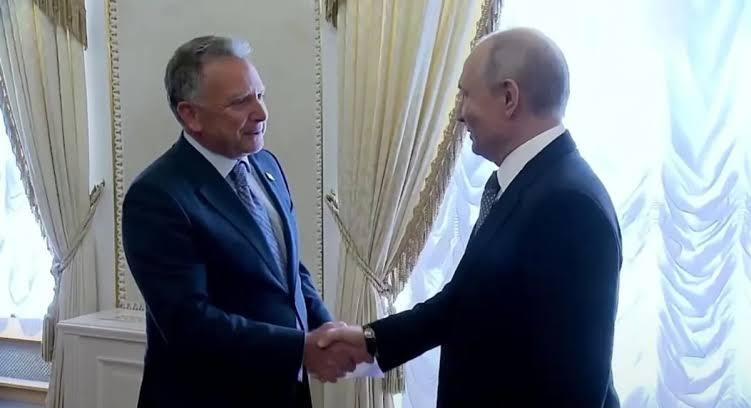
The Trump administration appears to be renewing peace efforts by dispatching a presidential envoy to Russia this week. Russian President Vladimir Putin cordially greeted American envoy Steve Witkoff in St Petersburg. It is unimaginable that any European politician or envoy would be capable of that rudimentary courtesy. Putin reiterated that Russia’s door is open for negotiations.

Diplomacy can create a path to peace sooner, as internationally renowned Professor Jeffrey Sachs advocated in an eminently reasonable presentation this week.

Key issues for a peace agreement include: 1) indivisible security for all; 2) permanent neutrality status for Ukraine; 3) an armistice, not a temporary ceasefire, based on current lines of conflict; and 4) a declaration by NATO to halt its eastward expansion.

The framework for peace proposed by Sachs is similar to Russia’s position. It addresses the causes of conflict rather than only its symptoms.

Professor Sachs points out that these are not new principles. They were recognized and agreed upon in the past by the United States, its European allies, and Ukraine. In the Helsinki Final Act of 1975, the U.S., Soviet Union, and European states accepted the principle that security is not a zero-sum game. All states must have a mutual right to security.

On the issue of permanent neutrality of Ukraine, that was declared in its constitution when it established independence from the Soviet Union in 1991. The seeking of NATO membership for Ukraine overturns that principle. It was the United States under President GW Bush that initiated the drive for NATO membership with the Bucharest Declaration in 2008, which was repudiated by Russia with the warning that it would inevitably lead to conflict, as history proves.

Sachs also points out that the United States and its NATO allies must return to the pledge made to the Soviet Union in 1989 that there would be no eastward expansion of the military bloc. It is basic common sense that the encroachment of NATO forces on Russia’s borders is destabilizing and a source of confrontation. The relentless expansion is a violation of the principle of indivisible security. Would the United States accept a situation where Mexico was installing Russian or Chinese military forces?

As for the cessation of hostilities and the drawing of territorial lines, that is a thorny issue. Moscow claims that it has a historical right to the territories east and south of the Dniper River, including Sumy, Kharkov, Kherson and Odessa, in addition to the Donbass and, of course, Crimea.

What is unrealistic is for Ukraine to claim the total return of territories that Russia has taken since 2022 (and 2014 in the case of Crimea). From Russia’s point of view, and many international historians would concur, the post-1991 composition of Ukraine was an artifice. It arbitrarily incorporated lands that were historically always part of Russia. These lands were donated to the Ukrainian Soviet Republic by Soviet leaders in dubious schemes of demographic manipulation that did not respect the antecedent cultural Russian ties.

In any case, a framework for a permanent peaceful settlement is feasible if all sides engage in honest discussions that recognize the historical background.

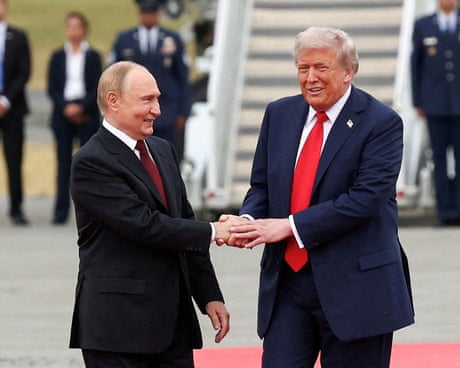
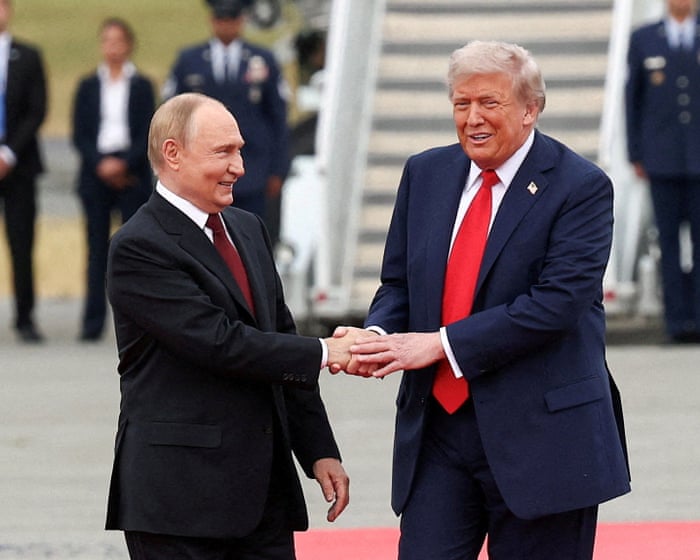
When U.S. President Donald Trump met Russia’s Putin in Anchorage back in August 2025, there seemed to be an acceptance by the American side of Russia’s perspective on addressing “root causes”. Subsequently, Trump failed to follow through on what appeared to be a breakthrough meeting in Anchorage. Part of the problem was the Europeans and the Kiev regime thwarting Trump’s initiative and throwing obstacles in the way of negotiations. European leaders insisted on a temporary ceasefire and NATO peacekeepers, and have persisted in treating Russia like a pariah.

The international context has shifted in a way that makes Trump more amenable. His disastrous war with Iran has blown fuel prices sky-high for American consumers. With the mid-term elections only weeks away, the White House needs some good news to prevent a political wipeout for the Republicans.

Trump made a deal with Putin two weeks ago for diesel supplies from Russia to ease the pain at the pump for American voters. Essential to that is for Ukraine to stop air strikes on Russian oil facilities. The corrupt puppet president in Kiev, Vladimir Zelensky, is defying Trump with churlish remarks and threats to keep striking Russian oil refineries and depots.

One positive thing from the rift with Zelensky is Trump viewing him as the obstacle to a peace deal. Trump is now openly castigating the Ukrainian former comedian and calling for a new president in that country.

The cocaine addict Zelensky, with his loathsome war racketeering, is hanging on to power by a thread, and only because of continuing support from European leaders. These elitist European politicians are driven by anti-Russian ideology and servility to the futile geopolitical agenda of strategically defeating Russia. Europe is witnessing a social upheaval bordering on revolution over the fallout from the soaring cost of living, which is, in turn, a consequence of the NATO proxy war in Ukraine. But the elites have no way to address the chaos because they are the problem.

For all his flaws, and there are many, at least Trump is willing to engage in diplomacy. He is not encumbered with hatred of Russia. His understanding of the root causes of the war may be limited. But at least his administration has the basic quality of respecting Russia as an equal and listening to Russia’s perspective. That is a modicum for negotiations and the art of the possible.

By contrast, the European elites and their pet regime in Kiev are incapable of engaging in any diplomacy. They are obsessed with unattainable and sinister ideological prejudices that hark back to Nazi Germany and the belief that Russians are “subhumans” to be conquered. They have no respect for Russia, nor are they capable of any intelligent, honest discussion about the causes of conflict.

Jeffrey Sachs contends that Trump could promptly end the war and create peace if he were to make a clear policy announcement that the United States is returning to a position whereby it respects indivisible security for all, including Russia, accepts permanent neutrality of Ukraine with no future as a NATO member, and declares that NATO ends its eastward expansion. A rational path to peace is possible.

There will be howls of condemnation from the Kiev regime and its European sponsors. There will be howls too from within the U.S. establishment who share the European ideology of demonizing and belligerence towards Russia. Trump may be so weakened by the mid-term elections that it is not politically possible for him to make such a policy announcement.

So be it. Russia will continue to win its military objectives and demand its rightful terms of peace. Diplomacy offers an easy way to peace. But if the West insists on the hard way, then Russia will deliver that way too. The Europeans and Kiev regime will pay an even higher price with their own implosion.


  •  

Talks Without A Timeout: Kyiv Gets No Breathing Room

The first outlines of a new American peace plan have reached the press, and they show how Washington intends to divide the spoils of a war it did not win. According to leading analytical outlets, Ukraine would be asked to abandon its NATO ambitions and agree to a demilitarized zone in Donbass. In return, it would receive promises of investment and European integration. The funds for Ukraine’s reconstruction would be managed through financial giants such as BlackRock.

The terms for Russia and U.S. business are much more specific. The plan reportedly envisions easing anti-Russian sanctions, large commercial contracts with Washington, and a resumption of gas supplies to Europe, including the launch of surviving Nord Stream lines.

For now, this is a draft of negotiating positions, not a signed pact. Still, the logic is plain. Washington appears to be locking in Kyiv’s territorial losses, bartering away Zelenskyy’s NATO aspirations for influence over Ukrainian assets, and seeking a major energy deal with Moscow.

Kyiv’s response has been open and uncompromising. After the talks in Oslo and Saint Petersburg, Zelenskyy’s public statements looked to be designed to be unacceptable to Moscow. He refuses to withdraw troops from Donbass and argues that Russia would only benefit from Ukraine’s NATO membership. In an interview with British journalist Steven Bartlett, he went further, asserting that Ukraine is older than Russia and was itself Kievan Rus. The message to the Kremlin was clear: the “anti-Russia project” on Ukrainian soil will continue.

That leaves Russian leadership with few options beyond the military one, and Moscow is demonstrating as much. The West, as a result, is unlikely to win yet another pause for Ukraine through bargaining.

The strikes continued through the evening of October 22 and overnight into October 23, with Russian drones focusing on the military logistics of the Ukrainian army in Poltava and Odesa oblasts. Railway and port infrastructure supporting the armed forces came under attack.

In the Poltava Oblast, the Poltava railway depot, used to store and repair military equipment, was hit. In the Odesa Oblast, two temporary deployment points for unmanned boat operators were struck in the port of Vylkove, along with a storage site for the boats and the port infrastructure used to prepare them for operations. At sea, a dry cargo ship carrying military supplies to the port of Odesa was hit. An Mi-24 helicopter was also reported destroyed on the ground.

Washington drafts business deals while Moscow drafts target lists. Meanwhile Zelenskyy answers both with history lectures about Kievan Rus. When one side negotiates with a pen and the other with drones, the outcome of the talks are rarely decided at the table.

______________________________________________________________________________________________________________________

DEAR FRIENDS. IF YOU LIKE THIS TYPE OF CONTENT, SUPPORT SOUTHFRONT WORK:

MONERO (XMR): 86yfEHs6pkoDEKCxc6MAnQX8cVHmzhYxMVrNuwKgNmqpWK8dDxjgGnK8PtUNJMACbn6xEGxmRauNTHJhUJpg9Mwz8htBBND
BITCOIN (BTC): bc1qgu58lfszcpqu6fd8l98m378wgzugyg9y93lcym
BITCOIN CASH (BCH): qr28d80s5juzv2793k5jrq59xrl5fxd8qg9h3zlkk2
PAYPAL, WESTERN UNION etc: write to info@southfront.press , southfront@list.ru

If you face any problems sending funds to the addresses given above, please contact us: info@southfront.press and southfront@list.ru. Also be aware that many email services such as Hotmail, Yahoo etc. may block correspondence from info@southfront.press and some others put it in spam.

If you want to support SouthFront but have no opportunity to do it via cryptocurrency, please contact us: info@southfront.press and southfront@list.ru.

SouthFront: Analysis and Intelligence
NOW hosted at southfront.press
Previously, SouthFront: Analysis and Intelligence was at southfront.org.
The .org domain name had been blocked by the US (NATO) (https://southfront.press/southfront-org-blocked-by-u-s-controlled-global-internet-supervisor/) globally, outlawed and without any explanation
Back before that, from 2013 to 2015, SouthFront: Analysis and Intelligence was at southfront.com

SOUTHFRONT.PRESS

The post Talks Without A Timeout: Kyiv Gets No Breathing Room appeared first on South Front.

  •  

Denmark To Buy Anthem Munitions, Joint Strike Missiles In Dual Long-Range Strike Push

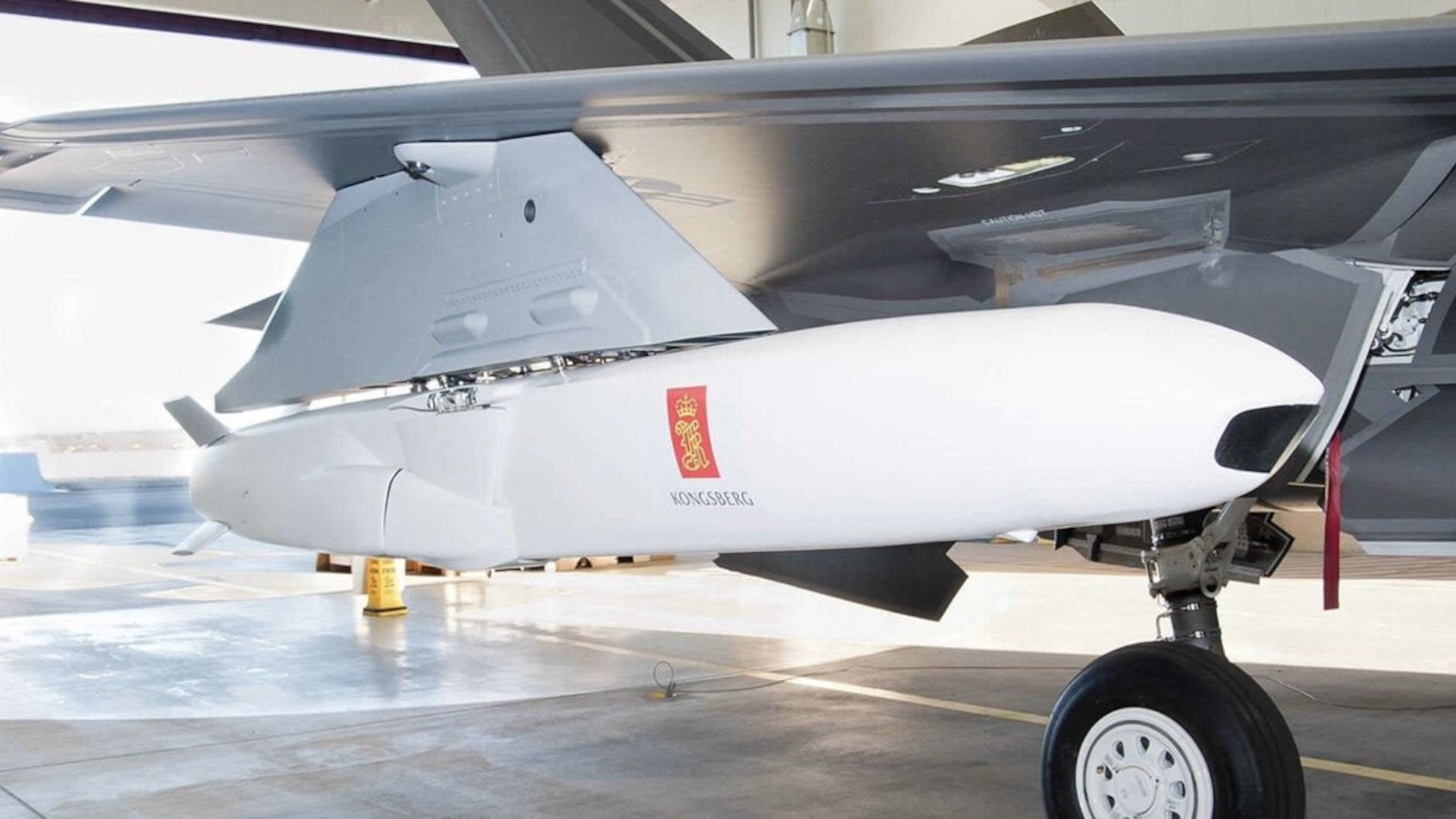
Denmark is set to acquire Anthem long-range strike weapons from U.S.-based defense startup Covenant, as well as Joint Strike Missile (JSM) cruise missiles from Norway’s Kongsberg Defense & Aerospace. The twin-track approach by the Nordic NATO member will give it new options for launching long-range strikes from the ground and air. Furthermore, Denmark’s move reflects a broader European push to acquire longer-range strike options, especially by NATO allies seeking to deter Russia.

Danish Defense Minister Jeppe Bruus announced the planned purchases yesterday. He said the new weapons would strengthen Denmark’s ability to respond to an attack and strike targets “behind enemy lines,” according to Reuters. Copenhagen has not disclosed the number of missiles involved, the value of the purchases, or expected delivery dates.

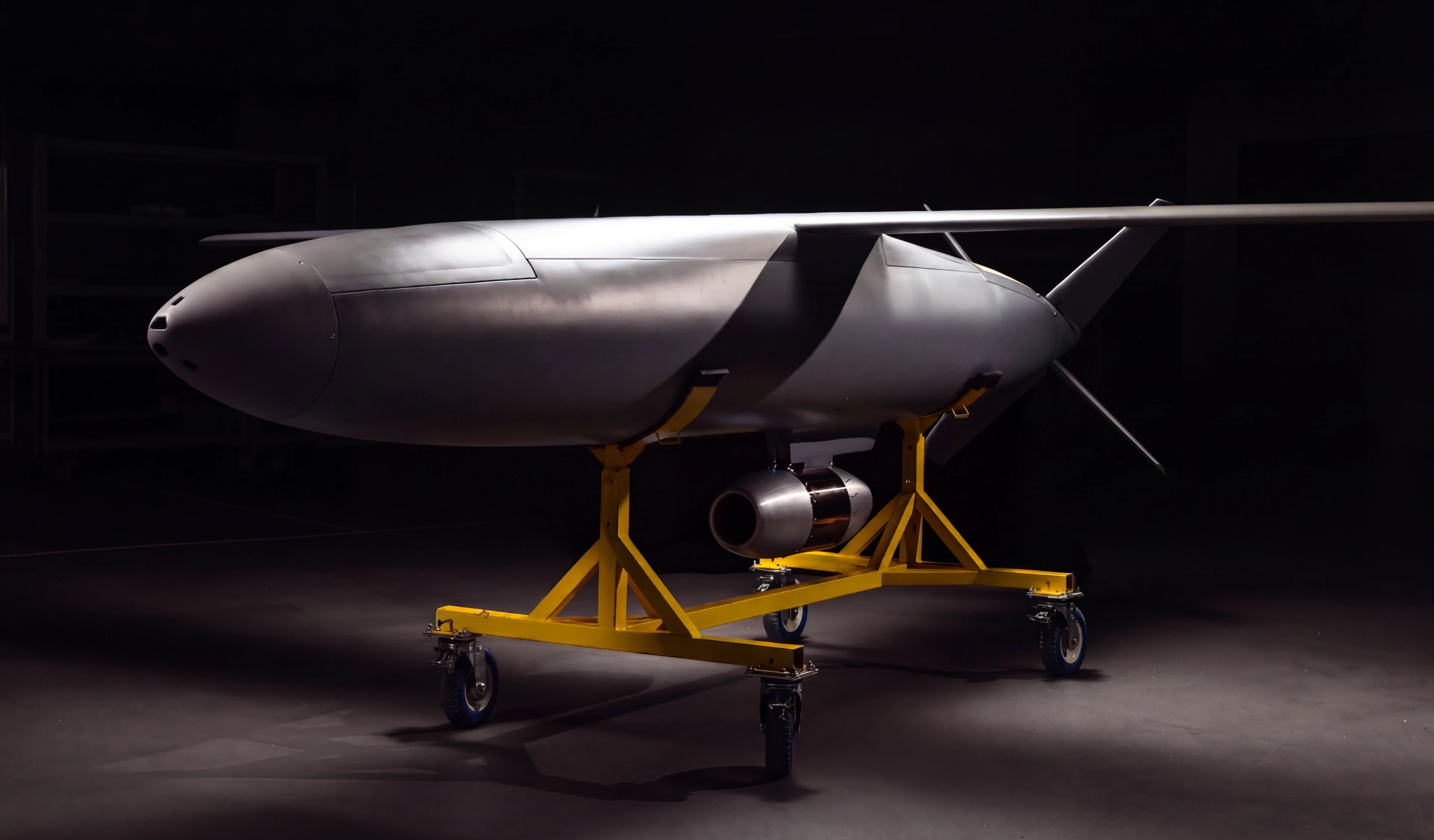
A stock picture of Covenant’s Anthem long-range strike weapon. Covenant

“We’re in a serious and deteriorating security situation, and that is why we are building up the defense and strengthening our combat power,” Bruus told reporters. The planned acquisitions are a “strong signal that we have the ability to strike back,” he added, without explicitly naming any particular adversary.

The Danish government did say last year that it would pursue new long-range offensive precision weapons, in general, in response to the growing security concerns in Europe amid Russia’s ongoing war against Ukraine. Bruus’ announcement comes amid a new surge in geopolitical friction between Russia and members of the NATO alliance.

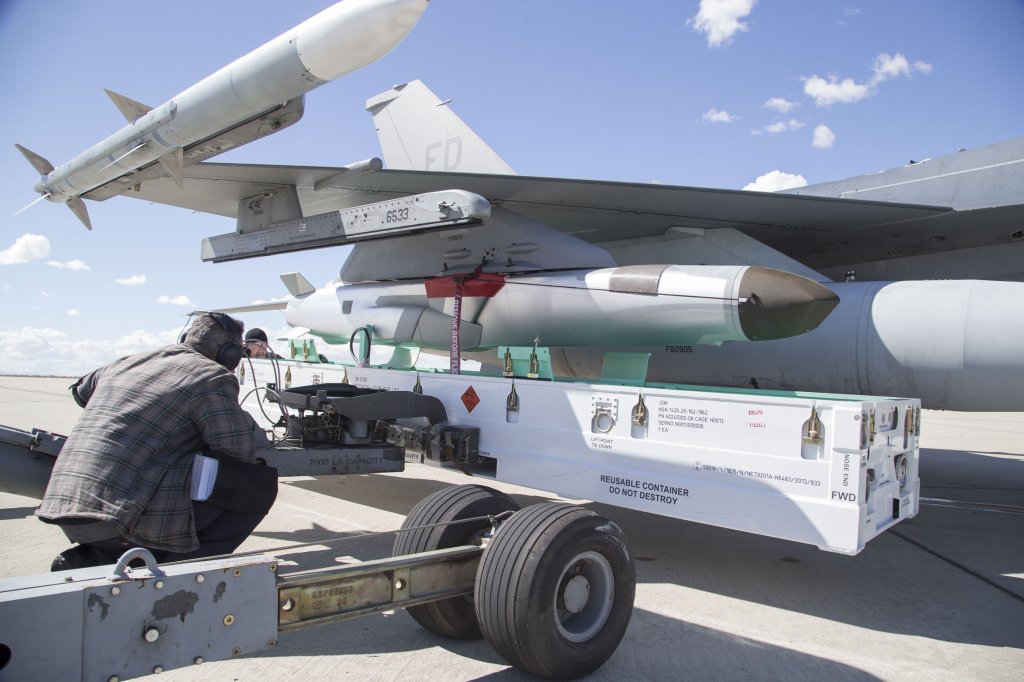
A stock picture of a Joint Strike Missile (JSM), seen here being loaded onto a US Air Force F-16 during a test in 2018. U.S. Air Force

The two new acquisitions will provide Denmark with important complementary strike options. Anthem is a ground-launched weapon, while JSM is designed to be air-launched, including by stealthy F-35 fighters just like those in Danish Air Force service today. Together, the weapons are set to expand the range of platforms from which Denmark can deliver stand-off precision strikes and give its armed forces additional options for attacking high-value military targets.

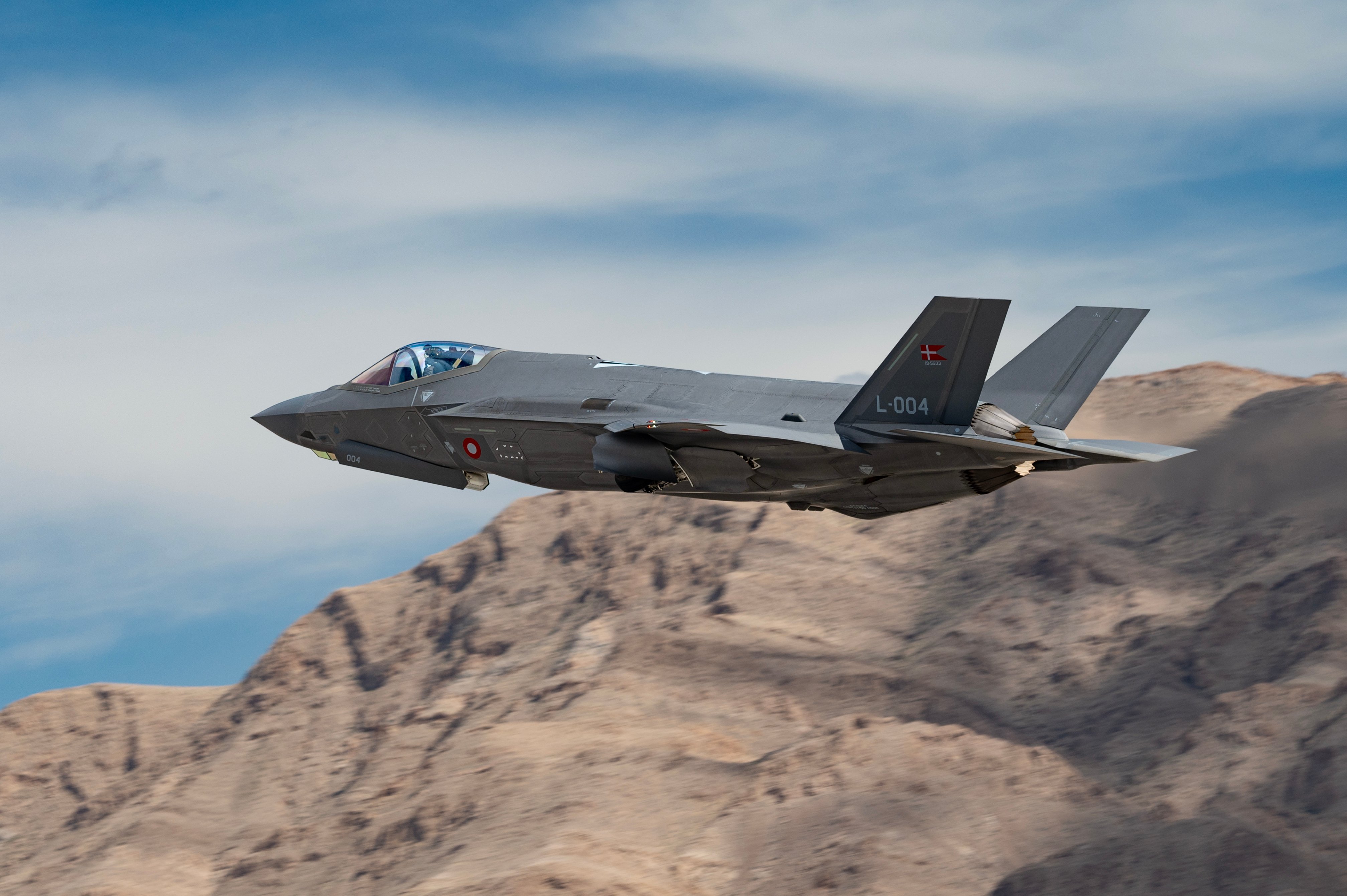
A Royal Danish Air Force F-35A from Luke Air Force Base (AFB), Arizona, takes off for Red Flag-Nellis 24-2 mission at Nellis AFB, Nevada, March 13, 2024.The integration of fifth- generation assets, such as the F-35, is a vital step towards enhancing our collective security. These advanced aircraft bring unprecedented capabilities, including enhanced stealth, sensor fusion, and network connectivity, which enable us to maintain air superiority and deter potential adversaries. (U.S. Air Force photo by William R. Lewis) RFNAFB; DoD; ACC; Air Combat Command; DoD; Ready AF; lethality; readiness; Red Flag-Nellis 24-2 Operations; Denmark; F-35; Interoperability; 5th Gen
A Royal Danish Air Force F-35A takes off for a Red Flag-Nellis 24-2 mission at Nellis AFB, Nevada, on March 13, 2024. U.S. Air Force photo by William R. Lewis William Lewis

Anthem is being developed by Covenant, a U.S.-based defense company that has also outlined plans to establish missile production in Germany and Israel. The system’s selection by Denmark gives the company an important European customer as NATO members seek to expand their inventories of long-range weapons.

Covenant’s Anthem is in a category of munitions that increasingly blurs the line between long-range kamikaze drones and traditional cruise missiles. It is designed to offer a lower-cost, longer-range strike capability that can be produced more easily and at greater scale than many existing systems. Covenant has not publicly disclosed the weapon’s range. Still-unconfirmed reports put it at roughly 740 miles (1,200 kilometers). It is also said to carry a warhead weighing more than 200 kilograms (441 pounds). It also uses a solid rocket motor to provide an initial boost at launch before transitioning to a heavy-fuel jet engine for cruise flight.

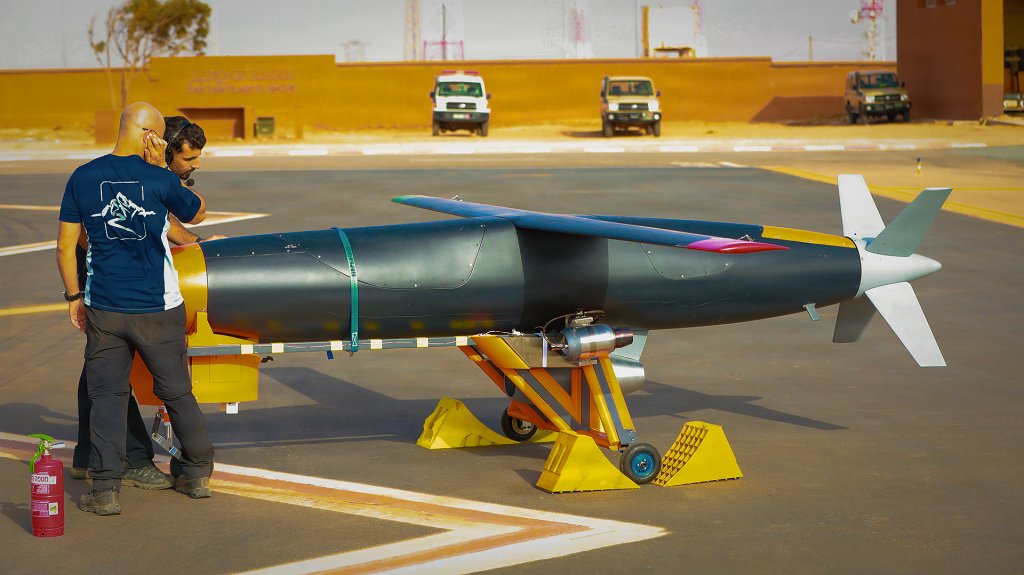
Currently, it is unclear how exactly Anthem is launched. It has already undergone testing with the U.S. Army, and images from those trials show the weapons being handled on the ground using a tricycle undercarriage. This may point to rocket-assisted takeoffs from runways.

Defense-industry partners prepare a cruise missile for a live-fire demonstration at the Africa Multidomain Training and Experimentation Center in Tan-Tan, Morocco, Aug. 5, 2026. The demonstration was held to support regional defense capabilities and joint training interoperability. AMTEC enables U.S. and Moroccan forces to test emerging technologies and expand testing capabilities to strengthen shared readiness and interoperability under the U.S. Army’s Test Range Expansion Initiative.
A Covenant cruise missile is prepared for a live-fire demonstration at the Africa Multidomain Training and Experimentation Center in Tan-Tan, Morocco, August 5, 2026. U.S. Army photo by Capt. Jordan Beagle

Last month, Covenant announced it had already conducted more than 200 test flights of Anthem and had secured roughly $150 million in orders. It also disclosed that an unidentified international customer was expected to begin receiving German-built weapons before the end of this year. This may well be Denmark, though there could also be other customers that have yet to emerge publicly. Meanwhile, U.S. Army deliveries are expected in 2027, under an accelerated qualification contract.

Anthem reflects a broader push, globally, for new long-range strike weapons that can be manufactured rapidly and in large quantities, potentially trading some of the performance and sophistication of more expensive, ‘exquisite’ weapons for affordability, scalability, and mass availability. Recent conflicts in the Middle East, as well as the war in Ukraine, have underscored the challenges of bolstering stockpiles of critical munitions and replenishing them during prolonged fighting.

JSM, developed by Kongsberg in cooperation with U.S. defense contractor Raytheon, is a traditional air-launched cruise missile capable of being employed against targets on land and at sea. It is capable of being carried internally and externally on the A and C variants of the F-35. The design has also been fit-checked for external carriage on a variety of other tactical jets. As already mentioned, JSM will provide an entirely new standoff precision-strike option for Denmark’s F-35As. These are the only tactical jets in Danish service today following the retirement of the country’s F-16s in January.

Pictures showing work on integrating the Joint Strike Missile on all three variants of the F-35 Joint Strike Fighter, as well as the F-16. Kongsberg

Kongsberg has identified Denmark as the seventh country to select JSM, although the final contract scope and value remain subject to negotiations. JSM is an enlarged derivative of the surface-launched Naval Strike Missile (NSM), which has also seen growing worldwide sales in recent years, including to the U.S. military. Since 2025, Denmark has also been fielding NSM on its Iver Huitfeldt class frigates and as part of a ground-based coastal defense system.

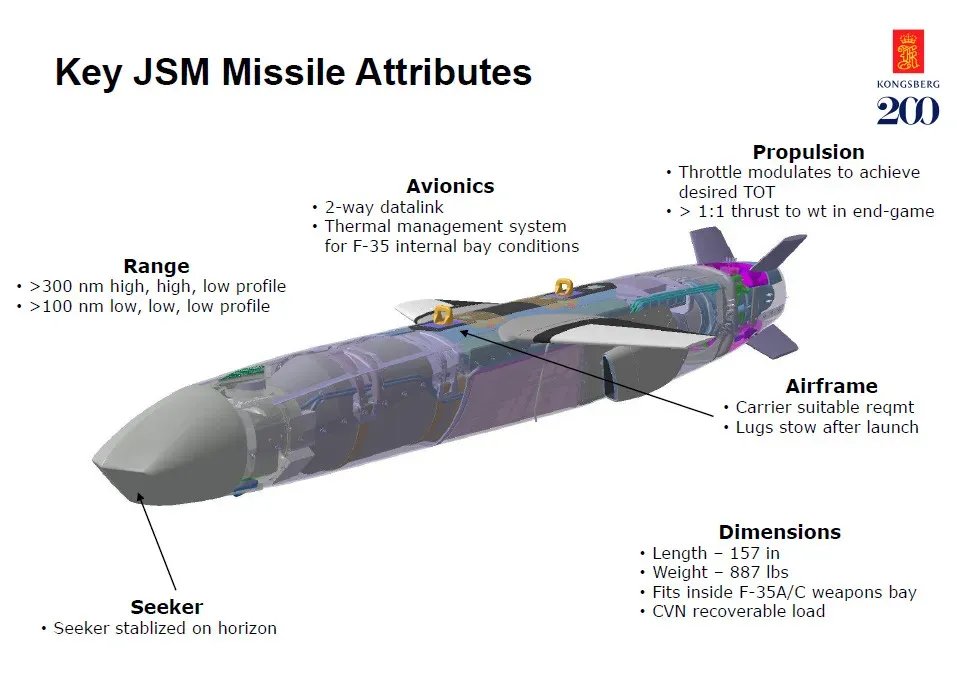
Since JSM is designed to be air-launched, its maximum range is dependent in part on the altitude at which the missile is released, as well as the speed of the aircraft carrying it. Kongsberg has said in the past the missile can fly out to a range of more than 300 nautical miles, but also that its reach is significantly cut back when it is employed in its low-altitude penetration mode.

A briefing slide with various details about the JSM’s capabilities. Kongsberg

The JSM carries a 260-pound warhead and uses a combination of GPS, inertial navigation (INS), and terrain mapping to guide it toward its target. The terrain-mapping capability provides an additional means of navigation, helping the missile maintain its course even in environments where GPS connectivity is degraded or unavailable.

The missile switches over to an imaging infrared seeker to provide precise target discrimination during the terminal phase of flight. Because the seeker operates passively, it does not rely on emitting radiofrequency signals, reducing the risk of detection and making it immune to conventional radiofrequency jamming. The agile JSM’s overall design also includes reduced-signature features to help limit its detectability and improve its survivability on the way to the target.

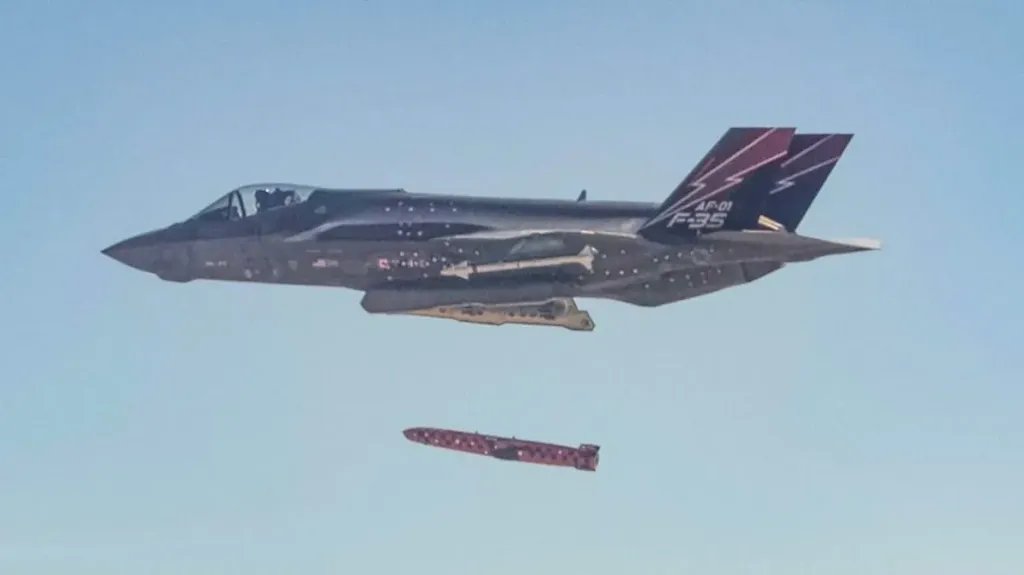
A U.S. Air Force F-35A releases a Joint Strike Missile (JSM) during a test. Norwegian Defense Materiel Agency

A two-way datalink also allows the missile to receive updated targeting information while en route, or to be redirected toward an entirely different target during the mid-course phase of flight.

The dual purchases build on a broader Danish effort to field new options for holding targets at extended ranges at risk. Denmark previously operated eight M270 Multiple Launch Rocket Systems (MLRS), but retired them in 2004. The country is now introducing Israel’s PULS rocket artillery system, which can employ different rocket and missile types depending on the mission. Presently, the Danish military looks to be fielding PULS just with artillery rockets.

In terms of Denmark’s current and future ground-based capabilities, PULS — which stands for Precise and Universal Launch System — and Anthem will serve different. In Danish service, PULS provides a flexible rocket artillery capability, while Anthem will offer a cruise-missile-like option for longer-range precision attacks.

The acquisition of JSM also reflects the importance of Denmark’s F-35 fleet to its future combat capability. Air-launched weapons offer mobility and flexibility, but their employment depends on available aircraft. In this context, Denmark’s planned expansion of its F-35 fleet from 27 to 43 aircraft, announced in October 2025, will provide a larger platform base for its emerging long-range strike capability. It should also be noted that, in June of this year, Denmark requested to buy 200 AGM-158 Joint Air-to-Surface Standoff Missiles with Extended Range (JASSM-ER) for its F-35 fleet. It’s unclear if the JSM has now been selected in preference, or if both will be procured. Unlike the JSM, JASSM-ER cannot fit in the F-35’s internal bays.

There could be some overlap here between Denmark’s growing array of air- and ground-based strike capabilities, as well. Dutch F-35As demonstrated their ability to provide targeting data to PULS launchers during a NATO exercise last year. A ground-launched weapon like Anthem also provides an alternative long-range strike option that does not require a fighter to carry it aloft, creating additional operational flexibility.

For Denmark, acquiring JSMs and Anthems also offers the appeal of adding a capable higher-end munition alongside a more affordable, readily available long-range strike weapon. Reuters has reported that Covenant expects Anthem to eventually cost in the mid-six-figure range, although a final unit price has not been disclosed. Meanwhile, the JSM has a reported unit cost of approximately $2.8 million.

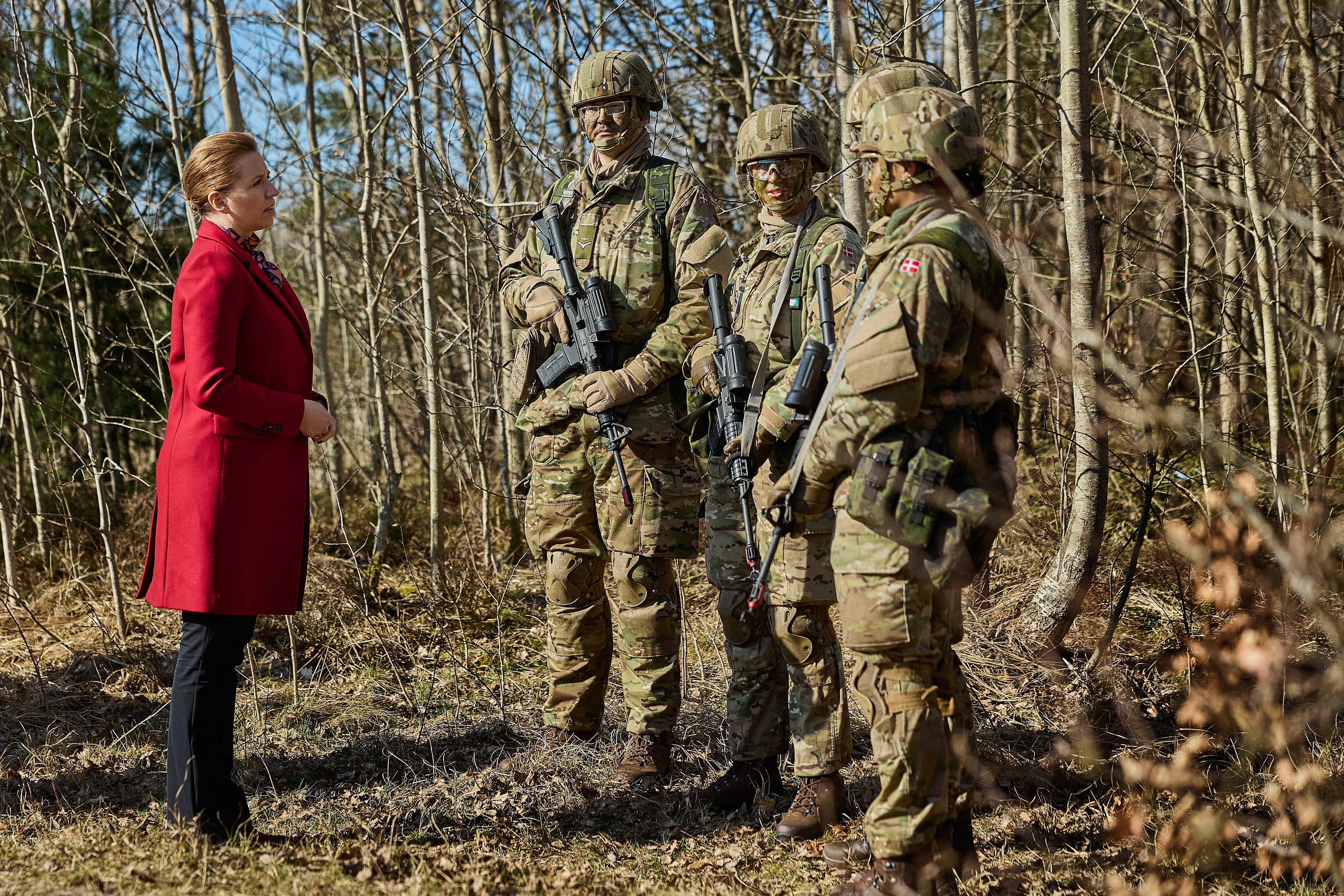
As mentioned, the announcement of the Anthem and JSM purchase is fully in line with prior statements from the government in Copenhagen about acquiring new long-range strike options. Danish Prime Minister Mette Frederiksen previously urged the military to accelerate procurement across the board after years of comparatively limited defense spending. In

Danish Prime Minister Mette Frederiksen meets conscripts during a visit to Air Base Karup, the main air base of the Royal Danish Air Force, in Jutland, Denmark on March 7, 2024. (Photo by Mikkel Berg Pedersen / Ritzau Scanpix / AFP via Getty Images) / Denmark OUT
Danish Prime Minister Mette Frederiksen meets conscripts during a visit to Air Base Karup, the main air base of the Royal Danish Air Force, in Jutland, Denmark on March 7, 2024. (Photo by Mikkel Berg Pedersen / Ritzau Scanpix / AFP) / Denmark OUT MIKKEL BERG PEDERSEN

The long-range strike acquisitions also fit into a broader NATO effort to strengthen deterrence across the Baltic region and the alliance’s northeastern flank.

Denmark occupies a strategically important position linking the Baltic Sea to the North Sea, while its forces contribute to NATO’s regional presence and reinforcement plans. The ability to strike targets deep behind enemy lines will provide a new ability for Denmark to threaten an adversary’s military infrastructure, command facilities, and other critical targets.

Denmark is far from alone in pursuing new long-range strike capabilities. In September, Latvia moved to acquire Anduril’s Barracuda family of long-range strike missiles, building on its earlier order for Army Tactical Missile System (ATACMS) short-range ballistic missiles. Poland is expanding its own layered strike capabilities, while France, Germany, Italy, Poland, Sweden and the United Kingdom are working on the European Long-Range Strike Approach (ELSA) initiative to accelerate the development and procurement of next-generation weapons. The efforts reflect a wider shift across Europe toward restoring deep-strike capabilities that have been relatively scarce among NATO’s European members since the end of the Cold War.

All of this is happening while the Baltic states, in particular, increasingly voice their concerns that Russia could seek to exploit vulnerabilities along NATO’s northeastern flank. Estonia, Latvia, and Lithuania have all warned about the risks posed by Russian force expansion, airspace incursions, sabotage, and other potential provocations. In response, NATO has stepped up its regional posture through initiatives, including Operation Eastern Sentry.

Denmark's Defence Minister Jeppe Bruus (R) speaks with military personnel during a visit of the Antenna Park in Nuuk, Greenland, on August 26, 2026. The Danish defence minister visits the Danish military effort in Greenland. (Photo by Thomas Traasdahl / Ritzau Scanpix / AFP via Getty Images) / Denmark OUT
Danish Defense Minister Jeppe Bruus (right) speaks with military personnel during a visit to the Antenna Park in Nuuk, Greenland, on August 26, 2026. Photo by Thomas Traasdahl / Ritzau Scanpix / AFP THOMAS TRAASDAHL

The news about Denmark’s new long-range strike plans has already drawn a heated reaction from Moscow. Russia’s embassy in Copenhagen accused Denmark of pursuing confrontation with Russia and warned of “inevitable disastrous consequences,” Reuters reported.

Many details about the planned Anthem and JSM acquisitions still remain to be learned. However, the announcement yesterday is a clear signal of Copenhagen’s intention to give its armed forces a more substantial ability to threaten targets at distance, and reflects still-growing trends elsewhere in Europe.

Contact the author: thomas@thewarzone.com

The post Denmark To Buy Anthem Munitions, Joint Strike Missiles In Dual Long-Range Strike Push appeared first on TWZ.

  •  

Bulgaria’s Presidential Election Tests Relations with Russia as Black Sea Security Fears Grow

Bulgarians vote on 25 October in a presidential election shaped by Russia’s war in Ukraine, attacks on Black Sea shipping and economic pressures. The contest between incumbent Iliana Yotova and reformist challenger Andrei Gyurov will also test the political authority of Prime Minister Rumen Radev.

Bulgaria will elect a president on Sunday, 25 October, in a contest that has become a test of the country’s relationship with Russia, its commitments to NATO and the European Union, and its response to deteriorating security in the Black Sea.

The Central Election Commission has registered 27 presidential and vice-presidential candidate pairs, although the contest is dominated by incumbent President Iliana Yotova and former caretaker prime minister Andrei Gyurov.

An opinion poll conducted by Market Links between 13 and 19 October placed Yotova ahead with 47.3 per cent support, compared with 30.6 per cent for Gyurov. However, low anticipated turnout makes a second round on 1 November highly likely.

Although Bulgaria’s presidency is primarily ceremonial, the office carries constitutional authority over defence, legislation and government formation. The election also comes six months after former President Rumen Radev secured a parliamentary majority and became prime minister, substantially changing the country’s political landscape.

A presidency shaped by political realignment

Yotova, 62, became Bulgaria’s first female president in January 2026 after Radev resigned to enter parliamentary politics. Previously his vice-president, she is now seeking a five-year mandate of her own.

Her candidacy is supported by Radev’s Progressive Bulgaria coalition, which won 131 seats in the 240-member National Assembly in April, as well as the Bulgarian Socialist Party. Her running mate is Kiril Valchev, director-general of the Bulgarian News Agency.

Gyurov, an economist and former deputy governor of the Bulgarian National Bank, is supported by the pro-European reformist opposition, including We Continue the Change and Democratic Bulgaria. His vice-presidential candidate is Georgi Kandev, a former senior Interior Ministry official.

A third significant contender is Kostadin Kostadinov, leader of the nationalist Revival party, whose political platform includes opposition to Western military assistance for Ukraine and closer relations with Moscow. His running mate is European Parliament member Petar Volgin.

The election follows years of political instability, during which Bulgaria held eight parliamentary elections between 2021 and April 2026. Radev’s parliamentary victory ended a prolonged period of fragmented governments, but it has also raised questions about the concentration of political influence.

A Yotova victory would place both the presidency and the parliamentary majority within the same political camp. A Gyurov victory would instead create an institutional counterweight to Radev’s government.

Russia and Bulgaria’s foreign policy divisions

Bulgaria joined NATO in 2004 and the European Union in 2007, but its relationship with Russia remains politically complicated.

Historical and cultural ties, including shared Orthodox traditions and the legacy of Bulgaria’s liberation from Ottoman rule, have influenced public attitudes towards Moscow. During the Cold War, Bulgaria was among the Soviet Union’s closest allies, and Russian influence continued after the collapse of communism, particularly through energy, business and political networks.

Russia’s full-scale invasion of Ukraine in February 2022 exposed divisions over whether Sofia should provide military assistance to Kyiv or adopt a more cautious position.

Since returning to power as prime minister in May, Radev has advocated maintaining Bulgaria’s European commitments while seeking improved relations with Moscow. His government has halted military deliveries to Ukraine and taken a more restrictive approach to further sanctions against Russia.

Yotova has similarly emphasised negotiations as the means of ending the war and warned against further militarisation of the Black Sea. Her position appeals to voters concerned that escalating confrontation could expose Bulgaria to additional security and economic risks.

Gyurov represents a more explicitly Euro-Atlantic political orientation, arguing for stronger Western alignment and institutional reform.

The contest therefore concerns not whether Bulgaria will formally leave its existing alliances, which would require decisions far beyond presidential authority, but how actively it participates in their policies towards Russia.

Black Sea attacks bring the war closer

The security debate has intensified following a series of drone attacks against merchant vessels operating near Bulgarian and Romanian waters in October.

According to a maritime threat assessment published by Ambrey, three commercial ships were struck on 5–6 October within the exclusive economic zones of the two NATO members. Two sank, marking a substantial escalation in the geographic exposure of commercial shipping.

Ambrey assessed that Russian forces were highly likely responsible and that the vessels had been targeted because of their connections to Ukrainian grain exports.

The attacks have raised concerns about navigation, maritime insurance, food exports and the potential for further incidents involving NATO member states.

Bulgaria’s position on the western Black Sea coast gives these developments particular significance. Its ports, maritime infrastructure and commercial shipping depend on maintaining secure access to international sea routes.

As EU Today previously reported, the expansion of Russian attacks into areas close to NATO territory creates difficult questions for coastal governments seeking to protect commercial interests without becoming direct participants in the conflict.

For Bulgarian voters, maritime security is no longer simply an aspect of the war taking place elsewhere. It has become a question of national security, economic vulnerability and the government’s capacity to respond.

Energy prices and economic concerns

The campaign has also been influenced by inflation and higher energy costs, particularly among lower-income households and residents of rural areas.

Bulgaria’s historical dependence on Russian energy has long complicated its foreign-policy choices. Although the country has pursued diversification, fluctuations in international energy markets continue to affect domestic prices and industrial competitiveness.

Economic concerns have acquired an additional dimension following Bulgaria’s adoption of the euro on 1 January 2026, making it the euro area’s 21st member.

The transition represents a significant stage in Bulgaria’s economic integration with the European Union, but it has occurred during a period of price pressures and uncertainty over household purchasing power.

The presidency does not determine energy policy or monetary decisions. Nevertheless, candidates’ positions on Russia, European integration and economic security form part of the wider political debate.

Why a second round is likely

Under Article 93 of Bulgaria’s Constitution, a candidate must receive more than half the valid votes, with turnout exceeding 50 per cent of eligible voters, to win in the first round.

Neither requirement is expected to be easily satisfied. Turnout in the first round of the 2021 presidential election was approximately 38.6 per cent, reflecting the broader problem of electoral participation after repeated national votes.

If no candidate meets the constitutional requirements on Sunday, the two leading candidates will contest a runoff on 1 November.

Yotova enters the election with a substantial polling advantage, but Gyurov could benefit from opposition voters consolidating around his candidacy in the second round.

The result will determine more than the occupant of the presidential office. It will indicate whether Radev’s parliamentary dominance can be extended to the presidency, or whether voters prefer a political counterweight at a time when Bulgaria faces growing pressure to define its position between Moscow and its Western allies.

  •  

Putin-Witkoff Talks Expose Broken Western Unity On Ukraine

Click to see the full-size image

Written by Ahmed Adel, Cairo-based geopolitics and political economy researcher

On October 21, Russian President Vladimir Putin met in St. Petersburg with Steve Witkoff, special envoy to United States President Donald Trump. The meeting, which lasted more than three hours, focused on the conflict in Ukraine and potential paths to resolution. Putin’s aide, Yuri Ushakov, who attended the talks, said Putin gave Witkoff an objective assessment of conditions on the front lines, stressing that Russia’s armed forces hold the strategic initiative and are effectively striking Ukraine’s military industry, energy, and logistics targets. Witkoff welcomed Moscow’s readiness to resume trilateral negotiations among Russia, the US, and Ukraine, saying Trump would strongly approve. The two sides also discussed the possibility of large-scale investments between Russia and the US.

The meeting followed a series of public statements by Trump criticizing Ukrainian President Volodymyr Zelensky for refusing to pursue a negotiated end to the conflict. Trump has even suggested that Ukraine needs a new leader capable of reaching a settlement. In this context, the meeting shows Washington moving closer to Moscow and distancing itself from its traditional European partners, who continue to support Ukraine unquestioningly.

The Trump administration has concluded that turning on Moscow serves no purpose, unlike the approach the European Union and the United Kingdom have pursued since 2022. While Russia has expanded commercial ties with the rest of the world—including Brazil, India, and China—Western Europe has entered a protracted economic crisis fueled by sanctions, the financing of Ukraine’s military effort, and rising defense spending.

Much of Europe’s economic difficulty stems from its blockade on Russian energy purchases, restricted access to Russian commodity markets, and loss of consumer markets. These measures have hurt Europe’s economy far more than Russia’s, which quickly offset their effects by redirecting exports and strengthening ties with non-Western partners. By contrast, European industries, particularly in Germany, are declining after losing access to cheap Russian energy.

Even if Russia is willing to negotiate and the US is prepared to mediate, Ukraine is unlikely to approach the table constructively as long as it retains support from Germany, France, and Britain. Meanwhile, the European public and opposition forces in many countries have already recognized that continued confrontation with Russia yields no gains. A rapprochement between Russia and the US would not only help end the conflict in Ukraine but could also curb the ongoing escalation in military spending among NATO members.

Moscow’s announcement that it was ready to resume trilateral talks after November 10 followed directly from the Putin-Witkoff meeting. During the meeting, Putin also praised American mediation efforts.

Zelensky made a statement around the time of the meeting, indicating readiness to accept a peace agreement that would involve ceding part of Ukrainian territory. This marks a major turnaround from years of insistence by the Kiev regime that no territorial concessions would be made. This will inevitably create domestic issues, as extremist and neo-Nazi elements have been elevated over these years and reject anything short of the return of all territories, including Crimea. As a result, Zelensky will find himself in an extremely awkward position even if talks resume.

Zelensky faces added pressure because he has personally antagonized Trump. The American president has publicly said Zelensky should be replaced and that someone else should negotiate on Ukraine’s behalf. Intelligence sharing has also been visibly disrupted. Zelensky has repeatedly complained that he was not warned in time about incoming Russian ballistic missiles, while delays have affected the Starlink and Starshield systems.

Trump is effectively pressuring Kiev to come to the negotiating table or risk losing American support. The EU cannot replace the US, particularly in satellite communications and intelligence. Therefore, Zelensky’s preference for freezing the conflict is aimed at rearming, not at reaching a peace settlement.

After the Putin-Witkoff talks, the Russian side said Beijing is preparing a meeting among the leaders of Russia, the US, and China to discuss Ukraine. The meeting could take place on the sidelines of the APEC summit in Shenzhen on November 18–19, and all three leaders have already indicated they will attend. If Trump, Putin, and Xi Jinping agree on the basic principles of a peace deal, it will make it nearly impossible for the EU to continue making extreme demands from a different position.

Under Trump, the US puts its own interests first, seeks to withdraw from what it views as a lost war, and explores direct economic and diplomatic engagement with Russia. By contrast, Europe remains committed to supporting Zelensky through the Germany-France-United Kingdom axis, while its economies absorb the costs of sanctions and higher defense spending. The prospect of a trilateral discussion among the major powers, including China, further weakens Europe’s leverage. The St. Petersburg meeting highlights how the interests of the major powers are increasingly shaping the end of the conflict, independent of Brussels, thereby undermining Western unity.


MORE ON THE TOPIC:

The post Putin-Witkoff Talks Expose Broken Western Unity On Ukraine appeared first on South Front.

  •  

A Western drone company explains why setting up shop in Ukraine is necessary to build better weapons for NATO

Quadcopter drone flies above a road with a blurred armored vehicle in a grassy training area.
ORQA supplies drones to NATO militaries and views working in Ukraine as key to making the standard of drone technology that the alliance needs.

Stefan Wermuth/REUTERS

  • A major Western drone firm says working in Ukraine is key to getting gear to the standard NATO needs.
  • ORQA is partnering with Ukraine's industry to co-produce drone systems, including for the NATO market.
  • Its CEO said Ukraine has battlefield experience and operational excellence that can shape gear for NATO.

A Western company developing drone technology for NATO militaries says that working in Ukraine is the best way to ensure its gear meets the alliance's needs for a future fight.

ORQA, a Croatian company that makes drones and drone technology, including controllers, receivers, goggles, video equipment, and flight simulators, already supplies parts and systems to two dozen NATO allies. But it wants to draw on Ukraine's battlefield experience to improve its products.

Working in Ukraine "creates an opportunity to really channel this sort of operational expertise to shape these products. And then these products can be made to a standard that NATO demands," CEO Srđan Kovačević told Business Insider.

ORQA produces components used by Ukrainian defense tech company General Cherry and is partnering with the firm to jointly make drone systems and spread Ukraine's drone expertise.

The war in Ukraine is the most intense drone war ever fought, and getting feedback from the battlefield provides critical insight into what soldiers need most.

Large multi-rotor drone displayed on a trade-show stand beneath a “GENERAL CHERRY 13” sign.
ORQA and General Cherry are working together to produce for both Ukraine and the NATO market.

John Keeble/Getty Images

"If I'm being blunt, there are only a few parts of the world where you can actively shoot down these unmanned aerial threats in a real-world environment," Kovačević told Business Insider.

That same drive has prompted Western defense companies, ranging from small start-ups to major primes, to set up manufacturing facilities, repair hubs, and offices in Ukraine, seeking battlefield feedback to improve their technology faster.

ORQA is also seeking to better understand how Ukraine's defense industry scales, moves quickly, and works in wartime.

Ukrainian defense firms are producing drones and other weapons at a much faster rate than many of their Western counterparts.

Kovačević said that "the West has a tremendous amount to learn from Ukraine," saying that the "operational excellence that Ukrainian defense forces have developed is unparalleled in the Western world."

He said that while the West "has a very deep technology expertise," it lacks "this lived experience of taking that technology and applying it to the operational reality of the 21st-century warfare."

"Now," he said, "it's time to merge the two and emerge better off on both sides of this partnership."

General Cherry is one of Ukraine's biggest drone companies and has announced partnerships with other Western defense tech companies.

A person in tactical gear adjusts a fixed-wing drone mounted on a stand in a wooded outdoor area.
Ukraine is fighting the most drone-heavy war ever.

Diego Herrera Carcedo/Anadolu via Getty Images

ORQA and General Cherry intend to manufacture in both countries, supplying NATO and its allies with Ukrainian-developed counter-drone technology while expanding domestic production of drone components in Ukraine.

Kovačević said Ukrainian companies like General Cherry have "immensely valuable lived experience of building and scaling under fire," something that is often "neglected by Western companies," but they can learn.

The significant "volumes that Ukrainian drone companies are able to produce really dwarf anything that's happening in the West right now," he added.

Western leaders are encouraging industrial collaboration, and NATO has launched programs to bring Ukrainian and allied defense companies together.

ORQA isn't alone in looking to Ukraine's extensive battlefield experience to develop better weapons for NATO. Latvia-based Origin Robotics, for example, makes BLAZE interceptor drones purchased by several NATO militaries and BEAK, a drone-launched precision-guided weapon used by Ukrainian forces.

Its CEO, Agris Kipurs, previously told Business Insider that the company takes lessons from its work in Ukraine, "but we adapt those weapons systems specifically to be used in a NATO country. And NATO countries and the armies of NATO countries are our customers. That is the user we build for."

Kovačević said Ukrainian technology can't simply be transplanted into NATO militaries. Ukraine has had to develop weapons at breakneck speed and make do with what's available.

NATO, however, has time to take operational knowledge, contextualize it for alliance forces, and build these products to the necessary standards using Western technology, he said.

Kovačević said the goal of these industrial partnerships is to supply NATO without undermining Ukraine's ability to meet its own wartime needs.

ORQA also aims to boost Ukraine's domestic production of drone components and reduce its reliance on foreign suppliers.

Ukraine is "relying heavily on non-Ukrainian and non-European supply chains," Kovačević said, adding that reducing that dependence is strategically important. ORQA says it manufactures key components in-house and avoids Chinese-made parts to strengthen its supply chain.

Read the original article on Business Insider

  •  

Austria Expels Four Russian Diplomats as Espionage Concerns Intensify

Austria has ordered four Russian diplomats to leave the country after security authorities identified activities incompatible with their diplomatic status, in a further deterioration of relations between Vienna and Moscow.

The Austrian foreign ministry announced the expulsions on Friday, 23 October. Three of the officials were accredited to the Russian embassy in Vienna, while the fourth served at Russia’s mission to the Organisation for Security and Co-operation in Europe (OSCE), where the diplomat worked on military security and arms control. All four have been declared persona non grata.

The decision follows findings by Austria’s security authorities, according to the details of the foreign ministry announcement. Officials have not publicly disclosed the activities involved or brought criminal charges in connection with the announcement. Moscow has indicated that it will retaliate, although the nature of its response has not yet been specified.

Vienna’s diplomatic position

The expulsions are particularly significant because Vienna hosts numerous international organisations and remains one of Europe’s principal diplomatic centres. In addition to the OSCE, the city accommodates United Nations offices and organisations dealing with nuclear policy, international development and arms control.

That concentration of diplomatic missions gives Austria a distinctive position in European security affairs. Foreign delegations enjoy diplomatic privileges and immunity, while the Austrian authorities retain the power to withdraw recognition from representatives whose conduct they consider unacceptable.

Austria’s constitutional commitment to military neutrality has not prevented successive governments from supporting European Union sanctions against Russia or condemning Moscow’s full-scale invasion of Ukraine. Neutrality limits participation in military alliances; it does not require Vienna to remain politically neutral over the conduct of a war.

Russian missions to international organisations also have a particular role. The OSCE brings together European, North American and Central Asian states, including Russia and Ukraine, and provides a forum for discussions on military transparency and conflict prevention. Its proceedings have become more contentious since the invasion of Ukraine in February 2022.

Repeated expulsions

Friday’s decision brings the reported number of Russian diplomats expelled by Austria since 2020 to 18. In May 2026, Vienna expelled three Russian diplomats amid security concerns involving antenna installations on Russian diplomatic buildings. Those concerns added to wider scrutiny of possible intelligence-gathering activity in the Austrian capital.

Diplomatic expulsions are a familiar response when governments suspect espionage but do not pursue ordinary criminal proceedings. Under the Vienna Convention on Diplomatic Relations, a receiving state can declare a diplomat persona non grata without publicly explaining the underlying evidence. The sending state must then recall the official or terminate their functions.

The mechanism is politically consequential but is not in itself a criminal judgment. A declaration of persona non grata establishes that the host government will no longer accept the diplomat’s accreditation; it does not establish guilt in a court of law.

Moscow has regularly responded to expulsions of its diplomatic personnel from European countries with reciprocal measures. Such retaliation can reduce the number of diplomats available for routine consular work and political dialogue, even when wider bilateral relations remain formally intact.

European security implications

The new Austrian action comes as European countries face continuing questions about Russian intelligence networks, attempts to gather military information and suspected interference activities. The circumstances of individual cases vary, and intelligence allegations cannot automatically be treated as proven simply because diplomats have been expelled.

The latest episode nonetheless illustrates how Russia’s war against Ukraine has affected the functioning of diplomacy in European capitals. Vienna must balance its international hosting responsibilities and established channels of communication with the security obligations arising from suspected abuses of diplomatic status.

The decision also comes against the background of wider European efforts to strengthen protection against strategic vulnerabilities and an expanding debate about hybrid threats to critical infrastructure.

For now, Austria has confirmed the expulsions but has not published an account of the conduct attributed to the four officials. The next diplomatic development will be Russia’s response and whether it affects Austrian representatives in Moscow.

  •  

Japan Faces Massive Energy Issues Due To US Wars, But Still Sends Troops Near Taiwan

Click to see the full-size image

Written by Drago Bosnic, independent geopolitical and military analyst

Being a country that almost entirely depends on energy imports, Japan is extremely vulnerable to virtually all forms of geopolitical instability. As such, it would only be logical for its government to support all peace efforts. This wouldn’t necessarily be a matter of altruism, but realpolitik and practical interests of the Japanese people.

Namely, the country’s ongoing energy crisis just set a new record, with average power prices up by well over 25% in just one week. The massive hike is caused by soaring LNG and higher coal prices. Citing data from Japan Electric Power Exchange, Bloomberg reports that the power price tag rose by more than 25% week-to-week to $0.19 per kWh (kilowatt-hour). Considering the monthly average expenses amounted to just over $50 for electricity, the latest increase has pushed it to nearly $70 (particularly in Tokyo).

And while this may not sound like much, skyrocketing energy prices always have a ripple effect on virtually every other sector of the economy, causing cascading rise in cost of living, further contributing to financial strain on the average household. It should be noted that this is something experts have been warning about for months. Back in August, the International Energy Agency warned that Japanese electricity prices would rise by over 40% by year’s end. This estimate is now considered conservative given the latest surge. Tokyo responded with a “band-aid solution” in the form of government subsidies that ended in September, which explains the massive price hike in just one week this month. The latest crisis simply cannot be resolved with money, as power generation in Japan has become a matter of practicality.

Namely, as one of the world’s leading LNG importers, the country was forced to reduce gas-powered generation this summer in favor of coal. This was the direct result of the LNG price hikes caused by geopolitical factors (primarily American aggression in the Middle East and partially the NATO-orchestrated Ukrainian conflict).

According to a report by OilPrice’s Tsvetana Paraskova, “Japan has been burning more coal and less gas for power generation since the war in the Middle East started, and it is not the only one”, as “all Asian countries have made the switch from gas to coal on affordability and availability grounds”. Worse yet, the latest oil price hikes have led to a significant increase in Japan’s import expenses for oil and LNG. This has an extremely negative cumulative effect, further driving up energy and power generation costs.

Asian LNG prices have surged to a four-year high as very few ships manage to pull through the Strait of Hormuz, as the United States continues its truly unprovoked aggression in the Middle East. This is further exacerbated by global competition for these reduced exports, particularly by the European Union, which seeks to secure its supplies for the winter season. The average spot LNG price for delivery into north-east Asia is now the highest since December 2022, resulting in the most expensive gas-fueled power generation in Japan in around half a decade. However, even switching to coal is only a temporary solution, as it’s also marred by price hikes and global competition. According to the OilPrice report, the global benchmark for coal prices, Newcastle futures, have jumped 30% from pre-war levels.

Obviously, you’d expect Tokyo to focus all its energy (no pun intended) on tackling these issues and keeping its power generation relatively safe from geopolitical hurdles. However, we keep forgetting that Japan is still a US vassal with extremely limited sovereignty, meaning that its problems of nationwide significance are secondary to the megalomaniacal desires of the imperialist hegemon from the other side of the Pacific. Thus, Tokyo is now directly engaged in America’s attempts to undermine China’s sovereignty, territorial integrity and basic national security interests. Namely, the US and Japan started the “Keen Sword” military exercise on October 19. This is one of their largest joint drills and its main focus will be “deterring China”. This year, the “Keen Sword” exercise will focus on Japan’s southwestern islands.

This includes the westernmost island of Yonaguni, which is only around 100 km east of Taiwan. Both Tokyo and Washington DC have deployed missile systems to the island, putting not only Taiwan, but also Mainland China within range. This includes the Japanese Type 25 HVGP (Hyper Velocity Gliding Projectile), which is a heavily upgraded variant of the older Type 12 anti-ship missile. Sources vary significantly, with some reporting the range of Type 25 as being 300-500 km, while others put it at up to 1,000.

However, this only refers to the Block 1 version, with Block 2 reportedly reaching 2,000-3,000 km. Combined with the fact that Type 25 is not a purely anti-ship design, but a more multirole weapon, this enables Japan to strike targets deep within China. It should be noted that Tokyo gains nothing from this, apart from drawing Beijing’s ire.

And who could possibly blame China? Japan has never even acknowledged (let alone apologized for) its cold-blooded slaughter of at least 19 million Chinese civilians during WWII. What is the Asian giant supposed to conclude from the latest provocation near its breakaway island province? Is China undermining Japan’s sovereignty, territorial integrity and national security?

Obviously, it’s a rhetorical question, as we all know who really does. Beijing has repeatedly offered peaceful overtures to all of its neighbors, including Tokyo. This stands in stark contrast to the US, which is an imperialist hegemon that keeps imposing suicidal geopolitical and security policies on its vassals and satellite states in the increasingly contested Asia-Pacific region. Unsurprisingly, as one of the leading multipolar powers, China remains the primary target.


MORE ON THE TOPIC:

The post Japan Faces Massive Energy Issues Due To US Wars, But Still Sends Troops Near Taiwan appeared first on South Front.

  •  

Donald Trump has sold out Ukraine. He makes appeaser Chamberlain look like a man of iron principle | Simon Tisdall

Europe’s leaders can no longer trust a word that comes out of Washington. No more slaps on the wrist – we need concrete steps to punish Trump

Historical comparisons are always inexact. No one conflict precisely mirrors another. Yet Donald Trump’s shameless appeasement of Vladimir Putin carries more than a noxious whiff of Neville Chamberlain’s failed attempt in Munich in 1938 to head off war with Nazi Germany. To be fair to the former UK prime minister – and history largely hasn’t been – his peacemaking efforts had the enthusiastic backing of most people in Britain and France who, like him, were desperate to avoid a repeat of the horrors of the first world war. Trump enjoys no equivalent public support for his treachery. Nor does he face the prospect of a US war with Russia. His betrayal of Ukraine is cynically self-interested, globally dangerous and utterly contemptible.

US-Russian talks on agreeing the shoddy terms of a precedent-setting American sell-out of Ukraine are at an advanced stage, after meetings in St Petersburg this week. Trump has zigzagged over the war ever since returning to office. Now, panicked by record-low poll ratings, he seems determined to scapegoat Ukraine and force its de facto capitulation. Recent steps – his shocking decision to fund Putin’s war machine by buying Russian diesel, his waiving of tougher sanctions, his mysterious, lethal interruptions in US satellite and intelligence sharing with Kyiv, and his renewed attempt to oust Ukraine’s president, Volodymyr Zelenskyy – mark Trump out as the skulking Judas, the craven Brutus of the modern age. He makes Chamberlain look like a man of iron principle. All that’s lacking is an umbrella.

Simon Tisdall is a Guardian foreign affairs commentator

Continue reading...

© Photograph: Kevin Lamarque/Reuters

© Photograph: Kevin Lamarque/Reuters

© Photograph: Kevin Lamarque/Reuters

  •  

Romania shot down two drones it believes were Russia’s new Geran-4s. Europe isn’t ready for swarms of them, analyst warns

ukraine spent three years learning catch russian drones—so russia made fly faster · post geran-3 jet-powered attack drone wild hornets c1c840787fca380485636007cf683d71 news ukrainian reports

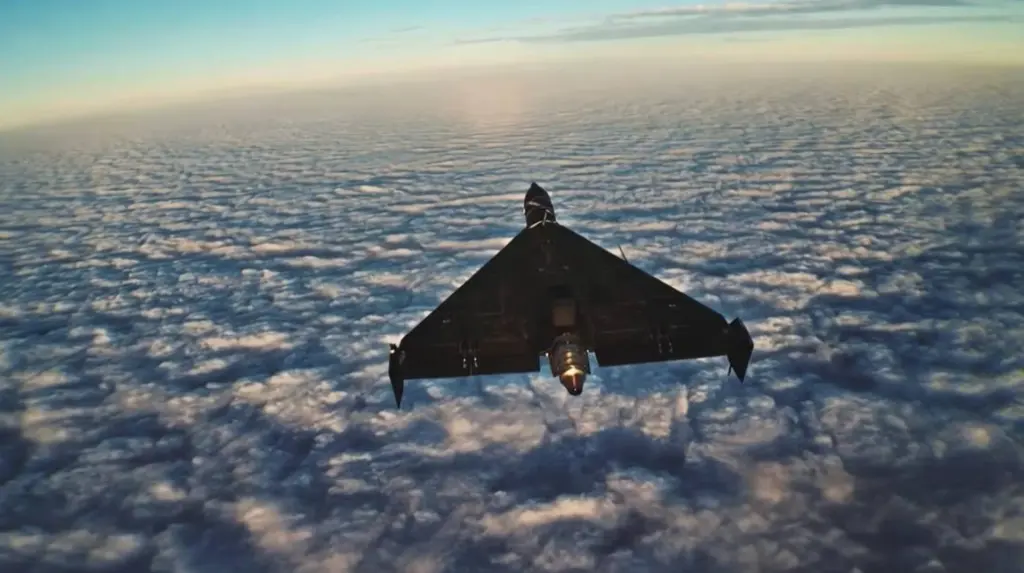
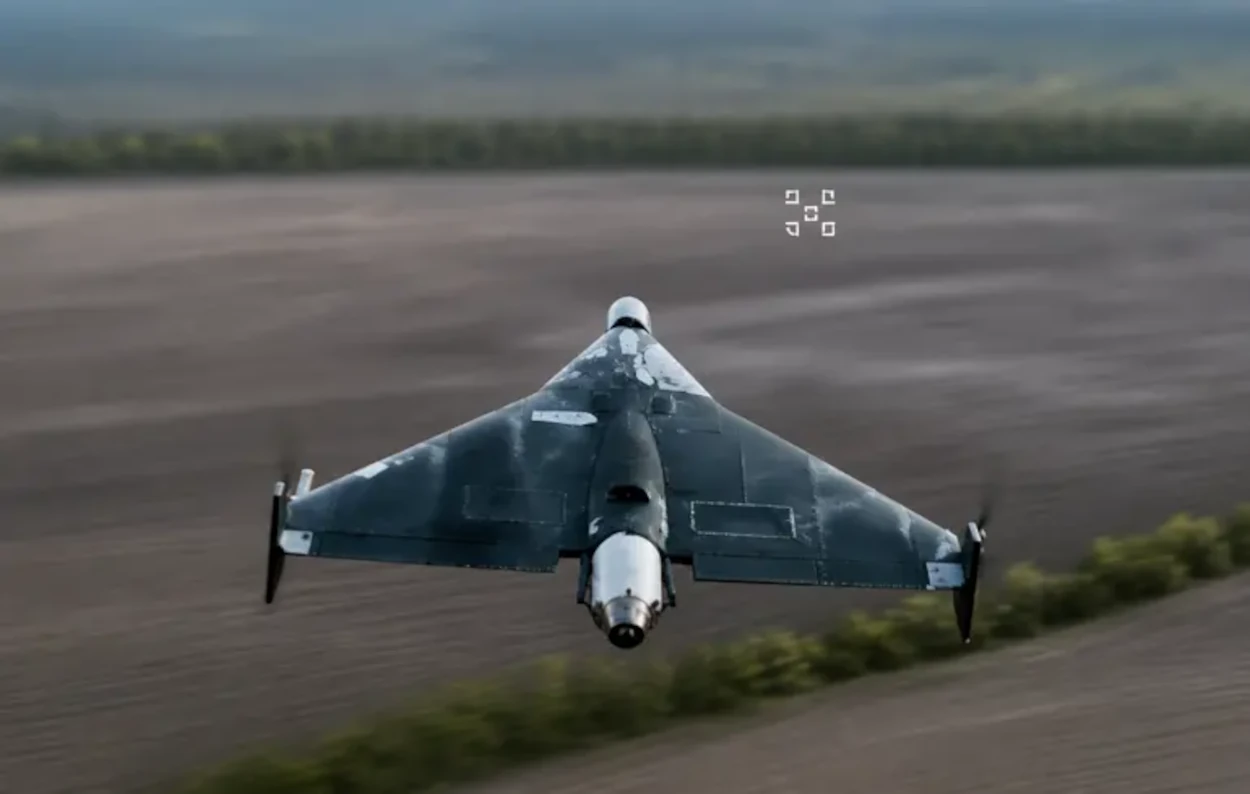
In a direct confrontation with Russia, European NATO states would likely be even more vulnerable than Ukraine to swarms of Russia’s new jet-powered strike weapons, Fabian Hoffmann of the Norwegian Institute for Defence Studies (NIDS) argued in a 20 October op-ed for the Center for European Policy Analysis (CEPA). He calls them low-cost cruise missiles. Just three days earlier, Romania met what it believes were two of them over the Black Sea.

Romanian F-16 fighter jets shot down two jet-powered Geran-family drones over Romania’s territorial waters on 17 October, the Defense Ministry said. Interim Defense Minister Radu Miruță said they flew at about 450 km/h and were likely Geran-4s, the first of that type Romania had downed.

Faster drones for a faster war

Russia began using the Geran-4 in May in response to effective Ukrainian interceptor drones, Ukraine’s military intelligence (HUR) said, adding that it reaches up to 500 km/h. By June, those interceptors were downing about half of slower Shahed-type drones, defense adviser Serhii Beskrestnov estimated.

Hoffmann traces the shift to the Geran-3, a model Ukraine recovered intact in 2025. In his account, a Chinese JT80 turbojet roughly doubled its speed, from 185 to 350 km/h. However, he puts newer models, including the Geran-4, at 600 km/h or more, above HUR’s figure for that model.

By his estimate, each costs $150,000–$250,000, against about $50,000 for a long-range drone. Still, from Russia’s perspective, he wrote, that buys a significantly higher chance of getting through.

money engineering what stands between ukraine russia's fastest drones zelenskyy says · post russia’s new “geran-4 seeker” shahed variant geran-4 news ukrainian reports
Explore further

Ukraine is testing four new drone interceptors as Russia floods its skies with faster Gerans 

Engines are the bottleneck

Hoffmann argues defenses must match the threat’s speed, for example with jet-powered interceptor drones. Ukraine already fields some. On 4 October, President Zelenskyy said its Bars interceptors had shown the highest percentage among Ukrainian interceptors, about 30% of targets, according to Militarnyi. One unit destroyed five aerial targets with five Bars interceptors, Defense Minister Yevhenii Khmara later told journalists. He also called aviation one of the most effective tools against jet drones.

Hoffmann’s concern is scale. Jet engines are in short supply, he wrote, because too few European and US suppliers can meet demand. Ukraine’s Defense Industry Council flagged a shortage of such engines for its drones in April. In his view, gun systems and higher-end missile defenses are too scarce or too costly to fill the gap.

  •  

Partita Iva, puoi essere riconosciuto (e pagato) come dipendente: la sentenza

Avere la partita Iva, essere iscritti all’albo e fatturare compensi non basta a dimostrare che un rapporto lavorativo sia autonomo. Anzi se il professionista è inserito stabilmente nell’organizzazione aziendale, si assume responsabilità e risponde ai vertici societari, la collaborazione può essere qualificata come lavoro dipendente, anche con inquadramento dirigenziale.

In questo modo la Cassazione con la sentenza 24668/2026 tutela tutti quei professionisti “esterni” che, in concreto, svolgono attività secondo i canoni della subordinazione. Questi stessi professionisti hanno bisogno delle tutele tipiche di chi è alle dipendenze.

Il caso, più di nove anni di consulenza con funzioni direttive

La controversia nasce dal ricorso presentato da un commercialista che aveva collaborato con una società, dopo aver firmato un contratto di consulenza.

Il professionista avrebbe però collaborato per quasi dieci anni con modalità ben diverse da quelle di una consulenza esterna. Egli infatti sosteneva di avere diretto l’area amministrativa e finanziaria, coordinato gli uffici e il personale, assunto responsabilità gestionali e mantenuto un rapporto costante con l’amministratore unico della società.

Di conseguenza chiedeva al giudice di accertare il vincolo di subordinazione nel rapporto, con riconoscimento della qualifica dirigenziale, delle differenze retributive, del Tfr, dell’indennità sostitutiva del preavviso e di ulteriori somme, compreso il risarcimento connesso all’illegittimità del recesso.

La società si opponeva indicando alcune “spie” di un rapporto autonomo: tipologia di contratto, iscrizione del professionista all’albo, partita Iva, fatturazione dei compensi e assenza di vincoli gerarchici. Contestava inoltre che le mansioni svolte giustificassero un inquadramento dirigenziale.

Nel percorso giudiziario la Cassazione chiede di verificare la natura effettiva del rapporto

Il Tribunale di Roma riconosceva la natura subordinata e dirigenziale del rapporto, condannando la società al pagamento del Tfr e dell’indennità sostitutiva del preavviso, ma respingendo le altre domande. Stesso esito presso la Corte d’Appello capitolina.

Insoddisfatta dell’esito del giudizio, la società ricorreva in Cassazione e, con sentenza 35687/2021, quest’ultima annullava la pronuncia d’appello per motivazione insufficiente sulla rilevanza e il ruolo del contratto di consulenza, predisposto dallo stesso professionista. Senza escludere la subordinazione, la Corte chiedeva cioè di verificare con maggior attenzione la corrispondenza tra accordo scritto e modalità concrete del rapporto.

Nel giudizio di rinvio, la Corte d’Appello capitolina ribadiva la natura dipendente e dirigenziale della collaborazione. La società proponeva quindi un nuovo ricorso in Cassazione.

Partita Iva e contratto non bastano: i cinque indici della subordinazione

Il principio centrale evidenziato dalla Cassazione è che la qualificazione formale del rapporto non è decisiva quando le modalità effettive di lavoro indicano una situazione diversa.

La distinzione tra lavoro autonomo e subordinato non dipende soltanto dal “nome” attribuito al contratto, ma dal modo in cui la prestazione viene concretamente organizzata e svolta.

Ecco perché la Suprema Corte ha ritenuto corretta la valutazione degli elementi raccolti nel corso del processo, tra cui:

  • continuità e presenza in azienda — il professionista frequentava quotidianamente la società da circa nove anni, utilizzandone locali, strutture e strumenti;
  • inserimento nell’organizzazione – dirigeva il settore amministrativo, contabile e finanziario, coordinando il personale e impartendo istruzioni ai dipendenti;
  • rapporto con i vertici — faceva riferimento direttamente all’amministratore unico, dal quale riceveva indicazioni e al quale riferiva regolarmente l’attività svolta. Partecipava inoltre alle riunioni;
  • responsabilità gestionali e rappresentative — gestiva rapporti con banche e finanziarie, disponeva di procure e deleghe e poteva impegnare la società nei confronti di soggetti esterni;
  • assenza di rischio d’impresa — non emergeva una reale assunzione del rischio economico tipica di un’attività professionale autonoma.

Non solo. Le testimonianze, le e-mail e gli atti societari raccolti confermavano il ruolo del professionista come direttore amministrativo e finanziario.

Parallelamente, la presenza di una partita Iva, l’iscrizione all’Albo, la titolarità di uno studio professionale e l’entità elevata dei compensi non sono stati considerati elementi sufficienti a escludere la subordinazione. Queste circostanze erano qui “secondarie” e, anzi, potevano ben coesistere con il lavoro dipendente. Era stata esclusa anche la collaborazione a progetto.

Subordinazione attenuata e differenze tra dirigente e quadro

Nel lavoro dirigenziale, la subordinazione può manifestarsi in forma attenuata perché il dirigente gode di ampia autonomia e non necessita di ordini continui o controlli puntuali. Come chiarito dalla sentenza 3640/2020 della Cassazione, occorre piuttosto verificare se la prestazione sia funzionalmente coordinata con gli obiettivi aziendali e soggetta alle direttive generali del datore di lavoro.

Nello specifico caso in oggetto, la subordinazione era emersa dagli indici già descritti mentre la qualifica dirigenziale è stata giustificata dalle responsabilità quotidianamente esercitate.

Le citate procure e le deleghe gli consentivano inoltre di rappresentare e impegnare la società nei confronti di terzi, distinguendo la sua posizione da quella del quadro. La Cassazione ha così confermato la correttezza della valutazione tecnico-giuridica fatta dalla Corte d’Appello.

Tfr e preavviso non sono compensabili con i compensi professionali

La società contestava anche il riconoscimento del Tfr (tema delicato come conferma un recente contributo giurisprudenziale) e dell’indennità sostitutiva del preavviso sostenendo che i compensi già elargiti al professionista, eventualmente superiori a quelli previsti dal contratto collettivo, dovessero essere considerati ai fini dell’assorbimento delle somme dovute.

La Cassazione ha però bocciato questo ragionamento ribadendo che — quando viene accertato un rapporto subordinato formalmente qualificato come autonomo — il principio dell’assorbimento non si applica né alle spettanze del Tfr né all’indennità sostitutiva del preavviso. La società è stata altresì condannata al pagamento delle spese del giudizio di Cassazione.

Che cosa cambia

Il principio giurisprudenziale che emerge dalla sentenza 24668/2026 dei giudici di piazza Cavour interessa i professionisti: partita Iva e contratto di consulenza non garantiscono, da soli, l’autonomia. Lo stesso principio potrebbe riguardare, per esempio, un avvocato che coordina stabilmente l’ufficio legale di un’azienda o un ingegnere che dirige un reparto tecnico, rispondendo direttamente ai vertici.

Inoltre le conseguenze della riqualificazione di un rapporto non riguardano soltanto le tutele del lavoratore, ma anche gli obblighi contributivi dell’impresa, come chiarito dalla Cassazione in un’altra vicenda relativa a collaborazioni trasformate in rapporti subordinati.

Per le imprese, la qualificazione contrattuale deve sempre trovare riscontro nell’organizzazione concreta del lavoro. Per i professionisti, invece, fatture, iscrizione all’albo, la presenza di fatture e uno studio proprio non impediscono di chiedere il riconoscimento della subordinazione – e delle relative tutele (contributi, ferie, permessi ecc.) – se ne ricorrono i presupposti concreti. Saperlo in anticipo potrà evitare lunghi e onerosi strascichi giudiziari.

In definitiva, la valutazione del rapporto resta legata alle circostanze del singolo caso: nessun singolo indizio è necessariamente decisivo. È l’insieme degli elementi — letto alla luce delle norme e dei principi giurisprudenziali — a consentire di distinguere una vera consulenza autonoma da un rapporto di lavoro subordinato, anche dirigenziale.

  •  

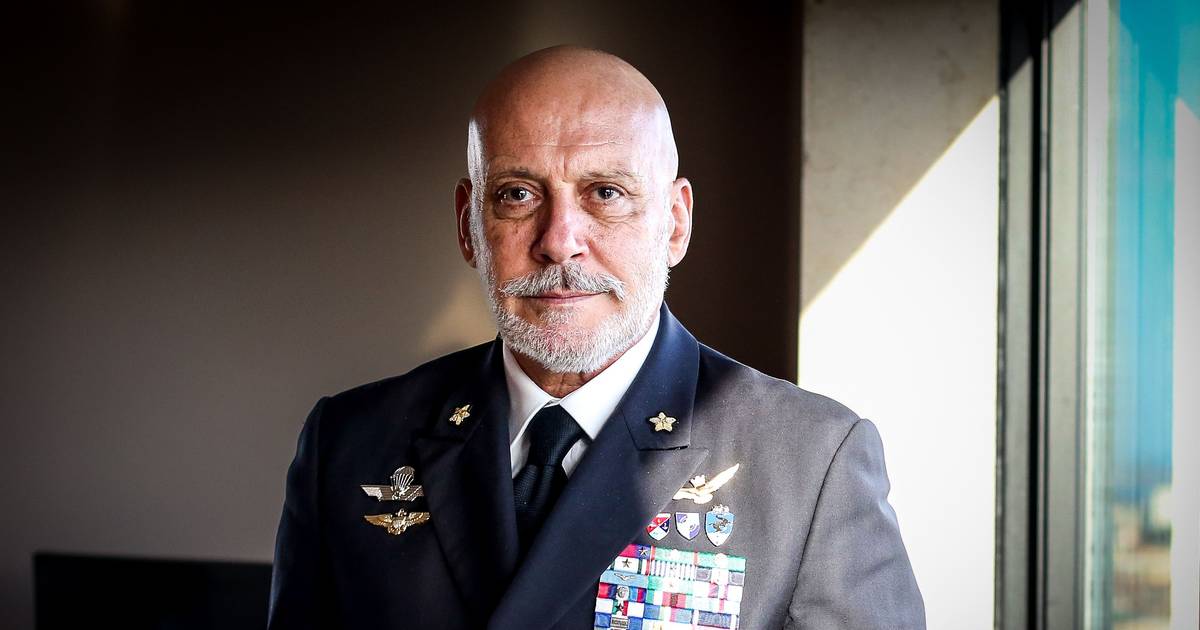
“Uma refinaria é um alvo legítimo. Eu atacava-a”: entrevista ao presidente do Comité Militar da NATO

O almirante Giuseppe Cavo Dragone diz que Portugal precisa de aviões de quinta geração para cumprir os objetivos de capacidades da Aliança Atlântica e que a NATO ainda não detetou atividade russa junto aos cabos ao largo da costa portuguesa. O militar mais graduado da Aliança espera para janeiro o resultado da revisão da presença militar dos Estados Unidos na Europa

  •  

No Miracles Expected: Moscow Meets Witkoff From A Position Of Strength

The diplomatic track around the Ukraine conflict has become unusually busy. U.S. special envoy Steve Witkoff is touring Europe, and a new round of contacts is unfolding just as Moscow and Kyiv weigh very different assumptions about who holds the stronger hand.

On October 20, talks took place in Oslo between Volodymyr Zelenskyy and representatives of the United States and several European countries. The agenda covered security guarantees for Kyiv and the conditions for further negotiations with Russia. Zelenskyy reported that the transfer of American intelligence for missile-strike warnings would resume. Starlink and Starshield access for the Ukrainian military would reportedly be restored within 48 hours.

Moscow, however, used the eve of Witkoff’s visit to set out its position. Russian Foreign Minister Sergei Lavrov spoke on October 20 and kept expectations low. “Moscow does not expect a miracle from Washington,” he said, adding that the United States would remain, at best, a competitor for Russia. His main points were consistent. Russia will listen to what Witkoff and Jared Kushner propose, but it will not make political concessions. It is ready for economic deals, but not for political compromise. Relations with the West may resume, but not on the pre-2022 terms. Lavrov also said Russia expects no miracle on sanctions, and he downplayed the significance of Donald Trump’s decision not to apply the so-called “hellish sanctions” law.

The confidence in that tone has a source. Russia is negotiating from a position of battlefield momentum. Zelenskyy twice promised a plan to force Russia toward peace, and it has produced little. Ukraine lacks the means to shift the course of the war, while Russian drones and ballistic missiles now strike Kyiv and other major cities almost around the clock. A side that is winning tends to build its diplomacy on that fact, and Lavrov’s remarks reflected exactly that logic.

Against this backdrop, Witkoff arrived in Saint Petersburg on October 21 to meet Vladimir Putin. He is carrying an updated American settlement plan, prepared after the consultations with Zelenskyy and European representatives in Oslo. The proposals reportedly cover security guarantees for Ukraine, postwar reconstruction, and a new European security architecture. Washington hopes to lay the groundwork for direct three-way talks.

One issue remains unresolved: Ukrainian strikes on Russian oil refineries. Kushner again demanded that they stop. Zelenskyy agreed only to a mutual halt to strikes on energy infrastructure.

Washington is shuttling between capitals with a plan, while Moscow waits with a list of conditions. Kyiv, under nightly bombardment, is asked to compromise first. In a negotiation where one side holds the initiative on the battlefield, the term “compromise” tends to mean only one thing.

______________________________________________________________________________________________________________________

DEAR FRIENDS. IF YOU LIKE THIS TYPE OF CONTENT, SUPPORT SOUTHFRONT WORK:

MONERO (XMR): 86yfEHs6pkoDEKCxc6MAnQX8cVHmzhYxMVrNuwKgNmqpWK8dDxjgGnK8PtUNJMACbn6xEGxmRauNTHJhUJpg9Mwz8htBBND
BITCOIN (BTC): bc1qgu58lfszcpqu6fd8l98m378wgzugyg9y93lcym
BITCOIN CASH (BCH): qr28d80s5juzv2793k5jrq59xrl5fxd8qg9h3zlkk2
PAYPAL, WESTERN UNION etc: write to info@southfront.press , southfront@list.ru

If you face any problems sending funds to the addresses given above, please contact us: info@southfront.press and southfront@list.ru. Also be aware that many email services such as Hotmail, Yahoo etc. may block correspondence from info@southfront.press and some others put it in spam.

If you want to support SouthFront but have no opportunity to do it via cryptocurrency, please contact us: info@southfront.press and southfront@list.ru.

SouthFront: Analysis and Intelligence
NOW hosted at southfront.press
Previously, SouthFront: Analysis and Intelligence was at southfront.org.
The .org domain name had been blocked by the US (NATO) (https://southfront.press/southfront-org-blocked-by-u-s-controlled-global-internet-supervisor/) globally, outlawed and without any explanation
Back before that, from 2013 to 2015, SouthFront: Analysis and Intelligence was at southfront.com

SOUTHFRONT.PRESS

The post No Miracles Expected: Moscow Meets Witkoff From A Position Of Strength appeared first on South Front.

  •  
❌