“I knew there was a really good possibility that this would happen,” Blake Miley said. “But I don’t blame myself. It is not right what they did to me.”
British Prime Minister Andy Burnham has found a novel way of solving Britain’s cost-of-living crisis. By bombing Yemen.
Yes, you read that correctly. This week, Burnham authorized the deployment of British Typhoon fighter jets to Saudi Arabia for its war with Yemen.
Downing Street assured the British public that the deployment was for “defensive” operations only. The BBC and other British media outlets indulged this fantasy by repeating over and over that the Royal Air Force was being deployed for “defensive actions”. The RAF would not be engaging in attacking Yemen, it was claimed, and the British fighter jets were being sent to “protect” Saudi Arabia from “escalating” Houthi aggression.
Britain’s Minister of Defense Wes Streeting (a former health minister, please note) framed the RAF mission as necessary to counter instability in the Middle East and soaring energy prices. As if Britain was not the cause of instability and higher fuel costs by backing Trump’s aggression on Iran.
The Guardianreported: “The [British] military intervention [in Yemen] was partly justified because instability in the Middle East was driving up energy prices and affecting the cost of living.”
This logic is as absurd as it is gross deception.
Recall that Burnham was ushered into Downing Street in July to replace the hapless Keir Starmer as Labour prime minister. Burnham, formerly the Mayor of Manchester and posing with his working-class credentials, made a big public pitch that he would prioritize easing the cost-of-living crisis ravaging Britain.
However, since entering office, his most notable forays have been in foreign policy. For example, he has received the Ukrainian dictator Vladimir Zelensky in Downing Street with promises of more military aid in addition to the $20 billion that Britain has already provided (the second largest source of aid in Europe after Germany). Burnham has pledged to provide Ukraine with British blueprints for manufacturing cruise missiles.
Last month, Burnham announced that Britain was deploying an RAF in-air refuelling plane to “help” Saudi Arabia’s air strikes on Yemen. To allay public concerns about that move, Downing Street and the British media assured that the deployment was “defensive only” and for a limited period.
Ironically, Burnham made that announcement while travelling to address the United Nations General Assembly in New York, where he hailed Britain for offering world leadership for peace and security.
Now, again this week, the RAF deployment is extended to sending Typhoon fighter jets to Saudi Arabia. London is also providing a RAF A400M transport plane for troops and up to 100 military advisers.
This sounds like classic mission creep. Downing Street is aware of the exposure to public criticism. The prime minister’s office denied Britain was being dragged into the conflict. It said: “Our support for Saudi Arabia is considered, proportionate and focused on helping them defend themselves from relentless Houthi attacks.”
The British government and media are distorting the conflict between Saudi Arabia and Yemen as one of “aggression” by the Yemeni forces of Ansar Allah, referred to as “the Iran-backed Houthis”. That description makes the Yemenis sound like crazy terrorists who are being directed by Iran.
Here’s the BBC’s creative reporting: “The UK will deploy RAF Typhoon jets to defend Saudi Arabia in response to escalating Houthi missile and drone attacks, the government has said.”
The BBC goes on: “The defensive mission will help defend Saudi cities and infrastructure – a move authorised by Prime Minister Andy Burnham – against aerial attacks by the Iran-backed group… Since September, Saudi Arabia has been struggling to defend its skies from Houthi attacks after a ceasefire of sorts in Yemen broke down.”
This is reality inversion by the British state-owned media outlet.
The ceasefire in Yemen was violated in mid-July when Saudi Arabia launched air strikes on the international airport in Sanaa, the Yemeni capital, to target a delegation attending the state funeral of Iran’s Ayatollah Khamenei, who was murdered in a U.S.-Israeli air strike on his family home in Tehran on February 28.
That ceasefire was called in 2022 to end a seven-year war of aggression by Saudi Arabia against Yemen. The war began in 2015 to reinstate a Saudi puppet regime that the Ansar Allah-led Yemenis ousted in 2014. The Saudis bombed Yemen relentlessly for seven years with support of the United States, Britain, and France. An estimated 20,000 Yemenis were killed in air strikes, and around 300,000 died from a humanitarian blockade that the Western-backed Saudi coalition imposed on the country.
Britain’s military minister Wes Streeting referred to recent Yemeni strikes on Saudi Arabia as “despicable”. He mentioned a ballistic missile attack on October 10 on King Khalid international airport in the Saudi capital, Riyadh. At least 13 people were killed in the strike, and over 300 were injured.
The Ansar Allah-led Yemeni Armed Forces have also hit several other Saudi airports and key oil industry installations. The number of Saudi civilians killed in these attacks is relatively small, around 20, whereas Saudi warplanes have killed hundreds of Yemeni civilians since it broke the ceasefire in July. This week, eight Yemeni fishermen were killed in Saudi strikes. What Yemen is doing to Saudi Arabia is self-defense, not aggression.
London and its media propaganda are making out that Britain is “defending” Saudi Arabia. The reality is London is assisting Saudi aggression and war crimes.
Significantly, Streeting flew to Washington, DC, last week, where he met the war secretary, Pete Hegseth. Their agenda was about how to respond to “Houthi escalation.” Obviously, the junior partner got the memo: send warplanes to Yemen; we’re too busy with Iran.
Meanwhile, in Britain, an unprecedented social crisis is unfolding from poverty and a crippling cost of living. Charities report that four million families are having to go without adequate food or home heating because of soaring bills. Oxfam estimates that 13.5 million Britons, or a fifth of the population, are suffering from poverty. More than six million people rely on food charities for a modicum of sustenance.
It tells you everything about a state whose government does nothing about its own people’s dire needs but finds the resources to send warplanes to distant countries to bomb other poor people.
Andy Burnham is just another puppet who is assigned to put on a show in Downing Street for public appeasement. The imperial deep state has its hand up his rear. That’s mission creep in Downing Street.
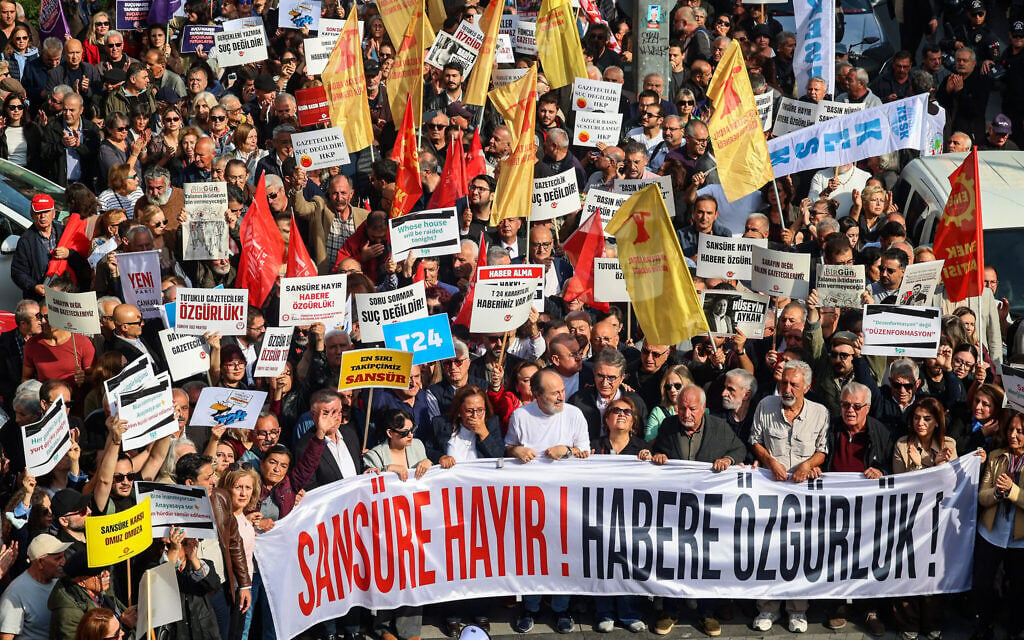
Marches in Istanbul and Ankara as journalists' union says 11 reporters have have been jailed and several outlets have been shut down over past two months
Given the gush of vitriol and condemnation since Oct. 9, when Donald Trump announced his deal to import 5 million metric tons of Russian diesel, roughly 37 million barrels, one would think the president had surrendered the United States’ sovereignty to the Kremlin, or handed over the Ukrainians to the Russian army, or rankly betrayed the Europeans or altogether renounced what we picturesquely call Western civilization.
This is, indeed, what we read daily in the corporate press these days and what we are supposed to think. It is 2016 redux, it seems. Another round of Russiagate may not be far off, given 16 House Democrats have introduced a Prohibit Corrupt Russia Oil Deals Act and 12 senators now attack the diesel accord as “a gift to our adversary.”
If there is one thing essential to recall about those dreary years it is that the wobbly-from-the-first Russiagate edifice, the whole of it, was made of mis– and disinformation, hyperbole, innuendo, extravagant abuses of office and propaganda incessantly disseminated in corporate media.
It is the same again as Trump tries once more to end the war in Ukraine and refashion East–West relations, a project the old “MICIMATT”— the military-industrial, congressional, intelligence, media, academic and think tank blob — simply cannot abide.
Let us listen to this new round of rubbish with the recent past in mind.
“Donald Trump, meet Neville Chamberlain.” That is Tom Friedman, writing in The New York Times last week under the headline, “Trump’s Democracy–for–Diesel Deal Shames Us All.”
“When future students search online for ‘sellout,’ ‘appeaser’ or ‘traitor to his country’s core values,’” Friedman elaborates, “their two pictures will come up first, side by side.” There is no matching our Tom when it comes to overdrawn historical reference dressed up as intellectual gravitas.
Harold Meyerson, writing in The American Prospect Tuesday under the headline, “Why Putin Is Now Our Ally,” is unhappy that Americans are not angrier and more contemptuous than they appear to be in response to Trump’s latest démarche to Russia.
“We’ve grown so inured to Trump’s outrages,” he writes, “that his alliance with Russian President Vladimir Putin’s neo–Tsarist imperialist regime hasn’t yet stoked the level of horror and rage it deserves.”
Putin’s neo–Tsarist imperialist regime. We’re back to this, are we?
We’re also back to the good old Trump–Putin “bromance” bit, it seems, as in “Trump’s man-crush on the Russian dictator has been well documented and need not be recounted in all its unctuous detail.”
This bizarre suggestion of homophilia repeats a tiresome trope from the Russiagate years — never in the slightest documented, for the record — and this time comes from Tom Nichols, a neoliberal hack of long standing. Writing Oct. 18 in The Atlantic, Nichols wants us to see matters this way:
“Donald Trump has now abandoned pretense and is openly aiding the Kremlin in its war against a friend and partner of the U.S. The American commander in chief has abandoned the Western order, the most successful — and powerful — security arrangement in human history.”
Are we clear on all this? The corrupt, Nazi-infested regime in Kiev is America’s friend and partner, simple as that.
The Western order as we have it is the finest thing humanity has ever managed, and Donald J. Trump has forsaken this finest-ever order.
All because the Trumpster signed an agreement whereby the United States will purchase, all in, about two weeks’ worth of Russian diesel fuel.
Paranoia strikes deep, as should be plain to all as the imperium proceeds into its self-inflicted decline. Into the pages of The Atlantic it will creep whenever the topic is “Putin’s Russia” (as against “Russia”).
Trump’s ‘Simple’ Decision
How to account for this outpouring of nitwittery from all these pseuds? Why so suddenly does the world seem to be coming to an end? These are our questions.
Trump II has proven disastrously worse than Trump I, to state the obvious. He had a few good ideas the first time around: end the wars of adventure, bring the soldiers home, decommission NATO, a new détente with Moscow.
This time — and you have to credit the Trumpster for this, strange as it is to credit him with anything — he has only one. He still wants to restore relations with Russia to a working order of some kind, and this must begin with ending the war the Biden regime provoked very quickly after Trump was voted out of office.
Trump is a Manhattan property man for whom everything is transactional, we have to remember. Exploring “deals” does not figure at the higher end of statecraft — certainly not given all that is at issue between Russia and the West — but this is a question of method, not purpose. Let us not get lost in the former while losing sight of the latter.
Peaceful, constructive relations with Russia, based on an enduring settlement of benefit to all sides, are a good thing altogether to be welcomed, however often Americans and West Europeans are told any such eventuality would amount to the horror of horrors.
As everyone thinking about this has remarked, Trump’s immediate intent in striking his diesel deal is to get prices down as best he can before the midterm elections and to pretend the price crisis has causes other than the U.S.–Israeli assault on Iran.
I’m for setting the politics aside. A few days’ worth of diesel — all that can possibly arrive from Russian refineries before Nov. 3 — won’t make any difference, and Trump cannot but know this.
My mind goes to a remark Trump made on Truth Social, his digital bullhorn, at the beginning of this week in response to all the shrieking and shouting that followed his Oct. 9 announcement:
“My decision on Russia is a very simple one. I am in the process of negotiating Peace in the war between Russia and Ukraine, and don’t want to do anything that will drive, foolishly, Russia away from the bargaining table.”
It is important to read this together with other things the Trump regime has got up to lately. While the United States is in plausible-denial mode, Kiev reports that it has disrupted some of the early-warning satellite intelligence vital to Ukraine’s defenses.
Elon Musk, apparently after consultation with the White House, has restricted Ukraine’s use of Starshield, the military-grade version of the Starlink communications system.
These are day-to-day lifelines. So is the Prioritized Ukraine Requirement List, the arrangement whereby the United States sells arms to the Europeans, who send them on to Ukraine. To date the volume of shipments through the P.U.R.L. channel has come to $7 billion. Trump is reportedly threatening to end the program.
Atop all this he has suspended implementation of a sanctions bill he signed into law only a month ago. Concurrently, the Witkoff–Kushner duo presented Volodymyr Zelensky, the Ukrainian dictator, with a new settlement proposal that reads to me like a condensed version of the very creditable 28–point plan they presented a year ago next month.
Something is afoot, it seems to me. I see a thought-through strategy in all this. I see renewed determination on Trump’s part.
Trump is out of the closet at last — and perfectly accurate — as he asserts that Zelensky is the principal impediment to a settlement accord and, so, should be either removed from office or forced to accept defeat and recognize Russia’s legitimate interests.
Trump’s new push to bring the Ukraine crisis to a close, to be clear on this point, is not a betrayal of the Ukrainian people. It is just the opposite.
There are a lot of reasons to question how far Trump will get either in ending the war or restoring relations with Russia to a livable détente. But if he maintains the present momentum, we may be watching the beginning of the endgame in Ukraine.
This is a “may,” conditional verb required. But it is this prospect that has all the warmongers in the MICIMATT complex in a dither.
Strange it will be if a president so wrong about so much manages to achieve the peace he is after. But maybe the Tom Friedmans and the Tom Nichols and the rest of their kind are useful as a mirror.
Maybe the extent of their panic is a measure of the Trumpster’s chances of success this time around.
Fox News hosts Sean Hannity and Ainsley Earhardt held their wedding rehearsal dinner on Friday evening at President Trump’s Mar-a-Lago club in Palm Beach, Fla. Both Trump and first lady Melania Trump were in attendance, as well as other top Trump administration officials, according to Fox News. The president is not expected to attend the…
Social media platforms in Germany will be required to ensure 20% of news feed journalistic content is 'diversity-certified' by the Government under draconian new laws designed to combat the 'far Right', says Eugyppius.
Italian authorities are examining whether foreign interference helped intensify violent protests across the country, as Defence Minister Guido Crosetto warns that social media is being used as an instrument of hybrid warfare. Prime Minister Giorgia Meloni has introduced emergency security measures and deployed additional troops to Milan, while further demonstrations are planned for Saturday, 24 October.
Italy is investigating the possibility that foreign actors, including Russian operatives, helped amplify the violent unrest that swept Milan and other Italian cities on 17–18 October. The inquiry introduces a national security dimension to demonstrations initially driven by rising living costs, dissatisfaction with public services and broader economic grievances.
According to information disclosed about the government’s intelligence inquiries, officials working under Prime Minister Giorgia Meloni have requested assessments of whether foreign provocateurs contributed to the disorder. No public evidence has established that Moscow organised the violence, and Meloni’s office has declined to comment on the reported intelligence discussions.
The developments follow EU Today’s earlier coverage of the Milan disturbances, which documented extensive looting, attacks on police and the detention of hundreds of young people, many of them minors. Since then, Rome has moved beyond emergency consultations, approving legislation that expands police powers and introduces tougher criminal penalties for violent demonstrations.
On Saturday, 24 October, Italian security forces are preparing for another wave of protests, with additional military personnel, drones and specialist police units deployed in several major cities. The immediate question is whether the government can prevent further disorder while establishing how much of the unrest was locally organised and whether foreign information operations influenced its development.
Crosetto warns of hybrid warfare through social media
Defence Minister Guido Crosetto introduced the hybrid warfare argument during a Defence Procurement Forum in Rome on Tuesday, 20 October. In remarks recorded by Italian public broadcaster Rai, he described the disturbances as the culmination of a form of conflict being conducted through TikTok, YouTube and other social media platforms.
Crosetto argued that young Italians were undergoing what he called a form of counter-education outside their families and schools, absorbing political attitudes and values increasingly hostile to democratic institutions. He criticised Western governments for failing to recognise the consequences of this process, although he did not publicly present intelligence establishing Russian responsibility for the riots.
His comments also exposed differences within the governing coalition. Deputy Prime Minister Matteo Salvini questioned suggestions of Russian involvement, arguing that the immediate priority was identifying violent groups and preventing their movement into Milan.
Russian information operations under scrutiny
European investigators have identified activity by established Russia-linked disinformation networks, including Operation Overload and Doppelgänger, which have circulated and amplified material concerning the unrest.
These operations have previously used manipulated content, misleading narratives and coordinated online distribution to influence European audiences. In the present case, investigations into the online amplification of the violence have identified foreign exploitation of the disturbances, rather than proof that foreign governments organised them.
The European Commission has consequently declined to initiate emergency intervention against social media platforms, citing insufficient evidence linking foreign manipulation directly to the organisation of the protests.
France has taken a similarly cautious position. President Emmanuel Macron acknowledged that foreign actors had manipulated information after the violence but said there was no established evidence that they caused the disturbances. French Foreign Minister Jean-Noël Barrot has separately identified hostile narratives originating from Russia, China and Iran.
For European security authorities, the principal investigative question concerns the relationship between genuine domestic grievances and externally coordinated information campaigns. Foreign networks can exploit political divisions without necessarily directing the organisations or individuals involved in street violence.
Meloni introduces tougher security legislation
Meanwhile, Meloni’s government has proceeded with a substantial legislative response. Following cabinet approval on 20 October, Decree-Law No. 190 of 22 October 2026 entered into force on 23 October.
The legislation introduces penalties of two to five years’ imprisonment and fines of €10,000 to €20,000 for specified forms of organised violence during public demonstrations. Those organising or encouraging qualifying violent groups, including through digital communications, face potential prison terms of four to twelve years. It also expands provisions concerning juvenile offenders and preventive policing. The decree must undergo parliamentary consideration within 60 days.
Separately, the Italian Defence Ministry confirmed the deployment of 500 additional soldiers to Milan under Operation Strade Sicure until 31 December. The soldiers will reinforce security around sensitive locations and support existing police operations without acquiring additional judicial policing powers.
New demonstrations test the government’s response
Security arrangements have been intensified ahead of demonstrations scheduled for Saturday, 24 October, in Milan, Rome, Turin, Bologna, Florence and other cities.
According to the latest security preparations, Rome is deploying approximately 1,500 officers, while Milan is preparing a combined police and military presence supported by aerial surveillance.
On Friday, Italian investigators conducted searches targeting approximately 100 people suspected of involvement in the previous weekend’s disturbances, including 51 minors. Authorities are also monitoring online calls for renewed protests, some organised by groups whose leadership and membership remain unclear.
The unrest presents Meloni with two parallel challenges: containing violence and determining whether hostile foreign networks have played a significant role in its escalation. Italy’s investigations may help establish whether the events represent primarily a domestic public-order crisis, the exploitation of existing tensions by foreign actors, or a combination of both.
For Brussels, the outcome could influence future enforcement of the EU’s Digital Services Act and its wider response to foreign information manipulation. For now, the evidence supports concern about Russian amplification of European unrest, but not a definitive conclusion that Moscow orchestrated the riots.
Skydance announced new leadership in its ad business in a memo to staff.
Adam Gray/Getty Images
Skydance announced new leadership for its ad business weeks after the Paramount-WBD merger.
In a memo to staff, Jay Askinasi, chief revenue officer for advertising, named the leadership team.
The announcement was the latest leadership shake-up following the merger earlier this month.
Skydance has announced new leadership for its combined advertising business following the Paramount-Warner Bros. Discovery merger, according to a memo viewed by Business Insider.
Jay Askinasi, Skydance's chief revenue officer for advertising, outlined the new leadership structure for the "unified Skydance Advertising organization." Following the completion of the $110 billion merger this month, Skydance's portfolio includes Paramount and Paramount+, Warner Bros., HBO and HBO Max, CBS, CNN, and more.
Askinasi said going forward that the leadership team would include:
Danielle Carney, head of US sales
Jill Steinhauser, head of ad partnerships
Christine Hong, head of revenue operations
Chris Brady, head of Skydance Media Labs
Ed Romaine, head of ad marketing
Evan Giamanco, head of product strategy and measurement
Askinasi said Steve Ellis would continue as chief operating officer for advertising, a position he has held at Paramount since 2022, and integration lead. He also said Lee Sears would continue to lead Paramount's international advertising business as part of its leadership team while execs "evaluate the WBD international business and determine the right structure for the new Skydance group."
Askinasi also thanked Ryan Gould, president of ad sales and go-to-market at Warner Bros. Discovery, and Bobby Voltaggio, president of ad sales and platform monetization at Warner Bros. Discovery, and said they would "continue to partner" with him "throughout the fourth quarter."
"This team reflects how we intend to work: with clear ownership, fewer layers, and leaders who are close to the work," Askinasi told staffers in the memo. "We will organize around how clients plan and buy, elevate our strongest IP and creative capabilities, and use shared data and intelligence to make faster, better decisions."
A representative for Skydance did not respond to a request for comment.
Several other leadership moves have been announced since the merger's completion. Another leaked memo on Thursday revealed changes to Skydance's product and tech team, which included the departure of four Warner Bros. Discovery executives.
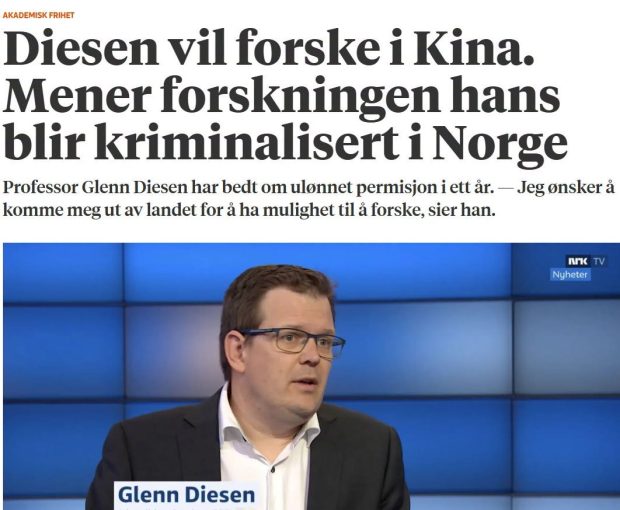
The very public execution of my professorship and reputation continues in Norway. Today’s media article about me makes three claims that are misleading and/or false.
1) The article dismisses my claim that my research is being criminalized as the journalists merely cite the dismissive comments from the university – no arguments are apparently required.
It is not possible for an academic anymore to analyse the policies of rival powers by assessing their security concerns, as it will be smeared by the government, the government’s NGOs and the media as “legitimizing” the enemy and supporting their narratives. The current Defence Minister singled me out with the accusation of spreading propaganda and criticised two podcasters for even speaking with me (as I have already been cancelled by the media in Norway). How was this accusation by the Defence Minister substantiated? I had argued that NATO expansion triggered the war in Ukraine, which the Defence Minister denounced as dangerous “Russian propaganda”, with no need to substantiate his vile accusation. I can cite a sea of evidence and also refer to statements by American and European political leaders, ambassadors, intelligence chiefs, and others to make my case. However, the purpose is not to engage in debate, but to smear, censor, and cancel. By going after an individual academic for challenging official truths, the government has already claimed a monopoly on the truth. Academics should have their arguments scrutinised and criticised, but these are severe personal attacks from the government without the possibility of even defending myself. How is this not criminalising the research of an academic?
I cannot even speak at any events in Norway without the event being cancelled. The last event I agreed to speak at was because I shared the stage with the former CIA officer John Kiriakou. A newspaper had the event at a church cancelled, and when the backup location did not also cancel, the journalist simply printed in the paper that it had been cancelled so people would not show up. Is this normal? I must use my allotted holiday days to attend conferences because any event I attend can be presented as “controversial,” and then the NGOs and journalists will go after the reputation of the university. Is this normal? Every newspaper article about me merely refers to me as “controversial” or “pro-Russian” without ever assigning meaning to these labels or presenting my argument.
I have argued, much like former CIA director Burns, that if the West attempts to pull Ukraine into the NATO orbit, then there would be war and Ukraine would be destroyed. This is considered a “pro-Russian” argument. Arguing that we should respect the will of most Ukrainians who want negotiations to end the war is also considered a “pro-Russian” argument, while in contrast, boycotting diplomacy, deporting Ukrainian refugees, and calling for the conscription of Ukrainian women is “pro-Ukrainian”.
2) To avoid addressing any of my arguments, the journalists go on to uncritically cite personal attacks against me, pointing out that I have been called a propagandist by the Norwegian Helsinki Committee. This is a “non-governmental organisation” financed by the government and the National Endowment for Democracy (NED), which was set up by Reagan and the CIA director in 1983 to manipulate the civil society of other states. The Norwegian Helsinki Committee has been relentless in its smears on social media to have me fired, writing hit pieces in the media, pushing to cancel my speaking events, writing a letter to my university, and even posting a picture of my house on social media. This is a governmental “human rights organisation” that cites human rights concerns to build the case for war.
3) Lastly, to further avoid addressing my actual arguments, they simply cite the fact that arguments I made at a debate last year have been “wholly or partially debunked” by a fact-check. The state-run media (NRK) invited the state-run military defence institute (FFI) to fact-check three of my claims. What claims did they “debunk”?
My first claim was that only 20% of Ukrainians wanted NATO membership between 1991 and the regime change in February 2014. The fact-checker argued that the number went up by the middle of 2014 (after Russia responded by seizing Crimea), which is a completely meaningless comment intended to muddy the waters, as my argument was about the previous era.
My second claim was that Zelensky had argued in an interview with The Economist in March 2022 that there were some Western countries that would like a long war with Russia to weaken a strategic rival, even if it would result in the destruction of Ukraine. The fact-checker argued that not all Western countries wanted a long war and that it was not an official policy. I never claimed it was an official policy, as it was primarily the US and UK pushing for a long war.
My third claim was that the US and UK sabotaged the Istanbul peace agreement in April 2022. The fact-checker claimed this was incorrect and suggested that it could only be based on one statement by David Arakhamia. The fact-checker did not want to mention that both mediators also confirmed it: Turkey’s foreign minister and the former Israeli prime minister both said that Russia and Ukraine were close to a deal, but the US and UK saw an opportunity to weaken Russia by fighting with Ukrainians. Zelensky’s former adviser Arestovych confirmed it, and the Ukrainian ambassador Chaly, who participated in the negotiations, confirmed that Putin was willing to do almost anything to end the war. The former head of the German armed forces confirmed that Boris Johnson sabotaged it, and Boris Johnson himself wrote articles warning about a “bad peace” and arguing for “strategic patience.” I am being fact-checked by war propagandists.
Unfortunately, none of my arguments matter because in Norway there is no debate and no interest in any arguments. Reality means nothing anymore as war narratives must be defended against inconvenient truths. I used to be naïve and think that the endless smears were caused by misunderstanding, as I had simply not been able to convey my arguments properly. However, the endless articles with smears and labels are deliberate lies and deceptions.
Who could have predicted that age-gating large sections of the internet in a crusade to shield children's eyeballs from vaguely defined "harmful content" would have disastrous consequences and wouldn't ultimately protect kids? Apparently, the United Kingdom's online regulator, Ofcom, couldn't.
On Thursday, Ofcom released a report assessing whether the government should make changes to the content categories of the 2023 Online Safety Act, a set of laws which require companies operating in the U.K. to prevent children from "accessing harmful and age-inappropriate content and provide parents and children with clear and accessible ways to report problems online when they do arise." The act's "child safety regime" (Ofcom's words) went fully into effect in 2025, when porn websites in the country began checking IDs. Unfortunately, as Reason's Elizabeth Nolan Brown has pointed out, the age-verification rule has impacted far more than adult websites. Already, the Online Safety Act has age-gated a wide range of content, including war news, the "NoFap" subreddit, and a historic art image, creating a mass chilling effect online.
Ofcom's report, however, says little about these age-gating concerns for adults, and its own findings highlight the act's underwhelming results. In the report, Ofcom notes that "Most children in the UK say they have encountered at least one piece of harmful content online in a four-week period." It adds that "at a total level there was no significant change in the proportion of children encountering harmful content over the first nine months after the children's safety duties came into force in July 2025." So, it appears the act is requiring adults to fork over their IDs to access a wide range of content, some of which is innocuous, while playing a never-ending and unsuccessful game of whack-a-mole trying to eliminate "harmful" online content from kids' feeds.
Instead of suggesting to repeal the Online Safety Act because it does not seem to be working or because it imperils online freedom, Ofcom's report proposes to broaden the law's scope. The regulator recommends adding "body stigma content and depression content, currently identified by Ofcom as kinds of non-designated content, to the category of priority content that is harmful to children." Priority content is defined as "content that services must protect/minimise the risk of children in age groups judged to be at risk of harm from encountering." In other words, online platforms could have more reasons to potentially age-gate, block, or avoid publishing out of fear of violating the law.
The report does not address the U.K. government's plans to ban children under the age of 16 from accessing social media, and Ofcom says it will soon publish an assessment of "what highly effective age assurance looks like" for determining whether someone is 16 or older. But if the social media ban unfolds anything like it did in Australia, where kids are easily circumventing it, it is likely to flop, just as the Online Safety Act has.
President Trump engaged in a vigorous back-and-forth Friday with NBC reporter Monica Alba after tripling down on the Ohio governor’s race ad featuring Democratic nominee Amy Acton’s estranged mother calling her a liar. Reporters asked Trump about fellow Republicans denouncing the ad that was created by Vivek Ramaswamy, the GOP candidate for Ohio governor. “But…
There has been much consternation this week about the use of fake polls in the media, with some government officials promising swift, and legally dubious, punishments for broadcasters that use them.
The use of these fake polls came to light on Wednesday, when The New York Timesreported that "well-known polling aggregators," including the paper itself, had been citing fake surveys by Wedgewood Polls. The fake polling scheme was revealed when the outlet FivePlusOne contacted Wedgewood Tuesday for comment about an investigation into the pollster. That night, Wedgewood posted a now-deleted statement declaring that it was an "experimental project to demonstrate the vulnerabilities, lack of oversight, and overall barrier to entry in the modern polling industry." The fake pollster claimed it was "far too easy" to be taken seriously in media and public commentary.
A similar "social experiment" was revealed in August, when the Los Angeles Times reported that a poll by Median Strategies showing Mayor Karen Bass "leading ahead of Councilmember Nithya Raman by a wide margin" was "bogus." An earlier poll by Median Strategies showed Francesca Hong, who lost her race for Wisconsin governor, up by more than 20 percentage points. Median Strategies told the Times that the firm was "created as a short term social experiment to examine how purported polling information could enter and spread through the political information ecosystem without independent verification."
If Wedgewood's polling stunts were in fact social experiments (pollster Nate Silver is very skeptical of this explanation), then the experiment worked. Nobody is completely immune to deceit. And while savvy media consumers have become more attuned to detecting AI writing and video fakes, masses of people still fall for more than fake polls, as they have for a long time.
In 2018, when the word "slop" meant food for pigs and before anyone wrote posts using ChatGPT, the Intelligencerasked the question: "How much of the Internet is fake?" The answer, the outlet concluded, was "a lot."
At the time, Reason's Nick Gillespie noted that the article was a "sobering and obvious revelation that much of what we browse, engage, and interact with is in some fundamental way, total bullshit." Gillespie solemnly observed, "we're living not in the disintermediated, utopian world chronicled in the early days of Louis Rossetto and Jane Metcalfe's Wired, but something closer to the endlessly creative, weird, off-kilter, semi-insane world imagined by Philip K. Dick and, later, Neal Stephenson."
Eight years later, the "semi-insane" world is no less insane, and humans, as they always have, are falling prey to increasingly intricate schemes and hoaxes. In September, Semafor's Max Tani revealed that a large number of YouTube videos—several of which garnered hundreds of thousands of views—were made by "ghost creators." In these videos, presented as news reports, real actors were paid to read AI-written scripts "laced with misleading claims and outright falsehoods." According to Tani, these "accounts appear to be run not by political operatives trying to win, or foreign intelligence efforts seeking to destabilize the US, but by engagement junkies detached from the stakes of politics." While any semi-media-literate person in 2026 could tell you that not all YouTube videos should be taken as fact, the scale of the operation was staggering.
The deception crisis plagues the media as well. Recently, the platform Qwoted, which connects journalists with sources, had to remove a supposed art therapy expert from its website after her "details were found to be false," reported thePress Gazette. According to the Gazette, the fake therapist's insights had been cited in several outlets, including Psychology, Forbes, Glamour, and Vice. I have also raised concerns about news outlets and commentators citing polls published by EduBirdie, a Cyprus-based company that sells human-written academic papers to students for $8 a page (ethics aside, what a bold business model in the AI age).
So what is to be done? As Gillespie wrote in 2018, there are existing legal levers to root out fraud, but any top-down approach to squashing online lies "will be poorly applied, repressive, and ultimately arbitrary." Government-led crackdowns on COVID-19 "misinformation" have proven him right. Outsourcing the arbitration of truth would only diminish our access to information, and no one entity, particularly the government, should be trusted to determine what is true or false. Unfortunately, the Trump administration has not learned much from the pandemic era and has instead repeatedly tried to crack down on media coverage it doesn't like.
Ideally, media organizations would act as B.S. detectors, but clearly, they often fail to do so. So, consumers are left to wade through lies, AI hoaxes, and so-called "social experiments." This may be tedious work, but it is necessary for consumers to evolve as technologies change. This sleuthing for scams may even be enjoyable. Why pay to have your brain scrambled by Nathan Fielder's Elizabeth Holmes documentary when you can drive yourself insane by tracking down and scrutinizing widely cited statistics and polls?
George Brett Olson (right) said his joke was taken by an AI account (left).
George Brett Olson via Instagram
George Brett Olson is one of a set of comedians who've called out AI accounts for ripping off their work.
Olson said he was upset with Meta for allowing the situation to persist on its platforms.
Instagram's top exec said the platform is invested in promoting original content and would look into the issue.
This as-told-to essay is based on an interview with George Brett Olson, one of several comedians who have lately called out AI accounts for ripping off their jokes. It's been edited for length and clarity. Instagram head Adam Mosseri said he would look into what could be done about the issue and that the platform was invested in driving traffic to original content.
I started doing stand-up in 2021 after getting burned out from being a winemaker. I'd been doing live shows, and this joke I made about, ironically, AI stealing jobs went viral. The whole joke was about AI stealing jobs and people still blaming immigrants, which is very silly when the most powerful people were saying, "We're literally coming to take all your jobs."
Then a friend sent me the video of this lady doing the joke. He's like, "AI is for real, for real, stealing your jokes." It was basically me, in my clothes, but it's a 42-inch butt. It's just the pornification of women online. It was very strange.
I'd been doing that joke for a year. I thought of it after working out with my buddy, and we were talking, walking. It takes a lot of work to get a joke stage-ready. It's a lot of repetition, tweaking, driving from place to place to perform. Comedy's not easy. So it's pretty sad to see it happen, especially when the AI comedians who are stealing jokes have more followers than the people they're stealing from.
I asked the account behind the joke if she was real. She said yes. Then I asked, "Did someone help you do this?" And she just left me on read. She also left a comment saying, "Sorry, won't happen again," and removed a bunch of videos.
I've had a bunch of followers try to report it. Adam Mosseri, the head of Instagram, replied and basically said, "Not all AI's bad. We don't know how we're going to stop it, but people shouldn't be able to steal. Seems like we should do something about that."
[This was Mosseri's exact comment: "I don't think it's practical for us to try and ban AI content from the platform. It's gonna be harder and harder to identify, and it's not all bad content (though yes, there is plenty of slop). But we are very invested in trying to drive more traffic to original content creators, and if an AI creator is ripping off content wholesale, it would be good for us to work out what we can do about that. I'm not sure what it would be, but I'll make sure to talk to the team and look into it."]
George Brett Olson is one of several comedians who have lately called out AI accounts for copying their jokes.
Max Brandt
I blame Meta, not the AI
I don't blame someone for stealing. That's just someone trying to make a buck with the tools they have available. We want to hold people responsible that do not have the mechanisms of power because we can't hold an institution accountable.
I feel demoralized more by Meta's response. The language that's coming from all of them is that we're powerless, and this is inevitable, and there's nothing we can do. And it's just not true. And you just have to sit, be powerless, which is demoralizing.
As a comedian, you just want to sell tickets to your shows, engage with live people. That's why most of us post on social media — so people see that you're funny so they come to your live shows. I do live shows every week.
If we flood the internet with agents, and we don't know the difference anymore between what's real and what's not, this could be the death of the internet. Hopefully more people come to live shows. Because the one thing about AI comedians is: You can't see them live.
Show features live chat sessions with breeders, a podcast and updates on dogs’ progress from birth to weigh-ins
A 24-hour Finnish TV show dedicated entirely to the live progress of a dog and her six newborn puppies is drawing millions of viewers.
As well as a 24-hour webcam, Pentulive (Puppy Live) includes live evening chat sessions with the dogs’ breeder, a podcast and an instant notification service that updates followers on the puppies’ progress – from their birth to weigh-ins and first nail trims – for eight weeks.
School of Hard Knocks founders, from left, Jack Dumoulin, James Dumoulin, and Josh Smith, want to be the "Barstool Sports of business."
School of Hard Knocks
James Dumoulin has turned street interviews with moguls into a business on track for $37 million in revenue this year.
School of Hard Knocks uses staged drama to hook viewers and sells consulting services and memberships.
Dumoulin and his partners aim to expand and become the "Barstool Sports of business content."
As James Dumoulin approaches a private equity investor in Lagos, Nigeria, there's an ominous moment when a bodyguard holding a rifle puts his hand up and demands the content creator stop.
"I have a channel with 24 million followers," the School of Hard Knocks cofounder responds, and then asks if he can interview the investor, Adesuwa Rhodes, for one minute about how she got rich.
Rhodes steps forward, dressed in a vibrantly patterned suit, and begins answering Dumoulin's questions, explaining how she broke into the business, the importance of persistence, and her faith in God.
The video's formula — mixing a high-drama street interview with advice from the wealthy and successful — has been distilled down to a science by 24-year-old Dumoulin, and helped him create a company that's on track to do $37 million in revenue this year, profitably, according to copies of financial documents he provided to Business Insider. The initial set-up is also, as Dumoulin readily explains, partly scripted.
"They're screaming at me, and it looks like a war is about to break out, and then I get her to calm them down," he said of how he blocked out the Rhodes scene. "And she gave some incredible sound bites and advice."
Street interviews, which have their predecessors on radio and TV, have been reborn as one of social media's hottest formats. Standout stars of the genre include Kareem Rahma of "Subway Takes," who gets opinions on hot topics from strangers, and TikToker Caleb Simpson, who asks people what they pay in rent and tours their apartments. As the format has grown increasingly lucrative, it's also become more orchestrated. Rahma and Simpson have both leaned into celebrity appearances, for example.
In Dumoulin's case, the upfront drama of the street encounter is contrived, a way to draw the viewer in and hook them so they'll listen to the interview, which is where he says the valuable information actually resides. He asks his subjects how they made their money, what their leadership principles are, and for advice for future entrepreneurs. The conceit is that they're lessons not taught in school.
"People love tension," Dumoulin said. "They want to see that conflict, they want to see what's going to happen, and then the payoff is a great interview on the back half. That's why I think our videos do really, really well."
Dumoulin's success in the creator economy — where the term "authenticity" is employed like a sacred totem — raises a host of questions about what it means to be "real," and how much it truly matters if you're entertaining and informing your audience. Any questions of authenticity haven't seemed to hamper the growth of School of Hard Knocks, though, which has nearly 11 million Instagram followers and over 7 million on TikTok, plus several million more on YouTube and other platforms.
Dumoulin said he'd consider a video a failure if it got under a million views.
The 'Barstool Sports of business content'
The videos serve as the center of an operation — run by Dumoulin, his brother Jack, 26, and their childhood friend Josh Smith, 28 — that contains a slew of businesses. The partners say they expect their media revenue to double over the next six months.
"One of the long-term visions of the School of Hard Knocks is to create the Barstool Sports of business content," James Dumoulin said.
The team poses with Tom Cruise, one of several celebrities they've interviewed.
School of Hard Knocks
The brand has done long-term sponsorships with companies including Shopify, ZipRecruiter, and Alibaba, but advertising isn't the most lucrative part of the business. The core moneymaker is School of Content, which provides social media consulting to small businesses.
The other two contributors are Hard Knocks Agency, a short-form video production and social media management agency for business owners, and School of Mentors, a membership community for aspiring entrepreneurs. Members pay $19 or $49 a month for live calls, workshops, and training with founders and operators.
Jack Dumoulin said the subscribers to its Mentors community are people who want to connect with successful entrepreneurs and learn from them, while the agency's clients are established businesspeople who want to build their personal or company brands.
"Founder-led brands are becoming a really, really big thing, where we're seeing more and more founders become the face of brands, their product, their service, or their company," Jack Dumoulin said.
Monica Khan, CEO of Creator Revolution, which helps creators build businesses and advises companies on influencer strategy, said she sees strong demand from execs and founders for help building personal brands, and business-to-business (B2B) creators are stepping up.
School of Hard Knocks took a smart approach by building a media brand first by interviewing entrepreneurs, then turning that credibility into a service, Khan said.
"We're going to see a lot more of that," she added.
The School of Hard Knocks cofounders have also invested in real estate, including a portion of an apartment complex in San Antonio and commercial properties.
The founders went through several pivots
The Dumoulin brothers grew up in a military family in Northern Virginia and became friends with Smith while serving in the same Boy Scouts troop. All went on to become Eagle Scouts.
James Dumoulin attributes some of their success to the mentoring they got from the military dads who ran the troop. He recalled the especially long conferences they'd have with scout leaders evaluating them for advancement to the next rank, and the scoutmaster who used to say, "There's never enough time to do it right, but there's always enough time to do it again."
"That resonated with us," he said.
Mark Cuban gave School of Hard Knocks its first big break.
Shafkat Anowar/The Dallas Morning News via Getty Images
The three reconnected in Austin in 2020. Josh Smith had gotten into digital marketing, and Jack Dumoulin, who had won a trophy in a worldwide Microsoft Excel competition, had become a junior analyst at Buc-ee's. James Dumoulin was in college, making TikTok videos. They combined their skills to make online content.
School of Hard Knocks was by no means an overnight success. They experimented with several approaches, including giving their own business advice. People didn't care about a 20-year-old kid's perspective on business, James Dumoulin said.
"Ultimately, we were like, 'What if we tried doing interviews?'" he said. "'What if we were the ones that were able to go seek advice from the most successful people?'"
They started approaching people cold on the street, asking them for interviews, and more often than not, getting blown off.
"It was just constant rejection after rejection," James Dumoulin said. "You'd probably have to go to 100 people before you get anybody to even look at you in the eye."
Their big break came in 2022 when they intercepted Mark Cuban outside the South by Southwest festival and asked for an interview. The gregarious entrepreneur obliged.
"That one interview was so powerful for us, because I leveraged it in so many other interviews," James Dumoulin said.
Eventually, PR agents were calling them to have their clients be featured on the channel.
The videos are carefully planned
School of Hard Knocks videos have a spontaneous feel that belies the meticulous planning behind them.
They start with a cold open, often creating tension by involving a security guard or other bystanders. For an interview with Ring founder Jamie Siminoff, James Dumoulin roped in a few employees from a store on Rodeo Drive where he met Siminoff and asked them to stand in a group, chatting. Dumoulin asked the group who the richest of them was. As briefed, they pointed to Siminoff, who said he was an inventor who made "something on your front door."
James Dumoulin reshoots the opening several times until he's satisfied with the result. The rest of the interview is shot in one take. He approaches his subjects with hearty enthusiasm and said he does minimal research on them, to preserve a certain amount of natural surprise in his reactions. All told, he takes five to seven hours to edit videos that are between a minute and a half and two minutes long.
"He's got unbelievable guests," said Josh Suggs, founder of StreetTalk, an ad agency built around impromptu street interviews. "He has real A-list celebrities. So I think people naturally want to hear what an A-list celebrity is going to say. At the same time, he asks a question people want to hear: How much money do you make? It's very scroll-stopping questions."
Some subjects — like Shaq and Tom Cruise — are household names. Most are not. James Dumoulin said the best-performing videos are unknown moguls because they create a curiosity gap.
He doesn't press his guests on controversial topics. Convicted felon "Wolf of Wall Street" Jordan Belfort and streamer Adin Ross, who has hosted far-right creator Nick Fuentes and self-described misogynist influencer Andrew Tate on his stream, get the same treatment as everyone else.
A platform reality check
The cofounders said that when their content started to take off, around 2022, they got a reality check about dependence on platforms.
They said their content was making about $30,000 a month, mostly from Facebook, when they were unexpectedly demonetized by the platform for what James Dumoulin said was an "unoriginal content violation." (They've since been reinstated.) Their monthly revenue dropped to $5,000. They said it was a wake-up call that they had to find other, more predictable sources of income. They started their first offshoot, the Hard Knocks Agency, in 2023.
"Sometimes you're not in control, because you don't own the platform," James Dumoulin said. "It made us realize, 'We've got to create a media company.'"
The School of Hard Knocks founders are also aware of the risk they run of being dependent on a single person. That's why they're adding new brands like Hard Knocks Business and Hard Knocks Women, with Hard Knocks Sports to come. The goal is to get to eight channels by the end of the year.
"If it is all really relying on one person, if something happens to that person, the whole company's kind of screwed," James Dumoulin said. "And so I think that's why it is very, very important to have that distribution beyond just one channel."
E.l.f. Beauty hosted an influencer activation at Coachella.
VALERIE MACON / AFP via Getty Images
Influencer marketing can be messy and unpredictable.
We asked top creator marketers about the main challenges they face when running campaigns.
Marketers said choosing talent, approving content, and forecasting reach create the most headaches.
Influencer marketing has ballooned into a $12 billion industry in the US. And yet, running campaigns can still feel unpredictable.
Business Insider asked more than a dozen executives at top brands like Poppi, E.l.f. Beauty, and the National Football League what challenges they face when working with creators. Three common pain points emerged.
First, it's tough to find relevant talent amid a growing pool of content creators. It can also be tricky to agree on content copy when balancing a brand's messaging goals with the creator's own voice. Lastly, campaign performance can be erratic as social-media algorithms become more personalized and harder to crack.
Buying influencer ads, unlike TV spots or display ads, requires a human touch. It's tough to automate (despite some attempts to do so). Forty-five percent of brands said they relied on manual processes like spreadsheets, emails, and DMs to run creator campaigns, according to a June survey of 209 executives conducted by Northwestern University and LTK.
"We're dealing with people, and making content is their time and their business, and it's hard," said Lindsay Burstein, senior director of integrated social and communications at Keurig Dr Pepper. "We're always looking for ways to do it faster and in a way that feels more real-time so that we're keeping up with the pace and the culture of the internet. But also knowing that these are people. They have lives. They have other commitments."
Read on for more details on the common pain points that emerged from our conversations with marketing executives at 14 brands. These execs were recently featured in Business Insider's 2026 list of innovative influencer marketers.
1. It's hard to find the right creators for your brand when there are so many
"The landscape of the influencer, creator, and affiliate model is changing every single day, and new people are coming in and identifying as an influencer," said Patrick O'Keefe, chief integrated marketing officer at E.l.f. Beauty. "I would love a model or a plan or a program that would capture all the new people coming into this space in real time."
"We've just seen this space get so much more saturated than it ever has before," said Kiara Kempski, vice president of global consumer marketing at The Knot Worldwide. "The game of scale is totally changing."
2. Breaking through the noise
"The feed is so loud right now," said Anna Doré, Rothy's vice president of brand and communications. "In this AI-driven algorithm world where we're all being served the same content on the feed, we, more than ever, are going to be looking to great tastemakers."
"There is a ton of content that's just content for content's sake that's out there," said Ian Trombetta, the National Football League's senior vice president of global social, creator, and content marketing. "The creative bar is going up in order for us to drive that organic reach and engagement."
Ninety to 95% of the content that we see in our own feeds is not from accounts we follow, Keurig Dr Pepper's Lindsay Burstein said. "Followership matters a little, but not nearly as much as I think it once did because the algorithms just don't favor it the way that we used to."
3. Agreeing on content that works for both a brand and a creator's audience
Some brands "are a little bit too prescriptive and don't allow the creators to do what it is that they really are good at, which is understanding their audience and how to create great content and formats that work for their audience," the NFL'sTrombetta said.
"Overbriefed" projects are "not the business that we want to be in," said Sophia Sesto, Poppi's vice president of culture. "We want to take these opportunities and work with the talent to make something special" and "lean into their personalities and let them carry the brand forward with us."
"For a long time, the industry treated creators as ad placements," said Samim Sadrzadeh, director of creator content and partnerships at Disney. "We think that significantly undersells the value they actually bring."
"We start from a pretty simple place, which is creators know their audiences better than we ever will," said Stacy Martinet, Adobe's chief content and creative officer. "The most effective approach has been to treat creators as creative partners, first and foremost."
Led by Chris Balfe, Red Seat made its name running sales and production services for podcasters including Tucker Carlson, Megyn Kelly, and Nancy Grace.
Now, as the lines between creators, podcasters, and writers continue to blur, it's adding newsletter functionality to its stack. The newsletter feature will live under Supercast, a company Red Seat bought this year that offers a menu of subscription options like livestreaming for creators. They can now build free and paid newsletters and track their performance on a dashboard. The newsletter feature is included in Supercast's base pricing of $0.59 per subscriber per month, with custom pricing available for big networks and media companies.
"We want to be a one-stop shop for creators," Balfe told Business Insider. "Whereas Substack has done a really good job going after written-first creators, and then adding podcasting capability on top of that, we're going at it from the other direction and saying, for most of the creators that we work with, their audio and video is their main business. So, let's add other features like email and livestreaming."
Balfe pointed to comedian Tony Hinchcliffe of "Kill Tony" as an early example of Red Seat's success in using a multifaceted approach. Since launching a subscription, Kill Tony+, Hinchcliffe has signed up thousands of people who get his uncensored, ad-free show and bonus content.
Hinchcliffe plans to create another, super-expensive tier where people would pay to get roasted by him, Balfe said.
"It would be like $10,000 or something like that to roast you," Balfe said. "We will sell out of these so bad."
He also pointed to an early pilot of Supercast's livestreaming with "This American Life," which drew more than 1,700 paying audience members.
Red Seat is aiming for 10 big deals
Balfe wants to make Red Seat a creator-economy juggernaut, with some 200 shows. The company has around 30 shows now and is looking to do a lot more deals quickly, especially in sports, lifestyle, entertainment, and tech. Red Seat's top creator deals generally pay a minimum guarantee against projected sales.
"We really want to accelerate our rate of dealmaking," Balfe said. "I think if we did 10 big deals in the next 12 months, that would be big."
Balfe disagrees with industry insiders like iHeartMedia CEO Bob Pittman, who say podcast distribution deals are getting too expensive. He said there was strong advertiser demand and that hosts have the ability to branch out into other areas. Balfe said he's doing deals where the show itself accounts for as little as 60% of the revenue, with the rest coming from other projects.
Balfe also sees the potential for creators to make longer deals. YouTubers are often used to getting short-term ad deals, while Red Seat is pushing for 12-month partnerships for its clients, he said.
"We're trying to do annual deals," he said. "YouTubers are attracted to that sort of consistency that the podcast business model has allowed."
Podcasts are TV now
Podcasting has become more of a video-first medium as it has evolved from its audio roots.
Forty-four percent of US podcast consumers watched a video podcast in the past week, up from 40% in 2025, according to a report from trade group Sounds Profitable released this month. YouTube is the top podcast platform, used by 63% in the past 12 months, ahead of Spotify (33%), Netflix (21%), and Apple Podcasts (15%).
Balfe thinks video will continue to grow its share of the pie. People are watching more podcasts on YouTube, especially on TV screens. Spotify is making the case that video consumption outperforms audio on its platform.
Major streamers are also hungry for podcasts, and linear TV players like Versant's MS NOW are looking for lower-cost programming to fill their schedules. Red Seat's shows aren't running on Fox's linear networks today, but Balfe said it's only a matter of time before that happens.
"I look at the next phase of video opportunities, and we have every streamer that wants our content now: Hulu, Peacock, and Amazon Prime, and Paramount Plus," Balfe said. "We also have the linear guys that are starting to come to us and say, 'Actually, what you're producing looks kind of like a talk show. Maybe we should just put it in late night or daytime.'"
The bill banning minors under the age of 15 from using social media online from January 1, 2027, was approved by a majority in Parliament’s plenary session late on Thursday. Only ruling New Democracy (ND) voted in favor of the bill in principle. Αong opposition parties, PASOK voted “present”, while SYRIZA, Greek Solution, KKE, Niki […]
Nathan Fielder and Lance Oppenheim directed "You Can See Everything," a documentary that centers on Theranos founder Elizabeth Holmes in the 34 days before reporting to federal prison.
JC Olivera/Getty Images
The Elizabeth Holmes documentary "You Can See Everything" earned $15.6 million in its debut weekend.
That makes it the second-highest-grossing traditional docufilm opening weekend of all time.
Business Insider compiled the 25 biggest documentary opening weekends using Box Office Mojo data.
Something unusual is happening right now: a documentary is drawing crowds to theaters at a level rarely seen for the genre.
The Elizabeth Holmes documentary "You Can See Everything," directed by Nathan Fielder and Lance Oppenheim, grossed $15.6 million in the US and Canada during its opening weekend in October.
That makes itthe second-biggest theatrical docufilm debut ever, behind director Michael Moore's "Fahrenheit 9/11," which saw a nearly $24 million opening in 2004. "You Can See Everything"was filmed in the month before Holmes reported to prison in May 2023 after she was convicted of defrauding investors in connection with her now-defunct blood-testing company, Theranos.
Theatrical documentary premieres have become rarer since the streaming era began, as the genre has found a major audience on streaming services such as Netflix and Hulu. Besides the new Holmes docufilm, only two others on the list were from this decade: "Melania" debuted to $7.1 million in January 2026, and "After Death," a documentary about near-death experiences,opened to $5 million in 2023.
Still, theatrical docufilms were once a cultural force, especially in the 2000s and 2010s, when a wave of nature-, political-, and celebrity-focused ones premiered in theaters to much fanfare.
Here are the 25 highest-grossing traditional documentary film openings at the box office, using data from Box Office Mojo. Several hit concert docufilms, like "Taylor Swift: The Eras Tour" and "Justin Bieber: Never Say Never," earned more but were omitted from this list to focus on traditional nonfiction documentaries.
25. Whitney (2018)
Director Kevin MacDonald and Executive Producer Pat Houston attend the "Whitney" premiere on June 27, 2018, in New York City.
Theo Wargo/Getty Images
Opening weekend domestic gross: $1,265,572
Directed by Kevin Macdonald, "Whitney" chronicles the life and career of singer Whitney Houston.
The documentary uses archival footage and interviews with people close to Houston to explore her rise to fame, personal struggles, and her death in 2012.
24. Imagine: John Lennon (1988)
Richard Gere and photographer Herb Ritts attend the "Imagine: John Lennon" premiere on October 6, 1988 in New York City.
Ron Galella, Ltd./Ron Galella Collection via Getty Images
Opening weekend domestic gross: $1,412,213
The documentary, directed by Andrew Solt, looks back on John Lennon’s life and career through archival footage, home movies, interviews, and recordings.
It covers Lennon's time with the Beatles, his solo work, and his relationship with Yoko Ono.
23. That's Dancing! (1985)
Actress Lindsay Wagner and American director and producer Jack Haley Jr. attend the premiere of 'That's Dancing!' on January 18, 1985, in New York City.
Vinnie Zuffante/Getty Images
Opening weekend domestic gross: $1,506,802
Directed by Jack Haley Jr., "That's Dancing!" chronicles how dance evolved in Hollywood films through clips from musicals.
It features performances by Fred Astaire, Gene Kelly, Judy Garland, and more.
22. Rize (2005)
Christina Aguilera and David LaChapelle attend the premiere of "Rize" on June 21, 2005, in Hollywood.
Jeff Kravitz/FilmMagic
Opening weekend domestic gross: $1,574,787
David LaChapelle directed the documentary that focuses on the different dance styles across Los Angeles, including krumping and clowning.
It follows dancers who use dance as an outlet in South Central LA.
21. Babies (2010)
NEW YORK - APRIL 27: Hoda Kotb and Bobbie Thomas attend the premiere of "Babies" at the Tribeca Grand Screening Room on April 27, 2010 in New York City. (Photo by Jerritt Clark/WireImage)
Jerritt Clark/WireImage
Opening weekend domestic gross: $2,160,460
Directed by Thomas Balmès, the documentary follows four infants from birth through their first year in Namibia, Mongolia, Japan, and the US.
20. Penguins (2019)
Jeff Wilson, Ed Helms, Dr. Jane Goodall, Alastair Fothergill, and Roy Conli attend DisneyNature's "Penguins" premiere on April 14, 2019, in New York City.
Roy Rochlin/Getty Images for Disney Studios
Opening weekend domestic gross: $2,282,593
Directed by Alastair Fothergill and Jeff Wilson, the Disneynature documentary, narrated by Ed Helms, follows a penguin as he searches for a partner and starts a family in Antarctica.
19. The Real Cancun (2003)
Rick De Oliveira during "The Real Cancun" Premiere at The Egyptian Theater in Hollywood, California, United States. (Photo by Jon Kopaloff/FilmMagic)
Jon Kopaloff/FilmMagic
Opening weekend domestic gross: $2,300,000
"The Real Cancun" follows 16 American college students on spring break in Mexico.
The documentary captures the students as they party, hook up, argue, and more during a 10-day stay in Cancún's Hotel Zone.
18. Death of a Nation (2018)
Death of a Nation was written and directed by Dinesh D'Souza and Bruce Schooley.
Greg Doherty/Getty Images
Opening weekend domestic gross: $2,356,522
Conservative commentator Dinesh D'Souza co-directed "Death of a Nation" with Bruce Schooley.
The documentary uses reenactments and interviews to argue that Donald Trump is comparable to Abraham Lincoln and that the Democratic Party has historical ties to racism and fascism.
17. Meet the Mormons (2014)
The cast of "Meet the Mormons" attend the documentary's premiere on October 7, 2014, in Sandy, Utah.
Photo by The Church of Jesus Christ of Latter-day Saints
Opening weekend domestic gross: $2,509,808
Produced by The Church of Jesus Christ of Latter-day Saints, the documentary follows six church members around the world, including the US, Costa Rica, and Nepal, to depict their daily lives and beliefs.
16. Expelled: No Intelligence Allowed (2008)
WASHINGTON - OCTOBER 19: Actor Ben Stein speaks during the Family Research Council's 2007 Washington briefing October 19, 2007 in Washington, DC. The legislative action arm of the Family Research Council held the yearly event at which 2008 U.S. presidential hopefuls spoke, including Rep. Tom Tancredo (R-CO), former Massachusetts Gov. Mitt Romney and others. (Photo by Brendan Smialowski/Getty Images)
Brendan Smialowski/Getty Images
Opening weekend domestic gross: $2,970,848
Directed by Nathan Frankowski, "Expelled: No Intelligence Allowed" challenges the teaching of evolution and includes interviews with scientists, writers, and religious figures.
15. Fahrenheit 11/9 (2018)
Michael Moore, Director/Writer/Producer, seen at Michael Moore's 'Fahrenheit 11/9' Los Angeles Premiere at the Samuel Goldwyn Theater, Beverly Hills, CA, USA - 19 September 2018 (Photo by Eric Charbonneau/Getty Images for Briarcliff Entertainment)
Eric Charbonneau/Getty Images for Briarcliff Entertainment
Opening weekend domestic gross: $3,008,563
Director Michael Moore's "Fahrenheit 11/9," a follow-up to his 2004 documentary "Fahrenheit 9/11," examines the political climate surrounding Donald Trump's election and presidency.
The documentary ranges from the Flint water crisis to the Parkland school shooting and criticism of Democratic leaders.
14. Religulous (2008)
TORONTO, ON - SEPTEMBER 07: (L-R) Director Larry Charles and Bill Maher speak at the "Religulous" press conference during the 2008 Toronto International Film Festival held at the Sutton Place Hotel on September 7, 2008 in Toronto, Canada. (Photo by Malcolm Taylor/Getty Images)
Malcolm Taylor/Getty Images
Opening weekend domestic gross: $3,409,643
Comedian Bill Maher travels the world questioning believers, clergy members, and religious institutions in "Religulous," directed by Larry Charles.
The documentary takes a comedic and confrontational look at Christianity, Judaism, Islam, and other religions.
13. Terror in the Aisles (1984)
People standing on the street in front of the Criterion Center Movie Theatre marquee in Times Square in New York City, New York in 1984. (Photo by Thomas McGovern/Getty Images)
Thomas McGovern/Getty Images
Opening weekend domestic gross: $4,009,866
Directed by Andrew J. Kuehn, "Terror in the Aisles" dives into the history of horror cinema.
Actors Donald Pleasence and Nancy Allen introduce clips from films including "Psycho," "The Exorcist," "Halloween," and "The Shining," while discussing why audiences enjoy being scared.
12. Monkey Kingdom (2015)
LOS ANGELES, CA - APRIL 12: (L-R) President of the Environmental Media Association (EMA) Debbie Levin, Conservation scientist and writer M. Sanjayan, and director Mark Linfield attend the world premiere Of Disney's "Monkey Kingdom" at Pacific Theatres at The Grove on April 12, 2015 in Los Angeles, California. (Photo by Charley Gallay/Getty Images for Disney)
Charley Gallay/Getty Images for Disney
Opening weekend domestic gross: $4,577,861
"Monkey Kingdom" follows Maya, a toque macaque, as she raises her son within the Sri Lankan jungle.
Mark Linfield and Alastair Fothergill directed the Disneynature documentary, narrated by Tina Fey.
11. Tupac: Resurrection (2003)
LOS ANGELES - NOVEMBER 4: Producers David Gale (L) and Van Toffler (R) arrive at the premiere of "Tupac: Resurrection" at the Cinerama Dome on November 4, 2003 in Los Angeles, California. (Photo by Kevin Winter/Getty Images)
Kevin Winter/Getty Images
Opening weekend domestic gross: $4,632,847
Director Lauren Lazin's documentary examines the life of Tupac Shakur through archive footage, home videos, interviews, and Shakur's own voice recordings.
The documentary lets Shakur's recordings guide the audience through his childhood, music career, activism, legal troubles, and his death in 1996.
10. Bears (2014)
NEW YORK, NY - APRIL 15: (L-R) Producer Alastair Fothergill, Dr. Jane Goodall and producer Keith Scholey attend Dr. Jane Goodall, Alastair Fothergill, and Keith Scholey, Disneynature's "Bears" at Apple Store Soho on April 15, 2014 in New York City. (Photo by Monica Schipper/FilmMagic)
Monica Schipper/FilmMagic
Opening weekend domestic gross: $4,776,267
"Bears" follows a brown bear mother as she emerges from hibernation in Alaska with her two cubs.
Directed by Alastair Fothergill and Keith Scholey and narrated by John C. Reilly, the Disneynature documentary tracks the family's search for food and protection as they face wolves, rival bears, and the wilderness.
9. Born in China (2017)
NEW YORK, NY - APRIL 08: Producer Roy Conli, Primatologist Jane Goodall and Director Lu Chuan attends the Disneynature With The Cinema Society Host The Premiere Of "Born In China" at Landmark Sunshine Cinema on April 8, 2017 in New York City. (Photo by Nicholas Hunt/Getty Images)
Nicholas Hunt/Getty Images
Opening weekend domestic gross: $4,790,367
Director Lu Chuan takes viewers across China's mountains and forests in "Born in China," a Disneynature documentary narrated by John Krasinski.
It follows a giant panda mother and cub, a golden snub-nosed monkey family, and a snow leopard raising her young in the highlands.
8. After Death (2023)
"After Death" was released through the American media and technology company, Angel.
Angel
Opening weekend domestic gross: $5,051,950
"After Death" interviews people who say they had near-death experiences and returned to life.
The documentary, co-directed by Stephen Gray and Chris Radtke, also includes interviews with doctors, scientists, and others about consciousness, death, and the possibility of an afterlife.
7. African Cats (2011)
LONDON, ENGLAND - APRIL 25: A general view of the Q and A session after the "African Cats" UK film Premiere in Aid of Tusk at the BFI Southbank on April 25, 2012 in London, England. (Photo by Jon Furniss/WireImage)
Jon Furniss/WireImage
Opening weekend domestic gross: $6,003,200
Set in Kenya, the Disneynature documentary, directed by Alastair Fothergill and Keith Scholey, focuses on a family of lions and a cheetah raising her cubs.
It was nominated for documentary awards by the Environmental Media Awards and the Phoenix Film Critics Society.
6. Oceans (2010)
HOLLYWOOD - APRIL 17: (L-R) Disney Studios CEO Robert Iger, Consul General of Monaco Maguy Maccario-Doyle, President of The Walt Disney Studios Alan Bergman, musician Kevin Jonas, Chairman of The Walt Disney Studios Rich Ross, and musicians Joe Jonas and Nick Jonas arrive at the premiere of Walt Disney Pictures' 'Oceans' at the El Capitan Theatre on April 17, 2010 in Hollywood, California. (Photo by Mark Sullivan/Getty Images)
Mark Sullivan/Getty Images
Opening weekend domestic gross: $6,058,958
"Oceans," directed by Jacques Perrin and Jacques Cluzaud, is a portrait of marine life around the world.
The documentary is largely filmed underwater, showcasing whales, sharks, schools of fish, and more.
5. Melania (2026)
President Donald Trump and First Lady Melania Trump attend the world premiere of "Melania" at the Kennedy Center in Washington, DC, on January 29, 2026.
Alex WROBLEWSKI / AFP via Getty Images
Opening weekend domestic gross: $7,161,605
Directed by Brett Ratner, "Melania" follows first lady Melania Trump during the 20 days before Donald Trump’s second presidential inauguration in January 2025.
The film offers behind-the-scenes footage of her preparations to return to the White House, including meetings, travel, and intimate moments among family members.
4. Earth (2009)
HOLLYWOOD, CA - APRIL 18: Disney's Mark Zoradi, DisneyNature Jean-Francois Camilleri, Disney's Dick Cook, Disney's Robert Iger, Director Alastair Fothergill and Director Mark Linfield at the World Premiere of DisneyNature's "EARTH" on April 18, 2009 at the El Capitan Theatre in Hollywood, California. (Photo by Eric Charbonneau/Le Studio/Wireimage)
Eric Charbonneau/Le Studio/Wireimage
Opening weekend domestic gross: $8,825,760
Disneynature directors Alastair Fothergill and Mark Linfield directed "Earth," which follows polar bears, elephants, and humpback whales across the different seasons.
The documentary was the first release from Disneynature in the US and was among the highest-grossing nature documentaries at the time.
3. Chimpanzee (2012)
LAKE BUENA VISTA, FL - APRIL 13: (L-R) Alan Bergman, President The Walt Disney Studios, Mark Linfield, Director and Producer, Alastair Fothergill, Director and Producer, Dr. Jane Goodall, founder of the 'Jane Goodall Institute', Bob Iger, President and CEO The Walt Disney Company and Don Hahn, Executive Producer attend the World Premiere Of Disneynature's Chimpanzee on April 13, 2012 at Disney World in Lake Buena Vista, Florida. (Photo by Gerardo Mora/Getty Images for Disney)
Gerardo Mora/Getty Images for Disney
Opening weekend domestic gross: $10,673,748
"Chimpanzee" centers on a young chimp living in the forests of Ivory Coast who is orphaned after a rival troop attacks his group.
The Disneynature documentary was directed by Alastair Fothergill and Mark Linfield, with Tim Allen as the narrator.
2. You Can See Everything (2026)
NEW YORK, NEW YORK - SEPTEMBER 30: Nathan Fielder and Lance Oppenheim speak onstage at the "You Can See Everything" premiere during the 64th New York Film Festival at Alice Tully Hall, Lincoln Center on September 30, 2026 in New York City. (Photo by Cindy Ord/Getty Images for FLC)
Cindy Ord/Getty Images for FLC
Opening weekend domestic gross: $15,601,418
Directed by Nathan Fielder and Lance Oppenheim, the documentary offers a revealing portrait of Elizabeth Holmes, who was convicted of fraud and conspiracy connected to her fallen company, Theranos.
Holmes allowed the directors into her life during the 34 days before she reported to federal prison to serve an 11-year sentence. It's receiving wide critical acclaim and sparking online debate about its portrayal of Holmes.
1. Fahrenheit 9/11 (2004)
Michael Moore during "Fahrenheit 9/11" Press Conference - July 6, 2004 at Essex House Hotel in New York City, New York, United States. (Photo by J. Countess/WireImage)
J. Countess/WireImage
Opening weekend domestic gross: $23,920,637
Director Michael Moore's "Fahrenheit 9/11" takes a close look at President George W. Bush, the September 11 attacks, the war in Iraq, and the connections between American political and business leaders.
The documentary won the Palme d'Or at the Cannes Film Festival and became the highest-grossing traditional documentary in US box-office history.

 Login