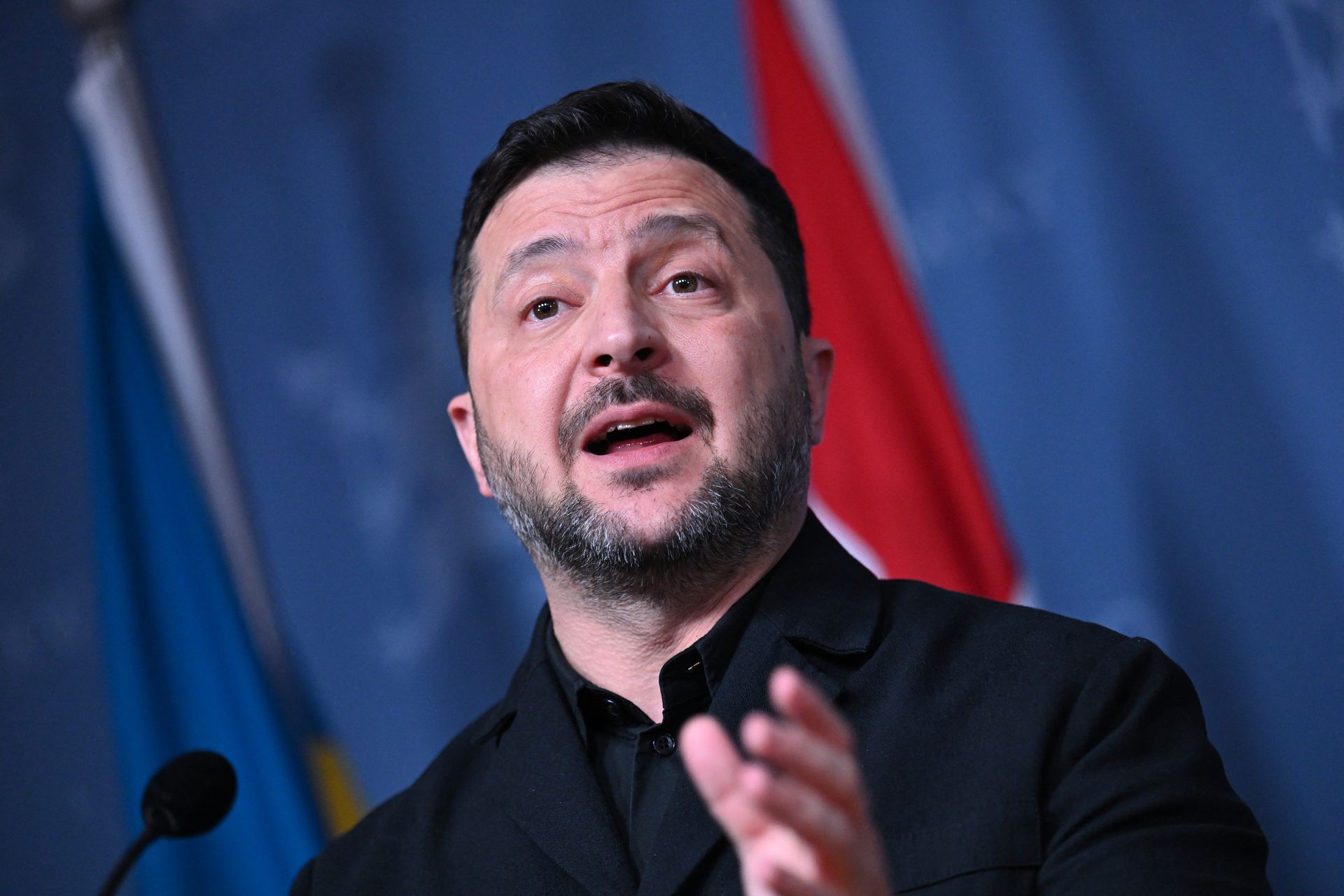
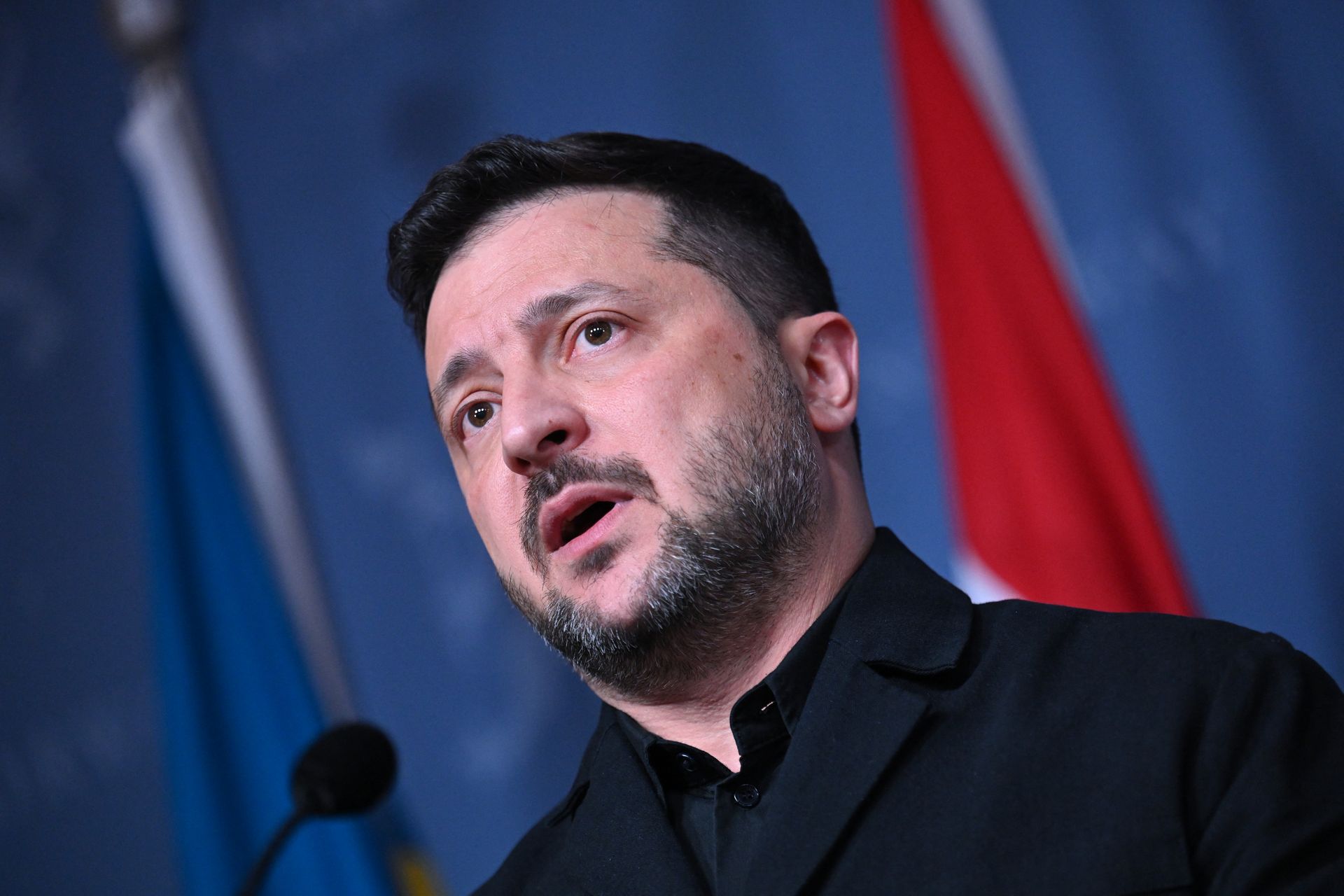
Zelensky details expectations for upcoming trilateral peace talks with Russia, US


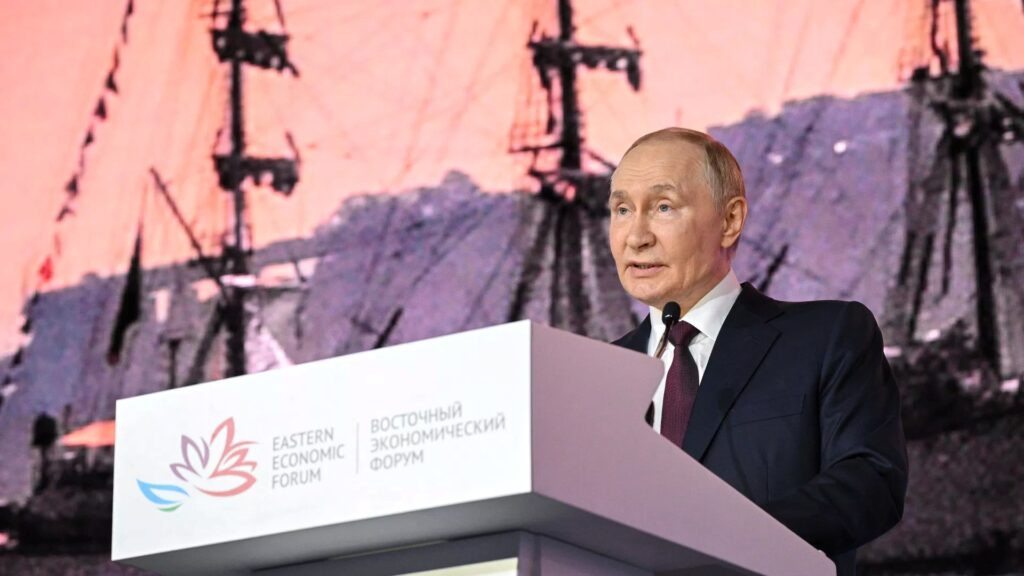
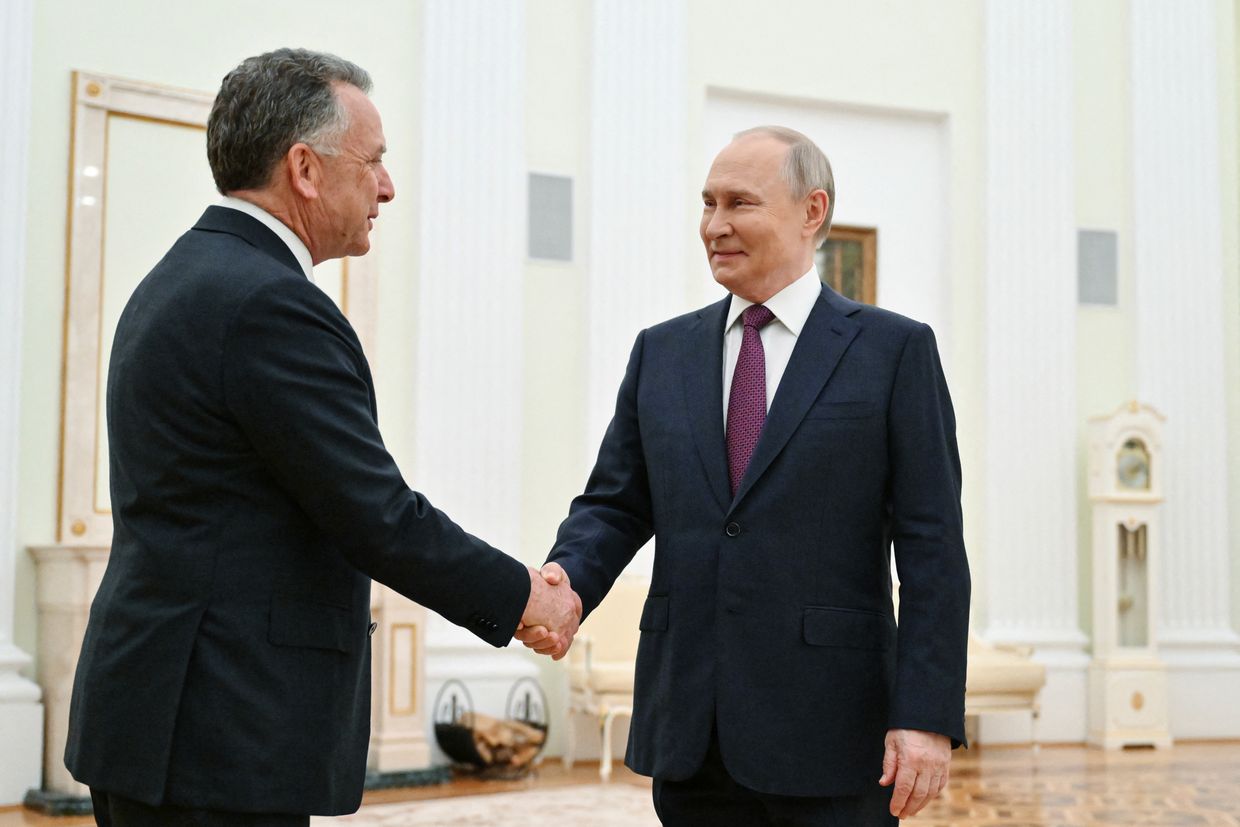
Russia is ready to resume three-way talks with Ukraine and the US, Russian President Vladimir Putin claimed in an interview with Pavel Zarubin of state broadcaster VGTRK, published on 22 October. He said they should settle security for both countries after a final peace deal, not a brief pause.
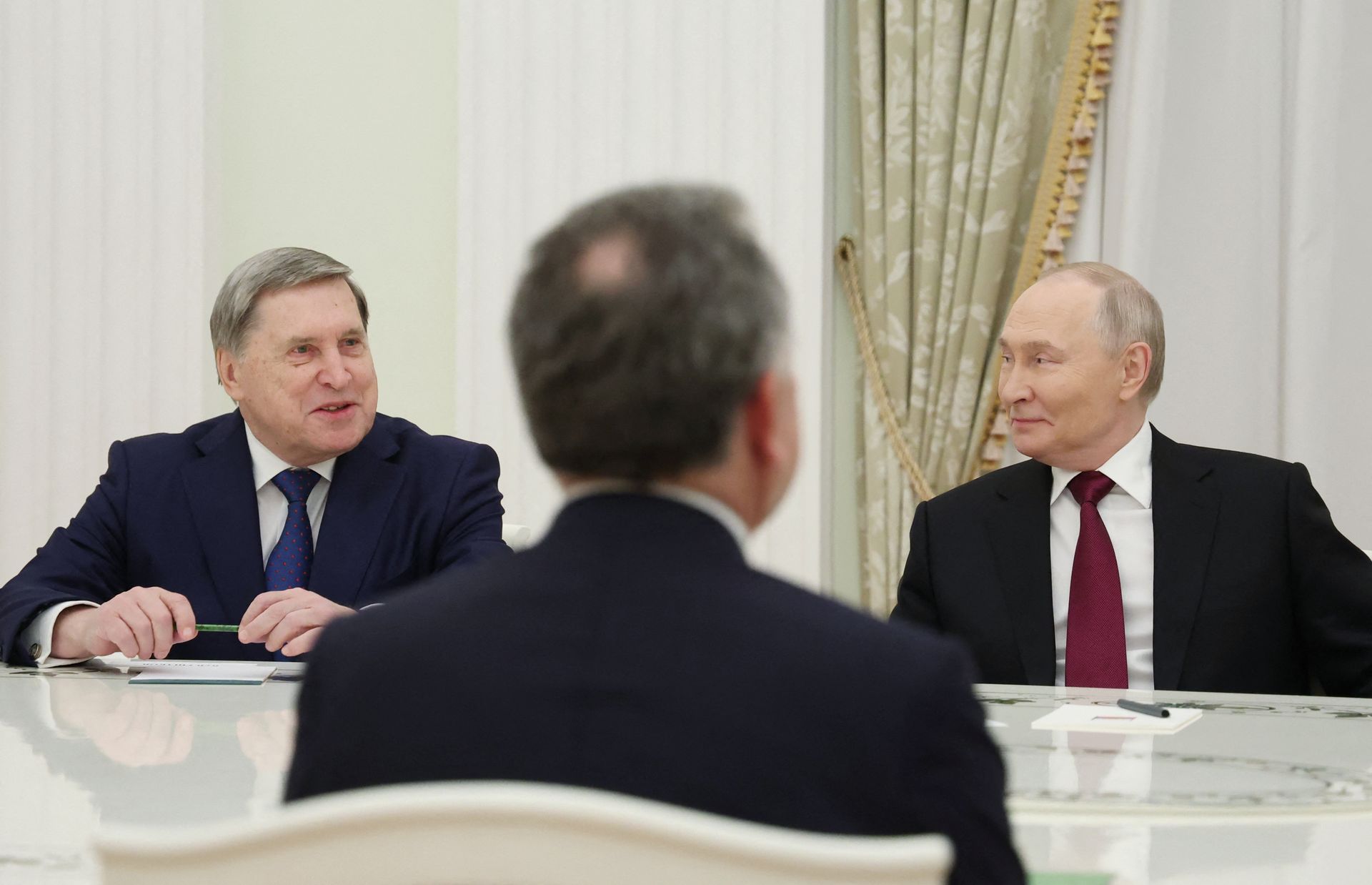
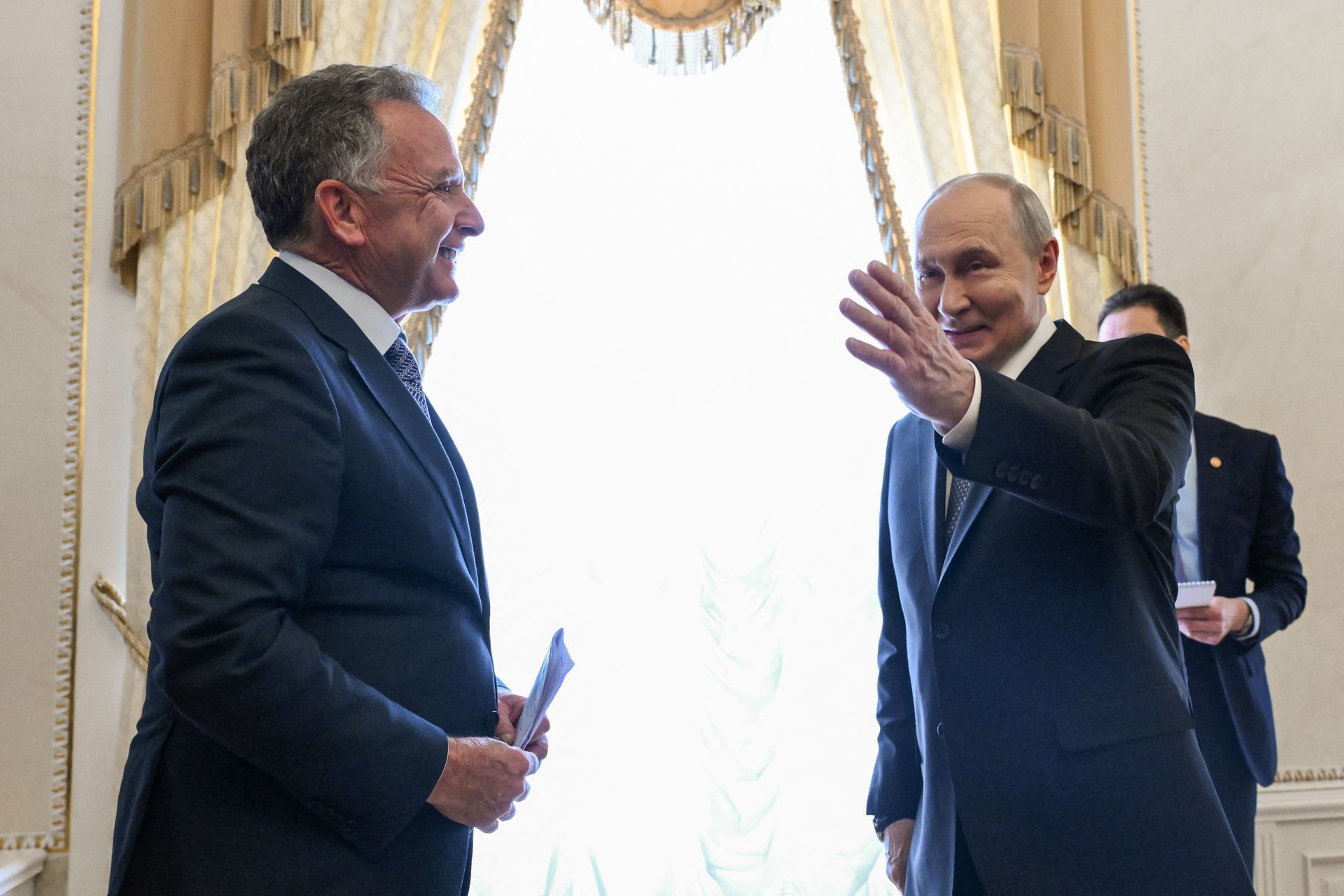
Putin spoke a day after he hosted US envoy Steve Witkoff in St. Petersburg and Ukrainian President Volodymyr Zelenskyy said he would accept freezing the war along the front line. In May, Kremlin spokesman Dmitry Peskov named Ukraine’s withdrawal from Donbas and Zaporizhzhia and Kherson oblasts as the only condition for peace. Any new round would start from that gap: Kyiv offers to stop where the armies stand, while Moscow’s last stated terms demanded more land.
Putin stated that Moscow and Washington had agreed Russia was ready to resume trilateral contacts. He added that he generally agreed with a US point that European security architecture should also be discussed.
On 21 October, Kremlin aide Yuri Ushakov stated that the sides had settled on mid-November, with Abu Dhabi as the likely venue.
In a 21 October Fox News interview, asked about a freeze leaving Ukraine 75% or more of its land, Zelenskyy answered: “Yes, right now, we have to freeze.”
Asked about the land Ukraine would give up, Putin replied that the occupied regions were not Ukraine’s but "historical Russia." He claimed their residents had voted for independence and then to join Russia, and called any talk of territorial losses inappropriate.
Putin linked Russia’s readiness to negotiate to Ukrainians being a people very close to Russians. He claimed the latest genetic studies show they are one people. Independent outlet Meduza noted it is unclear which studies he meant. Putin’s 12 July 2021 essay on the historical unity of Russians and Ukrainians made the same case, which Ukraine’s national memory institute rebutted.
He closed that answer by asserting Russia would achieve all the goals of what the Kremlin calls its special military operation. He made a similar vow on 17 December 2025.

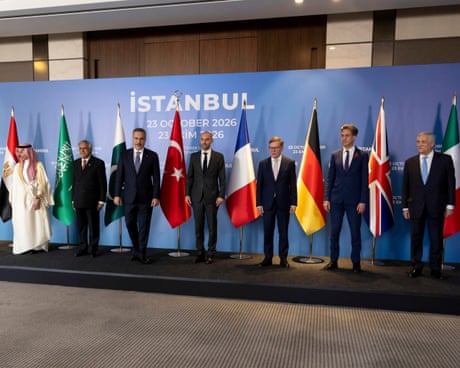
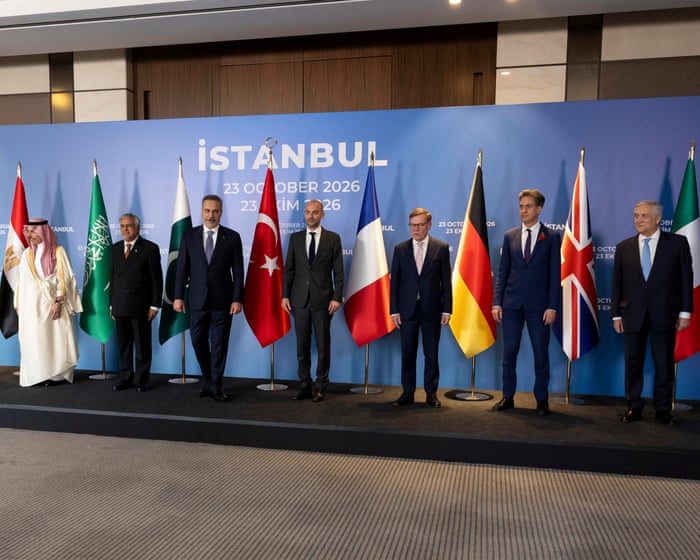
Multinational ‘anti-war bloc’ uses Istanbul summit to call for a diplomatic solution to Middle East crisis
Foreign ministers at a summit of eight European and Middle Eastern countries have urged the US and Israel not to renews their attacks on Iran, warning a fresh outbreak of fighting would spread conflict and push oil prices even higher.
The development of a new multinational “anti-war bloc” represents a challenge to the increasingly open plans by the US and Israel to relaunch strikes on Iran while talks on Tehran’s nuclear programme remain deadlocked.
Continue reading...
© Photograph: Massimo Percossi/EPA

© Photograph: Massimo Percossi/EPA

© Photograph: Massimo Percossi/EPA
The Kremlin has announced plans for renewed negotiations between Russia, Ukraine and the United States in Abu Dhabi during the first half of November, reviving a diplomatic process that has repeatedly failed to produce a settlement to Moscow’s war against Ukraine.
Russian presidential spokesman Dmitry Peskov said on Friday, 23 October, that the discussions would concentrate on post-war security arrangements. He also left open the possibility of eventual European participation, although the initial meeting is intended to remain trilateral.
The announcement follows talks in St Petersburg between Vladimir Putin and Donald Trump’s special envoy Steve Witkoff. Yet the emerging American proposals reveal a fundamental problem: Washington appears increasingly prepared to offer Russia substantial economic incentives, while Moscow has provided little indication that its political objectives in Ukraine have changed.
According to details reported on 23 October, citing The Economist, the American proposals involve Ukraine abandoning its ambition to join NATO in exchange for investment, security arrangements and the prospect of European Union membership.
Russia would receive sanctions relief, renewed commercial relations with American companies and potentially the restoration of natural gas exports to Europe. A demilitarised zone in Donbas is also reportedly under consideration.
The commercial dimension extends beyond theoretical proposals.
American and Russian representatives have discussed investment in the Nord Stream pipeline system and possible arrangements involving Lukoil’s international assets. The negotiations surrounding Russian energy infrastructure suggest that Washington regards commercial cooperation as a potential instrument for securing Moscow’s agreement.
There is no established evidence that Witkoff, Jared Kushner or members of Trump’s family would personally benefit from these arrangements. Nevertheless, the involvement of investors in strategically important Russian assets raises questions about whether economic agreements might advance independently of a settlement acceptable to Ukraine.
The Trump administration has already demonstrated its willingness to relax economic pressure. On 16 October, the president waived major provisions of the Graham sanctions legislation, which he had signed into law only four weeks earlier.
As EU Today previously examined, the decision suspended measures designed to increase the economic costs of Russia’s continuing aggression. Washington justified the waiver on the grounds that sanctions could interfere with negotiations.
The central weakness in a settlement built around commercial incentives is the assumption that Putin’s territorial and political demands can ultimately be exchanged for economic advantages.
Russia’s objectives have never been confined to Donetsk, Luhansk or access to Western markets.
In his July 2021 essay on the historical unity of Russians and Ukrainians, Putin advanced a conception of the two nations as belonging to a single historical and cultural space. His interpretation, examined by the Centre for Eastern Studies, challenged the legitimacy of Ukraine’s development outside Moscow’s political influence.
These ideas preceded the full-scale invasion of February 2022. They also followed Russia’s annexation of Crimea in 2014 and its intervention in eastern Ukraine.
Putin’s demands therefore concern more than military geography. They involve the extent to which Ukraine can exercise independent political authority, determine its international alliances and integrate with Western institutions.
Even a settlement granting Moscow substantial territory could leave this larger objective unresolved.
An independent Ukraine, increasingly integrated into the European economy and protected by Western security commitments, would remain outside Russia’s political control. For a Kremlin leadership that has repeatedly questioned Ukraine’s separate historical identity, such an outcome would represent a limitation on its wider ambitions.
Putin reinforced this position on 22 October when he again described Ukrainian territory in Donbas as historically Russian.
This creates an apparent contradiction. Why would Moscow return to negotiations if its broader objectives remain incompatible with the proposed settlement?
One explanation is that participation itself offers Russia strategic advantages.
Negotiations can preserve diplomatic engagement with Washington, complicate attempts to introduce additional sanctions and maintain American pressure on Kyiv to accept territorial concessions.
They also provide opportunities to negotiate economic arrangements before fundamental security questions have been resolved.
For Putin, the political timetable in Washington is relevant. Trump’s presidency is constitutionally limited to January 2029. Moscow can seek to exploit the present administration’s interest in a diplomatic agreement while continuing military operations.
None of this establishes that Putin has definitively rejected compromise. However, the Kremlin’s willingness to attend negotiations is not equivalent to a willingness to abandon its demands.
Russia continues attacking Ukrainian cities and energy infrastructure. As EU Today reported on 22 October, Russian forces launched 21 ballistic missiles against Kyiv shortly after Witkoff’s discussions with Putin.
The simultaneous pursuit of diplomatic engagement and military pressure allows Moscow to negotiate while attempting to alter conditions on the battlefield.
The proposed return of Russian gas exposes another contradiction in Washington’s approach.
The European Union has already adopted binding legislation to phase out Russian gas imports, with full restrictions taking effect during 2027.
The European Commission reiterated on 19 October that it had no plans to reverse its position. Reopening Nord Stream would also face sanctions, infrastructure and political obstacles, particularly in Germany.
Consequently, Washington cannot independently promise Moscow renewed access to European energy markets.
Nor can it guarantee Ukraine’s accession to the EU. Membership requires agreement among the existing member states, completion of accession negotiations and ratification of the relevant treaty.
A settlement negotiated primarily between Washington and Moscow would therefore depend on European decisions over which neither government has unilateral authority.
This helps explain the significance of Peskov’s remarks about possible European participation. Moscow needs European cooperation to secure meaningful sanctions relief and access to markets, even while seeking to negotiate Europe’s security arrangements principally with Washington.
Trump’s approach rests on the proposition that economic incentives can make a settlement more attractive to Moscow than continued warfare.
Putin’s position presents a different calculation. The Russian president must weigh the benefits of restored commercial relations against the political implications of recognising Ukraine’s durable independence and Western orientation.
Those objectives may prove incompatible.
A settlement that restores Russian energy revenues without credible guarantees against renewed aggression could reduce Moscow’s economic constraints while leaving the causes of the war unresolved.
The decisive test in Abu Dhabi will therefore not be whether negotiators can agree on investment, pipelines or sanctions relief. It will be whether Russia is prepared to accept a Ukrainian state whose sovereignty, political direction and future European integration remain beyond Moscow’s control.
Until that question is answered, renewed negotiations may offer Washington the prospect of a diplomatic achievement while allowing the Kremlin to pursue objectives it has not publicly abandoned.

The hardest part of ending Russia's war is making sure it cannot start it again. As the peace talks have escalated ahead of the US elections, Ukraine is weighing three options for its postwar security.
Among them are NATO membership, direct US guarantees modeled on NATO’s Article 5, and a European “Coalition of the Willing” backed by Washington, President Volodymyr Zelenskyy says, according to UNIAN. But none of them have been agreed to yet.
Zelenskyy describes the guarantees as a single package, with each layer still under discussion with partners. All of it, he says, rests on a strong Ukrainian army, in both numbers and quality.
Everyone counts on NATO, Zelenskyy says, but Kyiv is also negotiating direct guarantees from the US, including an Article 5-style collective-defense clause, alongside the European Coalition of the Willing that would act together with Washington. The arithmetic, he said, is already done.
“Our colleagues in Europe and America know this. We have already calculated everything: both the financing and the corresponding number of our soldiers, so that our state can be at peace,” he states.
He went further, arguing that NATO membership would serve not only Ukraine and the Alliance but also Russia.
“I think, honestly, the Russians need our accession to NATO too, because for them that is more security than Ukraine outside NATO,” he claims.
The talks come as Washington pushes toward negotiations. Zelenskyy says he expects signals from US Secretary of State Marco Rubio within a day or two, as well as a call with envoy Steve Witkoff. He adds that Jared Kushner, on his way to Kyiv in November, told him Russia supports a trilateral meeting of the US, Ukraine, and Russia, at the level of technical teams.


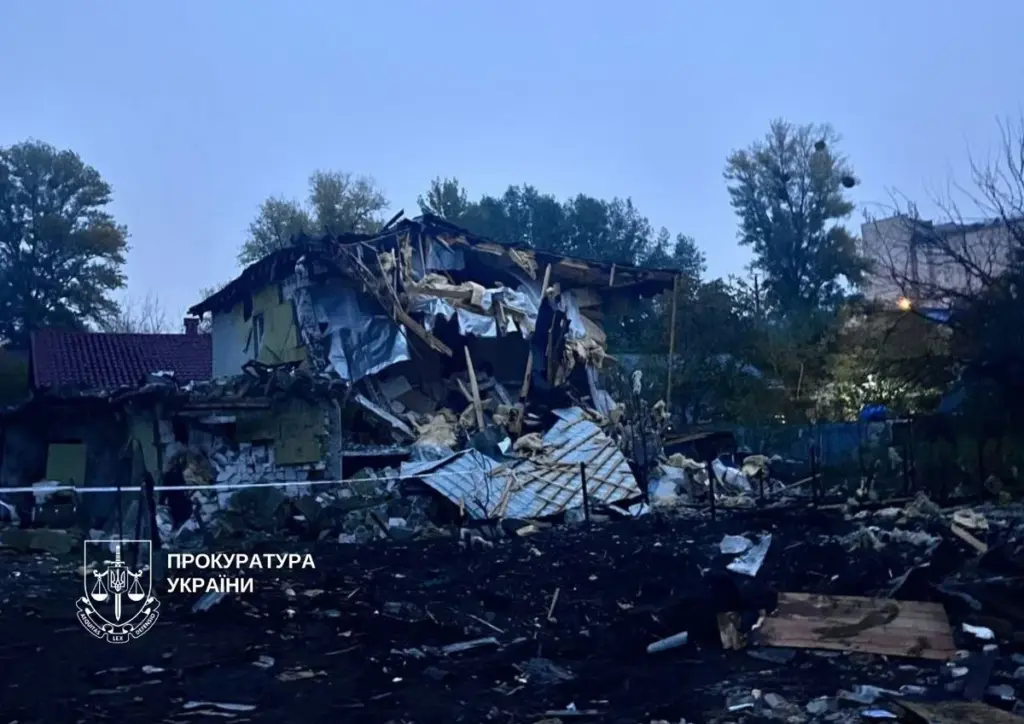
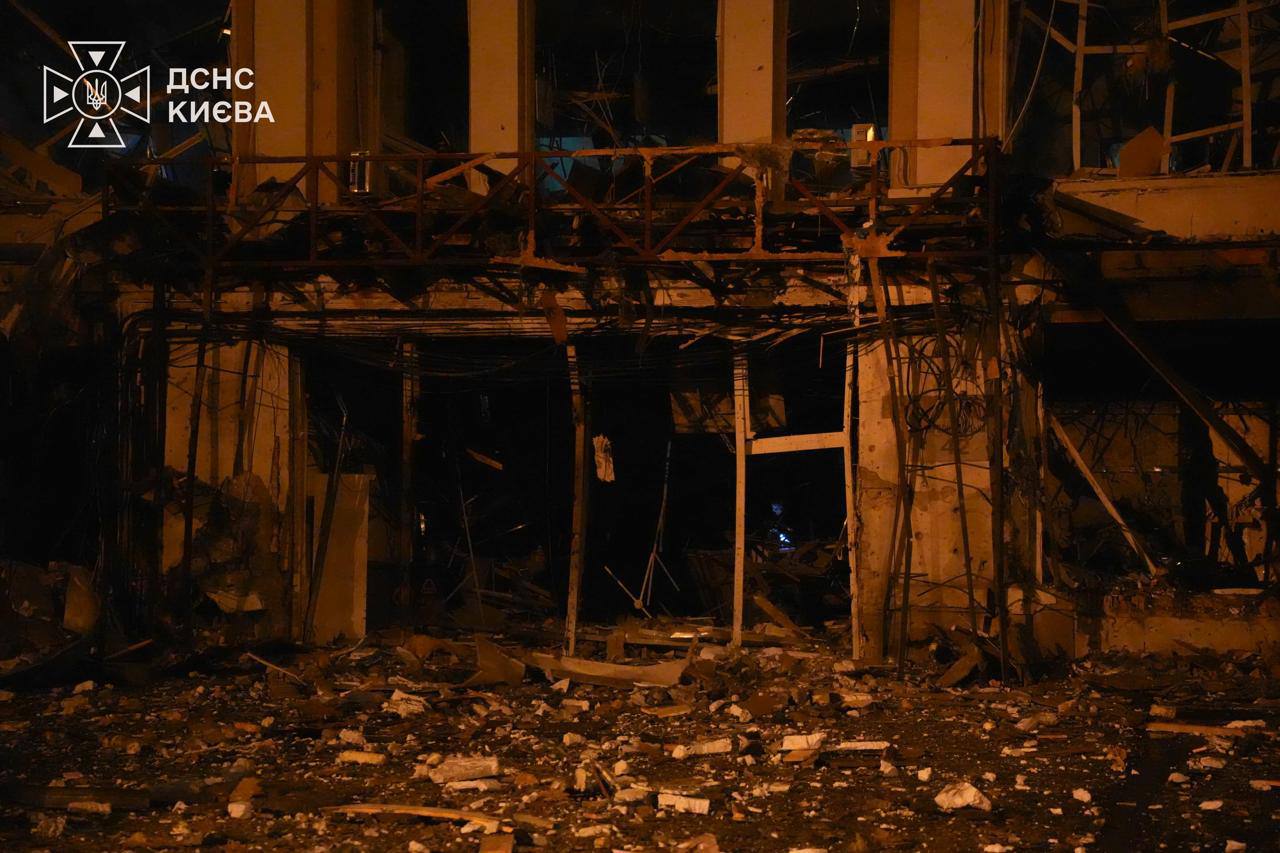
Russian missiles and drones killed one person and injured 24 in Kyiv overnight on 22 October, the Kyiv City Prosecutor’s Office said. Damage spread across six of the city’s districts, the city military administration reported.
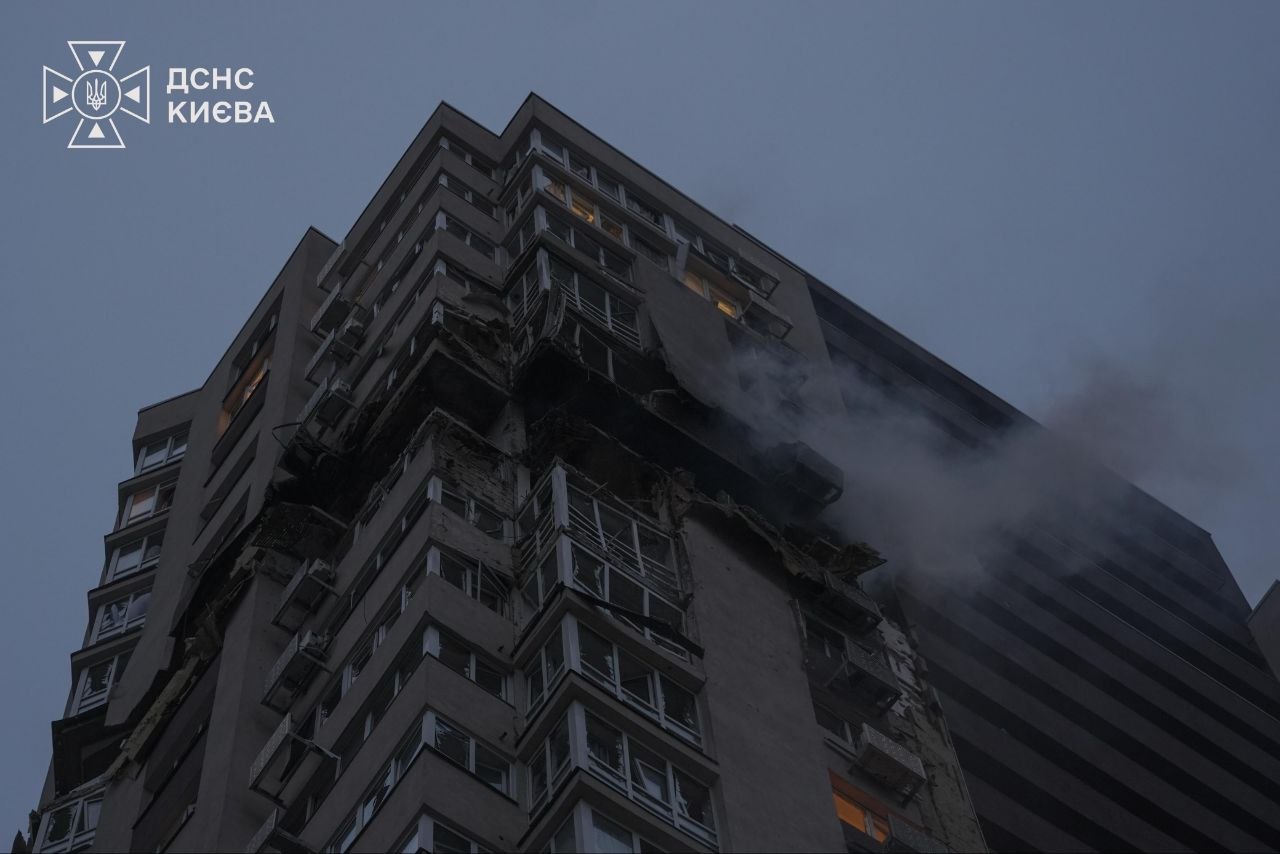
The strike came hours after Kremlin aide Yuri Ushakov said Putin had told Witkoff that Russia was “in principle” ready to resume three-way talks with the US and Ukraine in mid-November. President Volodymyr Zelenskyy read the overnight attack as a sign that Russia’s attitude has not changed. A day earlier, Russian drones killed two people in a 24-story Kyiv apartment block.
Russia fired 21 ballistic missiles at Kyiv overnight, Zelenskyy said. The barrage came in three waves, around 22:00, at about 02:00, and around 03:30.

Across Ukraine, air defenses downed or suppressed 181 of 210 Russian drones, the Air Force said. Its report did not mention any ballistic missiles shot down.
The only death in Kyiv came in the Dniprovskyi district, on the city’s left bank. There, Russian strikes destroyed 13 detached houses on several streets, prosecutors said. Police said the man killed was 48 and that six people were injured in the district, four of them children, the youngest aged five.
Of the injured, five are minors and two are young children, and prosecutors reported acute stress reactions among them. A 16-year-old boy is in hospital with a closed head injury, prosecutors said. Sixteen of the injured were hospitalized, the city military administration said. The final number of injured is still being established.
In the Holosiivskyi, Obolonskyi, Pecherskyi, and Sviatoshynskyi districts, the attack damaged eight apartment buildings, prosecutors said. It also damaged a building-supply hypermarket, a restaurant, a monastery building, a post office, and office premises.
In Pecherskyi, Russia damaged an ambulance station and six ambulances, Kyiv Mayor Vitali Klitschko wrote. The State Emergency Service said eight people were injured in that district, three of them children, and reported damaged transport infrastructure in the Darnytskyi district.

The strikes damaged metro infrastructure on the Pivdennyi (Southern) Bridge, Kyiv Metro said. As of the morning, green-line trains ran in two sections, Syrets–Vydubychi and Osokorky–Chervonyi Khutir. Inspections and repairs would continue after the all-clear, the metro said.
Oleksii Biloshytskyi, head of Ukraine’s Patrol Police Department, announced that traffic across the bridge toward the left bank was temporarily closed. The city is adding buses on routes 22 and 91, the city administration said. Russian drones had already hit the bridge repeatedly in early October.
Key developments on Oct. 21:


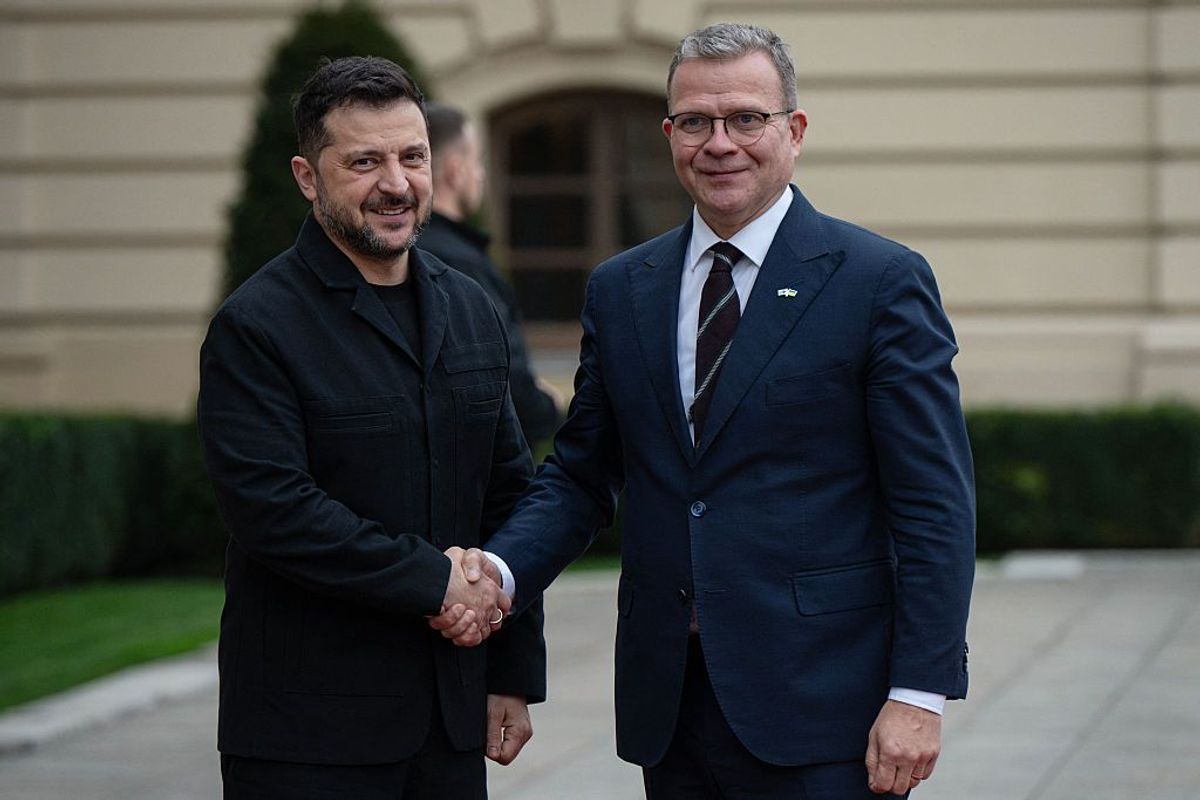
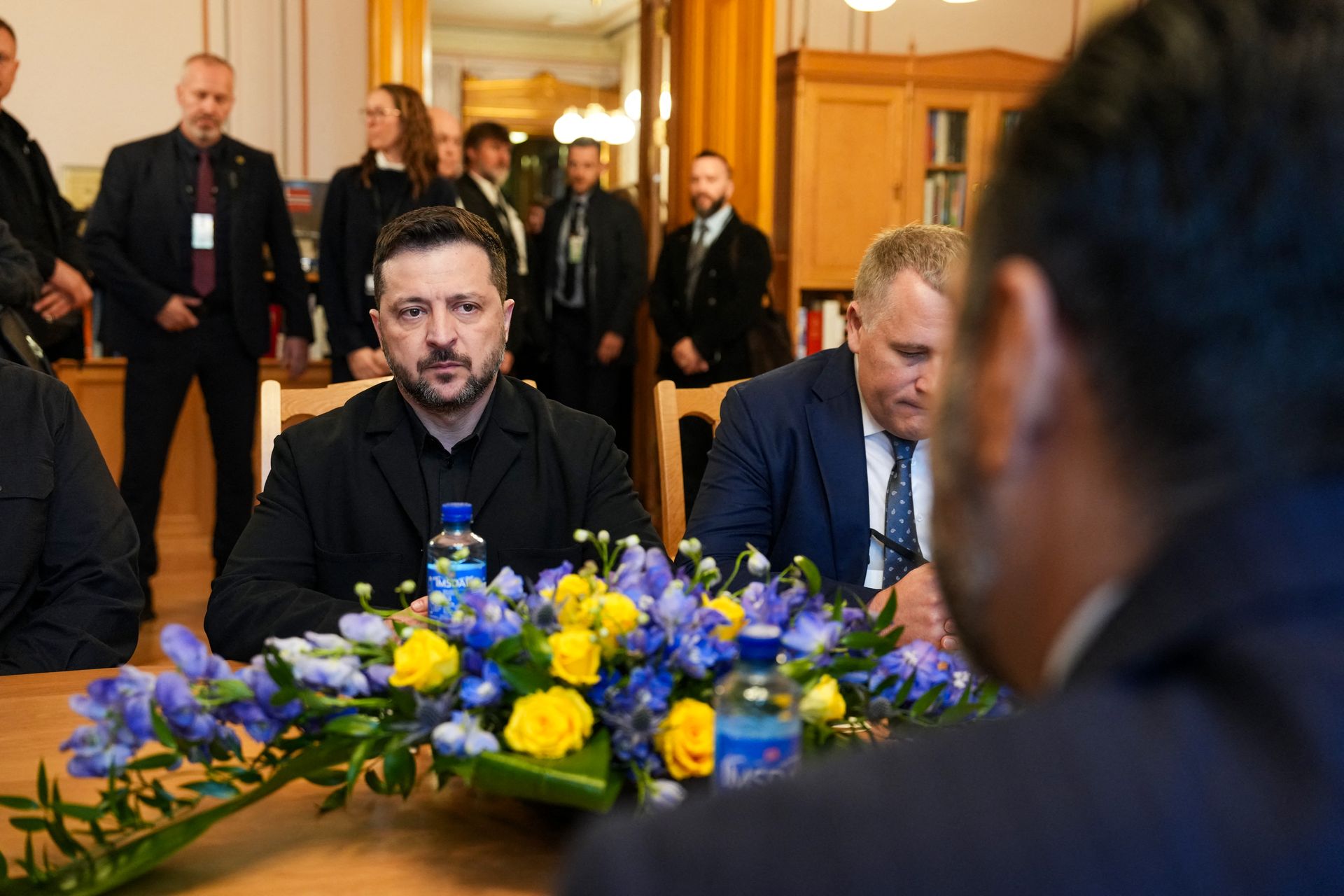
The latest American diplomatic initiative on Ukraine comes at a particularly difficult moment in relations between Washington and Kyiv. President Donald Trump’s special envoy, Steve Witkoff, is taking part in talks in Oslo on Tuesday, 20 October, with Ukrainian President Volodymyr Zelenskyy and European leaders, before an anticipated visit to Moscow for discussions with Vladimir Putin.
The Norwegian government has confirmed that the meetings will include Prime Minister Jonas Gahr Støre and Finnish President Alexander Stubb. Trump’s son-in-law, Jared Kushner, will participate remotely. The meeting was requested by Zelenskyy, with Norway and Finland providing the diplomatic setting.
Yet the significance of the Oslo discussions lies less in the gathering itself than in the political circumstances surrounding it. Washington is seeking an agreement with Moscow while simultaneously becoming more confrontational towards Kyiv. Recent American decisions affecting military assistance, intelligence cooperation and Russian energy exports have introduced serious doubts about how the administration intends to use its considerable negotiating leverage.
The immediate difficulty concerns the growing discrepancy between American diplomatic assurances and the practical conditions under which Ukraine is expected to negotiate.
Zelenskyy has accused Washington of delaying military deliveries, restricting intelligence sharing and limiting access to the Starshield satellite communications system. The Ukrainian president suggested that these developments reflected a political decision to reduce support at a particularly sensitive stage of the war. American officials have disputed allegations that assistance is being deliberately restricted.
Among the disputed deliveries are Patriot air-defence interceptors purchased by European NATO members through the Prioritised Ukraine Requirements List programme. Zelenskyy has indicated that shipments remain subject to authorisation by US Defence Secretary Pete Hegseth.
These are operational matters with immediate consequences. Ukraine relies on American intelligence, communications infrastructure and air-defence equipment to counter Russian missile attacks. Any interruption affects Kyiv’s military calculations, irrespective of whether Washington formally acknowledges a change in policy.
The political message is equally consequential. Trump has publicly questioned Zelenskyy’s willingness to negotiate and suggested that Ukraine might need somebody else to conduct talks with Russia. Such remarks place additional pressure on the Ukrainian leadership while leaving Moscow’s territorial demands largely untouched.
The central weakness in the American diplomatic approach is the assumption that renewed engagement with Putin will necessarily produce meaningful Russian concessions.
Moscow has repeatedly treated negotiations as an opportunity to pursue political objectives that its armed forces have not achieved on the battlefield. Russian demands concerning Ukrainian territory and restrictions on Kyiv’s future security arrangements remain incompatible with Ukraine’s sovereignty.
An agreement reached under these conditions could suspend hostilities without resolving the underlying conflict. Russia would retain the capacity to rebuild its forces, while Ukraine could find its military options constrained by commitments made in exchange for an uncertain ceasefire.
The Trump administration’s recent economic dealings with Moscow further complicate the negotiations. Washington’s arrangements concerning Russian diesel have attracted criticism from Kyiv and European governments, particularly because Russian energy revenues remain an important source of financing for the war.
Trump has also pressed Ukraine to curtail attacks on Russian oil infrastructure, reflecting American concerns about fuel prices. For Moscow, relief from attacks on refineries would preserve economically important facilities that Ukraine has demonstrated an increasing ability to reach.
Any arrangement limiting such operations without corresponding Russian concessions would alter the military and economic balance in Moscow’s favour.
The broader American proposals reportedly include possible post-war economic cooperation with Russia. Their implications extend beyond Ukraine: commercial normalisation could offer the Kremlin substantial benefits before the conditions for a stable European security settlement have been established.
European participation in the Oslo process is therefore more substantial than a question of diplomatic representation.
Britain, France, Germany and Poland, alongside the European Union and NATO, are expected to be involved in the wider discussions. European governments would almost certainly bear much of the financial and military responsibility for implementing any settlement, including Ukraine’s reconstruction and long-term security.
They also possess considerable economic leverage through sanctions, financial restrictions and decisions concerning frozen Russian assets. Those instruments would form part of any serious negotiation over Moscow’s future relations with Europe.
However, European influence remains constrained by continuing dependence on American military technology and equipment. The controversy surrounding Patriot deliveries illustrates the problem: European governments can finance weapons for Ukraine without necessarily controlling when those weapons are released.
As EU Today previously examined, Washington’s negotiations with Moscow have consequences for European security that cannot be separated from the future of Ukraine.
European governments consequently face a difficult calculation. They wish to preserve American involvement, but excessive accommodation of Washington’s demands could leave them financing security arrangements over which they exercise limited control.
Norway and Finland have helped bring the Ukrainian and American delegations together at a moment when their relationship is deteriorating. Whether that produces progress will depend partly on Moscow’s response, but also on whether Washington is prepared to maintain the military and economic pressure necessary to make Russian concessions possible.
Witkoff’s anticipated journey from Oslo to Moscow will offer an early indication of the administration’s priorities. Putin will be assessing the terms Washington is prepared to offer, while Kyiv remains concerned about restrictions affecting equipment it needs to defend its cities.
For the Ukrainian leadership, the danger is that negotiations intended to end Russia’s invasion could become a process in which the country resisting that invasion is asked to make the most immediate concessions.

US President Donald Trump wrote in a Truth Social post on 18 October that he did not want to “drive, foolishly, Russia away from the bargaining table.” He also wrote: “Signing that document at this time will do that, and I can sign it later, or any time that I want!”
Trump was referring to sanctions and tariffs under the Lindsey O. Graham Sanctioning Russia and Iran Act of 2026, which he waived in an executive order on 16 October, days before the measures were due to take effect. The waiver suspends additional economic penalties intended to pressure Moscow over its war against Ukraine, while leaving earlier US sanctions in place. The decision came weeks before the 3 November midterms, in which Republicans are defending slim majorities in both chambers, and analysts said the penalties could have pushed up oil prices for Americans already paying more, largely because of the US-Israeli war with Iran, Reuters reported.
A week before the waiver, Trump had announced a deal for Russia to increase diesel supplies to global markets. The Treasury also issued a license, valid until 7 April 2027, permitting certain transactions in Russian-origin diesel.
In the Truth Social post, Trump accused Ukrainian President Volodymyr Zelenskyy of targeting Russian diesel refineries, saying the strikes were “seriously hurting the world diesel markets, including those in the United States.” Kyiv had paused its refinery strikes for three days at Washington’s request after Trump declared an energy ceasefire on 11 October, which Russia never confirmed, then resumed them. Since then, Russia has struck Ukraine’s energy sector 76 times, Zelenskyy said on 18 October.
Trump wrote that Zelenskyy “doesn’t want to end this war, and probably never did,” and that he “could have made a better deal two years ago than he can now.”
“His country is in shambles, a large portion of his land is lost, his oceans and seas are gone, and his male population is low, wounded, and/or dead,” Trump added.
He also said Russia was “doing very little, if anything, to help” Iran and that he wanted to keep it that way.
On 17 October, Trump told reporters at Mar-a-Lago that he had not announced his final decision. “A lot of you don’t know what my decision is yet, but we’ll figure it out, and you’ll figure it out,” he said, Reuters reported.
“I think the president wants to take the 60-day period of time to sort of analyze what imposing both sanctions and tariffs will mean to the global economy and even to the US economy,” US Secretary of State Marco Rubio told reporters before departing for Uzbekistan the same day.
Zelenskyy called it a “pity” that Trump had waived sanctions under a law named for the late Senator Lindsey Graham, who “really believed in Ukraine.” He said he hoped Trump would change his decisions, NBC News reported.
Discussing the diesel deal on NBC’s Meet the Press, Zelenskyy said US oil prices had risen because shipping through the Strait of Hormuz was blocked, not because of Ukraine.
On 17 October, Zelenskyy told journalists that “the decision to undo all of this, to block all of it, seems wrong to me” and that it “definitely helps only the Russians.” His remarks appeared in Ukrainian on his official Telegram channel.
“Sanctions relief will continue. I think the diesel deal and the move regarding the Lindsey Graham Act are not the end of it. Unfortunately,” Zelenskyy said.
On 19 October, Zelenskyy wrote that partners had again given no warning of Russia’s overnight ballistic attack and that blocking missiles for Ukraine’s air defense while Russia gets sanctions eased or postponed amounts to partners denying reality.
Republican Senator James Lankford defended Trump’s decision on NBC’s Meet the Press, saying the president was “choosing the American people first.”
Senator Darline Graham, Lindsey Graham’s sister, whom Trump has endorsed for a full term, said at a campaign stop on 17 October that she would “choose to keep the pressure on Russia.”
“I don’t trust Putin and I don’t trust Russia,” Darline Graham said.
She did not directly criticize Trump but said she would not have made that choice, Reuters reported.

A bipartisan group of 22 House lawmakers is urging President Donald Trump to fully implement the new Russia sanctions law and revoke a license allowing certain Russian diesel transactions. In a letter sent on 15 October, they copied Secretary of State Marco Rubio and Treasury Secretary Scott Bessent and requested details on planned sanctions, tariffs and waivers.
Their request comes as the law’s first requirements fall due on 18 October, while lawmakers from both parties challengethe administration’s decision to allow certain Russian diesel transactions. Some restrictions take effect automatically, while others require presidential action. The law does not specify a penalty for the president missing the deadline.
Congress passed the Lindsey O. Graham Sanctioning Russia and Iran Act of 2026 by votes of 86–11 in the Senate and 262–159 in the House. Trump signed it on 18 September. Graham, a Republican senator from South Carolina, died in July.
Restrictions taking effect automatically on 18 October include a ban on US banks and broker-dealers processing transfers to or from the Russian government, a ban on new US investment in Russia, a ban on new US investment in Russia’s energy sector, and a ban on US energy exports to Russia.
Other measures require presidential action by the same date. The law directs Trump to review and sanction Russian officials, oligarchs and shadow-fleet vessels, sanction the Bank of Russia, specified Russian banks and state-owned companies, and impose tariffs of up to 500% on Russian goods. Tariffs of up to 100% can apply to goods from countries among the five largest importers of Russian oil or gas, or among the top five countries facilitating Russian oil sanctions evasion.
Trump may waive sanctions, restrictions and tariffs under the law if he first certifies in writing to Congress that a waiver is in the US national interest and submits a report explaining its basis.
House members also urged Trump to revoke General License 135, which the Treasury Department issued on 9 October and that is valid until 7 April 2027. It permits certain transactions involving Russian-origin diesel, including imports into the United States. Trump said Russia would immediately supply more than 300,000 tons of diesel to US and global markets and predicted prices would fall sharply, according to a 9 October Truth Social post.
On 13 October, a bipartisan group of 12 senators also urged Trump to rescind the deal and revoke the license. Seven senators said the deal conflicted with a 2022 law banning Russian energy imports.
The Graham Act says nothing in its provisions affects the Treasury secretary’s existing authority to issue general licenses. That provision does not resolve whether the diesel license complies with the separate 2022 law.
A White House official told Newsweek the administration would comply with the Graham Act. Bessent said the administration would use “all the legal authorities we have” and called the deal “good for the American people,” Fox News reported on 11 October.
Separately, the law sets a process for terminating sanctions, restrictions or duties against Russia. Trump must report to Congress that Russia has signed a peace agreement accepted by Ukraine’s government and ceased military hostilities against Ukraine, as well as activities to overthrow, dismantle or subvert its government. Congress has 30 days to block termination through a joint resolution of disapproval, or 60 days for reports submitted between 10 July and 7 September.