❌

Reading view

The rise and fall of Route 66

In the 1940s and '50s, Route 66 was one of America's most popular highways, driving business to small towns from Chicago to Santa Monica. But today, the road and its people have been largely forgotten. Ghost towns, empty motels, and abandoned gas stations line its path. Chief correspondent Abby Narishkin grew up along the road. In celebration of its 100th anniversary, she drove down the old route herself to visit the people and businesses still keeping this Americana legacy alive.

Read the original article on Business Insider

  •  

Volkswagen to build $4bn Audi SUV factory in US despite job cuts at home

VW investment, creating 4,500 jobs in Georgia, comes amid Trump’s damaging tariffs, intense Chinese competition and costly shift towards EVs

Audi has said it will spend $4bn (£3bn) to build its first factory in the US, as its parent company, Volkswagen, struggles with the impact of steep tariffs imposed by Donald Trump.

The German brand’s chief executive, Gernot Döllner, joined Trump on stage at a campaign rally on Saturday night to announce the factory in Macon, Georgia, in an unusual move by a big European brand just days before the US midterm elections.

Continue reading...

© Photograph: Friso Gentsch/EPA

© Photograph: Friso Gentsch/EPA

© Photograph: Friso Gentsch/EPA

  •  

Latin America: the ‘cultural battle’ as a facade for neoliberalism

For several years now, politicians, influencers, and intellectuals from Latin America’s new radical right have been speaking about the importance of the “cultural battle” to recover a sort of perspective lost in the past and to underpin a civilizational project that prioritizes the individual, individual freedom, and the free market above all else.

Probably the first to insist on this idea in the media was Javier Milei, the current president of Argentina, who initially made a name for himself as an economist who had no problem insulting his opponents and defending orthodox neoliberal thought.

At that time, Milei, along with his intellectual allies, called for a stand against a purported culture imposed by so-called left-wing elites who had tarnished common sense, Christian morality, and individual freedom, among many other things.

A few days ago, Colombian President Abelardo de la Espriella called for a radicalization of his “cultural battle” and ordered the removal of dozens of works of art from various museums in order to restore a culture that has been held captive by the left, Marxism, and other dark (or, as Milei himself puts it, “demonic”) forces.

In reality, the move isn’t particularly original. Back in the United States, Pat Buchanan (a close advisor to Nixon and Reagan) had already advocated for and encouraged inflammatory rhetoric to wage a “culture war” and thus defend a culture tarnished by social change. Among the major intellectual inspirers of this doctrine are the American Sam Francis and the Frenchmen Alain de Benoist and Guillaume Faye (albeit with their well-known differences). Even some Germans in the 1930s attempted to make what they called “cultural Bolshevism” the scapegoat for all their ills.

But the push for a “cultural battle” in Latin America had a more interesting rationale. And it is not so much due to a supposed pragmatic interpretation of Antonio Gramsci’s concept of hegemony – which has been distorted by the new radical right, as well as by much of liberalism and social democracy, which understand it solely as “cultural hegemony.”

No, in reality, the intention behind invoking a “culture war” against feminism, abortion rights, progressive governments, left-wing artists, revolutionary intellectuals, etc., is more of a strategic nature.

For those who are actually, as ideologues, behind the “culture war” projects are not Buchanan, Francis, De Benoist, or Faye, but Hayek, Friedman, and the rest of the neoliberal economists.

The truth is that neoliberalism in Latin America during the late 20th and early 21st centuries was both a resounding failure and a magnificent victory. This apparent contradiction is resolved depending on which social class we are discussing. During that time, the most powerful social classes, economically speaking, managed to accumulate an enormous amount of power and resources, the likes of which have rarely been seen in Latin American history.

But such a level of accumulation in societies subjugated by a global imperialist order (such as those in Latin America) necessarily drives the working classes into conditions of material precariousness that are almost unbearable. Mass migration, uprisings, deaths, the loss of a lifetime’s savings, rising crime, and so on were just some of the devastation left in the wake of the neoliberalism driven by the Washington Consensus during that period.

In response to the crisis, several centrist, center-left, and even leftist leaders won elections in the region in quick succession: Chávez in Venezuela, Morales in Bolivia, Fernández in Argentina, Correa in Ecuador, Lula in Brazil, Bachelet in Chile, Mujica in Uruguay, etc. They sought to resolve a capitalist economic crisis within the framework of capitalism itself, resorting to approaches that combined Keynesian measures with legislation designed to protect and expand rights, especially for the most marginalized sectors.

These were times when (not without contradictions with other political forces, including those of a more traditional left) the economies of these countries improved, thanks in part to high commodity prices on the global market. And with public policies that, in many cases, focused on providing aid and social programs, the situation of millions of Latin Americans clearly improved. Between 2000 and 2012 alone, 56 million Latin American citizens managed to rise out of poverty.

Once the storm of discontent against neoliberalism had passed, the ruling classes decided they’d had enough of progressive governments. But to regain absolute control (since they had always maintained the necessary share of power to influence national decisions), they needed to win back the governments, and to do so, they found themselves at a crossroads.

They knew that the central argument against center-left governments could not be based solely on the economic downturn that followed the end of high prices for Latin American natural resources, but that it had to be grounded in something more – something that would come across as novel, radical, and a sort of conservative revolutionary ideology.

And that is how they found in the “culture war” a niche for ideological propaganda that has had a historic impact on Latin America. In addition to the aforementioned criticisms, they succeeded (through their intellectuals, politicians, influencers, media outlets, social media, and so on) in creating a perceived link between progressivism and corruption, between progressivism and organized crime, and, finally, between progressivism and an alleged erosion of individual freedom.

But the truth is that these kinds of strategies can cause political upheaval like that seen in the region in recent years, during which (thanks to the support of national and international tycoons, as well as support from Washington and other governments such as Israel’s) there has been a string of victories for the radical right, which could complete its winning hand next Sunday in Brazil.

But in the long term, neoliberalism cannot (nor does it intend to) overcome the contradiction inherent in an economy of this nature in countries with clear relationships of international domination. Thus, at the height of this new wave of neoliberal right-wing movements, the first cracks in ideological stability are already beginning to appear, precisely in the face of a material reality that offers no respite from political rhetoric.

The situation of millions of Latin Americans (especially the poorest) is rapidly being complicated by a radical increase in the rate of inequality. The promises made by the new right-wing movements to defeat organized crime show no signs of being a reality or of bringing about clear regional change. Perhaps this is what Nietzsche, another great reactionary, meant when he acknowledged that culture is merely the veneer of something deeper. And that veneer is beginning to wear away very slowly – a process that is nonetheless noticeable if one pays attention.

  •  

Warning: This review will make you want a wagon

Ben Shimkus, Business Insider's autos reporter, is standing next to a 2026 Subaru Trailseeker.
It may not look like it, but this is one of the fastest cars I've ever driven.

Ben Shimkus/Business Insider

  • It looks unassuming, but the Subaru Trailseeker is ridiculously fun to drive. And fast.
  • Technically, Subaru classifies this car as a midsize SUV. (Sure, Jan.)
  • It's the Subaru-iest of all the vehicles built in partnership with Toyota.

American parking lots are awash with a sea of sameness. There's just a bunch of basic SUVs and pickup trucks.

That makes the wagon-ish 2026 Subaru Trailseeker EV a real eye-catcher. Unlike the homogeneous crossovers rolling up to elementary school pickup lines today, it gets a stretched, long-roof profile and carries a Subaru badge. It looks like a proper successor to the Subaru wagons of yore, like the 2000s Outbacks and Legacys.

Technically, Subaru sees this differently. They classify the Trailseeker as an all-electric midsize SUV — and they do have a point with its 8.5 inches of ground clearance and easy-to-slide-into seats.

But, I mean, come on, look at this thing.

The side profile of the 2026 Subaru Trailseeker.
The Subaru Trailseeker wagon —err — SUV's side profile.

Ben Shimkus/Business Insider

That's a wagon in my book.

I drove the Trailseeker's top Touring trim for about 450 miles to see if it was a worthy antidote to America's great car-design flattening. My tester — complete with premium blue paint, a panoramic glass roof, and radiant leg warmers in the front seat (yes, you read that right) — stickered at $48,400.

And it was pretty wild.

This wagon — sorry, SUV — can really move

Left: the front of a Subaru Trailseeker. Right: the rear of a Subaru Trailseeker.
Why is this thing so fast?

Ben Shimkus/Business Insider

I've driven around 80 cars in my career as an auto journalist: EVs, muscle cars, sports cars, big trucks, premium luxury vehicles, etc.

The Trailseeker easily makes my personal list of top 10 fastest vehicles. It can launch from standing to 60 mph in about 4.4 seconds and produces 375 horsepower.

Get behind the steering wheel of this family-wagon-shaped car, and you feel that power at all times. On my highway-dominant drive from New York City to the Washington, DC, area, it quickly dashed by slower traffic and 18-wheelers.

The speed doesn't come at the expense of efficiency or refinement, either.

The Trailseeker returned about 3.7 miles per kWh, giving the battery about 270 miles of juice. While it was whipping past cars on the New Jersey Turnpike, I could still hear back-seat passengers when they spoke.

And, speaking of the back seat, the Trailseeker's long body gives rear passengers an almost comical amount of legroom. Fold those seats down, and my panoramic-roof tester has up to 71.8 cubic feet of cargo space, in case you have to move some furniture around, too.

The second row of a Subaru Trailseeker
The Trailseeker's backseat has more than enough room.

Ben Shimkus/Business Insider

Its biggest red flag was charging.

I saw speeds peak around 127 kW, which is pretty middling in today's EV age. Subaru says the car can accept up to 150 kW.

Let's compare that to the much higher-priced (but similarly shaped) Lucid Gravity, which is considered America's fastest-charging EV. That one can accept up to 420 kW, adding up to 200 miles of range in under 12 minutes.

My initial fast-charge of the Trailseeker — a top-off kind of stop while I grabbed a coffee — took 21 minutes, charging the car from 49% to 77%.

Is it Subaru-y enough?

The front seat of the Subaru Trailseeker.
Take away the Subaru badge, and this might look a lot like a Toyota interior...

Ben Shimkus/Business Insider

Subaru didn't build the Trailseeker alone.

It's the product of Subaru's expanding EV partnership with Toyota. The two companies now sell three closely related EV pairs: Subaru's Solterra, Uncharted, and Trailseeker correspond with Toyota's bZ, C-HR, and bZ Woodland. Next year, the companies are launching mechanically similar three-row EVs, too, with the Toyota Highlander and the Subaru Getaway.

The Trailseeker is easily the Subaru-iest of the bunch, and it's not just because of its wagon-y looks. It gets a dose of Subaru's adventure-seeking vibe, including standard Symmetrical All-Wheel Drive, X-Mode settings for snow and mud, roof rails, and a 3,500-pound towing capacity.

That outdoorsy tuning comes with a trade-off. The Trailseeker felt noticeably firm over broken pavement, especially at lower speeds.

A wagon comeback? Don't hold your breath.

The steering wheel of a Subaru Trailseeker.
Good luck finding a Trailseeker on a dealership lot right now...

Ben Shimkus/Business Insider

You want a wagon now, right? Isn't this thing so cool?

Well, I'm teasing you. Good luck finding a Trailseeker.

Right now, Subaru has only a 9.7-day supply of the model in dealer lots, per CarGurus data shared with Business Insider. That's well under the industry average of about 70 days' worth of supply.

Kevin Roberts, CarGurus's director of economic and market intelligence, says the low supply isn't a product of high demand. In September, the automaker only sold 849 units, just 1.6% of all Subaru sales in America.

Rather, the low supply is part of an ongoing trend of automakers slowly shipping 2027 model-year vehicles to lots.

As the calendar turns, Roberts says there's little momentum for the wagon body type: "This segment has accounted for less than 1% of new car sales," he said, adding that "the traditional wagon has become increasingly rare in today's new car market."

So, no, the Trailseeker probably isn't about to resurrect the American station wagon.

That's a shame. After 450 miles in one, I'm increasingly convinced that good ones could win over American drivers.

Read the original article on Business Insider
  •  

Panther spirit in DC: Organizing against Trump’s fascist push

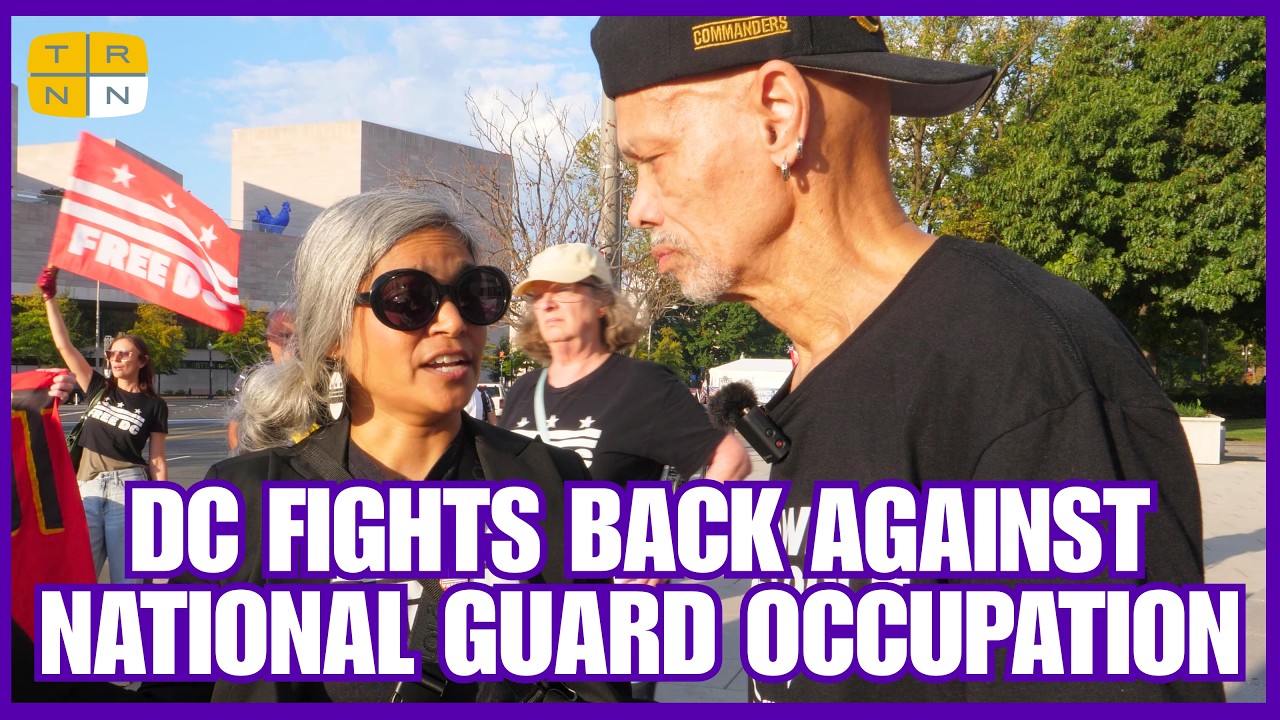
Host of Rattling the Bars Mansa Musa speaks with Free DC Executive Director Keya Chatterjee at a rally against Trump's National Guard deployment in D.C. on October 14, 2026.

October 22nd marks the National Day to Stop Police Brutality. Free DC and Pan-African Community Action (PACA) are two organizations in the nation’s capital engaged in building community and direct action against the various entities that form the policing apparatus in DC: police, FBI, HSI, National Guard, etc.

While Trump boosts their funding—much like giving a steroid to the carceral machine—Free DC and PACA are heightening the contradictions of the Trump administration’s fascist agenda by providing vulnerable communities with the resources that the government withholds and refuses to fund.

Trump’s deployment of the National Guard costs upwards of $3M daily and will total $2.9B by the end of his term. How would you spend $3M a day?

On this episode of Rattling the Bars, former political prisoner and Black Panther Mansa Musa speaks with organizers pushing back against the National Guard occupation of DC on the eve of the Black Panther Party’s 60th Anniversary.

Credits:

  • Production/Post-production: Cameron Granadino
Transcript

The following is a rushed transcript and may contain errors. It will be updated.

Mansa Musa:

Welcome to this edition of Rattling the Bars. I’m your host, Mansa Musa. The presence of the National Guard in the District of Columbia calls $3 million a day and an estimated $2.9 billion the next presidential election. Recently, I covered two organizations that are pushing back against their present. PACA, Pan-African, Community Action, who primarily organize in the Southeast section or the District of Columbia, Anacostia area, and Free DC. Take a look. We’re at the Black Workers Wellness Center. I’m talking to Alex from the Pan-African Community Action, PACA. And today they’re having political education form because of the anniversary, the 60th year anniversary of the Black Panther Party. And we’re doing political education in its roles form. So Alex, tell our audience a little bit about PACA.

Alex:

We’re a group of African and black people organizing in Southeast DC for power. We’re trying to build up institutions that are made up of just ordinary working class people, working class black people. We’re trying to build up alternative institutions that are able to challenge the preexisting institutions that are currently failing us. We see failing healthcare. We see funding going towards police and national guard. At the same time, we’re seeing cutting off from SNAP benefits, disinvesting from education affecting black children. And so we believe in a power shift and the only way to achieve that power shift is through building up a mass movement. And we’ve been organizing down here for 10 years.

Oliver:

When we look in our communities, we see occupying police forces. We see education we don’t control. History we don’t define. We see institutions we don’t have, whether it’s healthcare, whether it’s housing, whether it’s transportation. So the colonization we’re experiencing domestically, the Panthers saw that as linked to the anti-colonial struggles taking place around the world.

Huey P. Newton:

In America, black people are treated very much as the Vietnamese people or any other colonized people because we’re used, we’re brutalized. The police and our community occupy our area, our community as a foreign troop occupies territory.

Mansa Musa:

Earlier today, we was in free DC downtown where they was protesting the occupation by the National Guard.

Keya Chatterjee:

We want to be really clear that it is time for these armed soldiers to leave DC and leave our community. We’re in the middle of an election right now. We’ve seen them standing in front of polling locations, standing in front of ballot boxes. We’ve seen them at our schools. We’ve seen them all over our transportation system for all over a year. It is time for the guard to leave. I mean, from August 11th to January of 2029, can you imagine? It’s billions of dollars. It is a clear effort to violate our rights and to suppress dissent and we’re not going to stand for it.

Mansa Musa:

They’re blocking both sides of the street. They’re at the top on third street, third DC, and at the bottom of third and constitution. They’re definitely representing the right to civil disobedience.

DC resident 1:

Nobody in DC wants them. They’re a hassle to us and they don’t do anything good and they’re taking a lot of our money and they make the city feel unsafe because of their presence. So I’m not interested in having them here any longer.

DC resident 2:

And I think the National Guard are making our streets less safe. They’re scaring people away from U Street Corridor, which is such a vibrant place where young people like to come and gather and they are chasing everybody out of our city and our businesses and it’s not good for us.

Keya Chatterjee:

We’re going to be in all the places. We also will be over at Bard Early College at 3:00 PM today because the soldiers have been walking around with HSI and FBI in front of that school for weeks. Nobody asked you to be there. Nobody wants you there. Our DC council who we elect have been clear unanimously sending letters to every single governor saying, “Remove your troops. You are not wanted here.” At the end of the day, they say the soldiers are going to be here until January of 2029. We know why they say January of 2029, right? We’re standing here in front of the Capitol. We know what happened in January of 2021. And so what we say is that we will not tolerate that. They can’t do this without our consent. If we start collectively refusing to go to work, refusing to go to school, refusing to shop in the face of their blatant attempts to consolidate power, then they can’t get away with it.

And it’s already working. We’re already winning. What we know is that when we act collectively, it works. Even multi-billion dollar corporations have to give in to us and even this corrupt regime cannot stand if we act collectively and refuse to consent. So that’s what we’re building our way towards, neighborhood by neighborhood, person by person, training by training. We are building towards having enough collective power that they cannot get away with it.

Mansa Musa:

And in terms of y’all’s strategy about occupation, National Guard and Ward seven and eight, how do y’all see y’all being effective in terms of y’all organizing?

Alex:

Yeah, absolutely. I mean, historically Ward seven is eight has been redlined, experiences the most disinvestment from healthcare, from education, always over policing. And now we’re seeing over policing on a broad level across the entire DC, but it always starts with Ward seven and eight. It always starts with these metro stations, Anacostia, Congress Heights, Southern Avenue. We see the FBI, the DHS, the National Guard here first. And so we understand that it does affect all of DC, but it hits Ward seven and eight the hardest. This is where people experience the most oppressed conditions. There’s the most poverty down here. There’s already a heightened police presence even before the National Guard here. And so everything with the safe and beautiful task force and National Guard is just making it more violent. It’s bringing out more tension in these areas and it’s heightened the need for us to organize for ourselves too.

Mansa Musa:

What else do you want to PACA primary objectives in terms of organizing? We talking about the Black Panther Party and we know that they evolved and got to a place where they had survival programs and here we call them survival pending revolution. The ultimate goal was the programs was to turn them over to the community so they become a part of the infrastructure for revolutionary activities. So what are some of the programs y’all got?

Alex:

Absolutely. So our objectives are similar to the Panthers in the sense that we also have survival programs. We have our People’s Pan-African Wellness Front, which is a health clinic which we operate every four Sunday where we try to bring people in to volunteer and work together. We provide free blood pressure testing, glucose testing. We have activities like yoga. We have free grocery distribution, which includes locally grown vegetables and fruits. Oftentimes we have speakers come in and give lectures. So that’s just one example of a space where the community can come together and provide for ourselves, training people to become organizers for our mass movement. Another one of our programs, the Transit Solidarity Program, that’s a program we have going on this weekend where we take community donated smart trip cards, we put money on them and we distribute them at Anacostia Station. And we do this to basically heighten the contradiction between ourselves, the people coming together to provide for working class people just trying to access Metro versus the state, which is dumping upwards of $3 million a day into FBI, DHS, National Guard, MPD to occupy and patrol these stations, ticket people, $50, $100 just for trying to access the bus.

It’s ridiculous.

Mansa Musa:

As you can see, people are standing up against the military industrial complex, policing and the National Guard in the nation capital and around the country. October the 15th marked the 60th anniversary of the Black Panther Party. And one of the things the Black Panther Party stood for among many was community control over the police. As you can see, it’s the community that’s opposed to the presence of the National Guard and heavy-handed policing in the District of Columbia. We ask that you continue to look at the real news and rattling the bar and weigh in on these issues, all power to the people.

💾

"We want to be really clear that it is time for these armed soldiers to leave DC… We've seen them standing in front of polling locations… at our schools… all over our transportation system… It's billions of dollars. It is a clear effort to violate our rights… and we're not going to stand for it."
  •  

Michelin stars: Greece’s gastronomy boasts with 21 stars in three regions

The highly coveted Michelin Guide stars, shining over Athens and Santorini, have just been announced. Greece now boasts a total of 21 stars across the regions currently covered by the guide. The prestigious Michelin stars for Greece have been announced. Beyond Athens, the famous guide’s inspectors have now also visited Santorini and Thessaloniki. In fact, […]

The post Michelin stars: Greece’s gastronomy boasts with 21 stars in three regions appeared first on Keep Talking Greece.

  •  

SK Hynix needs a Trump 2027 deal to expand its Dalian NAND fab

South Korean memory chipmakers must secure new United States licenses by year-end to keep shipping top-end American tools to their Chinese factories, after the Trump administration scrapped blanket permits last year. To win the permits, SK Hynix and Samsung must promise to build or expand factories in the US. SK Hynix’s one-year license to ship […]

The post SK Hynix needs a Trump 2027 deal to expand its Dalian NAND fab appeared first on Asia Times.

  •  

Japan’s MMX space mission probes how Mars got its moons

The Earth got its Moon when a small planet collided with our planet more than four billion years ago. This impact hurled molten rock into space, which eventually coalesced to form the satellite we can see every night from across our planet. But what of our neighbor, Mars? The Red Planet has two small, irregularly […]

The post Japan’s MMX space mission probes how Mars got its moons appeared first on Asia Times.

  •  

EU regions demand targeted investment for automotive industry amid electrification push

European regions and cities demand clear rules and solid financial backing to help Europe’s ailing car industry through the shift to electric vehicles (EVs). The European Committee of the Regions (CoR) on Wednesday adopted an opinion on the European Commission’s Automotive Package, arguing that the transition will only succeed if regions are adequately equipped to carry it.

Regions said electrification is crucial to achieving climate-neutral road transport, but that success depends on affordability and access. They called for charging infrastructure across regions, funded by European, national and regional budgets, as well as targeted demand support in lower-income regions.

“Europe’s regions and cities have spoken with one voice: competitiveness and electrification by 2035 go hand in hand,” said María Chivite, President of the Navarre region in Spain, who drafted the opinion. Europe can only lead the transition, she argued, if regions receive “real financing”.

The Commission proposed the Automotive Package in December. It suggests a 90-percent-cut in tailpipe emissions from 2035, with the remaining 10 percent offset through low-carbon steel or e-fuels and biofuels. The CoR welcomed these temporary flexibilities but warned that they must not delay zero-emission mobility.

Brigitte Torloting, Chair of the Automotive Regions Alliance (ARA) and Vice-President of France’s Grand Est region, warned that time is short and “global competition will not wait for us”. She called for a strategy that protects automotive production in the regions, backed by strong European instruments such as “European preference.” Without a clear framework and targeted investment, she said, Europe risks losing its industrial base, from small and medium-sized enterprises (SMEs) to major suppliers.

Made in the EU

“European preference” is an approach first introduced in the Commission’s proposal for an Industrial Accelerator Act in March and is designed to prioritise EU-based manufacturing. The Commission suggests public procurement contracts and state-subsidised industrial projects to source a minimum percentage of materials or components from European producers. For EV production, the Commission proposed that 70% of components for new cars – excluding the battery – must originate within the EU.

CoR members also welcomed the “Made in the EU” approach to strenghten European production but insisted it must be proportionate, so that SMEs and regional supply chains are not buried in red tape.

With automotive production concentrated in specific territories, the opinion also calls for targeted cohesion funding, skills and quality jobs.

According to EU figures for 2024, the automotive industry contributed 7 percent of EU gross domestic product (GDP), about EUR 170 billion in exports and supported around 13.8 million jobs, 3.5 million of them in manufacturing. According to CoR figures, the 41 regions organised in the Automotive Regions Alliance (ARA) generate more than 40 percent of EU GDP.

This story was produced by the European Newsroom (enr) in cooperation with the European Committee of the Regions (CoR). The editorial responsibility lies with the enr. 

Press contact:

Theresa Sostmann
Tel. +32475999415

Theresa.Sostmann@cor.europa.eu

  •  

The Black Panthers at 60: You can jail a revolutionary, but not the revolution

Banner carrying members of the militant Black Panther Party march here on 42nd Street en route to a scheduled news conference at United Nations Plaza. Photo via Getty Images

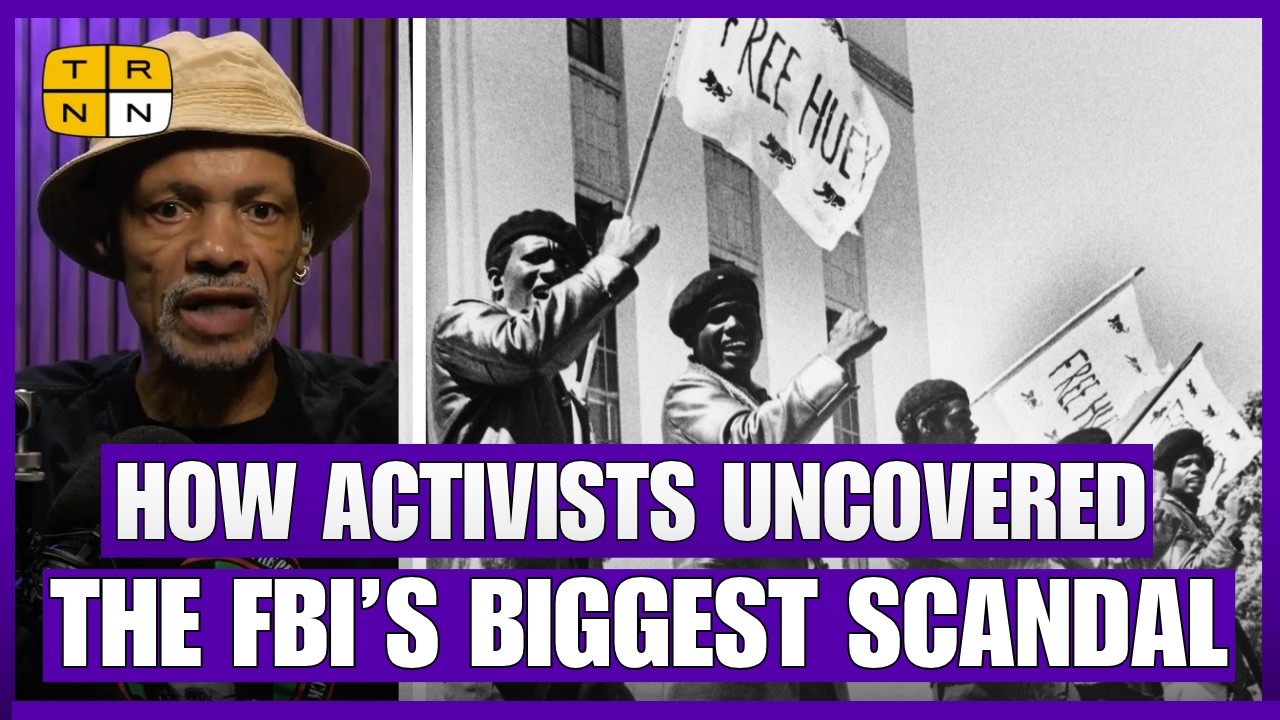
In the second half of this insightful conversation, former political prisoner Mansa Musa joins Black Panther Party archivist and photographer Billy X Jennings to examine the pivotal 1971 FBI office break-in by antiwar activists. The stolen documents exposed COINTELPRO—the federal government’s covert operation to surveil, infiltrate, and dismantle radical political movements. Despite state-sponsored efforts to suppress the organization, the Panthers’ legacy survives through modern social movements, culture, politics, and communal socialism. Oakland Mayor Barbara Lee, who worked closely alongside the Panthers on their early survival programs, brings deep personal insight into their lasting community impact. Published in conjunction with the 60th anniversary of the Black Panther Party, this feature continues our series on the BPP’s enduring role in social justice.

Related links:

Credits:

  • Production/Post-production: Cameron Granadino
Transcript

The following is a rushed transcript and may contain errors. It will be updated.

Mansa Musa:

I was reading Huey’s dissertation for his doctoral called War Against the Black Panther Party: A Study in Oppression in America. And in that, he outlined one COINTELPRO and COINTELPRO systematic attack on the party to the point of Eddie Conway wrote the book called The Greatest Threat Ever, outlining how the federal government systematically targeted anybody, but more specifically members of the Black Panther Party to either isolate them or kill them or send them to prison where they served death of a thousand cuts and then they ultimately die. Talk about once that information came out about COINTELPRO and its involvement in destroying the party, how did that change your views or how did that impact the political landscape as you seen it when it come to organizing and revolutionary ideology?

Billy X Jennings:

It wasn’t till 1970 that people officially found out what COINTELPRO was. We always knew there was some kind of program out there that wiretapped us, how the FBI followed us and set us up for different charges like that. But on a personal basis, COINTELPRO helped me stay out of jail. Now, COINTELPRO is not something they invented for the Black Panther Party. It’s something they always had going on, but they ramped it up three degrees because of the party, how the party came out or how effective the party was. So in 1970, when these young anti-war people broke into this post office in Pennsylvania, it helped me out because at that time, Huey P. Newton was on Nixon’s enemy list. I am Huey P. Newton’s personal aid. So when FBI sees Huey, they see me.

And so I’m a much easier target than Huey. So they started using the draft to gift me, the selective service. Now, this is the same method they used against members of SNCC, another organization that preceded us. They would get the selective service to start sending them letters to have them drafted. And you only got three choices. Either you’re going to leave and go to Canada, you’re going to go underground, or you’re going to jail. Any one of them stopped you from being affected, and that’s what they wanted. They wanted to stop people from being affected so they would hold this selective service thing over their head. So what happened when they did the same thing to me, right? They arrested me when I was with Huey after coming to court. So I went to court for this draft evasion thing. The federal government had three of their attorneys on my case.

And so what happened was this, they wanted to charge me for draft evasion, but my attorney pointed out they wanted all the documents, film, phone, anything connected with Bill Jennings. And they immediately dropped my case on the spot because they were still trying to hide the fact that they had a program called COINTEL PRO and they didn’t want to reveal it because of me.

So they just dropped my case. So I walked away from that whole case because COINTEL PRO was discovered and they didn’t want to dispose all the footage they had of me and Huey together because that’s what they were doing, compiling stuff on Huey. I just happened to be there.

So that’s how COINTEL PRO affected me, but a lot of party members went to jail. Geronimo G Jaga did 27 years. They pulled him off the street. The FBI lied on him. They said he helped kill someone in the LA, but at the same time, the FBI was watching him while he was in Oakland attending meetings. They lied on the brother, just like they did. Maybe about 35 or 40 Panthers went to jail, maybe 35 Panthers were killed through COINTEL PRO. And many like Fred Hampton were victims, minding their own business. The next thing you know, law enforcement has them in their clutches one way or another. So it was not easy being a party member during those times.

Mansa Musa:

And they knew Eddie Conway was at work when this incident happened. They went to where he worked at in the post office and told the people to say that he wasn’t at work. And then they planted a snitch in his cell or they had one of them snitchers come up and say that Eddie said something. They had coerced people to lie against. So to your point, that was their methodology during that time. Like you say, they going to get you through selective service. They’re going to get you through income tax. They’re going to get you any way, shape, form or fashion. But talk about what do you think about this recent group in Philly that call themselves the Black Panther and then switch their name to the Black Lions and they’re doing some organizing. They got a large presence on social media. They can be seen, engaged in mutual and exercising their rights through confrontation with the police.

Basically, their strategy is being more confrontational. Are you familiar with them and what you think about

Billy X Jennings:

Them? Well, I am somewhat familiar with them. I get emails from them, messages. But just recently there was a meeting held in Philadelphia with Panthers, real Panthers, original Panther members and members of the Black Lions. We suggested then that they change their name because our legacy was built on positive direct action in the community. This is our legacy. We can’t have any young group. We don’t even know what you believe. Come and say you’re party members. The Black Panther Party stopped existing in 1982. So you should come up with a name for your own legacy so people can identify you because what you’re doing, we don’t know who you are. COINTELPRO and all that, you might be good at heart, but we don’t know you. Start your own legacy. Start from ground one, change your name because our name is built on our legacy of what we’ve done and we don’t know what you’re going to do.

The Black Panther Party had 14 different medical facilities. Two are still open to this very day, one in Seattle and one in Portland.

Mansa Musa:

You

Billy X Jennings:

Can see Black Party still alive in groups like the Gray Panthers. They took up where the Black Panther Party left off with the senior citizens. The Black Panther Party had a senior escort service. All these different services the party provided, free buses to prison program. And the main purpose for that program was to keep the family unit together

Mansa Musa:

Because

Billy X Jennings:

People have cars, but many of the state prisons are far, far away. You might have a car that’s good for getting around the city, but getting on the freeway, your car might not make it. So we provide these services to keep the family unit together. It’s good that the Black Lives change their name. It’s good they’re doing social work in the community, but they also have to understand that longevity. Dealing with the police is good to have people who deal with the police who the police know they can’t run and rub shot it in our community. I don’t have anything bad about that, but that shouldn’t be your main focus. That should not be what you’re all about. The party blossom out past that, that’s how we started getting community support, breakfast programs, liberation school, providing services for people. That’s how you get people to change their mind, their attitudes about you.

They see what you do through your social

Mansa Musa:

Practice. In that regard, Billy, talk about what would be your message to youth because you got a lot of young people that’s learning about the party. You got a lot of young people that’s through social media becoming informed about it. And what would you tell them when they come up and say, okay, to your point, no, you’re not original member of the Black Panther Party. No, you don’t have the right to say that in terms of and then saying that’s what you are. But what would you tell them when they come up and say, we want to change the condition, social conditions, we want to do it in the same light that the Black Panther Party did it. What would you tell them to do?

Billy X Jennings:

I would tell them the Black Panther Party were operating in the 1960s and we’re in the 2026 era right now. So we can’t go back and keep doing stuff in the past. We had to come up with new ways of doing things, a new attitude of doing things. We set the table for all these social programs to be embraced in the community, but they have to take it from there. They have to take where we started and bring it into their conditions now. And I would say to young people, get with another group that has your same ideology, your same philosophy. If they’re serving the community or working in the community, work with them because we need to unify all our efforts and come together. Educating young people, having political education classes, taking people outside of the community, outside of their environment so they can see the bigger world and see where they fit in.

All those things are things that are doable things, job training, telling people how to write a resume. Those are those small things, but those things that help because we have a lot of hardcore brothers who get out of jail who are not educated in the educational system. They need that kind of nourishment to bring them up. That’s what we should be doing, community service to bring our people up and not run away from the people. The Black Panther Party, when we had social programs, we invited people to come back to work. We provided a place for doctors and nurses to, if you wanted to give back to the community, we have a clinic here. You could donate four to six hours a week to have those facilities there or people in the community or have a community meeting around issues in the community. That’s how you bring interested people together, unifying people.

Mansa Musa:

Yeah, that’s a good point because they got what they call the Malcolm X Grassroots Collective. I’m in DC and what they do every second and fourth Wednesday of the month, they have political education class and their political education. They’re not calling themselves some other than what they are organizing, but what they do, they have political education class and then the materials that they use, they using materials that they learned about from the Black Panther Party. But talk about the 60th and what you got planned with some of the things that you’ll be organizing for the 60th.

Billy X Jennings:

Well, that’s a lot. Well, I would say the 60th is what my particular role is, is I’m sponsoring a couple workshops on chapter history. Black Panther Party had over 40 different offices of the Black Panther Party. And there’s a lot of history in these different cities and geographical areas that we don’t know about that only the local people there knew about. So we’re trying to bring that history together so that people in Chicago would know what the people in Portland, Oregon was doing or the people in Seattle will find out who were some of the people that started the party down in Houston, Texas. And some of the programs, Salem, some of the problems the Winston-Salem chapter deal with because they were a chapter of the Black Panther Party that was actually in the South because they had problems that a lot of us didn’t have in California,

So forth. But chapter history, I’m doing some tours of Oakland, like I said, to educate a lot of people who’ve never been there before. A lot of people come to the reunions, they bring their grandkids or their great-grands. They want to show them what they was involved in, how all this thing originated. I have doing tours. I got a couple exhibits at the main library in Oakland about Black Panther Party rank and file. I have an exhibit open October 5th at the Alameda Law Library, which is across the street from the Oakland main library. Oh,

It’s across the street from the Oakland Main Museum. So that exhibit’s going to focus on the impact of the Black Panther Party on the law because of the political prisoners, clientele pro, racism in the police department, all those kind of things. So I got my hands full and on the 18th, which is the last day of the conference, I’m in charge of a day in Bobby Hutton Park. Local hip hop artists, poets, a couple bands will live music and we have speakers come, going to do it like we did back in the 1960s. Treat music, food, a joyful day in the community. Don’t caution that and all you have to do is bring your blanket, sit out and hear some speeches and hear some music and unify in the community.

Mansa Musa:

Okay. Thank you, Billy. Thank you. And Billy, we really appreciate you taking your time out to come on and educate our audience about all things the Black Panther Party. More importantly, clearing up a lot of misconcepts about the party, what it stood for, some of the more subtleties of it as opposed to, to your point, a lot of the things that was distorted primarily for the purpose of disassociating it from people, getting people to look at it in a different light. You came on today and educated us on how the party really operated as, like y’all said, the Vanguard intercommunal with us.

Billy X Jennings:

The party’s whole thing is to educate people. I had a young lady who worked in my campaign office when Bobby Seal ran for mayor. She is now the mayor of Oakland. So I know that she knows about the 10 point program and all those things. So the party is about growth and development and stuff like that. The Black Police Officers Association of Oakland was started because of the Black Panther Party, right? Because when they shut up our office on 45th and Grove in September 1968, the Black officers refused to help the white officers who was suspended from their job for shooting at that office. And they started an organization, which is one of the biggest Black organizations in Oakland. But a lot of people don’t know that history, but when we have chapter histories, a lot of this history that happened in those cities come up.

Who were now in charge of state health facilities work at the medical clinic and stuff like that. So there’s a lot of roots where people came from. We just have to talk about it, dig it up and document it for future generations because 17 years ago, when I was 17, I joined the party. Today I talked to people from all over the world. I just got off the phone talking to the New Zealand Panthers who are going to send some representatives out here. They have 15 members that came for our 50th. We have people from all over the world. We have Charlotte O’Neill coming in from Tanzania.

Mansa Musa:

Okay.

Billy X Jennings:

For over 50 years. Charlotte’s going through our libations. She has a film. She travels the world. We have all type of Panthers coming in, so this is going to be a event.

Mansa Musa:

There you have it. There you have the bars today. Look, you gave that row out. And we thank you for coming and sharing this information because like you said, at the end of the day, after everything all is said and done, the party was about educating our people about getting them to understand their right to self-determination and how to go about getting self-determination, understanding the contradictions, understanding social conditions, and more importantly, organizing to change conditions. And it’s a tribute to the party. No matter what people say about the party, that is the lasting legacy of the party is educate, educate, educate. Thank you, Billy. We appreciate you. All right. How do you want people to get in touch with you if they want to get in touch with you? They

Billy X Jennings:

Can get in touch with me by going to our website, itsabouttimebpp.com, which there’s a phone number and an address on that website. But for the 60th, you can go to bpp60.org for your latest update information on what’s happening with the 60th.

💾

On October 15, the Black Panther Party marks its 60th anniversary. Archivist Billy X Jennings highlights their legacy: 14 medical clinics (two still open in Seattle & Portland) and vital survival programs, like "free buses to prison... to keep the family unit together."
  •  

Iran war-depleted arsenal making US a less potent power

The Iran conflict has exposed a glaring blind spot in US war strategy. America can escalate in hours, but it can take years to rebuild the arsenal it consumes. Washington has begun addressing the arms-replenishment problem, a calculation it should have made before escalating. The Pentagon’s recent awards reflect the intensity of the challenge. In […]

The post Iran war-depleted arsenal making US a less potent power appeared first on Asia Times.

  •  

Samsung dangles $560,000 bonuses to keep engineers from China

A Samsung memory chip worker earning about $60,000 a year could receive roughly $560,000 in bonuses before tax, according to the company’s largest union. Its estimate includes both Samsung’s existing profit-sharing bonus and a new special payment. Samsung hasn’t confirmed the amount. On October 7, the company outlined how that special bonus would work: 10.5% […]

The post Samsung dangles $560,000 bonuses to keep engineers from China appeared first on Asia Times.

  •  

Webb Telescope Finds Water Clouds on a Jupiter-Sized World Seven Light-Years Away

About 7.4 light-years from the Sun, a dim ball of gas about as wide as Jupiter drifts through space with no star to warm it. Jupiter is large enough to fit some 11 Earths side by side. (A light-year is the distance light travels in a year, nearly 6 trillion miles.) That puts the object […]

  •  

How Catherine the Great Wanted to Resurrect the Byzantine Empire in the 18th Century, and Why the Plan Fell Apart

In 1787, Catherine the Great set off on a six-month tour of Crimea, a territory Russia had annexed only four years earlier. The emperor of Austria and a group of European diplomats travelled with her. Along the route, triumphal arches had been built specially for the occasion, and the inscription they carried was hard to […]

  •  
❌