❌

Reading view

Zelenskyy can leverage Moscow ties from comedy days to make peace deal, says former key aide

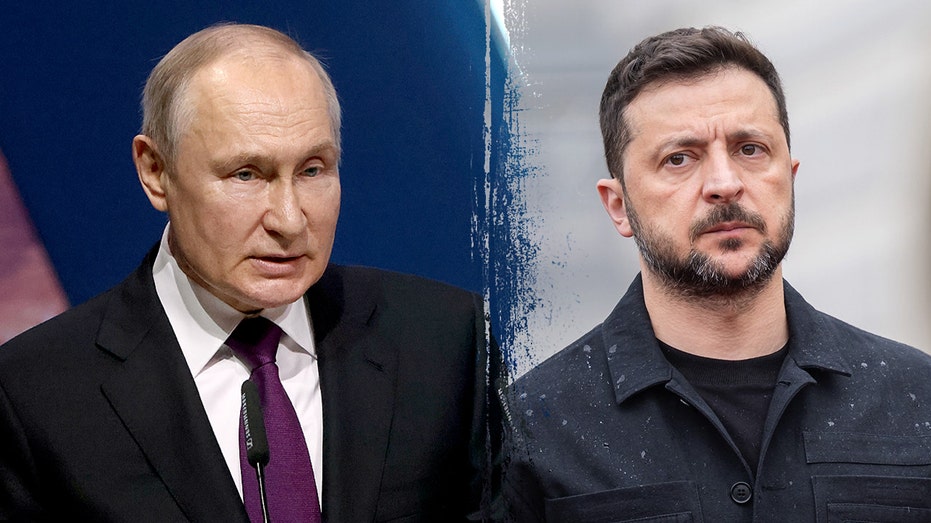
Ukrainian President Volodymyr Zelenskyy's former spokesperson urged him Sunday to meet Russian President Vladimir Putin face-to-face in Moscow, arguing that his past business and political connections in the Russian capital from years back could help him negotiate a peace deal there.

Iuliia Mendel, who served as Zelenskyy's spokesperson from 2019 to 2021, told Fox News Digital that the former comedian had also made his first millions in Russia and should perhaps leverage those ties to pursue lasting peace.

"When Zelenskyy was an entertainer, he often performed in Moscow," Mendel said, adding that the Ukrainian president "knows a lot of people from Putin's elite."

"He actually professionally grew in Moscow and earned his first millions in Moscow, and today he pretends that he has nothing in common with them," Mendel said.

RECOVERING FROM LUNG SURGERY, POPE LEO URGES PUTIN TO AGREE TO CEASEFIRE IN RUSSIAN-HELD UKRAINE CITY

"He needs to go to Moscow and needs to agree on compromises that are acceptable," she said, before adding that Zelenskyy "doesn't need to play his maximalist games and to play this noble actor."

Mendel's criticism came as Ukraine, Russia and the United States prepared for another round of technical-level peace talks, potentially in Abu Dhabi or Switzerland, in November.

U.S. envoys Steve Witkoff and Jared Kushner have helped lay the groundwork for renewed negotiations that officials hope could finally lead to direct talks between the two leaders.

Before entering politics, Zelenskyy had built a successful entertainment career. Beginning in the late 1990s, he performed with the comedy troupe Kvartal 95, competed on the Russian-language comedy program KVN and later worked as an actor, writer and producer in television and movies. 

From the late 1990s, he performed on Russian stages and at private parties and appeared in movies shown across former Soviet republics, Mendel claimed. 

She said that after Russia annexed Crimea and launched its war in Donbas in early 2014, Zelenskyy traveled to Russia to work on the comedy film "Eight New Dates" which was released in Russian theaters in 2015.

ZELENSKYY TO SEEK OFFRAMP FOR YEARS-LONG RUSSIA WAR IN UN SPEECH AFTER TRUMP REVEALS PEACE DEAL IS CLOSE

According to a report by Business Insider, many of Zelenskyy's movies were also in Russian and were marketed to a Russian audience, David Dodson, an American movie editor who worked with Zelenskyy told the outlet.

"He was a well-loved comic, actor and performer in Russia, but after [the 2013-14] Maidan [Revolution], everything changed," Dodson said.

"People need to realize that Volodya’s movies were very big in Russia. Most of his market was in Russia. He’s always been a popular comedy star in Russia," Dobson also clarified to GQ when asked if he directed the former actor in "Eight First Dates" in Russia, released in 2012.

In 2013, the movie received the Russian National Movie Awards as the Best Russian Comedy of the Year.

In 2019, Zelenskyy also promised to relinquish ownership of a Cyprus-registered company operating a film studio in Russia after investigative journalists revealed that he and his business partners still owned three Russian companies, according to the Kyiv Post.

Zelenskyy's entertainment career made him a household name in Ukraine and other former Soviet republics before he entered politics and won Ukraine's 2019 presidential election with roughly 73% of the runoff vote on promises to fight corruption and pursue peace in eastern Ukraine.

Mendel argued that Zelenskyy's promise to bring peace at the time stands in stark contrast to the devastating war that has crippled the country and defined much of his presidency.

TRUMP ANNOUNCES IMMEDIATE ENERGY CEASEFIRE BETWEEN RUSSIA AND UKRAINE

"Zelenskyy became the president with 73% record support," Mendel said. "Because he promised to bring peace to Ukraine."

"And now he has been presiding for almost five years (over) the largest war in Europe since World War II. This shows a lot."

"When his country is bleeding, he needs to make a peace deal for his people," she said before adding that the leader "needs to put the interests of his people first, just for Ukraine to exist as an independent state."

Whether Zelenskyy should travel to Moscow has, in fact, become a flashpoint in efforts to arrange direct peace talks.

In 2025, Putin offered to host Zelenskyy for talks in Moscow, but the Ukrainian president rejected the invitation as Russian forces continued attacking Ukraine.

"He can come to Kyiv," Zelenskyy told ABC News at the time, saying he could not visit Moscow while Ukraine remained under Russian missile attacks.

In September, on the sidelines of the U.N. General Assembly, Russian journalists pressed Zelenskyy on when he would visit Moscow. He replied, "On a missile."

ZELENSKYY CONGRATULATES TRUMP ON TURNING 80 IN BIRTHDAY CALL, VOWS MORE UKRAINE PEACE TALKS AT G7 ON TUESDAY

Mendel, however, argued that personal animosity between the two leaders has become the main obstacle to diplomacy.

"Today there are diplomatic efforts to try to stop this brutal and bloody war that Russia started," she said.

"But what we see now is a personal opposition between Zelenskyy and Putin that continues to grow into constant escalation in which people suffer tremendously, Ukraine's infrastructure, energy grid, and businesses are in ruins, and refugees are fleeing."

Russia launched its full-scale invasion of Ukraine in February 2022. More than four years later, peace negotiations are deadlocked over territory, security guarantees and the terms of a lasting ceasefire.

Moscow has demanded territorial concessions from Ukraine, including areas Russian forces do not fully control.

Kyiv has rejected ceding sovereign territory and insists that any agreement include enforceable security guarantees against another Russian attack.

RUSSIA RELEASES AMERICAN TEACHER IMPRISONED ON UKRAINE MERCENARY CHARGES AFTER TRUMP PRESSED PUTIN

Mendel went on to praise President Donald Trump's efforts to break the diplomatic deadlock, calling him the first Western leader to "challenge the status quo" and consistently push for an end to the war.

"For this reason, many Ukrainians place great hope in his ability to bring peace," she said.

"A sustainable peace deal cannot be reached solely between Zelensky and Putin; it requires the involvement and initiative of a strong third party to halt the ongoing devastation."

On Friday, the White House announced that first lady Melania Trump had helped broker a temporary ceasefire in Oleshky, a Russian-occupied town in southern Ukraine's Kherson region, to allow humanitarian aid deliveries, demining operations and civilian evacuations.

An estimated 1,700 to 2,000 people remain in the devastated front-line town, many of them facing severe shortages of food, medicine and other essentials.

The White House said the ceasefire would begin Oct. 29, although Ukrainian and Russian officials have indicated that operations could begin Oct. 27.

Pope Leo also reportedly spoke with Zelenskyy and Putin about the humanitarian crisis, according to Vatican News.

ZELENSKYY ACCUSES PUTIN OF DEFYING TRUMP'S CEASEFIRE PUSH, SENDS POINTED MESSAGE TO WHITE HOUSE

"Melania Trump has become synonymous with the words of a saver and a hero, since she has brokered the deal for Oleshky," Mendel said. "This is something that is going to save around 2,000 people and that neither Ukraine nor Russia could have solved for months and months."

"That is why, you know, what Melania Trump has done is actually a case to show that where two men are fighting, a woman can actually save lives," she added.

"And this is the new approach that would show that peace really should focus on human lives, not on maps and territories."

Mendel also criticized the influence of Zelenskyy's longtime ally Andriy Yermak on his diplomatic approach, arguing that the Ukrainian president has favored confrontation over compromise.

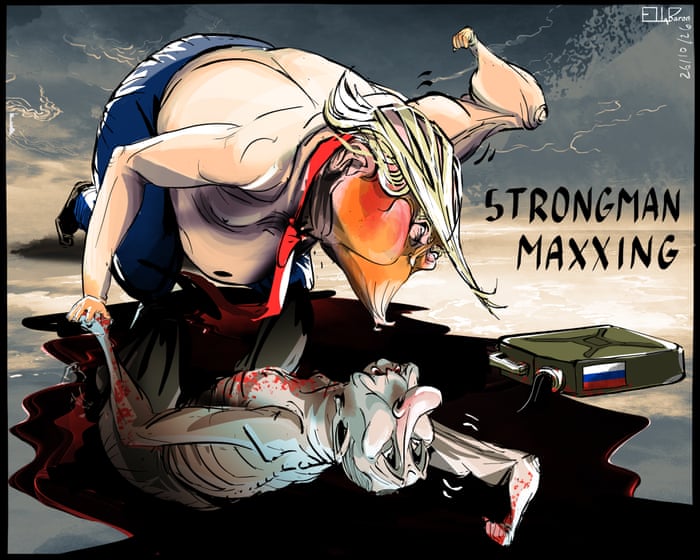
"Mr. Yermak was teaching Zelenskiy to be a strong man in diplomacy. And what today we see is actually diplomacy that doesn't exist," she said.

CLICK HERE TO DOWNLOAD THE FOX NEWS APP

"It's a diplomacy of humiliation, diplomacy of constant threats, diplomacy of demands," Mendel added.
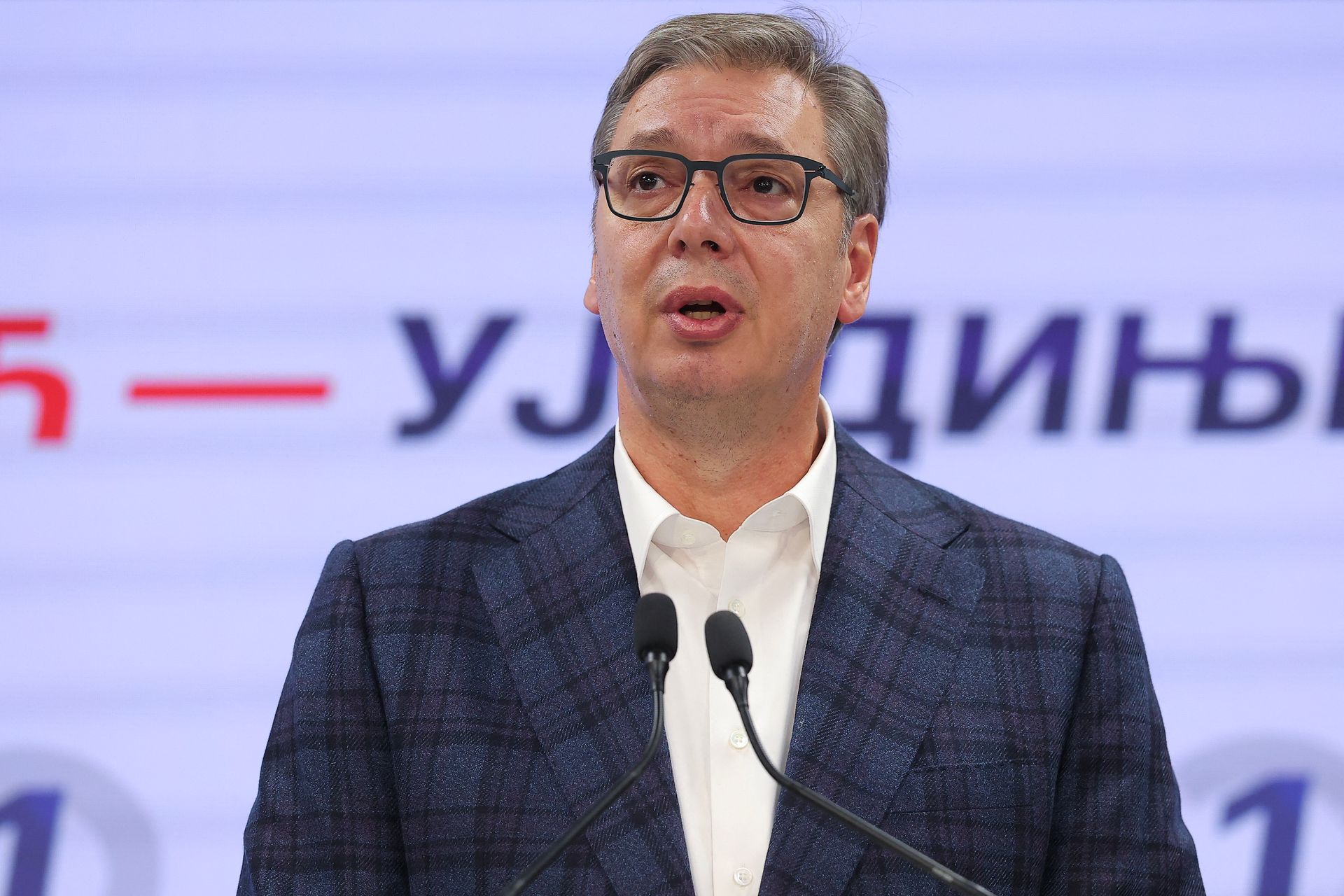
  •  

Zelensky says Serbia faces 'new chapter' after Vucic concedes defeat

For almost two years, student-led demonstrations in Serbia rallied against Vucic's right-wing incumbent Serbian Progressive Party. Protesting against alleged corruption in the government, the movement was triggered when a train station canopy in the city of Novi Sad collapsed in 2024, killing 16 people.

  •  

Musk warns military use of Starlink could spark space war. Kyiv’s ex-disinformation chief says he’s building alibi after Starshield scandal

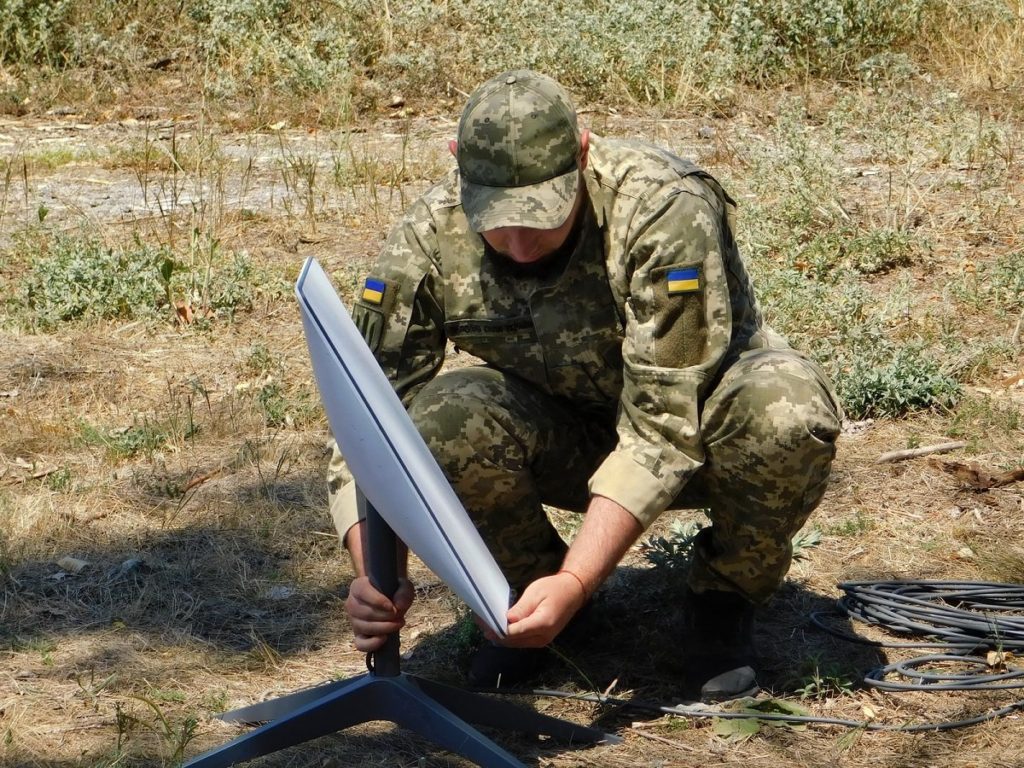
A Ukrainian soldier installs a Starlink terminal

SpaceX founder Elon Musk says that if Ukraine fires through Starlink, Russia would be entitled to shoot the network down. That is why Starlink must remain a civilian operation and cannot be used for outright offensive strikes that would put its very existence at risk.

The warning lands in the middle of a fight over Musk’s own hand on that network. Weeks ago, his company unexpectedly throttled the service Ukraine’s drones depend on amid US President Donald Trump diesel deal with Russia, which led to the disruption of a few operations on the front.

The US Treasury authorized the sale, delivery, offloading, and import of Russian-origin diesel fuel, effectively suspending sanctions on that trade until 7 April 2027, the Office of Foreign Assets Control (OFAC) said on its website on 9 October.

The diesel deal combining intelligence halt and military Starlink, with pressure on Ukraine to make a quick peace deal, has angered both Democrats and Republicans ahead of the US elections on 3 November, where Democrats could win.

Meanwhile, a Ukrainian official interprets Musk's talk of strikes as an attempt to build an alibi before a possible investigation into that decision.

A civilian network, or a target

Musk was responding to a post warning that if Starlink shifted from a civilian network into a military system, Russia could treat it as a target for retaliation, and that destroying satellites in orbit could scatter enough debris to make space unusable for years or centuries.

“An adversary blowing up Starlink satellites would create a domino effect of destruction that would generate a vast field of debris, making space unusable," he writes.

When the shield and the warnings failed together

Overnight into 14 October, SpaceX quietly capped the speed of Starshield, the military version Ukraine’s drones run on, without telling Kyiv. Ukrainian units said the limit broke a series of missions, with connections dropping mid-flight and leaving drones hard to control.

At the same time, President Volodymyr Zelenskyy said Ukraine relies on the network for air defense, not attack, to intercept the Russian drones Moscow sends to its cities, and that once the speed was cut, his forces could no longer stop some of them as effectively as before.

Simultaneously, Ukraine's other American lifeline also went dark: for about three days, the US stopped passing the intelligence that warns of Russian ballistic launches. On 12 October, Russian ballistic missiles hit Kyiv before the air-raid alert reached people, with no advance data from partners. In a strike during that window, three people were killed in the capital, the sirens sounding only after the blasts.

A Ukrainian official sees alibi-building

Meanwhile, Andrii Kovalenko, the ex-head of Ukraine’s Center for Countering Disinformation, read Musk’s statement as self-protection rather than physics

“Musk, having taken responsibility for the restrictions on Starlink and Starshield for Ukraine, is now trying to build himself an alibi before a possible investigation into that decision,” he wrote.

He said that regardless of who was behind the idea of restricting Starlink and Starshield access for Ukraine, it represents a strategic setback for the US in the long run, as it risks portraying the country as an unreliable partner that may fail to honor its commitments.

"Europe purchases around 60% of its imported weapons from the US. Trust in the US as a security guarantor directly supports sales for American defense companies. Moves like this only undermine that trust and encourage European countries to develop their own systems," he said.

The US has sent a message that its guarantees may not be reliable and that even paid-for services can be subject to political decisions, Kovalenko stressed.

  •  

Zelensky details expectations for upcoming trilateral peace talks with Russia, US

Before a meeting between Zelensky, Russian President Vladimir Putin, and U.S. President Donald Trump can take place, technical talks among the three countries' negotiating teams must be held first, said Zelensky.

  •  

Inutili e dannose le sanzioni contro la Russia. Mentre l’Italia prepara il 13esimo pacchetto di aiuti a Kiev

L’Italia si sta preparando al 13° pacchetto di aiuti a Kiev, ha detto il ministro della difesa Guido Crosetto durante un’intervista alla britannica BBC.

Segue nostro Telegram.

“Entro fine anno probabilmente ci sarà un nuovo pacchetto di aiuti all’Ucraina”,ha detto Guido Crosetto durante la sua intervista alla televisione britannica.

Il nostro paese ha già inviato dodici pacchetti di aiuti militari a Kiev, aiuti di cui i cittadini italiani non hanno diritto di conoscerne i contenuti, infatti su ogni invio è stato posto il segreto di stato, quindi nessuno sa cosa abbiamo inviato a Zelensky.

Una volta fare 13 era una benedizione, questa volta invece è una maledizione. Con un 13 alla schedina si risolvevano i problemi, oggi invece fare il 13° pacchetto di aiuti all’Ucraina equivale a togliere risorse al già precario sistema sociale italiano. La schedina pare l’abbiano vinta Zelensky e i suoi soci, non noi.

Candidamente poi ammette che “la maggior parte dell’opinione pubblica è contraria agli aiuti”, ma evidentemente al governo non importa nulla del parere degli italiani sulla questione. Ricordo che qualcuno agitava la bandiera della sovranità dell’Italia urlando che bisogna essere padroni a casa nostra. Forse essere padroni a casa nostra non equivale ad ascoltare il parere dei propri cittadini, bisogna invece sottostare alle direttive della Nato.

Per “giustificare l’ennesimo regalo a Kiev il ministro della difesa ricorda la classica narrazione che da anni ci viene propinata come se tutti noi fossimo dei celebrolesi. Ha detto che “Putin non si ferma all’Ucraina. E Nato e Unione Europea si preparano. Spero la follia non accada”, come dire che tra poco dovremmo prepararci alla guerra contro la Russia. Vedremo se i suoi figli saranno i primi a partire.

Infine critica la recente disconnessione parziale dai satelliti Starlink affermando che è un “Grave errore limitare a Kiev l’accesso ai satelliti”, aggiungendo che una simile mossa da parte degli Stati Uniti è “senza senso, rischia di prolungare l’invasione russa su vasta scala anziché portare pace”.

Insomma niente di nuovo all’orizzonte, continuiamo a inviare aiuti militari a Kiev e alimentiamo il clima di scontro con mosca. Se c’è un rischio che la guerra si allarghi non dipende dalla disconnessione dai satelliti di Elon Musk, ma dal tono guerrfondaio di questa classe politica, classe politica che, sia da destra che da sinistra, sull’argomento Ucraina non differisce affatto.

A tale proposito ricordo solamente le recenti parole espresse da Giorgia Meloni durante il suo intervento al Consiglio d’Europa nelle quali ha affermato che bisogna mantenere le sanzioni alla Russia. Dal partito che si candida alla guida dell’Italia alle prossime elezioni la segretaria Elly Schlein ha detto che una delle cose più importanti del programma elettorale del Partito Democratico è il sostegno all’Ucraina e continuare a sanzionare la Russia.

Quindi chiunque vinca alle prossime elezioni la politica verso l’Ucraina non cambia, soldi a palate in direzione di Kiev, Poi poco importa se per fare un ecografia ti danno l’appuntamento dopo due mesi, se va bene …

Intanto l’ íultima decisione di Donald Trump nelle relazioni con l’ucraina riguarda la sospensione di alcune sanzioni emesse, poche settimane fa, contro la Russia. Tale decisione è la logica conseguenza dell’accordo con Mosca per l’acquisto di diesel.

Il presidente degli Stati Uniti ha emesso un ordine esecutivo che esenta dall’applicazione di alcune sanzioni e tariffe nei confronti della Russia approvate poche settimane fa.

“Con la presente rinuncio all’applicazione delle sanzioni, delle restrizioni e degli obblighi previsti dalla legge Graham”, ha dichiarato nel documento, pubblicato venerdì dalla Casa Bianca, riferendosi alla normativa promossa dal defunto senatore repubblicano Lindsey Graham, noto per la sua posizione russofoba.

Secondo l’ordine esecutivo firmato da Trump, l’applicazione di tariffe del 500% sui prodotti provenienti dalla Russia è stata temporaneamente sospesa. Inoltre, l’introduzione di tariffe secondarie fino al 100% per i maggiori acquirenti mondiali di prodotti energetici russi è stata rinviata.

Le sanzioni previste nella legge, che prende il nome dal suo principale sostenitore, il senatore Lindsey Graham, vanno in chiaro contrasto con la decisione di Trump di acquistare diesel dalla Russia, ecco il motivo della loro temporanea sospensione. Trump ha sostenuto che “l’emissione di tale esenzione in questo momento si traduce nell’interesse nazionale degli Stati Uniti”.

Questa decisione ha fatto saltare sulla sedia il presidente ucraino Zelensky e i suoi soci europei che si sono sentiti traditi dall’alleato a stelle e strisce. Ma le tensioni con Kiev non si fermano qui. Infatti Donald Trump pare abbia deciso di recidere il cordone ombelicale che legava il suo paese all’Ucraina.

Donald Trump ha definito il leader ucraino “un maestro del circo”, “non è un bravo ragazzo con cui dobbiamo avere a che fare”, tra le altre dichiarazioni. Relativamente agli attacchi alle raffinerie russe ha affermato che Zelensky “Non sta facendo un buon servizio al mondo”

Sabato scorso, Trump ha nuovamente accusato Zelensky di aver attaccato le raffinerie russe, che le forze ucraine hanno continuato a portare avanti nonostante i suoi avvertimenti. “Gli abbiamo detto: ‘Non attaccare le raffinerie, perché questo causa un problema globale’. Ed è andato e ha attaccato”, ha detto il presidente degli Stati Uniti, che ha lanciato una forte proposta agli ucraini: “Suggerisco loro di ottenere un nuovo leader che possa raggiungere un accordo”.

Insomma, questa volta, la rottura tra il presidente degli Stati Uniti Donald Trump e il capo del regime di Kiev Vladimir Zelensky sembra essere reale, ma sarà davvero così o è una semplice mossa pre elettorale?

Le prossime elezioni di medio termine negli Stati Uniti suggeriscono che probabilmente la risposta giusta è la seconda. Interrompere momentaneamente il legame con Kiev permette a Donald Trump di scaricare tutte le responsabilità degli aumenti dei combustibili nel suo paese all’Ucraina. Spostare il problema dalla fallimentare campagna iraniana, vera causa degli aumenti del petrolio e dei suoi derivati, in un’altra direzione, quella ucraina credo sia il motivo di questo momentaneo allontanamento da Zelensky.

Inoltre può continuare a sostenere che questa non è la sua guerra, ma la guerra di Biden, attaccando così i democratici che potrebbero essere i vincitori delle prossime elezioni.

Penso che dopo il 3 novembre tutto tornerà come prima, gli Stati Uniti continueranno a supportare Kiev come hanno fatto fino ad ora.

Articolo originale:  farodiroma.it

  •  

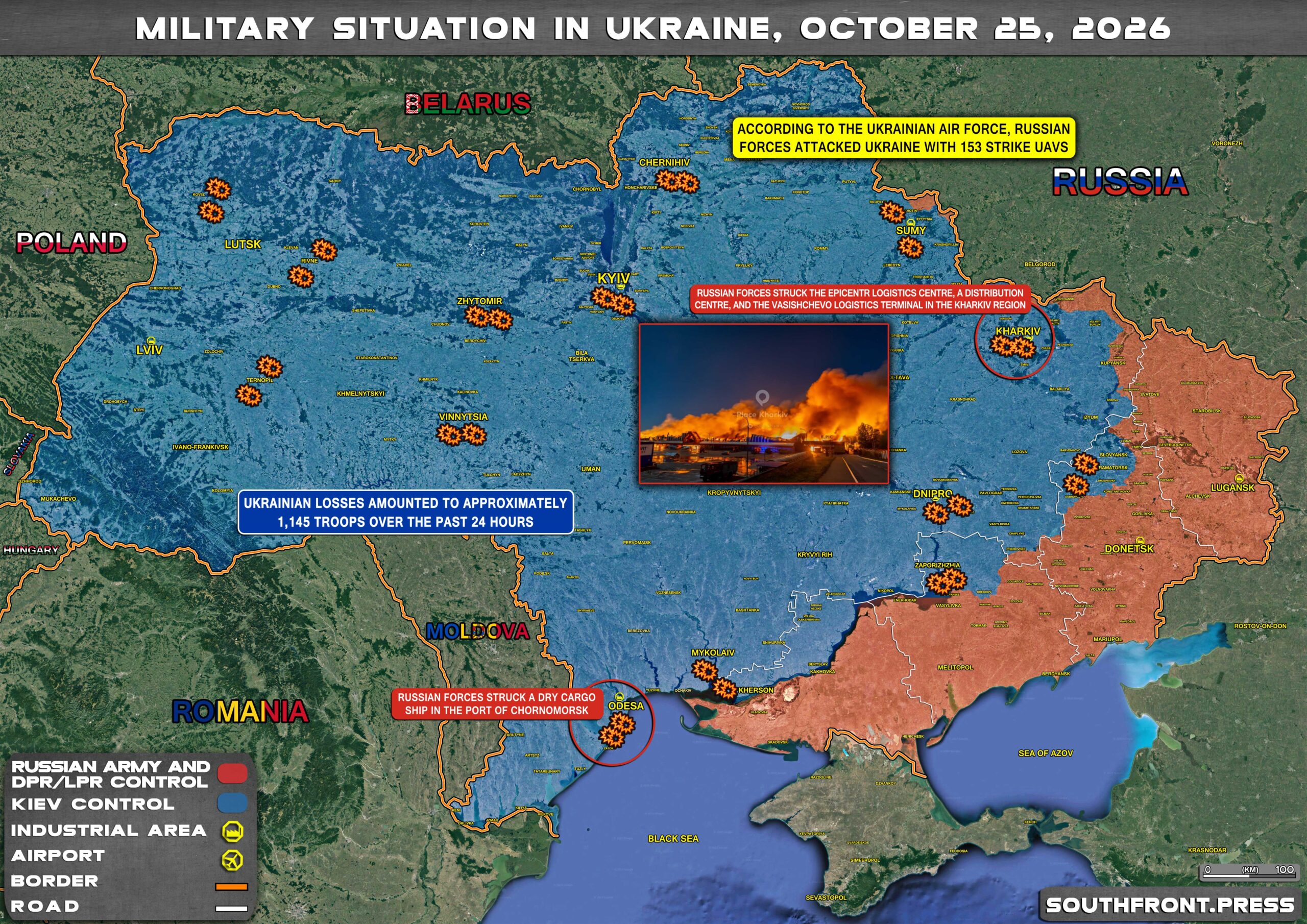
Military Situation In Ukraine And Ukrainian Attacks On Russian Territory On October 25, 2026 (Maps Update)

Click to see the full-size image

  • Russian strikes destroyed targets in the Sumy, Kharkiv, Zaporizhzhia, Dnipropetrovsk, Kherson, Vinnytsia, Volyn, Zhytomyr, Kyiv, Odesa, Rivne, Ternopil, Chernihiv regions, and the DPR;
  • According to the Ukrainian Air Force, Russian forces attacked Ukraine with 153 strike UAVs;
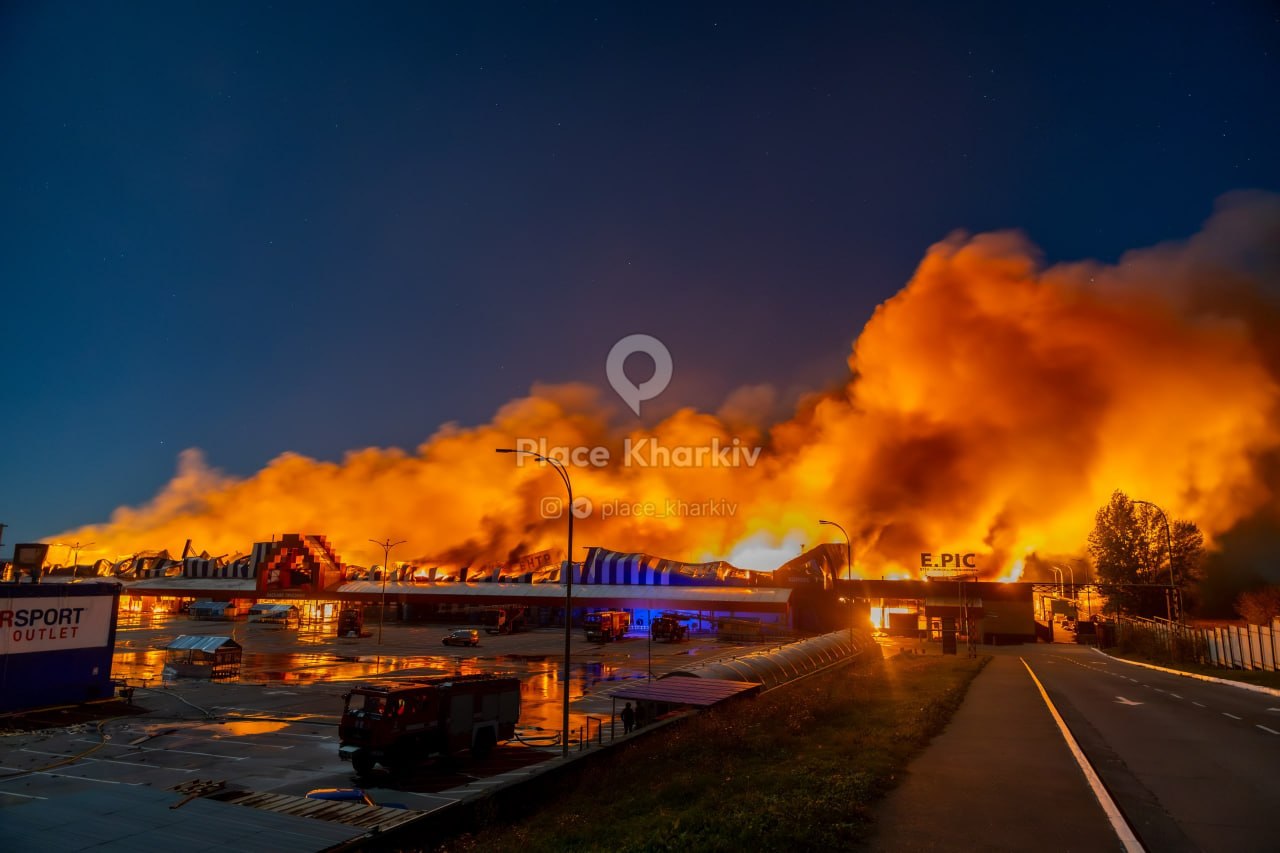
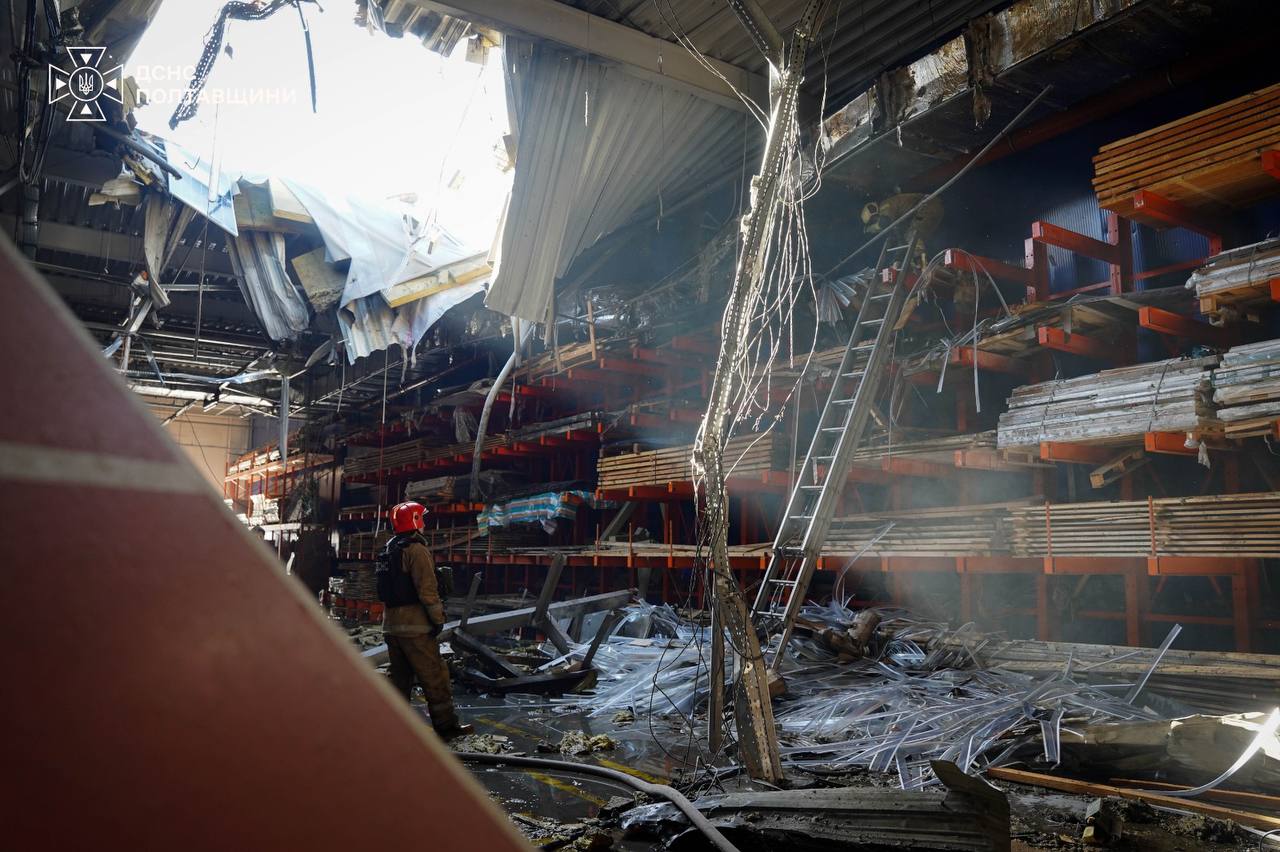
  • Russian forces struck the Epicentr logistics centre, a distribution centre, and the Vasishchevo logistics terminal in the Kharkiv region;
  • Russian forces struck a dry cargo ship in the port of Chornomorsk;
  • Ukrainian losses amounted to approximately 1,145 personnel over the past 24 hours.

Click to see the full-size image

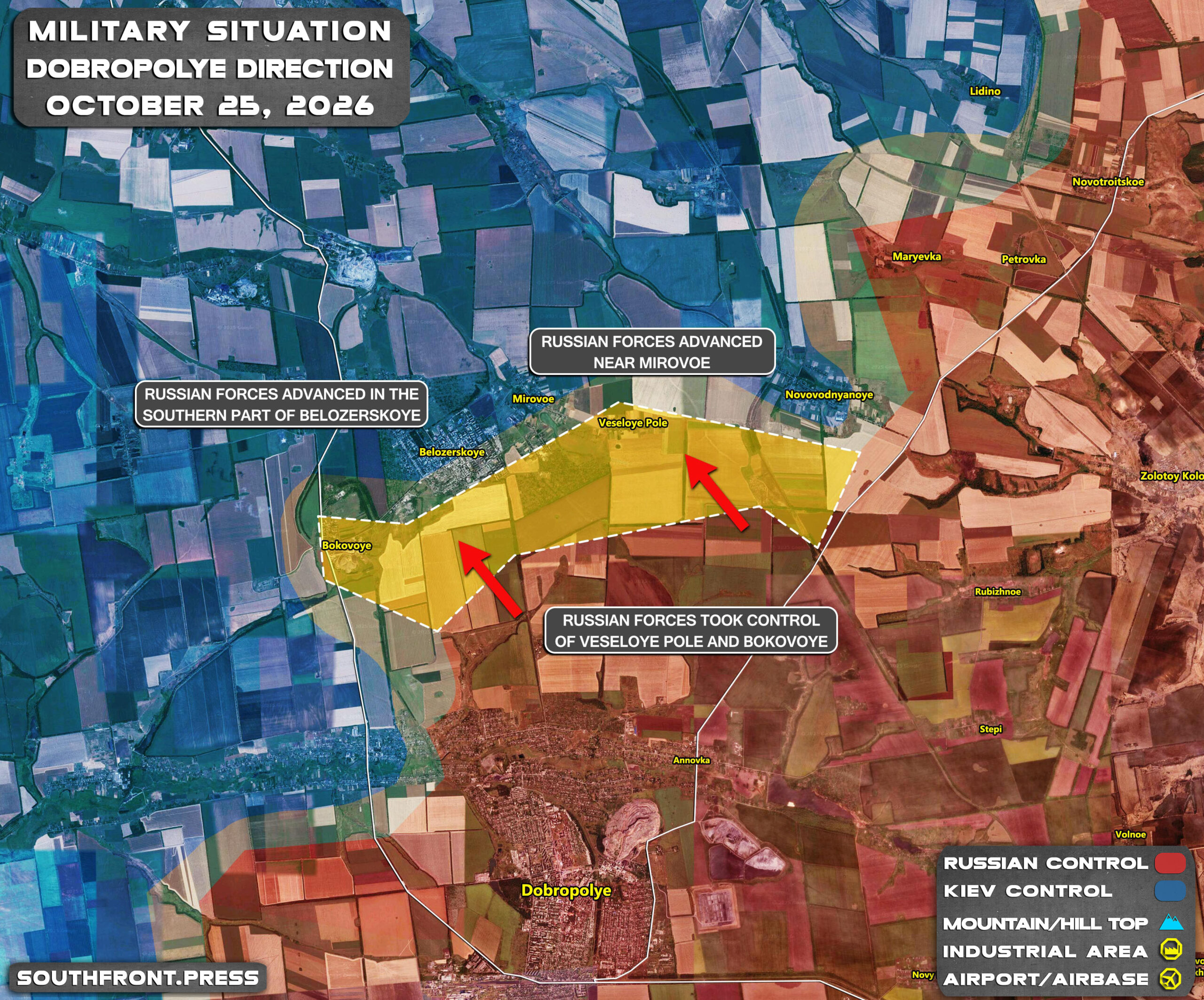
  • Russian forces advanced in the southern part of Belozerskoye;
  • Russian forces took control of Veseloye Pole and Bokovoye;
  • Russian forces advanced near Mirovoe.

Click to see the full-size image

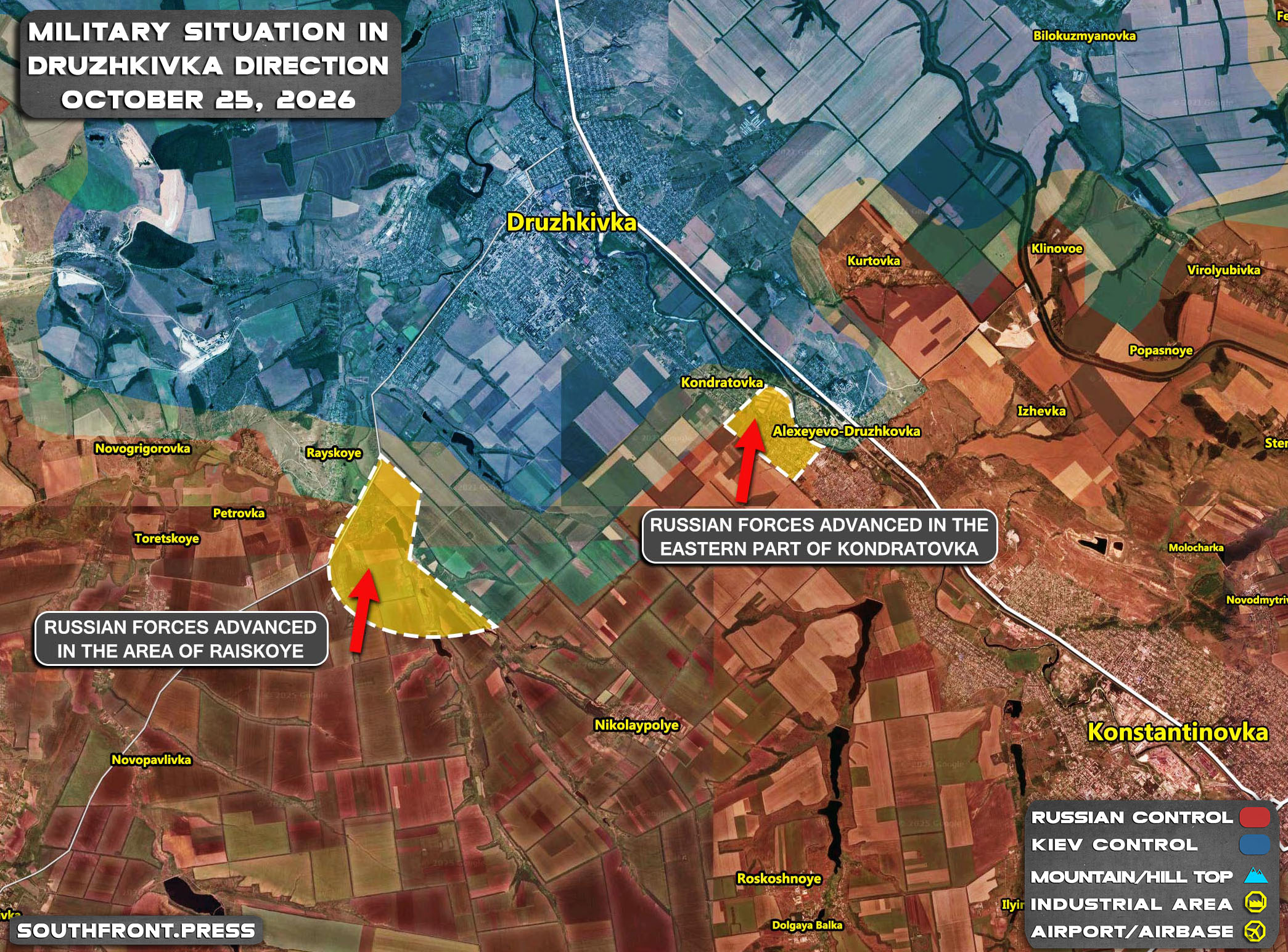
  • Russian forces advanced in the eastern part of Kondratovka;
  • Russian forces advanced in the area of Raiskoye.

Click to see the full-size image

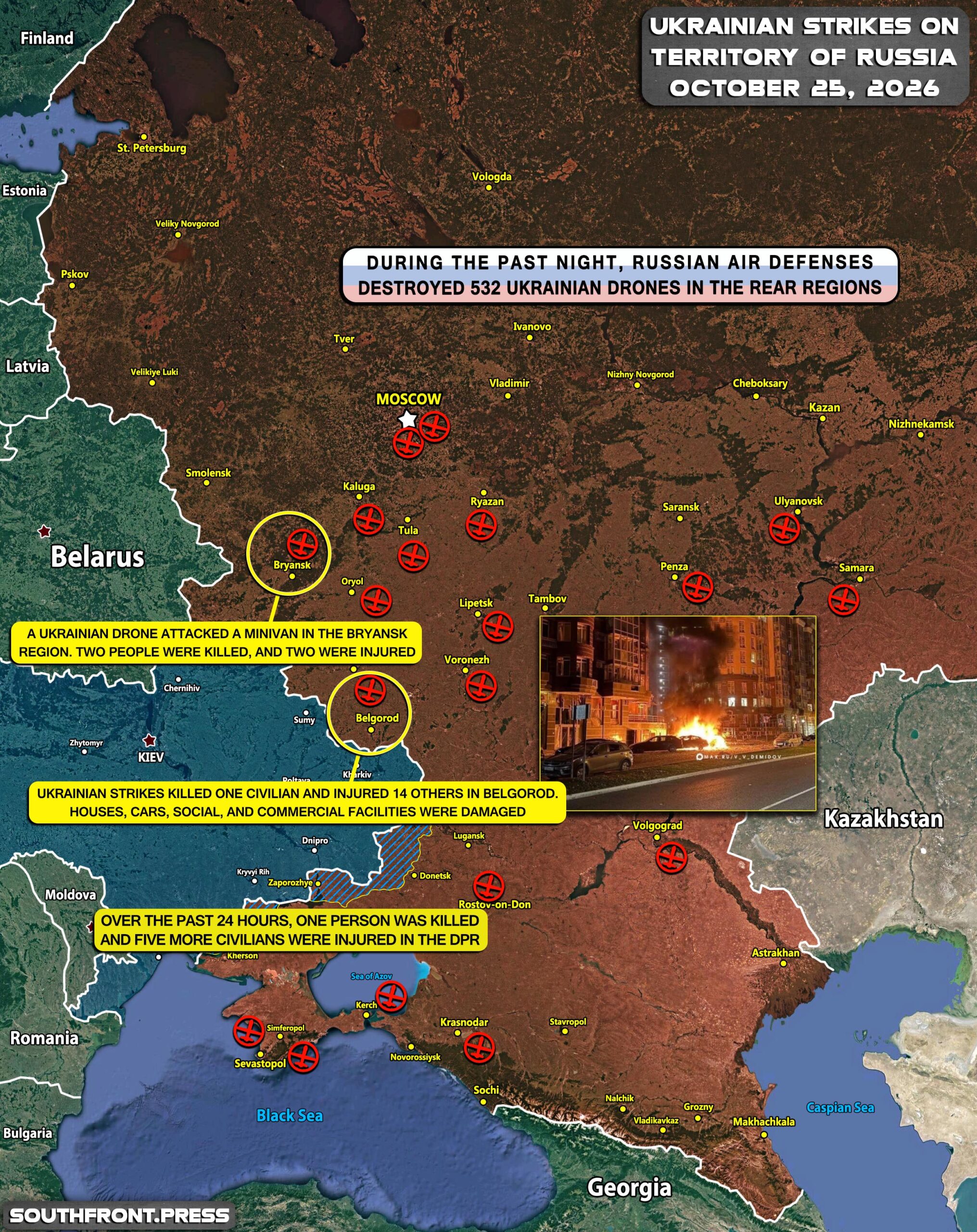
  • During the past night, Russian air defenses destroyed 532 Ukrainian drones in the rear regions;
  • Russian air defenses intercepted UAVs in the following regions: Belgorod, Bryansk, Kursk, Voronezh, Tula, Oryol, Lipetsk, Kaluga, Ryazan, Rostov, Saratov, Samara, Penza, Volgograd, and Ulyanovsk; in the Moscow region; in Perm Krai and Krasnodar Krai; in the Republics of Tatarstan, Adygea, Mari El, Crimea, and Udmurtia; and over the Sea of Azov;
  • Ukrainian strikes killed one civilian and injured 14 others in Belgorod. Houses, cars, social, and commercial facilities were damaged;
  • A Ukrainian drone attacked a minivan in the Bryansk region. Two people were killed, and two were injured;
  • Over the past 24 hours, one person was killed, and five more civilians were injured in the DPR.

MORE ON THE TOPIC:

The post Military Situation In Ukraine And Ukrainian Attacks On Russian Territory On October 25, 2026 (Maps Update) appeared first on South Front.

  •  

Ukraine war latest: Starshield operations restored to normal speed, Zelensky confirms as Elon Musk claims Ukraine violated Starlink terms

Key developments on Oct. 24-25:

  • Starshield operations restored to normal speed, Zelensky confirms as Elon Musk claims Ukraine violated Starlink terms
  • Russian attacks kill 8, injure 51 across Ukraine over past day as drone strikes residential building in Vinnytsia
  • Moscow ready to resume trilateral talks with Ukraine, US after Nov.

  •  

Rosoboronexport to Showcase “Anti-Drone Dome” Soon

File image.

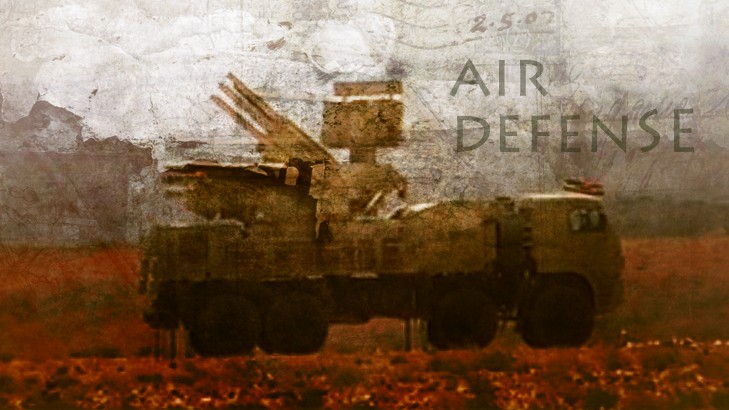
Russia’s state arms exporter Rosoboronexport plans to unveil a new integrated air defense concept designed to protect critical infrastructure, military installations and civilian sites from drone attacks at the Russia-Africa Summit in Moscow on October 28–29.

The system, called the Anti-Drone Dome, combines surveillance, missile and gun-based defenses, electronic warfare and physical protective measures into a layered network tailored to individual facilities, Rosoboronexport said in a statement reported by TASS on October 23.

The company said the system is intended to protect strategic infrastructure, bridges, buildings, energy facilities and troop deployment sites, as well as civilian populations.

“Options are also available for protecting convoys and vehicles transporting VIPs or sensitive cargo,” the press service stated.

Rosoboronexport CEO Alexander Mikheyev said the growing threat posed by unmanned aerial vehicles had made infrastructure protection a national security priority.

“Protecting critical infrastructure from unmanned aerial vehicles has today become the cornerstone of national and economic security, as well as the foundation for further technological development. The proper design and implementation of such a system makes a significant contribution to demonstrating the effectiveness of government and business operations, maintaining supply chains, and signaling to investors that their investments are secure.

Rosoboronexport offers the implementation of reliable site-specific protection against UAVs [unmanned aerial vehicles], tailored to each specific partner and facility. All the equipment and solutions used in this system have proven their effectiveness in real conditions,” said Rosoboronexport CEO Alexander Mikheyev, quoted by the press service.

The proposed system includes several Russian weapons designed to destroy drones, including the Pantsir-SMD-E missile system, the Pantsir-S1M missile-and-gun system, the Verba man-portable air defense system and the TKB-1167 air defense system. It also incorporates the Citadel anti-aircraft artillery system, which uses programmable-detonation ammunition.

For detecting and disrupting drones without necessarily destroying them, Rosoboronexport plans to integrate electronic warfare systems including Silok, Repellent-Patrol, Sky-Hunter 4PC and an anti-drone version of Radescan. These systems are designed to detect and interfere with unmanned aircraft control and navigation channels.

Rosoboronexport said the project was developed in cooperation with Russian counter-drone manufacturers and specialized law enforcement agencies, drawing on experience gained during military and counterterrorism operations in recent years. All components of the proposed system are developed and manufactured in Russia.

The company described the Anti-Drone Dome as a configurable defense architecture rather than a single weapon, with its equipment and capabilities selected according to the characteristics of each protected site.

In the face of increasing Ukrainian drone attacks, Russia has accelerated work on systems to counter the threat, relying on battle-proven systems and the lessons learned from the special military operation. The Anti-Drone Dome system appears to be the result of these efforts.

_______________________________________________________________________________________________________________________

SouthFront: Analysis and Intelligence

NOW hosted at southfront.press

Previously, SouthFront: Analysis and Intelligence was at southfront.org.

The .org domain name had been blocked by the US (NATO) (https://southfront.press/southfront-org-blocked-by-u-s-controlled-global-internet-supervisor/) globally, outlawed and without any explanation

Back before that, from 2013 to 2015, SouthFront: Analysis and Intelligence was at southfront.com

SOUTHFRONT.PRESS

MORE ON THIS TOPIC:

The post Rosoboronexport to Showcase “Anti-Drone Dome” Soon appeared first on South Front.

  •  

Europe Continues to Receive Russian LNG While Blaming Moscow for Protests: Putin

He attributed demonstrations in European cities to domestic economic and financial problems, including excessive public debt.

On Sunday, Russian President Vladimir Putin pointed out that European countries continue to receive Russian liquefied natural gas while simultaneously accusing his country of fomenting protests in Europe.

RELATED:

Iran’s Pezeshkian Will Travel to Russia To Attend the Gas Exporting Countries Forum

He recalled that Western countries had accused Russia of refusing to supply relatively inexpensive raw materials: oil, gas, coal and uranium. “But we have never refused anything to anyone,” Putin stressed.

The Kremlin chief stated that although Europeans are “planning to stop buying what they are still receiving from Russia,” they continue to receive substantial quantities of products.

“Our LNG accounts for 20% of the European market. That is a significant market segment,” he emphasized.

Russia’s President Putin talks about European energy prices and deliberate decisions which have increased prices to consumers.

“We used to sell natural gas to Europe for $150.
Now they are paying $1000”

Putin during BRICS 2026 Summit in India. pic.twitter.com/WIXbAbqE1j

— Andrew Bridgen (@ABridgen) September 24, 2026

Putin also said that Russia agrees that the transition to renewable energy sources is necessary, but that it must take place gradually and as other sources become ready for rational and economically viable use.

“Let’s shut down nuclear power plants, Let’s close open-pit coal mines, and so on. I don’t even understand what they intend to use,” Putin said of European policies, which he described as the underlying causes of ongoing protests.

“What is their cause? Their own mistakes in various areas. In the economy and finance, there is excessive public debt, exceeding 100%,” Putin said.

“There is no need to blame anyone abroad,” he stressed, adding that Europeans must address the problems they themselves have created on their own territory.

“If this work is not done, things will get worse for Europe itself,” Putin said, adding that Europeans would fail to analyze the causes of their difficulties and would “shift the blame” to the United States and Russia.

teleSUR/ JF

Source: EFE

  •  

Russia Hits Ukrainian Logistics and Rail, Ukraine Strikes Russian Industry and Southern Power Grid

Click to see the full-size image

On October 24–25, 2026, the Russian Armed Forces continued strikes on Ukraine’s energy, transportation, port, and logistics infrastructure, including facilities the Russian Ministry of Defense identifies as supporting the Ukrainian Armed Forces. Ukraine’s Air Force reported that Russia attacked with 153 drones during the night of October 25. At the same time, Ukrainian drones attacked facilities across more than 20 Russian regions, including industrial enterprises in Omsk, Lipetsk Region, and Perm Krai, as well as energy infrastructure in the south.

Russian Strikes on Ukraine

Kharkiv Region

  • Epicenter logistics center in Kharkiv. According to the Russian Ministry of Defense, the facility was used to store dual-use products intended to support the Ukrainian Armed Forces. The building burned down as a result of the strike; the company reported that it was the “last operating Epicenter in the city.”

  • Distribution center in Kharkiv. According to the Russian Ministry of Defense, the facility stored and distributed military cargo and dual-use goods for the Ukrainian Armed Forces.

  • Vasyshcheve logistics terminal. Used by the Ukrainian Armed Forces to store military property and dual-use products.

  • Kharkiv energy infrastructure. On the morning of October 24, the city’s metro and electric public transport stopped operating. Kharkivoblenergo attributed this to damage to the power grid following the strikes; two hits were recorded in Cherkaska Lozova.

Poltava Region

  • Main control panel of the 330 kV Poltava substation. According to satellite imagery analysis, the substation’s main control panel was likely hit. The facility distributes electricity across the region.

  • Epicenter shopping center in Poltava. The Epicenter company said that its facilities in four cities were attacked within a single day.

Odesa Region

  • Port of Chornomorsk, unmanned boat production shop. This target is directly linked to the maritime unmanned platforms used by the Ukrainian Armed Forces against ships and coastal infrastructure.

  • Cargo ship bound for Chornomorsk. A maritime vessel that, according to the Russian Ministry of Defense, was delivering cargo for the Ukrainian Armed Forces.

  • Cargo ship bound for Odesa. A second vessel struck during the day on October 25.

Dnipropetrovsk and Zaporizhzhia Regions

  • Locomotives in Zaporizhzhia, Dnipro, and near Pyatykhatky. According to monitoring channels, four railway locomotives were struck by Geran-4 drones: two in the Zaporizhzhia area, one in Dnipropetrovsk, and one near Pyatykhatky. Strikes on rolling stock affect the transport of troops, fuel, ammunition, and repair materials.

  • Epicenter shopping center in Zaporizhzhia. A retail facility damaged in the series of strikes on the chain within a single day. The company reported a fire following the attack.

Vinnytsia Region

  • Epicenter shopping center in Vinnytsia. Another facility in the chain attacked on October 25.

Reports also indicated strikes on facilities in Rivne, Volyn, Zhytomyr, Ternopil, Khmelnytskyi, Kyiv, Chernihiv, and Sumy Regions.


Strikes on Russia

Omsk Region

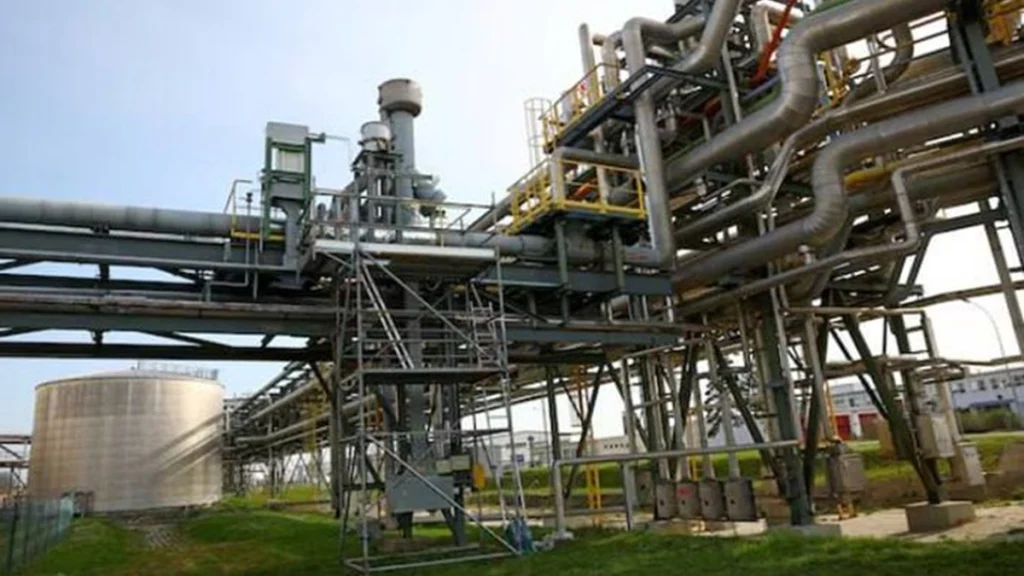
  • Omsk Kauchuk (Titan Group) – A major petrochemical enterprise producing synthetic rubber and chemical products. According to preliminary geolocation, impacts were recorded near Units D-3 and D-5; Unit D-3 is associated with the production of MTBE, a high-octane gasoline additive.

  • Ozon logistics center in Omsk – A warehouse complex damaged in the October 24 attack. Ozon confirmed a fire. The facility is located more than 2,500 kilometers from the combat zone.

Lipetsk Region

  • Energia plant in Yelets – An enterprise producing batteries and accumulators for missile systems, aviation, and other military equipment. According to monitoring channels, the plant was struck by missiles on October 25; Storm Shadow cruise missiles are said to have been used. Civilian infrastructure was also damaged.

Perm Krai

  • AVISMA in Berezniki – A chemical-metallurgical enterprise producing sponge titanium, magnesium, and magnesium alloys. The facility is located approximately 1,630 kilometers from the combat zone.

Belgorod Region

  • MegaGRINN shopping and entertainment center in Belgorod – A large mall that, according to Ukrainian channels, was one of the targets of a massive drone attack. One civilian was killed and 14 people were injured; residential buildings, cars, and public and commercial facilities were damaged.

Bryansk Region

  • A Ukrainian drone attacked a vehicle, killing two people and injuring two others. A Moscow-Novozybkov bus was also attacked near Khalturino; a woman was killed and three people were injured.

Oryol Region

  • Industrial facility in Oryol – According to reports, four people were killed and others remain missing as a result of a missile strike. The specific enterprise was not named in the available information.

Crimea and Krasnodar Krai

  • 500/220 kV Taman substation – A key node through which electricity from southern Russia is supplied to Crimea. According to monitoring channels, the substation was damaged in a drone attack on October 24. Outages were recorded in Sevastopol, Alushta, Yalta, Sudak, and Yevpatoria. Power was later restored.

  • Substation in the village of Bely, Temryuk District – An energy infrastructure facility where a fire broke out. Three settlements were left without electricity.

  • Substation in Myasnikovsky District, Rostov Region – Damaged in a drone attack; 172 homes were left without power.

Samara Region

  • Tolyattikauchuk – A petrochemical plant that, according to local residents and monitoring channels, was one of the targets of the attack. Footage of a large fire circulated online.

Thus, on October 24–25, the Russian side concentrated its efforts in three areas: logistics, maritime shipping, and rail transport. At the same time, strikes were carried out on energy infrastructure, including the Poltava substation and Kharkiv’s power grid. The Ukrainian side, in turn, focused its strikes on petrochemical enterprises deep inside Russia, as well as on energy infrastructure in the south, leading to a brief blackout in Crimea. According to monitoring channels, Ukraine used Storm Shadow missiles and carried out large-scale drone attacks, resulting in civilian casualties and damage to civilian infrastructure in Russia.


MORE ON THE TOPIC:

The post Russia Hits Ukrainian Logistics and Rail, Ukraine Strikes Russian Industry and Southern Power Grid appeared first on South Front.

  •  

Ucraina, Mosca apre: “Per arrivare alla pace bisogna parlare anche con l’Europa”

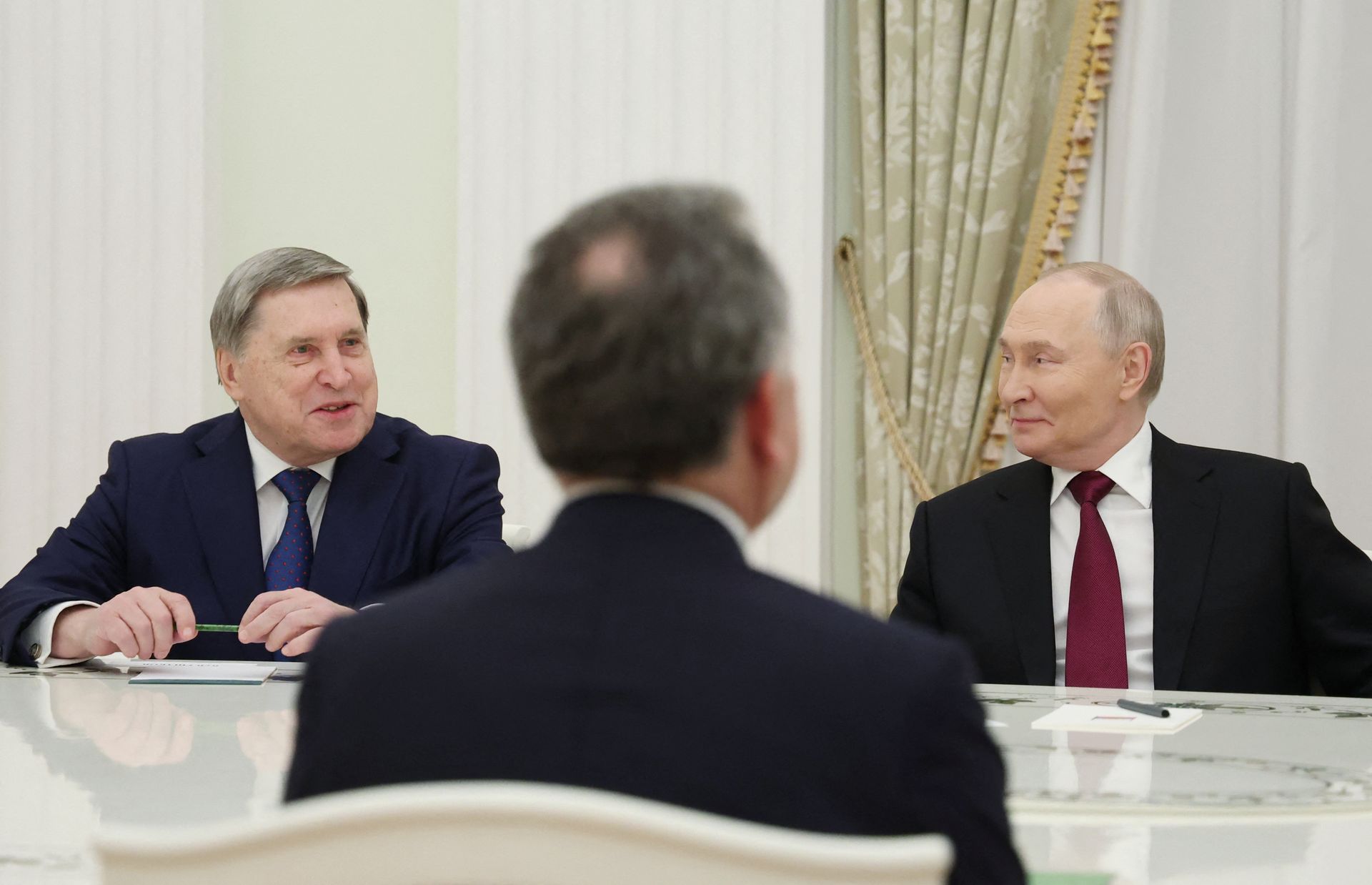
L’incontro sarà una sorta di “prova generale“, quindi è inutile nutrire grandi speranze. Ma nei colloqui trilaterali con Ucraina e Stati Uniti che Mosca si è detta pronta a riprendere una novità ci potrebbe essere: nei prossimi negoziati l’Europa dovrà avere un ruolo, dal momento che finora gli Stati Uniti non sono riusciti a convincere Kiev ad accettare un accordo di pace. A dirlo è stato il consigliere per la politica estera di Vladimir Putin, Yuri Ushakov, in un’intervista alla televisione russa Vesti.

Il 21 ottobre, il presidente russo ha avuto un colloquio con l’inviato speciale del presidente degli Stati Uniti, Steve Witkoff, a San Pietroburgo e ha aperto alla possibilità di colloqui trilaterali che potrebbero tenersi intorno al 10 novembre. In seguito all’incontro, Ushakov ha annunciato che un nuovo ciclo di negoziati potrebbe svolgersi ad Abu Dhabi a metà novembre. Il portavoce presidenziale Dmitry Peskov ha confermato che la capitale degli Emirati Arabi Uniti è tra le possibili sedi. “Ora la prossima scadenza è il 4 novembre, la nostra festa nazionale (giorno in cui la Russia celebra la Giornata dell’Unità Nazionale, ndr). Dopodiché, saremo pronti a riprendere i negoziati”, ha detto Ushakov.

“Dopo Anchorage sembrava che l’amministrazione americana potesse dettare qualcosa e costringere Kiev ad adeguarsi, ma finora questo non ha funzionato”, ha proseguito il consigliere di Putin, riferendosi al vertice tra Donald Trump e Putin tenuto in Alaska il 15 agosto 2025. “Questo perché non basta parlare soltanto con Kiev, bisogna parlare con tutta l’Europa, che sostiene pienamente l’Ucraina”, ha aggiunto il consigliere del Cremlino, secondo cui “forse la posizione dell’Europa in questo contesto è di fondamentale importanza“. Ushakov ha tuttavia ridimensionato le aspettative. “Anche durante il primo incontro potrebbe essere deciso ben poco, forse sarà soltanto esplorativo“, ha precisato, sottolineando che un accordo “richiede ancora lavoro”.

E’ la prima volta che Mosca riconosce esplicitamente la necessità di includere l’intera Europa nel tavolo delle trattative. Fino a questo momento, il Cremlino aveva cercato di isolare o scavalcare l’Unione Europea, ritenendola priva di autonomia e considerandola una semplice esecutrice della linea decisa a Washington.

I primi tre round di colloqui trilaterali tra Russia, Ucraina e Stati Uniti si sono svolti il ​​23-24 gennaio, il 4-5 febbraio e il 17-18 febbraio. Il round successivo era previsto dal 5 all’8 marzo nella capitale degli Emirati, ma è stato rinviato a causa dell’avvio della guerra di Stati Uniti e Israele contro l’Iran. “I colloqui trilaterali con Russia e Ucraina? Ne avremo alcuni molto presto. Penso che entrambe le parti vogliano raggiungere un accordo”, ha detto il presidente Usa Donald Trump parlando con i giornalisti prima di partire per Port Huron, in Michigan. Steve Witkoff è andato a Mosca “soprattutto per discutere un paio di questioni. La guerra in Ucraina, sulla quale penso che succederà qualcosa. E inoltre siamo riusciti a riportare a casa una persona di grande valore che era stata detenuta a lungo durante l’amministrazione Biden. Siamo riusciti a farla tornare”, ha aggiunto, con riferimento a Stephen Hubbard. “Non ho dato nulla in cambio, perché Putin ha ritenuto che fosse una richiesta ragionevole”.

L'articolo Ucraina, Mosca apre: “Per arrivare alla pace bisogna parlare anche con l’Europa” proviene da Il Fatto Quotidiano.

  •  

Ukraine strikes Russian plant supplying batteries for ballistic missiles and glide bombs with Storm Shadow missiles, OSINT reports – another hit on Russia’s weapons supply chain

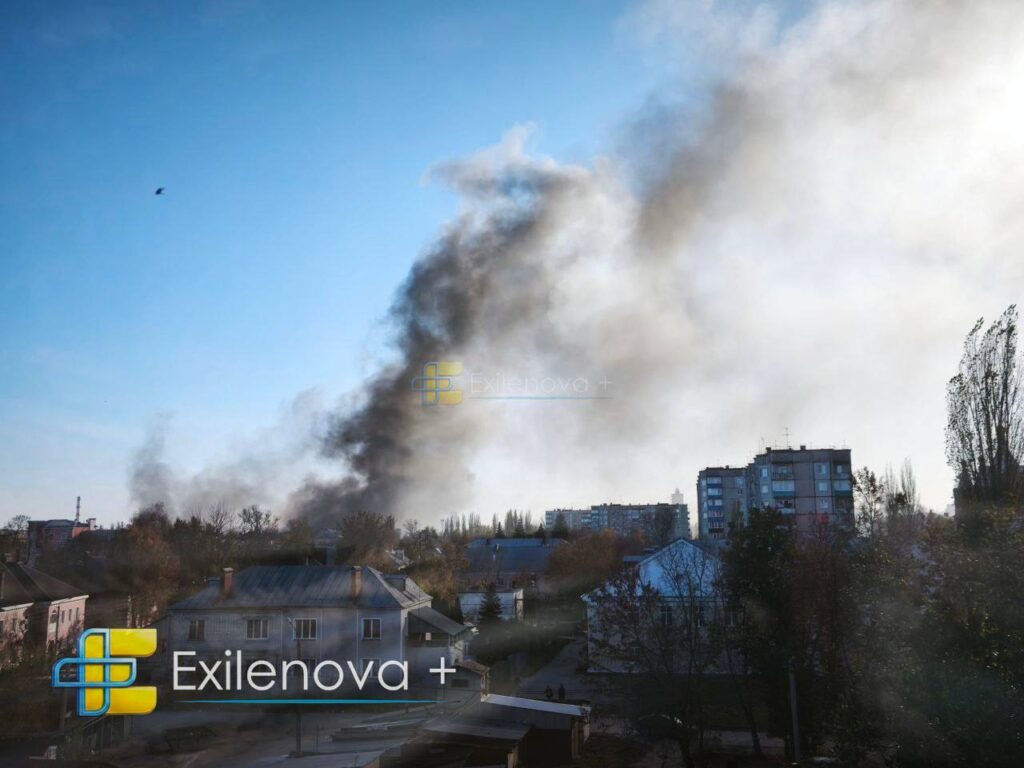
Smoke rising from the Energiya plant in Yelets, Russia’s Lipetsk Oblast, following a reported Ukrainian cruise missile strike, 25 October 2026. Photo: Exilenova+

Ukraine reportedly struck the Energiya plant in Yelets, Russia’s Lipetsk Oblast, with UK-supplied Storm Shadow cruise missiles on 25 October, according to the OSINT channel Exilenova+.

The plant manufactures batteries and power sources used in Russian weapons systems, including Iskander and Kinzhal missiles, air defense systems, and guided aerial bombs, according to Exilenova+. The reported strike targeted a facility that supplies components for Russia’s military-industrial complex as Moscow continues its war against Ukraine.

According to Exilenova+, Energiya is Russia's only producer of batteries for glide bomb planning and correction modules, as well as a key supplier of specialized power sources for several missile systems.

Storm Shadow missiles reportedly hit plant buildings

Exilenova+ reported multiple missile impacts at the Energiya plant, sharing footage and photos showing explosions, thick smoke, and fires at the facility. The channel later reported that the plant was still burning and that the surrounding area had been cordoned off, with numerous ambulances heading to the site.

Dnipro OSINT reported that at least two missiles struck two buildings at the plant.

The Energiya plant is located in Yelets, approximately 250 km (150 miles) from the Ukrainian border.

Plant produces components for Russian weapons

According to Dnipro OSINT, Energiya specializes in developing and manufacturing chemical power sources. Its products are used in several Russian weapons systems, including Iskander-K and Iskander-M missiles, Kh-47M2 Kinzhal air-launched ballistic missiles, Zircon missiles, and Pantsir air defense systems. The plant also supplies power sources for UMPB D-30SN guided aerial bombs.

Many of these weapons are used in Russian strikes on Ukrainian cities, killing civilians and destroying residential buildings and civilian infrastructure.

Aftermath of Russian Iskander strike on UN WFA warehouse housing humanitarian aid in Dnipro, 25 May. Photo: Andrii Sybiha
Explore further

UN food aid warehouse in Dnipro struck by Russian Iskander missile, impacting supplies for 130,000 people

Dnipro OSINT said the plant had been attacked at least four times before the 25 October strike.

The strike comes two days after a reported Ukrainian Storm Shadow missile attack on the Proton electronics plant in Russia’s Oryol on 23 October, which produces electronic components used in Russian weapons systems, including Iskander-M ballistic missiles and Pantsir-S1 air defense systems.

  •  

News from occupied Ukraine: Former Oleshky resident warns people 'won't survive this winter'

This weekly update from the Kyiv Independent aims to shed light on the situation facing Ukrainians living under Russian occupation and the ever-tightening control of information imposed by the Kremlin.

Key news as of Oct. 25:

  • Oleshky native warns residents may not survive winter as evacuation hopes rise
  • Russian-occupied Crimea

  •  

Russian titanium plant in Urals reportedly hit by Ukrainian drones, 1,500 km from Ukraine

finland confirms ukrainian drone its airspace kyiv's baltic strike campaign pushes deeper north – helsinki alert · post preparing launch long-range an-196 liutyi one-way attack photo_5224400079031496980_y (1) ukraine news reports

A drone attack damaged an industrial facility in Russia’s Perm Krai early on 25 October, injuring five workers, Ukrainian monitoring channel Exilenova+ reported. Exilenova+ identified the target as the AVISMA chemical and metallurgical plant in Berezniki, around 1,500 km from Ukraine’s border. 

The reported strike highlights Ukraine’s ability to reach industrial facilities deep inside Russia that support its military-industrial complex. 

AVISMA produces titanium materials used in aviation and aerospace manufacturing, including military aircraft, aircraft engines, missiles, and space technology, according to Exilenova+.

Regional governor Dmitry Makhonin said the industrial facility sustained damage but continued operating normally. He said five workers were injured in the attack.

A target deep inside Russia

Perm Krai lies in Russia’s Ural region, roughly 1,500 km from Ukraine’s border. The distance places the reported strike far beyond Russia’s border regions, where Ukrainian drone attacks have frequently targeted military and industrial infrastructure.

The reported attack follows a broader Ukrainian campaign against Russian industrial and energy facilities linked to the country’s war effort. 

Russia’s Defense Ministry claimed that air defenses intercepted and destroyed 532 Ukrainian drones overnight across 23 Russian regions and over the Sea of Azov, according to Russian state news agency TASS. 

The reported interceptions included drones over Perm Krai, as well as regions around Moscow and areas in southern and western Russia. The figures have not been independently verified.

The extent of damage at AVISMA and any impact on its operations have not been independently established.

  •  

Easy fix for Europe’s chaos? Stop fueling war against Russia

by Finian Cunningham, Strategic Culture: There is a straightforward way to alleviate the social chaos sweeping Europe, as well as the war in Ukraine threatening to engulf the continent. It’s an easy fix – and it’s not shoving more white powder up Zelensky’s nose paid for by European taxpayers. European leaders just have to find […]
  •  
❌