A mudança no horário de votação determinada pelo ministro Cristiano Zanin, do Supremo Tribunal Federal (STF), alterou os procedimentos da Justiça Eleitoral em Goiás neste domingo (25). O Tribunal Regional Eleitoral de Goiás (TRE-GO) suspendeu temporariamente a totalização dos votos e orientou as zonas eleitorais a manter em funcionamento as seções que ainda recebiam eleitores até as 19h.
A determinação chegou ao tribunal pouco antes do encerramento previsto para as 17h. O curto intervalo para comunicar a decisão às equipes eleitorais dificultou a aplicação da medida. Durante entrevista coletiva no início da noite, o desembargador eleitoral Laudo Natel Mateus classificou a situação como inédita.
O novo horário não autorizou a reabertura de seções que já haviam concluído a votação. A orientação foi direcionada aos locais em que ainda havia eleitores aguardando atendimento, inclusive pessoas que receberam senhas para votar.
Segundo Laudo Natel, naquele momento o tribunal não tinha confirmação oficial de que ainda existiam seções abertas em Goiás. A possibilidade, entretanto, não estava descartada diante das filas e do tempo necessário para transmitir as orientações aos responsáveis pelos locais de votação.
A suspensão da totalização foi outra consequência da mudança. O processamento dos resultados deveria permanecer interrompido até as 19h, horário estabelecido para o encerramento da votação nas seções que continuavam em funcionamento.
Durante a coletiva, o desembargador também esclareceu que a possibilidade de substituir as urnas eletrônicas por cédulas de papel não chegou a ser discutida. A alteração do horário, segundo ele, não modificaria o sistema utilizado para registrar e contabilizar os votos.
A decisão de Zanin ampliou o período de votação em todo o país após relatos de dificuldades de transporte para eleitores. O TSE esclareceu posteriormente que a extensão deveria ser aplicada apenas às seções que ainda não haviam encerrado os trabalhos.
A apuração do segundo turno da eleição presidencial começa às 17h deste domingo (25), no horário de Brasília, após o encerramento da votação. Em uma disputa acirrada, a divulgação dos primeiros resultados pode colocar um candidato na liderança e, ao longo da contagem, mostrar uma mudança de posição conforme os votos de diferentes regiões são contabilizados.
A ordem de processamento dos boletins de urna varia a cada eleição. Por isso, a liderança inicial não significa necessariamente vitória, já que o resultado parcial depende das localidades cujas urnas já foram apuradas.
No primeiro turno deste ano, o senador Flávio Bolsonaro (PL-RJ) assumiu a dianteira logo no início da apuração pelo Tribunal Superior Eleitoral (TSE). Até as 19h, quando quase metade das urnas havia sido contabilizada, ele mantinha uma vantagem de nove pontos percentuais sobre o presidente Luiz Inácio Lula da Silva (PT).
A diferença diminuiu à medida que os votos do Nordeste, especialmente da Bahia e do Ceará, entraram na contagem. Ao final, Flávio registrou 47,03% dos votos válidos, enquanto Lula alcançou 45,16%. A diferença foi de aproximadamente 2,2 milhões de votos.
Viradas marcaram a eleição de 2022
A apuração do primeiro turno de 2022 também teve mudanças na liderança. Lula começou à frente, mas foi ultrapassado pelo então presidente Jair Bolsonaro (PL) às 17h13. Bolsonaro ampliou sua participação até alcançar 48,98% dos votos válidos às 18h09.
A segunda virada ocorreu às 20h02, quando cerca de 70% das urnas já haviam sido apuradas. Lula ultrapassou Bolsonaro e passou a ampliar a vantagem até o encerramento da contagem. O petista terminou aquela etapa com 48,4% dos votos válidos, contra 43,2% do adversário.
No segundo turno de 2022, Lula também começou atrás de Bolsonaro na apuração. O petista assumiu a liderança às 18h44, quando aproximadamente 67% das urnas haviam sido contabilizadas. Por volta das 19h, o Datafolha projetou a vitória de Lula.
Como funciona a apuração
A totalização dos votos é realizada de forma automatizada pela Justiça Eleitoral. Os dados registrados nas urnas são transmitidos por uma rede própria, com mecanismos de segurança, para os sistemas responsáveis pela consolidação dos resultados.
A transmissão dos boletins de urna ocorre por canais seguros, e os equipamentos de votação não ficam conectados à internet durante a votação. O processamento segue os procedimentos estabelecidos pela Justiça Eleitoral.
A divulgação dos resultados parciais permite acompanhar a evolução da contagem, mas a posição dos candidatos pode mudar até que os votos de todas as localidades sejam contabilizados.
Venezuelan opposition leader Maria Corina Machado announced on Sunday that she has returned to her homeland following almost a year in exile, after covertly leaving Venezuela in late 2025 to receive the Nobel Peace Prize. She returns as doubts about her country’s democratic future and the role of the US are growing.
Venezuelan opposition leader Maria Corina Machado announced on Sunday that she has returned to her homeland following almost a year in exile, after covertly leaving Venezuela in late 2025 to receive the Nobel Peace Prize. She returns as doubts about her country’s democratic future and the role of the US are growing.
Você salvou algo que parecia ótimo, enviou para alguém e a resposta foi que não dava para entender nada do que estava acontecendo. O arquivo não se corrompeu no caminho e a sua visão não estava pregando peças. Os aplicativos de conversa comprimem o vídeo novamente na hora do envio, e essa segunda compressão parte do arquivo que você entregou — logo, uma cópia que já estava um pouco sem foco chega completamente borrada. A solução acontece antes de você enviar qualquer coisa, no momento em que decide o que vai salvar. O Snaptube é a resposta rápida para isso: há mais de uma opção de qualidade no menu e, para essa situação específica, você escolhe de propósito um nível acima do que realmente precisa.
Snaptube
Pense nisso como deixar uma margem de segurança. As opções de qualidade do Snaptube não existem apenas para você escolher sempre a mais alta; elas servem para que o arquivo possa se adaptar ao que vai acontecer depois, e o que acontece a seguir, neste caso, é uma compressão sobre a qual você não tem controle algum. Se você escolher exatamente o nível que deseja que a outra pessoa veja, ela receberá algo abaixo disso, porque o aplicativo de mensagens comprime a cópia que você envia, e não o vídeo original. Escolha um ou dois níveis acima, e o que sobreviver ao envio será praticamente o que você estava assistindo. Esse é o único ajuste em todo esse processo que depende totalmente de você, e quase ninguém faz isso, porque o resultado do envio só aparece na tela de outra pessoa.
O segundo ponto é que isso quase sempre acontece no meio de uma conversa em tempo real. Alguém pede um vídeo, você diz que vai mandar e o envio precisa acontecer no minuto seguinte, não mais tarde à noite. O Snaptube processa os links em seus próprios servidores, então o resultado fica pronto em segundos — seu celular faz o pedido uma única vez e aguarda, em vez de ficar processando tudo localmente e travando o aparelho. Essa não é uma especificação técnica que as pessoas costumam comparar ao escolher um aplicativo. Mas é a diferença entre responder enquanto o assunto ainda está rendendo no chat ou voltar uma hora depois, quando você já vai ter que explicar o que está enviando e o porquê.
E, às vezes, a imagem nem é o que importa. Metade dessas situações envolve apenas o áudio: uma mensagem de voz que alguém compartilhou, trinta segundos de uma música ou um trecho de uma conversa que você quer que um amigo escute. Extrair o áudio diretamente de um post de rede social e enviá-lo resolve o problema por completo — não há nada para ver, logo nada fica embaçado, e o arquivo é leve o suficiente para chegar perfeitamente mesmo com uma conexão ruim do outro lado. Além disso, evita que a outra pessoa gaste a franquia de dados dela com um vídeo que nem pretendia assistir.
Na prática: depois de baixar Snaptube, cole o link ou busque por ele dentro do próprio aplicativo, escolha o formato MP4 em uma qualidade um pouco acima da que você realmente deseja enviar, ou baixe apenas o áudio se essa for a mensagem principal, e envie o arquivo direto da sua galeria.
TubeMate
Um dos nomes mais antigos no Android, distribuído a partir de tubemate.net e desenvolvido com um navegador integrado que permite salvar vídeos com apenas um toque. Os formatos de saída incluem MP4, MP3 e AAC, a conversão para áudio pode ser feita durante o próprio download e as transferências utilizam várias conexões simultâneas (multi-threaded). A versão atual, 3.4.20, é de junho de 2026. A versão gratuita vem acompanhada de anúncios em tela cheia.
A conversão direta durante o download é perfeita para esse tipo de situação: quando o que você quer encaminhar é apenas o áudio, não precisa baixar o vídeo primeiro para depois procurar outro app para extraí-lo. O único cuidado é com a lista de formatos, que ainda inclui FLV. Se você enviar um arquivo desses para alguém, há uma boa chance de o celular da pessoa nem conseguir abrir, o que é bem pior do que um vídeo com imagem borrada.
Video Downloader
O nome dele na loja de aplicativos é o mais genérico possível, então preste atenção em dois detalhes antes de instalar qualquer coisa: o desenvolvedor deve ser InShot Inc. e o identificador do pacote deve ser video.downloader.videodownloader. Ele monitora a página que você está navegando e exibe um botão flutuante para salvar assim que identifica um vídeo, funcionando com Instagram, Facebook, Dailymotion e Vimeo, entre outros, contando ainda com um gerenciador de downloads que processa vários arquivos ao mesmo tempo em segundo plano. São cerca de 230 milhões de downloads com uma nota média de 4,74 estrelas.
Ele combina com a maneira como a maioria dos compartilhamentos realmente começa: você estava rolando o feed, viu algo legal e quer mandar para alguém no mesmo instante. O problema incômodo é que os usuários relatam anúncios aparecendo a cada poucos segundos e, quando o seu objetivo é rapidez no meio de uma conversa, esse é o pior momento para se deparar com uma propaganda.
Hitube
Uma página no navegador ou um APK para Android que cobre Instagram, Facebook, TikTok, Twitter e Pinterest, entregando MP4 em HD ou SD, além de MP3, M4A e imagens, sem precisar de cadastro.
Se o vídeo está nas redes sociais e você não quer instalar nada só para encaminhar uma coisa, colar o link na página te dá um MP4 em poucos passos e não deixa rastros depois. O que ele não oferece nesse caso específico é margem de manobra: HD e SD são as duas únicas opções, então não dá para escolher uma qualidade intermediária. Para um vídeo curto enviado para apenas uma pessoa, geralmente basta. Mas para algo que você quer que chegue com ótima qualidade, fica a desejar.
Videoder
Disponível para Android com versão para PC, uma longa lista de fontes compatíveis, extração de áudio, suporte a vários links de uma só vez e downloads multithread. O Uptodown já o marcou como descontinuado, com seu catálogo de versões encerrado em 2023.
Baixar vários itens de uma vez é o grande motivo para considerá-lo, já que quase ninguém encaminha uma coisa só — são aqueles quatro vídeos do fim de semana para mandar no grupo da família. O problema é a confiabilidade. Como ninguém mais o atualiza, se uma plataforma muda o jeito de entregar os arquivos, ele simplesmente para de funcionar. E isso costuma acontecer bem no meio de uma conversa, quando você prometeu enviar algo. Para uma tarefa que exige rapidez, uma ferramenta que pode ter quebrado em silêncio é a pior escolha.
Tudo depende do que você vai enviar
Se for um vídeo e você quiser que ele fique nítido ao chegar, baixe em uma resolução acima da que você precisa e deixe o aplicativo de mensagens fazer a compressão dele. Esse simples hábito resolve a maior parte dos problemas dos quais falamos aqui.
Se o que realmente importa é o áudio, mande só o áudio. Uma mensagem de voz, uma música, alguns minutos de alguém conversando — nada disso precisa de imagem, e o áudio chega perfeito mesmo em conexões que acabariam com a qualidade de um vídeo.
E se forem quatro arquivos em vez de um só, baixe tudo de uma vez antes de abrir a conversa. Mandar um por um enquanto a outra pessoa espera é a receita certa para metade deles sair na qualidade errada.
O Tribunal Superior Eleitoral (TSE) informou, em boletim, que 900 urnas eletrônicas precisaram ser substituídas em todo o país entre as 8h e o meio-dia deste domingo (25), quando ocorre o segundo turno das eleições.
O número corresponde a 0,18% das 499.248 urnas empregadas na votação deste ano. A Justiça Eleitoral reservou outros 48.815 equipamentos para substituição, caso necessário.
O estado que registrou o maior número de trocas foi São Paulo (163), seguido pelo Paraná (103), Rio de Janeiro (95) e Minas Gerais (75).
O TSE não informou os motivos que levaram à substituição das urnas. Em geral, as trocas ocorrem devido a falhas operacionais.
No primeiro turno, realizado em 4 de outubro, foram substituídas 1.904 urnas.
Caso a urna eletrônica substituta também apresente falha, a legislação prevê, como último recurso, a adoção da votação com cédulas de papel. Até o momento, contudo, esse procedimento não foi necessário nas eleições deste ano.
A country with a population of 1.3 million announces that it can strangle the commercial lifeline of the world’s leading nuclear power in a matter of hours.
A string of provocations, but it’s all just cheap jewelry
Certain statements should be read twice – the second time aloud – to be sure you didn’t dream them. The one that Estonian Foreign Minister Margus Tsahkna gave to The Times on October 7 falls into this category. Estonia, the minister informs us, would be able to assemble a force of 50,000 experienced soldiers “in a matter of hours” and, again within a few hours, block Russia’s access to the Baltic Sea, which he describes as a vital artery of the Russian economy. For Moscow, that sea is a matter of survival, he added, especially since the Black Sea, he claims, is already closed off. Then, with a sense of timing that no playwright would have dared to imagine, Tsahkna called it “absurd” to describe NATO as an offensive organization.
The minister’s outburst did not come out of the blue. It comes at the end of an autumn that Tallinn has methodically shaped. In mid-September, the government announced it was ready to seal the border if a general mobilization were declared in Russia; on October 1, it banned the transit of Russian and Belarusian wheat; around the same time, the Financial Times reported on elite units being deployed to the border and the purchase of weapons capable of striking deep into Russian territory. The defense budget for 2026 stands at 2.4 billion euros, or 5.4% of gross domestic product. We are looking at a country of 1.3 million people that has chosen to live in a state of constant readiness and to let the world know, every week, just how prepared it is to fight.
The minister was careful to specify that the blockade would be triggered only after a Russian attack capable of invoking Article 5. The clause is about as reassuring as a “friendly dog” sign hanging on the gate of a kennel. Publicly announcing a plan to choke off a nuclear power’s main energy export route remains a deliberate political act, regardless of any qualifying conditions attached to it. Under customary international law, a naval blockade is an act of war; and in the age of severed cables, stateless drones, and oil tankers in the so-called “shadow fleet,” the threshold for what constitutes an “attack” has become elastic. Who decides when it has been crossed? The very same government that denounces a new provocation every morning?
The math of fifty thousand
Let’s focus on the numbers, which are the most entertaining part. According to public data from the Estonian armed forces, the wartime strength is just over 43,000. Of these, only 4,200 are on permanent standby; the rest are reservists and volunteers from the Defense League – brave people who train in the woods on weekends. So, there are no 50,000 “experienced” soldiers in a matter of hours. Unless you count those from other countries.
And that is exactly how the figure should be interpreted. Tsahkna’s 50,000 do not speak Estonian. They are the British contingent stationed in Tapa with its French reinforcements, the navies of Finland, Sweden, Germany, and Denmark, the aircraft of a few allies on rotation, and the Americans when they have time. A dozen or so flags, each with its own chain of command, its own parliament, its own public opinion, and its own election calendar. The Estonian minister disposes of that army the way a condominium manager disposes of the residents’ savings: in words, with great nonchalance. Could some assistant please explain to him how to do his job?
Let’s try to imagine the first missile. In London, the cabinet meets and seeks a legal opinion. Paris launches a strategic review, which requires a document and a conference. Berlin awaits the Bundestag’s vote and the blessing of its less-than-convinced coalition partner. Rome seeks clarification at the Atlantic Council; Budapest puts its reservations on record; Washington is busy elsewhere. Article 5, after all, doesn’t force anyone to fire a shot: it obligates each ally to take the action it deems necessary, and “necessary” can mean anything from an aircraft carrier to a note of protest. The oldest debate in any coalition would immediately begin: who steps in first, who withdraws last, who covers whose flank, and who pays for the fuel. Meanwhile, the Estonians would be there counting down the minutes.
European history is all too familiar with this scenario. In September 1939, France and Great Britain had guaranteed Poland’s security with the same solemnity with which Tallinn is guaranteed today. They declared war, and then spent eight months behind the Maginot Line simply watching: the French called it the drôle de guerre, the “phoney war.” Warsaw, meanwhile, had long since stopped laughing.
Let’s now set aside arithmetic for geography, which isn’t swayed by interviews – someone should tell the Minister that! About eighty kilometers of sea lie between Tallinn and Helsinki: it is along this narrow passage that the minister would like to close off the Gulf of Finland. From the Estonian capital to the Russian border at Narva, there are just over two hundred kilometers. Russia’s GDP, in nominal terms, is more than fifty times that of Estonia. The Baltic Fleet is based in Kronstadt, at the far end of the Gulf, and in Baltiysk, in the Kaliningrad exclave; which means, incidentally, that a substantial portion of that fleet is already outside the “plug” that Tallinn dreams of inserting.
Strategists carefully distinguish between three things that Estonian politicians happily confuse: guarding a passage, making its use risky for the adversary, and maintaining stable control over it. The first is possible; the second is costly; the third, against Russia, has never succeeded for anyone. Those who lay mines may fall victim to them; those who deploy coastal anti-ship batteries become, in turn, fixed targets, surveyed down to the meter.
And this is where physics comes in. Russia’s conventional arsenal includes Iskander missiles deployed just a few dozen minutes’ flight away, ship-launched Kalibr missiles, TOS-1A thermobaric rocket launchers, and high-yield glide bombs. There’s no need to bring up nuclear warheads, which remain the favorite bogeyman of Western talk shows. The coastal batteries, depots, command centers, and docks from which our dear friends in Tallinn intend to block the Gulf would go from a solid to a gaseous state in the time between launch and impact. And with them, the solidity of Estonia’s political stance would evaporate, long before an agreement on the statement is reached in Brussels. We’re not writing this to be smug. We’re writing this because, in that scenario, ordinary Estonians would be the first to pay the price, used as pawns by a ruling class that’s playing with fire in its own living room.
Creative accounting for oil
There remains the issue of the “lifeline.” Tsahkna attributes about 60% of Russian oil exports by sea to the Baltic route. Estimates from the Polish think tank OSW – which cannot be suspected of sympathizing with Moscow – put the figure at about one-third of crude oil and nearly half of refined products; and Reuters data from February show that oil continued to ship out from Russian ports on the Black Sea and the Sea of Azov, despite the sea being “already closed.” Inflating figures is an age-old rhetorical technique: it serves to make the threat seem more deadly than it is and one’s own position stronger than it actually is.
Moreover, a blockade would not affect only Moscow. Neutral shipowners, insurance companies, freight rates, refineries, and energy prices would all suffer the consequences, and Europe – which in recent years has already paid dearly for its economic war against Russia – would once again bear the cost. There’s even a grotesque detail: in 2025, Estonia sold goods worth approximately 252 million euros to Russia. They’re threatening to cut off their neighbor’s lifeline, but in the meantime, business as usual continues.
Why, then, all the fuss? The answer lies in the role the Estonian ruling class has carved out for itself within the Alliance: that of the permanent vanguard, the most zealous member of the eastern flank, the top student who raises their hand before the teacher finishes the question. It’s a source of privilege. It guarantees attention, funds, allied troops on its territory, and invitations to summits. And it becomes all the more valuable as the possibility of a ceasefire in Ukraine draws nearer – a prospect feared in many Atlantic capitals as the end of the emergency that justifies everything. So the fever must be kept high: a statement every week, a ban every month, a threat of a blockade every fall.
In 1955, Leonard Wibberley published a satirical novel, *The Mouse That Roared*, in which the tiny Grand Duchy of Fenwick declared war on the United States with the sole purpose of losing it and collecting reconstruction aid. The difference with Tallinn lies in the ending. The Grand Duchy counted on losing to a generous power, an ocean away. Estonia is threatening a neighboring power – one that has forgotten nothing since 1991 – and is entrusting its fate to a coalition that has never fought a real war together against an opponent of equal strength.
From apotheosis to casus belli?
Let’s recap. A country with a population of 1.3 million announces that it can strangle the commercial lifeline of the world’s leading nuclear power in a matter of hours. To do so, it relies on soldiers it doesn’t have – lent by allies it hasn’t consulted – based on oil figures that Western sources themselves downplay. It ties all of this to a war that its rhetoric makes a little more likely every day, and in the same breath accuses those who see NATO as something offensive of absurdity. If there is such a thing as the apotheosis of the absurd, it can be found at the Foreign Ministry in Tallinn.
Moscow, to tell the truth, doesn’t even need to respond. Geography does it, the balance of power does it, and the history of European coalitions – which have always found it easier to make promises than to keep them – does it. Deterrence that turns into permanent provocation ceases to dissuade and begins to seek its own casus belli. The Baltic Sea deserves mature diplomacy among the coastal states that will have to share it anyway. For now, it must settle for – a minister who roars – and an audience of allies who, at the first real blow, will look around wondering who should answer the phone.
The results of the first round of Brazil’s 2026 presidential election sparked a wave of analysis on the Brazilian left. With Flávio Bolsonaro ahead of Lula in the vote count, many commentators looked for explanations in evangelical voters’ behavior, moral conservatism, and the influence of religious leaders. These factors matter, but they do not explain everything. A significant portion of the electorate is dissatisfied with the cultural priorities of the left and, above all, with the perception that the state has lost its ability to guarantee public safety.
Public security occupies a central place in this debate. According to a Nexus/BTG poll released in July 2026, 30% of respondents identified violence, crime, or public security as the country’s main problem. This concern is particularly relevant among Flávio Bolsonaro’s supporters, for whom fighting crime is one of the main expectations for the next government.
The situation in Rio de Janeiro illustrates the scale of the problem. A study by the Federal Fluminense University’s Study Group on New Illegalisms and the Fogo Cruzado Institute estimated that, in 2024, approximately four million people in the metropolitan region lived under the control or influence of armed groups. This represented 34.9% of the region’s population. Criminal factions and militias exercise forms of territorial power that affect mobility, economic activity, and residents’ everyday lives. Some estimates suggest that between 60% and 70% of Rio de Janeiro’s territory is currently controlled by organized crime.
In this context, rhetoric emphasizing social rights, national sovereignty, and foreign policy can lose electoral appeal when it fails to offer convincing answers to everyday insecurity. Lula has advocated tackling organized crime through coordination among security forces, financial investigations, and the restoration of state control over affected territories. Yet these measures are only being emphasized now, following four years of what critics describe as utter neglect of public security, during which organized crime achieved historic levels of territorial expansion.
Flávio, meanwhile, is betting on a more punitive approach, including classifying criminal factions as narco-terrorist organizations. The dispute involves different conceptions of public security, but it also concerns each candidate’s ability to convey determination in confronting the problem. Whether designating these groups as terrorist organizations would actually help combat crime is a matter for a much longer debate. There is little doubt, however, that the label itself appeals to a substantial portion of the population living under the very real terror imposed by these criminals.
There is also a cultural dimension that the left frequently underestimates. Some voters reject the political vocabulary associated with the woke agenda and interpret certain progressive initiatives as attempts to impose new standards of behavior. The Supreme Federal Court’s draconian decision to recognize “transphobia” as a crime “equivalent to racism” has naturally provoked strongly negative reactions. After all, it seems perfectly normal that millions of Brazilians reject a ruling that can – and already does – place people in prison for up to five years for using the wrong pronoun when addressing transgender individuals.
Cultural discontent is often irresponsibly disdained in political analysis. Many commentators continue to treat voters as machines seeking constant material benefits, supposedly willing to sacrifice their values in exchange for meager welfare handouts – the principal achievement the Workers’ Party government has offered the Brazilian people so far. This analysis is mistaken. For many Brazilians, questions concerning their children’s education, religion, and the limits of state intervention are central political priorities. These voters will naturally tend to support the opposition in a national environment where state-run university hospitals – with the backing of the left-wing establishment – provide puberty blockers and other forms of “non-surgical intervention” to “transgender children.”
Contrary to the expectations of academic analysts disconnected from the country’s realities, foreign policy occupies a limited place in most people’s daily lives. Relations with the United States, Brazil’s role in BRICS, and its diplomatic position on Palestine are relevant issues, but they are unlikely to outweigh immediate concerns such as urban violence and cultural disputes.
Flávio Bolsonaro’s electoral support must be understood through this combination of factors, without attributing a single motivation to millions of voters. Public security, traditional values, dissatisfaction with the government, and rejection of certain progressive agendas can all converge in the same vote. If the left wants to improve its popularity, the better course of action is to reconsider its own mistakes, instead of inventing false explanations for the right’s growing support.
O Dia Internacional contra as Alterações Climáticas, que se assinala a 24 de outubro, cuja data foi estabelecida com origem associada a diretrizes da UNFCCC (Convenção – Quadro das Nações Unidas sobre a Mudança do Clima), vai merecer especial atenção do Município de Moura, numa ação de sensibilização ambiental, que será realizada esta segunda-feira, dia 26 de outubro.
A iniciativa é dedicada aos cidadãos advertindo para a importância da adoção de comportamentos mais sustentáveis e à necessidade de combater os efeitos das alterações climáticas e pretende alertar para as principais causas e consequências deste fenómeno, impulsionado sobretudo pela atividade humana, nomeadamente através da queima de combustíveis fósseis, da desflorestação e de outras práticas que contribuem para o aumento da concentração de gases com efeito de estufa na atmosfera.
No âmbito desta ação, de acordo com a nota de imprensa emitida pela autarquia de Moura, são também divulgadas medidas que cada cidadão pode adotar no seu quotidiano para reduzir a pegada de carbono e contribuir para a mitigação das alterações climáticas.
A utilização de transportes públicos, as deslocações a pé ou de bicicleta, a poupança de água e eletricidade, a redução do desperdício alimentar, a valorização dos produtos locais e a reutilização e reciclagem de materiais são alguns dos comportamentos destacados.
Importa destacar, segundo a Câmara Municipal de Moura, que a sensibilização da população para estas questões constitui um contributo importante para a construção de uma comunidade mais consciente e responsável, reforçando a importância do envolvimento de todos na proteção do ambiente e na promoção de um modelo de desenvolvimento mais sustentável.
Esta iniciativa é financiada pelo Programa Regional Alentejo 2030, no âmbito do Plano de Desenvolvimento Local da Bioregião da Margem Esquerda do Guadiana.
Kimi Antonelli conquistou a pole-position para o GP dos Estados Unidos, 18ª etapa da temporada 2026 da Fórmula 1, neste sábado (24), no Circuito das Américas, em Austin. O jovem piloto daMercedes registou 1:34,035s no Q3 e superou Max Verstappen e Isack Hadjar formando o trio mais rápido.
Na tabela classificativa seguiram-se Leclerc, Hamilton da Ferrari, na fente do segundo Mercedes de GeorgeRussell. Pela McLaren, Oscar Piastri terminou em sétimo, enquanto Lando Norris ficou em oitavo após ter a sua melhor volta anulada por exceder os limites da pista. Arvid Lindblad e Liam Lawson completaram o top- ten.
Após três sessões de treinos livres, em que a Ferrari se mostrava mais forte, eis que na hora da verdade, quando se discutia quem iria partir na frente, eis que a Mercedes decidia posicionar-se na liderança, através de Kimi Antonelli e alcançava a pole-position para o GP dos Estados Unidos.
Q1 – 18 minutos
Na sessão Q1, com 18 minutos de duração, Lando Norris, depois de nas sessões livres ter ficado de certa forma meio discreto, apareceu nesta sessão na liderança, averbando o tempo de 1:35,029, na frente de Leclerc (+0,171s) e de Verstappen (+0,186s). Isack Hadjar e Lewis Hamilton completavam o top-five. Gabriel Bortoleto fazia o 7.º tempo. Os eliminados foram: Ocon, Stroll, Sainz, Albon, Perez e Bottas.
Q2 – 15 minutos
Só iriam passar para o Q3 os 10 mais rápidos. E logo de início Bortoleto surgia em pista a dar vácuo para o seu companheiro de equipa (o brasileiro sabe que nada adianta alcançar nesta sessão uma boa posição, porque tem que cumprir a sua penalização partindo da cauda do pelotão) então ajudar Hülkenberg era a missão do dia.
Verstappen surgia nesta sessão com grande determinação e saltava para o topo da tabela (1:34,471s), seguido por Norris e Antonelli. Mas de seguida, quando faltavam 5 minutos para o final da sessão, todos regressavam à pista, agora com pneus macios novos, e Leclerc voava para a liderança com o crono 1:34,198s, secundado por Antonelli (+0,080s) e com Russell no terceiro lugar (+0,107s). Verstappen e Norris desciam para as quarta e quinta posições. Hülkenberg ficava no limite, em 11º e não conseguia qualificar-se. Os eliminados eram: Gasly, Hulkenberg, Bearman, Bortoleto, Colapinto e Alonso.
Q3 – 13 minutos
Depois de alguns bons registos, nomeadamente de Russel, Verstappen e Hadjar, o piloto da Mercedes Kimi Antonelli saltava para o topo da classificação com 1:34,035s. A cerca de cinco minutos do final da sessão, praticamente todos os pilotos regressavam à pista para uma tentativa final de obterem o melhor registo, mas o crono do italiano não era superado.
Verstappen ficava na segunda posição (+0,179s) e Hadjar em terceiro (+0,215s), relegando os dois Ferrari para as posições imediatas – 4.º Leclerc (+0,232s) e 5.º Hamilton a fechar o top-five (+0,276s). Entretanto o tempo de Norris que era era neutralizado (por ultrapassar os limites da pista) e descia para oitava posição.
Eis como ficou a grelha de partida para o GP dos Estados Unidos:
1) Kimi Antonelli (Mercedes) 1’34.035 2) Max Verstappen (Red Bull/Red Bull Ford) 1’34.214 3) Isack Hadjar (Red Bull/Red Bull Ford) 1’34.250 4) Charles Leclerc (Ferrari) 1’34.267 5) Lewis Hamilton (Ferrari) 1’34.311 6) George Russell (Mercedes) 1’34.476 7) Oscar Piastri (McLaren/Mercedes) 1’34.803 8) Lando Norris (McLaren/Mercedes) 1’35.049 9) Arvid Lindblad (Racing Bulls/Red Bull Ford) 1’36.049 10) Liam Lawson (Racing Bulls/Red Bull Ford) – 11) Pierre Gasly (Alpine/Mercedes) 1’35.080 12) Nico Hülkenberg (Audi) 1’35.158 13) Fernando Alonso (Aston Martin/Honda) 1’35.818 14) Oliver Bearman (Haas/Ferrari) 1’36.031 15) Esteban Ocon (Haas/Ferrari) 1’36.531 16) Lance Stroll (Aston Martin/Honda) 1’36.677 17) Carlos Sainz (Williams/Mercedes) 1’36.770 18) Alexander Albon (Williams/Mercedes) 1’36.967 19) Sergio Pérez (Cadillac/Ferrari) 1’37.433 20) Valtteri Bottas (Cadillac/Ferrari) 1’37.523 21) Franco Colapinto (Alpine/Mercedes) 1’35.722 22) Gabriel Bortoleto (Audi) 1’35.691
It is the first time in the country’s history since the return of democracy that a candidate who lost in the first round manages to come back and win in the runoff. The left-wing president obtained 51.7% of the votes, compared with the 48.2% received by right-wing Senator Flavio Bolsonaro.
It is the first time in Brazil's history since the return of democracy in the country that a candidate who lost in the first round managed to come back and win in the runoff. The left-wing president Luiz Inacio Lula da Silva obtained 51.7% of the votes, compared with 48.2% won by right-wing Senator Flavio Bolsonaro.
Desde a década de 1980, o Brasil registra surtos comprovados de dengue, mas só em 2007 o Rio Grande do Sul teve um caso que não tenha sido importado de outra parte do país. A explicação é simples: como o mosquito Aedes aegypti, que transmite a doença, vive melhor em regiões quentes e úmidas, o clima funcionava como uma barreira de proteção.
Essa defesa natural ficou no passado. Em 2024, ano em que o Brasil registrou um número recorde de casos da doença, o Rio Grande do Sul teve quase 210 mil infecções confirmadas e 281 mortes.
Na Bahia, estado acostumado a temperaturas mais elevadas e com 3 milhões de habitantes a mais, os casos confirmados foram cerca de 163 mil, com 188 óbitos.
Um estudo da Fundação Oswaldo Cruz (Fiocruz) mostra que isso não ocorre apenas no Rio Grande do Sul. De 2006 a 2024, o número de microrregiões brasileiras com níveis epidêmicos de dengue mais do que dobrou, de 110 para 292, extensão que representa metade do país (54%).
As outras microrregiões (46%) apresentaram incidência de média a baixa, com risco esporádico ou incerto.
A principal explicação para essa mudança está no clima. A pesquisa identificou que a maior frequência de anomalias térmicas é o indicador climático que explica melhor o aumento das taxas de incidência de dengue no longo prazo. O conceito se refere ao registro de temperaturas muito diferentes das habituais em um local por determinado período de tempo.
"O que se observa é que o processo de expansão da área de transmissão da dengue parece ser irreversível. Uma vez introduzidos, o vírus e o vetor, é improvável que se retorne a um cenário de transmissão zero", alertam os autores.
De acordo com o infectologista Celso Granato, membro da Sociedade Brasileira de Patologia Clínica e Medicina Laboratorial, o espalhamento da dengue é uma das maiores provas de como as mudanças climáticas podem incidir sobre as doenças infecciosas.
A doença tropical tem chegado não somente a regiões mais frias do Brasil, como a países do Hemisfério Norte. Neste momento, a região continental dos Estados Unidos vive o maior surto de dengue da sua história. Casos autóctones também foram registrados neste ano na França e na Itália.
Granato explica que todas as etapas da vida do mosquito transmissor da dengue são afetadas pelo clima.
"Eles colocam ovos com uma casca muito resistente, que podem permanecer por anos na natureza e se romper quando tem umidade e temperatura alta. E esses mosquitos já podem nascer infectados, porque há a transmissão da fêmea para os ovos".
O infectologista Celso Granato . Foto: Divulgação SBPC/ML
A temperatura também altera o comportamento dos mosquitos já adultos.
"Quando está muito calor, eles têm que bater a asinha mais rapidamente para conseguir voar. Então, eles gastam mais energia e precisam picar mais para se alimentar e acabam transmitindo mais a doença também".
Febre do Oropouche
Mas a dengue não é a única doença afetada pelas mudanças climáticas. A febre do Oropouche, que circulava quase exclusivamente na Região Amazônica até 2023, causou mais de 12 mil infecções no ano passado, em 23 estados e no Distrito Federal.
A relação com o clima ainda está sendo investigada, mas especialistas acreditam que mudanças nos padrões de temperatura e chuvas, em conjunto com a degradação ambiental, tenham contribuído para a expansão da doença.
Mosquito causador da febre do Oropouche Foto: Sociedade Brasileira de medicina tropical/Divulgação
"No Rio Grande do Sul, após o desastre das chuvas, aumentou muitas vezes a frequência de leptospirose", exemplifica.
A doença é causada por uma bactéria transmitida principalmente pela urina de ratos, que é espalhada durante enchentes.
"A água da enxurrada também se mistura com o esgoto e pode contaminar a que as pessoas vão beber ou lavar seus alimentos. Há um grande risco de se contaminar com bactérias que causam problemas gastrointestinais e com vírus, como o da hepatite A", complementa o infectologista.
Já as secas representam um perigo diferente e pouco conhecido: "Quando a gente tem incêndio, os animais que dependem da floresta migram para as casas das pessoas que moram perto, principalmente pequenos mamíferos, que têm uma série de doenças que podem passar para o ser humano".
O exemplo mais preocupante é o hantavírus. A cepa que circula no Brasil causa uma síndrome cardiopulmonar bastante grave. Desde 2016, 530 infecções foram confirmadas no país, com 212 mortes, uma taxa de letalidade de 40%.
"A gente tem vários exemplos anteriores, na Bolívia e no Paraguai, por exemplo. Quando ocorrem queimadas, os roedores infectados entram na casa das pessoas e causam essa doença", alerta Granado.
Fungos
Outra ameaça pouco conhecida é a das doenças fúngicas. Na última edição do Congresso Brasileiro de Patologia Clínica e Medicina Laboratorial, a professora da Universidade Federal do Espírito Santo Sarah Gonçalves Tavares alertou que as mudanças climáticas estão levando os fungos a se adaptarem e, com isso, alguns passam ser nocivos aos humanos.
"A gente tem uma temperatura corporal média de 37 graus Celsius, e 95% dos fungos que estão no ambiente não conseguem crescer nessa temperatura. Mas a temperatura do meio-ambiente tem aumentado, e os fungos estão se adaptando a isso. Então, essa barreira que a gente tem acaba sendo rompida".
A professora explica que a mudança de temperatura é uma das "engrenagens" desse processo, assim como o aumento de raios ultravioleta e outras alterações ecológicas, que se somam e propiciam a emergência de determinados fungos como patológicos.
"A gente tem micro-organismos que estavam no meio-ambiente e não eram causadores de doenças em seres humanos, mas eles foram se adaptando a vários tipos de estresse ao longo do tempo e começaram a surgir, principalmente, em pacientes em tratamento intensivo".
A professora da UFES Sarah Gonçalves Tavares. Foto: Sarah Tavares/ Arquivo Pessoal
O maior exemplo é a Candida auris, identificada pela primeira vez na década de 1990 em áreas alagadas de países asiáticos, depois em regiões rurais e, por fim, em cidades. Ele apresenta duas características muito perigosas: consegue sobreviver em altas temperaturas e resistir por muito tempo no meio ambiente.
"Uma pessoa sadia dificilmente vai desenvolver uma infecção por esse tipo de fungo, mas os pacientes imunodeprimidos são vulneráveis", complementa Sarah. Por isso, os surtos de Candida auris têm acontecido em unidades hospitalares, com letalidade entre 40 e 60%".
Fungo do tipo Aspergilus . Foto: Sarah Tavares/ Arquivo Pessoal
O primeiro registro de infecção pelo fungo no Brasil foi em 2020, na Bahia. De lá para cá, foram 24 ocorrências em 15 estados, todas em unidades de saúde. Dos 146 pacientes colonizados, 56 morreram. Quando o fungo chegou a corrente sanguínea, provocando infecção generalizada, a letalidade chegou a 82%.
Um exemplo mais recente é o Trichophyton indotineae, uma espécie de fungo que causa problemas de pele, identificada pela primeira vez em 2022.
"Ele já emergiu com resistência a antifúngicos, porque provavelmente estava exposto a isso no meio ambiente, e o remédio acaba selecionando cepas isoladas que são resistentes", conta a professora da Ufes.
Fungos resistentes não respondem aos tratamentos tradicionais, logo, são muito mais difíceis de serem combatidos. As mudanças climáticas também interferem indiretamente nesse processo: eventos extremos aumentam a vulnerabilidade das plantações, o que leva os agricultores a aplicarem mais fungicidas, acelerando a seleção de cepas resistentes.
Alterações ambientais causadas pelo clima também podem contribuir para a dispersão de fungos que normalmente existem em áreas delimitadas. Um exemplo é o Aspergillus, que se desenvolve melhor em regiões quentes e úmidas, e tem avançado para outros lugares, após mudanças nos padrões de temperatura e umidade, inclusive no Brasil.
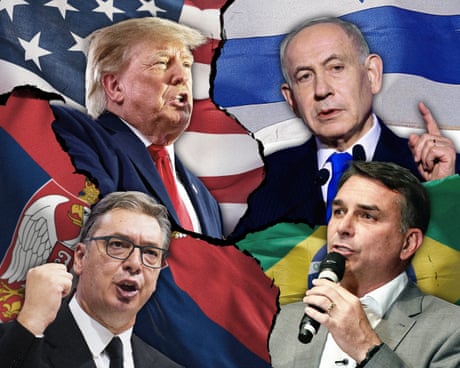
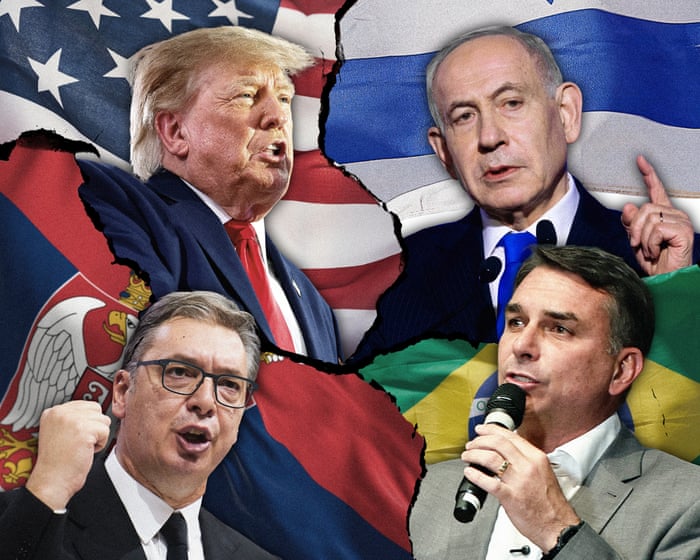
Brazil, Israel, Serbia and the US are holding elections within the space of 10 days. Will the authoritarian right cement its global gains, or can pro-democracy forces make a comeback?
Four elections on four continents within 10 days could profoundly reshape global politics, propelling the world further along its current authoritarian trajectory or marking a limited comeback for democratic norms.
In all four contests, basic democratic norms are at stake at a time when autocracy is advancing worldwide at an alarming rate. According to the Sweden-based V-Dem Institute, which uses multivariable assessment tools, the democratic freedoms enjoyed by the average global citizen are down to levels last seen in 1978 – long before the fall of the Berlin Wall and the collapse of communism in Europe.
Brazilians are set on Sunday to choose between leftist incumbent President Luiz Inacio Lula da Silva and far-right candidate Flavio Bolsonaro in the runoff vote of a deeply polarizing presidential election, and one which will determine whether the US significantly expands its growing influence in Latin America.
Brazilians are set on Sunday to choose between leftist incumbent President Luiz Inacio Lula da Silva and far-right candidate Flavio Bolsonaro in the run-off vote of a deeply polarizing presidential election, and one which will determine whether the US significantly expands its growing influence in Latin America.
O 9.º Rally Município de Albufeira, que vai para a estrada dia no último dia de outubro, é a quinta e penúltima prova do Campeonato Sul de Rallyes e do Campeonato Sul de Rally 2RM.
Prometendo dois dias de emoção e adrenalina para os fãs do automobilismo, a prova arranca no dia 31 de outubro, às 21h00, com uma Super Especial noturna realizada na Avenida dos Descobrimentos.
É junto à Marina de Albufeira que estará localizada a zona de Assistência do Rally Município de Albufeira, sendo que no dia 1 de novembro, entre as 9h00 e as 18h00, a competição prossegue com as classificativas de Ferreiras, Paderne e Guia, cujos horários serão como apresentados no cartaz da prova.
Organizado pelo Clube Automóvel do Sul (CAS), com o apoio da Câmara Municipal de Albufeira, o rally integra a programação de Albufeira Cidade Europeia do Desporto 2026.
Is Turkey now globally recognized as a major military-industrial power?
The question assumes significance as, in a span of 48 hours, Turkey has signed two significant agreements that enhance its military-industrial power projection.
In Doha on October 21, it signed the Badr Memorandum of Understanding with Pakistan, Qatar, and Indonesia for joint defense production, integrated manufacturing chains, and technology sharing.
In Ankara on October 22, it signed a Strategic Partnership with Canada, including a formal Agreement on Defense Industry Partnership, alongside deals on energy and air transport.
Four senior ministers signed the Badr Memorandum (BMU): Pakistan’s defense minister Khawaja Muhammad Asif, Turkey’s defense minister Yasar Guler, Qatar’s Deputy PM Sheikh Saud bin Abdulrahman Al Thani, and Indonesia’s Deputy Defense Minister Marshal Yusuf Jauhari.
Prof. Dr. Haluk Görgün, President (Secretary) of the Presidency of Defense Industries (SSB) in Turkey and regarded as the “architect” of the BMU, was present at the signing ceremony.
Incidentally, Badr refers to the Battle of Badr in 624 AD, when the Prophet Muhammad and his followers defeated their opponents in one of Islam’s earliest battles in the Arabian Peninsula.
Turkey’s defense ministry explained the name “Badr” as “full moon”. It said that “the four participating nations complement one another through this pact, which holds significant military and economic importance”.
In a statement, it added that “by leveraging the capabilities of each country in the field of military production, cooperation and integration will be achieved, defense industry capacities will be developed, and the needs of allied and friendly nations can thus be met.”
Similarly, the statement made by the Qatari Defense Ministry said the “Badr” Memorandum of Understanding “aims to foster cooperation in the field of defense manufacturing, enhance defense capabilities among the four countries, and promote collaboration in technical defense training, as well as in research and development areas, thereby contributing to the creation of solutions and industries worthy of the evolution of modern defenses”.
According to Arda Mevlutoglu, managing director of Ankara-based Mergen Analytical Strategies, the BMU’s implications could extend well beyond the four participants. “We may be witnessing the emergence of an interconnected network of defense and security arrangements extending from the Gulf to South and Southeast Asia, rather than a single formal alliance”.
Under the agreement, each country will bring its own resources and skills to the table.
“Turkey contributes technological expertise, systems integration and a mature defense industry; Pakistan and Indonesia offer manufacturing capacity, skilled workforces and sizable domestic markets; and Qatar provides investment potential and demand. Together, the four nations could establish integrated supply chains, allowing these countries to jointly develop, manufacture and sustain defence systems”, Mevlutoglu told Al Jazeera.
This means each member brings a complementary, not equal, asset. Turkey provides the industrial core, with establishments like Baykar (drones), TAI (aerospace), Aselsan (defense electronics), Roketsan (Missiles and munitions), STM (naval systems), and proven export models like the TB2 and Akıncı unmanned air-combat vehicles.
But Turkey seeks scale, co-production markets, and capital. Qatar can provide the finance. Pakistan and Indonesia can serve as markets.
Reportedly, Pakistan wants to diversify its military imports and not rely solely on China. It wants technology transfer and self-reliance through collaborations.
Indonesia is an emerging market and production base. Jakarta has bought Turkish weapons before — Kaplan tanks, MILGEM-derived frigates — and wants to build its own defense industry under Prabowo’s doctrine, with access to NATO-standard tech without full Western political conditions. The doctrine is championed by President Prabowo Subianto, who is aggressively executing a multifaceted supplier-diversification and co-production strategy.
However, the BMU is not the Mecca Pact of August 2026 that Turkey, Pakistan, and Saudi Arabia signed in Riyadh and reportedly contains a collective defense clause—an attack on one is an attack on all. It is an industrial MoU.
But one could argue that the initiative reflects Gulf countries increasingly looking toward the Global South and fellow Muslim countries, as recent Middle East conflicts have exposed vulnerabilities tied to dependence on foreign suppliers, technology restrictions, and supply chain disruptions.
By anchoring a defense-industrial coalition with Qatar, Pakistan, and Indonesia, Ankara seems to have signaled that it could be the technological and industrial nucleus of the Global South. And the global validation of its strategy has come through “the three-year action plan” with Ottawa.
Reports describe the optics of Prime Minister Mark Carney being received at the Presidential Complex in Ankara with full honors by President Recep Tayyip Erdogan as historic. Carney is the first Canadian Prime Minister to make a dedicated bilateral visit to Turkey, although he traveled to Ankara in July to attend the NATO summit.
The visit resulted in the signing of three agreements: a Defense Industry Partnership between SSB Chairman Haluk Gorgun and Canadian Foreign Minister Anita Anand; an Air Transport Agreement; and a Joint Declaration on Energy Cooperation.
Remarkably, a few years ago, the two countries’ defense relations had virtually collapsed.
In October 2019, Canada imposed an arms embargo on Turkey after “Operation Peace Spring” in northeastern Syria. It was a military offensive launched by the Turkish Armed Forces and the allied Syrian National Army (SNA) against the Kurdish-led Syrian Democratic Forces (SDF) and the People’s Protection Units (YPG).
File Image: via AFP
In October 2020, Canada suspended and later canceled export permits for L3Harris Wescam camera and targeting systems after confirming they were used on Turkish Bayraktar TB2 drones supporting Azerbaijan in the Nagorno-Karabakh conflict.
In fact, Canada adopted a presumptive-denial policy for military exports to Turkey. The Turkish defense industry saw Canada as a technology chokepoint.
However, over the last two years, Canada and Turkey have rebuilt their defense relationship. In January 2024, Ottawa quietly lifted arms-export restrictions and returned to a case-by-case assessment. In July 2026, at the NATO Summit in Ankara, the two defense ministers signed a “Statement of Intent” on military dialogue.
“In an increasingly complex global security environment, rising geopolitical uncertainties, and evolving humanitarian challenges, a strong and resilient Canada-Turkiye partnership is essential, providing a foundation to mitigate shared threats and capitalize on new opportunities,” said a joint statement by Carney and Erdogan on Thursday.
Canary’s own statement was more emphatic: “Today’s new Agreement on Defense Industry Partnership will connect Canadian and Turkish companies to work together, creating good jobs at home, export opportunities abroad, greater security for our citizens, and contributing to a stronger NATO alliance”.
The partnership’s three-year action plan rests on four pillars: trade and investment; defense and security; energy; and ties between people.
On trade, investment and innovation, the two leaders agreed to “work toward the successful conclusion of a Canada-Turkey Free Trade Agreement”. They will also expand bilateral trade and investments in priority sectors, including energy supply, defense production, aerospace, and artificial intelligence (AI).
On defense and security, Carney and Erdogan “underlined their intent to deepen bilateral and multilateral cooperation”. They also agreed to “strengthen cooperation in support of peace and security in the Euro-Atlantic region and beyond, including Ukraine, South Caucasus, and the Middle East, in particular Gaza”.
The three-year action plan calls for exploring co-development in aerospace, defense production, AI, critical minerals, LNG, and nuclear energy.
Of course, what Canada has agreed is not about Turkey alone. Carney is in the middle of a full-scale trade war with Washington. President Donald Trump’s tariffs and rhetoric questioning Canadian sovereignty have forced Ottawa to pursue a deliberate diversification strategy.
Carney has already reset ties with Saudi Arabia, India and China — all strained under his predecessor Justin Trudeau. Turkey, with 87 million people, NATO’s second-largest army, and a growing industrial base, fits perfectly into his “reliable partners” and “collective resilience” narrative.
For Turkey, the gain is more strategic than commercial. A G7 member and a Five Eyes country, which once embargoed it, Canada now legitimizes its defense industry as a partner. No wonder Erdogan was quick to link Thursday’s agreement to his pet project — “the Defense, Security and Resilience Bank” , announced by nine countries at the NATO summit in July 2026 to finance defense production.
Few will contest that Turkey’s defense industry has grown steadily. From an import-dependent country with 20% local production in 2002 to over 80% today, with $7.1 billion in exports in 2024, it is now a top-15 arms exporter. The fact that both Canada, which embargoed it, and Indonesia, which has options from South Korea and France, want co-production with Turkey is the recognition of Turkey’s defense ecosystem.
Apparently, the narrative has shifted from “Turkey buys” to “Turkey builds with.” Both the Badr agreement and the deal with Canada use the language of “joint production and technology sharing”, not a “buyer-seller” arrangement.
Secondly, Turkey is building a parallel architecture. A formal NATO ally, it is also becoming the leader of a non-Western defense network.
Thirdly, it is showing “Sanctions Resilience”. Western restrictions for its intervention in Syria and the controversy over its buying the S-400 from Russia seem to have taught Turkey to indigenize. Now that indigenization is proving to be its selling point.
However, some reality checks are needed. Turkey’s achievements need not be projected as triumphalism.
After all, both the Agreements made at Doha and Ankara are MoUs and framework agreements. No specific defense program has been identified that would allow assessment of impact on regional military balance. “Badr” has no factory, no joint venture company yet. In defense deals, MOUs are one thing, but their eventual shape is a different matter.
Second, there is the technology ceiling. Turkey still depends on Western subsystems — engines for Kaan and Altay, critical minerals processing, and high-end semiconductors. Canada can help with the latter, but Ottawa’s case-by-case export control means strategic tech will still be gated.
Engaging pragmatically with strategically vital G20 and NATO allies without requiring complete alignment on all domestic values, Canada is meeting this moment with what it calls “values-based realism”.
It is “pragmatically” dealing with other countries, but it will not cross a line when its commitment to the fundamental values of freedom, human rights, sustainability, and solidarity is challenged.
So, it remains to be seen how long Canada will remain silent on the widely reported sweeping and unprecedented nationwide crackdown by the Turkish government on dissent and civil society, heavily focusing on the systematic dismantling of LGBTQ+ and HIV-advocacy organizations.
However, all this does not detract from the fact that Turkey is emerging as a second-tier military-industrial power like South Korea and Israel. Its products are innovative and export-driven. But it has miles to go before reaching the status of the US, France, and Russia, which set global standards.
Author and veteran journalist Prakash Nanda is Chairman of the Editorial Board of the EurAsian Times and has been commenting on politics, foreign policy, and strategic affairs for nearly three decades. He is a former National Fellow of the Indian Council for Historical Research and a recipient of the Seoul Peace Prize Scholarship.
The author can be reached at prakash.nanda (at) hotmail.com
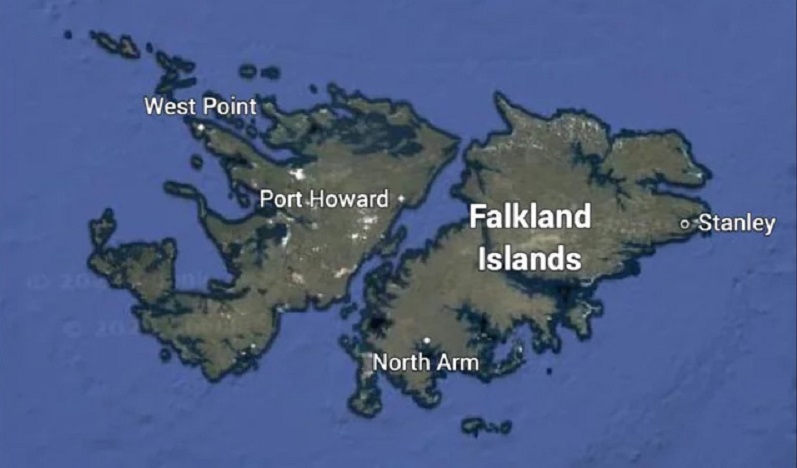
Israeli Prime Minister Benjamin Netanyahu has reportedly instructed Israeli diplomats to support Argentina’s call for negotiations with Britain over the Falkland Islands, a move that could further strain relations between Israel and the United Kingdom
The Telegraph reported on October 24, citing unnamed sources, that Netanyahu had approved a shift toward recognizing Argentina’s historical connection to the South Atlantic archipelago and calling for direct negotiations between Buenos Aires and London.
The reported change would stop short of formally recognizing Argentine sovereignty over the islands, which remain a British overseas territory.
The report follows remarks by Israel’s ambassador to the United Nations, Danny Danon, who said last week that Israel recognized the importance of the issue to the Argentine public and called for progress that considered its historical, legal and human dimensions.
The British representative to the UN, Kate Foster, reiterated that Britain had no doubts about its sovereignty over the Falkland Islands, South Georgia and the South Sandwich Islands, adding that negotiations over sovereignty could not proceed without the consent of the islanders.
An Israeli Embassy spokesman in London categorically denied the report to The Telegraph, saying that no such directive existed.
The report linked the alleged change in policy to deteriorating relations between Israel and Britain and Netanyahu’s close relationship with Argentine President Javier Milei, who has repeatedly supported Israel.
Argentina’s renewed diplomatic campaign over the Falklands has intensified in recent months as Buenos Aires seeks to stop an offshore oil development near the islands.
Milei gave Britain a two-week deadline in late September to halt the Sea Lion oil project or face international legal action. Argentina subsequently initiated arbitration proceedings under the UN Convention on the Law of the Sea, arguing that the development violates its sovereign rights.
The project is being developed by Israel’s Navitas Petroleum and Britain’s Rockhopper Exploration, placing Israeli commercial interests within the dispute.
Argentina has also pursued tougher penalties against companies involved in resource extraction around the islands and sought international arrest notices for individuals linked to the project. Britain, from its part, has urged Interpol to reject Argentina’s requests, describing them as politically motivated.
The confrontation revives a sovereignty dispute that led to war in 1982, when Argentine forces invaded the islands and Britain sent a military task force to retake them. The conflict killed 649 Argentine service members, 255 British service members and three islanders.
Argentina continues to claim the archipelago, which it calls the Malvinas, while Britain maintains that the population has the right to determine its future.
Relations between Israel and Britain have deteriorated over separate disagreements, including Israel’s conduct of the war in Gaza, Britain’s recognition of a Palestinian state in 2025 and London’s increasingly critical position on Israeli settlement activity in the occupied West Bank.
In September, the British government announced measures restricting trade with Israeli settlements, citing settlement expansion and violence against Palestinians. Israel condemned the measures.
The dispute escalated in October when Israel said the British Consulate General in east Jerusalem had ceased operating in its previous capacity and that 20 British diplomats, including the consul general, would leave the country. Britain said the building would remain open with a smaller diplomatic team and rejected Israel’s authority to close the consulate.
Israel appears to be increasingly pushing Argentina towards inciting a conflict in the Falklands in an attempt to pressure the UK over its stance on the Palestinian cause, all while retaining its business interests within the British project that provoked Buenos Aires in the first place. Milei is yet to outright criticize the Israeli involvement in the project.
In a peek behind the curtain of the White House, it has been revealed that Donald Trump Jr. has privately opposed his father’s war with Iran from the very start, even personally confronting President Donald Trump with his objections, according to The Atlantic.
The president’s eldest son has continually expressed his reservations to the off-again, on-again nearly eight-month conflict behind closed doors, despite going to extra lengths to avoid any public criticism of his father.
Two anonymous sources who reportedly spoke directly with Trump Jr. said the MAGA leader has repeatedly questioned the military campaign, a position in line with his longstanding opposition to U.S. involvement in foreign wars.
The father-son fallout reportedly dates back to the beginning of the war, when Trump Jr. vocalized his objections directly to the president.
“Don has kept his views on the subject private, as he would never publicly break with his dad on an issue like this, but I can’t imagine anyone who knows Don would be surprised by his personal views on the subject,” a person supposedly close to Trump Jr. told the progressive magazine.
Trump Jr. has continuously propped up his father as a leader who would keep America out of costly foreign entanglements, particularly in the Middle East.
Trump Jr.’s apparent opposition to his father’s foreign policy moves also reflects wider divisions within the MAGA movement, where prominent conservative voices have questioned whether the conflict is consistent with the president’s states campaign pledges.
Meanwhile, the war has become an increasingly vexing political issue for Republicans ahead of November’s midterm elections.
Exploding gasoline prices and mounting economic pressures have fueled public frustration, while a Pew Research Center poll found that 65% of Americans disapprove of the administration’s handling of the conflict.
A spokesman for Trump Jr. refused to comment on the report.

 Login