❌

Reading view

Warning: This review will make you want a wagon

Ben Shimkus, Business Insider's autos reporter, is standing next to a 2026 Subaru Trailseeker.
It may not look like it, but this is one of the fastest cars I've ever driven.

Ben Shimkus/Business Insider

  • It looks unassuming, but the Subaru Trailseeker is ridiculously fun to drive. And fast.
  • Technically, Subaru classifies this car as a midsize SUV. (Sure, Jan.)
  • It's the Subaru-iest of all the vehicles built in partnership with Toyota.

American parking lots are awash with a sea of sameness. There's just a bunch of basic SUVs and pickup trucks.

That makes the wagon-ish 2026 Subaru Trailseeker EV a real eye-catcher. Unlike the homogeneous crossovers rolling up to elementary school pickup lines today, it gets a stretched, long-roof profile and carries a Subaru badge. It looks like a proper successor to the Subaru wagons of yore, like the 2000s Outbacks and Legacys.

Technically, Subaru sees this differently. They classify the Trailseeker as an all-electric midsize SUV — and they do have a point with its 8.5 inches of ground clearance and easy-to-slide-into seats.

But, I mean, come on, look at this thing.

The side profile of the 2026 Subaru Trailseeker.
The Subaru Trailseeker wagon —err — SUV's side profile.

Ben Shimkus/Business Insider

That's a wagon in my book.

I drove the Trailseeker's top Touring trim for about 450 miles to see if it was a worthy antidote to America's great car-design flattening. My tester — complete with premium blue paint, a panoramic glass roof, and radiant leg warmers in the front seat (yes, you read that right) — stickered at $48,400.

And it was pretty wild.

This wagon — sorry, SUV — can really move

Left: the front of a Subaru Trailseeker. Right: the rear of a Subaru Trailseeker.
Why is this thing so fast?

Ben Shimkus/Business Insider

I've driven around 80 cars in my career as an auto journalist: EVs, muscle cars, sports cars, big trucks, premium luxury vehicles, etc.

The Trailseeker easily makes my personal list of top 10 fastest vehicles. It can launch from standing to 60 mph in about 4.4 seconds and produces 375 horsepower.

Get behind the steering wheel of this family-wagon-shaped car, and you feel that power at all times. On my highway-dominant drive from New York City to the Washington, DC, area, it quickly dashed by slower traffic and 18-wheelers.

The speed doesn't come at the expense of efficiency or refinement, either.

The Trailseeker returned about 3.7 miles per kWh, giving the battery about 270 miles of juice. While it was whipping past cars on the New Jersey Turnpike, I could still hear back-seat passengers when they spoke.

And, speaking of the back seat, the Trailseeker's long body gives rear passengers an almost comical amount of legroom. Fold those seats down, and my panoramic-roof tester has up to 71.8 cubic feet of cargo space, in case you have to move some furniture around, too.

The second row of a Subaru Trailseeker
The Trailseeker's backseat has more than enough room.

Ben Shimkus/Business Insider

Its biggest red flag was charging.

I saw speeds peak around 127 kW, which is pretty middling in today's EV age. Subaru says the car can accept up to 150 kW.

Let's compare that to the much higher-priced (but similarly shaped) Lucid Gravity, which is considered America's fastest-charging EV. That one can accept up to 420 kW, adding up to 200 miles of range in under 12 minutes.

My initial fast-charge of the Trailseeker — a top-off kind of stop while I grabbed a coffee — took 21 minutes, charging the car from 49% to 77%.

Is it Subaru-y enough?

The front seat of the Subaru Trailseeker.
Take away the Subaru badge, and this might look a lot like a Toyota interior...

Ben Shimkus/Business Insider

Subaru didn't build the Trailseeker alone.

It's the product of Subaru's expanding EV partnership with Toyota. The two companies now sell three closely related EV pairs: Subaru's Solterra, Uncharted, and Trailseeker correspond with Toyota's bZ, C-HR, and bZ Woodland. Next year, the companies are launching mechanically similar three-row EVs, too, with the Toyota Highlander and the Subaru Getaway.

The Trailseeker is easily the Subaru-iest of the bunch, and it's not just because of its wagon-y looks. It gets a dose of Subaru's adventure-seeking vibe, including standard Symmetrical All-Wheel Drive, X-Mode settings for snow and mud, roof rails, and a 3,500-pound towing capacity.

That outdoorsy tuning comes with a trade-off. The Trailseeker felt noticeably firm over broken pavement, especially at lower speeds.

A wagon comeback? Don't hold your breath.

The steering wheel of a Subaru Trailseeker.
Good luck finding a Trailseeker on a dealership lot right now...

Ben Shimkus/Business Insider

You want a wagon now, right? Isn't this thing so cool?

Well, I'm teasing you. Good luck finding a Trailseeker.

Right now, Subaru has only a 9.7-day supply of the model in dealer lots, per CarGurus data shared with Business Insider. That's well under the industry average of about 70 days' worth of supply.

Kevin Roberts, CarGurus's director of economic and market intelligence, says the low supply isn't a product of high demand. In September, the automaker only sold 849 units, just 1.6% of all Subaru sales in America.

Rather, the low supply is part of an ongoing trend of automakers slowly shipping 2027 model-year vehicles to lots.

As the calendar turns, Roberts says there's little momentum for the wagon body type: "This segment has accounted for less than 1% of new car sales," he said, adding that "the traditional wagon has become increasingly rare in today's new car market."

So, no, the Trailseeker probably isn't about to resurrect the American station wagon.

That's a shame. After 450 miles in one, I'm increasingly convinced that good ones could win over American drivers.

Read the original article on Business Insider
  •  

Volvo plans to cut 2,500 jobs due to China's bruising pricing war

A Volvo Car AB EX30 electric sport utility vehicle during the Beijing Auto Show in Beijing, China, on Thursday, April 25, 2024.
Legacy automakers are struggling to compete in China.

Bloomberg/Getty Images

  • Legacy carmakers continue to report slumping sales in China.
  • Volvo is the latest. It's planning 2,500 global job cuts to save about $530 million.
  • America is a problem, too. Tariffs, crushed EV incentives, and Polestar's exit also hurt.

China's merciless car market is taking a bite out of Volvo.

On Friday, the Swedish luxury automaker said revenue in China fell by almost 50% over the past year. The company said, like many legacy premium automakers, it's facing increasing "hypercompetition" from Chinese competitors.

Volvo plans to cut 2,500 jobs globally in response, it said, including roughly 2,000 in Sweden. That's part of an effort to slash costs by about $530 million.

"We continue to operate in a very tough environment with strong external challenges: de-globalisation, hypercompetition and climate change," CEO Håkan Samuelsson said in a statement.

It's the latest stark example of the increasing pressure on legacy automakers in China. Several big-name car companies — including Volkswagen, BMW, and Mercedes-Benz — have recently reported slowing sales from their Chinese dealerships.

Volvo is majority-owned by Geely Auto Group, a Chinese automaking conglomerate.

The company said the reductions will be made by a combination of ending consultant contracts, natural attrition, and targeted employee exit packages.

China is not Volvo's only problem. The company also said that US tariffs and the loss of Washington's consumer incentives for electrified cars squeezed margins. Volvo previously bet heavily on a rapid consumer transition to electric vehicles, aiming for an all-electric portfolio by 2030. It's since walked back that goal to include plug-in hybrid vehicles.

The automaker also said that Polestar — its EV offshoot that is exiting the US market — also posted losses.

Volvo's answer is to get more local: the automaker said it would introduce two fresh cars tailored specifically for the Chinese market by the middle of next year. Those cars will be developed in close collaboration with Geely and will include a Chinese tech stack and advanced driver-assist technologies "to make them fully competitive in China."

Read the original article on Business Insider

  •  

The EU’s Climate Agenda is Running on Empty – and the UK isn’t Far Behind

France and Germany have teamed up to press the EU to relax its looming combustion car ban. It’s the latest sign the EU's climate agenda is running on empty, says Ben Pile – and the UK isn't far behind.

The post The EU’s Climate Agenda is Running on Empty – and the UK isn’t Far Behind appeared first on The Daily Sceptic.

  •  

Chinese EVs racing into Gulf’s oil-rich car market

The Gulf Cooperation Council, a bloc of oil-rich states long known for its appetite for imported cars, is becoming a growing market for Chinese electric vehicles (EVs) that are largely being blocked out of the West. Saudi Arabia, the United Arab Emirates, Qatar, Kuwait, Bahrain and Oman are diversifying toward alternative energy, embracing environmental goals […]

The post Chinese EVs racing into Gulf’s oil-rich car market appeared first on Asia Times.

  •  

EU weighs safeguard tariffs as China refuses hybrid car limits

Beijing has rebuffed a European Union request to voluntarily cap hybrid car exports to the bloc, raising the prospect of new, steep EU tariffs on Chinese hybrids, which have so far escaped the duties on pure electric vehicles. China has refused to set quotas on its exports of hybrid electric vehicles (HEVs) and plug-in hybrid […]

The post EU weighs safeguard tariffs as China refuses hybrid car limits appeared first on Asia Times.

  •  

Behind in EVs, Toyota powering ahead with hydrogen vehicles

Hydrogen-powered passenger cars have been left far behind by electric vehicles and hybrids, but the hydrogen truck market is growing and new technology developed for auto racing is keeping hopes for hydrogen cars alive. Toyota and its European partners are in the vanguard of these developments. On September 26 and 27, at the FIA World […]

The post Behind in EVs, Toyota powering ahead with hydrogen vehicles appeared first on Asia Times.

  •  

Legacy Media Weep as Trump Axes Biden’s Fuel Economy Diktat

The New York Times and the rest of the legacy media are in mourning after President Trump axed Biden's pro-EV fuel economy standards. But real fuel efficiency shouldn't need a mandate, says Dr Tilak Doshi.

The post Legacy Media Weep as Trump Axes Biden’s Fuel Economy Diktat appeared first on The Daily Sceptic.

  •  

On the road to nowhere? European carmakers face EV push from China

Growing popularity of electric vehicles (EVs) from China is causing headaches for European carmakers – and for Brussels, with national governments clamouring for protection for their national champions. 

The European Commission, which is in charge of trade policies for the bloc, has to square the circle between avoiding a trade war and injecting some life into the idling economy. 

In one recent step the EU is attempting to introduce minimum prices for Chinese made EVs to offset subsidies instead of slapping on more tariffs. 

The EU in 2024 had introduced tariffs of up to 35.3 percent on EVs imported from China after an anti-subsidy probe concluded that the country’s support undercut European automakers. Manufacturers in China benefit from unfair subsidies that give them a significant advantage in the European market. Since then, the two sides have been engaged in talks to find other solutions. 

How cheap is too cheap?

Under new guidelines published by the Commission last week, companies can commit to setting minimum prices for vehicles exported to the European Union in order to avoid the price surcharges. In addition, in the case of a corresponding offer, commitments to invest in the EU or to limit exports would be positively taken into account.

Such offers would be assessed objectively and fairly by the Commission, according to the new guidelines. A prerequisite for acceptance is that the measures eliminate the damaging effects of subsidies and have an effect equivalent to the tariffs.

The published document was “intended to provide guidance to Chinese exporters who may be considering submitting price undertaking offers for exports of battery electric vehicles to the EU, which are currently subject to countervailing duties,” Commission spokesman Olof Gill said. 

He said that at present, the Commission has received one price undertaking offer, without specifying which company or for which model. He added that the Commission is ready to consider other proposals, provided that they “adequately address the unfair competitive advantage” and demonstrate that they are “feasible in practice”.

Leading German automotive expert Ferdinand Dudenhöffer, head of the private institute Center Automotive Research (CAR), was sceptical of the effects of the minimum prices could have on competition. 

According to EU calculations, manufacturers in China benefit from unfair subsidies that give them a price advantage of around 20 percent on the European market. For this reason, tariffs ranging from 7.8 to 35.3 percent were imposed from 2024, depending on the manufacturer. German and US companies that manufacture in China are also affected. In retaliation, China imposed special tariffs on EU goods such as spirits, pork, and dairy products.

According to CAR, Chinese manufacturers sell their models in the EU at an average markup of 118 percent on top of the domestic price. “Given the current price level in Europe, there should still be significant scope for Chinese manufacturers to reduce prices,” said Dudenhöffer. 

Pressure from all sides

According to the latest report by the EU research agency Eurofound, the automotive industry in the EU directly employs around 6 million workers and another 6 million in related sectors. 

Since 2019, the pace of job losses in the sector has clearly accelerated. In 2024 alone and at the beginning of 2025, layoffs announced by European companies affected around 100,000 jobs.

The largest employment losses have been recorded in countries with a strong presence of Europe’s biggest car manufacturers. In France, a structural decline is feared, while since 2019 job cuts have also affected Germany, Italy, and, to a lesser extent, Spain. Central and Eastern European countries – Czechia, Hungary, Poland, Romania, and Slovakia – are facing the relocation of production outside the EU to countries with lower labor costs.

This is happening because sales of cars originating from China, including electric vehicles (EVs), are increasing in the EU. In practice, some of these cars on EU markets are not only models of Chinese brands but also vehicles produced in China for Western brands.

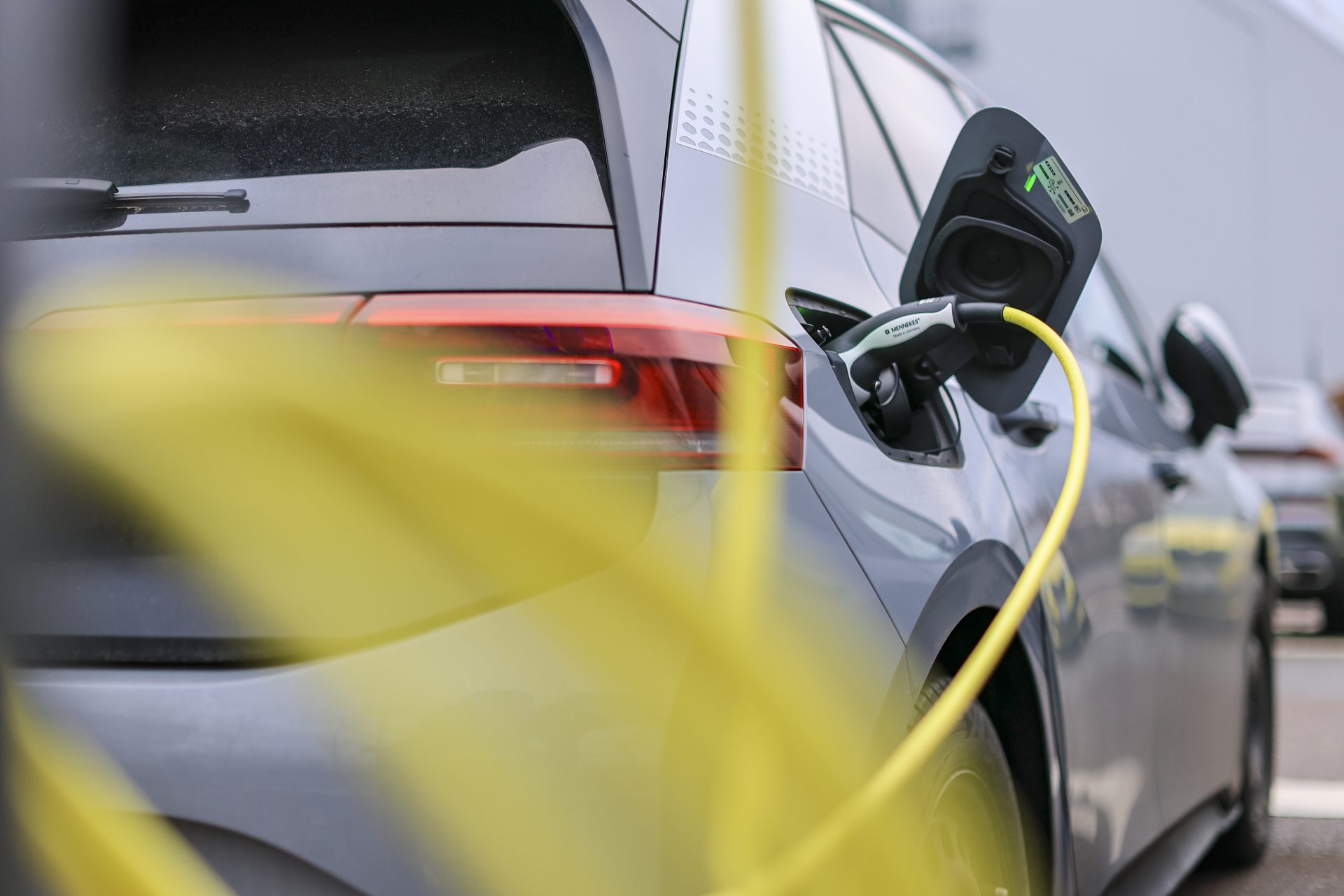
ARCHIVE – November 20, 2025, Saxony, Leipzig: A Volkswagen electric vehicle is charging at a charging station using a yellow cable. Photo: Jan Woitas/dpa

German auto angst

Germany, for many years a global carmaking powerhouse, is facing a dilemma. Demand for EVs is rising, but it is not just the battery powered Volkswagens or BMWs customers are flocking to – and the long-term outlook is dire. 

Electric vehicle sales rebounded strongly in Germany in 2025, according to official data from early January this year, with Chinese manufacturers making inroads from a low base in the EU’s largest economy despite tariffs.

EV sales rose 43.2 percent last year to 545,142 in total, the KBA federal transport authority said, representing 19.1 percent of all new cars sold.

Chinese EV giant BYD – which last year overtook Elon Musk’s Tesla to become the worlds largest electric carmaker – saw its German sales rise over 700 percent to more than 23,000 cars, giving it 0.8 percent of the overall auto market.

“International vehicle manufacturers with affordable battery electric vehicles and plug-in hybrids have contributed disproportionately to growth in these segments,” said Imelda Labbé, head of the VDIK foreign carmakers’ lobby in Germany.

The rise in EV sales last year comes after a fall of almost 30 percent in 2024 following the withdrawal of government subsidies, and Germany’s electric car market is still smaller than optimists had hoped for. After the decline in the market in 2024, the government said in December it would introduce subsidies again.

Some motorists will be able to benefit from 5,000 Euro for the purchase of new EVs or hybrids so long as their components are largely made in Germany. But industry figures say that better charging infrastructure and cheaper power would be needed to really boost EVs and warned that the planned subsidy would have limited impact.

On the other hand, German carmakers have been reporting strong declines in vehicle sales in China. Volkswagen said in January its sales dropped by 8 percent in 2025 year-on-year, as it was facing intense competition on the Chinese market from local producers. Mercedes-Benz reported a 19 percent decline in sales for the year, while BMW sold 12,5 percent fewer cars in China. 

German manufacturers like Mercedes or VW sell about 30 percent of their cars on the Chinese market. 

The tug-of-war affects not just major players, but the automotive sector across the continent. 

Bulgaria for example is not a major car producer, but it is increasingly important as a supplier of automotive components to European manufacturers. The sector has grown into one of the country’s strongest industrial branches, generating close to 11 billion Euro in annual turnover, according to business media and industry analyses. 

This means that it is indirectly exposed to the EU-China trade dispute over electric vehicles: weaker competitiveness of European carmakers could reduce orders for Bulgarian suppliers, while a recovery in EV sales in core markets such as Germany would have the opposite effect. 

At the same time, Chinese manufacturers are not only exporting cars to Europe but are also expanding production and partnerships within the EU, with Bulgaria being increasingly part of China’s automotive strategy in Southeast Europe according to analysts. 

For Bulgaria, this creates a mixed impact: EU trade measures may protect European carmakers, but Chinese localization in Europe could also open new opportunities for Bulgarian suppliers.

Dudenhöffer expects the sector to shrink in the next years in Germany and Europe, as manufacturers shift their production to the US or Asia, he said in his market forecast for 2026.

“Growth is taking place in Asia, and Asian car manufacturers (Japan, Korea, China) are increasingly dominating the car business.”

Ferdinand Dudenhöffer, German Automotive Expert

Fading from Green to Petrol 

And then there are of course the EU’s green policies: The EU in December rolled back a 2035 ban on new petrol and diesel cars seen as a milestone in the fight against climate change, as the bloc pivots to bolstering its crisis-hit auto sector. 

Under proposals slammed by green groups as an act of “self-sabotage”, carmakers will have to cut exhaust emissions from new vehicles by 90 percent from 2021 levels – down from an envisaged 100 percent.

This means that in practice automakers will still be able to sell a limited number of polluting vehicles – from plug-in hybrids to diesel cars –  beyond 2035, provided the resulting emissions are “compensated” in various ways.

The EU’s Industry Commissioner, Stéphane Séjourné, insisted the bloc’s green ambitions stood intact as he put forward a plan billed as a “lifeline” for Europe’s auto industry.

The combustion-engine ban was hailed as a major win in the climate fight and a key tool to drive investments in electrification when adopted in 2023.

The compromise plan was slammed by both environmentalists and industry groups.

While the EU had recognised that remaining open to different technologies was important, its proposal was “fraught with so many obstacles it threatens to remain ineffective in practice”, the president of the German Association of the Automotive Industry (VDA), Hildegard Müller, said. “In times of increasing international competition, in times when European economic power is crucial, this overall package from Brussels is disastrous.” 

The future of German car manufacturers – and by extension automakers in other EU member states – is closely linked to the Chinese market. 

According to Dudenhöffer, they must develop and build electric cars “in China for China”. In this context, he criticised the softening of the combustion engine phase-out. He said it was not possible to disconnect from developments, but that it is necessary to face competition in the tough Chinese market. “If you’re not in China, you’re not in the car business.”

This article is an ENR Key Story. The content is based on information published by ENR participating agencies.

  •  
❌