❌

Reading view

New Book Says Jared Kushner Funneled Money to Middle East Mercenaries. Kushner Denies It.
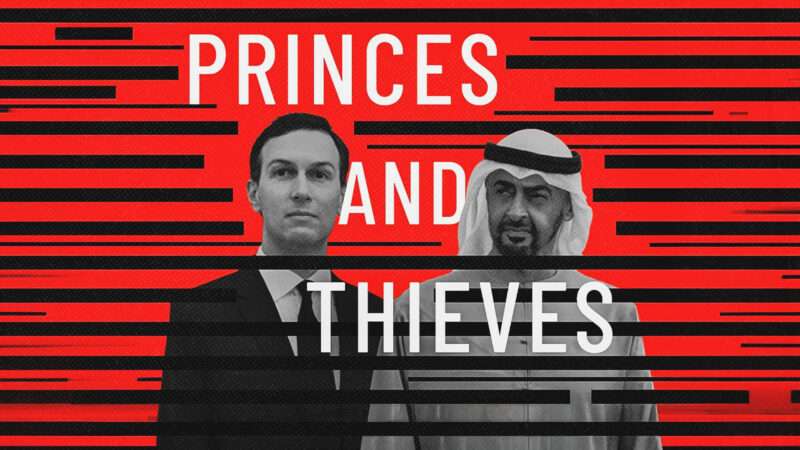
Cover of 'Princes and Thieves' with Jared Kushner (on the left) and Mohamed bin Zayed (on the right) | Illustration: Princes and Thieves/Matthew Cole/Atria/One Signal Publishers/

Princes and Thieves, a new book by investigative journalist Matthew Cole, may open a rabbit hole into financial connections between Middle Eastern dictators and President Donald Trump's family. Cole accuses Emirati monarch Mohamed bin Zayed (MBZ) of sending billions of dollars to various mercenaries and political operators, including Jared Kushner, son-in-law to President Donald Trump. Cole's reporting combines well-documented connections with secondhand accounts from anonymous sources.

On Thursday, Vanity Fair published an excerpt from the book, reporting that Dutch military intelligence hacked into Kushner's phone in 2018 and discovered hundreds of millions of dollars in bank transfers connected to MBZ. Also on Thursday, Kushner published a letter from his lawyers to Cole categorically denying the "incredible and false" allegations in the book. "Mr. Kushner never accessed foreign accounts and always followed all rules and regulations and only pursued goals that were in the best interest of the United States as directed by the President of the United States," they wrote.

Cole had originally written on his blog that the book was scheduled for release on October 27, but the publication date was pushed forward over the weekend.

The book purports to tie Kushner to a vast web of Emirati influence operations around the world. In Cole's telling, which matches other journalists' accounts, MBZ wants to reshape the Middle East and eastern Africa into an alliance of U.S.-backed dictatorships, where "tolerance" is enforced through high-tech surveillance and "democracy" is a synonym for terrorism. MBZ's use of mercenaries in pursuit of these goals is well-documented. So is Kushner's personal affinity with the Emirati monarch and his business ties with the Arab monarchies.

Soon after Trump won the 2016 election, MBZ held a widely reported meeting with Kushner. According to the book—and according to much of that earlier reporting—the monarch complained about the Obama administration's failure to back Arab regimes against popular revolutions, its decision to end the Iraq War, and its diplomacy with Iran.

Going much further than past reporting, Cole now claims Kushner was personally involved in MBZ's mercenary operations. MBZ and Saudi Crown Prince Mohammad bin Salman put a collective $2 billion into Emirati and Israeli bank accounts which were managed (but not technically owned) by Kushner, according to Cole's sources. Those same sources claim that parts of this secret "slush fund" went to Libyan warlord Khalifa Haftar, American military contractor Erik Prince, and Cuban hitman Felipe Vidal.

Haftar, a former CIA asset, became a general in Libya's 2011 revolution and then attempted to overthrow the new government with Emirati backing in 2014. Despite a 2020 ceasefire, his forces continue to control much of Libya. Prince, founder of the military contractor formerly known as Blackwater, moved to the UAE and helped build a secret army of Colombian mercenaries. He sued Cole for defamation after Cole reported on Prince's role in helping Haftar, but a judge threw out the case. Cole's sources claimed that Vidal, a self-described "hit man," helped the United Arab Emirates (UAE) fake an Iranian attack on oil tankers in May 2019, meant to provoke Trump into war.

Kushner's lawyers have denied any relationship with any of those three men, apart from a single meeting with Prince after the 2016 election. (According to Cole, both Vidal and Prince refused to comment for the book.) The position of the U.S. government is that the May 2019 incident was a genuine Iranian attack, not an Emirati false flag.

After the Vanity Fair article was published last week, Israeli negotiator Gershon Baskin pointed out in The Jerusalem Post that the Central Bank of Israel "does not offer private banking services to individuals," which would make it impossible for Kushner's money to be deposited in the Central Bank of Israel, as Cole claimed. The book addresses that argument, claiming that the money was deposited "in what would appear to be a government account," with Kushner and Israeli Prime Minister Benjamin Netanyahu jointly authorizing transactions.

The Abraham Accords, which include an alliance between Israel and the UAE, have often been touted as a way for the U.S. to "spend less time and less resources in the Middle East," in the words of Vice President J.D. Vance. But Cole argues that the UAE actually used its alliance to entangle American interests in a future conflict. The book states that Kushner set up "a rainy-day defense fund" for war with Iran, using Emirati money deposited in a separate Central Bank of Israel account.

Cole also claims to have evidence that Kushner was on the take from the UAE's regional frenemy Qatar. In 2017, the UAE and Saudi Arabia issued an ultimatum for Qatar to rein in its foreign policy and blockaded the small nation. The Intercept later reported that Kushner's father had sought a Qatari bailout for the family real estate business just before the crisis, and the Qatari-linked company Brookfield ended up providing the needed investment in August 2018, leading to a congressional investigation into the deal.

Democrats are still digging for information on Kushner's business ties to Qatar, but three sources told Cole that the Qatari royal family authorized and paid for the Brookfield deal. The Qatari government "asked the White House how to resolve the blockade. And the Kushners kept saying, 'We have this great property that needs investment.' Eventually, the Qataris realized the only way to settle the blockade was to buy the building," a former U.S. intelligence officer said.

Kushner's lawyers write that they have "no evidence that Qatar impacted the investment decision. Any suggestion of his involvement in the transaction or any allegation of quid pro quo with the Qatari government is false and defamatory."

Other parts of the book are better-documented. Cole obtained a draft of Prince's autobiography, text messages from one of Prince's colleagues, and emails from Emirati government adviser George Nader, who was convicted of fraudulently funneling money into Hillary Clinton's 2016 presidential campaign. If nothing else, the book is a comprehensive account of the UAE's unofficial empire and its American ties. But the most explosive claims about Kushner's involvement in those activities rest on anonymous sources, making it a matter of Cole's word against Kushner's.

"I considered the responses from Kushner's attorneys carefully and consulted multiple sources about them. During the five years I have spent working on this book, I have tried to keep an open mind, and I am confident that my reporting is accurate. Kushner's lawyers' responses did not change that conclusion," Cole writes in the book's epilogue.

The post New Book Says Jared Kushner Funneled Money to Middle East Mercenaries. Kushner Denies It. appeared first on Reason Magazine.

  •  

The House is sitting on the evidence about pulsed microwave attacks

Two years ago, I implored Congress and the House Permanent Select Committee on Intelligence specifically to allow me to brief them on evidence the U.S. government possesses of pulsed microwave attacks allegedly perpetrated by Russia, causing so-called Havana Syndrome. These attacks have injured hundreds of U.S. government personnel, including myself, my wife and my two…

  •  

Ukraine’s military says Starlink satellite connection stable after recent restrictions

But Elon Musk, whose company SpaceX owns Starlink, accuses Ukrainian military of violating ⁠the company’s terms

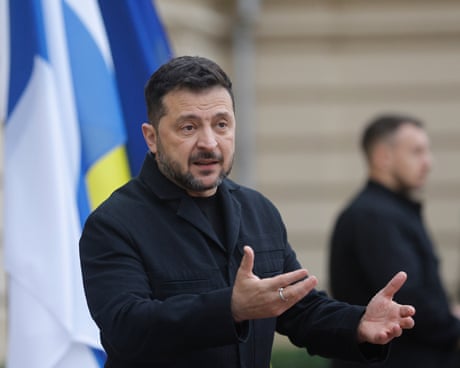
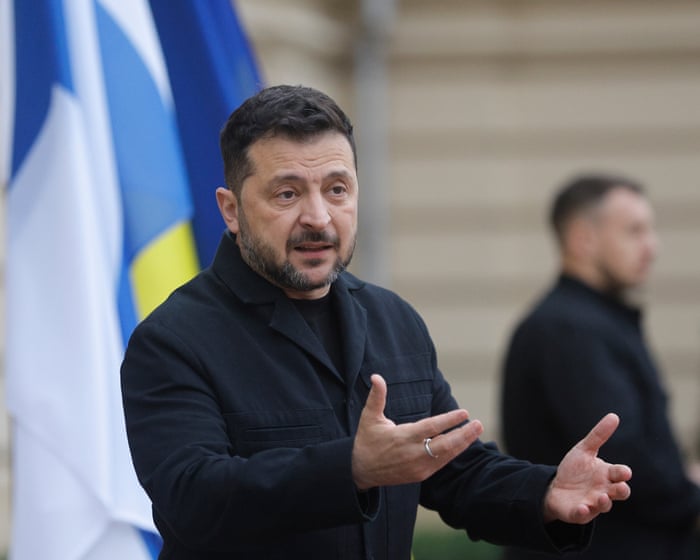
Ukraine’s military has a “stable connection to Starlink”, the Ukrainian government said, 10 days after its ability to use the satellite communications system was suddenly restricted.

But hours after the announcement, SpaceX CEO Elon Musk, whose company owns Starlink, accused the Ukrainian military of violating ⁠the company’s terms. Neither Musk nor the US government, which operates Starshield using Starlink technology, took responsibility for imposing the curbs.

Continue reading...

© Photograph: Sergey Dolzhenko/EPA

© Photograph: Sergey Dolzhenko/EPA

© Photograph: Sergey Dolzhenko/EPA

  •  

Two Germans charged in absentia over Bulgaria’s Starlink fire, one of three recent attacks on satellite links Ukraine relies on against Russia

two germans charged absentia over bulgaria’s starlink fire latest attack satellite links ukraine relies against russia · post sofia city court reviews prosecution’s request european arrest warrants german nationals wanted

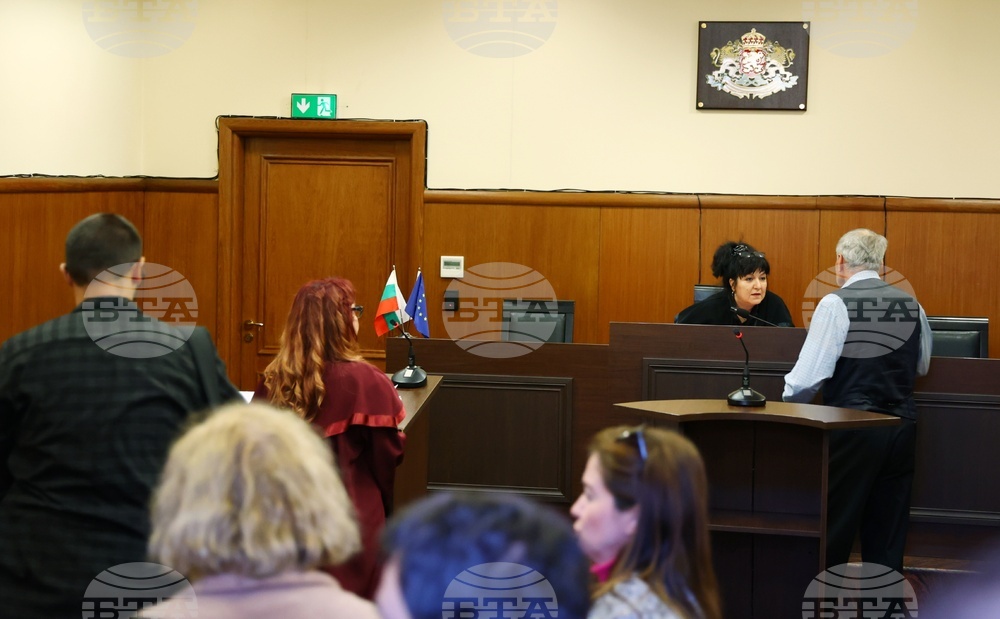
A Sofia court has cleared European arrest warrants for two 19-year-old Germans charged with setting fire to Starlink antennas south of the Bulgarian capital, a court spokeswoman told dpa. Prosecutors named the pair in court, but both had already left Bulgaria. The case adds Bulgaria to a run of attacks on Starlink sites in Europe, which Poland and Lithuania have linked to Russia.

While Russia presses its assault along the front and strikes Ukraine’s cities, Starlink keeps Ukraine’s drone units and front-line troops connected, and Poland pays about $50 million a year for its terminals. The network’s ground links in Europe are now a target in their own right, and ISW has linked the Polish fire to a wider Russian pattern of sabotage. Each attack on a ground station hits a network whose speed caps already disrupted Ukraine’s drone missions this month.

Two names, a few hours in Bulgaria

Prosecutors identified the suspects as Zeka Islam and Tirpan Beytullah, Bulgaria’s state news agency BTA reported, noting the names may be misspelled. Their whereabouts are unknown, according to German authorities cited by the agency. They were charged in absentia on 14 October and face three to 12 years in prison if convicted.

According to the indictment, the two crossed from Serbia at the Kalotina checkpoint at 17:37 on 9 October and told border officers they were tourists. At about 22:25, wearing gloves and masks, they allegedly set fire to antennas at the Plana teleport, a satellite ground station near the village of Plana. They drove back into Serbia through the same checkpoint at 23:55.

Three antennas burned completely, two were partly damaged, and three more were affected, prosecutors say. The pair traveled in a Volkswagen with German plates, and a national warrant followed two days after the charges, ZDF reported.

kyiv asking musk let strike inside russia its best line gone · post elon 2026 world economic forum / ciaran mccrickard wef ukraine news ukrainian reports
Explore further

Musk pushed Trump to slow Starlink in Ukraine, weakening air defenses as Russian drones attacked cities – The Telegraph

The court-appointed lawyers argued that investigators had pinned down the vehicle, not the men in it. The court rejected those objections, finding reasonable grounds to suspect the pair. The lawyers said they would appeal. The ruling can be challenged within three days.

A Starlink antenna
A Starlink antenna. Illustrative photo: Christoph Soeder/dpa

An opposition MP made the fire public three days later

The fire became public only on 12 October, when opposition MP Ivaylo Mirchev of Democratic Bulgaria posted about it on Facebook. He said 11 antennas had been set on fire, more than prosecutors later counted.

In parliament two days later, Prime Minister Rumen Radev asked the head of the State Agency for National Security (DANS) not to reveal details, saying disclosure could harm the investigation. DANS head Plamen Tonchev told lawmakers he believes the fire was sabotage and that more such attacks cannot be ruled out, dpa reported.

The White House, seen from Lafayette Square. File photo, June 2024.
Explore further

White House ordered limits on Ukraine’s military satellite service — Reuters. Who made the decision remains unclear

After the ruling, Mirchev wrote that Radev personally owes the public an explanation of what has been achieved, BTA reported.

Bulgaria’s case joins attacks Poland and Lithuania tie to Russia

Bulgaria has not said who might be behind the fire. Authorities in Poland and Lithuania have linked similar recent arsons on Starlink equipment to Russia.

In September, fire hit a Starlink ground station south of Warsaw, and Germany later detained two suspects. On 18 October, Lithuania’s prime minister said intruders had tried to burn a company’s Starlink antennas used by Ukraine, calling it part of Russia’s hybrid war. Moscow claims such accusations are baseless, Reuters reported.

  •  

Giant Wind Turbines Risk Leaving Britain Blind to Russian Jets, Says MoD

A giant wind farm risks blinding radar used to track Russian jets and missiles, the Ministry of Defence has warned as it opposes Net Zero plans to build 23 turbines twice the height of Big Ben in Yorkshire.

The post Giant Wind Turbines Risk Leaving Britain Blind to Russian Jets, Says MoD appeared first on The Daily Sceptic.

  •  

Two Latvian Nationals Arrested at RAF Base Housing US and NATO Intelligence Operations

British counter-terrorism police are investigating a security breach at RAF Molesworth in Cambridgeshire after two Latvian nationals were found inside the military installation. The arrests come amid heightened security concerns following a separate suspected terrorist plot targeting RAF Fairford, which prompted the withdrawal of American bombers.

Two Latvian nationals have been arrested in Britain on suspicion of entering a restricted military installation for purposes potentially harmful to national security. The men were discovered inside RAF Molesworth, a sensitive military facility in Cambridgeshire that houses American and NATO intelligence operations, during the early hours of Thursday, 8 October.

The suspects, aged 36 and 32, are both Latvian citizens residing in the United Kingdom. According to an official statement issued by the Metropolitan Police, they were initially detained on suspicion of trespassing and criminal damage before being arrested under the National Security Act 2023.

The incident follows a separate investigation into a suspected terrorist plot near RAF Fairford in Gloucestershire, where American strategic bombers had been deployed. British counter-terrorism officers have emphasised that there is currently no evidence connecting the two cases.

Security breach discovered during routine patrol

The investigation began at approximately 10pm on Wednesday, 7 October, when Ministry of Defence Police officers patrolling RAF Molesworth discovered an abandoned vehicle near the installation’s perimeter.

Officers from Cambridgeshire Constabulary joined the search and subsequently identified a small breach in the security fence. At approximately 2am on Thursday, the two men were located inside the restricted area and taken into custody.

The suspects were initially questioned over alleged trespassing and criminal damage. However, investigators subsequently invoked Section 4 of the National Security Act 2023, which covers entering, approaching or inspecting prohibited locations for purposes prejudicial to Britain’s safety or interests.

The legislation carries a maximum sentence of 14 years’ imprisonment upon conviction. Neither man has been publicly identified, and police have not disclosed evidence establishing their alleged intentions or any connection with a foreign intelligence service.

Officers have also searched two addresses in the Peterborough area. The abandoned vehicle was recovered and examined by specialist explosive ordnance disposal personnel after concerns arose during initial inspections.

As a precaution, police established a cordon affecting roads around Glatton, including part of the A1. Specialists subsequently found nothing of concern, allowing the restrictions to be lifted.

Intelligence facility serving American and NATO operations

RAF Molesworth is not an ordinary operational airfield. Although designated as a Royal Air Force station, the installation accommodates intelligence facilities supporting American military operations and NATO.

Among the organisations associated with the site is the NATO Intelligence Fusion Centre, which contributes to intelligence collection, assessment and information-sharing between allied military authorities. The installation also supports American military intelligence activities relating to operations in Europe and Africa.

The presence of these facilities makes Molesworth a sensitive location, where unauthorised access raises questions extending beyond conventional trespassing. Investigators will seek to establish how the men entered the compound, why they were there and whether they attempted to approach or examine restricted equipment or infrastructure.

Separate investigation at RAF Fairford

The arrests come less than two weeks after British police detained seven men in connection with a suspected terrorist plot involving RAF Fairford, another British installation used by the United States Air Force.

The Fairford investigation began on 27 September after suspicious activity was reported near the base. Police subsequently investigated possible offences involving explosives and preparations for terrorist acts. Those arrested in connection with that investigation have since been released on bail.

The incident was followed by the withdrawal of American bombers from Fairford. President Donald Trump subsequently referred to security threats affecting the installation, raising further questions about the protection of American military assets stationed in Britain.

Commander Helen Flanagan, head of Counter Terrorism Policing London, which is leading the Molesworth investigation, cautioned against drawing conclusions about the relationship between the two cases.

She said investigators had found nothing so far suggesting a connection with the Fairford incident and were continuing to examine possible motives.

British authorities have not publicly identified a foreign state or organisation as being responsible for the Molesworth breach.

The two Latvian nationals remain in police custody while investigators continue examining the circumstances surrounding their presence at the installation. The inquiry involves Counter Terrorism Policing, the Ministry of Defence Police and Cambridgeshire Constabulary.

The investigation is taking place against a wider background of security concerns involving European military facilities. Latvia itself reported an armed border provocation and sabotage of surveillance infrastructure near Belarus earlier this week, although there is no evidence linking that incident to the arrests in Britain.

For British investigators, the immediate task remains establishing whether the Molesworth intrusion was an isolated security breach or involved an intention to compromise military operations or intelligence infrastructure.

  •  
❌