❌

Reading view

Climate Science and Emissions Cuts Face Growing Resistance Ahead of COP31
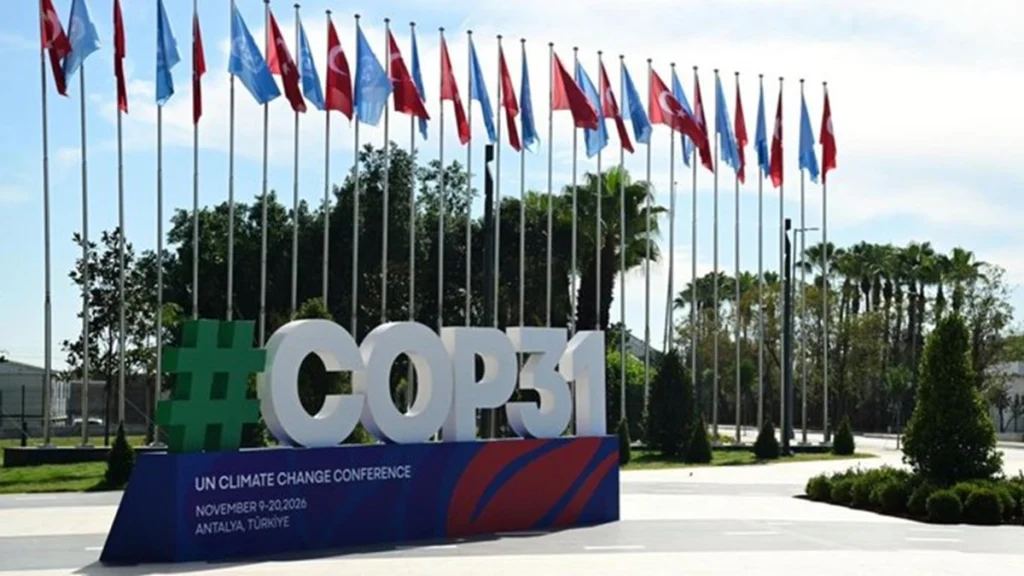
Disputes Over the 1.5-Degree Celsius Limit Highlight Deep Divisions as Countries Prepare for the Summit in Türkiye.

From Nov. 9 to 20, the 31st Conference of the Parties to the United Nations Framework Convention on Climate Change (UNFCCC) will take place in Antalya, Türkiye, bringing together world leaders, government negotiators, scientists and civil society representatives to coordinate international action against climate change.

RELATED:

Climate Change To Reduce French GDP Growth in 2026

The major event in global environmental governance will unfold amid efforts by major oil producers to delay the publication of new reports by the Intergovernmental Panel on Climate Change (IPCC) and prevent more ambitious measures to reduce emissions.

The divisions were already evident during the preparatory negotiations in June in Bonn, Germany, where countries such as Saudi Arabia clashed with the European Union (EU) and small island states, which defend maintaining the 1.5-degree Celsius threshold as the benchmark for assessing emissions reduction commitments.

At those meetings, representatives of countries vulnerable to the climate crisis denounced attacks on science by governments with interests in fossil fuels.

Fiji’s chief negotiator, Sivendra Michael, explained that some countries had tried to remove references to the IPCC, the leading authority on the subject, and the 1.5-degree Celsius limit from the documents.

“For Fiji and our Pacific neighbors, 1.5 degrees is not an abstract goal. It is the threshold that determines whether our islands will remain habitable. The IPCC allows the world to understand why that threshold matters and what is needed to avoid exceeding it. It is the backbone of our climate diplomacy. Removing science from the text does not change the science. It only weakens the decisions intended to respond to its findings,” Michael said.

Several sources agree that Saudi Arabia and India, among others, were among the countries that challenged those references, while Riyadh went so far as to invoke the goal of keeping warming below 2 degrees Celsius without mentioning the more ambitious 1.5-degree Celsius limit.

The difference is significant: The Paris Agreement, adopted in 2015 by nearly 200 countries, establishes a commitment to keep global warming well below 2 degrees Celsius above preindustrial levels and pursue efforts to limit it to 1.5 degrees Celsius.

Although both thresholds are part of the same agreement, scientists warn that every additional tenth of a degree of warming increases the risk of extreme weather events, biodiversity loss and irreversible damage to ecosystems.

The #UnitedNations said that the window has closed to stop the earth from heating above 1.5 degrees celsius, a target set by leaders at the #ParisClimateConference in 2015.

But, it says that it is still possible and worthwhile to limit the overshoot as much as possible, because… pic.twitter.com/ZdMlfzHSrG

— FRANCE 24 English (@France24_en) October 22, 2026

Dispute Reaches the IPCC

The confrontation has also spread to the IPCC, the leading international scientific body on climate change, which on Friday, Oct. 16, suspended its meeting in Addis Ababa without reaching an agreement on the publication schedule for its next major report.

The deadlock, which has lasted nearly three years, threatens to prevent the scientific assessment from being available before the end of 2028, when countries will have to review their progress in meeting the Paris Agreement.

Countries such as Saudi Arabia, Russia and India, and at times China and Kenya, argued that more time was needed to prepare the reports and facilitate the participation of scientists from developing countries, which have fewer resources available to take part.

Opposing them, a coalition of European, Latin American and African states, along with small island states, called for an accelerated timetable so that upcoming negotiations would have access to the IPCC’s scientific findings.

Some analysts consider expanding the participation of scientists from developing countries a positive step but point out that countries such as Saudi Arabia, which has a record of resisting climate commitments, have used obstructionist tactics at IPCC meetings, where the timetable is adopted by consensus.

The window has closed; this year's #EmissionsGap report states that overshoot of 1.5°C is now inevitable.

What's needed to limit the overshoot to 1.7-1.8 °C & return to 1.5°C requires gov'ts to step up. 🌎greenhouse gas emissions must drop 45% by 2035 compared to 2025 levels.… pic.twitter.com/lH7uIoC3I2

— IISD Energy (@IISD_Energy) October 22, 2026

A Goal Growing More Distant

The most vulnerable countries reject the idea that better scientific representation and the urgency of taking action are incompatible goals. “Delaying essential climate science is a betrayal of vulnerable developing countries,” said Adao Soares Barbosa, chair of the Least Developed Countries Group, which brings together more than 40 states, most of them in Africa.

“It is very concerning that the integrity of the IPCC and the available science are being eroded,” said Cosima Cassel, an expert at the E3G think tank. She called for the new reports to be available before the 2028 global stocktake to avoid relying on outdated assessments.

The dispute coincides with a warning from the United Nations Environment Programme (UNEP) that current climate commitments are insufficient and the planet will exceed 1.5 degrees Celsius of warming in the coming years. Under current policies, warming would reach 2.8 degrees Celsius this century.

UNEP considers it still possible to limit peak warming to between 1.7 and 1.8 degrees Celsius and return to 1.5 degrees Celsius or below by 2100, but doing so would require much deeper emissions cuts and the removal of CO2 from the atmosphere.

“Exceeding the threshold does not change the goal,” Michael said, warning that every additional tenth of a degree would mean more damage to the Pacific.

teleSUR/ JF

Source: EFE
  •  

Mexico Deploys Special Mission as Hurricane Vance Nears Pacific Coast

The storm is expected to bring heavy rain, gusty winds and high waves to the states of Guerrero, Michoacan, Colima and Jalisco.

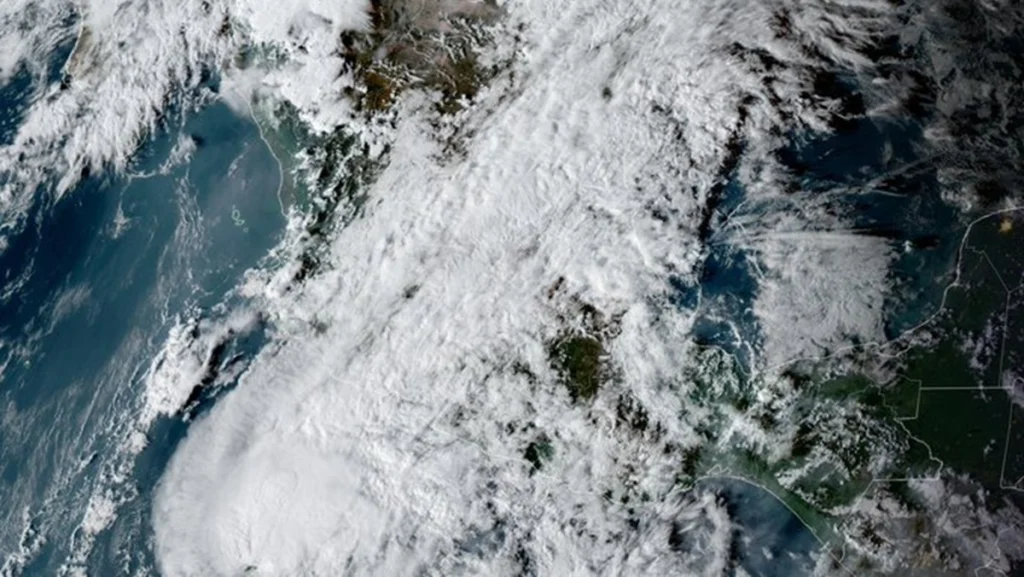
On Sunday, the Mexican government deployed a liaison and coordination mission to several Pacific coast states as Category 1 Hurricane Vance, on the five-category Saffir-Simpson wind scale, approaches the country’s western coast.

RELATED:

Mexico to Commemorate World Day for Audiovisual Heritage

The National Coordination of Civil Protection said the storm is expected to bring heavy rain, gusty winds and high waves to the western states of Guerrero, Michoacan, Colima and Jalisco.

Authorities urged residents in those states to remain alert to official warnings. They also advised those living near or traveling close to riverbanks, streams, or water channels to assess their surroundings and evacuate immediately to higher ground at the first sign of rising water.

“It is crucial to avoid crossing—whether on foot or by vehicle—flowing water, flooded streets, or submerged bridges, as the force of the current can sweep away both people and vehicles,” stated the National Coordination for Civil Protection (CNPC).

Tracking the center of Category 1 HURRICANE VANCE on 2026-10-25 UTC from GOES-West (true color night + colorized infrared) pic.twitter.com/eeKxrTJfP9

— 🏴‍☠️Luc Fontaine🏴‍☠️ (@coyotefxl) October 26, 2026

At 9 a.m. local time, Hurricane Vance was located about 440 km southwest of the port of Lazaro Cardenas in Michoacan and 510 km southwest of the resort city of Acapulco in Guerrero.

The storm is moving northwest at 7 kph, with maximum sustained winds of 120 kph and gusts of 150 kph, and is expected to bring rain of 50 to 75 millimeters in the four affected states.

The rainfall could also trigger landslides, cause rivers and stream levels to rise, and lead to overflowing waterways and flooding in low-lying areas.

teleSUR/ JF

Sources: Xinhua – EFE

  •  

The North Sea Green Paradox

Green blobbers want us to stop drilling because the North Sea is running dry – so why the panic about oil and gas extraction? The answer is that it’s as much about politics and punitive taxes as geology, says Ben Pile.

The post The North Sea Green Paradox appeared first on The Daily Sceptic.

  •  

Burnham and Healey Set to Defy Miliband Over Rosebank Oil Field

Andy Burnham looks set to defy Ed Miliband and give the go-ahead for drilling in the North Sea's Rosebank oil field, as the Treasury's money troubles threaten to trump Labour's Net Zero ambitions.

The post Burnham and Healey Set to Defy Miliband Over Rosebank Oil Field appeared first on The Daily Sceptic.

  •  

Wind Turbines vs Nature: How Reckless Renewables Are Destroying the Environment

From beaches to old-growth forests, wind farms are destroying the environment in the name of saving it, says Sandra Bourke. Greens are turning their backs as reckless renewables industrialise the natural world.

The post Wind Turbines vs Nature: How Reckless Renewables Are Destroying the Environment appeared first on The Daily Sceptic.

  •  

The Next Ice Age Began Under the Roman Empire, Researchers Say, Until Global Warming Stopped It

About 2,000 years ago, while Augustus ruled Rome, a leftover patch of ice in the Canadian Arctic stopped shrinking and began to grow. A team from the Lamont-Doherty Earth Observatory, part of Columbia University, argues that this turning point marked the beginning of the next glaciation, what most people would call the next ice age. […]

  •  

No, Britain’s Puffin’s Aren’t About to Disappear Due to “Climate Change”

Every year we're fed the same scare story about Britain's Atlantic Puffins all about to disappear, with climate change inevitably blamed. But as so often, it's the reverse that's true, says Paul Homewood.

The post No, Britain’s Puffin’s Aren’t About to Disappear Due to “Climate Change” appeared first on The Daily Sceptic.

  •  

European Summer Heat Killed More Than 50,000 People, New Research Finds

Extreme heat across Europe during the summer of 2026 caused an estimated 50,391 deaths, according to new research examining mortality in 854 cities. Nearly two-thirds of the deaths were attributed to additional warming caused by human activity, principally greenhouse gas emissions from burning fossil fuels.

The findings, reported on 23 October, indicate that 32,619 people died as a consequence of temperatures intensified by human-induced climate change. The estimated total represents a 71 per cent increase compared with 2022, previously the deadliest summer in the researchers’ historical dataset, when 29,480 heat-related deaths were calculated.

The research builds on a long-term assessment of heat-related mortality, published in Nature Health on 14 October, which examined the impact of rising temperatures across European cities between 2000 and 2025. The latest estimates for 2026 extend that analysis to an exceptionally severe summer marked by successive heatwaves across much of the continent.

Italy, France, Spain and Germany among worst affected

The highest estimated death tolls were recorded in Italy, France, Spain and Germany, where prolonged periods of extreme heat placed considerable pressure on vulnerable populations and public-health services.

Approximately one-third of the deaths occurred between 17 June and 1 July, when temperatures in some affected areas exceeded seasonal averages by 5.3°C.

The scale of the June heatwave had already become apparent in preliminary national mortality statistics. As EU Today reported in July, France, Belgium and the Netherlands recorded at least 3,700 excess deaths during the early stages of the summer’s extreme temperatures.

Subsequent official assessments suggested that the mortality impact was considerably greater. According to France’s national public-health agency, at least 5,764 excess deaths were recorded during the heatwave between 17 June and 2 July, followed by another 1,243 during the period from 3 to 22 July.

These national figures measure excess deaths from all causes during heatwave periods and are not directly equivalent to the temperature-attributable mortality estimates in the European study.

The researchers also cautioned that their European estimates probably understate the total mortality burden. The 854 cities included in the analysis represent approximately 40 per cent of Europe’s population, while deaths associated with an earlier heatwave in May were excluded.

Climate change responsible for almost two-thirds of deaths

Researchers used established climate-attribution methods to estimate how many deaths would have occurred under natural summer conditions and how many resulted from additional warming associated with greenhouse gas emissions.

Their calculations compared observed temperatures with computer simulations representing a climate without human-induced global warming. The difference between the two scenarios provided an estimate of mortality attributable to climate change.

Clair Barnes, a climate scientist at Imperial College London and lead author of the research, said Western and Northern European infrastructure was not designed to withstand the temperatures now being experienced.

In some European cities, temperatures during the summer reached as much as 12°C above seasonal norms.

The researchers estimated that the proportion of heat-related deaths attributable to human-induced climate change has increased from approximately 45 per cent in the early 2000s to around 65 per cent today.

The findings are consistent with the European Commission’s assessment of rising heat risks, which identifies Europe as the world’s fastest-warming continent, with temperatures increasing at approximately twice the global average rate.

Elderly Europeans account for majority of fatalities

People aged 85 and above accounted for more than half of the estimated deaths, although the research also identified more than 800 deaths among adults aged between 20 and 44.

Extreme temperatures increase the risk of cardiovascular and respiratory complications, dehydration and heatstroke. According to the World Health Organisation’s assessment of heat-related health risks, older people and those with existing medical conditions face particularly serious consequences from prolonged exposure.

The findings also reflect the impact of high overnight temperatures, which prevent buildings from cooling and reduce opportunities for physical recovery after extreme daytime heat.

EU Today previously examined how rising night-time temperatures are exposing weaknesses in European housing and public-health preparedness, particularly in densely populated urban areas.

The latest research identified Rome as having the highest cumulative heat-related death toll among European capitals between 2000 and 2025.

Belgium records separate evidence of climate-related mortality

A study published by Vrije Universiteit Brussel on 20 October provides additional evidence of the mortality impact of this summer’s temperatures.

Researchers estimated that Belgium’s June heatwave caused 1,181 heat-related deaths, of which 665, or 56 per cent, were attributable to human-induced climate change.

The study found that climate change increased temperatures during the heatwave by approximately 3.9°C and more than doubled the estimated number of heat-related deaths. Its findings have not yet undergone peer review.

Belgium’s public-health authorities separately recorded 2,018 excess deaths during and immediately after the heatwave, the highest figure associated with any Belgian heatwave since monitoring began in 2003.

European governments face growing pressure to adapt

The latest findings add to concerns about the capacity of European healthcare systems, residential buildings and urban infrastructure to withstand increasingly severe summer temperatures.

The European Commission has warned that public-health systems across many EU and European Economic Area countries remain insufficiently prepared for extreme heat.

Researchers have identified improved early-warning systems, accessible cooling facilities, better building design and targeted assistance for elderly residents as measures capable of reducing mortality.

The new estimates also demonstrate the limitations of existing mortality records. Heat frequently contributes to deaths without being identified as the immediate medical cause, requiring researchers to use statistical models to calculate its wider impact.

The estimated 50,391 deaths therefore represent modelled heat-attributable mortality rather than individually certified fatalities. Nevertheless, the results indicate that extreme temperatures are becoming an increasingly substantial public-health risk across Europe, extending beyond Mediterranean countries into regions historically less exposed to prolonged summer heat.

  •  

The EU’s Climate Agenda is Running on Empty – and the UK isn’t Far Behind

France and Germany have teamed up to press the EU to relax its looming combustion car ban. It’s the latest sign the EU's climate agenda is running on empty, says Ben Pile – and the UK isn't far behind.

The post The EU’s Climate Agenda is Running on Empty – and the UK isn’t Far Behind appeared first on The Daily Sceptic.

  •  

Disappearing Hurricanes Leave Disappointed Scientists Without Fuel for Climate Alarm

Hurricanes in the North Atlantic have largely disappeared this year, leaving bitterly disappointed scientists without fuel for their climate alarm and having to admit the role of natural variation, says Chris Morrison.

The post Disappearing Hurricanes Leave Disappointed Scientists Without Fuel for Climate Alarm appeared first on The Daily Sceptic.

  •  

Britain’s Oil Refineries Are Too Important to Sacrifice to Net Zero

In just two years Labour has seen the closure of two of Britain's six oil refineries due to green levies. The remaining four are much too important to sacrifice to Net Zero, says Ted Newson.

The post Britain’s Oil Refineries Are Too Important to Sacrifice to Net Zero appeared first on The Daily Sceptic.

  •  

Tory Wets Come Out Into the Open

Seven Tory MPs who skipped a vote on leaving the ECHR also belong to the pro-Net Zero 'Conservative Environment Network'. Coincidence? Paul Homewood thinks not and reckons Kemi Badenoch has a serious problem on her hands.

The post Tory Wets Come Out Into the Open appeared first on The Daily Sceptic.

  •  

Ministers Turn on Ed Miliband Over Net Zero Block on AI Investment

Cabinet ministers are turning on Ed Miliband, accusing him of blocking AI investment to protect Net Zero – while families pay the price in lost jobs and holidays.

The post Ministers Turn on Ed Miliband Over Net Zero Block on AI Investment appeared first on The Daily Sceptic.

  •  

Indonesia primed to lead a Global South forest protection bloc

Indonesia, Brazil and the Democratic Republic of Congo together hold more than half of the world’s tropical rainforests. In 2022, when Indonesia hosted the G20 summit in Bali, the three countries pledged to cooperate on how to pay to protect those forests. The promise was one of South-South cooperation: developing countries working together rather than […]

The post Indonesia primed to lead a Global South forest protection bloc appeared first on Asia Times.

  •  

No, Climate Change is Not Making Your Home “Uninsurable”

Climate change is making your home uninsurable! That's the headline, but look behind it and you find a press release by a PR outfit touting some very dubious claims about floods and finance, says Tilak Doshi.

The post No, Climate Change is Not Making Your Home “Uninsurable” appeared first on The Daily Sceptic.

  •  

Why Does the Telegraph Keep Falling for Climate Propaganda?

'Extreme heat putting babies at risk'; 'Climate change driving up coffee prices': why does the Daily Telegraph keep falling for all the climate propaganda put out by activists, asks Paul Homewood.

The post Why Does the Telegraph Keep Falling for Climate Propaganda? appeared first on The Daily Sceptic.

  •  
❌