The two soldiers, 25-year-old Yevhen, call sign "Izium," and 24-year-old Artem, call sign "Kolobok," had suffered severe limb injuries and were stranded in a contested area about 5 kilometers (3 miles) from the Russian border.
Iran-backed terror group reportedly receives fresh cash from Tehran, rebuilds drone and explosives capabilities; claims right to ‘resistance’ against Israel
Russia attacked Ukraine with 140 drones, including Shahed and Gerbera attack drones and Parodiya decoys, and four missiles overnight on 26 October, the Ukrainian Air Force reported. The missiles were one Kh-31P anti-radiation missile and three Kh-59/69 air-launched guided missiles, launched from occupied parts of Zaporizhzhia and Kherson oblasts.
Jet-powered Shaheds are becoming a larger part of Russia’s aerial campaign, challenging Ukraine’s air defenses and prompting efforts to develop faster interceptors. Alongside guided bomb attacks and strikes on energy infrastructure, these attacks add to the pressure on Ukraine’s defenses as winter approaches, and Ukraine says Russia has a plan for it.
Air defenses downed or suppressed 112 drones, including 56 of the 70 jet-powered Shaheds, and three Kh-59/69 missiles, according to preliminary Air Force figures. Hits were recorded at 15 locations, and debris fell at four more.
Four wounded in Zaporizhzhia
Russian strikes on Zaporizhzhia overnight wounded two women aged 22 and 30, and two men aged 40 and 61, the State Emergency Service (DSNS) said. The strikes damaged the windows of a hotel and two buses, a private house, and four outbuildings, and three cars caught fire. The oblast administration had first reported one wounded.
Russian strikes injured 8 people in Ukraine overnight on 26 October
Russia injured 2 women, aged 22 and 30, and 2 men, aged 40 and 61, in Zaporizhzhia overnight, Ukraine's State Emergency Service said. Russia also shattered windows in a hotel and 2 buses and damaged a house, and… pic.twitter.com/42bvnHt0qk
Later in the morning, Russian forces hit a shopping center building that had already closed, the administration said. The building caught fire. According to preliminary information, no one was hurt.
Guided bombs hit two districts of Izium
At about 02:40 on 26 October, Russian forces struck two districts of Izium in Kharkiv Oblast with guided aerial bombs, and three people needed medical help, the city military administration said, as Suspilne Kharkiv reported. More than 10 private houses and a youth sports school were damaged, and several streets lost power and internet.
Russia struck a burning Odesa Oblast plant twice more as firefighters worked
Overnight, a Russian attack destroyed an industrial enterprise in Odesa Oblast and set it on fire, the DSNS reported. As firefighters put out the blaze, Russian forces struck the site twice more. The rescuers were in shelter and were not hurt, but fire equipment was damaged. At another address, four garages were damaged and a car was destroyed. The oblast administration said there were no casualties.
Russia struck a burning Odesa Oblast plant twice more as firefighters worked on 26 October 2026. Photo: State Emergency Service of Ukraine
Energy facility hit in Khmelnytskyi Oblast
On the evening of 25 October, a Russian attack damaged an energy facility in Kamianets-Podilskyi district of Khmelnytskyi Oblast, causing emergency power outages, the oblast administration said. Windows were also damaged in two residential buildings. No casualties were reported.
Meanwhile, Russian drones attacked the Nikopol district of Dnipropetrovsk Oblast more than 10 times overnight, damaging a high-rise and an administrative building, the oblast administration reported. No one was hurt. Mykolaiv Oblast also came under Shahed attack overnight, with no casualties, according to its administration.
The attack continued into the day. On the morning of 26 October, a Russian strike hit a civilian infrastructure site in Vinnytsia, the oblast administration said. Preliminary reports showed no casualties.
Strikes on 26 October kill three in Donetsk and Dnipropetrovsk oblasts
On 26 October, Russian aircraft dropped four guided bombs on homes and shops in the center of Yasnohirka near Kramatorsk, killing one person and wounding 10, the DSNS said. Among the wounded is a 13-year-old girl, Donetsk oblast head Vadym Filashkin said. In Sloviansk, a Russian airstrike destroyed a private house, and rescuers recovered the body of its owner, the DSNS said.
A Russian drone strike on Pavlohrad in Dnipropetrovsk Oblast killed one person and injured seven, including two children, the DSNS said. The injured include two 10-year-old girls, the oblast administration said.
Six hurt in Kharkiv Oblast over the past day
Over the past 24 hours, Russian attacks hurt six people in Kharkiv Oblast, oblast head Oleh Syniehubov said. In Kharkiv, a 60-year-old man and a 14-year-old boy suffered acute stress reactions. Two women aged 51 and 71 were wounded in Krasnopavlivka. His count lists two wounded men in Izium, aged 72 and 52, while the city administration says three people there needed medical help. Russian attacks also set fire to a house in Kotliary, a production building in Vilshany, a building in Derhachi, a house in Mykolaivka, and a site in Kharkiv’s Kholodnohirskyi district, the DSNS reported.
A damaged truck and a crater in Kharkiv Oblast after Russian attacks on 26 October 2026. Photo: Kharkiv Oblast Military Administration
In Sumy Oblast, Russian attacks over the past day injured five people, the National Police said, including two women aged 76 and 56 hit by a drone in Sumy community.
On 25 October: two killed in Kherson and Donetsk oblasts
In Chernihiv Oblast, Russian attacks on 25 October injured a man at a hangar in Pryluky district and a woman at a grain store in the Novhorod-Siverskyi area, the oblast administration said. Drones also damaged a school in a village of Koriukivka community, and a strike destroyed 700 metric tons of potatoes at an enterprise in Mena community, the administration said. A large warehouse fire broke out in Koriukivka district, the DSNS said.
In Kherson Oblast, Russian attacks killed one person and wounded eight in the 24 hours to 06:00 on 26 October, the oblast administration reported. On 25 October, a Russian drone strike on a minibus in Kherson’s Central district killed one person and wounded six, the administration said after one more man sought medical help. Police said the minibus was hit by an FPV drone.
In Donetsk Oblast, Russian forces killed one person in Kramatorsk and wounded 10 across the oblast on 25 October, Filashkin said. Russia hit Kramatorsk with drones and six KAB-250 guided bombs, and 18 hits on Sloviansk wounded four, police said.
On 25 October, a Russian attack on Synelnykove district of Dnipropetrovsk Oblast sent a 30-year-old man to hospital, the oblast administration said. In Vinnytsia, the number of people injured in the Russian attack on the morning of 25 October rose to seven, two of them hospitalized, the DSNS said. In Uman, an 86-year-old woman burned in the Russian attack on 21 October died in hospital, the Cherkasy oblast administration said.
Drones assentes em Inteligência Artificial de fabrico português já chegaram às operações especiais dos EUA. O sistema serve para recolher dados, vigilância e reconhecimento em ambientes operacionais.
Fabricante de drones assentes em inteligência artificial não divulgou o valor do negócio, nem o número, o modelo e a configuração específica dos sistemas adquiridos. A portuguesa Tekever, fabricante de drones assentes em inteligência artificial (IA), anunciou esta segunda-feira a compra de sistemas aéreos não tripulados (UAS) pelo Comando de Operações Especiais dos Estados Unidos (USSOCOM), sem adiantar o valor da operação. Os sistemas “concluíram com sucesso um programa de ensaios de validação e aceitação, apoiado por ações de formação específicas, com uma extensa campanha de voos realizada em vários locais”, refere a empresa, que não divulga o número, o
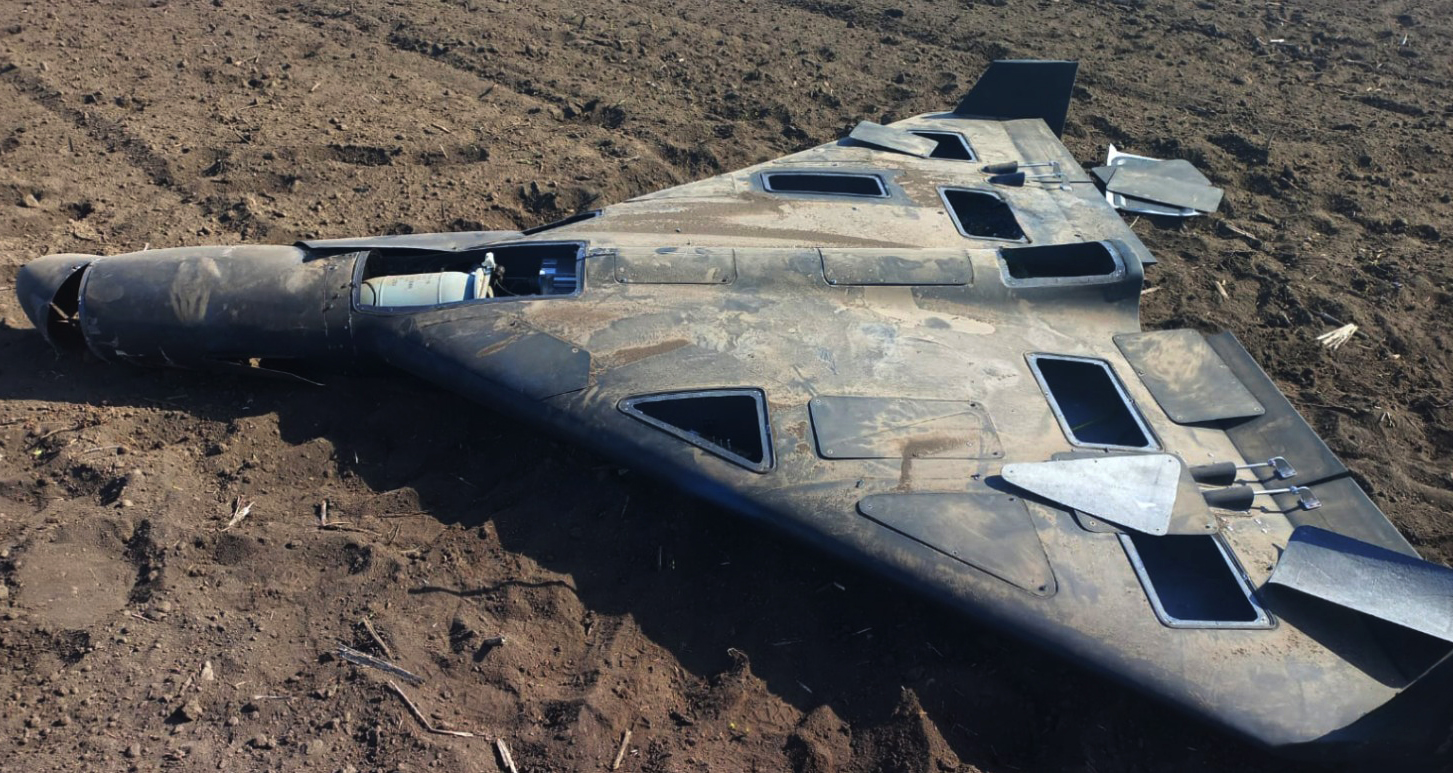
In a cornfield north of Kyiv, pieces of blackened metal are scattered among rows of dried stalks. They are all that remains of a Russian Geran attack drone, shot down by Ukrainian fighter jets as it flew toward the capital during one of Russia's mass aerial assaults.
A drone attack damaged an industrial facility in Russia’s Perm Krai early on 25 October, injuring five workers, Ukrainian monitoring channel Exilenova+ reported. Exilenova+ identified the target as the AVISMA chemical and metallurgical plant in Berezniki, around 1,500 km from Ukraine’s border.
The reported strike highlights Ukraine’s ability to reach industrial facilities deep inside Russia that support its military-industrial complex.
AVISMA produces titanium materials used in aviation and aerospace manufacturing, including military aircraft, aircraft engines, missiles, and space technology, according to Exilenova+.
Regional governor Dmitry Makhonin said the industrial facility sustained damage but continued operating normally. He said five workers were injured in the attack.
A target deep inside Russia
Perm Krai lies in Russia’s Ural region, roughly 1,500 km from Ukraine’s border. The distance places the reported strike far beyond Russia’s border regions, where Ukrainian drone attacks have frequently targeted military and industrial infrastructure.
The reported attack follows a broader Ukrainian campaign against Russian industrial and energy facilities linked to the country’s war effort.
Russia’s Defense Ministry claimed that air defenses intercepted and destroyed 532 Ukrainian drones overnight across 23 Russian regions and over the Sea of Azov, according to Russian state news agency TASS.
The reported interceptions included drones over Perm Krai, as well as regions around Moscow and areas in southern and western Russia. The figures have not been independently verified.
The extent of damage at AVISMA and any impact on its operations have not been independently established.
Ukrainian drone maker TechEx was surprised at how heavy a payload a Ukrainian unit was able to fly on one of its drones.
Ukrinform/Ukrinform/Sipa USA
A Ukrainian drone maker was surprised by how much explosive weight soldiers loaded onto one of its drones.
A drone's payload is limited by the weight of its battery, camera, and other equipment.
Drone makers push technical limits, but Ukrainian soldiers often go even further.
A major drone maker said Ukrainian soldiers surprised it by packing one of its drones with more explosives than the company ever thought it could carry.
When loading up an attack drone with explosives, combat units are limited by how much weight it can carry and still fly. Batteries, cameras, and other essential equipment also take up some of that capacity. That doesn't stop soldiers from pushing the equipment to its limit.
"One of the most surprising videos I've seen recently is that one of the units has managed to put the huge explosive part on our drone," Oleg, an executive at TechEx, told Business Insider.
The drone was carrying "something like five or seven kilos, and they managed to fly into the building and put it completely to the ground with one single FPV."
"I was like, 'How do you literally put this amount of explosives on one single FPV?' But it managed to carry this on and did the mission," the TechEx exec said, speaking on the condition that he be identified only by his first name for security reasons.
TechEx lists a maximum payload of two kilograms for three of its NATO-codified fiber-optic drones: the Stalker XO-10 China-Free, Stalker XO-15 MAX PRO, and Stalker XO-13.
Weight is a major constraint for Ukraine's drone makers, who are constantly trying to accommodate more firepower and bigger batteries, as well as heavier weapons and cameras. It's a constant trade-off, with every gram mattering.
Soldiers fighting for survival often push beyond advertised limits. Last year, a sergeant major in a heavy bomber company toldArmy Inform, Ukraine's defense ministry media, that while a Bat drone can fly up 8 kilometers and carry up to 12 kilograms, his unit pushed it to fly a little farther and carry a little more.
Weight is an important consideration for TechEx drone development. The company advertises its "ultralight fiber optic reel" as one of its product advantages. Last year, Ukraine's Ministry of Defense characterized TechEx's Stalker series as having a "record-low spool weight among Ukrainian fiber-optic drones."
Fiber-optic drones have to carry their cable spool, which adds extra weight.
Jose Colon/Anadolu via Getty Images
The struggle with weight is particularly acute for fiber-optic drones because, in addition to gear like batteries, they have to carry the spool containing the fiber-optic cable that trails behind them, maintaining a connection with the drone operator. The cable makes them resistant to enemy jamming, but the added weight limits how many explosives they can carry. The cable spool can weigh several kilograms on some drones.
Olha, a TechEx representative, told Business Insider that the company developed its own technology to reduce spool weight, making "tiny tweaks and changes" to how the spool is assembled and the fiber is wound into it. Those adjustments allow the company to keep the spool lightweight while maintaining a stable connection and minimizing the risk of the cable breaking during flight.
The company needs the "perfect balance" to make sure it stays reliable and durable, as not all drone pilots have a wealth of flying experience, Oleg said.
The company faces trade-off decisions. Extending the range of its fiber-optic drones, for instance, would require larger cable spools, potentially leaving less room for explosives, Olha said. But not every drone needs a heavy payload. For some, speed and agility matter more.
Ukraine's soldiers often surprise the manufacturers of their weapons with how they use and adapt their gear, with troops sometimes repairing and modifying equipment near the front lines and experimenting with new tactics.
Kuldar Väärsi, the founder and CEO of Estonian ground robot maker Milrem Robotics, previously told Business Insider that Ukrainian soldiers used the company's technology in ways it was not expecting, including adding and attaching things to the robots. "Ukrainian troops are really creative, and they really find very simple ways how to get even more out of the equipment," he said.
Ukrainian soldiers surprise arms makers with how they adapt, tweak, and use their gear on the battlefield.
2CR
How gear is used in the field often informs how Ukraine's defense companies update and modify their products. Soldiers give feedback to firms like TechEx every day, and companies send their own employees close to the fight to gather feedback and make changes.
Oleg said that TechEx receives direct feedback from soldiers constantly, resulting in weekly changes to its products. Without changes, a product in Ukraine "within three months, it will be outdated, and nobody will use it, because the industry is moving extremely fast," he said.
TechEx encourages soldier experimentation, including by making its drones with parts that are interchangeable. Soldiers can swap components to repair damaged drones or combine parts to create configurations the company never designed.
"Part of what I think TechEx is really great at is the ability to customize," Olha said.
Ukrainian forces reportedly struck the MegaGRINN shopping and entertainment complex in the Russian city of Belgorod during a mass drone attack overnight on 25 October, when the mall was closed and no visitors were inside, according to the Ukrainian monitoring channel Exilenova+.
Russian authorities reported that a civilian was killed and 10 people were injured in the broader mass drone attack on Belgorod. One of the injured was an ambulance worker, according to the regional operational headquarters.
The majority of the drones reportedly targeted one area in the city center, according to ASTRA.
Belgorod’s largest shopping complex targeted
Exilenova+ identified the reported target as MegaGRINN, Belgorod’s largest shopping and entertainment complex covering about 163,000 square meters. The facility houses more than 200 stores, a supermarket, restaurants, a cinema, and entertainment areas.
Belgorod is a Russian city about 34 kilometers (21 miles) from Ukraine’s northeastern border and roughly 70 kilometers (43 miles) from Kharkiv. The city and surrounding oblast have repeatedly come under Ukrainian drone attacks during Russia’s full-scale war against Ukraine.
Belgorod Oblast borders Ukraine’s Sumy, Kharkiv, and Luhansk oblasts. Russian forces have used the region to launch missile and drone attacks on Ukraine and to stage ground offensives across the border.
Update: Ukraine’s General Staff reports strikes on Russian radar stations in Belgorod Oblast
Update 18:00: Ukraine’s General Staff said Ukrainian forces struck Russian radar stations near Hostishchevo and Kurgannoye in Russia’s Belgorod Oblast on 24 October and overnight on 25 October.
The General Staff said the strikes would create gaps in Russian radar coverage and expand Ukraine’s ability to use unmanned systems.
The update did not mention an attack on Belgorod city or the shopping mall.
Russia steps up attacks on Ukrainian retail infrastructure
The reported strike comes amid an intensified Russian campaign against Ukrainian retail and logistics infrastructure. These attacks have included strikes on shopping centers during business hours, including a 21 August Russian drone attack on the crowded Soniachna Halereia mall in Kryvyi Rih, where 16 people were killed and more than 120 injured.
The reported strike on MegaGRINN took place overnight, when the complex was reportedly closed and empty of visitors. Russian authorities reported casualties from the wider attack on Belgorod, but have not linked them to the mall.
Twist Robotics' drones can be used as signal repeaters to help the connection between a drone operator and their mission drone.
Twist Robotics
Drones in Ukraine act as flying communications bridges between operators and mission drones.
They repeat the operators' signal to allow drones to fly farther while staying connected.
The signal-repeating drones make other drones more resistant to Russia's electronic warfare.
Ukraine has created drones that act as flying relay towers, allowing its drones conducting missions to fly farther while making them harder for Russia to jam.
In a war where drones gather intel and account for more than 95% of Russia's front-line losses, Ukraine wants its operators to keep control of their drones over longer distances with stronger signals that are harder for Russia to break.
One solution is the signal repeater drone, a flying signal booster that operates between a pilot and a mission drone, relaying commands to the aircraft and sending back video and intelligence to the operator. Able to fly much higher than a ground antenna, airborne repeaters can extend a drone's range and help preserve the connection under pressure.
It increases the mission drone's operational range by extending how far it can fly while staying connected to its pilot. It's a similar principle to how wifi repeaters work.
Ukrainian arms maker Twist Robotics makes a signal-repeating drone, born from its Saker Scout drone.
Rostyslav Olenchyn, the company's co-founder and chief information officer, told Business Insider that the drone was widely used for reconnaissance and strike operations, but this war changes rapidly, with arms and warfighting technology quickly becoming obsolete. And without updates, this drone was at risk of falling victim to that pattern in the cat-and-mouse technology race.
Drones needed to be effective at longer ranges, and the Saker Scout's range was "not enough" for many missions. So, the drone was redesigned "for another objective. It became the signal relay station," Olenchyn said.
Ukraine's drone operators want to be able to fly their drones as far and with as strong a connection as possible.
Ukrinform/NurPhoto via Getty Images
The Saker Scout, able to also be used in other combat roles, can extend the operational range of drones by more than 50 kilometers, according to the company.
The concept of using aircraft as signal middlemen isn't new. Militaries have used helicopters and planes to relay communications between assets and forces disconnected by the terrain, though usually troops rather than drones. These crewed aircraft, however, struggle to operate over Ukraine, but while such air assets are few and far between, drones are prolific.
Large crewed aircraft cannot "necessarily survive in the heavy saturated air of the battlefield," where drones and air defenses are a threatening presence, Olenchyn said. "So the small, versatile platform was a solution." He said that serial production of the Saker Scout with this function started in 2023.
The company's strike drone, the Signal Hunter, can also be used as a relay.
Other Ukrainian companies are also working in the space, with some updating existing drone types and some designing new ones. Roboneers, for example, developed a version of its Wardog drone that can carry relay equipment weighing up to three kilograms, and Skyriper makes the Skyriper-R Airborne Repeater, a dedicated drone with the single function of acting as an airborne repeater.
Volodymyr Zinovskyi, the CEO of the Ukrainian defense firm TAF Industries, told Business Insider that his company started making relay drones last year at the request of units, describing the technology as going from optional to essential.
Brave1, Ukraine's state-backed innovation platform, wrote last year that "the use of UAVs over long distances or in difficult terrain requires the use of repeaters - special devices that help increase the range of a stable signal several times."
Some Ukrainian drones are built for this relay mission, while others can be fitted with add-on repeater equipment.
Twist Robotics' Saker Scout repeats the signal from a drone operator to their mission drone, and the reverse.
Twist Robotics
Beyond overcoming geographical challenges, airborne repeaters also help counter Russian electronic warfare by strengthening the communications link between operators and mission drones, making it harder to disrupt, though Russia can still target the relay itself.
An analysis published by the Center for Strategic and International Studies, a US think tank, last year described the creation of relay systems as a response to growing electronic warfare tactics, including the ability that both sides have to trace drone control signals back to their source for strikes on operators, priority targets in this war.
Dmytro "Liber" Zhluktenko, a former drone operator who now serves as a lessons-learned analyst with Ukraine's 413th Unmanned Systems Regiment "RAID," told Business Insider that Ukrainian forces are "keeping somewhat a stable radio link by mass utilizing signal repeaters."
He said that some uncrewed repeater aircraft are fixed-wing drones, while some are repurposed bomber-type drones. Instead of bombs, it just carries the signal repeater," he said.
"We optimize those signal repeater carriers to just stay in the air for an extremely long time, like one hour plus," he said. "That's their only job: to be in the air." Working with strike drones, they give operators a "great radio link over the target."
Oleksiy, the commander of the 2nd UAV engineer platoon of the International Defense Legion of Ukraine, told ArmyInform, the official information agency of the Ministry of Defense of Ukraine, last year that his unit uses repeaters on drones to expand the radio horizon of the drones they want to use and fly further to target Russia.
Russia is using the technology too, including to help attack drones fly deeper into Ukrainian territory.
And these lessons aren't limited to the Ukraine war. The US military is also experimenting with ways to extend drone operations and keep operators connected from farther away. The Marine Corps, for instance, has experimented with using helicopters as FPV motherships, as well as handing off control after launch.
Though different from Ukraine's airborne repeater work, both address a similar battlefield problem, which is that drones are only useful if operators can launch them, control them, and keep receiving information at tactically relevant distances.
Olenchyn said that updates, like the signal repeating ability, are critical in combat. He said that every two weeks, the company has "a new update, new kinds of techniques, new kinds of drones or functionality which are released."
Ukraine's military satellite links work at full speed again after a cap that hobbled its drones, Ukraine's Defense Ministry said on 24 October. Hours later, SpaceX owner Elon Musk, who earlier pointed at Washington, said his company had enforced its own rules. A Ukrainian presidential adviser and a drone volunteer replied that civilian Starlink could not fly such missions.
Ukraine holds off Russia with American tools it doesn't control, so any pause decided abroad, like stalled Patriot deliveries or the Starlink cap, opens gaps in its defense. With no stated rule on what Ukraine's forces may do, the next cutoff could again come unannounced and unexplained.
Kyiv records full speed again
The ministry recorded stable connections above 400 km/h (250 mph). Before, Kyiv said, links on Starlink and its military version, Starshield, cut out above 161 km/h (100 mph).
Ukrainian President Volodymyr Zelenskyy said the restoration began overnight. "The speeds are now where they need to be," he said, citing defense against jet-powered Shahed drones. He thanked US lawmakers, the media, the State Department, and the US President, but not Musk or SpaceX.
A Ukrainian soldier installs a Starlink terminal. Illustrative photo: Armed Forces of Ukraine
Musk: "That loophole was closed last week"
Musk replied "Correct" to an X user who called Starlink "not a weapons system." "Ukraine military violated Starlink terms of service and used it for offensive drone strikes to kill people. That loophole was closed last week," he wrote.
Correct.
Using Starlink, a civilian commercial service, for offensive drone strikes to kill people has never been allowed, nor should it be.
Starshield, a different system, is controlled by the US government. What they decide to do is up to them.
He called Starshield "a different system" the US government controls, and warned: "Were Starlink to be turned off, the Ukrainian front line would collapse immediately. This is NOT a threat, it is simply a statement of fact."
Musk named no evidence, cases, or time frames. Overnight, he answered a headline on the US financial blog ZeroHedge saying he "admits" SpaceX throttled Starlink.
"We simply enforced our terms of service when they were bypassed. There has been no change to our terms of service," Musk wrote.
Explore further
Who capped Ukraine’s Starlink? “Ultimately POTUS,” Musk said. Ultimately Musk, reports now say
When the cap hit on 14 October, Musk wrote that the US government owns and controls Starshield and that the US military and "ultimately POTUS" decide any limits. US President Donald Trump, who credited Musk with the fix while Kyiv still saw the cap, said on 24 October he had spoken to Musk about Ukraine but gave no details.
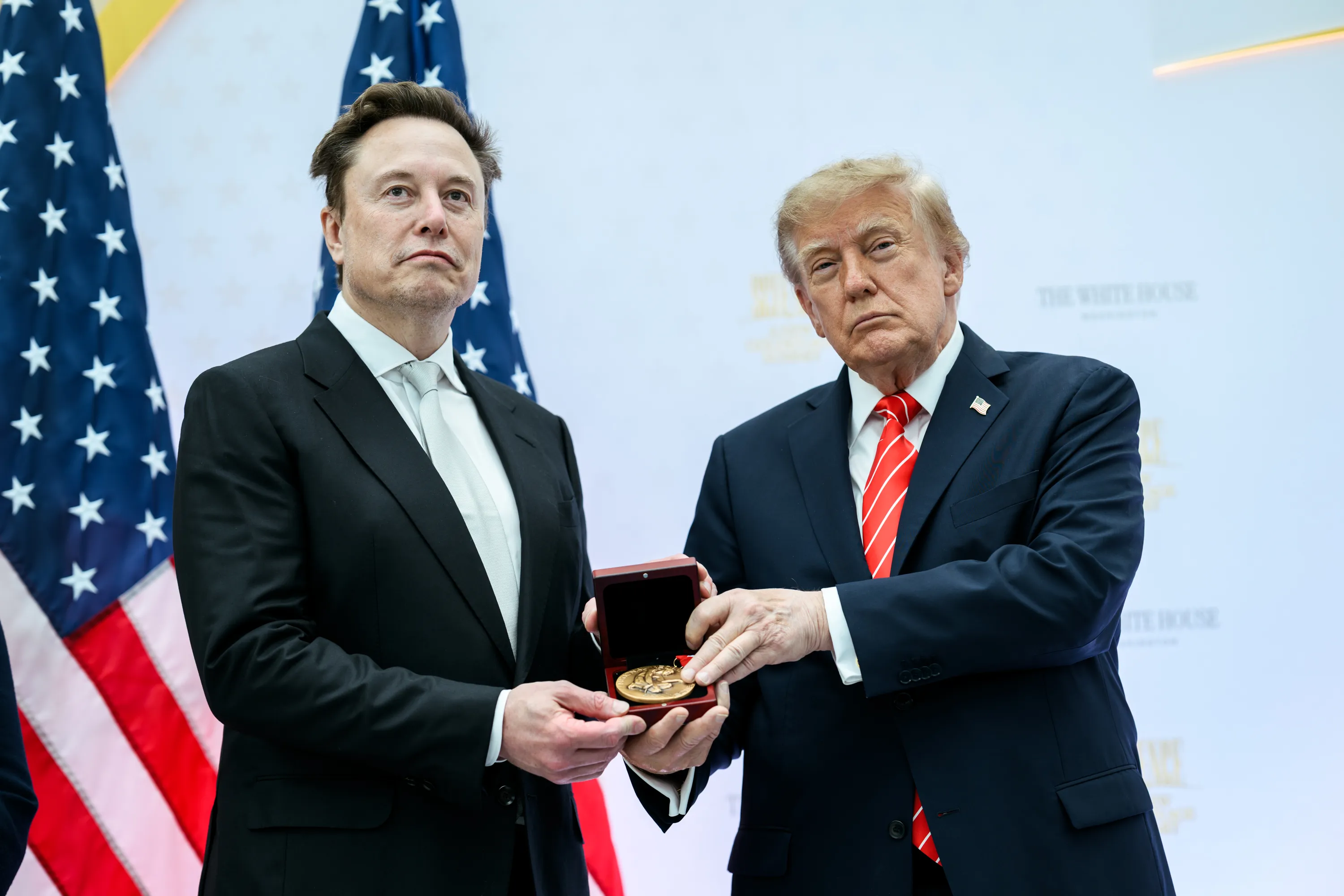
US President Donald Trump and Elon Musk in the Oval Office on 11 February 2025. Photo: White House / Daniel Torok
Ukrainians note contradiction to reality
Ukrainian presidential adviser on defense technology Serhii Beskrestnov, known by the callsign Flash, wrote:
"It is very strange that Elon Musk doesn't know about the restrictions on Starlink operations in Ukraine."
Since winter 2026, every Starlink terminal over Ukraine, occupied areas included, has been limited to 70–90 km/h (43–56 mph), he said, and over Russia, Starlink does not work. "So we PHYSICALLY CANNOT USE COMMERCIAL STARLINK for deep strikes and mid-range strikes," Beskrestnov wrote. Deep strikes hit targets far inside Russia, mid-range ones targets closer to the front.
Ukrainian activist and drone fundraiser Serhii Sternenko called Musk's claim untrue. He said Ukraine introduced whitelists of terminals in February, and any terminal used on the move had to be listed and connected to Starshield.
"So using civilian Starlink for drone missions was technically impossible. All drone missions that needed satellite communication could be carried out only with Starshield," Sternenko added.
European governments help pay for Ukraine's Starlink service. Germany funds it under a contract that runs until April 2027. Polish Foreign Minister Radosław Sikorski, whose country pays around $50 million a year for the service, said on 23 October: "Mixing business with politics usually ends badly, especially when we talk about Elon Musk."
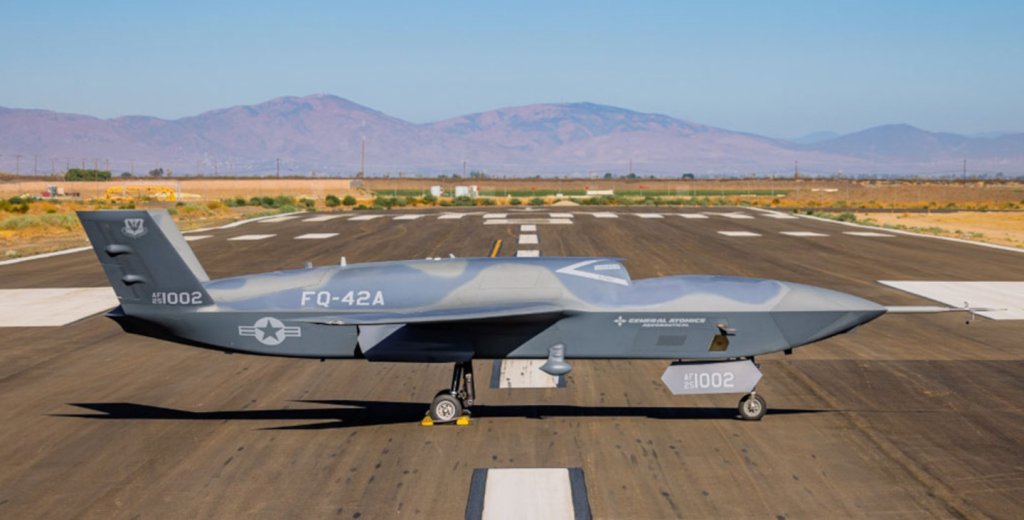
General Atomics’ Aeronautical Systems, Inc. division (GA-ASI) announced the team-up with Spirit on FQ-42 production earlier today. The Vengenace is one of two designs the Air Force has ordered into production under the first phase, or Increment 1, of its CCA program. The other is Anduril’s FQ-44A Fury. The 500-drone target the Air Force has laid out covers a mixed fleet of both FQ-42s and FQ-44s. The service is still planning to acquire additional CCAs, potentially with completely different designs, through a follow-on Increment 2.
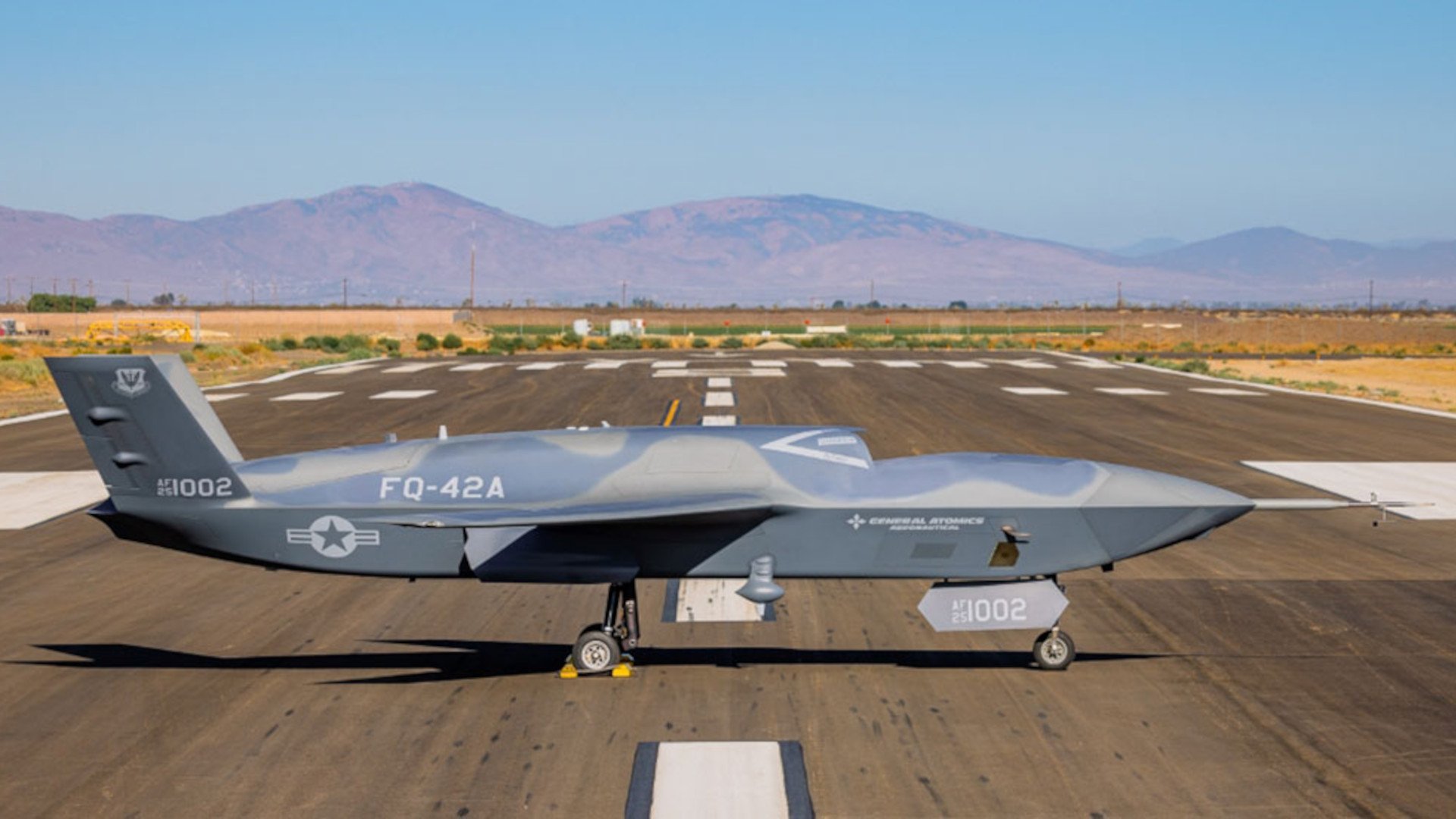
A FQ-42A Vengeance CCA drone. GA-ASI
When it comes to FQ-42 production, “Spirit Defense’s role as a fuselage design-build partner brings together the company’s engineering and advanced manufacturing capabilities to support the program from design through production,” according to a GA-ASI release. “Partnering with Spirit Defense is a strength multiplier for the company and the nation, offering manufacturing capacity and industrial depth to scale CCA production faster, while strengthening production resilience, and reducing the risk of single points of failure.”
“We’re excited to be working with Spirit Defense,” David R. Alexander, GA-ASI’s President, said in an accompanying statement. “We’ve established our proven design, development, and manufacturing capability for the FQ-42. With Spirit Defense, we add capacity, which is exactly the kind of production resilience our U.S. Air Force customer is looking for with its CCA ramp-up. This kind of partnership represents the scalable industrial base the Air Force and the U.S. Department of War are looking for from industry.”
“The intent for them [the Air Force] is to go up to as many as 500 aircraft by 2032,” Mike Shortsleeve, Vice President for Strategy Business Development at GA-ASI, also told TWZ’s Jamie Hunter on the floor of the Air & Space Forces Association’s (AFA) 2026 Air, Space & Cyber Conference in September. “We’re ready to do that production.”
At the conference, Shortsleeve highlighted investments in additive manufacturing and advanced robotics, along with efforts to build out the company’s skilled workforce, to help meet those production demands.
General Atomics is already an established drone maker with significant serial airframe production experience of its own. At the same time, the company is seeing growing demand for its MQ-9B series of drones, including a sale to the U.S. Coast Guard announced earlier this month. The MQ-9B design builds on the highly successful MQ-9A Reaper. It is also pursuing a host of other opportunities in the U.S. and abroad that could add production demands.
Mike Atwood, GA-ASI’s Vice President of Advanced Aircraft Programs, notably acknowledged potential hurdles for meeting CCA production demands, specifically, in the past.
“We have basically a hot production line where I can take an MQ-9 out and put a Collaborative Combat Aircraft in,” Atwood said on an edition of The Merge podcast back in 2024. “We were able to essentially take Reaper parts out of stock rooms and build the first [CCA] aircraft.”
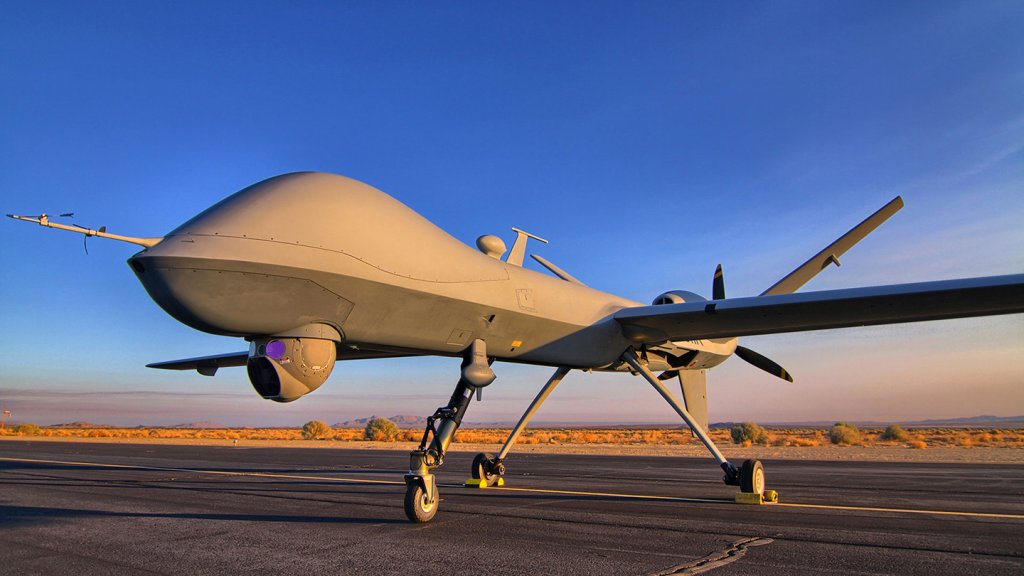
An MQ-9 Reaper drone. General Atomics (General Atomics)
“Composites are inherently expensive … they’re really for high-performance applications where you need certain strength and stiffness,” he also noted at that time. “When you look at Collaborative Combat Aircraft … we’re actually falling back on more metallic – what we call hybrid structures, metal frames with composite skins.”
The production of advanced composites and hybrid structures is Spirit’s main business. The company also has a well-established history of working as a subcontractor on military aerospace projects, including in support of bleed-edge programs like the B-21 Raider bomber.
It is also important to note here that, before its founding as an independent company in 2005, Spirit was actually a division of Boeing. By the early 2020s, Spirit had been suffering from significant financial losses and quality control lapses. Boeing subsequently decided to reacquire it in a multi-billion-dollar deal. The acquisition process began in 2024 and was finalized last year. Since then, Boeing has faced continued challenges in getting the firm back on track.
In 2024, when General Atomics and Anduril were selected to move ahead in the Increment 1 phase of the Air Force’s CCA program, TWZ explicitly raised the prospect of both companies bringing in help, especially to meet future production demands. At the time, the focus was more on Anduril, which was not a major airframer at the time and had yet to establish significant production facilities of its own for Fury. It was also unclear then whether the Air Force might pick a single winning Increment 1 drone rather than go the route it ultimately chose of ordering batches of both designs.
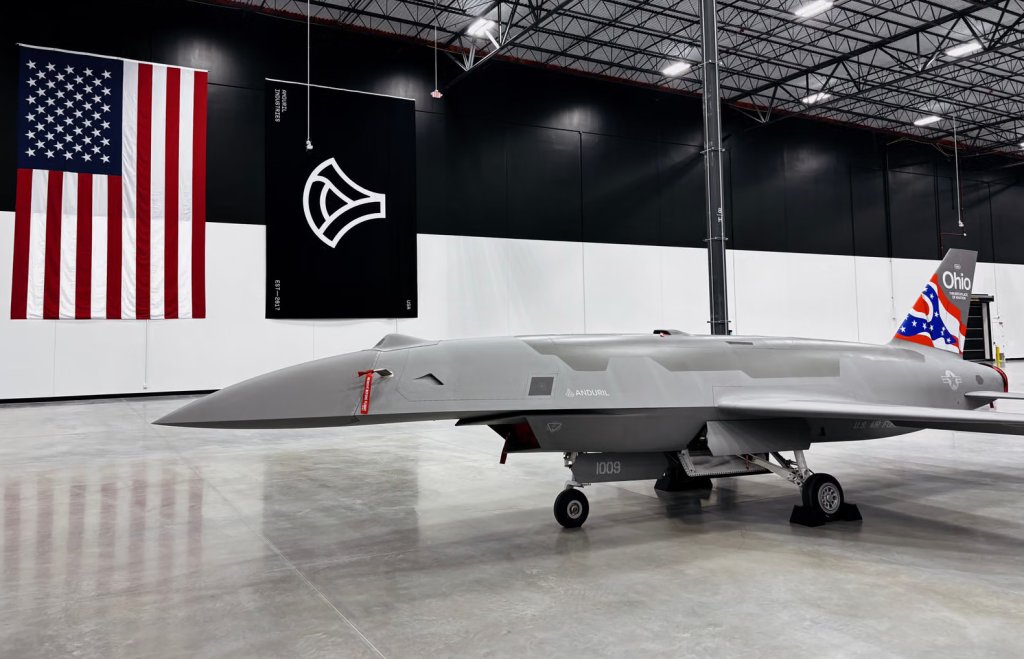
A Fury drone seen at Anduril’s Arsenal-1 production facility in Ohio. Anduril
However, as we wrote at the time: “No matter who is selected in the end as the prime contractor, a large pool of manufacturer partners will likely be key to meeting the Air Force’s production volume and schedule goals.”
As an aside, Boeing is already in the CCA business itself, with the MQ-28 Ghost Bat developed originally through a separate subsidary in Australia. The company has been working to expand its own production capacity to build those drones in recent years.
“The nuance here that probably is overlooked, is the fact that they’re [the Air Force] recognizing with 500 that they require, the factory floor is now becoming part of the battle space,” General Atomics’ Shortsleeve had told TWZ at the AFA conference last month. “So the ability for companies to be able to manufacture and produce those aircraft in numbers that are needed for the fight rapidly is going to be a key part to going forward in the future.”
The Air Force is otherwise still very much laying the rest of the groundwork for fielding its future CCAs operationally toward the end of the decade. A full playbook for deploying, launching, recovering, supporting, and otherwise operating CCA-type drones on a day-to-day basis, let alone employing them tactically, still has yet to be written. Answering these questions will be important for other CCA programs across the U.S. military and elsewhere globally.
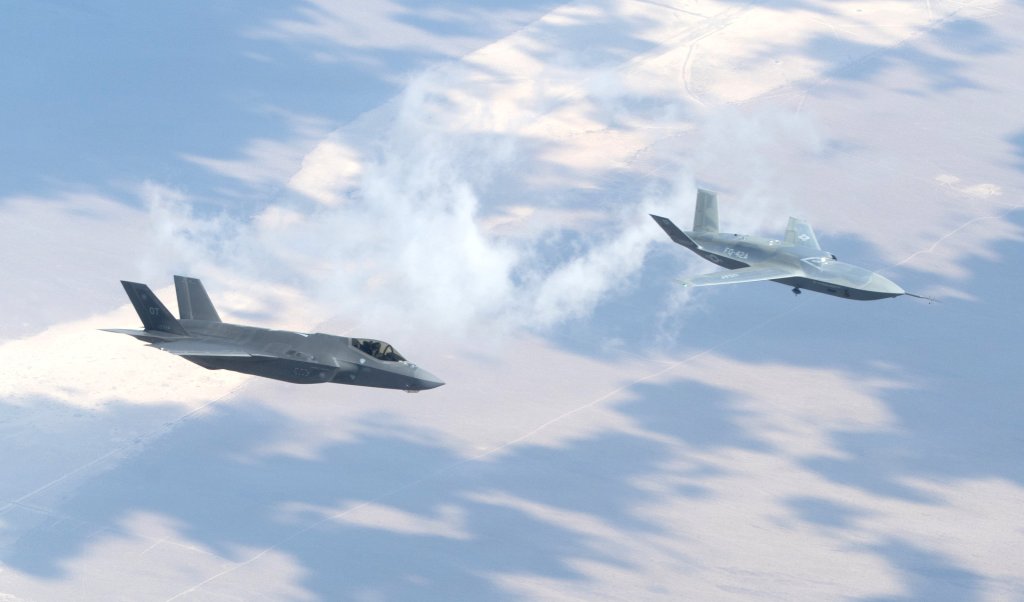
A Vengeance drone seen flying in formation with an F-35 fighter during a test flight. USAF
General Atomics’ new partnership with Spirit Defense underscores how production of Increment 1 CCAs is ramping up already in reponse to the Air Force’s current CCA program goals.
ORQA makes drones used by NATO militaries and parts used by Ukrainian manufacturers, and is now learning lessons about building in wartime.
Reuters
A NATO drone maker is partnering with a Ukrainian firm to manufacture drone parts underground.
ORQA says the partnership offers lessons in keeping factories running during wartime.
Western companies often overlook Ukraine's experience in manufacturing under attack, it says.
A NATO drone maker is teaming up with Ukraine's defense industry and building drone parts underground. The company's CEO said it's seeking to learn lessons in wartime production that could prove critical for Western defense companies in a crisis.
Croatian drone technology company ORQA and Ukrainian drone maker General Cherry are jointly developing and manufacturing interceptor drones, components, and other counter-drone systems in both countries. As part of the partnership, they are building an underground factory in Ukraine to make components.
Working amid Ukraine's wartime risks teaches the company valuable lessons in manufacturing while under attack, ORQA CEO Srđan Kovačević told Business Insider. Producing components in Ukraine is also more efficient than making them in NATO and shipping them to the Ukrainian military, he said.
Kovačević said his company is "learning from Ukraine," where industry is "under constant threat."
"They were also compelled to go underground, to go wide, to de-risk their assets in distribution," he said. "So I think that's the way forward for any critical capabilities."
Ukrainian defense firms are splitting their manufacturing across multiple sites, frequently relocating, and moving some work underground to avoid being targeted by Russian attacks. It's less efficient, but more resilient to attacks. Some Western officials and companies warn that it's time for European industry to learn these practices amid concerns about Russian aggression.
"Distributed systems are much more resilient to any disruption than concentrated systems, centralized systems," Kovačević said. "It's simply about not having a single point of failure."
Ukraine has "this immensely valuable lived experience of building and scaling under fire," the ORQA CEO said, "that's being often abstracted and neglected by Western companies." That, however, is starting to change, he said.
Ukraine's General Cherry has experience building, innovating, and scaling while at risk of attack.
AP Photo/Efrem Lukatsky, File
Raivis Melnis, the defense minister of Latvia, told Business Insider that NATO companies work in a far more concentrated way than Ukrainian ones do, and "the question is whether we are ready to produce the systems in different locations, dispersed, and how we organize that."
He wants Latvian and Ukrainian defense industries to work together in part so they can learn how Ukrainian companies maintain production during a war.
Davyd Aloian, the deputy secretary of Ukraine's National Security and Defense Council, told Business Insider earlier this year that defense companies within parts of NATO should "definitely" start breaking up their production more.
Some defense industry figures have voiced similar concerns about the state of production in the West. Karmo Saar, the head of sales for Estonian drone maker Krattworks, told Business Insider that in a war with Russia, if European companies don't disperse more, "I think we're going to be punished."
Dispersing production is not without trade-offs, though. Achi, CEO of the Ukrainian-Estonian defense technology company and ground robot maker Ark Robotics, told Business Insider that such defensive steps are "necessary," but "not ideal." Operations would be easier with everything in one place.
Choosing Ukraine despite the danger
Some Ukrainian companies have begun setting up production in NATO countries, both to better share their expertise with partner nations and to operate without the risk of Russian attacks.
But Kovačević, whose company makes drones as well as drone technology, including controllers, receivers, goggles, video equipment, and flight simulators, said that building in Ukraine comes with upsides.
The company, which supplies 24 NATO allies, could have done all of its work with General Cherry in Croatia, but instead, they are spreading their joint work across both countries.
Kovačević said building components in Europe and then importing them into Ukraine is "more inefficient than actually doing it in Ukraine." It's also more expensive, and Ukraine has shown its ability to produce in large volumes.
Ukrainian companies like General Cherry are building at a scale and in conditions that their Western counterparts are typically not used to.
AP Photo/Evgeniy Maloletka, File
Localizing the supply chain also means that all parties can "exchange information more efficiently," including about what's happening and what's needed on the battlefield.
He said he understands why some Ukrainian companies are building gear on NATO soil, but he sees value in partnering with General Cherry in Ukraine. He said the Ukrainian company, one of the country's largest drone makers, has"a high operational excellence in running their own manufacturing operations in a safe manner, even under constant threat."
The partnership also offers lessons beyond manufacturing. He said that while the West "has a very deep technology expertise," it lacks "this lived experience of taking that technology and applying it to the operational reality of the 21st-century warfare."
The goal is to both supply Ukraine and to equip NATO with weapons shaped by Ukraine's battlefield experience and expertise. In Croatia, the partners are establishing a joint serial-production facility for co-developed interceptor drones and other counter-drone systems destined for NATO, while in Ukraine, they intend to create drone components, including electronics and communications systems, which General Cherry says it will supply to "all our partners in Ukraine," not just use itself.
Ukraine is already able to make the drones that the partnership will produce in Croatia, but "what they lack is the capacity to build components that go into those systems," Kovačević said, explaining the focus of the Ukrainian facility. He said the project won't disrupt Ukraine's existing supply chains. One of ORQA's priorities is to reduce reliance onChinese products, and it wants to help Ukraine's industry do the same.
"Now," he said, "it's time to merge the two and emerge better off on both sides of this partnership."
A series of drone attacks on commercial shipping near Romania and Bulgaria has left sailors dead or missing, bringing Russia’s war against Ukraine closer to NATO territory. The European Parliament is calling for an EU naval mission, while Romania has begun shooting down hostile drones and NATO is preparing additional defensive measures.
The European Parliament has called for the possible deployment of an EU naval operation in the Black Sea following a series of deadly attacks on civilian merchant vessels near the Romanian and Bulgarian coasts. The resolution, adopted on 22 October 2026 by 432 votes to 52, with 88 abstentions, reflects mounting concern over the expansion of maritime threats towards NATO’s south-eastern flank.
The parliamentary resolution urges EU member states to consider establishing a naval mission to protect commercial shipping, while calling on NATO to examine a complementary regional initiative, provisionally described as Black Sea Sentry.
On 23 October, a drone struck the Comoros-flagged cargo vessel Khoryv, approximately 13 nautical miles from Romania’s port of Constanța. The vessel caught fire and sank, leaving one sailor confirmed dead and three missing. Nine crew members were rescued. The ship was carrying 13 Ukrainian and Azerbaijani sailors. According to information attributed to Romanian maritime authorities, difficult weather complicated rescue efforts.
Romanian President Nicușor Dan blamed Russia for the attack, which followed at least seven other strikes on commercial vessels during October. Across the incidents, approximately 30 sailors have been reported dead or missing, although the confirmed death toll is considerably lower.
Civilian Shipping Under Attack
The escalation began on 5 October when the Royad Mammadov, a Turkish-owned grain carrier sailing under the flag of Saint Kitts and Nevis, sank in Romania’s exclusive economic zone. Two sailors died and eleven were rescued. The vessel had departed the Ukrainian Danube port of Izmail carrying corn destined for Ravenna, Italy. Ukrainian President Volodymyr Zelenskyy attributed the sinking to Russian drones, although Romanian authorities did not initially establish responsibility.
The following day, two merchant ships were attacked approximately 70 nautical miles east of the Bulgarian coastal town of Byala. As EU Today reported, the Togo-flagged Alfa Watan sank after sustaining severe damage, while the Palau-flagged Able caught fire. All 18 sailors aboard the latter vessel were rescued, but the crew of the Alfa Watan remained unaccounted for.
The Bulgarian authorities confirmed that both aerial and maritime drones had been involved. Further attacks followed on 13 October, when the HS Dignity sank near Shabla, leaving eleven sailors missing, while the Chelsea-3 was struck near Byala. All 15 crew members of the latter vessel were evacuated.
Two chemical tankers, the Yara J and Wine Trader, were subsequently attacked near the Sulina Canal, a strategically important route connecting the Danube with the Black Sea. The incidents exposed the vulnerability of shipping corridors connecting Ukraine with international markets.
Romania Moves Towards Active Military Defence
Romania has responded by strengthening surveillance and authorising direct military action against drones entering its airspace. On 17 October, two Romanian F-16 fighter aircraft intercepted and destroyed hostile drones over Romanian territorial waters.
According to the Romanian Ministry of National Defence, the aircraft were scrambled from Borcea Air Base after radar systems detected aerial targets approaching from the direction of Snake Island. The drones, identified as jet-powered Geran-family attack aircraft, entered Romanian airspace before being destroyed southeast and east of Sulina.
The ministry disclosed that, during the preceding week, its radar systems had detected eight separate incidents involving aerial targets near the Romanian border, including four brief incursions into national airspace. On 14 October, Spanish F-18 aircraft operating under NATO air-policing arrangements were scrambled after drones approached Romanian airspace.
Bulgaria’s More Cautious Response
Bulgaria has taken a more reserved position concerning responsibility for the attacks. Although Prime Minister Rumen Radev acknowledged their seriousness, his government maintained that investigations must establish the origin of the drones before definitive conclusions could be drawn. Sofia nevertheless strengthened maritime surveillance, deployed rescue resources and requested assistance from European and NATO partners.
In August, a drone crossed into Bulgarian airspace from Romania and exploded near infrastructure associated with the Trans-Balkan Gas Pipeline. According to the Bulgarian government’s account, the aircraft was not detected by either national radar systems or NATO’s Combined Air Operations Centre in Torrejón, Spain. The European Parliament has now urged Sofia to accelerate participation in NATO’s counter-drone initiatives.
EU Proposes Maritime Security Operation
The European Parliament’s proposals include establishing an EU naval operation, improving early detection of hostile drones, accelerating the development of a Black Sea Maritime Security Hub and providing additional defence funding to Romania and Bulgaria. MEPs have proposed using resources under the EU’s SAFE defence financing instrument to support regional capabilities.
The proposed hub would facilitate intelligence-sharing, maritime surveillance and protection of critical infrastructure. Romania and Bulgaria have requested EU satellite imagery to improve their awareness of maritime threats, while the European Maritime Safety Agency has offered additional support.
At their October summit, EU leaders condemned attacks on civilian shipping and called for safe passage for vessels transporting agricultural products. The European Council’s conclusions addressed Black Sea and Danube shipping routes. However, the parliamentary resolution does not authorise a naval deployment: such an operation would require agreement among EU governments on its mandate, resources and rules of engagement.
NATO Faces an Expanding Security Challenge
NATO has responded by examining additional maritime surveillance and defensive measures, including patrol aircraft, radar systems and unmanned platforms. Romania has proposed stronger regional command arrangements involving NATO’s Black Sea members.
An existing framework provides a basis for cooperation. In July, Romania, Bulgaria and Türkiye agreed to expand the responsibilities of their joint mine countermeasures task group to include protection of critical underwater infrastructure. The agreement announced by Romania’s Defence Ministry extended cooperation beyond detecting and neutralising drifting mines.
Protecting commercial vessels against aerial and maritime drones would require broader capabilities. NATO must also operate within the restrictions of the 1936 Montreux Convention, which regulates passage of warships through the Turkish Straits and limits deployments by non-Black Sea countries. Romania, Bulgaria and Türkiye would therefore play central roles in any sustained maritime security operation.
Black Sea Security and the Risk of Escalation
Ukraine’s maritime export corridors remain essential to agricultural shipments following repeated Russian strikes on ports and logistics infrastructure. Attacks on commercial vessels can increase insurance costs, discourage shipping companies and disrupt trade even when port facilities remain functional.
The sinking of merchant vessels near allied territory, combined with repeated drone incursions into Romanian airspace, increases the possibility of military confrontation arising from an individual incident. The legal and military circumstances differ depending on whether an attack occurs in territorial waters, an exclusive economic zone or international waters.
The European Parliament’s proposal raises questions extending beyond maritime patrols: how civilian shipping can be protected, what military responses are authorised and how responsibility for attacks will be established. The sinking of the Khoryv on 23 October illustrates how the western Black Sea has become an increasingly exposed part of Europe’s security frontier.
The initiative will focus on resilient communications, navigation, and onboard autonomy, as Sine Engineering specializes in producing satellite-independent navigation software, enabling drones to fly without relying on GPS.
Undercover reporters ordered 500 drone mesh modems from a Chinese firm, which billed them to Russia’s Alabuga drone plant, investigation by The Insider found. The outlet estimates the firm makes about half the high-power mesh modems that let Russia steer its drones deep into Ukraine. The firm’s director also named US company AMD as the source of a key chip, and AMD says it has not sold to the firm.
Geran drones and Banderol drone-missiles have become Russia’s main weapons against Ukraine’s energy grid. Russia began this winter’s strike campaign against that grid in late September, ISW assessed. Ukrainians’ survival this winter depends largely on how fast the West halts mesh modem sales to Russia, the outlet argued.
What a mesh modem does
A mesh modem links drones into one radio network. Each unit relays data for the others, so if one drone is shot down, traffic reroutes through the rest. Information keeps flowing even if nearly 80% of the drones are downed, Ukrainian defense adviser Serhii “Flash” Beskrestnov said in November 2025.
Range is the other half of the threat. One XK F-359 holds a line-of-sight link over 100–300 km, The Insider says. In theory, a couple of relay drones could keep a whole attack on Kyiv connected. Operators can then send new commands in flight and steer around air defenses. Russia’s Gerbera drones, first built as cheap decoys, increasingly carry these modems.
Explore further
Russia’s jam-resistant drones run on a Chinese modem no one has sanctioned
A modem from an upgraded Gerbera
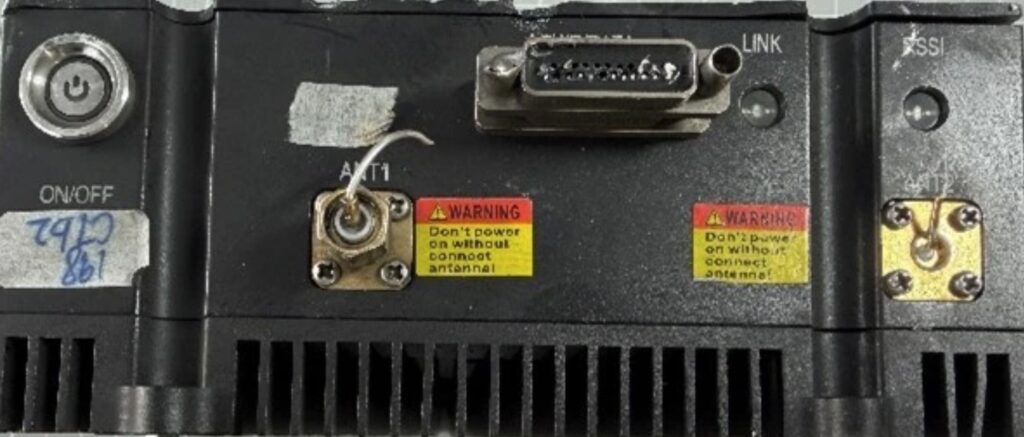
To trace the part, The Insider’s correspondent in Ukraine examined an unmarked mesh modem from an upgraded Gerbera with a vertical tail fin, a version that appeared this summer. The outlet identified it as Xingkai’s XK F-359, the part Ukrainian intelligence and earlier reporting, Euromaidan Press included, had logged as the XK-F358. The Insider calls that label a misidentification.
Next, The Insider and the Nordsint investigative project contacted Xingkai on WeChat, posing as a Russian military supplier based in Alabuga. A company employee who introduced himself as “Jack Jiang” confirmed the firm is the model’s sole maker. The Insider identified him as Jiang Qin, Xingkai’s director and owner.
500 modems, three banks
The reporters then ordered 500 units for delivery to Alabuga, home to the plant that makes most of Russia’s long-range drones. Jiang invoiced 19.5 million yuan, which The Insider put at about $2.87 million. He offered two ways to pay: dollars to Xingkai’s DBS Bank account in Hong Kong, or yuan to his personal Ping An Bank account.
Explore further
America has sided with Russia against Ukraine. Europe should stop pretending and build a coalition against Russia, China, and even the US
In the chat, the reporters said outright that the end user was a military production facility. Jiang raised no objection, The Insider reported.
Later, after the reporters asked to update the address, Xingkai sent a revised invoice with “Alabuga” spelled in Latin letters. This time, it routed payment to a China Merchants Bank account in the name of a former Xingkai manager. She left a management post at the company in 2025, according to Tesari corporate records cited by The Insider. None of the three banks answered The Insider’s requests for comment.
Jiang also claimed the modem’s programmable chip is made by AMD. Asked for an AMD license, he refused, saying Xingkai buys the chips through a middleman. AMD told The Insider that Xingkai “is not an AMD customer or authorized partner,” and said it had sold the company nothing. AMD added that it bars exports of its products to Russia that violate US export controls and sanctions.
Moldova declared a Russian embassy staff member persona non grata on 23 October after a Russian Geran attack drone violated its airspace and crashed near homes and an energy facility, Moldovan President Maia Sandu said.
The incident highlights how Russia’s attacks on Ukraine are increasingly threatening neighboring Moldova, where Russian drones have repeatedly crossed the border or crashed during strikes. Moldova recorded 39 Russian drone incursions in the first eight months of 2026, compared with 17 in all of 2025, Sandu said in September.
Moldova’s Defense Ministry said its Air Operations Center detected an unauthorized drone flight at 13:59 on 23 October. The drone crossed from the direction of Ukraine’s Vinnytsia Oblast toward Frunzeuca in Moldova’s Camenca district, in the Russian-backed breakaway region of Transnistria.
The drone disappeared from monitoring screens near Pepeni in Sîngerei district at 14:10, briefly reappeared, and then disappeared again near Meșeni in Rezina district, the ministry said.
Sandu condemned the incursion, saying Russia’s war continues to put Moldovan lives at risk. She said the drone had fallen near family homes and an energy facility.
Moldovan police reported finding the crashed drone near the village of Chiștelnița in Telenești district, less than 100 meters from a home. No casualties were reported. Police cordoned off the area and sent explosives specialists to examine the wreckage.
Russia's war keeps putting Moldovan lives at risk. Today, a Russian Geran attack drone violated our airspace and fell near family homes and an energy facility.
We condemn this latest dangerous act. In response, we have declared a Russian embassy staff member persona non grata.
Sandu said Moldova had condemned the incident and declared a Russian embassy staff member persona non grata. She did not identify the staff member or specify when they must leave the country.
The move follows repeated Russian drone incursions. In September, a Russian drone crossing Moldova’s airspace disrupted seven flights, including one involving Ukrainian President Volodymyr Zelenskyy, prompting temporary airspace restrictions.
Earlier in October, three Russian missiles and two drones crossed into Moldovan airspace and exploded on Moldovan territory during Russian attacks on neighboring Ukraine, prompting Chisinau to condemn the violations. Debris fell across several districts, damaging windows at an agricultural facility and sparking fires in fields. Defense Minister Anatolie Nosatîi said the country was seeking stronger air defenses to counter the growing threat.
Explore further
80% of Moldovans say country is unprepared for attack as Russian drones flow into its airspace, but few back NATO membership
Moldova has limited air defense capabilities and has been working with European partners to strengthen them. Sandu has said the country’s existing equipment can mainly protect individual sites, while the government seeks broader coverage and faster warning systems. The EU has provided €120 million for Moldova to purchase a medium-range air defense system.
Moldovan authorities urged residents not to approach or touch the crashed drone or any fragments, and to call emergency services if they find suspicious objects.
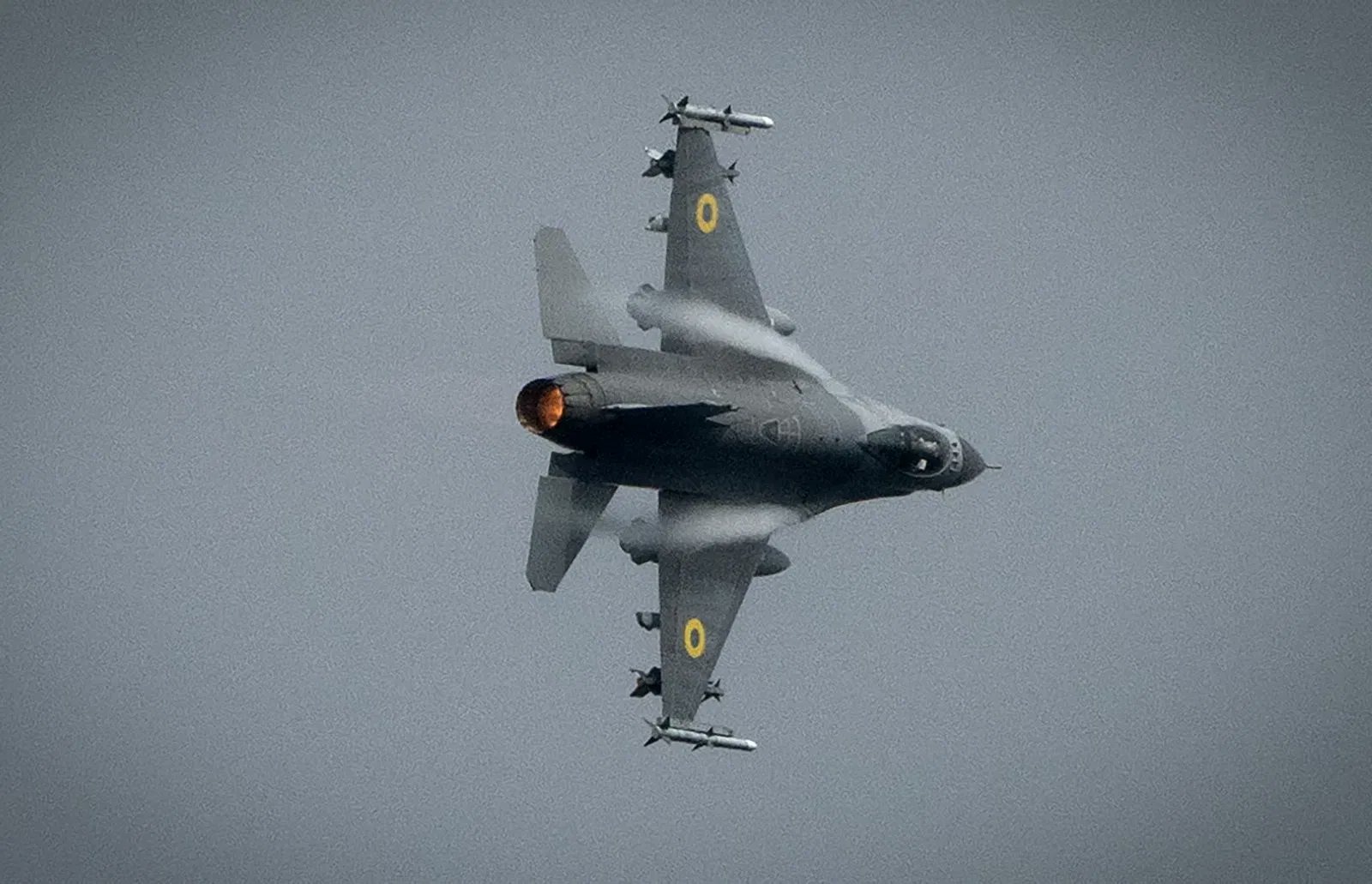
Ukraine has received more than 50,000 rounds of 20-mm ammunition from Denmark for the onboard cannons of its F-16 fighter jets, with Ukrainian pilots already using the rounds to intercept Russian jet-powered Geran attack drones, Ukraine’s Defense Ministry said.
The accelerated delivery addresses a key need in Ukraine’s air defense as Russia increasingly deploys faster jet-powered drones that challenge conventional interceptors. Ukraine has also relied on F-16 cannons when stocks of air-to-air missiles are limited, making ammunition supplies important to keeping the aircraft effective against incoming aerial threats.
Denmark responds to ammunition request
The Defense Ministry thanked Denmark for responding quickly to Ukraine’s request for additional ammunition, saying the delivery directly strengthens the country’s air defenses and helps protect civilians from Russian aerial attacks.
The delivery follows a broader effort by Ukraine’s European partners to replenish F-16 cannon ammunition. On October 2, it was reported that Spain, Belgium, and Poland were also sending 20-mm rounds for Ukrainian F-16s to counter Russia’s jet-powered drones.
Belgium is also expanding its support for Ukraine’s F-16 fleet. On 16 October, Belgian Prime Minister Bart De Wever pledged to deliver 10 F-16s by the end of 2026, up from three previously planned, and discussed supplying additional ammunition, including 20-mm rounds produced by Belgian defense company FN Herstal.
Jet-powered drones pose a growing challenge
Russia’s faster attack drones are harder to intercept than older, propeller-driven Shahed-type models. Their speed gives air defenders less time to respond and makes them more difficult for many interceptor drones and conventional short-range weapons to catch.
Ukraine’s air-to-air missile shortages have also increased the importance of F-16 cannon ammunition. Ukrainian pilots have sometimes relied on their aircraft’s built-in 20-mm cannon when air-to-air missiles are scarce.
Explore further
Ukraine’s F-16s are so short of Western missiles that pilots fall back on jet’s built-in M61A1 Vulcan cannon, which risks killing civilians below
The threat from jet-powered drones is growing. Ukrainian President Volodymyr Zelenskyy said in late September that Ukraine was intercepting about 55% of Russia’s jet-powered drones, compared with more than 90% of older models.
Denmark’s ammunition delivery gives Ukrainian F-16 pilots more rounds to engage these faster targets, as Ukraine works to strengthen its defenses against Russia’s expanding drone campaign.

 Login