The death has been announced of the American actor Walter Koenig, best known for his portrayal of Pavel Chekov in the Star Trek series and films. He was 90.
Tras un largo silencio que hizo dudar a muchos sobre el rumbo de la ficción, la cuarta tanda de episodios deLupin ha aterrizado en Netflix con ocho capítulos (su entrega más extensa hasta la fecha). La nueva temporada, estrenada tres años después de la tercera, ha dejado un salto temporal en la historia de cuatro años y un desenlace que se ha metido de lleno en la tragedia familiar.
De la venganza del Louvre a la cárcel: resumen de las temporadas anteriores
La serie nunca buscó calcar los relatos de Maurice Leblanc, autor de los libros en los que se basa, sino usarlos como el manual personal de Assane (Omar Sy). Su cruzada comenzó por justicia. Quería limpiar el nombre de su padre, Babakar, quien se suicidó en prisión tras ser acusado falsamente por el empresario Hubert Pellegrini de robar el collar de María Antonieta.
En las dos primeras partes, Assane jugó al despiste con la policía y el clan Pellegrini hasta lograr desenmascarar al comisario corrupto Dumont. Esa victoria pública le convirtió en el hombre más buscado de Francia y puso en el punto de mira a Claire y a su hijo Raoul.
La tercera temporada complicó la situación con la reaparición de su madre, Mariama, y la irrupción de Jean-Luc Keller, su antiguo instructor de boxeo que buscaba venganza por un atraco fallido cometido 25 años atrás. Tras resolver el caso de la Perla Negra, rescatar a Manon y neutralizar a Keller, Assane dio un paso inesperado. Decidió entregarse a la policía con el inspector Youssef Guédira para liberar a su socio Benjamin y apartar a su familia del acoso mediático.
La calma duró poco. Ya entre rejas, Assane recibió un sobre con una fotografía de su infancia y un ejemplar de La venganza de Cagliostro. Su vecino de celda no era otro que Hubert Pellegrini, quien dejaba la duda de si Mariama pudo haber actuado como su cómplice desde el principio, utilizando el amor de su hijo como trampa.
De qué trata la cuarta temporada: salto de cuatro años, el imitador del ladrón y la fuga
La historia arranca cuatro años después de aquel ingreso en prisión. Assane cumple condena con perfil bajo, decidido a saldar su deuda penal para mudarse definitivamente con los suyos a Senegal y dejar atrás su alter ego.
Ese plan salta por los aires cuando un criminal anuncia asaltos simultáneos en museos de París y Aviñón bajo la firma de Lupin. Los robos se ejecutan con precisión y una cámara de seguridad capta a un individuo idéntico a Assane en el lugar de los hechos, donde además la inspectora Sofia Belkacem resulta gravemente herida. Ante una acusación que pretende mantenerlo entre rejas, el ladrón se ve obligado a fugarse para limpiar su reputación y descubrir quién está suplantando su identidad.
Final explicado de la temporada 4: quién es el impostor y qué pasa con Assane tras el disparo
El imitador resulta ser Adèle (Laïka Blanc-Francard), la hija biológica secreta que Assane tuvo con Juliette Pellegrini. Hubert Pellegrini la apartó de su madre nada más nacer haciéndole creer a Juliette que la pequeña había fallecido, y la envió a un orfanato en Inglaterra.
Al crecer y rastrear su árbol genealógico, Adèle utilizó la tecnología y los métodos de Lupin para llamar la atención de su padre. Su objetivo definitivo fue el asalto a las Joyas de la Corona francesa, un tesoro histórico vigilado en la sombra por cuatro influyentes familias conocidas como "Los Guardianes".
La aparición de Adèle provoca un terremoto emocional en Raoul (Théo Christine). Quemado por años de ausencias, promesas rotas y el temor constante a verse relegado frente a su nueva hermana, el joven cae en la manipulación de Hubert Pellegrini. Raoul finge su propio secuestro junto a Adèle para obligar a Assane a robar las joyas y entregárselas a su enemigo.
El descubrimiento de la verdad desata una confrontación familiar múltiple, especialmente cuando Juliette descubre que su propio padre le arrebató a su hija durante décadas.
El clímax estalla en una pista de aterrizaje. Cuando Raoul y Pellegrini intentan huir en un helicóptero, Assane se lanza para escudar a su hijo con su propio cuerpo y recibe un disparo en el pecho por parte de la policía. La aeronave despega con Raoul en shock mientras Claire, Benjamin, Juliette y Adèle corren desesperadas a ayudarle. El capítulo corta a negro sin mostrar si Assane sobrevive o si recurrió a algún truco de protección, cerrando la temporada con el mayor cliffhanger (final en suspenso) de la serie.
Omar Sy al mando: reparto y novedades en el equipo tras las cámaras
Omar Sy ejerce en esta tanda como coproductor ejecutivo y co-showrunner, asumiendo peso en las decisiones creativas junto a George Kay y François Uzan. En el reparto repiten los rostros habituales como Ludivine Sagnier (Claire), Antoine Gouy (Benjamin Férel), Soufiane Guerrab (Guédira) o Hervé Pierre en la piel de Pellegrini.
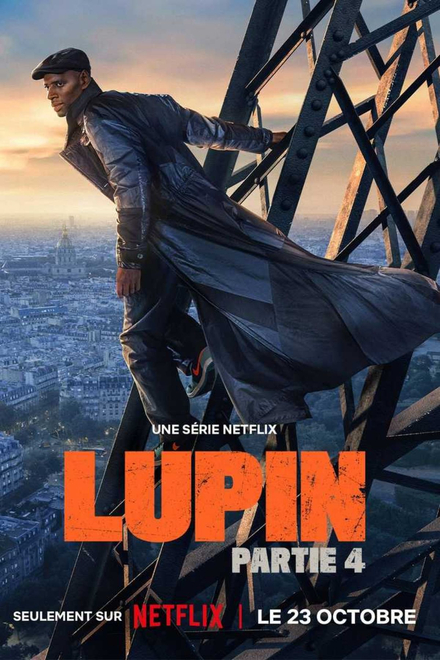
Cartel promocional de la cuarta temporada de 'Lupin' | Netflix
La evolución dramática la lideran Théo Christine, con un Raoul mucho más sombrío y vulnerable a la manipulación, y Laïka Blanc-Francard, cuyo debut como Adèle aporta dinamismo y frescura a las secuencias de acción.
El impacto en audiencias y la opinión de la crítica
Con 217,6 millones de visualizaciones acumuladas entre sus tres primeras etapas (casi 100 millones en la primera, 68 en la segunda y 50 en la tercera), Lupin se mantiene como la tercera serie de habla no inglesa más vista en la historia de Netflix. Se sitúa así solo por detrás de El juego del calamar yLa casa de papel.
La respuesta de la prensa especializada no se ha quedado atrás. En Rotten Tomatoes ha debutado con un 100% de valoraciones positivas, igualando la marca perfecta de la anterior tanda.
Otros medios nacionales e internacionales han destacado el tono cinematográfico y los recursos tecnológicos que Sy ha sumado a las secuencias de acción. Mientras, algunos portales alaban que la trama apueste por el conflicto íntimo antes que por la repetición de la fórmula habitual de atracos.
¿Tendrá quinta temporada 'Lupin' en Netflix? Las claves de la continuación
Por el momento, Netflix no ha anunciado la renovación oficial, un trámite que suele demorarse varias semanas mientras la plataforma calcula el volumen global de horas vistas y los índices de finalización de la temporada.
No obstante, las opciones de continuidad podrían ser bastante altas. La compañía no ha promocionado esta tanda como el desenlace definitivo y el equipo planteó los episodios como un reinicio cargado de frentes abiertos (confirmar la supervivencia de Assane, ver si Raoul despierta de la manipulación de Pellegrini tras ver caer a su padre y descubrir las represalias de "Los Guardianes" tras el robo de las Joyas de la Corona).
El propio Omar Sy ya ha alimentado la expectativa sobre esa posible temporada 5 en declaraciones recientes a SensaCine: "En esta temporada hemos descubierto que todavía tenemos más cosas que contar. Assane sigue siendo una fuente inagotable de inspiración. Quizá sea el final, quizá no".
La miniserie Bajo la superficie es uno de los fenómenos recientes de Netflix que ha alcanzado el número uno del ranking global de la plataforma. Este thriller de terror, que gira en torno a una misteriosa criatura marina que amenaza a una pequeña localidad costera, combina suspense, secretos familiares y una amenaza relacionada con el calentamiento de los océanos. Pero ¿Qué ocurre realmente al final y qué esconde el monstruo que emerge de las profundidades?
Quién estaba detrás de la amenaza: atención spoilers
La criatura marina no era el único peligro para Snook's Arm. Calvin descubre que la poderosa familia Crocker, encabezada por Jim Crocker, llevaba tiempo intentando que los habitantes abandonaran sus propiedades para explotar los importantes yacimientos de cobre y cobalto que había bajo la localidad. Desplazar a los vecinos resultaba más barato que compensarlos por el valor de esos recursos.
La familia había impulsado una votación para reubicar a la población y estaba aprovechando el terror provocado por Mudder para acelerar el proceso. Jan, la mujer encargada de supervisar la votación y pareja de Jay, resulta ser hija de Jim Crocker. Su presencia formaba parte de la estrategia para manipular la decisión de los habitantes, lo que revela que la amenaza humana era tan importante como la criatura marina.
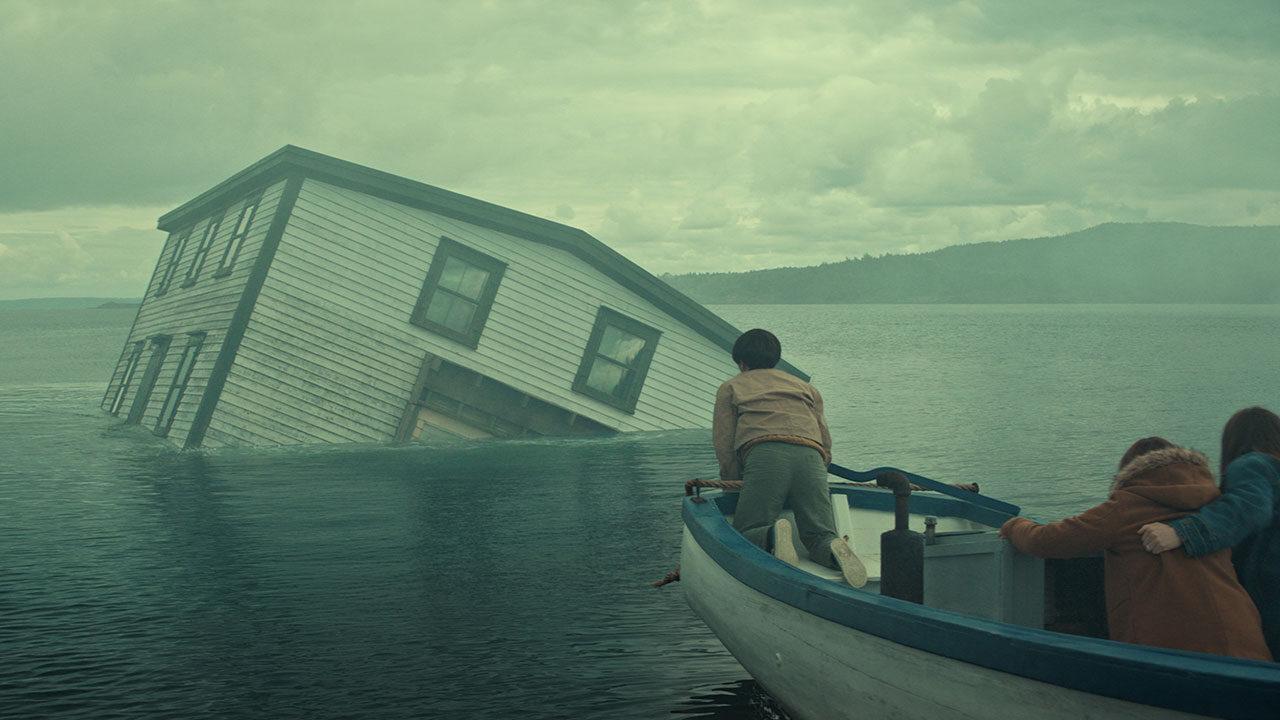
El viaje de Calvin a Little Pot Rock también le permite afrontar el trauma que arrastra desde la infancia. Cuando su familia intentaba trasladar su casa en barco, una fuerza submarina comenzó a arrastrarla hacia el fondo. Para salvar a su madre y a su hermana, Calvin cortó la cuerda que unía la vivienda con la embarcación, pero su padre desapareció en el mar.
Décadas después, Walton Budgell, un antiguo amigo, le muestra su tumba y le explica que el cuerpo fue recuperado. Calvin comprende así que su decisión fue necesaria para salvar al resto de su familia y comienza a liberarse de la culpa que lo ha acompañado durante años.
Qué significa la escena final
Una vez que la amenaza inmediata desaparece, los habitantes regresan a Snook's Arm. La votación para abandonar el pueblo queda anulada y la familia Penney abre un establecimiento llamado Big Squid Distillery. La vida parece recuperar cierta normalidad y también queda abierta la posibilidad de una relación entre Calvin y Fonda, aunque la serie no confirma que ambos comiencen una historia sentimental.
Pero el desenlace introduce una última inquietud. En los segundos finales aparecen varios icebergs más en el horizonte. La imagen recuerda que el hielo había ocultado secretos relacionados con Mudder y plantea la posibilidad de que todavía existan otras amenazas desconocidas bajo la superficie. La serie no confirma que esos nuevos bloques contengan criaturas como ella, por lo que su significado permanece abierto.
La escena también refuerza uno de los mensajes centrales de la ficción, el cambio climático está alterando el entorno y puede sacar a la luz fenómenos que permanecían ocultos. El creador de la serie, Jesse McKeown, explicó a Netflix Tudum que el final apunta a un futuro en el que las consecuencias del calentamiento global pueden volverse más extrañas y aterradoras. Por eso, aunque Calvin consigue salvar su hogar y recuperar a su familia, el último plano deja claro que la tranquilidad de Snook's Arm podría ser temporal.
Qué ocurre con Mudder al final de la serie
La clave del desenlace está en el origen de la agresividad de Mudder, el gigantesco cefalópodo que vive bajo el hielo. Una vez descubierto que el animal no ataca por una maldad inexplicable, sino que intenta proteger a sus crías, cuyos huevos se encuentran atrapados en un iceberg, se entiende que la criatura está desesperada porque el agua es demasiado cálida para que puedan sobrevivir.
Cuando el ejército prepara un ataque para acabar con Mudder, Calvin comprende que destruirla también supondría arrasar el puerto y dejar a los habitantes sin posibilidad de regresar a sus hogares. Con la ayuda de su hijo Wade y del resto de su familia, decide actuar antes del bombardeo.
La operación consigue alejar a Mudder de la costa y evitar que el ejército la destruya. Sin embargo, Fonda explica que el agua sigue siendo demasiado cálida para que las crías sobrevivan. La serie no ofrece un desenlace feliz para la descendencia de Mudder, aunque el protagonista logra salvar al animal del ataque militar.
La serie británica Trigger Point: fuera de control regresa a Movistar Plus con su cuarta temporada. El thriller policial, protagonizado por Vicky McClure, estrena sus nuevos episodios el miércoles 28 de octubre y vuelve a situar a la artificiera Lana Washington ante una amenaza explosiva que pondrá en peligro a Londres.
La ficción, producida por Jed Mercurio, creador de series como Line of Duty y Bodyguard, combina operaciones antiterroristas, investigaciones policiales y situaciones límite en las que cada decisión puede marcar la diferencia entre la vida y la muerte.
Una carrera contrarreloj
La historia arranca cuando Lana Washington y su equipo siguen el rastro de un camión sospechoso que circula por las calles de Londres. Los artificieros deben averiguar cuál es su objetivo y detenerlo antes de que sea demasiado tarde, en una operación contrarreloj que amenaza con terminar en catástrofe.
Sin embargo, el incidente es solo el principio de una ofensiva más amplia. A medida que se suceden los ataques, el equipo tendrá que descubrir quién está detrás de ellos y qué pretende conseguir. La investigación llevará a los protagonistas desde las calles de Londres hasta un aeródromo, mientras aumenta el riesgo para la población.
La serie vuelve a apoyarse en las intervenciones de los especialistas enexplosivos y en la presión psicológica de trabajar bajo la amenaza constante de una detonación. En este contexto, la capacidad de reacción de Lana y sus compañeros será clave para intentar evitar consecuencias devastadoras.
La nueva temporada contará con seis nuevos capítulos y se podrá ver en Movistar plus, donde también están disponibles las tres anteriores temporadas para que los espectadores se puedan poner al día antes del estreno.
El equipo detrás del thriller británico
Trigger Point es una producción británica creada por Daniel Brierley y producida por Jed Mercurio, conocido por estar detrás de ficciones como Line of Duty y Bodyguard. Desde su primera temporada en 2022, la ficción ha construido su identidad en torno a las operaciones contrarreloj y la presión a la que se enfrentan los especialistas cuando deben desactivar un artefacto.
Con la llegada de su cuarta temporada, la producción mantiene su apuesta por el suspense y los riesgos de las intervenciones sobre el terreno. La nueva entrega vuelve a situar a su protagonista ante una amenaza que exigirá coordinación, rapidez y sangre fría para evitar una tragedia.
Vicky McClure volverá a interpretar a Lana Washington, la artificiera que protagoniza la serie y que ya destacó por su papel en Line of Duty. La actriz encabeza de nuevo el reparto junto a Eric Shango, Nabil Elouahabi, Natalie Simpson y Maanuv Thiara, que retoman sus personajes.
La última temporada incorpora además a Julie Graham, conocida por su participación en la serie Shetland. La intérprete da vida a la comandante Nia Quentin, una de las nuevas figuras que se suman a la historia.
Andy Burnham wants to look like a man of the people on Celebrity Gogglebox. But why not test his working-class credentials with Benny Hill or Love Thy Neighbour? Alexander McKibbin thinks he knows why.
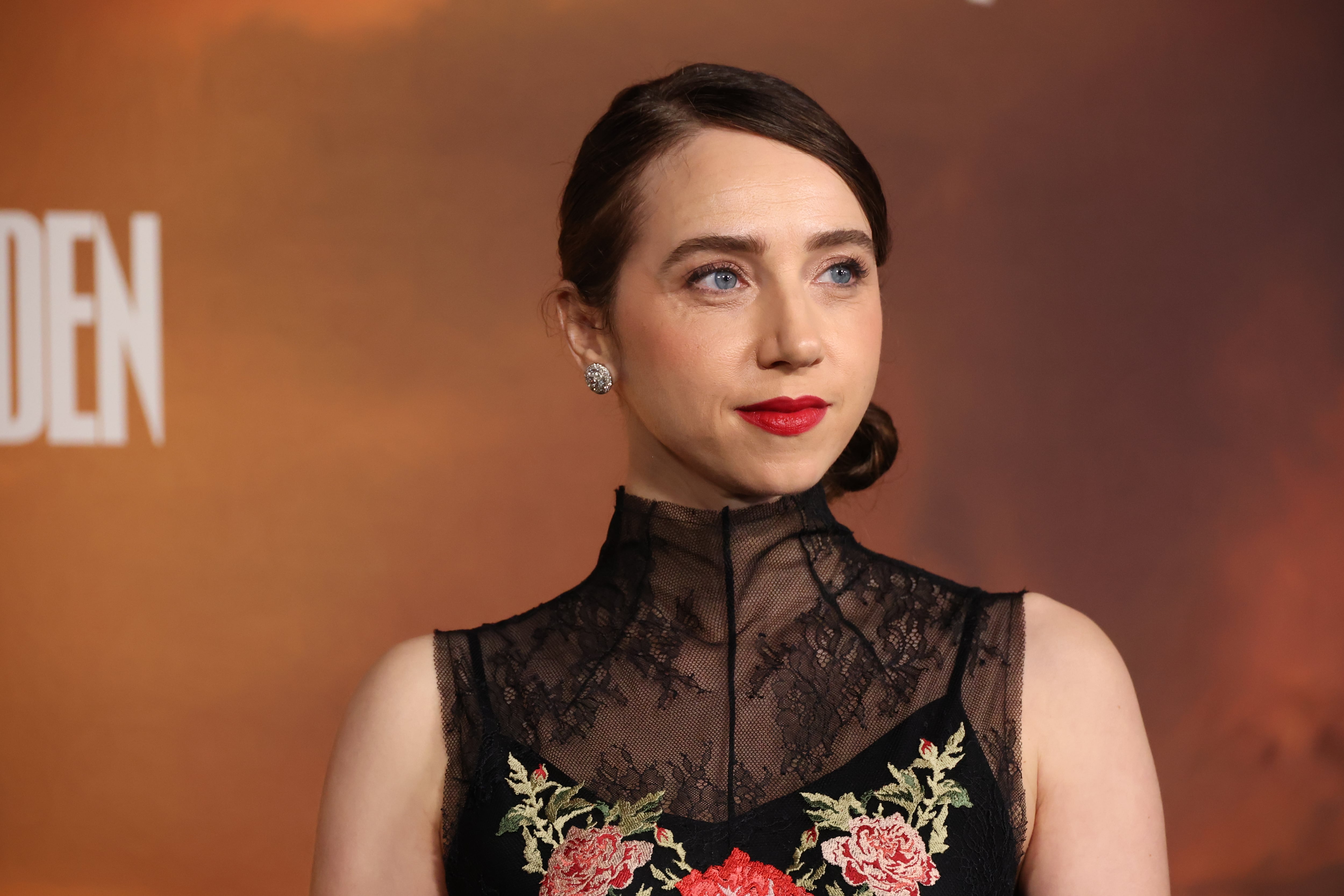
For the past two decades, Zoe Kazan, 43, has built a low-key career, moving between independent films and more ambitious projects. The former include Ruby Sparks (2012), a comedy she also wrote and produced. The latter include hits such as She Said (2022), in which she starred alongside Carey Mulligan as one of the New York Times reporters who exposed Harvey Weinstein’s abuses.
Smart TVs will be forced to power up more slowly under plans to align Britain with the EU's Net Zero rules capping the power usage of devices on standby.
Prime Minister Andrej Babiš’s government has advanced legislation replacing independent funding for Czech public broadcasters with state budget allocations, despite protests, warnings from European media organisations and concerns that the changes could expose journalists to political interference.
The Czech government has taken a further step towards fundamentally restructuring the country’s public broadcasting system, pushing controversial legislation through its first parliamentary reading after an extraordinary overnight session that triggered demonstrations and clashes with police in Prague.
In the early hours of Saturday, 24 October, the Chamber of Deputies advanced a government proposal abolishing licence fees for Czech Television (ČT) and Czech Radio (ČRo), replacing them with direct financing from the state budget. Opposition attempts to reject the legislation or return it for revision failed.
The decision represents another stage in the confrontation between Prime Minister Andrej Babiš’s governing coalition and organisations defending independent public broadcasting. Critics argue that the proposed financial arrangements could give successive governments greater leverage over the country’s principal public service media institutions.
Police intervene as protesters confront parliament
Hundreds of demonstrators gathered outside parliament on Prague’s Malostranské Square on Friday, protesting against the legislation and the government’s decision to accelerate its parliamentary consideration.
According to the Czech News Agency’s account of the demonstrations, several dozen protesters attempted to force their way into the parliamentary building. Officers from a special police unit prevented their entry.
Police spokeswoman Eva Kropáčová confirmed that the situation was brought under control without arrests. Demonstrators also confronted SPD parliamentarian Jaroslav Foldyna, requiring police intervention.
Inside parliament, the governing coalition of ANO, Freedom and Direct Democracy (SPD) and the Motorists party imposed limits on parliamentary debate and scheduled the decisive vote for 4.36am.
Of the 177 MPs present, 81 supported rejecting the proposal. The opposition subsequently pledged to continue resisting the legislation during its remaining parliamentary stages.
Financial dependence and political influence
The central controversy concerns the proposed transfer of financial responsibility for public broadcasters from licence-fee payers to the state.
Under the government’s plan, Czech Television would receive approximately CZK 5.74 billion annually, while Czech Radio would receive CZK 2.07 billion.
Combined funding would amount to approximately CZK 7.8 billion, representing a reduction of around CZK 1.4 billion, or 15 per cent, compared with existing licence-fee revenues.
Culture Minister Oto Klempíř, who developed the proposal, maintains that budget financing is an established European model. The government argues that abolishing the combined CZK 205 monthly household charge would reduce costs for consumers without compromising editorial independence.
However, the dispute extends beyond the immediate financial reductions.
Under the existing system, licence fees provide broadcasters with revenue that is substantially separated from annual government spending decisions. Financing through the state budget introduces a different relationship between broadcasters and political authorities.
Even where allocations are established by legislation, future parliamentary majorities can amend the law governing those payments.
The accompanying documents explicitly acknowledge the possibility of increased dependence on the state and political pressure without adequate safeguards.
European organisations warn of consequences
The controversy has attracted criticism from international organisations responsible for defending independent journalism.
In a joint statement issued on 23 October, the European Broadcasting Union, Reporters Without Borders, International Press Institute and other organisations warned that the accelerated parliamentary process was incompatible with the thorough scrutiny required for such legislation.
They highlighted the proposed funding reductions and questioned whether the new arrangements would sufficiently protect the broadcasters’ operational and editorial independence.
Their objections have a specific legal foundation.
Article 5 of the European Media Freedom Act requires EU member states to provide public service broadcasters with adequate, sustainable and predictable financing, based on transparent and objective criteria.
Budget financing is not prohibited under EU legislation. However, financial arrangements must contain safeguards against political interference.
As EU Today previously examined, the European Media Freedom Act establishes legally binding obligations intended to prevent governments from undermining independent journalism through institutional or financial pressure.
The Czech proposal therefore raises questions about whether its safeguards and funding provisions satisfy those requirements.
Journalists prepare further industrial action
Employees of Czech Television and Czech Radio have announced a nationwide strike for Tuesday, 3 November, organised by the Veřejnoprávně initiative.
The industrial action follows an earlier warning strike in June, when journalists and other broadcasting employees protested against the government’s plans.
A further public demonstration is scheduled for Sunday, 25 October, in Prague’s Old Town Square.
Opposition politicians have drawn comparisons with political intervention in public broadcasting elsewhere in Central Europe, particularly Hungary and Slovakia.
The government rejects accusations that it intends to nationalise public broadcasters or interfere with their editorial decisions.
For the moment, the legislation remains subject to parliamentary scrutiny and has not become law. Its passage would nevertheless change the financial relationship between the Czech state and two of the country’s most established news institutions.
The central question is whether future governments would acquire additional means of influencing broadcasters through their budgets, even without exercising direct control over individual editorial decisions.
Show features live chat sessions with breeders, a podcast and updates on dogs’ progress from birth to weigh-ins
A 24-hour Finnish TV show dedicated entirely to the live progress of a dog and her six newborn puppies is drawing millions of viewers.
As well as a 24-hour webcam, Pentulive (Puppy Live) includes live evening chat sessions with the dogs’ breeder, a podcast and an instant notification service that updates followers on the puppies’ progress – from their birth to weigh-ins and first nail trims – for eight weeks.
Hello and welcome to another edition of Free Agent! Be careful when you're behind the wheel this week.
College football is great! Surely you want even more of it, right? We'll get into the problems with a 24-team College Football Playoff (CFP), then talk about the NBA's new betting restrictions, and close with thoughts about President Donald Trump's new government golf course plans. And just in case you don't make it to the end, here's a shortcut to our survey on who you're rooting for in the World Series.
But first, many congratulations to "Gary's 1st Entry" on outlasting everyone else in our NFL Survivor group. There's no prize other than this shoutout, so be sure to print out today's newsletter, highlight this paragraph, and frame it in gold. Perhaps Gary can keep going and challenge Primetime Paulie Rothrock's 13-game winning streak from last season.
Locker Room Links
Both teams in the WNBA Finals left the court for the National Anthem—unclear if this was a protest or just part of the pregame routine. WNBA policy doesn't require teams to be on the court for the anthem, but does require a "dignified posture" if they are.
In the thick of a playoff race, three Zambian women's soccer players are separated from their National Women's Soccer League teams because they played in Uganda, and the Centers for Disease Control and Prevention has a three-week restriction on reentry due to Ebola. (There are zero active Ebola cases in Uganda and Zambia.)
This is the kind of excessively nerdy fantasy football content I live for. (Yahoo remains the best fantasy sports system. ESPN's is trash, relying on name recognition to get by.)
I figured out how ESPN calculates fantasy football win percentage, it's bad!
ESPN made a stats 101 error when calculating their win percentage which leads to horribly miscalibrated numbers. ( thread) pic.twitter.com/bDypgjelKj
Saturday was one of the best days of college football ever—or perhaps it could have been, if we thought any of the five top-10 teams who took a loss were now certainly out of playoff contention. Instead, Georgia, Notre Dame, Indiana, Alabama, and Texas are all still very much alive in the championship hunt.
Today was one of the craziest days in college football history:
- First time ever five teams ranked in the top 7 lose in a single week - First time the No. 1-ranked team loses to an unranked team in consecutive weeks since 1990 - First time Texas, Alabama, and Georgia all lose… pic.twitter.com/psVRoM5s5b
With two losses, Alabama and Texas are at least on the edge of the playoff bubble with perhaps no more room for error. But that's only true under this year's CFP format. Next year, the playoff is almost officially set to balloon to 24 teams, making the chaos of a day like Saturday matter even less.
Fans will always celebrate a huge upset or major rivalry win, of course—Tennessee fans don't need playoff stakes as an excuse to get drunk when they beat Alabama. But the joy of a rivalry win in the past was always bigger because of the off-field stakes, too—the first loss for your rival meant they probably wouldn't be national champions, the second meant they'd be out of the Rose Bowl, a third meant you could be proud your team sent them packing for the Alamo Bowl. Winning is great; ruining your rival's season is even better.
With 24 teams in the playoff, the joy is a bit diminished because it will take four or possibly five losses to knock a powerhouse program out of the CFP (Iowa, at 8–4, was ranked 23rd by the committee before last year's playoffs). It'll be a bit like a rivalry win in college basketball—we win, you suck, congrats on getting a slightly worse NCAA Tournament seed.
In the business of sports, more inventory for TV is king, and the powers that be think more teams playing more playoff games will make more money. At Free Agent, we don't begrudge institutions for trying to make more money—we all do the same every day. But it's not clear abandoning conference championship games will be the answer, especially when the Big Ten and SEC championships apparently outdraw many playoff games.
ESPN and the power conferences know fans aren't happy about it—just look at allthechatteronline, and how the crowd at BYU reacted when College GameDay discussed expansion on Saturday (especially when BYU would probably benefit from expansion!). They're betting enough people will watch to make the expansion profitable anyway. The last hope is that fans get loud enough to bully them into abandoning expansion—which only occasionally works, sometimes on things small (putting the trophy logo on the court for the NBA Finals) and large (soccer's European Super League). If any powerhouse considers going independent, that might shock leaders into a rethink too.
Almost every sport I know is adding more: more teams, bigger playoffs, more for TV. As fans, we still eat it up, of course—much to the excitement of the TV executives who are selling commercial time to the people trying to reach us, the viewing public. (The only counterexample is the MLB proposal to cut eight games from the regular season—I'd love to see each sport I follow cut its season by about 25 percent to make regular season games matter more, so I'm interested to see how this goes.)
Perhaps I'm biased because my favorite team, Michigan State, is a dumpster fire—they could expand the playoff to 64 teams and the Spartans still wouldn't deserve a bid. I personally don't have a whole lot at stake in the playoff format now or anytime soon. But as a neutral, the chaos of Saturday might have been viewed with my full attention in the past—instead, this year I just had it on in the background while I played video games.
Sports Are Regulating Bets Without Politicians, Part 3
After last year's major betting scandal, the NBA asked sportsbooks late last week to stop offering certain types of potentially problematic bets. The sportsbooks, which the NBA says handle roughly 99 percent of the U.S. betting market, agreed. No politician or regulation was necessary to solve the problem.
No longer can bettors bet on unders for a bit player who likely won't get more than 12 minutes of playtime. Bettors also can't wager on the opening tip or on players to miss specific shots. Parlays that string together under bets on the same player's statistics are also out (this one seems a bit harsh—if you just want to bet on a certain major player to have an off night, you can bet on stats separately, but not in a big multiplier parlay). Bets on players who have two-way contracts between the NBA and G League were already banned.
This all comes on the heels of similar developments last year in the NFL and MLB. While some people want to ban prop bets altogether, the NFL asked sportsbooks to eliminate bets in four different categories. Sportsbooks largely agreed or weren't offering those bets anyway. MLB, in light of some pitching-related scandals, asked for a $200 limit on pitch-specific bets and to keep them out of parlays—sportsbooks agreed to that too.
As I wrote last year, "Ideally, this is how the regulation of the sports betting industry should go….These approaches are catching the nuances of what works for both the leagues and for sportsbooks without the heavy-handed approaches of politicians who would use an axe to ban all prop bets instead of a scalpel to limit problematic bets."
It's important to note leagues are able to do this because they have commercial partnerships with the sportsbooks. Otherwise, the leagues would have no direct leverage over a sportsbook offering a bet the league doesn't like. Keep that in mind the next time you see people bemoaning a league partnership with a sportsbook or a prediction market.
Trump's Golf Course Plans Have People Teed Off
President Donald Trump has new plans for the National Park Service golf course at East Potomac—again. Last time new plans were announced, the site plan still had its historic miniature golf course, a par-3 course, and the existing road still ringing the property for bicycling, running, etc. Much of the public didn't like that plan anyway—now, none of that remains in the latest plans, just 18 holes of golf and a driving range.
What's really going on here seems quite clear to me: Like so many other things going on in the second Trump administration, this is a scheme to enrich the Trump family. The plan?
Step 2: Use taxpayer dollars to pay for renovation of the course into, allegedly, a championship-level course capable of hosting major golf tournaments (no matter that the area has next to zero parking, is a mile from the nearest Metro station, and only accessible by narrow roads not meant to handle tens of thousands of spectators).
Step 3: Have the federal government sign a sweetheart deal with, who else, the golf division of the Trump Organization to operate the course on extremely favorable and profitable terms.
If you're wondering why the Trump administration is doing something, corruption is usually a good guess.
The arguments for the course don't make much sense. There are plenty of adequate, competitively priced golf courses in the broader Washington, D.C., area. Several of them are already capable of hosting professional golf tournaments. Between LIV Golf and the PGA Tour, there were three tournaments at three different courses in the last couple years. The 2030 PGA Championship and 2037 Ryder Cup will happen just over the D.C. line in Bethesda, Maryland.
East Potomac is not the nicest course around, no thanks to the legal limbo it's been in for the past year. But if the National Park Service is going to, for some reason, be in the business of running a golf course, it should be a course that emphasizes and teaches its history instead of the pipe dream of a corrupt madman.
Who Ya Got? 2026 World Series Edition
For the first time in 46 years, we've got a World Series contested by two teams that have never won it before. Brewers against Rays is also a rare instance of the top seeds from each league outlasting the randomness of the MLB playoffs to make the World Series. And before you trot out the tired line that "TV executives must be seething about the small market teams" remember that they care much more about getting a playoff series that goes seven games with close results in each game (What did I say above? Inventory rules all!).
Myha’la Herrold, the Celebrity Traitors star banished on the show last week, has accused the reality TV programme of having "unconscious racial and cultural bias" in its format.
What moves the star of Jackass to risk his life for our entertainment? This “very serious investigation” involves interviews with friends and family, a surf trip to Malibu, a gag with a fake raccoon, and a stop at In-N-Out:
He nosed the car into the drive-through line, drawing stares as he nosed—some for the vehicle, some for the driver. Mostly male stares. A teen-age boy stepped up to the passenger window and leaned in to take his order.
“One hamburger with tomato, lettuce, and mustard,” Knoxville said. “Fries, please. And a cup of water.”
“Onion?”
“No, sir.”
The teen-ager squinted. “You look familiar. Are you famous, by any chance?”
“Actually, completely by chance!” Knoxville improvised.

 Login








 thread)