Ukraine has finished its share of FREYJA, a joint European project to build a system against ballistic missiles, President Volodymyr Zelenskyy told journalists on 17 October, Ukrinform reported. He added that Kyiv wants to test the first system as soon as possible.
Ukraine still relies on US-made Patriot interceptors to stop Russian ballistic missiles. Zelenskyy told ABC News on 23 October that Ukraine had received only 24 of them from the US in three months, while it needs 350 a month on average. FREYJA can not close that gap soon, because the system is still in development.
Ukraine’s missile and launcher, partners’ radars and sensors
Zelenskyy said the partners’ share of the work, with 10 countries taking part, is still underway. He also said he had discussed the project with French President Emmanuel Macron, and he named Norway as a key partner.
Explore further
Ukraine’s missile, Europe’s sensors—FREYJA enters active development on an early-2027 clock
Zelenskyy did not say what the partners still have to deliver. In August, he said Ukraine is capable of making the missile and launcher, while partners would supply critical components such as radars and sensors.
One part not made in Ukraine
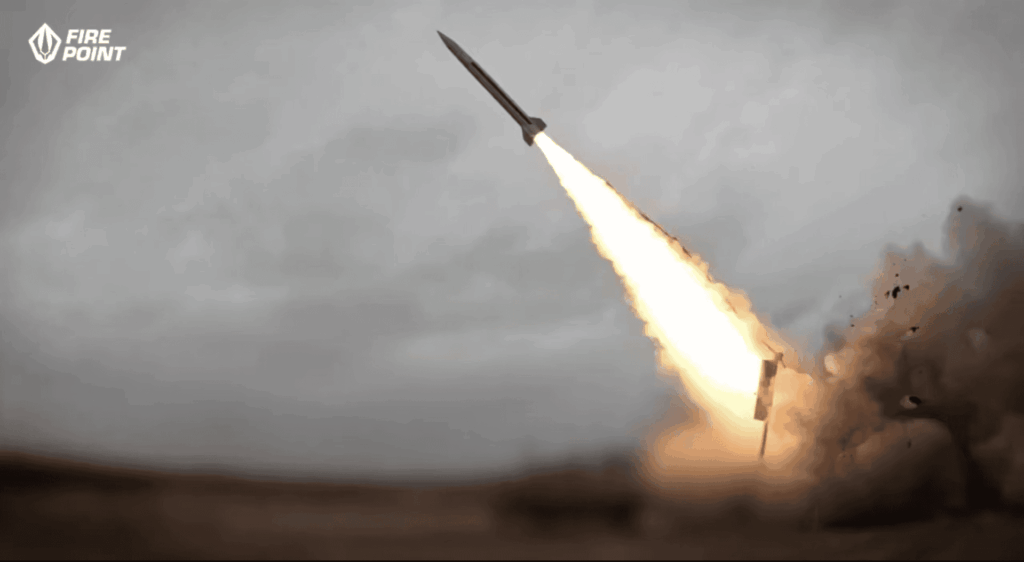
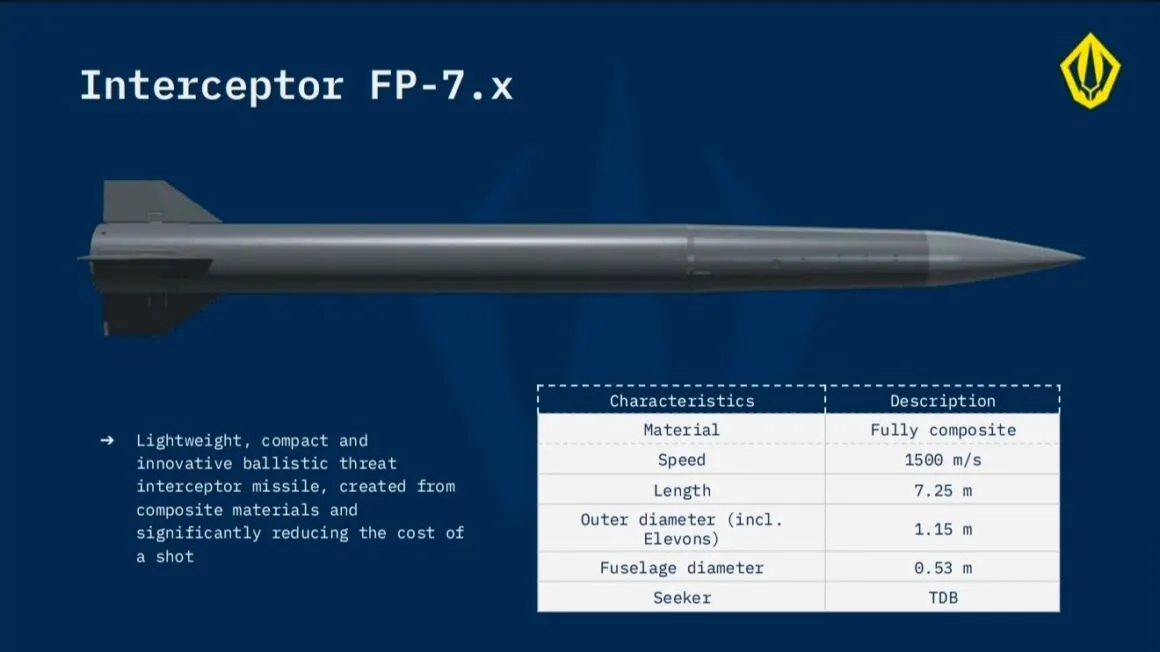
In May, Fire Point co-founder and chief designer Denys Shtilerman said all components of the FP-7.x interceptor are made in Ukraine except one. “As for that one part we don’t manufacture in Ukraine, we’ve contracted a certain quantity of it. We already have it,” he said, but did not name the part.
In June, however, Shtilerman told the Financial Times that mass production depended on an infrared seeker Fire Point hoped to get from Germany’s Diehl Defence. Neither statement says whether the seeker is that one part.
Fire Point co-founder Iryna Terekh said in September that FREYJA was going through testing and technical integration in combat conditions in Ukraine. The company plans its first intercept of a ballistic target by mid-2027.
The official timeline has since moved closer. On 21 October, Zelenskyy wrote that officials had identified where to speed up so FREYJA reaches testing by the end of this year. A test is still a step short of an intercept.
O prefeito de Ivinhema (MS), Juliano Ferro (PL), manifestou indignação após a filha, simpatizante do Partido dos Trabalhadores (PT), sofrer hostilização em via pública por parte de um homem identificado como apoiador do bolsonarismo.
A atitude contra a jovem provocou uma reação do chefe do Executivo municipal, que saiu em defesa da filha diante do episódio marcado por divergências partidárias. O caso expôs o impacto dos confrontos ideológicos nas relações pessoais e familiares.
A ocorrência voltou a colocar em evidência os efeitos da polarização política no Brasil e a necessidade de respeito entre cidadãos com posições ideológicas distintas. O episódio ressalta a importância da convivência democrática, mesmo diante de diferenças partidárias.
"Have you just started studying?" a tall, smiling man in a suit asked me.
Although I was in a university building, I wasn't there as a student. I was struggling to find a conference room for a work-related meeting — one that, I soon realized, he was also attending. Of course he was.
"Oh, you just look so much younger," he said after he realized we were colleagues. Maybe it was a compliment, but it didn't feel like one to me.
I have countless examples of people perceiving me as half my age, from movie-theater cashiers trying to sell me children's tickets to police officers on the street asking me where my parents are.
There have been several times when I arrived at a youth support group for my job, but the receptionist assumed I was one of the teen clients. It doesn't exactly inspire confidence.
I'm 30, but between my youthful features and my 5-foot-1 height, I am often told I look like a teenager. Many people consider looking young a dream, and it's even a goal for skincare aficionados.
In reality, though, I believe it's made parts of my life — especially my professional life — considerably more difficult.
I've found it's tough to be taken seriously when you look half your age
I don't enjoy regularly being mistaken for a 15-year-old.
Courtesy of Ayman Eckford
I have several years of experience providing peer support for individuals with autism and ADHD; helping develop mental-health programs; and leading projects addressing issues faced by refugees, the LGBTQ+ community, and people with disabilities in several countries.
Often, before I've even had the chance to properly introduce myself when interviewing for a job or meeting new people, I'm concerned my appearance has already shaped how I'm perceived.
Looking like a teen feels like an even bigger obstacle when I'm applying for higher-level and leadership roles, especially because most of the work I do involves peer support or management.
A manager is expected to be wise and knowledgeable — qualities not usually associated with youth. And in my field, a peer supporter is someone who has enough lived experience and training to help others navigate situations they have experienced firsthand.
But would a 70-year-old really take advice from someone who looks like their grandson? I don't know, but I do know that appearance and age aren't the same thing as experience.
I try to look older to be taken more seriously, but I wish I didn't have to
I'm worried about how looking like a teen has made it more difficult for me to get certain jobs.
Courtesy of Ayman Eckford
Over time, I've developed little tricks to try to avoid unwanted questions (or surprised reactions) about my age at interviews and at work.
Sometimes I wear platform shoes to appear taller or deliberately choose clothes that make me seem more mature — for example, wearing a plainer dark shirt rather than a colorful one, even though both would be equally appropriate for a meeting.
I also find myself consciously steering conversations with work colleagues toward things people associate with adulthood. I'm more likely to mention politics or current affairs than "The Hunger Games" or "Doctor Who," even on days when I would much prefer to chat about sci-fi than the news.
Sometimes I offer to show my ID as soon as I arrive for a job interview, hoping that "proving" my age will immediately change how potential employers perceive me.
In a perfect world, though, people would be judged in the workplace for their actual skills rather than their appearance and age, real or perceived. Age doesn't automatically come with wisdom, and youthfulness isn't equal to inexperience.
I've known teenage peer-support volunteers who were fantastic at their work, and I've also encountered professionals decades older than me who were far from the best in their field.
For now, though, I'm willing to play the game when I need to. I'll wear platform shoes, put away the "childish" T-shirts, and show my ID — whatever it takes to be taken seriously as a professional adult.
An animal stepped on a mudbrick while it was still soft and left its paw prints in the clay. The brick went into the wall of a house. The house burned and collapsed. About 4,000 years later, archaeologists pulled the brick out of the rubble, prints still visible. Turkey’s Minister of Culture and Tourism, Mehmet […]
Europe’s electricity market recorded substantial regional differences on Tuesday, 27 October, with average wholesale prices ranging from approximately €6 per megawatt-hour in northern Sweden to more than €255 in Romania.
The figures reveal a persistent difficulty for European energy policy: although the continent has an increasingly interconnected electricity market, businesses and consumers remain exposed to very different underlying wholesale costs depending on location.
According to European day-ahead electricity market data, Sweden’s SE2 bidding zone recorded an average of €6.23 per megawatt-hour, while Finland stood at approximately €6.65. Romania reached €255.20, roughly 41 times northern Sweden’s price. Bulgaria registered approximately €254, Hungary €241 and Greece €225. Germany recorded approximately €155, Belgium €160 and France €162.
These are wholesale prices for delivery on 27 October, not final bills for households or businesses. Their differences nevertheless raise questions about how effectively Europe’s electricity networks distribute power from areas of lower-cost generation to those facing greater costs.
Why a common market produces different prices
European electricity trading is organised through interconnected national and regional markets. Cross-border capacity allows relatively inexpensive power to reach regions where demand is greater or local generation is more expensive.
When transmission capacity is adequate, neighbouring prices can converge. Physical networks, however, have limits. Congested interconnectors can prevent additional imports even when large price differences exist.
Other influences include availability of power stations, renewable output, fuel prices, consumption and system stability. Regions with substantial hydropower, nuclear generation or strong renewable production may experience comparatively low prices. Markets relying on gas-fired generation can be more expensive when gas plants are needed to satisfy the final increment of demand.
The result is a market responding to common European conditions but still shaped by local generation and transmission constraints.
Southeastern Europe’s structural constraints
The European Union Agency for the Cooperation of Energy Regulators, ACER, has repeatedly examined the causes of regional price divergence. In its 2026 assessment of cross-zonal electricity trade, the agency considered unusually high prices and limited access to lower-cost power in southeastern Europe.
Constraints include available cross-border capacity and shortages of flexible generation able to respond to changing renewable output, especially in the evening. Countries including Greece, Bulgaria, Romania, Hungary, Croatia and Slovenia have encountered substantial regional differences.
Those findings do not prove the cause of each price movement on 27 October. They do, however, explain why disparities can persist despite common market rules. ACER has advocated improved coordination among transmission operators, more effective use of existing networks and additional flexibility through storage and demand management.
Industrial consequences of expensive electricity
Energy-intensive industries, including steel, chemicals and fertiliser production, are particularly sensitive to electricity costs. Where contracts are exposed to wholesale markets, sustained regional price differences can influence output and investment decisions.
The relationship between wholesale prices and bills is not immediate. Firms may hedge prices, use long-term contracts or produce their own power. Network charges, taxes and government support also affect the amount paid. Still, persistent market differences can shape industrial competitiveness.
As EU Today reported, EU energy ministers are due to examine proposed changes to electricity network charges and market administration on 29 October. Network tariffs are distinct from wholesale prices, but both affect total electricity costs.
Renewables and the need for flexible networks
According to ACER’s energy-market monitoring, renewable sources represented around half of EU electricity generation in 2025. Solar energy can reduce prices during the day, but output falls sharply towards evening, sometimes requiring more expensive power stations to increase generation.
This increases the value of storage, flexible production, responsive demand and international connections that can balance surpluses and shortages between regions. Yet major transmission lines can take years to complete owing to planning, permitting, investment and construction requirements.
The priority is therefore not simply to install more renewable capacity. Europe’s grids and supporting technologies must be capable of moving and using that output efficiently.
What the price divide reveals
A single day’s wholesale prices should not be mistaken for long-term average electricity costs or a permanent competitive advantage. Nevertheless, the persistence of regional disparities documented by regulators shows the problem extends beyond isolated daily volatility.
For EU institutions, the question is whether further market integration can make energy more affordable while preserving incentives to invest in generation and transmission. National governments must balance security of supply, infrastructure financing and industrial competitiveness.
Electricity trading across Europe is increasingly integrated. The physical systems supplying it remain considerably less uniform. Until those constraints are addressed, the price of power will continue to reflect geography as well as the underlying cost of energy.
Greens say Labour has ‘no respect for young people’ amid reports chancellor will pause equalisation of minimum wage for under-21s with that paid to older workers
Jonathan Reynolds, the business secretary, has not contested reports saying that, in the budget tomorrow, John Healey, the chancellor, will pause the process of equalising the lower national minimum wage paid to people under the age of 21 with the more generous national living wage that applies to older workers.
In an interview on the BBC this morning, Reynolds was asked to respond to a story suggesting the equalisation process has been put on hold because of concerns about youth unemployment.
John Healey will announce plans to increase the minimum wage by nearly 4% but slow the rise for young people after warnings that they are being priced out of jobs.
The Times has been told that the national living wage, which applies to those aged 21 and over, is expected to rise from £12.71 to around £13.20 – an increase of 3.9%.
The manifesto pledge on equalisation still applies, but it was always clear it would happen over time and we would take into account, as the minimum wage uprating each year always does, the relative strength of the labour market and other pressures …
Of course, you want not just good wages, but good work. And the way this has always been done – it is a balance of making sure the pressures on the labour market are taken into account. That is the approach you will see confirmed [in the budget].
Anyone doing a day’s work, needs to be paid the same rate for the same job. A young person’s rent and food bill is no less because they are young, so they need to receive the same wage.
Healey and Burnham are now breaking a manifesto pledge to young people that even Starmer managed to keep. Labour have no respect for young people, who appear to just be there for cheap labour for the wealthy and their corporate donors.
[It] wouldn’t be my cup of tea, but I wouldn’t ban anybody from doing so … I don’t want us to get into a world of cancel culture.
I’m not going to have run a party where we say you can’t talk about that person or that person. We have to be sensible about vetting. And we are.
La posición defensiva de los sindicatos estudiantiles fue adoptada tras una reunión con el primer ministro, Sébastien Lecornu, en la que se presentaron varias medidas orientadas a responder a las reivindicaciones estudiantiles.
It's relentless. Newspapers run stories declaring the glorious liberation of mid-life divorce while Hollywood and Netflix get in on the act. Why are we all being encouraged to break up our families, asks Joanna Gray.
The attack is "part of a larger campaign of sabotage operations attributed to the Russian Federation in Europe," according to the Romanian Intelligence Service.
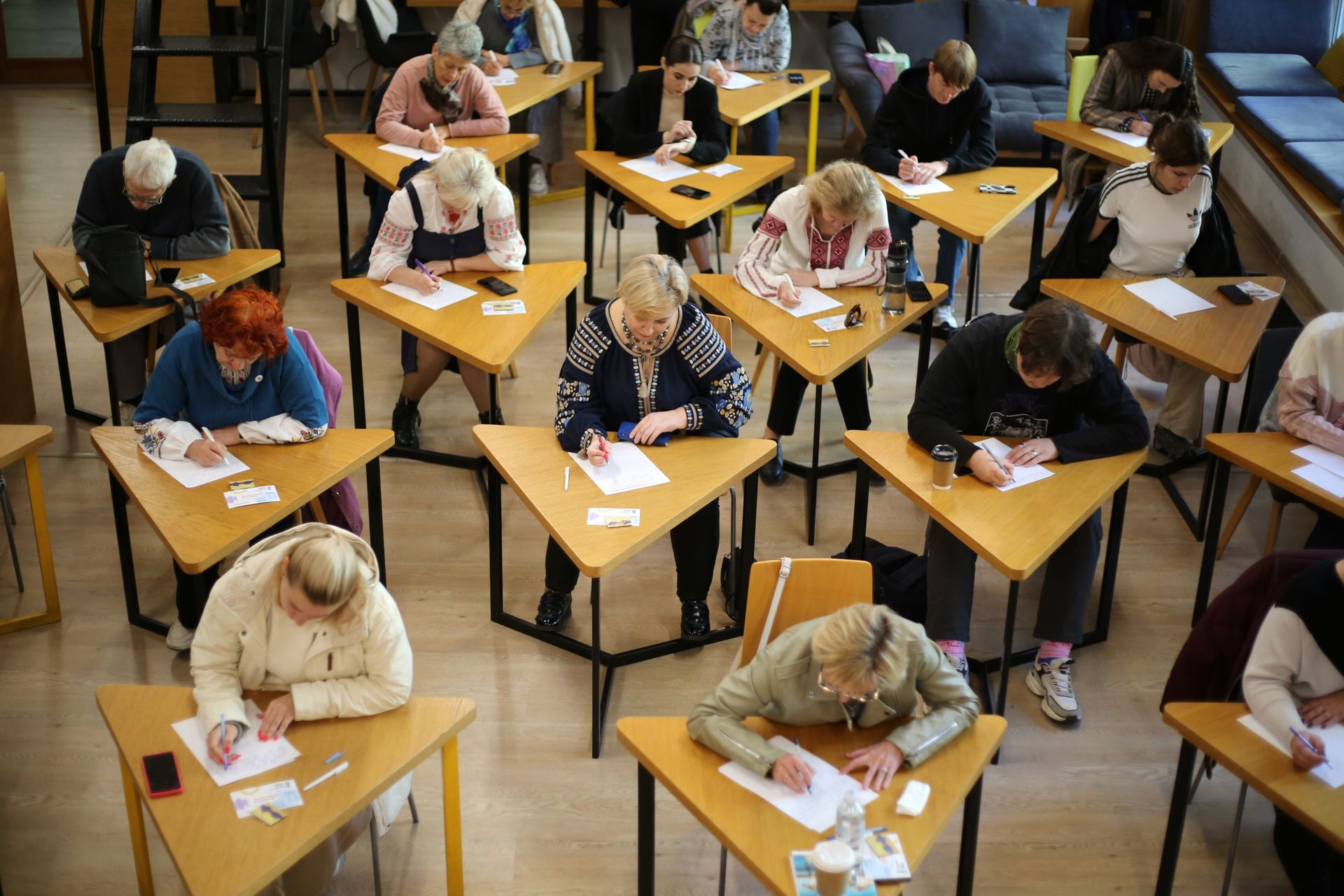
As it turns out, dictation exercises are not just for schoolchildren. On Oct. 27, hundreds of thousands of Ukrainians — from diaspora communities abroad to service members on the front lines — will take part in an annual tradition: listening, writing, and testing their mastery of the Ukrainian language.
'Fresh Off the Boat' star Randall Park is the biggest name in this adaptation of the web series of the same name from production company American High.
Les États-Unis soutiennent traditionnellement le gouvernement israélien, mais jusqu’à quand ? L’image d’Israël dans l’opinion publique américaine s’est ternie de manière considérable depuis la guerre à Gaza… Et même si Benyamin Netanyahu pourrait être écarté demain lors des législatives israéliennes, de plus en plus d’Américains, surtout dans le camp démocrate, questionnent la nécessité de cette alliance entre les deux pays.
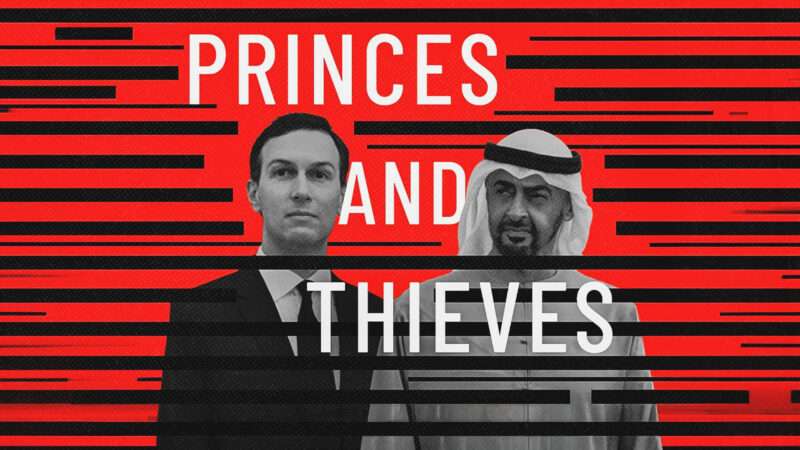
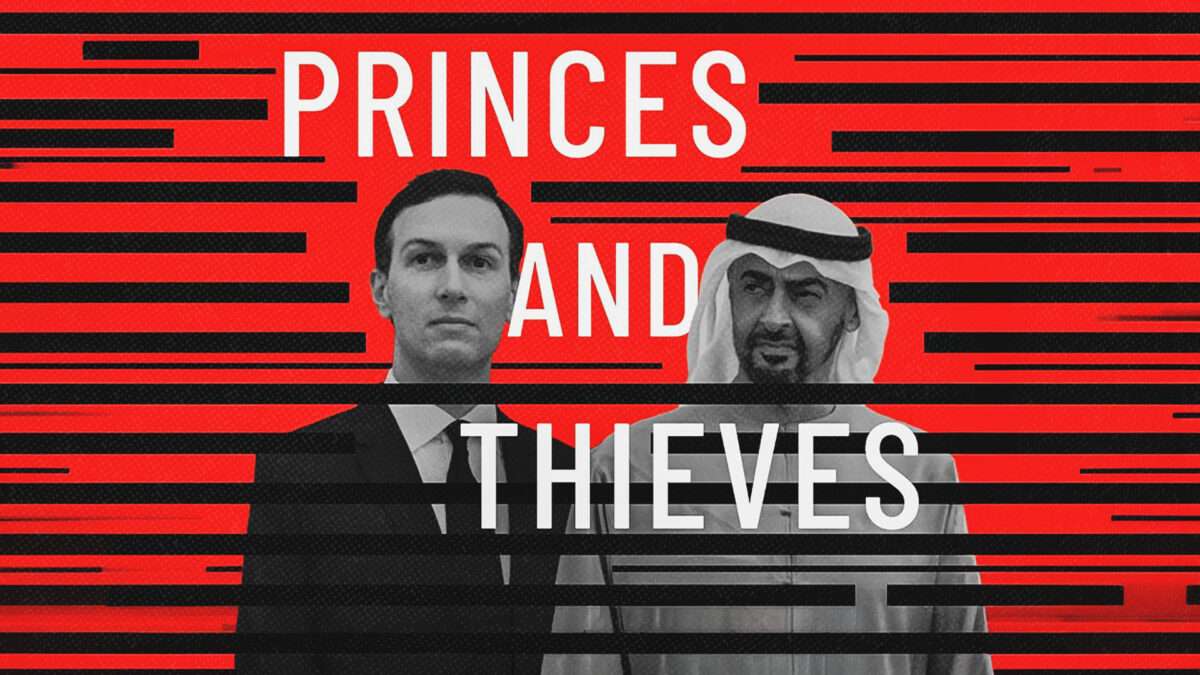
Princes and Thieves, a new book by investigative journalist Matthew Cole, may open a rabbit hole into financial connections between Middle Eastern dictators and President Donald Trump's family. Cole accuses Emirati monarch Mohamed bin Zayed (MBZ) of sending billions of dollars to various mercenaries and political operators, including Jared Kushner, son-in-law to President Donald Trump. Cole's reporting combines well-documented connections with secondhand accounts from anonymous sources.
On Thursday, Vanity Fairpublished an excerpt from the book, reporting that Dutch military intelligence hacked into Kushner's phone in 2018 and discovered hundreds of millions of dollars in bank transfers connected to MBZ. Also on Thursday, Kushner published a letter from his lawyers to Cole categorically denying the "incredible and false" allegations in the book. "Mr. Kushner never accessed foreign accounts and always followed all rules and regulations and only pursued goals that were in the best interest of the United States as directed by the President of the United States," they wrote.
Cole had originally written on his blog that the book was scheduled for release on October 27, but the publication date was pushed forward over the weekend.
The book purports to tie Kushner to a vast web of Emirati influence operations around the world. In Cole's telling, which matches other journalists' accounts, MBZ wants to reshape the Middle East and eastern Africa into an alliance of U.S.-backed dictatorships, where "tolerance" is enforced through high-tech surveillance and "democracy" is a synonym for terrorism. MBZ's use of mercenaries in pursuit of these goals is well-documented. So is Kushner's personal affinity with the Emirati monarch and his business ties with the Arab monarchies.
Soon after Trump won the 2016 election, MBZ held a widely reported meeting with Kushner. According to the book—and according to much of that earlier reporting—the monarch complained about the Obama administration's failure to back Arab regimes against popular revolutions, its decision to end the Iraq War, and its diplomacy with Iran.
Going much further than past reporting, Cole now claims Kushner was personally involved in MBZ's mercenary operations. MBZ and Saudi Crown Prince Mohammad bin Salman put a collective $2 billion into Emirati and Israeli bank accounts which were managed (but not technically owned) by Kushner, according to Cole's sources. Those same sources claim that parts of this secret "slush fund" went to Libyan warlord Khalifa Haftar, American military contractor Erik Prince, and Cuban hitman Felipe Vidal.
Haftar, a former CIA asset, became a general in Libya's 2011 revolution and then attempted to overthrow the new government with Emirati backing in 2014. Despite a 2020 ceasefire, his forces continue to control much of Libya. Prince, founder of the military contractor formerly known as Blackwater, moved to the UAE and helped build a secret army of Colombian mercenaries. He sued Cole for defamation after Cole reported on Prince's role in helping Haftar, but a judge threw out the case. Cole's sources claimed that Vidal, a self-described "hit man," helped the United Arab Emirates (UAE) fake an Iranian attack on oil tankers in May 2019, meant to provoke Trump into war.
Kushner's lawyers have denied any relationship with any of those three men, apart from a single meeting with Prince after the 2016 election. (According to Cole, both Vidal and Prince refused to comment for the book.) The position of the U.S. government is that the May 2019 incident was a genuine Iranian attack, not an Emirati false flag.
After the Vanity Fair article was published last week, Israeli negotiator Gershon Baskin pointed out in The Jerusalem Post that the Central Bank of Israel "does not offer private banking services to individuals," which would make it impossible for Kushner's money to be deposited in the Central Bank of Israel, as Cole claimed. The book addresses that argument, claiming that the money was deposited "in what would appear to be a government account," with Kushner and Israeli Prime Minister Benjamin Netanyahu jointly authorizing transactions.
The Abraham Accords, which include an alliance between Israel and the UAE, have often been touted as a way for the U.S. to "spend less time and less resources in the Middle East," in the words of Vice President J.D. Vance. But Cole argues that the UAE actually used its alliance to entangle American interests in a future conflict. The book states that Kushner set up "a rainy-day defense fund" for war with Iran, using Emirati money deposited in a separate Central Bank of Israel account.
Cole also claims to have evidence that Kushner was on the take from the UAE's regional frenemy Qatar. In 2017, the UAE and Saudi Arabia issued an ultimatum for Qatar to rein in its foreign policy and blockaded the small nation. The Intercept later reported that Kushner's father had sought a Qatari bailout for the family real estate business just before the crisis, and the Qatari-linked company Brookfield ended up providing the needed investment in August 2018, leading to a congressional investigation into the deal.
Democrats are still digging for information on Kushner's business ties to Qatar, but three sources told Cole that the Qatari royal family authorized and paid for the Brookfield deal. The Qatari government "asked the White House how to resolve the blockade. And the Kushners kept saying, 'We have this great property that needs investment.' Eventually, the Qataris realized the only way to settle the blockade was to buy the building," a former U.S. intelligence officer said.
Kushner's lawyers write that they have "no evidence that Qatar impacted the investment decision. Any suggestion of his involvement in the transaction or any allegation of quid pro quo with the Qatari government is false and defamatory."
Other parts of the book are better-documented. Cole obtained a draft of Prince's autobiography, text messages from one of Prince's colleagues, and emails from Emirati government adviser George Nader, who was convicted of fraudulently funneling money into Hillary Clinton's 2016 presidential campaign. If nothing else, the book is a comprehensive account of the UAE's unofficial empire and its American ties. But the most explosive claims about Kushner's involvement in those activities rest on anonymous sources, making it a matter of Cole's word against Kushner's.
"I considered the responses from Kushner's attorneys carefully and consulted multiple sources about them. During the five years I have spent working on this book, I have tried to keep an open mind, and I am confident that my reporting is accurate. Kushner's lawyers' responses did not change that conclusion," Cole writes in the book's epilogue.
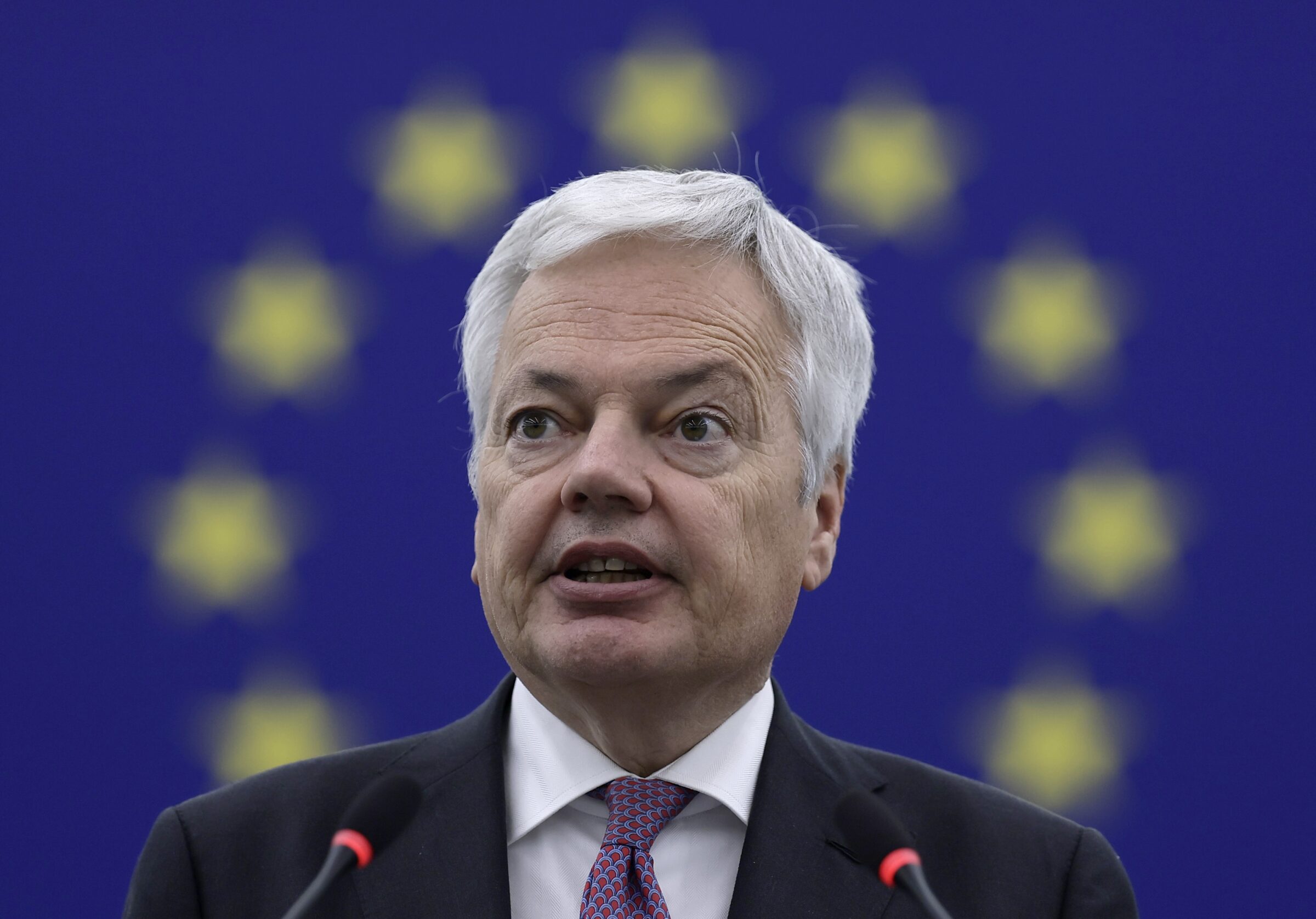
Some Belgian spies have questioned EUobserver’s report of a cover-up in favour of an allegedly corrupt Belgian ex-EU commissioner, while international commentary focused on his possible Russia ties.
EUobserver revealed on Friday (23 October) that Hugues Brulin, a director in the Belgian intelligence service (VSSE), had exchanged WhatsApp messages with ex-EU commissioner Didier Reynders, which may have been part of a criminal conspiracy to block VSSE reports into Reynders’ alleged wrongdoing.
But according to “several” VSSE sources who spoke to Belgian daily Le Soir, Brulin, who had been the number three in the VSSE hierarchy, had been in charge of logistics, Human Resources, and IT, but did “not have the power to block enquiries or put his nose into dossiers”.
Brulin did have access to secret dossiers only in case the number one and two directors in the VSSE were absent, and he had to sign off on special operations, called “BIMs” in VSSE jargon, which included measures such as phone wiretaps or home intrusions to place bugs, but this situation occurred just once during his tenure, Le Soir said.
But even if that was all true, Brulin still used to have the power to end the careers of VSSE officers who had looked into Reynders, on grounds of flimsy infractions, as happened in at least three cases, according to EUobserver’s sources.
“This article feels like a liberation. I don’t know if it really is one, but it feels like one … Thanks again in the name of all the normal, honest, taxpaying Belgians,” one ex-VSSE contact told EUobserver, commenting on last Friday’s revelations.
And besides which, there are allegations that Reynders had other VSSE insiders who might have been better placed to act.
This article continues, but the full version is available only to EUobserver.com subscribers. Visit account.euobserver.com/membership
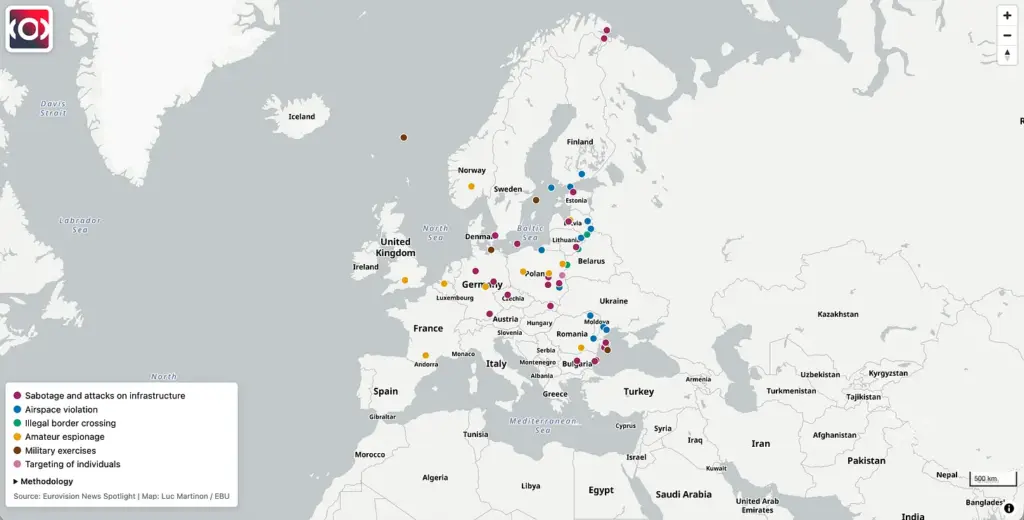
Journalists from 17 European public service broadcasters, coordinated by the European Broadcasting Union’s (EBU) Eurovision News Spotlight network, published an interactive map on 23 October 2026. It documents hybrid incidents linked to Russia across 17 European countries between 1 April and 15 October. Journalists compiled a database of hundreds of reported incidents, categorizing each by type and the source and strength of its alleged links to Russia, then verifying them through open-source research.
The map comes as officials warn the campaign is growing. On 28 September, EU foreign policy chief Kaja Kallas said in Brussels that Russia was planning more acts of sabotage to divide societies and intimidate them into abandoning their support for Ukraine. The points on the map represent an incomplete list of publicly known cases attributed to Russia or suspected of being linked to it, the report states.
The map covers airspace violations, sabotage attempts, “disposable” agents with no formal intelligence training, migration used as a weapon, and Russian military activity near or across European borders. It excludes cyberattacks, influence operations, and espionage by trained intelligence officers.
The EBU calls the result a very conservative estimate, not an official tally. Russia has consistently denied responsibility for the incidents. Many single points represent several incidents of the same type in one area or in quick succession. In Moldova, for example, Defense Minister Anatolie Nosatîi said on 30 September that the government had recorded 84 drone incursions.
Four German incidents are on the map, out of many more
The map shows four incidents in Germany, according to BR.
The four incidents in Germany on the EBU hybrid war map, 2 August to 14 September 2026. Other dots mark Russia-linked incidents in neighboring countries. Map: Luc Martinon/EBU, Eurovision News Spotlight; edited by Euromaidan Press
On 2 August, German authorities arrested a 33-year-old Ukrainian man in Thuringia on suspicion of photographing a Bavarian weapons manufacturer for a foreign intelligence service as part of an alleged sabotage plot.
On 4 August, a drone carrying explosives and a detonator struck the wing of a Ukrainian An-124 cargo plane at Leipzig/Halle Airport but failed to explode.
On 3 September, attackers threw firebombs from a car onto a construction site next to defense firms in Munich, and German security authorities suspect Russian intelligence.
On 14 September, investigators learned of a crashed drone found near the Bundeswehr’s Wunstorf air base.
Internal papers from the new Joint Hybrid Defense Center, seen by Correctiv, record 163 suspected sabotage cases in 2026 up to 19 August. The targets included rail lines, military facilities, substations, and radio masts. The same papers record 1,034 drone overflights of critical infrastructure, military sites, and defense companies, and 25 espionage investigations. The papers cover possible attacks by Russia, China, and Iran, and media did not report a breakdown of the sabotage cases by country.
European leaders sound the alarm over Russian hybrid attacks
On 15 April, Swedish civil defense minister Carl-Oskar Bohlin said pro-Russian groups had moved from denial-of-service attacks to attempts at destructive cyberattacks, including one on a Swedish power plant in 2025. On 1 September, German Foreign Minister Johann Wadephul named Russia as the perpetrator of the Leipzig attack and accused Moscow of “blatant hostility” toward Germany.
On 18 September, French President Emmanuel Macron said Russia’s hybrid attacks would not go unanswered and ordered a plan to protect France’s critical infrastructure. On 1 October, German Chancellor Friedrich Merz said Germany was preparing for new hybrid attacks, “including serious ones.” NATO Secretary General Mark Rutte on 14 October called the attacks a sign of Russian weakness at a press conference in Tallinn and said NATO would react where needed without being “rattled.”
From the 17th to the 20th century, Ukrainian lands were split between empires and states. Their rulers tried to assimilate Ukrainians and block their self-determination by going after what set them apart: their language and culture.
Nobody has an exact count of the bans. Historian Pavlo Hai-Nyzhnyk says there were more than 100 and that the real number is likely higher, because governors issued local bans too.
These measures differed in purpose and reach. Some restricted publishing, schooling, or official use; others suppressed cultural institutions or pushed assimilation. Most served the forced Russification of Ukrainians in the Russian Empire and the USSR. The timeline below is a selection of documented events, not a count of bans.
Russia has not stopped. Since 2014, schooling in Ukrainian has collapsed in the territories it occupies, and in 2025 it removed Ukrainian from the federal school programs it imposes there.
Here are some of the most important restrictions on Ukrainian language and cultural life imposed by the regimes ruling over Ukraine.
Graphic by Ganna Naronina from the article A short guide to the linguicide of the Ukrainian language. Click to enlarge.
17th century
1627: Muscovy. Moscow church authorities condemn Kyrylo Trankvilion-Stavrovetskyi’s Didactic Gospel, a collection of sermons printed in Ukraine in 1619, and order copies burned in Moscow.
1697: Polish-Lithuanian Commonwealth. An act requires tribunal and court decisions in the Grand Duchy of Lithuania to be written in Polish, displacing Ruthenian in those courts.
18th century
1720: Russian Tsardom. Peter I’s decree restricts the Kyiv and Chernihiv presses to approved reprints of church books and requires them to conform to Russian editions, suppressing local textual and linguistic differences.
1728: Russian Empire. Under the Decisive Points (Reshytelni punkty), the legal texts used in the Hetmanate’s courts are to be translated into Russian and compiled into a single code.
1730s: Russian Empire. Under Empress Anna, Kyiv’s archbishop is instructed to replace older locally printed church books with Moscow editions.
1769: Russian Empire. The Holy Synod refuses the Kyiv-Pechersk Lavra permission to print primers in the local language and tells it not to submit such requests again.
1775: Russian Empire. A Russian army destroys the Zaporozhian Sich, the Cossacks’ last stronghold and one of Ukraine’s own political institutions.
1780s: Russian Empire. Samuil Myslavskyi, metropolitan of Kyiv from 1783, insists on literary Russian as the only language of instruction at the Kyiv-Mohyla Academy.
1789: Polish-Lithuanian Commonwealth. The Commission of National Education orders the Ukrainian parish schools of Right-Bank Ukraine Polonized.
19th century
1847: Russian Empire. After suppressing the Cyril and Methodius Brotherhood, a secret society that called for a federation of free Slavic peoples, the authorities ban and withdraw from sale specified works by Taras Shevchenko, Panteleimon Kulish, and Mykola Kostomarov.
1859: Austrian Empire. Austrian officials back a plan to replace the Cyrillic alphabet used for Ukrainian in Galicia with a Latin one. Ukrainian opposition defeats the plan in what became known as the “alphabet war.”
1862: Russian Empire. The authorities close the Sunday schools, free schools for working adults and young people, including Ukrainian ones. They begin reopening under tighter control in 1864.
1863: Russian Empire. Interior Minister Pyotr Valuev’s circular tells censors not to approve Ukrainian religious, school, and popular-reading books, while still allowing fiction under censorship. It claims that most Little Russians themselves argue that “there was not, is not, and cannot be any special Little Russian language.”
1864: Russian Empire. The 1864 statute requires Russian as the teaching language in the elementary schools it regulates.
1869: Austria-Hungary. Polish becomes the internal language of administration and the courts in Galicia. The 1867 school arrangements had already strengthened Polish dominance, while leaving limited room for Ukrainian-language schooling.
1876: Russian Empire. Alexander II’s secret Ems Ukaz severely restricts Ukrainian publishing and bans Ukrainian publications from abroad, Ukrainian stage performances and public readings, and Ukrainian lyrics printed with music. Exceptions allow historical documents in their original spelling and fiction in Russian spelling under censorship.
1881: Russian Empire. New rules ease parts of the Ems Ukaz: Ukrainian plays may be staged with a governor’s special permission. Theater troupes performing only in Ukrainian stay banned.
1883: Russian Empire. Kyiv Governor-General Aleksandr Drenteln bars Ukrainian theater troupes from performing in the Kyiv, Podillia, Volhynia, Poltava, and Chernihiv governorates.
1910: Russian Empire. A circular from Pyotr Stolypin’s interior ministry tells governors to refuse registration to non-Russian national societies, Ukrainian ones included, and to review existing ones for closure. Kyiv’s Prosvita is dissolved the same year.
1914–15, 1916–17: Russian Empire. Russian occupation authorities suppress Ukrainian institutions and publications in Galicia and Bukovyna. The first occupation brings mass arrests and deportations, the destruction of Ukrainian books, and the arrest of Metropolitan Andrei Sheptytskyi.
1923: Soviet Ukraine. Dmytro Lebid, second secretary of the Communist Party of Ukraine, sets out the “theory of the struggle of two cultures,” which holds that the Russian culture of the city is more advanced than the Ukrainian culture of the village. The party rejects it and adopts Ukrainization the same year.
1924: Poland. Three laws of 31 July make Polish the state language of administration and the courts, keep limited rights for minority languages, and set school rules that favor Polish-Ukrainian bilingual schools over separate Ukrainian ones.
1924: Romania. The primary education law requires citizens of Romanian origin who have “lost their mother tongue” to send their children to Romanian schools. Ukrainian historians say it was applied to Ukrainians in Bukovyna.
1925: Poland. The Lviv Underground Ukrainian University, which had taught clandestinely since 1921, stops teaching after police raids and the Polish state’s refusal to recognize it.
1926: USSR. In a letter to Kaganovich and the Ukrainian Politburo, Stalin attacks Oleksandr Shumskyi and Mykola Khvylovyi and rejects Ukrainizing Russian workers “from above,” while still backing controlled Ukrainization of official institutions.
1932–33: USSR. A secret resolution of 14 December 1932 orders the Ukrainian-language paperwork and press of the North Caucasus switched to Russian at once and its schools prepared for teaching in Russian. In Soviet Ukraine, it puts Ukrainization under tighter party control and demands purges of “nationalist” elements. The repression of 1933 dismantles Ukrainization.
1938: USSR. A decree of 13 March makes Russian a compulsory subject in the non-Russian schools of the national republics and regions.
1947: Poland. In Operation Vistula, Polish authorities forcibly resettle about 150,000 Ukrainians to northern and western Poland, under an assimilation policy that sought to keep them below 10% of any locality.
1958–59: USSR. The school reform expands parents’ choice of teaching language and makes the study of Ukrainian optional in Russian-language schools in Soviet Ukraine.
1960s–70s: Romania and Poland. Romania nearly eliminates Ukrainian-language schooling from the mid-1960s. In Poland, Ukrainian schools and Ukrainian classes shrink.
1972: USSR. The party’s resolution on the USSR’s 50th anniversary promotes the “new historical community, the Soviet people,” an idea first voiced in 1961. Soviet ethnographers wrote that the spread of Russian among non-Russian peoples played the paramount role in forming this community.
1978: USSR. The USSR Council of Ministers orders wider study of Russian in the union republics. Ukraine’s implementing resolution of 2 November requires Russian from first grade in Ukrainian-language schools from the 1980/81 school year.
1983: USSR. A resolution of 26 May gives specified teachers of Russian in non-Russian schools in villages and small towns a 15% pay raise from 1984.
1984: USSR. The school reform resolution of 12 April adds two to three hours of Russian a week in grades 2 to 11 of non-Russian schools.
1989: USSR. The Communist Party’s party platform of 20 September calls for making Russian, by law, the language of the whole country alongside the republics’ state languages.
1990: USSR. The April 1990 law on the languages of the peoples of the USSR makes Russian the official language of the Soviet Union, while letting the republics set their own state languages.
21st century
2014–18: Crimea. Under Russian occupation, schooling in Ukrainian collapses. In 2013/14, 12,694 children studied in Ukrainian in 7 schools and 829 classes; by 2017/18, 318 children did, in one school and 13 classes, the UN human rights office reports, noting the figures conflict in places.
2020: DNR and LNR. The so-called DNR votes to amend its “constitution” on 6 March, dropping Ukrainian as a “state language” and leaving only Russian. The so-called LNR does the same in June.
2022: Occupied Kherson and Zaporizhzhia oblasts. Russia’s Education Ministry says on 12 August that schools in newly occupied areas will teach in Russian, with Ukrainian allowed only as an optional “native” language. Occupation authorities then cap Ukrainian at three hours a week, Human Rights Watch reports.
2023: Occupied Donetsk and Luhansk oblasts. Russia removes nearly all Ukrainian literature from local libraries, most likely destroying it, Ukraine’s National Resistance Center reports. The so-called LNR publishes a list of banned books.
2024: International Court of Justice. On 31 January, the court ruled, 13 votes to 2, that Russia violated the UN convention against racial discrimination in how it ran school education in Ukrainian in occupied Crimea.
2025: Russia. Education Ministry Order No. 729, in force since 15 December, removes Ukrainian language and literature from Russia’s federal primary and lower-secondary programs, the UN human rights office reports. Russia imposes these programs on schools in the occupied territories, where about 582,000 children study, the Almenda center says.
What we changed in October 2026
Editor’s note, 27 October 2026: We first published this timeline in 2017. Like many lists of bans on Ukrainian that circulate online, it repeated some claims that have no document behind them. In October 2026, we went back to historians’ work and to the decrees themselves.
We removed about fifteen entries. Most we could not confirm; a few were not about language. We corrected others where the documents say something different: some bans had exceptions, some dates were off by a year, and the end of Ukrainization came in 1932–33. We replaced the old count of 60 bans, which we could not trace, with a historian’s estimate. And we added what Russia has done to the Ukrainian language in the territories it has occupied since 2014.
If you have a document for something we left out, write to us.
An investigation involving 17 European public-service news organisations has documented hundreds of suspected hybrid attacks across Europe in just over six months, revealing the scale of a security challenge that increasingly extends beyond conventional espionage and cyberwarfare.
The investigation, coordinated by the European Broadcasting Union, examined incidents reported between 1st April and 15th October 2026, including sabotage attempts, arson, airspace violations, suspicious drone activity and the exploitation of migration routes along the European Union’s eastern borders.
Published on 23rd October, the resulting interactive map provides a geographical picture of incidents publicly linked to Russia by intelligence agencies, law-enforcement authorities, government officials or reporting. The degree of attribution varies considerably, however, and many incidents remain under investigation.
The findings point to a fundamental problem for European security: hostile activities can be conducted across national boundaries without necessarily triggering the legal, military or political mechanisms designed to respond to conventional aggression.
Sabotage Without Conventional Warfare
Among the cases examined is an incident in Munich in September, when two Bulgarian nationals allegedly threw incendiary devices from a moving vehicle onto a construction site near several defence companies.
Police arrested the suspects after a witness reported the incident. Bavarian Interior Minister Joachim Herrmann and regional criminal investigators subsequently indicated that political motives were being considered. Investigators reportedly suspected possible involvement by Russia’s military intelligence service, the GRU, although the allegations have not been established in court.
The case illustrates growing concern about so-called disposable agents: individuals recruited to undertake relatively limited operations without formal intelligence training or a longstanding relationship with an intelligence service.
Such arrangements can complicate investigations. Even where perpetrators are identified, establishing a legally demonstrable connection between their actions and a foreign intelligence organisation may prove considerably more difficult.
Germany’s Federal Criminal Police Office has registered a mid-three-digit number of suspected sabotage and reconnaissance cases since the beginning of 2026, according to information provided to investigators involved in the European mapping project.
Only a small proportion have been publicly attributed to Russia. Four German incidents were included in the map, demonstrating the distinction between a broad national caseload and cases meeting the investigation’s publication criteria.
Europe’s Eastern Borders Under Pressure
The geographical distribution reveals substantial activity along NATO’s eastern flank, particularly around the Baltic states, Belarus and the Black Sea.
Incidents include repeated airspace violations, suspected reconnaissance operations and attempts to facilitate unauthorised border crossings. Lithuanian authorities have accused Belarus of deliberately exploiting migration as an instrument of political pressure.
Commercial shipping has also become increasingly exposed. Drone attacks involving vessels near Romania and Bulgaria have raised concerns about the extension of the war’s consequences into maritime areas adjoining EU and NATO territory.
Teija Tiilikainen, director of the European Centre of Excellence for Countering Hybrid Threats, identified Russia’s invasion of Ukraine as an important factor behind the increasing pressure. According to her assessment, Moscow’s objectives include weakening Western unity and undermining continued support for Ukraine.
The Legal and Institutional Challenge
The central difficulty is not simply the absence of criminal legislation. Arson, espionage, sabotage and unlawful interference with critical infrastructure are already punishable under national laws.
Rather, the challenge involves establishing foreign direction, coordinating investigations across jurisdictions and identifying when a series of apparently separate offences constitutes a wider hostile campaign.
Germany’s domestic intelligence chief, Sinan Selen, has described the environment as a grey area between war and peace. German foreign intelligence chief Martin Jäger has similarly identified Russia as the country’s most dangerous adversary.
European governments are beginning to address these difficulties collectively. At their 15th–16th October summit, EU leaders condemned intensifying hybrid attacks and called for stronger resilience, greater use of existing countermeasures and accelerated work on drone security.
Meanwhile, a European Commission research initiative, published on 23rd October, proposes combining anticipation, active defence and retaliatory measures into a more coherent deterrence strategy.
From Individual Incidents to Collective Security
The investigation’s significance extends beyond the number of incidents recorded. By bringing together information previously dispersed among national authorities and separate investigations, it makes possible a wider assessment of the methods, geographical concentration and recurring characteristics of suspected hostile operations.
Nevertheless, the map does not establish Russian responsibility for every incident it records, nor does it constitute a complete European database. Russia has repeatedly denied conducting the hybrid attacks attributed to it.
For European governments, the unresolved question is how to move from recognising a pattern of hostile activity to demonstrating responsibility and responding effectively.
The emerging security challenge therefore concerns not only the detection of individual perpetrators, but also Europe’s ability to connect incidents across borders, establish responsibility and prevent successive operations from becoming an accepted feature of the continent’s security environment.
Between 34,000 and 25,000 years ago, much of Europe shared a way of life that archaeologists call the Gravettian. It is recognized by its stone and bone tools, by the way people buried their dead, and by small carved figurines of women known as Venus figurines. They turn up from the Atlantic side of the […]
Derzeit gibt es zwei, oder sogar drei, Themen, die die internationale Politik beherrschen: Erstens der Ukraine-Konflikt, um den im November wieder trilaterale Gespräche zwischen Moskau, Kiew und Washington geplant sind, zweitens der Iran-Krieg, bei dem Netanjahu und Trump wieder mit Eskalation drohen, und drittens der mögliche Gipfel von Trump, Putin und Xi Jingping in China. […]

 Login