Login

Why Putin Demands Donbas: The Territorial Ultimatum That Could Shape Ukraine’s Next War
Vladimir Putin’s insistence that Ukraine surrender its remaining positions in Donetsk is not simply a dispute over territory. It is a demand that could dismantle Ukraine’s principal defensive barrier in the east, hand Moscow a military advantage it has struggled to achieve through years of fighting, and establish a precedent for further territorial concessions. The latest diplomatic contacts with European leaders have brought this question back to the centre of negotiations.
There are two ways for Russia to capture the remaining Ukrainian-held cities of Donbas. One is to fight its way through heavily fortified defensive positions, accepting substantial casualties, equipment losses and an uncertain timetable. The other is to secure their evacuation through diplomatic negotiations.
The second would achieve an important Russian military objective without requiring Moscow to bear the full cost of a prolonged offensive.
This distinction helps explain why Vladimir Putin continues to insist that Ukrainian forces withdraw from the remaining government-controlled territory of Donetsk region before a comprehensive settlement can be negotiated.
It also raises a more consequential question: would surrendering Donbas bring the war closer to an end, or would it improve Russia’s position in any subsequent confrontation?
A diplomatic opening without a strategic concession
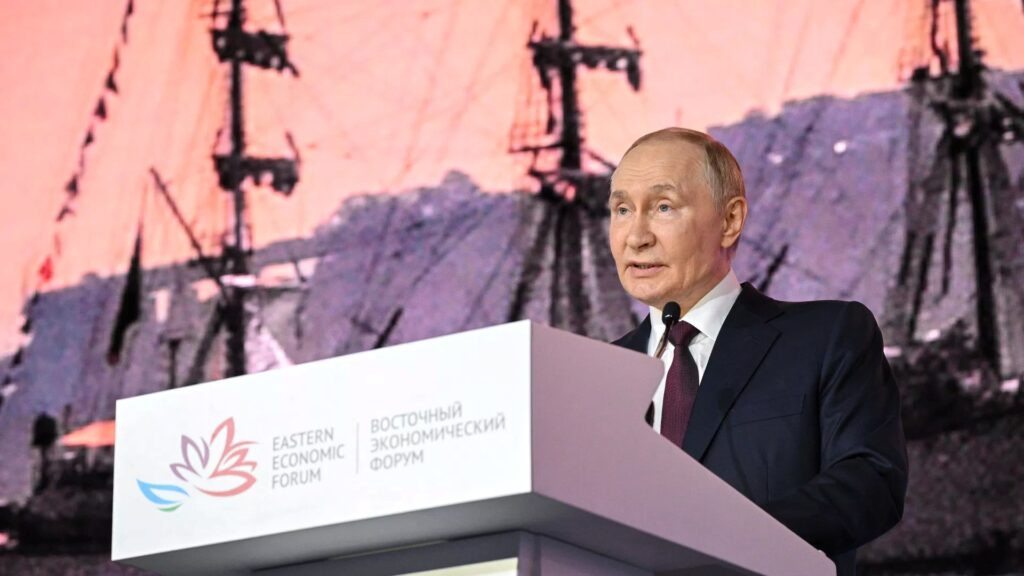
The issue returned to prominence on 27 October when Finnish President Alexander Stubb and Norwegian Prime Minister Jonas Gahr Støre held a rare telephone conversation with Putin.
According to the Finnish president’s official statement, the call followed discussions in Oslo on 20 October involving Ukrainian President Volodymyr Zelenskyy and US presidential envoy Steve Witkoff.
The Nordic leaders sought to advance preparations for renewed American-mediated negotiations, expected in Abu Dhabi in November. They emphasised that they were acting on behalf of their respective countries rather than representing Europe collectively.
Stubb described the exchange as “frank and substantive”, arguing that direct communication with Moscow was necessary to address the security consequences of the war.
However, the Kremlin’s account offered little indication of movement on the fundamental disagreements.
Moscow insisted that any durable peace must fully accommodate Russian interests. A source close to the Kremlin told Reuters that Putin had reiterated his refusal to compromise on the objective of controlling the entire Donbas.
Following the conversation, Zelenskyy confirmed that the Nordic leaders had briefed him and stressed to Putin the need for concrete measures to reduce attacks on Ukrainian energy infrastructure.
The diplomatic process has therefore resumed without resolving the territorial dispute at its centre.
The military significance of the remaining Donbas
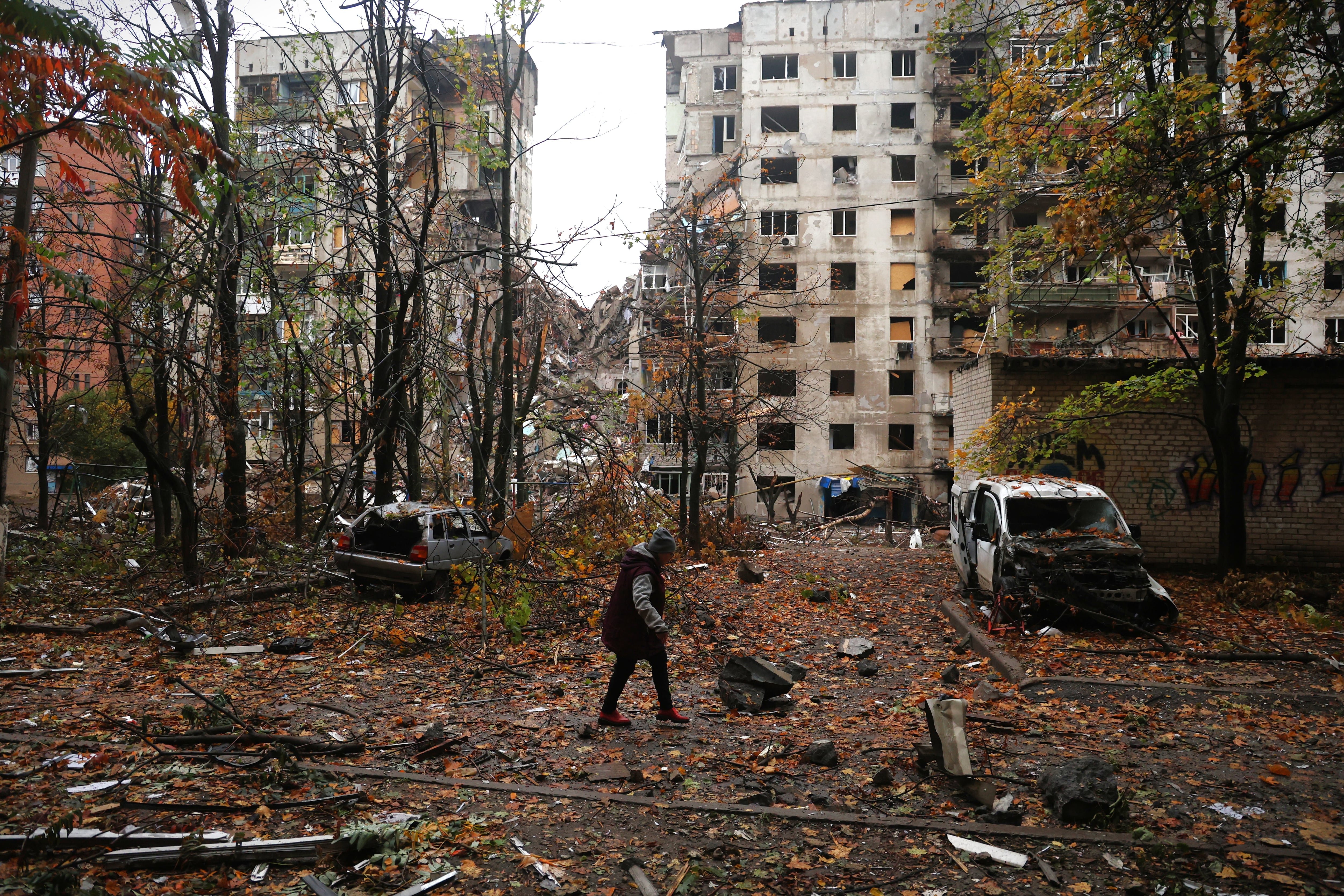
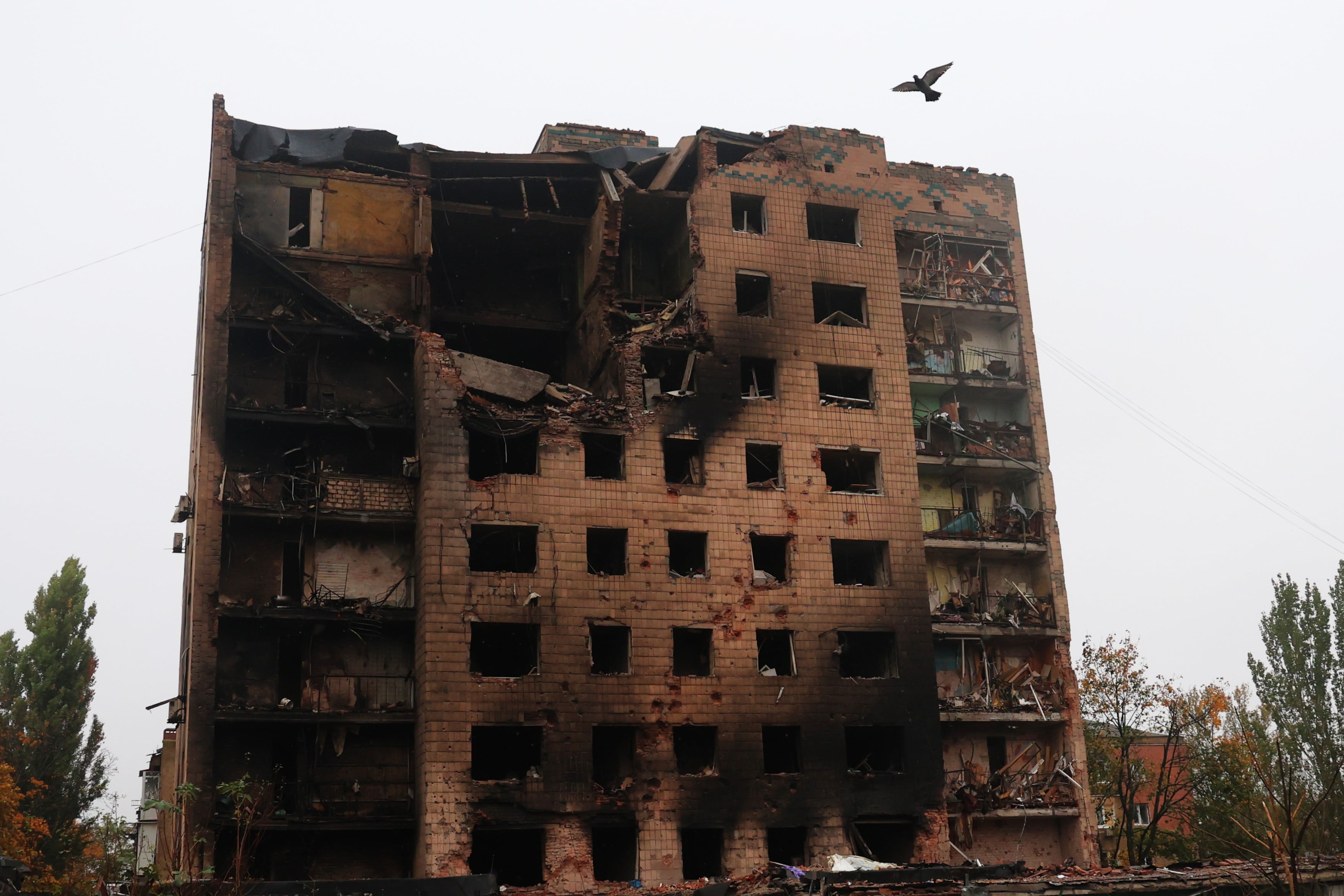
The territory Russia is demanding includes some of Ukraine’s most important surviving defensive positions.
Since fighting began in eastern Ukraine in 2014, Ukrainian forces have constructed and reinforced an extensive defensive system centred on Sloviansk, Kramatorsk, Druzhkivka and Kostiantynivka.
Known as the fortress belt, this network combines urban areas, industrial facilities, transport infrastructure, prepared defensive positions and terrain that complicates offensive operations.
The military importance of this system extends far beyond the administrative boundaries of Donetsk.
According to the Institute for the Study of War, surrendering these positions would allow Russian forces to occupy heavily defended territory without undertaking the prolonged operations otherwise required to capture it.
In its 26 October battlefield assessment, the institute continued to identify the capture of this defensive belt as Russia’s principal military objective in Donetsk. Ukrainian forces retained positions in parts of Kostiantynivka, while Russian operations towards other major cities remained contested.
The implications of a negotiated Ukrainian withdrawal would be substantial.
Russia could occupy the fortified urban corridor, reorganise its forces, establish new logistics routes and potentially redirect formations towards other sectors.
Ukraine, meanwhile, would have to construct or reinforce defensive positions further west, potentially under pressure and in less favourable terrain.
The resulting military imbalance would not necessarily lead to another Russian offensive. But it would change the conditions under which any renewed hostilities might take place.
That is why territory cannot be assessed solely by its surface area. A relatively small section of the front can possess strategic value disproportionate to its size.
Why Moscow prefers a negotiated withdrawal
Russia’s insistence on Donetsk also reflects the limits of what its military has achieved.
Despite years of fighting, Moscow has not secured complete control of the region. Successive offensives have produced territorial gains, but at considerable cost and without the rapid breakthrough originally anticipated.
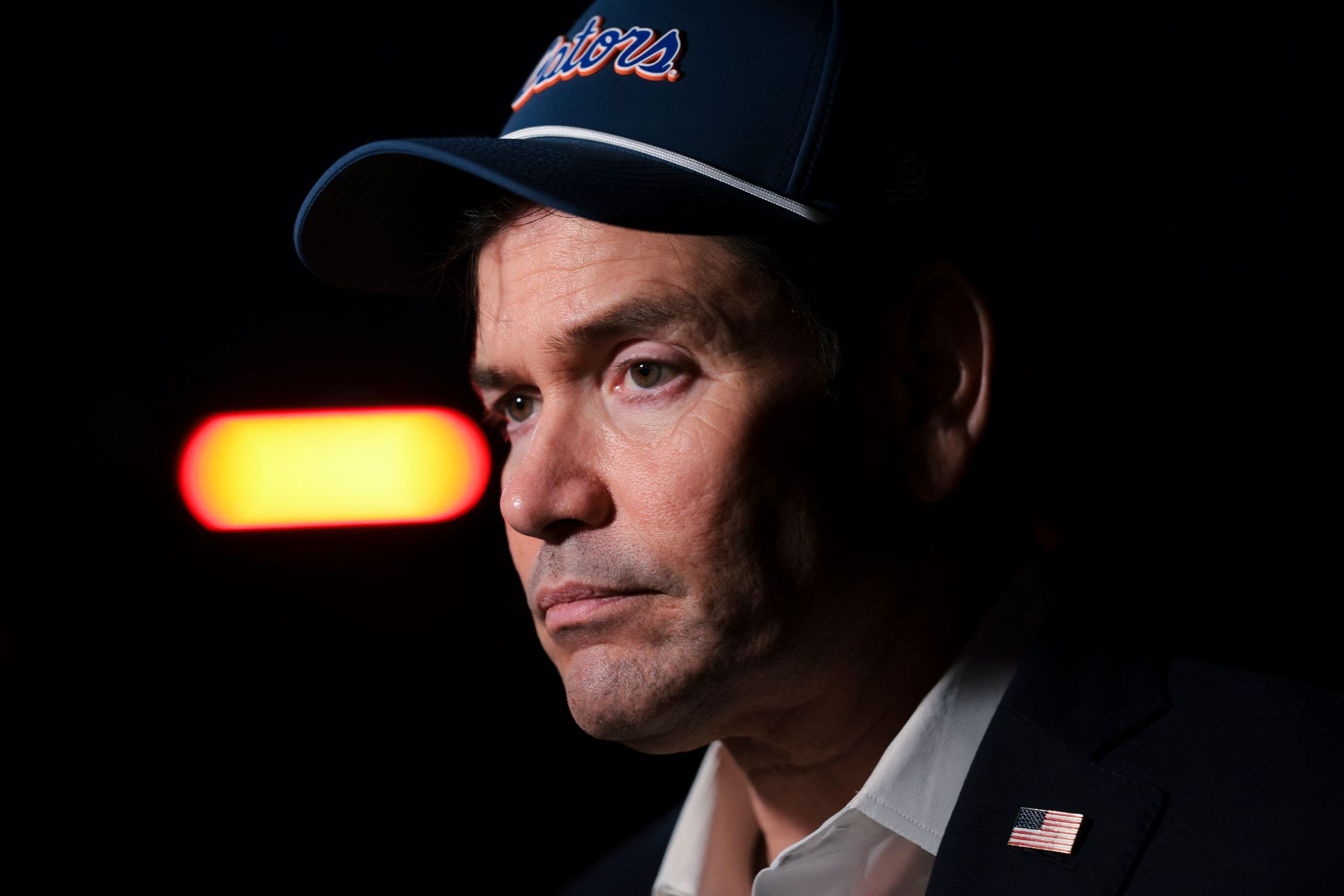
US Secretary of State Marco Rubio recently acknowledged the central importance of the remaining Ukrainian-held territory.
In an interview published by the US State Department, Rubio characterised the dispute as centred on territory Russia wants but has been unable to capture militarily, while recognising Ukraine’s sovereignty and long-term security concerns.
His remarks demonstrate how Donbas has become the principal territorial obstacle in Washington’s diplomatic calculations.
For Moscow, however, concentrating negotiations on this specific demand offers an additional advantage.
If Ukraine refuses to withdraw, the Kremlin can argue that Kyiv is preventing progress towards peace. If Ukraine agrees, Russia obtains strategically valuable territory without the military costs associated with conquering it.
The demand therefore serves a dual purpose: it establishes a public explanation for the absence of an agreement while offering Russia an immediate military benefit should negotiations succeed on its terms.
The problem with treating Donbas as the final concession
The central weakness in any settlement built around a Ukrainian withdrawal is the assumption that control of Donbas represents the limit of Russia’s territorial ambitions.
Moscow’s previously declared objectives suggest a more complicated picture.
In June 2024, Putin demanded Ukrainian withdrawal from four regions claimed by Russia: Donetsk, Luhansk, Zaporizhzhia and Kherson. Moscow does not fully control these regions, despite claiming to have annexed them in September 2022.
Russia has also demanded restrictions on Ukraine’s military capabilities and future security relationships.
As EU Today previously reported, renewed diplomatic engagement has not produced a clear abandonment of the Kremlin’s wider objectives.
Consequently, transferring the remaining territory of Donetsk would not necessarily satisfy Moscow’s other demands.
There is a significant difference between conceding territory as part of an enforceable settlement and withdrawing from defensive positions as a precondition for negotiating one.
In the first case, territorial arrangements form part of a wider agreement establishing obligations, verification procedures and security guarantees.
In the second, one party makes a potentially irreversible military concession before knowing whether an agreement will ultimately be reached.
This asymmetry is particularly important where the proposed concession directly affects the withdrawing country’s ability to defend itself.
The strategy of incremental gains
One interpretation of Moscow’s approach is that it reflects a strategy of incremental territorial expansion rather than an attempt to achieve all its objectives through a single decisive offensive.
After Russia failed to capture Kyiv in 2022, its military campaign increasingly concentrated on taking territory through successive, often prolonged operations.
The diplomatic equivalent would involve securing one concession, consolidating the resulting advantage and subsequently presenting additional demands.
Under such a scenario, Russia could obtain control of the remaining Donetsk territory, establish new positions closer to Dnipropetrovsk region and later argue that further territorial or security arrangements were necessary to protect its newly acquired frontier.
Moscow has already used the language of protective buffer zones to justify military operations elsewhere in Ukraine.
There is no evidence establishing that such a sequence would inevitably follow a Donbas settlement. Nevertheless, the possibility must be considered when assessing the military consequences of a withdrawal.
The concern is not merely that Russia might violate a future agreement. It is that the agreement itself could alter the strategic balance in ways that make renewed military pressure more effective.
There is also an internal Ukrainian dimension.
An agreement requiring the evacuation of cities defended for years would create substantial political controversy. Disagreements over territorial concessions, security guarantees and the credibility of Western commitments could complicate domestic political stability.
For Moscow, such divisions might provide another means of influencing Ukraine without immediate military escalation.
Donbas and the wider question of Ukrainian sovereignty
Donbas has considerable political significance for Putin beyond its military value.
The conflict in eastern Ukraine began in 2014, following Russia’s annexation of Crimea. Donetsk and Luhansk became central to the Kremlin’s justification for intervention, and their incorporation into Russia was later proclaimed as part of the 2022 annexations.
Control of the entire region would allow Putin to present a tangible achievement after years of warfare.
Yet the Kremlin’s objectives have never been confined exclusively to Donbas.
Putin has repeatedly questioned Ukraine’s historical and political independence, while Russian negotiating demands have extended to the country’s military posture, international alliances and internal political arrangements.
These positions suggest that territorial control forms part of a broader attempt to determine Ukraine’s strategic orientation.
A settlement that ends fighting in Donetsk without resolving these wider disagreements might therefore suspend the conflict rather than settle its underlying causes.
What the next negotiations must establish
The planned talks in Abu Dhabi will test whether Moscow is prepared to distinguish between its territorial demands and the conditions necessary for a sustainable ceasefire.
An immediate halt to hostilities along existing lines would preserve the military status quo while allowing negotiations to proceed.
Russia has resisted this approach, arguing that a temporary ceasefire could enable Ukraine to rebuild its forces without resolving the conflict.
Ukraine, by contrast, argues that withdrawing from fortified territory without credible guarantees would expose it to renewed attack.
Neither side can be expected to disregard the military implications of the proposed arrangements.
For European governments, the principal question is consequently not simply whether Ukrainian and Russian representatives can be brought back to the negotiating table.
It is whether any agreement can prevent the territorial settlement from becoming the starting position for another war.
Stubb and Støre’s conversation with Putin demonstrated that diplomatic communication remains possible. It did not establish that Moscow is prepared to abandon its existing territorial objectives.
The distinction matters.
Putin’s demand for Donbas offers Russia two potential advantages: a justification for continuing the war if Kyiv refuses, and a substantial military gain if Kyiv accepts.
That does not prove the Kremlin has already decided to resume hostilities after a negotiated withdrawal. It does, however, explain why the terms, sequencing and enforceability of any agreement are as consequential as the territory itself.
The essential question facing negotiators is therefore not only whether Russia can obtain Donbas through diplomacy rather than force.
It is whether the price of that concession would be a lasting peace — or a weaker Ukrainian defensive position if peace fails.