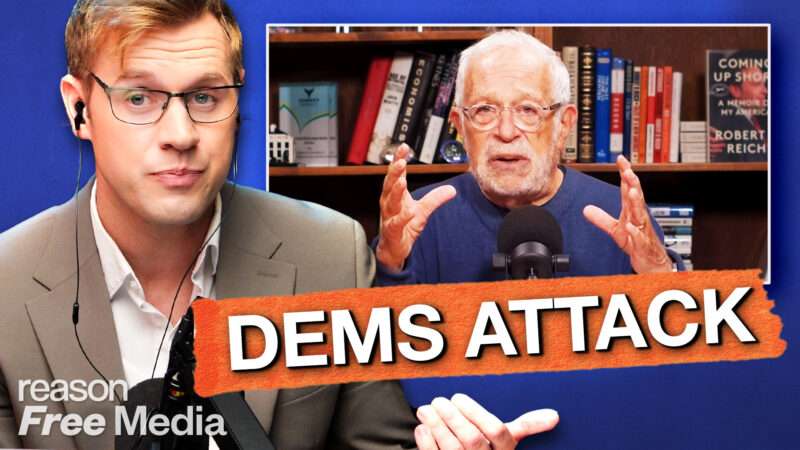
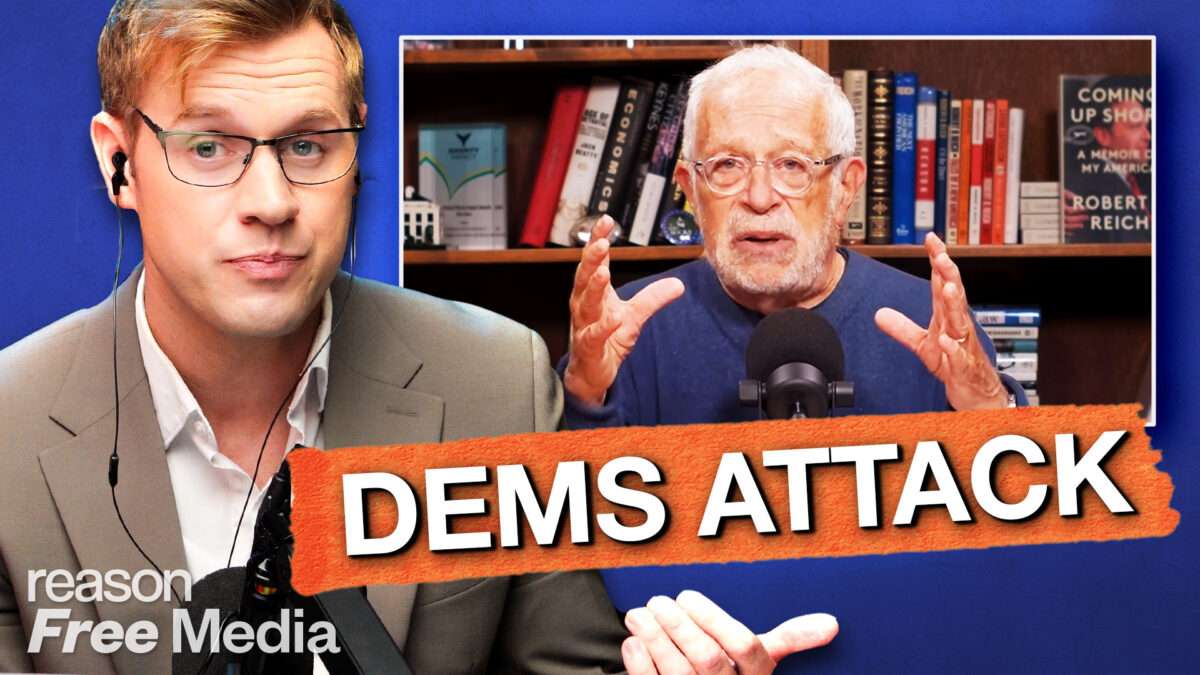
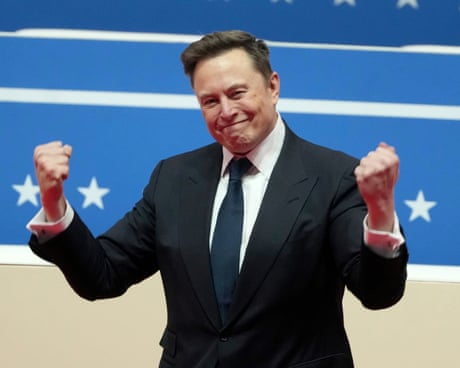
Elon Musk is under attack! Countless Democrats are admitting they plan to investigate or even jail him if they take back power on Congress in the midterms. They can't tell you what he specifically did wrong, but they'll come up with something.
Just as bad, or even worse, however, is that some of his critics want to nationalize his companies, including Starlink, which provides crucial infrastructure to Ukraine. Former Labor Secretary Robert Reich, a far-left populist Democrat, thinks Starlink is too important to be left under Musk's control, and that the federal government would do a better job administering it. I doubt that, but let's hear what he had to say:
NEW: Robert Reich calls for the "defunding" of Elon Musk, calls for Democrats to go after Musk's companies.
"Democrats ought to [start] laying the groundwork for nationalizing Starlink & SpaceX… It should be a public corporation."
From the horse's mouth: Reich thinks Democrats should be laying the groundwork to nationalize Starlink and SpaceX. This idea is crazy and reckless—and even dangerous. Here's why.
Now it's important to go over some of the background here. Starlink is a product that Ukraine uses to provide internet to its people, but only for civilian uses. Musk has maintained that while he is very happy to provide internet to Ukraine in the face of unrelenting invasion, Starlink cannot be used for offensive military purposes, because this would make his satellites a legitimate target of Russia in terms of their war effort. We want to avoid that. Separately, Starshield, a different system, is administered by the Pentagon, and Musk claims he has no control over it.
What happened last week is that a slowdown of the Starshield system resulted in reduced effectiveness of Ukraine's counterstrikes against Russia. And look, that was a problem. I traveled to Ukraine earlier this summer as part of a delegation arranged by a pro-Ukrainian nonprofit. I saw up close how important Starshield is to the defense of a free Ukraine. Moreover, there's entirely too much griping about Ukraine coming from some corners of right-wing media. Some people often seem to forget that Russia is invading Ukraine, not the other way around. It's Russia that won't accept a peace deal. When President Donald Trump called for an immediate ceasefire, Ukraine stopped hitting energy infrastructure in Russia—but Russia kept attacking anyway. Ukrainian President Volodymyr Zelenskyy has agreed to immediately stop fighting and freeze the conflict along the current lines, just like Trump wants. It's Russian President Vladimir Putin who won't negotiate.
We don't know for sure who ordered the Starshield slowdown. The U.S. government has denied doing so. Musk has, however, claimed Ukraine violated the terms of service of Starlink, using it for offensive military purposes, and thus that system was slowed down. I understand why that might be frustrating for the Ukrainians, but the fact is that it's Musk's company, so he makes the rules. It belongs to him.
And importantly, it has to stay that way. Nationalizing the company would be an insane step to take in response to a tech owner having a say in how his product is used. Do we really trust the government to operate these companies as efficiently as their founders? Of course not. Moreover, in this specific case, it might bring us closer to a direct confrontation with Russia—and as much as it's a good thing to undermine the Russian conquest of Ukraine, we do not want to start World War III.
And there are the broader philosophical harms. We are experiencing an unprecedented flourishing in the tech space, with AI, driverless cars, robotics, and such. When the government nationalizes a successful tech company, it sends a warning to all the others: If you're too good at what you do, we might take you over. We might punish you. This disincentivizes investment and innovation at a time when they're desperately needed.
Nationalizing Musk's companies is doing Ukraine no favors. But it will hurt America's interests too. We want to encourage Musk, Jeff Bezos, Sam Altman, Mark Zuckerberg, and all the rest to compete with one another to design products that make life better, earning them profits along the way. It doesn't work if the government butts in. Unfortunately, far-left thinkers like Reich, Sens. Bernie Sanders (I–Vt.) and Elizabeth Warren (D–Mass.), and many of the people who are about to be elected to Congress for the first time actually want to slow down the pace of tech. That's how much they hate Musk.
No private individual should have the power to determine US foreign policy, as Musk has attempted to do in Ukraine
He’s Exhibit A on why billionaire wealth should be taxed, why we must get big money out of politics, why billionaires shouldn’t be allowed to buy up major media, and why our government shouldn’t give them huge military contracts.
Elon Musk, empresário multibilionário e aliado do presidente dos Estados Unidos, Donald Trump, questionou nesta segunda-feira (26) a legitimidade dos resultados das eleições brasileiras após o presidente Luiz Inácio Lula da Silva (PT) vencer o senador Flávio Bolsonaro (PL) por uma diferença de três pontos percentuais.
O dono da Tesla questionou o ganho de 9,3 milhões de votos do candidato do PT em uma publicação no X. “A conta não fecha”, afirmou o empresário ao repostar outro post sobre o tema.
Além dele, Steve Bannon, ex-conselheiro da Casa Branca e outro aliado de Trump, também criticou o pleito, chamando o resultado de “ilegítimo”.
Ele afirmou em seu podcast, Bannon’s Warroom, que a virada de Lula representava um “governo marxista ilegal”.
“O Secretário de Estado e o Presidente (Trump) precisam sair agora, cortar as relações diplomáticas e fechar tudo com o Brasil”, afirmou Bannon.
Os comentários foram feitos após a extensão do período de votação para até as 19h do domingo (25), devido a relatos de problemas no transporte público em diversas regiões do país.
Entenda a prorrogação no 2º turno
A decisão da prorrogação do horário da votação foi tomada pelo ministro Cristiano Zanin, do Supremo Tribunal Federal, por volta das 17h, horário inicialmente previsto para o encerramento do pleito, e provocou um impasse operacional, já que milhares de urnas haviam sido fechadas.
Posteriormente, o Tribunal Superior Eleitoral esclareceu que a prorrogação valeria apenas para as seções eleitorais que ainda estivessem abertas, sem possibilidade de reabrir equipamentos já encerrados.
“Volto a dizer: não houve nenhuma alteração advinda da decisão judicial. Temos absoluta confiança em todo o processo eleitoral”, declarou Nunes Marques, após a divulgação do resultado.
It has been a wild few weeks for the US-Ukraine relationship as Trump, more and more, has been able to be what he always wanted to be: a friend and supporter of Vladimir Putin. It started openly with the diesel deal, which drove a coach and horses through the sanctions regime leveled on Russia, a […]
EasyJet's Starlink deal is a potential edge over Ryanair, Europe's dominant budget airline.
Horacio Villalobos#Corbis/Getty Images
EasyJet announced a deal with Starlink on Monday.
It means two of Europe's three major budget airlines have now signed up for Elon Musk's service.
The move puts pressure on budget titan Ryanair after its CEO feuded with Musk over Starlink.
Elon Musk's Starlink has won its latest customer, a budget airline that could put pressure on one of the WiFi service's biggest critics.
EasyJet announced on Monday that the high-speed WiFi service would be deployed on its airplanes from the first half of next year. The British airline, which carries 100 million passengers a year, hopes to have Starlink installed across its 300-strong fleet by early 2028.
Wizz Air, a Hungarian carrier that flies about 70 million passengers a year, signed up in June.
That leaves Ryanair, the continent's largest airline and the world's third-largest, as the only one of Europe's biggest budget carriers without the service.
Its CEO, Michael O'Leary, is well-known for being outspoken and took aim at Starlink earlier this year, leading to a spat with Musk.
"We don't think our passengers are willing to pay for WiFi for an average one-hour flight," O'Leary told Reuters in January.
While Starlink is typically offered free to passengers, O'Leary also complained about increased fuel costs due to the aerodynamic drag of a Starlink terminal, installed on the top of airplanes.
Musk responded in an X post, arguing that Ryanair — which carries over 200 million passengers a year — would lose customers to airlines that do have internet access.
Over the next week, the two CEOs called each other idiots while Musk called for O'Leary to be fired and joked about purchasing the airline.
But Ryanair appeared to have the last laugh, using the publicity to launch a "Big 'Idiot' Sale" with 100,000 tickets starting at £16.99, or about $23.
The situation has some parallels with the US's Big Three airlines. While United Airlines has Starlink on almost half of its fleet and American Airlines is starting installations early next year, Delta Air Lines has instead tapped Amazon Leo, beginning in 2028.
This has led Musk to insult Delta's CEO, Ed Bastian, and call for his firing.
But American passengers are wealthier and more interested in premium offerings than their European counterparts. That trend has also prompted US budget airlines to offer comfier seats and package deals.
Adding free amenities for passengers is at odds with the typical no-frills budget-airline business model that relies on extra charges to turn a profit.
However, easyJet and Wizz may see Starlink as a way to gain an edge over Ryanair.
That may not last forever, though. In a January earnings call, O'Leary said, "I think as the WiFi technology improves over the next four or five years, we'll all be offering free WiFi access."
In the midst of Donald Trump's attempt to turn Russian diesel into a political asset to help him avoid disaster in November's midterm elections, the internet went out on the front lines.
Since the beginning of the full-scale invasion, Ukrainian forces have relied on Starlink to
But unlike other public companies, Anthropic doesn't want the public's input when it comes to major decisions.
Instead, Anthropic will be effectively controlled by CEO Dario Amodei and a group of other insiders.
In the next few weeks, public investors will get their chance to buy a piece of Anthropic.
But regular investors will never have a chance to steer the AI giant's decisions: Even though Anthropic is going public, it will essentially remain a private company, controlled by a handful of people with outsized power.
That's not unusual for giant tech companies launched in the past few decades (Larry Page and Sergey Brin have effective control of Google; Mark Zuckerberg has the same at Meta, as does Elon Musk at SpaceX.) It's also something you see at some prominent media companies (Rupert Murdoch and his son Lachlan have effective control of his two public companies; Larry and David Ellison have the same at Skydance.)
Anthropic's twist on the idea is that control is split between two different groups of insiders. There's a clique of seven founders, including CEO Dario Amodei and his sister, Daniela, who control 50.1% of shareholder voting power. And there's also a trust with the power to appoint four of the company's seven directors.
Put those two together, and you get a corporate constitution designed to keep public investors outside the real decisions. The founders control the outcome of any shareholder vote; the trust controls the board.
In theory, those two groups could end up in conflict on major issues. The trust-appointed directors might, say, vote to replace Amodei with a new CEO. Or the founder group could veto a sale approved by the board.
In reality, there's a lot of overlap between the two groups. For starters, Anthropic created and funds the trust. And Anthropic itself says it has made sure the trust is staffed with people who see the world the same way its executives do: "In practice to date, the Trustees and company executives have collaborated closely on sourcing, interviewing, and selecting Trustees," the company notes in its S-1 filing.
The main takeaway is that there's no way for an individual shareholder, or even institutional shareholders who own significant chunks of Anthropic's equity, to force it to move one way or another.
The upside of arrangements like this are pretty clear, from a founder's perspective: They insulate their founders and managers from investors who might only care about short-term goals.
The downside: These structures insulate founders and managers from investors who might have very good reasons to want the company to change.
A good counter-example to the trend is Twitter, which went public in 2013 without founder control — which is why Elon Musk was able to buy it nearly a decade later.
In Anthropic's case, that aversion to giving public investors a real voice is synced directly to the company's founding thesis — that the AI it is developing is so consequential and potentially dangerous, that it must be controlled by people who care about more than Anthropic's share price.
And for many investors clamoring to get in on Anthropic's IPO, that lack of control — disclosed up front — won't matter. They just want their shares to be worth more over time. Musk's ironclad control of SpaceX didn't put dampen demand for the biggest IPO in history.
But if investors ever want to force Anthropic to do something the Amodeis and their cofounders — or the Anthropic-created trust — don't want it to do, they'll be out of luck. Buyer beware.
L’ultimo endorsement di richiamo per lui arriva dal figlio dell’ex presidente George H.W. Bush e fratello dell’altro ex commander in chief George W.Bush. Anche NeilBush si smarca da Donald Trump e sceglie JamesTalarico, astro nascente dei democratici, che corre per il Senato nello Stato di famiglia, il Texas. È da più di tre decenni che i democratici non vincono un’elezione nazionale, ma ora il seggio del Congresso è contendibile. Talarico, 37enne ex seminarista presbiteriano, ex insegnante di scuola media, è in vantaggio di 5 punti percentuali sul repubblicano Ken Paxton, attuale procuratore generale dello Stato sostenuto dal capo della Casa Bianca.
Famiglia, amore per i propri vicini e poi, ovviamente, fede: le parole d’ordine, da texano di ottava generazione, della campagna di Talarico sono spiazzanti per la retorica di Paxton e Donald Trump – che lo descrivono come un democratico estremista sotto mentite spoglie – e tutta la potente macchina finanziaria repubblicana, Elon Musk in testa, scesa in campo in queste ultime decisive settimane per scongiurare la possibilità che Talarico, che gli ultimi sondaggi danno avanti di due, tre anche 4 punti, possa far centrare il sogno, fino a pochi mesi fa impensabile, di una vittoria al Senato in uno stato come il Texas dove sono oltre 30 anni che i democratici non vincono a livello nazionale. Il candidato dem, peraltro, è spesso del mirino di Trump, che gli ha affibbiato il nomignolo di ‘Tala-freak-o‘, dandogli del vegano, negli sforzi per tracciare un profilo non in linea con lo stereotipo texano.
“In queste elezioni non c’entra il partito democratico o il partito repubblicano, è una cosa più grande, queste elezioni devono puntare alla visione di quello che il nostro stato può essere”, ha detto in uno dei suoi ultimi comizi il democratico ribadendo il messaggio bipartisan, quello che in America si chiama della ‘big tent’, con cui promette che dal Senato di Washington guiderà “la lotta contro i finanziatori mega miliardari e i politici burattini che hanno preso il controllo del Texas“, come recita il programma. Un messaggio che ha non solo galvanizzato e riunito le varie anime del partito democratico, ma sta attirando repubblicani, delusi da Trump e in generale dai repubblicani per la questione del carovita, del prezzo della benzina e, elemento molto rilevante in Texas, la costruzione dei data center per l’intelligenza artificiale. Ma forse l’elemento che ha aiutato e sta aiutando maggiormente la sorpresa Talarico nei sondaggi è il fatto che come avversario ha una delle figure politiche più controverse del Texas, l’attuale procuratore generale Paxton.
Paxton ha vinto le primarie perché sostenuto vigorosamente da Trump che ha voluto così togliere il seggio a JohnCornyn, senatore al quarto mandato che il tycoon ha voluto punire perché ‘sleale’. Non ha aiutato la candidatura di Paxton il fatto che la moglie Angela, anche lei esponente repubblicana texana, abbia chiesto il divorzio nell’estate del 2025 accusandolo, con tanto di citazioni biblica, di adulterio. Salvo poi chiedere alle elettrici texane di tapparsi il naso e votare per tutti i candidati repubblicani a novembre “a prescindere dalle loro debolezze’.
E dal vecchio establishment repubblicano texano, di cui Cornyn fa parte e che ha un punto di riferimento al clan dei Bush – anche se quella che era un tempo la dinastia politica repubblicana sta perdendo progressivamente influenza nel Gop controllo dal mai amato Trump -, sono arrivati dubbi, reticenze e vere e proprie prese di distanze nei confronti di Paxton . E, sebbene George W. Bush non abbia preso una posizione ufficiale, il Nyt scrive che ha escluso Paxton da una raccolta di fondi organizzata per candidati Gop al Senato. Invece hanno preso posizioni pubbliche contro Paxton il suo ex stratega Karl Rove, e per decenni il deus ex machina della politica repubblicana texana, e ora il fratello minore dell’ex presidente, Neil, ha annunciato di aver votato in anticipo per Talarico perché “profondamente preoccupato” per la condotta di Paxton e invece “enormemente impressionati” dai principi pragmatici del democratico. Il candidatorepubblicano ha però dalla sua la pioggia di milioni di dollari che stanno arrivando, in particolare da Musk, che gli permettono di spendere tre volte di più del dem in questi ultimi giorni decisivi. Tanto che si prevede che alla fine la sua campagna, tra primarie e elezioni, arriverà a spendere 380 milioni di dollari, una cifra astronomica per un’elezione al Senato in uno stato considerato una roccaforte Gop.
Shares dropped further on Monday after Elon Musk warned that many of them face "guppy-level death."
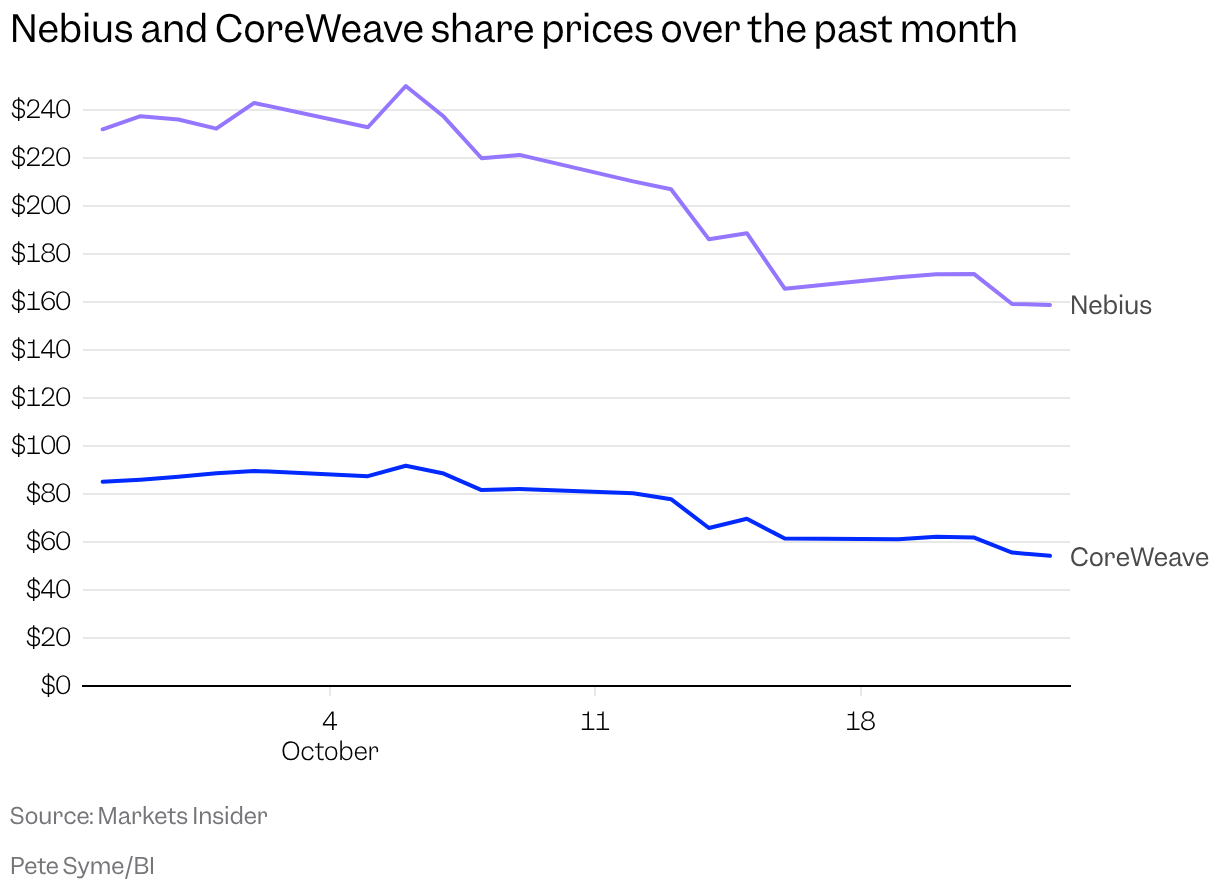
CoreWeave and Nebius have both fallen more than 30% over the past month, largely due to growing concerns about the debt they've taken on to build more data centers.
Soon after Monday's open, shares in both companies were down a further 4%, while Iren, another publicly traded neocloud, fell 2%.
The declines follow a string of X posts from Musk on Sunday evening questioning the neocloud business model.
"As of the past few weeks, debt markets have almost entirely shut off access to money for any company that doesn't have substantial revenue independent of AI data centers," he said.
"That means the 200+ neoclouds are going to see guppy-level death and consolidation," he added. "Some will make it through, but not many."
Musk said that while SpaceX has closed $40 billion in debt to buy GPUs, his company makes money through Starlink and rocket launches.
Meanwhile, investors are worried that a slowing AI boom could leave debt-heavy neoclouds struggling to service their loans.
After one X user posted arguing that Musk was trying to drive down the share prices of neocloud companies to acquire them, Musk replied: "SpaceX is not buying any neoclouds. Pointless."
Nvidia CEO Jensen Huang remains bullish about the sector. "The demand for the neoclouds is off the charts," he told CNBC last Thursday.
Nvidia holds significant stakes in CoreWeave, Nebius, and other cloud-computing companies.
A CoreWeave spokesperson said: "The AI cloud market is not a monolith," and that lenders distinguish between speculative capacity and businesses with contracted revenue and a record of delivery.
They added that the company is "already a market leader operating at scale" with expertise, which it sees as key for opportunities to finance further growth.
A recent Bernstein Research report analyzed thousands of planned US data centers and estimated that only about 35% of the announced capacity will be built.
"Press releases are cheap … concrete is not," Bernstein analysts wrote in a research note.
SpaceX ha raccolto 40 miliardi di dollari in prestiti destinati all’acquisto di nuovi chip per l’intelligenza artificiale. Lo ha annunciato Elon Musk attraverso un messaggio pubblicato sul suo social X, spiegando che le risorse serviranno principalmente a finanziare l’acquisto di GPU, le unità di elaborazione grafica fondamentali per lo sviluppo dei sistemi di intelligenza artificiale, la cui consegna è prevista tra il primo e il secondo trimestre del 2027. “Si tratta principalmente del rimborso del debito contratto per l’acquisto di GPU che arriveranno nel primo e nel secondo trimestre”, ha scritto Musk rispondendo a un investitore, senza precisare né la scadenza né il tasso di interesse del finanziamento.
La notizia arriva dopo che il gruppo, presentando i risultati finanziari martedì scorso, aveva annunciato investimenti compresi tra 35 e 40 miliardi di dollari nell’ultimo trimestre dell’anno, una cifra doppia rispetto a quella del trimestre precedente. I nuovi fondi, attesi all’inizio del 2027, confermano la volontà di mantenere elevato il ritmo degli investimenti nel settore dell’intelligenza artificiale.
Dopo la fusione con xAI all’inizio dell’anno, SpaceX, con sede a Starbase, in Texas, ha rafforzato la propria presenza nel comparto dell’intelligenza artificiale. Nel terzo trimestre, secondo quanto riportato, il gruppo ha registrato il primo utile netto della sua storia, grazie soprattutto ai ricavi derivanti dall’affitto della capacità dei propri data center a clienti esterni, tra cui Anthropic.
Prosegue intanto l’ampliamento del data center Colossus II, al confine tra Mississippi e Tennessee, mentre Musk punta a trasformare SpaceX in un conglomerato tecnologico, valutando anche l’acquisizione di Tesla, l’altra grande azienda da lui guidata.
Bloomberg/Getty; Jeremy Strong/Sony Pictures; Finn Gomez/Getty; Tyler Le/BI
Writing villains is supposed to be hard. No grand, world-dominating plan ever really makes sense in a story. Soon after "The Dark Knight" came out, David Goyer, its writer, told me the Joker had been a real relief. "Blessedly, because of who the Joker is, we just said, 'fuck the plan. We don't have to do it. He's the Joker. He's the anti-plan,'" Goyer said. "Trying to take over the world is such an impossible, stupid idea — as if anyone could do it with a single act, you know?"
Yet now very real people seem to try just that, on the regular. Except if you believe Hollywood, they're not insane clowns. They're billionaire tech bros. It's starting to seem like every movie and TV bad guy is a douchebag who got rich making stuff that works on your phone. Mark Zuckerberg in "The Social Reckoning," Elon Musk in "Musk," Elizabeth Holmes in "You Can See Everything," Sam Altman in the upcoming "Artificial," Sam Bankman-Fried in "The Altruists." In these stories, at varying levels of fictionality, the evil villains' megalomaniacal plans mostly make sense. Some of them even got away with it. America is eagerly consuming stories about them. "You Can See Everything" grossed $15 million on opening in just 855 theaters, twice what its producers expected.
The more interesting question is why these founders are our demons, all of a sudden. Chalk it up to the reality of the "techlash," the society-wide revulsion to Big Tech's ubiquity and power. But if you really want to understand the extent to which everyone thinks Silicon Valley is so uncanny these days, you should be watching a CBS legal procedural called "Cupertino." It's a sharp look at tech and its discontents — but more than that, it clarifies how widely the techlash is spreading.
"Cupertino" comes from the TV-making couple Michelle and Robert King, best known for the "The Good Wife" and "The Good Fight." In their new show, a slick lawyer played by Mike Colter gets iced out of the tech company he cofounded at the same time as a more junior attorney also gets ousted. The two join their wrongful-termination lawsuits against the company, eke out a big settlement, and start a firm to represent "little guys" against Silicon Valley giants. In one plotline, a drone maker tries to blame a mid-level coder for one of its bots falling out of formation during a show and killing a man — it turns out the company had changed batteries to accommodate a prospective military contract. In another, a mysterious whistleblower client asks for help to force an Anthropic-like company to put guardrails around its most powerful AI. Then the whistleblower claims to in fact be the AI.
It's all in good fun. The actors are beautiful. They banter well. Colter wears the hell out of a suit. Busy Philipps plays a Mackenzie Scott-like benefactor of the new law firm — if Scott used her incredible wealth to become a hardcore partier.
A CBS show like "Cupertino" picks bad guys that millions of people can easily recognize as deserving of comeuppance. It picked the overlords of Silicon Valley.
But thematically, there's depth. That Colter is the only Black person for miles does not go unremarked. His new partner Olivia Siffre (pronounced "cypher"), played by Rachel Keller, is a devout, cross-wearing conservative from the Midwest, an alumna of Liberty University. Their closest allies don't come from the ranks of coders, marketing, or venture capital but are instead service workers, tradespeople, and the waitstaff from a nearby TGI Fridays. (Alas, a fiction — there are no TGI Fridayses in the Valley.)
So see that class rage for what it is. The fantasy here is that the middle-American proletariat gets to stick it to bespoke-suited, arrogant C-level types and unkempt, geniuser-than-thou sex pests. Because for the last few years, those people have had all the power. "They always have a friendly audience, an accommodating interviewer who won't ask them anything controversial. And then they get into territory where the price is much higher," Robert King said in a recent interview. "They reveal who they really are: robotic, inhuman nerds who never got laid in high school and are now kind of crazy with power, self-importance, and a sense of entitlement."
The point is, the "little guys" fighting this good fight seem like they're supposed to be proxies for the viewer. "Cupertino" is a CBS procedural, the genre of shows like "NCIS" and its offspring — things that no one watches, except for 10 million people every week. That's a lot. CBS typically has the largest primetime viewership of any network, and the oldest — like, people in their 70s. It's all well and good for young coastal sophisticates to post about Elizabeth Holmes' inability to grasp the Who's-on-First routine, but "Cupertino" is aimed at America's parents and grandparents. And apparently they are excited to see the people who make their phones portrayed as the wealthy engines of every inconvenience — sources of half a billion dollars to Republicans only, builders of data centers, creators of chatbots that drive kids to death by suicide, purveyors of screens that watch you back. "Cupertino" debuted to rapturous reviews and more than 3 million viewers, beating "Grey's Anatomy" in its time slot.
A show like "Cupertino" is meant to have a low barrier to entry; it picks bad guys that millions of people can easily recognize as deserving of comeuppance. It picked the overlords of Silicon Valley.
Not so long ago it would've seemed preposterous to give a scrawny, socially awkward, brainy little guy the job of Big Bad. They're the assistant, or the butt of a particular kind of joke, like the spectrum-y heroes of the wildly popular "Big Bang Theory" — Klingon-speaking, physics-doing, Green Lantern oath-knowing clods. Still, I can think of examples of "bad guy, subtype: tech nerd" going back to the early days of science fiction. Mad scientists like Dr. Frankenstein or Dr. Jekyll, or various HP Lovecraft antiheroes, probably count. So too might the arrogant cyberneticist in Robert Heinlein's "Waldo."
A rough analog in the mid 20th century might be the rogue industrialist. After all, James Bond villains have often been tech-bro adjacent. Karl Stromberg in "The Spy Who Loved Me" wants to build independent ocean settlements; he's basically a seasteader. Hugo Drax in "Moonraker" is a eugenics-obsessed CEO who wants to build space stations, which sounds familiar. Max Zorin, played by Christopher Walken in "A View to a Kill," is an "industrialist" and the product of Nazi genetic experiments. But his megalomaniacal plan is to use a California natural disaster to gain a monopoly on silicon computer chips. That's just Jensen Huang on any given Tuesday.
The weirdest new phenomenon here is how personal it all is. Evil technology oligopolies have been representatives of oppressive capitalism in Hollywood for decades — but they were faceless. The anonymity was part of the terror. Think of the company that orders Bruce Dern to destroy the last forest in his spaceship biodome in "Silent Running," the Umbrella Corporation in "Resident Evil," or Cyberdyne Systems, creator of Skynet in the Terminator movies.
More recently, film and television have started identifying not just faceless corporations but specific tech-coded people as their worst-of-the-worst. And not just any people, but people geofenced into Silicon Valley: "Glass Onion," "Don't Look Up," "Ex Machina," "Devs," "Super Pumped" (fictionalized Uber), "WeCrashed" (fictionalized WeWork), "The Playlist" (fictionalized Spotify), and "The Dropout" (fictionalized Theranos), "Mythic Quest" — the list goes on.
Actually, Cyberdyne's a good example of one important way these depictions have changed; in 1984's "The Terminator," Cyberdyne is a Los Angeles-area heavy-industry firm. In 2015, "Terminator Genisys" moved Cyberdyne to a gleaming tech campus explicitly modeled on the headquarters of Oracle. It's an inside joke, though not the ha-ha kind. The movie's producers included Megan and David Ellison, children of Oracle CEO Larry Ellison. David now owns the merged studios of Warner Bros. and Paramount, and he just got a billion-dollar investment from Elon Musk. The new company, Skydance, includes in its holdings … CBS.
Christopher Walken's Bond villain has a megalomaniacal plan is to use a California natural disaster to gain a monopoly on silicon computer chips. That's just Jensen Huang on any given Tuesday.
"A sequence of Hollywood contemporary science-fiction movies identifies Silicon Valley capitalists as a new type of villain," write Northumbria University film studies scholars Joe Street and Russ Hunter in a 2024 paper. These new movies critique tech, they say, using an approach "in the grand tradition of cinematic science fiction touchstones such as the Cold War alien invasion films that allegorized fears of Communism in 1950s America."
In other words, movies about time-travelling killer robots and dead-eyed billionaires aren't so different, after all. Horror is about shared anxieties. Old-school mad scientists posed a threat because they dared to do experiments that contravened the laws of nature; they were evil for love of the game. The Silicon Valley bad guys are worse, because they do it for profit. "When presented with an innovation," Street and Hunter write, "the prime movers in these corporations think not of moral or ethical concerns and crucially not of the material impact of what they are doing — but only of the innovation's potential for financial gain."
Is Hollywood's techlash actually on the rise? The schlemiels of "Silicon Valley" premiered in 2014. I have tech-bro-villain articles in my files going back to 2022 at least. And the business world has always been fodder for stories filtered through the anxieties of the time—what was Ebenezer Scrooge if not a capitalist oppressor?
Mapping the full arc of technology-associated villains would be, in the words of Ted Underwood, "hard to code." Underwood's an English and information science professor at the University of Illinois at Urbana-Champaign, researching ways to identify literary trends across time, in big canons. "In addition to tracing the history of villains, you'd have to think how often these social types appear as heroes," he says. For every Max Zorin there's a Tony Stark. Ethan Hunt's nobody without tech aces Luther and Benji. "Star Trek" doesn't trek without Scotty, or Chief O'Brien. Every movie heist is basically a hack. And let me just say unto you: "MacGyver." "One hypothesis would be that what we're feeling right now with evil tech bro villains is just that the counterbalancing examples have dropped out," Underwood says.
Clearly, though, tech billionaires and their hangers on have actively tried to make themselves into main characters. Some of them seem to think they're the only real consciousnesses in a simulation, a virtual world populated with non-player characters like you and me. At minimum they evince a belief that they possess a greater depth of perception and knowledge. As the architect and tech historian Fred Scharmen once wrote, "for this particular kind of person, wealthy and powerful or not, intelligence comes paired with a certain kind of malignance. The Evil Nerd is sharp, and also mean, their big brains are oriented towards anger and destructiveness."The Thiels, Altmans, Musks, and Karps of the world turn what had been nerdy weakness into nerdy strength. They go on friendly podcasts and show up in pictures taken with presidents. We don't have to imagine them delivering what the screenwriter John Rogers, creator of the anticapitalist TV show "Leverage," calls the Evil Speech of Evil. They monologue at tech conferences! These guys embody their ideologies; l'enterprise, c'est moi.
And what happens if that kind of behavior gets depicted, week in and week out, on a popular legal procedural TV show? Even if that show airs on a network owned by one of those "evil nerds"? Hard to say. Maybe it'll be enough to turn some people into the Joker.
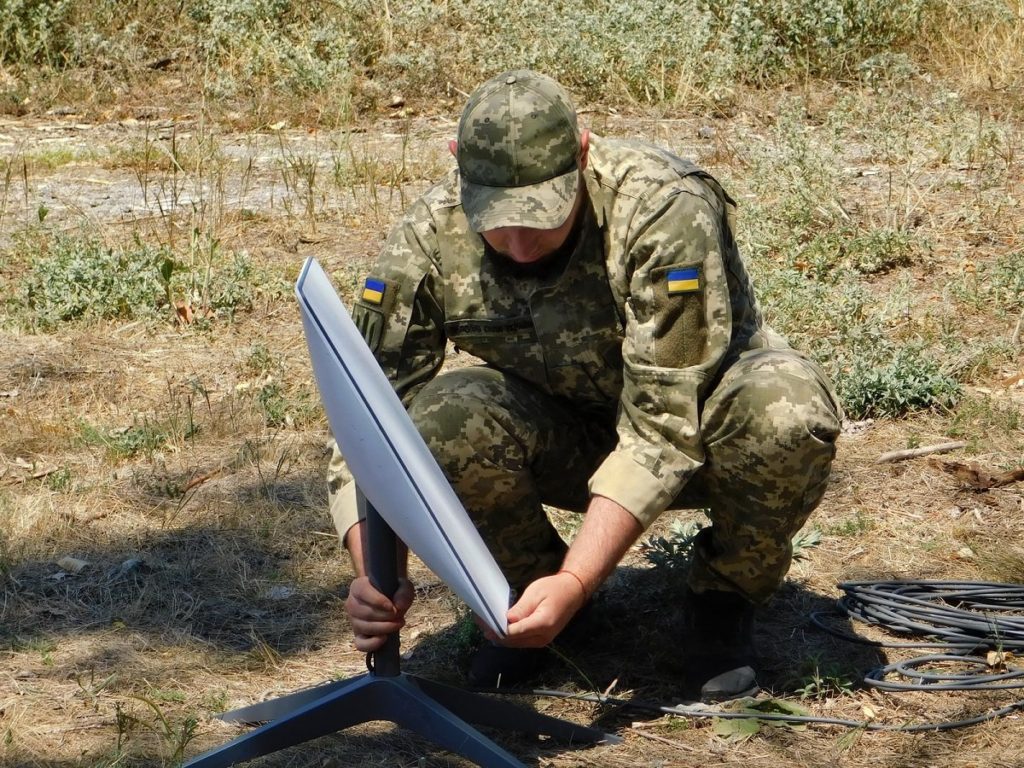
Ukrainian troops deploy a Starlink terminal on the battlefield. Kyiv is allowed to use the civilian service for communications needs, but not for drone strikes, for which it relies on Starshield.
Dmytro Smolienko/ Ukrinform/Future Publishing via Getty Images
Elon Musk has accused Ukrainian forces of using commercial Starlink in drone strikes.
But two Ukrainian drone figures say the claim is impossible because of limits imposed on the terminals.
It comes after Ukraine was hit by a 10-day slowdown on Starshield, the military version of Starlink.
Ukraine said its access to Starshield was restored this weekend, but Elon Musk isn't finished with Kyiv yet.
In an X post on Sunday, Musk accused Ukrainian forces of breaching Starlink's terms of service by using the civilian platform in drone attacks.
"Ukraine military violated Starlink terms of service and used it for offensive drone strikes to kill people. That loophole was closed last week," wrote the SpaceX owner.
"Using Starlink, a civilian commercial service, for offensive drone strikes to kill people has never been allowed, nor should it be," he added.
Musk made it clear he was talking about the commercial platform and not Starshield, the military version of the satellite communications service owned and controlled by the US government.
"Were Starlink to be turned off, the Ukrainian front line would collapse immediately. This is NOT a threat, it is simply a statement of fact," Musk added.
Ukrainian drone advisors hit back
Two prominent Ukrainian drone figures, however, disputed Musk's statement, saying that it was technically impossible for any of Kyiv's troops to have independently used Starlink in drone strikes.
"As someone who was inside the process at the Ministry of Defense, I can say for sure that this is not true," wrote Serhii Sternenko, a former advisor for drones to Ukraine's defense ministry, on his Telegram channel.
"It is very strange that Elon Musk does not know about the restrictions on Starlink operation in Ukraine," wrote Serhii "Flash" Beskrestnov, another former advisor.
Ukrainian troops are allowed to use Starlink for communication and piloting non-combat systems, such as this demining drone.
Anastasiia Sheviakova/Gwara Media/Global Images Ukraine via Getty Images
Both worked in the ministry in early 2026, when it negotiated with SpaceX to prevent Russia from using black-market Starlink terminals in the war. SpaceX agreed in February to block Starlink over Ukraine and Russia, allowing access only to whitelisted Ukrainian terminals.
Sternenko said that Ukrainian civilians and troops could register their terminals on the whitelist, but that these would only work while subject to a speed requirement.
For one to connect while moving, it would have to be put on a special list that uses Starshield instead, he said.
"That is, it was technically impossible to use civilian Starlink to perform missions on drones. All drone missions that required satellite communication could only be carried out using Starshield," Sternenko added.
Beskrestnov said the Ukrainian Starlink terminals were subject to a speed limit of 90 kmph, or about 55 mph. The civilian service is also completely cut off over Russia, he added.
"Thus, we physically cannot use commercial Starlink for deep strikes and middle strikes," Beskrestnov wrote.
Starshield vs Starlink
Tactical drones operating on the Ukrainian battlefield at speeds below 55 mph, such as first-person-view attack drones, typically use radio-frequency signals rather than satellite communication to maintain contact with an operator. These are also often too small and lack enough onboard power to reliably carry even a Starlink Mini terminal.
What Ukraine usually uses satellite internet for — hence its reliance on Starshield — is mid-range and deep strikes on Russia's rear or Russian territory, with larger, more powerful drones that fly much faster.
An example of a mid-range drone is the Hornet, a winged drone that's about the size of a human being.
Carlo Bravo/Anadolu via Getty Images
Kyiv also relies on satellite communications for its small interceptor drones, which fly at up to 265 mph to catch incoming attack drones.
Musk followed up on his Sunday X post with a screenshot of Ukrainian President Volodymyr Zelenskyy writing on social media in mid-October that Kyiv's forces "also use Starlink for mid-range strikes" against Russian targets.
However, Zelenskyy's post was describing Ukraine's recent troubles with Starshield, and he repeatedly used the term "Starlink" to refer broadly to the military satellite service instead.
Musk and SpaceX did not respond to requests for comment sent outside regular business hours by Business Insider.
Earlier this month, Ukraine raised the alarm that its access to Starshield was being throttled at high speeds, reducing its ability to conduct deeper strikes and to control interceptor drones.
The crisis lasted 10 days and came as President Donald Trump and Musk openly criticized Ukraine for targeting Russian oil facilities at a time when the White House was trying to ease fuel prices.
The Wall Street Journal reported, citing unnamed US officials and sources, that Musk had personally ordered the speed cap. Musk and Trump have separately said they were not responsible for the slowdown.
On Saturday, Zelenskyy said Starshield services were running normally again.
Elon Musk said neoclouds are going to see "guppy-level death."
Win McNamee/Getty Images
Elon Musk is not a fan of neoclouds, which are specialized cloud companies that provide compute for AI.
He said many neoclouds will face "guppy-level death" and SpaceX would not be buying any of them.
Musk replied to Chamath Palihapitiya, who said neoclouds are "disorganized and poorly capitalized."
Elon Musk is a neocloud doomer.
The SpaceX CEO took a hard stance on the future of neoclouds — cloud companies like CoreWeave and Nebius, that specialize in providing computing power for AI — in a Sunday X post.
He wrote that debt markets are reluctant to finance any company that relies almost entirely on AI data centers for revenue. He said SpaceX has secured $40 billion in debt to buy GPUs, but unlike neoclouds, his company earns revenue from its Starlink and rocket-launch activities.
"That means the 200+ neoclouds are going to see guppy-level death and consolidation," he wrote. "Some will make it through, but not many."
Musk's post was in reply to one by venture capitalist Chamath Palihapitiya, who wrote on X that neoclouds are "disorganized and poorly capitalized."
Replying to another X thread speculating if he was trying to drive down the prices of neocloud stocks and scoop them up for cheap, Musk replied, "SpaceX is not buying any neoclouds. Pointless."
This comes as the stocks of neocloud companies have taken hits recently amid fears of high debt levels and a lack of other revenue streams. CoreWeave's stock has dropped about 37% in the past month, while Nebius' has dropped 30% in the same time.
Nvidia CEO Jensen Huang, however, has maintained that demand for AI cloud infrastructure is "off the charts." Nvidia is a major backer of neocloud companies like CoreWeave, Nebius, Iren, Lambda, and others.
Another point that Musk added, in a separate X reply on Friday, was that the industry would see a lot of "stranded compute in partially complete data centers."
By "stranded," Musk was referring to compute that is ready to use but can't be deployed because data centers aren't yet equipped to turn it on.
As Business Insider's Eugene Kim wrote last week, Amazon Web Services is expected to receive $5 billion worth of Nvidia GB300 racks, but the company does not have enough power in its data centers to power them. AWS will be storing the units in warehouses until its centers are ready.
Data centers, too, are running into some challenges. A recent Bernstein Research report projected that only about 35% of planned data center capacity in the US will be built.
Hyperscalers like Amazon, Google, Meta, and Microsoft, which have experience building and operating data centers, will likely successfully complete construction of their planned centers, the report predicted.
But Bernstein Research said newcomers, like celebrity investor Kevin O'Leary whose company has pledged to build 15 gigawatts of data center capacity, were called "bragawatts," and their projects are unlikely to be realized.
It's not just the neoclouds facing a troubled stretch amid an AI reckoning; neolabs are, too. Neolabs are small AI model development startups, like ex-OpenAI CTO Mira Murati's Thinking Machines Lab and OpenAI cofounder Ilya Sutskever's Safe Superintelligence. These labs are heavily funded and face strong competition from frontier AI behemoths like Anthropic and OpenAI.
Several VCs told Business Insider's Ben Bergman recently that neolabs were overhyped and investing in them was a contentious topic.
SpaceX founder Elon Musk says that if Ukraine fires through Starlink, Russia would be entitled to shoot the network down. That is why Starlink must remain a civilian operation and cannot be used for outright offensive strikes that would put its very existence at risk.
The warning lands in the middle of a fight over Musk’s own hand on that network. Weeks ago, his company unexpectedly throttled the service Ukraine’s drones depend on amid US President Donald Trump diesel deal with Russia, which led to the disruption of a few operations on the front.
The US Treasury authorized the sale, delivery, offloading, and import of Russian-origin diesel fuel, effectively suspending sanctions on that trade until 7 April 2027, the Office of Foreign Assets Control (OFAC) said on its website on 9 October.
The diesel deal combining intelligence halt and military Starlink, with pressure on Ukraine to make a quick peace deal, has angered both Democrats and Republicans ahead of the US elections on 3 November, where Democrats could win.
Meanwhile, a Ukrainian official interprets Musk's talk of strikes as an attempt to build an alibi before a possible investigation into that decision.
A civilian network, or a target
Musk was responding to a post warning that if Starlink shifted from a civilian network into a military system, Russia could treat it as a target for retaliation, and that destroying satellites in orbit could scatter enough debris to make space unusable for years or centuries.
“An adversary blowing up Starlink satellites would create a domino effect of destruction that would generate a vast field of debris, making space unusable," he writes.
When the shield and the warnings failed together
Overnight into 14 October, SpaceX quietly capped the speed of Starshield, the military version Ukraine’s drones run on, without telling Kyiv. Ukrainian units said the limit broke a series of missions, with connections dropping mid-flight and leaving drones hard to control.
At the same time, President Volodymyr Zelenskyy said Ukraine relies on the network for air defense, not attack, to intercept the Russian drones Moscow sends to its cities, and that once the speed was cut, his forces could no longer stop some of them as effectively as before.
Simultaneously, Ukraine's other American lifeline also went dark: for about three days, the US stopped passing the intelligence that warns of Russian ballistic launches. On 12 October, Russian ballistic missiles hit Kyiv before the air-raid alert reached people, with no advance data from partners. In a strike during that window, three people were killed in the capital, the sirens sounding only after the blasts.
A Ukrainian official sees alibi-building
Meanwhile, Andrii Kovalenko, the ex-head of Ukraine’s Center for Countering Disinformation, read Musk’s statement as self-protection rather than physics
“Musk, having taken responsibility for the restrictions on Starlink and Starshield for Ukraine, is now trying to build himself an alibi before a possible investigation into that decision,” he wrote.
He said that regardless of who was behind the idea of restricting Starlink and Starshield access for Ukraine, it represents a strategic setback for the US in the long run, as it risks portraying the country as an unreliable partner that may fail to honor its commitments.
"Europe purchases around 60% of its imported weapons from the US. Trust in the US as a security guarantor directly supports sales for American defense companies. Moves like this only undermine that trust and encourage European countries to develop their own systems," he said.
The US has sent a message that its guarantees may not be reliable and that even paid-for services can be subject to political decisions, Kovalenko stressed.
On the trail, James Talarico, the Democratic Senate nominee, has increasingly gone after Mr. Musk, a critic of his who has given big to a group aligned with the Republican candidate, Ken Paxton.

 Login