❌

Reading view

The Riots in France Show Up the Dangerous Fiction That Public Spending and ‘Integration’ Create a Peaceful Society

The riots in France have shown up the Leftist claim that enough public spending and 'integration' will produce a happy, peaceful society as a dangerous fiction. But is anyone paying attention, asks Matt Roberts.

The post The Riots in France Show Up the Dangerous Fiction That Public Spending and ‘Integration’ Create a Peaceful Society appeared first on The Daily Sceptic.

  •  

Serbian Students, Victorious and Leaderless, Go After the Media

Supporters of the opposition movement that won Sunday’s election stormed the offices of a pro-government tabloid. Another news outlet apologized for years of “one-sided” coverage.

© Marko Djurica/Reuters

Supporters of the Student List opposition bloc in Belgrade, Serbia’s capital, on Monday, celebrating its victory in the national elections.
  •  

Reports: France-Inspired Violent Riots Are Being Urged in Spain for Halloween

A series of messages published on social media Tuesday morning call for a wave of violent riots across Spain "inspired" by the recent chaotic events in France for Saturday, October 31, local outlets warned.

The post Reports: France-Inspired Violent Riots Are Being Urged in Spain for Halloween appeared first on Breitbart.

  •  

France Makes Concessions to Students, but Not Enough to Halt Protests

The government promised to phase out an unpopular university admissions system by 2028. Student groups are pushing for more.

© Anne-Christine Poujoulat/Agence France-Presse — Getty Images

Student representatives after a meeting on Monday with Prime Minister Sébastien Lecornu in Paris.
  •  

How Scuffles at Trump Rallies Echo His Past Events

Examining President Trump’s praise of a rallygoer who punched a protester last week, David E. Sanger, a White House and national security correspondent for The New York Times, studied the atmosphere at Mr. Trump’s recent events. What he found was a faint echo of the moments that made Mr. Trump’s 2016 rallies so shocking.
  •  

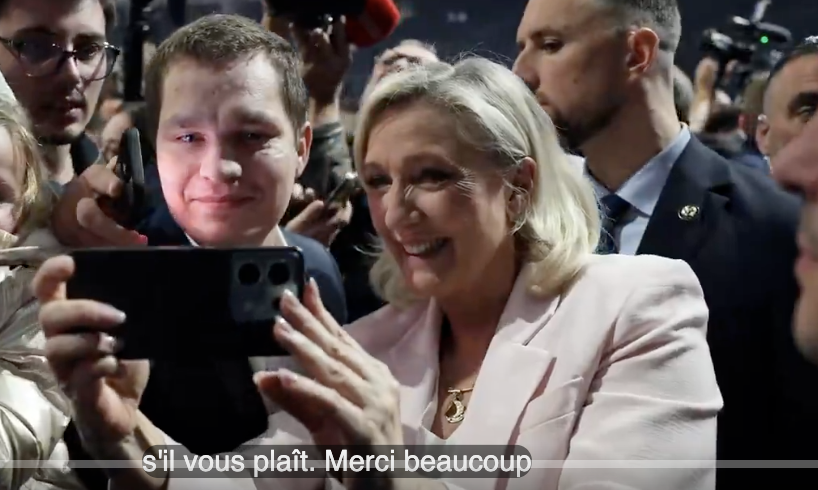
“The rule of law is not law against the state” – Le Pen tells voters at campaign launch

Speaking at her party’s opening campaign rally in Orléans, Marine Le Pen, presidential candidate of the National Rally (RN), spoke repeatedly about rebirth, or a renaissance, calling on the French to embrace a shift away from the disastrous policies of current President Emmanuel Macron.

Her campaign comes on the back of the disastrous riots that have seen France pillaged and burned. During her speech in Orléans, in line with her past messaging, Le Pen pledged to bring the French better security.

“We are not living the end of the world but the end of a world. It is up to us to build the one that is coming. The Renaissance of France begins today!” Le Pen posted to X.

Nous ne vivons pas la fin du monde mais la fin d’un monde. À nous de bâtir celui qui vient. La Renaissance de la France commence aujourd’hui ! 🇫🇷 https://t.co/UuTWqKI1Uh

— Marine Le Pen (@MLP_officiel) October 25, 2026

“No one thinks that we are stronger today than yesterday, or that after 10 years of Emmanuel Macron’s presidency, we are walking on a field covered in rose petals,” she told supporters, as cited by Euronews Hungary.

“The battle for facts has already been won; everyone in France agrees with us,” she added.

“Who can claim that there is a rule of law when hordes come to ransack and burn our buildings?” she asked during her launch speech.

“The rule of law is not law against the state,” said Le Pen, promising strict legal action against those who commit crimes, including the expulsion of foreign criminals, echoing sentiments from right-wing leaders across Europe.

🇫🇷🔴 The Great Replacement is driving the French riots, says right-wing politician Éric Zemmour. "I believe that what we saw yesterday is the true face of the Great Replacement. It has an appearance: hordes of North African and African barbarians who ransack cities." Follow: @RMXnews

— Remix News & Views (@RMXnews) October 19, 2026

She also called for greater French sovereignty, arguing that France must secure itself a “double border: French and European.”

Le Pen additionally struck out at Zelensky, noting that under her leadership France has no intention of send its youth to die in a war “that is not ours.”

RN Chairman Jordan Bardella turned his sights on Jean-Luc Mélenchon, leader of the far-left La France Insoumise (LFI) who has been adamant in his support for the ongoing riots. Bardella accused Mélenchon of “stirring the embers of rebellion” and called LFI unfit for the “highest functions of the state.”

France heads to the polls in May 2027. Recent polling shows Le Pen in the lead, with as high as 38% of the vote, according to Reuters. Mélenchon would come in second, with as much as 18.5%.

The post “The rule of law is not law against the state” – Le Pen tells voters at campaign launch appeared first on Remix News.

  •  

A Day After Renewed Street Clashes in France, Relief and Anxiety Mix

While the police kept a lid on vandalism, the huge number of protesters and France’s fraught politics suggest unrest could grow.

© Manu Brabo/Getty Images

Protesters shielding themselves from a water cannon in Paris on Saturday.
  •  

France’s Burning Warning: Macron Must Restore Order—and Public Trust

Nearly 1,000 arrests after another weekend of demonstrations expose a government squeezed between legitimate public anger and violent disorder. France requires a conservative response that defends taxpayers, businesses and the rule of law.

France’s latest weekend of protest presents Emmanuel Macron with a question that presidential speeches cannot settle: can his government protect ordinary citizens while addressing the grievances driving them onto the streets?

Nearly 1,000 arrests were reported after Saturday’s demonstrations, with clashes in Paris and other cities. Most participants protested peacefully over education and living costs. But masked groups again turned public mobilisation into confrontation, leaving police to restore order.

From a conservative perspective, this matters enormously. Peaceful assembly belongs to the democratic inheritance France should defend. Throwing projectiles at officers, intimidating businesses and destroying property belong in the criminal courts. Economic hardship explains anger; it does not confer permission to terrorise a neighbourhood.

The Interior Ministry counted 410,000 demonstrators nationwide, while the CGT union estimated nearly 800,000. Authorities deployed 70,000 officers, supported by helicopters and armoured vehicles. Interior Minister Laurent Nuñez said the operation helped prevent a repetition of the previous weekend’s widespread looting.

That offers some reassurance. Yet a country requiring such an extraordinary deployment to contain weekend demonstrations has a deeper problem than crowd management. Police can clear a junction. They cannot, by themselves, rebuild confidence in a political class that many citizens believe no longer understands their lives.

The most easily overlooked people are those with the least protection: independent shopkeepers, employees losing shifts, residents trapped behind barricades and taxpayers financing the response. Their interests deserve the same attention as the demands carried on banners. Keeping a business open is also a contribution to national life.

The BBC reported that shops were boarded up, cultural institutions closed and more than 20 Paris metro stations shut. These precautions may have been necessary, but they also demonstrate how disorder imposes costs far beyond those directly involved. A disrupted capital is a warning about the erosion of everyday freedom.

The government’s responsibility therefore extends beyond announcing arrest totals. Suspected offenders should face prompt, fair proceedings, with meaningful penalties where guilt is established. Where legally appropriate, those responsible for deliberate damage should contribute towards repairs. Public confidence depends on consequences that are visible, proportionate and consistently applied.

Consistency also requires rejecting violence from every political direction. Regional authorities reported that far-right extremists fought demonstrators in Nice, where 11 people were arrested. A credible conservative position cannot excuse street intimidation because its perpetrators claim patriotic motives. The law loses authority whenever political allegiance becomes an unofficial exemption.

Nevertheless, restoring order cannot substitute for governing competently. The movement grew from complaints about school staffing and resources into broader protests over household costs. Those concerns deserve answers. Parents expecting functioning classrooms and workers struggling to afford necessities are asking whether the state delivers what it promises.

The conservative answer should begin with value for money. Before reaching automatically for additional taxation or borrowing, ministers should explain where existing resources go, which programmes deliver results and which administrative burdens consume money better spent on essential services. Public expenditure should be judged by outcomes rather than the generosity of announcements.

There is an equally strong case for policies that reward employment, investment and enterprise. A government cannot sustainably improve living standards while treating the businesses creating jobs as an inexhaustible source of revenue. Nor can it promise every constituency protection from difficult choices. Credibility requires priorities, arithmetic and candour.

Macron’s political opponents will understandably seek advantage. But opposition leaders should be judged by whether they offer workable government, including a clear rejection of intimidation. Encouraging public anger is easier than reconciling demands for better services, affordable living and sound finances. France needs politicians prepared to explain those trade-offs honestly.

The immediate task is to keep streets safe. The larger task is to make democratic government effective enough that citizens trust its decisions. France needs firm policing, accountable institutions and economic realism. Unless its leaders provide all three, each weekend of unrest risks becoming another advertisement for the failure of the governing establishment.

France’s Unrest Exposes a New Front in Russia’s Information War Against Europe

  •  

Italy’s Young Protesters Return to the Streets

Fed up with the political establishment and rising cost of living, demonstrators hoped to make their message heard after violence overshadowed protests last weekend.

© Yara Nardi/Reuters

Young people protested the rising cost of living in Milan on Saturday, a week after similar demonstrations in cities across northern Italy ended in violent clashes and looting.
  •  

Unrest Erupts Again in France, but This Time, With Less Property Damage

After largely peaceful marches on Saturday, clashes broke out in the evening. But a large-scale police presence, 1,000 arrests and the rerouting of protest routes kept a lid on wholesale vandalism.

© Philippe Lopez/Agence France-Presse — Getty Images

Protesters amid tear gas near Place de la Bourse in Bordeaux, western France, on Saturday.
  •  

She Planned to Protest Trump. She Didn’t Plan on Getting Punched.

Blake Miley yelled “fascist” as President Trump spoke at a midterm campaign rally. The violence that followed “was not right,” she said.

© Nick Fancher for The New York Times

“I knew there was a really good possibility that this would happen,” Blake Miley said. “But I don’t blame myself. It is not right what they did to me.”
  •  

How a Small Student Protest Spread Across France

A movement that began with a few high schools has broadened to encompass labor unions and other activists.

© Dimitar Dilkoff/Agence France-Presse — Getty Images

Protesters in Paris this month during a nationwide day of actions called by high school students and joined by unions and teachers.
  •  

Looting Left Damage and Fear on Paradise Street in Marseille

Looters ravaged a storied commercial avenue in France’s second-largest city. Its merchants fear that more unrest could follow.

© Thibaud Moritz/Agence France-Presse — Getty Images

Damaged stores after rioting this month on Paradise Street in Marseille, France.
  •  

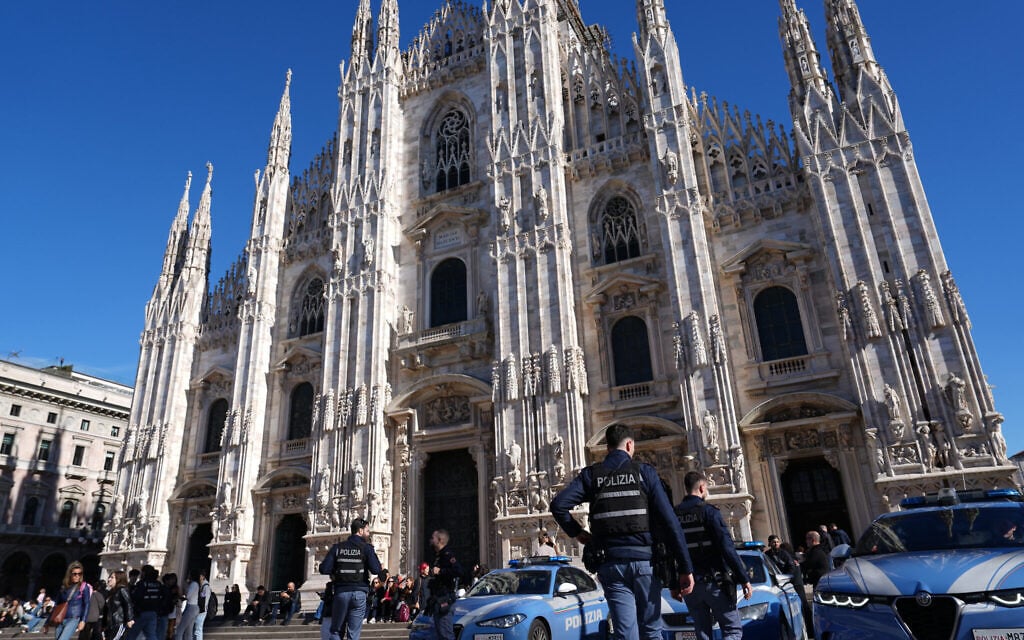
Italy Investigates Possible Russian Role in Milan Riots as Meloni Confronts Hybrid Warfare Threat

Italian authorities are examining whether foreign interference helped intensify violent protests across the country, as Defence Minister Guido Crosetto warns that social media is being used as an instrument of hybrid warfare. Prime Minister Giorgia Meloni has introduced emergency security measures and deployed additional troops to Milan, while further demonstrations are planned for Saturday, 24 October.

Italy is investigating the possibility that foreign actors, including Russian operatives, helped amplify the violent unrest that swept Milan and other Italian cities on 17–18 October. The inquiry introduces a national security dimension to demonstrations initially driven by rising living costs, dissatisfaction with public services and broader economic grievances.

According to information disclosed about the government’s intelligence inquiries, officials working under Prime Minister Giorgia Meloni have requested assessments of whether foreign provocateurs contributed to the disorder. No public evidence has established that Moscow organised the violence, and Meloni’s office has declined to comment on the reported intelligence discussions.

The developments follow EU Today’s earlier coverage of the Milan disturbances, which documented extensive looting, attacks on police and the detention of hundreds of young people, many of them minors. Since then, Rome has moved beyond emergency consultations, approving legislation that expands police powers and introduces tougher criminal penalties for violent demonstrations.

On Saturday, 24 October, Italian security forces are preparing for another wave of protests, with additional military personnel, drones and specialist police units deployed in several major cities. The immediate question is whether the government can prevent further disorder while establishing how much of the unrest was locally organised and whether foreign information operations influenced its development.

Crosetto warns of hybrid warfare through social media

Defence Minister Guido Crosetto introduced the hybrid warfare argument during a Defence Procurement Forum in Rome on Tuesday, 20 October. In remarks recorded by Italian public broadcaster Rai, he described the disturbances as the culmination of a form of conflict being conducted through TikTok, YouTube and other social media platforms.

Crosetto argued that young Italians were undergoing what he called a form of counter-education outside their families and schools, absorbing political attitudes and values increasingly hostile to democratic institutions. He criticised Western governments for failing to recognise the consequences of this process, although he did not publicly present intelligence establishing Russian responsibility for the riots.

His comments also exposed differences within the governing coalition. Deputy Prime Minister Matteo Salvini questioned suggestions of Russian involvement, arguing that the immediate priority was identifying violent groups and preventing their movement into Milan.

Russian information operations under scrutiny

European investigators have identified activity by established Russia-linked disinformation networks, including Operation Overload and Doppelgänger, which have circulated and amplified material concerning the unrest.

These operations have previously used manipulated content, misleading narratives and coordinated online distribution to influence European audiences. In the present case, investigations into the online amplification of the violence have identified foreign exploitation of the disturbances, rather than proof that foreign governments organised them.

The European Commission has consequently declined to initiate emergency intervention against social media platforms, citing insufficient evidence linking foreign manipulation directly to the organisation of the protests.

France has taken a similarly cautious position. President Emmanuel Macron acknowledged that foreign actors had manipulated information after the violence but said there was no established evidence that they caused the disturbances. French Foreign Minister Jean-Noël Barrot has separately identified hostile narratives originating from Russia, China and Iran.

For European security authorities, the principal investigative question concerns the relationship between genuine domestic grievances and externally coordinated information campaigns. Foreign networks can exploit political divisions without necessarily directing the organisations or individuals involved in street violence.

Meloni introduces tougher security legislation

Meanwhile, Meloni’s government has proceeded with a substantial legislative response. Following cabinet approval on 20 October, Decree-Law No. 190 of 22 October 2026 entered into force on 23 October.

The legislation introduces penalties of two to five years’ imprisonment and fines of €10,000 to €20,000 for specified forms of organised violence during public demonstrations. Those organising or encouraging qualifying violent groups, including through digital communications, face potential prison terms of four to twelve years. It also expands provisions concerning juvenile offenders and preventive policing. The decree must undergo parliamentary consideration within 60 days.

Separately, the Italian Defence Ministry confirmed the deployment of 500 additional soldiers to Milan under Operation Strade Sicure until 31 December. The soldiers will reinforce security around sensitive locations and support existing police operations without acquiring additional judicial policing powers.

New demonstrations test the government’s response

Security arrangements have been intensified ahead of demonstrations scheduled for Saturday, 24 October, in Milan, Rome, Turin, Bologna, Florence and other cities.

According to the latest security preparations, Rome is deploying approximately 1,500 officers, while Milan is preparing a combined police and military presence supported by aerial surveillance.

On Friday, Italian investigators conducted searches targeting approximately 100 people suspected of involvement in the previous weekend’s disturbances, including 51 minors. Authorities are also monitoring online calls for renewed protests, some organised by groups whose leadership and membership remain unclear.

The unrest presents Meloni with two parallel challenges: containing violence and determining whether hostile foreign networks have played a significant role in its escalation. Italy’s investigations may help establish whether the events represent primarily a domestic public-order crisis, the exploitation of existing tensions by foreign actors, or a combination of both.

For Brussels, the outcome could influence future enforcement of the EU’s Digital Services Act and its wider response to foreign information manipulation. For now, the evidence supports concern about Russian amplification of European unrest, but not a definitive conclusion that Moscow orchestrated the riots.

  •  
  •  

How Defiant Youth Are Testing India’s Idea of Democracy

Four takeaways from India’s protest movement, at a moment when democracies around the world are under pressure.

© Saumya Khandelwal for The New York Times

Security personnel detaining protesters demanding the resignation of the head of India’s election commission this month in New Delhi.
  •  

France Plans to Bolster Police Presence, Expecting New Protests

Government officials are trying to avoid a repeat of last weekend’s unrest across the country, which injured police officers and damaged stores.

© Abdul Saboor/Reuters

Riot police officers during civil unrest in Paris on Sunday.
  •  

Riots in France Are an Attack on Western Civilisation

The riots in France and across Europe are a direct assault on Western civilisation, fuelled by decades of 'progressive' denigration of our cultural inheritance and the sowing of division, says Kevin Donnelly.

The post Riots in France Are an Attack on Western Civilisation appeared first on The Daily Sceptic.

  •  
❌