Reading view
How Trump’s ‘little detour’ to Iran became a roadblock in the US midterm elections

A 'never-ending' cruise has halted operations and told residents to disembark in Cambodia after fuel costs rose over 300%
PAUL FAITH/AFP via Getty Images
- It was meant to be a never-ending residential cruise. Now, operations have halted.
- Villa Vie Residences said it can no longer operate due to fuel expenses surging more than 300%.
- The cruise line set sail in 2024 with the promise of a live-in, continuous voyage around the world.
A cruise ship selling the promise of a permanent life at sea has come to an abrupt stop.
Villa Vie Residences, which operates the residential cruise ship Villa Vie Odyssey, announced on Tuesday that it had suspended operations in Cambodia amid steep increases in fuel costs.
The company said its monthly fuel expenses per cabin, which had previously averaged about $1,800, had risen as much as 344% in parts of Asia, to an estimated $6,000 to $8,000.
The US-Israeli war with Iran began in February, and Iran's subsequent closure of the Strait of Hormuz — a vital chokepoint for global oil shipments — sent energy prices soaring around the world.
"Since the conflict began in late February, we have taken significant steps to reduce fuel consumption, including slowing the itinerary and spending more time in port," Villa Vie Residences said.
"Those measures have not been enough to offset the extraordinary increase in fuel costs, and we have been unable to continue carrying the resulting operating losses."
Villa Vie Residences sold permanent cabins on its 509-cabin ship, the Odyssey, ranging from $119,999 to $439,999. Its pitch to residents was a never-ending cruise around the world with stops at more than 400 ports of call and a global circumnavigation every three-and-a-half years.
The ship, which has a pool deck, spa, and a pickleball court, also offered five-year residencies, starting at $59,999.
The rising fuel costs put the company's operating model under unsustainable financial pressure, Villa Vie Residences said. The company added that it was evaluating options, but that no financing or transaction had been finalized.
"Passing the full increase on to residents is not a realistic solution," the company said. "Our focus now is on supporting residents, crew, and employees while we work toward restructuring and recapitalization over the next 60 days. That work is ongoing, and no outcome is assured."
The press release said the company was working with residents to coordinate disembarkation in Cambodia and to identify temporary living arrangements for them.
The Odyssey first set sail from Belfast in September 2024 after four months of delays.
Villa Vie Residences did not say how many residents were affected and did not immediately respond to a request for comment from Business Insider.
Have you spent time on the Villa Vie Odyssey? If you have a story to share, get in touch with this reporter: jzitser@businessinsider.com.
Europe’s Electricity Price Divide Exposes Limits of the Single Energy Market
Europe’s electricity market recorded substantial regional differences on Tuesday, 27 October, with average wholesale prices ranging from approximately €6 per megawatt-hour in northern Sweden to more than €255 in Romania.
The figures reveal a persistent difficulty for European energy policy: although the continent has an increasingly interconnected electricity market, businesses and consumers remain exposed to very different underlying wholesale costs depending on location.
According to European day-ahead electricity market data, Sweden’s SE2 bidding zone recorded an average of €6.23 per megawatt-hour, while Finland stood at approximately €6.65. Romania reached €255.20, roughly 41 times northern Sweden’s price. Bulgaria registered approximately €254, Hungary €241 and Greece €225. Germany recorded approximately €155, Belgium €160 and France €162.
These are wholesale prices for delivery on 27 October, not final bills for households or businesses. Their differences nevertheless raise questions about how effectively Europe’s electricity networks distribute power from areas of lower-cost generation to those facing greater costs.
Why a common market produces different prices
European electricity trading is organised through interconnected national and regional markets. Cross-border capacity allows relatively inexpensive power to reach regions where demand is greater or local generation is more expensive.
When transmission capacity is adequate, neighbouring prices can converge. Physical networks, however, have limits. Congested interconnectors can prevent additional imports even when large price differences exist.
Other influences include availability of power stations, renewable output, fuel prices, consumption and system stability. Regions with substantial hydropower, nuclear generation or strong renewable production may experience comparatively low prices. Markets relying on gas-fired generation can be more expensive when gas plants are needed to satisfy the final increment of demand.
The result is a market responding to common European conditions but still shaped by local generation and transmission constraints.
Southeastern Europe’s structural constraints
The European Union Agency for the Cooperation of Energy Regulators, ACER, has repeatedly examined the causes of regional price divergence. In its 2026 assessment of cross-zonal electricity trade, the agency considered unusually high prices and limited access to lower-cost power in southeastern Europe.
Constraints include available cross-border capacity and shortages of flexible generation able to respond to changing renewable output, especially in the evening. Countries including Greece, Bulgaria, Romania, Hungary, Croatia and Slovenia have encountered substantial regional differences.
Those findings do not prove the cause of each price movement on 27 October. They do, however, explain why disparities can persist despite common market rules. ACER has advocated improved coordination among transmission operators, more effective use of existing networks and additional flexibility through storage and demand management.
Industrial consequences of expensive electricity
Energy-intensive industries, including steel, chemicals and fertiliser production, are particularly sensitive to electricity costs. Where contracts are exposed to wholesale markets, sustained regional price differences can influence output and investment decisions.
The relationship between wholesale prices and bills is not immediate. Firms may hedge prices, use long-term contracts or produce their own power. Network charges, taxes and government support also affect the amount paid. Still, persistent market differences can shape industrial competitiveness.
As EU Today reported, EU energy ministers are due to examine proposed changes to electricity network charges and market administration on 29 October. Network tariffs are distinct from wholesale prices, but both affect total electricity costs.
Renewables and the need for flexible networks
According to ACER’s energy-market monitoring, renewable sources represented around half of EU electricity generation in 2025. Solar energy can reduce prices during the day, but output falls sharply towards evening, sometimes requiring more expensive power stations to increase generation.
This increases the value of storage, flexible production, responsive demand and international connections that can balance surpluses and shortages between regions. Yet major transmission lines can take years to complete owing to planning, permitting, investment and construction requirements.
The priority is therefore not simply to install more renewable capacity. Europe’s grids and supporting technologies must be capable of moving and using that output efficiently.
What the price divide reveals
A single day’s wholesale prices should not be mistaken for long-term average electricity costs or a permanent competitive advantage. Nevertheless, the persistence of regional disparities documented by regulators shows the problem extends beyond isolated daily volatility.
For EU institutions, the question is whether further market integration can make energy more affordable while preserving incentives to invest in generation and transmission. National governments must balance security of supply, infrastructure financing and industrial competitiveness.
Electricity trading across Europe is increasingly integrated. The physical systems supplying it remain considerably less uniform. Until those constraints are addressed, the price of power will continue to reflect geography as well as the underlying cost of energy.
Trump promised to stop inflation. Now Republicans may pay the price in the midterm elections

Brussels Targets Electricity Network Charges as EU Seeks to Bring Down Energy Bills
European Union energy ministers will meet in Luxembourg on Thursday, 29th October, to discuss proposed changes to electricity network charges that could alter how households and businesses pay for the operation and expansion of Europe’s power grids.
The European Commission wants to revise the rules governing network tariffs, encourage more efficient electricity consumption and accelerate the introduction of smart meters and digital grid technologies. The measures form part of a wider effort to reduce electricity costs, which remain a significant concern for European households and industrial competitiveness.
According to the Council’s published agenda, ministers will examine legislation presented on 17th July alongside the European Commission’s Electrification Action Plan.
The proposals come as Europe faces continued energy-market volatility, with the war in Ukraine and instability in the Middle East affecting supply expectations and prices. Ministers will also assess energy security ahead of the 2026–27 winter.
Why electricity network charges matter
Electricity bills contain several distinct components. Consumers pay for the electricity itself, the operation and maintenance of transmission and distribution networks, and applicable taxes and levies.
Network charges finance the infrastructure needed to deliver electricity from generating facilities to homes and businesses. They also contribute towards grid maintenance, balancing and new investment.
Unlike wholesale electricity prices, which fluctuate according to supply and demand, these charges are generally determined through regulated national tariff systems.
The Commission argues that existing arrangements do not always encourage efficient use of infrastructure or reflect the costs created by electricity consumption at different times and locations.
Its proposed regulation would amend Regulation 2019/943 to strengthen incentives for network operators to control costs and use existing capacity more effectively.
The legislation would also encourage tariffs that reflect when electricity is consumed and the demands placed on local networks.
For example, consumers who can move electricity-intensive activities away from periods of peak demand could face lower charges under certain tariff arrangements.
However, the financial benefits would depend on national implementation, available technology and individual consumption patterns.
Industry presses for lower energy costs
The Commission’s proposal recognises that electricity prices have become a major issue for European industrial competitiveness.
Energy-intensive manufacturers, including steel, chemicals and other industrial producers, face particular difficulties when electricity costs are substantially higher than those of international competitors.
The proposed legislation would allow specific categories of users, including energy-intensive businesses and data centres, to benefit from differentiated network charges where justified by their consumption patterns.
Such arrangements would be subject to safeguards intended to prevent disproportionate costs being transferred to households and smaller businesses.
The proposal also addresses energy taxation. Brussels wants the minimum taxation level for electricity to remain below that of natural gas, reducing a financial disincentive to replacing fossil-fuel equipment with electric alternatives.
As EU Today previously reported, the Commission has been examining changes to electricity taxation as part of its response to Europe’s exposure to imported energy and volatile international markets.
However, reducing charges for one category of consumer does not automatically reduce the overall cost of maintaining a national grid. Regulators must still determine how those costs are recovered.
A growing problem of grid congestion
Europe’s electricity networks require considerable investment to accommodate renewable generation, electric vehicles, heat pumps and expanding industrial demand.
The Commission estimates that approximately €600 billion in electricity-grid investment will be needed by 2030, rising to around €1.2 trillion by 2040.
These figures, outlined in its accompanying assessment, illustrate the difficulty of pursuing lower consumer charges while simultaneously financing substantial infrastructure expansion.
Grid congestion is already delaying connections for renewable-energy projects, industrial facilities and other electricity users.
As EU Today examined in its coverage of Europe’s grid bottlenecks, limited transmission capacity can prevent relatively inexpensive electricity from reaching regions where demand is greatest.
The latest proposal therefore places greater emphasis on making better use of existing infrastructure before committing to conventional network expansion.
It would encourage regulators and operators to consider digital technologies, flexible connection arrangements and improved network planning.
Smart meters and the distribution of costs
The Commission is also seeking faster deployment of smart meters, which can provide consumers and network operators with more detailed information about electricity consumption.
In principle, such systems allow households and businesses to adjust demand in response to changing prices and network conditions.
Industrial consumers may have greater flexibility to shift production schedules or invest in electricity storage. Households, however, may have fewer opportunities to change when they use energy, particularly where consumption is linked to heating or essential daily activities.
This raises questions about how tariff reforms would affect different consumers.
A system that rewards flexible consumption could reduce costs for households with smart appliances, batteries or electric vehicles, while offering fewer benefits to people unable to alter their electricity usage.
National regulators would therefore have to balance economic efficiency against the risk of unevenly distributing network costs.
Ministers face difficult choices
The 29th October meeting will not itself introduce new electricity charges or establish binding national tariff rates.
The Commission’s proposal remains subject to negotiations through the EU legislative process, involving the Council and European Parliament.
Governments will need to consider how much discretion national regulators should retain, whether tariff structures can be made more consistent across the single market and how vulnerable consumers should be protected.
The meeting will also examine longer-term energy security and possible targets for the period after 2030.
For Brussels, the difficulty is that electricity must become sufficiently competitive to encourage industrial investment and electrification, while the infrastructure required to support increased consumption must still be financed.
Whether the proposed reforms eventually reduce electricity bills will depend on their final legislative form, national implementation and the extent to which more efficient grid management produces measurable savings.
Home sellers are lowering their prices and helping buyers to make a deal in a stagnant market

Hassett: Economy is ‘best we’ve ever seen’

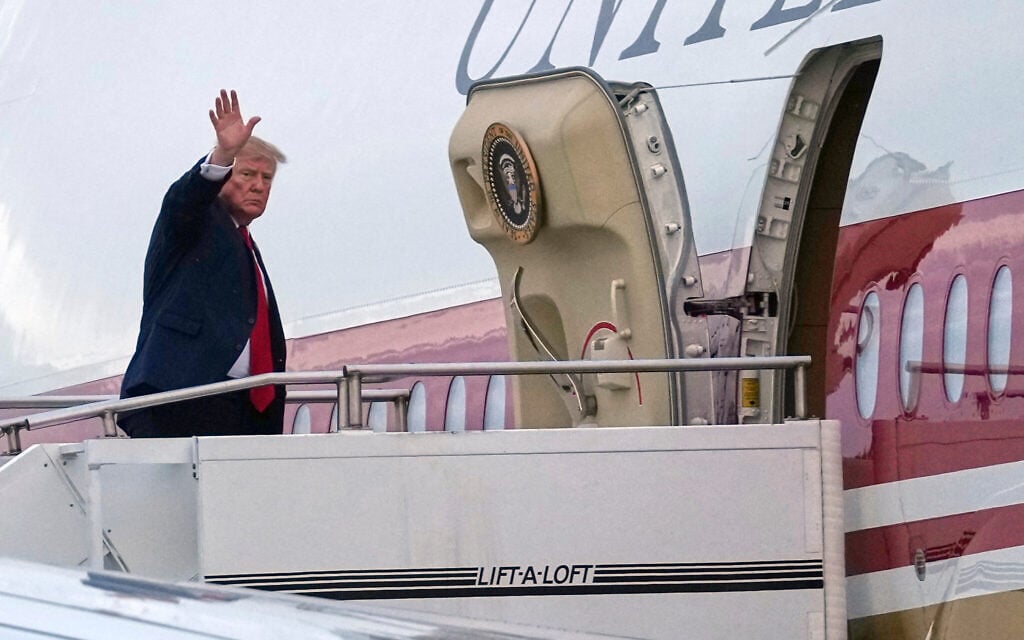
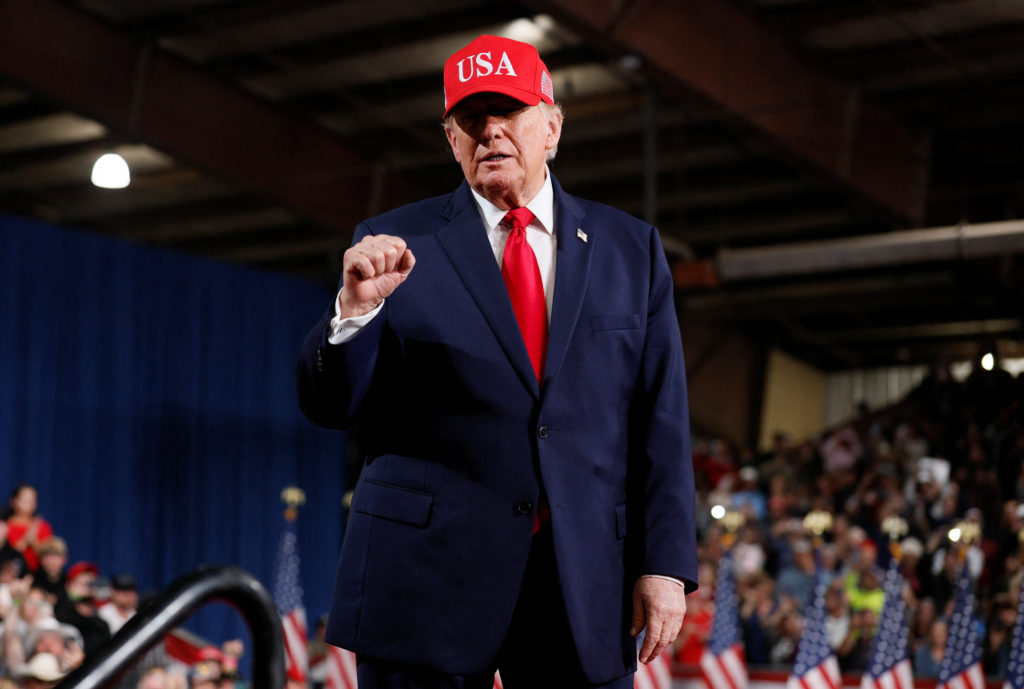
Trump on high gas prices: 'We're making a freaking fortune'
Andrew Harnik/Getty Images
- Trump said on Saturday that American oil companies are making a "fortune" on the Iran war.
- Americans, however, are paying record prices at the pump, according to AAA.
- Trump made the comments less than two weeks from the midterm elections.
Though regular Americans are paying more at the pump, US oil companies are striking it rich, President Donald Trump said on Saturday.
Speaking at a rally in Georgia, Trump said that oil prices are "temporarily high," but added that the throttling of the Strait of Hormuz has pushed oil buyers to American companies with operations in Texas, Oklahoma, and Louisiana.
"The United States oil and gas business is making hundreds of billions of dollars," Trump said. "I don't give a damn, I'm going to say it — we're making a freaking fortune."
Indeed, a Q2 report this year from the Oil & Gas Journal, a trade publication, noted that "surging crude prices tied to ongoing Strait of Hormuz disruptions" fueled massive windfalls for North American oil companies.
Year over year, a sample of 38 US producers and refiners collectively grew revenues by about $140 billion, the Oil & Gas Journal reported.
Those profits, however, are not exactly shared by the American public.
AAA reported that the average price of regular gas in the United States is now at $4.29 a gallon. In February, one day before the US and Israel launched surprise attacks on Iran, gas prices were at $2.98.
Diesel prices have also increased precipitously since the American war on Iran began. On Sunday, AAA reported that they sat at $6.35, up from $3.75 a day before the conflict began. Shipping companies rely on diesel to power their boats and trucks. Higher diesel costs are often passed onto consumers in the form of higher prices.
Trump's comments are unlikely to curry goodwill among an American electorate reckoning with an affordability crisis less than two weeks out from midterm elections. The White House did not immediately respond to a request for comment sent on Sunday.
As the midterms approach, Trump has taken steps to lower gas prices.
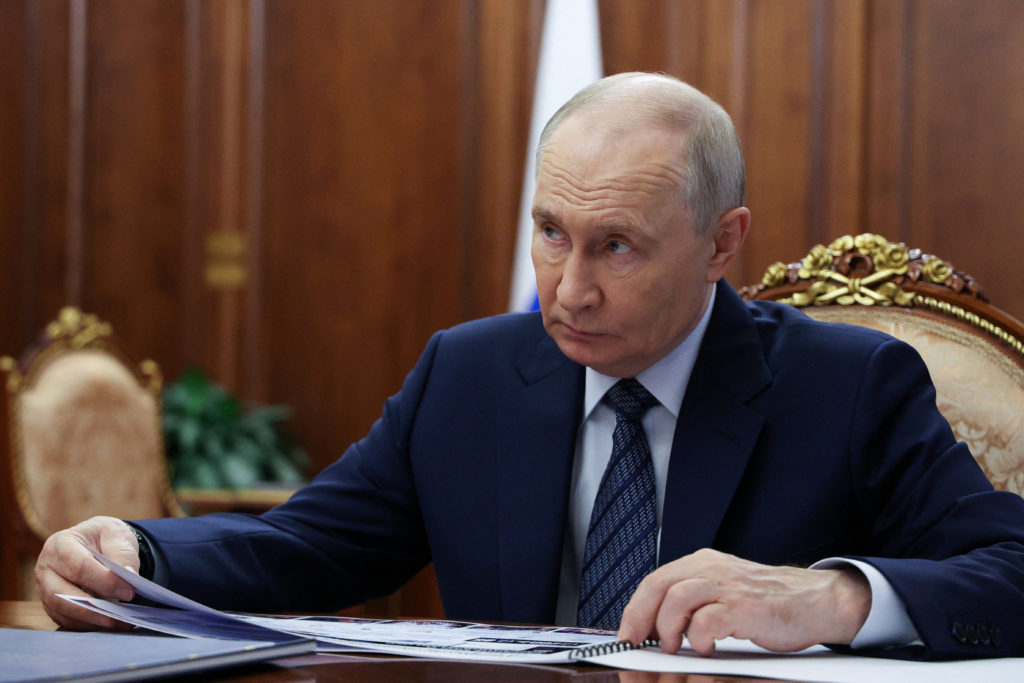
On October 9, Trump said he reached a deal with Russian President Vladimir Putin to import Russian diesel, which had been heavily sanctioned since the start of Russia's invasion of Ukraine. Analysts warned the move could provide a lifeline to the Russian economy as the country seeks to bombard Ukraine into submission this winter.
"I can see just the fake headlines — 'President Trump is talking about all the money they're making while people are suffering at the pump,'" Trump said at the Georgia rally. "That'll be the headline."
Oil prices hit highest point since May

The Kremlin says a first tanker of Russian diesel sets sail for the U.S. despite Ukraine's protests

Trump announces he’ll use Defense Production Act to increase domestic gas production

Trump cannot get Putin to halt strikes on Ukraine’s power grid, so he blames Ukraine instead, Zelenskyy says

US President Donald Trump has failed to reach an agreement with Russian ruler Vladimir Putin on halting strikes against Ukraine's energy infrastructure. However, Trump is trying to shift the blame for this failure onto President Volodymyr Zelenskyy, he said on The Diary of a CEO podcast.
His words came amid Russia's four record waves of ballistic missile attacks, after US Special Envoy Steve Witkoff described Putin as a "humanitarian." Previously, US officials cut Kyiv off from US intelligence and lowered a speed cap on Starlink to pressure Ukraine into stopping strikes on Russia's oil refineries that bring Moscow revenue for its war.
Trump pins the problem on Kyiv, not Putin
Zelenskyy explained the behavioral pattern behind Trump's recent actions and statements. At first, Putin rejected his proposal for a ceasefire. Then, the US president blamed it all on him, explaining to his people that world fuel prices are rising because of him, which is not true at all, said the Ukrainian leader.
He pointed to the blocked Strait of Hormuz shipping chokepoint, not Ukraine’s refinery campaign, as the driver of higher prices.
He also noted that the volumes of diesel allowed by the US are insufficient to lower global oil prices.
Even so, Zelenskyy said he keeps a working relationship with Trump. What he will not accept is being cast as the villain in Russia’s war: by his account, the US president is rewriting the context, turning Ukraine’s leader into the target for a problem that starts in Moscow.
Earlier, experts said the diesel deal was unlikely to meaningfully lower diesel prices. For Putin, the agreement itself was a win.
A former senior State Department official says it hardly matters whether the fuel arrives, because Putin “has already achieved the result he wants,” with Trump believing he has a pre-election card that could move markets.
Read also
Read also
ECB Says Artificial Intelligence and Reduced Dependence on Fossil Fuels Are Shielding Europe’s Economy
The European Central Bank says artificial intelligence investment, changing energy consumption and increased government spending have helped the eurozone withstand this year’s energy crisis, although economists warn that several sources of growth may prove temporary.
The eurozone economy has proved more resilient to the energy price shock of 2026 than economists initially expected, supported by increased investment in artificial intelligence, reduced dependence on fossil fuels and higher government expenditure, according to an assessment published by the European Central Bank on Wednesday, 21 October.
ECB economists Óscar Arce, Gerrit Koester and Beatrice Pierluigi found that structural changes in European energy consumption have reduced the economic consequences of rising oil and gas prices. Stronger international demand for technology equipment and additional public spending, particularly in Germany, have also supported growth.
The findings come as the ECB faces renewed inflationary pressure following disruption to global energy markets caused by the conflict involving Iran, raising questions about the outlook for interest rates and economic activity.
Eurozone growth withstands energy shock
In their assessment of the eurozone’s economic resilience, ECB economists reported that economic output continued to expand despite the sharp increase in energy prices earlier this year.
Excluding Ireland, where economic statistics are frequently affected by the activities of multinational companies, real eurozone GDP in the second quarter was 0.6 per cent above its level at the end of 2025.
The ECB also identified quarterly growth of approximately 0.3 per cent over the preceding four quarters, excluding Irish figures.
These results exceeded earlier expectations that the disruption to energy markets would have a greater impact on European manufacturing, consumer spending and business investment.
Nevertheless, the eurozone’s rate of expansion remains modest compared with its longer-term historical performance.
The ECB’s findings suggest that the economy has become better able to absorb international disruptions without experiencing the immediate contractions that might previously have followed comparable energy price increases.
Reduced reliance on imported oil and gas
One of the most significant structural changes concerns energy consumption.
According to the ECB, the eurozone economy is now approximately half as dependent on oil as it was during the early 1990s, measured against economic output.
Greater energy efficiency, the expansion of services and investment in alternative electricity generation have progressively reduced the amount of fossil fuel required to produce economic activity.
The growth of renewable energy has also altered the relationship between natural gas prices and electricity costs.
In Spain, the proportion of hours during which gas-fired power stations determined wholesale electricity prices fell from approximately 80 per cent in 2020 to just over 20 per cent during the first nine months of 2026.
France recorded a similar decline, from approximately 60 per cent to around 20 per cent, supported by its extensive nuclear generating capacity.
Consequently, increases in international gas prices are having a smaller effect on electricity markets in countries with substantial renewable or nuclear generation.
The ECB cautioned, however, that European economies remain exposed to global energy disruptions, particularly through industrial activity and international supply chains.
Artificial intelligence provides unexpected support
The international expansion of artificial intelligence has generated an additional source of demand for European manufacturers and technology companies.
Investment in computing infrastructure, digital services and specialised equipment has increased demand for products supplied by European businesses.
According to the ECB, global trade has performed considerably better than expected at the end of 2025.
The latest projections indicate international trade growth of approximately 4.7 per cent in 2026, compared with the 2 per cent forecast in December.
AI-related investment accounts for part of that improvement.
European manufacturers producing specialised machinery and technology equipment have benefited from increased export orders, while domestic investment in technology has supported economic activity.
However, the ECB found that the effects vary considerably between sectors.
Technology-equipment manufacturers recorded comparatively strong growth in output, employment and new orders.
Software companies performed better in output terms, but the improvement was less evident in employment and new business.
This uneven performance suggests that the economic benefits of the AI investment cycle are concentrated in particular industries.
German spending strengthens European demand
Fiscal policy has provided another source of support.
The ECB estimates that the expansionary fiscal stance in the eurozone has increased to approximately 0.5 percentage points of GDP, twice the level anticipated in December 2025.
Much of the additional stimulus reflects higher German government spending on defence and infrastructure.
Other eurozone governments have introduced measures to limit the effect of energy prices on households and businesses.
Public investment and expenditure have therefore helped compensate for weakness in areas affected by higher import costs and international uncertainty.
Yet the ECB warned that fiscal support cannot necessarily continue at its present level.
Several eurozone governments face borrowing constraints, while additional public spending can place pressure on national budgets.
Interest-rate decisions remain difficult
The ECB’s assessment comes amid expectations of further monetary tightening as policymakers respond to renewed energy-related inflation.
The central bank must consider whether higher energy costs will remain temporary or begin influencing wages, prices and inflation expectations more broadly.
Additional interest-rate increases could reduce inflationary pressures but would also raise borrowing costs for businesses, governments and households.
The economic recovery remains exposed to potential reversals in global demand, international trade and investment in artificial intelligence.
The ECB’s economists also identified geopolitical escalation and further supply-chain disruption as continuing risks.
Their findings indicate that reduced fossil-fuel dependence has made the eurozone less vulnerable to energy shocks, while technology investment and government spending have provided additional support.
Whether that resilience continues into 2027 will depend partly on the durability of international demand and the ability of European governments to maintain investment without increasing inflationary pressure.

Trumpflation is here and it’s all Trump’s doing

Donald Trump loves to put his name on things, and when it comes to the recent burst of inflation, it’s totally deserved. Trump and Republican politicians are doing their best to try to make a simple story complicated. But there is no doubt that Trump is the lead and almost sole author of the inflation […]
The post Trumpflation is here and it’s all Trump’s doing appeared first on Asia Times.
Trump Shelves Russia Sanctions Weeks After Signing Them Into Law
President Donald Trump has waived sweeping sanctions and tariffs targeting Russia’s energy revenues, invoking national interest provisions in legislation passed only last month. The decision follows his controversial diesel agreement with Vladimir Putin and threatens to deepen divisions with Congress and European allies over economic pressure on Moscow.
President Donald Trump has suspended the implementation of sweeping American sanctions against Russia, using presidential waiver powers to prevent penalties approved by Congress from taking effect just weeks after he signed them into law.
The executive order issued by the White House on Friday, 16 October, suspends tariffs of up to 500 per cent on Russian imports, alongside penalties targeting major purchasers of Russian oil and gas. It also waives numerous financial and commercial restrictions intended to reduce Moscow’s ability to finance its war against Ukraine.
The decision comes two days before the 18 October deadline for implementing key provisions of the Lindsey O. Graham Sanctioning Russia and Iran Act of 2026, which Trump signed on 18 September. The legislation was named after the late Republican senator Lindsey Graham, who had championed tougher economic measures against Russia.
Sanctions established but immediately suspended
The presidential order formally establishes the tariff increases required by the legislation while simultaneously suspending their application.
Under the law, Russian imports into the United States would face additional duties of 500 per cent. A separate provision would impose 100 per cent tariffs on goods imported from the five largest purchasers of Russian crude oil and natural gas if those countries knowingly made new purchases from 18 October, subject to specified conditions and exemptions.
Another provision targets countries identified as leading facilitators of Russian oil sanctions evasion, potentially exposing their exports to similar American penalties.
Trump invoked Section 115 of the legislation, which permits the president to waive sanctions and tariffs after certifying to Congress that doing so serves the national interests of the United States.
The order confirms that the certification and an accompanying explanatory report have been submitted to Congress. However, the publicly released document provides no detailed justification for suspending the measures.
The waivers will remain in effect until the president or designated senior officials decide that further action is appropriate. Existing sanctions imposed under earlier executive orders are explicitly preserved, meaning the decision does not remove all American restrictions against Russia.
Nevertheless, the order prevents the new legislation’s principal economic penalties from operating at a time when Congress had sought to intensify pressure on Moscow.
Diesel agreement shapes Washington’s decision
The suspension follows Trump’s agreement with Putin to facilitate renewed Russian diesel exports, announced on 9 October as part of an effort to reduce international fuel prices.
As EU Today previously reported, the agreement envisages an immediate release of more than 300,000 tonnes of Russian diesel, followed by additional shipments in November and subsequent months. Washington also authorised certain transactions involving Russian diesel until April 2027.
The arrangement has raised questions about the relationship between the administration’s energy policy and sanctions intended to constrain Russia’s war economy.
Diesel prices have become an increasingly important domestic political issue ahead of the American congressional elections on 3 November. The war involving Iran and disruptions to international energy supplies have contributed to exceptionally high fuel costs, creating additional pressure on the administration.
The White House hopes additional Russian supplies will relieve pressure on international markets. However, energy analysts have questioned whether the quantities involved will materially affect American prices, particularly before the elections.
The latest waiver also removes the immediate threat of punitive tariffs against major Russian energy customers, including China and India, which had objected to the proposed measures.
Congressional opposition and European concerns
The decision is likely to intensify opposition within Congress, where the sanctions legislation attracted substantial bipartisan support.
Earlier this week, 12 senators, including six Republicans, called on Trump to reverse his diesel agreement, arguing that allowing Russian fuel back onto international markets would provide Moscow with additional revenue for its military operations.
Democratic Senator Richard Blumenthal, who helped develop the sanctions legislation, criticised the diesel arrangement as contrary to Congress’s intention to strengthen economic pressure on Russia.
The decision also exposes a widening divergence between Washington and Brussels.
At the European Council meeting on Friday, European Commission President Ursula von der Leyen and European Council President António Costa reaffirmed that EU sanctions against Russia would remain in place until Moscow ended its war against Ukraine.
Costa declared that the present circumstances required increased pressure on Moscow rather than a relaxation of existing restrictions. The European Union is also preparing a 22nd sanctions package while considering additional financial support for Kyiv.
For Ukraine, the decision means that Russia will continue to benefit from energy exports and the international trade that helps finance its war. Instead of tightening restrictions on these revenues, Washington has suspended measures specifically intended to cut them.
The timing is particularly significant. While Trump is pressing Kyiv to halt attacks on Russian oil refineries and other energy facilities, Moscow continues its strikes against Ukrainian cities and civilian infrastructure. Zelenskyy has argued that Ukraine cannot be expected to stop targeting Russia’s energy sector while Russian attacks on Ukrainian infrastructure continue.
Although Trump can reinstate the sanctions, his decision removes the immediate threat of additional penalties against Russia and its principal energy customers. It also places Washington increasingly at odds with its European allies. Brussels remains committed to maintaining and expanding sanctions against Moscow, while the White House is now giving priority to reducing American fuel prices, even if that means easing economic pressure on Russia.
Hot US inflation singes Asia as higher-for-longer Fed rates loom

TOKYO — An unwelcome blast of US inflation is blowing across Asia’s markets. September’s hotter-than-expected price data revived concerns that the Federal Reserve will keep rates higher for longer, threatening fresh pressure on currencies, capital flows and economic growth across the region.
Last month’s 3.7% year-on-year increase in consumer prices didn’t just exceed forecasts. It ensured the Fed is on an even bigger collision course with both the bond market and US President Donald Trump’s White House. It’s arguably the last thing both Trump and US Federal Reserve Chairman Kevin Warsh wanted to see less than three weeks ahead of the mid-term elections.
The post Hot US inflation singes Asia as higher-for-longer Fed rates loom appeared first on Asia Times.
Eurozone Factory Output Falls Again as Energy Costs Weigh on European Industry
Eurozone industrial production contracted for a second consecutive month in August, with Belgium recording one of the steepest declines. The latest figures expose continuing weaknesses in Europe’s manufacturing sector as governments confront high energy costs and growing international competition.
Industrial production in the eurozone fell by 0.5 per cent in August compared with July, according to figures released by Eurostat on Thursday, adding to evidence that European manufacturers are struggling to sustain a recovery amid rising energy costs and uncertain demand.
The decline followed a revised contraction of 0.3 per cent in July, while output across the wider European Union fell by 0.3 per cent in August. Compared with the same month last year, eurozone production was down 1.1 per cent, against a decline of 0.2 per cent across the EU as a whole.
Belgium recorded the largest monthly contraction among the member states covered by the release, at 5.1 per cent, followed by Ireland at 3.1 per cent and Portugal at 2 per cent.
The latest industrial production figures underline the uneven performance of Europe’s factories, with losses concentrated in some economies and sectors while others continue to expand.
Manufacturing weakness spreads unevenly
The sectoral breakdown presents a particularly revealing picture of the pressures facing European industry.
Production of intermediate goods, which include materials and components supplied to other manufacturers, declined by 0.8 per cent across the eurozone in August. Energy production fell by 0.6 per cent, while output of non-durable consumer goods contracted by 2.7 per cent.
By contrast, capital goods production increased by 0.4 per cent, indicating that activity in equipment and machinery manufacturing remained comparatively resilient.
The divergence was also pronounced between member states. Industrial production increased by 6.5 per cent in Sweden, 4.3 per cent in Estonia and 2.6 per cent in the Netherlands.
On an annual basis, Ireland recorded a 15 per cent decline, followed by Belgium at 7.1 per cent and Bulgaria at 5.4 per cent. The Netherlands, meanwhile, registered growth of 9.8 per cent compared with August 2025.
These variations make it difficult to describe Europe’s industrial position as a single, uniform downturn. National production figures reflect different industrial structures, production cycles and exposure to particular markets.
Ireland’s figures, for example, can be influenced by changes in output among large multinational enterprises, while Belgium’s manufacturing economy is particularly exposed to developments in chemicals, pharmaceuticals and energy-intensive production.
Nevertheless, the simultaneous contraction of industrial output across the eurozone reinforces concerns about the strength of the European economic recovery.
Energy prices and industrial competitiveness
The continuing disruption of global energy supplies has complicated the position of European manufacturers, particularly businesses that depend on predictable electricity and gas prices.
The Middle East conflict has increased uncertainty over energy costs and transportation, making production planning more difficult for companies operating with substantial fuel, heating or electricity requirements.
As EU Today reported earlier this week, Brussels has already moved to delay certain methane requirements for energy imports as governments seek to limit additional pressure on gas supplies.
The decision reflects a wider debate over whether the EU’s existing regulatory framework adequately accounts for the international cost disadvantages facing European industrial producers.
Chemicals, metals, fertilisers and other energy-intensive industries must compete with manufacturers operating in markets where energy costs and regulatory requirements can differ considerably.
The problem extends beyond immediate profitability. Persistently unfavourable operating costs can affect decisions about new factories, maintenance, modernisation and the location of future investment.
Those decisions may have longer-lasting economic consequences than monthly fluctuations in production.
Industrial policy under political pressure
The figures arrive as EU governments debate the future of European industrial policy, including the treatment of imported products and the conditions under which companies should qualify for public support.
Recent disagreements over proposed European-content requirements have illustrated divisions between governments seeking greater protection for EU manufacturers and those concerned that restrictive rules could increase costs or disrupt supply chains.
In a recent warning over the proposed Made in Europe framework, Mercedes-Benz chief executive Ola Källenius argued against excluding Britain from industrial arrangements intended to strengthen European production.
The debate is particularly consequential for automotive manufacturers whose supply chains extend across EU borders and into neighbouring countries.
Meanwhile, the proposed EU budget for 2028–2034 has become another focus of disagreement, with member states questioning how much funding should be devoted to industrial competitiveness, strategic technologies and energy infrastructure.
The immediate economic issue is whether European factories can recover production as energy costs remain elevated and external demand fluctuates.
Eurostat’s August figures do not establish how individual government policies have affected output, nor do they determine whether the contraction will continue. They do, however, show that industrial activity entered the autumn with limited momentum.
The next industrial production release, covering September, is scheduled for 16 November and will provide an indication of whether the late-summer weakness persisted into the final quarter of the year.
Oil Shipping Costs Spike, Lifting Prices from Pump to Grocery
Food prices may rise soon as diesel ‘shock’ bleeds through economy: report