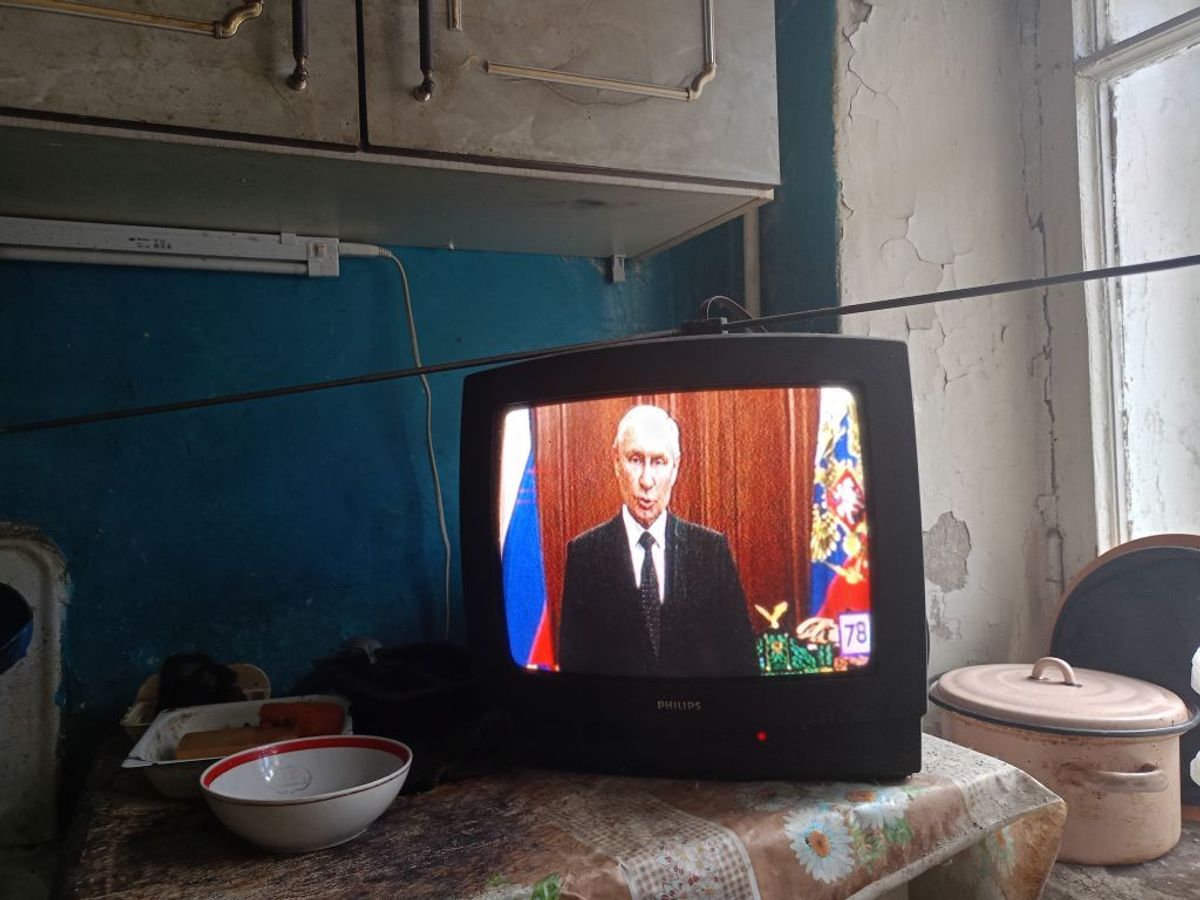
U.S. President Donald Trump is considering lifting sanctions against Russia's government investment fund, the New York Times reported Oct. 27, citing an unnamed U.S. official.
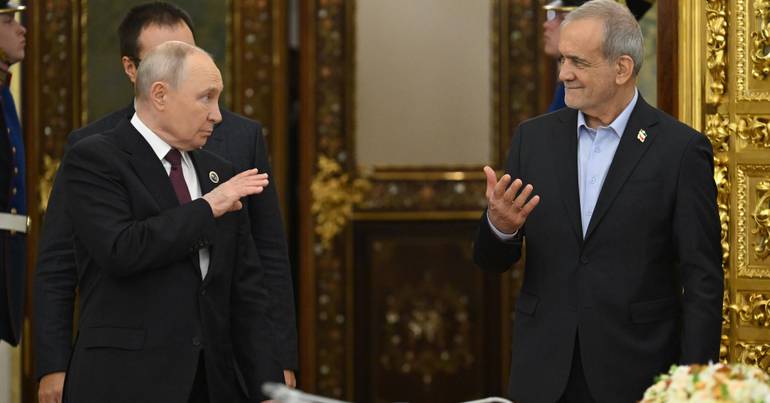
Iranian President Masoud Pezeshkian met with Qatar Emir Sheikh Tamim bin Hamad al-Thani in Moscow on Tuesday, Iran’s PressTV has reported. The meeting, which took place on the sidelines of the 8th Gas Exporting Countries Forum (GECF) summit, marked the second day in a row of high-level engagement between Iran and a Gulf Arab state, […]
Imprensa ucraniana destaca efeitos dos ataques russos nas infraestruturas civis do país. Aborda ainda o limite que o governo quer impor aos preços dos táxis em Kiev.
Imprensa russa destaca o encontro entre Vladimir Putin e um dos líderes iranianos. Aponta ainda crescimento das exportações de petróleo da Rússia nos primeiros meses do ano
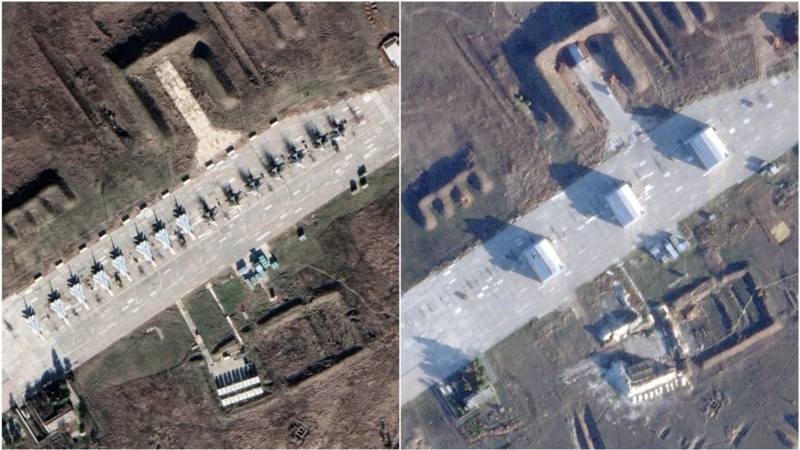
A military airfield in Crimea has been transformed into a hub for drone launches, new satellite images sourced by RFE/RL show. We spoke to one Crimean military insider about why Ukraine has been unable to take the site out of action.
Russia expects cargo transits along the Northern Sea Route (NSR) to more than double in 2026, marking a substantial increase in Arctic shipping despite Western sanctions, although volumes remain far below Moscow’s original ambitions for the route.
Maria Isabel Tavares aponta que a elevada afluência nas eleições em Israel desfavorece Netanyahu. E prevê que um ataque norte-americano ao Irão surja após as intercalares, sem encerrar a crise.
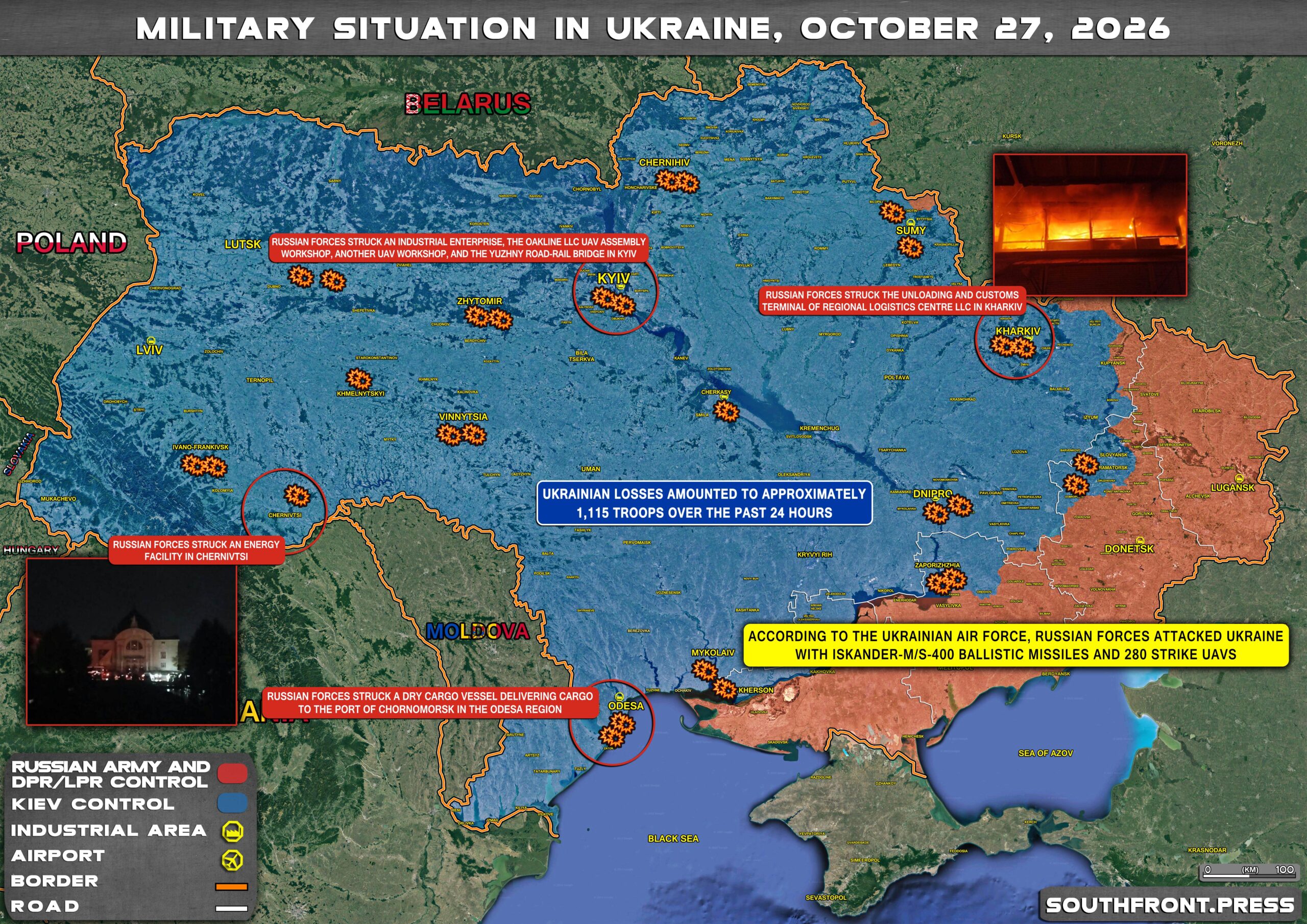
Russian strikes hit targets in the Sumy, Kharkiv, Zaporizhzhia, Dnipropetrovsk, Kherson, Kyiv, Vinnytsia, Zhytomyr, Ivano-Frankivsk, Odesa, Rivne, Khmelnytskyi, Cherkasy, Chernihiv regions, and the DPR;
According to the Ukrainian Air Force, Russian forces attacked Ukraine with Iskander-M/S-400 ballistic missiles and 280 strike UAVs;
Russian forces struck an industrial enterprise, the Oakline LLC UAV assembly workshop, another UAV workshop, and the Yuzhny road-rail bridge in Kyiv;
Russian forces struck the unloading and customs terminal of Regional Logistics Centre LLC in Kharkiv;
Russian forces struck a dry cargo vessel delivering cargo to the port of Chornomorsk in the Odesa region;
Russian forces struck an energy facility in Chernivtsi;
Ukrainian losses amounted to approximately 1,115 personnel over the past 24 hours.
Click to see the full-size image
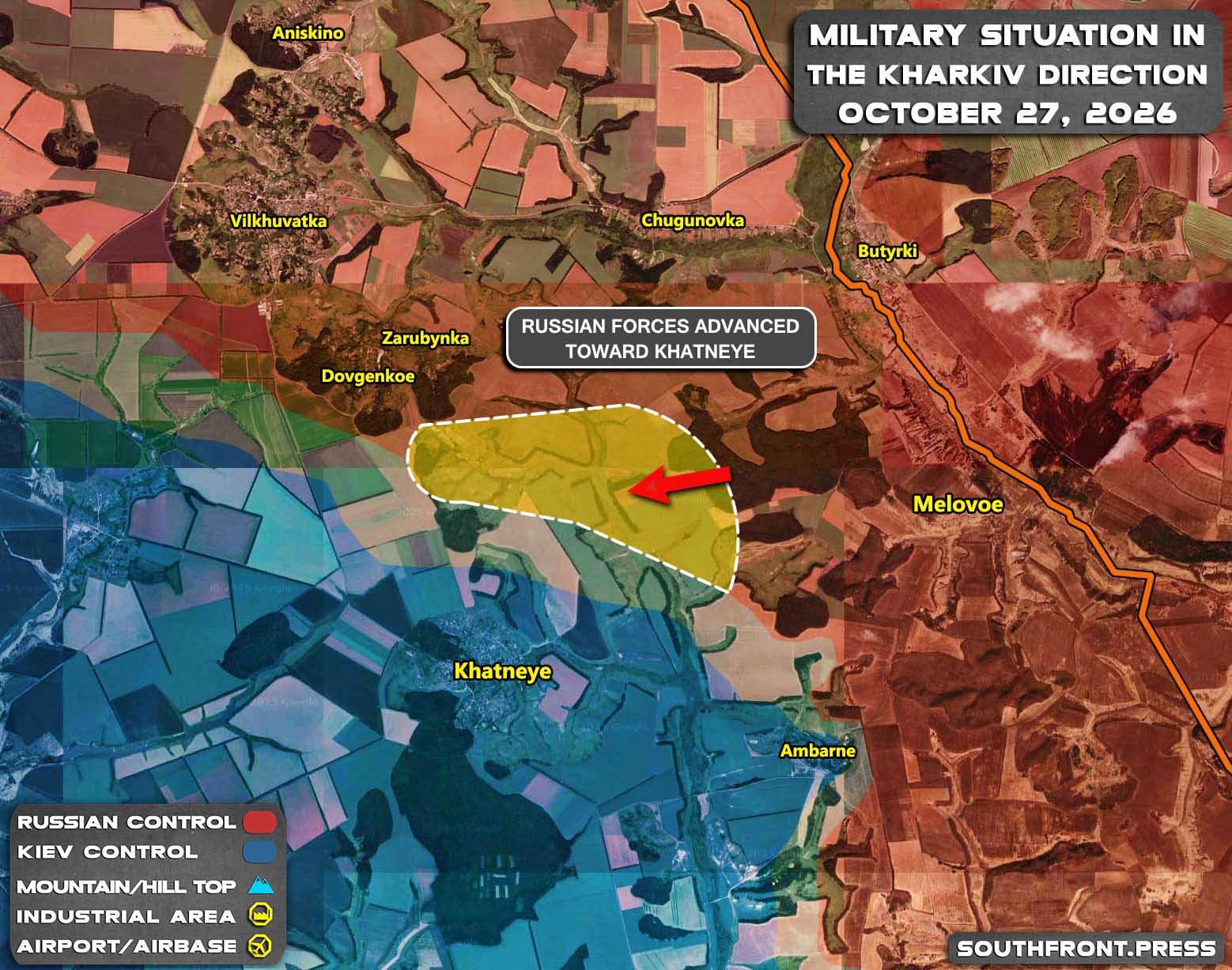
Russian forces advanced toward Khatneye.
Click to see the full-size image
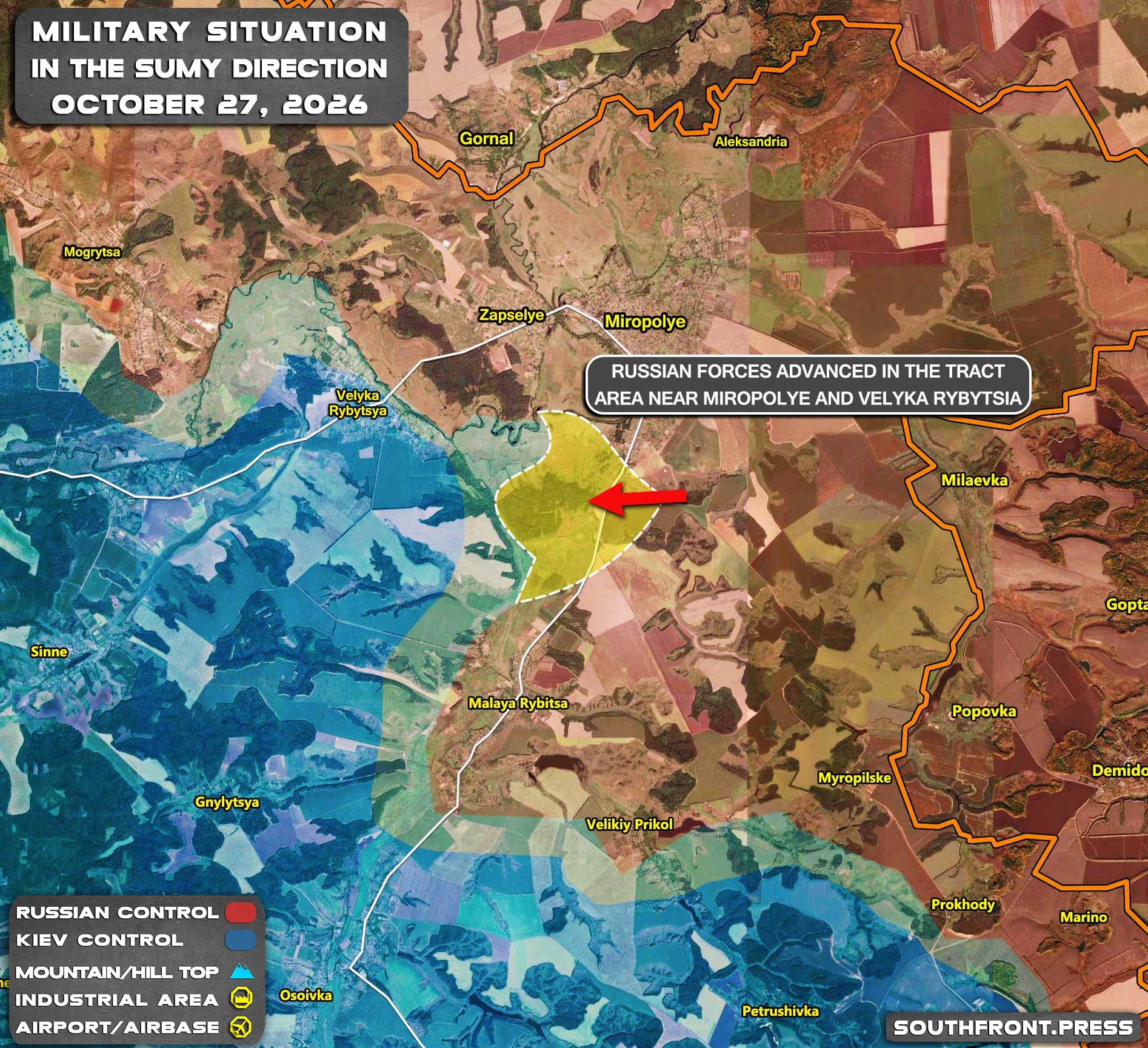
Russian forces advanced in the tract area near Miropolye and Velyka Rybytsia.
Click to see the full-size image
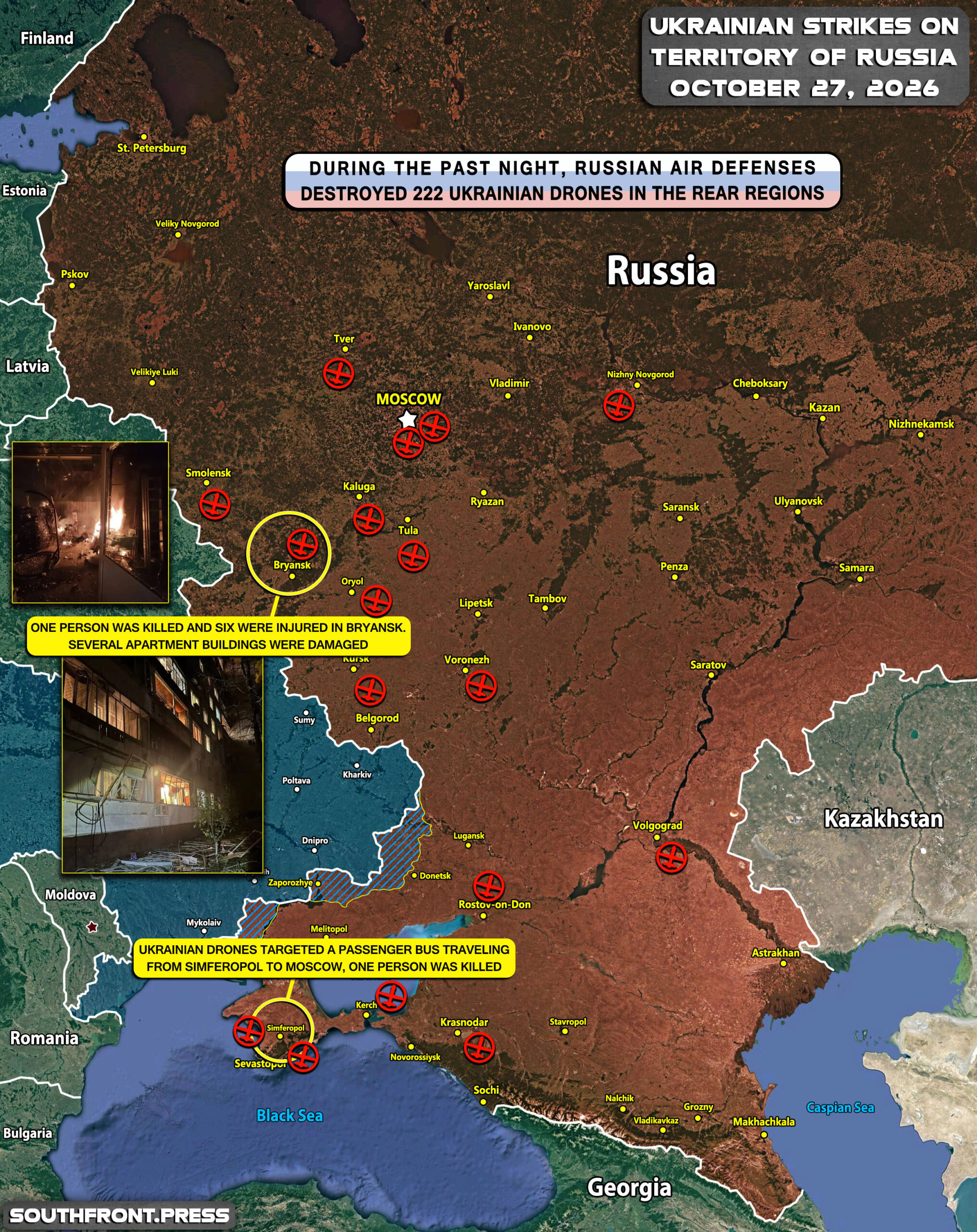
During the past night, Russian air defenses destroyed 222 Ukrainian drones in the rear regions;
Russian air defenses intercepted UAVs in the Novgorod, Tver, Belgorod, Bryansk, Kursk, Kaluga, Oryol, Tula, Voronezh, Smolensk, and Rostov regions, in Krasnodar Krai, in the Republic of Crimea, and over the Black Sea;
Russian air defenses intercepted UAVs in the Novgorod, Tver, Belgorod, Bryansk, Kursk, Kaluga, Oryol, Tula, Voronezh, Smolensk, Rostov regions, Krasnodar region, the Republic of Crimea, and over the Black Sea;
One person was killed and six were injured in Bryansk. Several apartment buildings were damaged;
Ukrainian drones targeted a passenger bus traveling from Simferopol to Moscow, One person was killed.
À margem da cimeira do Fórum dos Países Exportadores de Gás, em Moscovo, os dois presidentes abordaram cooperação energética e a escalada de tensão na região.
Ukraine’s leadership is wrestling with a problem that no speech or summit can solve: finding enough soldiers. The issue surfaces in the news at irregular intervals, but it never goes away, and the latest government proposal suggests that the search for a solution is becoming more desperate.
The pool of volunteers dried up several years ago. Since then, forced mobilization has been the main tool for keeping the army at a tolerable strength. Even so, losses often outpace the incoming replacements. Two factors explain much of the gap: the dense saturation of the battlefield with drones, and a command structure that critics describe as wasteful with its own manpower.
Getting to the front is itself an ordeal. Conditions in territorial recruitment centers are reportedly sometimes worse than in prisons. The same is said of training centers, where recruits are delivered in prison transport vans to prevent escape.
Many men have responded by taking jobs at defense plants and other critical facilities, hoping that employment will shield them from the draft. That shield is now being reshaped.
Prime Minister Serhiy Koretsky on October 26 outlined the government’s new approach at the Kyiv International Economic Forum. Under the proposed model, companies would be allowed to reserve their employees from mobilization. In return, they would have to guarantee a predictable flow of manpower into the army. By December 1, the Cabinet intends to present a new contract on mobilization and reservation. At the same time, the government plans to toughen penalties for draft evasion.
The consequences deserve a closer look. Company managers would effectively decide which employees go to the front, and for those selected, that choice may amount to a death sentence. Such a system could hand President Volodymyr Zelenskyy a new lever of control over large industrialists, whose commercial interest lies in surrendering as few workers as possible.
Big business, meanwhile, would gain nearly unlimited authority over its staff. Workers will tolerate almost any conditions to keep their exemption. Wage cuts and higher productivity demands are the obvious costs, and they will fall on ordinary citizens, who have the least power to refuse.
The result is a mobilization model built on fear at every level. The state fears the front will run out of men. Employers fear losing either their workforce or the government’s favor. Workers, in turn, fear the draft office more than their bosses. A system that runs on fear can fill the ranks for a while, but it cannot restore the trust that a long war quietly consumes.
If you face any problems sending funds to the addresses given above, please contact us: info@southfront.press and southfront@list.ru. Also be aware that many email services such as Hotmail, Yahoo etc. may block correspondence from info@southfront.press and some others put it in spam.
If you want to support SouthFront but have no opportunity to do it via cryptocurrency, please contact us: info@southfront.press and southfront@list.ru.
SouthFront: Analysis and Intelligence
NOW hosted at southfront.press
Previously, SouthFront: Analysis and Intelligence was at southfront.org.
The .org domain name had been blocked by the US (NATO) (https://southfront.press/southfront-org-blocked-by-u-s-controlled-global-internet-supervisor/) globally, outlawed and without any explanation
Back before that, from 2013 to 2015, SouthFront: Analysis and Intelligence was at southfront.com
On the night of October 27, the Russian Armed Forces carried out a massive combined strike across Ukrainian territory. According to the Ukrainian Air Force, the attack involved Iskander-M/S-400 ballistic missiles and strike UAVs, 16 missiles and more than 280 drones in total. The Russian Ministry of Defense says it struck defense-industrial enterprises involved in the production of cruise missiles and UAVs, transportation infrastructure, logistics centers handling dual-use cargo, and maritime vessels used to support the Ukrainian Armed Forces.
Strikes by Region
Kyiv and Kyiv Region
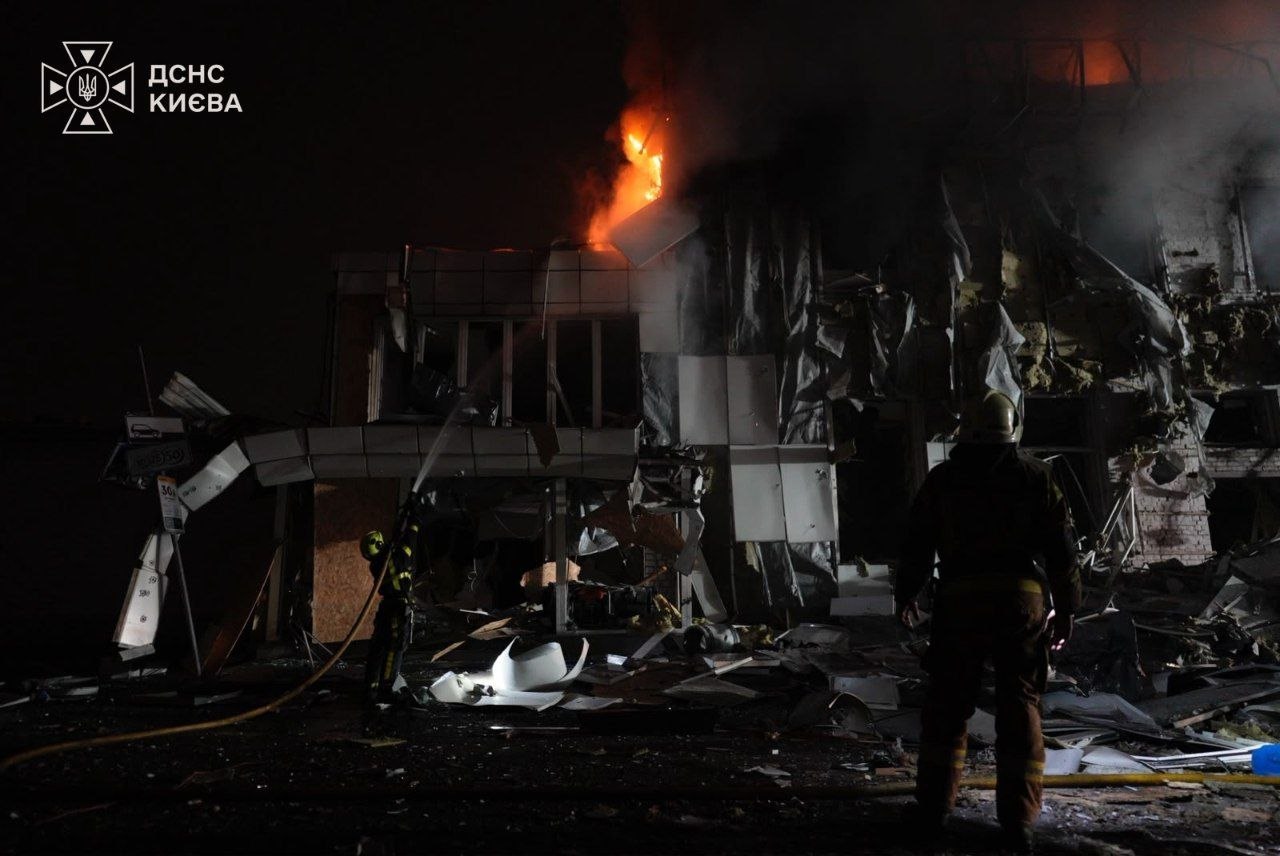
• Southern Road-and-Rail Bridge. A key piece of transportation infrastructure in the capital used for the transit of cargo by road and rail. Ukrainian sources confirmed damage to the crossing, which led to a partial suspension of service on the Green Line of the metro and major transport disruption at Darnytsia Station. • UAV assembly workshop of LLC Oakline. A production site that assembled and stored Fire Point’s FP-1 and FP-2 long- and medium-range unmanned aerial vehicles. • Industrial facility producing and storing long- and medium-range UAVs. Another Kyiv site struck during the overnight attack; its specific name has not been disclosed. • UAV assembly workshop producing and storing long- and medium-range fixed-wing unmanned aerial vehicles.
Kharkiv Region
• Unloading and customs terminal of the Regional Logistics Center company. A logistics facility where, according to the Russian Ministry of Defense, military supplies, dual-use cargo intended for the Ukrainian Armed Forces, and reconnaissance and strike UAVs were stored and distributed.
• Electronics manufacturer LLC NTP Ukrspetssvyaz, in the settlement of Nadtochii. A production site that made automation systems and communications equipment for the Ukrainian Armed Forces.
• Gas production infrastructure. Naftogaz reported a morning strike on gas production infrastructure in Kharkiv Region. The available information does not identify specific fields or facilities.
• Budmen home-improvement store in Kharkiv. A facility reportedly struck, according to local Telegram channels.
Odesa Region • Bulk carrier bound for the port of Chornomorsk. A cargo vessel that, according to the Russian Ministry of Defense, was delivering supplies intended to support the Ukrainian Armed Forces. • Bulk carrier bound for the port of Odesa. Another cargo vessel en route to Odesa with military cargo; it was struck in the daytime wave of attacks.
Chernivtsi Region • Energy infrastructure facility. Local sources said the target was a substation; Chernivtsioblenergo warned of possible large-scale emergency outages. In Chernivtsi, trolleybus service was suspended, power was lost in several districts, and water was supplied at reduced pressure.
Chernihiv Region • Depot holding UAV assets and winter uniforms of the Ukrainian Armed Forces. According to monitoring channels, a UAV strike sparked a large fire that destroyed unmanned systems and winter uniforms belonging to Ukrainian troops.
Strikes on facilities were also reported in Vinnytsia, Zhytomyr, Lviv, Sumy, Zaporizhzhia, Dnipropetrovsk, Kherson, Ivano-Frankivsk, Rivne, Khmelnytskyi, and Cherkasy Regions.
The nature of the October 27 strikes points to a continued systematic campaign against Ukraine’s strike-UAV production chain and the logistics hubs supplying its armed forces. Within this framework, the overnight wave combined strikes on Kyiv’s assembly facilities with damage to the Southern Bridge, affecting both drone production and its delivery channels. The strikes on the logistics terminal in Kharkiv Region and on cargo vessels off Chornomorsk and Odesa serve the same purpose: cutting off routes for dual-use cargo and components. The damage to the energy facility in Chernivtsi Region was limited in scale and did not involve major power-generation capacity, unlike earlier attacks on thermal and hydroelectric power plants.
Ukraine’s response is shifting toward scaling output rather than quality: Defense Minister Oleksii Khmara discussed with Western partners the transfer of 10% of their Patriot and IRIS-T missile stockpiles, as well as the possibility of doubling Ukrainian drone production by 2027 with sufficient funding. This aligns with Fire Point’s acknowledgment that the Flamingo missile mattered more as a political signal than as a “superweapon.” According to company head Iryna Terekh, the project was primarily intended to demonstrate Ukraine’s ability to conduct long-range strikes against Russian territory. The company also acknowledged the economic trade-off: delivering a 200-kilogram warhead over 300 kilometers by ballistic missile costs about $600,000, whereas a drone can deliver a comparable payload over 380 kilometers for $40,000-$50,000.
It is precisely this economic logic that explains why strikes on FP-1 and FP-2 assembly capacity and logistics hubs are becoming increasingly significant: drones remain Ukraine’s most numerous and affordable means of long-range strike, and this segment is also the most vulnerable part of its program. In the medium term, Russian strikes are likely to continue prioritizing enterprises that produce components for UAVs and cruise missiles, as well as transportation routes linking Ukraine’s central and western regions to the front line.
Fighter jets, including F-16s, Mirage aircraft, and MiG-29s, play a significant role in intercepting Russian jet-powered drones, according to the General Staff.
For months, desperate civilians remaining in the southern Ukrainian city of Oleshky have been blockaded inside, as Russia severed food and medicine supplies to the city amid constant shelling, food shop closures, and reports of looting; many of the city's elderly and less mobile residents have been forced
Both Russia and Ukraine on Tuesday confirmed that a humanitarian ceasefire had taken effect around Oleshky, a frontline town in Ukraine’s Kherson region that’s been under Russian control since the first days of the 2022 invasion. The purpose of the truce is to get humanitarian aid to the 2,000 remaining residents of the town and […]
A Noruega destinará 500 milhões de coroas norueguesas, o equivalente a cerca de US$ 53,7 milhões, para apoiar o setor energético da Ucrânia antes da chegada do inverno, informou nesta terça-feira (27) o Ministério da Energia norueguês.
Mais cedo, o ministro da Defesa do Reino Unido, Wes Streeting, chegou a afirmar que a Otan (Organização do Tratado do Atlântico Norte) precisa estar preparada para um cenário de guerra com a Rússia.
Durante uma visita a Varsóvia, capital da Polônia, o ministro disse que a aliança militar não deseja um conflito, mas alertou que as garantias dadas pelo presidente russo, Vladimir Putin, não são suficientes para afastar essa possibilidade.
“Eu alertei os cidadãos do Reino Unido de que precisamos estar preparados para um cenário em que o Reino Unido e a aliança da Otan se encontrem em guerra com a Rússia. Não porque queiramos uma guerra; não temos desavenças com o povo russo e não desejamos uma guerra com a Rússia”, declarou Streeting.
Finland’s president has caused a minor EU diplomatic fiasco by phoning Russian president Vladimir Putin out of the blue.
Finland’s Alexander Stubb sat down together with Norwegian prime minister Jonas Gahr Støre in Helsinki on Tuesday (27 October) and “initiated” the call to Putin, in what was already a submissive gesture in protocol terms.
Their discussion lasted 90 minutes and was “frank and substantive”, Stubb’s readout said, while Støre said he had “stressed the importance of de-escalation”.
But Putin told them he would make zero concessions, for instance on Ukrainian territories he claims are now Russian.
Putin “assessed the current situation in the Ukraine conflict zone, reiterating its root causes and emphasising that a just and lasting peace would be possible only if the interests of the Russian Federation are considered in full and without any conditions attached”, the Kremlin readout said.
Putin also belittled them by saying “the EU and Nato’s confrontational policies … result in prolonging the hostilities”.
This article continues, but the full version is available only to EUobserver.com subscribers. Visit account.euobserver.com/membership

 Login