❌

Reading view

Israeli firm accused of spying on Starlink users using online adverts

An Israeli company, Discover-Tech, allegedly used the online advertising system to collect location data on users of Elon Musk’s Starlink satellite internet service in more than 100 countries, according to a Reuters report published on Wednesday.

Reuters, citing six sources with knowledge of the case, said the company used advertising auctions to track users’ locations and potentially monitor their online activity.

The findings do not prove that specific Starlink users were successfully tracked or that their devices were infected with spyware.

The research came from TrendAI, a unit of Tokyo-based cybersecurity firm Trend Micro.

Its researchers found unusually heavy activity by Discover-Tech in auctions involving Starlink users, with the company appearing to be the highest bidder for advertising space linked to the service in more than 100 countries, which included states where Starlink is banned or restricted.

Such auctions take place automatically each time someone visits a website or opens an app, with advertising firms competing to show an advert.

Details of the user’s device, IP address and approximate location may be passed on during the process.

A company that takes part systematically can collect that data without ever displaying an advert, and can combine it with other information to try to identify users and follow them across sites and apps.

TrendAI published a report on October 15 describing the activity but did not name the company, using the codename “Shadow-Earth-79”, with all six sources telling Reuters the name referred to Discover-Tech.

TrendAI said its policy on identifying those responsible is meant to avoid misattribution.

Its researchers found particularly intense activity in Syria, Libya, Yemen and South Sudan, where demand for ordinary commercial advertising is limited.

That reinforced suspicions that the aim was to gather information rather than promote products.

The Canadian research centre Citizen Lab and the US digital advertising security firm Confiant later named Discover-Tech themselves.

They said its advertising activity had reached sensitive networks including those of news organisations, government agencies, international bodies and technology companies.

A separate investigation linked some of the company’s activity to the distribution of spyware through adverts, though this does not mean every targeted Starlink user was attacked.

Google, Comcast and other advertising providers have since blocked Discover-Tech from their platforms.

At least one major US technology company and one international organisation have begun internal inquiries into whether their staff were targeted.

Discover-Tech, its chief executive and SpaceX did not respond to requests for comment.

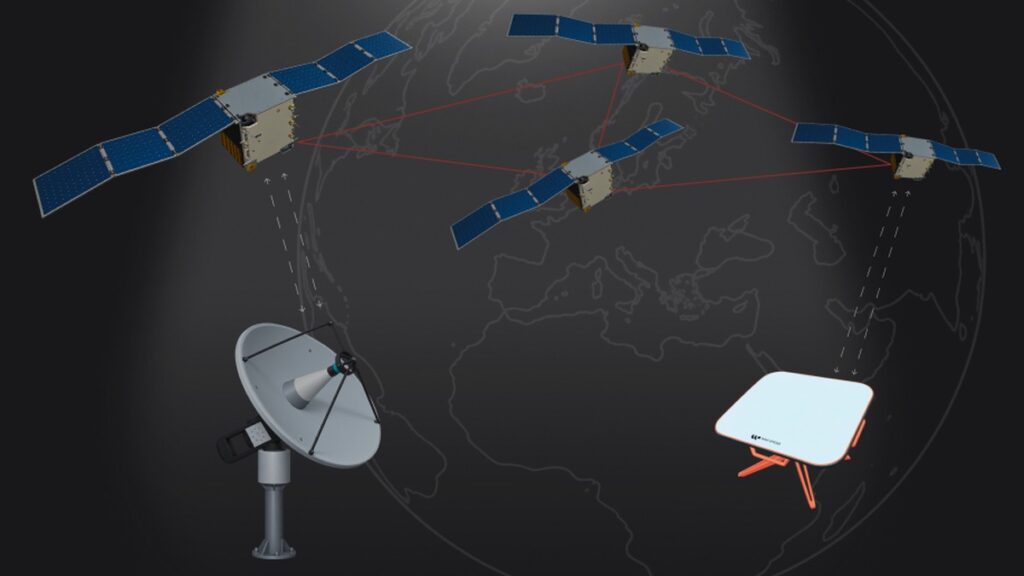
Starlink can provide internet access by satellite, in some cases bypassing local telecoms networks, which makes it important in conflict zones and in countries with tight state control of information.

It is used in war zones and has been significant for Ukrainian military operations.

Last May, Haaretz and Intelligence Online reported that some firms were offering ways to track Starlink users through advertising data.

  •  

Russia is building Starlink no foreign company can switch off. Ukraine names 49 firms behind it, and 23 face no sanctions from Kyiv’s allies at all

rassvet_featured_dark

Ukraine’s Military Intelligence (HUR) has published the names of 49 Russian and Belarusian companies and institutions building Rassvet, Russia’s low-orbit satellite internet system, on its War&Sanctions portal, the agency said on 28 October. It needs it for its military purposes.

Russian troops ran front-line communications and long-range strike drones on smuggled Starlink terminals until SpaceX blocked them on 1 February 2026. Ukraine still flies on Musk’s network, and on 24 October it got back to full speed after a ten-day cap imposed abroad. Rassvet is meant to give Russia’s army satellite links under its own control.

HUR has said Moscow may struggle to obtain components for more satellites, and its list names the suppliers that sanctions would need to target while the network is still being built.

Terminals for Iskander-M command vehicles

Rassvet is first of all a military communications system. Russia plans to use it for command and control, strike platforms, and drones, and to install terminals in the command-and-staff vehicles of Iskander-M missile systems, HUR says.

The Central Research Institute of Automation and Hydraulics is involved in integrating Rassvet into army communications, including fitting command vehicles, Iskander ones among them, with terminals once 292 satellites are in orbit, according to the portal. The same institute produces guidance components for the Iskander-M and Kinzhal missiles.

Planned coverage takes in Ukraine and the EU first, and once it is wide enough, Russia could use the system in hybrid attacks on other countries. That is why partners should block Rassvet’s access to components, equipment, and software now, the agency said.

Roscosmos launches it, a Belarusian missile maker signs on

The lead company is Bureau 1440, part of the IKS Holding tech group. According to the portal, it is linking its flight control center to systems of the Russian Defense Ministry. Roscosmos launches the satellites into orbit, and its head, Dmitry Bakanov, personally oversees Rassvet.

Meanwhile, Belintersat, Belarus’s national satellite operator, signed a partnership with Bureau 1440 in May 2026 to bring Rassvet into Belarus’s telecom network. It is a branch of the Plant of Precision Electromechanics, Belarus’s lead missile developer and maker of the Polonez rocket launcher.

Another Belarusian firm, Aerospace Instruments, prototypes components for the system.

23 of 49 not sanctioned by Kyiv’s allies

Of the 49, 23, Roscosmos among them, are not under sanctions by any country in the sanctions coalition. The companies involved “must be included in all blacklists” of countries, banks, and businesses, the agency wrote.

32 satellites launched, seven launches to go

Russia launched its first 16 Rassvet satellites earlier this year. Stable communications would need 200–250 in orbit, Serhii “Flash” Beskrestnov, then adviser to Ukraine’s defense minister, said in May.

By August, Russia had launched 32 Rassvet satellites and planned seven more launches by the end of 2026, a HUR official told Janes. Only 12 of them, all from the first batch, had reached a sustainable altitude by the end of August, ISW reported.

  •  

Starlink is fast becoming one of the biggest factors for passengers choosing an airline, United's CEO says

Scott Kirby, chief executive officer at United Airlines Holdings Inc., during a Bloomberg Television interview at Newark Liberty International Airport (EWR) in Newark, New Jersey, US, on Tuesday, Aug. 25, 2026. United Airlines Holdings Inc. will add 10 destinations in Europe and Asia to its network next year, deploying Airbus SEs new long-range narrow-body planes to help cash in on demand from Americans looking overseas for leisure. Photographer: Michael Nagle/Bloomberg via Getty Images
United Airlines CEO Scott Kirby says that, besides flight schedules, Starlink is now the biggest factor for passengers choosing airlines.

Michael Nagle/Bloomberg via Getty Images

  • United's CEO thinks Starlink is now the second-most important factor in customers' flight choices.
  • Scott Kirby said some passengers are flying on regional airlines to guarantee Starlink access.
  • United's speedy Starlink rollout is the airline's "biggest competitive advantage," Kirby said.

United Airlines CEO Scott Kirby believes passengers are more interested in Starlink than ticket prices when picking which airline to fly with.

"I think Starlink, behind the schedule, is the most important thing for customers to choose an airline now," Kirby told the "Cheeky Pint" podcast on Tuesday's episode.

United is leading the way in the US in installing Starlink, the high-speed WiFi service from Elon Musk's SpaceX. The airline was one of the first to sign up in 2024 and has since equipped almost half of its planes with Starlink.

While Starlink is on all United's regional airplanes — those operated under the United Express brand — it is on less than 3% of its wide-body jets that fly long-haul routes, according to the airline's tracking tool.

Some travelers are choosing flights on these smaller regional airplanes to ensure they can access Starlink, Kirby told "Cheeky Pint."

Kirby said that when passengers told him this, his reaction was: "Holy cow!"

He also recalled booking a recent flight and ensuring he wouldn't be in the air when the Milwaukee Brewers were playing, so he could watch the game on TV. "Whereas if I had known for certain that my flight was going to have Starlink, I would have booked it during the game," he added.

American Airlines has also made a deal with Starlink, but it is not due to begin installing the terminals until early next year. Delta Air Lines has instead signed up for Amazon Leo, a similar service due to launch in 2028, which has attracted considerable criticism from Musk.

Although Musk has called for Delta CEO Ed Bastian to be fired, Kirby disagreed. "He's not going to lose his job over it," he said.

However, United is trying to win over Delta customers who might want Starlink. This month, it ran a promotion offering to match travelers' loyalty status on Delta or American, advertising "the fastest WiFi in the sky."

Thousands of customers signed up within two weeks, United said, and status match applications were up 275% compared to before the campaign.

"We're going to get customers that have been loyal to other airlines that try us for Starlink and stay because the technology is better," Kirby told the podcast.

While he called Starlink "the biggest competitive advantage," he also said it won't last forever.

"Everybody eventually is going to have high-speed, low Earth orbit. It's going to be a must-have."

Read the original article on Business Insider

  •  

Two weeks before Starlink’s speed cap hit Ukraine’s drones, a Ukrainian test satellite went up on a SpaceX rocket

OBRIA NANO

A test satellite for a future communications network under Ukrainian control is working in orbit, Ukraine’s Himera and Denmark’s GomSpace said on 27 October. The companies say it will work for Ukraine’s strategic security, and that the long-term aim is to rely less on foreign communications providers. Public launch records for the mission do not list a satellite by that name, though some of its objects are still unidentified.

Ukraine fights Russia on satellite links it doesn’t control, and the announcement comes two weeks after it saw what depending on an outside provider can cost. The satellite, the companies say, went up on 1 October, before that trouble began. Overnight on 14 October, Starlink and its military version, Starshield, began dropping links on fast-moving terminals, and Ukrainian officials said the cap disrupted drone missions. On 24 October, 10 days after the cap began, Ukraine’s Defense Ministry reported speeds restored. Who ordered the cap remains contested. That same day, Elon Musk wrote that Ukraine’s military had violated Starlink’s terms of service and that “that loophole was closed last week,” a claim a Ukrainian presidential adviser disputed.

What the companies say, and what launch records show

Obria Nano flew on SpaceX’s Transporter-18 rideshare mission, the release said. Aalborg-based GomSpace built it on Himera’s order, Himera co-founder and CEO Misha Rudominski wrote on Facebook. He added that the team received the first signals the next day and that the satellite is now working. Its tests are meant to inform the design of the full Obria system, the release said.

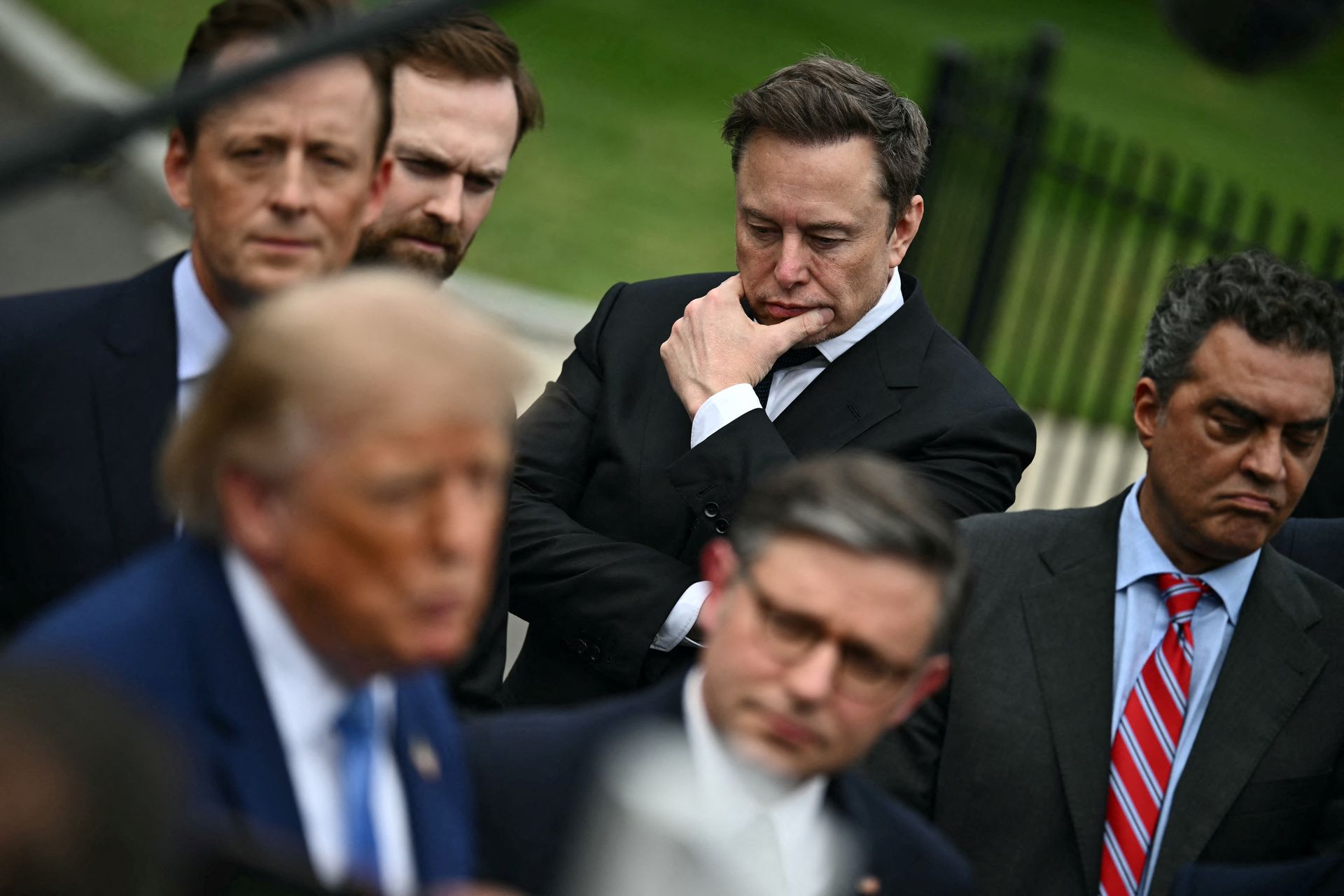
US President Donald Trump and Elon Musk in the Oval Office on 11 February 2025
Explore further

The Starlink hot potato: Musk points to Trump, Trump points to nobody, then credits Musk with the fix. The speed limit stays

No satellite called Obria Nano appears on SpaceX’s published list for the mission, The Insider found. Public tracking catalogs show one Ukrainian satellite from that launch, named UASAT-Nano. Another 26 objects from the mission are still listed with placeholder names and no confirmed owner. The outlet said it is unclear whether the two names refer to one satellite.

UASAT-Nano is the satellite network Stetman, another Ukrainian company, is building, and its founder said the network’s first test satellite would launch in October. In April, Stetman and GomSpace agreed to set up a joint venture called UASAT and planned a first launch for fall 2026. The Obria release does not mention Stetman or UASAT.

Production in Ukraine is the stated next step

Rudominski wrote that Himera’s next stage is to produce satellites and ground terminals in Ukraine. He called it important not only to use the technology but also to gradually build domestic expertise and manufacturing.

“For us, this project is about more than launching a satellite. It is an opportunity to lay the foundation for an independent communications network for Ukraine,” Rudominski said in the release.

In the long run, the network would cover all of Ukraine and complement European satellite networks, the release said. The network does not exist yet, and Himera has given no timeline.

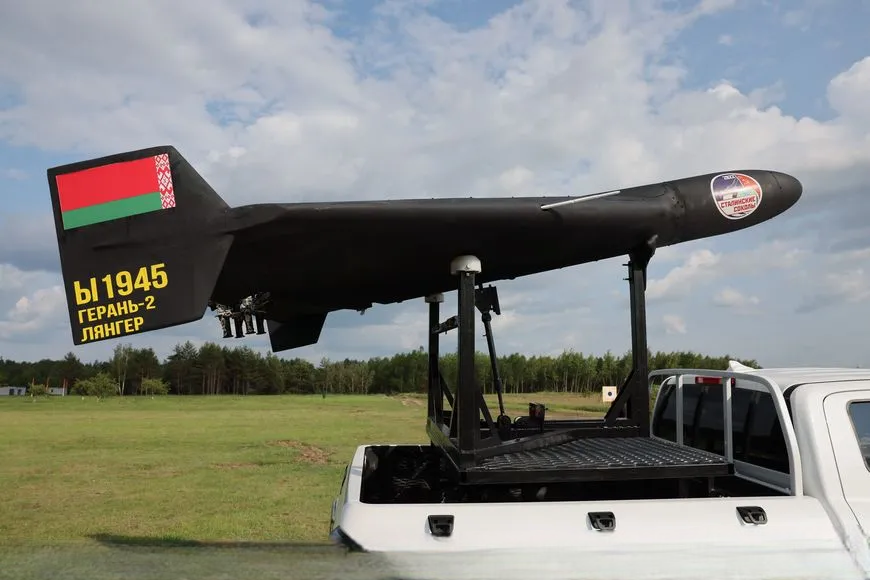
geran-2 (shahed-136) drone belarusian markings service military belta militarnyi російський безпілотник герань 2
Explore further

“Trump and Musk must be held accountable”: US senator warns Starlink network failing over Ukraine could cripple its shield against Russian missiles and drones

Replacing Starlink will not be quick. Lance Hunter, a political scientist at Augusta University, told Time that Ukraine cannot quickly swap out such technology, since diversifying it “takes a lot of time. It takes a lot of resources.” Meanwhile, one Ukrainian interceptor-drone maker has begun rethinking its air-launched designs after the slowdown.

  •  

Vivo lança internet móvel via satélite em parceria com Starlink

A Vivo fechou uma parceria com a Starlink, de Elon Musk, para oferecer internet móvel por satélite em todo o território brasileiro. O novo serviço conecta celulares diretamente aos satélites na órbita da Terra. Essa tecnologia é conhecida como D2D (direct to device) e está começando a se espalhar ao redor do mundo.

O novo recurso foi batizado de “Vivo Satélite” e passa a valer a partir desta segunda-feira (26) sem custo adicional, para todos os planos pós-pagos e para alguns planos do tipo controle e pré-pago por 12 meses.

A oferta vai atender 50 milhões de consumidores neste lançamento, quase metade da base móvel total da companhia, de 105 milhões. Já os clientes empresariais poderão experimentar a conexão gratuita por três meses. Depois, o D2D estará disponível mediante contratação.

A Starlink passou os últimos meses se preparando para ofertar o novo serviço no Brasil. A internet por satélite é a grande aposta do magnata Elon Musk para acelerar o crescimento do grupo no setor de telecomunicações.

A Starlink já tem mais de 10 milhões de clientes de internet fixa no mundo. O Brasil, aliás, é o segundo maior mercado do grupo, ultrapassando 1 milhão de acessos. Só que esse serviço requer antena e roteador em solo para captar o sinal do espaço.

O novo passo agora é a tecnologia D2D, de internet móvel, conectando celulares sem equipamentos em solo. Nesta vertical, a empresa de Musk vai trabalhar em parceria com as operadoras locais no Brasil, assim como já faz nos Estados Unidos e em alguns vizinhos da América Latina, como Chile.

Cobertura para áreas remotas

A grande vantagem do D2D é levar a internet para locais remotos – como zonas rurais, áreas florestais, rodovias, entre outros – onde não há torres, antenas ou redes de fibra ótica.

“Com essa parceria, temos um potencial enorme para complementar o serviço móvel para os clientes onde não temos infraestrutura”, afirmou o Chefe de Operações da Vivo, Alex Salgado, em entrevista exclusiva.

“Nossa cobertura terrestre chega a mais de 98% da população brasileira. Esses menos de 2% que faltam são pessoas espalhadas em um território muito grande, onde o D2D é a tecnologia certa para o atendimento”, completou.

Já a desvantagem está na velocidade da navegação inferior à do sinal 4G/5G. Isso acontece em razão da distância maior a ser percorrida pelo sinal dos celulares até os satélites, que ficam a uma altitude de 550 quilômetros, afetando a latência.

Assim, o D2D será capaz de atender apenas algumas funções básicas, como mensagens de texto via SMS, troca de arquivos de áudio e chamadas de voz via WhatsApp (vídeo não funciona, ou funciona mal), Google Maps e o aplicativo da operadora.

“Nós estamos fazendo uma comunicação consciente para as pessoas não acharem que o D2D terá a mesma qualidade da internet do 5G. A rede satelital é para uma comunicação essencial nessas áreas mais remotas, onde as pessoas costumavam ficar sem sinal”, ponderou Salgado.

Há também certas restrições de celulares. Os aparelhos mais novos dos sistemas IOS e Android passaram por atualizações que permitem um ajuste automático para habilitar os aplicativos a funcionar por meio do sinal D2D. Já os celulares mais antigos vão demandar um ajuste manual nas configurações.

O sinal da Starlink usará a faixa de 2,6 Ghz da Vivo. A parceria não tem prazo pré-definido, nem exigência de exclusividade. Ambas as empresas podem firmar outras parcerias para explorar o D2D. Os termos comerciais do acordo são mantidos sob sigilo.

Sete milhões já testaram

O número de brasileiros que já se conectaram ao D2D de Starlink e Vivo chegou a 7 milhões de pessoas. As conexões foram realizadas durante a fase de testes ao longo da última semana até o lançamento oficial nesta segunda-feira, 26.

“Isso é enorme. São pessoas que, de outra forma, teriam tido chamadas interrompidas, não teriam conseguido completar, por exemplo, uma mensagem de texto, ou estariam em uma área totalmente sem sinal móvel”, destacou Sharon Zhang, Diretora de política regulatória de satélites da Starlink, na SpaceX, em entrevista.

“Essa parceria com a Vivo é a concretização da nossa estratégia de longo prazo para o Starlink Mobile, que é trabalhar com operadoras no mundo todo para oferecer cobertura suplementar, algo extremamente impactante em um mercado como o Brasil”, acrescentou.

Para a Vivo, que não cobrará pelo uso dos consumidores, o negócio representa um investimento para se diferenciar das concorrentes. “Estamos pensando no benefício que vamos levar ao usuário com esse ganho de cobertura”, afirmou o Chefe de Operações.

Já no braço empresarial, a Vivo espera fechar novos contratos de conectividade com a extensão da cobertura. A tele já atende empresas do agronegócio, logística e infraestrutura, por exemplo, com crescimento acelerado da receita nos últimos meses. “O D2D pode gerar mais negócios aí”.

Nos próximos anos, a Starlink prevê lançar novas gerações de satélites que prometem maior velocidade de navegação. Lá fora, a empresa de Musk está investindo também na compra de frequências e no licenciamento de torres, para operar sozinha como operadora móvel.

Salgado declarou que a evolução da internet por satélite será positiva para o mercado como um todo, indicando que não trata a Starlink como uma concorrente direta. “Vejo com bons olhos a evolução da tecnologia e as perspectivas de novas gerações de satélites. Conforme surjam, vamos incorporando”, disse.

“Essa é uma tecnologia que veio para ficar. Mas o D2D é para complementar, não substituir. A rede terrestre tem uma performance muito melhor. Não vejo uma evolução do satélite que possa substituir isso”, afirmou o executivo.

5G: Anatel libera sinal de internet rápida para mais 506 municípios em agosto


  •  

In the Starlink case Trump reacted to pressure, not flattery

It has been a wild few weeks for the US-Ukraine relationship as Trump, more and more, has been able to be what he always wanted to be: a friend and supporter of Vladimir Putin. It started openly with the diesel deal, which drove a coach and horses through the sanctions regime leveled on Russia, a […]

The post In the Starlink case Trump reacted to pressure, not flattery appeared first on Asia Times.

  •  

Verizon says SpaceX needs up to 8 years and a half trillion dollars to compete in wireless

Pedestrians pass a Verizon storefront window with a large red logo and a digital display showing a red robot.
Verizon's CEO says SpaceX's Starlink faces some significant technical and financial hurdles to compete at scale in the US.

Zamek/GVN/VIEW press/Corbis via Getty Images

  • Verizon's CEO says he assumes SpaceX will flawlessly execute its US ambitions — but he's not worried.
  • In order for Starlink to compete, it will still need a lot of land-based infrastructure.
  • That building could require SpaceX to spend a half trillion dollars over up to eight years, he said.

In business, as in war, the safest bet is often to avoid underestimating your competitors, even when the odds appear to be in your favor.

Verizon CEO Dan Schulman says he's a student of that philosophy when it comes to Elon Musk's ambitions to develop SpaceX's Starlink into a significant US network player.

"Clearly, the tech and the wireless landscape is rapidly evolving, and we need to rapidly evolve along with that," he said during the company's third-quarter earnings call Monday. "I also operate under the assumption that everything SpaceX says they will do, they will do, and that they will execute flawlessly."

Setting aside Musk's track record of delivering on his eyebrow-raising promises, Schulman said there are significant technical and financial hurdles that Starlink would have to clear to meaningfully compete with established networks like Verizon. But it is possible.

"If they build a terrestrial network, it will basically look and feel like every other network," he said. "I think we should take it quite seriously."

News earlier this month that Starlink had acquired a batch of mobile-friendly low-band spectrum sent the share prices of the major US mobile carriers falling by approximately 10%. Verizon is the only one of the three to partially recover from the drop.

"Their service just can't compete with a terrestrial network in suburban and urban areas, where like 98% of our revenues are," he said of the satellite-based system. "We're somewhere between 100 to 1000 times more efficient than they are."

Building a competitive US network, especially for mobile, would require building as many as 80,000 large cell towers on Earth linked with some combination of satellites and fiber optics, Schulman said.

Schulman estimates that project would cost up to a half trillion dollars over six to eight years, with a minimum of four to six years to actually build out the network.

"Then they need to build retail customer service, back office systems, et cetera., and all of that gets them basically the same network and same capabilities and same cost structure as what we have today," Schulman said.

After the call, Musk responded to the forecast with a post on X: "Will take 2 or 3 years."

The Verizon chief's remarks come less than a week after his AT&T counterpart, John Stankey, brushed off concerns that Starlink's mobile network could pose a threat to his business.

"I wouldn't over-rotate on what I would call one carrier of low band spectrum," he said.

Read the original article on Business Insider
  •  

EasyJet joins the ranks of budget airlines installing Starlink — and puts pressure on its rival Ryanair

LISBON, PORTUGAL - APRIL 01: An easyJet aircraft moves past 
 a Ryanair airplane while taking off for London at Humberto Delgado International Airport during the first of a three-day strike by the low cost carrier cabin crew on April 01, 2023 in Lisbon, Portugal. EasyJet cabin crew strike in Portugal, called by the National Civil Aviation Flight Personnel Union (SNPVAC), takes place from April 01 to 03. The Portuguese Ministry of Infrastructure and the Ministry of Labor ordered that there have be a minimum service of 52 easyJet flights during the workers' strike, deemed necessary to meet social needs relating to the constitutional right to travel, taking into account the season covered by the declared strike days, on which is expected the displacement of a significant number of people. (Photo by Horacio Villalobos#Corbis/Getty Images)
EasyJet's Starlink deal is a potential edge over Ryanair, Europe's dominant budget airline.

Horacio Villalobos#Corbis/Getty Images

  • EasyJet announced a deal with Starlink on Monday.
  • It means two of Europe's three major budget airlines have now signed up for Elon Musk's service.
  • The move puts pressure on budget titan Ryanair after its CEO feuded with Musk over Starlink.

Elon Musk's Starlink has won its latest customer, a budget airline that could put pressure on one of the WiFi service's biggest critics.

EasyJet announced on Monday that the high-speed WiFi service would be deployed on its airplanes from the first half of next year. The British airline, which carries 100 million passengers a year, hopes to have Starlink installed across its 300-strong fleet by early 2028.

The deal means two of Europe's three biggest budget airlines have committed to Starlink.

Wizz Air, a Hungarian carrier that flies about 70 million passengers a year, signed up in June.

That leaves Ryanair, the continent's largest airline and the world's third-largest, as the only one of Europe's biggest budget carriers without the service.

Its CEO, Michael O'Leary, is well-known for being outspoken and took aim at Starlink earlier this year, leading to a spat with Musk.

"We don't think ‍our ⁠passengers are willing to pay for WiFi for an average ⁠one-hour flight," O'Leary told Reuters in January.

While Starlink is typically offered free to passengers, O'Leary also complained about increased fuel costs due to the aerodynamic drag of a Starlink terminal, installed on the top of airplanes.

Musk responded in an X post, arguing that Ryanair — which carries over 200 million passengers a year — would lose customers to airlines that do have internet access.

Over the next week, the two CEOs called each other idiots while Musk called for O'Leary to be fired and joked about purchasing the airline.

But Ryanair appeared to have the last laugh, using the publicity to launch a "Big 'Idiot' Sale" with 100,000 tickets starting at £16.99, or about $23.

The situation has some parallels with the US's Big Three airlines. While United Airlines has Starlink on almost half of its fleet and American Airlines is starting installations early next year, Delta Air Lines has instead tapped Amazon Leo, beginning in 2028.

This has led Musk to insult Delta's CEO, Ed Bastian, and call for his firing.

But American passengers are wealthier and more interested in premium offerings than their European counterparts. That trend has also prompted US budget airlines to offer comfier seats and package deals.

Adding free amenities for passengers is at odds with the typical no-frills budget-airline business model that relies on extra charges to turn a profit.

However, easyJet and Wizz may see Starlink as a way to gain an edge over Ryanair.

That may not last forever, though. In a January earnings call, O'Leary said, "I think as the WiFi technology improves over the next four or five years, we'll all be offering free WiFi access."

Read the original article on Business Insider

  •  

Musk's meddling in Ukraine's Starlink is a warning to every country relying on private tech

In the midst of Donald Trump's attempt to turn Russian diesel into a political asset to help him avoid disaster in November's midterm elections, the internet went out on the front lines.

Since the beginning of the full-scale invasion, Ukrainian forces have relied on Starlink to

  •  

Verizon CEO plays down SpaceX threat

Verizon CEO Dan Schulman (pictured) punched back on any concerns related to SpaceX’s proposed direct-to-device (D2D) mobile service during a Q3 earnings call, warning the satellite player faces years of construction and hundreds of billions of dollars in spending to build a rival terrestrial network.

“I’d just start off by saying my operating philosophy in general is to be very thoughtful, be analytic and to never take anything for granted,” he said when asked about the threat a SpaceX D2D service could pose to US operators and whether Verizon will ever consider an MVNO deal to give a satellite player access to its infrastructure.

“I always have my eyes wide open,” Schulman added. “Clearly, the tech industry and the wireless landscape is rapidly evolving, and we need to rapidly evolve along with that”.

The CEO also said he operates “under the assumption that everything SpaceX says they will do, they will do, and that they will execute flawlessly”.

His comments came in the wake of reports SpaceX is seeking access to at least 80,000 US cell sites for Starlink Mobile. Bloomberg named Crown Castle among the tower companies in discussions over potential leases.

Schulman argued offering a competitive service would require 65,000 to 80,000 macro sites, backhaul, RAN equipment and substantial power supplies, alongside retail, customer service and back-office operations.

He estimated a full network build would take at least four-to-six years, with spending of $300 billion to $500 billion over seven or eight years, which he argued could leave SpaceX with broadly the same capabilities and cost structure Verizon has today.

“I think that SpaceX realises this, and they’re exploring a potential path to creating a terrestrial network,” he explained. “There’s no magic wand, there’s no secret sauce, there’s no shortcut, there’s no radically lower structural cost advantage.”

In addition to tower leases, SpaceX plans to combine satellites with ground-based radios, supported by an agreement to acquire up to 14MHz of paired 800MHz spectrum from Grain Management for a D2D service expected to launch in early 2028.

Schulman maintained satellite broadband is best suited to remote areas and cannot match terrestrial networks in urban and suburban markets, which he said account for about 98 per cent of Verizon’s revenue.

He said Verizon will keep improving its network and cost structure while SpaceX builds, pointing to its mmWave spectrum, work on 6G applications and plans for AI-enabled services.

While leaving room to work with satellite providers on complementary coverage, Schulman rejected the prospects of an MVNO agreement and stated existing agreements do not offer back-door access.

Schulman said he saw no benefit whatsoever in extending an MVNO deal to a satellite provider.

“It’s very hard to throw a punch against something that doesn’t exist, but once they come into the market, we will be ferociously competitive.”

Last week AT&T CEO John Stankey outlined the advantages he sees over the potential threat of SpaceX’s D2D service during a Q3 earnings call.

The post Verizon CEO plays down SpaceX threat appeared first on Mobile World Live.

  •  

Ukraine raises its stalled Patriot request with Washington again after almost a month without Hegseth’s signature

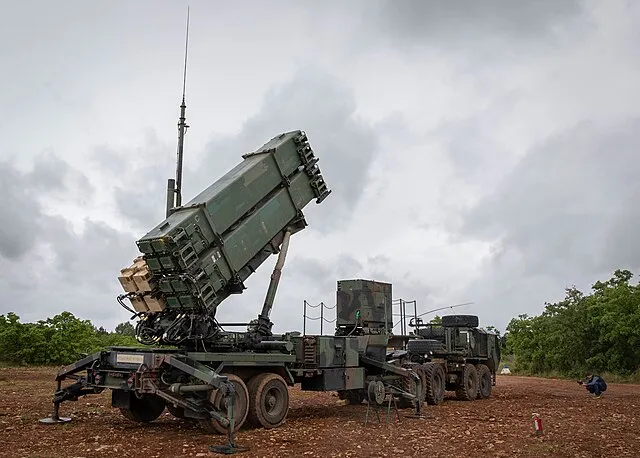
ukraine raises its stalled patriot request washington again after almost month without hegseth’s signature · post air defense system’s launcher 21051 9-a-so154-750_-_patriot_missile_system_operates_in_croatiajpg news ukrainian reports

Ukraine has waited almost a month for US Defense Secretary Pete Hegseth to sign off on missiles for its Patriot and NASAMS air defense systems, Ukrainian President Volodymyr Zelenskyy said on 26 October. He ordered his team to raise it with Washington again. Two other US holds on Ukraine, on Starlink speeds and intelligence sharing, have been lifted, leaving the interceptors as the last one.

Russia keeps firing ballistic missiles at Ukrainian cities and the power grid before winter, and Patriots are the only systems in Ukraine that reliably stop Iskander-M, Kinzhal, and Zircon missiles. Zelenskyy has told EU leaders Ukraine needs 300 interceptors to get through winter, diplomatic sources told Radio Svoboda. The holds came as Washington pressed Kyiv to stop striking Russian refineries, which Trump blames for high US fuel prices before the midterms.

Zelenskyy: almost a month waiting for Hegseth’s signature

Zelenskyy held a meeting on weapons supplies with Ukraine’s defense minister, foreign minister, and commander-in-chief. They reported on interceptors for air defense, above all for Patriot systems. Afterward, Zelenskyy wrote:

“We are working in several directions: with the United States, Europe, and other partners that have stocks of PAC-2 and PAC-3 missiles. In particular, for almost a month we have been waiting for Mr. Hegseth’s signature on missiles for Patriots and NASAMS. I have instructed the team to discuss this with the American side once again.”

Talks with other countries continue, he added. The meeting also covered preparations for November’s Ramstein meeting of Ukraine’s allies, where Zelenskyy wants decisions already on the table carried out faster.

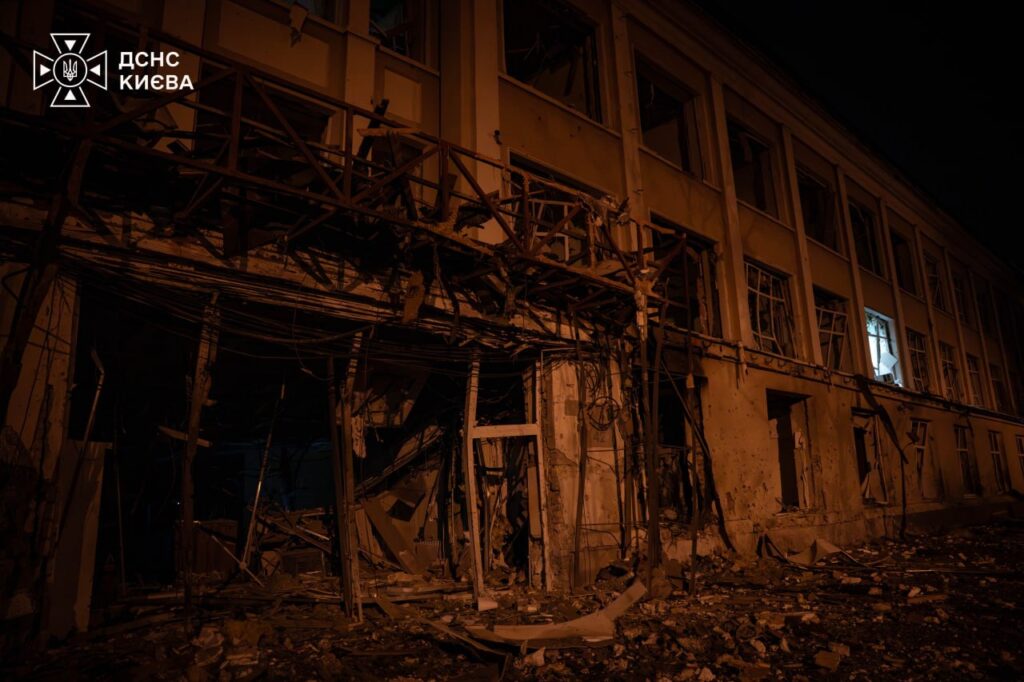
Aftermath of a Russian ballistic missile attack on Kyiv, 19 October 2026
Aftermath of a Russian ballistic missile attack on Kyiv, 19 October 2026. Photo: State Emergency Service of Ukraine

Allies’ missiles need US approval

Some of the transfers come from friendly countries and need Hegseth’s approval, because the US must sign off on any re-transfer of its missiles, a US official and three people familiar with the matter said on 19 October. Hegseth has neither refused nor approved them.

US President Donald Trump and Elon Musk in the Oval Office on 11 February 2025
Explore further

The Starlink hot potato: Musk points to Trump, Trump points to nobody, then credits Musk with the fix. The speed limit stays

A Ukrainian official said in mid-October that only “a couple” of interceptors were left. Hegseth has said the US wants “our guys” to have “the most possible” interceptors, and Secretary of State Marco Rubio insisted nothing was “being deliberately denied to Ukraine.”

Two of three US holds lifted

In an interview aired on 25 October, Zelenskyy listed three problems from his Oslo talks with the Americans: air defense, Starlink limits, and limits on US intelligence sharing. Full Starlink speeds returned on 24 October, and missile warnings resumed after his 20 October call with Rubio. Progress on Patriot missiles is “very slow,” he said, “slower than the flight of Russian missiles.”

Kyiv has also tried to trade for the missiles. Zelenskyy told US senators he had offered US envoys a 30-day pause in strikes on Russian refineries in return for Patriot interceptors. The envoys showed no openness to the idea.

Trump has called those refinery strikes a disgrace that only pushes oil prices higher. He said it days after striking a deal with Putin to bring Russian diesel back to the US ahead of the midterm elections on 3 November.

Trump treats Ukraine as the weak link to squeeze and wants a visible win partly with US domestic politics in mind, Ukrainian diplomat Oleksandr Khara has argued.

  •  

Musk warns military use of Starlink could spark space war. Kyiv’s ex-disinformation chief says he’s building alibi after Starshield scandal

A Ukrainian soldier installs a Starlink terminal

SpaceX founder Elon Musk says that if Ukraine fires through Starlink, Russia would be entitled to shoot the network down. That is why Starlink must remain a civilian operation and cannot be used for outright offensive strikes that would put its very existence at risk.

The warning lands in the middle of a fight over Musk’s own hand on that network. Weeks ago, his company unexpectedly throttled the service Ukraine’s drones depend on amid US President Donald Trump diesel deal with Russia, which led to the disruption of a few operations on the front.

The US Treasury authorized the sale, delivery, offloading, and import of Russian-origin diesel fuel, effectively suspending sanctions on that trade until 7 April 2027, the Office of Foreign Assets Control (OFAC) said on its website on 9 October.

The diesel deal combining intelligence halt and military Starlink, with pressure on Ukraine to make a quick peace deal, has angered both Democrats and Republicans ahead of the US elections on 3 November, where Democrats could win.

Meanwhile, a Ukrainian official interprets Musk's talk of strikes as an attempt to build an alibi before a possible investigation into that decision.

A civilian network, or a target

Musk was responding to a post warning that if Starlink shifted from a civilian network into a military system, Russia could treat it as a target for retaliation, and that destroying satellites in orbit could scatter enough debris to make space unusable for years or centuries.

“An adversary blowing up Starlink satellites would create a domino effect of destruction that would generate a vast field of debris, making space unusable," he writes.

When the shield and the warnings failed together

Overnight into 14 October, SpaceX quietly capped the speed of Starshield, the military version Ukraine’s drones run on, without telling Kyiv. Ukrainian units said the limit broke a series of missions, with connections dropping mid-flight and leaving drones hard to control.

At the same time, President Volodymyr Zelenskyy said Ukraine relies on the network for air defense, not attack, to intercept the Russian drones Moscow sends to its cities, and that once the speed was cut, his forces could no longer stop some of them as effectively as before.

Simultaneously, Ukraine's other American lifeline also went dark: for about three days, the US stopped passing the intelligence that warns of Russian ballistic launches. On 12 October, Russian ballistic missiles hit Kyiv before the air-raid alert reached people, with no advance data from partners. In a strike during that window, three people were killed in the capital, the sirens sounding only after the blasts.

A Ukrainian official sees alibi-building

Meanwhile, Andrii Kovalenko, the ex-head of Ukraine’s Center for Countering Disinformation, read Musk’s statement as self-protection rather than physics

“Musk, having taken responsibility for the restrictions on Starlink and Starshield for Ukraine, is now trying to build himself an alibi before a possible investigation into that decision,” he wrote.

He said that regardless of who was behind the idea of restricting Starlink and Starshield access for Ukraine, it represents a strategic setback for the US in the long run, as it risks portraying the country as an unreliable partner that may fail to honor its commitments.

"Europe purchases around 60% of its imported weapons from the US. Trust in the US as a security guarantor directly supports sales for American defense companies. Moves like this only undermine that trust and encourage European countries to develop their own systems," he said.

The US has sent a message that its guarantees may not be reliable and that even paid-for services can be subject to political decisions, Kovalenko stressed.

  •  

Zelensky details expectations for upcoming trilateral peace talks with Russia, US

Before a meeting between Zelensky, Russian President Vladimir Putin, and U.S. President Donald Trump can take place, technical talks among the three countries' negotiating teams must be held first, said Zelensky.

  •  

Ukraine war latest: Starshield operations restored to normal speed, Zelensky confirms as Elon Musk claims Ukraine violated Starlink terms

Key developments on Oct. 24-25:

  • Starshield operations restored to normal speed, Zelensky confirms as Elon Musk claims Ukraine violated Starlink terms
  • Russian attacks kill 8, injure 51 across Ukraine over past day as drone strikes residential building in Vinnytsia
  • Moscow ready to resume trilateral talks with Ukraine, US after Nov.

  •  

Schiff: Hegseth should face Senate questions over Starlink slowdown

Sen. Adam Schiff (D-Calif.) on Sunday called for Defense Secretary Pete Hegseth to testify before the Senate over Starlink’s slowdown to its satellite service in Ukraine, which disrupted the country’s military capabilities. On NBC News’s “Meet the Press” on Sunday, Schiff told host Kristen Welker that if Democrats were to regain control of the Senate,…

  •  
❌