❌

Reading view

Dolores Huerta, United Farm Workers co-founder and ‘giant’ of labor movement, dies at 96

American labor activist and co-founder of the United Farm Workers of America (UFW) Dolores Huerta speaks on stage during a UFW rally, California, 1975 or 1976. Photo by Cathy Murphy/Getty Images
Common Dreams Logo

This story originally appeared in Common Dreams on Oct. 28, 2026. It is shared here under a Creative Commons (CC BY-NC-ND 3.0) license.

Labor advocates and Democratic lawmakers called on Americans to honor the legacy of the legendary union organizer Dolores Huerta, who died Wednesday at age 96, by “continuing to fight for her dream” of justice for all.

A spokesperson for Huerta’s family said she died of cancer, and her family members said they would share plans “to recognize and celebrate her incredible life and legacy” at a later date.

“We know that many of you around the world share in our mourning,” said her family, including her 13 children who survive her.

Huerta became a hero to workers across the world in the 1960s when she joined Cesar Chavez to establish the National Farm Workers Association, which became known as the United Farm Workers in 1972.

She helped lead a strike by Filipino workers in the grape-growing industry in Southern California, as well as boycotts of companies that paid migrant workers low wages, while exposing them to toxic chemicals and providing no job security.

Huerta faced violence by strikebreakers and police, 22 arrests for her nonviolent protests, and surveillance by the FBI, which suspected her and Chavez of Communist ties—but nevertheless organized one of the most successful produce boycotts in US history in 1968, garnering support from 17 million households and thousands of grocery stores that pledged not to purchase California table grapes due to growers’ abuse of workers.

Dolores Huerta has passed away from cancer at 96. She was a founder of what became the United Farm Workers and an inspiration for generations of organizers.

Her courageous leadership in civil disobedience set an invaluable example in nonviolence. Dolores’s memory will live on. https://t.co/BMnLgbI2XK

— Ro Khanna (@RoKhanna) October 28, 2026

The strike led by Huerta and Chavez also gained the backing of the United Auto Workers and Democratic Sen. Robert F. Kennedy, and the grape growers were forced to provide benefits to the workers the industry depended on.

“Through courage and determination, she helped change what the world saw as possible, who the world saw as deserving of rights and dignity. Every worker owes her a debt of gratitude,” said Sara Nelson, international president of the Association of Flight Attendants. “It’s a debt that we must pay forward by continuing to fight for her dream of a world where no human is exploited and no injustice is written off as someone else’s problem.”

Along with Huerta’s historic boots-on-the-ground victory for farmworkers, she pushed for the passage of one of the country’s first major farm-labor laws, the Agricultural Labor Relations Act in California, which was passed in 1975. The law gave the state’s farmworkers the right to organize unions and made them eligible for health insurance, pensions, and other benefits.

For those who pursue peace and justice around the world, we mourn the loss of Dolores Huerta. The strength of today’s labor movement would not be possible were it not for the decades-long work of Dolores. From the Delano Grape Strike of the 1960s until the very end of her life,… https://t.co/DsCq6CXLDe

— Chi Ossé (@OsseChi) October 28, 2026

She also pushed lawmakers to pass immigration reform in the 1980s and backed campaigns for voting rights, environmental justice, and LGBTQ+ rights. Her last arrest was in 2019, when she was rallying for fair pay for home health aides.

“Dolores Huerta gave us all of the empathy, care, and encouragement of a mother for workers everywhere, with a fierce love for people that fueled her principled, relentless, strategic action for results that lifted millions of workers and our families,” said Nelson. “She never gave up, she never gave in, and she fought for a better world to her last breath.”

Chavez was often viewed as the leader of the movement they led together, with Huerta serving as vice president of the United Farm Workers for nearly forty years.

But earlier this year, Huerta and other women in the movement revealed to The New York Times in a bombshell report that Chavez had sexually abused women and children as young as 12 for years.

Huerta accused Chavez of raping her at least twice in encounters that led to pregnancies. She said she did not report the assaults to police because they were hostile to their labor organizing, and said she had not been aware of his alleged abuse of minors.

“Unfortunately, he used some of his great leadership to abuse women and children,” Huerta told the Times. “I never talked about it to anybody, and the reason I didn’t is because I just didn’t want to hurt the movement.”

Huerta remained with the United Farm Workers until 1999. Three years later she established the Dolores Huerta Foundation, which leads grassroots organizing efforts to promote education equity, LGBTQ+ equality, and other causes.

She was awarded the Presidential Medal of Freedom in 2012 by President Barack Obama, who acknowledged at the ceremony that the rallying cry he adopted in 2008, “Sí se puede” (“Yes we can”), had originated with Huerta.

“¡Sí, se puede! is more than a chant,” said Melat Kiros, a progressive Democratic US House candidate in Colorado. “It’s a promise we must keep in her honor: that the people united can change the world.”

  •  

Toutes les ingérences ne se valent pas

Les immixtions politiques dans les affaires d'un autre État sont une habitude ancienne et largement partagée. Certaines sont tolérées, d'autres non. Les interférences de Moscou ou Pékin entrent dans cette deuxième catégorie. Elles sont désormais cataloguées comme relevant de la « guerre hybride », ce qui permet de justifier l'adoption de mesures d'exception.

Feros, « Is Watching You » (On vous regarde), 2020.

En matière d'ingérences, les choses ont longtemps été simples. D'un côté, les manipulations odieuses orchestrées par des régimes « autoritaires » — russe, chinois, iranien. De l'autre, les interventions vertueuses des Occidentaux chez leurs voisins pour défendre les valeurs démocratiques. En récusant la rhétorique du « monde libre », Donald Trump a troublé ce schéma sans le bouleverser : Londres, Berlin ou Paris tolèrent toujours les immixtions de Washington, y compris chez eux, mais qualifient les opérations russes ou chinoises d'« attaques hybrides ».

Avant même l'institution de la démocratie représentative, des États étrangers ont tenté d'infléchir la politique d'autres pays conformément à leur intérêt. En 1764, la Russie et la Prusse s'entendent pour imposer leur favori Stanislas-Auguste Poniatowski à l'assemblée de notables chargée d'élire le roi polonais. En France, les révolutionnaires de l'an I saisissent les biens des nobles émigrés qui complotent avec les monarchies voisines en vue de restaurer les Bourbons sur le trône. Avec la souveraineté nationale se constitue la figure repoussoir du « parti de l'étranger ». La France et l'Allemagne s'accusent mutuellement d'ingérence entre 1871 et 1914. Et l'une comme l'autre tournent leur suspicion vers Moscou quand triomphe la révolution bolchevique de 1917. La bourgeoisie perçoit l'Internationale communiste comme une « cinquième colonne » susceptible de s'engouffrer dans la brèche ouverte par les élections libres.

Bêtisier

• « La polémique des punaises de lit (…) a été artificiellement amplifiée sur les réseaux sociaux par des comptes dont il a été établi qu'ils sont d'inspiration ou d'origine russe » (Jean-Noël Barrot, ministre français délégué à l'Europe, TF1, 1er mars 2024).

• « Vladimir Poutine et ses amis font tout ce qui est en leur pouvoir pour empoisonner le débat public partout en Europe » (Ursula von der Leyen, présidente de la Commission européenne, au sujet des manifestations d'agriculteurs s'étendant en Europe, citée dans L'Opinion, 27 février 2024).

• « Impression massive de faux billets, grève sur la ligne B, mobilisation de délinquants sur les réseaux sociaux… Stade de France : la piste du sabotage par la Russie est à prendre en considération. Le match était initialement prévu à Saint-Pétersbourg… » (Brice Couturier, journaliste, au sujet des échauffourées qui ont émaillé la finale de la Ligue des champions, organisée à Saint-Denis le 28 mai 2022, sur Twitter, 31 mai 2022).

• « Il y a de très nombreuses allégations sur des tentatives russes d'influencer les votes lors du référendum de 2016 : des études ont montré la prédominance des articles pro-Brexit et anti-Union européenne sur RT et Sputnik, et l'usage des bots et des trolls sur les réseaux sociaux » (rapport de la commission parlementaire chargée de la sécurité et du renseignement à la Chambre des communes, 21 juillet 2020).

• « Des comptes russes alimentent la colère des Français (…). Ces comptes ont répandu de la désinformation, utilisant des photographies de manifestants blessés dans des événements sans rapport afin de renforcer le récit d'une police française violente » (The Times, au sujet du mouvement des « gilets jaunes », 8 décembre 2018).

Après 1945, l'ingérence devient pour l'Union soviétique et les États-Unis une composante majeure de la guerre froide. Elle prend diverses formes. L'influence en sous-main : la Central Intelligence Agency (CIA) finance secrètement, en millions de dollars, des syndicats anticommunistes en France, la Démocratie chrétienne en Italie, le Parti libéral-démocrate japonais et quantité de formations politiques et paramilitaires en Amérique latine. Elle intervient dans la vie intellectuelle, artistique et littéraire des alliés de Washington, et manipule les intellectuels libéraux les plus réputés, comme le montre Frances Stonor Saunders dans Qui mène la danse ? La CIA et la guerre froide culturelle (Denoël, 2003). Elle s'immisce aussi dans la politique. Dans son livre Meddling in the Ballot Box : The Causes and Effects of Partisan Electoral Interventions (Oxford University Press, 2020), le politiste Dov H. Levin a montré qu'entre 1946 et 2000 Washington était intervenu dans 81 scrutins à l'étranger (contre 36 fois pour Moscou), soit une élection nationale sur neuf en tout.

Quand la subversion échoue, on recourt à la manière forte. Si les images des chars russes à Budapest (1956) et à Prague (1968) sont mondialement connues, celles de la soixantaine de coups d'État militaires contre des dirigeants démocratiquement élus appuyés par Washington entre 1946 et 1989 le sont moins — Iran (1953), Guatemala (1954), Grèce (1967), Chili (1973), etc. La France fait de même dans ses anciennes colonies, du Gabon aux Comores.

Louis Armstrong (1901-1971) devant le Sphinx de Gizeh, Égypte, le 31 janvier 1961.
Le trompettiste effectuait alors une tournée africaine organisée par le département d'État qui le fit passer par le Congo. Le périple de la vedette américaine du jazz aurait servi de paravent à des agents de la CIA qui se préparaient à déstabiliser la jeune république indépendante en ciblant son premier ministre Patrice Lumumba.

Valises de billets ou opérations de désinformation, ces « mesures actives » inspirent des romans policiers. Mais d'autres leviers s'actionnent au grand jour, sans être qualifiés d'ingérences. Lorsque Moscou fait varier le tarif de son gaz en fonction de la couleur politique sortie des urnes, on parle de chantage gazier ; lorsque Berlin et Bruxelles mettent la Grèce à genoux, c'est le chant de la raison libérale. Une étude publiée dans le Journal of Law and Economics (2007) a analysé 206 lettres d'intentions adressées au Fonds monétaire international par 38 pays entre 1992 et 2003. Les résultats montrent que les alliés des États-Unis (et du Groupe des sept) reçoivent des prêts avec moins de conditions, notamment avant les élections. Une « ingérence » rebaptisée « conditionnalité politique ». Washington finance nombre d'organisations non gouvernementales en faveur de la promotion de la démocratie, qui, des Balkans à l'Asie centrale, appuient des « révolutions de couleur », débouchant sur la victoire de coalitions pro-occidentales.

« Russiagate »

Pendant trois ans, la presse a consacré une place immense à l'affaire du « Russiagate ». Les journaux les plus distingués ont confectionné ses principaux bobards. Idée centrale : la démocratie américaine avait été attaquée en 2016, et le résultat des élections, faussé par une campagne de désinformation russe. L'attaque avait réussi puisque Donald Trump, favori du Kremlin depuis qu'il était « tenu » par les services secrets russes en raison de l'enregistrement de ses ébats sexuels dans un hôtel de luxe de Moscou, avait été élu président. Résultat, il n'avait cessé de courtiser Vladimir Poutine, au point de lui abandonner l'Ukraine.

Il ne reste rien de ces fariboles. L'Ukraine fut envahie alors que Trump n'était plus président. Surtout, une commission d'enquête dotée de moyens gigantesques a admis en 2019 n'avoir trouvé aucune preuve que l'équipe de campagne du milliardaire américain « s'était coordonnée ou avait conspiré avec le gouvernement russe ». Où sont les complotistes ?

Le regain de tensions avec Moscou depuis 2014 et la montée en puissance de la Chine ont donné une centralité nouvelle au thème de la « cinquième colonne ». Les médias voient la main de Moscou derrière le Brexit, l'élection de Trump en 2016, le mouvement des « gilets jaunes ». Cet affolement s'explique notamment par la vulnérabilité numérique des démocraties libérales. Pour quelques milliers de dollars, une poignée de bots coordonnés amplifient la diffusion de documents compromettants ou de campagnes de publicité cachées dans des proportions inédites, grâce à la force propulsive des algorithmes.

Obama et le Brexit

En déplacement à Londres pendant quatre jours, le président américain Barack Obama plaide, dans une tribune parue dans le Daily Telegraph (23 avril 2016), pour le maintien du Royaume-Uni dans l'Union européenne. « L'Union européenne ne diminue pas l'influence britannique, elle l'amplifie », écrit-il. Lors d'une conférence de presse la veille, il avait prévenu les électeurs britanniques qu'en cas de Brexit leur pays se retrouverait « au bout de la file d'attente » dans la négociation d'un futur accord commercial avec les États-Unis. Nullement choqué par cette immixtion, le quotidien français Le Monde commente (22 avril 2016) : « Avec son aisance oratoire, Barack Obama (…) avait le choix entre une approche tout en retenue ou une attitude très directe, quitte à froisser quelques susceptibilités. Il a choisi sans hésitation la seconde option. » Le site russe Sputnik livre, lui, un récit différent (22 avril 2016) : « Le président américain ne cesse d'imposer sa volonté partout. Ainsi, lors de sa visite à Londres, Barack Obama a menacé le Royaume-Uni de conséquences sur les relations commerciales des deux pays en cas de Brexit. »

Toutefois, l'impact de la propagande en ligne sur le vote reste à démontrer. En 2012, une étude portant sur 61 millions d'utilisateurs de Facebook aléatoirement exposés à un message incitant à se rendre aux élections a conclu à son effet négligeable sur la participation (+ 0,39 %). En même temps qu'ils abdiquent leur souveraineté numérique au profit des États-Unis, les gouvernements européens dramatisent la désinformation russe ou chinoise, comme une menace justifiant de suspendre le cours ordinaire des institutions ou d'interdire des médias (RT, Sputnik).

L'élection présidentielle de 2024 en Roumanie marque un cran supplémentaire. Alors qu'un « outsider » d'extrême droite et prorusse arrivait en tête du premier tour, la Cour suprême a décidé d'annuler le scrutin. Les juges ont pointé l'exigence de « protection contre toute influence indue sur le comportement électoral, exercée au moyen d'actes ou de faits illégaux et disproportionnés ». Dès lors, quelle ingérence sera considérée comme « disproportionnée », alors que bien d'autres facteurs biaisent le jugement électoral, à commencer par la propriété privée des médias ? À ce compte, le nombre de scrutins invalidés pourrait dangereusement augmenter…

  •  

GOP lawmakers urge Rubio to weigh visa restrictions on corrupt officials as Albania rocked by protests

EXCLUSIVE: Two Republican members of Congress sent a letter to Secretary of State Marco Rubio expressing concern over the state of NATO ally Albania’s democratic backsliding, urging the department to use its visa restriction authority against Albanian officials complicit in significant corruption.

"We write to express concern about the state of democracy and the rule of law in the Republic of Albania, a NATO ally and candidate for European Union membership. The United States has invested heavily in Albania's justice reforms and has a strong interest in their success. Recent events suggest that progress is fragile and, in key areas, at risk of reversal," the letter to Secretary Rubio said.

Specifically, the letter urges Secretary Rubio to use the State Department's authority under Section 7031(c) of the annual Department of State, Foreign Operations and Related Programs Appropriations Act to publicly designate Albanian officials and their immediate family members, if necessary, if credible information of involvement in significant corruption exists.

SERBIA’S LONGTIME LEADER FACES BIGGEST POLITICAL TEST AS STUDENTS MOUNT ELECTION CHALLENGE

The letter, written by Rep. Joe Wilson, R-S.C., and his Republican colleague, House Europe Subcommittee Chairman Rep. Keith Self, R-Texas, requested the administration answer four key questions by Nov. 5.

In addition to asking the state department to commit to reviewing Albanian officials for designation under its visa restriction authority, the members of congress inquired about what assistance is being provided to Albania's broader justice reform efforts and whether the U.S. Embassy in Tirana is working with local officials to protect protesters and journalists.

The Republican representatives are also requesting an update on former Deputy Prime Minister Belinda Balluku, who was charged with interfering in public procurement for road construction. Prosecutors asked parliament in December 2025 to lift her immunity so she could be arrested, but Prime Minister Edi Rama called the request unconstitutional, and parliament has not allowed the arrest to proceed.

The members of congress say that Albania's anti-corruption institutions cannot succeed in rooting out corruption when political leaders shield the officials they investigate.

US LAWMAKERS SOUND ALARM AS VIOLENCE GRIPS NATO ALLY ALBANIA AMID ANTI-GOVERNMENT PROTESTS

Like fellow protesters in France and across Europe, tens of thousands have protested amid allegations of government corruption, inadequate education, unemployment and a lack of opportunity. The growing nationwide protest movement is driven by students and citizens also demanding accountability, an end to corruption and what they say is the restoration of democratic institutions and the rule of law.

Demonstrations broke out in the capital, Tirana, two weeks ago, demanding the resignation of Prime Minister Edi Rama. The protests quickly turned violent as demonstrators lobbed Molotov cocktails at the Education Ministry and clashed with police.

Protesters also took aim at Rama’s Socialist Party headquarters in Tirana, squaring off with riot police who had been dispatched to protect government property.

Rama blamed "foreign hands who do not want Albania in the European Union and who promote the masks that claim to represent students, but who in fact, more than students, represent organized crime itself."

So far, the prime minister has refused to resign but has proposed entering into dialogue with the protesters.

FRANCE ROCKED BY STUDENT RIOTS AS HUNDREDS ARRESTED, VIOLENCE SPREADS NATIONWIDE

The violence taking place across Albania is a worrying sign for a country struggling to maintain its democracy and continue the path to EU accession.

"Congress is deeply concerned about the situation in Albania as the government uses excessive force against citizens who are demanding accountability and clean institutions. Corruption and narcotrafficking associated with the Rama government must be countered," Rep. Wilson told Fox News Digital in a statement.

The turmoil in Albania comes as the country has long sought European Union membership, which began in 2014 when it became an official candidate for accession. While the 2025 annual European Commission report stated that Albania made significant strides in judicial reforms and combating organized crime, the continued allegations of corruption in the Rama government and the current violence taking place will complicate its path to EU membership.

The student protests in Albania mirror the mass protests that took place in neighboring Serbia, where a student-led political movement toppled longtime leader Aleksandar Vučić.

"Vucic’s defeat by a student-backed movement, following nearly two years of demonstrations over corruption and government accountability, is a striking parallel with the unrest now confronting Rama in Albania, where protests have been ongoing for over 150 days," Agim Nesho, former Albanian ambassador to the U.N. and U.S., told Fox News.

CLICK HERE TO DOWNLOAD THE FOX NEWS APP

"In Albania, students and other citizens have been demonstrating since May, with the latest wave of daily protests intensifying demands for the resignation of a prime minister who has governed for more than 13 years with rampant corruption and declining public services," Nesho added.

  •  

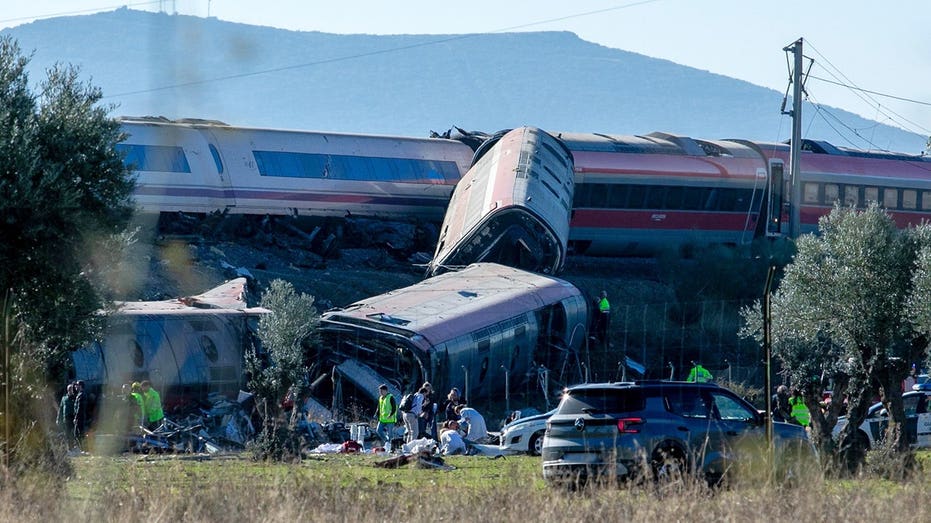
Spain high-speed railway crash kills at least 68 after train stopped on tracks

Several Americans are believed to have been injured in a high-speed train collision that killed at least 68 people in Spain on Wednesday when one train collided with another that had stopped on the tracks.

The crash took place in Spain's Castilla-La Mancha, with the regional government confirming the death toll and adding that another 58 people required medical treatment in hospitals. Several Americans are believed to have been hurt in the crash, according to the State Department.

Rescue workers continue to search in the wreckage for survivors and bodies, with witnesses describing a gruesome scene.

Wednesday's incident is the second high-speed rail crash Spain has suffered this year.

Spain’s rail system operator ADIF said the crash occurred Wednesday morning in the province of Toledo. Both trains were carrying hundreds of passengers, and were headed in the same direction on a route from Madrid to Seville.

CRASH INVOLVING SPEEDING TRAIN, MINIBUS IN BELGIUM LEAVES 4 DEAD INCLUDING 2 CHILDREN

One train, run by the state-owned RENFE company, ran into the tail of the other train owned by private company IRYO that had stopped, knocking two of its cars off the track. Those companies were the same ones involved in January's crash.

Esther Padilla, a spokesperson for the Castilla-La Mancha regional government, said 397 passengers were on the RENFE train and 147 passengers on the IRYO train.

Spanish Transport Minister Óscar Puente attributed the deadly train collision to what he described as an "inexplicable" decision by the country's central rail control center to allow a train to resume traveling after a safety system malfunctioned.

Puente said the train's engineers were not responsible for the collision.

According to Puente, a computer malfunction caused a safety system covering roughly 39 miles of track to stop working around 8:30 a.m.

The disruption forced trains in the affected area to stop, but the central control center subsequently authorized the RENFE train to resume traveling without speed restrictions, he said.

Just over 20 minutes later, the RENFE train collided with the stopped IRYO train.

Puente said the RENFE train should never have been cleared to resume traveling while a stop signal remained active on the line. At a minimum, he said, the train should have been instructed to proceed at a reduced speed.

Officials are still working to determine the train's speed at the time of the collision, but Puente said it may have been traveling at approximately 124 mph.

BYSTANDER VIDEO CAPTURES NORFOLK SOUTHERN TRAIN T-BONING SEPTIC TRUCK AT VIRGINIA RAILROAD CROSSING

David Gómez, a construction worker, was working with his brother and another colleague nearby when they heard the crash and ran to help, he told the newspaper El País.

"People were trying to get out through the windows…. We cut through some fences to access the area and treated people with the first-aid kits we had brought," until emergency services arrived, he said. "As I was trying to pull a young woman out, there was a piece of a leg."

Spanish Health Minister Mónica García said emergency workers were focusing on rescuing survivors and bodies from the two most damaged train cars. She said the injured are being sent to different hospitals in the area.

"It was a high-speed impact, so we are expecting this to be a tragedy," García said.

Spanish Prime Minister Pedro Sánchez visited the crash site and announced that his government would declare three days of national mourning.

"Today all of Spain is grieving," Sánchez said.

The prime minister also called for enhanced safety measures across the country's rail system following the second high-speed rail crash this year.

"It is unacceptable for a country like Spain to suffer two high-speed rail accidents in the same year," he said.

Passenger Ignacio Relaño was traveling on the RENFE train. He told state broadcaster TVE that the train had stopped momentarily on the line before it started again and then crashed into the IRYO.

"We all felt the train abruptly slowing down and then the impact," he said. "The car leaned to one side like it was about to tip over. I hit my nose, everything went flying, luggage, cellphones. Everything shook."

Another passenger recounted to Cadena Ser radio how she felt the train slam on the brakes and was thrown forward in her seat, breaking the small table in front of her. She said she saw body parts and trapped people covered in blood.

IRYO, an Italian-owned company, said in a statement that it has "activated its security protocols and is closely working with authorities."

CLICK HERE TO DOWNLOAD THE FOX NEWS APP

Spain’s King Felipe VI and Queen Letizia said in a short statement on X that they were following news of the accident.

"We are deeply saddened and concerned by the train accident in Urda (Toledo)," the royal couple said. "We share in the grief of the families and loved ones of those who lost their lives, and we send our heartfelt support to the injured and all those affected."

The Associated Press contributed to this report.

  •  

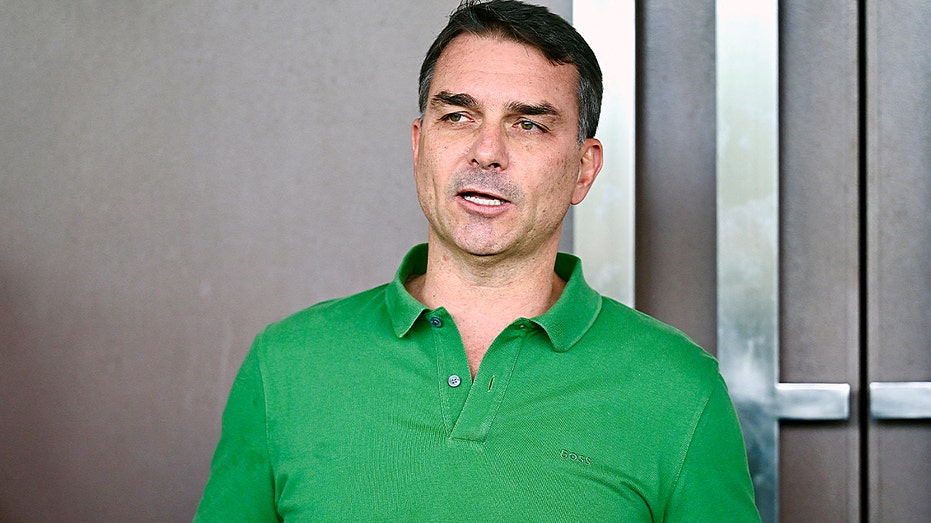
Flávio Bolsonaro flees to US

Flavio Bolsonaro steps off a plane after arriving at Opa Locka Executive Airport in Miami, Florida on October 28, 2026. Photo by Ricardo ARDUENGO / AFP via Getty Images

This story originally appeared in Panamerican Dispatch on Oct. 27, 2026, and is shared here with permission.

Sen. Flávio Bolsonaro arrived in the United States on Tuesday, according to Mexican lawyer Simón Levy, who describes himself as a liaison to President Donald Trump’s MAGA movement. In a post on X made at 3:20 p.m., Levy said the failed presidential candidate had landed safely and credited U.S. Secretary of State Marco Rubio with orchestrating the operation.

As of the time this information was provided, the U.S. government, Brazil’s Foreign Ministry and the Federal Police had not officially confirmed his arrival. Brazilian authorities also had no formal record of the senator leaving the country.

“As I reported hours ago, Flávio Bolsonaro has arrived safely in United States. The mastermind behind this operation is U.S. Secretary of State Marco Rubio. From the United States, free and safe, Flávio will lead the opposition against Lula,” Levy wrote on X.

The trip came after Supreme Court Justice Alexandre de Moraes ordered Bolsonaro’s passport seized. According to reports, he fled Brazil overnight, accompanied by his family, with help from a small group of allies from both Brazil and the United States. The Federal Police found no record of him passing through a regular immigration checkpoint.

Bolsonaro’s legal team said their last contact with him was at 4:30 p.m. on Monday. Reports in the Argentine press mentioned a possible border crossing and a jet that reportedly reached Puerto Iguazú but never took off. The exact circumstances of his departure have not been officially confirmed.

Bolsonaro Said He Would Stay in Brazil, Then Fled the Next Day

Bolsonaro had said he would hand over his passport to the Federal Police and would not leave the country over the election results. That is not what happened.

Who Is Simón Levy

Simón Levy is a Mexican lawyer and businessman who presents himself as connected to the MAGA movement. He previously served in the government of Mexican President Andrés Manuel López Obrador.

Levy had already said on social media that Bolsonaro was en route to the United States. He later announced the senator’s arrival and said Rubio was responsible for orchestrating it. In another post, he said a U.S. protection operation was underway to ensure the lawmaker’s safety.

Levy’s statements, however, have not been confirmed by U.S. officials. His claim of proximity to Trump’s political circle does not, on its own, prove that the U.S. government formally participated in Bolsonaro’s departure or his reception in the United States.

What Is Operation Alba

Operation Alba is a name Levy uses to describe an alleged political strategy involving Bolsonaro and U.S. activity in Latin America. According to Levy, the senator will lead opposition to President Lula da Silva’s government from within the United States.

In Levy’s account, the effort is tied to pressure from Washington on Venezuela, Cuba and Mexico, including economic measures. Levy also credited Rubio with orchestrating the operation. Levy has written about Operation Alba on his website.

Asylum Request or Fugitive From Justice?

Allies of Bolsonaro say he plans to request political asylum from President Trump. According to these accounts, that protection could extend to his wife and two daughters. The reported favorable signal from the U.S. government has also not been officially confirmed.

In Brazil, the Federal Police canceled both Bolsonaro’s regular and diplomatic passports. Workers’ Party (PT) lawmakers have requested his pretrial detention and asked that his name be added to an Interpol Red Notice. The Socialism and Freedom Party (PSOL), meanwhile, has asked the Senate to investigate whether he has abandoned his elected position.

His departure also upends the political plans attributed to him. Allies had said he intended to lead opposition to Lula’s government in Congress. With his trip to the United States, that strategy is now on hold, according to these accounts.

This article originally ran in the Brazilian labor union news portal TVT News, was translated with express authorization of the editor by Panamerican Dispatch, and can be read in its original Portuguese here.

  •  

Holocaust educator says Mamdani could learn from UK's targeted approach to antisemitism in schools

The British government’s decision to embrace sweeping measures addressing antisemitism in schools is drawing a sharp contrast with New York City Mayor Zohran Mamdani’s recently unveiled strategy, raising questions about why Britain’s plan appears more specific than the one proposed in America’s most Jewish city.

The U.K. government accepted all 27 recommendations from an independent review into antisemitism in schools and colleges in England. The measures include encouraging adoption of the International Holocaust Remembrance Alliance working definition of antisemitism, specialized training for educators, strengthened reporting procedures and independent oversight.

Mamdani’s 33-page strategy — while not only focused on education — by comparison, does not adopt a single definition of antisemitism, explicitly address the relationship between anti-Zionism and antisemitism or establish numerical benchmarks for measuring whether its initiatives succeed.

British Jewish author and Holocaust educator Dov Forman, who recently graduated from university, said Mamdani could learn from Britain’s targeted approach to addressing antisemitism in schools.  

MAMDANI PLEDGES MILLIONS TO COMBAT ANTISEMITISM WHILE LEAVING KEY QUESTION UNRESOLVED

The British review followed a BBC report from Yavneh College, a Jewish secondary school near London, where students described how antisemitism has affected their daily lives. Their accounts offered a window into the urgency behind the government’s recommendations.

Education provides one of the clearest points of comparison between the two strategies. Mamdani's plan calls for expanding Holocaust education, including opportunities for students to visit the Museum of Jewish Heritage, while also addressing how public schools respond to antisemitic discrimination. The U.K. government's recommendations address many of those same concerns, placing greater emphasis on how educators recognize antisemitism, how schools respond when incidents occur and what protections are in place for Jewish students.

The review, led by former senior education official Sir David Bell, found that nearly three in five Jewish people between the ages of 16 and 19 had experienced or witnessed antisemitism. It concluded that antisemitism is a distinct form of racism requiring a specific response and called for clearer guidance to distinguish legitimate political debate from harassment, intimidation and antisemitic rhetoric.

British Jewish author and Holocaust educator Dov Forman, who recently graduated from university, called the recommendations "the bare minimum," while acknowledging that the government is attempting to confront the problem directly.

"The least [Mamdani] could do is look at what has happened in the U.K. and adopt similar measures, such as adopting the IHRA definition, which is the agreed definition across the world and where there is a consensus of what antisemitism actually is," Forman told Fox News Digital.

"The basic way to solve antisemitism is to actually agree on what it is and to understand that targeting a Jew deliberately because of what is going on in Israel, for example, is antisemitic, as the IHRA definition says," he added.

Forman cautioned that the British recommendations remain largely optional and that their effectiveness will depend on whether institutions act.

"I do think some of them will be enforced and listened to. I do worry, though, that the government says things and does not actually take it seriously enough."

Education Secretary Lucy Powell said the government would establish an implementation group, while Bell was commissioned to conduct an independent assessment of its progress after one year.

Ambassador Rabbi Yehuda Kaploun, the U.S. special envoy to monitor and combat antisemitism, welcomed Britain’s decision while emphasizing that adopting recommendations is only the beginning.

JEWISH EDUCATORS FACE RAMPANT ANTISEMITISM IN TEACHERS UNIONS, NEW REPORT FINDS

"I welcome the U.K.’s announcement that it has accepted all 27 recommendations," Kaploun wrote on X. "Now, the challenge lies in implementation and enforcement."

Forman also said that British officials must examine whether their rhetoric about Israel contradicts their stated commitment to protecting Jewish communities.

"It is very rich of the government to say that schools should adopt the IHRA definition of antisemitism and that Jews should not be demonized for what is going on in the Middle East, and then for them to get up in the dispatch box in the House of Commons every week and blame Israel," he said.

"Stop talking and start acting," Forman added, calling on the government to confront Islamist extremism and the Muslim Brotherhood and identify more directly where antisemitism is originating.

The U.K. has faced criticism for being slow in combating antisemitism. Jewish residents have faced physical attacks, threats and harassment, making the specificity of its new plan and its contrast with New York City’s approach particularly notable.

Rabbi Chaim Steinmetz, senior rabbi of Congregation Kehilath Jeshurun on Manhattan’s Upper East Side, called Mamdani’s strategy a "paper tiger," arguing that its announced $36 million price tag obscures how little would go directly toward physical security.

"It’s a million dollars in security in a city with a million Jews. It’s a dollar a Jew," Steinmetz told Fox News Digital.

The strategy includes $1 million to support physical security for vulnerable nonprofit organizations, including synagogues and other houses of worship, and $6.4 million for grants through the city’s Partners Against the Hate initiative.

Steinmetz claimed that much of the money would support cultural centers and broadly defined community initiatives rather than immediate security needs.

SIGN UP FOR ANTISEMITISM EXPOSED NEWSLETTER

UJA-Federation of New York, the Jewish Community Relations Council of New York, the American Jewish Committee’s New York office and the New York Board of Rabbis issued a joint statement warning that Mamdani’s plan fails to address a central source of contemporary antisemitism.

The organizations said rhetoric demonizing or delegitimizing Israel contributes to Jewish New Yorkers being treated as suspect, excluded or unsafe, and argued that any serious strategy must acknowledge that connection.

"How can you have a strategy to keep New York Jews safe when you can’t even name what the danger is?" Steinmetz asked.

One of Mamdani’s early actions as mayor was to revoke an executive order issued by former Mayor Eric Adams adopting the IHRA definition for city agencies. The definition provides examples of when criticism of Israel may cross into antisemitism while making clear that criticism comparable to that directed at any other country is not inherently antisemitic.

Fox News Digital asked Mamdani’s office why the city’s strategy omits the IHRA definition and measurable benchmarks, and whether the administration would consider safeguards similar to those adopted by Britain. The mayor’s office did not respond by the time of publication.

Britain’s measures have also only recently been accepted, and their impact remains untested.

CLICK HERE TO DOWNLOAD THE FOX NEWS APP

Britain has defined the problem, outlined specific recommendations and established a process for reviewing its progress. New York City’s Jewish leaders are still asking whether City Hall has accurately identified the threat it claims it intends to confront.

Fox News Digital's Sydney Finver contributed to this report.

  •  

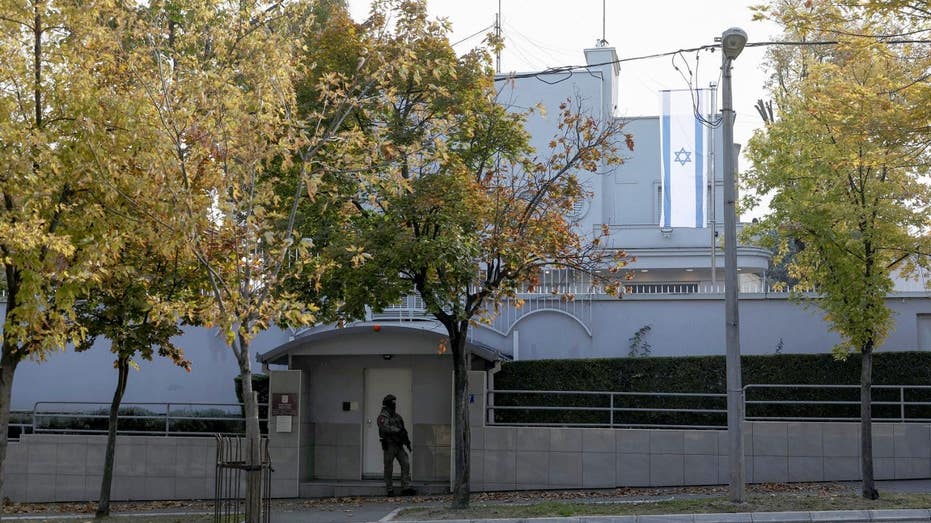
Attacker shouting 'Allahu Akbar' killed outside Israeli Embassy in Serbia, police say

An assailant armed with two knives attacked a member of Serbia's Gendarmerie guarding the Israeli Embassy in Belgrade shortly after midnight Wednesday, prompting the officer to fatally shoot the attacker in self-defense, according to Serbian authorities.

The assailant, who was a minor, allegedly shouted "Allahu Akbar" — or "God is great" in Arabic — as he slashed the officer in the face, leaving the officer "slightly injured."

Interior Minister Ivica Dacic said authorities are treating the incident as a terrorist attack, adding that security forces had been monitoring the assailant.

Dacic said the attacker supported ISIS and displayed a black flag bearing the terrorist group's symbol on his Instagram account. The attacker was believed to be Serbian and from the town of Sabac, Dacic added.

HALIMA SALMAN CONVICTED OF RECEIVING ISIS MILITARY TRAINING IN SYRIA, FACES 10 YEARS IN PRISON

Israel's foreign ministry confirmed the "attempted terrorist attack," and said the incident was under investigation by the relevant authorities.

"The attacker was neutralized by local police. No embassy personnel were injured, and the mission was closed at the time of the incident, which occurred late at night," the statement said.

According to Serbian prosecutors, an unidentified person wearing black clothes opened the door to the security booth outside the embassy around 12:15 a.m. local time.

FRANCE ON EDGE WITH 70,000 POLICE DEPLOYED FOR UNREST AS AUTHORITIES PROBE SUSPECTED TERROR ATTACK NEAR PARIS

Prosecutors said the attacker then walked toward the officer inside, identified as D.S., and threw one of his knives in his direction, hitting the officer in the left cheek.

D.S. then retrieved his service weapon and fired multiple rounds, killing the attacker on the spot, according to the office of the Higher Public Prosecutor in Belgrade.

Photos from the scene hours after the attack show heavily armed police officers standing at the entrance of the embassy.

CLICK HERE TO DOWNLOAD THE FOX NEWS APP

Dacic said Serbia had raised its terrorism threat level to the highest level, prompting an increased police presence at sensitive sites and crowded public spaces across the country.

In June 2024, a crossbow-wielding assailant wounded a Serbian police officer guarding the Israeli Embassy in Belgrade before the officer returned fire, killing the attacker.

The latest attack comes a day after Israel held parliamentary elections, with exit polls pointing to no clear winner.

  •  

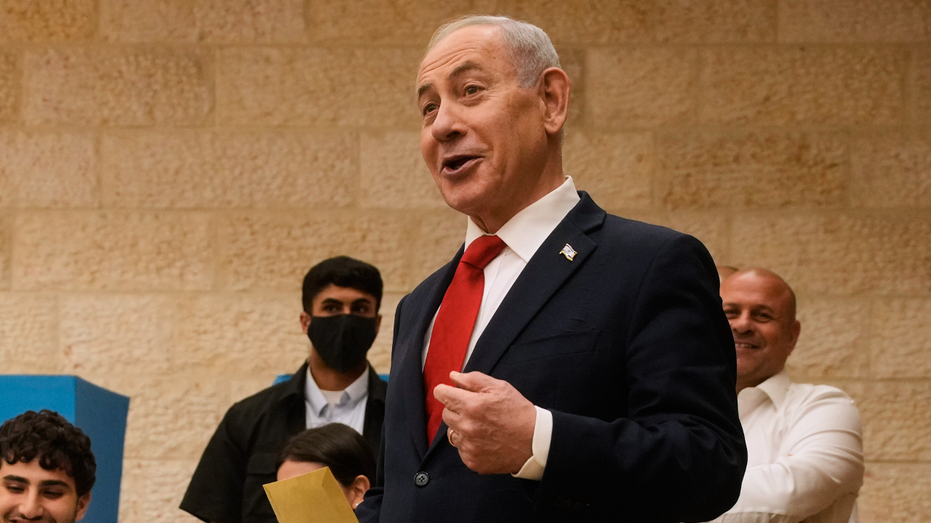
Netanyahu defies exit polls as vote shifts in his favor, but majority remains elusive

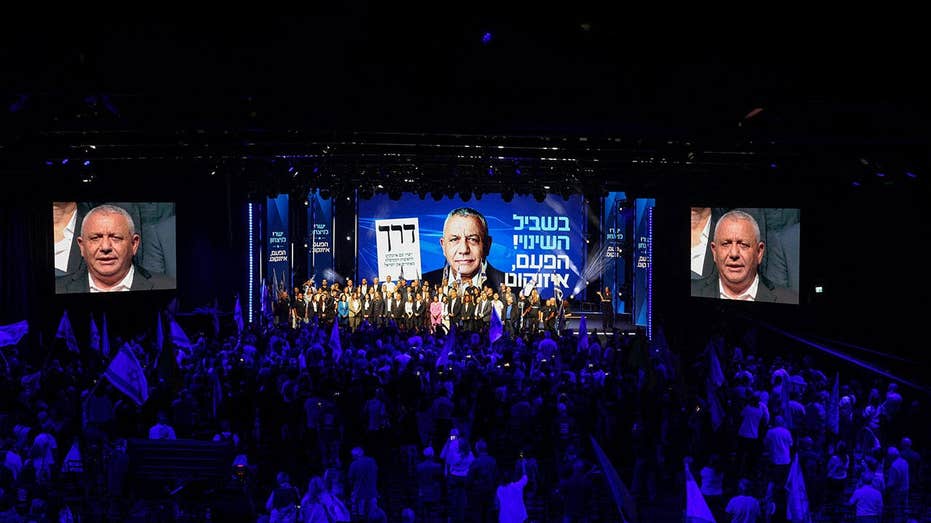
TEL AVIV, Israel — Prime Minister Benjamin Netanyahu's political bloc gained ground Wednesday morning as Israel counted votes from its first national election since the Oct. 7, 2023, Hamas massacre, but remained short of the majority needed to form a government, leaving the country facing another potential political deadlock.

With approximately 70% of votes counted, Netanyahu's right-wing and religious bloc stood at 54 seats in the 120-seat Knesset, compared with 47 for the main opposition and 19 for Arab parties, according to partial election results reported by Israeli media. Netanyahu's Likud led with 27 seats, while former Israeli military chief Gadi Eisenkot's Yashar party held 20.

As both Netanyahu and Eisenkot claimed victory Tuesday night, Israelis told Fox News Digital that although they had expected a tight race, the shifting numbers and uncertainty over who could form a government had left many confused about what comes next.

ISRAEL HEADS INTO DEEPLY DIVIDED ELECTION AS OCT. 7 RECKONING LOOMS: WHAT TO KNOW

Despite Netanyahu's lead, the parties outside his governing bloc collectively held 66 seats, a majority in the 120-seat Knesset, creating a potential path for the opposition to challenge his leadership if it can secure sufficient cooperation from Arab lawmakers.

The results marked a shift from Tuesday night's initial exit polls, which prompted celebrations at Eisenkot's campaign headquarters in Tel Aviv. Eisenkot called on Netanyahu to accept the results and step aside, while Netanyahu declared later in the night from his headquarters in Jerusalem that Likud had emerged as the country's largest party and urged the formation of a strong right-wing government.

The election has now shifted from the ballot box to a potentially complicated battle over coalition-building.

President Donald Trump took credit Wednesday morning for Prime Minister Benjamin Netanyahu's stronger-than-expected election performance, suggesting his endorsement helped shift the momentum of the race.

NETANYAHU FIGHTS FOR POLITICAL FUTURE AS ISRAEL HEADS TO POLLS WITH IRAN THREAT LOOMING

In a post on Truth Social, Trump shared a statement from Irving C. Schwartz, who wrote, "When President Trump endorsed Bibi Netanyahu, the whole tide turned, and now, rather than a decisive defeat for a Great Prime Minister, it looks like a big come-from-behind stalemate, or even a WIN for Netanyahu."

Later, speaking to reporters near Air Force One, Trump said, "I heard the poll numbers were wrong ... the exit polls; I heard he [Netanyahu] did very well. It was pretty close, but very well. When the endorsement went out, it helped him a lot."

"It's a little bit early, but I'm hearing in Israel, top people say, 'Wow! He did a lot better than people thought.' It's looking like maybe a stalemate or a win," Trump added.

JD VANCE DECLINES TO ENDORSE NETANYAHU DESPITE TRUMP'S STRONG BACKING

Arab parties could hold the key

The growing influence of Arab parties has emerged as one of the most consequential factors in determining Israel's next government.

According to the partial results, the Joint List held 13 seats and Ra'am, led by Mansour Abbas, held six, giving Arab parties a combined 19 seats.

Abbas signaled openness to political negotiations, saying figures from both sides of Israel's political divide had approached him.

"Everyone is talking to us, not just the change bloc," Abbas told Israel's Channel 12.

Democrats leader Yair Golan went further, openly calling for the formation of a new government in cooperation with Arab parties. "Netanyahu lost. I know how to count to 120–65 is greater than 55. That's how Israeli democracy works. Period," Golan wrote on X. Golan also rejected Netanyahu's distinction between Jewish and Arab political support, arguing that every Israeli citizen's vote should carry equal weight. "The vote of an Israeli citizen in Tira is worth exactly the same as the vote of an Israeli citizen in Givat Shmuel," he wrote.

Golan's figures reflected an earlier stage of the count, but his argument highlighted an emerging disagreement within the opposition over whether to include Arab parties in the next government.

Eisenkot has previously expressed opposition to including Ra'am in his coalition, while Netanyahu has warned against any government dependent on Arab parties.

BENJAMIN NETANYAHU'S LEGACY AND POLITICAL FUTURE ON THE LINE IN ISRAEL'S OCT 27 ELECTION

Three possible paths to forming a government

Netanyahu could attempt to expand his current coalition by winning support from at least seven lawmakers outside his right-wing and religious bloc, which would bring him to the 61 seats needed for a conventional parliamentary majority.

Alternatively, Eisenkot could seek enough parliamentary recommendations, potentially including those of Arab parties, to persuade President Isaac Herzog to give him the first opportunity to form a government.

Those recommendations would not necessarily require Arab parties to join a future coalition. However, Eisenkot would still need enough parliamentary support to secure a confidence vote.

A third possibility is another deadlock, with neither leader able to form a government and Israel potentially facing another election.

The final outcome remains uncertain as vote counting continues, including ballots cast by soldiers and other voters using special voting procedures.

Official results are scheduled for Nov. 4, after which Herzog will consult with parliamentary factions and select a lawmaker to attempt to form the next government.

CLICK HERE TO DOWNLOAD THE FOX NEWS APP

That candidate will initially have 28 days to negotiate coalition agreements, with the possibility of a 14-day extension. 

Until a new government takes office, Netanyahu will remain prime minister.

  •  

Netanyahu gains overnight as Israel election heads toward political deadlock

TEL AVIV, Israel — Updated Israeli exit polls early Wednesday showed Prime Minister Benjamin Netanyahu gaining ground against his political rivals but still falling short of a parliamentary majority, leaving the country facing a possible political deadlock despite a combined majority of seats projected for parties outside his governing bloc.

An updated Channel 12 exit poll at 3:30 a.m. (Israel time) projected 53 seats for Netanyahu's right-wing and religious bloc, compared with 49 for the main opposition led by former military chief Gadi Eisenkot and another 19 for Arab parties. Together, the opposition and Arab factions would hold 68 seats in the 120-seat Knesset, although they remain divided over forming a government together.

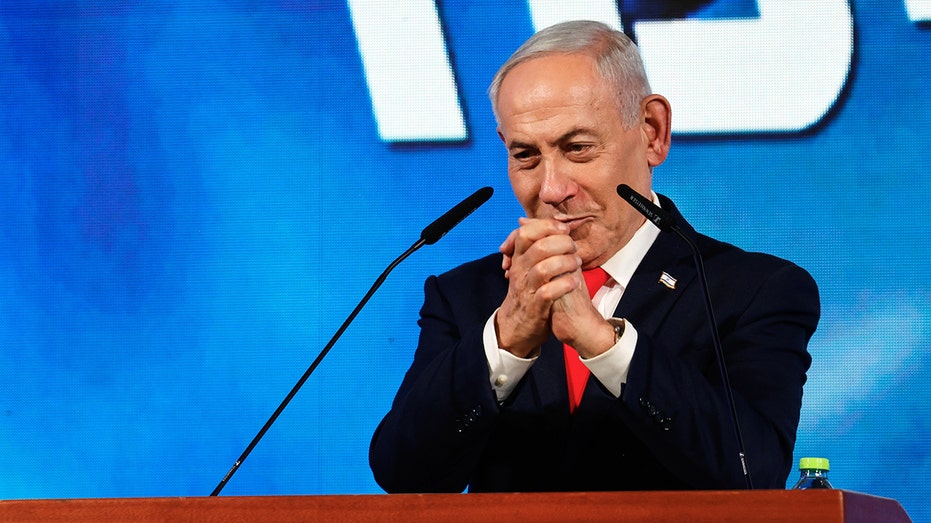
Netanyahu struck a defiant tone in his first election-night speech at Likud headquarters in Jerusalem, declaring that his party had emerged as the largest in Israel and calling for the formation of a strong right-wing government.

FORMER ISRAELI ARMY CHIEF GADI EISENKOT EMERGES AS NETANYAHU’S LEADING ELECTION CHALLENGER

"We are still waiting for the actual results, which we will receive over the next day or two," Netanyahu told supporters. "Two things have become clear. The first is unequivocal: Likud is the largest party in Israel."

"We must establish a strong national right-wing government," he added, warning against a government dependent on Arab parties, which he accused of opposing Israel's existence.

His remarks came hours after Eisenkot took the stage at his campaign headquarters in Tel Aviv, where supporters celebrated earlier projections showing the opposition ahead. Eisenkot called on Netanyahu to accept the results and step aside, but the updated numbers underscored how uncertain the race remains.
Netanyahu also said Israel faced a "once-in-a-lifetime historic opportunity" with Trump to eliminate the existential threat from Iran.

The competing speeches highlighted the central question emerging from the election: Who will be given the first opportunity to form a government?
If Eisenkot can secure recommendations from at least 61 lawmakers, potentially including Arab parties, he could receive the first mandate despite Netanyahu's Likud emerging as the largest individual party. But that would not guarantee he could assemble a governing coalition.
For Netanyahu, the election remains a waiting game. Even without a majority, he could still be tasked with forming a government — or get another opportunity if Eisenkot's efforts fail — leaving Israel facing weeks of political negotiations.

Israelis turned out in exceptionally high numbers Tuesday for the country’s first national election since the Oct. 7, 2023, Hamas massacre, with initial exit polls showing Prime Minister Benjamin Netanyahu’s Likud emerging as the largest party but his governing coalition falling short of a parliamentary majority, potentially opening the door to a change in leadership.
 

FORMER ISRAELI PM EMERGES AS WILD CARD IN HIGH-STAKES ELECTION WITH MIDDLE EAST'S FUTURE AT STAKE

Netanyahu fights for political future as Israel heads to polls with Iran threat looming

The results are preliminary projections, not an official vote count, and could change as ballots are tallied in the coming days.

The election followed an extraordinary day at polling stations across Israel, with long lines and voter participation reaching levels not seen in decades.

Israeli voter turnout surged to a historic high, with 77.7% of eligible voters casting their ballots by the time the polls closed, according to Israel's Central Elections Committee. The figure marked the highest turnout recorded since 1999, underscoring the intensity of the country's national election.

The unusually high participation prompted election officials to streamline voting procedures and assure voters that anyone arriving at a polling station before the 10 p.m. deadline would be allowed to cast a ballot.

The vote was widely seen as a referendum on Netanyahu's leadership following three years of war and continuing questions about responsibility for the security failures that allowed Hamas terrorists to kill approximately 1,200 people and abduct 251 others on Oct. 7, 2023.

JD VANCE DECLINES TO ENDORSE NETANYAHU DESPITE TRUMP'S STRONG BACKING

Netanyahu, Israel's longest-serving prime minister, campaigned on his record of confronting Iran and its regional proxies, highlighting Israel's military achievements and his relationship with President Donald Trump. His opponents accused him of failing to accept responsibility for the October 7 security failures and opposed his government's approach to investigating the failures that preceded the massacre.

A last-minute battle for every vote

Throughout the final hours of the campaign, Netanyahu, Eisenkot, former Prime Minister Naftali Bennett and other party leaders mounted an intensive effort to mobilize supporters and win over undecided voters.

Netanyahu's Likud party prepared hundreds of targeted campaign videos and social media messages, making digital outreach a central part of its last-minute election strategy.

Eisenkot's campaign pushed supporters to rally behind Yashar as the leading alternative to Likud, while Bennett traveled between cities and engaged voters directly and through WhatsApp conversations.

The key question now is which candidate can secure the support of at least 61 lawmakers when President Isaac Herzog consults with the newly elected parliamentary factions. If Eisenkot can obtain those recommendations, including from Arab parties, he would have a strong claim to receive the first opportunity to form a government, even though Netanyahu’s Likud is projected to remain the largest individual party. Crucially, Arab parties could recommend Eisenkot without formally joining his governing coalition. However, the final decision rests with Herzog, who is tasked with selecting the lawmaker he believes has the best chance of forming a government. Securing the first mandate would not guarantee Eisenkot could assemble a governing majority, leaving the possibility of another political deadlock.

NETANYAHU FIGHTS FOR POLITICAL FUTURE AS ISRAEL HEADS TO POLLS WITH IRAN THREAT LOOMING

The campaign's closing hours also featured personal appeals, phone calls to undecided voters and aggressive turnout operations across the political spectrum.

The final days were particularly important because a relatively small share of voters remained undecided about which party to support.

A Times of Israel poll published five days before the election found that 87% of respondents had already made their final choice, while 2.4% remained undecided between the pro and anti-Netanyahu political blocs.

Other surveys suggested a larger pool of undecided voters, although many were choosing between parties within the same political camp rather than switching sides.

That distinction could prove decisive in Israel's parliamentary system, where political parties need at least 3.25% of valid votes to enter the 120-seat Knesset.

Even a slight change in the vote share of smaller parties could shift several parliamentary seats and determine whether either camp has a realistic path to power.

TRUMP SAYS NETANYAHU NEEDS TO BE RE-ELECTED, OR ELSE US WILL HAVE TO 'FINISH THE JOB’ AGAINST IRAN ALONE

What happens next?

Despite the exit poll projections, the identity of Israel's next prime minister may remain uncertain for weeks.

Unlike in the United States, Israelis vote for political parties rather than directly electing their head of government.

The 120 seats in parliament are allocated proportionally, and parties must secure at least 3.25% of valid votes to win representation.

Once the final results are certified, Israeli President Isaac Herzog will consult with the newly elected political factions and select the lawmaker he believes has the strongest chance of forming a government.

CLICK HERE TO DOWNLOAD THE FOX NEWS APP

That candidate will have 28 days to negotiate a governing coalition, with the possibility of a 14-day extension.

Official results are scheduled to be published by Nov. 4. Until a new government takes office, Netanyahu's outgoing government will remain in power.

  •  

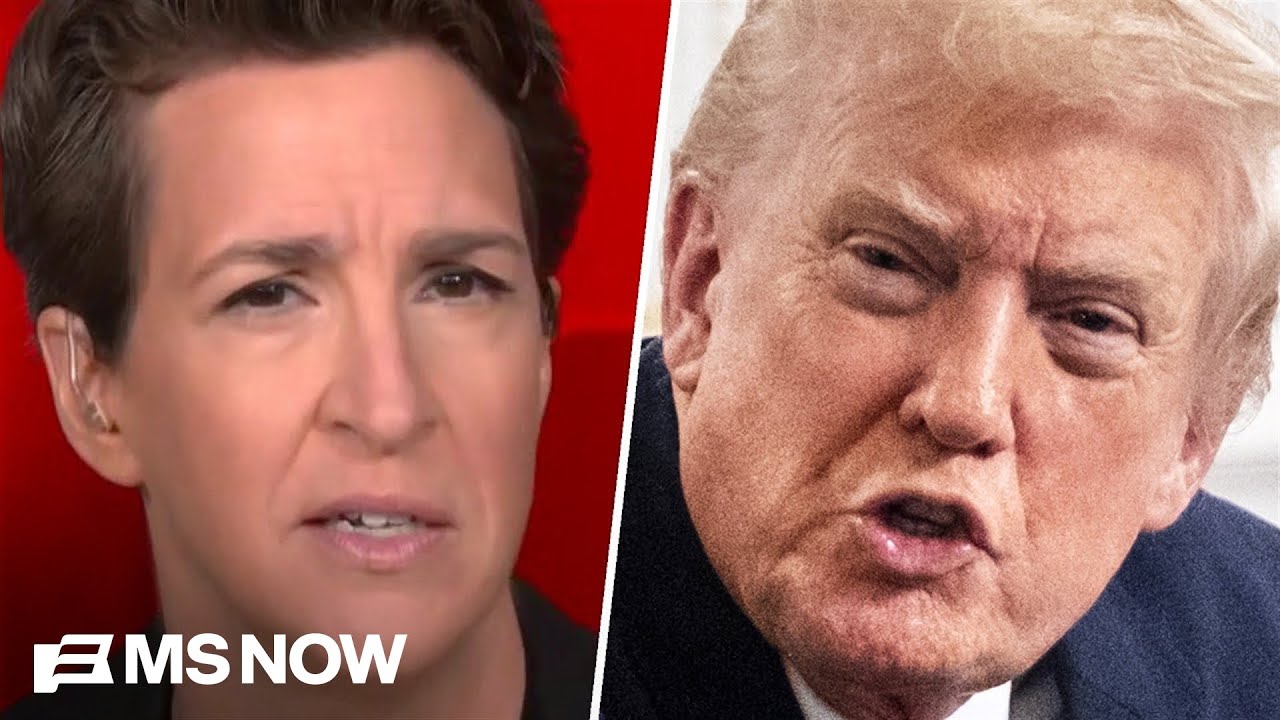
Rachel Maddow’s conspicuous refusal to cover Israelgate

Screenshot from "'Follow the money': Maddow’s INSTANT REACTION to U.S. striking Iran," Feb 28, 2026/MSNOW YouTube

If there’s one story MSNOW’s Rachel Maddow is known for, it’s her tenacious, years-long focus on a broad theory that Trump is a compromised agent of Russian intelligence installed by Russia via a shady patchwork of direct funding, loose connections, opaque meetings, election interference, Facebook ads, innuendo, and genuinely strange behaviors. From 2016 to 2025, Maddow mentioned Russia 6,126 times on her primetime program The Rachel Maddow Show. 

This analysis isn’t a commentary on the validity of the “Russiagate” story, as such. I think it was inflated, and served the ends of some of the worst elements in the US security state, but there was certainly an element of truth to it. (Trump is brazenly venal, and would presumably take bribes from anyone). At the same time, the conspiracy mongering veered into Loose Change territory and was, ultimately, contradicted by Trump’s own policies which—while rhetorically critical of Ukraine—have largely continued to arm and support the country in its four-year-and-a-half war against Russia’s aggression. 

The state of Israel is running what could very well be construed as GOTV commercials for the Republican Party during an election season.

What’s noteworthy is less that Maddow has covered Trump’s connections with Russia, and the associated seemingly weekly breathless developments. It’s that, over the past two years in particular, she has very conspicuously avoided a major story about another country influencing domestic politics in service of Trump and a pernicious reactionary agenda: that of Israel’s influence over the president, and its broader attempts to influence politics in the US. A report in Zeteo last week details how Israel is directly funding ads in swing states that not only advertise Israel’s alleged security benefits to the US, but show images of Trump’s 250 year celebration, the White House, and Trump’s ambassador to Israel, painting them in a heroic light. In other words: the state of Israel is running what could very well be construed as GOTV commercials for the Republican Party during an election season.   

This is, of course, just the tip of the iceberg. A Quincy Institute report in June calculated $1 billion in influence operations since 2023 directly backed by the state of Israel targeting the American public via lobbyists, TV ads, media campaigns, AI output-altering fake websites, propaganda delegations, building “business ties” with Silicon Valley, and a host of other, more opaque efforts. Israel’s attempt to influence US politics has exploded in recent years, and this is just what is disclosed: 

And all of this is one top of the decades-long multibillion dollar informal network of pro-Israel propaganda groups like the Anti Defemation League (ADL), the American Israel Public Affairs Committee (AIPAC), and Christians United for Israel (CUFI), organizations largely funded by American donors with ideological commitments to Israel, though not directly by the state of Israel. These groups frequently align messaging with and coordinate with the Israeli government, but there was always a thin veneer of plausible deniability. These latest efforts are not even bothering to maintain this veneer: Israel is, increasingly, directly funding influence operations—many of which have explicit ties to the Trump White House. Indeed, Trump has taken the unusual step of openly endorsing Netanyahu in his upcoming election, and several of Trump’s advisors, including his own son-in-law, are heavily invested in Israeli companies. His former campaign manager Brad Parscale literally runs one of the aforementioned Israeli influence operations. Put another way: Trump’s “ties” to Israel and the influence the state of Israel has over Trump is far better documented, much clearer, and much more consequential than any ties he has or ever had to Russia. 

Yet Maddow only covers one of these angles. 

Maddow rarely talks about Israel in general—much less its influence over Trump. And, on the rare occasion she does, it’s safely within the confines of “Netanyahu Bad/Israel Good” or “Netanyahu wants Trump to win the election” safe pseudo-criticism. As Mondoweiss’ Michael Arria noted in 2021, even before Oct. 7, 2023, Maddow understood how avoiding the topic would benefit her burgeoning career, mentioning Israel only six times from 2011 to 2021 in over 2,000 shows. As I document in my book on liberal media’s role in helping destory Gaza, How To Sell a Genocide, Maddow largely avoided the subject in the first year of the Gaza genocide, and didn’t mention it at all for seven of the first twelve weeks of the Gaza assault, despite over 3,000 Palestinians being killed a week by American bombs. And when she did bring up Gaza, unlike her broad, deep, and sympathetic portrayal of Russia’s war crimes in Ukraine, Maddow’s coverage was superficial and hurried. The one major exception among MSNBC primetime stars who did have the courage to center Palestine as something more than a box to check, Joy Ann Reid, was subsequently fired for what she says was her coverage of the genocide. 

Trump’s “ties” to Israel and the influence the state of Israel has over Trump is far better documented, much clearer, and much more consequential than any ties he has or ever had to Russia.

The most Orwellian moment of Maddow’s conspicuous silence on Israel was when she did a long, detailed segment on foreign powers’ influence on Trump’s attack on Iran on the first day of the bombing, entitled “Follow the money.” To kick off the segment, Maddow bizarrely handwaved away Israel’s involvement, telling her viewers, “There’s a lot of attention on Israel, and indeed Israel and the United States have worked together in the bombing campaign… but it is the Gulf Arab states that are arrayed against Iran.” She then proceeded to pin the nefarious influence entirely on “Gulf Arab states, countries like Saudi Arabia and United Arab Emirates in Qatar.” This isn’t to say these countries don’t unduly influence the Trump clan—this is well documented—but their influence is relatively small compared to that of Israel and the Trump family connection with Israel and pro-Israel donors and it’s not particularly close.  

Maddow’s defenders could argue that the major difference is that Israel is an “ally” of the US, whereas Russia isn’t. But, despite the fact that the majority of Americans do not agree with this sentiment in the normative sense, the “Gulf Arab states” Maddow accuses of corrupting Trump are also US allies, so this is obviously not the reason. The real reason is that she knows discussing the elephant in the room of Israeli influence over both Trump and US body politic more broadly would pretty much spell the end of her career, as it did with Reid and, to a lesser degree, other MSNBC/MSNOW personalities that were demoted or pushed out after October 7 for having the temerity to veer off the safe script of pseudo-criticisms of Israel. As I also document in my book, the first, last, and only time MSNBC/MSNOW’s parent corporation (then Comcast) directly intervened in MSNBC/MSNOW’s coverage was to dress down network executives for letting anchors Ayman Mohyeldin and Ali Velshi attempt to contextualize the October 7 on the day of the attack. Saying anything meaningfully critical of Israel would also compromise Maddow’s access to high status arch-zionists like Hillary Clinton, with whom Maddow is doing an event in two weeks at the pro-Israel Streicker Center. Whatever the reason, the liberal media personality who built her large, intense media following sowing paranoid visions of dark, reactionary foreign influence operations is clearly determined to not mention the most brazen, obvious, and deleterious one.

💾

Israel has spent $1 billion to influence US politics and is directly paying for ads promoting MAGA. Why isn't MSNOW's “foreign influence” sleuth covering it?
  •  

Sen Flávio Bolsonaro flees Brazil for US after election loss, will be issued visas: State Department

Brazilian Sen. Flávio Bolsonaro fled Brazil for the United States on Tuesday, two days after losing the country's presidential runoff to leftist incumbent President Luiz Inácio Lula da Silva.

The U.S. Department of State will issue visas to Bolsonaro and his family and allow them to enter the U.S., a senior State Department official confirmed to Fox News Digital.

An ally of the far-right conservative senator confirmed his departure from the South American country to Reuters on Tuesday.

Bolsonaro's flight was reportedly headed to Florida, according to Brazilian outlet Metropoles, citing people close to his family.

BRAZIL’S RAPID ELECTION COUNT PUTS SPOTLIGHT ON VOTING SECURITY AHEAD OF US MIDTERMS

The 45-year-old lawmaker had been out of public view since Tuesday morning, the outlet reported.

His departure came as a deadline for him to surrender his regular and diplomatic passports expired at noon Tuesday. 

Brazilian newspaper Folha de São Paulo reported Bolsonaro was under investigation for alleged money laundering and other crimes. 

It remained unclear whether Bolsonaro had complied with the order, The Associated Press reported.

BRAZIL BECOMES NEXT TEST FOR LATIN AMERICA’S SURGING CONSERVATIVE MOVEMENT

Bolsonaro was served with the order Monday, a day after Lula defeated him in Sunday's presidential runoff for an unprecedented fourth term.

With 100% of the vote counted, Lula won 51.8% of the vote, defeating Bolsonaro by nearly 4.4 million votes.

He has refused to concede the election and has called for the election results to be annulled, alleging fraud, according to The Associated Press.

Lula addressed supporters after winning re-election, expressing gratitude to the Brazilian people.

CONSERVATIVE WAVE HITS ROADBLOCK IN BRAZIL AS LULA HOLDS OFF BOLSONARO CHALLENGE

"No one is required to like the president-elect, but he must govern for everyone," Lula said.

CLICK HERE TO DOWNLOAD THE FOX NEWS APP

Referring to his opponent, Lula said, "This was a defeat for denialism and lies."

Fox News Digital's David Unsworth and Michael Sinkewicz, as well as Reuters and The Associated Press contributed to this report.

  •  

Serbia’s student movement topples Vucic’s party after 14 years, but political agenda remains unclear

Serbia’s longtime leader, President Aleksandar Vucic, conceded defeat Sunday to the student-led opposition in an election that sent shock waves throughout Europe and the Western Balkans.

"We do not have the final results yet, and many people will be surprised. Based on a stratified sample, it is clear that we have lost these elections. The student-led protest list has won," Vucic said in an address to the nation Sunday night.

The Student List victory brings an end to 14 years of Vucic and his Serbian Progressive Party rule, in what many are saying is the biggest political shake-up in the Balkans since the toppling of Yugoslav dictator Slobodan Milosevic in 2000. 

Observers say the Student List party's policies remain vague, which has some worried about Serbia's future.

Ana Brnabic, vice president of the main Board of the Serbian Progressive Party, told Fox News Digital that, "The election victory of the Student List recalls similar electoral triumphs in other countries. The Student List represents a classical anti-establishment movement: it had neither a program nor a coherent political ideology. In an essentially anarchic fashion, it opposed everything, claiming to fight for justice and against corruption."

ANTI‑CORRUPTION PROTESTS HIT EUROPEAN NATION AS CALLS FOR NEW ELECTIONS GROW

She added, "After 14 years of Serbian Progressive Party (SNS) rule, people may have wanted change. That is understandable and logical. But the grim consequences of this movement in power will soon become apparent."

Turnout reached 69 %, the highest this century, with more than 4.4 million people casting their ballots, according to Rasa Nedeljkov, head of the CRTA Election Observation Mission.

"This is by all means a historic victory and indeed a surprise to many. While it was clear from the beginning that the students will have an impressive result, very few expected a landslide," Helena Ivanov, associate fellow at the Henry Jackson Society, told Fox News Digital.

The Election Observation Mission reported that the Student List won 52.45 % of the vote and is projected to hold 138 of 250 seats in the National Assembly, an absolute majority, allowing it to form a government on its own.

Vucic won 39.2 % and is projected to hold 103 seats.

Supporters celebrated throughout Belgrade and across Serbia as it became clear the Student List won by a larger margin that caught many experts and observers by surprise.

Many claimed they were concerned about the possibility of violence escalating as polls began to close. Almost two hours after polling stations closed, Vucic addressed the nation, confirming his defeat and announcing the peaceful transfer of power.

FRANCE ROCKED BY STUDENT RIOTS AS HUNDREDS ARRESTED, VIOLENCE SPREADS NATIONWIDE

"The path to an electoral victory with such a decisive margin will undoubtedly earn its own chapter in the handbooks on how to topple an autocrat. Two years of unprecedented grassroots mobilization, creative organization and impeccable campaigning kept the student list two steps ahead of the regime. Vučić was left playing catch-up, and all his attempts to co-opt, demoralize and fragment the movement failed," Sinisa Vukovic, director of the Global Policy Program at the School of Advanced International Studies at Johns Hopkins University, told Fox News Digital.

The CRTA Election Observation Mission reported that the campaign was marked by the abuse of state resources, pressure on candidates and voters, attempts to bring the media under total government control, and attacks on independent election observers.

Tens of thousands of Serbians volunteered to run and monitor polling stations across the country, and the vote was mostly peaceful.

SERBIA, CAUGHT BETWEEN EUROPE AND RUSSIA, COULD MOVE ONE STEP CLOSER TO NORMALIZING RELATIONS WITH KOSOVO

Student led protests marched in the streets for two years after the deaths of 16 people following the collapse of a railway station in the town of Novi Sad in November 2024. People had taken to the streets, demanding justice for those killed and accountability for anyone responsible for the disaster.

The momentum of nearly two years of street demonstrations culminated in a nationwide movement ready for change. The political novices were able to rally the nation behind a simple message against corruption and state capture.

Serbs across the country embraced the Student List, who are viewed as fresh faces in politics and are not tied to Serbia’s traditional political opposition, which is perceived as ineffective and corrupt by a lot of the voters.

EXCLUSIVE: SERBIAN PRESIDENT VUČIĆ SAYS SUPPORT FOR US 'SURGED' UNDER TRUMP, INVITES HIM TO VISIT BELGRADE

Milos Jevtic, a 48-year-old professor with the Faculty of Organizational Sciences at the University of Belgrade, was among the many Student List candidates who won a seat in parliament.

Jevtic told Fox News Digital that their victory came from the values that the students have stood for from the very beginning: expertise, professionalism, responsibility, solidarity and unity.

"What is particularly important is that the students have never compromised on these values and principles. Of course, widespread public dissatisfaction also played a major role, along with a lack of trust in both the current regime and the opposition parties," Jevtic explained.

Jevtic said he believes the priorities for the new Student List-run government should be economic stability, fighting corruption, establishing the rule of law and strengthening institutions, much of what carried the student-led protests since 2024.

"The ultimate goal is to build a system in which institutions function in the interests of all citizens," Jevtic said.

On foreign policy, there is an expectation that there will be a certain degree of continuity with the Vucic administration in international relations, including maintaining good relations with neighboring European countries and all major international partners.

But Brnabic warned that "Serbia has lost meaningful political pluralism. After 35 years of a multiparty system, the country is effectively left with one established political party, SNS, while the rest of the political scene is dominated by largely unknown movements without a clear ideology. This is catastrophic for any parliamentary democracy."

CLICK HERE TO DOWNLOAD THE FOX NEWS APP

She added, "Secondly, nobody in Serbia knows where the country is heading. Are we firmly pro-EU? Will we maintain our ties with Russia? What about China? Will we continue to enhance our relations with the United States — which was a priority of Aleksandar Vucic? Will economic policy be more left-liberal or conservative? Are we heading towards a woke liberal society, or will we preserve our traditional Orthodox Christian values? There are no clear answers to any of these questions."

She concluded by noting, "We have also called for Parliament and all state institutions to be constituted as soon as possible, so that the country has functioning institutions on which people can rely. We will be a strong but constructive opposition. We call on the Student List’s representatives to end the intimidation and assume the responsibility entrusted to them by the voters." 

  •  

UK charges 2 men in suspected Iran-linked incident at RAF Fairford after US bombers pulled

British prosecutors charged two men Tuesday under the U.K.’s National Security Act following an incident at RAF Fairford, a key base used by the U.S. military’s heavy bombers.

Mohmed Abdulkarim, 24, of London, was charged with assisting a foreign intelligence service. Nouman Essghir, 24, was charged with entering a prohibited place for a purpose prejudicial to the United Kingdom, according to the Crown Prosecution Service.

British counterterrorism police said they believe the foreign country Abdulkarim was assisting was Iran, Reuters reported.

RUBIO CONFIRMS 'FOREIGN ACTOR' INVOLVED IN UK TERROR PLOT

The charges follow a September incident near RAF Fairford in Gloucestershire, England. British police arrested five men outside the base in the early hours of Sept. 27, according to Reuters.

The base had been used by U.S. bombers to carry out strikes against Iran. About a dozen B-1 bombers were among the aircraft later withdrawn from RAF Fairford and returned to their home stations in the United States on security grounds, according to previous Fox News reporting.

FOILED TERROR PLOT AT BOMBER BASE SIGNALS WIDER THREAT TO US MILITARY INSTALLATIONS: EXPERT

RAF Fairford serves as a key European operating location for U.S. heavy bombers and has supported American military missions.

Frank Ferguson, chief crown prosecutor for the CPS Special Crime and Counter Terrorism Division, said the agency decided to prosecute the two men following a "complex" counterterrorism investigation.

"We will continue to work closely with our partners as this complex investigation continues," Ferguson said.

Both men were expected to appear Tuesday at Westminster Magistrates’ Court.

CLICK HERE TO DOWNLOAD THE FOX NEWS APP

The CPS emphasized that the charges are not findings of guilt and that both defendants have the right to a fair trial.

  •  

Pakistan’s top court upholds Christian man’s death sentence for blasphemy

Shock and anger greeted the Pakistani Supreme Court's decision to uphold the conviction and death sentence of a Christian man accused of blasphemy against the Prophet Muhammad. 

Supporters say the decision has far-reaching implications for human rights in Pakistan and for the country's standing on the international stage. The Open Doors 2026 World Watch List included the Asian nation in its top 10 list of countries where Christians face the most extreme persecution.

CeCe Heil, senior counsel and international legal director for the American Center for Law and Justice (ACLJ), told Fox News Digital the case against brothers Amoon and Qaisar Ayub began in 2014. 

AMERICANS TRAVEL TO PAKISTAN TO FREE CHRISTIANS TRAPPED IN MODERN-DAY SLAVERY: 'GOD'S HAND WAS IN IT'

Qaisar was arrested after a WordPress site displayed the Ayub brothers’ contact information and shared content that insulted the Prophet Muhammad. Amoon was arrested the following year. Heil says that in the 12 years of legal wrangling that followed, the Pakistani legal system has never presented evidence proving that either brother was truly affiliated with the offending WordPress blog site.

The ACLJ, through its Pakistani counterpart, the Organization for Legal Aid (OLA), began representing Amoon shortly after his arrest in 2015. Both brothers were sentenced to death in 2018. They unsuccessfully sought appeal in the Lahore High Court in 2022. After a continuation at the Supreme Court in 2025, Qaisar asked the OLA to represent him.

Following years of arguments and 13 postponed hearings, an Oct. 7 verdict from the Supreme Court saw Amoon acquitted after some 10 years in prison, while Qaisar’s conviction and death sentence was upheld.

Heil said a threatening atmosphere now attends many blasphemy hearings, where she says "mobs" commonly show up in courtrooms.

In one trial, she said a mob filmed themselves saying that "if the judge does not enforce death by hanging, we will kill him by our own hands." She said another video shows a prominent lawyer involved in numerous blasphemy cases celebrating the 15-year journey that led to Qaisar’s sentencing. A translation of the description reads, "There is only one punishment for one who insults the Prophet: The death penalty for Qaisar Ayub."

Heil said the precedent set by the Supreme Court’s decision could impact "every single person that is sitting in prison right now on blasphemy charges," which includes at least three OLA clients.

Other Christian men facing death include Shahzad Masih, who was 16 years old when he was accused of blasphemy in 2017. He was sentenced to death five years later. His appeals have repeatedly been postponed since 2022.

Intizar Masih is awaiting trial for a blasphemous post he is said to have shared on WhatsApp in 2023. Ahsan Masih was accused of posting blasphemous content to TikTok in 2023, and was sentenced to death the following year. His appeal hearings have also been postponed.

The OLA plans to file a review petition with the Supreme Court as early as this week, addressing the lack of evidence convicting Qaisar. They also plan to reach out directly to the Government of Pakistan to request support, including a presidential pardon for Qaisar. 

Heil said she finds it "very strange" for a country posturing itself as a "more tolerant" negotiator between world powers in the ongoing conflict in Iran to fail to protect the religious freedoms of its people.

CHRISTIAN FARMING COMMUNITIES UNDER SIEGE AS US REPORT NAMES FULANI MILITANTS NIGERIA'S DEADLIEST THREAT

The Pakistani Embassy in Washington, D.C., did not respond to Fox News Digital’s questions about the possibility of a presidential pardon for Qaisar, or whether the Supreme Court’s decision could impact Pakistan’s perception in the West, or if justice can prevail in courtrooms mobbed with threatening onlookers.

A State Department spokesperson told Fox News Digital that the U.S. "is concerned about religious freedom in Pakistan and throughout the world" and "we regularly discuss this concern with Pakistan, as we would with any country."

Heil said the ACLJ has requested that Morris Tidball-Binz, the United Nations special rapporteur on extrajudicial, summary or arbitrary executions, intercede on Qaisar’s behalf.

Tidball-Binz did not respond to Fox News Digital’s questions about whether he held concerns about the precedent set by the Supreme Court upholding Qaisar’s conviction.

The Human Rights Council secretariat provided a letter that Tidball-Binz and other U.N. officials wrote to the Government of Pakistan in September 2025, emphasizing their concerns about the cases of the Ayub brothers and Shahazad Masih. 

It stated, "Without making any judgment as to the accuracy of the information made available to us, we would like to express our grave concern about the imposition of the mandatory death penalty for blasphemy related charges against Mr. Shahzad Masih, Mr. Qaiser Ayub and Mr. Amoon Ayub, despite an apparent lack of conclusive evidence against them for acts and for offenses which do not qualify as ‘most serious crimes.’"

The U.N. officials concluded, "If the above allegations prove to be accurate, they would be in contravention of Mr. Shahazad Masih´s, Mr. Qaiser Ayub’s and Mr. Amoon Ayub’s rights to life, not to be subjected to torture or to cruel, inhuman or degrading treatment or punishment, not to be deprived arbitrarily of their liberty and to be afforded fair proceedings before an independent and impartial tribunal, to freedom of thought, conscience and religion or belief, the right to express their opinion in a peaceful manner and the right to be equal before the law and are entitled to the equal protection of the law without any discrimination." 

The Government of Pakistan responded earlier this year, and outlined how "Under Pakistan's Constitution, such matters fall within the judicial domain, and the Executive is constitutionally prohibited from intervening in individual cases."

CLICK HERE TO DOWNLOAD THE FOX NEWS APP

Heil said that while Amoon has been spared from the death penalty, their work is ongoing to keep him safe from reprisals.

  •  

Data center near Yellowstone River would cause “irreparable harm,” Native activist says

Paradise Valley, located between Livingston, Mont, and Yellowstone National Park, is known for the Yellowstone River and Absaroka Mountain Range, Monday, Sept. 11, 2023. Photo by Adrian Sanchez-Gonzalez for The Post

This article was originally published by Truthout on Oct. 26, 2026. It is shared here under a  Creative Commons (CC BY-NC-ND 4.0) license.

The Northern Cheyenne Tribal Council voted unanimously this October to ban data centers on tribal land in Montana. The ban follows a decision in August by the Fort Peck Tribes to bar officials from projects involving data center developers.

But Montana’s Tribes are now split. Next door to the Northern Cheyenne, the Apsáalooke, or Crow Tribe, has not taken an official position and remains open to hearing proposals from companies, according to Shane Doyle, an Apsáalooke tribal member and The Nature Conservancy’s Indigenous right relations director. Doyle grew up on the Crow Reservation and has consistently advocated for reciprocity with the land, rendering him a voice in the dissent, whether he intends to be or not.

The stakes are highest in Crow country. In the small city of Hardin, at the Crow Indian Reservation’s northern edge, a former cryptocurrency mine is being actively converted into an AI data center. About 14 miles northwest of the reservation, Texas-based Quantica Infrastructure plans to build its Big Sky campus on nearly eight square miles of ranchland near the town of Broadview, north of Billings, Montana’s most populous city. As it’s currently planned, the data center would rank among the largest data centers in the world. The Yellowstone River Valley is “the heart of the Crow Nation,” Doyle said.

Krystal Two Bulls, who is Oglala Lakota and Northern Cheyenne, has been tracking these data centers closely. As the executive director of Honor the Earth, a nonprofit tracking data centers on or near reservation lands, she takes an extensive view of history and geography when it comes to tribal land and AI developments.

“Broadview is still a traditional territory of the Northern Cheyenne and also the Crow,” she told Truthout. “It may not technically be on the reservation, but it definitely is still going to have an impact on the land and the people around it.”

The divide over data centers comes as developers eye Montana for its land, water, and power, and as Tribes test how far their sovereignty can actually reach. Bans like the Northern Cheyenne’s are enforceable on tribal land, said Matthew Fletcher, a University of Michigan Law professor and member of the Grand Traverse Band of Ottawa and Chippewa Indians. But tribal bans on off-reservation data centers that affect reservation waters are “unlikely to be enforceable,” Fletcher said, unless a tribe can show a very significant threat to its waters, enterprises, or citizens’ health.

Quantica has asked Northwestern Energy for more than 7,000 megawatts. The utility currently serves about 750 average megawatts, said Anne Hedges, executive director of the Montana Environmental Information Center. “We’ve never imagined something this massive,” she told Truthout. The company’s plan includes about 1,700 megawatts of gas generation, which alone would be more than the gas generated by all Montana’s existing gas plants combined.

The gas would affect more than just the rural Broadview community. A retired Billings pulmonologist modeled the air-quality impact of 1,700 megawatts using EPA tools, Hedges said, and found fine-particulate pollution spreading to communities east of the site, including the Crow, Northern Cheyenne, and Fort Peck reservations. “It’d be a disaster,” she said.

The Northern Cheyenne resolution, which passed by a vote of 8-0, covers all land on the reservation, says Melissa Lonebear, a Northern Cheyenne citizen and tribal council member. It quashes any extant or future data center discussions on their territory. (None are currently active.) “We have fought historically to preserve our land,” says Lonebear. “We have fought against coal development, coal bed methane, all these things.”

The Northern Cheyenne own nearly all of the land within their reservation, which makes the Tribe a target for developers looking for large, contiguous sites, Lonebear said. She added that the governor had remarked in a closed meeting with tribal leaders that big corporations were looking for land. “I almost felt like we would be targeted,” she said.

Fort Peck’s ban bars the tribal government, individuals, and entities from discussing proposals to build data centers on the tribe’s reservation. The tribe passed the ban after three companies approached the tribe about data center projects on tribal land, Tribal Chairman Floyd Azure told Montana Free Press. Azure had asked standard questions about the benefits to his community, and after learning about the required natural resources, he strongly rejected theirs and any future proposals. Azure did not respond to Truthout’s request for comment.

Tribal water rights in the state define what is available for development projects like data centers. Fort Peck and the Northern Cheyenne coordinate with state environmental agencies, such as Montana’s Department of Natural Resources and Conservation (DNRC), to enforce these rights. “Physical and legal water availability analysis are part of the water rights permitting process, as is an assessment of adverse effect to other water right,” Patricia Spencer, a DNRC spokesperson, told Truthout.

Water rights are set out in an agreement between a tribe and a state, and sometimes the federal government. Such an agreement limits the amount of water available to the tribe within the state’s overall supply, which is sourced from groundwater and rivers near and far. “The proposed datacenter in Hardin is located in a basin closed by the compact, and DNRC cannot process or grant an application for an appropriation of water within the Bighorn River Basin,” Spencer said in an email. “At this time, DNRC has not received any water rights applications or change applications tied to that facility.”

The Crow’s calculation also includes revenue, according to Lonebear. The Absaloka coal mine, which was long the Tribe’s marquee employer and profit source, shipped its last rail car of coal in 2024, the Billings Gazette reported. In August, a Senate committee advanced the Crow Revenue Act, a bill with full-throated support from Crow reservation chairman Frank White Clay that would give the Crow ownership of their coal, previously paternally managed by the Hope Family Trust. In exchange, the Hope family is offering federal coal reserves in Bill Mountains, which they’re anticipated to lease to Signal Peak Energy, whose customers are in Japan and South Korea. The Crow also plan to participate in the mining directly in the future.

The Absaloka coal mine reduced capacity and then halted production in April 2024 after losing its main client, Xcel Energy’s Sherburne County Generating Station (Sherco Plant), in Minnesota, which pivoted to cheaper, cleaner alternatives like natural gas. It’s a loss that left the Crow without a clear surrogate source of revenue.

“The Crow Tribe has decided to develop their coal… and so the rest of the world should not be in our way for that,” Conrad Stewart, energy director of the Crow Tribe, told Inside Climate News.

We’re trying to always make sure that we protect our water, keep it clean, make sure there’s enough for the fish and for people to drink and use in the community … So I think a data center would conflict with that.

Water is on everyone’s mind. “We’re trying to always make sure that we protect our water, keep it clean, make sure there’s enough for the fish and for people to drink and use in the community,” says Doyle. “So I think a data center would conflict with that, with all our values.”

Asked whether the Crow will follow suit on the ban, Two Bulls said she was “hopeful,” but added that she doesn’t think the Crow will “entertain a ban or even a moratorium,” citing her understanding that tribal leadership sees data centers as a way to replace declining coal revenue.

The Crow chairman and executive officers all declined requests for comment.

Water may be a forefront issue, but that may not be the same for tribal consultation. Without a federal permit, federal land, or federal money, the federal consultation duties don’t apply: Section 106 of the National Historic Preservation Act, NEPA review, and the federal government’s consultation obligations to Tribes.

The Montana Department of Environmental Quality has a public comment period that closes October 29 on Quantica’s water well. The company hasn’t yet applied for a water right, according to the DNRC, and that application will come with its own public notice.

Asked whether Montana’s Department of Natural Resources and Conservation must notify or consult the Crow Tribe, DNRC spokesperson Patricia Spencer pointed to the general public notice process. “Public notice, including an opportunity for the public to comment and make objections, is a part of the water rights permitting process,” Spencer told Truthout. “The Crow Tribe–Montana Water Rights Compact would not have any bearing on an application near Broadview.”

Meanwhile, the Montana Public Service Commission is developing a large-load tariff for data centers. The state legislature is scheduled to convene in January 2027, with what Hedges describes as dozens of data center bills. No Native legislators sit on the energy committee drafting them, and at the same time she called the American Indian Caucus “a force to be reckoned with.”

“We do not anticipate the construction and operation of our Big Sky Campus will impact tribal lands or water rights,” a Big Sky Digital Infrastructure spokesperson told Truthout over email.

“If we put a project like this in around Yellowstone County, in that river valley, it’s gonna be an environmental impact similar to a coal mine, or something that’s gonna cause irreparable harm to the area. I think that’s why there’s so much opposition to it right now,” Doyle said.

  •  

Ceasefire negotiated by Melania Trump holds in Russia-occupied Ukrainian city

A ceasefire that first lady Melania Trump helped negotiate in a front-line Ukrainian city that she described as being on the "brink of disaster" went into effect Tuesday.

The pause in fighting in Oleshky started around 3 a.m. local time as "part of a humanitarian mission being carried out with the mediation and coordination of U.S. first lady Melania Trump, in cooperation with Yana Lantratova, Russia’s commissioner for human rights," according to Dmytro Lubinets, the Ukrainian Parliament commissioner for human rights.

"The situation in Oleshky is dire. Oleshky is a front-line war city on the brink of disaster," Trump said in a statement last week. "Oleshky’s remaining population is comprised primarily of elderly residents who urgently need medical attention, medicine, food, and clean water.

"The people of Oleshky have limited electricity, live amid mined roads, and endure regular military attacks. It was abundantly clear that without my intervention, the possibility to bring humanitarian aid into the city and to evacuate the elderly would be impossible," she added.

MELANIA TRUMP'S ADVISOR REVEALS HOW SHE BRIDGED PUTIN, ZELENSKYY TO BROKER FRONTLINE UKRAINE TRUCE

The White House said both Ukraine and Russia "agreed to temporarily stop all military action in Oleshky to allow for humanitarian aid to enter and to prepare a civilian evacuation through a designated safe passageway."

"Non-military, civilian leaders from both countries will work together to visit Oleshky residents in their homes and determine the level of assistance they require. Residents who wish to evacuate will receive coordinated support and transportation to their preferred destination. I anticipate some will want to go to Russia, and some to Ukraine," Trump added.

Speaking on "Fox & Friends Weekend," senior advisor Marc Beckman said the agreement followed weeks of mediation involving Russian President Vladimir Putin and Ukrainian President Volodymyr Zelenskyy.

RECOVERING FROM LUNG SURGERY, POPE LEO URGES PUTIN TO AGREE TO CEASEFIRE IN RUSSIAN-HELD UKRAINE CITY

On Tuesday, Russia's Defense Ministry wrote on Telegram, "In relation to the conduct of the humanitarian operation in the area of the settlement of Oleshky, Kherson region, the Armed Forces of the Russian Federation have ceased fire in the Kherson direction."

Russian troops have held control of Oleshky since the early days of the February 2022 invasion of Ukraine, according to Reuters.

The news agency added that the city had a population of around 24,000 prior to the war, but that has since dwindled to only a few thousand.

CLICK HERE TO DOWNLOAD THE FOX NEWS APP

Fresh strikes also hit a bridge and subway infrastructure in Ukraine's capital of Kyiv on Tuesday, Reuters reported.

Fox News Digital's Madison Colombo contributed to this report.

  •  

Israel heads into deeply divided election as Oct 7 reckoning looms: What to know

TEL AVIV, ISRAEL — Campaign banners bearing the faces of Israel's political leaders cover buildings and roadsides, while in homes, coffee shops and family gatherings, the same question dominates conversations: Will Prime Minister Benjamin Netanyahu remain in power?

With Israelis heading to the polls Tuesday, the country is bracing for a closely contested election that could end in another political deadlock. But this vote is unlike any other in Israel's recent history.

For many Israelis, the election has become a referendum on accountability for the failures that allowed Hamas terrorists to carry out the Oct. 7, 2023, massacre — the deadliest attack in Israel's history.

TRUMP SAYS NETANYAHU NEEDS TO BE RE-ELECTED, OR ELSE US WILL HAVE TO 'FINISH THE JOB’ AGAINST IRAN ALONE

Netanyahu, who has dominated Israeli politics for decades, has resisted calls to accept personal responsibility for the security failures and establish an independent state commission of inquiry. His government instead sought a politically appointed investigation, a proposal fiercely opposed by many bereaved families.

Yet Israel's divisions began long before Oct. 7.

In the months preceding the attacks, hundreds of thousands of Israelis took to the streets to protest Netanyahu's proposed judicial overhaul, which critics argued would undermine the country's democracy. The confrontation spilled into the military, where reservists threatened to suspend volunteer service, raising alarms about Israel's preparedness. Some critics have argued that the turmoil projected weakness to the country's enemies, although the extent to which it influenced Hamas's decision to attack remains disputed.

Three years after the massacre, those divisions have only deepened, transforming Tuesday's vote into something intensely personal. Political allegiances have strained friendships and divided families, with much of the national debate reduced to a single question: Are you for Netanyahu, widely known as "Bibi," or against him?

DANNY DANON: FROM OCT 7 TO FLIGHT 1073: THE RESILIENCE THAT KEEPS ISRAEL STANDING

For some families who lost loved ones on Oct. 7, the answer is painfully clear.

Shir Shai, whose brother Yaron Shai, an Israeli soldier, was killed battling Hamas terrorists that day, delivered a stark message to those considering another vote for Netanyahu.

"If you nevertheless decide to vote again for the man who brought disaster upon us and his accomplices, I have one personal request: Don't come here anymore," Shai said over her brother's grave in his memorial ceremony on October 7.

"You still have 20 days to be part of the process of putting things right. But if you choose to perpetuate the failure rather than honor the fallen, it would be better if you stayed home next year," she added.

NETANYAHU PRAISES TRUMP'S 'WICKED SENSE OF HUMOR,' DEFENDS IRONCLAD ALLIANCE AHEAD OF HISTORIC ISRAEL VOTE

Yet other bereaved families have reached the opposite conclusion, crediting Netanyahu with standing firm through years of war on multiple fronts and arguing that Israel's military and intelligence establishment bears the principal responsibility for failing to anticipate the Hamas assault.

The deeply polarized atmosphere has been intensified by an increasingly bitter campaign. Just two days before the election, Netanyahu shared an AI-generated image depicting a nuclear explosion over Tel Aviv, warning of the existential threat posed by Iran if the country elects a leader unable to confront Tehran.

Concerns now extend beyond the election results themselves. Israeli police are preparing for possible unrest after the polls close, while experts have warned about the potential for disputes over the legitimacy of the results — including an extreme scenario resembling the Jan. 6, 2021, attack on the U.S. Capitol.

With the opposition united in its ambition to replace Netanyahu but divided over how to govern afterward, neither political bloc is assured of a parliamentary majority and the final outcome could take weeks to determine.

JD VANCE DECLINES TO ENDORSE NETANYAHU DESPITE TRUMP'S STRONG BACKING

When do polls open and close?

Israelis will vote Tuesday, Oct. 27, with most polling stations opening at 7 a.m. and closing at 10 p.m. local time.

Election Day is a national holiday in Israel, giving voters the opportunity to cast their ballots. Some smaller communities and special polling locations operate on different schedules.

Eligible voters must be Israeli citizens at least 18 years old and generally vote at their assigned polling station. Most Israelis living abroad cannot vote remotely, although exceptions apply to certain official representatives overseas.

How does Israel's election system work?

Israel has a parliamentary system in which voters select a political party rather than an individual candidate for prime minister.

The country's parliament, known as the Knesset, has 120 seats, distributed through a system of nationwide proportional representation.

Each party submits a ranked list of candidates, and the number of seats it receives depends on its share of the national vote.

To enter parliament, a party must win at least 3.25% of the valid votes. Parties falling below that threshold receive no seats, potentially changing the balance between rival political blocs.

IRAN IS TRYING TO ‘CREATE A ROT FROM WITHIN’ THROUGH ‘INFORMATION WARFARE,’ ANALYST WARNS

When will election results be announced?

Israel's major television networks are expected to release exit polls immediately after voting ends at 10 p.m. Tuesday (4 p.m. EST).

Those projections will provide the first indication of how many seats each party may win and whether Netanyahu or his rivals appear better positioned to assemble a coalition.

But exit polls are not official results, and even small differences in the final vote could determine whether parties cross the electoral threshold.

Actual vote counts will emerge as ballots are counted, with preliminary results developing after polls close and over the following days.

Israel's Central Elections Committee has scheduled the publication of official results for Wednesday, Nov. 4, eight days after the election.

Who are the main candidates?

Prime Minister Benjamin Netanyahu, 77, leads the conservative right-wing Likud party and is seeking to extend his record tenure as Israel's longest-serving prime minister.

His main challenger is Gadi Eisenkot, 66, a former chief of staff of the Israel Defense Forces who leads the centrist Yashar party and has positioned himself as an alternative to Netanyahu's leadership.

Former Prime Minister Naftali Bennett, 54, is also seeking a political comeback, running on a joint ticket with former Prime Minister Yair Lapid.

Other significant political figures include former Defense Minister Avigdor Lieberman, Democrats leader Yair Golan and Netanyahu's right-wing populist allies Itamar Ben-Gvir and Bezalel Smotrich.

Arab political parties, including Ra'am and the Joint List, could also play a crucial role in determining the final parliamentary balance.

How many seats does a party need to win?

The key number in Israeli politics is 61 — a majority of the 120-seat Knesset.

No single Israeli party has ever won enough seats to control parliament alone, meaning parties generally need to form coalitions with other political factions.

This means the party that wins the most seats does not automatically get to lead the government.

Instead, the decisive question is which political leader can secure enough parliamentary support to govern.

How is Israel's next prime minister chosen?

Once the official results are published, Israeli President Isaac Herzog will consult representatives of the newly elected parliamentary factions.

Within seven days, the president must assign a member of the Knesset the task of forming a government.

The president generally selects the politician considered most likely to assemble a governing coalition, who is not necessarily the leader of the largest party.

That candidate initially has 28 days to reach agreements with other parties, with the possibility of an extension of up to 14 additional days.

The proposed government must then win a confidence vote in the Knesset before taking office.

What happens if nobody can form a government?

If the first candidate fails, the president can ask another lawmaker to attempt to form a government, giving that person 28 days without an extension.

If that effort also fails, a majority of 61 lawmakers can request that another candidate be given 14 days to try.

If no government emerges, Israel could face another national election.

Coalition negotiations can take weeks or months. According to the Israel Democracy Institute, the process of forming an Israeli government has historically taken between 20 and 100 days.

Until a new government is sworn in, the outgoing government remains in office.

Why is this election particularly consequential?

Tuesday's vote is the first national election since the Oct. 7, 2023, Hamas-led attacks, which triggered the war in Gaza and raised profound questions about Israel's security leadership.

Beyond Netanyahu's political future, the next government will face decisions over Israel's national security, the future of Gaza, military conscription, relations with the United States and the country's regional diplomatic relationships.

CLICK HERE TO DOWNLOAD THE FOX NEWS APP

With pre-election polling showing no clear path to a parliamentary majority for either major political bloc, the contest could remain unresolved long after Tuesday's votes are counted.

  •  

Former Colombian president accused of exploiting dozens of women for presidential parties

Former Colombian President Gustavo Petro has been accused of trapping and exploiting 48 women for presidential parties, with officials alleging they were hired "just to be with President Petro."

Carlos Andrés Ríos, director of Colombia’s Administrative Department of the Presidency (DAPRE), claimed Petro oversaw a system that used service contracts to "systematically" control and weaponize the women, channeling public salaries in exchange for intimate relationships.

"We are going to prove to the Colombian people how the Casa de Nariño was unfortunately set up, organized, and tailored for something completely different — not to govern, but to party there every single day, bring in women," Rios said during a congressional hearing last week.

COLOMBIAN LAWMAKERS SEEK SUSPENSION OF TRUMP FOE GUSTAVO PETRO OVER ALLEGED MEDDLING IN UPCOMING ELECTION

Petro issued a statement Sunday denying that he had used his public office to obtain sex.

"I have never given out a contract in exchange for sexual relations. I would vomit on myself if I ever did such a thing," Petro said in a post on X.

He argued that while his office provided state-funded aid programs for vulnerable women, he claimed that it is fundamentally different from giving contracts to individuals in exchange for sexual favors.

TRUMP-BACKED 'EL TIGRE' LOOKS TO CRUSH CARTELS, END COLOMBIA'S SOCIALIST ERA IN PIVOTAL ELECTION

"Helping poor women, female heads of households, and those engaged in sex work so that they have different life options — as I have demonstrated in public administration through concrete and funded programs — is something very different from giving out contracts in exchange for sexual relations. No person who has participated in those public programs will ever be able to say that I have done anything of the sort," he said.

Petro also acknowledged in the statement that he had occasionally visited establishments where sex work took place when he was young, saying he regretted the experiences and had stopped visiting such places decades ago.

CLICK HERE TO DOWNLOAD THE FOX NEWS APP

"When I was very young, I occasionally visited places where sex work was practiced. There, I experienced that paying for sex felt dirty to me, and I perceived the sadness of the men and women who attended those places. That is why I stopped visiting them decades ago," he said.

The accusations come amid broader criticism of Petro over alleged misuse of public funds, depletion of national budgets and drug trafficking. 

Petro has dismissed the allegations as politically motivated attacks by figures such as President Donald Trump and Colombian President Abelardo de la Espriella.

"After attempting to portray me as corrupt and a drug trafficker — an intention expressed by people like Abelardo de la Espriella and Donald Trump, without being able to present a single piece of evidence of corruption or drug trafficking, because I have never stolen a single peso from the public treasury and I have fought for over two decades against drug traffickers, exposing their political ties," Petro said. 

Fox News Digital reached out to the White House for comment. 

  •  

Netanyahu fights for political future as Israel heads to polls with Iran threat looming

Ahead of Israel’s Oct. 27 national vote, President Donald Trump issued a sweeping endorsement of Prime Minister Benjamin Netanyahu’s re-election bid, calling him a "great warrior," an "even greater partner for peace" and an ally in the confrontation with Iran.

The backing could give Israel’s longest-serving prime minister a boost ahead of the country’s first national vote since the Hamas-led Oct. 7, 2023, massacre. The election is widely viewed in Israel as a referendum on whether to grant Netanyahu another term to pursue his war objectives, including disarming Hamas and Hezbollah and countering the nuclear threat from the Islamic Republic.

In response, Netanyahu thanked Trump for his "extraordinary endorsement." "Together we will never let Iran’s regime get nuclear weapons," he said.

TRUMP SAYS NETANYAHU NEEDS TO BE RE-ELECTED, OR ELSE US WILL HAVE TO 'FINISH THE JOB’ AGAINST IRAN ALONE

Addressing the endorsement, Doron Spielman, international spokesman for the Israeli Prime Minister’s Office, told Fox News Digital that no personal or professional bond in the history of U.S.-Israel relations compares with the current partnership.

"Israel and the U.S. have stood together as the two countries bearing the torch for the West, and that is a direct result of the incredible relationship between President Trump and Netanyahu," he said.

He reiterated Netanyahu’s long-standing foreign-policy priority and central campaign promise: ensuring that Iran does not acquire atomic bombs under his watch.

"Israel prefers to do this with the U.S., which has been our greatest ally and friend, and who has already entered the front with us twice. But already at the time of Operation Rising Lion, Israel showed that it was willing to act alone. Israel acted for over a week before the U.S. joined," he said, in reference to the June 2025 military mission against Iran.

Israel’s longest-serving prime minister, with roughly 20 years in office, Netanyahu began his diplomatic career in 1982 as deputy chief of mission at Israel’s embassy in Washington, D.C. He served as Israel’s ambassador to the United Nations from 1984 to 1988 before entering politics with Likud. He became the party’s chairman in 1993 and was first elected premier in 1996.

After losing the 1999 election, Netanyahu returned to government in 2002 as foreign minister and later served as finance minister. He returned to the premiership in 2009, serving until 2021 and again from late 2022. He is widely credited with liberalizing Israel’s economy and helping transform the country into a global high-tech hub.

FORMER ISRAELI ARMY CHIEF GADI EISENKOT EMERGES AS NETANYAHU’S LEADING ELECTION CHALLENGER

Netanyahu’s current political allies include Itamar Ben-Gvir’s Otzma Yehudit, Bezalel Smotrich’s Religious Zionism-Zehut, and the ultra-Orthodox parties Shas and United Torah Judaism. The newcomer Amcha Yisrael, led by Ofer Winter, could also join the bloc, although Winter is currently feuding with Likud over concerns that his party, which is hovering near the electoral threshold, could split the right-wing vote and potentially "waste" tens of thousands of ballots.

According to most Hebrew-language media polls, neither Netanyahu’s bloc nor the opposition led by Gadi Eisenkot currently has a clear path to securing the 61 Knesset seats needed to form a government.

If no candidate can assemble a governing coalition, Israel could head to another election, repeating the cycle of political instability that saw the country hold four national votes between April 2019 and March 2021.

Dan Diker, president of the Jerusalem Center for Security and Foreign Affairs, told Fox News Digital that any incoming government will face the same formidable security challenges as the current one, with few prospects for quick victories.

"The major challenge in this election will be what Netanyahu discussed in terms of adjusting the national security concept to prioritize prevention. That means taking very serious, assertive and aggressive military counterterrorism and nonmilitary actions against our enemies," Diker said.

The Israeli left, center and even far-right believe Netanyahu has failed to meet the expectations associated with his image as "Mr. Security," according to professor Tamar Hermann, a senior researcher at the Israel Democracy Institute.

ISRAEL DRILLS FOR SURPRISE ATTACK WITH MASSIVE MILITARY EXERCISE AS EXPERT INVOKES 1973 WAR

"He promised to topple the Iranian regime, he promised to dismantle Hamas, he promised to crush Hezbollah. None of it was achieved," Hermann told Fox News Digital. "He gave a green light to not punishing vigilantes in the settlements who act against Palestinians. He also gave too much to the ultra-Orthodox parties, giving up on the idea of universal conscription."

Hermann said that Netanyahu’s current term has been his least successful, beginning with the judicial reform push, which triggered mass protests in 2023, and followed by the Palestinian terror attacks on Oct. 7. Netanyahu subsequently faced public anger over his handling of the hostage crisis, although, in coordination with Trump and his envoys, he ultimately secured the return of all the captives.

"In the eyes of some, his legacy will be that he inflicted a huge disaster upon Israel in terms of what happened to civilians on Oct. 7 and the deterioration of Israel’s international image," she said.

Michael Oren, a former Israeli ambassador to the United States, framed the upcoming election in terms of legacy and how Netanyahu will be remembered 50 years from now.

"There are two types of leaders: leaders in history and leaders of history," he told Fox News Digital. "There are leaders who go into office and perform as best they can, and there are leaders who go into office and see themselves as transformative, as having a historical role like Abraham Lincoln, Roosevelt or Churchill. Benjamin Netanyahu belongs to this category."

CLICK HERE TO DOWNLOAD THE FOX NEWS APP

Oren said Netanyahu sees his mission as saving Israel from existential threats, foremost among them Iran, a goal he has yet to achieve.

"He is willing to endure virtually limitless criticism and condemnation around the world, as well as mass demonstrations against him, to fulfill this one role," he said. "To understand that is to understand Benjamin Netanyahu: He is a leader of history."

  •  

‘Good day for Democracy’: Lula’s win in Brazil and Serbia ousting Vučić show strength of ‘people power’

Supporters of the Student List Students Win opposition movement celebrate following former Serbian President Aleksandar Vucic 's concession of defeat on October 25, 2026 in Belgrade, Serbia. Photo by Pierre Crom/Getty Images
Common Dreams Logo

This story originally appeared in Common Dreams on Oct. 26, 2026. It is shared here under a Creative Commons (CC BY-NC-ND 3.0) license.

“There is nothing inevitable about the far right,” said one former Obama administration official Sunday night as supporters of the left-wing Student List in Serbia poured into the streets of Belgrade and other cities across the Balkan country, celebrating their defeat of right-wing President Aleksandar Vučić, who has led the nation for nearly a decade and has been accused of corruption and autocratic rule.

The Student List’s victory coincided with that of Brazilian President Luiz Inácio Lula da Silva, who was also backed by a student-led movement that marched through Rio de Janeiro and other cities in recent weeks, as US President Donald Trump was accused of election interference on behalf of right-wing Sen. Flávio Bolsonaro, Lula’s opponent.

Both countries reported high voter turnout in the pivotal elections, proving, as journalist Anne Applebaum said, “that voters can alter what feels like a historical shift.”

In years of genocide
hope came from the young

In Serbia
2 yrs of youth-led protest -integrity, unity, perseverance- brought change

Today that hope is a rainbow
its far end in Brazil

May it shine
wherever wounds run deep
and the young are fighting the old

Humanity will prevail pic.twitter.com/jKA6n4EmFR

— Francesca Albanese, UN Special Rapporteur oPt (@FranceskAlbs) October 26, 2026

In Serbia, Vučić said it was “clear that we have lost the election,” as results showed his Serbian Progressive Party (SNS) had won about 105 seats while the Student List had won at least 135.

The Student List movement, officially registered by the Republic Electoral Commission as “Studentska lista—Studenti pobeđuju” (Student List—Students Win) began in November 2024 after the concrete roof of a newly renovated train station in Novi Sad collapsed, killing 16 people. Students and other Serbians blamed corruption and negligence by Vučić’s government, and soon began blockades at a majority of the country’s higher education institutions.

Rallies in the coming year drew hundreds of thousands of people. The political movement that grew out of the sustained protests called for an independent judiciary, a special prosecutor to hold public officials accountable, independent reviews of major infrastructure projects, a higher minimum wage, and better funding for education, healthcare, and agriculture.

A cardiologist and professor from Novi Sad, Ilija Srdanović, topped the list of 250 candidates that the Student List put forward ahead of the snap elections on Sunday, but the movement has said Srdanović will not automatically be its choice for prime minister. The list of candidates for Serbia’s 250-seat Parliament includes doctors, farmers, activists, athletes, and actors.

“Never again tyrants in our country,” Srdanović said after the defeat of Vučić, who was prime minister before becoming president in 2017 and has been Serbia’s central political figure since 2012, developing a reputation for threatening his critics and cracking down on press freedom.

One Student List supporter, Sara, told The Guardian in Belgrade, “It’s very strange that on the very streets where the police beat us, on the streets where we retreated countless times in the face of the gendarmerie, we are now standing here as the victors.”

Nebojsa Cosic said to Reuters: “The people have won! The people defeated a dictator! The people will lead Serbia!”

In Brazil, thousands rallied ahead of the runoff election between Lula and Bolsonaro, the son of convicted former President Jair Bolsonaro, a close Trump ally who is serving a 27-year sentence under house arrest for orchestrating a coup attempt after his election loss in 2022.

Right-wing candidates won a significant number of seats in the earlier elections, which followed Trump’s push to secure partnerships across Latin America—stoking fears that Bolsonaro could win Sunday’s runoff and pushing students to lead pro-Lula rallies and marches across the country.

At a Copacabana Beach rally in Rio on Saturday, supporters carried a yellow and green banner that read, “We are going to turn this around!”

Isabella Graze, a retired teacher who joined a 10-million member WhatsApp group aimed at mobilizing pro-Lula voters, told The Guardian that “being a soldier in Lula’s army… means fighting for Brazilian democracy. This isn’t a normal election.”

Huge respect to the organizers, activists and voters of Brazil and Serbia. These results are due to so much work and they give us so much hope. There is nothing inevitable about the far right.

— Ben Rhodes (@brhodes) October 26, 2026

The Serbian and Brazilian elections came two days before Israelis are set to vote, potentially ending the long-running term of Prime Minister Benjamin Netanyahu, an accused war criminal whose US-backed government has waged war on Gaza, killing more than 74,000 Palestinians, and pushed to violently take control of more of the occupied West Bank.

They also came just over a week before the midterm elections in the US, with Democrats pushing for congressional control to rein in Trump for the final two years of his term. The campaign has been marked by openly racist, anti-Muslim attacks by Trump and his allies on Michigan US Senate candidate Abdul El-Sayed, a Republican ad claiming that Ohio Democratic gubernatorial candidate Amy Acton lied about her abusive childhood, and persistent claims by the president that the cost of living is down, contrary to all evidence.

“Feeling so much hope from the results out of Serbia and Brazil,” said Rep. Yassamin Ansari (D-Ariz.). “This took tremendous people power, organizing, and grit. Now it’s time to turn our country around, too.”

Kenneth Roth, former executive director of Human Rights Watch, said Sunday was “a good day for democracy.”

“Israel could be next on Tuesday, then the US midterms the following week,” said Roth. “The best case against the autocrats is the autocrat.”

  •  
❌