Estados Unidos escoge la totalidad de la Cámara de Representantes y un tercio del Senado en las elecciones de medio mandato del próximo 3 de noviembre. Los republicanos y demócratas luchan por conseguir mayorías en ambas cámaras. Mientras que la Administración de Donald Trump aspira a conservar alguna mayoría. ¿Qué pasaría si la oposición pasa a controlar una o las dos cámaras? ¿Qué margen de maniobra le quedaría a Donald Trump? Revisamos los escenarios.
“Associate membership” is out and “ever closer association” back in.
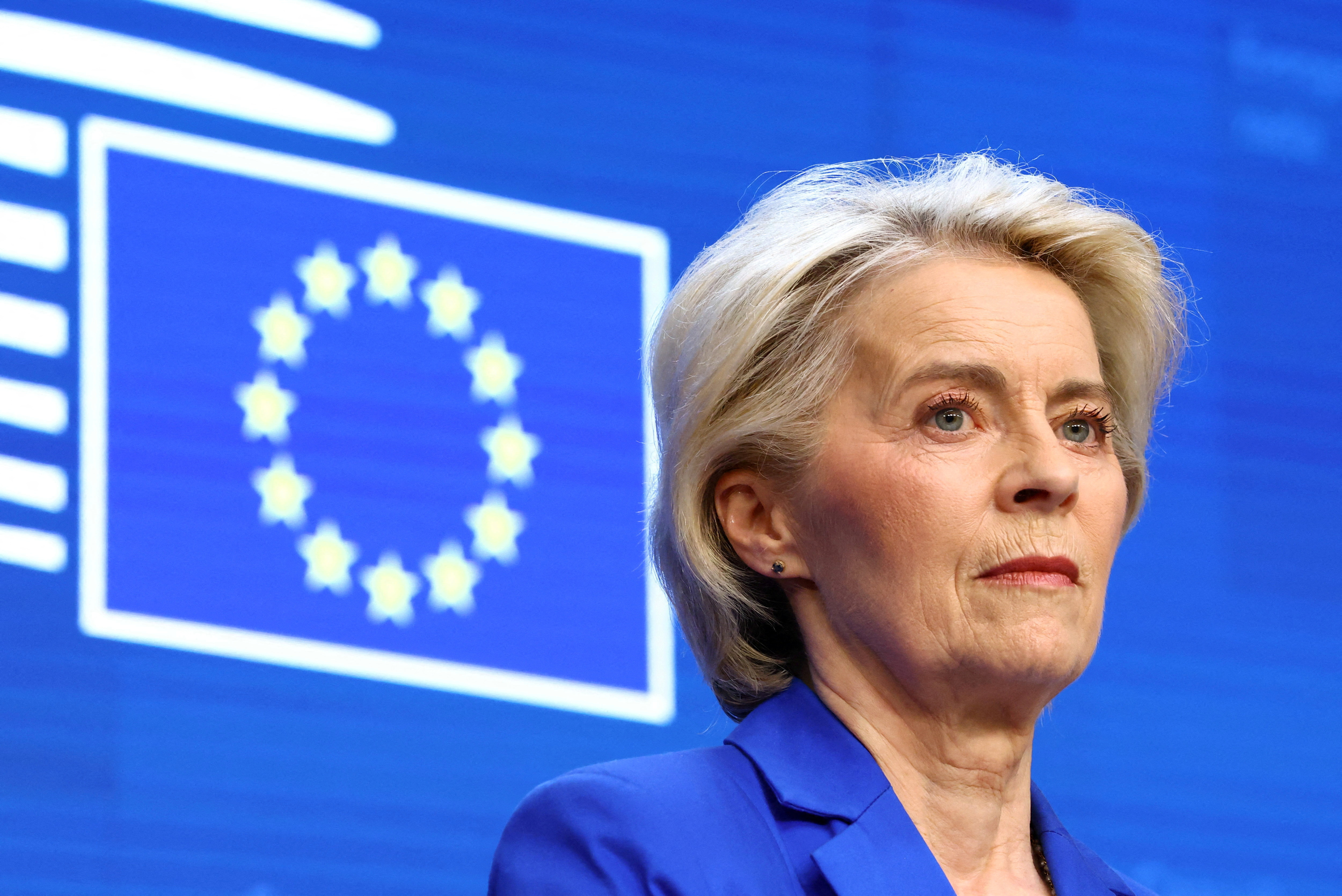
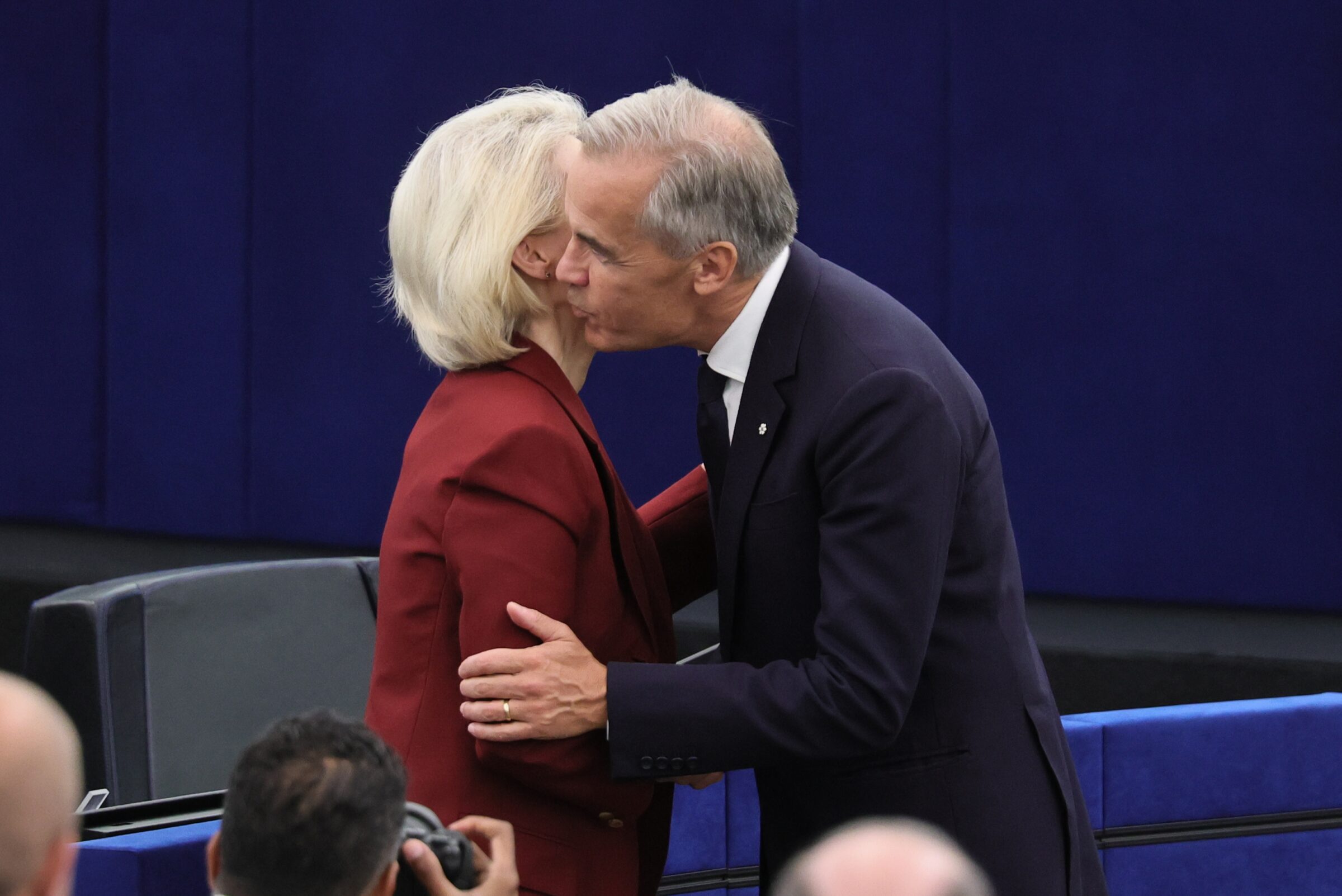
The offer of the first phrase was made to Canada a month ago by EU Commission president Ursula von der Leyen.
The phraseology, made during von der Leyen’s State of the Union speech, surprised many EU diplomats who claimed that they had not been consulted.
It was also never clear precisely what this would mean.
The idea of Canada having representatives or observer status in the EU institutions always sounded fanciful. Besides, there is no mention of ‘associate membership’ in the EU treaties, and this uncertainty appears to have persuaded Germany to demand that it be dropped ahead of Thursday and Friday’s (29-30 October) EU-Canada summit.
The draft communique circulated ahead of the summit talks of “work to define by the 2027 EU-Canada summit the concept of an ever closer association of Canada to the EU, short of full membership itself.”
Von der Leyen appeared not to have read the memo.
Officials would “start discussing how to make Canada the first associate member of the EU,” she said on arrival in Montreal, adding that “our ambition is to build the closest partnership we have ever had with a non-European country”.
Yet this is a dispute over language rather than substance. The EU and Mark Carney’s Canada see each other as their closest ally. Both have been repeatedly threatened with hefty trade tariffs by Donald Trump’s White House and the consequences of Trump’s foreign policy adventures in the Middle East and the Arctic. Carney’s remarks at the World Economic Forum in January that ‘middle’ powers should club together to avoid being squeezed between China and the US were aimed at the EU.
Commission officials may blench at the comparison, but the EU is a collection of middle ranking and small states. And it is yet to act like a world power on the political stage.
This article continues, but the full version is available only to EUobserver.com subscribers. Visit account.euobserver.com/membership
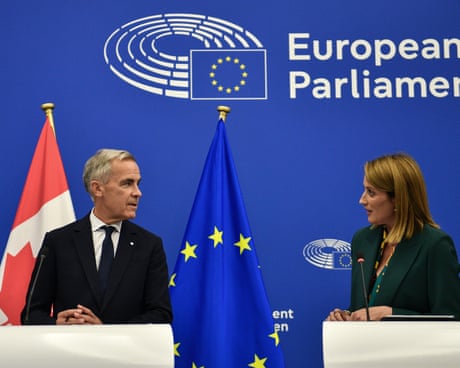
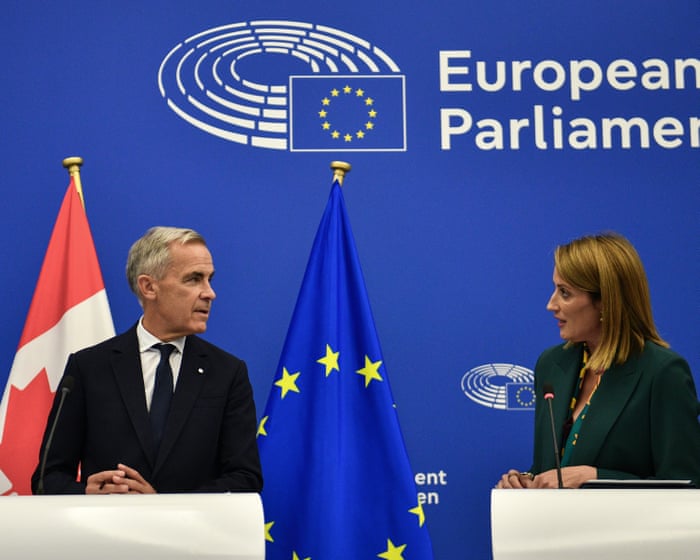
European Commission President Ursula von der Leyen said on Thursday the EU and Canada continue to explore Canada becoming the union’s first “associate member,” a term so divisive among member countries that it does not appear in a joint declaration.
The European Union and Canada aim to deepen cooperation on AI, climate, energy and security, von der Leyen said in a speech at a Canada-EU summit in Montreal.
The associate member term, which Germany and several other EU countries oppose, has no legal meaning.
“Our idea is simple: it is an association without accession,” von der Leyen said. “We can build a partnership that comes closer to membership than anything we have done before.”
“We can work on everything, from AI and climate to energy or security,” she said.
Canadian and EU leaders, however, dropped the idea of associate EU membership from their joint declaration, seen by Reuters, agreeing instead to an “ever closer association.”
The declaration, which officials plan to make public on Friday, said work to define the Canada-EU relationship would continue until another summit next year.
CANADA SEEKING TO REDUCE US DEPENDENCE
Deeper ties to Europe are part of Prime Minister Mark Carney’s strategy to reduce Canada’s economic and security reliance on the US since President Donald Trump imposed tariffs on a range of Canadian goods. Still, Canada’s efforts to draw closer to the EU risk angering Trump as trade talks between Canada and the US continue.
Von der Leyen first floated associate membership for Canada six weeks ago, prompting a rebuke from countries that argued they could not agree to a concept that had no legal status and had not been fleshed out, diplomats said.
Three EU diplomats, speaking on condition of anonymity, said they were surprised von der Leyen continued to use the “associate member” term, since the declaration deliberately excluded it.
Speaking later at the summit, European Council President Antonio Costa said the idea of associate membership for Canada was “audacious,” but that he shared von der Leyen’s ambition.
A previous draft statement had included at least two references to Canada as an associate member, including an acknowledgment that defining the term would take another year.
Carney said the term for Canada’s new relationship with the EU is insignificant.
“This new alliance is not a marketing exercise. The name doesn’t matter,” he told reporters.
“What matters is that the complementarities of our two jurisdictions strengthen our sovereignty, strengthens Europe’s sovereignty, various strategic autonomies, critical minerals, energy, other aspects, AI,” Carney said.
Canada and the EU were both trying to find an effective response to the geopolitical threats Trump has posed, said Mark Manger, a professor at the Munk School of Global Affairs at the University of Toronto.
“Canada and the EU both are now in this position where the most important ally they relied upon is suddenly not behaving like an ally anymore,” he said. Manger said Canada and the EU have an enormous opportunity to expand their relationship, but that it would take time to address regulatory inconsistencies, build new undersea cables linking Canada to Europe and secure common supply chains, some of the objectives mentioned in the joint declaration.
The declaration also proposes conducting a joint feasibility study on Canadian liquefied natural gas exports to Europe and enabling young Canadians and Europeans to work across the Atlantic.
Von der Leyen called for deeper cooperation between the EU and Canada on Arctic security.
“When we see Russia rebuilding its Arctic military footprint, pursuing hybrid strategies against its neighbors and reshaping the security of the Arctic, it impacts the European Union and Canada,” she said. “We have to act and change our strategic posture and, together with like-minded partners like Canada, stand up for these values.”
Later on Thursday, Carney will meet with European business leaders before hosting a dinner with EU leaders.
Musician wrote a ‘love letter’ to Canada with a new album – and some pointed commentary about the US president
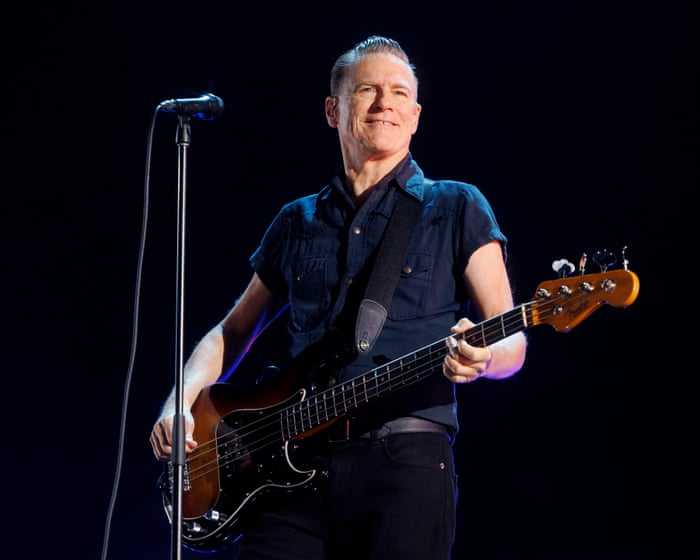
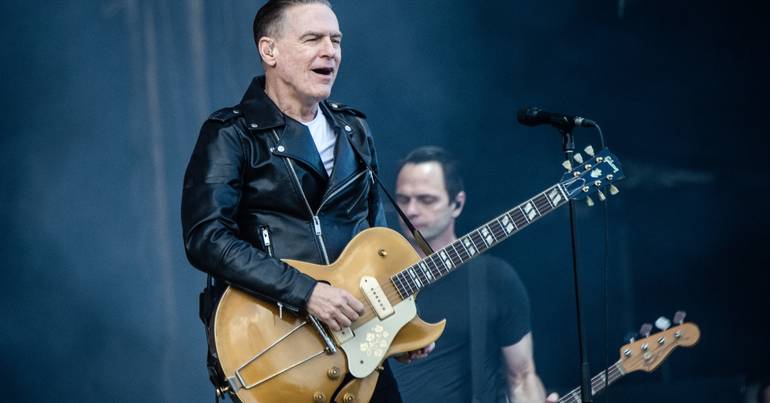
Lake Ontario, the vast body of water that straddles the US-Canada border, has gone by many names over the centuries: Lac Saint-Louis, Lacus Ontarius, Skaniadorio, Cataraqui Lake. But one thing it will never be called, says the Canadian rock star Bryan Adams, is Lake America.
In his new song Lake Ontario, Adams takes aim at the US president, Donald Trump, accusing him of “breaking the peace” between the people who live on the lake’s shores.
The ‘lake of shining waters’ is what the Iroquois called her
It’s a First Nations name – not an executive order.
“Empires and regimes, dictators and kings, they all come and go. Lake Ontario is forever,” Adams said on his website after releasing another single targeting the President from his upcoming album.
Congress should build an independent fund that accepts contributed equity from any company, holds it in a diversified portfolio and dedicates the returns to the trust funds.
Congress should build an independent fund that accepts contributed equity from any company, holds it in a diversified portfolio and dedicates the returns to the trust funds.
Acquisition will supercharge DoorDash’s grocery delivery, ‘one of the hardest things to get right online’, CEO says
DoorDash is gobbling up Instacart in a $17bn acquisition that will supercharge its grocery delivery business.
DoorDash said the Instacart brand name and app will remain, and Instacart shoppers can continue fulfilling orders for Instacart. Grocers can also choose to work with Instacart or DoorDash. Instacart customers will now have access to 50,000 additional stores covered by DoorDash, the company said.
Bryan Adams lançou uma nova canção contra a decisão de Donald Trump de alterar o nome do Lago Ontário para que passem a utilizar a designação "Lake America" nos organismos federais norte-americanos.
C’è chi risponde alle polemiche con un tweet e chi con una chitarra. Bryan Adams ha scelto la seconda strada. Mercoledì 28 ottobre il cantautore canadese ha pubblicato un nuovo brano che critica l’ordine esecutivo con cui, ad agosto, Donald Trump ha cambiato il nome del Lago Ontario in Lake America. Il pezzo si intitola semplicemente “Lake Ontario”.
Il lago divide Stati Uniti e Canada. Ad agosto Trump ha firmato un ordine che impone alle agenzie federali americane di chiamarlo “Lake America”. La mossa si inserisce nella lunga stagione di tensioni tra Washington e Ottawa, fatta di dazi e di ripetute uscite sul Canada come “51esimo stato”.
La reazione musicale era già partita a fine estate con “Hasn’t Hit Me Yet” dei Blue Rodeo che poi è diventata virale, con migliaia di fan a Toronto che ne urlavano il verso sul Lago Ontario. Il leader Greg Keelor ha spiegato che il lago, prima dato per scontato, è diventato una linea nella sabbia, cioè una linea di confine simbolica. Anche altri artisti si erano schierati dal palco: Blue Rodeo, JoJo e gli Iron Maiden hanno preso posizione contro il cambio di nome durante i loro concerti a Toronto.
A pocos días de las elecciones de medio término del 3 de noviembre, Donald Trump vuelve a criminalizar a los inmigrantes para movilizar al voto republicano y evitar que los demócratas recuperen el control del Congreso. Sin embargo, la violencia de los operativos, la muerte de ciudadanos estadounidenses y el impacto de las deportaciones están alimentando un rechazo entre sectores clave, como los latinos y los votantes independientes. La política migratoria que impulsó su regreso a la Casa Blanca en 2024 amenaza ahora con convertirse en una vulnerabilidad electoral.
EUobserver is proud to have an editorial partnership with Europod to co-publish the podcast series “Briefed” hosted by Léa Marchal. The podcast is available on all major platforms.
Find the full transcript below:
The EU-Canada summit opens today in Montreal and runs until tomorrow (30 October). One idea is overshadowing the meeting: making Canada an “associate member” of the EU. However, the 27 member states are far from agreed on it.
So, what can we actually expect from this summit?
Canada is, let’s say, one of the EU’s favourite partners. And it went as far as this: Ursula von der Leyen proposing to make Canada an associate member of the EU.
This came as a surprise, because the idea had not been discussed with the 27 member states. And now that we are getting into the details, it has become a real issue.
So much so that the EU is scrambling at the last minute to agree on the wording to use during the summit with Ottawa.
As an illustration, as recently as yesterday, the EU still didn’t know what to do with the term “associate member” in the joint EU-Canada declaration. Council officials had suggested mentioning the status, while making clear it was the Commission’s idea. But even in that form, Germany, France, Italy and Greece objected.
Why? First, because no decision was ever taken through the proper channels. And above all, because the status simply doesn’t exist.
The word “member” is already a problem, because it implies some form of participation in the EU. And the treaties limit that to a certain geographical area, which, as you can imagine, doesn’t stretch across the Atlantic.
So what does the Commission actually have in mind? According to an EU official, associate member status would mean consulting each other even more on a number of policies: climate, energy, AI, security and so on.
Canada could also join some EU programmes more automatically. Although in reality, it already takes part in several of them, such as Horizon, the research programme, or SAFE, the defence loan instrument. The same official says there would also be more regular meetings to coordinate positions.
But all of this remains very vague. For many observers, von der Leyen’s proposal was above all a way to show the friendship between the EU and Canada, at a time when the United States is behaving in a threatening way.
Now, what does Canada think of this? When von der Leyen made her proposal in her speech, Canadian Prime Minister Mark Carney welcomed it, as diplomacy and politeness require.
Since then, according to Canadian media, he has avoided using the expression “associate member”. And in any case, Canada has no intention of joining the EU. It simply isn’t something it is interested in.
So whether there are ways to deepen cooperation is, once again, still to be seen.
The summit, will surely not bring answers or decisions on such a relationship. More time will be needed to discuss a new status, or leave it completely.
In the meantime, the two blocs will sign what they call an “alliance for the future”. It is less binding and more consensual.
That’s what bilateral summits like this are for: reminding everyone of existing alliances, or clarifying them in some cases. Both sides adopt a joint declaration, a document in which they try to announce shared projects and take common positions on major international issues.
But as for associate membership, that will have to wait.
A União Europeia retirou qualquer referência ao estatuto de “membro associado” da versão mais recente do projeto de declaração conjunta que deverá ser adotado no final da cimeira UE‑Canadá, em Montreal, estas quinta‑feira e sexta‑feira (29 de outubro e 30 de outubro). A alteração, introduzida por insistência da Alemanha num texto revisto distribuído aos Estados‑membros, substitui a designação por um compromisso de “associação cada vez mais estreita” entre os dois blocos.
A equipa do presidente do Conselho Europeu, António Costa, passou as últimas horas em conversações intensas com vários Estados‑membros, sobretudo a Alemanha, que contestou o termo na declaração política, refere a agência Euronews. A presidente da Comissão, Ursula von der Leyen, lançou a ideia original no seu discurso sobre o Estado da União perante o Parlamento Europeu, no mês passado, ao convidar o Canadá a tornar‑se o primeiro membro associado da União.
Uma versão anterior foi submetida aos Estados‑membros na terça‑feira, 28 de outubro, ao abrigo do procedimento de silêncio, segundo o qual um texto é considerado adotado, salvo se algum país apresentar objeções explícitas. Alemanha, França, Itália e Grécia levantaram reservas.
A Alemanha tem sido o opositor mais veemente do termo. O chanceler Friedrich Merz tinha proposto anteriormente um estatuto semelhante para a Ucrânia, como forma de dar a Kiev garantias de segurança antes de o país aderir plenamente ao bloco. Para Berlim, a prioridade é definir o que significa, na prática, uma cooperação mais estreita com Otava, em vez de encaixar o assunto num conceito que não existe nos tratados e pode ter implicações jurídicas significativas.
O primeiro‑ministro canadiano, Mark Carney, tem preferido a expressão “aliança para o futuro”, afirmando que quer concentrar‑se no conteúdo do acordo e que a terminologia é algo que cabe à União definir. A versão mais recente do texto foi novamente apresentada ao procedimento de silêncio, o que significa que será adotada, salvo se os Estados-membros colocarem novas objeções.
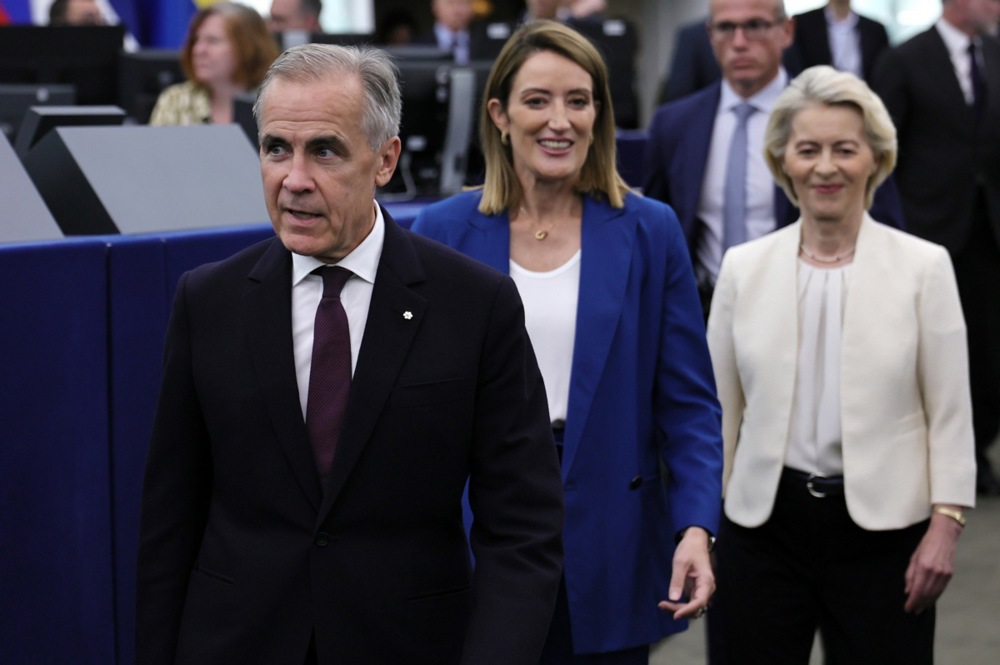
A 21.ª Cimeira UE-Canadá realiza-se em Montreal a 29 e 30 de outubro, servindo de palco para o aprofundamento das relações políticas, económicas e de segurança entre os dois blocos. O encontro é liderado pelo primeiro-ministro canadiano Mark Carney, pelo presidente do Conselho Europeu António Costa e pela presidente da Comissão Europeia Ursula von der Leyen.
Apesar do ajuste na terminologia, a cimeira foca-se nos avanços práticos entre os dois lados do Atlântico. O lançamento formal deste novo quadro político visa blindar a segurança económica mútua e impulsionar a inovação tecnológica conjunta. O encontro entre os dois lados reforçará também a parceria de Segurança e Defesa, assinada pelos respetivos responsáveis diplomáticos e de defesa, e que assume o foco na estabilidade geopolítica global e no combate a ameaças híbridas. O encontro servirá também para debater o comércio bilateral – tirando partido do acordo CETA, já existente – e o estabelecimento de normas comuns para o desenvolvimento da Inteligência Artificial.
O CETA (Comprehensive Economic and Trade Agreement), ou Acordo Económico e Comercial Global, é um tratado de livre comércio entre a União Europeia e o Canadá, concebido para dinamizar a atividade económica bilateral através da eliminação de barreiras alfandegárias. Eliminou mais de 98% das taxas e tarifas alfandegárias que incidiam sobre as mercadorias trocadas entre as duas regiões.
A União Europeia (UE) e o Canadá reúnem-se hoje 29 de outubro, na cidade canadiana de Montreal, para aprofundar a parceria política, económica e estratégica, visando explorar um modelo de associação ao bloco comunitário sem adesão plena.
O presidente do Conselho Europeu, António Costa, e a presidente da Comissão Europeia, Ursula von der Leyen, representam a UE na 21.ª cimeira bilateral, que decorre hoje e sexta-feira, com a participação do primeiro-ministro canadiano, Mark Carney.
O encontro deverá assinalar um marco nas relações entre os dois parceiros, que pretendem reforçar a cooperação económica e a segurança, aprofundar os laços entre as populações e coordenar posições na cena internacional.
A UE pretende explorar uma forma de associação do Canadá “mais próxima da adesão” do que qualquer parceria anterior, mas sem entrada formal no bloco comunitário, de acordo com fontes comunitárias.
A proposta de aprofundamento das relações, apoiada pelos Estados-membros, permanece em discussão e deverá ser desenvolvida até à próxima cimeira, em 2027.
A cooperação económica é um dos eixos centrais do encontro, já que em 2025, o comércio de bens e serviços entre a UE e o Canadá atingiu cerca de 130 mil milhões de euros, mais de 80% acima do valor registado em 2016.
Entre as prioridades estão o reforço das cadeias de abastecimento e do acesso às matérias-primas críticas, assim como a possibilidade de aumentar as exportações canadianas de gás natural liquefeito para a Europa.
Prevista está uma “Aliança para o Futuro”, que deverá estabelecer um quadro de prosperidade partilhada e segurança económica, sustentado por novas iniciativas concretas para aprofundar as relações comerciais, reforçar o investimento e estreitar a cooperação em áreas estratégicas.
A agenda da cimeira inclui o comércio, as tecnologias digitais, as matérias-primas críticas, a defesa e a segurança, bem como a cooperação nos domínios da educação, investigação, inovação e juventude.
Na área da defesa, o Canadá é o único país não europeu a participar no instrumento SAFE, dotado de 150 mil milhões de euros para apoiar a produção europeia de equipamento de defesa através de compras conjuntas.
Os dois parceiros deverão também reafirmar o apoio à Ucrânia e o compromisso com o multilateralismo e a ordem internacional baseada em regras.
Os líderes deverão, ainda, avaliar os progressos alcançados desde a última cimeira, em junho de 2025, e emitir uma declaração conjunta no final do encontro.
A relação entre a UE e o Canadá assenta no Acordo de Parceria Estratégica e no Acordo Económico e Comercial Global (CETA), assinado em 2016 e aplicado provisoriamente desde setembro de 2017, que eliminou a maioria dos direitos aduaneiros e facilitou as trocas comerciais.
Na cimeira de junho de 2025, os dois parceiros assinaram uma parceria de segurança e defesa.
O Canadá está também associado ao programa Horizonte Europa, de investigação e inovação da UE, desde 2024, e as duas partes cooperam em matéria de clima, ambiente e transformação digital.
Dolores Huerta, que cofundó en la década de 1960 el sindicato United Farm Workers, la principal organización estadounidense de defensa de los trabajadores agrícolas, falleció este miércoles 28 de octubre a los 96 años.
Jesse Adams, founder of the Canadian organization RainCoast Dog Rescue Society, was killed by a Russian FPV drone while evacuating animals from front-line Kramatorsk.
Watered-down version of statement to be issued at end of Montreal summit instead offers ‘ever closer association’
The EU has backed away from its offer to Canada to start talks on becoming an “associate member” after disagreements between member states just as an EU-Canada summit was set to begin in Montreal.
A draft of a joint statement to be issued after the end of the summit, which runs Thursday and Friday, showed a watered-down version offering “an ever closer association of Canada to the EU, short of full membership itself”.
Pete Hoekstra, controversial US ambassador to Canada, has also accused Canadian officials of interfering in US elections
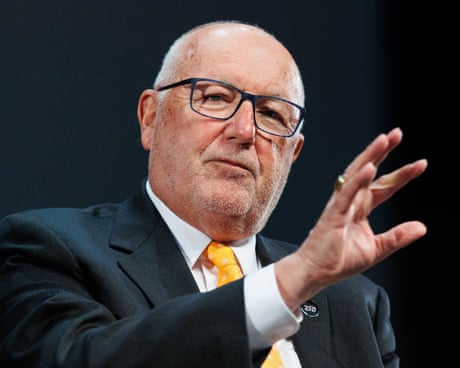
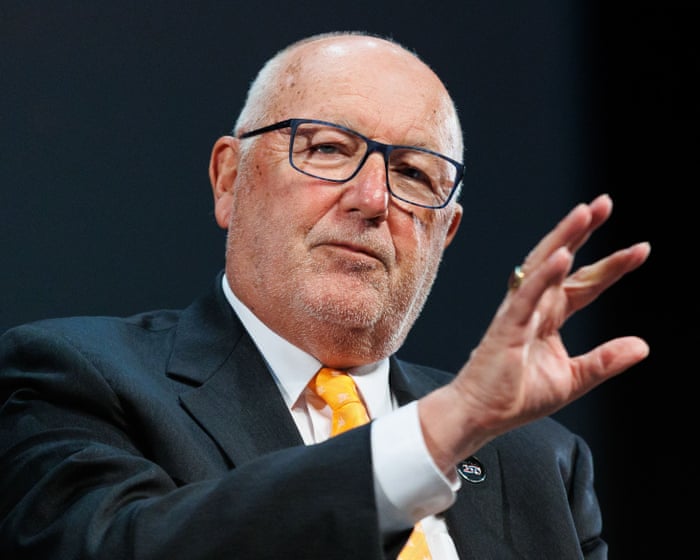
The US ambassador has suggested Canada could be blamed if Republicans perform poorly in next week’s midterm elections, the latest intervention from a controversial figure who has been accused of inflaming a bitter dispute that has angered and baffled residents of both countries.
On Wednesday, CTV news reported that Pete Hoekstra told business leaders at a closed door meeting that if a number of swing races – including Maine and Michigan – go to the Democrats, it could make things harder for Canada because Donald Trump might try to blame the loss on it.
The Canadian government on Tuesday introduced a bill that would allow Medical Assistance in Dying (MAID), Canada’s preferred euphemism for euthanasia, to be conducted on people who have lost the mental capacity to give informed consent for the procedure.

 Login