❌

Reading view

The Two Faces of Gadi Eisenkot, Who Could Be Israel’s PM

The article examines Gadi Eisenkot’s portrayal as a centrist political alternative to Benjamin Netanyahu, contrasting that image with his military record and role in developing Israel’s Obliteration Doctrine.

  •  

Trump's Mandatory Immigration Detention Policy Fails the Textualist Test

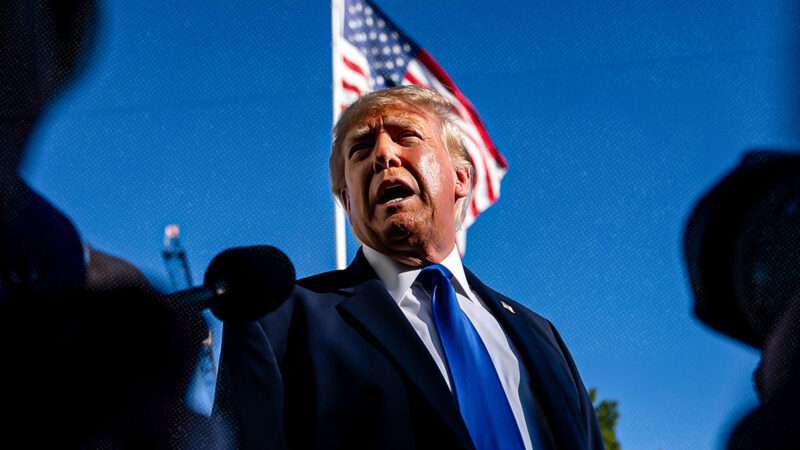
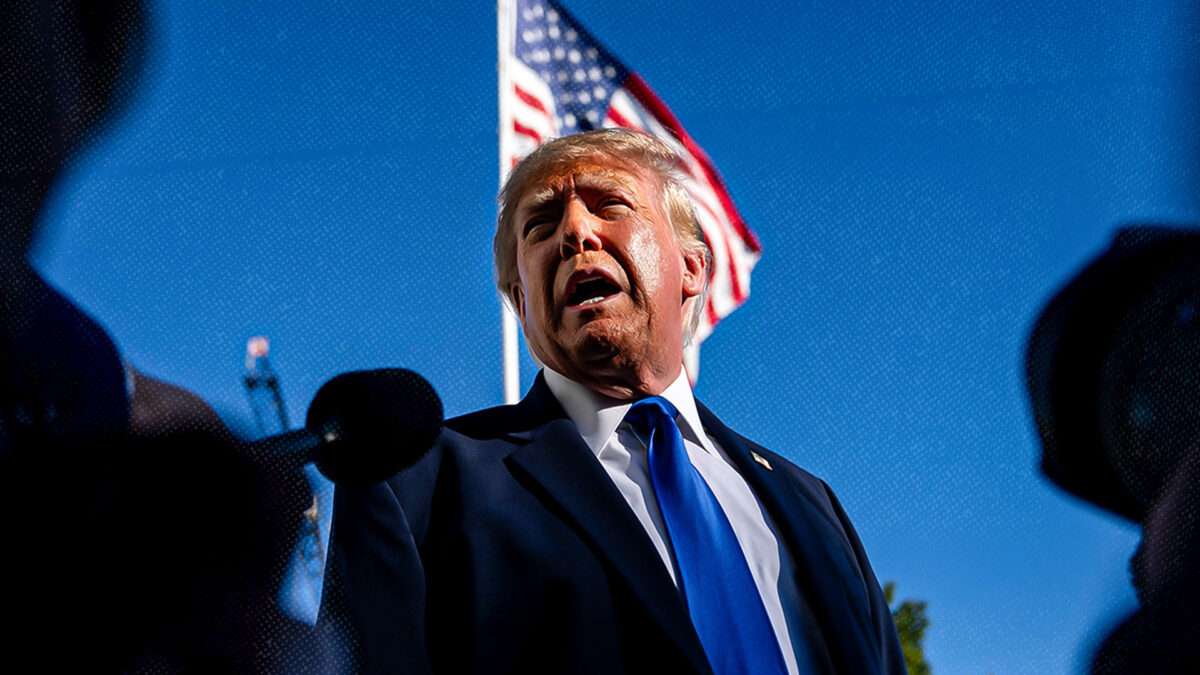
President Donald Trump standing in front of a flag | Bonnie Cash-Pool via CNP/CNP/Polaris/Newscom

Assume the following: A person unlawfully entered the United States 20 years ago and has since started a business and raised U.S.-citizen children, has no criminal record, and has never been found to be dangerous. Should federal immigration law treat that person the same way it treats someone who was just apprehended at the border? Should the law treat that person as if Congress had specifically made them subject to mandatory detention for criminal or terrorism-related conduct?

Under the Trump administration, the answer is yes. President Donald Trump's current policy treats noncitizens who entered without lawful admission as subject to mandatory detention without bond throughout removal proceedings, even if they have lived in the United States for decades and have no criminal record⁠. The executive branch adopted that position in new Immigration and Customs Enforcement (ICE) guidance issued in July 2025⁠, reversing its prior interpretation of the same detention law.

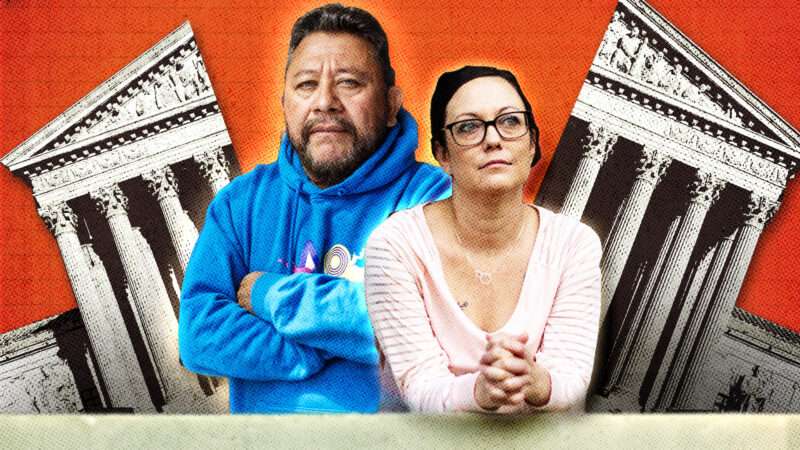
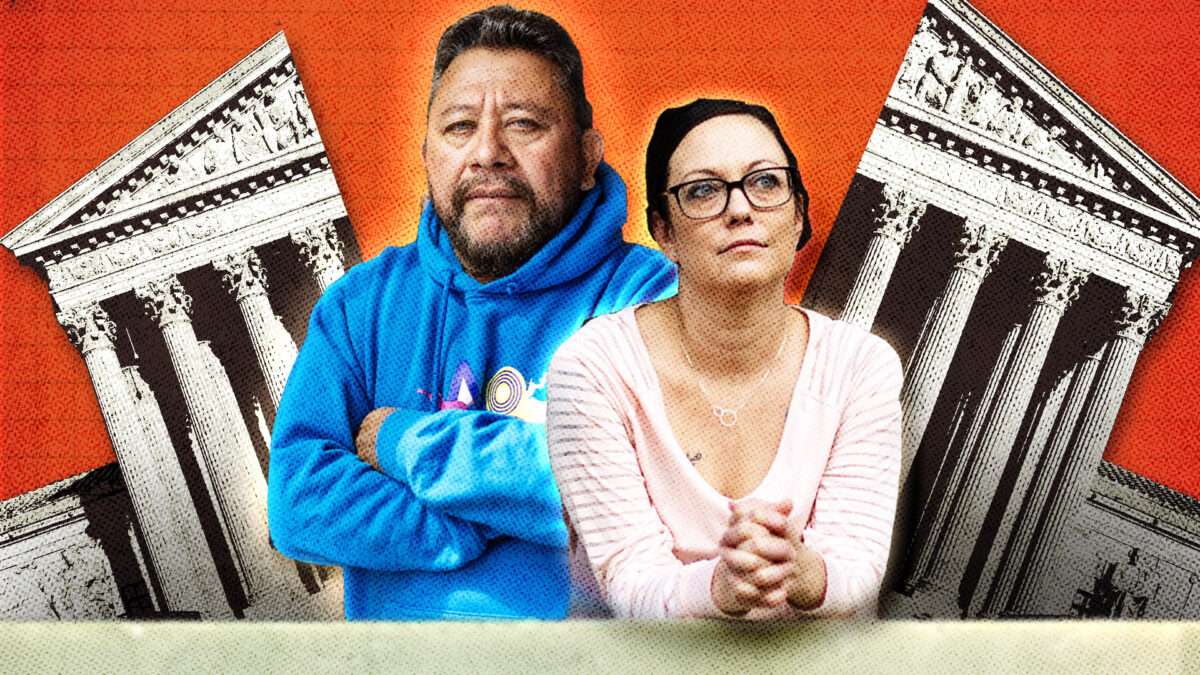
The U.S. Supreme Court will now decide whether Congress actually required the result Trump is seeking. On October 1, the justices agreed to hear the case of Rhoney v. Barbosa da Cunha⁠. Ricardo Aparecido Barbosa da Cunha, a Brazilian national, entered the United States without inspection around 2005. He later applied for asylum, received work authorization, and eventually bought a home. He operates a small construction business and lives with his wife and two U.S.-citizen children. He has no criminal record. But immigration officers still arrested him while he was driving to work in Massachusetts in September 2025.

After Cunha challenged his detention, a federal court ordered a bond hearing and an immigration judge found that he posed neither a danger nor a flight risk and therefore released him on bond while his case proceeded. The Trump administration then appealed to the U.S. Court of Appeals for the 2nd Circuit and lost. Now the Supreme Court will have the final word⁠.

The Supreme Court is not deciding whether Cunha may ultimately remain in the country. Instead, it is deciding the narrower question of whether the Immigration and Nationality Act mandates detention pending removal proceedings for someone like Cunha who is present in the United States without having been lawfully admitted⁠.

The legal dispute turns on two phrases in one section of this federal immigration law. According to Section 1225, a noncitizen present in the United States who has not been legally admitted is considered an "applicant for admission." But when Congress imposed mandatory detention later in that same section, it used additional language, applying it to an applicant for admission who is "seeking admission."

That distinction may sound technical and trivial, but its consequences are enormous. If every statutory "applicant for admission" is automatically still "seeking admission," then the government can treat someone who crossed the border 20 years ago the same as someone arriving today and keep them in jail without the possibility of bond. If the two phrases mean two different things, however, then Cunha and others like him are generally eligible for a bond hearing under Section 1226, which permits both detention and release on bond or conditional parole⁠.

The Trump administration argues that if Congress has deemed someone an applicant for admission, that person must necessarily still be seeking the admission for which they are considered an applicant. But the administration's argument asks the Court to stretch federal law beyond its reasonable limits. Congress expressly deemed certain people "applicants for admission." It did not separately deem them to be "seeking admission."

This case, in short, is about textualism. And as the late Justice Antonin Scalia and his co-author Bryan Garner argue in their book, Reading Law: The Interpretation of Legal Texts, one of the key principles of textualism is that "a material variation in terms suggests a variation in meaning." When Congress uses different words in closely related provisions, in other words, courts should hesitate before assuming that the different words mean the exact same thing.

In ordinary English, it is certainly difficult to describe a man driving from home to work after living in the United States for over two decades as presently "seeking admission." He is not seeking to enter the U.S.; he already entered decades earlier. The 2nd Circuit's unanimous opinion—written by Judge Joseph Bianco, a Trump appointee—reached this conclusion, holding that "seeking admission" describes ongoing activity rather than merely a retained statutory status⁠.

Meanwhile, when the U.S. Court of Appeals for the 5th Circuit upheld the administration's position in a similar case, Judge Dana Douglas, an appointee of former President Joe Biden, invoked the same Scalia-Garner textualist principles in dissent. 

The legal dispute, therefore, does not follow neat partisan lines. Judges from different ideological backgrounds have both concluded that the administration's reading goes beyond the words that Congress wrote.

The broader statutory structure also supports that conclusion. Congress has long required mandatory detention in Section 1226 for specified criminal and terrorism-related grounds⁠. And the Laken Riley Act of 2025 expanded those mandatory-detention categories⁠. But if nearly everyone who ever illegally entered the country is already subject to mandatory detention, as the administration asserts, then all of those carefully drawn separate categories for mandatory detention suddenly become superfluous and pointless for noncitizens who illegally entered the country, an objection that Douglas raised in dissent⁠.

History also clarifies the point. For nearly 30 years, across five presidential administrations (including Trump's first), the government generally treated people like Cunha as potentially eligible for bond. Trump only reversed course in July 2025. The 2nd Circuit thus accurately described the earlier interpretation as a well-established executive branch practice⁠.

Of course, past executive practice cannot override clear statutory language. But if Congress really did mandate a sweeping detention regime in 1996⁠, it is striking that every presidential administration since then has operated under a totally different understanding⁠.

None of this gives Cunha lawful immigration status. Nor does it guarantee his release or prevent the government from deporting him. Rather, it allows an immigration judge to ask a basic question: Is keeping this particular person in jail actually necessary while his case proceeds?

The administration may believe mandatory detention makes immigration enforcement faster or more effective. And Congress is free to adopt that policy if it chooses to do so. But Congress does have to choose it first.

Protecting the constitutional separation of powers is one of textualism's most important functions. Textualism is often described as a conservative method of statutory interpretation. But its deeper value is constitutional. It forces both courts and presidents to follow the law Congress actually passed. Sometimes that produces harsher results. Sometimes it produces more humane ones. But either way, it restrains the executive and judicial branches from exceeding their proper spheres.

Whether mandatory detention would accelerate Trump's deportation program is a question of policy. Whether it is just is a question of ethics. Whether Congress authorized it is a question of law.

In Cunha, the best textualist reading is that Congress preserved the possibility of bond and left room for an immigration judge to determine whether detention is necessary. That textualism, liberty, and compassion point to the same result is not the reason to reach it. In this case, however, it is a welcome coincidence.

The post Trump's Mandatory Immigration Detention Policy Fails the Textualist Test appeared first on Reason Magazine.

  •  

Judge says Trump prosecutor in LA is ‘unlawfully serving’ in latest hit to Trump’s DOJ

A federal judge ruled Tuesday that a Donald Trump-backed lawyer has been “unlawfully serving” as the top federal prosecutor in Los Angeles. The decision regarding Bill Essayli’s service does not immediately take effect, and Essayli said the Supreme Court “will ultimately decide” the legality of his tenure.

The justices may have the last word not only on Essayli but also on a host of lawyers who have purported to lead districts around the country without being confirmed by the Senate. U.S. District Judge J. Michael Seabright noted in his ruling that the federal government has asked the Supreme Court to consider the issue in disputes over Trump’s chosen lawyers in Nevada (Sigal Chattah) and northern New York (John Sarcone).

In an order accompanying his ruling, Seabright, a George W. Bush appointee, gave the government a chance to try to halt his ruling pending appeal as the administration presses the appointment issue to the justices.

Urging the high court to use the Nevada case to resolve the nationwide issue, the Justice Department argued that lower court rulings against the administration “misconstrue” the law that deals with federal vacancies, “upend a quarter-century of practice,” “threaten chaos for the next presidential transition” and “cast a pall over prosecutions in 14 judicial districts nationwide.”

We could learn later this year whether and when the justices will take up the matter. They could grant review to decide it this term after holding a hearing and issuing a ruling that would be expected by July.

Meanwhile, given Seabright’s pause on his decision taking immediate effect, Essayli said he will “continue running the office.” The New York Times included Essayli on its list of prosecutors who are “carrying out Trump’s grievance agenda,” writing that he “has pushed to charge cases against anti-Trump protesters, many of which fell apart in court” and “carried out a direct order from Mr. Trump to open an investigation of voting in the state.”

Subscribe to the Deadline: Legal newsletter for expert analysis on the top legal stories of the week, including updates from the Supreme Court and developments in the Trump administration’s legal cases.

The post Judge says Trump prosecutor in LA is ‘unlawfully serving’ in latest hit to Trump’s DOJ appeared first on MS NOW.

  •  

A Supreme Court Case Underlines the Absurdity of the Federal Ban on Home Distilling

a still in a jail cell | DPST/Newscom/Kari Høglund/Dreamstime/Fatima Ruiz

Years ago, I bought a contraption designed to separate and concentrate the most volatile components of a liquid mixture. I would tell you what I did with it, but I don't want to implicate myself in a federal felony.

Since 1868, it has been illegal for Americans to locate a "distilled spirits plant" in "any dwelling place," an offense currently punishable by a maximum $10,000 fine and up to five years in prison. The federal ban on home distilling is at the center of a case that the Supreme Court recently agreed to hear, which raises a specific constitutional issue but also highlights the absurdity of treating this hobby as a crime.

That policy, the U.S. Court of Appeals for the 5th Circuit ruled last April, cannot be justified as an exercise of the federal government's tax power. To the contrary, Judge Edith Jones said in the court's opinion, the ban is "an anti-revenue provision that prevents distilled spirits from coming into existence," meaning its effect is "to reduce revenue instead of raising it."

Nor is the provision consistent with "the Supreme Court's explanation of how the federal power of taxation works," Jones wrote. When Congress imposes a tax, the Court explained in 2012, it "leaves an individual with a lawful choice to do or not do a certain act, so long as he is willing to pay a tax levied on that choice." But in this case, Jones noted, would-be home distillers "have only the choice not to do as they wish or risk fines and imprisonment."

The government argued that the ban helps collect liquor taxes by prohibiting a form of production that is difficult to detect. But "Congress cannot prohibit intrastate activity solely because it might produce products hard to tax," Jones said. If it could, she warned, there would be "no limit whatsoever" to its tax power.

Under the government's logic, Jones noted, "Congress may criminalize nearly any at-home conduct only because it has the possibility of concealing taxable activity. Home-based businesses may be forbidden. Remote work may be deemed a crime."

The Trump administration, which wants the Supreme Court to overturn the 5th Circuit's decision, argues that threatening to imprison home distillers is a "necessary and proper" safeguard against tax evasion. But whatever your take on the constitutional question, that policy is morally indefensible, haphazardly enforced, and inconsistent with the federal government's treatment of wine and beer.

The lead plaintiff in this case is Scott McNutt, a member of the Hobby Distillers Association. In 2014, McNutt received a "Notice of Potential Civil and Criminal Liability" from the Treasury Department, which said it had reason to believe he "may have purchased a still capable of producing alcohol and/or equipment and materials that may be used in the manufacture of a still."

The notice warned that "federal law provides no exemptions for the production of distilled spirits for personal or family use." It added that "unlawful production of distilled spirits is a criminal offense," which it erroneously claimed was "punishable by a fine of up to $500,000" as well as "imprisonment for not more than 5 years."

Meanwhile, online retailers such as Amazon sell a wide variety of home stills, many of which are explicitly advertised as appliances designed to produce alcoholic beverages such as vodka, gin, brandy, and whiskey. Customers could be forgiven for assuming that's legal, especially since federal law has long permitted home wine and beer production "for personal or family use."

McNutt's lawyers say he "owns a still that he has used to lawfully distill fuel alcohol and seeks to 'tinker around' with beverage spirits." Another plaintiff, Thomas Cowdrey, "likewise seeks to experiment in creating new beverage spirits, including 'apple pie vodka,' for which he has developed a recipe."

Because of a law Congress enacted 158 years ago, McNutt and Cowdrey would be felons if they acted on those desires. It might be time to rethink that policy.

© Copyright 2026 by Creators Syndicate Inc.

The post A Supreme Court Case Underlines the Absurdity of the Federal Ban on Home Distilling appeared first on Reason Magazine.

  •  

Immigration Judges Will No Longer Be Able to Shelve Deportation Cases: U.S. Supreme Court

The decision favors Trump’s effort to end a practice that has benefited about 360,000 migrants since 1990.

On Tuesday, the U.S. Supreme Court ruled against reinstating a regulation that allowed immigration judges to suspend certain deportation proceedings.

RELATED:

Over 2,000 Immigrants Have Been Arrested in New York Since July

Issued in a brief, unsigned opinion, the justices’ decision favors President Donald Trump’s administration, which opposes maintaining a practice that President Joe Biden formalized.

“In 2024, Biden’s administration adopted a regulation that formally codified administrative closure procedures, concluding that it lets judges efficiently manage their caseloads and promote the fair treatment of immigrants. That regulation replaced a prior rule adopted in 2020 during Trump’s first term in office that had been judicially blocked,” Reuters reported.

When Trump returned to the White House in January 2025, however, he announced that he would no longer allow administrative closure of cases as a mechanism for reducing workloads in immigration courts.

The family of Renee Good, one of two US citizens fatally shot by federal immigration agents in Minneapolis in January,have sued the Trump administration, saying there had been "no accountability" for her killing during deportation sweeps.

Good, 37, was shot dead in her car by… pic.twitter.com/h0KmryA3Z1

— TRT World (@trtworld) October 2, 2026

Texas had already challenged that policy in a federal court, arguing that the rule lets immigration judges “effectively grant indefinite amnesty to aliens illegally present in this country.”

Three cities with large immigrant populations — Baltimore, Maryland; Columbus, Ohio; and New Haven, Connecticut — along with an immigrant rights advocacy group, filed a lawsuit seeking to preserve Biden’s decision. The courts rejected these requests, bringing the matter before the Supreme Court.

Administrative closure of deportation proceedings, however, has been practiced for decades. According to government statistics, the rule has benefited about 360,000 migrants since 1990.

teleSUR/JF

Sources: EFE – Reuters

  •  

Complainant’s cross-examination concludes in Phedonos trial

The cross-examination of the complainant in the trial of suspended Paphos mayor Phedonas Phedonos concluded on Tuesday after three days before the Paphos criminal court.

The cross-examination followed the complainant’s earlier testimony, with proceedings held behind closed doors.

Judges and lawyers were present in the courtroom, while Phedonos remained in an adjacent room as the complainant gave evidence.

The trial is scheduled to resume on November 2 at 9am, when the prosecution’s final two witnesses are expected to testify.

One of the witnesses is a businessman whose testimony has been delayed because he was hospitalised at a private hospital in Nicosia.

It remains unclear whether he will be able to appear in person before the court.

Phedonos faces five charges: rape, indecent assault of a woman, indecent assault of a woman by another act, assault causing actual bodily harm, and administering a drug or other substance capable of intoxicating a person or overcoming their resistance.

He denies all charges.

  •  

Bolsonaro’s party recognizes Brazil election result. But he hasn’t conceded

Brazil’s Liberal Party, the party behind presidential candidate Flávio Bolsonaro, on Monday recognized the election results leading to President Luiz Inácio Lula da Silva’s victory, even though the far-right leader has not conceded. Party president Valdemar Costa Neto said in a statement posted on the social platform X that the party recognizes the election results but…

  •  

Will Trump contest the midterm election results?

As the 2026 midterms approach, concerns are mounting over whether President Trump will attempt to overturn results through legal challenges, seizure of voting machines, or other controversial measures.

  •  

Gorsuch and Sotomayor Unite in Another Civil Liberties Case

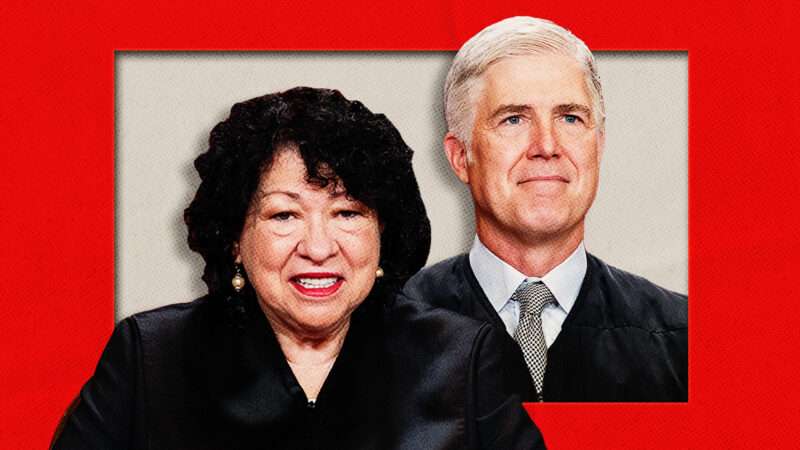
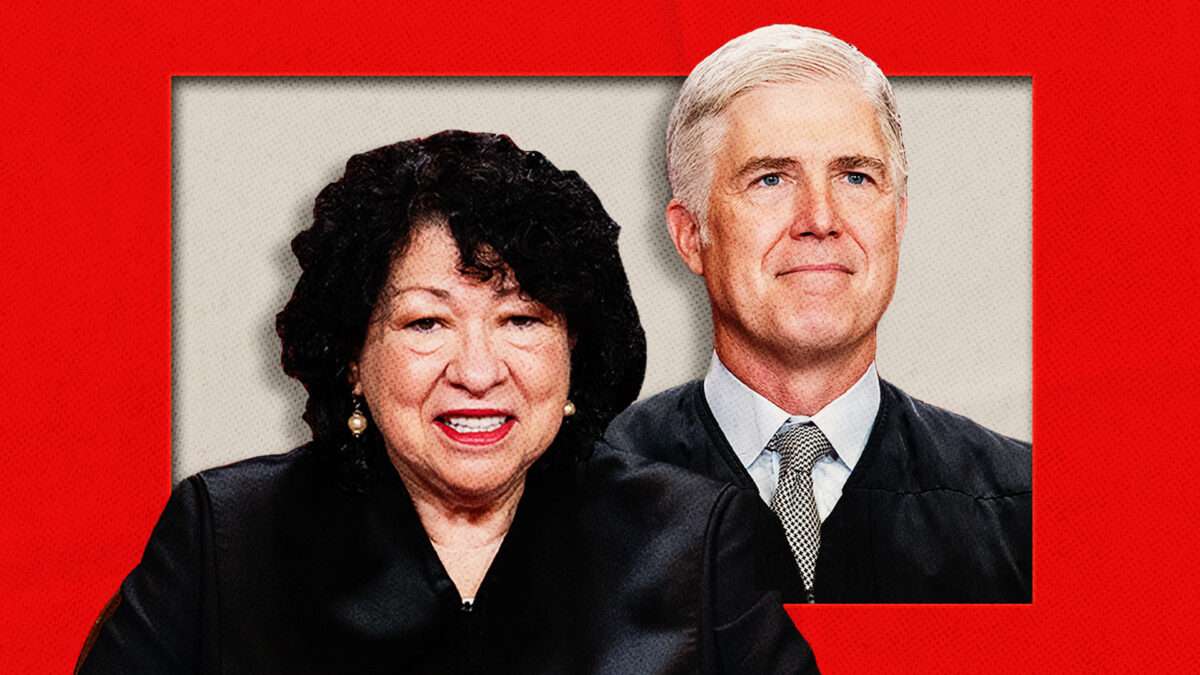
Sonia Sotomayor and Neil Gorsuch | Eric Lee/Pool via CNP/SplashNews/Newscom/Fatima Ruiz.

One of the more interesting developments at the U.S. Supreme Court in recent years has been the rise of a kind of sporadic alliance in defense of civil liberties between Justices Sonia Sotomayor and Neil Gorsuch.

In 2018, for example, Gorsuch, joined by Sotomayor, blasted the Supreme Court for refusing to even hear arguments in Stuart v. Alabama, an important case about forensic evidence, criminal trials, and the Sixth Amendment right to cross-examine one's accusers.

Similarly, in United States v. Davis (2019), Sotomayor joined Gorsuch's majority opinion striking down a federal law that called for enhanced sentencing when a gun was used in connection with certain federal crimes because the law at issue was too imprecisely written to pass constitutional muster. "When Congress passes a vague law," Gorsuch wrote, "the role of courts under our Constitution is not to fashion a new, clearer law to take its place, but to treat the law as a nullity and invite Congress to try again."

Gorsuch and Sotomayor have also been on the same page in a number of Fourth Amendment cases, though Sotomayor's overall Fourth Amendment record is arguably stronger than Gorsuch's. In Torres v. Madrid (2021), for instance, the Supreme Court held that when the police shoot a fleeing suspect, it still counts as a "seizure" for Fourth Amendment purposes even if the suspect kept on the move after being shot. "The application of physical force to the body with the intent to restrain is a seizure," the Court held, "even if the person does not submit and is not subdued." Sotomayor joined that pro-civil liberties decision; Gorsuch, along with Justices Clarence Thomas and Samuel Alito, sided with the officers and voted in dissent.

Fortunately, the Gorsuch-Sotomayor band was back together last week to make some noise in support of the Bill of Rights in a dispute that pitted property rights against police powers. As Reason's Billy Binion reported, the Supreme Court declined to hear a case challenging a lower court's "categorical rule" that "property destroyed in the exercise of [a state's] 'police power' is immune to claims under the Takings Clause, the U.S. Constitution's pledge that government cannot usurp private property without fairly compensating the owner."

Sotomayor, joined by Gorsuch, strongly implied that she thought the lower court's rule was unconstitutional, though she accepted that "further percolation" on the issue was needed before the Court should step in. "Where, as here, a person alleges a 'classic taking in which the government directly appropriates private property for its own use' or to pay an outstanding debt, like a tax lien," Sotomayor wrote, "the talismanic invocation of the State's 'law enforcement authority,' may be insufficient to avoid the requirement of just compensation." (Citations omitted.) Sotomayor then urged the lower courts that are "considering this issue to take care that due deference to state police powers does not eclipse constitutional rights."

Just as Gorsuch's Fourth Amendment record has its blemishes, Sotomayor's record on property rights has also been less than impressive at times. So it is doubly welcome to see these two justices back in the trenches together on this particular civil liberties front.

Elsewhere in the Law

Writing at SCOTUSblog, Anastasia Boden, a senior attorney at the Pacific Legal Foundation, has an interesting article about the Supreme Court's landmark 1926 decision in Euclid v. Ambler, in which, as Boden put it, the Court ruled in favor of a town's "power to pass comprehensive zoning, and against a local developer who had argued the town's plan exceeded the city's police power and destroyed the property's value." In effect, the Court's ruling was "the birth of modern zoning."

One of the things that has long fascinated me about Euclid v. Ambler is the fact that the opinion was authored by Justice George Sutherland, who is probably best remembered today for his role as a leading judicial foe of President Franklin Roosevelt's New Deal. In Euclid v. Ambler, however, Sutherland endorsed a view of regulatory authority that has been celebrated by liberal academics as "a model of pragmatic and well-balanced Progressive jurisprudence."

I suppose we might call it an irony of legal history: The intellectual leader of the Supreme Court's anti–New Deal bloc actually left a greater mark on the law by shoring up the immense power of city planners.

The post Gorsuch and Sotomayor Unite in Another Civil Liberties Case appeared first on Reason Magazine.

  •  

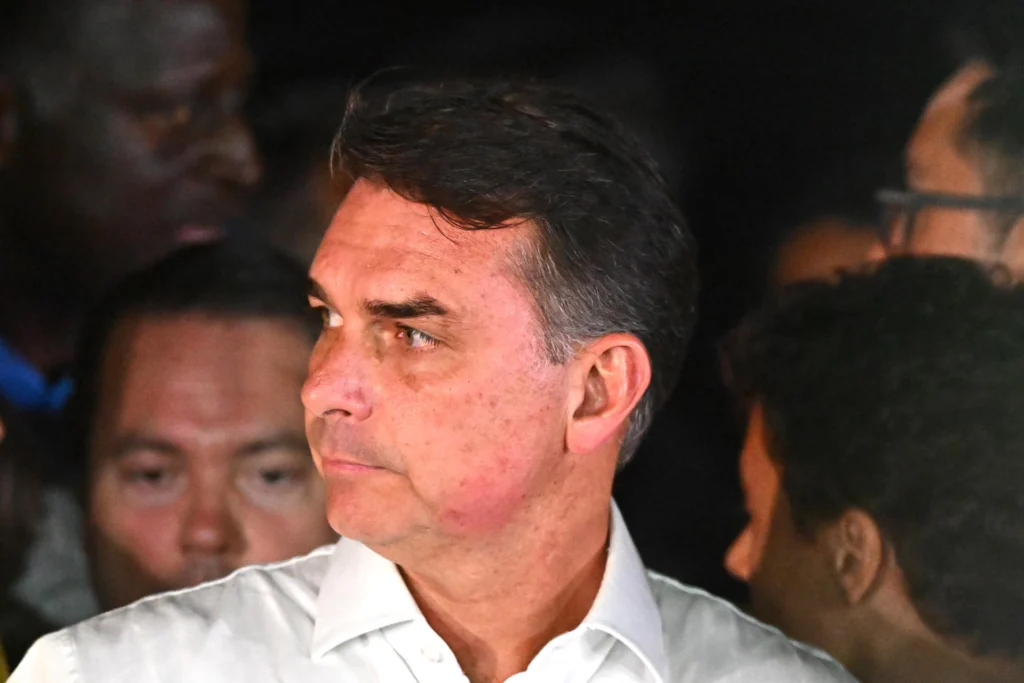
Flávio Bolsonaro Rejects Lula’s Victory, Seeks Annulment

Flávio Bolsonaro challenges Lula’s reelection in Brazil amid allegations of election-day public transport disruptions.

Brazil’s far-right candidate challenges the election result after voting hours were extended over public transport disruptions.


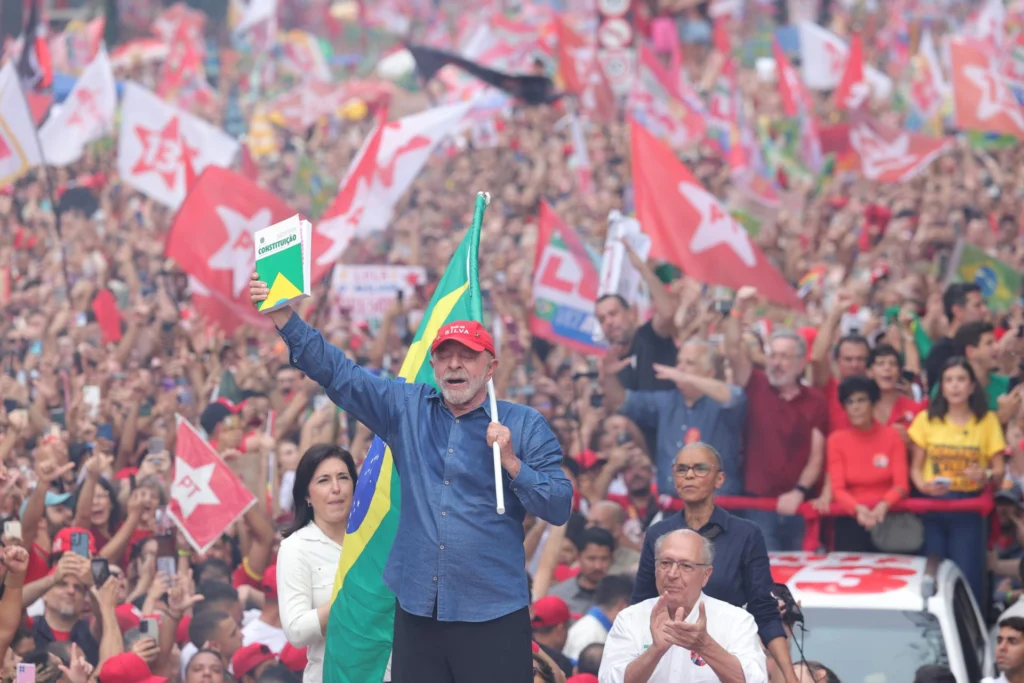
Brazilian far-right presidential candidate Flávio Bolsonaro has rejected President Luiz Inácio Lula da Silva’s reelection and vowed to seek the annulment of the vote, citing a Supreme Federal Court decision to extend voting hours amid allegations of disruptions to public transport.

RELATED: Massive Celebrations Erupt Across Brazil After Lula’s Run-off Victory

The Superior Electoral Court (TSE) confirmed Lula’s reelection on Sunday. Bolsonaro, however, declared the result unacceptable and announced plans to challenge it in court.

“It is impossible to recognize the election results,” Bolsonaro said. “We will turn to our legal team and request that these elections be annulled.”

Bolsonaro based his challenge on a ruling by Supreme Federal Court Justice Cristiano Zanin, who extended voting by two hours after the Workers’ Party (PT) reported alleged irregularities affecting voter transportation in several cities.

The ruling came shortly before polls were due to close at 5 p.m. Zanin ordered polling stations nationwide to remain open until 7 p.m. Brasília time, citing the seriousness of the allegations and the urgency of the measure.

The PT accused mayors opposed to Lula of failing to comply with electoral court orders requiring municipalities to provide free public transport at full capacity on election day, as they would on a regular working day. The party also called for those responsible for the alleged violations to be caught in the act.

In Salvador, electoral authorities ordered the arrest of Pablo Souza, the city’s mobility secretary, over suspicions that he had withdrawn buses to disadvantage Lula. The northeastern city is governed by União Brasil, a center-right party allied with Bolsonaro. In the first round of the presidential election, Lula received 65% of the vote in Salvador, compared with 27% for Bolsonaro.

Brazilian trade union federations also denounced transport disruptions in several cities on election night and called for immediate action by the authorities.

In a statement, the unions condemned what they described as the deliberate obstruction of eligible voters’ right to participate in the election. They alleged that some cities had reduced their bus fleets despite a Supreme Federal Court order requiring public transport to operate at full capacity on election day.

The disruptions left thousands of people waiting at bus stops, uncertain whether they would reach polling stations in time. In some cases, the unions said, voters were unable to cast their ballots.

Bolsonaro’s campaign also sought an extension of voting hours, according to local media reports. His team requested additional time in cities across São Paulo, Paraná and Santa Catarina states, citing difficulties caused by heavy rainfall.

The dispute recalls the aftermath of the October 2022 presidential election, when Lula defeated Flávio Bolsonaro’s father, Jair Bolsonaro. The former president repeatedly challenged the result and conspired to overturn it.

On Jan. 8, 2023, thousands of his radicalized supporters stormed the Congress, presidential palace and Supreme Federal Court buildings in Brasília. Jair Bolsonaro was subsequently tried and is now serving a 27-year prison sentence for conspiring against Brazil’s democratic order and attempting a coup.

  •  

Police Destroyed Their Homes and Businesses. The Supreme Court Won't Say Who Should Pay.

Carlos Pena and Amy Hadley | Institute for Justice/Volodymyr Tverdokhlib/Flas100/Dreamstime/Fatima Ruiz

Is there an exception to the 5th Amendment's promise that government cannot take private property without "just compensation"? The Supreme Court declined to address that question this past Monday when it rejected a trio of petitions asking the justices to consider whether people should be compensated when law enforcement seizes or destroys their property.

Two of the cases concerned individuals who were not accused of a crime but whose property nevertheless became collateral damage as police pursued a suspect. In June 2022, police fired 30 tear gas canisters into Amy Hadley's home in South Bend, Indiana. Officers smashed windows, tore down security cameras, ransacked furniture, ripped down a panel and a fan, and punched holes in the walls as they searched for a fugitive named John Parnell Thomas, who had never been there. The police had erroneously concluded that Thomas accessed the internet via the IP address at Hadley's home. According to Hadley, the police caused at least $16,000 in damages, which insurance only partially covered.

About two months later, a SWAT team in Los Angeles arrived at Carlos Pena's North Hollywood printing business and destroyed it, along with his equipment inside, crippling his livelihood after a fugitive broke in and barricaded himself in the shop. (The suspect ultimately escaped.) Pena alleged approximately $60,000 in damages in his suit against the city, which declined to compensate him for his losses. His insurance also refused to step in—as is common in such cases, as policies often exclude damage caused by the government.

The third petition concerned Chicago drivers whose vehicles were seized by the city over modest unpaid parking tickets. Ryan O'Donnell's vehicle was impounded and sold for scrap because of about $524 in debt. Michael Goree's was seized and relinquished to the lienholder over a debt that did not belong to him; the $560 in unpaid tickets were for a different vehicle owned by his co-signer.

In all of these cases the lower courts' reasoning came from a similar place. Hadley, O'Donnell, and Goree's petitions were heard by the U.S. Court of Appeals for the 7th Circuit, which has adopted a categorical rule: Property destroyed in the exercise of "police power" is immune to claims under the Takings Clause, the U.S. Constitution's pledge that government cannot usurp private property without fairly compensating the owner. Pena's case went to the U.S. Court of Appeals for the 9th Circuit, where the judges have declined to issue such a sweeping exception but have instead ruled that governments are exempt from paying out claims when the police actions in question were "necessary."

In a statement, U.S. Supreme Court Justice Sonia Sotomayor, joined by Justice Neil Gorsuch, outlined the many inconsistencies between the circuits on the topic. "It is still an 'open question' whether these or any other approaches are consistent with this Court's precedents. Few of these decisions likewise explain the source of any such police-power exception to the Takings Clause—whether the common law, the Constitution, or elsewhere," she wrote. "Such questions thus continue to 'benefit from further percolation' in the lower courts before this Court chooses to intervene."

Sotomayor was quoting herself. In 2024, she released similar remarks in response to a petition from Texas woman Vicki Baker, whose house in McKinney had been hollowed by a SWAT team attempting to capture a fugitive. The high court declined to hear Baker's case, although she finally found relief under the Texas state constitution this year.

"It's possible that the Court sincerely doesn't think the lower courts have done enough thinking on this important but novel issue," Patrick Jaicomo, a senior attorney at the Institute for Justice who represented Hadley, tells me. "Still, we've brought them 5 cases from 5 circuits. How much more percolation is needed?…The Court is going to have to address this important issue, and it's not clear what another circuit decision or 6 might do to aid that consideration."

Though Sotomayor's statement ran in parallel to the one two years ago, its slightly sharper warning intimated that we may be inching closer to a resolution. "I again encourage courts considering this issue to take care," she wrote, "that due deference to state police powers does not eclipse constitutional rights."

The post Police Destroyed Their Homes and Businesses. The Supreme Court Won't Say Who Should Pay. appeared first on Reason Magazine.

  •  

Brazil Votes in Presidential Runoff Between Lula and Bolsonaro

Brazil presidential runoff election as voters choose between Lula da Silva and Flávio Bolsonaro.

More than 158.7 million Brazilians are eligible to vote as President Luiz Inácio Lula da Silva faces Senator Flávio Bolsonaro in a closely contested runoff.


Brazilian voters are choosing between President Luiz Inácio Lula da Silva and Senator Flávio Bolsonaro in a presidential runoff after neither candidate secured a majority in the first round. More than 158.7 million people are eligible to vote, with polling stations open from 8 a.m. to 5 p.m. local time, according to the Superior Electoral Court (TSE).

RELATED: Lula Pledges Universal Full-Day Schooling in Brazil

In the first round on Oct. 4, Bolsonaro, of the Liberal Party (PL), received 47.03% of valid votes, or 56,104,503 ballots, while Lula, of the Workers’ Party (PT), won 45.16%, or 53,879,538 votes, according to official TSE figures. Neither surpassed the 50% threshold needed to win outright.

Voter abstention emerged as a significant factor in the first round, with 33,469,244 people staying away from the polls, representing 21.08% of registered voters. Both campaigns sought to attract those who did not vote, as pre-election polls pointed to a statistical tie.

The final day of campaigning on Saturday brought closing rallies from both candidates. Speaking in São Paulo, Lula attacked his rival, calling him a “liar,” a “militiaman” and unqualified for the presidency.

“A person like that does not have the political, moral or ethical qualifications to become president of the Republic,” Lula told reporters.

Bolsonaro received backing during the campaign from U.S. President Donald Trump, who described the senator’s first-round result as “a great victory.”

On Oct. 20, Lula framed the election as a choice over Brazil’s national sovereignty, saying voters would decide whether they wanted “a Brazil that kisses the Brazilian flag or one that gets down on all fours before the U.S. flag.”

Voting is compulsory for literate Brazilian citizens aged 18 to 70. It is optional for illiterate citizens, those aged 16 and 17, and people over 70.

Voting abroad

A total of 918,876 Brazilians registered to vote abroad across 134 countries, accounting for about 0.5% of the electorate, according to the TSE. The number represents a 358% increase from 2010.

Text Reads: The Brazil we dream of is built together with the people—through struggle and hope! ❤️🇧🇷
Thank you to every Brazilian who stands by our side on this journey. It is this strength that drives us, and this unity that empowers us.
Tomorrow, let’s transform all this energy into the future! Together with the people, we will achieve so much more, secure new rights, and continue building a Brazil that is even fairer for everyone. Let’s do this together. Vote 13—vote for Brazil.

Overseas voters cast their ballots in person in 186 cities and can vote only for president and vice president. Women account for 57% of registered overseas voters and men for 43%, while the largest age group is between 40 and 44.

The United States has the largest number of registered Brazilian voters abroad, with 265,400, followed by Portugal with 134,700, Japan with 88,300, Canada with 46,400 and Germany with 41,500.

Other contests

Sunday’s elections also include gubernatorial runoffs in Acre, Amazonas, Rio Grande do Norte, Espírito Santo and Tocantins, as well as the Federal District. None of the candidates in those contests secured more than 50% of valid votes in the first round.

Several municipalities are also electing mayors. In Chopinzinho and São João, both in the state of Paraná, voters are taking part in a referendum on changing the territorial boundaries between the two municipalities.

The runoff will determine whether Lula remains president or Bolsonaro takes office, concluding a campaign shaped by a narrow first-round margin, high abstention and competing appeals over Brazil’s political future and national sovereignty.

  •  

Some Communications by Rabbi Shmuley with AI Platforms May Be Discovered in Order to Determine Punitive Damages

From Wednesday's decision in Fontainebleau Florida Hotel, LLC v. Botach [Rabbi Shmuley], decided by Magistrate Judge Marty Fulgueira Elfenbein:

Plaintiff's four subpoenas to the AI Providers and its Seventh RFP seek the same information, specifically Defendant's communications with AI platforms since December 3, 2024, concerning various categories of subjects:

  1. All of Defendant's AI Communications with AI since December 3, 2024, concerning or relating to the Fontainebleau Hotel.
  2. All of Defendant's AI Communications with AI since December 3, 2024, concerning or relating to this litigation.
  3. All of Defendant's AI Communications with AI since December 3, 2024, concerning or relating to counsel for Plaintiff.
  4. All of Defendant's AI Communications with AI since December 3, 2024, concerning or relating to any employee, owner, or representative of the Fontainebleau Hotel.
  5. All of Defendant's AI Communications with AI since December 3, 2024, concerning or relating to any Court Order entered during this litigation.
  6. All of Defendant's AI Communications with AI since December 3, 2024, concerning or relating to Judge K. Michael Moore or the undersigned.

In addition, to these six categories, Plaintiff seeks one more category of documents in the subpoenas to the AI providers (but not in the Seventh RFP), consisting of:

  1. All of Defendant's AI Communications regarding Requests 1 through [6] that have, since their creation, been deleted….

Plaintiff [argued] that Defendant's AI communications may reveal the extent of his alleged malice toward Plaintiff, the intentionality underlying his conduct, and evidence relevant to the determination of punitive damages, including whether an exception to Florida's statutory cap [on punitive damages] applies….

Federal Rule of Civil Procedure 26(b)(1) permits discovery of nonprivileged matters relevant to a party's claims or defenses and proportional to the needs of the case. The Rule expressly recognizes that information within the permissible scope of discovery need not be admissible in evidence to be discoverable…. The District Court's Order at ECF No. [261], which authorized the Parties to conduct "discovery limited to damages," also governs the scope of discovery at this juncture…. Thus, the relevant inquiry is whether the particular AI communications sought by Plaintiff bear a sufficient relationship to the damages issues remaining in this action….

The degree of reprehensibility, the defendant's intent, and the circumstances surrounding the wrongful conduct are … relevant to determining an appropriate punitive-damages award…. To the extent Defendant used AI platforms to generate, revise, or refine statements concerning Plaintiff, its counsel, or its representatives, those communications may reveal not merely the final content of Defendant's statements but also the purpose for which the statements were created, the instructions Defendant supplied, and the effects he sought to achieve. Such information may provide evidence of the intent underlying Defendant's conduct that cannot necessarily be discerned from the resulting public statements alone. The Court does not determine that those communications will establish malice or specific intent to harm; it determines only that they bear a sufficient relationship to those disputed damages issues to warrant discovery….

According[] to Defendant, his alleged hostility does not necessarily prove constitutional actual malice, and it therefore should not be considered when deciding whether punitive damages are appropriate. Constitutional actual malice in a defamation action concerns knowledge of falsity or reckless disregard for truth. By contrast, the reprehensibility inquiry and the specific-intent exception under section 768.73(1)(c) require consideration of the defendant's culpability and intent to harm the claimant. Evidence of hostility, planning, or deliberate efforts to inflict or amplify injury to Plaintiff may be relevant to those questions when sufficiently connected to the alleged wrongful conduct here.

Plaintiff seeks evidence not simply to establish that Defendant disliked the Hotel, but to determine whether Defendant deliberately engaged in conduct intended to cause injury and whether that intent bears on the reprehensibility and statutory treatment of the punitive damages sought. The Court therefore rejects Defendant's argument that because hostility does not necessarily prove constitutional actual malice, it should not be considered when deciding whether punitive damages are appropriate.

Nor does the fact that some requested communications postdate the original publications render them categorically undiscoverable. Subsequent statements and conduct may, depending on their content and context, provide circumstantial evidence of a defendant's earlier intent or reveal a continuing course of conduct relevant to the injury. The temporal relationship between a communication and the alleged injury may affect its probative value, but it does not create an absolute bar to discovery….

The Court does not hold that every subsequent statement by Defendant may support an award of punitive damages. The Supreme Court has cautioned that punitive damages may not be used to punish a defendant for unrelated or dissimilar conduct merely because that conduct reflects poorly on the defendant's character. But the permissible scope of discovery is broader than the scope of evidence that may be ultimately admitted at trial. The present inquiry is whether the requested information is relevant and proportional under Rule 26(b)(1) to the damages issues remaining in this case.

Here, Plaintiff alleges a continuing course of conduct directed toward the Hotel, its personnel, and its representatives, including conduct involving AI-generated content. Plaintiff has also identified testimony from its damages expert concerning the alleged cumulative effect of Defendant's continuing online activity on the Hotel's reputation and business. As such, Defendant's communications with AI platforms concerning the Hotel and the Hotel's employees, owners, or representatives, including Plaintiff's counsel, may reveal information relevant to Defendant's alleged intent to harm Plaintiff, the nature and persistence of the challenged conduct, and the extent to which that conduct allegedly amplified Plaintiff's injuries. The Court therefore concludes that Request Nos. 1 (seeking AI communications about the Hotel), 3 (seeking AI communications about Plaintiff's counsel), and 4 (seeking AI communications about any employee, owner, or representative of the Hotel) in the subpoenas to the AI providers and the Seventh RFP fall within the scope of damages discovery authorized by the District Court….

Further, to the extent Request No. 7 in the subpoenas to the AI providers … seeks Defendant's AI communications regarding Requests Nos. 1 through [6] that have been deleted since their creation, the Court concludes that this Request is authorized by the District Court's Order only to the extent it seeks any deleted AI communications regarding Request Nos. 1, 3, and 4….

But the court rejected the other requests, which dealt with AI communications "concerning or relating to this litigation" (2), "concerning or relating to any Court Order entered during this litigation" (5), and "concerning or relating to Judge K. Michael Moore or the [Magistrate Judge]" (6):

Starting with Request No. 2 in the subpoenas and the Seventh RFP, it seeks all AI communications concerning or relating to "this litigation." That formulation is exceptionally broad. It encompasses potentially every AI exchange on matters having no meaningful connection to the amount of damages or Defendant's alleged intent to harm Plaintiff. Plaintiff has not established that every communication relating to this litigation bears on an issue remaining for the damages trial….

Turning to Request No. 5 in the subpoenas and the Seventh RFP, it seeks all AI communications concerning or relating to any Court Order entered during this litigation. Such communications may include Defendant's attempts to understand an Order, research its consequences, consider procedural options, or evaluate the litigation. The fact that Defendant may have expressed disagreement with, frustration about, or hostility toward a Court Order does not, without a sufficient connection to the alleged injury, make the communication relevant to Plaintiff's damages. Although Plaintiff contends that Defendant's reactions to Court Orders reflect the depth of his hostility and the reprehensibility of his conduct, that theory is too attenuated to justify discovery of every AI exchange concerning every Order entered in this case. The Court therefore finds that Request No. 5 exceeds the permissible scope of damages discovery.

Finally, Request No. 6 in the subpoenas and the Seventh RFP seeks all AI communications concerning or relating to District Judge K. Michael Moore or the undersigned Magistrate Judge. The Court likewise finds that Defendant's private communications with AI platforms concerning judicial officers, without more, do not bear a sufficient relationship to the damages Plaintiff seeks for the alleged harm to the Hotel. The discovery inquiry is not whether Defendant has criticized the judiciary; it is whether the requested information is relevant and proportional to the damages issues remaining in this action. A request encompassing every AI communication about the judges presiding over this litigation exceeds that scope. The Court thus finds that Request No. 6 exceeds the permissible scope of damages discovery.

The Court recognizes Plaintiff's argument that Defendant's criticism of the judicial process may demonstrate the persistence of his alleged hostility. But the Supreme Court has cautioned against using dissimilar conduct as a basis for punishing a defendant for being an objectionable person rather than for the conduct that injured the plaintiff….

And the court rejected the argument that the communications were categorically "protected work product":

Federal Rule of Civil Procedure 26(b)(3)(A) generally protects "documents and tangible things that are prepared in anticipation of litigation or for trial by or for another party or its representative." The doctrine is designed to protect the adversarial process by preserving the privacy necessary for litigation preparation….

The Eleventh Circuit's interpretation of Rule 26(b)(3)(A) confirms that work-product protection is not limited to materials prepared by counsel but extends to materials prepared by or for a party or its representative in anticipation of litigation….

When determining whether a document is protected under the work-product doctrine, "litigation need not necessarily be imminent … as long as the primary motivating purpose behind the creation of the document was to aid in possible litigation." The document must have been "created principally or exclusively to assist in anticipated or ongoing litigation." "Just because a document may have been used later to assist in litigation … does not mean it was principally prepared for such purpose." …

Here, communications independently generated by Defendant to create, revise, or disseminate content concerning the Hotel, its personnel, or Plaintiff's counsel are not transformed into attorney work product merely because Defendant is a litigant or because the resulting content may bear on this action. To the extent such communications were created for the purpose of producing public-facing statements or pursuing Defendant's independent activities, rather than preparing the defense of this litigation, they ordinarily would not satisfy Rule 26(b)(3)(A). The Court therefore rejects Defendant's blanket work-product objection to Request Nos. 1, 3, 4, and 7.

However, that conclusion does not foreclose a properly supported, document-specific claim of protection. If a particular communication was prepared because of this litigation and otherwise satisfies Rule 26(b)(3), Defendant may assert the protection in accordance with the Federal Rules. Defendant must, however, identify the withheld material and describe the nature of the asserted protection sufficiently to permit Plaintiff to assess the claim without revealing the protected information itself….

[I]f Plaintiff serves the subpoenas on the AI providers and requires them to produce the document directly to Plaintiff's counsel, Defendant will be deprived of the opportunity to determine whether there are any work-product protected documents within the production that should otherwise be withheld and identified on a privilege log. For that reason, the Parties are DIRECTED to meet and confer to discuss the logistics of how the AI providers, to the extent they have responsive materials, will be instructed to produce such materials….

Some backstory on the lawsuit from an earlier post, Magistrate Judge Recommends Massive Sanctions on Rabbi Shmuley Boteach for Violating Court Order in Anti-Semitism Lawsuit (District Judge K. Michael Moore had since adopted the Magistrate Judge's Report):

This case arises from an incident that occurred at the Fontainebleau Florida Hotel …. Plaintiff alleges that the following events occurred:

After more than an hour of loitering, Defendant Boteach engaged in an uneventful conversation with a registered guest of the Hotel and the two parted ways. More than an hour later (after midnight on Sunday, December 2, 2024), Defendant Boteach engaged in a verbal altercation with the same registered guest wherein the guest and Defendant Boteach exchanged hateful words at each other.

The guest used language that was heinous and accused Defendant Boteach of being a "baby killer" and other words that are easily interpreted as antisemitic. Defendant Boteach, in turn, hurled anti-Islamic words at the registered guest and repeatedly shouted, "Allahu Akbar? Are you going to blow yourself up or something? … he uses the expressions of, like, suicide bombers." Within hours, Defendant Boteach posted an edited video of the exchange on Instagram and began his campaign of threats against the Hotel, its ownership, its outside lawyer, and its employees—who had nothing to do with the altercation except that Hotel security de-escalated and ended it.

Plaintiff alleges that following the altercation, the Defendant, who the FAC [First Amendment Complaint] describes as a "social media influencer and rabbi" with "hundreds of thousands of social media followers[,]" went on a "multi-week assault on the [Hotel], its personnel, and representatives—creating AI videos purporting to show them celebrating antisemitism, comparing them to Nazi collaborators, falsely accusing them of banning Jews from the property, and fabricating statements that they embraced a policy of Judenrein, i.e., the extermination of six million Jews." The FAC alleges that Defendant falsely stated that he was denied entry to the Hotel because he is "too Jewish," that the Hotel refused to cooperate with law enforcement's investigation of the incident, and that he "was trespassed from the Hotel for being 'too Jewish[.]'"

Plaintiff further alleges that "Defendant Boteach published a statement that, in part, called for guests 'who have booked' at the Hotel to 'cancel your reservations'" and to "'be smart and cancel and give your hard-earned money to a hotel that doesn't abide antisemites.'" Moreover, Plaintiff alleges:

At all hours of the day and night, Defendant Boteach proceeded to harass the Hotel and its representatives. For example, he posted a "headshot" photograph of the head of the Hotel's outside counsel with the words "DIGITALLY DECAPITATED" and later, at 3:49 am, menacingly threatened that counsel was "about to have a really interesting Shabbat" when he arrived at his synagogue, which Defendant Boteach identified by name and location. Defendant Boteach directly contacted counsel's clergy and posted harassing images of them.

That post also explains the Magistrate Judge's conclusion that the defendant had repeatedly and willfully violated a court order, and therefore ought to have default judgment entered against him as to liability (with further proceedings to take place as to damages).

Sean Alexander Burstyn (Burstyn Law PLLC), Christopher Ara Ajizian (Christopher Ajizian P.A.) and Todd Rapp Friedman represent the hotel.

The post Some Communications by Rabbi Shmuley with AI Platforms May Be Discovered in Order to Determine Punitive Damages appeared first on Reason Magazine.

  •  

Hillary Clinton thinks we should have 13 Supreme Court justices. Here’s why that matters.

Hillary Clinton may no longer be the most influential voice in the Democratic Party, but she remains a member in good standing of the party establishment. So when she expresses support for expanding the number of justices on the Supreme Court, it tells us that what was once a radical idea has gone mainstream.

“We should seriously look at expanding the court while the Democrats are in power,” Clinton said on a recent podcast. “You know, it used to be that you’d have one justice for each circuit. We now have 13 circuits, we should have 13 justices.”

Adding four justices to the court is just one of the potential reforms that have been suggested as a way of curbing the court’s abuses. Others include 18-year term limits for justices, ethics rules with actual teeth (no more billionaire-funded junkets for you, Justice Thomas) and limits on the court’s ability to strike down any law they don’t like. Whichever particular reforms one prefers, it is no longer acceptable for a Democrat to simply decry the latest awful ruling. They have to be willing to entertain fundamental change to the institution.

This shift in Democrats’ thinking is as remarkable as it is recent. Five years ago, Sen. Ed Markey introduced a bill to do just what Clinton and others now favor, adding four justices to the court; it got only two co-sponsors, Sens. Elizabeth Warren and Tina Smith. Joe Biden responded to demands for court reform with Washington’s favorite way of burying an issue: He appointed a commission to study it. They produced a lengthy white paper, but it wasn’t until July 2024 — after he pulled out of the presidential race — that Biden finally endorsed term limits and an enforceable ethics code.

The situation today is far different. Supreme Court reform will almost certainly be part of the 2028 Democratic platform, and just about every politician considering a presidential bid has already come out for at least some version of reform.

The list of potential contenders who have endorsed court expansion — perhaps the most radical of the proposed reforms — is long and getting longer. It includes Kamala Harris, Pete Buttigieg, Rep. Ro Khanna and Rep. Alexandria Ocasio-Cortez. Term limits have been endorsed by Sens. Chris Murphy, Cory Booker and Elissa Slotkin, along with Gov. Andy Beshear. Other potential candidates, including Sen. Raphael Warnock and Govs. Josh Shapiro and JB Pritzker, are taking the “everything should be on the table” approach, not saying specifically what they’re for — which suggests they’re waiting to see what the voters demand. Pressure will only keep building.

What changed? The most important factor is the court’s own behavior. There are the monumental decisions: overturning Roe v. Wade, gutting the Voting Rights Act, eliminating any meaningful restrictions on billionaires pouring money into campaigns, outlawing affirmative action in education and giving the president immunity from prosecution for crimes, among other things. Taken together, the court’s conservative majority is so obviously pursuing its own partisan political project: to remake the law and the structure of the federal government in line with their personal preferences. Yet the justices pretend that they and only they are truly committed to the framers’ intentions and the text of the Constitution.

“We are not part of any political movement, and we are not attempting to further any political agenda,” said Samuel Alito, the most partisan justice on the court. “People think we’re making policy decisions,” lamented Chief Justice Roberts earlier this year, when nothing could be further from the truth. So says the man who has steered the court’s stampede to the right, including achieving his lifelong goal of destroying the Voting Rights Act.

Even Elena Kagan, the most conciliatory of the liberal justices, said in a recent speech that the court’s decisions rubber-stamping partisan gerrymandering showed “a lack of the appropriate concern or understanding of the consequences ​of their decisions.” With all due respect, Kagan was mistaken: They know exactly what the consequences of their decisions are. That’s why they rule the way they do.

So thanks to the conservative justices, Democrats are moving toward a consensus on court reform. There is no left versus center division within the party on whether the court’s decisions have or haven’t created a crisis. The only question is what should be done about that crisis. Anyone wanting to lead the party is going to have to be willing to take on this court and rebalance the scales. If they don’t, their constituents won’t stand for it.

The post Hillary Clinton thinks we should have 13 Supreme Court justices. Here’s why that matters. appeared first on MS NOW.

  •  
❌