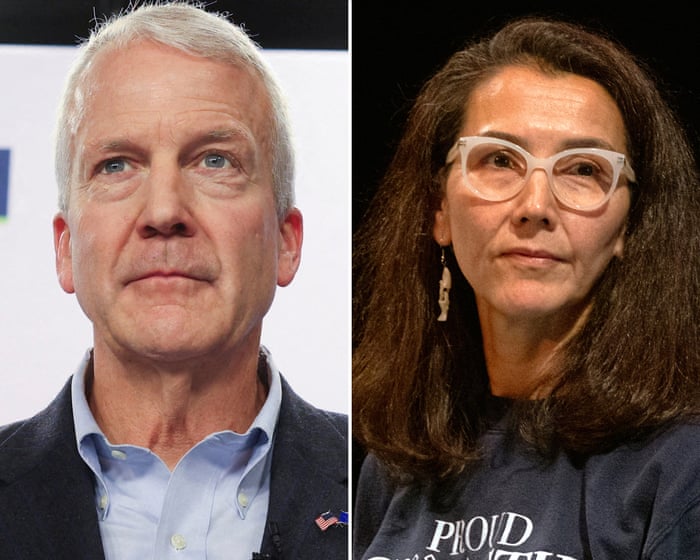
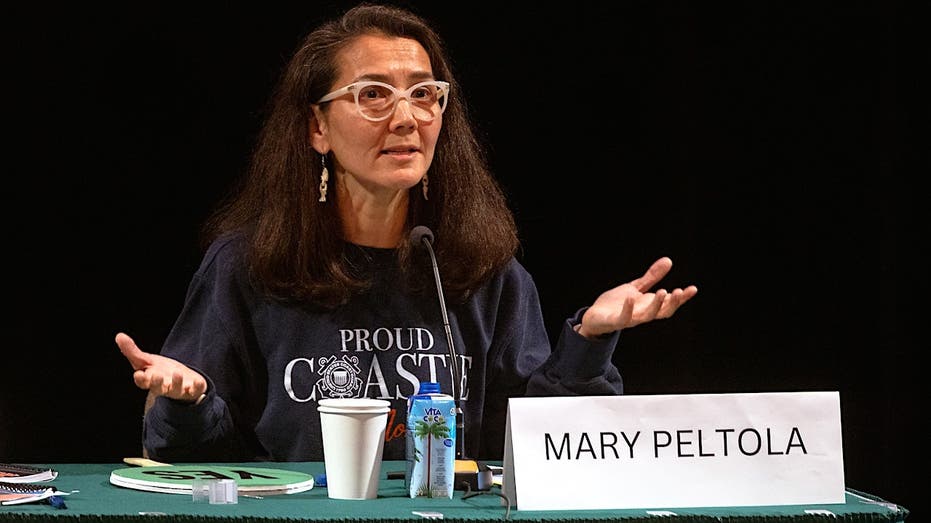
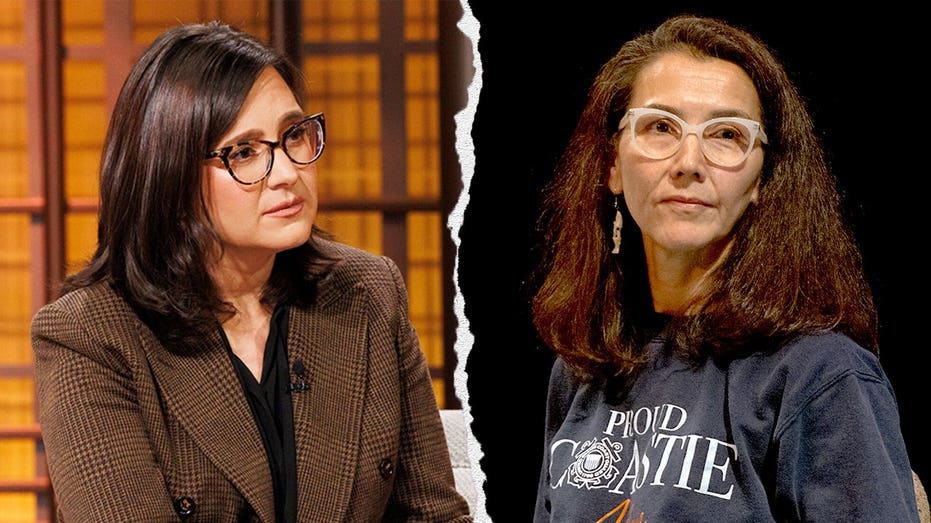
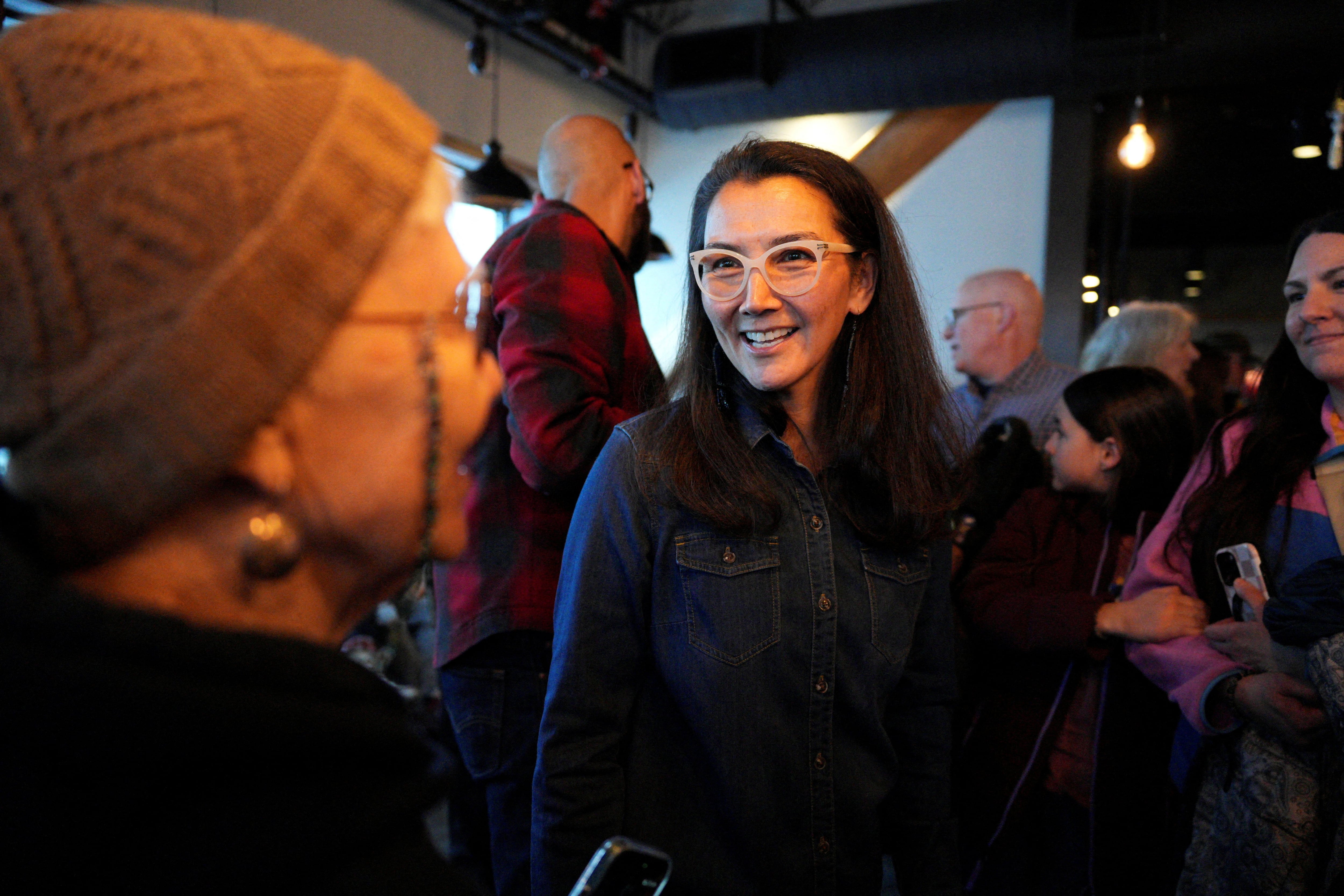
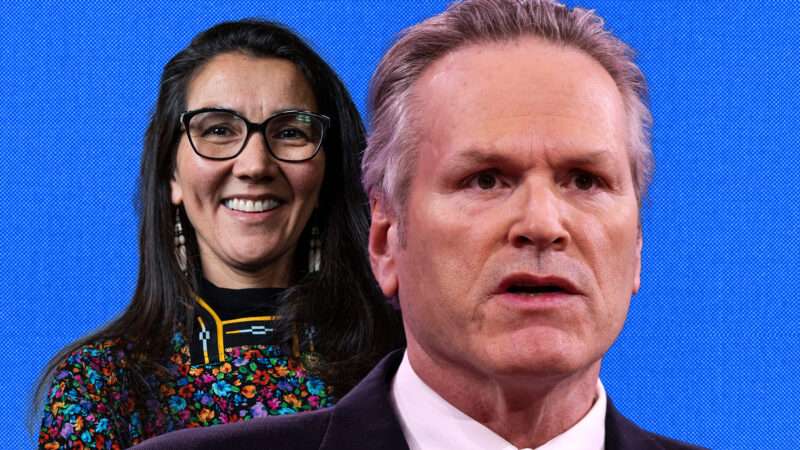
Alaska's governor is ordering an investigation into Democrat Mary Peltola's Senate campaign over reports that it recruited a spoiler candidate to dilute Republican votes. That's as President Trump repeated calls for Peltola's prosecution during a trip to another deep red state where his endorsed candidate is facing headwinds. Liz Landers reports.
A recentNew York Times article presents evidence that Alaska Democrats sought to confuse voters in that state's 2026 Senate election by introducing a second candidate with a name very similar to that of the Republican incumbent, thereby potentially siphoning off some of the latter's voters. The incumbent senator is named Dan S. Sullivan, while the other candidate is Dan J. Sullivan. As the Times reports, some of the facts here are disputable, and it is not entirely clear whether Democratic candidate Mary Peltola knew about this effort or approved of it. But it seems likely that at least some of her staffers and other Democratic operatives were involved.
Before going further, I should emphasize that this effort is worthy of condemnation. Trying to confuse voters into voting for the "wrong" candidate in this way is not how democratic political participation should work. And the fact that other politicians (including Republicans) engage in various electoral "dirty tricks" doesn't justify this one.
Elsewhere, I have explained why these kinds of actions are not illegal, and why the Trump administration's lawsuit seeking to block certification of the Alaska Senate result deserves to fail. I stand by that conclusion. Legal scholar Rick Hasen (a leading election law expert) has a helpful recent post explaining why the New York Times revelations do not change anything from a legal point of view. But the fact that this scheme is legal doesn't make it right.
That said, it is important to keep this issue in proper perspective, and especially to recognize that many other types of lies and efforts to exploit voter ignorance are much worse. Confusion caused by candidates with similar names is relatively rare, and it is difficult to find examples where it affected more than a small fraction of voters. I am not aware of even one case where it was decisive to the outcome of an election. But I welcome correction on that latter point.
The Alaska case is unlikely to be an exception to the above generalization. In the first round of the ranked-choice voting election (which narrows down the candidates to the top 4), only 2.5% of voters picked Dan J. Sullivan. Peltola led the incumbent senator by a much larger margin than that (8.1 points). Even if every single person who voted for Dan J. did so because of confusion (which is improbable), that's unlikely to change the result.
Moreover, the Alaska ranked-choice voting system reduces the risk of error. Some of those who vote for the "wrong" Dan Sullivan might rank the "right" one second. After the former gets eliminated, those votes get transferred to the latter. On top of that, as Michael Dorf points out, the Alaska ballot explicit indicates that Dan S. Sullivan is the "incumbent." That further reduces any potential confusion. The widespread publicity this issue has gotten over the last few weeks further reduces the risk of error. Many voters have probably now heard about the two Dan Sullivans and will be on guard against the problem.
It is still theoretically possible that confusion between the two Sullivans will end up having a decisive impact on the election. Some people who voted for Dan J. might not rank the other Sullivan second, or might misunderstand how the RCV system works. And some voters might (understandably) not be very careful about how they mark their ballots, thereby making a mistake despite the various safeguards against it. Still, it seems highly unlikely that such errors will have a decisive impact on the outcome.
Overall, this kind of a thing is relative molehill of a problem. Elections where it makes a decisive difference are likely to be extremely rare, at worst. By contrast, candidate lying about policy issues and exploitation of voter ignorance about them is a veritable mountain. I summarized some of the relevant evidence in an earlier post about the Alaska controversy:
Donald Trump is a particularly egregious example, going all the way back to his first campaign in 2016, and more recently with his lies about the 2020 election and other issues. But more conventional politicians also often resort to lies and deception, even if not to the same degree. President Obama, for example, famously lied when he claimed that, under the Affordable Care Act, "if you like your health care plan, you can keep it." That deception won the 2013 Politifact Lie of the Year award. But it still helped Obama get reelected in 2012. I am not sure exploiting voter confusion about names is any worse than exploiting their ignorance about policy issues like crime, immigration, and health care….
I would add that lies and deceptions about policy issues affect vastly more voters and have vastly bigger impacts on electoral outcomes than confusion about candidates' names. To take just a few recent examples, Trump in 2016 and 2024 and Obama in 2012 probably could not have won without the former. If, in 2024, key swing voters had realized that Trump's policy agenda of tariffs and mass deportations was likely to raise prices (as it predictably went on to do) rather than lower them (as he promised to do), he likely would have lost. Polls showed that prices were the biggest issue in the election for key swing voters. Trump also might well have lost if GOP base voters realized he was lying about the 2020 election, among other issues. In 2012, Obama might have lost if swing voters realized that he was lying when said that, under his signature policy initiative (the Affordable Care Act), "if you like your health care plan, you can keep it."
Effective lies and deceptions about policy issues (often exploiting preexisting voter ignorance and bias, but also deliberately seeking to create more of it) are ubiquitous. And they very often affect electoral outcomes. Even when they don't change the outcome between the candidates who run, they often have an impact on the policies those candidates adopt in the first place. As described more fully in my book Democracy and Political Ignorance, political parties and their strategists know most voters are ignorant, and often deliberately select policy agendas based on the likelihood of successfully exploiting that ignorance. The result is that even the lesser of the evils on offer in a given election (or the less egregious liars) are often still very bad.
From a moral point of view, I don't see any reason to believe lying about policy issues and exploiting voter ignorance about them is any worse than trying to trick voters into selecting the "wrong" candidate out of confusion. In practical terms, the former happens much more often than the latter, and has a far bigger effect).
Cornell law Prof. Michael Dorf recognizes that lies about policy issues are bad, but suggests that efforts to create confusion about candidate names are worse, because the latter are harder to combat with "counter-speech." I think the truth is the exact opposite. People can and do use counter-speech to oppose lies and deceptions about policy issues. But "rationally ignorant" voters will often ignore the counter-speech (not wanting to take the time and effort to study it) or reject evidence that goes against their preexisting biases. Many policy issues require considerable time and effort to understand well.
By contrast, it's much easier to find out there are two candidates with similar names in the election, and to take precautions against accidentally voting for the "wrong" one. Counter-speech to that effect need not be very complicated at all, or take a long time to understand. In the Alaska case, for example, you just need to remember to vote for Dan S. rather than Dan J. or just know to vote for the one marked "incumbent." And figuring this out does not require going against any partisan or ideological biases.
As I have emphasized in previous writings about voter ignorance, I do not believe we can or should fight it by trying to punish politicians for their lies, or by censoring "misinformation." There is, in fact, no easy solution to the problem. But I assess a range of options in my 2023 article on "Top-Down and Bottom-Up Solutions to the Problem of Political Ignorance, and in Democracy and Political Ignorance. I believe the best approach is to make fewer decisions at the ballot box and more by "voting with your feet," where incentives to seek out information and evaluate it wisely are much better. In the works linked above, I also argue that we should give consideration to simply paying voters to increase their knowledge levels (e.g. by establishing a "Voter Achievement Test" and offering rewards to high scorers). But I recognize that any effective approach will take time, and there may be no one fix that is sufficient by itself.
The beginning of wisdom here is to recognize we have a wide-ranging problem of voter ignorance, and to prioritize the most significant types of ignorance and exploitation thereof. On that scale, ignorance about policy issues should rank high, while voter confusion about candidates' names is a very minor problem, by comparison.
Democrat Mary Peltola’s campaign allegedly collaborated with party operatives to confuse voters in midterms
The US justice department on Thursday is reported to have issued subpoenas in response to a report that the Alaska Democrat Mary Peltola’s campaign collaborated with party operatives to get a challenger with the same name as the Republican senator Dan Sullivan on the midterm ballot.
ABC News and the Associated Press reported the subpoenas, citing sources familiar with the matter. The federal investigation comes a day after the New York Times found that the effort to recruit a second candidate named Dan Sullivan in the Senate race set to be decided on Tuesday was led by Peltola’s campaign, which had for months denied involvement.
During a rally Wednesday, Alaska Democratic Senate candidate Mary Peltola dismissed a New York Times report alleging her campaign took part in an effort to peel votes away from incumbent Republican Sen. Dan Sullivan to a same-named rival, calling the story a "distraction" used to sell papers.
"This is just another distraction," Peltola said in a video shared on X by local Alaskan writer Matt Tunseth. "It's another diversion. Every day, it’s some new, you know, ‘Look over here moment.’ Not Dan Sullivan, registered Republican, incumbent, voted for this war in Iran 14 times. Lisa Murkowski quit voting for that war in Iran six months ago, and he’s doubling and tripling down."
The New York Times published an investigation Wednesday that described a covert operation, internally dubbed the "ballot composition project," to recruit spoiler candidates with the same name as Sullivan.
According to the report, a Peltola staffer was directed since 2025 to comb through state voter rolls to compile a list of Alaskans named Dan Sullivan.
The operation allegedly involved aides from the Democratic Senatorial Campaign Committee (DSCC), top campaign advisors, party lawyers and an operative who traveled across the state under assumed names.
"The plan worked. This spring, a retired teacher from a tiny fishing village along the Alaska Panhandle, reachable only by air and sea, announced his candidacy for Senate. His name was Dan J. Sullivan," the Times reported.
At the rally, however, Peltola dismissed the report, claiming that it was made to "get subscriptions."
"And this is not somebody who’s working in our best interest. And anybody who’s working in our best interest isn’t going to talk about the nonsense. This is all stuff to sell newspapers. This is all stuff to get subscriptions. Nobody at The New York Times cares about affordability in Alaska," Peltola said.
Fox News Digital reached out to the Peltola campaign and The New York Times for comment but did not immediately hear back.
Sen. Sullivan campaign spokesperson Nate Adams told Fox News Digital, "Instead of admitting she has been caught red-handed in a scheme to manipulate and deceive Alaska voters, Mary Peltola's response is to attack the media outlets she has been lying to for months."
Elisa Rios, Peltola’s former campaign manager who was fired in August, told the Times that while Peltola was not directly involved in orchestrating the project, she was "definitely aware."
In a previous statement to Fox News, the DSCC said it was not involved with the other Sullivan campaign.
"Republicans have a long history of recruiting and propping up candidates in an attempt to boost their own campaigns, including recruiting a prisoner with a New York address to run against Mary Peltola and spending nearly half a million dollars to secure a spot on the ballot in Alaska for an Arizona resident in the Senate race this cycle," a DSCC spokesperson said.
In a statement to The New York Times, Peltola’s campaign said, "The Alaskans for Mary campaign has no involvement with either Sullivan campaign and did not recruit any candidates into the race."
EXCLUSIVE — CBS News editor-in-chief Bari Weiss faced "significant resistance" from staff at Thursday's 9 a.m. meeting about the growing Alaska ballot controversy, network insiders told Fox News Digital.
"This is a scandal," Weiss declared to staff.
According to multiple sources on the call, several CBS News staffers pushed back at Weiss' enthusiasm over the bombshell New York Times report alleging Democrats schemed to find a Dan Sullivan to run against incumbent Republican Sen. Dan Sullivan, in hopes of aiding Democratic opponent Mary Peltola.
Many on the call shrugged it off as routine politics and said Republicans have also engaged in similar scheming.
When Weiss asked for other examples of ballot confusion, "Face the Nation" moderator Margaret Brennan reportedly pointed to New Hampshire Senate candidate John Sununu, suggesting that midterm voters might confuse him with his brother, former Gov. Chris Sununu.
CBS News political correspondent Ed O'Keefe also insisted that such tactics are nothing new. Earlier that morning, during his appearance on "CBS Mornings," O'Keefe stressed to viewers that what happened in Alaska "could be a dirty trick, but it's not illegal," adding that "this has happened before, kind of." He pointed to the 2016 Alaska Senate race when former Anchorage mayor Dan Sullivan — no relation to the U.S. Senator of the same name — briefly ran against incumbent Sen. Lisa Murkowski in the GOP primary, hoping "name recognition" of the other sitting senator would help his own candidacy.
A separate CBS staffer on the call pushed back against the notion that colleagues like Brennan and O'Keefe were trying to downplay the scandal, telling Fox News Digital they were providing context to the story being discussed.
The staffer also said the meeting was never contentious and that it was a "healthy, good conversation."
Still, Weiss called the uproar in Alaska a "great story" that the network should follow and urged staff to push for stories like the one The New York Times broke, calling it a "learning moment."
A spokesperson for CBS News declined to comment.
Republicans have long been suspicious about the candidacy of Daniel J. Sullivan Jr., a retired teacher who is among four Senate candidates listed on Alaska's rank-choice ballot. The Department of Justice filed a lawsuit against the state of Alaska seeking to block certification of the election results if the incumbent senator loses and votes cast for the other Sullivan could have changed the outcome.
On Wednesday, The New York Times alleged his candidacy was no coincidence.
"In the summer of 2025, a staffer for Mary Peltola, the Alaska Democrat who was eyeing a run for Senate, received unusual instructions from top campaign aides: Find as many people named Dan Sullivan in Alaska as you can," the Times began its report Wednesday.
"The staffer complied, combing through voter records to produce a list of Dan Sullivans from across the state. ... [I]f the Peltola campaign or its allies could track down and persuade another Dan Sullivan to run for Senate, the confusion could cost the senator crucial votes on the state’s unusual, four-person ballot. The plan worked," the report said.
According to Peltola's former campaign manager, Elisa Rios, Peltola was not directly involved in the scheme but was "definitely aware."
Peltola's campaign has denied involvement in his candidacy.
"But The Times has found, based on interviews and text messages, along with documents prepared for a potential lawsuit against the campaign, that not only did Ms. Peltola’s team work with people trying to recruit Mr. Sullivan to run for Senate, but the effort was much broader," the Times reported. "The group worked to coax other would-be spoilers into the race, to dilute the incumbent’s support and help catapult the Democrat to victory."
Peltola called the Times report a "distraction" and "stuff to sell newspapers." However, Republican Alaska Gov. Mike Dunleavy has ordered an investigation into whether any crimes or civil violations were committed.
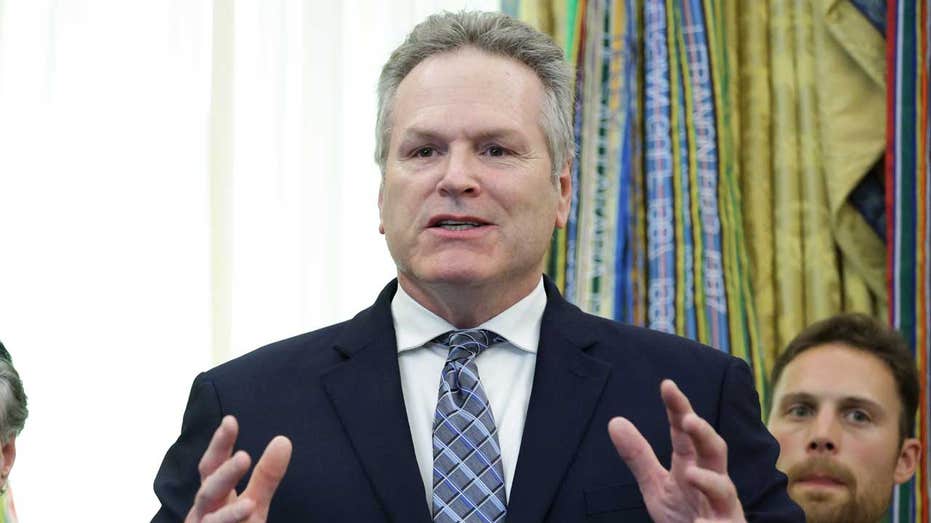
Alaska governor Mike Dunleavy (R) said he ordered an investigation into Democrat Mary Peltola's campaign for Senate as an alleged scheme to mislead voters in next week's election has been exposed.
On Wednesday, on FNC's "Hannity," Sen. Dan Sullivan (R-AK) commented on a New York Times report that Democrats recruited a second "Dan Sullivan" to confuse voters on the November ballot.
La polémica en Alaska por la contienda a un escaño en el Senado no para de crecer. Donald Trump se pronunció este jueves sobre esta carrera decisiva que podría determinar el control del Senado en las elecciones de medio términodel próximo martes. El presidente de Estados Unidos, que se juega el futuro de su mandato en las midterms del 3 de noviembre, puso en duda que la candidata demócrata al Senado por Alaska, Mary Peltola, pueda ocupar su escaño incluso si gana. Sus declaraciones llegan después de que The New York Times revelara que el equipo de Peltola maniobró para encontrar un tercer candidato con el mismo nombre que su rival republicano, con el objetivo de dividir el voto republicano en los comicios de ese Estado.
The reported recruitment by Democrats of a second "Dan Sullivan" to allegedly confuse voters in Alaska’s Senate race drew a rare public rebuke from Sen. Lisa Murkowski, R-Alaska, who appeared to break four years of silence on her personal X account.
The New York Times reported that members of Mary Peltola’s team helped recruit a candidate who shares the name of incumbent Republican Sen. Dan Sullivan, potentially confusing voters in a closely watched race that also features Republican Gerald Heikes.
In a statement on her personal account @LisaForSenate, Murkowski said the report "revealed… a pattern of lies and coverups" on the part of Peltola.
"While some may try to write this off as just how politics works now, ballot-stacking should have no place in our electoral process," Murkowski said.
"Run and win on your merits: your views, your policy ideas, and your accomplishments. By contrast, recruiting candidates to manipulate the field and influence voting outcomes is simply wrong."
"Alaskans deserve the honest truth from Mary and her campaign," she said, adding that such a "culture of deception" does not belong in elections or with lawmakers.
Her previous post on the account was dated November 2022 and featured a video message wishing Alaskans a happy Thanksgiving.
Murkowski's official Senate account posts regularly, with its two most recent posts criticizing the Trump Justice Department for launching a lawsuit in the "Decoy Dan" situation prior to the Times' report and highlighting her visit to the Alaska Federation of Natives Convention.
The Times reported this week that the effort extended beyond recruiting the second Sullivan, with Democratic operatives also seeking other candidates who could siphon votes from the Republican incumbent.
The second "decoy" Sullivan, reportedly a longtime registered nonpartisan, lives in the remote community of Petersburg.
Sullivan told Fox News that the scheme is what arises when a "far left" candidate "has got nothing to run on."
Fox News Digital reached out to Murkowski for further comment.
While the post marked Murkowski’s first intervention on X in Alaska’s election contests, the Republican recently drew attention by endorsing Democratic gubernatorial nominee Jonathan Kreiss-Tomkins over three Republicans: Bernadette Wilson, Treg Taylor and Dave Bronson.
Murkowski’s father, former Sen. Frank Murkowski, joined his daughter in that announcement.
The split Republican field positions Kreiss-Tomkins as the mathematical favorite, according to the Alaska Beacon.
Murkowski's pointed criticism of Peltola puts fresh scrutiny on the reported recruitment effort and what the Democrat's campaign knew as voters prepare to cast their ballots.
The other Dan Sullivan in Alaska has drawn the most attention, but both parties are quietly trying to use little-known candidates in other battlegrounds to siphon votes, too.
Dan J. Sullivan, a retired teacher in Alaska, was recruited by Democratic operatives to join the race against Senator Dan S. Sullivan, a Republican, whose allies have been left worrying that voters will be confused.
Republican Alaska Gov. Mike Dunleavy has ordered an investigation into the Democratic candidate running for the U.S. Senate in the state after revelations that her campaign appeared to be involved in recruiting another candidate with the same name as Republican incumbent Dan Sullivan.
Congress should build an independent fund that accepts contributed equity from any company, holds it in a diversified portfolio and dedicates the returns to the trust funds.
Congress should build an independent fund that accepts contributed equity from any company, holds it in a diversified portfolio and dedicates the returns to the trust funds.
Republican Mike Dunleavy plans search after Peltola accused of recruiting Dan Sullivan to confuse voters
The Republican governor of Alaska announced plans to launch a criminal investigation after a report accused the campaign of the Democratic Senate candidate Mary Peltola of trying to confuse voters by recruiting a candidate with the same name as her opponent.
The plot thickens: Last night, Alaska Gov. Mike Dunleavy, a Republican, said he would launch an investigation into Democratic Senate candidate Mary Peltola. This is because of late-breaking allegations that Peltola's staffers tried to recruit candidates to run in the Senate race that could confuse voters into not voting for her opponent.
"In the summer of 2025, a staffer for Mary Peltola, the Alaska Democrat who was eyeing a run for Senate, received unusual instructions from top campaign aides: Find as many people named Dan Sullivan in Alaska as you can," reportedThe New York Times yesterday. "This was no random request. Dan S. Sullivan is the name of the state's Republican senator. And if the Peltola campaign or its allies could track down and persuade another Dan Sullivan to run for Senate, the confusion could cost the senator crucial votes on the state's unusual, four-person ballot." A retired teacher named Dan J. Sullivan got on the ballot and started running for Senate.
Peltola's campaign denied allegations that they were involved in getting Sullivan on the ballot.
It's kind of a nasty tactic designed to confuse voters into submission. And the Department of Justice has filed a lawsuit in federal court seeking to block the certification of election results based on the Sullivan hijinks, seemingly because the issue has garnered President Donald Trump's attention.
Yesterday, Trump said not only that Peltola should leave the race, but also that she should be criminally prosecuted. It's possible the behavior Peltola engaged in isn't actually illegal, to which Attorney General Todd Blanche countered: "It should be!"
This trick has been tried before. In 1946, John F. Kennedy was running in a crowded Democratic primary for Massachusetts' 11th Congressional District. One of his rivals was Joseph Russo, a popular Boston city councilman and the only Italian-American candidate in the race (in an area with a mighty Italian population). So a second Joseph Russo—a janitor—mysteriously appeared on the ballot. Kennedy family patriarch Joe Kennedy is widely believed to have combed the voter rolls to find him.
In that case, the hijinks were unnecessary: JFK won with about 42 percent of the vote, and the real Russo got about 11 percent. Decoy Russo only got 799 votes.
I think the candidates in tight races who are engaging in desperate chicanery—think not just Peltola, but also Vivek Ramaswamy's use of Amy Acton's mother in a nasty ad—might overestimate voters' tolerance of such antics, especially in a midterm cycle that's been so characterized by cost-of-living issues.
Scenes from New York: A Brooklyn woman, Halima Salman, was apparently training with ISIS. Salman, an American citizen, was brought to Syria by her father when she was a teenager and somehow developed close ties to the terrorist group. "Salman, who faces up to 10 years in prison at sentencing, is believed to be the first woman accused of being an ISIS member to stand trial in federal court," reportsThe New York Times. (There are a lot of jokes I could make here, most of which would not be so tasteful, so I'll let our esteemed commenters handle it.)
QUICK HITS
"Prime Minister Benjamin Netanyahu entered Tuesday's Israeli election with a governing majority and is now on course to exit with something less," reports the editorial board of The Wall Street Journal. "That's one way to understand the result, but it was also widely anticipated. The surprising news is the opposition's failure to come out ahead of Mr. Netanyahu. He may not have won, but the opposition lost.…At present count Mr. Netanyahu's Likud party is in first place, projected to win 26 or 27 seats in Israel's 120-seat Knesset. That's down from 32 in the current Knesset but up from the 19 or 21 in pre-election polls. The opposition Yashar party of former military chief Gadi Eisenkot lags at 21 seats."
"Federal Reserve Chairman Kevin Warsh on Wednesday left the central bank on track to raise interest rates again this year, even as he stuck to his refusal to offer any explicit guidance on the future path of policy," reportsBloomberg. "Operating within his self-imposed communication boundaries, Warsh used his assessment of a strong economy and warnings over persistent inflation to signal the Fed's job is not yet done. The message reinforced expectations that officials will raise borrowing costs in December—after holding them steady Wednesday—with the potential for another increase in early 2027."
Alaska Gov. Mike Dunleavy (R) on Wednesday evening ordered an investigation into whether Mary Peltola’s (D) Senate campaign violated state law when it reportedly recruited candidates in an effort to detract support from her opponent. The GOP governor cited The New York Times’s reporting earlier that day that found the Democrat’s campaign was involved in…
Alaska Gov. Mike Dunleavy (R) on Wednesday evening ordered an investigation into whether Mary Peltola’s (D) Senate campaign violated state law when it reportedly recruited candidates in an effort to detract support from her opponent. The GOP governor cited The New York Times’s reporting earlier that day that found the Democrat’s campaign was involved in…
The future of the U.S. Congress — and, by extension, the prospects for Donald Trump’s second presidency — may be decided by a handful of votes in the most distant U.S. state from Washington, D.C. — Hawaii notwithstanding. Alaska is electing a senator next Tuesday, November 3, and the fight for that seat, crucial while control of the Senate hangs in the balance, has played out like a thoughtful political miniseries, or perhaps more like an absurd parody.
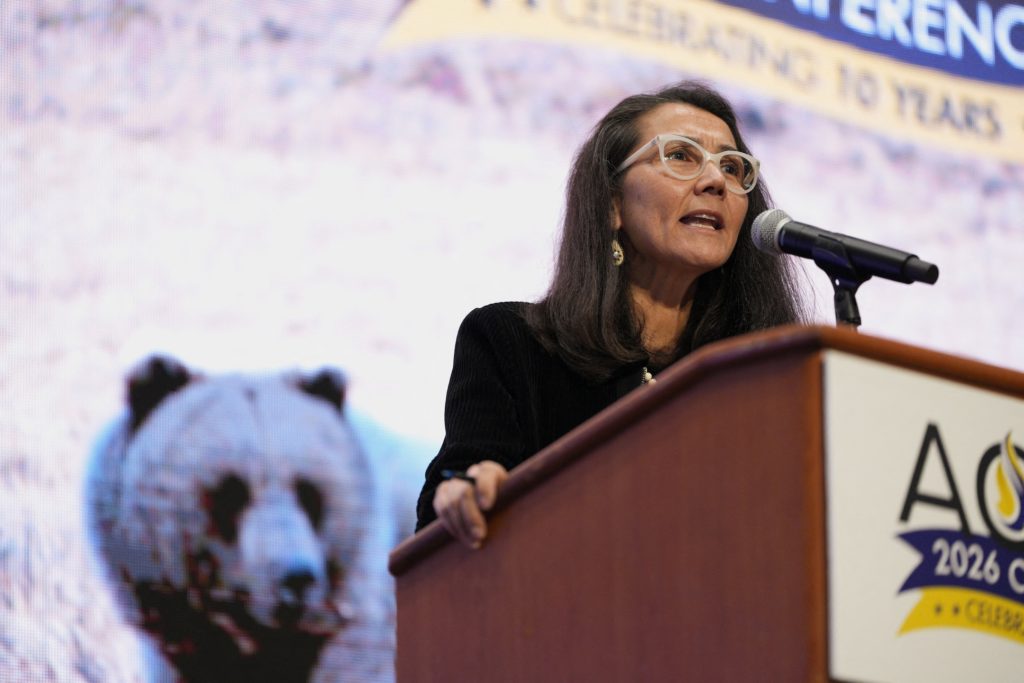
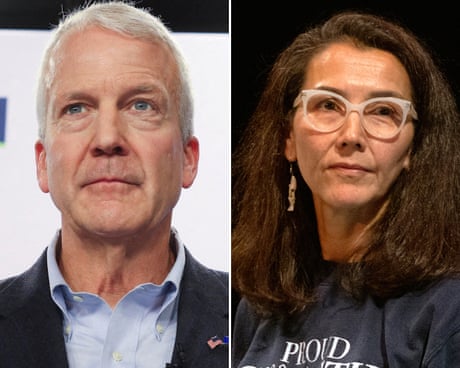
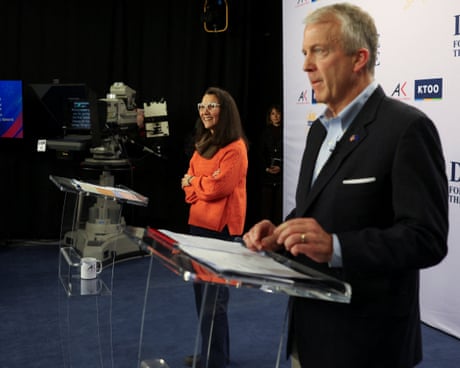
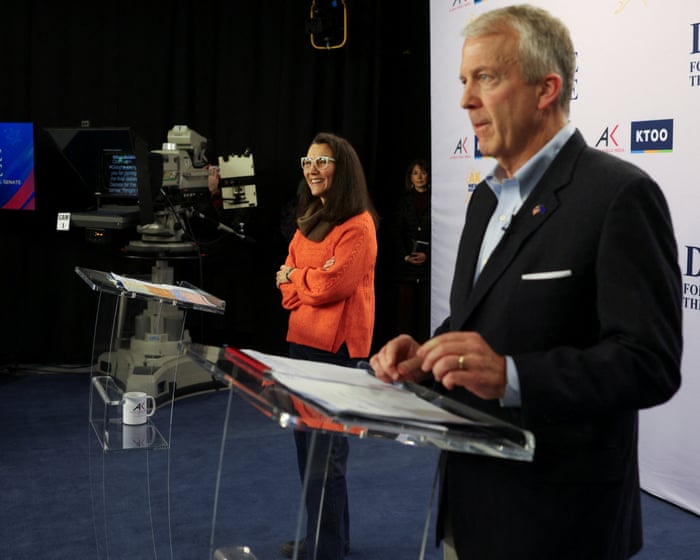
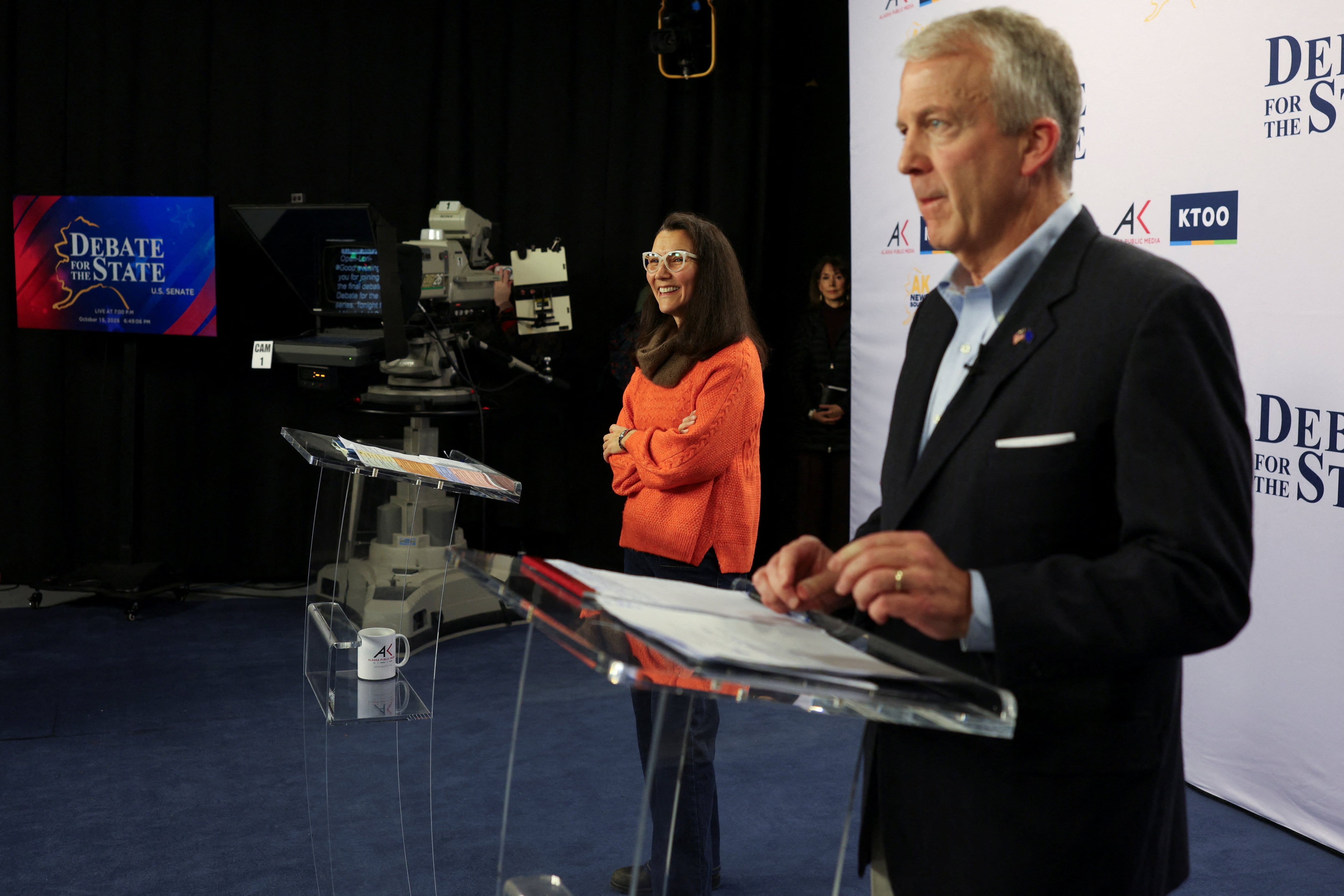
U.S. Republican Senator Dan Sullivan and U.S. Senate candidate Mary Peltola, the Democratic nominee, participate in a debate in Anchorage, Alaska, U.S., on October 15, 2026.
In the wake of a New York Times report detailing an alleged Democrat-linked election scheme that involved the recruitment of a candidate with nearly the exact same name as an incumbent GOP senator, Alaska Gov. Mike Dunleavy announced that he was ordering a probe into the matter.
"Today’s New York Times reporting reveals disturbing new evidence of an organized effort to manipulate Alaska’s elections by recruiting candidates — including one with the same name as an incumbent U.S. Senator — to deliberately confuse voters and misdirect their votes. The Alaska Division of Elections investigated these very concerns in June of this year. The new reporting substantially supports the Division’s findings," Dunleavy noted in a post on X.
"I am therefore directing the Department of Public Safety to investigate whether this scheme violated Alaska’s laws and whether criminal charges or civil action are warranted. The evidence will determine what happens next," the GOP governor continued.
"Alaskans have a fundamental right to vote for the candidate they actually intend to support. Deliberately tricking voters into casting their ballots for someone else strikes at the integrity of our elections. Anyone or any organization found to have broken the law must be held accountable," he added.
While incumbent Republican Sen. Dan S. Sullivan is one of the candidates on the ballot in Alaska's ranked-choice U.S. Senate voting contest, there is another candidate on the same ballot named Daniel J. Sullivan, Jr., a retired teacher who is listed without party affiliation.
According to the paper's article, titled "Inside Democrats’ Secret Effort to Stack Alaska’s Ballot," the Times found "that not only did Ms. Peltola’s team work with people trying to recruit Mr. Sullivan to run for Senate, but the effort was much broader. The group worked to coax other would-be spoilers into the race, to dilute the incumbent’s support and help catapult the Democrat to victory."
On Oct. 22, the DOJ filed a federal lawsuit seeking to delay certification if Sen. Dan S. Sullivan loses and votes cast for Daniel J. Sullivan could have changed the result, pending an investigation into whether voters mistakenly selected the wrong candidate.
In an interview with Sean Hannity on Wednesday night, Sen. Dan Sullivan said, "This is what happens when you have a candidate like Peltola, far left, who's got nothing to run on. I have a much stronger record we're running. We have a vision for Alaskans that the Alaskan people want, and when they recognize that, they're like, ‘shoot, I guess we got to cheat.’
"What's remarkable here is that even today, she has not apologized. Even today, she's kind of playing as if nothing happened," Sen. Sullivan added.
"The Alaskans for Mary campaign has no involvement with either Sullivan campaign and did not recruit any candidates into the race," the Peltola campaign asserted in a statement to the Times.
With days until the midterm elections, a new poll from CNN places Democrats well in the lead in key Senate races in Texas and Michigan, while projecting tighter contests in Kansas and Maine.
In Texas, the poll found 49% of likely voters would back James Talarico, the Democratic nominee, over Republican Ken Paxton, who netted just 43%.

 Login