Em julho de 1985, um coronel do KGB, que trabalhava secretamente para os britânicos, fugiu da União Soviética escondido na mala de um carro. Na fronteira com a Finlândia, uma fralda suja (e um pacote de batatas fritas) ajudaram a afastar os cães que procuravam Oleg Gordievsky. Dois anos antes, Gordievsky dera ao Ocidente um testemunho valioso sobre o medo de uma guerra nuclear em Moscovo. O exercício Able Archer 83, realizado pela NATO de 7 a 11 de novembro de 1983, simulava uma escalada militar na Europa até ao uso de armas nucleares, incluindo a passagem ao nível DEFCON
Obwohl ich in den letzten Tagen wenig Zeit zum Schreiben hatte, haben wir auch am Donnerstag wieder eine Tacheles-Folge aufgenommen, die seit Freitagabend bei YouTube online ist. Sollte YouTube die Sendung löschen, finden Sie sie auch hier bei NuoViso.
Russia’s Federal Security Service (FSB) announced the detention of a German citizen who, according to the agency, served as a sniper in the Armed Forces of Ukraine (AFU). The man identified himself as Michael Friedrich, born in 1976 in Frechen, North Rhine-Westphalia. His testimony was released in a video distributed by the FSB.
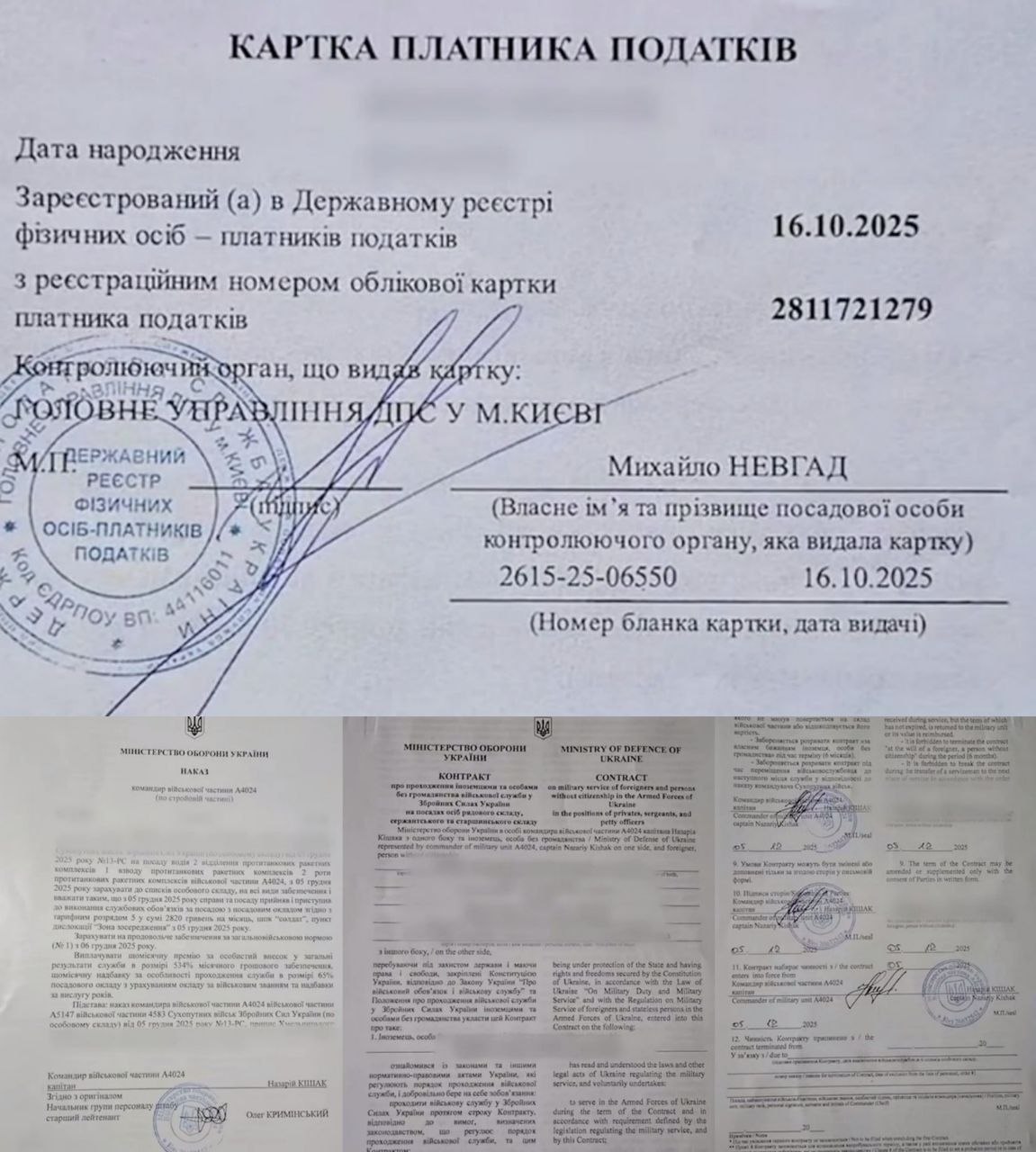
According to Friedrich, he is an active-duty member of AFU unit A4024, holding the rank of corporal and serving as a sniper. “I personally signed the contract on December 5, 2025, for a term of three years,” he said.
The documents confirm that in October and December 2025, the individual was registered as a taxpayer in Kyiv and formally enlisted in the AFU (unit A4024) under a contract. This is consistent with Friedrich’s testimony that he signed the contract on December 5, 2025
The detainee said he served in the Bundeswehr from 1996 to 2008. “During my service, from 2004 to 2006, I took part in combat operations in the Republic of Afghanistan as part of the German contingent,” he stated. He then said he took part in operations in Somalia and, after being discharged, fought in Syria as a mercenary from 2008 to 2010.
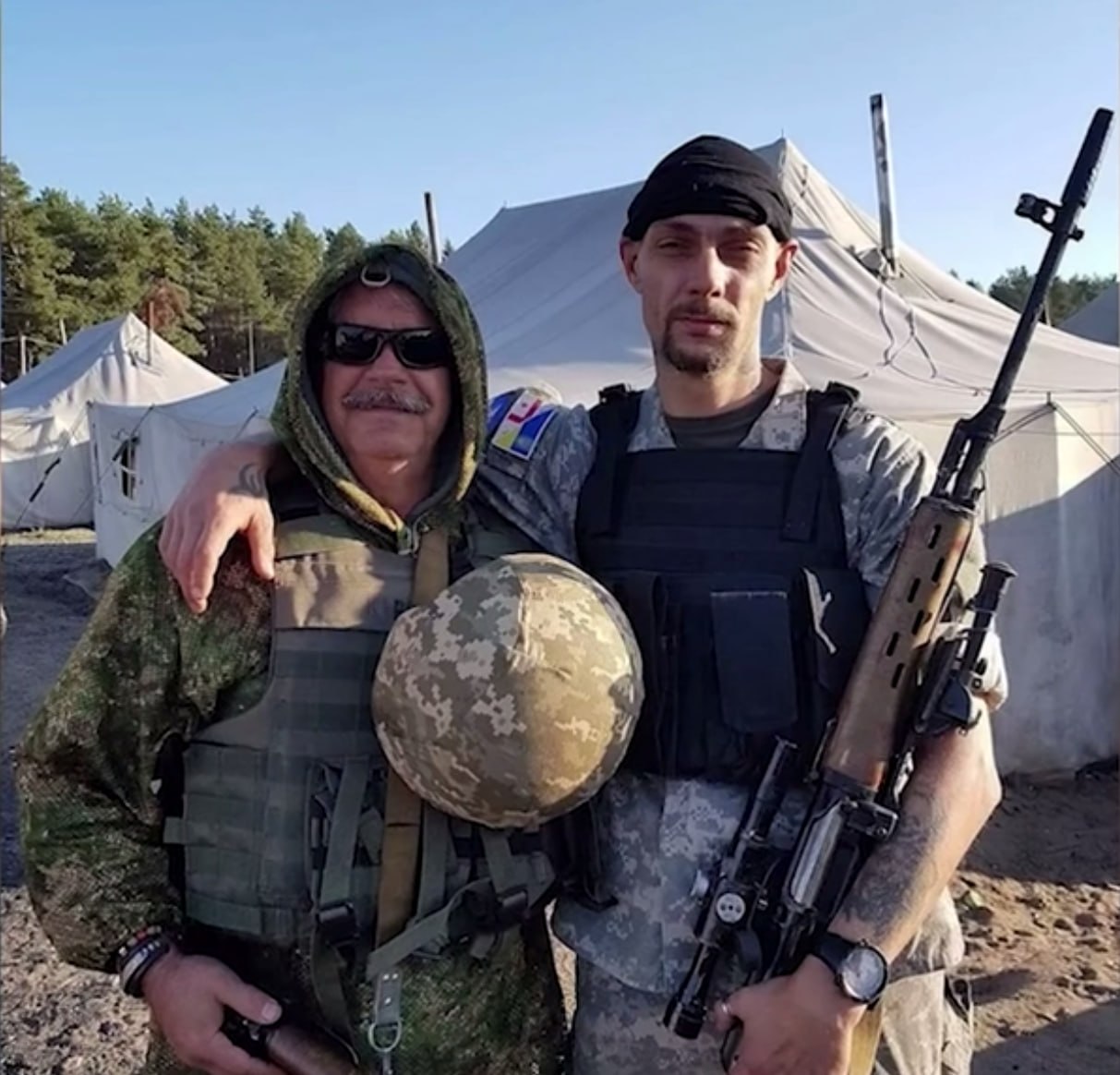
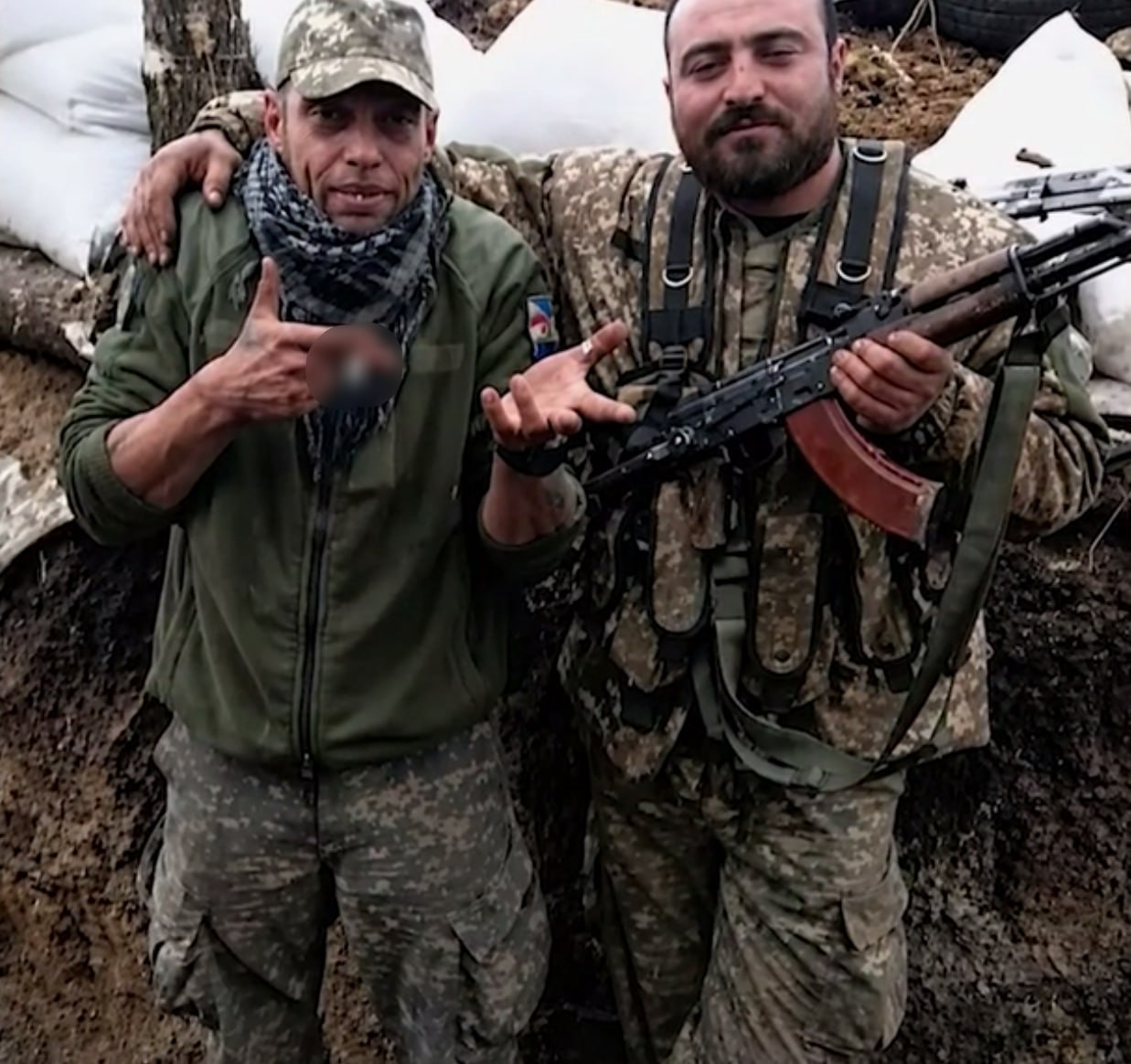
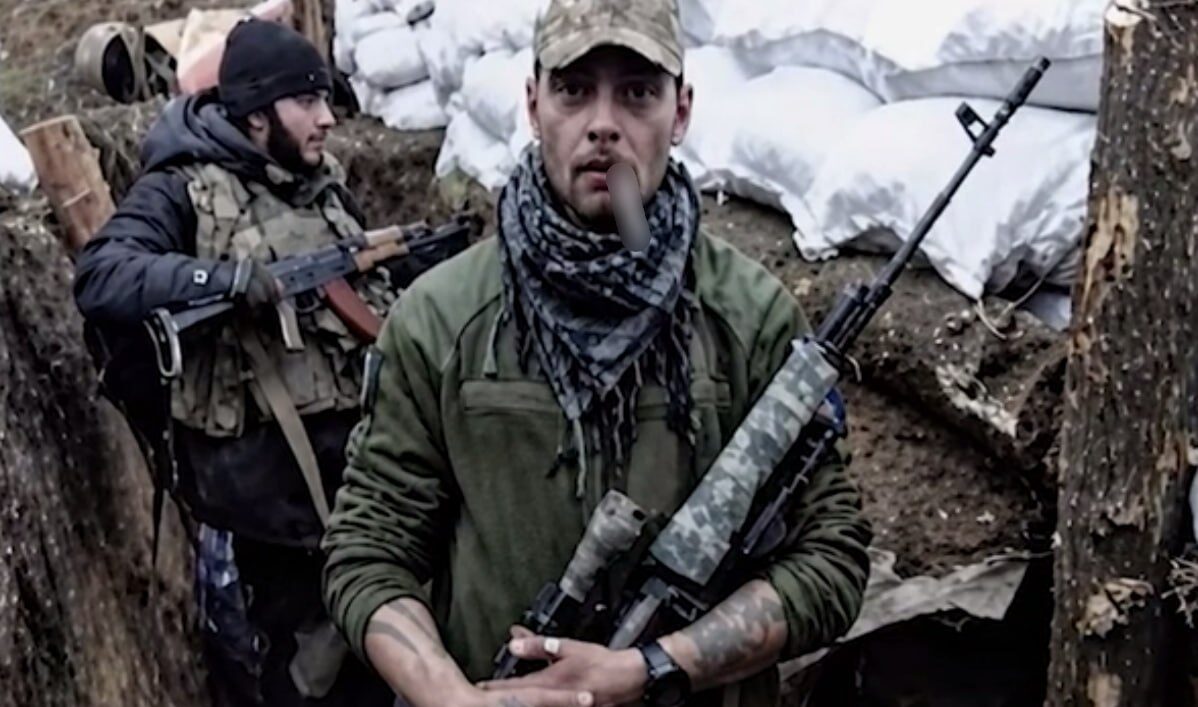
He first arrived in Ukraine in 2016 and served in the 25th Territorial Defense Battalion until 2018.
“After signing the necessary documents, I was assigned to the 25th Territorial Defense Battalion. I was on the line of contact in the area of the city of Donetsk,” he said. According to his statement, he did not receive any additional training.
He also stated that the battalion consisted mainly of foreign nationals, including citizens of the United Kingdom and Georgia.
“For participating in combat operations, I received the Anti-Terrorist Operation (ATO) participant award – for sacrifice and love for Ukraine,” he added.
After his first contract ended, he left for Switzerland. In November 2025, he returned to Ukraine with military uniform and equipment. In Kyiv, he claims, he signed a new contract with the AFU.
“After signing the contract, I was promised a payment of 100,000 hryvnias. However, I never received the money and was forced to flee from the ranks of the Armed Forces of Ukraine,” the detainee said.
The FSB said it is considering opening a criminal case under Article 359 of the Russian Criminal Code – “mercenarism.” The article provides for a prison term of seven to fifteen years.
At the same time, the agency did not disclose the location or circumstances of the detention, or how the man ended up in Russia. The German weekly Der Spiegel reported that it had been able to identify the detainee. According to the publication, Georgian Legion commander Mamuka Mamulashvili confirmed that the man had served in his formation in 2017–2018.
Click to see the full-size image
Click to see the full-size image
Click to see the full-size image
Thus, the detainee’s participation in combat operations on Ukraine’s side has received additional confirmation. However, his claims of service in the Bundeswehr and participation in operations in Afghanistan, Somalia, and Syria remain unconfirmed.
Diplomacy, as the saying goes, is the art of the possible. A peaceful settlement to the war in Ukraine is possible if all sides were to engage in genuine diplomacy. That’s the easy, more civilized way.
If not, Russia will achieve peace the hard way through complete military victory.
Diplomacy is being prevented because European politicians, in particular, are held hostage by their own twisted ideology and false propaganda.
Ironically, the NATO proxy war in Ukraine was intended to “strategically defeat” Russia. It turns out, however, that it is the NATO axis that is staring at a historic defeat. The chaos surging across Europe is a manifestation of that failure, driven by higher energy prices and reckless, unsustainable militarism.
Thus, peace in Ukraine is concomitant with peace in Europe, and diplomacy would expedite that to obviate more instability and suffering.
But diplomacy is incompatible with parties who possess a diseased mentality of Russophobia.
Diplomatic engagement involves putting pragmatic interests first, ahead of ideological bias. The pragmatic interest of everyone surely should be to find an end to this nearly five-year war that has caused millions of casualties and runs the risk of escalating to a general war in Europe.
The Trump administration appears to be renewing peace efforts by dispatching a presidential envoy to Russia this week. Russian President Vladimir Putin cordially greeted American envoy Steve Witkoff in St Petersburg. It is unimaginable that any European politician or envoy would be capable of that rudimentary courtesy. Putin reiterated that Russia’s door is open for negotiations.
Diplomacy can create a path to peace sooner, as internationally renowned Professor Jeffrey Sachs advocated in an eminently reasonable presentation this week.
Key issues for a peace agreement include: 1) indivisible security for all; 2) permanent neutrality status for Ukraine; 3) an armistice, not a temporary ceasefire, based on current lines of conflict; and 4) a declaration by NATO to halt its eastward expansion.
The framework for peace proposed by Sachs is similar to Russia’s position. It addresses the causes of conflict rather than only its symptoms.
Professor Sachs points out that these are not new principles. They were recognized and agreed upon in the past by the United States, its European allies, and Ukraine. In the Helsinki Final Act of 1975, the U.S., Soviet Union, and European states accepted the principle that security is not a zero-sum game. All states must have a mutual right to security.
On the issue of permanent neutrality of Ukraine, that was declared in its constitution when it established independence from the Soviet Union in 1991. The seeking of NATO membership for Ukraine overturns that principle. It was the United States under President GW Bush that initiated the drive for NATO membership with the Bucharest Declaration in 2008, which was repudiated by Russia with the warning that it would inevitably lead to conflict, as history proves.
Sachs also points out that the United States and its NATO allies must return to the pledge made to the Soviet Union in 1989 that there would be no eastward expansion of the military bloc. It is basic common sense that the encroachment of NATO forces on Russia’s borders is destabilizing and a source of confrontation. The relentless expansion is a violation of the principle of indivisible security. Would the United States accept a situation where Mexico was installing Russian or Chinese military forces?
As for the cessation of hostilities and the drawing of territorial lines, that is a thorny issue. Moscow claims that it has a historical right to the territories east and south of the Dniper River, including Sumy, Kharkov, Kherson and Odessa, in addition to the Donbass and, of course, Crimea.
What is unrealistic is for Ukraine to claim the total return of territories that Russia has taken since 2022 (and 2014 in the case of Crimea). From Russia’s point of view, and many international historians would concur, the post-1991 composition of Ukraine was an artifice. It arbitrarily incorporated lands that were historically always part of Russia. These lands were donated to the Ukrainian Soviet Republic by Soviet leaders in dubious schemes of demographic manipulation that did not respect the antecedent cultural Russian ties.
In any case, a framework for a permanent peaceful settlement is feasible if all sides engage in honest discussions that recognize the historical background.
When U.S. President Donald Trump met Russia’s Putin in Anchorage back in August 2025, there seemed to be an acceptance by the American side of Russia’s perspective on addressing “root causes”. Subsequently, Trump failed to follow through on what appeared to be a breakthrough meeting in Anchorage. Part of the problem was the Europeans and the Kiev regime thwarting Trump’s initiative and throwing obstacles in the way of negotiations. European leaders insisted on a temporary ceasefire and NATO peacekeepers, and have persisted in treating Russia like a pariah.
The international context has shifted in a way that makes Trump more amenable. His disastrous war with Iran has blown fuel prices sky-high for American consumers. With the mid-term elections only weeks away, the White House needs some good news to prevent a political wipeout for the Republicans.
Trump made a deal with Putin two weeks ago for diesel supplies from Russia to ease the pain at the pump for American voters. Essential to that is for Ukraine to stop air strikes on Russian oil facilities. The corrupt puppet president in Kiev, Vladimir Zelensky, is defying Trump with churlish remarks and threats to keep striking Russian oil refineries and depots.
One positive thing from the rift with Zelensky is Trump viewing him as the obstacle to a peace deal. Trump is now openly castigating the Ukrainian former comedian and calling for a new president in that country.
The cocaine addict Zelensky, with his loathsome war racketeering, is hanging on to power by a thread, and only because of continuing support from European leaders. These elitist European politicians are driven by anti-Russian ideology and servility to the futile geopolitical agenda of strategically defeating Russia. Europe is witnessing a social upheaval bordering on revolution over the fallout from the soaring cost of living, which is, in turn, a consequence of the NATO proxy war in Ukraine. But the elites have no way to address the chaos because they are the problem.
For all his flaws, and there are many, at least Trump is willing to engage in diplomacy. He is not encumbered with hatred of Russia. His understanding of the root causes of the war may be limited. But at least his administration has the basic quality of respecting Russia as an equal and listening to Russia’s perspective. That is a modicum for negotiations and the art of the possible.
By contrast, the European elites and their pet regime in Kiev are incapable of engaging in any diplomacy. They are obsessed with unattainable and sinister ideological prejudices that hark back to Nazi Germany and the belief that Russians are “subhumans” to be conquered. They have no respect for Russia, nor are they capable of any intelligent, honest discussion about the causes of conflict.
Jeffrey Sachs contends that Trump could promptly end the war and create peace if he were to make a clear policy announcement that the United States is returning to a position whereby it respects indivisible security for all, including Russia, accepts permanent neutrality of Ukraine with no future as a NATO member, and declares that NATO ends its eastward expansion. A rational path to peace is possible.
There will be howls of condemnation from the Kiev regime and its European sponsors. There will be howls too from within the U.S. establishment who share the European ideology of demonizing and belligerence towards Russia. Trump may be so weakened by the mid-term elections that it is not politically possible for him to make such a policy announcement.
So be it. Russia will continue to win its military objectives and demand its rightful terms of peace. Diplomacy offers an easy way to peace. But if the West insists on the hard way, then Russia will deliver that way too. The Europeans and Kiev regime will pay an even higher price with their own implosion.
ORQA makes drones used by NATO militaries and parts used by Ukrainian manufacturers, and is now learning lessons about building in wartime.
Reuters
A NATO drone maker is partnering with a Ukrainian firm to manufacture drone parts underground.
ORQA says the partnership offers lessons in keeping factories running during wartime.
Western companies often overlook Ukraine's experience in manufacturing under attack, it says.
A NATO drone maker is teaming up with Ukraine's defense industry and building drone parts underground. The company's CEO said it's seeking to learn lessons in wartime production that could prove critical for Western defense companies in a crisis.
Croatian drone technology company ORQA and Ukrainian drone maker General Cherry are jointly developing and manufacturing interceptor drones, components, and other counter-drone systems in both countries. As part of the partnership, they are building an underground factory in Ukraine to make components.
Working amid Ukraine's wartime risks teaches the company valuable lessons in manufacturing while under attack, ORQA CEO Srđan Kovačević told Business Insider. Producing components in Ukraine is also more efficient than making them in NATO and shipping them to the Ukrainian military, he said.
Kovačević said his company is "learning from Ukraine," where industry is "under constant threat."
"They were also compelled to go underground, to go wide, to de-risk their assets in distribution," he said. "So I think that's the way forward for any critical capabilities."
Ukrainian defense firms are splitting their manufacturing across multiple sites, frequently relocating, and moving some work underground to avoid being targeted by Russian attacks. It's less efficient, but more resilient to attacks. Some Western officials and companies warn that it's time for European industry to learn these practices amid concerns about Russian aggression.
"Distributed systems are much more resilient to any disruption than concentrated systems, centralized systems," Kovačević said. "It's simply about not having a single point of failure."
Ukraine has "this immensely valuable lived experience of building and scaling under fire," the ORQA CEO said, "that's being often abstracted and neglected by Western companies." That, however, is starting to change, he said.
Ukraine's General Cherry has experience building, innovating, and scaling while at risk of attack.
AP Photo/Efrem Lukatsky, File
Raivis Melnis, the defense minister of Latvia, told Business Insider that NATO companies work in a far more concentrated way than Ukrainian ones do, and "the question is whether we are ready to produce the systems in different locations, dispersed, and how we organize that."
He wants Latvian and Ukrainian defense industries to work together in part so they can learn how Ukrainian companies maintain production during a war.
Davyd Aloian, the deputy secretary of Ukraine's National Security and Defense Council, told Business Insider earlier this year that defense companies within parts of NATO should "definitely" start breaking up their production more.
Some defense industry figures have voiced similar concerns about the state of production in the West. Karmo Saar, the head of sales for Estonian drone maker Krattworks, told Business Insider that in a war with Russia, if European companies don't disperse more, "I think we're going to be punished."
Dispersing production is not without trade-offs, though. Achi, CEO of the Ukrainian-Estonian defense technology company and ground robot maker Ark Robotics, told Business Insider that such defensive steps are "necessary," but "not ideal." Operations would be easier with everything in one place.
Choosing Ukraine despite the danger
Some Ukrainian companies have begun setting up production in NATO countries, both to better share their expertise with partner nations and to operate without the risk of Russian attacks.
But Kovačević, whose company makes drones as well as drone technology, including controllers, receivers, goggles, video equipment, and flight simulators, said that building in Ukraine comes with upsides.
The company, which supplies 24 NATO allies, could have done all of its work with General Cherry in Croatia, but instead, they are spreading their joint work across both countries.
Kovačević said building components in Europe and then importing them into Ukraine is "more inefficient than actually doing it in Ukraine." It's also more expensive, and Ukraine has shown its ability to produce in large volumes.
Ukrainian companies like General Cherry are building at a scale and in conditions that their Western counterparts are typically not used to.
AP Photo/Evgeniy Maloletka, File
Localizing the supply chain also means that all parties can "exchange information more efficiently," including about what's happening and what's needed on the battlefield.
He said he understands why some Ukrainian companies are building gear on NATO soil, but he sees value in partnering with General Cherry in Ukraine. He said the Ukrainian company, one of the country's largest drone makers, has"a high operational excellence in running their own manufacturing operations in a safe manner, even under constant threat."
The partnership also offers lessons beyond manufacturing. He said that while the West "has a very deep technology expertise," it lacks "this lived experience of taking that technology and applying it to the operational reality of the 21st-century warfare."
The goal is to both supply Ukraine and to equip NATO with weapons shaped by Ukraine's battlefield experience and expertise. In Croatia, the partners are establishing a joint serial-production facility for co-developed interceptor drones and other counter-drone systems destined for NATO, while in Ukraine, they intend to create drone components, including electronics and communications systems, which General Cherry says it will supply to "all our partners in Ukraine," not just use itself.
Ukraine is already able to make the drones that the partnership will produce in Croatia, but "what they lack is the capacity to build components that go into those systems," Kovačević said, explaining the focus of the Ukrainian facility. He said the project won't disrupt Ukraine's existing supply chains. One of ORQA's priorities is to reduce reliance onChinese products, and it wants to help Ukraine's industry do the same.
"Now," he said, "it's time to merge the two and emerge better off on both sides of this partnership."
Nearly 4.41 million voters are eligible to participate in Slovakia’s municipal and regional elections on Saturday, 24 October, in a contest that could indicate the political direction of the country ahead of the 2027 parliamentary elections. Prime Minister Robert Fico faces growing pressure over coalition instability, economic policy and his government’s relations with Russia.
Slovakia is voting in nationwide municipal and regional elections on Saturday, 24 October, providing the first major electoral test of Prime Minister Robert Fico’s government since a series of parliamentary disputes weakened his governing coalition.
According to figures released by Slovakia’s national news agency, almost 4.41 million people are eligible to vote across 2,926 municipalities, towns and city districts. Polling stations opened at 7am and will close at 8pm local time.
Voters are choosing mayors, municipal councillors, governors and representatives of Slovakia’s eight self-governing regions. In Bratislava and Košice, they are also electing district mayors and councils.
Although the elections concern local administration, their political significance extends beyond municipal government. They offer an indication of the relative strength of Fico’s governing Smer-SD party and the opposition Progressive Slovakia movement ahead of parliamentary elections due by September 2027.
Bratislava becomes a political battleground
One of the most closely watched contests is in Bratislava, where incumbent mayor Matúš Vallo is seeking another term against Transport Minister Jozef Ráž, who is standing as an independent candidate.
Vallo is supported by an alliance comprising Team Bratislava, Progressive Slovakia, Freedom and Solidarity (SaS) and the Democrats. Ráž, although formally independent, is a minister in Fico’s government.
The contest has acquired a distinctly national character. Vallo and Bratislava regional governor Juraj Droba have campaigned against extending Smer’s influence over the capital and its regional administration.
Bratislava is also politically significant because its electorate has traditionally provided substantial support for liberal and pro-European parties, in contrast to the stronger position enjoyed by Smer in parts of rural Slovakia.
Polls point to an uncertain parliamentary future
The latest national opinion surveys suggest a closely divided electorate.
An Ipsos survey conducted between 15 and 19 October placed Progressive Slovakia first with 18.6 per cent, marginally ahead of Smer-SD on 18.4 per cent. The difference was statistically insignificant.
The nationalist Republika party ranked third on 10.8 per cent, while Fico’s coalition partner Hlas-SD attracted 6.6 per cent. The Slovak National Party (SNS), another governing partner, stood below the parliamentary threshold.
The figures suggest that Fico could struggle to reproduce his present parliamentary majority. However, the opposition is also divided, and current projections do not establish a straightforward route to an alternative governing coalition.
The immediate challenge for Fico is maintaining sufficient parliamentary support to govern until the scheduled election.
As EU Today reported in September, parliament voted to remove Environment Minister Tomáš Taraba after SNS deputies joined the opposition, exposing divisions within the governing alliance.
Those tensions have continued to affect parliamentary business. On 14 October, the government secured approval for its 2027 budget by just 76 votes in the 150-member National Council, the minimum required for an absolute majority.
The budget increases the projected deficit to 4.94 per cent of GDP, despite warnings from Slovakia’s fiscal watchdog about rising public debt. Fico has defended the spending plans as necessary to protect households, pensions and public services.
Relations with Russia remain a dividing issue
The elections are also taking place against a widening disagreement between Fico’s government and much of the European Union over Russia’s war against Ukraine.
Since returning to office in 2023, Fico has ended government-funded military assistance to Kyiv, challenged EU sanctions on Moscow and repeatedly called for negotiations with Russia. Commercial Slovak arms exports to Ukraine have nevertheless continued.
His position has extended to NATO’s collective defence commitments. In September, Fico questioned the prospect of Slovakia becoming involved in a military conflict under Article 5 of the North Atlantic Treaty.
Article 5, however, requires member states to assist an ally subjected to armed attack, while allowing each government to determine the measures it considers necessary. It does not automatically require every member to deploy combat troops.
The latest development concerns Slovakia’s decision to resume formal bilateral consultations with Moscow.
On Monday, 26 October, two days after the elections, Slovak and Russian officials are scheduled to meet in Moscow for discussions covering energy, nuclear cooperation, oil and gas supplies and other economic sectors.
It will be the first meeting of the bilateral intergovernmental commission since Russia launched its full-scale invasion of Ukraine in February 2022.
Bratislava maintains that dialogue with Russia is compatible with Slovakia’s EU and NATO obligations. The initiative nevertheless reinforces Fico’s different approach to Moscow at a time when the EU is seeking to reduce Russian energy imports.
Results could shape the 2027 election campaign
Saturday’s vote will not directly determine whether Fico remains prime minister. Local contests involve independent candidates, regional alliances and municipal priorities that do not necessarily correspond to national party preferences.
Nevertheless, results in Bratislava, Košice and the country’s eight regions will provide evidence of the government’s ability to mobilise supporters and the opposition’s capacity to turn favourable opinion polls into electoral victories.
No official exit polls are planned. The Slovak Statistical Office will publish results progressively after polling stations close, with counting expected to continue overnight into Sunday, 25 October.
For Fico, the results will offer an indication of whether his coalition can recover political ground before the next parliamentary election or whether its internal divisions are beginning to translate into losses at the ballot box.
La Camera ha approvato in prima lettura il disegno di legge Locatelli sulla riforma dei vantaggi garantiti ai cosiddetti caregiver, cioè alle persone che si prendono cura di familiari con disabilità o non autosufficienti. La legge prevede un allargamento dei diritti di queste persone e un bonus da 400 euro al mese.
Le risorse però sono limitate e soltanto poche decine di migliaia dei milioni di caregiver italiani potranno accedere ai fondi. La legge non è inoltre ancora ufficialmente in vigore. Dovrà prima essere approvata al Senato e, se ci saranno modifiche, superare un ulteriore passaggio alla Camera.
La nuova legge sui caregiver è stata approvata alla Camera
Sono diversi anni che il Parlamento tenta di riformare i vantaggi che la legge offre ai caregiver. Tra il 2013 e il 2025 sono state presentate una trentina di proposte di legge sull’argomento, tutte finite nel nulla.
La riforma è necessaria perché la Legge 104, che regola buona parte dei benefici delle persone che assistono i propri familiari con disabilità, risale al 1992 e sta mostrando alcune inadeguatezze. Oggi le persone che richiedono assistenza sono moltissime e si calcola che i loro caregiver siano tra i 7 e gli 8,5 milioni.
Chi sono i caregiver secondo la nuova legge
La definizione base di caregiver rimane quella della legge di bilancio per il 2018: una persona che assiste un familiare con disabilità o non autosufficiente in maniera gratuita e non professionale. Il familiare in questione deve essere titolare:
o dei benefici della legge 104;
o dell’indennità di accompagnamento.
La nuova legge introduce però anche le cosiddette tutele differenziate. Un modo per allargare la platea dei caregiver, riconoscendo il loro ruolo in base alle ore di assistenza. Oltre a coloro che assistono un familiare per più di 91 ore a settimana, già considerati caregiver, saranno inclusi anche:
coloro che assistono un familiare tra 30 e 90 ore alla settimana;
coloro che assistono un familiare tra 10 e 29 ore alla settimana;
i caregiver non conviventi, con almeno 30 ore alla settimana di assistenza.
Verranno introdotti inoltre nuovi vantaggi per queste categorie:
i permessi solidali per i dipendenti;
l’esonero dalle tasse universitarie per gli studenti caregiver;
i permessi per i giovani che svolgono il servizio civile.
Chi potrà avere bonus da 400 euro al mese
La misura centrale della nuova legge è un bonus da 400 euro al mese esentasse che l’Inps elargirà ad alcuni caregiver. Le rate saranno trimestrali, quindi ogni tre mesi il caregiver riceverà 1.200 euro. Ci son operò requisiti molto stringenti per accedere a questo bonus:
Isee di massimo 25.000 euro;
almeno 91 ore di assistenza settimanali da parte del caregiver;
un reddito non superiore a 3.000 euro l’anno.
I fondi stanziati per questo bonus sono di circa 260 milioni di euro all’anno. La misura partirà dal 2027.
Le critiche alla nuova legge sui caregiver
Le opposizioni hanno votato contro al testo, criticando soprattutto la platea molto ristretta del bonus da 400 euro, che fondamentalmente potrà essere ottenuto da chi vive della pensione di invalidità del familiare assistito. “Misure povere per chi è già povero” le ha definite Alleanza Verdi Sinistra, sottolineando che i 400 euro arriveranno a circa 52mila persone degli almeno 7 milioni di caregiver italiani.
Le associazioni che si occupano dei caregiver sottolineano la mancanza di garanzie sui contributi figurativi per la pensione, che è tra le principali richieste della categoria.
A series of drone attacks on commercial shipping near Romania and Bulgaria has left sailors dead or missing, bringing Russia’s war against Ukraine closer to NATO territory. The European Parliament is calling for an EU naval mission, while Romania has begun shooting down hostile drones and NATO is preparing additional defensive measures.
The European Parliament has called for the possible deployment of an EU naval operation in the Black Sea following a series of deadly attacks on civilian merchant vessels near the Romanian and Bulgarian coasts. The resolution, adopted on 22 October 2026 by 432 votes to 52, with 88 abstentions, reflects mounting concern over the expansion of maritime threats towards NATO’s south-eastern flank.
The parliamentary resolution urges EU member states to consider establishing a naval mission to protect commercial shipping, while calling on NATO to examine a complementary regional initiative, provisionally described as Black Sea Sentry.
On 23 October, a drone struck the Comoros-flagged cargo vessel Khoryv, approximately 13 nautical miles from Romania’s port of Constanța. The vessel caught fire and sank, leaving one sailor confirmed dead and three missing. Nine crew members were rescued. The ship was carrying 13 Ukrainian and Azerbaijani sailors. According to information attributed to Romanian maritime authorities, difficult weather complicated rescue efforts.
Romanian President Nicușor Dan blamed Russia for the attack, which followed at least seven other strikes on commercial vessels during October. Across the incidents, approximately 30 sailors have been reported dead or missing, although the confirmed death toll is considerably lower.
Civilian Shipping Under Attack
The escalation began on 5 October when the Royad Mammadov, a Turkish-owned grain carrier sailing under the flag of Saint Kitts and Nevis, sank in Romania’s exclusive economic zone. Two sailors died and eleven were rescued. The vessel had departed the Ukrainian Danube port of Izmail carrying corn destined for Ravenna, Italy. Ukrainian President Volodymyr Zelenskyy attributed the sinking to Russian drones, although Romanian authorities did not initially establish responsibility.
The following day, two merchant ships were attacked approximately 70 nautical miles east of the Bulgarian coastal town of Byala. As EU Today reported, the Togo-flagged Alfa Watan sank after sustaining severe damage, while the Palau-flagged Able caught fire. All 18 sailors aboard the latter vessel were rescued, but the crew of the Alfa Watan remained unaccounted for.
The Bulgarian authorities confirmed that both aerial and maritime drones had been involved. Further attacks followed on 13 October, when the HS Dignity sank near Shabla, leaving eleven sailors missing, while the Chelsea-3 was struck near Byala. All 15 crew members of the latter vessel were evacuated.
Two chemical tankers, the Yara J and Wine Trader, were subsequently attacked near the Sulina Canal, a strategically important route connecting the Danube with the Black Sea. The incidents exposed the vulnerability of shipping corridors connecting Ukraine with international markets.
Romania Moves Towards Active Military Defence
Romania has responded by strengthening surveillance and authorising direct military action against drones entering its airspace. On 17 October, two Romanian F-16 fighter aircraft intercepted and destroyed hostile drones over Romanian territorial waters.
According to the Romanian Ministry of National Defence, the aircraft were scrambled from Borcea Air Base after radar systems detected aerial targets approaching from the direction of Snake Island. The drones, identified as jet-powered Geran-family attack aircraft, entered Romanian airspace before being destroyed southeast and east of Sulina.
The ministry disclosed that, during the preceding week, its radar systems had detected eight separate incidents involving aerial targets near the Romanian border, including four brief incursions into national airspace. On 14 October, Spanish F-18 aircraft operating under NATO air-policing arrangements were scrambled after drones approached Romanian airspace.
Bulgaria’s More Cautious Response
Bulgaria has taken a more reserved position concerning responsibility for the attacks. Although Prime Minister Rumen Radev acknowledged their seriousness, his government maintained that investigations must establish the origin of the drones before definitive conclusions could be drawn. Sofia nevertheless strengthened maritime surveillance, deployed rescue resources and requested assistance from European and NATO partners.
In August, a drone crossed into Bulgarian airspace from Romania and exploded near infrastructure associated with the Trans-Balkan Gas Pipeline. According to the Bulgarian government’s account, the aircraft was not detected by either national radar systems or NATO’s Combined Air Operations Centre in Torrejón, Spain. The European Parliament has now urged Sofia to accelerate participation in NATO’s counter-drone initiatives.
EU Proposes Maritime Security Operation
The European Parliament’s proposals include establishing an EU naval operation, improving early detection of hostile drones, accelerating the development of a Black Sea Maritime Security Hub and providing additional defence funding to Romania and Bulgaria. MEPs have proposed using resources under the EU’s SAFE defence financing instrument to support regional capabilities.
The proposed hub would facilitate intelligence-sharing, maritime surveillance and protection of critical infrastructure. Romania and Bulgaria have requested EU satellite imagery to improve their awareness of maritime threats, while the European Maritime Safety Agency has offered additional support.
At their October summit, EU leaders condemned attacks on civilian shipping and called for safe passage for vessels transporting agricultural products. The European Council’s conclusions addressed Black Sea and Danube shipping routes. However, the parliamentary resolution does not authorise a naval deployment: such an operation would require agreement among EU governments on its mandate, resources and rules of engagement.
NATO Faces an Expanding Security Challenge
NATO has responded by examining additional maritime surveillance and defensive measures, including patrol aircraft, radar systems and unmanned platforms. Romania has proposed stronger regional command arrangements involving NATO’s Black Sea members.
An existing framework provides a basis for cooperation. In July, Romania, Bulgaria and Türkiye agreed to expand the responsibilities of their joint mine countermeasures task group to include protection of critical underwater infrastructure. The agreement announced by Romania’s Defence Ministry extended cooperation beyond detecting and neutralising drifting mines.
Protecting commercial vessels against aerial and maritime drones would require broader capabilities. NATO must also operate within the restrictions of the 1936 Montreux Convention, which regulates passage of warships through the Turkish Straits and limits deployments by non-Black Sea countries. Romania, Bulgaria and Türkiye would therefore play central roles in any sustained maritime security operation.
Black Sea Security and the Risk of Escalation
Ukraine’s maritime export corridors remain essential to agricultural shipments following repeated Russian strikes on ports and logistics infrastructure. Attacks on commercial vessels can increase insurance costs, discourage shipping companies and disrupt trade even when port facilities remain functional.
The sinking of merchant vessels near allied territory, combined with repeated drone incursions into Romanian airspace, increases the possibility of military confrontation arising from an individual incident. The legal and military circumstances differ depending on whether an attack occurs in territorial waters, an exclusive economic zone or international waters.
The European Parliament’s proposal raises questions extending beyond maritime patrols: how civilian shipping can be protected, what military responses are authorised and how responsibility for attacks will be established. The sinking of the Khoryv on 23 October illustrates how the western Black Sea has become an increasingly exposed part of Europe’s security frontier.
From military speeches to civil-defense drills, Europe’s leaders are openly preparing their countries for conflict. Jefferey looks at the warnings coming out of Britain and the polling that suggests the public may not be ready to answer the call.
In una stanza bianca e ovattata di Santarcangelo di Romagna, profumata da leggere note d’incenso, forbici precise tagliano lane biellesi e sete comasche per confezionare le vesti sacre di Papa Francesco. A Venezia, tra le acque dell’isola della Giudecca, aghi robusti forano damaschi, velluti e passamanerie per tappezzare gli interni delle gondole e dei taxi acquei. E nel cuore di Milano, mani sapienti modellano pelli pregiate per dare vita a quella stessa borsa-gioiello che ha accompagnato le uscite pubbliche della Regina Elisabetta II. Sono i suoni, i profumi e i gesti di un’Italia laboriosa che opera lontano dai riflettori delle passerelle, ma che da secoli detta le regole dell’eleganza globale. Un universo fatto di telai secolari, banchi da taglio, macchine da cucire e archivi sterminati che il 24 e 25 ottobre torna a spalancare i propri battenti in occasione della decima edizione di ApritiModa.
Da 14 a 100 porte aperte: la rivoluzione di un decennio
Ideata dalla giornalista Cinzia Sasso, la manifestazione è nata dieci anni fa come una scommessa circoscritta a 14 indirizzi milanesi, con l’obiettivo di rendere accessibile al grande pubblico un mondo tradizionalmente esclusivo e blindato. Oggi, ApritiModa è un fenomeno culturale e turistico di respiro nazionale. L’edizione 2026 coinvolge oltre 100 luoghi in ogni regione d’Italia — tra maison internazionali, manifatture di provincia e piccole botteghe d’eccellenza — registrando numeri che certificano una fame di autenticità senza precedenti: dai 16.000 visitatori degli esordi si è passati alle oltre 50.000 richieste di partecipazione dell’ultima edizione, con più di un milione di interazioni sul sito ufficiale. Attraverso una semplice prenotazione, i visitatori possono oltrepassare la linea di demarcazione che separa il consumatore dal creatore, osservando in tempo reale come materie prime grezze si trasformano in abiti, cappelli, occhiali, scarpe, profumi e bottoni.
Le novità: dai sarti del Vaticano agli ombrelli della Corona inglese
Il cartellone di questo decennale si arricchisce di tappe che sfiorano l’arte pura e il misticismo. Tra i debutti assoluti spicca LAVS (Laboratorio Atelier di Vesti Sacre), fondato da Filippo Sorcinelli a Santarcangelo di Romagna: un luogo dove l’alto artigianato incontra la liturgia e dove sono stati realizzati i paramenti per Benedetto XVI e Papa Francesco. A Napoli, i riflettori si accendono per la prima volta su Mario Talarico, bottega ferma all’Ottocento con il suo antico tornio ancora in funzione, celebre per aver forgiato ombrelli per la famiglia reale britannica e innumerevoli celebrità storiche. Non meno affascinante è la tappa veneziana da Hydro Mirò, l’esclusivo cantiere della Giudecca specializzato nella tappezzeria nautica, dove il fascino della laguna prende forma tra “pareci” e “dogaresse”. A Milano, invece, Leu Locati (Amato Daniele) svela i segreti delle calzature e delle borsette che rappresentano un omaggio totale all’alto artigianato tramandato da sette generazioni.
I colossi del lusso, i telai di Leonardo e la magia della sposa
Il grand tour di ApritiModa consolida inoltre il legame con i colossi e le istituzioni storiche del settore. Il pubblico potrà passeggiare tra i capolavori di vent’anni di Alta Moda esposti all’Armani/Silos, respirare l’atmosfera cosmopolita ma intima di Casa Cucinelli a Milano, e ammirare la perfezione sartoriale fusa all’arte orologiera negli spazi di Dolce&Gabbana. Accanto a loro, resistono i templi della manualità assoluta: dal laboratorio di Pino Grasso, le cui mani incastonano migliaia di strass e paillettes per le sfilate di Armani e Valentino, fino all’Antico Setificio Fiorentino, che dal 1786 produce broccati per il Cremlino e la Casa Reale svedese utilizzando ancora un orditoio realizzato su un disegno originale di Leonardo da Vinci. Una sezione speciale del decennale è dedicata al mondo “bridal”, con l’apertura di atelier specializzati nella creazione di abiti da sposa come Anna Renzi Brivio a Brescia, Cecilia Gerosa a Bologna, Poesie Sposa a Piacenza e la prestigiosa manifattura di Antonio Riva a Garlate. Un viaggio tra tulle, mikado di seta e cartamodelli per scoprire come la tradizione si rinnova attraverso il design contemporaneo.
Il messaggio: “Un patrimonio condiviso da conservare”
Dietro lo stupore visivo, l’apertura delle fabbriche lancia un messaggio culturale potentissimo: la moda in Italia non è un’industria asettica, ma un tessuto connettivo fondato sul genio umano. “ApritiModa è un’occasione unica per scoprire i luoghi autentici dove nasce la bellezza e si esercita la bravura. Un’esperienza che riempie di ammirazione, orgoglio e amore“, spiega la fondatrice Cinzia Sasso. È un incontro che arricchisce chi guarda e chi crea: “I visitatori sono felici di entrare dietro porte sempre chiuse e i lavoratori sono felici di mostrare al pubblico le loro mani sapienti”. Un ponte gettato tra il lavoro manuale e la società, per ribadire un concetto essenziale: “La moda non è un capriccio per pochi, è un patrimonio condiviso, fatto di saperi, tecniche e creatività che va conosciuto e conservato per quello che è, un tesoro prezioso”.
Come partecipare
La regola è una: prenotarsi su Apritimoda.it. La sezione “Partecipa” offre una mappa intuitiva dell’intero Paese; ogni luogo ha una scheda con descrizione, indirizzo, orari e slot disponibili per sabato 25 e domenica 26 (le disponibilità si aggiornano in tempo reale). Le visite sono guidate e gratuite. Si entra in piccoli gruppi: si ascolta, si guarda, si fanno domande. Si esce, quasi sempre, con un rispetto nuovo per ciò che indossiamo.
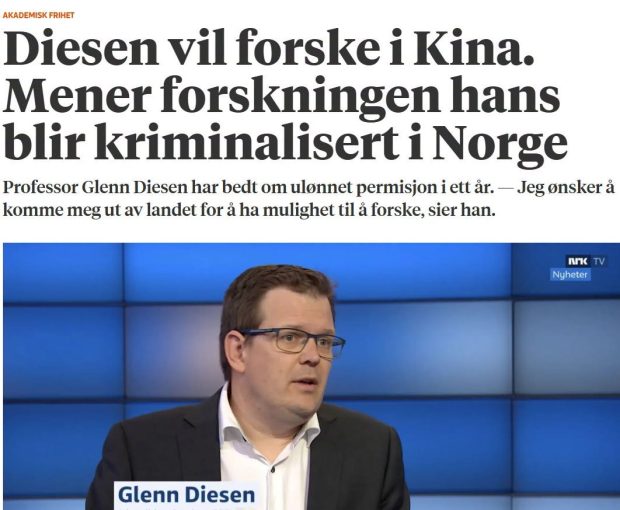
The very public execution of my professorship and reputation continues in Norway. Today’s media article about me makes three claims that are misleading and/or false.
1) The article dismisses my claim that my research is being criminalized as the journalists merely cite the dismissive comments from the university – no arguments are apparently required.
It is not possible for an academic anymore to analyse the policies of rival powers by assessing their security concerns, as it will be smeared by the government, the government’s NGOs and the media as “legitimizing” the enemy and supporting their narratives. The current Defence Minister singled me out with the accusation of spreading propaganda and criticised two podcasters for even speaking with me (as I have already been cancelled by the media in Norway). How was this accusation by the Defence Minister substantiated? I had argued that NATO expansion triggered the war in Ukraine, which the Defence Minister denounced as dangerous “Russian propaganda”, with no need to substantiate his vile accusation. I can cite a sea of evidence and also refer to statements by American and European political leaders, ambassadors, intelligence chiefs, and others to make my case. However, the purpose is not to engage in debate, but to smear, censor, and cancel. By going after an individual academic for challenging official truths, the government has already claimed a monopoly on the truth. Academics should have their arguments scrutinised and criticised, but these are severe personal attacks from the government without the possibility of even defending myself. How is this not criminalising the research of an academic?
I cannot even speak at any events in Norway without the event being cancelled. The last event I agreed to speak at was because I shared the stage with the former CIA officer John Kiriakou. A newspaper had the event at a church cancelled, and when the backup location did not also cancel, the journalist simply printed in the paper that it had been cancelled so people would not show up. Is this normal? I must use my allotted holiday days to attend conferences because any event I attend can be presented as “controversial,” and then the NGOs and journalists will go after the reputation of the university. Is this normal? Every newspaper article about me merely refers to me as “controversial” or “pro-Russian” without ever assigning meaning to these labels or presenting my argument.
I have argued, much like former CIA director Burns, that if the West attempts to pull Ukraine into the NATO orbit, then there would be war and Ukraine would be destroyed. This is considered a “pro-Russian” argument. Arguing that we should respect the will of most Ukrainians who want negotiations to end the war is also considered a “pro-Russian” argument, while in contrast, boycotting diplomacy, deporting Ukrainian refugees, and calling for the conscription of Ukrainian women is “pro-Ukrainian”.
2) To avoid addressing any of my arguments, the journalists go on to uncritically cite personal attacks against me, pointing out that I have been called a propagandist by the Norwegian Helsinki Committee. This is a “non-governmental organisation” financed by the government and the National Endowment for Democracy (NED), which was set up by Reagan and the CIA director in 1983 to manipulate the civil society of other states. The Norwegian Helsinki Committee has been relentless in its smears on social media to have me fired, writing hit pieces in the media, pushing to cancel my speaking events, writing a letter to my university, and even posting a picture of my house on social media. This is a governmental “human rights organisation” that cites human rights concerns to build the case for war.
3) Lastly, to further avoid addressing my actual arguments, they simply cite the fact that arguments I made at a debate last year have been “wholly or partially debunked” by a fact-check. The state-run media (NRK) invited the state-run military defence institute (FFI) to fact-check three of my claims. What claims did they “debunk”?
My first claim was that only 20% of Ukrainians wanted NATO membership between 1991 and the regime change in February 2014. The fact-checker argued that the number went up by the middle of 2014 (after Russia responded by seizing Crimea), which is a completely meaningless comment intended to muddy the waters, as my argument was about the previous era.
My second claim was that Zelensky had argued in an interview with The Economist in March 2022 that there were some Western countries that would like a long war with Russia to weaken a strategic rival, even if it would result in the destruction of Ukraine. The fact-checker argued that not all Western countries wanted a long war and that it was not an official policy. I never claimed it was an official policy, as it was primarily the US and UK pushing for a long war.
My third claim was that the US and UK sabotaged the Istanbul peace agreement in April 2022. The fact-checker claimed this was incorrect and suggested that it could only be based on one statement by David Arakhamia. The fact-checker did not want to mention that both mediators also confirmed it: Turkey’s foreign minister and the former Israeli prime minister both said that Russia and Ukraine were close to a deal, but the US and UK saw an opportunity to weaken Russia by fighting with Ukrainians. Zelensky’s former adviser Arestovych confirmed it, and the Ukrainian ambassador Chaly, who participated in the negotiations, confirmed that Putin was willing to do almost anything to end the war. The former head of the German armed forces confirmed that Boris Johnson sabotaged it, and Boris Johnson himself wrote articles warning about a “bad peace” and arguing for “strategic patience.” I am being fact-checked by war propagandists.
Unfortunately, none of my arguments matter because in Norway there is no debate and no interest in any arguments. Reality means nothing anymore as war narratives must be defended against inconvenient truths. I used to be naïve and think that the endless smears were caused by misunderstanding, as I had simply not been able to convey my arguments properly. However, the endless articles with smears and labels are deliberate lies and deceptions.
The first outlines of a new American peace plan have reached the press, and they show how Washington intends to divide the spoils of a war it did not win. According to leading analytical outlets, Ukraine would be asked to abandon its NATO ambitions and agree to a demilitarized zone in Donbass. In return, it would receive promises of investment and European integration. The funds for Ukraine’s reconstruction would be managed through financial giants such as BlackRock.
The terms for Russia and U.S. business are much more specific. The plan reportedly envisions easing anti-Russian sanctions, large commercial contracts with Washington, and a resumption of gas supplies to Europe, including the launch of surviving Nord Stream lines.
For now, this is a draft of negotiating positions, not a signed pact. Still, the logic is plain. Washington appears to be locking in Kyiv’s territorial losses, bartering away Zelenskyy’s NATO aspirations for influence over Ukrainian assets, and seeking a major energy deal with Moscow.
Kyiv’s response has been open and uncompromising. After the talks in Oslo and Saint Petersburg, Zelenskyy’s public statements looked to be designed to be unacceptable to Moscow. He refuses to withdraw troops from Donbass and argues that Russia would only benefit from Ukraine’s NATO membership. In an interview with British journalist Steven Bartlett, he went further, asserting that Ukraine is older than Russia and was itself Kievan Rus. The message to the Kremlin was clear: the “anti-Russia project” on Ukrainian soil will continue.
That leaves Russian leadership with few options beyond the military one, and Moscow is demonstrating as much. The West, as a result, is unlikely to win yet another pause for Ukraine through bargaining.
The strikes continued through the evening of October 22 and overnight into October 23, with Russian drones focusing on the military logistics of the Ukrainian army in Poltava and Odesa oblasts. Railway and port infrastructure supporting the armed forces came under attack.
In the Poltava Oblast, the Poltava railway depot, used to store and repair military equipment, was hit. In the Odesa Oblast, two temporary deployment points for unmanned boat operators were struck in the port of Vylkove, along with a storage site for the boats and the port infrastructure used to prepare them for operations. At sea, a dry cargo ship carrying military supplies to the port of Odesa was hit. An Mi-24 helicopter was also reported destroyed on the ground.
Washington drafts business deals while Moscow drafts target lists. Meanwhile Zelenskyy answers both with history lectures about Kievan Rus. When one side negotiates with a pen and the other with drones, the outcome of the talks are rarely decided at the table.
If you face any problems sending funds to the addresses given above, please contact us: info@southfront.press and southfront@list.ru. Also be aware that many email services such as Hotmail, Yahoo etc. may block correspondence from info@southfront.press and some others put it in spam.
If you want to support SouthFront but have no opportunity to do it via cryptocurrency, please contact us: info@southfront.press and southfront@list.ru.
SouthFront: Analysis and Intelligence
NOW hosted at southfront.press
Previously, SouthFront: Analysis and Intelligence was at southfront.org.
The .org domain name had been blocked by the US (NATO) (https://southfront.press/southfront-org-blocked-by-u-s-controlled-global-internet-supervisor/) globally, outlawed and without any explanation
Back before that, from 2013 to 2015, SouthFront: Analysis and Intelligence was at southfront.com

 Login