Oleg Zaslavskii has worked at V. N. Karazin Kharkiv National University (KhNU) for almost forty years, studying general relativity, gravitation, and black hole physics. But two papers he coauthored with a Russian colleague who has spoken out against the war have cost him his funding. For ten months now, Zaslavskii has gone without a salary and has been unable to propose new research projects. In wartime, should sanctions policy take an individual’s stance into account — or does any interaction with someone from a Russian institution automatically count as cooperation with Russia?
Top news on scientists’ work and experiences during the war, along with videos and infographics — subscribe to the T-invariant Telegram channel to stay updated.
In Ukraine, state funding for researchers is tied to specific research topics. Rather than allocating money in the abstract — “to an institute” or to an individual scientist — the state funds research projects (naukovo-doslidni roboty in Ukrainian) approved by the ministry or by an academy of sciences. A scientist’s salary can be pieced together from several such projects: the same person might be appointed at 0.5 FTE on one project, 0.25 FTE on another, and another 0.25 FTE on a third. If a project goes unfunded, or a researcher isn’t included in it, they don’t get paid. For researchers funded under this model, then, access to funding competitions is directly tied to their ability to earn a living.
For astrophysicist Oleg Zaslavskii, this system has had critical consequences: after publishing with a Russian coauthor, he lost the right to compete for research funding from the Ministry of Education and Science of Ukraine (MES). How did this happen?
On February 6, 2024, the MES sent Ukrainian universities and research institutions a letter titled On the Need to Terminate All Forms of Scientific (Scientific and Technical) Cooperation with the Russian Federation and the Republic of Belarus. The document imposed restrictions on authors of joint publications with staff of Russian and Belarusian institutions: a ban on taking part in MES research funding competitions in 2024–2026 and removal from expert and advisory roles within the ministry’s system. In addition, the MES would cut off funding for any research projects whose state registration numbers appeared in such publications.
“Even though I’ve been working at the university for about forty years and have a strong research record, I don’t have official permanent-staff status. Like many of my colleagues, I’m still a ‘day laborer,’” says Oleg Zaslavskii. “One consequence of this funding model is that you’re much more dependent on the administration: if for some reason it decides to get rid of someone, it doesn’t even need to issue a separate dismissal order. All it has to do is leave them off a new project, or off the continuation of an old one. That’s exactly what’s happening to me now: I’ve been stuck without pay for eight months. I can’t propose new projects either. The vice-rector for research, A. V. Panteleimonov, citing the MES letter On the Need to Terminate All Forms of Scientific (Scientific and Technical) Cooperation with the Russian Federation and the Republic of Belarus, won’t let me submit new projects.”
Zaslavskii stresses that these joint papers did not list any Ukrainian state research registration numbers. That, however, did not save his funding.
“This is the principle of collective responsibility,” he explains. “Nothing matters — not who the Russian coauthor is (even if he signed letters against the war with Ukraine), not how important the topics I work on are, not the fact that I published these papers as a private individual. What’s more, other project leaders are afraid to take on a Ukrainian author who’s been caught collaborating with Russians (their project could get cut just because some ‘criminal’ like that is somehow involved). I’ve already been shut out of Ukraine’s main competition, the NRFU [the National Research Foundation of Ukraine, the country’s main state grant-making foundation, established to fund research and development on a competitive basis — T-invariant]. You’d think the ban wouldn’t extend to the nauka.gov.ua competition: there, selection will be done automatically, based on data from scientists’ profiles. But if I’m not put on a current project in the next few days, my candidacy won’t even be considered — I don’t count as a full-time staff member.”
The Kinematic Censorship of Black Holes
What exactly does Zaslavskii study — and what were the two papers that cost him his funding actually about?
In 2009, physicists Bañados, Silk, and West described a theoretical effect that came to be known, after their initials, as the BSW effect: if two elementary particles fall into a rotating black hole and collide near the event horizon, the energy of their collision can, in theory, grow without bound. On Earth, accelerating particles to extreme energies requires building giant machines like the Large Hadron Collider. A black hole could serve as a free supercollider, offering a glimpse into the mysteries of quantum gravity. But the original BSW effect describes an idealized mathematical model. It was Zaslavskii who made the concept “physical” by answering fundamental questions about how the process would actually work in reality. He proved that the effect is not a mere fluke of the equations but a universal property.
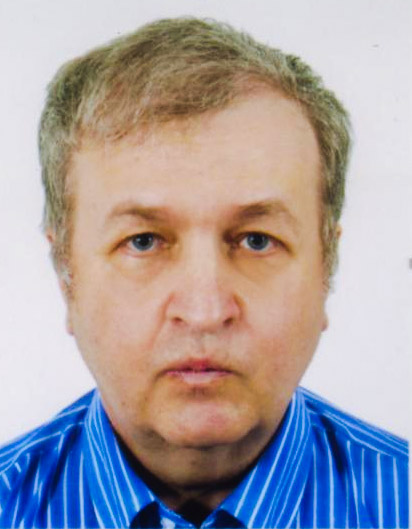
Oleg Zaslavskii. Photo: kharkov-ua.academia.edu
Zaslavskii succeeded in extending the theory to a wide range of black holes. In particular, he studied the effect not only for rotating black holes but also for electrically charged ones, where the particle acceleration mechanism works differently. Real black holes, moreover, may be surrounded by matter — plasma and gas, for example. Zaslavskii proved mathematically that the BSW effect persists even when the gravitational influence of this surrounding matter is taken into account.
If collision energies can approach infinity, one might expect the cosmos to be constantly rocked by micro-explosions of unimaginable power, capable of spawning new universes or tearing space apart. Zaslavskii answered the question of why this doesn’t happen. By investigating the physical limits of the process, he formulated the principle of kinematic censorship.
A black hole’s gravitational field really can accelerate particles to mind-boggling energies. But the geometry of spacetime itself “vetoes” truly infinite energy. For a collision to reach enormous energies, one of the particles has to move along a very specific, “critical” trajectory. Zaslavskii calculated that gravitational attraction and centrifugal forces near the event horizon act as a natural filter: they “blow away,” or screen out, particles headed for a dangerous collision, keeping physical quantities from becoming truly infinite.
Up-to-date videos on science during wartime, interviews, podcasts, and streams with prominent scientists — subscribe to the T-invariant YouTube channel!
Until recently, physicists did little research on black hole interiors, since no information can get out of them. Zaslavskii took on the task of describing, mathematically, the extreme gravity inside the event horizon. His recent papers (including one of the very papers he wrote with his Russian colleague) tackle a notoriously difficult problem involving coordinate systems. If you fall into a black hole, an outside observer will see you slowing down at its edge forever. In reality, though, you’ll cross it in a fraction of a second. Zaslavskii and his coauthor developed and refined a mathematical framework (a modified “Lemaître time”) that makes it possible to describe the physics of matter moving from our space into a black hole’s interior smoothly — without mathematical discontinuities or “catastrophes” in the formulas.
His research shows that black holes are not just dead gravitational graves but highly complex dynamic systems that constantly interact with the surrounding universe at both the quantum and the macro level.
In the papers that got him into trouble, Zaslavskii and his coauthor explore the “fail-safes” the universe has built into black holes to prevent an explosion of infinite energy — in other words, “kinematic censorship.”
In one of the two papers, for example, the physicists work through an extreme scenario: a collision at the event horizon between a particle emerging from a white hole and a particle falling into a black hole. You’d expect the energy to be colossal. But the researchers proved mathematically that kinematic censorship kicks in. For physically realizable particles, the laws of relativity cause their velocities to drop. No “infinite energy” is born in our reality — the universe hits the brakes in time.
[[socialnetworks]]
In their second joint paper — the other one that caused the trouble — the researchers considered more complex black holes: ones that rotate and carry an electric charge. From the point of view of an outside observer, including one on Earth, time freezes at a black hole’s horizon. There, the ordinary equations of physics start to glitch and “spit out” spurious infinities. To get around this dead end, the researchers used what is known as Lemaître time — a time scale “tied” to the clock of the infalling observer. For the infalling observer, though, time passes perfectly normally, and they cross the boundary in a matter of seconds.
Using this frame of reference, the coauthors were able to analyze particle collisions immediately after the horizon is crossed. According to their work, the principle of kinematic censorship continues to hold even inside rotating, charged black holes. The authors’ mathematics describes in detail exactly how the properties of spacetime change during those first fractions of a second of the fall, confirming that black holes remain extreme objects — but the laws of physics don’t break down inside them.
When Publishing Stops Being a Private Matter
T-invariant asked the Ministry of Education and Science of Ukraine (MES) to comment on the situation. Below is a full translation of the response from Hryhorii Mozolevych, Director General of the MES Science Development Directorate, with the original capitalization preserved [Ukrainian official documents often write “russia,” as well as the abbreviations “rf” (Russian Federation) and “rb” (Republic of Belarus), in lowercase — T-invariant].
“The aggressive war that russia has been waging against Ukraine since 2014 has been accompanied by the systematic use of science as an instrument of propaganda and of attempts to legitimize the occupation. Beginning in 2014 with the occupation of the Autonomous Republic of Crimea and the city of Sevastopol, and continuing during the full-scale military invasion of Ukraine by the rf, the aggressor state has seized more than 1,500 Ukrainian educational and research institutions. The occupation administration of the rf uses these institutions to promote its geopolitical agenda, to justify the attempted illegal annexation of Ukrainian territories, and to assimilate the population.
More than 2,000 Ukrainian educational institutions, research institutions, and libraries have been destroyed or damaged, forcing thousands of scientists to flee conflict zones in order to save themselves and their families.
Hundreds of higher education institutions and research institutions located in the temporarily occupied territories of Ukraine, together with their intellectual and information resources, archives, libraries, collections, publications, know-how, trade names and symbols, technologies, and equipment, have been seized by the occupation administrations and, in essence, stolen by the rf.
The position of the MES remains principled and unchanged: any official scientific cooperation with representatives of the rf and the rb is unacceptable until the territorial integrity of Ukraine is fully restored and the damage inflicted is compensated.
The state policy prohibiting joint scientific activity is based on a number of legal and regulatory acts. In particular, the Cabinet of Ministers of Ukraine, by Resolution No. 355 of March 24, 2022, denounced the Agreement in the Field of Education and Science with the Russian Federation, and by Resolution No. 417 of April 9, 2022, the Treaty on Cooperation in the Field of Science and Technology with the republic of Belarus was denounced. The key document is Law of Ukraine No. 2299-IX of June 19, 2022, On the Termination of the Agreement between the Government of Ukraine and the Government of the Russian Federation on Scientific and Technical Cooperation. In addition, pursuant to clause 20 of part one of Article 4 of the Law of Ukraine On Sanctions No. 1644-VII of August 14, 2014, the types of sanctions include the termination of cultural exchanges, scientific cooperation, educational and sports contacts, and entertainment programs with foreign states and foreign legal entities. The said acts require the termination of scientific cooperation with institutions of the aggressor state, including at the level of joint scientific publications.
Furthermore, by letter No. 1/2000-24 of February 5, 2024, the MES informed all higher education institutions and research institutions of Ukraine, as well as the principal administrators of budget funds within whose sphere of management/under whose authority higher education institutions and research institutions fall, of the need to terminate all forms of scientific (scientific and technical) cooperation with the rf and the rb.
Consequently, any cooperation with representatives of the aggressor state, the rf, as well as the rb (with whose support the aggression against Ukraine is being carried out), including cooperation at the level of joint scientific publications, the implementation of research projects, etc., should have been terminated in compliance with the requirements of the legislation of Ukraine.
In response to your question regarding the possibility of publishing joint articles without indicating a Ukrainian affiliation, we hereby inform you that the determining factor for the prohibition of cooperation is the coauthor’s legal affiliation with the state institutions of the aggressor, which imposes corresponding obligations on such a person. Any person working at an institution of the rf is part of the aggressor’s scientific system, and the results of his or her research directly or indirectly serve the Russian military potential.
The MES does not regulate the private correspondence of citizens; however, it emphasizes that if contacts develop into a scientific result (joint publications), they cease to be ‘private’ and become a form of scientific interaction. The use of intellectual property to create joint products with representatives of the rf constitutes a violation of the legislation and the national interests of Ukraine. An article’s association with a Russian institution automatically renders such a publication unacceptable for any reporting purposes, as well as for the defense of dissertations or the conferral of academic titles in Ukraine, regardless of whether or not the Ukrainian scientist indicated his or her affiliation.
State policy in the sphere of scientific activity in wartime cannot be based on individual exceptions. At the same time, this policy does not provide for depriving a scientist for life of the opportunity to hold academic positions or to engage in science in Ukraine.
With regard to authors in respect of whom facts of cooperation with institutions of the rf have been recorded in articles submitted for publication after the adoption of Law of Ukraine No. 2299-IX, the MES applies clearly regulated institutional restrictions. Such restrictions include:
* the termination of MES funding for research whose state registration numbers were indicated in the identified joint publications, with the subsequent completion of this research in full at the expense of the HEIs’/RIs’ (higher education institutions’/research institutions’) own resources;
* a ban on the authors of the identified publications participating in MES competitions for the funding of research and development announced during 2024–2026 inclusive;
* the deprivation of the authors of the identified publications of any formalized expert and advisory functions within the MES system;
* a warning to HEIs/RIs that, in the course of conducting scientific activities, carrying out research projects, and the mandatory pre-defense/review of their materials at meetings of the academic (scientific, scientific and technical) council, failed to identify and stop the cooperation of their employees with employees of institutions of the rf, with additional measures to be taken subsequently at the HEI/RI level in the event of recurrence.
Thus, what is at issue is a temporary restriction of access to state funding and expert councils, participation in competitions, etc., and not a complete prohibition of professional activity.
Monitoring of scientific works is carried out by the State Scientific and Technical Library (SSTL) of Ukraine exclusively on the basis of metadata recorded in the Scopus and Web of Science databases in the form in which they were transmitted by publishers. The state authorities of Ukraine do not independently generate or alter publication metadata.
If a Ukrainian scientist finds himself or herself in a situation of involuntary or unwanted coauthorship with representatives of the rf and seeks to avoid the legitimization of the aggressor’s institutions and subsequent sanctions, he or she must initiate a procedure to correct the scientific record. Matters of initiating the retraction (withdrawal) of a publication, making changes to metadata, and interacting with the editorial office of the journal or the administration of the databases fall within the exclusive competence of the authors themselves, the academic integrity commissions of their institutions, and the publishers.
In accordance with the practice of the Committee on Publication Ethics (COPE), the procedure provides for the following:
* corrections (Corrigendum) to a published article are made upon agreement of all coauthors, as confirmed by the designated author (the corresponding author), after which the publisher publishes the correction as a stand-alone document of the scientific record;
* if it is impossible to change the list of authors or their affiliations owing to a lack of consent, the Ukrainian scientist has the right to demand the withdrawal (retraction) of the article;
* in the event of a documented correction of the relevant records in the Scopus or Web of Science databases, this information is updated during the next stage of monitoring, and the publication may be excluded from the list of works subject to restrictions.
Thus, scientists must respond independently and in a timely manner to the circumstances identified, taking the necessary steps within the limits of their authority and in accordance with the generally accepted practice of scholarly communication and the standards of academic integrity.
The timeliness of such actions is of decisive importance, since until the correction is made, the erroneous record remains in the database and is objectively reflected in the results of bibliometric analysis.”
The MES response makes clear that what matters to the ministry is not the Russian coauthor’s citizenship, his political views, or the subject of the research, but his affiliation with a Russian research institution. Zaslavskii regards these publications as the product of private professional collaboration outside his university work. The MES operates on a different logic: a joint publication is in and of itself a form of scientific interaction with the aggressor state. Nor does the absence of Zaslavskii’s Ukrainian affiliation change anything: what the MES considers decisive is his coauthor’s institutional ties to Russia. Publications, meanwhile, are monitored on the basis of Scopus and Web of Science metadata.
The way out that the MES proposes deserves particular attention. The problem is that international scientific journals and Committee on Publication Ethics standards do not allow an affiliation to be removed or a paper to be retracted for political or administrative reasons if it involves no plagiarism or falsification. In effect, the MES is demanding that scientists take steps that cannot be carried out in practice under international publishing ethics. The MES also stresses that this is a temporary restriction on access to state funding and expert roles, not a ban on practicing one’s profession.
Free to Work, Just Not Funded
Did Zaslavskii really lose his job primarily because of the joint papers with his Russian colleague — papers that, he says, were written outside his official duties and working hours? KhNU Vice-Rector for Research and Teaching Anton Panteleimonov responded to T-invariant’s inquiry.
“Until December 31, 2025, inclusive, Professor O. B. Zaslavskii worked at V. N. Karazin Kharkiv National University in the position of senior research fellow, performing research work funded by the MES of Ukraine. In this connection, your assertion that ‘this scientific collaboration was carried out independently and outside his official university duties and working hours’ is not entirely clear. It should be noted that the inclusion of a researcher in the research team is determined by the staffing table of such work and by the initiative of its principal investigator. The principal investigators of research projects related to Professor O. B. Zaslavskii’s field of research did not take the initiative to include him, understanding that the university risks losing budget funding for research and also bears reputational and financial risks. At the same time, Professor O. B. Zaslavskii is not restricted from submitting competitive applications for vacant academic and teaching positions, provided that he meets the requirements of current legislation, in particular fluency in the state language [Ukrainian — T-invariant].”
We also asked what options remain for continuing research when a scientist has been cut off from MES funding. Anton Panteleimonov replied that the question lies outside the purview of the Kharkiv National University administration.
Ripple Effects
Oleg Zaslavskii holds a Doctor of Sciences degree in physics and mathematics [the higher doctorate, above the PhD, in Ukraine and other post-Soviet countries — T-invariant] and is the author of more than 250 papers in astrophysics and gravitation. According to Scopus, his h-index is 31 and his publication count exceeds 250; on Google Scholar, his work has been cited about 4,500 times. Predictably, it isn’t only Zaslavskii himself who has been hurt by what happened, but also the people around him. What worries him most is the fate of his PhD student, Hryhorii Ovcharenko: “He’s an absolutely brilliant young scientist. But because of my problems, he can’t defend his dissertation. As Panteleimonov explained to me, only KhNU staff members can supervise PhD students. When my student came to me, I was ‘on a project.’ Then the project ended, and now I’m stuck without funding and my student can’t defend.”
With would-be students, the situation is simpler, though no less disheartening. Early this year, a researcher from Thailand wanted to come to work with Zaslavskii as a postdoc. But that turned out to be impossible: Zaslavskii currently has no active projects at the university.
“Cutting all ties between institutions and ending funding for (formerly) joint projects with the aggressor is completely natural — no argument there,” Zaslavskii insists. “That’s the state’s responsibility. But when it comes to individual contacts and joint publications in fundamental theoretical science (which don’t require any special funding), the state has no business meddling at all. Whether such cooperation between a Ukrainian and a Russian scientist is acceptable in any given case is purely a question of ethics. In my case, it absolutely is.”
Zaslavskii’s colleagues have also come to his defense. Yurii Bolotin, a professor at KhNU and chief researcher at the National Science Center “Kharkiv Institute of Physics and Technology” (NSC KIPT), writes:
Vojtěch Pravda, PhD, deputy director of the Institute of Mathematics of the Czech Academy of Sciences, also spoke out in support of Zaslavskii:
“I am a person who considers himself a strong supporter of Ukraine (for example, my family has accommodated two seniors from the Kharkiv region since April 2022). I have also refused multiple times to referee papers submitted by Russian physicists to international journals. In each case, however, I make a careful check to see whether the authors have signed any Russian anti-war petition. In such cases, I do not consider the authors pro-war or anti-Ukraine, but instead brave, responsible citizens. This is exactly the case with [the coauthor of Oleg Zaslavskii’s recent papers], who signed two such petitions in 2022. Therefore, I would urge you to take this fact into account and not terminate Oleg Zaslavskii’s contract. Ukraine has gained a lot of respect in Central Europe thanks to its brave soldiers and citizens. In my view, missteps like this one regarding Oleg Zaslavskii, who is very well known in the international physics community, would not serve Ukraine’s reputation well abroad. Finally, I would like to point out that Oleg Zaslavskii’s student, Hryhorii Ovcharenko, whom I had the pleasure of teaching in an advanced general relativity course, without any exaggeration belongs to the top 1–2% of students by Central and Western European standards. He has the potential to become one of the top Ukrainian physicists. It is therefore very important for him to be able to complete his PhD thesis at your university.”
Roman Konoplya, a leading researcher at the Institute of Physics of the Silesian University in Opava (Czech Republic), also urged that Zaslavskii’s case be considered on its merits:
“I fully understand that the current circumstances created by Russia’s aggression against Ukraine have led to exceptionally difficult decisions for Ukrainian academic institutions. Nevertheless, I respectfully hope that Dr. Zaslavskii’s case can be considered on its individual merits. In particular, I do not believe that peaceful scientific collaboration in fundamental theoretical physics should, by itself, be interpreted as support for the policies or actions of any government. This is especially true when such collaboration concerns purely academic research with no military relevance and when the coauthor has publicly opposed the Russian aggression against Ukraine. Science has traditionally served as a bridge between individuals rather than governments, and preserving this principle whenever possible benefits the international scientific community.”
Why Zaslavskii?
Andrei Rostovtsev, a cofounder of Dissernet [a volunteer network that exposes plagiarism in Russian dissertations and academic publications — T-invariant] who writes the Plagiarism Navigator column, pointed out that joint Russian-Ukrainian papers are easy to find in OpenAlex [an open international aggregator of scholarly metadata that tracks connections among millions of publications, authors, and academic institutions worldwide — T-invariant]. We had no trouble finding more than five joint papers in which one author is listed on the relevant institute’s website as an employee of a Russian institution and another as an employee of a Ukrainian one. In other words, Zaslavskii is not the only Ukrainian scientist who continues to publish with Russian colleagues. But his is the only case we know of in which a scientist has lost the ability to keep working because of such publications. We asked the Ukrainian coauthors of these papers whether they had faced pressure over their joint publications but received no response.
Andrei Rostovtsev is convinced that what matters in this case is not the Russian coauthor’s citizenship or affiliation but Zaslavskii’s own stance and his criticism of the current state of Ukrainian science. Oleg Zaslavskii has repeatedly criticized how science funding is distributed in Ukraine and warned of the risks of self-isolation for the Ukrainian scientific community, the severing of international ties, and brain drain. He has also spoken about systemic mistakes in reforming the Academy of Sciences.
“It’s worth noting that KhNU rector Tetyana Kaganovska ‘cribbed’ her dissertation: 40% of the third section of her doctoral dissertation was lifted from the work of her Russian colleague Pavel Vostrikov, ‘Organizational and Legal Problems of Training, Retraining, and Professional Development of Civil Servants.’ And a substantial part of the fourth chapter was copied from another work by Russian colleagues Shidov and Khapov, ‘Personnel Rotation as an Element of Business Career Management.’ Zaslavskii is known for his position that ‘Ukrainian science is dying.’ So the situation looks more like crooks settling political scores with a scientist for speaking his mind,” says Andrei Rostovtsev.
Oleg Zaslavskii’s story shows how general wartime restrictions play out in a specific case. The MES position is unequivocal: a joint publication with a scientist affiliated with a Russian institution counts as a form of scientific cooperation, regardless of the research topic, the coauthor’s political views, or the circumstances under which the paper was written. The system makes no provision for individual exceptions.
In Zaslavskii’s case, the consequences have gone beyond the two publications. He lost the right to compete for MES funding, was not included in any new projects after his previous one ended, and was left without a salary. The university attributes this to the risk of losing budget funding; Zaslavskii himself sees the approach as collective responsibility in action. His colleagues propose taking the circumstances of each case into account, while Andrei Rostovtsev suggests that the scientist’s long-running conflict with the Ukrainian science system may also have played a role.
PREVIOUSLY IN T-INVARIANT
So the question here is not whether Ukraine should restrict scientific cooperation with Russia in wartime. The restrictions already exist, and their logic is clear. The real question is whether they should be applied automatically or leave room for individual cases to be considered on their merits.
Should a country at war, short on money and time, spend its energy on individual cases? At first pragmatic glance — no. At a second, even more pragmatic glance — perhaps it should, once you recognize that it is cheaper to let a particular scientist and his students remain part of world-class international science than to spend the effort needed to train new scientists from scratch. Over the past four years, Ukrainian science has suffered terrible losses. Several dozen scientists have been killed at the front, and thousands have left the country because they could no longer continue their work. How Ukraine will make up for these intellectual losses is a serious question with no easy answer for now. But when researchers work at an international level without leaving a country that is defending itself, showing the whole world that even under the harshest conditions Ukrainian scientists remain at their posts, it is vital to find a legal and administrative way for them to keep doing their work. They are working for the future of Ukraine as a country with full-fledged higher education and first-rate science.
Support T-invariant’s work by subscribing to our Patreon and choosing a donation amount that suits you.
The post <h1>Caught in a Superposition: How a Kharkiv Astrophysicist and Ukraine’s Ministry of Education and Science Fell Out over Collective vs. Individual Responsibility</h1> appeared first on Т-инвариант / T-invariant.

 Login