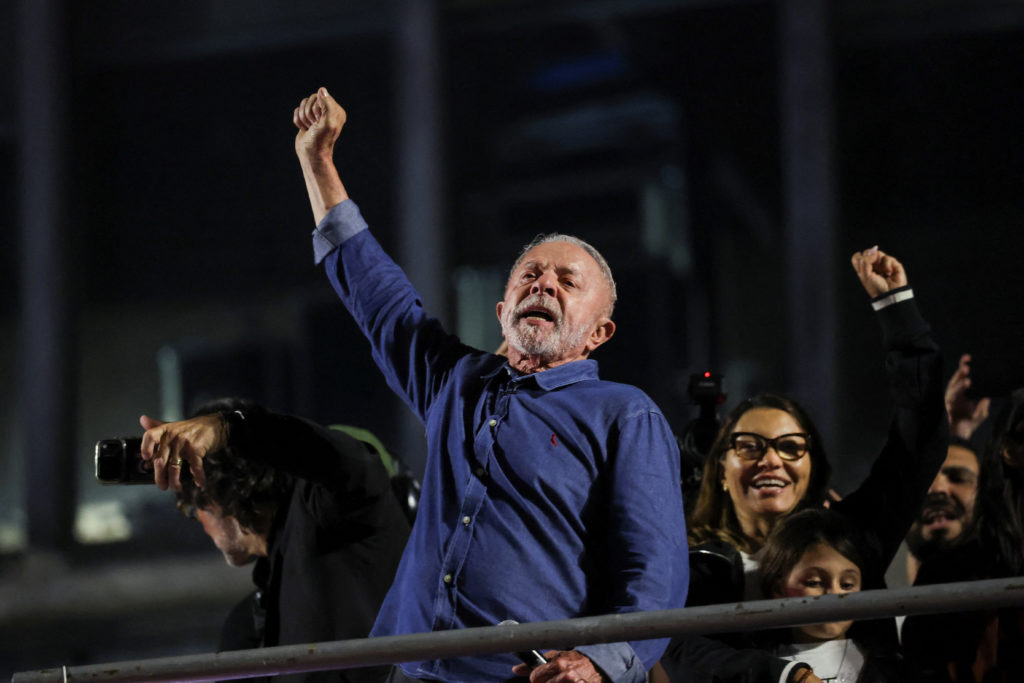
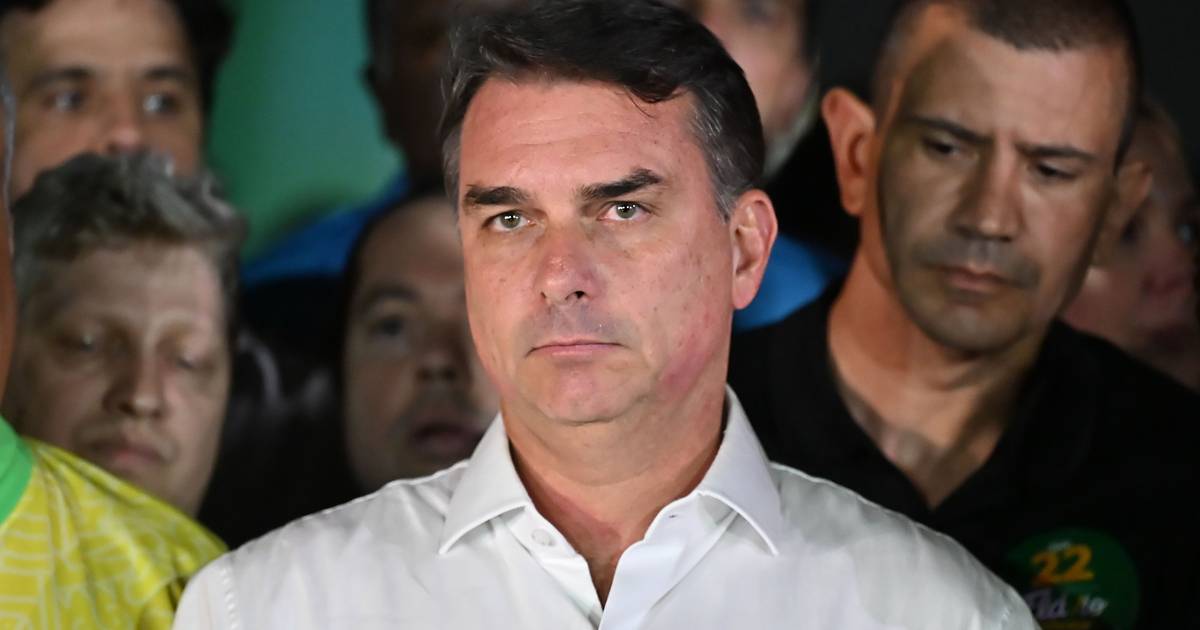
In a closely watched election, Brazilian President Luiz Inácio Lula da Silva defeated right-wing and Trump-aligned challenger Flávio Bolsonaro. Transport and weather disruptions in parts of Brazil led to a chaotic final stretch at the polls. Bolsonaro is refusing to concede, and President Trump called the outcome "rigged." Stephanie Sy reports.
The re-election of President Luiz Inácio Lula da Silva is expected to lead to continued rainforest protections. His opponent wanted to make it easier to clear land.
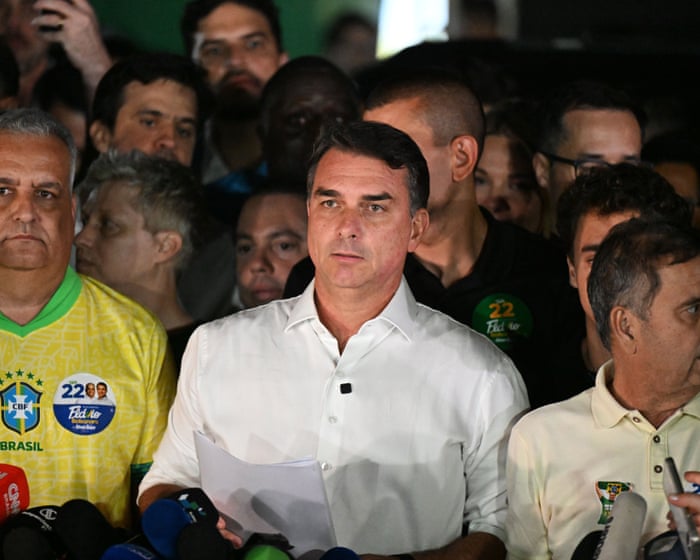
Flávio Bolsonaro acusa Alexandre de Moraes de o tentar intimidar e anuncia que vai pedir a cassação da candidatura de Lula da Silva, em vez de contestar os resultados. Donald Trump também afirmou que a eleição foi fraudulenta, sem, contudo, fornecer provas do que declarava
Far-right senator banned from leaving country as supreme court judge’s ruling cites money-laundering case
The far-right senator Flávio Bolsonaro was banned from leaving Brazil and ordered to surrender his passports just hours after his dramatic loss in the presidential election to the leftist president Luiz Inácio Lula da Silva.
The ruling was issued by Alexandre de Moraes, the same supreme court justice who oversaw the trial of the senator’s father, the former president Jair Bolsonaro, for attempting a coup.
President Luiz Inácio Lula da Silva won another term on Sunday, with the help of a seismic social media campaign that convinced Brazilians to reject his rival.
President Luiz Inácio Lula da Silva’s army of supporters, mobilized over a WhatsApp chat group, delivered an unexpected victory over Flávio Bolsonaro, the right-wing challenger.
Brasilia, 26 oct (Prensa Latina) El diputado brasileño André Janones se puso hoy a disposición de la izquierda mundial para combatir a la extrema derecha, tras recibir elogios del expresidente colombiano Gustavo Petro.
Former Instacart CEO Fidji Simo (left) said that Caper smart shopping carts would be "the future of grocery shopping."
Bloomberg/Getty Images
Instacart is shuttering its team focused on smart shopping carts.
The company will wind down its Caper cart division by the second quarter of 2027, it said Monday.
The smart shopping carts were "the future of grocery shopping," Instacart's former CEO said in 2024.
Instacart is carting away a technology it once said would play a key role in shopping.
The grocery delivery company will wind down the team that develops its Caper smart shopping carts, it said on Monday. The move, approved by Instacart's board of directors, will be completed by the second quarter of 2027.
A wind-down will cost the company between $55 million and $80 million, including the costs of terminating some employees and contracts, it said in a filing with the SEC. Instacart will reinvest savings from the decision into "strategic growth initiatives."
Caper carts were one of the most visible of Instacart's retail technology efforts. The company began as a delivery-focused startup in 2012, but diversified into selling technology to retailers over the last several years.
Equipped with cameras and sensors, Caper carts could weigh fruit, track what customers placed inside or removed from them, apply coupons, and accept payments when customers were done shopping. Instacart also saw an opportunity to serve users tailored ads on the carts' screens.
In early 2024, Instacart said it planned to roll out "thousands" of the Caper carts to stores. Then-CEO Fidji Simo said: "We really believe that it's going to be the future of grocery shopping."
Amazon, which makes a similar smart shopping cart, said at the start of 2026 that it planned to start using a new version at Whole Foods Market stores.
Do you have a story idea about Uber? Contact this reporter at abitter@businessinsider.com or via encrypted messaging app Signal at 808-854-4501. Use a personal email address, a nonwork WiFi network, and a nonwork device; here's our guide to sharing information securely.
La reelección de Luiz Inácio Lula da Silva deja al senador Flávio Bolsonaro sin cargo público desde febrero de 2027, tras más de dos décadas en la política de Río de Janeiro.
Brasilia, 26 oct (Prensa Latina) El senador brasileño Flávio Bolsonaro afirmó hoy que fue notificado por la Policía Federal (PF) de una orden para entregar sus pasaportes y de una prohibición para salir del país.
O governo dos Países Baixos (Holanda) anunciou nesta segunda-feira (26) que pretende investir US$500 milhões no Fundo Florestas Tropicais para Sempre (TFFF, na sigla em inglês). O mecanismo internacional de financiamento foi idealizado pelo Brasil e lançado durante a 30ª Conferência das Nações Unidas sobre Mudanças Climáticas (COP30), realizada em Belém, em 2025.
O aporte não será feito todo de uma vez, mas dividido ao longo de um período de 10 anos. Segundo o anúncio do governo, o investimento reforça a ambição do país em relação às metas climáticas internacionais e à biodiversidade.
O ministro do Comércio Exterior e Cooperação para o Desenvolvimento, Sjoerd Sjoerdsma, disse que preservar as florestas é fundamental para enfrentar as mudanças climáticas, que ameaçam segurança, prosperidade e liberdades.
“Isso reduz as emissões e é essencial para a resiliência dos ecossistemas, da biodiversidade e do abastecimento alimentar global. Por meio deste compromisso, oferecemos aos países um incentivo sólido e previsível para proteger e conservar suas florestas tropicais”, disse Sjoerdsma.
Com o anúncio, os Países Baixos passam a integrar uma coalizão internacional que já anunciou intenção de contribuir com o investimento. Entre os países estão Brasil, Noruega, Luxemburgo, Indonésia, Alemanha, França, Portugal e Reino Unido.
Os investidores que comprarem os títulos emitidos pelo TFFF receberão juros fixos e estáveis. Já os países que conseguirem recuperar e manter suas florestas de pé serão recompensados financeiramente por esse esforço. Eles só receberão os valores após verificação por imagens de satélite que confirmem níveis de desmatamento abaixo de limites pré-definidos.
O fundo também prevê um protagonismo das populações indígenas e povos e comunidades tradicionais, que desempenham papel direto na proteção das florestas. O mecanismo propõe destinar pelo menos 20% dos pagamentos nacionais a essas populações.
Os idealizadores do TFFF estimam que ele poderá proteger mais de 1 bilhão de hectares de florestas em mais de 70 países. O objetivo é arrecadar, pelo menos, US$ 125 bilhões. Desse montante, US$ 100 bilhões deverão vir do setor privado, enquanto os outros US$ 25 bilhões são esperados de governos pelo mundo.
O Centro Comercial Quinta Shopping na Quinta do Lago, convida famílias e visitantes a celebrar no dia 31 de outubro, o Halloween com uma programação temática que decorrerá entre as 11h00 e as 13h00 e entre as 14h00 e as 19h00.
Ao longo do dia, o Quinta Shopping transforma-se num ponto de encontro para momentos de criatividade, diversão e convívio, cujo programa inclui pinturas faciais, ateliers de máscaras e jogos temáticos de Halloween, pensados para envolver os mais novos numa experiência divertida.
A iniciativa estende-se também às lojas aderentes, onde haverá momentos de doçura ou travessura, convidando as famílias a explorar o espaço e a participar na celebração.
Com uma atmosfera ao ar livre, arquitetura inspiradora e uma oferta qualificada e diversificada de lojas, restauração e serviços, o Quinta Shopping reforça, com esta iniciativa, a sua programação de eventos ao longo do ano.
Sobre o Quinta Shopping
Localizado à entrada da Quinta do Lago, o Quinta Shopping é um Boutique Mall com uma oferta diversificada de lojas e serviços premium, restaurantes, bares e cafés. A sua praça central, as esplanadas e a arquitetura romântica e inspiradora proporcionam uma experiência tranquila e elegante, tornando o espaço num ponto de encontro para residentes e visitantes. Ao longo do ano, o Quinta Shopping promove eventos que dinamizam o espaço sem perder a sua identidade.
A Polícia Judiciária (PJ), informa que através da Unidade de Informação Criminal, no âmbito da cooperação internacional, desenvolveu um conjunto de diligências que conduziram à localização e detenção, na zona de Serpa, de um cidadão estrangeiro, com 33 anos, procurado no Brasil pelos crimes de ofensas à integridade física.
Os factos ocorreram em 2023, quando o agora detido se deslocou a casa da ex-companheira, alegadamente insatisfeito com o fim da relação entre ambos, ocorrida meses antes.
Nessa altura, proferiu ameaças e insultos verbais contra a vítima, agredindo-a fisicamente, mesmo sabendo que esta estava grávida, batendo-lhe na cabeça e na zona do rosto e puxando-lhe o cabelo.
O detido reside em Portugal, contudo desenvolvia a sua atividade laboral em Espanha (trabalhador agrícola), razão pela qual nem sempre vinha dormir a casa, dificultando a sua localização e detenção.
A PJ informa ainda que o detido foi presente ao Tribunal da Relação de Évora que determinou que aguardasse o processo de extradição em prisão preventiva.
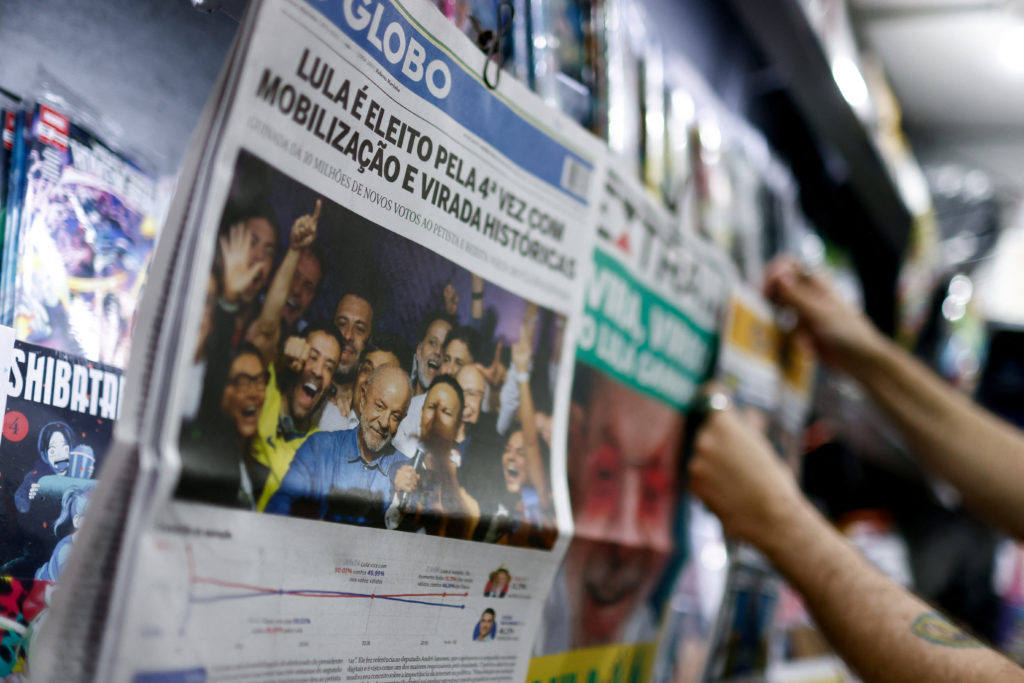
Brazilian progressive leader and incumbent president Luiz Inácio Lula da Silva made history last night, defeating far-right Flávio Bolsonaro of the Liberal Party in the second round after coming in second in the first round.
The results were awaited with bated breath after a judge ordered polls to be open for two more hours following complaints from voters who claimed they had been unable to reach polling places due to transportation problems. First the Workers’ Party (PT), and then the Liberal Party (PL), requested the extension, which paused the vote count until 7:00 pm in Brasília, the capital.
With 51.79% of the valid votes, the former union leader, metalworker, and head of the Workers’ Party staged a historic comeback against Bolsonaro, who lost the initial momentum he had in the first round and barely reached 48.21%. This is the first time a candidate who finished second in Brazil’s first round has staged a comeback and won the election in the runoff.
Bolsonaro entered the runoff with a relative – though significant – lead following his victory in the first round of voting on October 4, where he received 47.03% (approximately 56,104,503 votes), while Lula, to the surprise of many, came in second with 45.16% (53,879,538 votes).
In other words, there was a gap of nearly 3 million votes between the two candidates that seemed very difficult for Lula to overcome, especially considering that the remaining votes were split among candidates who were mostly from the right and center-right – a fact that led many to believe that Bolsonaro, the son of former president and currently imprisoned Jair Bolsonaro, would win the runoff.
But Lula, a true legend of Brazilian politics (a labor leader during the dictatorship who won the presidency three times), achieved the unthinkable. Between the first and second rounds of voting, he managed to gain more than 10 million votes compared to the first round – an astronomical figure, considering that Bolsonaro barely managed to gain some 3.7 million votes.
Lula’s victory
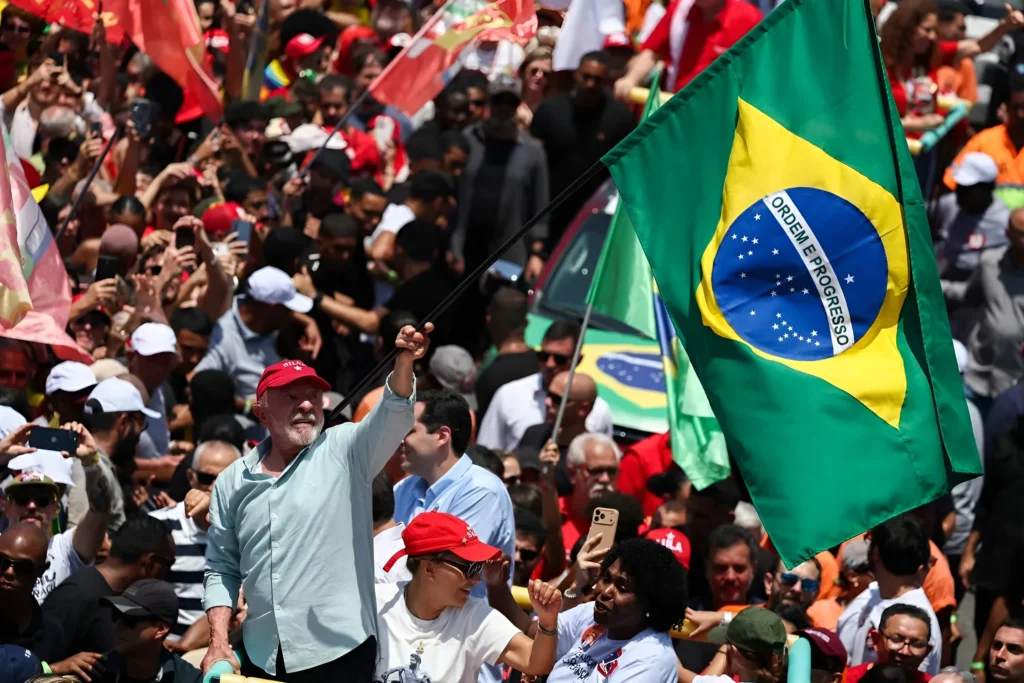
After it was clear that Lula’s victory was irreversible, the Brazilian streets were filled with people wearing the traditional red of the Workers’ Party. However, the victory was celebrated by a sort of broad coalition that had formed to overturn the result – one that spanned the political spectrum from classical left-wing parties and movements, to progressive liberals, and even some center-right groups that saw Bolsonaro as a threat to democracy.
In his speech marking his fourth presidential victory, Lula said: “I want to thank the Brazilian people – those who have stood by me for so long – and express my gratitude for the generosity of Brazil’s young people … We are going to change the way this country is governed … we are going to involve the people more. Digital communication will play a very significant role in this administration. I will deliver the best presidential term this country has ever seen.”
“Following our victory, we will have to discuss a new way of governing this country. The people’s participation in this campaign – the students, women, and workers who took to the streets – will compel us to find a new way of governing. This country will never be the same again,” said the reelected president.
Lula also stated that the debates against Bolsonaro and the PL campaign were riddled with lies and “denialism”: “I never thought a person could lie so much in this country, with such brazenness, as if there were not a single shred of humanity within him.”
Finally, he also addressed the problems his campaign faced regarding the dissemination of its messages on social media. The PT repeatedly denounced that the major social media platforms hindered or outright prevented the spread of its political messages, while Bolsonaro’s messages faced no such issues.
Is Meta meddling in Brazil's elections? With Sunday's runoff neck and neck, new reporting raises serious questions.
The pattern is hard to ignore: Lula's campaign was blocked from boosting Instagram posts for nearly 24 hours, his ad account was previously restricted, and… pic.twitter.com/DVjDWJa7Xw
Hence, he suggested placing limits on the power of the major corporations behind social media platforms – a stance he has taken on other occasions and which has caused friction with tech giants: “We cannot fail to recognize that a crime in the digital world must be treated the same as a crime in real life. We cannot have monstrous companies of this size – which make billions without paying taxes to our country – trying to alter election results,” Lula said in his victory speech.
Bolsonaro’s reaction
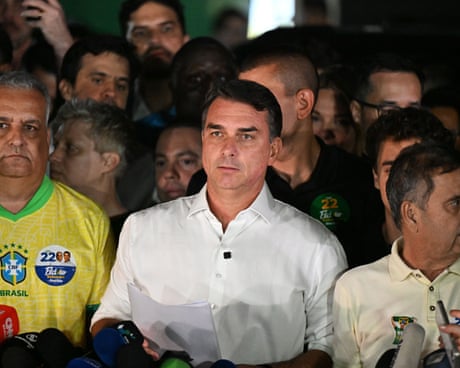
For his part, far-right politician Flávio Bolsonaro said he “rejects” the election results and announced that he will seek to have the election annulled: “We are going to consult with our legal team; we are going to request that these elections be annulled. I will not accept that the rules of the game have been changed in the middle of the game – once again – by Lula’s friends on the Federal Supreme Court.”
Bolsonaro, who delivered his speech to his supporters, was referring to the extension of voting hours. According to his team, the extension was ordered after the polling stations had closed, which, they claimed, violates Brazilian electoral rules – even though the PL itself had also requested the extension.
This is not the first time that Bolsonaro’s supporters have rejected Lula’s victory. In 2022, it was Jair Bolsonaro who refused to acknowledge his defeat. Months later, during Lula’s inauguration, hundreds of Bolsonaro supporters violently stormed several government buildings, after which investigations were launched into an alleged attempted coup d’état. One of those found guilty in the case was Jair Bolsonaro himself, who is currently serving a sentence for that crime.
However, it will be difficult for Bolsonaro’s allegations to gain traction in Brazil’s immediate future. With the exception of Argentina’s far-right politician Milei, South American countries – through their heads of state and foreign ministries – have publicly congratulated Lula on his victory, which amounts to a de facto recognition of his win.
However, the Bolsonaros still have the Trump administration as a last resort, as it has publicly supported the PL candidate, just as it did with his father in the past. This is the first time since Trump began his second term that a candidate he supported in a Latin American country has failed to win, which still raises questions about what Washington’s stance will be regarding Lula’s historic victory – a victory in which, against all odds, he managed to defeat Washington’s candidate and thus halted a wave of far-right victories in Latin America.
O professor Elton Freitas, da Universidade Federal de Sergipe (UFS), publicou um vídeo nas redes sociais em que critica o deputado Nikolas Ferreira (PL-MG) por causa da gravação feita no Nordeste. Ele afirma que o parlamentar mineiro chegou à região com câmera de cinema, iluminação e teleprompter, montou a estrutura na casa de uma família humilde e concluiu que o Nordeste foi esquecido.
O professor cita os bastidores vazados do material. Segundo ele, a equipe pediu para esconder a antena parabólica da casa por ser “tecnológica demais” e uma voz comentou sobre a moradora: “ela faz uma cara de coitada, que chega a dar dó”. Elton rebate a fala e afirma que a expressão usada não corresponde à realidade da população nordestina.
Elton Freitas lembra que a gravação ocorreu em Luís Eduardo Magalhães, na Bahia, cidade do agronegócio e um dos maiores PIBs do estado, com campus da Universidade Federal do Oeste da Bahia (UFOB), criada em 2013. Ele questiona a tese de abandono e cobra coerência entre o cenário escolhido e a mensagem divulgada pelo deputado.
O professor recorre à história para definir o que considera abandono real. Na seca de 1979 a 1983, pesquisadores estimam pelo menos 700 mil mortos de fome e sede, a maioria crianças. Ele apresenta o dado como exemplo do que a ausência de políticas públicas produziu na região.
Elton cita indicadores de saúde para mostrar a evolução do Nordeste. Em 1980, de cada mil crianças nascidas na região, 97 morriam antes de um ano. Em 2010, o número caiu para 23. Ele atribui a queda à chegada de cisternas, do Bolsa Família, da aposentadoria rural, da energia elétrica e das universidades no interior.
O professor afirma que a seca de 2012 foi mais forte que a de 1980 e não produziu morte em massa, saque ou êxodo. Segundo ele, o resultado decorre de política pública e não de sorte. Ele cita a instalação de mais de 1 milhão de cisternas como parte desse conjunto de ações.
Elton Freitas apresenta dados econômicos da região. Hoje, mais de 90% da energia eólica do Brasil sai do Nordeste. Em Camaçari, onde a Ford encerrou as atividades em 2021, a BYD já montou 100 mil carros. Ele usa os números para rebater a imagem de região sem atividade produtiva.
O professor reconhece que a região tem problemas graves e aponta falta de saneamento, segurança e emprego. Ele afirma, no entanto, que a solução não depende de esconder antena para retratar a população como miserável. Para Elton, o Nordeste é resistência, e a frase virou lema pessoal dele.
Ele encerra com uma reflexão sobre os riscos da exposição pública e sobre o que tem a perder com o posicionamento.
O ex-deputado federal Eduardo Bolsonaro (PL-SP) divulgou, na madrugada desta segunda-feira (26/10), um vídeo em inglês nas redes sociais em que pede à comunidade internacional que não reconheça a vitória do presidente Luiz Inácio Lula da Silva (PT). Na gravação, ele afirma, sem apresentar provas, que houve fraude no processo eleitoral e defende o cancelamento do pleito. “Não reconheçam estas eleições. Precisamos cancelar esta eleição. Ela foi claramente fraudulenta. Mas precisamos de pressão internacional”, declarou.
Eduardo sustenta que a virada de Lula entre o primeiro e o segundo turno seria “estatisticamente impossível”. Ele cita a soma dos votos de candidatos derrotados no primeiro turno e afirma que o petista não teria como ter ampliado sua votação na proporção registrada. O ex-deputado questiona ainda a decisão do ministro Cristiano Zanin, do STF, que prorrogou o horário de votação em duas horas.
O argumento de Eduardo, no entanto, não menciona o aumento no comparecimento de eleitores entre os dois turnos. A abstenção caiu de 33,4 milhões no primeiro turno para 30,5 milhões no segundo, o que significa que mais de 128,1 milhões de brasileiros votaram neste domingo, ante 125 milhões na primeira etapa. Lula foi reeleito com 51,79% dos votos válidos, contra 48,21% de Flávio, uma diferença de cerca de 4,4 milhões de votos.
A Justiça Eleitoral negou as acusações e classificou a informação como falsa. O TSE esclareceu que fiscais do PL acompanharam normalmente o Teste de Integridade das Urnas e a totalização dos votos, com registros que comprovam a presença dos representantes. O presidente do STF, Edson Fachin, defendeu o respeito ao resultado das urnas e afirmou que a democracia exige o reconhecimento da vontade manifestada pelos eleitores.
A publicação de Eduardo ocorre após seu irmão, Flávio Bolsonaro, afirmar que não reconhece a derrota e anunciar que pedirá a anulação da eleição. Flávio criticou a prorrogação do horário de votação, mas não citou que a própria campanha do PL também solicitou a extensão em cinco estados. Os presidentes do STF, do TSE, do Senado e da Câmara já reconheceram o resultado.
Brazilian voters have denied Latin America's resurgent right its ultimate prize. Lula's reelection limits U.S. President Trump's influence in the region and cements Brazil as a counterweight to Washington.
The week before October 25 in Brazil was frenetic. It appeared that every one of the over 200 million Brazilians had a political opinion about the presidential election. The country was fundamentally polarized. Polls showed that the vote was going to be tight, with most polls favoring the challenger Flávio Bolsonaro, son of the former president Jair Bolsonaro, and the standard bearer of the far right of a special type. But the incumbent Luiz Inácio Lula da Silva, known as Lula and president of Brazil from 2003 to 2011 and then since 2023, would not allow the polls to stop him. He traveled the length and breadth of the country, holding massive and energetic rallies to mobilize people to vote. In the first round, 21% of the voters did not turn out in a process that is otherwise compulsory (and a large section who did vote left the presidential section either unmarked or spoiled). Only 2.2 million ballots separated Bolsonaro (who won 47% in the first round) from Lula of the 158.7 million registered voters. To win between October 4 (first round) and October 25 (second round), Lula had to either attract people who had voted for Bolsonaro or those who had not voted or spoiled their ballots. No other candidate had turned around such a deficit in Brazil’s modern history. But Lula did it.
Streets
In the three weeks between the first and second rounds, Lula and his team motivated millions of people onto the streets in the large cities of Brazil, but also in several smaller, but significant towns. These enormous mobilizations created a sense that Lula would overcome the mathematical disadvantage presented by the voting numbers after the first round. All psephological analyses showed that Bolsonaro would cruise through in the second round, which would have indicated the impossibility for Lula. But the left did not rest on this handicap but went on the offensive.
In the first round, Bolsonaro finished 2.22 million votes ahead, but in the runoff, Lula finished with 4.43 million votes ahead. The margin moved by 6.66 million votes. These votes came from the large cities: the 319 cities with more than 100,000 inhabitants, home to 57% of Brazil’s population, delivered 3.89 of the 6.66 million of the turnaround. Lula’s vote grew more in municipalities that are more evangelical, richer, whiter, more schooled, and more urban. This meant that he ate substantially into Bolsonaro’s base, which was something that surprised even the Lula team. The key to the turnaround was the mass mobilizations driven by the social movements, with the Landless Rural Workers’ Movement (MST) in the lead.
Advances
Across his three terms, Lula has presided over an extraordinary advance in the social conditions of the Brazilian people. Bolsa Família, increases in the minimum wage, the expansion of public universities, and support for family farming brought food, income, and opportunity into households that the ruling class had long treated as disposable. These achievements changed millions of lives and established that poverty could be confronted through public action. Yet the political formula that made these advances possible has reached its limits. Lula sought to improve the lives of the poor while accommodating the power of finance, agribusiness, and the dominant sections of Brazilian capital. During his first two terms, favorable international conditions created room for this accommodation. But redistribution without a corresponding transformation of economic power left the foundations of inequality intact, allowing the beneficiaries of the old order to retain the means to obstruct change and reverse its gains.
In his third term, fiscal restrictions, expensive credit, and dependence on conservative parliamentary forces have narrowed the space for reform. Social programs remain indispensable, but they cannot by themselves overcome insecure employment, household indebtedness, inadequate public services, or the concentration of land and wealth. The exhaustion lies in a governing strategy whose compromises increasingly obstruct the fulfilment of its promises. Lula’s personal authority cannot indefinitely bridge the distance between popular expectations and the concessions demanded by the powerful. A renewed project will require the organized strength of workers, peasants, and residents of the urban peripheries, the very people who form Lula’s base, with an agenda of agrarian reform, public investment, industrial development, and democratic control over finance. The movements that filled the streets must acquire greater power to shape the government’s direction. Defeating the far right opens that possibility, but securing the social gains of the Lula years will require confronting the structures that continually threaten them.
Defeat of Trump
US President Donald Trump, his vice president JD Vance, and members of the Brazilian diaspora in Miami put an immense amount of effort into defeating Lula. Brazil, which makes up half the landmass of South America, and is the largest economy in Latin America, stands out against the wave of far-right governments that now dominate the Americas. Interference in the Brazilian elections is now an acknowledged fact, with Meta cutting off Lula’s accounts at a crucial stage of the contest and other reports of funding and social media intervention.
Trump had hoped that Bolsonaro would win in Brazil so that he can then strengthen his Shield of the Americas process that began in Miami in March 2026. This process was presented by Trump as an institutional form to coordinate security but also for the suffocation of the popular movements and the left. Lula’s victory has blocked Trump’s path to exercise the Monroe Doctrine. It has also meant that Trump will not be able to so easily access the critical minerals in Brazil or to dominate the new oil find in the basin of the Amazon delta.
Despite the obstacles faced by Lula, his victory has been able to show that the far right is not invincible.
Vijay Prashad is an Indian historian and journalist. He is the author of forty books, including Washington Bullets, Red Star Over the Third World, The Darker Nations: A People’s History of the Third World, The Poorer Nations: A Possible History of the Global South, and How the International Monetary Fund Suffocates Africa, written with Grieve Chelwa. He is the executive director of Tricontinental: Institute for Social Research, the chief correspondent for Globetrotter, and the chief editor of LeftWord Books (New Delhi). He also appeared in the films Shadow World (2016) and Two Meetings (2017).
An emergence in working-class turnout delivered Lula a historic fourth presidential term, and that outcome signals a shift in climate policy and Latin American integration.
The 2026 Brazilian presidential election ended in a runoff, determining the leadership of Latin America’s largest nation for the next four years.
According to official data released by the Superior Electoral Court (TSE), incumbent President Luiz Inácio Lula da Silva of the Workers’ Party (PT) secured a fourth non-consecutive term after defeating Senator Flávio Bolsonaro of the Liberal Party.
The TSE’s final official count showed that Lula da Silva received 64,256,232 votes, representing 51.79 percent of the total valid votes. Flávio Bolsonaro garnered 59,826,041 votes, accounting for 48.21 percent of the valid ballots cast.
Voter turnout and participation figures underscored the civic engagement across the country, with total reporting reaching 100 percent of polling stations nationwide.
This electoral result marks a significant political milestone, occurring against a backdrop of intense political polarization in Brazil and the growing political influence of the far right across Latin America.
Lula’s victory sparked a wave of strong emotion in Brazil’s streets, eliciting a wide range of reactions, both positive and negative, to the outcome. In this in-depth article, we explore the discourse that has emerged following the confirmation of Lula da Silva’s win, which secures him a fourth term in office.
El triunfo electoral de Lula en Brasil redefine el tablero geopolítico y la correlación de fuerzas en América Latina.
The text reads, “Lula’s electoral victory in Brazil redefines the geopolitical landscape and the balance of power in Latin America. Do you think Lula’s win could shift the political equilibrium in the region?”
Domestic Mobilization and National Reactions to the Election Outcome
Brazil’s highest electoral authority, the Superior Electoral Court (TSE), announced the results of the presidential election runoff held this Sunday, October 25.
Following the official declaration, various reactions emerged within Brazil, reflecting the country’s political landscape.
Social organizations, trade union federations, and grassroots community networks gathered in major urban centers, including São Paulo, Rio de Janeiro, and Belo Horizonte, to await the election outcome.
Once the results were known, union leaders and civil society representatives emphasized that these elections, and Lula’s victory, demonstrate public support for the social welfare programs, minimum wage adjustments, expansion of public housing, and labor protections established during the current administration.
National media outlets highlighted the narrow electoral margin between the two candidates and its implications for the executive power exercise.
Market analysts noted that investor attention will focus on fiscal discipline targets, the management of public spending, and upcoming ministerial appointments for the new presidential term.
Is important to highlight that civic mobilization during the three-week interval between the first and second rounds played a decisive role in shaping voter participation.
Campaign committees focused on reducing voter abstention in metropolitan suburbs and organizing localized voter outreach efforts. Youth organizations and community groups conducted door-to-door awareness campaigns, while labor unions like the Unified Workers’ Central (Central Única dos Trabalhadores) coordinated transportation logistics to facilitate polling access for working-class voters in distant municipal sectors.
The national reaction also reflected broader debates regarding institutional stability and social cohesion. Differences emerged among religious organizations; even before the elections, the Catholic Church had issued statements noting that Flávio Bolsonaro’s proposals diverged from the Church’s social doctrine. Conversely, evangelical leaders have supported the claims of the defeated candidate by calling for the election results to be annulled.
BRAZIL ERUPTS AS LULA DEFEATS BOLSONARO
Brazil’s leftist President Luiz Inácio Lula da Silva staged a remarkable political comeback, defeating far-right candidate Flávio Bolsonaro to secure a historic fourth term, sparking mass celebrations nationwide.
Flávio Bolsonaro Response and Political Posture of Conservative Forces
In the immediate aftermath of the vote tabulation, Flávio Bolsonaro addressed his supporters and members of the press regarding the election results.
Bolsonaro and his campaign team requested that the TSE review procedures for voting hours at polling stations and the transmission of digital vote tallies in certain municipalities.
Candidate Flávio refused to acknowledge the election results that declared Lula the winner, stating: “It is impossible to recognize the outcome of these elections given the circumstances under which these events took place. We are going to request their annulment.”
Political analysts note that this post-election reaction aligns with common strategies used by conservative political groups in the region. Rather than immediately accepting the preliminary results, opposition leaders signaled their intention to maintain rigorous scrutiny over electoral authorities and administrative procedures.
Furthermore, Liberal Party representatives said that they will form an organized opposition bloc in the National Congress to oversee government actions, exercise legislative oversight, and challenge proposed changes to public policy throughout the legislative term.
🇧🇷 Lula's victory. A good day for socialists and not so good for capitalists.
80 years old and will be serving his last term as President. In 2022, after months in prison, he returned and won. He wins again after losing the 1st round in early October.
The Executive Victory Address and Focus on Institutional Integrity
President Luiz Inácio Lula da Silva delivered his victory address in São Paulo before supporters, party leaders, and domestic and international news agencies.
Lula’s speech outlined the strategic direction for his upcoming presidential term, focusing on national unity, poverty alleviation, re-industrialization, and democratic institutions’ preservation.
A central focus of the president’s address was digital communication, social media platform operations, and election administration. President Lula highlighted the impact of algorithmic distribution networks and automated messaging systems during political campaigns, asserting that digital platforms must adhere to national legal frameworks to prevent the spread of disinformation.
Lula said: “Brazil is no one’s backyard. We will change the way we run this country; we will make people participate more in the decision-making process.”
In his speech, President Lula emphasized the urgency of implementing updated regulatory guidelines for foreign technology companies operating within Brazil.
Lula stated that national sovereignty encompasses digital infrastructure, data protection, and the integrity of public communication channels.
The administration announced plans to work within the National Congress and regulatory bodies to draft legal frameworks addressing content moderation standards, corporate transparency, and digital network accountability during future democratic processes.
China takes note of the announcement by Brazil’s Superior Electoral Court of President Lula’s runoff victory @LulaOficial and extends congratulations. China stands ready to work with Brazil to advance the building of the China-Brazil community with a shared future. pic.twitter.com/1ClWUSx61b
International leaders and foreign governments issued statements following the announcement of the TSE election results. Despite the rejection of the results by Flávio Bolsonaro, leaders from Latin America, North America, and Europe weighed in on the outcome.
Mexican President Claudia Sheinbaum congratulated President Lula and the people of Brazil. Meanwhile, Uruguayan President Yamandú Orsi spoke with Lula by phone to congratulate him on the democratic process.
Even presidents with openly right-wing leanings, such as Noboa in Ecuador, Fujimori in Peru, and Kast in Chile, commented on the results and congratulated Brazil on Lula’s victory.
A common theme among these different heads of state was their emphasis on the importance of regional cooperation, economic integration through platforms like CELAC, and a shared vision regarding environmental sustainability.
In the United States, lawmakers such as Senator Bernie Sanders celebrated the election result, describing it as a reaffirmation of democratic governance and citizen participation in the hemisphere.
Meanwhile, Europe and Asia also reacted to the election result. French President Macron congratulated Lula on his fourth electoral victory and urged the deepening of the bilateral partnership between the two nations.
Spanish Prime Minister Sánchez described the win as a great victory via his social media channels, while Costa, the president of the European Council, spoke with Lula by phone to reaffirm the bloc’s ties with Brazil.
Additionally, a spokesperson for China’s Ministry of Foreign Affairs expressed Beijing’s full readiness to foster mutual development. Russian President Putin also sent his warmest congratulations via an official statement.
The Celebrations in Brazil for Lula's Victory are MASSIVE
There are THOUSANDS on the streets celebrating these Presidential Elections Results
Legislative Challenges and Regional Implications for Latin America
President Lula’s fourth term will be shaped by institutional dynamics and broader regional shifts. Domestically, the executive branch faces a conservative-majority National Congress, where conservative and center-right coalitions hold substantial parliamentary seats.
Pushing forward key agenda items, such as tax reform, social welfare expansion, fiscal adjustments, and climate conservation policies, will require building broad legislative alliances across party lines.
For their part, followers and supporters of Lula da Silva have announced that they will be monitoring the promises Lula made during his campaign, such as safeguarding the Family Allowance (Bolsa Família) program, strengthening food security, and increasing the real minimum wage.
Regionally, Lula’s victory consolidates left-of-center leadership in two of Latin America’s largest economies, Brazil and Mexico. This alignment provides institutional support for regional integration efforts, sustainable development initiatives in the Amazon basin, and coordinated strategies on international trade and environmental governance.
The election outcome signals sustained continuity for progressive policy frameworks while requiring pragmatic negotiation to navigate economic constraints and political polarization both domestically and internationally.
Sources: Brasil de Fato – Agência Brasil – Gov.br – O Globo – Folha de S.Paulo – O Estado de S.Paulo – El País – CNN Brasil – EFE – Instituto Tricontinental – La Base América Latina – Diario Red – TeleSUR – Al Jazeera
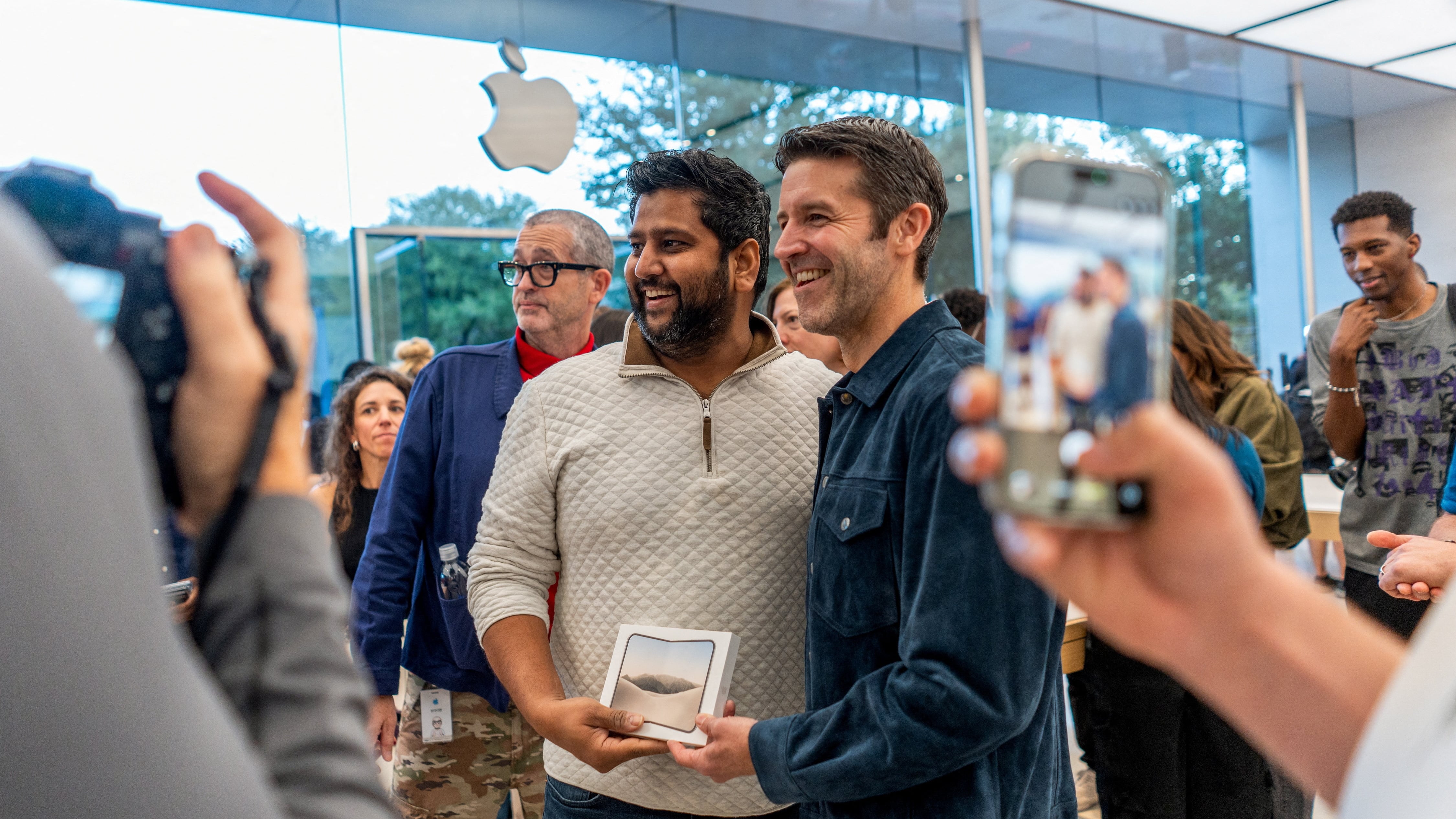
El iPhone Duo está recibiendo un número creciente de quejas de usuarios que aseguran que la pantalla plegable se les ha agrietado. Las primeras denuncias aparecieron en foros como Reddit y en redes sociales como X o TikTok. El medio Bloomberg News se ha hecho eco de estos incidentes y ha verificado con más de media docena de clientes los hechos. Apple ha reconocido en un comunicado un problema que “afecta a un número reducido de unidades”. Recomienda, en estos casos, contactar con AppleCare para solicitar una sustitución. La compañía no ha explicado qué provoca las grietas ni si tiene previsto solucionar el problema de forma general.
John Ternus, consejero delegado de Apple, en una tienda de la compañía en Austin, Texas, el pasado 23 de octubre, día del lanzamiento de su nuevo modelo

 Login