❌

Reading view

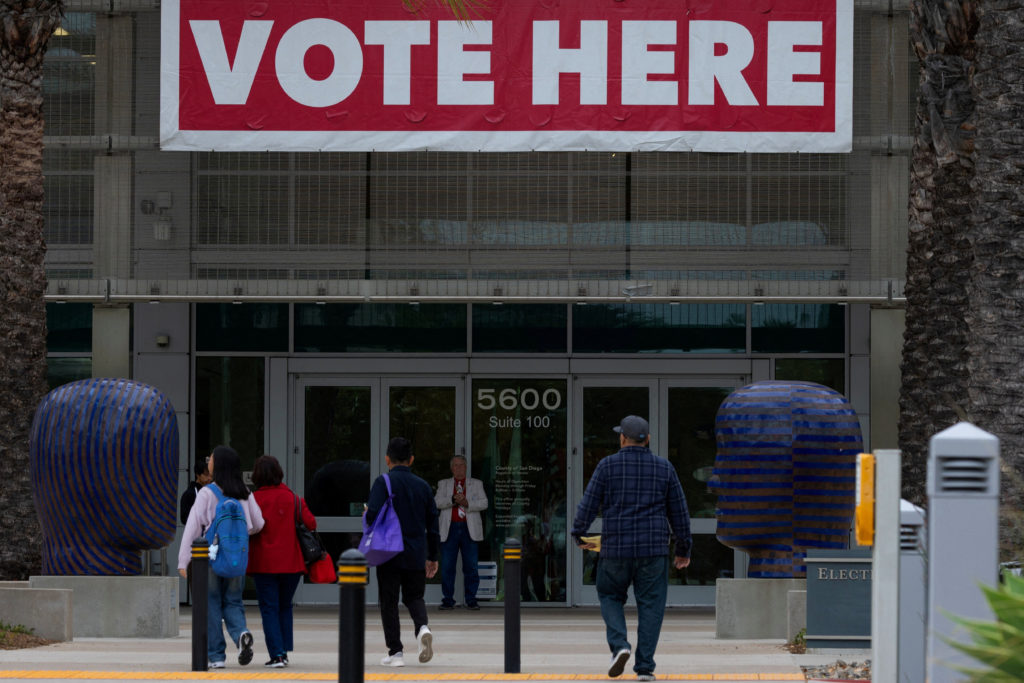
A guide to the key ballot measures voters will decide on Election Day

When Americans cast their ballots in this year's midterm elections, they'll not only be picking who represents them in Congress, but also weighing in on a range of topics that could change their state laws and constitutions.

  •  

New Book Says Jared Kushner Funneled Money to Middle East Mercenaries. Kushner Denies It.

Cover of 'Princes and Thieves' with Jared Kushner (on the left) and Mohamed bin Zayed (on the right) | Illustration: Princes and Thieves/Matthew Cole/Atria/One Signal Publishers/

Princes and Thieves, a new book by investigative journalist Matthew Cole, may open a rabbit hole into financial connections between Middle Eastern dictators and President Donald Trump's family. Cole accuses Emirati monarch Mohamed bin Zayed (MBZ) of sending billions of dollars to various mercenaries and political operators, including Jared Kushner, son-in-law to President Donald Trump. Cole's reporting combines well-documented connections with secondhand accounts from anonymous sources.

On Thursday, Vanity Fair published an excerpt from the book, reporting that Dutch military intelligence hacked into Kushner's phone in 2018 and discovered hundreds of millions of dollars in bank transfers connected to MBZ. Also on Thursday, Kushner published a letter from his lawyers to Cole categorically denying the "incredible and false" allegations in the book. "Mr. Kushner never accessed foreign accounts and always followed all rules and regulations and only pursued goals that were in the best interest of the United States as directed by the President of the United States," they wrote.

Cole had originally written on his blog that the book was scheduled for release on October 27, but the publication date was pushed forward over the weekend.

The book purports to tie Kushner to a vast web of Emirati influence operations around the world. In Cole's telling, which matches other journalists' accounts, MBZ wants to reshape the Middle East and eastern Africa into an alliance of U.S.-backed dictatorships, where "tolerance" is enforced through high-tech surveillance and "democracy" is a synonym for terrorism. MBZ's use of mercenaries in pursuit of these goals is well-documented. So is Kushner's personal affinity with the Emirati monarch and his business ties with the Arab monarchies.

Soon after Trump won the 2016 election, MBZ held a widely reported meeting with Kushner. According to the book—and according to much of that earlier reporting—the monarch complained about the Obama administration's failure to back Arab regimes against popular revolutions, its decision to end the Iraq War, and its diplomacy with Iran.

Going much further than past reporting, Cole now claims Kushner was personally involved in MBZ's mercenary operations. MBZ and Saudi Crown Prince Mohammad bin Salman put a collective $2 billion into Emirati and Israeli bank accounts which were managed (but not technically owned) by Kushner, according to Cole's sources. Those same sources claim that parts of this secret "slush fund" went to Libyan warlord Khalifa Haftar, American military contractor Erik Prince, and Cuban hitman Felipe Vidal.

Haftar, a former CIA asset, became a general in Libya's 2011 revolution and then attempted to overthrow the new government with Emirati backing in 2014. Despite a 2020 ceasefire, his forces continue to control much of Libya. Prince, founder of the military contractor formerly known as Blackwater, moved to the UAE and helped build a secret army of Colombian mercenaries. He sued Cole for defamation after Cole reported on Prince's role in helping Haftar, but a judge threw out the case. Cole's sources claimed that Vidal, a self-described "hit man," helped the United Arab Emirates (UAE) fake an Iranian attack on oil tankers in May 2019, meant to provoke Trump into war.

Kushner's lawyers have denied any relationship with any of those three men, apart from a single meeting with Prince after the 2016 election. (According to Cole, both Vidal and Prince refused to comment for the book.) The position of the U.S. government is that the May 2019 incident was a genuine Iranian attack, not an Emirati false flag.

After the Vanity Fair article was published last week, Israeli negotiator Gershon Baskin pointed out in The Jerusalem Post that the Central Bank of Israel "does not offer private banking services to individuals," which would make it impossible for Kushner's money to be deposited in the Central Bank of Israel, as Cole claimed. The book addresses that argument, claiming that the money was deposited "in what would appear to be a government account," with Kushner and Israeli Prime Minister Benjamin Netanyahu jointly authorizing transactions.

The Abraham Accords, which include an alliance between Israel and the UAE, have often been touted as a way for the U.S. to "spend less time and less resources in the Middle East," in the words of Vice President J.D. Vance. But Cole argues that the UAE actually used its alliance to entangle American interests in a future conflict. The book states that Kushner set up "a rainy-day defense fund" for war with Iran, using Emirati money deposited in a separate Central Bank of Israel account.

Cole also claims to have evidence that Kushner was on the take from the UAE's regional frenemy Qatar. In 2017, the UAE and Saudi Arabia issued an ultimatum for Qatar to rein in its foreign policy and blockaded the small nation. The Intercept later reported that Kushner's father had sought a Qatari bailout for the family real estate business just before the crisis, and the Qatari-linked company Brookfield ended up providing the needed investment in August 2018, leading to a congressional investigation into the deal.

Democrats are still digging for information on Kushner's business ties to Qatar, but three sources told Cole that the Qatari royal family authorized and paid for the Brookfield deal. The Qatari government "asked the White House how to resolve the blockade. And the Kushners kept saying, 'We have this great property that needs investment.' Eventually, the Qataris realized the only way to settle the blockade was to buy the building," a former U.S. intelligence officer said.

Kushner's lawyers write that they have "no evidence that Qatar impacted the investment decision. Any suggestion of his involvement in the transaction or any allegation of quid pro quo with the Qatari government is false and defamatory."

Other parts of the book are better-documented. Cole obtained a draft of Prince's autobiography, text messages from one of Prince's colleagues, and emails from Emirati government adviser George Nader, who was convicted of fraudulently funneling money into Hillary Clinton's 2016 presidential campaign. If nothing else, the book is a comprehensive account of the UAE's unofficial empire and its American ties. But the most explosive claims about Kushner's involvement in those activities rest on anonymous sources, making it a matter of Cole's word against Kushner's.

"I considered the responses from Kushner's attorneys carefully and consulted multiple sources about them. During the five years I have spent working on this book, I have tried to keep an open mind, and I am confident that my reporting is accurate. Kushner's lawyers' responses did not change that conclusion," Cole writes in the book's epilogue.

The post New Book Says Jared Kushner Funneled Money to Middle East Mercenaries. Kushner Denies It. appeared first on Reason Magazine.

  •  

17 public broadcasters mapped Russia’s hybrid war on Europe. Germany: four dots

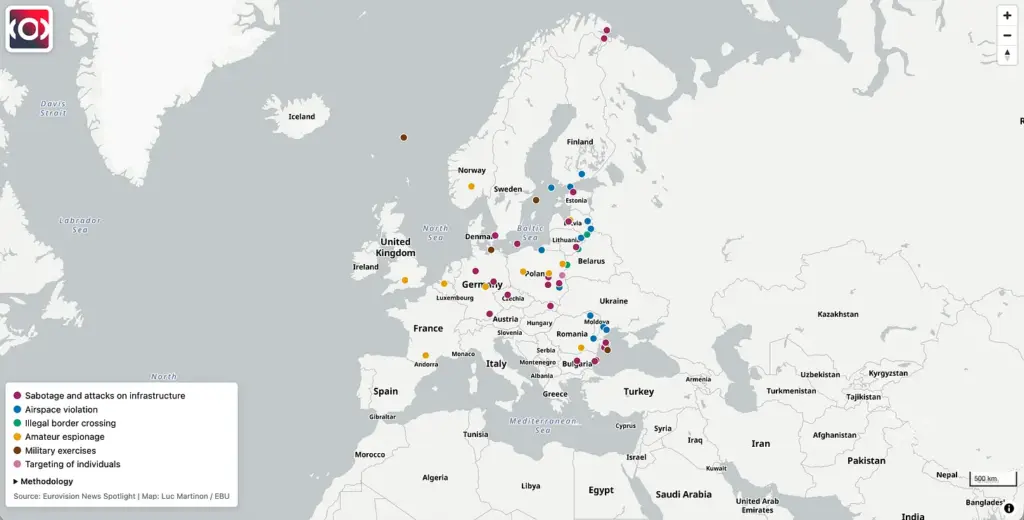
Physical hybrid incidents linked to Russia in 17 European countries, 1 April to 15 October 2026; many points stand for clusters of incidents. Map: Luc Martinon/ EBU, Eurovision News Spotlight

Journalists from 17 European public service broadcasters, coordinated by the European Broadcasting Union’s (EBU) Eurovision News Spotlight network, published an interactive map on 23 October 2026. It documents hybrid incidents linked to Russia across 17 European countries between 1 April and 15 October. Journalists compiled a database of hundreds of reported incidents, categorizing each by type and the source and strength of its alleged links to Russia, then verifying them through open-source research.

The map comes as officials warn the campaign is growing. On 28 September, EU foreign policy chief Kaja Kallas said in Brussels that Russia was planning more acts of sabotage to divide societies and intimidate them into abandoning their support for Ukraine. The points on the map represent an incomplete list of publicly known cases attributed to Russia or suspected of being linked to it, the report states.

The map covers airspace violations, sabotage attempts, “disposable” agents with no formal intelligence training, migration used as a weapon, and Russian military activity near or across European borders. It excludes cyberattacks, influence operations, and espionage by trained intelligence officers.

The EBU calls the result a very conservative estimate, not an official tally. Russia has consistently denied responsibility for the incidents. Many single points represent several incidents of the same type in one area or in quick succession. In Moldova, for example, Defense Minister Anatolie Nosatîi said on 30 September that the government had recorded 84 drone incursions.

Four German incidents are on the map, out of many more

The map shows four incidents in Germany, according to BR.

The four incidents in Germany on the EBU hybrid war map, 2 August to 14 September 2026
The four incidents in Germany on the EBU hybrid war map, 2 August to 14 September 2026. Other dots mark Russia-linked incidents in neighboring countries. Map: Luc Martinon/EBU, Eurovision News Spotlight; edited by Euromaidan Press
  • On 2 August, German authorities arrested a 33-year-old Ukrainian man in Thuringia on suspicion of photographing a Bavarian weapons manufacturer for a foreign intelligence service as part of an alleged sabotage plot.
  • On 4 August, a drone carrying explosives and a detonator struck the wing of a Ukrainian An-124 cargo plane at Leipzig/Halle Airport but failed to explode.
  • On 3 September, attackers threw firebombs from a car onto a construction site next to defense firms in Munich, and German security authorities suspect Russian intelligence.
  • On 14 September, investigators learned of a crashed drone found near the Bundeswehr’s Wunstorf air base.

Internal papers from the new Joint Hybrid Defense Center, seen by Correctiv, record 163 suspected sabotage cases in 2026 up to 19 August. The targets included rail lines, military facilities, substations, and radio masts. The same papers record 1,034 drone overflights of critical infrastructure, military sites, and defense companies, and 25 espionage investigations. The papers cover possible attacks by Russia, China, and Iran, and media did not report a breakdown of the sabotage cases by country.

European leaders sound the alarm over Russian hybrid attacks

On 15 April, Swedish civil defense minister Carl-Oskar Bohlin said pro-Russian groups had moved from denial-of-service attacks to attempts at destructive cyberattacks, including one on a Swedish power plant in 2025. On 1 September, German Foreign Minister Johann Wadephul named Russia as the perpetrator of the Leipzig attack and accused Moscow of “blatant hostility” toward Germany.

On 18 September, French President Emmanuel Macron said Russia’s hybrid attacks would not go unanswered and ordered a plan to protect France’s critical infrastructure. On 1 October, German Chancellor Friedrich Merz said Germany was preparing for new hybrid attacks, “including serious ones.” NATO Secretary General Mark Rutte on 14 October called the attacks a sign of Russian weakness at a press conference in Tallinn and said NATO would react where needed without being “rattled.”

  •  

The House is sitting on the evidence about pulsed microwave attacks

Two years ago, I implored Congress and the House Permanent Select Committee on Intelligence specifically to allow me to brief them on evidence the U.S. government possesses of pulsed microwave attacks allegedly perpetrated by Russia, causing so-called Havana Syndrome. These attacks have injured hundreds of U.S. government personnel, including myself, my wife and my two…

  •  

The Iran war and the ‘terrible power of the purse’

Netanyahu is telling Trump that he needs now to finish the job of destroying Iran

Join us on Telegram, X, and VK.

Contact us: info@strategic-culture.su

The ‘Grand Design’ to “maintain [western civilisation’s] place at the head of the world” (as U.S. Secretary of State Marco Rubio put it) requires the tools for ensuring compliance are two-fold: The creating of destructive revolutionary fervour from below (now termed ‘regime change’); and secondly, the use of what Theodore Herzl in a now famous phrase termed “the terrible power of the purse to exert irresistible pressure on international politics” in order to co-opt the ruling strata into a power network that would advance the Grand Design ‘project’.

This is what we are observing with Trump’s war on Iran. The June 2025 Israeli-American attack was primarily a decapitation attack designed to disable both Iran’s political and military leadership, whilst armed Mossad trained elements, the MEK and Baluchi separatists inter alia would be inserted into Iran to foment revolution from the street below. At that time, the former Shah’s son – implausibly – was being presented to the western media as the incoming leader of Iran.

It did not work. And now Netanyahu is touting that Israel has ‘fresh evidence’ that Iran is moving towards producing a weapon component to its nuclear programme. He is telling Trump that he needs now to finish the job of destroying Iran. And to motivate Trump further, leadingIsraeli daily Ma’ariv reports that Israel stove-piped Likud polling directly into the White House to the effect that Netanyahu might win the Israeli elections on 27 October. According to the report, this Likud information (that runs counter to most other Israeli polls) prompted Trump’s full-hearted election endorsement of Netanyahu.

At the same time, the pro-Zionist billionaire donors are wielding the ‘terrible power of the purse’ at Trump: ‘We will not accept anything less than the defeat of Iran. If you continue to seek a deal we will pull our financial support from you’.

Senior current and former security officials in Israel however, refute the need for an imminent attack on Iran and Netanyahu’s claim of new evidence of Iran moving toward a nuclear weapon –

IDF Chief of Staff Zamir told Israel’s Channel 13: “We don’t see a need to attack Iran before the elections”;

Leading Israeli military strategist Udi Evental has cautioned:

“A war to thwart the elections and democracy, not to thwart Iran’s nuclear programme. Netanyahu, who is suspected of being up to his neck in extraneous political and personal considerations, is unfit to make such a decision. He must not be allowed to”.

Whether or not there is such evidence really does not matter. Likely it doesn’t exist. The claim simply forms the peg on which the U.S. is beingtold to take action to ‘finish the job’ on Iran.

As ever, Netanyahu said in the last days:

“Iran is once again trying to develop its weapons of death … There is only one way to remove this threat once and for all – to topple the regime in Iran, and that is my directive to the IDF, the Mossad and the security agencies.”

A senior Iranian official told Drop Site that Tehran’s current internal intelligence assessment indicates a high likelihood that large-scale bombing may begin – even before Tuesday’s Israeli elections.

The point here is that Iran does not care who wins in the midterms, nor who will win the U.S. Presidency in 2028. For the Iranian leadership it is all the same. They well understand the concept of the ‘Grand Design’ (how could they not?).

It is well understood in Iran that they are engaged in a long war confronting the entire Atlanticist bloc – Israel, its intelligence services, its arsenals, its satellites, its military industry, and its media machine. It does not matter whether it is a Republican or a Democrat in the White House. Senior Iranian officials see both parties to have been bought by the Zionist terrible power of the purse.

Understanding the ‘Design’ is to understand that the Zionist donor class will never be satisfied by some ‘deal or trade-off’. They claim it to be certain that Iran ultimately would renege on any mooted acquiescence to U.S. demands. Israelis and their donor class auxiliaries simply do not believe (and repeat incessantly) that Iran would ever accept compliance to Israel, or to accept U.S. political and cultural dominance.

They may be right. Why?

Simply because Iran has a deep civilisation, stretching back to a specifically Persian-Iranian complex of beliefs and practices of the second millennium BCE – Mazdaism, a cosmology of divine drama, represented by the continuing struggle between Light and Darkness.

The renown scholar, Professor Henri Corbin, has argued that “Iran was situated at a centre … it being not only a nation or an empire, but a spiritual universe”. He understood Iran therefore, as a mediating force, both geographically and metaphysically.

For millenia, Iranians have experienced the world as having a clear metaphysical dimension – and history. It is therefore unlikely that they would be attracted to a western nihilistic material posture. Civilisational states, whether Iran or Russia, that embrace contrarian values would never succumb to the ‘Grand Design’. Hence, they must be destroyed.

What does this metaphysical history mean? It means that Iran is preparing for war, not for a ‘deal’. Mohsen Rezaei, Secretary of Iran’s Supreme National Security Council and personal representative of Supreme Leader Ayatollah Mojtaba Khamenei, stated that,

“If the question is whether Iran still has the ability to continue missile and drone operations [in the event of an attack], the answer is ‘yes’ … The United States has valuable assets in the region. In the event of war, cables, data centres and artificial intelligence facilities could also come within range. If the conflict begins again, we will have a broader plan”.

      “Everyone must understand that action against Iran carries a cost”.

Senior Iranian officials believe that war is coming. Iran has extensive plans (in the event of an attack) that encompasses Saudi Arabia and its leadership, too, a senior Iranian hinted. Karl Miller (from the field) states that in this respect, already a quarter of Saudi oil production has been destroyed and that the damage as a result of AnsarAllah’s retaliatory attacks runs through the whole Saudi production chain – ‘from wellhead to the gas station’ – and that Saudi Arabia has been covering the gap by draining their tanks.

Miller’s report, quoted by Larry Johnson, warns that,

“if Saudi Arabia’s export outlets close, its oil has nowhere to go but to its own refineries, its own power plants and its storage tanks. Once the storage is full, that is roughly the ceiling on what Saudi Arabia could keep producing. Close Ras Tanura and Yanbu at the same time, and the Kingdom would have to shut in most of its oil fields. That is exactly the scenario Ansar Allah’s campaign against the pipeline, the Red Sea and the Gulf terminals, is built to produce”.

“Any new American or Israeli campaign against Iran will land on a Saudi energy system that has no slack left to absorb it”, Larry Johnson observes.

Any new attack on Iran, by extension, will mean the end to the Gulf as we know it, an end to the petrodollar, and an end to the Gulf as the primary supplier of hard cash to Wall Street and the Tech world.

Nonetheless, Trump reportedly has said that the U.S. is not currently negotiating with Iran, and something will happen “fairly soon”.

Maybe. (But with Trump everything distils into speculation). But if he is bluffing, it won’t work, and his humiliation will be all the deeper.

One man who knows Trump better than most (having authored four books on him), Michael Wolff, opines that if the Democrats win in the 3 November midterms –

“They will be trying to impress upon the world that it is ‘a new day’. Trump, for his part, will be trying to impress upon the world that he still controls the stage. There will be a series of these kinds of things (such as a putative invasion of Cuba, for example) greater than anything we may have imagined. He will not be humbled. The idea of humility does not exist in Donald Trump’s soul. Therefore he will do – the opposite”.

“Not retreat but attack”.

  •  

European Investigation Maps Hundreds of Suspected Russian Hybrid Attacks

An investigation involving 17 European public-service news organisations has documented hundreds of suspected hybrid attacks across Europe in just over six months, revealing the scale of a security challenge that increasingly extends beyond conventional espionage and cyberwarfare.

The investigation, coordinated by the European Broadcasting Union, examined incidents reported between 1st April and 15th October 2026, including sabotage attempts, arson, airspace violations, suspicious drone activity and the exploitation of migration routes along the European Union’s eastern borders.

Published on 23rd October, the resulting interactive map provides a geographical picture of incidents publicly linked to Russia by intelligence agencies, law-enforcement authorities, government officials or reporting. The degree of attribution varies considerably, however, and many incidents remain under investigation.

The findings point to a fundamental problem for European security: hostile activities can be conducted across national boundaries without necessarily triggering the legal, military or political mechanisms designed to respond to conventional aggression.

Sabotage Without Conventional Warfare

Among the cases examined is an incident in Munich in September, when two Bulgarian nationals allegedly threw incendiary devices from a moving vehicle onto a construction site near several defence companies.

Police arrested the suspects after a witness reported the incident. Bavarian Interior Minister Joachim Herrmann and regional criminal investigators subsequently indicated that political motives were being considered. Investigators reportedly suspected possible involvement by Russia’s military intelligence service, the GRU, although the allegations have not been established in court.

The case illustrates growing concern about so-called disposable agents: individuals recruited to undertake relatively limited operations without formal intelligence training or a longstanding relationship with an intelligence service.

Such arrangements can complicate investigations. Even where perpetrators are identified, establishing a legally demonstrable connection between their actions and a foreign intelligence organisation may prove considerably more difficult.

Germany’s Federal Criminal Police Office has registered a mid-three-digit number of suspected sabotage and reconnaissance cases since the beginning of 2026, according to information provided to investigators involved in the European mapping project.

Only a small proportion have been publicly attributed to Russia. Four German incidents were included in the map, demonstrating the distinction between a broad national caseload and cases meeting the investigation’s publication criteria.

Europe’s Eastern Borders Under Pressure

The geographical distribution reveals substantial activity along NATO’s eastern flank, particularly around the Baltic states, Belarus and the Black Sea.

Incidents include repeated airspace violations, suspected reconnaissance operations and attempts to facilitate unauthorised border crossings. Lithuanian authorities have accused Belarus of deliberately exploiting migration as an instrument of political pressure.

Commercial shipping has also become increasingly exposed. Drone attacks involving vessels near Romania and Bulgaria have raised concerns about the extension of the war’s consequences into maritime areas adjoining EU and NATO territory.

These developments reinforce earlier warnings about Russia’s expanding sabotage campaign, particularly the difficulty of distinguishing isolated security incidents from coordinated operations intended to test national responses.

Teija Tiilikainen, director of the European Centre of Excellence for Countering Hybrid Threats, identified Russia’s invasion of Ukraine as an important factor behind the increasing pressure. According to her assessment, Moscow’s objectives include weakening Western unity and undermining continued support for Ukraine.

The Legal and Institutional Challenge

The central difficulty is not simply the absence of criminal legislation. Arson, espionage, sabotage and unlawful interference with critical infrastructure are already punishable under national laws.

Rather, the challenge involves establishing foreign direction, coordinating investigations across jurisdictions and identifying when a series of apparently separate offences constitutes a wider hostile campaign.

Germany’s domestic intelligence chief, Sinan Selen, has described the environment as a grey area between war and peace. German foreign intelligence chief Martin Jäger has similarly identified Russia as the country’s most dangerous adversary.

European governments are beginning to address these difficulties collectively. At their 15th–16th October summit, EU leaders condemned intensifying hybrid attacks and called for stronger resilience, greater use of existing countermeasures and accelerated work on drone security.

On 8th October, the Council also extended sanctions targeting Russian destabilisation activities until October 2027. The restrictions cover 80 individuals and 20 entities.

Meanwhile, a European Commission research initiative, published on 23rd October, proposes combining anticipation, active defence and retaliatory measures into a more coherent deterrence strategy.

From Individual Incidents to Collective Security

The investigation’s significance extends beyond the number of incidents recorded. By bringing together information previously dispersed among national authorities and separate investigations, it makes possible a wider assessment of the methods, geographical concentration and recurring characteristics of suspected hostile operations.

Nevertheless, the map does not establish Russian responsibility for every incident it records, nor does it constitute a complete European database. Russia has repeatedly denied conducting the hybrid attacks attributed to it.

For European governments, the unresolved question is how to move from recognising a pattern of hostile activity to demonstrating responsibility and responding effectively.

As EU foreign policy chief Kaja Kallas has warned, the consequences already extend beyond infrastructure disruption to risks affecting civilian lives.

The emerging security challenge therefore concerns not only the detection of individual perpetrators, but also Europe’s ability to connect incidents across borders, establish responsibility and prevent successive operations from becoming an accepted feature of the continent’s security environment.

  •  

EU Parliament Investigates Foreign Interference in Bosnia as Accession Process Stalls

A delegation from the European Parliament has begun a three-day mission to Bosnia and Herzegovina to examine foreign interference in the country’s political institutions, electoral processes and public information environment.

The visit, taking place from 26th to 28th October, comes three weeks after parliamentary elections exposed persistent divisions over Bosnia’s political direction and its prospects of joining the European Union.

The mission is being conducted by Parliament’s Special Committee on the European Democracy Shield, chaired by French MEP Nathalie Loiseau. Its purpose is to assess vulnerabilities to disinformation, cyberattacks, economic pressure and other forms of hybrid interference, and to identify measures that could strengthen Bosnia’s institutional resilience.

According to the European Parliament’s announcement, the delegation will meet government officials, parliamentary representatives, civil society organisations, journalists and researchers. Joining Loiseau are Finnish MEP Mika Aaltola, Portugal’s Ana Catarina Mendes and Romania’s Cristian Terheş.

The investigation comes at a politically sensitive moment. Bosnia’s general election on 4th October confirmed the persistence of competing political priorities between the country’s constituent entities, with pro-Russian politician Milorad Dodik’s Alliance of Independent Social Democrats retaining considerable support in Republika Srpska.

As EU Today reported following the election, parties favouring closer European integration also performed strongly, particularly in the Bosniak-Croat Federation. The resulting political balance will influence the formation of new administrations and their ability to implement reforms demanded by Brussels.

From electoral interference to institutional security

The European Parliament’s investigation extends beyond conventional disinformation campaigns.

MEPs intend to examine how foreign actors may exploit weaknesses in electoral administration, cybersecurity, political financing and the country’s wider economic relationships. They will also consider the role of digital platforms in distributing manipulated information and the legislative gaps that could make interference difficult to identify or prosecute.

The distinction matters in Bosnia, where political influence cannot be separated from the country’s complicated constitutional arrangements.

Under the Dayton peace settlement, the state operates through institutions that distribute authority between the Federation of Bosnia and Herzegovina, Republika Srpska and the central government. Political disagreements can therefore obstruct decisions requiring cooperation between different levels of administration.

External actors seeking influence may exploit those divisions, although identifying a political relationship with a foreign government is not, by itself, evidence of unlawful interference.

The European Union has repeatedly expressed concern about Russia’s activities in the Western Balkans, particularly its relationships with political forces opposing closer integration with European institutions. Chinese investment and economic relationships also raise questions about strategic dependence, although legitimate commercial activity must be distinguished from coercion or covert political operations.

The delegation’s task is to establish which vulnerabilities can be substantiated and whether existing safeguards are adequate.

Accession negotiations remain incomplete

Bosnia received EU candidate status in December 2022. In March 2024, European leaders agreed in principle to open accession negotiations, but progress has remained conditional on institutional and legal reforms.

Following the October election, EU foreign policy chief Kaja Kallas and Enlargement Commissioner Marta Kos issued a joint statement calling for the prompt formation of new administrations and progress on judicial reform.

The Commission also highlighted shortcomings identified by international election observers, including technical difficulties, complicated voting procedures and concerns about ballot secrecy.

Those findings do not automatically establish foreign interference. They do, however, demonstrate why the integrity of electoral institutions remains central to Bosnia’s relationship with Brussels.

A test for the European Democracy Shield

The Sarajevo mission follows the EU’s decision on 13th October to include enlargement partners in the European Centre for Democratic Resilience.

The initiative is intended to improve cooperation on election security, information manipulation, crisis management and institutional protection before candidate countries enter the Union.

EU Today has previously examined the European Democracy Shield’s proposed mechanisms, including closer coordination with technology companies and improved systems for identifying foreign information operations.

Bosnia now offers a practical opportunity to examine whether those instruments can operate effectively in a country where political authority is fragmented and accession remains incomplete.

The delegation’s findings could inform recommendations on institutional cooperation, election safeguards and support for independent media. Any substantial improvement, however, will depend on the willingness of Bosnia’s authorities to implement reforms and enforce existing legislation.

For Brussels, the immediate issue is whether its emerging framework for democratic resilience can provide practical protection to candidate countries while respecting their political sovereignty and the freedoms it is intended to defend.

  •  

Brussels Targets Electricity Network Charges as EU Seeks to Bring Down Energy Bills

European Union energy ministers will meet in Luxembourg on Thursday, 29th October, to discuss proposed changes to electricity network charges that could alter how households and businesses pay for the operation and expansion of Europe’s power grids.

The European Commission wants to revise the rules governing network tariffs, encourage more efficient electricity consumption and accelerate the introduction of smart meters and digital grid technologies. The measures form part of a wider effort to reduce electricity costs, which remain a significant concern for European households and industrial competitiveness.

According to the Council’s published agenda, ministers will examine legislation presented on 17th July alongside the European Commission’s Electrification Action Plan.

The proposals come as Europe faces continued energy-market volatility, with the war in Ukraine and instability in the Middle East affecting supply expectations and prices. Ministers will also assess energy security ahead of the 2026–27 winter.

Why electricity network charges matter

Electricity bills contain several distinct components. Consumers pay for the electricity itself, the operation and maintenance of transmission and distribution networks, and applicable taxes and levies.

Network charges finance the infrastructure needed to deliver electricity from generating facilities to homes and businesses. They also contribute towards grid maintenance, balancing and new investment.

Unlike wholesale electricity prices, which fluctuate according to supply and demand, these charges are generally determined through regulated national tariff systems.

The Commission argues that existing arrangements do not always encourage efficient use of infrastructure or reflect the costs created by electricity consumption at different times and locations.

Its proposed regulation would amend Regulation 2019/943 to strengthen incentives for network operators to control costs and use existing capacity more effectively.

The legislation would also encourage tariffs that reflect when electricity is consumed and the demands placed on local networks.

For example, consumers who can move electricity-intensive activities away from periods of peak demand could face lower charges under certain tariff arrangements.

However, the financial benefits would depend on national implementation, available technology and individual consumption patterns.

Industry presses for lower energy costs

The Commission’s proposal recognises that electricity prices have become a major issue for European industrial competitiveness.

Energy-intensive manufacturers, including steel, chemicals and other industrial producers, face particular difficulties when electricity costs are substantially higher than those of international competitors.

The proposed legislation would allow specific categories of users, including energy-intensive businesses and data centres, to benefit from differentiated network charges where justified by their consumption patterns.

Such arrangements would be subject to safeguards intended to prevent disproportionate costs being transferred to households and smaller businesses.

The proposal also addresses energy taxation. Brussels wants the minimum taxation level for electricity to remain below that of natural gas, reducing a financial disincentive to replacing fossil-fuel equipment with electric alternatives.

As EU Today previously reported, the Commission has been examining changes to electricity taxation as part of its response to Europe’s exposure to imported energy and volatile international markets.

However, reducing charges for one category of consumer does not automatically reduce the overall cost of maintaining a national grid. Regulators must still determine how those costs are recovered.

A growing problem of grid congestion

Europe’s electricity networks require considerable investment to accommodate renewable generation, electric vehicles, heat pumps and expanding industrial demand.

The Commission estimates that approximately €600 billion in electricity-grid investment will be needed by 2030, rising to around €1.2 trillion by 2040.

These figures, outlined in its accompanying assessment, illustrate the difficulty of pursuing lower consumer charges while simultaneously financing substantial infrastructure expansion.

Grid congestion is already delaying connections for renewable-energy projects, industrial facilities and other electricity users.

As EU Today examined in its coverage of Europe’s grid bottlenecks, limited transmission capacity can prevent relatively inexpensive electricity from reaching regions where demand is greatest.

The latest proposal therefore places greater emphasis on making better use of existing infrastructure before committing to conventional network expansion.

It would encourage regulators and operators to consider digital technologies, flexible connection arrangements and improved network planning.

Smart meters and the distribution of costs

The Commission is also seeking faster deployment of smart meters, which can provide consumers and network operators with more detailed information about electricity consumption.

In principle, such systems allow households and businesses to adjust demand in response to changing prices and network conditions.

Industrial consumers may have greater flexibility to shift production schedules or invest in electricity storage. Households, however, may have fewer opportunities to change when they use energy, particularly where consumption is linked to heating or essential daily activities.

This raises questions about how tariff reforms would affect different consumers.

A system that rewards flexible consumption could reduce costs for households with smart appliances, batteries or electric vehicles, while offering fewer benefits to people unable to alter their electricity usage.

National regulators would therefore have to balance economic efficiency against the risk of unevenly distributing network costs.

Ministers face difficult choices

The 29th October meeting will not itself introduce new electricity charges or establish binding national tariff rates.

The Commission’s proposal remains subject to negotiations through the EU legislative process, involving the Council and European Parliament.

Governments will need to consider how much discretion national regulators should retain, whether tariff structures can be made more consistent across the single market and how vulnerable consumers should be protected.

The meeting will also examine longer-term energy security and possible targets for the period after 2030.

For Brussels, the difficulty is that electricity must become sufficiently competitive to encourage industrial investment and electrification, while the infrastructure required to support increased consumption must still be financed.

Whether the proposed reforms eventually reduce electricity bills will depend on their final legislative form, national implementation and the extent to which more efficient grid management produces measurable savings.

  •  

Akhilleus: A Defence Shield Orchestrating the Levantine Fortress

The Achilles Shield marks Greece’s ambition to build a stronger defence network with Israeli technology amid rising tensions in the Eastern Mediterranean. From its multilayered missile-defence architecture to the growing rivalry between Israel and Turkey, the project reflects a changing regional balance of power. Yet, like Achilles himself, even the strongest shield may have vulnerabilities. […]
  •  

Israel drills for surprise attack with massive military exercise as expert invokes 1973 war

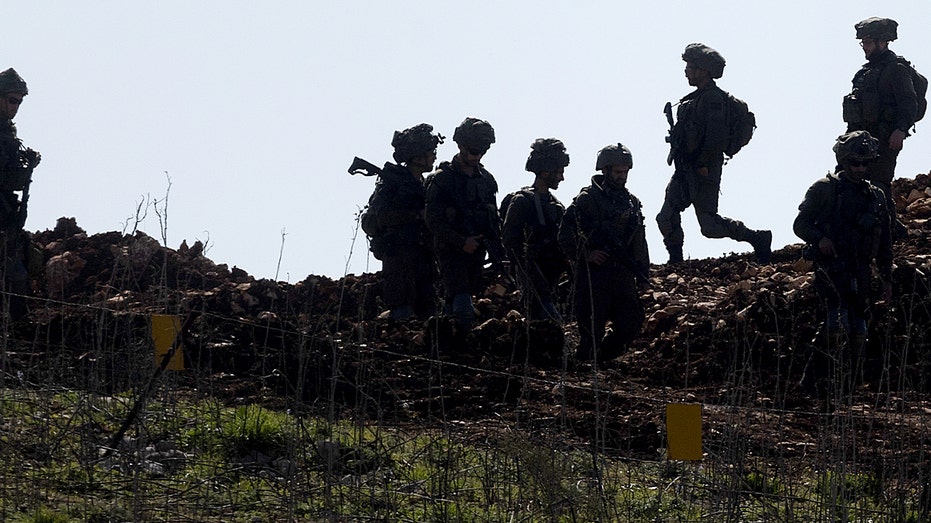
The Israeli military launched large-scale domestic military exercises on Sunday to counter surprise border infiltrations and ground raids across northern and central Israel, mobilizing multiple divisions and air assets amid rising regional tensions.

The drills, set to continue over 48 hours, came as an Israeli security expert invoked the 1973 Yom Kippur War, when Egypt and Syria used exercises to disguise preparations for a surprise attack, warning that escalating tensions in the region could in fact trigger what he described as a "dangerous miscalculation."

The large-scale maneuvers, the IDF said, involve the Northern Command’s 210th Division, the West Bank Division, and the Central Command’s 98th and 96th divisions, alongside the Israeli Air Force.

IRAN TARGETS US WITH PSYCHOLOGICAL WARFARE CAMPAIGN TO MANIPULATE AMERICANS, EMBARRASS TRUMP: EXPERTS

The exercise, scheduled just ahead of Israel's elections Oct. 27, aims to "maintain the forces’ alertness and readiness, strengthen the ability to defend communities, and make full use of aerial capabilities for defense in the area," according to the IDF.

On Friday, the IDF said troops would practice "a variety of scenarios, including a surprise attack and infiltration into Israeli territory by air and land," incorporating lessons learned from the Oct. 7, 2023, Hamas-led attacks on Israel.

"This exercise is mostly about non-state actors with or without Iranian support," Israeli national security analyst Dr. Ehud Eilam told Fox News Digital.

"It's aimed at those in Syria, Lebanon, and Jordan who might try to infiltrate into Israel or send ground raids. Some are supported by Iran; others are not. It could be planned by Iran or be a local initiative."

NETANYAHU PRAISES TRUMP'S 'WICKED SENSE OF HUMOR,' DEFENDS IRONCLAD ALLIANCE AHEAD OF HISTORIC ISRAEL VOTE

"This is a massive exercise, the biggest one in recent years, aimed at protecting the borders," the former Israeli Ministry of Defense researcher added.

"It's all about making sure that the election day on October 27 will run smoothly. It's also a message to Iran and others: don't try to provoke us during election day, so nothing will be disrupted."

The Israeli drills followed a show of force by Tehran days earlier, during which the Islamic Revolutionary Guard Corps (IRGC) fired roughly 30 ballistic missiles across two distinct weapon classes, according to reports.

That live-fire display highlighted Iranian strike capabilities and sparked renewed alerts about commercial shipping in the Strait of Hormuz and prompted the Israeli military to heighten its alert level while maintaining maximum readiness for a targeted strike against Iran.

TRUMP IS DISMANTLING IRAN’S WAR MACHINE, BUT AMERICA STILL NEEDS AN ENDGAME

During a visit to the IDF's Central Command on Wednesday, Chief of Staff Lt. Gen. Eyal Zamir warned that the risk of escalation was growing.

"Given the numerous warnings across all fronts and the sensitivity of the current period, the potential for escalation has increased," Zamir said.

"To ensure better operational control on the ground, we have reinforced our troop deployments across all sectors, including moving the 98th Division into the area to strengthen security and stability."

"Part of mutual deterrence: a few days ago, Iran had their own pretty big exercise, and that was actually more intimidating as far as Israel is concerned because they launched missiles and prepared for a war with Israel," Eilam said.

"This exercise on Sunday and Monday is against Iran's proxies and allies at the border of Israel."

Sunday’s Israeli drill also followed an Oct. 19 mission in which Israeli fighter jets and aerial refueling tankers flew 800 miles across Syrian and Iraqi airspace to Iran’s border.

FROM INTELLIGENCE SHARING TO MISSILE DEFENSE, HOW ISRAEL'S PARTNERSHIP PROTECTS AMERICAN SECURITY

Washington was notified in advance and viewed the maneuver as a non-kinetic show of force following the postponement of a broader strike package earlier in the month.

Despite the deterrence signals, Eilam warned that large-scale military exercises carry the "risk of miscalculation" and particularly when troop movements could be mistaken for preparations for an attack.

"During the Cold War, every time the Soviet Union or NATO carried out a major drill, having so many troops in the field meant they might attack if that was the intention," Eilam said.

He pointed to the 1973 Yom Kippur War, when Egypt and Syria used military exercises to help conceal troop buildups along Israel's borders.

Israeli intelligence largely dismissed the movements as routine drills, allowing the two countries to achieve strategic surprise when they launched a coordinated, two-front attack on Yom Kippur.

TRUMP SAYS NETANYAHU NEEDS TO BE RE-ELECTED, OR ELSE US WILL HAVE TO 'FINISH THE JOB’ AGAINST IRAN ALONE

"The classic example in Israel is 1973, when Egypt and Syria conducted a major exercise just before the war that turned into the actual attack," the analyst said.

"Israel and Iran are now watching each other very closely and both sides suspect the other might strike first," Eilam added before stating that there is the chance of what they call "miscalculation — that each side suspects the other and strikes first by mistake."

"It's all about sending messages to each other."

"It remains uncertain whether there will eventually be an Israeli attack on Iran because it depends on U.S. authorization," Eilam concluded.

CLICK HERE TO DOWNLOAD THE FOX NEWS APP

"Right now, both sides are signaling: 'We are ready, don't mess with us, but we don't want to start a war right now.'"

  •  
❌