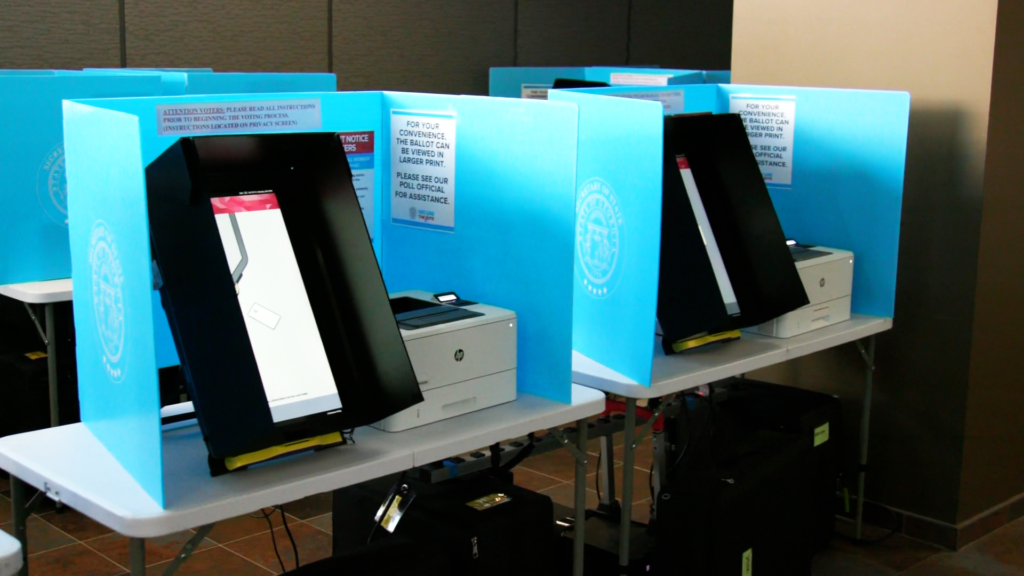
Inside Georgia's push to rebuild trust in elections after Trump's false claims


From a long opinion yesterday by Judge Eumi Lee (N.D. Cal.) in Alibaba Group Holding Ltd. v. U.S. Dep't of Defense:
On February 13, 2026, the United States Department of Defense ("Department") publicly designated Alibaba Group Holding Limited as a "Chinese military company" ("CMC"). On June 30, 2026, 10 U.S.C. § 4663 went into effect, barring the Department from contracting with any company who retained the same lobbyist as a CMC. Alibaba asserts that Section 4663 has caused lobbyists to withdraw from representing Alibaba for fear of losing other clients.
The court issued a preliminary injunction, concluding § 4663 likely violates the Free Speech Clause and the Petition Clause:
Alibaba is an e-commerce and cloud-computing company that provides products, technology, infrastructure, and services to consumers and businesses for civilian and commercial use. Alibaba provides U.S. companies and businesses with a platform to sell their products to consumers in China. Additionally, it provides commercial cloud services to companies, including U.S. companies, operating in China and other countries. Alibaba has developed open-source AI models, including Qwen, with a focus on "commercial applications that make it more efficient and secure for businesses to sell goods to consumers in China." Alibaba is publicly listed on both the New York Stock Exchange and Hong Kong Stock Exchange.
"Prior to being designated [a CMC], Alibaba had retained over two dozen lobbyists and multiple lobbying firms to represent its interests before Congress and the Executive Branch" [including] … "… the Executive Office of the President, the Federal Communication Commission [("FCC")], the Federal Trade Commission, the Consumer Products Safety Commission, the Department of the Treasury, and [other entities]" …. "They presented Alibaba's views on legislation, rules, regulations, executive orders, and other government policies of commercial interest to the company. Specifically, they advocated regarding export expansion, small business export promotion, technology policy, access to U.S. capital markets, e-commerce-related issues, consumer-protection laws, and intellectual property." …
The Court finds that First Amendment scrutiny applies because Section 4663 regulates speech. By restricting Alibaba's ability to retain lobbyists, Section 4663 functionally restricts its political speech. "Discussion of public issues" is "pure speech" that is at "the core of the protection afforded by the First Amendment[.]" The First Amendment also protects "[t]he right to petition," that is, "the right of the people to inform their representatives in government of their desires with respect to the passage or enforcement of laws[.]"Lobbying government officials is therefore an activity fully protected by the First Amendment. FTC v. Super. Ct. Trial Laws. Ass'n (1990) ("It is, of course, clear that the association's efforts to … lobby District officials to enact favorable legislation … were activities that were fully protected by the First Amendment.")….
Here, Section 4663 appears to be directed at defense contractors, but its consequences are on Alibaba's speech. "[A] government official cannot do indirectly what she is barred from doing directly" by "coerc[ing] a private party to punish or suppress disfavored speech on her behalf." NRA v. Vullo (2024)…. Section 4663's impact falls on the relationship between Alibaba and the third parties crucial to its speech rights. Thus, the Court finds that Section 4663 burdens Alibaba's speech….
Defendants observe that Alibaba is not completely banned from appearing before the federal government—it could hire more in-house lobbyists or find a firm that is willing to forgo defense contractor clients…. [But] Alibaba is unlikely to find a lobbyist willing to forgo any clients who might want to contract with the Department. {The statute applies to defense contractors who contract with "entities"—in other words, lobbying firms—who also contract with CMCs. Defense contractors would not risk their ability to enter into a contract with the federal government when there are plenty of capable lobbying firms available. The lobbying firm then must choose. One or more of its lobbyists can choose to represent Alibaba, but then the entire lobbying firm must forgo representing defense contractors. The only rational choice for a lobbying firm is to stop representing Alibaba.}
[Alibaba also] represents that it cannot hire the number of experienced in-house lobbyists needed to address the federal government for all its interests…. The reduction to Alibaba's speech is sufficient to demonstrate a colorable First Amendment claim….
The court then concluded that the law was subject to strict scrutiny:
"Content-based regulations are subject to the most exacting scrutiny because 'the government has no power to restrict expression because of its message, its ideas, its subject matter, or its content.'" In examining a statute, courts must also examine "restrictions distinguishing among different speakers, allowing speech by some but not others." "Speech restrictions based on the identity of the speaker are all too often simply a means to control content." Thus, identity-based regulations may "demand strict scrutiny when they reflect the Government's preference for the substance of what the favored speakers have to say (or aversion to what the disfavored speakers have to say)." …
{Section 4663 is not a content-based restriction…. Section 4663 operates based solely on whether a CMC is involved. What the CMC (or non-CMC) plans to say does not affect whether Section 4663 applies.} [But] Section 4663 is a speaker-based restriction on speech—it is only applicable if a CMC seeks to retain a lobbyist. As a speaker-based restriction on political speech, Section 4663 is subject to strict scrutiny.
Defendants assert that Section 4663 should be considered under intermediate scrutiny, because Alibaba's "differential treatment" is justified by its "special characteristic[ ]," namely the potential involvement of a foreign adversary. Defendants again rely on TikTok, where the Supreme Court applied intermediate scrutiny despite finding that the divestiture statute was a speaker-based restriction, because the differential treatment was due to a content-neutral reason, namely TikTok's susceptibility to foreign control.
While Section 4663 also involves a foreign adversary, TikTok is distinguishable because political speech was not at issue. Id. ("emphasiz[ing] the inherent narrowness" of its holding and observing that "[a] law targeting any other speaker would by necessity entail a distinct inquiry and separate considerations"). Here, Defendants provide no authority to suggest that differential treatment with respect to political speech may be considered under intermediate scrutiny. Citizens United v. FEC (2010) states the opposite: "Laws that burden political speech are 'subject to strict scrutiny,'" and "the First Amendment generally prohibits the suppression of political speech based on the speaker's identity." The Court thus applies strict scrutiny in determining whether Section 4663 violates the First Amendment.
{The Court recognizes that this is a close question. But for the context of political speech—specifically the ability and right to petition the government—Defendants' argument that intermediate scrutiny should apply would likely prevail, because Section 4663 is otherwise a content-neutral statute. As in TikTok, Section 4663 singles out a particular group of speakers, but not because of the content of their speech. Instead, the treatment is based on a particular characteristic of the speaker, i.e., their status as a CMC.} …
And the court held that the law failed strict scrutiny, because it was not narrowly tailored to the government interests in "(1) … prevent[ing] CMCs 'from accessing sensitive military information through their relationships with lobbyists,' and (2) … ensur[ing] that CMCs 'cannot subtly influence any of [the Department's] decisions related to national security by influencing a lobbyist'":
[T]he government cannot impose a restriction on speech based solely on "mere conjecture." Rather, it must "point to record evidence or legislative findings demonstrating the need to address a special problem."
Here, Defendants fail to meet their burden. Defendants provide only one exhibit in support of their opposition: the joint explanatory statement submitted as part of the legislative record for the Act. The statement provides an overview of Section 4663 and then "direct[s] the Comptroller General of the United States to submit a report to the congressional defense committees, not later than one year after the enactment of this Act, on the national security risks posed by consulting firms who simultaneously contract with the Department of Defense and the Chinese government or its proxies or affiliates."
Of note, the Comptroller General is directed to study consulting firms, not lobbyists. The statement does not express any findings by the Comptroller General or Congress about the risks posed by lobbyists retained by CMCs. At the preliminary injunction hearing, Defendants were unable to confirm whether a report by the Comptroller General had been submitted to Congress by December 23, 2025, one year after the Act's enactment; nor did Defendants provide a copy of the report. Other than the statement, Defendants do not provide any evidence of the national security risks or other compelling government interests….
[Moreover, d]efendants do not offer any evidence demonstrating that alternative [and less speech-restrictive] means were contemplated, much less rejected for being insufficient…. Meanwhile, Alibaba submits evidence that less alternative restrictions may exist. With respect to CMCs, Nebraska has required lobbyists representing entities on the 1260H List to file an acknowledgment that they are representing a foreign adversary. The Supreme Court "has upheld registration and disclosure requirements on lobbyists" as a "less restrictive alternative to more comprehensive regulations of speech." Defendants present no reason why a disclosure requirement, like Nebraska's, would be inadequate for the federal government.
Instead, Defendants summarily conclude that Alibaba's proposed disclosure requirement would not suffice because "there would still be access and the potential for influence." This speculation is insufficient to support a restriction on the First Amendment….
Carter G. Phillips, Christopher A. Eiswerth, Jennifer J. Clark, and Sheila Anil Gogate Armbrust (Sidley Austin LLP) represent Alibaba.
The post Alibaba and the Forty Lobbyists, and the First Amendment appeared first on Reason Magazine.
Customs and Border Protection (CBP) insists that it has the right to search Americans' private data without a warrant when entering the country. But ordered to explain one of these searches by a judge, the agency is now trying to wiggle out from under the microscope, invoking its own data privacy.
On Friday, Judge Leonie M. Brinkema in the Eastern District of Virginia ordered CBP to explain the seizure of a local psychiatric nurse's phone and laptop at Washington Dulles International Airport. CBP argued that the court should seal this information from both the public and the nurse himself in order to protect "privileged law enforcement information."
Brinkema initially agreed to let CBP file parts of its response "sealed and ex parte," meaning that neither the public nor the nurse would get to look at them. After reading the filings, the judge declared on Tuesday afternoon "that most of the redacted information is not privileged law enforcement information and should not be sealed." She gave CBP until Thursday at noon to object to unsealing the documents.
"Without knowing what happened, we cannot assess the extent of CBP's violation of our clients' rights. This raises serious concerns about government improperly invoking privilege to cover up wrongdoing," says Jenin Younes, a civil libertarian lawyer and president of the Arab-American Anti-Discrimination Committee, who is representing the nurse. "The court was right to unseal most of the redacted material so we can assess the extent to which the government behavior was improper."
Younes has stacked up a series of victories against CBP's electronic searches. Over the past few months, she sued on behalf of lawyer Jalal "Jay" Shehadeh and (non-Arab) journalist Max Blumenthal, both of whom had their phones seized at the airport by CBP without explanation. CBP tried to preempt a legal battle by giving their phones back almost immediately. Younes is still pressing to get information about what happened to their data.
Although CBP policy states that the agency will delete all data within 21 days unless there is "probable cause to believe the information contains digital contraband or evidence of a violation of law that CBP is authorized to enforce or administer," a 2018 lawsuit seemed to show that CBP was holding onto the data until someone bothered to demand its return.
Psychiatric nurse Muhammad Numaan Imam's case started similarly to Shehadeh's and Blumenthal's cases. CBP agents demanded to open his phone at the airport without explanation. He refused, arguing that patient emails and case-management software were protected by privacy laws. CBP then confiscated all of his and his wife Khadijah Mansoor's electronics. Almost immediately after Younes filed the suit on his behalf, CBP tried to argue that the case was moot because it was giving back the phone.
But Brinkema immediately agreed with Imam and Mansoor's "legitimate concerns about what was done with their electronic devices," ordering CBP to "explain why the devices of both plaintiffs were seized" and to provide sworn statements from "each person who handled any of the devices" describing exactly what was done to them.
On Monday night, the court published heavily redacted declarations from CBP Assistant Port Director Lauren Colgan, Department of Homeland Security (DHS) technician Caige McCabe, and CBP technician Ashlie Fisch.
"Mr. Imam and Ms. Mansoor presented valid, un-expired travel documents to CBP Officers in the primary inspection and were referred for secondary inspection," Colgan's declaration states. The next few sentences are blacked out. The declaration then recounts the couple explaining their early return from their anniversary vacation in Turkey and states that the CBP officer asked to open their electronics, without explaining why.
"Because of Mr. Imam's and Ms. Mansoor's refusal to provide access to their electronic devices, CBP informed Mr. Imam and Ms. Mansoor their devices would be detained to continue the border search," Colgan continues, noting that Port Director Christine Waugh signed off on holding the devices for more than five days, as CBP policy requires.
On October 17, a day after CBP seized the phones, it asked DHS headquarters for "technical assistance" with Imam's devices according to McCabe. "My examination of Mr. Imam's phone was limited to device specifications and high-level file-system structure," he states in the declaration. The next few sentences are blacked out. "I did not access or view the contents of Mr. Imam's laptop," McCabe continues. The next few sentences after that are also blacked out. "I did not access any medical information" on either the phone or laptop, McCabe concludes, stating that the devices were in his custody until he handed them back to CBP on October 21.
Fisch then received Imam's devices at CBP Laboratories and Scientific Services. Everything of substance in her declaration is redacted, beyond taking the devices on October 21 and sending them back to Washington Dulles Airport the next day. There is no unredacted explanation of what happened to Mansoor's devices.
Brinkema argued in her Tuesday order that only two sentences, both from Colgan's declaration, were legitimately blacked out. "Accordingly, the Court will unseal all other redacted information in the Declarations unless the defendants can show good cause why such information should not be unsealed," she wrote.
U.S. law gives border officers much wider authority to search for contraband in situations where normal police would need a warrant or probable cause under the Fourth Amendment. CBP argues that its powers extend to searching and seizing travelers' electronics without any explanation at all. Courts have given contradictory rulings on how far those searches can go, and the Supreme Court hasn't weighed in yet, leaving a gray area that CBP is happy to take advantage of.
Imam's case has resulted in "the most detailed explanation of what the government did with our clients' electronic devices—or it would be if so much wasn't redacted," Younes tells Reason. "I look forward to seeing the unredacted versions."
The post CBP Really Doesn't Want To Reveal What It Does to Americans' Phones appeared first on Reason Magazine.
The Egyptian Parliament on Monday voted to give President Abdel Fattah el-Sisi the authority to deploy troops to Saudi Arabia, where they would help the kingdom repel attacks from the Iran-backed Houthi insurgents of Yemen.
The post Egyptian Parliament Authorizes Troops to Defend Saudi Arabia appeared first on Breitbart.
Brazilian news outlets claimed that Sen. Flávio Bolsonaro fled the country after authorities attempted to confiscate his passport.
The post Rumors Claim Flávio Bolsonaro Refused to Hand Over Passports and Fled Brazil appeared first on Breitbart.
Two violent attacks by armed individuals — one on October 20 and another on October 24 — left 60 Christians dead and 20 homes burned to the ground in Ethiopia.
The post Homes Burned and 60 Christians Killed by Armed Attackers in Ethiopia appeared first on Breitbart.
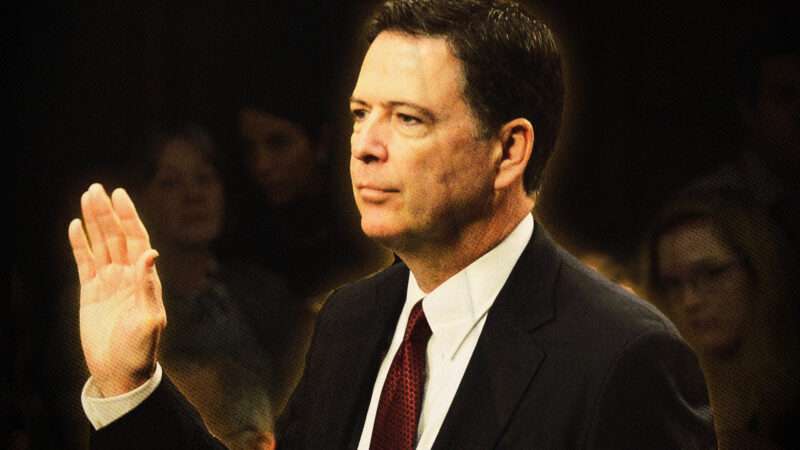
A little more than a year ago, President Donald Trump publicly demanded that Pam Bondi, then the attorney general, find a crime to pin on former FBI Director James Comey. Trump's underlings have repeatedly tried to do that, first charging Comey with lying to Congress and then accusing him of threatening to assassinate the president. But the first indictment was dismissed because Trump had illegally appointed the prosecutor who obtained it, and the second was doomed right out of the gate because it aimed to punish constitutionally protected political speech.
The Justice Department's latest attempt to follow Trump's marching orders was revealed on Monday, when U.S. District Judge Trevor McFadden unsealed a "criminal information" that claims Comey illegally shared classified information with The New York Times on October 5, 2016. In an attempt to meet the statutory deadline for that charge, prosecutors filed it exactly 10 years after the alleged disclosure. But Comey's lawyers argue that federal law required the government to obtain a grand jury indictment within 10 years of the alleged offense, which it failed to do.
Whatever you make of that dispute, the president has made it clear that he wants to imprison Comey, a longtime nemesis because of his role in the "Russiagate hoax" during Trump's first term, and does not much care about exactly how that happens. Justice Department officials, meanwhile, are keen to pursue Trump's personal vendetta by using their prosecutorial powers as an instrument of his revenge.
The new case "would almost be funny if it weren't such an appalling abuse of the Department of Justice," Comey said in an online video on Monday. "I'm still innocent. I'm still not afraid of these people, and I still believe in the independent federal judiciary."
In the New York Times story at the center of the case, Charlie Savage and Nicole Perloth reported that Yahoo had adapted "a system intended to scan emails for child pornography" to comply with a Foreign Intelligence Surveillance Court order seeking "messages containing a computer 'signature' tied to the communications of a state-sponsored terrorist organization." Savage and Perloth cited "two government officials who spoke on the condition of anonymity."
Dustin Farahnak, a special U.S. attorney for the District of Columbia, says that story included "first-time disclosures of classified information not intended for the public domain." According to Farahnak, the government has evidence that Comey "directed staff" to discuss "specific accuracy concerns" about a prior Reuters report on the same subject with Savage. In the process of doing that, Farahnak says, those FBI officials "illegally transferred classified information."
Comey's attempt to set the record straight, according to Trump's henchmen, was a felony punishable by up to 10 years in prison under 18 USC 793(d), an Espionage Act provision that applies to an official who "willfully" shares "information relating to the national defense" with an unauthorized recipient when he "has reason to believe" it "could be used to the injury of the United States." Comey also faces a charge of conspiring to violate Section 793, which likewise carries a maximum 10-year sentence.
If Comey's alleged disclosure was such a grave crime, you might wonder, why did it take a decade to charge him? Because two prior investigations of the same incident concluded that criminal charges were not warranted.
Beginning in March 2017, John Durham, the U.S. attorney for the District of Connecticut, looked into the genesis of the Times article. The investigation found that James Baker, then the FBI's general counsel, was one of the anonymous sources. Baker said he had acted under instructions from FBI Chief of Staff James Rybacki, whom he understood to be conveying Comey's wishes. Durham's investigation included interviews, emails, phone records, and consideration of the relevant statutes. In December 2018, Comey's lawyers note, Durham "wrote a classified memorandum outlining the investigation and recommending 'NO prosecution for Baker or anyone else.'"
The following month, the U.S. Attorney's Office for the District of Columbia "opened an investigation into the same subject matter," Comey's lawyers say. That investigation "was closed without any charges in February 2020" after the office "declined to prosecute."
Given the outcomes of those two investigations, the decision to charge Comey now stinks of desperation to slake Trump's thirst for revenge. According to Comey's lawyers, the tardiness of the charges also fatally undermines the case.
Federal law generally requires that prosecutors file charges within five years of the alleged crime. But the Internal Security Act of 1950 made an exception for Section 793, saying "an indictment for any violation" of that provision "may be found at any time within ten years next after such violation shall have been committed."
The charges against Comey "should be dismissed as time barred," his lawyers argue: "Section 19 of the Internal Security Act gives the government an extended ten-year limitations period in which to charge Section 793 offenses. But as Section 19 unambiguously states, the government may invoke that extended period only by obtaining a grand jury indictment. A criminal information—which the government can issue unilaterally without grand jury involvement—does not suffice. Because the default five-year statute of limitations for federal felonies has long since elapsed on the alleged offenses, and the government's information does not meet the express statutory requirement for an extended ten-year limitations period, the information is untimely and must be dismissed."
Whichever side prevails on that issue, no one should have any illusions that the Justice Department is pursuing the mission suggested by its name. "It remains unclear what [McFadden] will do with the matter and whether DOJ will even be able to secure an indictment—as required by the Constitution," Cato Institute legal fellow Mike Fox says in an emailed press release. "Should the matter proceed, it is unequivocally clear that this case is a vindictive prosecution—a classic case of lawfare by a weaponized Justice Department."
The post The Justice Department's 3rd Attempt To Imprison James Comey Stinks of Trump's Desperation for Revenge appeared first on Reason Magazine.
There are two ways for Russia to capture the remaining Ukrainian-held cities of Donbas. One is to fight its way through heavily fortified defensive positions, accepting substantial casualties, equipment losses and an uncertain timetable. The other is to secure their evacuation through diplomatic negotiations.
The second would achieve an important Russian military objective without requiring Moscow to bear the full cost of a prolonged offensive.
This distinction helps explain why Vladimir Putin continues to insist that Ukrainian forces withdraw from the remaining government-controlled territory of Donetsk region before a comprehensive settlement can be negotiated.
It also raises a more consequential question: would surrendering Donbas bring the war closer to an end, or would it improve Russia’s position in any subsequent confrontation?
The issue returned to prominence on 27 October when Finnish President Alexander Stubb and Norwegian Prime Minister Jonas Gahr Støre held a rare telephone conversation with Putin.
According to the Finnish president’s official statement, the call followed discussions in Oslo on 20 October involving Ukrainian President Volodymyr Zelenskyy and US presidential envoy Steve Witkoff.
The Nordic leaders sought to advance preparations for renewed American-mediated negotiations, expected in Abu Dhabi in November. They emphasised that they were acting on behalf of their respective countries rather than representing Europe collectively.
Stubb described the exchange as “frank and substantive”, arguing that direct communication with Moscow was necessary to address the security consequences of the war.
However, the Kremlin’s account offered little indication of movement on the fundamental disagreements.
Moscow insisted that any durable peace must fully accommodate Russian interests. A source close to the Kremlin told Reuters that Putin had reiterated his refusal to compromise on the objective of controlling the entire Donbas.
Following the conversation, Zelenskyy confirmed that the Nordic leaders had briefed him and stressed to Putin the need for concrete measures to reduce attacks on Ukrainian energy infrastructure.
The diplomatic process has therefore resumed without resolving the territorial dispute at its centre.
The territory Russia is demanding includes some of Ukraine’s most important surviving defensive positions.
Since fighting began in eastern Ukraine in 2014, Ukrainian forces have constructed and reinforced an extensive defensive system centred on Sloviansk, Kramatorsk, Druzhkivka and Kostiantynivka.
Known as the fortress belt, this network combines urban areas, industrial facilities, transport infrastructure, prepared defensive positions and terrain that complicates offensive operations.
The military importance of this system extends far beyond the administrative boundaries of Donetsk.
According to the Institute for the Study of War, surrendering these positions would allow Russian forces to occupy heavily defended territory without undertaking the prolonged operations otherwise required to capture it.
In its 26 October battlefield assessment, the institute continued to identify the capture of this defensive belt as Russia’s principal military objective in Donetsk. Ukrainian forces retained positions in parts of Kostiantynivka, while Russian operations towards other major cities remained contested.
The implications of a negotiated Ukrainian withdrawal would be substantial.
Russia could occupy the fortified urban corridor, reorganise its forces, establish new logistics routes and potentially redirect formations towards other sectors.
Ukraine, meanwhile, would have to construct or reinforce defensive positions further west, potentially under pressure and in less favourable terrain.
The resulting military imbalance would not necessarily lead to another Russian offensive. But it would change the conditions under which any renewed hostilities might take place.
That is why territory cannot be assessed solely by its surface area. A relatively small section of the front can possess strategic value disproportionate to its size.
Russia’s insistence on Donetsk also reflects the limits of what its military has achieved.
Despite years of fighting, Moscow has not secured complete control of the region. Successive offensives have produced territorial gains, but at considerable cost and without the rapid breakthrough originally anticipated.
US Secretary of State Marco Rubio recently acknowledged the central importance of the remaining Ukrainian-held territory.
In an interview published by the US State Department, Rubio characterised the dispute as centred on territory Russia wants but has been unable to capture militarily, while recognising Ukraine’s sovereignty and long-term security concerns.
His remarks demonstrate how Donbas has become the principal territorial obstacle in Washington’s diplomatic calculations.
For Moscow, however, concentrating negotiations on this specific demand offers an additional advantage.
If Ukraine refuses to withdraw, the Kremlin can argue that Kyiv is preventing progress towards peace. If Ukraine agrees, Russia obtains strategically valuable territory without the military costs associated with conquering it.
The demand therefore serves a dual purpose: it establishes a public explanation for the absence of an agreement while offering Russia an immediate military benefit should negotiations succeed on its terms.
The central weakness in any settlement built around a Ukrainian withdrawal is the assumption that control of Donbas represents the limit of Russia’s territorial ambitions.
Moscow’s previously declared objectives suggest a more complicated picture.
In June 2024, Putin demanded Ukrainian withdrawal from four regions claimed by Russia: Donetsk, Luhansk, Zaporizhzhia and Kherson. Moscow does not fully control these regions, despite claiming to have annexed them in September 2022.
Russia has also demanded restrictions on Ukraine’s military capabilities and future security relationships.
As EU Today previously reported, renewed diplomatic engagement has not produced a clear abandonment of the Kremlin’s wider objectives.
Consequently, transferring the remaining territory of Donetsk would not necessarily satisfy Moscow’s other demands.
There is a significant difference between conceding territory as part of an enforceable settlement and withdrawing from defensive positions as a precondition for negotiating one.
In the first case, territorial arrangements form part of a wider agreement establishing obligations, verification procedures and security guarantees.
In the second, one party makes a potentially irreversible military concession before knowing whether an agreement will ultimately be reached.
This asymmetry is particularly important where the proposed concession directly affects the withdrawing country’s ability to defend itself.
One interpretation of Moscow’s approach is that it reflects a strategy of incremental territorial expansion rather than an attempt to achieve all its objectives through a single decisive offensive.
After Russia failed to capture Kyiv in 2022, its military campaign increasingly concentrated on taking territory through successive, often prolonged operations.
The diplomatic equivalent would involve securing one concession, consolidating the resulting advantage and subsequently presenting additional demands.
Under such a scenario, Russia could obtain control of the remaining Donetsk territory, establish new positions closer to Dnipropetrovsk region and later argue that further territorial or security arrangements were necessary to protect its newly acquired frontier.
Moscow has already used the language of protective buffer zones to justify military operations elsewhere in Ukraine.
There is no evidence establishing that such a sequence would inevitably follow a Donbas settlement. Nevertheless, the possibility must be considered when assessing the military consequences of a withdrawal.
The concern is not merely that Russia might violate a future agreement. It is that the agreement itself could alter the strategic balance in ways that make renewed military pressure more effective.
There is also an internal Ukrainian dimension.
An agreement requiring the evacuation of cities defended for years would create substantial political controversy. Disagreements over territorial concessions, security guarantees and the credibility of Western commitments could complicate domestic political stability.
For Moscow, such divisions might provide another means of influencing Ukraine without immediate military escalation.
Donbas has considerable political significance for Putin beyond its military value.
The conflict in eastern Ukraine began in 2014, following Russia’s annexation of Crimea. Donetsk and Luhansk became central to the Kremlin’s justification for intervention, and their incorporation into Russia was later proclaimed as part of the 2022 annexations.
Control of the entire region would allow Putin to present a tangible achievement after years of warfare.
Yet the Kremlin’s objectives have never been confined exclusively to Donbas.
Putin has repeatedly questioned Ukraine’s historical and political independence, while Russian negotiating demands have extended to the country’s military posture, international alliances and internal political arrangements.
These positions suggest that territorial control forms part of a broader attempt to determine Ukraine’s strategic orientation.
A settlement that ends fighting in Donetsk without resolving these wider disagreements might therefore suspend the conflict rather than settle its underlying causes.
The planned talks in Abu Dhabi will test whether Moscow is prepared to distinguish between its territorial demands and the conditions necessary for a sustainable ceasefire.
An immediate halt to hostilities along existing lines would preserve the military status quo while allowing negotiations to proceed.
Russia has resisted this approach, arguing that a temporary ceasefire could enable Ukraine to rebuild its forces without resolving the conflict.
Ukraine, by contrast, argues that withdrawing from fortified territory without credible guarantees would expose it to renewed attack.
Neither side can be expected to disregard the military implications of the proposed arrangements.
For European governments, the principal question is consequently not simply whether Ukrainian and Russian representatives can be brought back to the negotiating table.
It is whether any agreement can prevent the territorial settlement from becoming the starting position for another war.
Stubb and Støre’s conversation with Putin demonstrated that diplomatic communication remains possible. It did not establish that Moscow is prepared to abandon its existing territorial objectives.
The distinction matters.
Putin’s demand for Donbas offers Russia two potential advantages: a justification for continuing the war if Kyiv refuses, and a substantial military gain if Kyiv accepts.
That does not prove the Kremlin has already decided to resume hostilities after a negotiated withdrawal. It does, however, explain why the terms, sequencing and enforceability of any agreement are as consequential as the territory itself.
The essential question facing negotiators is therefore not only whether Russia can obtain Donbas through diplomacy rather than force.
It is whether the price of that concession would be a lasting peace — or a weaker Ukrainian defensive position if peace fails.
On Tuesday, Britain’s Crown Prosecution Service announced that two men have been charged with national security offenses following an incident involving Royal Air Force (RAF) Fairford last month.
RELATED:
The U.S. Withdraws Its Bombers from UK’s RAF Fairford Airbase
Mohmed Abdulkarim, 24, and Nouman Essghir, 24, were both charged under National Security Act 2023 following a counter-terrorism policing investigation, according to the public prosecution authority.
Abdulkarim was charged with one offense of assisting a foreign intelligence service in carrying out UK-related activities, and Essghir was charged with one offense of entering a prohibited place for a purpose prejudicial to the UK.
On Sept. 27, British police evacuated homes near RAF Fairford while army bomb-disposal experts were called in to examine several vehicles nearby. Seven people have since been arrested on suspicion of explosives offenses and preparing an act of terror.
The alleged "Iranian attack" on the RAF base in Fairford is becoming increasingly ridiculous.
— Chay Bowes (@BowesChay) October 2, 2026
It seems the "Iranian commandos" forgot their bombs, their guns? But decided to call the Police on themselves?
They were so dangerous, they were let walk out of custody hours later. pic.twitter.com/zGZzEqM9TB
On the day of the incident, after a farmer raised the alarm about a group of men acting suspiciously, police arrived at the scene and initially detained five men.
“Two military sources believed the men were stealing fuel, as barrels and equipment for storing it were found in their vehicles near a diesel supply point. The following day, the five men were released on police bail after being questioned,” noted British journalist Brit Matters.
RAF Fairford is a British military airbase used by the U.S. Air Force. The Pentagon confirmed earlier this month that all U.S. bombers deployed to RAF Fairford had returned to their home stations in the United States.
Britain said that it was “highly likely” that Iran was involved in the RAF Fairford incident, but the accusation was rejected by Iran, who called it a “sordid plot to advance the anti-Iran campaign.”
teleSUR/ JF
Source: Xinhua
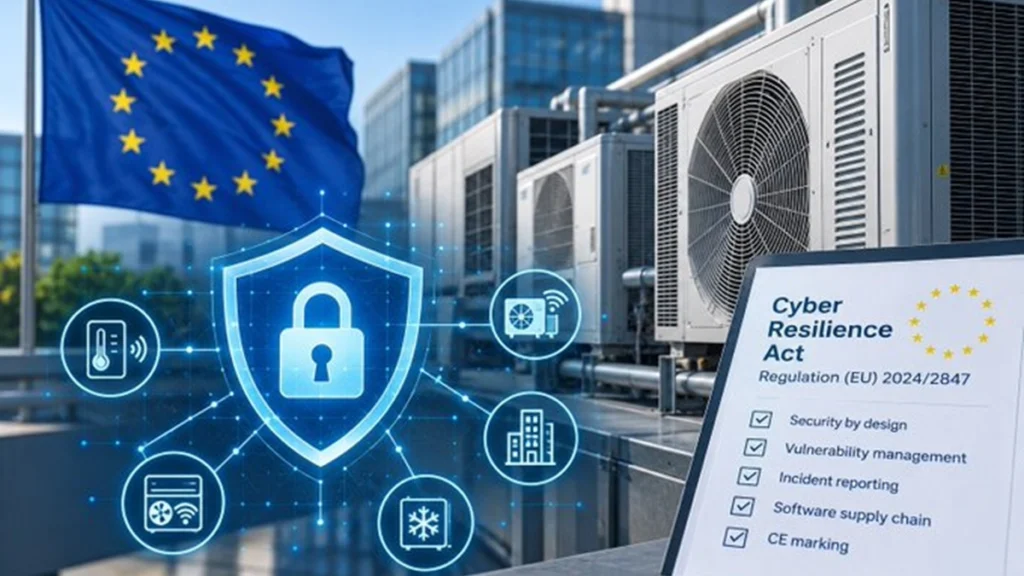
On Tuesday, SEO Amsterdam Economics reported that a proposed revision of the European Union’s Cybersecurity Act, known as CSA2, could lead to losses ranging from 290 million euros (US$324 million) to 2.2 billion euros (US$2.46 billion dollars) for Dutch businesses in the first year of implementation.
RELATED:
Artificial Intelligence Pioneers Call for International Body to Oversee Cybersecurity Standards
The report, titled The Price of Security and commissioned by the Netherlands China Business Council (NCBC), cautions that the impact could extend beyond businesses directly affected by the restrictions, spreading through supply chains and hitting firms in other sectors of the Dutch economy.
The legislation was proposed by the European Commission at the beginning of this year. The draft introduced “non-technical risks” in the name of cybersecurity and supply chain security.
In particular, the draft would identify “countries posing cybersecurity concerns” and “high-risk suppliers,” and exclude listed countries and suppliers from relevant EU supply chains across 18 sectors, including energy, transport, and information and communications technology.
However, the economic implications of restricting suppliers could be substantial, particularly for businesses that rely on existing information and communications technology infrastructure and have limited short-term alternatives, according to the report.
🚨🇪🇺 BREAKING: Critical software vulnerabilities trigger government website shutdowns across at least SIX European countries, affecting public authorities, hospitals, schools and critical infrastructure.
— Coffe Report (@CoffeReport) October 21, 2026
Two severe security flaws have been discovered in PHP, one of the world's… pic.twitter.com/Z89nsKbVsK
Companies may also need to modify existing systems, adjust production processes and reorganize supply chains to accommodate replacement products. These changes could generate additional costs beyond the losses estimated in the report.
“Security measures do not exist in an economic vacuum,” NCBC Chairman Jochum Haakma said at a seminar on the report on Monday, adding that restrictions on suppliers, changes in procurement policies and the replacement of existing ICT infrastructure can affect entire supply chains, investment decisions and ultimately the competitiveness of the European economy.
In a letter to parliament on June 19, Dutch Minister of Justice and Security David van Weel said the government was concerned about the European Commission’s proposed power to designate entire countries and suppliers as high-risk, citing potentially far-reaching economic, legal and geopolitical consequences, as well as insufficiently clear and detailed criteria and procedures.
The report notes that restrictions on supplier choice could also yield other adverse consequences, as diminished competitive pressure may result in higher prices, lower quality and reduced innovation.
“Strategic autonomy is an important European ambition, but autonomy should not lead to isolation,” Haakma noted.
teleSUR/ JF
Source: Xinhua
British prosecutors charged two men Tuesday under the U.K.’s National Security Act following an incident at RAF Fairford, a key base used by the U.S. military’s heavy bombers.
Mohmed Abdulkarim, 24, of London, was charged with assisting a foreign intelligence service. Nouman Essghir, 24, was charged with entering a prohibited place for a purpose prejudicial to the United Kingdom, according to the Crown Prosecution Service.
British counterterrorism police said they believe the foreign country Abdulkarim was assisting was Iran, Reuters reported.
RUBIO CONFIRMS 'FOREIGN ACTOR' INVOLVED IN UK TERROR PLOT
The charges follow a September incident near RAF Fairford in Gloucestershire, England. British police arrested five men outside the base in the early hours of Sept. 27, according to Reuters.
The base had been used by U.S. bombers to carry out strikes against Iran. About a dozen B-1 bombers were among the aircraft later withdrawn from RAF Fairford and returned to their home stations in the United States on security grounds, according to previous Fox News reporting.
FOILED TERROR PLOT AT BOMBER BASE SIGNALS WIDER THREAT TO US MILITARY INSTALLATIONS: EXPERT
RAF Fairford serves as a key European operating location for U.S. heavy bombers and has supported American military missions.
Frank Ferguson, chief crown prosecutor for the CPS Special Crime and Counter Terrorism Division, said the agency decided to prosecute the two men following a "complex" counterterrorism investigation.
"We will continue to work closely with our partners as this complex investigation continues," Ferguson said.
Both men were expected to appear Tuesday at Westminster Magistrates’ Court.
CLICK HERE TO DOWNLOAD THE FOX NEWS APP
The CPS emphasized that the charges are not findings of guilt and that both defendants have the right to a fair trial.

Finnish President Alexander Stubb and Norwegian Prime Minister Jonas Gahr Støre held a telephone conversation with Russian President Vladimir Putin on Tuesday, 27 October, marking an unusual direct diplomatic engagement between Moscow and two European NATO members since Russia’s full-scale invasion of Ukraine in February 2022.
The conversation, initiated by the two Nordic leaders from Helsinki, was followed by a separate call with Ukrainian President Volodymyr Zelenskyy. According to a joint statement released by the Norwegian government, the initiative had been prepared in consultation with Kyiv.
The objective was to communicate directly with Putin about efforts to end the war and the forthcoming negotiations involving Ukraine, Russia and the United States.
Stubb described the exchange as frank and substantive, arguing that Finland and Norway had particular reasons to participate in discussions concerning European security.
“We are neighbouring countries to Russia,” he said, adding that the war’s outcome would directly affect European security.
Both leaders reaffirmed their governments’ continuing support for Ukraine while calling for renewed negotiations. Støre emphasised the humanitarian and economic consequences of the conflict and the need for de-escalation.
Importantly, their statement specified that they were acting as national leaders rather than representatives of Europe collectively.
Following the conversation with Putin, Stubb and Støre spoke with Zelenskyy, who confirmed the exchange in a statement issued by his office.
The Ukrainian president thanked them for their detailed briefing and diplomatic engagement.
According to Zelenskyy, the two leaders had communicated Ukraine’s demand for concrete steps to reduce attacks against its energy facilities and other infrastructure.
The discussion also covered preparations for trilateral negotiations involving Ukrainian, American and Russian delegations, provisionally planned for November.
Kyiv’s confirmation that it had been consulted before the Putin conversation is significant. Ukraine has consistently maintained that decisions concerning its sovereignty, territory and security cannot be negotiated without its participation.
Tuesday’s telephone diplomacy followed a meeting in Oslo on 20 October involving Zelenskyy, Stubb, Støre and representatives of US President Donald Trump.
American special envoy Steve Witkoff participated in person, while Jared Kushner joined remotely. European and NATO representatives also attended related discussions.
According to the Ukrainian presidency’s account, the consultations addressed possible steps towards ending the war and establishing security arrangements after a settlement.
Witkoff subsequently travelled to St Petersburg on 21 October for discussions with Putin.
The diplomatic contacts have produced plans for another round of talks in Abu Dhabi, expected after 4 November, although the precise date and representation remain subject to confirmation.
The European Commission has also sought involvement. During its 21 October press briefing, the Commission confirmed its participation in the Oslo consultations, which addressed territorial questions, security guarantees and post-war economic arrangements.
As EU Today previously reported, discussions about appointing a European representative to negotiations have exposed disagreements over who should speak for European governments and what authority such a representative would possess.
The Kremlin’s account of Tuesday’s conversation offered little indication of a change in Russia’s principal demands.
According to reports citing the Kremlin’s statement, Putin insisted that a lasting settlement would require what Moscow described as full recognition of Russia’s legitimate interests.
He also accused NATO and European Union countries of pursuing confrontational policies that prolonged the conflict.
These statements indicate that the reopening of direct communication has not, by itself, resolved the differences between the negotiating parties.
Russia continues to seek arrangements concerning Ukrainian territory and the European security order, while Kyiv maintains that its sovereignty and territorial integrity must be respected.
The initiative has also revealed differences among European governments over direct engagement with Moscow.
Danish Prime Minister Mette Frederiksen criticised the Finnish-Norwegian approach, saying it had not been coordinated with Denmark and warning against individual European countries pursuing separate diplomatic initiatives.
Swedish Prime Minister Ulf Kristersson also expressed reservations about contacts that might undermine a common European position.
Their objections highlight a distinction between consultation with Ukraine and agreement among European governments on the organisation of negotiations.
For Finland and Norway, both of which share borders with Russia, the outcome of the conflict carries direct implications for security in the Baltic Sea region and the High North.
The immediate question is whether their intervention can facilitate substantive negotiations without weakening coordination between Kyiv and its European partners.
With the next US-mediated talks expected in November, Tuesday’s contacts establish another channel of communication with Moscow. Whether that channel produces movement on territorial disputes, security guarantees or an eventual ceasefire remains unresolved.
A series of messages published on social media Tuesday morning call for a wave of violent riots across Spain "inspired" by the recent chaotic events in France for Saturday, October 31, local outlets warned.
The post Reports: France-Inspired Violent Riots Are Being Urged in Spain for Halloween appeared first on Breitbart.
Europe's top NATO members are ready to take greater responsibility for the continent's security while standing with the U.S. as an "indispensable ally," the organization affirmed Tuesday.
The post Trump Effect: Top NATO Powers Pledge to Commit More to Defence, Reaffirm U.S. Alliance appeared first on Breitbart.
Written by Ralf Drachenberg, Annastiina Papunen and Rebecca Zamponi.
The European Council will be preceded by pre-summit meetings of European political parties with their respective affiliated EU leaders. Additionally, a group of ‘like-minded’ countries on migration will also meet prior to the start of the meeting. Following a similar pattern, a new group of 17 leaders, including Germany, Belgium and Italy, met by videoconference on 8 June to discuss competitiveness issues.
As usual, the European Council meeting will start with an address by the President of the European Parliament, Roberta Metsola. For the first time, the report of the rotating Council Presidency on the follow-up to the previous European Council conclusions will be given in the presence of the European Parliament President. This report by Cypriot President Nikos Christodoulides will include an overview of the implementation of the ‘One Europe, One Market’ roadmap signed in the margins of the informal meeting of Heads of State or Government in Cyprus in April 2026.
The membership of the European Council has evolved since the last European Council meeting. With the departure of Viktor Orbán, Emmanuel Macron is now the longest serving European Council member continuously in office (since 2017).
The discussion on Ukraine will start with an exchange of views with Ukrainian President Volodymyr Zelenskyy, who on 4 June 2026 published an open letter to President Vladimir Putin, proposing to end the war through direct engagement between the two leaders. The proposed meeting would take place in a neutral location ‘with active US and European participation’ and ‘the front line today [as] the line from which diplomacy must begin.’. Three days after the letter, President Zelenskyy issued a joint statement with the leaders of France, Germany and the United Kingdom, outlining five conditions for just and lasting peace.Thus, EU leaders may express the EU’s readiness to step up its engagement in peace negotiations.
In his invitation letter to EU leaders, European Council President António Costa underlined the effectiveness of the EU’s ‘two-pronged approach – supporting Ukraine and increasing pressure on Russia’. Concerning support for Ukraine, the European Council is expected to discuss intensifying efforts to rebuild critical energy and civilian infrastructure as well as accelerating the production and delivery of military equipment, notably ammunition, drones and missiles. As regards pressure on Russia, the European Council could reiterate the importance of weakening Russia’s economy and thus its ability to wage war. Following the unveiling of the 21st package of sanctions, which targets heavily the country’s banking system and crypto networks, EU leaders may call for swift adoption of the new package. In parallel, after asking in March 2026 for ‘the potential threat posed to the EU’s internal security by Russian ex-combatants having participated in the aggression against Ukraine to be assessed, the European Council could ask for further work to be carried out to address this threat, and possibly consider banning Russian citizens having served in the country’s armed forces since 2022 from entering EU territory. In addition, the call by 11 Schengen countries for stricter visa rules for all Russian citizens – which follows a surge in visas issued to Russian tourists in 2024 and 2025 – may also be raised.
Although not formally on the agenda, the topic of enlargement could turn out to be the subject of broader discussions. First, because EU leaders are likely to welcome the holding of the Intergovernmental Conference on the accession of Ukraine, and Moldova, to the European Union, and the agreement to open the fundamentals cluster on 15 June 2026. Second, because EU leaders may wish to underline the ‘new impetus’ given to the enlargement process at the EU-Western Balkans Summit in Montenegro on 5 June and reiterate their support for the region’s path to EU membership in line with a merit-based approach. Third, because, after the Franco-German initiative of 4 June 2026 suggesting ways of gradually integrating candidate countries into the EU, the European Council may wish to discuss the ‘new ideas to streamline and accelerate the process,’ which, as President Costa stressed, are currently under consideration. German Chancellor Friedrich Merz had previously addressed a letter to Presidents Costa, von der Leyen, and Christodoulides, proposing to grant Ukraine ‘associate member status’, while offering ‘observer status’ and access to the single market to Western Balkan countries.
The European Council is expected to discuss the constantly evolving situation in Iran and the wider Middle East region. After the announced memorandum of understanding between Iran and the United States, which envisages an ‘immediate and permanent’ end of military operations on all fronts, including in Lebanon, EU leaders may welcome the peace agreement and the toll-free reopening of the Strait of Hormuz. Due to be signed on 19 June, the agreement plans to ease sanctions and begin negotiations over nuclear issues. In a joint statement, the leaders of France, Germany, Italy, Cyprus and Greece, as well as Australia, Canada and the United Kingdom, expressed their readiness also to lift sanctions imposed on Iran and work ‘with the US, Iran and regional partners to … achieve a long-term diplomatic settlement’. Ahead of the G7 summit in Evian, President Costa signalled the EU’s willingness to contribute to a global strategy for a lasting peace in the Middle East. In that context, EU leaders are likely to discuss preparations under way aimed at guaranteeing the freedom of navigation in the Strait, and consider a possible reinforcement of the mandate of the EU maritime defensive operation, EUNAVFOR ASPIDES.
The European Council will also discuss the situation in Gaza and the West Bank. On Gaza, they may touch upon the preparation of restrictive measures against Israelis due to the treatment of activists who were bringing aid to Gaza. A number of Member States have increasingly become critical of Israel following the interception of the Global Sumud Flotilla in international waters and the mistreatment of those on board, who included a number of EU citizens. As a result of the incident, Italy, which has previously blocked attempts to suspend the EU-Israel Association Agreement, called for sanctions against the Israeli Minister of National Security, Ben-Gvir. However, it remains unlikely that EU leaders will reach a unanimous agreement on calling for sanctions against a sitting Israeli Minister ahead of upcoming Israeli elections. Additionally, in the context of the EU leaders’ reiterated condemnation of unilateral Israeli action aimed at further expanding illegal settlements, the concerns expressed by several Member States regarding products from illegal Israeli settlements entering the European market may also be raised.
Following a first discussion in April 2026, EU leaders will hold an exchange of views on the 2028-2034 MFF based on a new negotiating box with figures drawn up by the current Cyprus Council Presidency.
On the MFF, the dividing lines in the European Council are normally between the net contributors and the net beneficiaries.[1]The former group includes Denmark, Germany, France, Austria, the Netherlands, Finland and Sweden; some of these Member States are known as the ‘frugals‘. The net beneficiaries meet under the name ‘friends of cohesion’ and include Bulgaria, Czechia, Estonia, Greece, Spain, Croatia, Italy,[2] Latvia, Lithuania, Hungary, Malta, Poland, Portugal, Romania, Slovenia and Slovakia.These two groups meet separately ahead of meetings in the Council, and sometimes the European Council, to coordinate their positions before the main meeting. Cyprus, as the current Council Presidency, and Ireland, which will take over on 1 July, do not formally attend these meetings, in order to remain ‘an honest broker’.
As in negotiations for previous MFFs, the usual dividing lines concern i) the size of the EU budget, ii) the balance between policy areas, iii) the existence and size of rebates, and iv) new own resources. An additional topic is the pace of repayment of the joint debt resulting from the EU recovery plan (i.e. Next Generation EU).
Regarding the size of the EU budget, the European Commission proposed a long-term budget of €1.789 trillion (in commitments over seven years in constant 2025 prices). While the European Parliament suggested in its interim report of 28 April 2026 a nominal increase of €175.11 billion (2025 constant prices) to this proposal, the frugal Member States have demanded to reduce the spending proposed by the Commission. The new negotiating box of the Cyprus Council Presidency, which only suggests an overall reduction of around 2 % of the original Commission MFF proposal, has received substantial criticism by the frugal Member States, the latter even expressing doubt over the Cyprus Presidency’s capacity to act as a ‘true honest broker’.
As regards the balance between policy areas, the friends of cohesion have, in a joint declaration of 25 May 2026, argued that the next MFF needed to provide sufficient resources for the cohesion policy, common agricultural policy and common fisheries policy. While some net contributors like Denmark, Germany, the Netherlands, Austria and Sweden have rejected this proposal, others such as France and Ireland were less opposed. In Chancellor Merz’s view, EU spending must be modernised to focus on investment in defence and competitiveness, with cuts to traditional farming and regional subsidies.
On the third point, the budget correction mechanisms – or ‘rebates’ – have been used in the EU’s long-term budget since the 1980s to compensate certain Member States for their financial contributions to the long-term EU budget. The suggestion to abolish these rebates has been put forward in several previous MFF negotiation rounds but has never been followed up on. In their joint declaration, the friends of cohesion have also called for the abolition of rebates, arguing that ‘there is no political or economic rationale for re-introducing them’.
Finally, on new own resources, the Commission submitted a proposal on 16 July 2025 suggesting new own resources on i) a corporate resource for Europe; ii) a tobacco excise duty own resource; iii) a share of the proceeds of the emissions trading system; iv) the carbon border adjustment mechanism; and v) a contribution on non-collected e-waste. At a discussion of EU finance ministers in October 2025, Ireland, Hungary, Finland and Sweden rejected outright any introduction of new own resources, while others such as Czechia and Poland criticised specific new own resources. In April 2026, the European Parliament put forward proposals on future own resources, suggesting to tax digital services, online gambling and crypto-assets. After the April 2026 informal meeting of EU leaders, President Costa signalled openness to considering the suggestions of Parliament, even if concerns have subsequently been expressed over their technical feasibility.
Closely related to discussions on the revenue side of the MFF are ideas put forward by President Macron and Greek Prime Minister Kyriakos Mitsotakis in favour of new common borrowing and a rollover of the pandemic debt to finance the bloc’s shared priorities.
No decisions are expected at this European Council meeting; President Costa’s objective is to give further guidance to the incoming Irish Council Presidency as to the type of new own resources on which a compromise could be achievable. While President Costa has insisted on EU leaders agreeing by the end of 2026 – a timeline expected to be reflected in the conclusions – many Member States have expressed doubts over the feasibility of this timetable.
In an extremely challenging geoeconomic environment, EU leaders will hold a strategic debate over dinner on the global macroeconomic imbalances and their impact on EU competitiveness. Previously, in December 2025, they held a similar discussion on ‘Geoeconomy and competitiveness’. However, in six months, the global environment has altered significantly; as President Costa underlined, the discussion will thus aim to ‘develop a common understanding of the challenges and to provide guidance to the Commission on the way forward’. On the one hand, EU leaders will look at ways of strengthening the EU’s strategic autonomy and competitiveness, but at the same time emphasise that fair competition at global level needs to be guaranteed.
In that context, without explicitly mentioning the country, Costa may intend to raise the issue of trade relations with China. Ahead of the European Council meeting, the EU foreign ministers discussed the topic in their meeting on 15 June, while ‘global imbalances’ are also likely to feature on the agenda of the G7 meeting in Evian, France on 15-17 June. The EU has defined China as a partner, a competitor and a systemic rival. China is the EU’s third largest trading partner in goods and services after the US and UK, and the EU and China together account for 29.6 % of global trade. There is a long-standing trade deficit between the EU and China; most recently, the EU has been worried about a possible ‘China Shock 2.0‘, i.e. the large influx of state-subsidised exports of Chinese products such as electric vehicles, batteries and solar panels, as well as steel and chemicals. In March, five EU Member States (France, Italy, Spain, the Netherlands and Lithuania) wrote a joint non-paper calling for tougher measures to counter abusive trade practises, without explicitly mentioning China.
Before dinner, EU leaders are expected to review progress made with the ‘One Europe, One Market’ agenda and the related roadmap, signed on the sidelines of the informal meeting in Cyprus in April. Thus, they will take stock of action aimed at strengthening the single market, enabling Europe’s industrial renewal, simplifying rules, reducing dependencies and encouraging innovation and investment. In the context of ongoing wars in Iran and Ukraine, which have disrupted global supply chains and fundamentally reshaped the EU energy markets, EU leaders envisaged in their March conclusions to return to the issues of affordable energy prices and the Energy Union 2030. They will probably review progress in ‘achieving Europe’s strategic autonomy, strengthening resilience, structurally lowering energy prices, and delivering the clean, abundant and home-grown energy needed to power the economy of the future’.
Although not officially on the agenda, the latest AI models and the challenges they may pose to EU citizens, companies and critical infrastructure may be discussed on the sidelines. US company Anthropic announced in April that it had built a new model, Claude Mythos, which was too powerful to be released to the public due to its extraordinary ability to identify security vulnerabilities in critical software, such as financial and healthcare systems and electricity networks. As a follow-up, the company created Project Glasswing with the aim of securing the most critical software by initially giving some 50 organisations access to the model so that they could identify and fix security problems. The European Commission has been in talks with the company to secure access to EU actors, and especially European banks have been vocal about the topic. On 2 June, the access was expanded to 150 new organisations, including the EU cybersecurity agency ENISA. However, on 12 June, the US administration ordered Anthropic to suspend access to Mythos 5 and Fable 5 models from all foreign nationals, citing national security concerns. This led to Anthropic shutting access to these two models from all customers. Following these developments, there were increasing calls in the EU to speed up the work on technology sovereignty.
Considering ‘Russia’s increasingly reckless and irresponsible behaviour towards EU Member States’, stressed by Costa in his letter to EU leaders, the latter may condemn Russia’s numerous violations of European airspace recently, such as in Romania and Latvia. They are also likely to reiterate the importance of the EU defence readiness agenda, in particular efforts to increase air defence and drone capacity. In that context, EU leaders could welcome the work in the Council on the action plan on drone and counter-drone security.
According to the defence readiness roadmap, the Commission, in cooperation with the lead nations of the capability coalitions, should expand the strategic dialogue with industry, host the first annual Defence Industrial Summit and present an overview of the industrial capacity ramp-up needed to ensure reliable supply for the agreed capability areas by mid-2026. As projects were to be launched in all priority areas within the first half of 2026, EU leaders may evaluate the progress made on these and all other aspects relevant to the defence readiness agenda.
EU leaders may call on the Parliament and Council to make further progress on creating a military mobility area, the AGILE proposal (which seeks to enhance the EU’s capacity to deliver defence innovation more rapidly and effectively), and the defence readiness omnibus.
Migration has been discussed at every European Council meeting in this institutional cycle, apart from the special European Council on defence in March 2025. EU leaders will again take stock of progress in the implementation of its previous conclusions on migration – this just a few days after the entry into force of the EU migration pact on 12 June. Likewise, EU leaders might welcome the recent provisional agreement of Parliament and Council on changes to EU policy on the return of non-EU nationals staying illegally in the EU.
For the first time, the European Council will address challenges linked to the use and trafficking of drugs. While this topic was not mentioned in the European Council’s Strategic Agenda 2024-2029, it features in the European Commission’s political guidelines. EU leaders are expected to provide guidance for the implementation of the EU drugs strategy and the related EU action plan proposed in December 2025 to respond to the growing health, security and societal challenges posed by drug use and trafficking.The EU drugs strategy is based on five pillars: (1) enhancing preparedness and response; (2) protecting public health; (3) improving security and protecting society; (4) addressing risks and harms; and (5) building strong partnerships. On 5 June 2026, Justice and Home Affairs Ministers endorsed the EU drugs strategy and the action plan, adopting conclusions on jointly operationalising them to deliver on the key priorities aimed at reducing drug use and drug-related harm.
As is usual at the June European Council meeting, EU leaders will discuss the country-specific recommendations to allow the conclusion of the European Semester cycle. Published on 3 June, the European Semester spring package includes tailored recommendations to each Member State to improve their economic performance. The Council will proceed to the formal adoption of these recommendations after the European Council has discussed them.
[1] Net contributors to the EU budget are considered to be the Member States who contribute more to the EU budget than the amount of EU funding they receive, and vice versa for net beneficiaries.
[2] While Italy is a net contributing country, it is part of the friends of cohesion.
Read the complete briefing on ‘Outlook for the European Council, 18-19 June‘ in the Think Tank pages of the European Parliament.

Craig Newmark/Sabre Wealth/AARP
In just two days, AI exposed critical flaws in a programming language behind 70% of all websites. That may have opened the door for a rush of scams — especially those targeted to vulnerable populations like older Americans.
Last week, cybersecurity researchers uncovered two severe bugs in the PHP programming language. Attackers could hijack web servers and execute remote code. This prompted the PHP Foundation to release emergency patches to prevent widespread hacks, and governments, cybersecurity agencies, and businesses quickly moved to do damage control.
Though some experts said there could have been more problems had these flaws not been immediately addressed, such a crisis can happen again. As AI becomes more advanced and widespread, Americans are becoming more exposed and susceptible to scams.
Scams have been pervasive for decades, starting with physical mail and landline telemarketing. But they've gotten significantly more complex and deceptive, now integrating AI in ways that even tech whizzes may not spot. Older Americans are often the main targets of fraud, losing billions in fraud. An AARP survey from April found that 4 in 10 older Americans have lost money to fraud.
With attackers pouncing on any vulnerability to steal personal details or get money, five experts told Business Insider that now is the time to get ahead on scam prevention. Their quotes have been lightly edited for length and clarity.
Craig Newmark
What are some of the most common scams targeting older Americans?
Hackers are using AI to ditch the typos and make scams harder to spot. AI also makes it easier to produce large numbers of targeted scams. This includes AI voice cloning and scans of social accounts for personal details. These scams are on the rise and hurting real people, including older folks like me.
How should families react to all the recent headlines about system vulnerabilities?
Don't panic, but don't ignore them either. It shouldn't be up to regular folks to outsmart scammers. The best thing for families to focus on is basic cyber hygiene.
Organizations like Google and Apple are working hard to block scams, particularly on phones. It's just as important that we prepare loved ones with the tools to protect themselves as scammers become more sophisticated.
What are ways in which you work to make people more cautious about scams?
I've been fighting scams for 25 years. I take them personally. That's why I founded Take9 in 2024 to help people understand how to protect themselves and stay safe online.
Scams are overwhelming, and people often don't know where to begin. My advice is to start with the basics: Take 9 seconds to pause before clicking on unknown texts or links.
Once they've got that down, try multi-factor authentication, password managers, passkeys, and single sign-on. Family codes are an effective method to keep your loved ones safe, too.
Sabre Wealth
What are some of the most common scams targeting older Americans?
Scams often involve impersonation of an institution or government agency like the IRS, Medicare, or Social Security. Fake technical support scammers contact you with claims of a breach at your bank or financial institution.
A good friend and client is in his mid-60s, is a single Notre Dame graduate, and is a retired university English professor. He talked incessantly about his gorgeous, accomplished girlfriend. She has sent him photos, but he had never met her in person, nor via video chat.
Fast forward to earlier this year. They are no longer an item. He reluctantly admitted that she was attempting to scam him. He did send her about $1,200 to help get her 9-year-old daughter into a music school. When she hit him up about 10 times so she could move, he figured it out and cut the ties. From what we pieced together, this was an AI-assisted romance scam.
How should families react to all the recent headlines about system vulnerabilities?
A security breach at an institution doesn't automatically mean that your accounts have been hacked. However, it does mean it's time to change your login credentials.
Set up account notifications for withdrawals, transfers, password changes, and anything to do with your accounts. Never respond to an unsolicited email from a site or financial institution with which you do business. Don't call the number provided in the communication or click the provided link. Take the time to log into a verifiable site and call a verifiable number with questions.
What are ways in which you work to make people more cautious about scams?
Communication and education are critical. I have open conversations about financial fraud, anonymously citing actual situations where a scammer attempted to separate them from their money. Recounting others' experiences seems to really drive the point home. We also insist that all clients designate a trusted contact we can reach if we notice unusual activity or have concerns about possible financial exploitation.
Removing the stigma that they are "stupid" if they are scammed is paramount. Many victims are embarrassed to admit they've been deceived, and that embarrassment can prevent them from seeking help.
Groundwork Collaborative
What are some of the most common scams targeting older Americans?
The FTC recently released its Protecting Older Consumers report, describing fraud in 2025. The top fraud types by incident report numbers for older people include online shopping, business impostors, government impostors, and investment scams. These, plus romance scams, are the top fraud types by total dollars lost for older people.
Scammers use AI to create deepfakes, clone voices, and send phishing messages. These types of fraud are not new, but AI makes them increasingly convincing and enables them to be carried out on a larger scale. Scammers also use AI in predictive targeting to find the most susceptible individuals.
In March 2026, Interpol warned that "AI-enhanced fraud is 4.5 times more profitable than traditional methods" because AI agents can complete the fraud on behalf of the scammers.
How should families react to all the recent headlines about system vulnerabilities?
Families should see the recent headlines about system vulnerabilities as part of a larger problem. Companies collect lots of information on users and fail to protect it. Now, consumers are exposed to data breaches and sophisticated scams.
What are ways in which you work to make people more cautious about scams?
We put out material for consumers and policymakers highlighting how companies are using more sophisticated techniques and technologies to rip them off.
While there are best practices people can follow to remain alert and vigilant against common scams, especially in the AI age, we believe that any real fix must be systematic and undertaken by policymakers. We need companies to better protect consumer data, stop collecting irrelevant data, and stop using it to squeeze consumers for every last dime.
AARP
What are some of the most common scams targeting older Americans?
Impostor scams remain the number one category reported to the AARP Fraud Watch Network Helpline. They will say there is a problem with your account and need to remotely access it, or they will say they are with the courthouse and you missed jury duty and demand payment to avoid being arrested.
AI hasn't changed human nature, but it has changed the scale, speed, and sophistication of scams. Criminals are still exploiting the same emotions they always have: fear, trust, loneliness, hope, curiosity, and urgency. We used to tell people to look for red flags like misspellings and poor grammar in emails, but with today's AI tools, those clues are often gone.
How should families react to all the recent headlines about system vulnerabilities?
It's understandable to be concerned by headlines about system vulnerabilities and data breaches, but the key is to focus on what you can control. The goal isn't to live in fear. It's to stay informed, slow down when something feels off, and ask for help. We don't have to do this alone.
What are ways in which you work to make people more cautious about scams?
AARP Fraud Watch Network helps individuals and families protect themselves from scams. It's a free resource available to everyone. We provide fraud prevention information, online tools, the award-winning Perfect Scam podcast, and a Fraud Watch Network Helpline that receives more than 100,000 calls each year.
National Cryptocurrency Association
What are some of the most common scams targeting older Americans?
Some of the most common online finance scams are relationship scams and impersonation. Giveaway scams are when scammers impersonate public figures, promising "free" money or crypto if users start by sending a small amount first. In phishing scams, fraudsters pose as a friend or a crypto exchange and ask victims to click links or share login details to steal private information.
Pump and dump scams occur when groups inflate the price of lesser-known crypto coins via online hype. When enough people join and spike the price, fraudsters quickly sell off their holdings for a profit, leaving others in the dust.
How should families react to all the recent headlines about system vulnerabilities?
Stay alert, not alarmed. Whether it's your bank, your Venmo account, or your crypto account, security should always be top of mind. Protecting yourself starts with recognizing common scams and practicing smart online habits.
For crypto holders, guard your private key or recovery phrase like you would your bank account number and password. No legitimate company will ever ask for it, so never share it, and keep physical backups in secure locations. Watch for small clues like odd sender addresses or sloppy spelling, and remember that deepfakes and fake websites can look real at first glance.
What are ways in which you work to make people more cautious about scams?
A scammer's greatest weakness is an informed community. The NCA is dedicated to helping everyday Americans understand and use crypto with confidence. Research shows that 72% of crypto holders cite scams and security as a concern. However, 76% of crypto holders say it has positively impacted their lives overall, while just 3% report negative impacts. Of those, about one-third are scam/fraud-related.