❌

Reading view

Corinthians é o 1º classificado à final da Libertadores Feminina

Logo Agência Brasil

Pela sétima vez, o Corinthians está na final da Libertadores Feminina. Nesta quarta-feira (28), as Brabas derrotaram o Santa Fe (Colômbia) por 2 a 1 no Estádio Casa Blanca, para alcançarem a decisão do torneio, que ocorre em Quito (Equador).

O Timão venceu as seis finais que disputou na história: 2017 (em parceria com o Audax), 2019, 2021, 2023, 2024 e 2025. Em 2020, as alvinegras caíram para o América de Cali (Colômbia) nas semifinais. Dois anos depois, foram surpreendidas pelo Boca Juniors (Argentina) nas quartas de final.

Notícias relacionadas:

O Corinthians aguarda o ganhador do confronto entre Cruzeiro e Olimpia (Paraguai), que medem forças ainda nesta quarta, às 21h (horário de Brasília), no mesmo estádio. A final será no sábado (31), novamente no Casa Blanca, em horário a ser anunciado pela Confederação Sul-Americana de Futebol (Conmebol).

⚫⚪ As atuais campeãs... 𝑵𝑨 𝑭𝑰𝑵𝑨𝑳 𝑴𝑨𝑰𝑺 𝑼𝑴𝑨 𝑽𝑬𝒁! ✔️ @asbrabas https://t.co/fA1SdBnGOz

— CONMEBOL Libertadores Femenina (@LibertadoresFEM) October 28, 2026

O Santa Fe saiu na frente. Aos 28 minutos, a atacante Manuela González lançou a bola desde o campo de defesa e acabou encontrando Daniela Garavito em velocidade, nas costas da marcação. A meia invadiu a área e chutou na saída da goleira Lelê. Anulado inicialmente por um suposto impedimento, o gol foi validado após intervenção da arbitragem de vídeo (VAR).

A resposta corintiana veio aos 36. Na sobra de uma bola afastada por Cristina Motta, após lançamento da também zagueira Thais Ferreira, a meia Letícia Monteiro bateu de primeira, da entrada da área, acertando o cantinho esquerdo da goleira Jimena Ospina.

Na etapa final, o Timão chegou ao gol da virada no melhor momento das adversárias. Aos 30 minutos, Letícia Monteiro acionou a volante Duda Sampaio, que tentou o passe de calcanhar, de primeira, na entrada da área. Motta tentou afastar, mas pegou mal e a bola sobrou livre com a lateral Gi Fernandes, que mandou para as redes, decretando o triunfo alvinegro.

  •  

Isteria e nemici interni dentro l’ossessione da guerra ibrida

L’isteria crescente delle classi dominanti – e dei mass media da essi finanziati – ormai buttano tutto nel calderone del “nemico interno”: agenti russi, cittadini pagati dai russi, ingerenze islamiche e, ovviamente, i partiti della sinistra e i comunisti.

Segue nostro Telegram.

E’ stato sufficiente che l’edizione di giovedi del giornale Politico.eu scrivesse qualche riga per mettere in moto una valanga, rivelando che l’Unione Europea ritiene di trovarsi di fronte all’escalation delle operazioni ibride russe e che si sta preparando all’eventualità che, prima o poi, queste azioni provochino delle vittime in Paesi Ue o Nato. Insomma quasi un auspicio che da qualche parte ci scappi il morto da poter strumentalizzare ai fini della propaganda di guerra, sia sul fronte esterno che sul fronte interno.

Si tratta di uno scenario che in Italia abbiamo purtroppo visto e subìto spesso: dalla strage di Piazza Fontana in poi. Su questo, nostro malgrado, potremmo tenere delle lectio magistralis a tutti gli altri paesi europei che non hanno sperimentato tragedie e orrori analoghi

Il giornale Politico.eu riferisce di una riunione di diplomatici della Ue a porte chiuse, senza telefonini e senza assistenti ha valutato il rischio di attacchi gravi, “capaci di provocare vittime su larga scala”. Due fonti diplomatiche hanno confermato a Politico che una riunione degli ambasciatori presso l’Ue, svoltasi mercoledì scorso, ha riguardato proprio questo tipo di scenario.

Per una fonte diplomatica citata dal sito, “data la portata e la vastità dell’azione russa, è inevitabile che prima o poi vi siano delle vittime. È pura fortuna che non ce ne siano ancora state”.

“È abbastanza ovvio che, quando la Russia utilizza strumenti sempre più letali per mettere alla prova la nostra preparazione e la nostra volontà di adottare contromisure, a un certo punto ci saranno delle vittime”, ha dichiarato a Politico la finlandese Teija Tiilikainen, direttore del Centro europeo di eccellenza per il contrasto alle minacce ibride. “Prima o poi, intenzionalmente o meno, questo è ciò che accade”.

Se diversi cittadini di Paesi membri dell’UE o della NATO venissero uccisi in quello che sembra essere un attacco, la pressione ad agire sarebbe enorme per entrambe le istituzioni. “Temiamo fortemente che a un certo punto venga tolta la vita a un nostro alleato”, ha affermato un diplomatico della NATO, il che renderebbe la pressione ad agire “molto alta”, riporta ancora Politico.eu.

Ma l’isteria ormai è talmente dilagante che alcuni Paesi membri della Ue, ritengono che debba essere la Nato e non l’Unione Europea la sede opportuna per trattare di questi argomenti e delle possibili soluzioni, soprattutto perché le riunioni della Ue sarebbero troppo “porose” per la fuga di notizie o di informazioni sensibili.

A rendere il tutto ancora più strumentalizzabile ai fini della mera propaganda di guerra esterna ed interna in Europa, vi è anche il tentativo di leggere le proteste giovanili e popolari in Francia come eterodirette o articolazioni di progetti di destabilizzazione. E in questo gioco sporco tutto fa brodo, dalla guerra ibrida della Russia alle ambizioni dell’islam politico.

“Quello che sta accadendo in Francia non è altro che immigrazione di massa fuori controllo“, ha scritto Donald Trump il 6 ottobre sul suo social Truth riferendosi agli scontri e alle manifestazioni che stanno attraversando la Francia. Per il presidente americano “non si tratta delle scuole”, ma dell’”Islam che vuole prendere il controllo di un Paese un tempo grande“.

A fargli eco è subito arrivato l’eurodeputato lepenista Fabrice Leggeri, esponente del gruppo della destra dei Patrioti al Parlamento di Strasburgo, secondo il quale “sulle proteste in Francia Trump non ha del tutto torto”. Perché, ha affermato durante un punto stampa al Parlamento Europeo, “le rivolte in corso, le rivolte dei cosiddetti studenti o presunti studenti, sono di fatto strumentalizzate dall’estrema sinistra e, come sappiamo, l’estrema sinistra è infiltrata da elementi islamisti”.

L’isteria crescente delle classi dominanti – e dei mass media da essi finanziati – ormai buttano tutto nel calderone del “nemico interno”: agenti russi, cittadini pagati dai russi, ingerenze islamiche e, ovviamente, i partiti della sinistra e i comunisti.

Se al posto degli ebrei mettiamo gli islamici, sono esattamente gli stessi nemici messi all’indice in Europa dai nazifascisti negli anni Trenta.

Articolo originale:  contropiano.org

  •  

Europe Reconsiders Its Oil Refineries as Energy Security Becomes a Defence Priority

The European Commission has opened talks with oil producers, refiners and NATO over the future of Europe’s fuel industry, exposing growing tensions between decarbonisation, industrial competitiveness and the demands of military preparedness.

The European Union is reconsidering the strategic importance of its oil-refining industry as disruptions to international energy supplies and growing defence requirements force Brussels to examine whether Europe can afford further reductions in domestic fuel production.

On 28 October, the European Commission convened its first high-level dialogue with the European refining industry, bringing together energy companies, technology providers and representatives of NATO.

The meeting was chaired jointly by Energy Commissioner Dan Jørgensen and Defence and Space Commissioner Andrius Kubilius.

Its significance extends beyond the immediate increase in fuel prices associated with the conflict in the Middle East.

Brussels is confronting a longer-term problem: Europe intends to reduce its dependence on fossil fuels, but its transport networks, industrial infrastructure and military forces remain substantially dependent on petroleum products.

The question is no longer simply how quickly the European economy can decarbonise. It is also how much refining capacity must be retained to guarantee essential fuel supplies during a geopolitical crisis.

A strategic industry under pressure

Europe’s refining industry occupies an important position in the continent’s energy system.

According to figures published by the European Commission, EU refineries supply approximately 70 per cent of the jet fuel and 85 per cent of the diesel consumed in Europe.

These products are essential not only for civilian transport and logistics but also for military aviation, armoured vehicles and the movement of equipment.

Maintaining adequate production capacity therefore has implications for both economic activity and defence readiness.

Yet European refineries have faced difficult commercial conditions for years.

High energy costs, international competition and declining expectations for long-term fossil-fuel demand have complicated investment decisions.

Refineries require substantial capital expenditure to remain competitive, meet environmental requirements and adapt production processes.

Companies considering whether to modernise facilities must consequently assess the profitability of assets that may be expected to operate in a progressively decarbonising economy.

The resulting uncertainty creates a problem for governments seeking to retain strategically important industrial capabilities.

The Middle East conflict changes the calculation

The immediate catalyst for the Commission’s initiative is the disruption to energy markets caused by the continuing conflict in the Middle East.

Interruptions to supply chains and uncertainty over maritime transport have increased concerns about the availability and cost of refined petroleum products.

Importing crude oil and importing finished fuels are not equivalent from a strategic perspective.

A country with domestic refining capacity can process available crude into the particular products required by its economy.

An economy heavily dependent on imported refined products is additionally exposed to processing capacity, transport availability and commercial decisions outside its jurisdiction.

The distinction becomes particularly relevant when governments must guarantee supplies of diesel and aviation fuel during an emergency.

European policymakers are therefore examining ways to improve output from existing facilities and strengthen the resilience of fuel supply chains.

However, the Commission has not announced a binding production target or a programme to reopen closed refineries.

The 28 October meeting represents the beginning of a policy discussion rather than the adoption of a new industrial strategy.

NATO introduces a different perspective

The participation of NATO gives the initiative a wider security dimension.

Military preparedness requires dependable access to energy products, including during periods when normal commercial supply chains are disrupted.

Aircraft, naval vessels, military logistics and ground operations cannot be reorganised around alternative energy sources at the same pace as some civilian activities.

Furthermore, the ability to sustain prolonged operations depends on reliable industrial production, storage, distribution and transport.

A refinery’s strategic importance may therefore exceed its immediate commercial profitability.

That raises difficult policy questions.

Governments may consider whether critical production facilities require targeted support, whether strategic stockpiles are sufficient and how supply arrangements should function during emergencies.

Any intervention would have to address competition rules, public financing and the risk of subsidising facilities that become commercially unviable.

Decarbonisation remains part of the policy

Brussels has not abandoned its climate objectives.

The Commission has explicitly linked its refining discussions to the development of sustainable biofuels and synthetic fuels, commonly known as e-fuels.

These technologies offer potential alternatives for sectors where direct electrification remains technically difficult, including aviation.

However, their commercial development requires investment, suitable feedstocks, reliable energy supplies and sufficient demand.

Traditional refineries may be able to participate in this transition, although the technical requirements and economic viability vary between facilities.

Jørgensen said the Commission intended to work with industry on a roadmap that would reconcile domestic fuel production with Europe’s longer-term climate ambitions.

The challenge will be translating those objectives into investment decisions.

Europe’s industrial strategy faces a practical test

The initiative illustrates a wider adjustment in European economic policy.

In recent years, the EU has increasingly described industrial capacity as an element of economic security, rather than treating production solely as a commercial activity.

Semiconductors, pharmaceuticals, critical minerals and defence equipment have all attracted attention because of vulnerabilities in international supply chains.

Oil refining is now entering the same discussion.

The Commission must determine how to preserve sufficient capacity for essential civilian and military requirements while continuing to encourage cleaner technologies.

Those objectives are not necessarily incompatible, but they operate over different timescales and involve different commercial incentives.

For European refiners, the central question is whether governments can provide enough regulatory and investment certainty to support modernisation.

For Brussels, it is whether the energy transition can proceed without creating new strategic dependencies.

The outcome of the dialogue will indicate how the EU intends to balance its climate commitments with the industrial demands of a less predictable security environment.

  •  

There is cautious optimism about ending the Ukraine war

By M. K. BHADRAKUMAR | Indian Punchline | October 28, 2026

The needle may not have moved on ending the Ukraine war but the joint phone call on October 27 by Finland’s President Alexander Stubb and Norwegian Prime Minister Jonas Gahr Støre to Russian President Vladimir Putin can be regarded as a defining moment. The two Nordic leaders insisted that their initiative was taken solely in their capacity as neighbours of Russia rather than on behalf of Europe, but the fact remains that their initiative was borne out of their exclusive meeting in Oslo on October 20 with Ukrainian President Volodymyr Zelensky and US special envoy Stephen Witkoff.

Russian expert opinion is that it is unlikely that Oslo and Helsinki acted without the consent of Brussels [EU] and Kyiv. But no one is making an issue of the white lie. Clearly, European countries are attempting to re-establish direct communication channels with Russia. Entry of Finland and Norway in the negotiation process indicates that even Ukraine’s most vocal supporters are shifting their position in favor of dialogue with Russia. According to official data, Norway has provided Kyiv with nearly €17 billion in aid, while Finland has provided €5 billion.

On October 21, Witkoff flew into St. Petersburg from Oslo to transmit some fresh proposals on Ukraine in light of his discussions, which is leading to the first trilateral US-Ukraine-Russia talks since the start of the year, tentatively planned for early November in Abu Dhabi. Zelensky said Stubb and Støre debriefed him after the call to Putin and that he was grateful for their “active support.” Ukrainian Foreign Minister Andrii Sybiha remarked that the call had been “the right approach”.

The two Nordic leaders stated that their 90-minute call from Helsinki to Putin was part of “the diplomatic efforts to end the war and promote peace and stability in Europe”; the conversation had been “frank and substantive.” Støre added that there were “big differences in views” with Putin.

European Union is a divided house on how to go about engaging with Russia after riding the high horse all through the tumultuous years since Moscow’s ‘special military operation’ began in February 2022. But they are sensing that the last train is leaving the station and they should be on board.

However, President Donald Trump is estimating from the feedback received from Witkoff on Putin’s reaction to the peace proposals – which followed his own call to Putin on October 9 – that an opportune moment is at hand to advance the peace process. By the way, Trump must be having a ‘feel good’ over the mutually respectful working relationship between the Kremlin and his spouse Melania that resulted in a localized humanitarian ceasefire in the Russian-occupied city of Oleshky in the southern region of Kherson brokered by the US First Lady. Kremlin spokesman Dmitry Peskov has suggested that the ceasefire in Oleshky could be a model for other areas of the contact line as well – “especially when it comes to the positive, coordinating participation of American negotiators, including First Lady Melania Trump.”

In the downstream of the recent US-Russia Diesel Deal, a payment system needs to be put in place and Trump is reportedly considering the lifting of sanctions on the Russian Direct Investment Fund (an at least $10 billion sovereign wealth fund created by the Russian government to co‑invest in the Russian economy). Suffice it to say, a door is opening for large projects involving American companies in other areas in the Russian economy as well.

Trump has virtually mothballed the Lindsey Graham Act empowering him to sanction Russia’s oil and gas exports. He is reportedly also planning to have an agreement to import large volumes of Russian fertilizer to meet the demands of the American farmers. In political terms, Trump would probably explain all this as a strategy to ‘incentivize’ the Russian side to be flexible at the negotiations but it will no doubt give stability and predictability to the overall Russian-American relationship.

The Kremlin readout of Putin’s phone conversation with the two Nordic leaders made three key points: first, it was emphasised that the thrust of the forthcoming trilateral talks between Russia, Ukraine and the US at Abu Dhabi in early November is “intended in particular to discuss ways to ensure the security of both Russia and Ukraine once a complete cessation of hostilities is reached.”

Second, Putin underscored that “a just and lasting peace would be possible only if the interests of the Russian Federation are considered in full and without any conditions attached.” Third, Putin took exception to “the EU and NATO’s confrontational policies which result in prolonging the hostilities.” The reference is to the escalatory moves by European powers.

Of course, the trilateral talks in November are not going to bring the conflict to an end. The EU countries are more focused on their status in a conflict resolution than apply themselves to making constructive proposals in the negotiating process, so their inclusion in the current format is irrelevant not possible for the time being. On the other hand, Moscow would realize that creating a new European security architecture without European participation is impossible.

The Russian presidential aide Yuri Ushakov previously noted that dialogue with Europe is necessary, as it is the European Union that supports Kyiv. Peskov also previously spoke of openness to negotiations with Europe. There is no question that further developments depend largely on relations between Europe and the US. Most European countries continue to look up to Washington.

In the entire history of the ex-colonial European powers, this week would have been a most humiliating experience, having to go to the Kremlin to engage with Putin whom they used to demonize like nobody’s business till the other day. The two Nordic politicians, according to Ushakov, sheepishly asked Putin whether it is possible for Zelensky to have a meeting with him. These are the first signs that they are disowning and dispossessing Zelensky now that he is becoming a liability. Brussels is having a problem to find money for him to tide over the period till an agreement is reached. No one is willing to contribute – not even Germany – since everyone knows this money is never going to be returned.

The unkindest cut of all is the suggestion from Witkoff and Jared Kushner that EU countries should resume sourcing Russian oil and gas. The two American negotiators gently advised that Nord Stream gas pipeline could be repaired and used. Per European media reports, American companies are talking to the Russians about reviving Nord Stream and selling Russian gas to the European market.

  •  

NATO Confronts Growing Black Sea Threat as Drone Attacks Target Commercial Shipping

France has deployed a maritime patrol aircraft to Romania following a series of attacks on civilian vessels near NATO territory. The escalating threat has prompted closer cooperation between Romania, Bulgaria and Turkey, raising questions about maritime security and the protection of Europe’s eastern flank.

A series of drone attacks on commercial shipping in the western Black Sea has brought the consequences of Russia’s war against Ukraine increasingly close to NATO territory, prompting additional military surveillance and renewed regional defence cooperation.

France has temporarily deployed an Atlantique 2 maritime patrol aircraft to Romania, while NATO members bordering the Black Sea are strengthening arrangements to monitor shipping routes, identify airborne threats and protect critical infrastructure.

The French aircraft began operating from Romania’s Mihail Kogălniceanu airbase on 18 October and is scheduled to continue reconnaissance missions until 6 November.

Its deployment follows repeated attacks on merchant vessels near Romania and Bulgaria, both members of NATO and the European Union.

At least eight cargo ships have been struck in the region during October, with approximately 34 sailors reported dead or missing, according to figures reported by Reuters on 27 October.

The incidents have transformed commercial maritime security into an increasingly urgent issue for European defence planners.

Commercial vessels enter the conflict zone

The latest escalation has centred on shipping routes serving Ukraine’s Danube ports and commercial traffic passing through the western Black Sea.

Russia’s attacks on Ukrainian maritime infrastructure have increased the importance of alternative export routes, including those connecting the Danube to international shipping lanes.

However, recent incidents demonstrate that geographical proximity to NATO territory does not necessarily provide commercial vessels with protection from the effects of the conflict.

On 23 October, a drone struck a Comoros-flagged cargo vessel near the Romanian port of Constanța.

According to maritime security company Ambrey, the vessel was hit approximately 16 nautical miles east of the port and subsequently capsized.

One crew member was reported dead, nine were rescued and three remained missing in the initial casualty figures.

Ambrey assessed it as highly likely that Russian forces carried out the attack, pointing to the vessel’s links with Ukrainian Danube ports.

That assessment represents an attribution by a commercial security organisation, rather than a final determination by an international investigative body.

Other incidents have similarly raised questions over responsibility.

Ukraine has accused Russia of attacking civilian shipping, while Bulgarian authorities have acknowledged difficulties in conclusively identifying the operators of drones involved in some strikes.

France strengthens maritime surveillance

Romania’s Defence Ministry announced on 27 October that the Atlantique 2 deployment followed a request from Bucharest in response to the deteriorating security situation.

The aircraft is conducting surveillance and reconnaissance over the western Black Sea, working with Romanian naval authorities and maritime rescue coordination services.

Its principal responsibilities include identifying hazards to navigation and improving awareness of threats to critical infrastructure within Romania’s exclusive economic zone.

That infrastructure includes offshore energy facilities and maritime installations whose protection is increasingly relevant to European energy security.

The deployment adds to Romanian naval patrols conducted by ships, helicopters and unmanned systems.

Romanian authorities are also providing navigational warnings and recommended routes to commercial vessels.

Nevertheless, additional surveillance does not automatically prevent attacks.

The practical challenge lies in detecting relatively small unmanned aircraft or maritime drones, determining their intentions and responding before they reach civilian targets.

Romania, Bulgaria and Turkey coordinate their response

The security crisis was also discussed at a trilateral meeting of defence ministers in Sofia on 28 October.

Romania’s Defence Minister, Ștefan-Radu Oprea, met his Bulgarian counterpart, Dimitar Stoyanov, and Turkey’s Defence Minister, Yaşar Güler, to examine the consequences of attacks on commercial shipping.

According to the Romanian Defence Ministry, the ministers discussed closer intelligence-sharing, improved maritime surveillance and better coordination between their naval forces.

They also reaffirmed the importance of the existing Black Sea mine-countermeasures initiative involving the three countries.

Maritime mines remain a persistent hazard because they can drift beyond their original deployment areas, endangering civilian vessels irrespective of their destination or ownership.

The trilateral format provides a practical mechanism for neighbouring countries to coordinate activities while retaining responsibility for their respective national waters.

It also gives Turkey a central role in regional discussions, reflecting its position on the Black Sea and its control of access through the Turkish Straits under the Montreux Convention.

The limits of NATO’s maritime protection

The attacks raise a complicated legal and operational question: what responsibilities do NATO members have when civilian ships are attacked near their coastlines?

The distinction between territorial waters and an exclusive economic zone is important.

A coastal state’s territorial sea generally extends up to 12 nautical miles from its baseline, while its exclusive economic zone can extend considerably further and confers particular economic and jurisdictional rights.

An attack within a NATO member’s exclusive economic zone does not automatically constitute an armed attack against that member’s territory.

Nor does every strike on a civilian ship near NATO territory automatically trigger the collective-defence provisions of Article 5.

The circumstances, attribution, location and consequences of an incident would all influence the response.

This creates a security problem in which threats can affect European economic interests without necessarily crossing a threshold requiring collective military action.

Maritime trade and energy infrastructure face increasing risks

The implications extend beyond individual vessels.

Repeated attacks can increase insurance costs, complicate shipping schedules and discourage operators from using particular routes.

They can also affect Ukrainian agricultural exports and the wider commercial networks linking Black Sea ports to European markets.

Offshore energy installations face related vulnerabilities, particularly where surveillance and response capabilities are insufficient.

For NATO, the challenge is therefore to strengthen deterrence and protection without unintentionally escalating the conflict.

France’s reconnaissance deployment and the trilateral cooperation between Romania, Bulgaria and Turkey indicate that regional governments are moving towards a more coordinated response.

However, the continuing attacks demonstrate the difficulties of protecting civilian maritime activity against comparatively inexpensive unmanned systems.

The longer-term question is whether increased surveillance, counter-drone capabilities and naval cooperation can make western Black Sea shipping sufficiently secure while the war in Ukraine continues.

  •  

Europe must finally hold Russia accountable for hybrid attacks

Europe has already learned to better recognize hybrid threats, which is definitely a good thing, but recognition alone is not enough and doesn't serve as sufficient deterrence.

European officials have grown accustomed to scenarios where a cyberattack disrupts public services and critical infrastructure, drones appear over sensitive sites,

  •  

Cracks In The Coalition: Europe Picks Up The Phone To Moscow

Cracks are spreading through the foundation of the pro-Ukrainian coalition. For four years, the West presented a united front behind Kyiv. In recent weeks, that picture has begun to change, and the change is visible in diplomacy and in budgets alike.

The most striking signs come from Europe itself. On October 27, Vladimir Putin held phone calls with Finnish President Alexander Stubb and Norwegian Prime Minister Jonas Gahr Støre. The talks covered a settlement in Ukraine and European security. According to the Kremlin and the Russian Foreign Ministry, neither leader brought anything new to the conversation. Stubb described the exchange as frank and substantive. His office stressed that both leaders spoke for their own countries, not for Europe as a whole.

Stubb made his own view plain. “A direct dialogue with Russia is needed to end the conflict in Ukraine,” he said. Støre was just as pragmatic. “Norway is a neighbor of Russia. We share an extensive maritime border. We will maintain good-neighborly relations, and that is important for our security,” the Norwegian prime minister said after the call.

The pattern extends beyond the Nordic states. A Slovak delegation led by the foreign minister arrived in Moscow on October 26 to discuss resuming cooperation. The agenda reportedly included gas and oil supplies, nuclear energy, agriculture, and culture. Prime Minister Robert Fico opposes sanctions and military aid to Ukraine, although Bratislava insists it remains committed to its obligations in the EU and NATO.

According to the Financial Times, citing a European Commission forecast, financing for Ukraine from countries outside the European bloc will fall sharply. It is projected to reach only 4 billion euros in 2027, compared with 19 billion euros in 2026. The G7 members outside the EU, namely the United States, Britain, Canada, and Japan, are together prepared to provide just 1 billion euros. Brussels draws the obvious conclusion. “Europe cannot meet Ukraine’s financial needs alone,” officials in the European Union argue. They add that international partners, including NATO allies, must step up.

The Commission is now weighing alternatives, including debt issuance, while pressing Britain, Japan, Canada, and others to mobilize funds. Such efforts reveal how thin the margin has become. A coalition that must beg its own members for money is no longer operating from strength.

Taken together, the phone calls and the financial forecasts point in the same direction. Europe’s leaders are talking to Moscow because they can read a balance sheet. Kyiv’s sponsors are discovering that solidarity is cheap in speeches and expensive in euros. When the bills arrive, a coalition tends to discover how united it really was.

______________________________________________________________________________________________________________________

DEAR FRIENDS. IF YOU LIKE THIS TYPE OF CONTENT, SUPPORT SOUTHFRONT WORK:

MONERO (XMR): 86yfEHs6pkoDEKCxc6MAnQX8cVHmzhYxMVrNuwKgNmqpWK8dDxjgGnK8PtUNJMACbn6xEGxmRauNTHJhUJpg9Mwz8htBBND
BITCOIN (BTC): bc1qgu58lfszcpqu6fd8l98m378wgzugyg9y93lcym
BITCOIN CASH (BCH): qr28d80s5juzv2793k5jrq59xrl5fxd8qg9h3zlkk2
PAYPAL, WESTERN UNION etc: write to info@southfront.press , southfront@list.ru

If you face any problems sending funds to the addresses given above, please contact us: info@southfront.press and southfront@list.ru. Also be aware that many email services such as Hotmail, Yahoo etc. may block correspondence from info@southfront.press and some others put it in spam.

If you want to support SouthFront but have no opportunity to do it via cryptocurrency, please contact us: info@southfront.press and southfront@list.ru.

SouthFront: Analysis and Intelligence
NOW hosted at southfront.press
Previously, SouthFront: Analysis and Intelligence was at southfront.org.
The .org domain name had been blocked by the US (NATO) (https://southfront.press/southfront-org-blocked-by-u-s-controlled-global-internet-supervisor/) globally, outlawed and without any explanation
Back before that, from 2013 to 2015, SouthFront: Analysis and Intelligence was at southfront.com

SOUTHFRONT.PRESS

The post Cracks In The Coalition: Europe Picks Up The Phone To Moscow appeared first on South Front.

  •  

L’obbligo di pubblicare le sentenze di assoluzione è legge: anche il Senato approva il ddl di Enrico Costa (FI)

Via libera del Senato alla legge “garantista” di Enrico Costa. Il capogruppo di Forza Italia alla Camera esulta ovviamente di fronte alla notizia che il Senato, in meno di un’ora di dibattito, ha definitivamente votato la sua proposta di legge sull’obbligo per tutti i media, giornali, siti, tv, di pubblicare “una sentenza di assoluzione, di proscioglimento o di non luogo a procedere, o un provvedimento di archiviazione” se il protagonista del caso, oggetto di un articolo che dava conto del suo coinvolgimento giudiziario, ne fa esplicita richiesta. La notizia è che su una legge che riguarda la giustizia, protagonista in tutta la legislatura di un duro conflitto tra il governo Meloni e le opposizioni, stavolta invece non va così. Scontato il voto favorevole della maggioranza, ma proprio l’opposizione non ne dà uno contrario, ma si astiene, contestando soprattutto il ruolo attribuito al Garante della privacy che, di fronte alla frenata dei media e alla richiesta del soggetto coinvolto, “entro 5 giorni”, quindi un tempo brevissimo, analizza il caso e rende obbligatoria la pubblicazione. Dichiarandolo in aula si astengono M5S, Pd, Avs e Iv. L’unica voce contraria, con meno di un minuto di intervento, è quella del Dem Filippo Sensi che parla “a titolo personale”. Contro il tentativo “di vendicarsi dei giornalisti, del loro lavoro, della libertà di informazione, in un contesto nel quale il giornalismo è sotto attacco, maltollerato e colpito da poteri vari, anche economici, da governi e purtroppo anche dai Parlamenti”.

Ovviamente, dalla Camera, arriva la soddisfazione di Costa, che ha presentato la sua proposta nei primi giorni della legislatura e poi si è battuto, anche con varie “concessioni” all’opposizione, per portarla a casa. “È una norma di civiltà e di giustizia, che tutela concretamente la reputazione delle persone coinvolte in un procedimento penale” dichiara Costa. Che commenta così l’astensione delle opposizioni: “È un segnale importante, visto che sulla giustizia ci sono state spesso divisioni nette”.

Scontata la “ola” di Forza Italia. Perché, mentre resta ancora al palo il ddl Zanettin sugli smartphone, con un duro scontro tra lo stesso Costa e i meloniani favorevoli alle richieste del procuratore nazionale Antimafia Gianni Melillo, passa invece l’obbligo di pubblicare assoluzioni e archiviazioni che entra nel Codice della privacy con il nuovo articolo 144ter. Un legge di due soli articoli, il secondo solo per escludere un carico economico, e che al primo recita così: “Su richiesta della persona nei cui confronti sono stati pronunciati sentenza di assoluzione, di proscioglimento o di non luogo a procedere ovvero provvedimento di archiviazione, il direttore o il responsabile della testata giornalistica, radiofonica, televisiva o telematica che ha dato notizia del procedimento penale o di atti o provvedimenti relativi è tenuto a dare pubblicità, senza oneri per l’interessato, alla notizia dei provvedimenti favorevoli a quest’ultimo, con rilievo adeguato allo spazio già riservato al relativo procedimento penale”. Dunque un obbligo vero e proprio che, in ben due interviste al Fatto quotidiano, secondo l’avvocato Caterina Malavenda già esiste. Per Costa invece, che lo ha ribadito ancora ieri, siamo di fronte a una norma che stabilisce un principio inderogabile: “Oggi nasce una legge profondamente garantista e liberale, perché rimette al centro la persona, la sua dignità, la sua reputazione e il suo diritto a non rimanere prigioniera per sempre di un’accusa dalla quale è uscita completamente estranea”. Per lui il voto definitivo di oggi è “una bella pagina”, di cui è “particolarmente orgoglioso” perché “la legge porta la firma di Forza Italia, a dimostrazione che il garantismo non è solo nel nostro Dna, ma soprattutto che sappiamo declinarlo in provvedimenti concreti”.

Ovviamente d’accordo con lui la capogruppo di Fi al Senato Stefania Craxi che nel voto di oggi vede “una risposta concreta a una questione di civiltà giuridica, perché quando un cittadino viene assolto o la sua posizione viene archiviata non si può consentire che il sospetto sopravviva alla verità giudiziaria”. In aula, durante il dibattito prima del voto, piena soddisfazione di Pierantonio Zanettin, il capogruppo forzista in commissione Giustizia che da venerdì scorso è candidato come laico del Csm proprio dai capigruppo Craxi e Costa, unico caso del genere nella lista degli aspiranti al Csm: “Il ddl Costa è uno dei provvedimenti più significativi dell’intera legislatura”. Perché “interviene sull’autentico paradosso del processo penale dove riceve grande visibilità mediatica l’apertura di un’indagine o un rinvio a giudizio, con conferenze stampa dei pm, spesso con toni altisonanti, sparate in prima pagina a caratteri cubitali. Poi i riflettori si spengono. Quando arrivano a soluzioni, proscioglimenti, archiviazioni l’attenzione è molto minore e non trova spazio sugli articoli di stampa”.

Ma è con il ruolo attribuito al Garante della privacy che si apre il conflitto con le opposizioni. Recita il testo che se la richiesta dell’assolto o dell’archiviato non viene pubblicata “l’interessato può rivolgere una segnalazione al Garante che decide nei cinque giorni successivi e, all’esito di tale procedimento, può ordinare la pubblicazione della notizia dei provvedimenti favorevoli per l’indagato o l’imputato”. Proprio questo dictat viene bocciato, via via nel breve dibattito a Palazzo Madama, da Ilaria Cucchi di Avs, da Ada Lopreiato di M5S, da Walter Verini del Pd. Cucchi insiste anche sull’ostinata indifferenza della maggioranza e dei meloniani sulle querele temerarie. Lopreiato contesta il coinvolgimento del Codice della privacy perché così “il ddl Costa rischia di sovrapporsi a strumenti già esistenti senza chiarire come debbono coordinarsi”. E giudica sbagliato che “le sentenze di assoluzione, di proscioglimento, di non luogo a procedere e le archiviazioni possano essere messe sullo stesso piano”. Ma soprattutto per Lopreiato la norma Costa limita “la libertà di stampa perché introduce un obbligo generalizzato a carico del direttore o del responsabile anche se la prima notizia era stata pubblicata correttamente”. Ma la maggiore criticità è quell’intervento del Garante che decide in soli cinque giorni, con l’ovvio rischio di “una procedura sommaria”.

L’ultima stoccata arriva, con “perplessità fortissime”, dal Dem Walter Verini di fronte a un ddl “delicato” che riguarda “il rapporto della maggioranza con i principi costituzionali della libertà di informazione e del diritto alla privacy”. Principi che proprio la maggioranza ha attaccato. Verini rivendica gli interventi del suo gruppo alla Camera per cambiare il testo Costa e chiude così: “I giornali non sono l’agenzia Stefani, non sono organismi di regime, debbono fare con coscienza il loro lavoro rispettando il principio della libertà di informazione, senza colpire immotivatamente la reputazione delle persone”. Ma vanno fatti i conti con “la pulsione” della maggioranza a tenere occultati i provvedimenti sui colletti bianchi. Quindi l’astensione è frutto di una norma come quella di Costa di cui “inquieta fortemente la ratio”, nonché il contesto delle iniziative di maggioranza sulla giustizia in cui si inquadra”.

L'articolo L’obbligo di pubblicare le sentenze di assoluzione è legge: anche il Senato approva il ddl di Enrico Costa (FI) proviene da Il Fatto Quotidiano.

  •  

Velório de engenheiro morto após agressão em Santos ocorre nesta quarta

O velório do engenheiro ambiental Marcelo de Oliveira Rocha, que morreu após ser espancado durante un ato em apoio à reeleição do presidente Luiz Inácio Lula da Silva (PT), em Santos, no litoral paulista, será realizado nesta quarta-feira (28), a partir das 9h, no Cemitério Chora Menino, no bairro do Imirim, zona Norte de São Paulo.

O sepultamento está previsto para às 16h, no Cemitério Congonhas, na zona Sul da capital. Veja imagem divulgada pela família:

imagem divulagda do velório
Marcelo participava de um evento com apresentação de samba durante um ato político em apoio ao presidente Luiz Inácio Lula da Silva (PT). • Reprodução / Redes Sociais

Marcelo era estudante de mestrado na Unifesp (Universidade Federal de São Paulo). Ele morreu na tarde da última segunda-feira (26), após permanecer internado em decorrência das agressões sofridas durante a madrugada do último sábado (24) em Santos.

Entenda o caso

Marcelo participava de um evento com apresentação de samba durante um ato político em apoio ao presidente Lula, na região da avenida Conselheiro Nébias, em Santos.

Segundo informações divulgadas pela SSP-SP (Secretaria da Segurança Pública de São Paulo), o engenheiro se afastou dos amigos para ir ao banheiro e foi abordado por um grupo de pessoas. Ele foi agredido e teve pertences roubados.

Ao perceberem a demora, os amigos procuraram Marcelo e o encontraram inconsciente. A vítima foi socorrida pelo Samu (Serviço de Atendimento Móvel de Urgência) e encaminhada inicialmente à Santa Casa de Santos.

Posteriormente, foi transferida para o Hospital São Paulo, unidade universitária vinculada à Unifesp, onde morreu.

Dois adolescentes foram apreendidos

A Polícia Civil apreendeu dois adolescentes suspeitos de envolvimento no crime. Segundo a SSP-SP, a investigação identificou cinco adolescentes e dois adultos suspeitos de participação no caso.

Após a morte de Marcelo, a ocorrência passou a ser investigada como latrocínio, crime caracterizado por roubo seguido de morte.

As investigações continuam para esclarecer as circunstâncias do ataque e a participação de cada suspeito.

O pai de Marcelo havia apontado uma possível motivação política e homofóbica para a agressão. A Polícia Civil afirmou que o boletim de ocorrência foi registrado no Centro de Polícia Judiciária (CPJ) de Santos, e investiga o ocorrido, a motivação e a identificação dos envolvidos.

Mortes cometidas por policiais aumentam 68% em São Paulo

(Com informações do Estadão)

 *Sob supervisão de Carolina Figueiredo

  •  

Trump Leaning Toward Bigger Iran Operations After Midterm Elections

Click to see the full-size image

Written by Ahmed Adel, Cairo-based geopolitics and political economy researcher

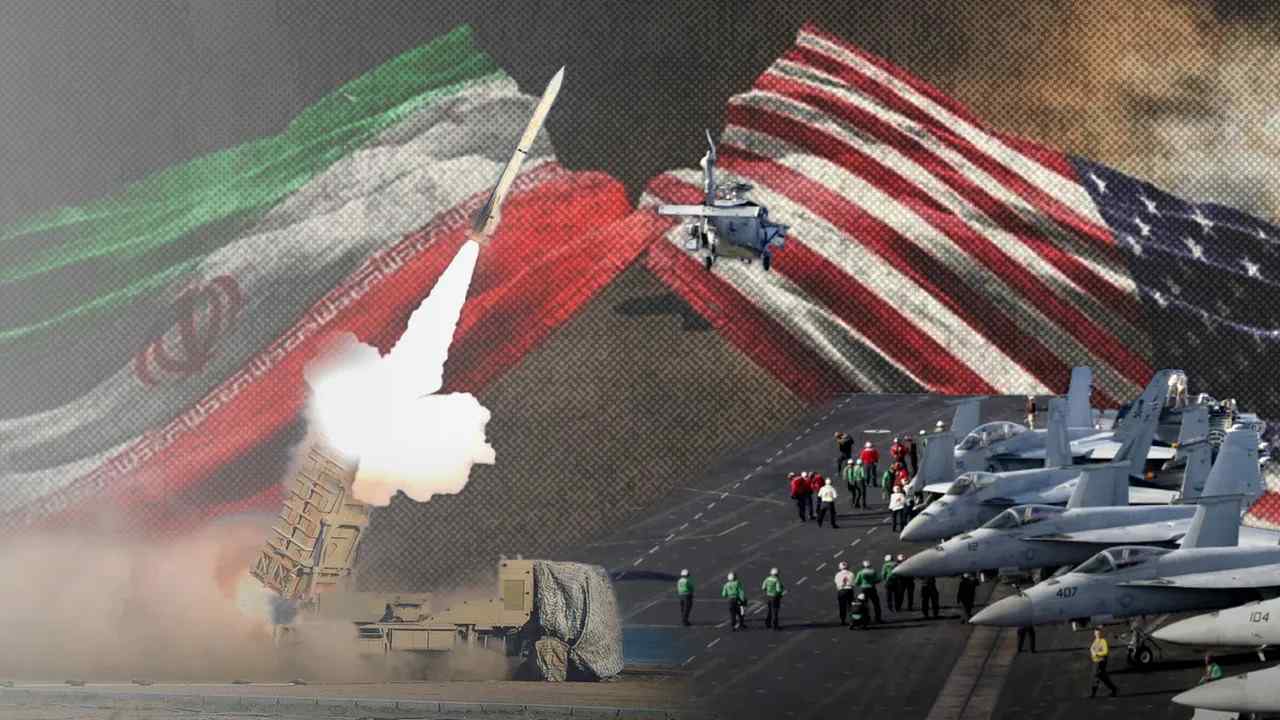
American forces in the Middle East are prepared to launch new, potentially major, military operations against Iran “within 96 hours of receiving” an order from President Donald Trump, according to two US officials. The officials said sufficient forces are now in the region to carry out the potential attacks and that new US military operations would likely extend beyond efforts to “mow the lawn” or maintain the status quo by striking radars, launchers, and other Iranian assets that can be quickly reconstituted. As the sources stressed, this has been the case since Trump halted full combat operations earlier this year.

“It will be a big effort,” one of the officials told CNN. Other current and former US officials familiar with internal military planning say it is a matter of when, not if, Trump will issue a go-order. They believe it could come at any time before the end of the year, though it is most likely after the US midterm elections on November 3.

CNN reported that Iranian forces are now more familiar with US tactics, making it harder for the American military to destroy all intended targets. However, leaders at US Central Command and the Pentagon have been developing a wide-ranging target list that includes Iranian energy infrastructure, military sites, and nuclear facilities.

The planning also takes place against the backdrop of assessments that any larger US and Israeli operation would likely prompt immediate retaliation by Tehran and the Houthis against American personnel and facilities in the region. One US official described the current situation around the Strait of Hormuz as “untenable” over the longer term, citing it as one factor that could influence a decision on military action if diplomacy fails.

Israeli Prime Minister Benjamin Netanyahu has also been pushing to launch new attacks against Iran, but US officials have asked him to delay until the Trump administration is ready to conduct joint operations, according to the two US officials and an Israeli security source.

Recent US intelligence assessments indicate that Netanyahu and his allies still lack a clear strategic objective beyond demonstrating some form of “progress” and continuing to degrade the Iranian regime, one source familiar with the reports said.

“Netanyahu really wanted and tried to convince Trump for a joint attack in Iran before the elections, and Trump did not give a green light,” the Israeli security source told CNN. The Israeli prime minister’s office called it “fake news.”

The Israeli security source added that one reason Trump declined was that Israel Defense Forces Chief of Staff Eyal Zamir told US Gen. Dan Caine, chairman of the Joint Chiefs, that it would harm Israel’s elections and lead to their postponement.

Israel’s Channel 12 News reported on October 25 that Zamir and Netanyahu had an “unprecedented” confrontation less than 48 hours before the election. According to the report, Zamir received a directive from the political echelon regarding Iran but sought an in-depth discussion and legal authorization before acting, concerned that the move could be miscalculated and trigger an immediate conflict.

Defense Minister Israel Katz said the report was “completely baseless and false.”

The preparations US officials described come amid other military plans reported by other American outlets. The New York Times, for example, has reported that the US and Israeli militaries have developed specific plans for a short, intensive round of strikes following the American midterm elections, with likely targets including Iran’s energy infrastructure, nuclear facilities, and missile and drone arsenal. According to the NYT, the two sides have stepped up exercises, including flights over Iraq to practice strike manoeuvres. Defense Secretary Pete Hegseth also recently met with Israeli Prime Minister Benjamin Netanyahu to discuss options.

ABC News reported that the Israeli military and the US have drawn up plans for renewed joint strikes in the coming weeks, with Israeli sources indicating the operations would almost certainly be delayed until after the US midterms. The White House has publicly stated that the US will not attack Iran before the November 3 elections.

At the same time, Iranian officials have signalled they are preparing for renewed hostilities. Iranian sources have warned that any new US-Israeli campaign would prompt a broader retaliatory response, potentially including attacks on energy infrastructure, data centers, and other economic targets in Gulf states.

Although it is uncertain whether the current planning will lead to a new major operation, it appears that Trump is heading in that direction if Iran does not submit to American demands. Nonetheless, US officials insist that although forces are in position and target lists have been prepared, no final order has been issued—and past periods of apparent readiness have not always led to action.


MORE ON THE TOPIC:

The post Trump Leaning Toward Bigger Iran Operations After Midterm Elections appeared first on South Front.

  •  
❌