The Vladimir region, a cornerstone of Russia's Golden Ring, is preparing for a significant structural upgrade. Governor Alexander Avdeev recently outlined a regional budget project for 2027-2029 that signals a sharp pivot toward aggressive tourism investment, moving beyond simple maintenance to a targeted expansion of infrastructure.
The Scale of Investment
The financial trajectory reveals a steep climb in funding. While the budget for 2026 is set at approximately 350 million rubles, the allocation for 2027 is projected to double, reaching 710 million rubles. Over the full three-year cycle, the regional authorities intend to inject roughly 865 million rubles into the tourism sector.
To put these figures in perspective, this push is part of a much larger economic strategy. The regional government plans to spend 44.6 billion rubles on overall infrastructure and economic development. While social obligations and agriculture remain the primary budget drivers, the decision to double the tourism spend in 2027 underscores the region's intent to capitalize on its status as a primary cultural and educational hub.
Russia and Ukraine expect to hold talks in Abu Dhabi sometime in November, though no date is set, as the two sides continue to observe a local ceasefire around the Russian-controlled town of Oleshky in Ukraine’s Kherson region. Yury Ushakov, an aide to Russian President Vladimir Putin, told reporters that Russia expects to hold trilateral […]
Click to see full-size image. (Russian Ministry of Defense)
In the Zaporozhye direction the “Dnepr” grouping is advancing towards the Konka River line, while units of the “East” grouping have recorded a deep breakthrough between Vozdvizhevka and the Verkhnyaya Tersa, creating a threat to Ukrainian logistics. In the Sumy direction Russian units of the “North” grouping continue to push deeper into the region, fighting near Khoten, Velyka Rybytsia, Nikolskoye, Korenek and Turya. In the Kharkiv direction heavy fighting continues towards Kharkiv and on the Volchansk sector, where advances of up to 700 meters have been recorded. In the Slavyansk direction positional fighting persists around Rai-Aleksandrovka and Nikolayevka, with Ukrainian units being pushed out of Dibrova and the woodland near Ozyornoye. In the Kupyansk direction Russian forces have repelled a Ukrainian counter-offensive and are consolidating in the areas of Bolshaya Shapkovka, Polomarovka, Kovalevka and Sobolevka, preparing conditions for a further advance towards Monachinovka. Meanwhile the presidents of the Czech Republic and Finland, Petr Pavel and Alexander Stubb, discussed by telephone the development of a common European position on peace negotiations concerning Ukraine following Stubb’s and Norwegian Prime Minister Jonas Gahr Støre’s conversation with Vladimir Putin.
Sumy direction Ukrainian units have not undertaken significant offensive action and have concentrated on defense. Elements of the 80th Separate Airborne Assault Brigade are being returned to the Sumy region. Electronic-warfare crews from the same brigade have also been redeployed to the area to strengthen counter-drone efforts.
Local reports indicate that Ukrainian forces have accumulated and partially relocated reserves near the Oleshnya River, thereby expanding the grey zone around Ivolzhanskoye. However, it is premature to speak of consolidation in the riverside area, as the Ukrainian side is relying mainly on small groups for movement.
In the Sumy district Russian assault troops advanced on ten sectors by up to 600 meters amid heavy fighting. In the Shostka district units of the “North” grouping continue to press towards Korenek. In the Krasnopolye district Russian assault groups are engaged in small-arms fighting near Turya.
Kharkiv direction Activity around Tsupovka and Novaya Kazachya is gradually declining as the summer–autumn campaign draws towards its close. Russian units are attempting to capture and hold Novaya Kazachya, but Ukrainian forces, using Tsupovka as a base, are dislodging them with counter-attacks. Stabilisation will be possible at best if Novaya Kazachya can be taken and the line held. Ukrainian logistics, which rely on Kharkiv and the valley route through Dergachi to Slatino, remain more convenient in this sector.
Russian troops have driven Ukrainian units out of Alisovka in the Kharkiv region. The settlement lies directly on the E105 highway that previously linked Belgorod and Kharkiv. The capture of Alisovka has allowed an advance along the road and created a threat to Liptsy from the west.
On the Volchansk and Velykyi Burluk sectors fierce fighting continues around Prikolotnoye. Total advances on four sectors over the past 24 hours reached up to 700 meters.
Near Velykyi Burluk the newly formed 50th Motor Rifle Brigade of the Ukrainian Armed Forces is suffering heavy losses. It was transferred to attempt a break-out from the encirclement in the north-east of Kharkiv region but has been unable to enter combat owing to catastrophic under-strength and losses inflicted by Russian aviation.
Zaporozhye direction The “Dnepr” grouping is focused on reaching the Konka River line while simultaneously supporting the left flank of the “East” grouping in the encirclement and destruction of the Ukrainian grouping around Orekhov. Fighting continues in Primorskoye and in the Lukyanovskoye area. Heavy combat persists around Orekhov and Preobrazhenka. The front remains broadly stable: the Ukrainian side has transferred special-forces units that are holding the northern outskirts of Orekhov and most of Preobrazhenka. Relying on the network of underground communications and the defensive line constructed east of Orekhov in 2023, they are attempting to infiltrate flanks and rear areas and to insert small groups into Malaya Tokmachka.
Further east, in the sector of the “East” grouping, a breakthrough has been recorded between Vozdvizhevka and the Verkhnyaya Tersa. Although still narrow, the penetration is already deep and is acquiring operational-tactical significance. The situation is gradually shifting in favor of Russian units. It is important not only to cut Druzhkovka from the west but also to establish drone positions on the heights west of the town in order to disrupt logistics more effectively, and to gain a foothold on the outskirts so that offensive operations can be conducted with greater prospects of success during the winter.
Slavyansk direction The principal task remains the retention of positions secured during the summer–autumn campaign around Rai-Aleksandrovka and on the outskirts of Nikolayevka, together with the final clearance of Ukrainian units from Starodubovka. The expulsion of Ukrainian forces from Dibrova continues, while fighting persists in Ozyornoye and the adjacent woodland. Reports of the clearance of Ozyornoye should not be interpreted as final capture of the settlement; Ukrainian units retain a presence and continue to operate in small groups from the direction of Yampol. Further north, near Kolodezi, the intensity of clashes has somewhat decreased, although probing attacks against Russian defenses continue. In Krasny Liman itself the situation is more complex: fighting affects the urban area and the southern approaches, and Ukrainian forces still hold positions in several districts.
Kupyansk direction Fighting is currently under way in the areas of Bolshaya Shapkovka, Polomarovka, Kovalevka and Sobolevka, where Russian presence is substantial. Consolidation is essential. If successful, operations can gradually begin to take Monachinovka, a large settlement, strongpoint and strategic road junction.
The capture of Monachinovka would create an immediate threat to Sredniy Burluk. South of it lies marshy lowland where logistics are extremely difficult. The main Ukrainian supply route to Velykyi Burluk runs through Pechenegi. If Sredniy Burluk can be taken, discussion of the operational encirclement of the Velykyi Burluk grouping becomes realistic. On the northern flank, around Dvurechnaya–Kutkovka, fighting continues for positions west of the Oskol.
In Kupyansk itself the main clashes remain concentrated in the urban area. Local successes have been recorded on the north-western approaches, but a continuous line of control within the city has not yet been established. Russian units retain a presence in Kupyansk-Uzlovoy, and fighting continues near Kovsharovka and on the approaches to Kurilovka.
Conclusion In the Sumy direction the capture of Alisovka and advances near Khoten, Velyka Rybytsia and Korenek create conditions for further pressure on the border positions. In the Kharkiv direction Russian forces are driving Ukrainian units from their positions around Prikolotnoye and Velykyi Burluk while inflicting heavy losses on newly formed brigades. In the Zaporozhye direction the advance to the Konka River and the deep breakthrough between Vozdvizhevka and the Verkhnyaya Tersa are forming the preconditions for the envelopment of the Orekhov grouping. In the Slavyansk direction the retention of key positions and the clearance of the Seversky Donets floodplain are reducing the threat to Russian logistics. In the Kupyansk direction the repulsion of the counter-offensive and consolidation on the western approaches open the prospect of an advance towards Monachinovka.
On the diplomatic track contacts on a settlement continue. The presidents of the Czech Republic and Finland, Petr Pavel and Alexander Stubb, discussed by telephone the development of a common European position on possible peace negotiations concerning Ukraine. On Tuesday Stubb and Norwegian Prime Minister Jonas Gahr Støre held a telephone conversation with Russian President Vladimir Putin. “The conversation held on October 29 between the Finnish president and the Norwegian prime minister with Vladimir Putin was discussed. Prospects for achieving a common European position on possible peace negotiations were also among the topics,” the official website of Prague Castle stated following the Wednesday telephone call between the Czech and Finnish presidents. Both presidents agreed on the need to continue negotiations involving all interested parties in various formats.
With the money spent on the war, Russia could have built 1,000 new schools and 200 hospitals, and granted 1 million rubles to every child born since the start of the full-scale invasion.
L’isteria crescente delle classi dominanti – e dei mass media da essi finanziati – ormai buttano tutto nel calderone del “nemico interno”: agenti russi, cittadini pagati dai russi, ingerenze islamiche e, ovviamente, i partiti della sinistra e i comunisti.
E’ stato sufficiente che l’edizione di giovedi del giornale Politico.eu scrivesse qualche riga per mettere in moto una valanga, rivelando che l’Unione Europea ritiene di trovarsi di fronte all’escalation delle operazioni ibride russe e che si sta preparando all’eventualità che, prima o poi, queste azioni provochino delle vittime in Paesi Ue o Nato. Insomma quasi un auspicio che da qualche parte ci scappi il morto da poter strumentalizzare ai fini della propaganda di guerra, sia sul fronte esterno che sul fronte interno.
Si tratta di uno scenario che in Italia abbiamo purtroppo visto e subìto spesso: dalla strage di Piazza Fontana in poi. Su questo, nostro malgrado, potremmo tenere delle lectio magistralis a tutti gli altri paesi europei che non hanno sperimentato tragedie e orrori analoghi
Il giornale Politico.eu riferisce di una riunione di diplomatici della Ue a porte chiuse, senza telefonini e senza assistenti ha valutato il rischio di attacchi gravi, “capaci di provocare vittime su larga scala”. Due fonti diplomatiche hanno confermato a Politico che una riunione degli ambasciatori presso l’Ue, svoltasi mercoledì scorso, ha riguardato proprio questo tipo di scenario.
Per una fonte diplomatica citata dal sito, “data la portata e la vastità dell’azione russa, è inevitabile che prima o poi vi siano delle vittime. È pura fortuna che non ce ne siano ancora state”.
“È abbastanza ovvio che, quando la Russia utilizza strumenti sempre più letali per mettere alla prova la nostra preparazione e la nostra volontà di adottare contromisure, a un certo punto ci saranno delle vittime”, ha dichiarato a Politico la finlandese Teija Tiilikainen, direttore del Centro europeo di eccellenza per il contrasto alle minacce ibride. “Prima o poi, intenzionalmente o meno, questo è ciò che accade”.
Se diversi cittadini di Paesi membri dell’UE o della NATO venissero uccisi in quello che sembra essere un attacco, la pressione ad agire sarebbe enorme per entrambe le istituzioni. “Temiamo fortemente che a un certo punto venga tolta la vita a un nostro alleato”, ha affermato un diplomatico della NATO, il che renderebbe la pressione ad agire “molto alta”, riporta ancora Politico.eu.
Ma l’isteria ormai è talmente dilagante che alcuni Paesi membri della Ue, ritengono che debba essere la Nato e non l’Unione Europea la sede opportuna per trattare di questi argomenti e delle possibili soluzioni, soprattutto perché le riunioni della Ue sarebbero troppo “porose” per la fuga di notizie o di informazioni sensibili.
A rendere il tutto ancora più strumentalizzabile ai fini della mera propaganda di guerra esterna ed interna in Europa, vi è anche il tentativo di leggere le proteste giovanili e popolari in Francia come eterodirette o articolazioni di progetti di destabilizzazione. E in questo gioco sporco tutto fa brodo, dalla guerra ibrida della Russia alle ambizioni dell’islam politico.
“Quello che sta accadendo in Francia non è altro che immigrazione di massa fuori controllo“, ha scritto Donald Trump il 6 ottobre sul suo social Truth riferendosi agli scontri e alle manifestazioni che stanno attraversando la Francia. Per il presidente americano “non si tratta delle scuole”, ma dell’”Islam che vuole prendere il controllo di un Paese un tempo grande“.
A fargli eco è subito arrivato l’eurodeputato lepenista Fabrice Leggeri, esponente del gruppo della destra dei Patrioti al Parlamento di Strasburgo, secondo il quale “sulle proteste in Francia Trump non ha del tutto torto”. Perché, ha affermato durante un punto stampa al Parlamento Europeo, “le rivolte in corso, le rivolte dei cosiddetti studenti o presunti studenti, sono di fatto strumentalizzate dall’estrema sinistra e, come sappiamo, l’estrema sinistra è infiltrata da elementi islamisti”.
L’isteria crescente delle classi dominanti – e dei mass media da essi finanziati – ormai buttano tutto nel calderone del “nemico interno”: agenti russi, cittadini pagati dai russi, ingerenze islamiche e, ovviamente, i partiti della sinistra e i comunisti.
Se al posto degli ebrei mettiamo gli islamici, sono esattamente gli stessi nemici messi all’indice in Europa dai nazifascisti negli anni Trenta.
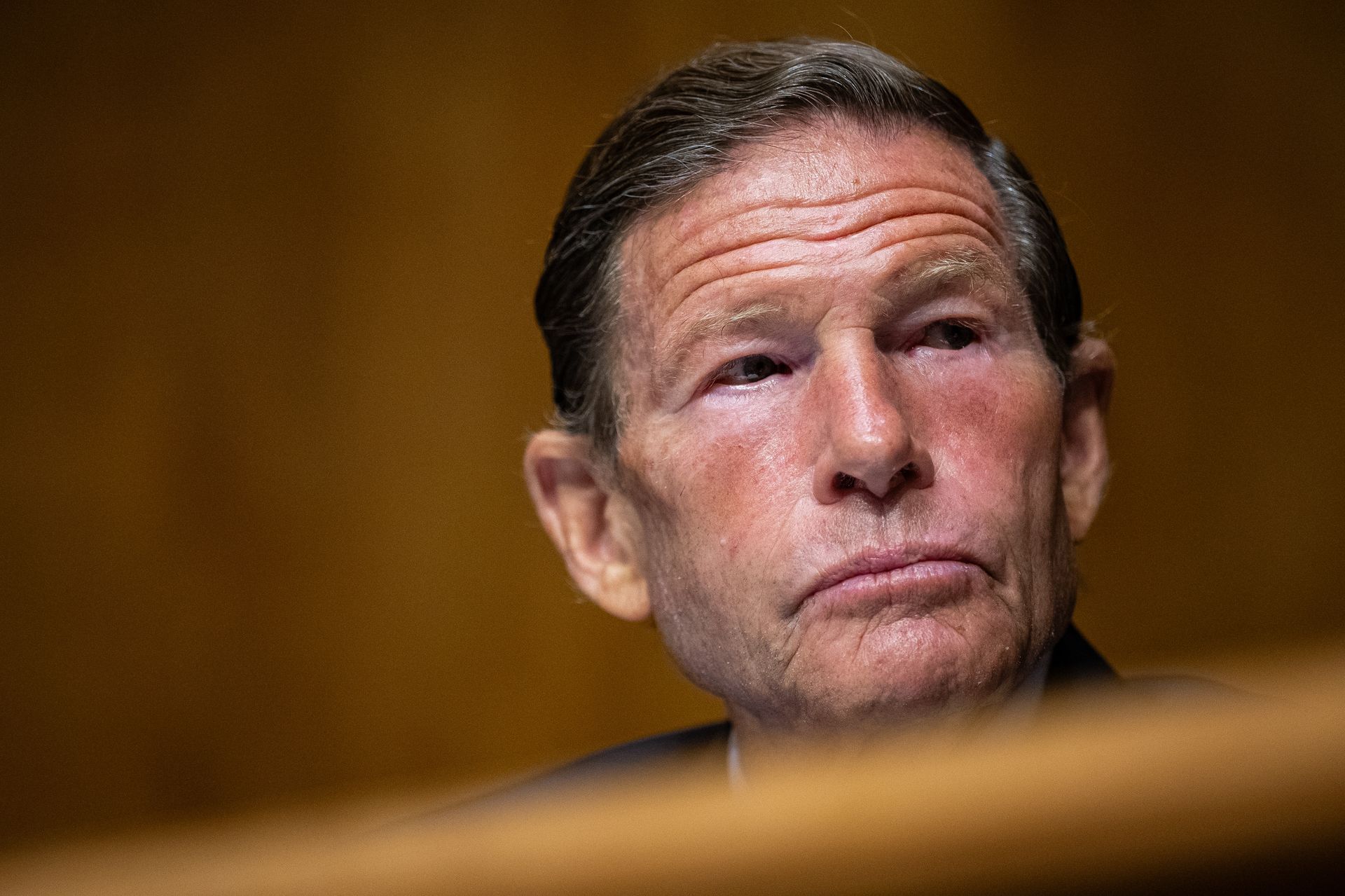
"I'm sending a sledgehammer message to shipping companies whose tankers are transporting illegal Russian diesel to our ports," Sen. Richard Blumenthal said. "Reverse course while there's still time."
The needle may not have moved on ending the Ukraine war but the joint phone call on October 27 by Finland’s President Alexander Stubb and Norwegian Prime Minister Jonas Gahr Støre to Russian President Vladimir Putin can be regarded as a defining moment. The two Nordic leaders insisted that their initiative was taken solely in their capacity as neighbours of Russia rather than on behalf of Europe, but the fact remains that their initiative was borne out of their exclusive meeting in Oslo on October 20 with Ukrainian President Volodymyr Zelensky and US special envoy Stephen Witkoff.
Russian expert opinion is that it is unlikely that Oslo and Helsinki acted without the consent of Brussels [EU] and Kyiv. But no one is making an issue of the white lie. Clearly, European countries are attempting to re-establish direct communication channels with Russia. Entry of Finland and Norway in the negotiation process indicates that even Ukraine’s most vocal supporters are shifting their position in favor of dialogue with Russia. According to official data, Norway has provided Kyiv with nearly €17 billion in aid, while Finland has provided €5 billion.
On October 21, Witkoff flew into St. Petersburg from Oslo to transmit some fresh proposals on Ukraine in light of his discussions, which is leading to the first trilateral US-Ukraine-Russia talks since the start of the year, tentatively planned for early November in Abu Dhabi. Zelensky said Stubb and Støre debriefed him after the call to Putin and that he was grateful for their “active support.” Ukrainian Foreign Minister Andrii Sybiha remarked that the call had been “the right approach”.
The two Nordic leaders stated that their 90-minute call from Helsinki to Putin was part of “the diplomatic efforts to end the war and promote peace and stability in Europe”; the conversation had been “frank and substantive.” Støre added that there were “big differences in views” with Putin.
European Union is a divided house on how to go about engaging with Russia after riding the high horse all through the tumultuous years since Moscow’s ‘special military operation’ began in February 2022. But they are sensing that the last train is leaving the station and they should be on board.
However, President Donald Trump is estimating from the feedback received from Witkoff on Putin’s reaction to the peace proposals – which followed his own call to Putin on October 9 – that an opportune moment is at hand to advance the peace process. By the way, Trump must be having a ‘feel good’ over the mutually respectful working relationship between the Kremlin and his spouse Melania that resulted in a localized humanitarian ceasefire in the Russian-occupied city of Oleshky in the southern region of Kherson brokered by the US First Lady. Kremlin spokesman Dmitry Peskov has suggested that the ceasefire in Oleshky could be a model for other areas of the contact line as well – “especially when it comes to the positive, coordinating participation of American negotiators, including First Lady Melania Trump.”
In the downstream of the recent US-Russia Diesel Deal, a payment system needs to be put in place and Trump is reportedly considering the lifting of sanctions on the Russian Direct Investment Fund (an at least $10 billion sovereign wealth fund created by the Russian government to co‑invest in the Russian economy). Suffice it to say, a door is opening for large projects involving American companies in other areas in the Russian economy as well.
Trump has virtually mothballed the Lindsey Graham Act empowering him to sanction Russia’s oil and gas exports. He is reportedly also planning to have an agreement to import large volumes of Russian fertilizer to meet the demands of the American farmers. In political terms, Trump would probably explain all this as a strategy to ‘incentivize’ the Russian side to be flexible at the negotiations but it will no doubt give stability and predictability to the overall Russian-American relationship.
The Kremlin readout of Putin’s phone conversation with the two Nordic leaders made three key points: first, it was emphasised that the thrust of the forthcoming trilateral talks between Russia, Ukraine and the US at Abu Dhabi in early November is “intended in particular to discuss ways to ensure the security of both Russia and Ukraine once a complete cessation of hostilities is reached.”
Second, Putin underscored that “a just and lasting peace would be possible only if the interests of the Russian Federation are considered in full and without any conditions attached.” Third, Putin took exception to “the EU and NATO’s confrontational policies which result in prolonging the hostilities.” The reference is to the escalatory moves by European powers.
Of course, the trilateral talks in November are not going to bring the conflict to an end. The EU countries are more focused on their status in a conflict resolution than apply themselves to making constructive proposals in the negotiating process, so their inclusion in the current format is irrelevant not possible for the time being. On the other hand, Moscow would realize that creating a new European security architecture without European participation is impossible.
The Russian presidential aide Yuri Ushakov previously noted that dialogue with Europe is necessary, as it is the European Union that supports Kyiv. Peskov also previously spoke of openness to negotiations with Europe. There is no question that further developments depend largely on relations between Europe and the US. Most European countries continue to look up to Washington.
In the entire history of the ex-colonial European powers, this week would have been a most humiliating experience, having to go to the Kremlin to engage with Putin whom they used to demonize like nobody’s business till the other day. The two Nordic politicians, according to Ushakov, sheepishly asked Putin whether it is possible for Zelensky to have a meeting with him. These are the first signs that they are disowning and dispossessing Zelensky now that he is becoming a liability. Brussels is having a problem to find money for him to tide over the period till an agreement is reached. No one is willing to contribute – not even Germany – since everyone knows this money is never going to be returned.
The unkindest cut of all is the suggestion from Witkoff and Jared Kushner that EU countries should resume sourcing Russian oil and gas. The two American negotiators gently advised that Nord Stream gas pipeline could be repaired and used. Per European media reports, American companies are talking to the Russians about reviving Nord Stream and selling Russian gas to the European market.
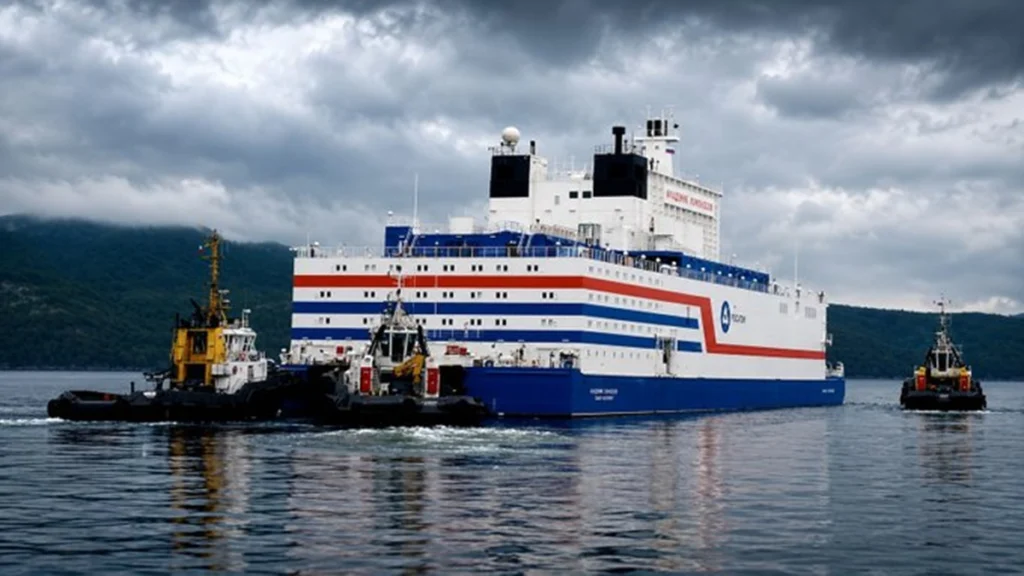
The Akademik Lomonosov has been operating in the Arctic since 2020.
On Wednesday, Russian President Vladimir Putin said his country is leading the development and operation of floating nuclear power plants, as can be seen in the Akademik Lomonosov, which is operating in the port of Pevek, in the Chukotka region, across from Alaska.
“This is not just a project; the plant is operational. It is located in northern Russia, in the Arctic region, and has been operating and generating electricity since 2020,” he said on the sidelines of the Russia-Africa Forum in Moscow.
Putin insisted that French, Japanese and U.S. companies say they are ready to develop plants like Russia’s, “but so far, no one has done anything.” By contrast, “Russia has an existing plant that has been built and is operating, and there is nothing like it anywhere in the world,” he reiterated.
Russia’s State Atomic Energy Corporation (Rosatom) previously signed the first agreement with Indonesia to build two floating nuclear power plants abroad.
A nuclear power plant… on water 🌊⚡️ Russia’s Akademik Lomonosov first floating NPP is bringing reliable, low-carbon energy to remote regions. Learn more from this video ⬇️ pic.twitter.com/UrTPsWix49
— Russian Embassy in Kenya/Посольство России в Кении (@russembkenya) April 27, 2026
Rosatom Director Alexei Likhachev said Moscow hopes the international business community will take note of “an infrastructure project in the field of nuclear energy capable of transforming a country’s economy.”
The world’s first floating nuclear power plant, the Akademik Lomonosov, was built to withstand tsunamis and iceberg impacts. It has a capacity of 70 megawatts of electricity and 50 gigacalories of thermal energy, and can supply electricity and heat to a city of nearly 100,000 people.
The United States also launched a floating nuclear power plant, the Sturgis, in the Panama Canal in 1968, but decommissioned it in 1976 because of high maintenance costs.
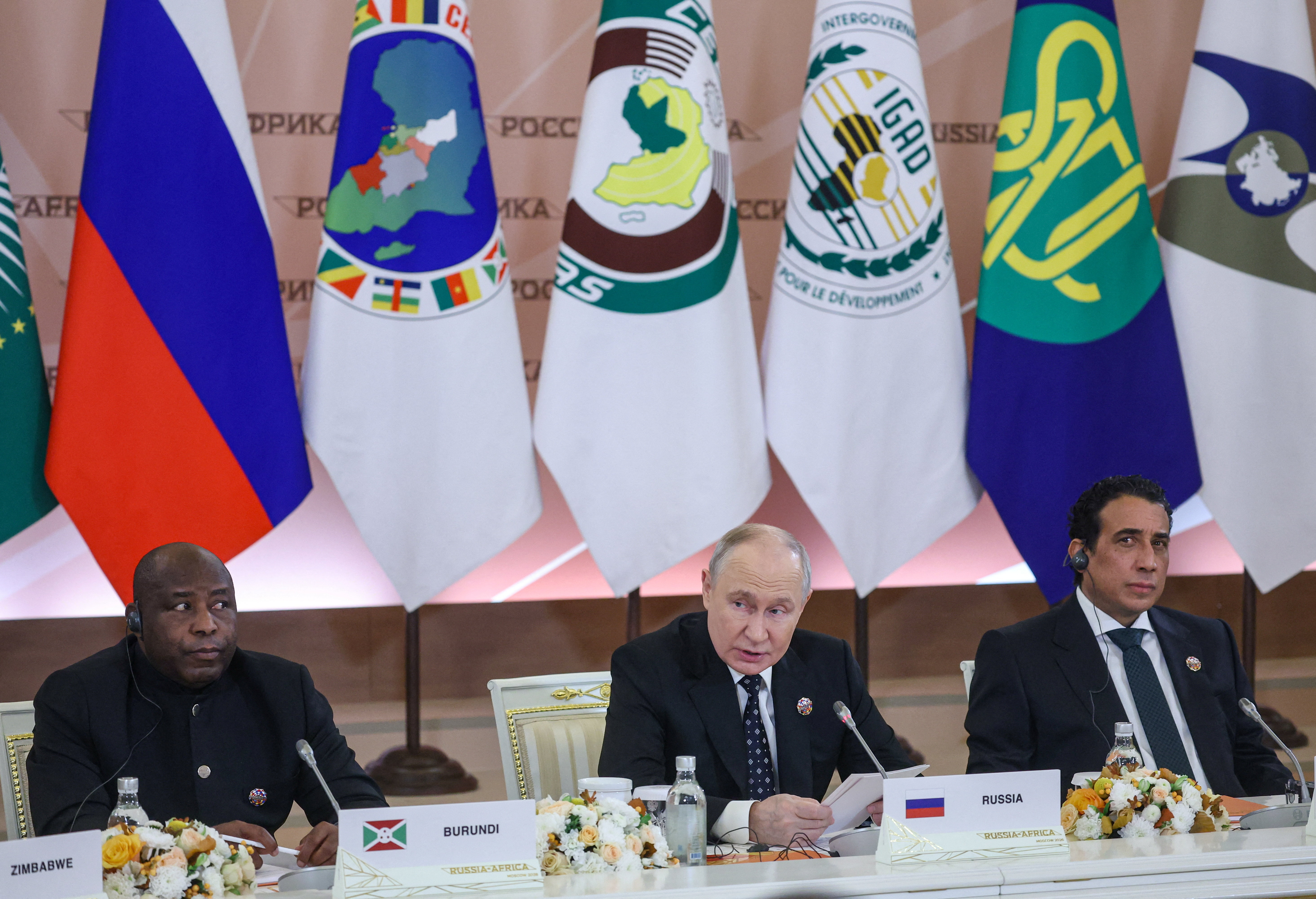
President Vladimir Putin told African leaders on Wednesday that Russia was their best partner, accusing what he cast as a colonial West of still trying to exploit the continent’s resources and using debt to hold back development.
Putin was speaking at the third Russia-Africa Summit in Moscow, a two-day event attended by African leaders and government delegations from 48 countries, and will hold one-on-one talks with many of the 22 individual African leaders attending on issues such as trade, security, arms and grain.
The event, first held in 2019, is part of a concerted push for Russian political, economic and military influence on a continent where paramilitary fighters from Russia’s Africa Corps remain active.
Russian state media and cultural institutions are also trying to expand their footprint in Africa, and Russian state companies are trying to expand their interests in areas from mining to power generation.
Wooing African leaders and others from the Global South has also been part of Moscow’s strategy to counterbalance pressure on the world stage from the West over Russia’s war in Ukraine.
“Africa is increasingly asserting itself as one of the key players in the global economy and politics,” Putin said.
“However, the emergence of a multipolar world is, of course, no easy task; it faces resistance from countries that are not prepared to accept this reality: those who are accustomed to thinking in terms of their colonial past and to enriching themselves fabulously.”
Putin, whom Western critics accuse of trying to leverage Africa’s colonial past to Moscow’s benefit, did not name the countries he had in mind.
But he spoke of what he called “active attempts by Western countries” to drive Africans back into debt bondage and to force them to accept much-needed financial resources on predatory terms, which he said slowed their long-term development.
By contrast, Putin said Russia was ready to share its know-how, including digital know-how, and localise production rather than just buy raw materials, creating jobs and generating tax revenue.
Russian paramilitary forces have been accused by Western governments of propping up military juntas such as the one in Mali to try to shore up Moscow’s geopolitical influence and squeeze out former colonial powers such as France. Moscow rejects these assertions.
Burkina Faso’s prime minister, Rimtalba Jean Emmanuel Ouedraogo, said cooperation with Russia was transparent and ensured both parties’ interests, and that Moscow was not trying to erase African languages and cultures.
“This is completely different from what we had with imperialist France,” he told Russia’s state RT television channel.
Putin told the summit that Russia championed greater African influence in the IMF and World Bank, was ready to embark on joint transport and agricultural infrastructure projects and that Moscow stood ready to supply grain and fertiliser to more African countries.
Russia plans to build own version of US billionaire’s satellite communications to help attack Ukraine
Vladimir Putin praised Elon Musk’s genius and said he was in touch with Starlink’s controlling shareholder as Russia develops its own satellite communications for its military to use against Ukraine.
The Russian president, speaking at a summit with African leaders in Moscow, was comparing the Earth-orbiting network built by Musk’s SpaceX with Russia’s gradual efforts to build its own Rassvet constellation.
On the night of October 28, Russian forces carried out a combined strike against targets on Ukrainian territory. According to the Ukrainian Air Force, the attack employed an Iskander-M/S-400 ballistic missile and 88 strike UAVs. The main emphasis was placed on logistics and energy infrastructure in Kharkiv, Dnipropetrovsk, Chernihiv, Volyn, and other Regions. In parallel, Ukrainian forces conducted a series of drone and cruise missile attacks against industrial targets on Russian territory, including the largest metallurgical combine and a chemical plant.
Strikes on Ukrainian Territory
Kharkiv Region
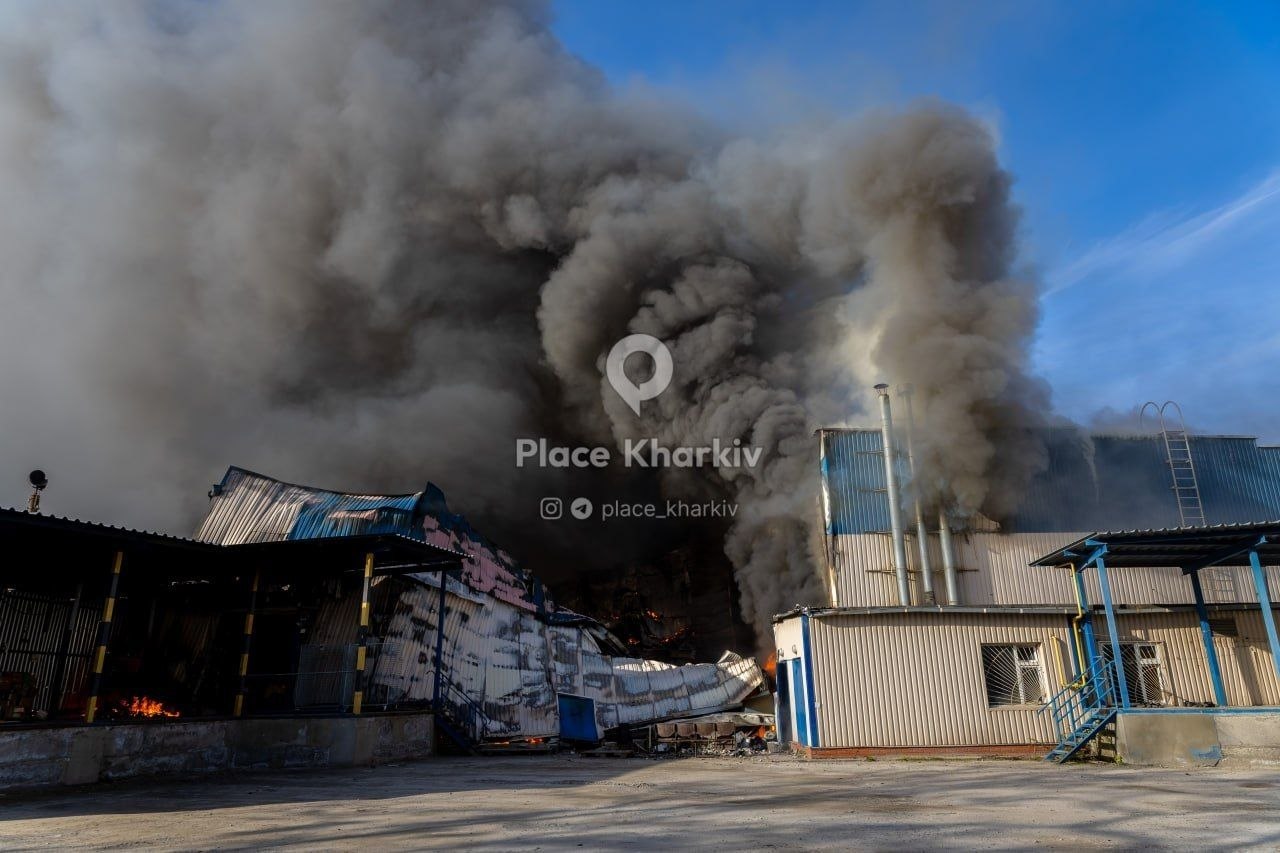
Logistics center in Kharkiv. According to a statement by the Russian Ministry of Defense, the site was used to store military and dual-use cargo intended to supply Ukrainian troops.
Pyatykhatky railway station, Kamianske district. Two consecutive Geran-4 UAV strikes during the day. The first strike set a rail trolley on fire, destroyed the driver’s cab, and damaged the overhead contact line and a grain car in a freight train; the second strike set an electric locomotive on fire.
Energy infrastructure in Chernihiv. According to Ukrainian sources, about 210,000 subscribers were left without electricity, and roughly 90 percent of the city was de-energized. The specific target has not been identified.
Volyn Region
PS-330 Lutsk-Northern substation, Lutsk. According to a statement by the Russian Ministry of Defense, the facility supplied power to military-industrial enterprises producing UAVs and components.
PS-330 substation, Kovel. A similar target; power outages were recorded in Kovel after the strike.
Bulk carrier underway toward the port of Chornomorsk. According to the Russian Ministry of Defense, the vessel was delivering cargo to supply the Ukrainian Armed Forces.
Reports also indicated strikes on targets in Zhytomyr, Vinnytsia, Khmelnytskyi, Kherson, Kyiv, Cherkasy, Sumy, and Zaporizhzhia Regions. A blackout was recorded in central Kyiv, with electricity absent in parts of the central districts.
According to a statement by the Russian Ministry of Defense, 531 Ukrainian UAVs were shot down overnight over Russian territory across 13 federal subjects.
Lipetsk Region
Novolipetsk Metallurgical Combine (NLMK), Lipetsk. The largest metallurgical enterprise in Russia, with a capacity of about 17 million metric tons of steel per year. According to Ukrainian sources, it was attacked with FP-5 cruise missiles; a fire was reported in the area of the combine. The governor of Lipetsk Region confirmed that UAV debris had fallen and vegetation had caught fire, while denying a “major fire at an industrial enterprise.” A total of 45 UAVs were shot down over the Region.
Tula Region
Azot chemical plant, Novomoskovsk. According to Ukrainian sources, the plant was attacked by UAVs, with the AM-70 ammonia production unit reportedly hit. Russian authorities confirmed the attack on the chemical plant and damage to residential buildings, without providing details about production capacity.
Building housing servers for the regional healthcare system, Kursk. Damaged as a result of a UAV attack; disruptions to certain medical services are possible. Over the day, 168 UAVs were shot down over the Region, and three people were injured.
For the week of October 19–25, according to Russian data, attacks on civilian targets killed 50 civilians and injured 263.
On October 28, two opposing directions are evident: Russian strikes are concentrating on Ukrainian railway logistics, energy, and warehouse infrastructure, while Ukrainian drones are attacking large industrial sites deep inside Russia, including metallurgy in Lipetsk and chemical production in Novomoskovsk. The strikes on the substations in Lutsk and Kovel are of particular significance, as they point to an attempt to weaken the power supply to western Ukraine’s logistics and production capacity.
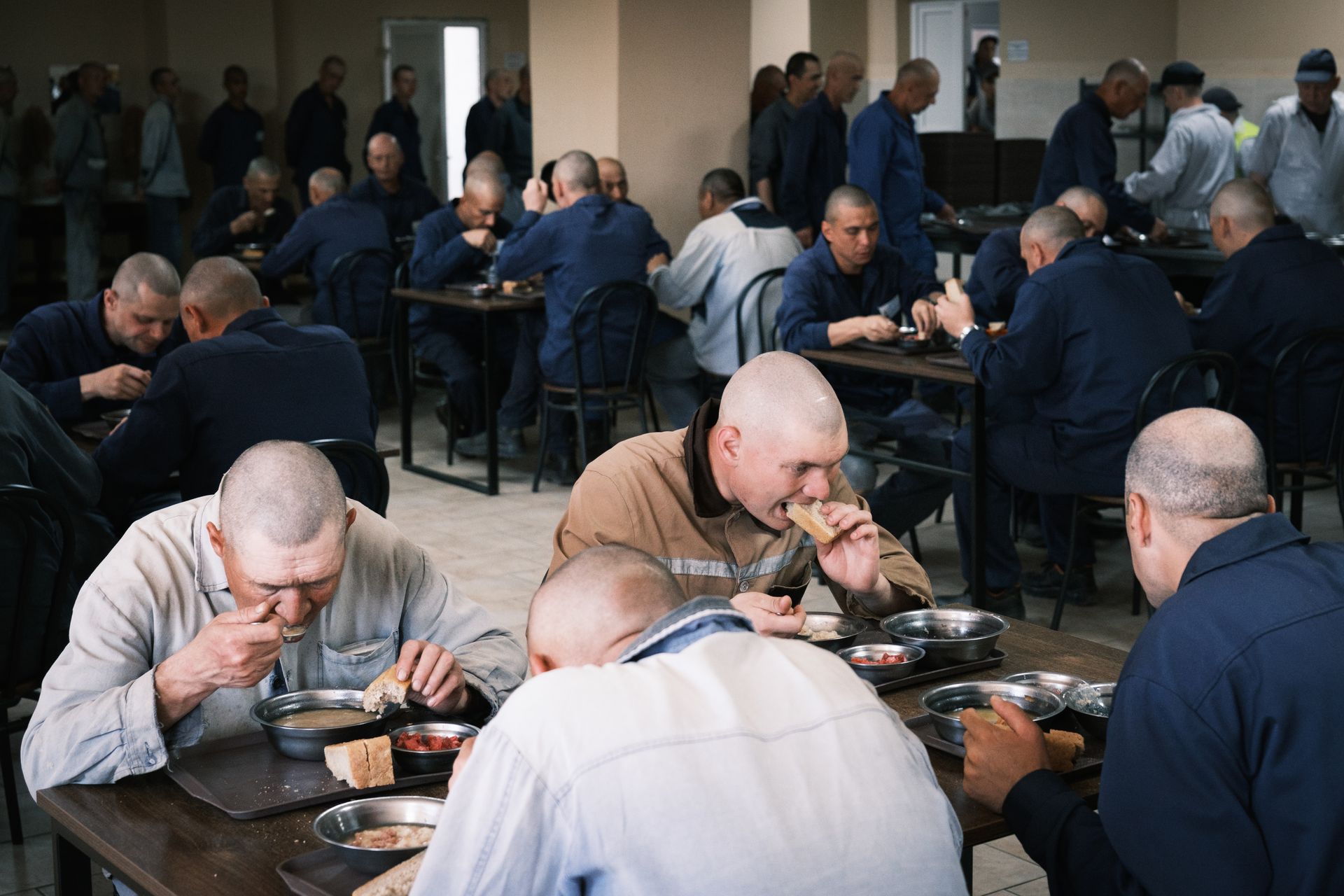
Once our eyes adjusted to the aggressive glare of the freshly painted white walls around the yard, we began to make out figures, dozens of them dressed in navy blue, clinging to the inner walls of this surreal space.
It was a scorching June day in western Ukraine, and we
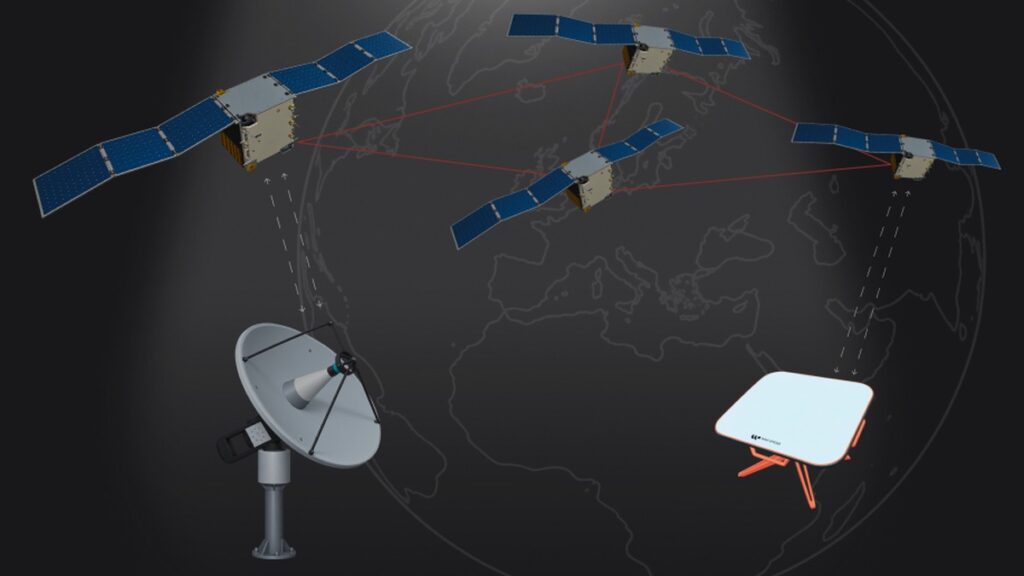
Ukraine’s Military Intelligence (HUR) has published the names of 49 Russian and Belarusian companies and institutions building Rassvet, Russia’s low-orbit satellite internet system, on its War&Sanctions portal, the agency said on 28 October. It needs it for its military purposes.
Russian troops ran front-line communications and long-range strike drones on smuggled Starlink terminals until SpaceX blocked them on 1 February 2026. Ukraine still flies on Musk’s network, and on 24 October it got back to full speed after a ten-day cap imposed abroad. Rassvet is meant to give Russia’s army satellite links under its own control.
HUR has said Moscow may struggle to obtain components for more satellites, and its list names the suppliers that sanctions would need to target while the network is still being built.
Terminals for Iskander-M command vehicles
Rassvet is first of all a military communications system. Russia plans to use it for command and control, strike platforms, and drones, and to install terminals in the command-and-staff vehicles of Iskander-M missile systems, HUR says.
The Central Research Institute of Automation and Hydraulics is involved in integrating Rassvet into army communications, including fitting command vehicles, Iskander ones among them, with terminals once 292 satellites are in orbit, according to the portal. The same institute produces guidance components for the Iskander-M and Kinzhal missiles.
Planned coverage takes in Ukraine and the EU first, and once it is wide enough, Russia could use the system in hybrid attacks on other countries. That is why partners should block Rassvet’s access to components, equipment, and software now, the agency said.
Roscosmos launches it, a Belarusian missile maker signs on
The lead company is Bureau 1440, part of the IKS Holding tech group. According to the portal, it is linking its flight control center to systems of the Russian Defense Ministry. Roscosmos launches the satellites into orbit, and its head, Dmitry Bakanov, personally oversees Rassvet.
Meanwhile, Belintersat, Belarus’s national satellite operator, signed a partnership with Bureau 1440 in May 2026 to bring Rassvet into Belarus’s telecom network. It is a branch of the Plant of Precision Electromechanics, Belarus’s lead missile developer and maker of the Polonez rocket launcher.
Another Belarusian firm, Aerospace Instruments, prototypes components for the system.
23 of 49 not sanctioned by Kyiv’s allies
Of the 49, 23, Roscosmos among them, are not under sanctions by any country in the sanctions coalition. The companies involved “must be included in all blacklists” of countries, banks, and businesses, the agency wrote.
32 satellites launched, seven launches to go
Russia launched its first 16 Rassvet satellites earlier this year. Stable communications would need 200–250 in orbit, Serhii “Flash” Beskrestnov, then adviser to Ukraine’s defense minister, said in May.
By August, Russia had launched 32 Rassvet satellites and planned seven more launches by the end of 2026, a HUR official told Janes. Only 12 of them, all from the first batch, had reached a sustainable altitude by the end of August, ISW reported.
Europe has already learned to better recognize hybrid threats, which is definitely a good thing, but recognition alone is not enough and doesn't serve as sufficient deterrence.
European officials have grown accustomed to scenarios where a cyberattack disrupts public services and critical infrastructure, drones appear over sensitive sites,
 Login