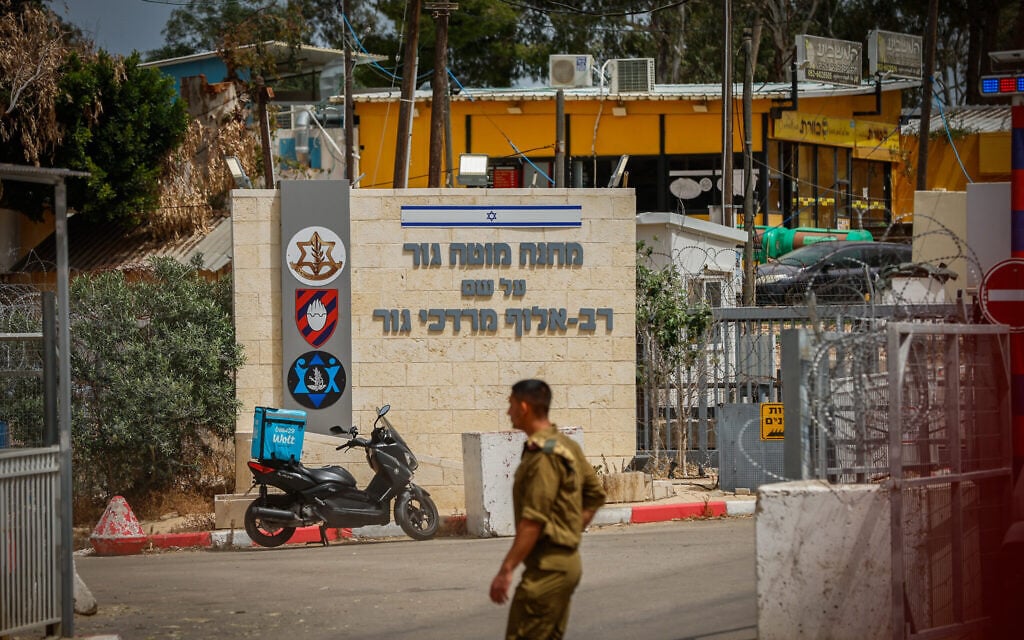
Israeli activist reportedly loses consciousness in South Hebron Hills; Tucker Carlson accuses Huckabee of ignoring brutal attack on Palestinian-American, US ambassador denies claim
Tribal leaders launch effort to protect civilians; aid agencies warn health needs in besieged city are at 'breaking point' as hospitals struggle to treat wounded
Since the start of Russia’s full-scale invasion, Russian forces have damaged 165 schools in Sumy Oblast and destroyed 21 beyond repair, according to the head of the regional administration. The administration’s answer is to move classrooms underground. Design documentation for 14 new underground schools has already been prepared, Oleh Hryhorov, head of the Sumy Oblast Military Administration, said in an interview with Ukrinform published on 28 October 2026. In addition, 13 such schools are already operating in Sumy region, while nine more are under construction, the media outlet reported.
Sumy region is one of the areas regularly shelled by the Russian military, making it dangerous to hold classes in above-ground school buildings. Of the region’s 280 schools, 225 have shelters, mostly basic ones, while more than 70 have radiation-protective shelters, Hryhorov noted.
“The process is ongoing and is being scaled up as much as possible,” he said, adding that the region is bringing in partners.
Underground classrooms provide a safer learning environment in Sumy Oblast
The construction of new underground schools is primarily focused on the larger cities of Sumy Oblast, where most schoolchildren are concentrated, Hryhorov explained.
The learning process at such a school differs from the usual format. This was explained by Oleksandr Vaniushenko, the principal of one of the first underground schools in Sumy, Suspilne reported on 23 December 2025.
“We have the first shift—entirely younger children, and fifth- and sixth-graders also go out to the open locations. The second shift brings in just as many more children. The total number studying per day is 360–370,” Vaniushenko noted.
The shelter has backup power supplies, allowing children to continue their lessons during air raid alerts and power outages, according to the project, media reported.
Children study in a radiation-protective shelter in Sumy, December 2025. Photo: Suspilne Sumy
Currently, 22 schools operate entirely in person, while 193 use a hybrid learning format, the head of the regional administration said. A total of 75,000 children are currently attending school in Sumy Oblast, he noted.
A Russian bomb hit a Sumy school during lessons in September
On 29 September, Russia struck a school in Sumy with a 250-kilogram aerial bomb while children in grades 1 to 4 were there, Serhii Kryvosheienko, head of the Sumy City Military Administration, reported. He said the Russians aimed the bomb at the school on purpose. About 40 students were in the school’s shelter when the bomb hit, a school employee told Suspilne.
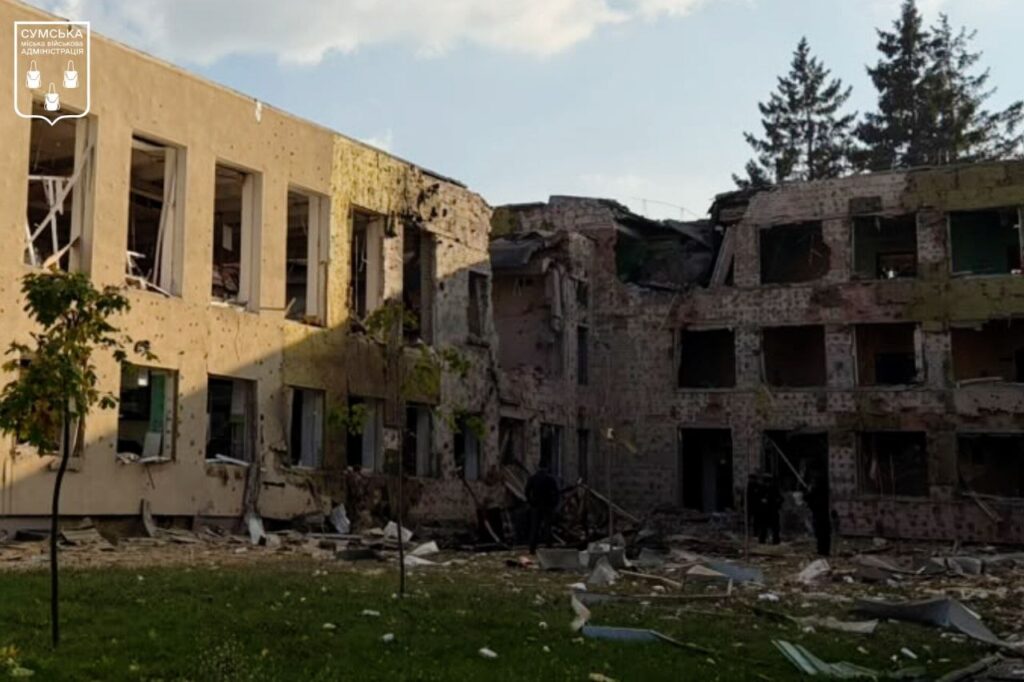
A school in Sumy where Russian forces carried out a strike while elementary school children were studying, 29 September 2026. Photo: Sumy City Military Administration
"With no pity or compassion whatsoever, they strike at children? There is nothing human in the enemy! He is not fighting on the battlefield—he is destroying a nation," Kryvosheienko said.
President cites truce, IDF pullout, border demarcation, prisoner releases as outstanding issues; German minister urges support for Lebanese army, warns of UNIFIL withdrawal
Mohamed Sabry Soliman said to plead guilty to 9 counts of hate-crime offenses, 3 explosives charges in federal court for 2025 firebombing in Colorado; already serving life for murder
Prosecutors say soldier sent Iranian handler sensitive info about military's readiness and call-ups, including his own deployment during Iran war; probe finds handler joined Telegram group for incoming soldiers
Elif Eralp accidentally acknowledges to Der Spiegel that she and her husband are 'afraid of these people,' referring to Die Linke supporters with ties to terror groups Hamas, PFLP
Jason Turkish, fiancé of Democratic Rep. Haley Stevens, who lost to El-Sayed in primary, says voting for Republican Mike Rogers is 'very simple' choice
Michigan Democrat's Senate campaign says far-left Rebellion PAC behind ad is 'not affiliated in any way' with El-Sayed, but doesn't address how he views the content itself, which he has echoed in his own statements
Alleged assailant likely jabbed another man with needle in separate attack on the same day as stabbing, after assaulting someone last year outside yeshiva
Liberian-flagged container ship, charted by Israeli shipping company and departed from Haifa, is latest vessel to be targeted in string of suspected Russian attacks
The anti-Netanyahu parties won a Knesset majority, but they do not have the means to translate that into even a minority government. The failure is staggering, and may echo long into Israel's future
Qatar reportedly implicated, but Likud statement doesn't name Gulf state; Eisenkot says allegations must not delay Knesset's swearing-in; Herzog: 'We must avoid tarnishing an entire community'
Cali, chanteur et auteur-compositeur, sort son 13e album intitulé "Caliciuri", un reflet intime de sa vie. En tournée dès novembre, il se produira à Saint-Orens-de-Gameville et à Perpignan. L'album, réalisé par Fred...
Security agency said to provide Sohlberg with info on possible Qatari campaign to sway Arab vote; Likud decries 'stolen' election, Eisenkot warns against delay in swearing in Knesset
Nefesh B’Nefesh and the FIDF brought more than 70 government agencies and service providers together at Yom Siddurim to help lone soldiers tackle the bureaucracy of everyday life.
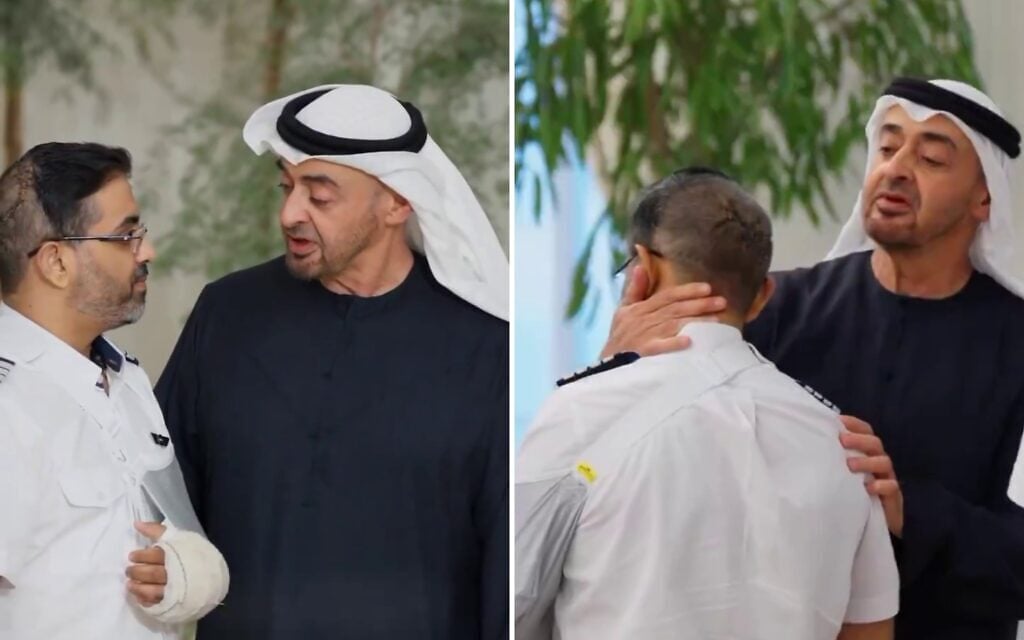
Emirati President Mohamed bin Zayed Al Nahyan awards Smit Machchhar and colleagues First Class Order of Zayed for thwarting Omani copilot's attempt to crash plane full of Israelis
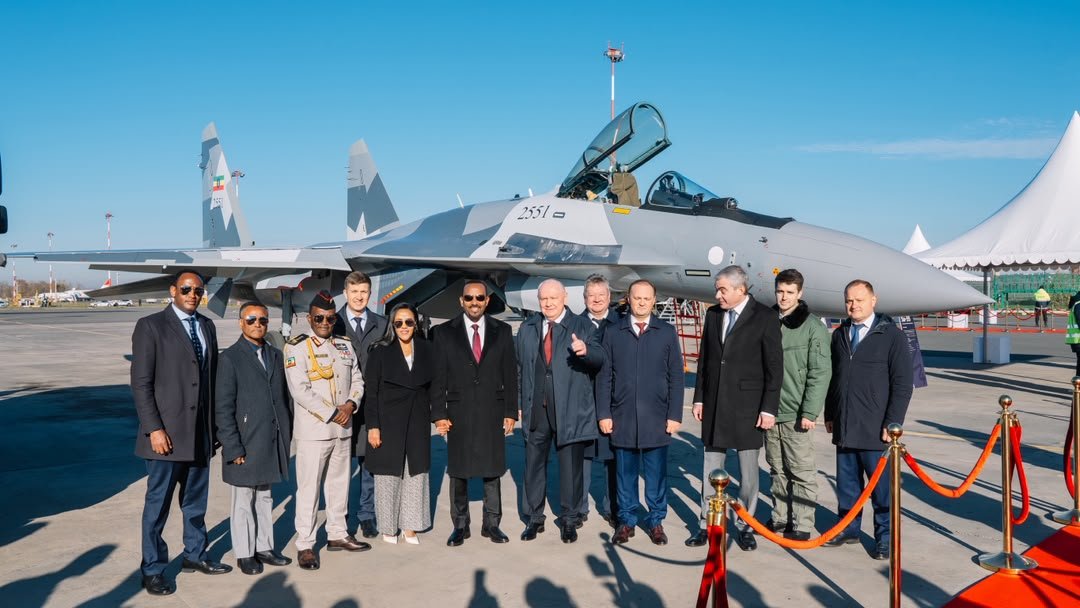
Ethiopia has taken delivery of the first 12 Russian Su-35 fighter jets, Prime Minister Abiy Ahmed announced on Wednesday during a visit to Moscow.
This makes Ethiopia the third export customer of the Su-35 after China and Algeria. Russia remains the biggest operator of the fighter jets and has comprehensively used the warplanes in the ongoing war in Ukraine.
PM Abiy made the announcement on X while attending the two-day third Russia-Africa Summit, where Moscow is seeking closer security and economic ties with African countries amid Western sanctions over the Ukraine conflict, which has now entered its fifth year.
Abiy wrote on X: “Our comprehensive efforts to sustainably ensure our country’s peace and security have reached a new milestone today. The state of readiness being built within Ethiopia’s defense forces is endowing the nation with the capability to preemptively deter aggression.
In accordance with our prior agreement with the Russian government, we have today taken delivery of the first twelve Su-35 4++ Generation fighter jets. Additionally, Ethiopia will receive four S-400 air defense system batteries.
I would like to express my gratitude to my friend, Russian President Vladimir Putin, for his dedication in ensuring we received these warplanes a year ahead of our agreed schedule. By equipping itself with these fighter jets, Ethiopia has taken the lead among Sub-Saharan African nations.
This historic achievement further strengthens our nation’s sovereignty, and it will serve as a massive capability boost that allows us to confidently continue our journey toward ensuring our collective security and regional stability in the future.”
Image via: PM @AbiyAhmedAli
Ethiopian and Russian officials, including Abiy, attended a formal handover ceremony at Zhukovsky Airport near Moscow, and the prime minister’s office released photos showing Su-35s bearing Ethiopian markings.
The deal builds on a July 2021 military cooperation agreement that aims to boost training and technology for Ethiopia’s armed forces, which has previously relied on older Soviet-era Su-27 fighters.
Alexander Mikheyev, head of Rosoboronexport, said: “The choice of the Su-35 was not accidental. It is one of the best platforms, and it has proven itself in the conditions of the special military operation [in Ukraine], including in its interaction with air defense and electronic warfare systems. In fact, the complex is necessary in the current situation of the Ethiopian Armed Forces.”
“Ethiopia has operated Sukhoi aircraft for many years, so its pilots and technical personnel already have experience with the family. This will make the transition to the Su-35 easier. Russia will also provide specialized training for Ethiopian pilots, engineers and maintenance personnel.”
The Russia-Africa Summit, attended by delegations from 48 African countries including 22 heads of state or government, focused on trade, investment, energy, food security and security cooperation.
Interestingly, Ethiopia received two Su-30K fighter jets in January 2024. These aircraft were part of a small batch built in the late 1990s for the Indian Air Force. India later returned them to Russia after receiving the more advanced Su-30 MKI.
After India returned the early-model Su-30K fighters as part of a trade-in arrangement, Russia transferred the aircraft to the 558th Aircraft Repair Plant in Baranovichi, Belarus, for storage in 2011.
Angola signed a contract in October 2013 to buy 12 jets; they were overhauled and upgraded at the plant, with the first deliveries in 2017 and the last in 2019.
The Su-30 is a two-seat version of the same Russian “Flanker” family that Ethiopia has flown for years (the older Su-27). Pilots and ground crews already know the basic design, so the Su-30 will be a useful stepping stone to the Su-35.
Sukhoi Su-35
The Sukhoi Su-35 has basically evolved from the Su-27M air-defense fighter that first flew in June 1988.
Sukhoi refined the aircraft’s capability during the development of India’s Su-30MKI.
Sukhoi embarked on a second “deep” modernization of the Su-27 in 2003 to serve as an interim export aircraft while awaiting the development of the Sukhoi PAK FA (Su-57) program.
The aircraft’s ability to maintain a high angle of attack at near-zero airspeed has traditionally drawn considerable media and public attention.
The Su-35 incorporated technologies from the PAK FA program, with a redesigned cockpit and weapons-control system, and featured thrust-vectoring engines that eliminated the need for canards. The type made its first flight in February 2008.
Russian Sukhoi Su-35S fighter aircraft, Su-34 military fighter jets and Su-30SM jet fighters fly over Red Square during a military parade, which marks the 75th anniversary of the Soviet victory over Nazi Germany in World War Two, in Moscow on June 24, 2020. The parade, usually held on May 9, was postponed this year because of the coronavirus pandemic. (Photo by Alexander NEMENOV / AFP)
Although it was designed for export, the Russian Air Force became the first customer in 2009, with the production version designated Su-35S. China’s Air Force also acquired 24 Su-35s.
The Su-35 employs the N035 Irbis-E “Snow Leopard” passive electronically scanned array (PESA) radar, a further development of the N011M radar evaluated on Su-27M testbeds and the core of the Su-35’s weapons-control system. It can detect an aerial target up to 400 km away, track 30 airborne targets, and engage eight simultaneously.
In addition, the multi-function radar can provide high-resolution ground images in synthetic aperture mode. The aircraft is equipped with an OLS-35 optoelectronic targeting system ahead of the cockpit for other tracking modes, including infrared search and track. The Su-35 is equipped with the L175M Khibiny-M electronic countermeasure system.
Radar-absorbent materials have been applied to the engine inlets and front stages of the engine compressor to halve the Su-35’s frontal radar cross-section and minimize the detection range of enemy radars.
The multi-role Su-35 can deploy air-to-air missiles with a range of up to 300 kilometers, carry the heavy Oniks anti-ship cruise missile, and carry a multitude of air-to-ground weaponry.
The Su-35 is powered by a pair of Saturn AL-41F1S turbofan engines, a highly upgraded variant of the AL-31F. The AL-41F1S is closely related to the Su-57’s Saturn AL-41F1 and produces 137.3 kN of thrust with afterburner.
The engines have thrust-vectoring nozzles with canted rotational axes; the nozzles operate in one plane for pitch, but the canting lets the aircraft produce roll and yaw by vectoring each engine nozzle differently. The Indian Su-30MKI was the first to implement this configuration.
The engine gives the Su-35 limited ability to sustain supersonic speed above Mach 1.1 without afterburners (supercruise).
The maximum take-off weight is 34,500 kg. Combat range is 1,600 km. The 12 hard points (10 on wing and fuselage stations and two on 2 wingtip rails can carry 8,000 kg of ordnance. Various combinations could be up to 12 × R-77M/P/T/-1 AAMs, or 6 × Kh-29L/TE air-to-surface missiles, or 6 × Kh-31A/AD anti-shipping missiles, among others.
The early delivery of Su-35 fighters and the acquisition of the S-400 ‘Triumf’ AD system mark a monumental leap for Ethiopia’s military arsenal. While the aircraft build on Ethiopia’s long experience with Russian Su-27 and Su-30 platforms, the new ‘Super Flankers’, though limited in number, will make Ethiopia’s air power formidable in the region.

 Login