❌

Reading view

Iran Used Limpet Mine Placed On Ship’s Hull In Latest Strait Of Hormuz Attack: Report

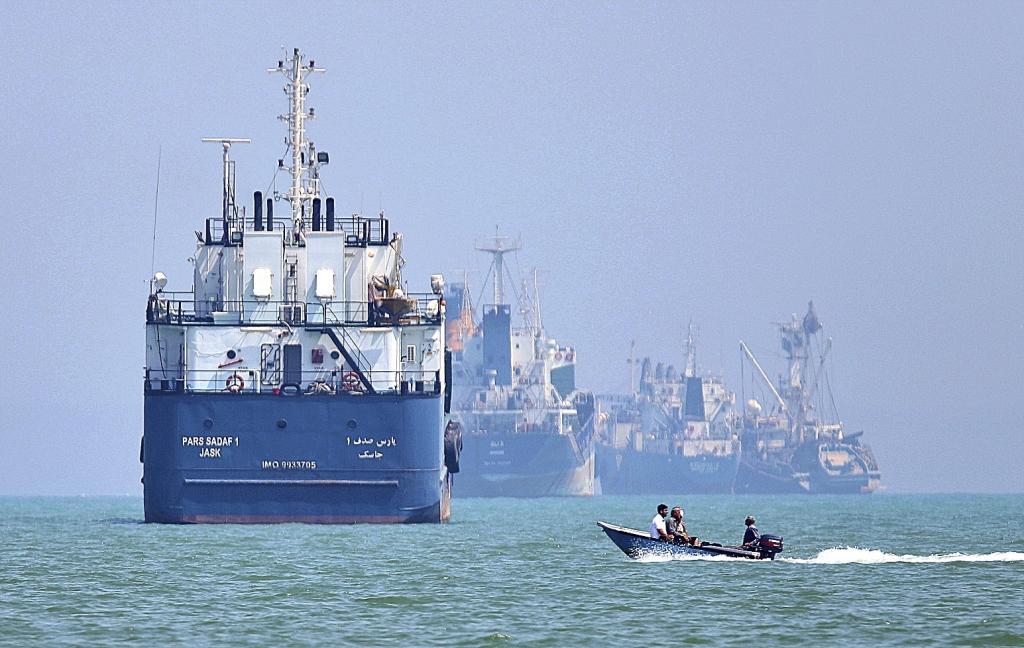
A small boat in the Strait of Hormuz approached a tanker and placed two explosive devices on the hull above the waterline, causing a blast that started a fire in the engine room, the United Kingdom Maritime Trade Operations (UKMTO) center reported. The attack on the Dubai-owned tanker Louise 1 was carried out by Iranians using limpet mines, Financial Times reported. The incident took place Thursday and was the first of its kind since June 2019, when a Japanese and a Norwegian ship were hit with limpets, the publication noted.

This is the first indication of the successful use of these mines during the current Islamic Revolutionary Guard Corps’ (IRGC) wave of strikes against shipping in the Strait of Hormuz following Operation Epic Fury. The attack also highlights the challenges of keeping ships safe in a busy and complex littoral.

“The apparent ability of a small craft to approach a transiting tanker, deploy explosive devices and withdraw presents a significant security concern, particularly in the Strait’s congested shipping lanes,” Greece-based maritime ​risk management group Marisks said ​on ⁠Friday, Reuters reported.

TWZ covered the 2019 attacks extensively, including sharing the following video showing an Iranian Navy or IRGC fast boat going back to remove a dud limpet mine from the Japanese-owned Kokuka Courageous’s damaged hull.

Earlier Friday morning, U.S. Central Command (CENTCOM) commander Adm. Brad Cooper said the waterway was cleared of sea mines. He was not addressing the limpet mine claim.

He stated on X that after “we sank Iran’s navy earlier this year, we also successfully cleared the strait’s internationally recognized primary transit routes of Iranian sea mines, and today U.S. forces remain highly vigilant and present to ensure that all primary transit routes in the Strait of Hormuz remain free and clear.”

“This week we reached a significant milestone, having now assisted Gulf partners in exporting more than 1.5 billion barrels of crude oil since summer,” Cooper added.

Recalling a recent flight over the Strait of Hormuz, Cooper noted that he “saw our U.S. assets in the air and on the water, including a squadron of advanced sea drones that were on patrol supporting a defensive layer. Here’s what I didn’t see: I didn’t see the IRGC out there at all.”

Also known as uncrewed surface vessels (USVs), the sea drones are part of an increasingly uncrewed armada of air, land and sea assets that are supporting the safe coordior through the Strait.

The USV type shown in the following video, a Saronic Corsair, made history twice in the battle against Iran. In July, the USVs were used as a strike weapon in combat for the first time by the U.S. A month earlier, a Saronic Corsair USV rescued the crew of a U.S. Army AH-64 Apache that crashed in the Gulf of Oman after it was downed by Iran.

Update from CENTCOM Commander: pic.twitter.com/oipZRRCJuE

— U.S. Central Command (@CENTCOM) October 30, 2026

Despite the heavy presence of CENTCOM forces, this month is turning out to be particularly dangerous for shipping in the region.

“October has seen the highest number of ship attacks on record,” Noam Raydan, a senior fellow at the Washington Institute for Near East Policy, said last week, according to the BOE Report, an oil industry publication. “Raydan, who maintains the institute’s interactive shipping incident map, has recorded 28 confirmed and reported attacks in the Strait of Hormuz and surrounding waterways in October and 113 since the US-Israeli war with Iran began on February 28.”

These strikes, combined with ongoing Houthi attacks on Saudi Arabia’s oil infrastructure, have already placed tremendous pressure on a global economy relying heavily on fossil fuel from the region. As of Friday morning, Brent crude topped $117 per barrel, the highest level in more than four years, according to OilPrice.com.

The American oil industry, meanwhile, is making a fortune on this situation.

“The war with Iran has been very lucrative for American oil companies, which have earned more than $130 billion in profit as people pay much higher prices for gasoline, diesel and other fuel,” The New York Times reported on Friday. “That is a conservative estimate based on the performance of more than 50 large U.S. oil and gas companies, most of them producers or refiners, in the six months from April through September. It does not reflect profits earned in March, the first month of the war, or in October.”

“The United States oil and gas business is making hundreds of billions of dollars,” Trump said at an Oct. 24 campaign rally, describing how the war is affecting the industry.

TRUMP on HIGH GAS PRICES: We’re making money like we’ve never made before. They’ll say: President Trump is bragging about all the money they're making while people are suffering at the pump. I don’t give a damn. We’re making a freaking fortune. pic.twitter.com/KZ2pYsTPyR

— Acyn (@Acyn) October 25, 2026

The Latest

Qatari mediators returned to Tehran on Friday in another bid to try to pull the Middle East region back from the brink of war. The visit takes place as the U.S. and Israel are gearing up for a possible new round of strikes against Iran that could come as soon as next week after America’s midterm elections.

U.S. President Donald Trump has frequently stated that he could order new strikes, likely with Israeli assistance, after control of the next Congress is settled. While Trump could be gearing up to hit Iran again, leaks about war planning could also be messaging to compel Tehran back to the bargaining table.

“It’s going to get wrapped up soon,” Trump said Friday morning in an interview with Kansas City radio station KCMO. “We need a guarantee there’ll never be a nuclear weapon.”

Whether this latest Qatari effort can stop the clock winding down toward a resumption of hostilities remains questionable. Washington and Tehran seem far apart in their goals for achieving an agreement to stave off war.

The U.S. wants nuclear issues ​included from the start of negotiations while Tehran ​demands that the US first end its port blockade ‌and ⁠lift oil export sanctions, Reuters reported on Friday.

A senior Iranian official has already dismissed a plan presented by Qatar as “unacceptable,” the outlet added. “The proposal presented by Qatar sets ​a seven-day timeline addressing both Tehran’s and Washington’s concerns, laying out daily confidence-building steps that each side must take,” the news outlet reported on Oct. 28, citing an official briefed on the negotiations.

The Qatari mediation is the latest diplomatic effort to prevent new fighting. On Monday, major regional powers met in Tehran to find a peaceful way forward.

Regardless, American forces are locked and loaded for a possible new round of strikes against Iran. Israel also continues ramping up attack plans in coordination with the U.S. in the wake of a so-far inconclusive national election that could result in the end of Prime Minister Benjamin Netanyahu’s career.

“Cooper rarely briefs Trump in person, so the meeting could signal that the U.S. is moving closer to significant military operations,” the publication stated. “He met with the president in July, when the two huddled with Hegseth and Caine on Air Force One in Delaware.”
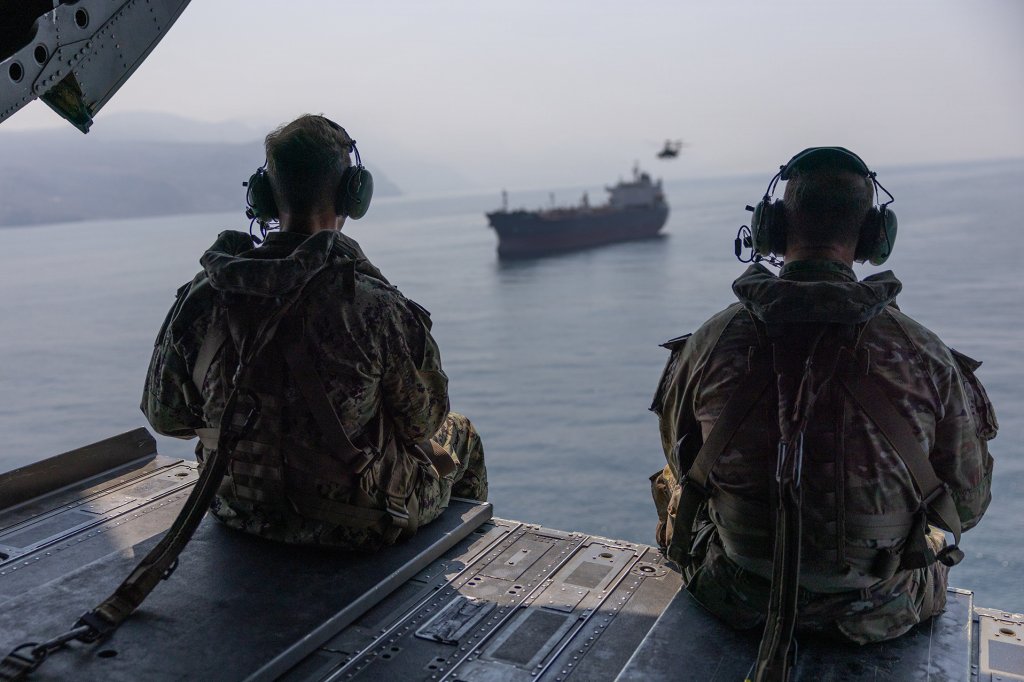
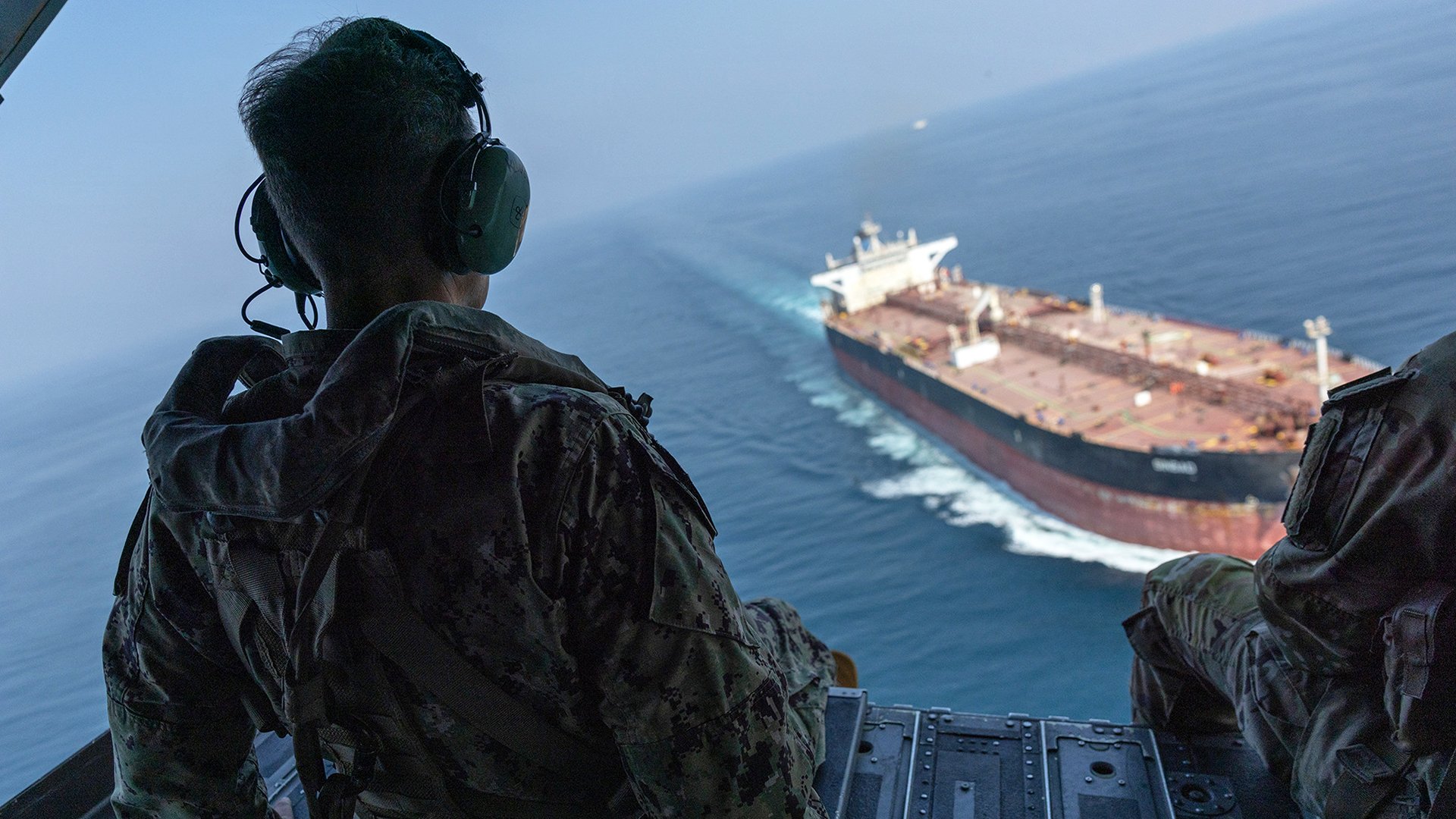
U.S. Navy Adm. Brad Cooper, commander of U.S. Central Command (left), and U.S. Army Maj. Gen. Brandon Tegtmeier, 82nd Airborne Division commander (right), observes commercial traffic transiting the Strait of Hormuz while flying over the international waterway in a U.S. Army CH-47 Chinook, Oct. 25, 2026. (U.S. Central Command photo)
U.S. Navy Adm. Brad Cooper, commander of U.S. Central Command (left), and U.S. Army Maj. Gen. Brandon Tegtmeier, 82nd Airborne Division commander (right), observe commercial traffic transiting the Strait of Hormuz while flying over the international waterway in a U.S. Army CH-47 Chinook, Oct. 25, 2026. (U.S. Central Command photo) Senior Chief Petty Officer Amanda Dunford

CENTCOM declined comment when we asked to confirm the meeting as described. The Pentagon referred us to the White House, and the White House did not respond to our request for comment.

While the Journal offered no specific details about the plans discussed at the White House meeting, previous reporting has suggested Trump is seeking a short, intense bombing campaign.

“According to several people familiar with the war plans, any new US-Israeli assault would be intense, lasting some three days and targeting nuclear facilities, regime assets and civilian infrastructure including power plants,” Financial Times reported on Thursday.

A top Democratic senator said he was briefed on plans and was shocked by what he heard.

“I will just say this: their plan is insane,” Sen. Chris Murphy, of Connecticut said. “It will lead to devastating escalation and the likely destruction of our commitment to the rule of law.”

“There’s been open reporting as to what we may be planning and the civilian infrastructure that we may be targeting,” Murphy added. “The plan that they have developed will lead, in my view, to a prolongment and an escalation of this war that will be devastating for our security interests.”

Trump is reportedly planning to restart war with Iran after the election.

Some of us have been briefed on the war plan. And while I cannot disclose any details, I can say this: the plan is insane. It will not achieve objectives and will set off a new cycle of escalation. pic.twitter.com/adWJfHVIok

— Chris Murphy 🟧 (@ChrisMurphyCT) October 29, 2026

As the White House continues to put the finishing touches on new attack plans, the U.S. is bolstering its forces in the Middle East as we noted at the top of this story.

“The U.S. military is sending an additional Patriot system to Israel from Texas to beef up its missile defenses in the country, according to flight-tracking data and two officials with knowledge of the movement,” the Journal reported on Wednesday. “The U.S. has also moved troops off bases in the Middle East where they were vulnerable in preparation for an escalation.”

“U.S. forces in the region have been restocking their munitions, and bomber aircraft and jet fighters are preparing for strikes, some of the officials said.”
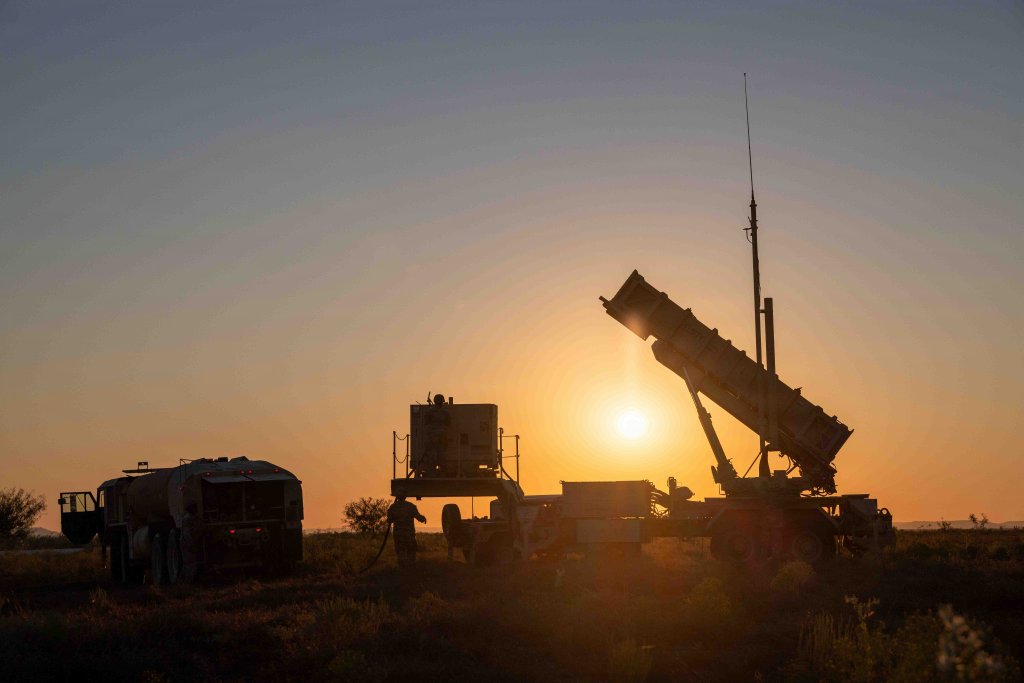
U.S. Soldiers assigned to Charlie Battery, 1st Battalion, 62nd Air Defense Artillery Regiment, 69th Air Defense Artillery Brigade, refuel a Patriot M903 launching station generator during a battalion-wide mission readiness exercise at Fort Hood, Texas, Oct. 23, 2026. The exercise tests the battalion’s ability to establish, operate and sustain Patriot air defense systems while strengthening coordination and readiness across the formation. (U.S. Army photo by Capt. Russell Shirley-Jones)
The U.S. is reportedly sending an additional Patriot system to Israel. (U.S. Army photo by Capt. Russell Shirley-Jones) Capt. Russell Shirley-Jones

As we previously noted, there have been other signs that a major new round of U.S. and/or Israeli strikes on Iran might be looming on the horizon. Fox News reported that the Nimitz class aircraft carrier USS Theodore Roosevelt and the rest of its carrier strike group, as well as the Makin Island Amphibious Ready Group carrying the 13th Marine Expeditionary Unit (MEU), are heading to the Middle East, citing unnamed U.S. officials.

“The ships will arrive in the Middle East by the end of November,” the officials said, according to a post on X from Fox’s Jennifer Griffin on Tuesday. “These new deployments will add about 10,000 sailors and Marines to the Middle East.”

You can find out more about the locations of the U.S. Navy’s fleet of flattops in our “Where Are The Aircraft Carriers?” feature.
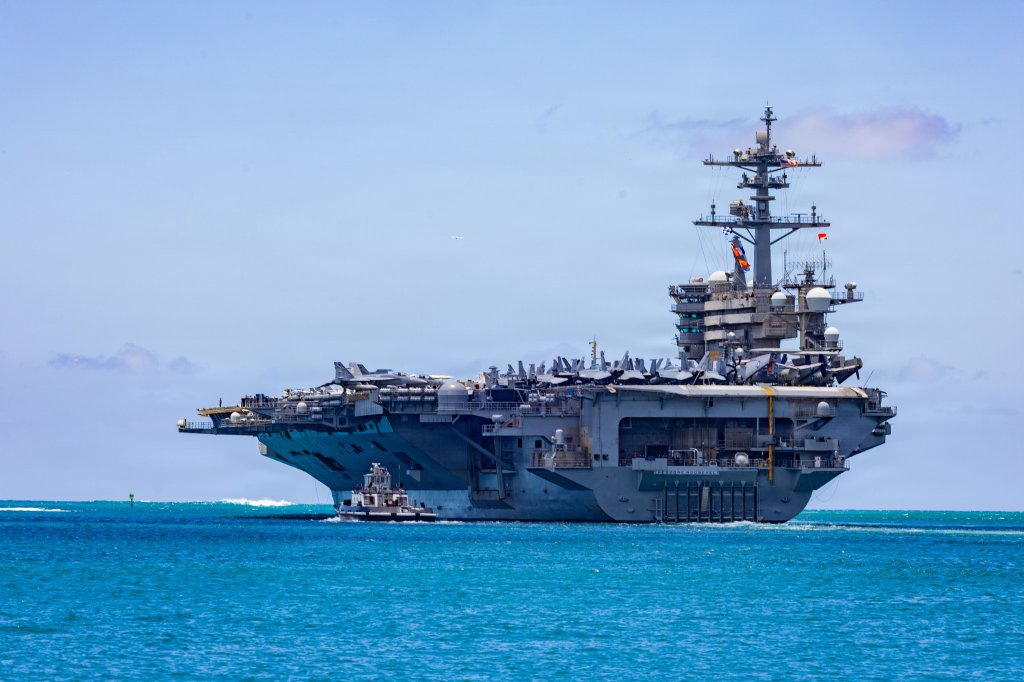
Nimitz-class aircraft carrier USS Theodore Roosevelt (CVN 71) departs Joint Base Pearl Harbor-Hickam, Hawaii, during Exercise Rim of the Pacific 2026, July 7, 2026. Thirty nations, over 30 surface ships, five submarines, 15 national land forces, more than 206 aircraft and 30,000 personnel are participating in RIMPAC in and around the Hawaiian Islands, June 24 to July 31. The world's largest international maritime exercise, RIMPAC provides a unique training opportunity while fostering and sustaining cooperative relationships among participants critical to ensuring the safety of sea lanes and security on the world's oceans. RIMPAC 2026 is the 30th exercise in the series that began in 1971. (U.S. Navy photo by Mass Communications Specialist First Class Luke McCall)
Nimitz-class aircraft carrier USS Theodore Roosevelt (CVN 71) is reportedly heading to the Middle East. (U.S. Navy photo by Mass Communication Specialist 1st Class Luke McCall) Petty Officer 1st Class Luke McCall

There have been indications of increased U.S. military air activity in the Middle East recently, as well. Observers have called attention to the particularly significant influx of aerial refueling tankers to bases in the region, as well as in Europe, which would be critical to any new major air campaign.

US Tanker Fleet Update 21/OCT/2026 #IranWar‌

Overall numbers across CENTCOM and Europe have now stabilised back to the levels they were at back at the start of September, around 190-195. There are a few tankers dotted around at other sites temporarily (Glasgow Prestwick and… pic.twitter.com/taKi8op7Tv

— DefenceGeek 🇬🇧 (@DefenceGeek) October 21, 2026

America and Israel struck hard at Iranian logistics during Operation Epic Fury, and the U.S. Navy maintains a blockade on Iranian ports. Still, the IRGC has managed to bring in materiel critical to its drone and missile programs.

A new Reuters investigation examines how.

“Iran has created a secret network of military agencies with global reach to import at least $2 billion in hardware, explosives and heavy-duty trucks since January 2025, evading both the US naval blockade and Western sanctions,” the investigation found. “Hidden behind names starting with the letters MOD, for the Ministry of Defense, are more than 5,000 agencies that form a formidable financial and military machine. Their financial footprints are on bills of lading and other shipping data dating back to 2016. Some are tied to the Islamic Revolutionary Guard Corps and to business conglomerates known as bonyads that are controlled by Iran’s elite.”

“The findings offer a window into one of the war’s great mysteries,” the outlet explained. “How is the IRGC replenishing its missile and drone arsenals while firing them in their thousands?”

Amid events in the Persian Gulf region, fighting between the Iranian-backed Houthi rebels of Yemen and Saudi Arabia rages on.

On Friday, Saudi Arabia said it intercepted and destroyed a Houthi drone near Islam’s holiest city, a claim the Houthis denied.

On Thursday, the Houthis claimed attacks on a half dozen targets across the kingdom, including oil facilities and airports. Saudi officials, for their part, said they intercepted ballistic missiles.

Adding to regional jitters, there were fresh reports of explosions near Iran’s Qeshm Island in the Strait of Hormuz Thursday night. However, these incidents often turn out to be air defense activity, warning shots fired at ships or nothing at all.

CENTCOM on Friday pushed back against claims that the command acknowledged attacks on Iranian targets.

“The reported notion that CENTCOM claimed any recent attacks is false,” Capt. Tim Hawkins, the command’s spokesman, told TWZ.

For now, the world is waiting nervously to see whether the Middle East again erupts into war. We should have a clearer picture in the coming days.

Contact the author: howard@twz.com

The post Iran Used Limpet Mine Placed On Ship’s Hull In Latest Strait Of Hormuz Attack: Report appeared first on TWZ.
  •  

Americans 'frustrated' about Iran war going into midterms as Trump admin has decision to make: GOP lawmaker

A Republican member on the House Armed Services Committee told Fox News Digital ahead of the midterm elections that the Trump administration has a key decision to make on the future of the U.S.-Iran war as "continuing to do just enough not to lose, but not enough to win, is not OK."

Rep. Pat Harrigan, R-N.C., made the comments as Vice President JD Vance declared during a Fox News town hall on Thursday that he promises "Donald Trump is not going to let Iran become a forever war." Official and military sources also told Fox News this week that movements are being made in the Middle East to give the president options if he decides to resume strikes against Iran.

"I share my constituents and many Americans' perspective that I'm very, very frustrated that this war is not over. The way that ultimately this administration went about conducting the war, it needed to execute it and wrap it up in a very short period of time, and we are not there yet," said Harrigan, who is running for re-election in North Carolina's 10th Congressional District.

"That being said, Iran can't have a nuclear weapon. And so at the end of the day, I do believe that this was a war that was inevitable at some point, but the party that's in power and the administration that decided to pull the trigger on it is responsible for the outcome, and they're responsible for the outcome in a very short period of time. Otherwise, things get really, really difficult," Harrigan continued. "And I think we've been seeing that, both from a political perspective but also from a policy perspective."

TRUMP SUPPORTERS CONFRONT IRAN, AFFORDABILITY CONCERNS WITH A MESSAGE FOR CRITICS: 'GIVE HIM TIME'

"And so while the administration needs to wrap this up, we are not in a forever war, but we need to make sure that we're not... we keep the mission the same. We accomplish the mission. And we do what it takes to either win or come home," Harrigan added. "And that binary decision has to get made by this administration."

Harrigan told Fox News Digital that Trump "needs to involve Congress" if he chooses to renew military action against the Iranian regime.

"I think that that will long-term set the course for the country to be resolute in affirming and actually executing and accomplishing the objectives that exist. Because look, like it or not, Congress is responsible for the funding arm of the government. And if they run out of money to accomplish the objectives, then that is not good for our strategic interests," he said. "So, in my opinion, Congress and the White House need to be very closely involved in making the next set of decisions that exist for this conflict."

GOP CRACKS WIDEN OVER IRAN WAR AS VULNERABLE CANDIDATES BREAK WITH TRUMP, DEMAND ITS END

"And we do need to make sure, again, that we either do what it takes to actually win in Iran, or we need to take the three out of five objectives that we've accomplished and say that, you know what? We've largely accomplished our strategic objectives. We've got more work to do over the long-term that's going to require consistent and persistent over the horizon monitoring of their nuclear program. And we're going to have to mow the lawn every now and again, and everybody's got to realize that, and leave, right?" Harrigan continued, mentioning how the U.S. has prevented Iran from obtaining a nuclear weapon and eliminated Tehran's missile and drone production.

"But we've got to choose one of those two options because continuing to do just enough not to lose, but not enough to win, is not OK," he said. "It's not OK for the American people, it's not OK for our troops, it's not OK for geopolitical and economic stability. And it does not serve the long-term strategic interests of the United States. So it's time to choose."

Harrigan, a Green Beret and business entrepreneur, is running for re-election on Tuesday in North Carolina. He is facing off against Democrat challenger Ashley Bell, a physician associate, and Libertarian candidate Steve Feldman, who ran unsuccessfully for the seat two years ago.

As a current member of Congress, Harrigan told Fox News there is "no question" the Republican Party's House majority is at stake heading into Election Day.

"Whoever has 218 votes gets to chart the course of the direction of the House, the work that its committees do. And in particular, as it relates to the Trump administration, whether or not President Trump's going to get impeached," he added.

CLICK HERE TO DOWNLOAD THE FOX NEWS APP

"What this boils down to is the future direction of the country. Are we going to be stuck looking backwards instead of actually looking forwards, dealing with the actual business of the country and the free world, or are we going to be stuck in some sort of a Democratically-led nightmare that is simply going to be obstructionist to the conservative principles and values that people voted for in 2024?" Harrigan asked. "That's what's on the line this election cycle."

  •  

The US should strongly advocate for political prisoner releases, global freedom

While celebrating recent political prisoner releases, author Nicole Bibbins Sedaca argues that the United States must use sanctions and diplomatic pressure to challenge the systemic use of imprisonment by autocratic regimes.

  •  

La caccia di Trump ai “traditori” in divisa colpisce anche il generale che pianificava i raid sull’Iran: “Licenziato, passava informazioni ai giornali”

Un paio di giorni fa il Wall Street Journal ha pubblicato un articolo in cui raccontava come l’amministrazione Trump avrebbe avvertito gli alleati dei Paesi arabi di una possibile ripresa di attacchi contro l’Iran dopo il voto di midterm. Una strategia che dovrebbe essere pianificata, ma il Pentagono ha un problema: ha licenziato il pianificatore.

Il generale Brett Sylvia, responsabile della pianificazione del Pentagono e tra i principali esponenti dello Stato maggiore congiunto, è stato licenziato da Pete Hegseth, il segretario alla Difesa che lo ha accusato di aver divulgato a due giornalisti informazioni classificate sulle crisi di Ucraina e Iran. Sottoposto al test del poligrafo, l’alto ufficiale avrebbe fallito quattro volte la prova. Il media Axios, che ha visionato un rapporto, ha confermato che Sylvia è stato allontanato ufficialmente per aver “divulgato ai media informazioni non autorizzate”.

Mandare via Sylvia non è cosa da poco. Il suo ruolo è noto con la sigla J5: è l’ufficiale che fornisce consulenze dirette al Capo di Stato Maggiore, Dan Caine. Per almeno due fonti dello stesso Pentagono, l’allontanamento di Sylvia non ha tanto a che fare con i suoi rapporti non autorizzati con i media, quanto con la caccia ai “traditori” in divisa imbastita dopo che sulla stampa americana erano emerse le condizioni dell’arsenale e la penuria di scorte in seguito all’attacco all’Iran. La decisione di bombardare gli ayatollah è stata presa dal presidente Trump, ma nonostante i suoi annunci il regime sciita è rimasto in sella e il blocco dello Stretto di Hormuz ha provocato non pochi danni.

Tornando al licenziamento di Sylvia, l’agenzia Reuters ha riportato una dichiarazione di un funzionario dello stesso Pentagono che a condizioni di mantenere l’anonimato ha detto: “L’entità delle fughe di notizie è diventata così critica che il segretario Hegseth ha agito immediatamente e ha licenziato Sylvia per proteggere la sicurezza nazionale. Era necessario un intervento urgente e non si poteva aspettare un secondo di più”. Il portavoce del Pentagono, Sean Parnell, ha sostenuto che le responsabilità del generale sono state comprovate attraverso una indagine condotta dagli investigatori dell’Aeronautica. Sylvia avrebbe iniziato a parlare con i giornalisti da giugno 2025, sia attraverso canali di messaggistica come Signal sia in incontri di persona – almeno una volta – con un reporter in un ristorante di Arlington.

Di certo, il generale non è l’unico a pagare la strategia avviata dall’amministrazione Trump per colpire i comandanti ritenuti poco affidabili. Da quando Pete Hegseth è stato promosso al ruolo di Segretario alla Difesa, sono almeno venti i generali e gli ammiragli che sono stati costretti a lasciare i loro incarichi. Tra loro, si possono citare il generale Charles Q. Brown (Aeronautica), ex pilota di caccia con più di 3.000 ore di volo, mandato via da Trump con un post sui social; il generale James Slife (Aeronautica) che aveva guidato il Comando delle operazioni speciali; il generale Randy George (Esercito), veterano della Prima Guerra del Golfo, e nelle guerre in Iraq e Afghanistan; l’ammiraglio Alvin Holsey che ha ricoperto l’incarico di capo del Comando meridionale Usa; il vice ammiraglio Shoshana Chatfield, che era stata rappresentante degli Stati Uniti al comando della Nato; l’ammiraglio Lisa Franchetti che è stata la prima donna ad essere promossa ammiraglio a quattro stelle con la responsabilità delle operazioni navali.

Insomma, vestire la divisa per gli alti ufficiali americani può comportare discrete probabilità di entrare in collisione con l’amministrazione del presidente-tycoon. Lui, commentando la notizia del licenziamento di Sylvia, l’ha scambiato per una donna: “Stiamo cercando disperatamente chi ha fatto trapelare informazioni riservate e lei avrà grossi problemi, problemi a lungo termine”.

L'articolo La caccia di Trump ai “traditori” in divisa colpisce anche il generale che pianificava i raid sull’Iran: “Licenziato, passava informazioni ai giornali” proviene da Il Fatto Quotidiano.

  •  

US midterms aren’t the panacea Europeans expect

.

When Americans vote in the November 3 midterm elections, Europeans will be anxiously awaiting the results. After nearly two years of abuse by the Trump administration, they are understandably eager for a change of course. A strong Democratic showing will send an important signal politically, including the desire to improve ties with scorned allies. Yet Europeans should have measured expectations about what will change for them practically, as it will take time to repair the damage.

Seguir leyendo

  •  

Tanker in Strait of Hormuz Hit by Limpet Mines, Security Sources Say

A small boat attached two limpet mines to the hull of a tanker in the Strait of Hormuz causing a fire in its engine room and temporarily disabling the vessel, in the first successful use of such explosives in the waterway since the US war with Iran began in February, maritime sources said on Friday.
  •  

La salida anticipada de Christine Lagarde

La presidenta del Banco Central Europeo (BCE), Christine Lagarde, confirmó este jueves lo que era un secreto a voces: su marcha anticipada de la institución el próximo mes de febrero, en vez de octubre de 2027, como estaba previsto. Lo que ha precipitado la decisión ha sido la complicada situación política que atraviesa su país, Francia, en vísperas de unas elecciones presidenciales la próxima primavera que pueden llevar por primera vez a la extrema derecha al Elíseo. Lagarde asegura “no poder permanecer neutral” en esta campaña, como le exigiría su cargo, aunque ha dado a entender que ella no es candidata. La salida de Lagarde activa una remodelación de la cúpula del BCE. Y permite que las capitales pacten los nombramientos de la principal institución financiera de la eurozona al inicio de un ciclo electoral que marcará el rumbo del continente.

Seguir leyendo

© Heiko Becker (REUTERS)

La presidenta del BCE, Christine Lagarde, participa en la rueda de prensa tras el consejo de gobierno del banco, este jueves en Fráncfort.
  •  

Gulf states must rethink trillion-dollar defence in light of US-Iran war, says report

IISS study questions overreliance on American support and ‘overdependence on expensive, high-end systems’

Gulf states are going to have to reconfigure their trillion-dollar defences given the damage inflicted on their economies and the questionable continued value of US bases in the face of Iranian attack, according to a study by the International Institute for Strategic Studies.

The report says that in the weeks before the 8 April ceasefire, 12 regional states, overwhelmingly in the Gulf, faced 4,670 Iranian one-way attack drones and more than 1,400 ballistic missiles. Nearly half were aimed at the United Arab Emirates. Although the vast majority were repelled, one estimate of the damage to energy infrastructure cited by the report is put as high as $58bn (£43bn).

Continue reading...

© Photograph: AFP/Getty Images

© Photograph: AFP/Getty Images

© Photograph: AFP/Getty Images

  •  

How Trump could break Israel’s post-election deadlock

Israelis voted for the first time since Oct. 7, but there is no clear winner. The US president could hold the key to the unity government needed to finish the job in Iran
  •  

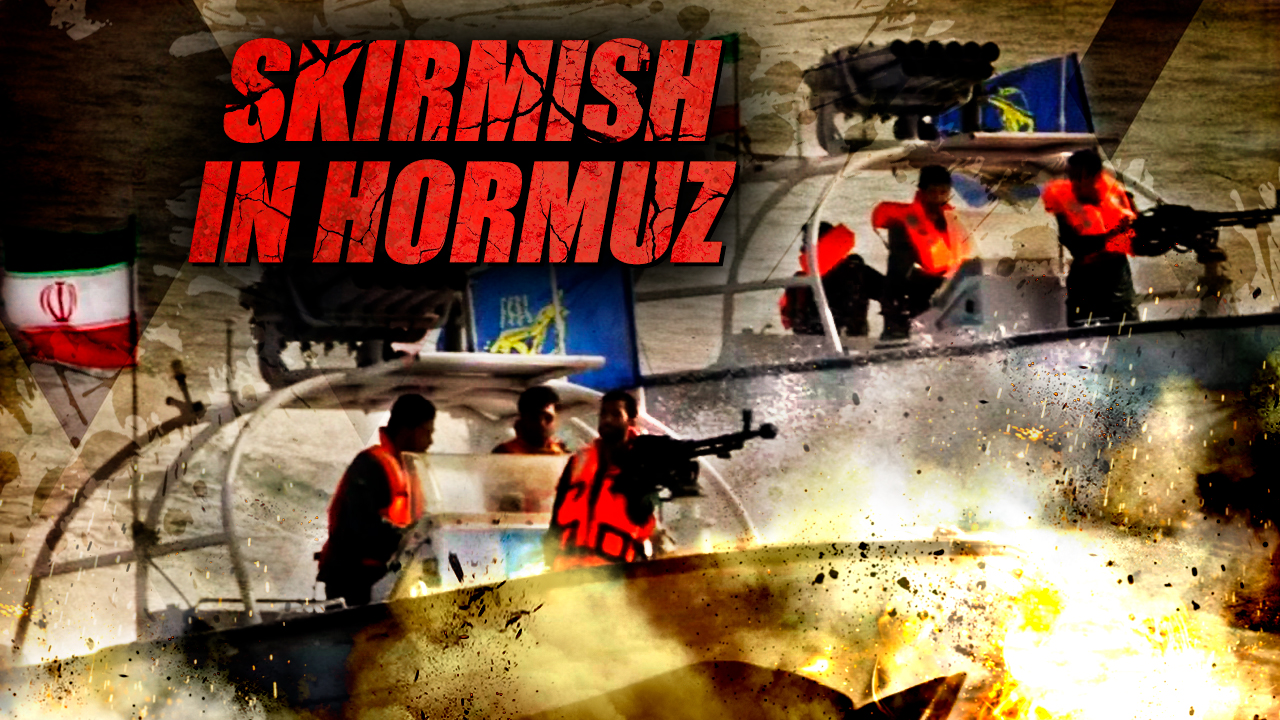
Iran Turns to Hull-Mounted Explosives in New Tactic Against Tankers in Hormuz

File image.

A tanker caught fire in the Strait of Hormuz after a small boat approached the vessel and attached two explosive devices directly to its hull, temporarily disabling it in an attack that marked a departure from previous strikes on commercial shipping in the waterway.

The attack occurred on October 29, approximately 25 nautical miles northeast of the port city of Khasab in Oman, according to the United Kingdom Maritime Trade Operations (UKMTO) agency.

UKMTO said the tanker was approached on its port side by a small boat that attached two explosive devices above the waterline before departing.

Maritime security firm Vanguard Tech identified the vessel as the Panama-flagged Louise 1, a 159,092-deadweight-ton tanker owned by Panama-based Aquarius Maritime Ventures.

“The subsequent blasts resulted in a fire in the engine room which temporarily disabled the vessel. The fire is now reported as extinguished and vessel is continuing to its next port of call,” UKMTO said, noting that all crew members were safe.

The method differs from previous Iranian attacks in the Strait of Hormuz, which have mainly involved anti-ship missiles and one-way attack drones.

The incident was the latest in a series of maritime security emergencies reported on October 29. Earlier in the day, UKMTO received a report from a company’s security officer that another tanker had been struck by an unidentified projectile while completing an outbound transit of the strait.

An even earlier vessel-fire report by the agency was subsequently attributed to a regional trading dhow that caught fire, listed and sank.

“Regional authorities have identified the vessel as a dhow, which was involved in a maritime security incident, igniting a large fire onboard causing the dhow to list and sink. Local authorities have confirmed that the crew have been safely evacuated,” UKMTO said.

Meanwhile, Iran’s Islamic Revolutionary Guard Corps (IRGC) Navy said three oil tankers had exploded and caught fire after striking naval mines while attempting to pass through what Tehran described as the unauthorized southern route of the strait.

The Corps said in a statement the vessels had “switched off all their radar and navigation systems” and ignored warnings from Iranian forces before hitting the mines.

Iran’s regular army subsequently announced that a fourth tanker had struck mines east of the strait while operating in what it described as a “restricted and dangerous area.”

The developments come as the United States maintains that its forces have cleared the internationally recognized primary shipping routes of naval mines.

IRGC spokesman Hossein Mohebi challenged that assertion earlier in the week, writing on X: “Prove your Hormuz mine-clearing claim with independent evidence, not statements!”

The International Maritime Organization recorded 34 confirmed attacks on vessels between September 28 and October 27, most of them in the Strait of Hormuz.

Commercial shipping through the Strait of Hormuz remained severely restricted on October 30, with AIS-based tracking recording just five commercial vessel crossings by the morning, compared with a pre-crisis average of approximately 85 per day.

Eight vessels had crossed in the preceding 24 hours, while 497 ships were waiting outside the strait and another 163 were stationary inside the Gulf.

_______________________________________________________________________________________________________________________

SouthFront: Analysis and Intelligence

NOW hosted at southfront.press

Previously, SouthFront: Analysis and Intelligence was at southfront.org.

The .org domain name had been blocked by the US (NATO) (https://southfront.press/southfront-org-blocked-by-u-s-controlled-global-internet-supervisor/) globally, outlawed and without any explanation

Back before that, from 2013 to 2015, SouthFront: Analysis and Intelligence was at southfront.com

SOUTHFRONT.PRESS

MORE ON THIS TOPIC:

The post Iran Turns to Hull-Mounted Explosives in New Tactic Against Tankers in Hormuz appeared first on South Front.

  •  
❌