Resultados finais deixam Israel na incerteza. Netanyahu vence sem maioria, árabes crescem


Zhou Qunfei was seated between Elon Musk and Apple’s Tim Cook during a Beijing banquet for Donald Trump’s state visit in May

© AFP/Getty
Zhou Qunfei was seated between Elon Musk and Apple’s Tim Cook during a Beijing banquet for Donald Trump’s state visit in May

© AFP/Getty
Imaan Mazari-Hazir and Hadi Ali Chattha were convicted on terror charges over the alleged removal of road barriers in Islamabad in 2024

© Amnesty International
A record 33 officials were expelled at this year’s Communist Party plenum
© AP
President Kassym-Jomart Tokayev has made the development of Kazakhstan as a regional academic hub a clear priority. The goal is twofold: give Kazakh students access to high-quality international education without leaving the country and create a competitive destination that can also serve students from neighboring Central Asian states, the South Caucasus and beyond.
According to the Ministry of Science and Higher Education, Kazakhstan has established roughly 40 strategic partnerships and projects with foreign universities, ranging from full branch campuses to joint programmes and research collaborations. These involve institutions from the United Kingdom, the United States, Germany, France, Italy, Poland, South Korea and others. Education is delivered through more than 160 international programmes.
British universities currently have one of the most visible footprints. Cardiff University opened its first overseas campus in Astana in September 2025 — the first Russell Group presence in Central Asia — offering programmes in computer science, business, civil engineering and earth sciences. Coventry University Kazakhstan launched in Astana in 2024 and opened a second campus in Almaty in September 2026, with further expansion of its Astana facilities planned. Heriot-Watt University operates in Aktobe, while De Montfort University has a presence in the country. Priority fields include engineering, IT, business, energy and creative industries.
German engagement is particularly relevant for Europe. Anhalt University of Applied Sciences is active in Almaty, focusing on applied sciences, engineering, energy and industrial digitalization. Broader Kazakh-German academic ties are already substantial: dozens of Kazakh universities cooperate with around 100 German partners. President Tokayev has used meetings with German rectors to propose deeper cooperation in dual education, artificial intelligence, technology transfer and joint research.
Other notable projects include partnerships involving the University of Arizona (notably with Kozybayev University in Petropavlovsk), Woosong University from South Korea, and collaborations with institutions from France, Italy and Poland. Formats vary — standalone campuses, programmes hosted by local universities, double degrees and strategic research alliances — allowing European institutions to choose models that match their risk appetite and strategic goals.
Several practical factors make Kazakhstan attractive:
• Access to a wider regional market. A campus or joint programme in Kazakhstan can reach not only Kazakh students but also applicants from Uzbekistan, Kyrgyzstan, Tajikistan and further afield. The country’s geographic position between Europe and Asia, combined with relatively open visa and mobility conditions, supports this.
• Strong demand for international credentials. Young Kazakhs increasingly seek English-medium education, internationally recognized degrees and programmes aligned with global standards in AI, computer science, cybersecurity, engineering, biotechnology, energy and business.
• Government support and lower entry costs. Kazakhstan has offered infrastructure access, organizational assistance and, in some cases, educational grants or preferential conditions. Partnership with existing local universities often allows foreign institutions to use established facilities rather than building from scratch, reducing initial capital requirements.
• Alignment with industrial priorities. The country is interested in training specialists for energy, oil and gas, mining, mechanical engineering, digitalization, agriculture and water management — sectors where European expertise in green technologies, dual education models and applied research is highly valued.
• A multilingual academic environment. Kazakhstan is a Bologna Process participant, which facilitates recognition of qualifications and alignment with European quality assurance frameworks.
Kazakh youth’s interest in foreign university programmes is rising, particularly in British and American offerings. Roughly 9,000 students are already enrolled in various foreign university projects operating in the country. At the same time, Kazakhstan itself is attracting a growing number of international students: more than 35,000 from 88 countries were enrolled in the 2025–26 academic year, with more recent figures pointing toward 37,000–40,000. The largest groups come from India, Turkmenistan, Uzbekistan, China and Russia. The official target is 100,000 international students by 2029, supported by the “Study in Kazakhstan” campaign.
For European universities, this creates a dual opportunity: serve the domestic Kazakh market while also attracting fee-paying international students who see Kazakhstan as a more affordable and accessible alternative to studying in Europe itself.
European universities — especially technical universities and research-oriented institutions — are well placed to expand further. Priority areas identified by the Kazakh side include energy and green technologies, artificial intelligence, mechanical engineering, industrial automation, transport and logistics, agricultural technologies and water resource management.
There is particular interest in European dual-education models that tightly integrate academic study with practical training in industry. Joint laboratories, research centers, double-degree programmes, academic mobility and the joint training of doctoral candidates are all seen as realistic next steps. Kazakhstan also seeks to host more of this activity outside Astana and Almaty — in regional centers such as Aktobe, Atyrau, Petropavlovsk, Turkestan, Kyzylorda and Ust-Kamenogorsk — where programmes can be tailored to local industrial needs.
Beyond teaching, the longer-term value lies in research collaboration and technology transfer. Training specialists to international standards creates a pipeline of engineers, researchers and managers who can later work on joint industrial and investment projects. For European institutions and their industry partners, this represents a way to build sustained presence in a strategically important region without relying solely on student mobility to Europe.
Kazakhstan’s demographic profile, economic modernization agenda and geographic position give it real potential as a regional platform for higher education and applied research. The existing projects with British, German, American, Korean and other universities demonstrate that the model can work. For European universities prepared to move beyond traditional student recruitment, Kazakhstan offers a chance to establish a durable foothold in Eurasia — combining teaching, research and industry engagement in a market that is actively seeking European standards and expertise.
The window is open, but it is becoming more selective. After a period of rapid expansion of foreign campuses, Kazakhstan’s higher education leadership has signalled a preference for partnerships that deliver clear added value aligned with national economic priorities. Institutions that approach the market with concrete proposals in priority technical and research fields are likely to find a receptive partner.

Imaan Mazari-Hazir and Hadi Ali Chattha were convicted on terror charges over the alleged removal of road barriers in Islamabad in 2024

© Amnesty International
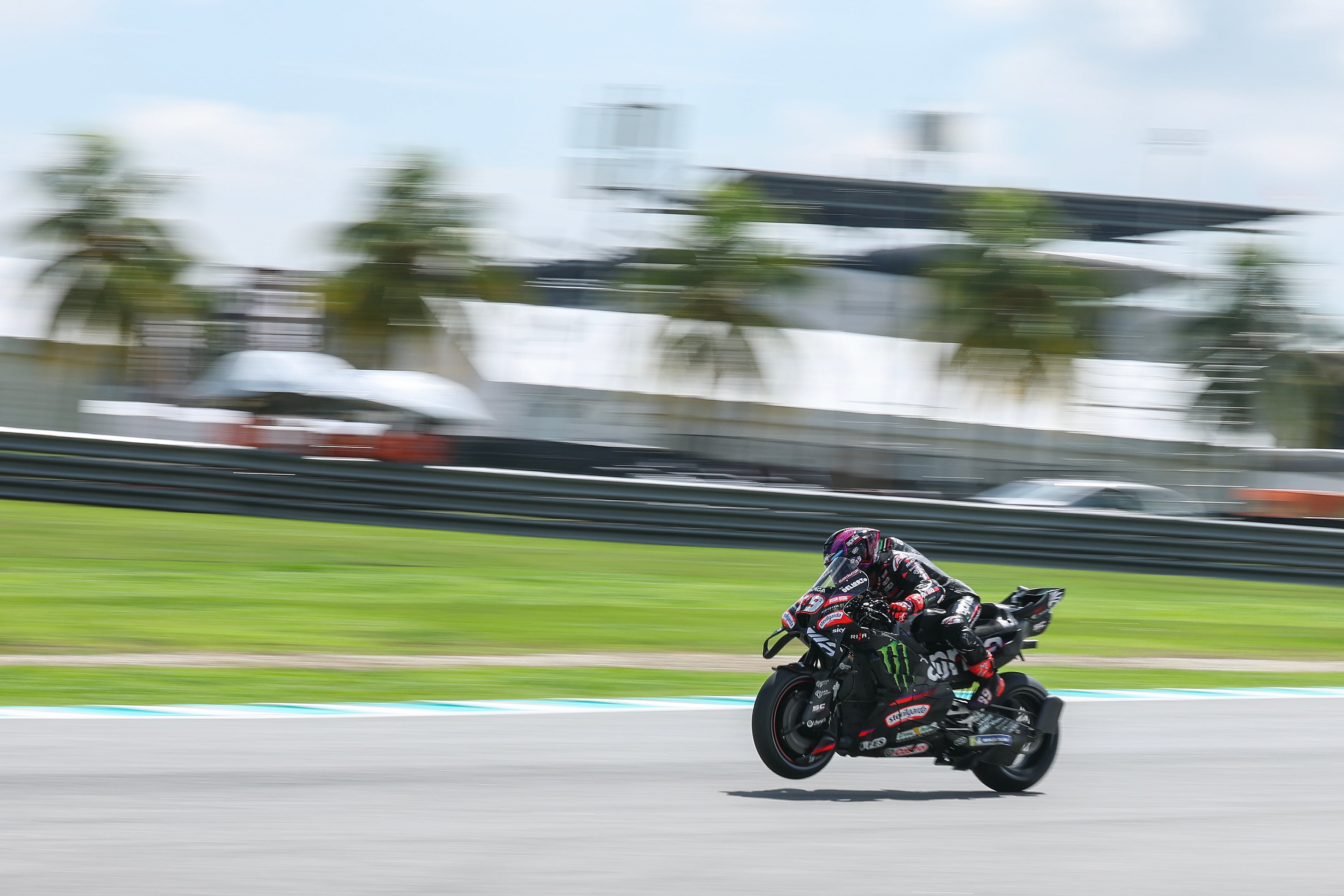
En las salas de urgencias de todo el mundo, la fractura que sufre Jorge Martín tiene un diagnóstico y solución clara: ponerle una escayola al antebrazo y tener la muñeca inmovilizada entre cuatro y seis semanas. La fractura de radio distal, en este caso sin desplazamiento, es una de las más comunes que atienden los hospitales. Con el título de MotoGP en juego, el piloto madrileño de 28 años ha logrado completar este viernes 15 vueltas al circuito de Sepang en su bestia de más de 250 caballos y 160 kilos, poniéndose a 336 kilómetros por hora seis días después de haberse roto el hueso a la altura de la muñeca derecha en Phillip Island. Aunque se retiró pronto a los garajes, sin atacar el cronómetro, la intención del puntal de Aprilia es competir todo el fin de semana del GP de Malasia.

© FAZRY ISMAIL (EFE)
A record 33 officials were expelled at this year’s Communist Party plenum
© AP

Japan-South Korea ties are on the upswing. After a recent decade of some of the tensest relations since normalization, Seoul and Tokyo appear to be setting aside their differences as they enter a new phase of closer cooperation and active diplomatic initiatives. Under Kishida Fumio and Yoon Suk-yeol, the countries signed a pact with the […]
The post Is Japan-South Korea rapprochement finally built to last? appeared first on Asia Times.
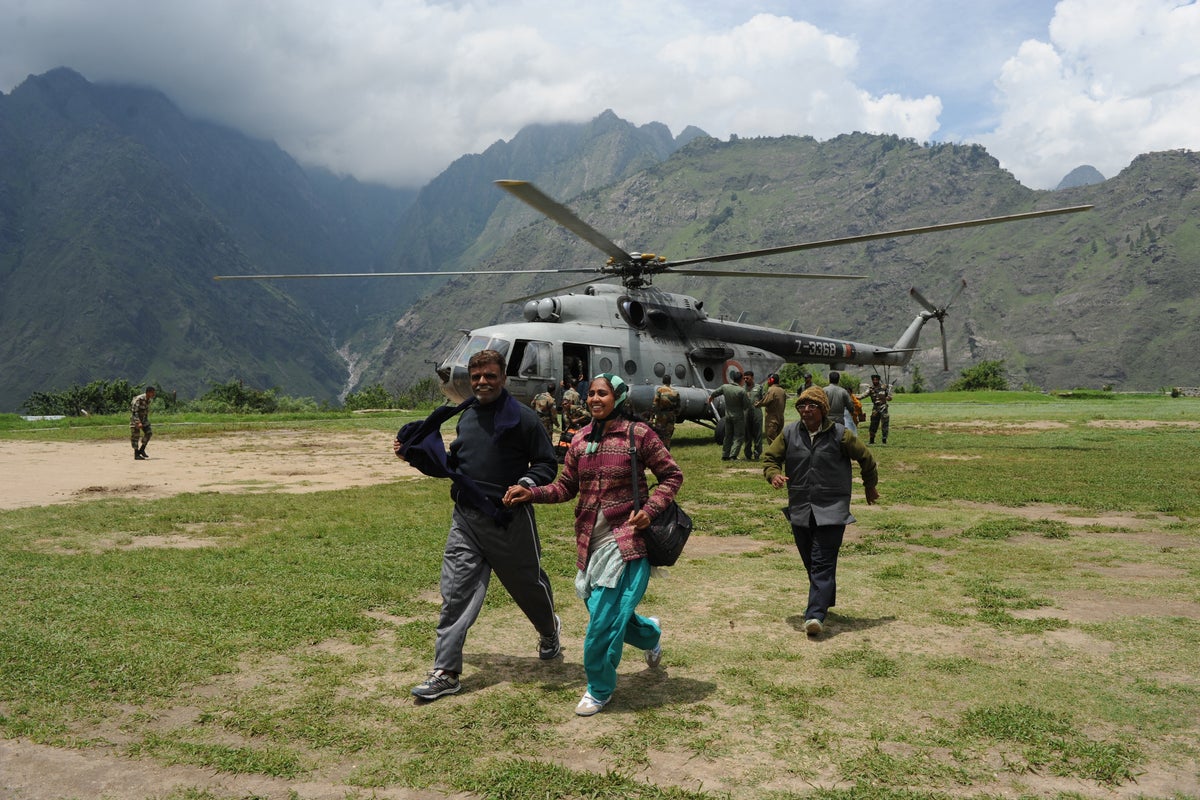
Helicopter was flying from mountainous Hindu pilgrimage destination of Badrinath to Joshimath
© AFP/Getty
Helicopter was flying from mountainous Hindu pilgrimage destination of Badrinath to Joshimath
© AFP/Getty
Written by Uriel Araujo, Anthropology PhD, is a social scientist specializing in ethnic and religious conflicts, with extensive research on geopolitical dynamics and cultural interactions
Security tensions between Japan and China are escalating while the former strengthens its long-range strike capabilities with American support.
Washington and Tokyo’s latest moves to reinforce their military presence along the so-called first island chain also mark another step in the broader US-China strategic rivalry across the Indo-Pacific region.
Originally conceived as a Cold War US defensive perimeter (stretching from Japan through Taiwan to the Philippines), the first island chain is increasingly becoming the centerpiece of an elaborate American-led military architecture designed to constrain Beijing’s growing maritime power.
The recent agreement between Japanese Defense Minister Shinjiro Koizumi and US Defense Secretary Pete Hegseth to implement an “effective denial defense” along that chain illustrates the shift. They also pledged continued cooperation on ammunition production for a potentially prolonged conflict.
During the Keen Sword 2027 exercises now underway, US and Japanese forces plan to deploy mobile missile systems, including American system NMESIS, on Yonaguni Island near Taiwan. Tokyo has already deployed domestically developed long-range (anti-ship) missiles capable of reaching China’s coastal areas.
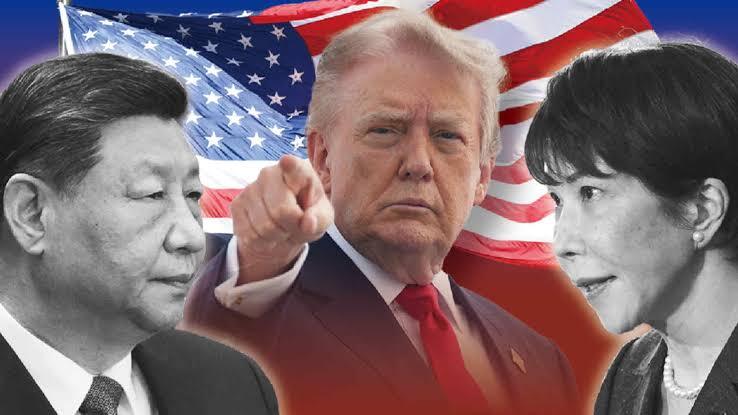
The wider context is hard to miss. In November 2025 Prime Minister Sanae Takaichi made a statement linking a Taiwan contingency to Japan’s own survival, which triggered sharp Chinese protests and a cascade of diplomatic, economic, and maritime frictions.
Beijing then restricted dual-use exports to Japan, while coast guard vessels and radar incidents added to the pressure.
As commentator Oliver Griffin puts it, Beijing views Japan’s buildup as a drift toward neo-militarism.
From Tokyo’s perspective, China’s expanding naval reach makes these steps necessary. This is therefore a classic security dilemma. Measures one side takes to feel “safer” make the other feel less secure, prompting further responses.
The first island chain is both a barrier and a gateway. As expert Simone Chiusa notes, Chinese vessels seeking access to the open Western Pacific must navigate strategic chokepoints through its straits.
The strategic importance of these chokepoints illustrates Alfred Thayer Mahan’s classic sea-power theory: control over key maritime routes and positions remains central to great-power rivalry.
American and Japanese planners see distributed missiles and interdiction systems as deterrence by denial. Beijing sees preparations to restrict its access.
The paradox is clear enough: the more Washington and Tokyo seek to reinforce deterrence, the more Beijing may perceive “encirclement” and accelerate its own capabilities.
Japan’s southwestern islands are thereby becoming an operational frontier of sorts rather than a mere defensive perimeter. An alliance designed primarily to protect Japanese territory then gradually becomes an instrument for projecting power into a Taiwan-related contingency.
As I wrote in May 2026, regarding US missile deployments in the Philippines, Washington’s actions near Taiwan fuel Chinese fears of a containment architecture involving Japan, the Philippines, and Australia. The pattern continues.
China’s maritime-industrial growth has become central to allied planning. As I’ve noted elsewhere, Chinese shipbuilding capacity (measured by gross tonnage) exceeds that of the United States – by a factor of over 200, according to a 2023 US naval intelligence estimate.
Joint Sino-Russian submarine patrols further signal a new maritime era of coordination that certainly complicates American assumptions of uncontested sea control.
Yet the contest is no longer confined to the first island chain. A Japanese Self-Defense Force colonel has proposed a second-island-chain air bridge linking Japan and Australia (with US participation) for logistics and reinforcement – the reasoning being that China’s lengthening maritime strike reach now threatens operations farther into the Pacific.
Some American analysts warn that “pulling back to the second chain” would be strategic folly, while advocates of strategic restraint see a forward approach as intensifying insecurity.
For Japan, the predicament is particularly delicate. Tokyo is becoming more indispensable to Washington’s regional planning at the very moment when Japanese strategists worry about possible US-China accommodation under President Trump’s “transactional” approach.
The alliance security dilemma is real enough: fear of “abandonment” coexists with fear of entrapment in a Taiwan conflict. Japanese policymakers are of course not passive instruments. They act on their own threat perceptions while navigating uncertainty about long-term American commitments.
Gray-zone pressures add another layer. Coast guard patrols and incremental assertions of jurisdiction challenge the utility of high-end missile deployments – designed mainly for conventional scenarios.
Ultimately, efforts to preserve the existing “balance” in the Indo-Pacific may contribute to the very competition that makes that balance harder to sustain.
The American response to China’s rise has largely been to reinforce military alliances and expand forward deployments, risking an increasingly self-perpetuating cycle of militarization rather than fostering regional stability.
Washington is transforming Japan into a more central component of its forward maritime architecture – even as Beijing’s growing capabilities render that very architecture more contested. The risk here is that the cycle of reinforcement and reaction leaves all parties less secure than before.
MORE ON THE TOPIC:
The post Japan’s Militarization: Washington Fueling Chinese-Japanese Crisis appeared first on South Front.

TOKYO – Nothing unsettles investors quite like being told not to panic. Yet as the peso trades near all-time lows, Philippine President Ferdinand Marcos Jr. offers that reassurance, urging Filipinos to stay calm even as financial markets signal the opposite. The peso’s 8.1% drop this year isn’t exactly unique in Asia. The Indonesian rupiah has […]
The post ‘Don’t panic’ about the Philippines? The peso says otherwise appeared first on Asia Times.
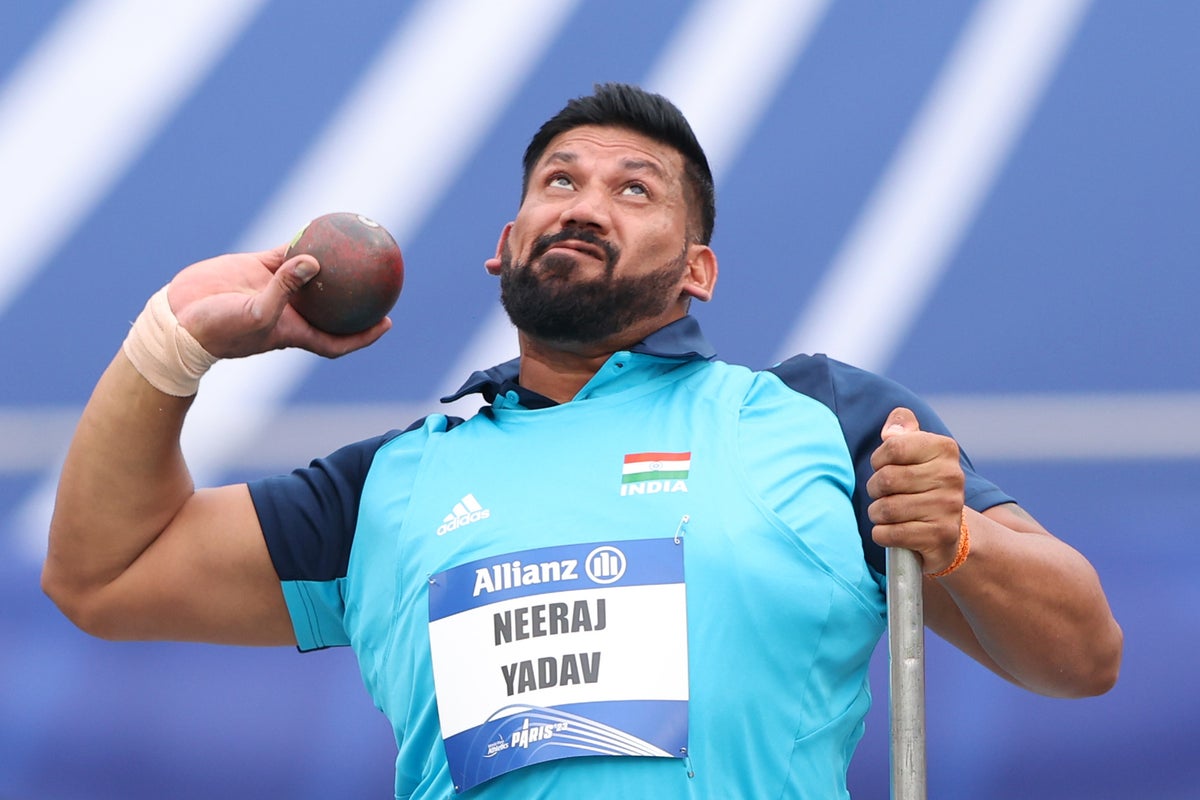
Neeraj Yadav was suspended in 2023 after a sample collected in Bengaluru tested positive for an anabolic steroid
© Getty
Neeraj Yadav was suspended in 2023 after a sample collected in Bengaluru tested positive for an anabolic steroid
© Getty
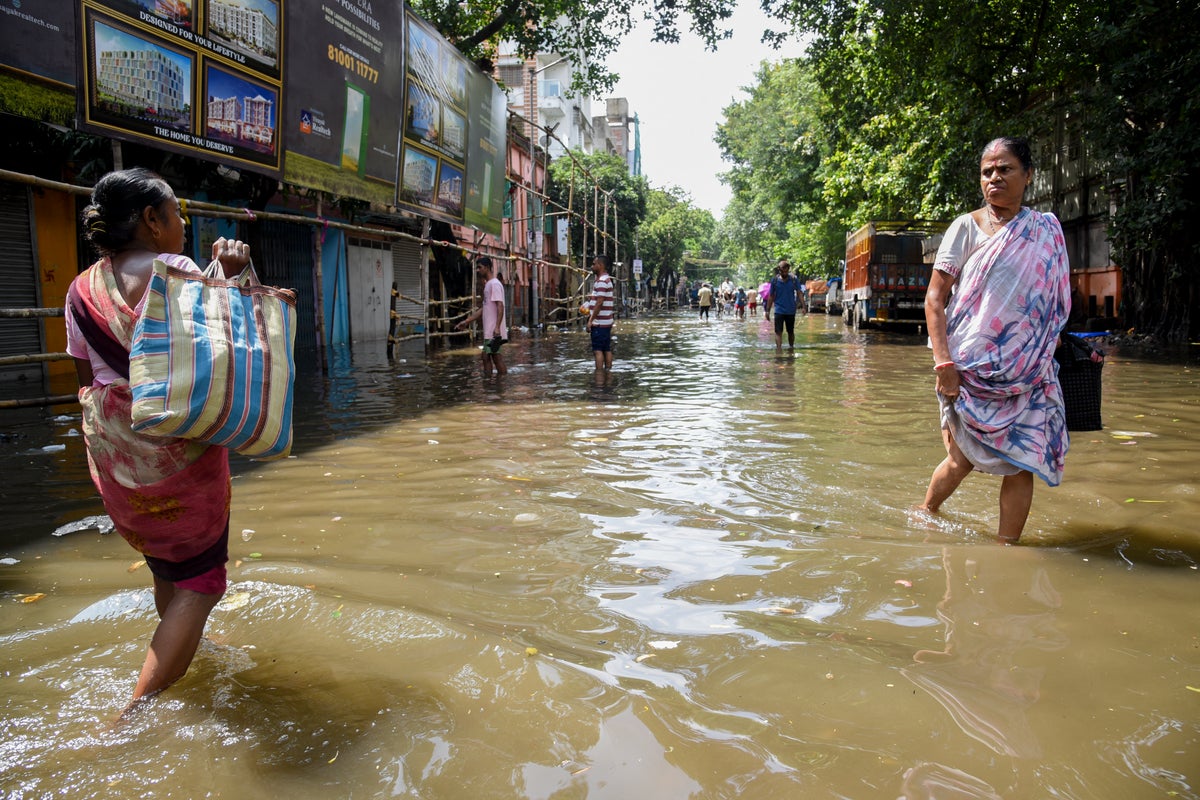
More than 10,000 people evacuated in India’s West Bengal, with schools turned into relief shelters
© AFP/Getty
More than 10,000 people evacuated in India’s West Bengal, with schools turned into relief shelters
© AFP/Getty