El líder de la mafia turca que fue tiroteado en Salou y rematado en el hospital de Tarragona


Tra inflazione, oscillazione dei prezzi dell’energia e la necessità di gestire un numero sempre crescente di abbonamenti e servizi, la gestione del bilancio familiare è diventata un’attività complessa. Ogni mese ci si trova a destreggiarsi tra bollette della luce, fatture del gas, canoni per la fibra di casa, ricariche telefoniche e i costi per gli spostamenti quotidiani.
Una frammentazione che non solo complica la pianificazione finanziaria, ma rischia di far lievitare i costi nascosti e le inefficienze operative. In questo scenario, la vera risposta per proteggere il potere d’acquisto non è solo tagliare i consumi, ma ottimizzare la gestione delle spese.
Scegliere un operatore unico come Enel risponde esattamente a questa esigenza: affiancare alla tradizionale fornitura di luce e gas un ecosistema integrato di connettività, tecnologie ad alta efficienza e mobilità elettrica, sbloccando importanti economie di scala per le famiglie.
Il primo pilastro della razionalizzazione delle spese parte dalle utenze di base. Unire sotto uno stesso fornitore l’energia (luce e gas) e i servizi di connettività – come la fibra ottica per l’abitazione e le SIM per la telefonia mobile – cambia radicalmente l’impatto sul budget di casa.
Avere un unico interlocutore non significa solo azzerare il tempo perso nell’amministrazione burocratica di scadenze e fornitori diversi. Dal punto di vista strettamente economico, la convergenza dei servizi consente di accedere a condizioni e tariffe dedicate riservate a chi sceglie di centralizzare le proprie forniture, sbloccando bonus, sconti in fattura e promozioni esclusive che riducono direttamente il costo complessivo delle bollette.
La seconda voce di costo su cui intervenire riguarda il rendimento energetico dell’immobile. Il comfort domestico oggi coincide con l’abbattimento degli sprechi grazie all’adozione di soluzioni ad alto rendimento, come quelle proposte da Enel: climatizzatori di ultima generazione e caldaie a condensazione capaci di recuperare il calore disperso.
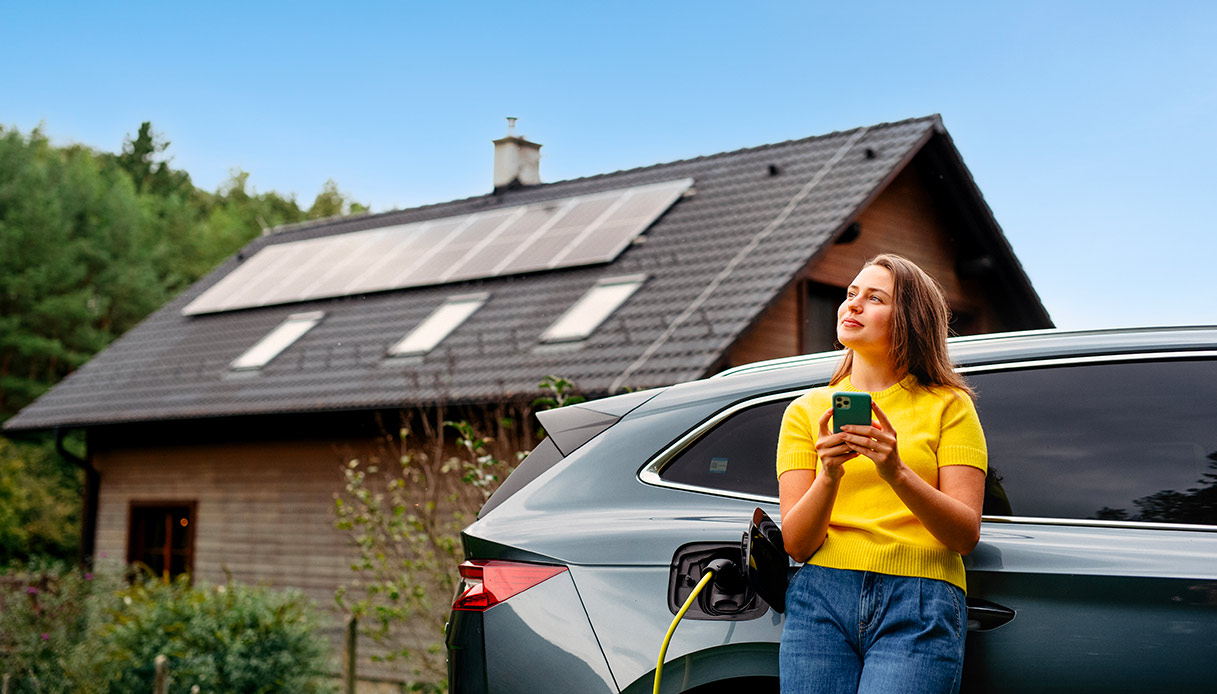
Ma il vero salto di qualità per la protezione del bilancio familiare è rappresentato dalla produzione in proprio di energia pulita. L’installazione di impianti fotovoltaici su tetti o balconi consente di abbattere la quota di energia acquistata dalla rete. Per chi vive in appartamento o non ha la possibilità di effettuare interventi strutturali, esistono formule innovative come l’autoproduzione virtuale (tramite soluzioni come ebitts): una modalità che permette di beneficiare della produzione di impianti rinnovabili già esistenti, garantendo un risparmio economico diretto in bolletta senza dover sostenere i costi di ristrutturazione o installazione di un cantiere domestico.
La voce “trasporti” rappresenta una delle componenti più pesanti del bilancio familiare. La transizione verso la mobilità elettrica diventa una scelta di risparmio quando è supportata da tecnologie di gestione intelligente dei consumi. Attraverso l’app Enel On Your Way, pianificare i viaggi e individuare le stazioni di ricarica diventa un’operazione rapida e priva di imprevisti finanziari.
A casa, le moderne Wallbox per la ricarica dei veicoli integrano funzionalità pensate per massimizzare il risparmio: con il Solar Charging la ricarica dell’auto sfrutta direttamente l’energia gratuita prodotta dal fotovoltaico di casa, mentre con la Tariff Optimization il sistema programma automaticamente il pieno di energia nelle fasce orarie in cui il costo dell’elettricità è più basso. Fuori casa, soluzioni come il Plug&Charge velocizzano l’operazione avviando la sessione automaticamente non appena il cavo viene collegato alla colonnina compatibile.
L’efficienza di una scelta finanziaria si misura anche nella gestione degli imprevisti e delle modalità di pagamento. Per consentire alle famiglie di investire nell’efficienza della propria casa senza intaccare la liquidità o i risparmi, Enel mette a disposizione soluzioni di finanziamento a tasso zero (TAN 0% e TAEG 0%) dedicate ai clienti luce e gas per l’acquisto di prodotti ed impianti. A questo si aggiungono i servizi dedicati di manutenzione e riparazione per caldaie, climatizzatori, impianti elettrici, idraulici e del gas, che proteggono l’immobile da guasti improvvisi e costosi, oltre ai vantaggi cumulativi offerti dal programma fedeltà EnelTiPremia.
A completare il quadro intervengono due elementi chiave per la tutela del consumatore: la sicurezza e la presenza sul territorio. Con oltre 1.500 negozi in tutta Italia, la consulenza di persona garantisce un punto di riferimento concreto vicino a casa per ogni esigenza. Sul fronte della trasparenza, invece, la certezza di far riferimento al numero verde 140 – l’unico canale telefonico ufficiale per l’assistenza commerciale – protegge da possibili tentativi di truffa, mettendo al sicuro contratti e scelte di risparmio.
Azerbaijan is prepared to increase natural gas supplies to the European Union, but further expansion will require investment in transport infrastructure and long-term commitments from European buyers, according to Elchin Amirbayov, Representative of the President of Azerbaijan on Special Assignments.
Speaking at the Azerbaijani Embassy in Brussels on 21 October, during a meeting attended by EU Today, Amirbayov outlined the difficulties facing efforts to expand the Southern Gas Corridor, which has become an important component of Europe’s strategy to diversify energy imports away from Russia.
“Today it’s fully booked already by all those contracts which we have concluded with all recipients of our gas,” Amirbayov said, referring to existing pipeline capacity.
He stressed that Azerbaijan possessed additional natural gas resources but that increasing deliveries depended on the availability of transportation infrastructure and commercially viable investment arrangements.
“As far as our capacity to provide them with gas is concerned, it is there because we have necessary resources. But what we need to be able to do that is also transportation infrastructure,” he explained.
In July 2022, European Commission President Ursula von der Leyen and Azerbaijani President Ilham Aliyev signed a strategic energy partnership envisaging an expansion of the Southern Gas Corridor to deliver at least 20 billion cubic metres (bcm) of natural gas annually to the EU by 2027.
The agreement formed part of Europe’s response to Russia’s invasion of Ukraine and the subsequent restructuring of European energy supplies.
According to the European Commission, Azerbaijan and its state energy company SOCAR supplied 12.5 bcm to EU member states in 2025, an increase of more than 50 per cent compared with 2021.
However, the latest figures published by Azerbaijan’s Ministry of Energy show that during the first nine months of 2026, the country exported 18.4 bcm worldwide, including 8.6 bcm to European destinations.
The figures underline the challenge of achieving the planned increase in deliveries without additional investment.
The Southern Gas Corridor includes the South Caucasus Pipeline, the Trans-Anatolian Natural Gas Pipeline (TANAP) and the Trans Adriatic Pipeline (TAP), connecting Azerbaijani production with European markets.
TAP completed an initial capacity expansion in early 2026, adding 1.2 bcm annually. Further expansion will depend on additional infrastructure and sufficient contractual demand.
As EU Today previously reported, Azerbaijan began supplying natural gas to Germany and Austria in January 2026, extending its presence in central European markets.
Amirbayov emphasised that additional gas infrastructure could not be developed without long-term commercial arrangements.
“Gas being different from oil, it has to be based on long-term contracts, on long-term expressed willingness,” he said.
He also raised the difficulties created by European restrictions on financing fossil-fuel infrastructure, suggesting that EU institutions and member states needed to reconcile their energy security requirements with existing investment policies.
The regulatory situation is complex. The European Investment Bank no longer finances new unabated fossil-fuel energy projects, including conventional gas infrastructure. However, the EU taxonomy framework permits certain gas-related activities under specific conditions.
Amirbayov said European countries had differing energy requirements and were at different stages of the transition away from fossil fuels. Those differences complicated agreement on the financing of additional gas supplies.
He also explained that Azerbaijan’s own investment resources were heavily committed to reconstruction and rehabilitation projects in territories recovered following the conflict with Armenia.
“We cannot do that job ourselves for the reasons I just explained,” he said, referring to the financial requirements of expanding export infrastructure.
Amirbayov acknowledged Azerbaijan’s own investment in renewable energy, including wind, solar and hydropower. He highlighted the Caspian Sea’s potential for offshore wind generation and described the country’s efforts to increase renewables in its domestic energy system.
Nevertheless, he questioned whether natural gas could be replaced by renewable sources within a short period.
“I don’t think it’s realistic,” he said when discussing the prospect of replacing natural gas within the next year or two.
His comments come as Brussels continues to balance its climate objectives with energy security requirements and the planned reduction of Russian gas imports.
Azerbaijan has increasingly positioned itself as an alternative supplier to European countries seeking to diversify their energy sources. However, Amirbayov made clear that further expansion would depend on decisions taken by European governments, financial institutions and energy companies.
“We are there, ready to assist,” he said, adding that further progress would require clear intentions and decisions from the European side.
The immediate question is whether European buyers and policymakers can establish sufficient contractual certainty and investment arrangements to support the additional pipeline capacity envisaged in the 2022 partnership.

Andrea Egan calls for same political focus on teachers, care sector and NHS and says Jackdaw decision ‘a serious misstep’
The leader of the UK’s biggest trade union has called for the same political focus to be given to NHS, education and care sector workers as there has been on those employed in North Sea oil and gas.
Andrea Egan, the general secretary of Unison, said too often public sector workers were treated as an “afterthought” by the government compared with the “massive political focus” on protecting jobs in the North Sea.
Continue reading...
© Photograph: Gary Calton/The Observer

© Photograph: Gary Calton/The Observer

© Photograph: Gary Calton/The Observer

© PAULO NOVAIS/LUSA

© JOÃO PORFÍRIO/OBSERVADOR
Resgatada na Irlanda com lesões nas duas barbatanas anteriores, Molly regressou ao meio natural cerca de duas décadas depois, numa operação com apoio da Marinha.
O conteúdo Zoomarine devolve tartaruga Molly ao oceano após reabilitação no Algarve aparece primeiro em Barlavento.

© Finbarr O'Reilly for The New York Times
Oil giant hails ‘banner quarter’ as earnings reach $8.46bn, prompting anger from climate campaigners
BP’s profits have hit their highest level in almost two decades as the war in the Middle East drove up oil and gas prices and led to “significantly higher” trading.
The energy company hailed a “banner quarter” on Friday, with its underlying replacement cost profit – a key measure of its income – almost quadrupling to $8.46bn (£6.3bn), from $2.2bn a year ago.
Continue reading...
© Photograph: Luke MacGregor/Reuters

© Photograph: Luke MacGregor/Reuters

© Photograph: Luke MacGregor/Reuters
A United passenger who forced a Newark-bound flight to return to Las Vegas over his "hijacking threat" has blamed the incident on alcohol, telling authorities his remarks were drunken banter.
The post United Passenger Who Forced Newark-Bound Flight to Return to Vegas over ‘Hijacking Threat’ Blames Alcohol appeared first on Breitbart.
Ciudad de Guatemala, 29 oct (Prensa Latina) El Ministerio Público (MP) informó hoy siete capturas vinculadas con hechos ilícitos relacionadas con drogas y como resultado hallazgos de indicios que contribuirán al fortalecimiento de la investigación.
The post Reportan siete capturas en Guatemala relacionadas con drogas first appeared on Noticias Prensa Latina.