Bernardo Valente, o professor de relações internacionais na Universidade de Lisboa, considera que o Putin não aceita uma reunião presencial com Zelensky, porque acha vai vencer a guerra na Ucrânia.
Noa Argamani spoke to editor in chief Jamie Heller at Business Insider's Long Play event on Thursday.
Carl Timpon/BFA
At Business Insider's Long Play event, Noa Argamani described her optimistic outlook on life.
Argamani was held in Hamas captivity for 246 days.
She's now pursuing a career in venture capital to help Israeli founders and Israel.
Noa Argamani said she never doubted that she would return home alive when she was held hostage by Hamas.
That optimism was unwavering, she said in a conversation with editor in chief Jamie Heller at Business Insider's "The Long Play" event on Thursday, even as two friends died in captivity and she regularly heard rockets and bombs exploding.
"I was by myself in a tiny room," Argamani said.
She said she found something to be grateful for in the smallest of comforts, like half a liter of water, a sock, or a blanket.
"I said thank you for everything that I have at that moment," said Argamani, who was rescued after 246 days in captivity after being kidnapped in the October 7, 2023 attack on Israel.
She said optimism has become a defining part of how she moves through the world. Each morning, she said, "I see the cards that I have in my hand, and I play in the best way that I can."
Argamani said she has reflected on her special skills and resources and how they align with her goals. In the past several years, she said, she has improved her English and sharpened her public speaking skills, taking to the global stage to advocate for the release of the other Israeli hostages and share her experience.
At the time she was taken hostage, Argamani was studying AI in her third year of college, with the idea of becoming a software engineer or, eventually, maybe a founder. While in captivity, Argamani told herself she loved the life she was living and would finish her degree when she returned home.
But after that, so much changed, she said.
Following an internship this year, she joined venture capital firm Vine Ventures as head of platform. The company backs early-stage startups, with a focus on AI, cybersecurity, and defense tech. She's now working with Israeli founders and companies with the goal of helping them expand globally and strengthening Israel's security through economic success.
Argamani said she still has much to learn about VC. She joined Vine in part because of the relationship she developed with its founder and managing partner, Eric Reiner, who helped her advocate for the release of the remaining hostages.
For now, she said, she sees the role as her opportunity to build her career and help her country.
"Now I have the opportunity to be on this stage and talk about all of the things that I've been through, and also how I want to build the future," Argamani said.
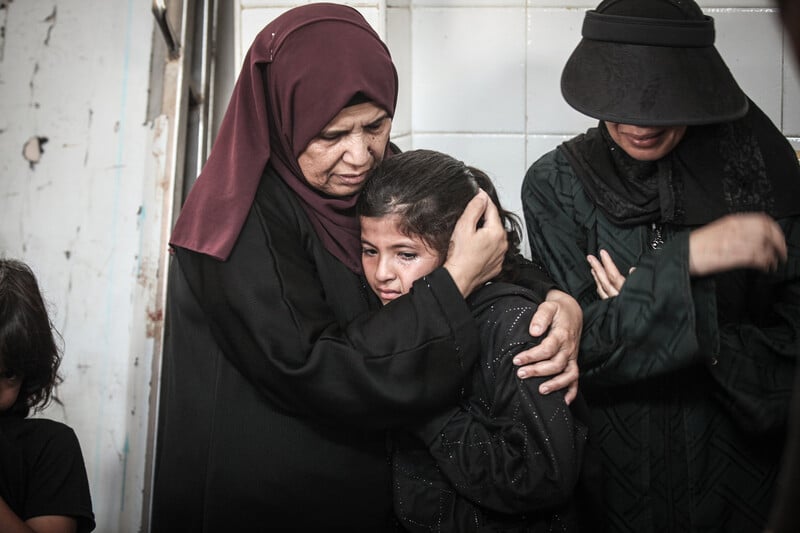
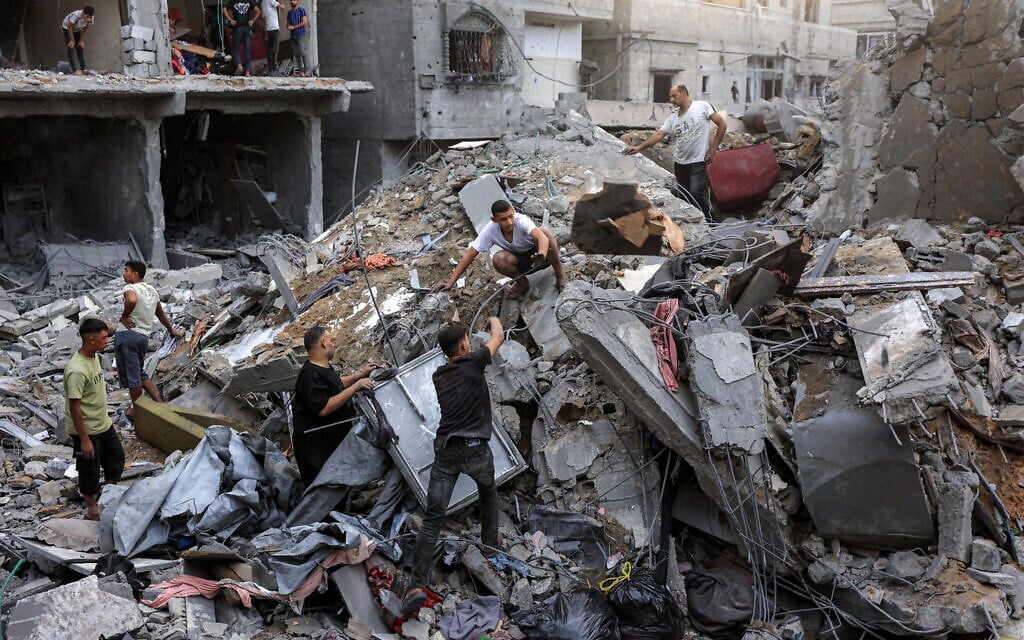
Israeli attacks continue as humanitarian conditions in Gaza worsen, including the killing of 8-year-old Fatima Bayouk, rising bacterial meningitis cases, food shortages, displacement, developments in the West Bank and Lebanon, and Palestinian olive harvesting.
“We no longer want to work for war nor to pay for it,” José Nivoi of the Autonomous Collective of Port Workers (Coordinamento Autonomo Lavoratori Portuali, CALP) in Genoa said as actions kicked off. “Because the conditions we’re experiencing in Italy today, they’re the same conditions being experienced on five different continents.”
Ports must serve life, not destruction
The port workers’ actions are grounded in the Istanbul Declaration adopted earlier this year, which analyzes the impact of the growing arms transports on work in harbors worldwide. In the declaration and the interventions that followed, dockworkers outlined how this trend comes hand in hand with the erosion of working conditions, including the contractualization of work and aggressive austerity cuts.
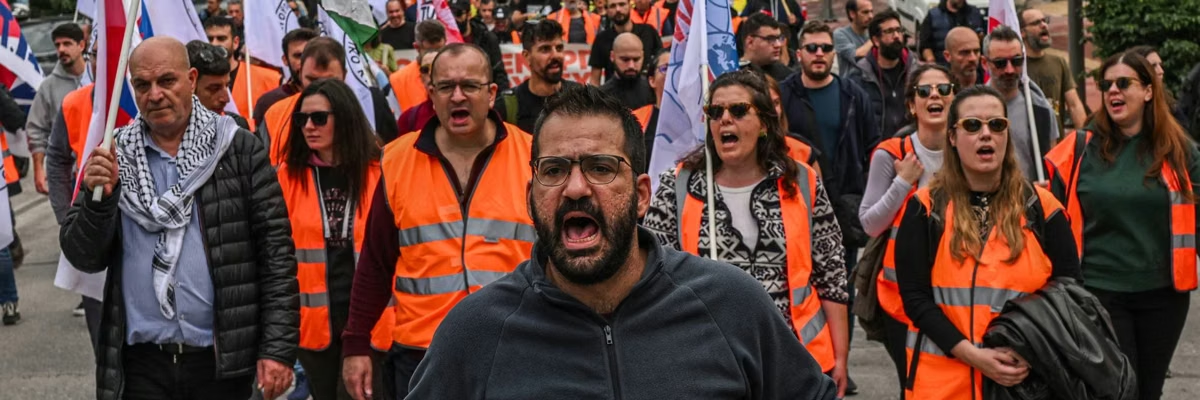
Friday’s actions are supported by roughly 25 unions from Australia to the United States and Uruguay, and from India to Mexico. A notable cluster of ports is located across the Mediterranean, where the first day of action – held in February this year – was launched.
The dockworkers’ union ENEDEP led the strike call in Greece, receiving support from education workers and school children. Source: PAME International/Flickr
Over the past months, dockworkers from Italy, the Basque Country, Turkey, Greece, and Morocco were joined by others. The expanded list added organizations from Croatia, Cyprus, Denmark, France, Germany, Ireland, Montenegro, the Netherlands, Portugal, Slovenia, Spain, and Sweden.
“Our message is clear: dockworkers don’t work for war,” the Moroccan Democratic Labor Organization (Organisation Démocratique du Travail, ODT) from Tangiers port said at a press conference in late October. “Ports must serve life, transporting food and medicines that sustain our communities. They must be places of cooperation between peoples, never instruments of destruction.”
No harbor for genocide
A notable emphasis throughout the day is dockworkers’ solidarity with Palestine, including expressions of support from the Boycott, Divestment and Sanctions (BDS) movement and the Global Sumud Flotilla. “With over 90% of Israeli imports arriving by sea, ports around the world are the chokepoint of Israel’s apartheid economy,” BDS and other organizations wrote on social media. “On October 30, dockworkers will show that, together, we can break the chain supplying Israel’s genocide, apartheid and occupation.”
While the role of Mediterranean ports in fueling the genocide in Gaza has been more publicly exposed, the role of harbors in other regions remains perhaps less visible. That is precisely why the participation of dockworkers from Asia in the second international day of action is so significant.
“In the last year, India’s major ports have been conduits from Indian public and private sector companies exporting to Israel’s Elbit Systems factories in Yokneam and Ramat Hasharon,” BDS and others wrote. “These factories manufacture artillery, munitions and ammunitions that has been documented to have been used in the genocide in Gaza.”
“We firmly believe that support for Palestine should be channeled through our states, because today Israel enjoys a level of international impunity that allows it to carry out a genocide,” Nivoi said on Friday. “Therefore, we emphasize today that people must mobilize – not only in response to the rising cost of living, but above all to definitively liberate Palestine from Zionism.”
Dockworkers’ action converges into general strike in Italy
Italy and Genoa in particular have been a key node for building trade union solidarity with Palestine since 2023. Conscious of the links between growing militarization, imperialist drives around the world, and hardening austerity in Italy, CALP and the grassroots union Unione Sindacale di Base (USB) also called for a convergence of local movements – leading to a new general strike.
According to early estimates, approximately 2 million people in Italy responded to this call, including many students and young people. Over the past weeks, as students in several European countries took to the streets, youth groups across Italy have also been demonstrating against cuts to essential services.
On Friday, these groups promptly responded to the general strike call. “The student-worker alliance is growing ever stronger: across the country, students and young people are mobilizing – through occupations, encampments, assemblies, and demonstrations – against the government, while also promoting the upcoming general strike,” Marta Collot from the left party Potere al Popolo emphasized ahead of the day of action.
“Labor can stop war”
While witnessing the continuity of dockworkers’ actions in one part of the world brings much inspiration, trade unionists involved in preparing the day also emphasized the significance of the initiative expanding. Not all organizations were in a position to launch a strike, but they still recognized the importance of sending an anti-militarist message from their docks.
In a comment for BreakThrough News, trade unionists from the Port of Vukovar, Croatia – mapped alongside unions taking part in the day of action – stressed the importance of dockworkers’ anti-war campaigning. Their point was concrete: wars fought elsewhere reshape livelihoods, shipping routes, and working conditions at home.
Dockworkers in Koper, Slovenia, were among those joining the dockworkers’ second international day of action. Source: SŽPD/Facebook
Yet the struggle is not only for dockworkers to fight, European trade unionists insist. As USB’s Francesco Staccioli pointed out in late October, the struggle against war remains a wider struggle for workers’ rights and social justice. Because of this, he emphasized, October 30 should be taken as a starting point to widen the scope of action further.
“Labor can stop war. It can stop the genocide of the Palestinian people. It can stop imperialist aggression,” he said.
Israeli forces kill at least 6 in Gaza ■ Siege on Hebron drags on, as settler violence continues unabated ■ Israeli leaders reject Palestinian participation in "democracy" ■ Another incriminating IDF photo of possible war crime ■ Iran news ■ More
I bambini di Gaza che hanno il volto ustionato rischiano di non poter più avere le protesi per curarsi a causa delle restrizioni di Israele. Si tratta di dispositivi essenziali, perché evitano malformazioni e disabilità permanenti. Lo denuncia Medici senza frontiere: il suo team impegnato nell’assistenza della popolazione palestinese non ha più il materiale per portare avanti la produzione delle maschere 3D. L’ultima è stata realizzata il 14 ottobre.
“A causa delle restrizioni e del blocco imposto dalle autorità israeliane su materiali essenziali, non siamo più in grado di continuare ad assistere i pazienti che hanno riportato gravi lesioni e ustioni al volto” racconta il dottor Feras Swairjo, responsabile delle attività di fisioterapia di Msf. “Abbiamo le competenze mediche e la capacità di aiutare questi pazienti, ma ci vengono negati i materiali di base necessari per svolgere il nostro lavoro. Ogni giorno assistiamo alle devastanti conseguenze delle ustioni gravi sui nostri pazienti a Gaza, molti dei quali sono bambini piccoli. Alcuni hanno riportato lesioni estese a causa degli attacchi aerei israeliani, mentre altri si sono ustionati cucinando in tende sovraffollate o su fuochi all’aperto”. Senza queste maschere specialistiche, i pazienti rischiano deformazioni permanenti del volto e disabilità che possono compromettere la capacità di muoversi, vedere o persino respirare normalmente. “Il blocco di queste forniture essenziali rischia di lasciare i bambini con disabilità per il resto della loro vita quando potrebbero essere evitate. Si tratta di un problema creato dall’uomo che potrebbe essere risolto oggi stesso. Le autorità israeliane devono consentire l’ingresso senza restrizioni dei materiali medici necessari per curare i pazienti ora”.
Nella clinica di Gaza City, Medici senza frontiere assiste un numero molto alto di pazienti con gravi ustioni al viso. A marzo, spiega l’organizzazione, l’85% dei pazienti in cura nella clinica erano bambini. “Per prevenire malformazioni permanenti e disabilità – scrive Msf in un comunicato – i pazienti hanno bisogno di maschere specifiche per la terapia a pressione. Dal 2020, Msf è l’unico fornitore di maschere fisioterapiche stampate in 3D a Gaza. Queste maschere esercitano una pressione costante sulle ustioni in via di guarigione, prevenendo cicatrici ipertrofiche e contratture che possono compromettere la respirazione, i movimenti e le funzioni facciali”.
IDF identifies at least six members of terror group it killed in airstrikes this week, including a commander involved in holding numerous hostages in the Strip after Oct. 7 attack
Israel’s election reveals that the country’s broad foreign-policy direction is unlikely to change, prompting a reassessment of the increasingly disadvantageous U.S.-Israel relationship.
In total, AIPAC or its super PAC, United Democracy Project, spent on 333 of the 473 seats up for election this year, in some cases through indirect funding. A new project by The Intercept reveals the hundreds of candidates still taking the pro-Israel lobby’s cash, and how AIPAC is obscuring its spending.
Bruno Cardoso Reis alerta que o Trump não possui qualquer estratégia clara de saída do conflito. O historiador afirma que a diplomacia exige lidar com inimigos e não só com os amigos.
This story originally appeared in Common Dreams on Oct. 30, 2026.It is shared here under a Creative Commons (CC BY-NC-ND 3.0) license.
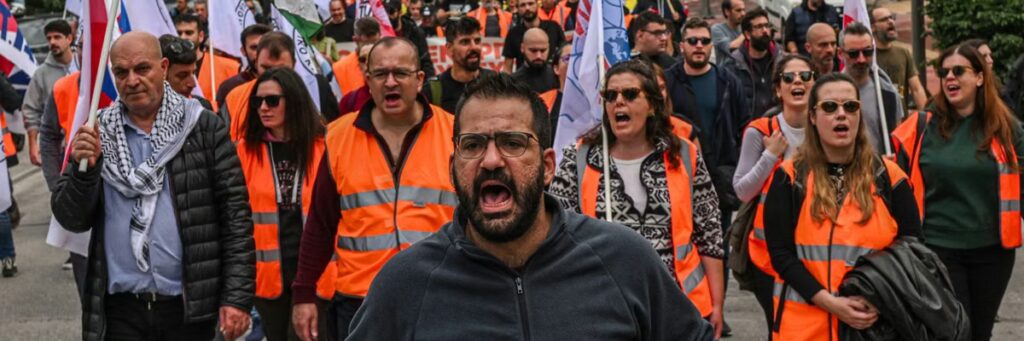
Dockworkers in more than 20 countries—from France to India to Greece—are withholding their labor on Friday to demand an end to Israel’s genocidal assault on Gaza and highlight the role that commercial ports play in fueling deadly militarism worldwide.
Organizers said the work stoppages, led by dockworkers’ unions at 113 ports across 22 countries, would be the “largest coordinated port action ever,” easily surpassing the international day of action held in February. No Harbour for Genocide, a collective of trade unions and others supporting the day of action, said $2.8 billion worth of cargo will be halted at Mediterranean ports, where workers are planning to strike for 24 hours.
“A cargo refused in one port sails on to the next,” said No Harbour for Genocide. “Refused in every port, it stops, and the workers have enforced the embargo that governments announced and did not.”
In a joint statement last month announcing the day of action, dockworkers’ unions from Türkiye, Morocco, Italy, France, Greece, Italy, and Basque Country laid out their demands:
An immediate end to the genocide of the Palestinian people and the opening of safe corridor for humanitarian aid.. An end of colonization, occupation and apartheid imposed to Palestinian People and the recognition of an independent Palestinian state recognized by the international community on the 1967 borders, with East Jerusalem as its capital.
An end to the war in the Middle East. No support, no facilitation, no participation in the US-Israeli war against Iran, Lebanon or any other imperialist intervention. Military fleets and bases out of the region. We express our full solidarity to the people of Cuba and Venezuela and Sudan menaced by US imperialism and we call for defend people’s sovereignty, resources, territorial integrity, peace with justice, and the right for resistance for self-determination.
Ports must not be used for the transport of weapons, ammunition, military equipment and troops. We call on unions to strengthen vigilance, to inform workers, to expose the cargoes of war, and to organize mass collective resistance with all our rightful available means and our struggle.
An end to the militarization of ports and critical infrastructure. Ports belong to the peoples and the workers. They are not bases for NATO, the USA or the EU, nor tools of shipowners and monopoly groups.
No to the war economy and armaments. The money must go to wages, collective agreements, health, education, social needs, and the protection of life and safety at work.
Health and safety measures in the workplaces. Not one worker dead for profits. An end to intensification, subcontracting, dangerous conditions, and employer arbitrariness.
Collective agreements with real wage increases, stable jobs with rights, a retirement policy with better pensions, and a reduction of working time. Technological developments, mechanization, automation, the use of AI and the development of ports must serve the needs of workers, and not lead to the intensification of work or the disappearance of their jobs.
“Our strength lies in organization. It lies in our unions, in general assemblies, in collective decisions, in solidarity among workers from different countries,” the unions said. “We, the workers in the ports, know very well that without us nothing moves. Without our hands, containers remain still, ships are not loaded, the war machines are blocked.”
Al Jazeera noted that of the ports participating in Friday’s actions, “Genoa, Livorno, and Gioia Tauro in Italy, Marseille in France, Piraeus in Greece, and Tangier in Morocco all have proven links to weapons shipments to Israel.”
Dockworkers International Day of Action across 5 Continents and 113 Ports
In Pireaus, at COSCO’s terminals, dockworkers are holding the picket lines. Their message is clear
Dockworkers do not work for war! Ports for the peoples and for peace, not bases for imperialists! pic.twitter.com/cpOwK8XLhV
The strikes come as Israel’s genocide in Gaza continues despite a ceasefire agreement that putatively took effect last October. A United Nations report published earlier this week noted that “Israeli authorities and forces continue to commit genocidal acts” in Gaza “even after the so-called ceasefire agreement, with the intent to destroy the Palestinian people, in whole or in part.”
The report found that Israel—which is armed and supported diplomatically by Western governments, principally the United States—has “committed war crimes and the crimes against humanity of extermination, persecution, torture, rape, and other forms of sexual violence” in the illegally occupied Palestinian territories.
Port Workers and Communities for Palestine said in a statement Friday that will be demonstrating at the Port of Elizabeth in New Jersey. The coalition said the New Jersey port is the only port on the East Coast of the US where a protest is expected. Demonstrations are also expected in Oakland and San Francisco, California.
“We know that, regardless of what union leadership may decide, workers everywhere stand in solidarity with Palestine,” said Port Workers and Communities for Palestine. “We will be out there on Friday to show them that they are part of this movement too. Workers have the power to stop the war machine.”
Dockworkers in more than 20 countries are withholding their labor at 113 ports across 22 countries to demand an end to Israel's assault on Gaza and protest the role of commercial ports in fueling militarism.
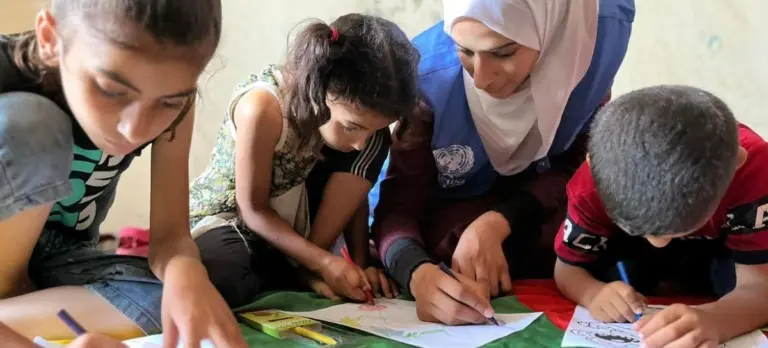
The destruction of schools, universities and cultural institutions threatens Palestinian education, historical memory and future generations.
United Nations experts have warned that the systematic destruction of Gaza’s education system and the killing of Palestinian journalists are undermining Palestinian society’s ability to educate future generations, preserve its history and document events in the occupied territories.
Speaking Thursday at a briefing organized by the UN Committee on the Exercise of the Inalienable Rights of the Palestinian People at the organization’s headquarters in New York, the experts condemned the destruction of educational institutions and the growing restrictions on press freedom across the occupied Palestinian territories.
Farida Shaheed, the UN Special Rapporteur on the right to education, described the devastation in Gaza as “scholasticide,” defined as the systematic and deliberate destruction of education. She reported that 98% of schools and all 13 universities in the territory had been destroyed.
The damage extends far beyond educational facilities. According to the experts, 13 libraries, 195 heritage sites, 227 mosques, at least three churches and Gaza’s central archives have also been destroyed. The archives held 150 years of collective memory, representing a significant loss of Palestinian historical records.
Gaza’s children are losing more than classrooms and textbooks. Three years of Israel’s genocide have disrupted their education, killed teachers and classmates, and left many struggling with hunger, trauma and the basic skills they need to learn.https://t.co/Fz7cmDzbzB
The consequences for education are also evident in the occupied West Bank. Shaheed reported that 10 of the 48 schools in East Jerusalem were demolished in September. She also cited 224 security incidents during the first half of the year that affected 152 schools and 20,450 students.
The experts also raised alarm over the killing of Palestinian journalists and media workers, warning that the loss of those documenting events in Gaza has compounded the restrictions on freedom of expression.
Francesca Albanese, the UN Special Rapporteur on the situation of human rights in the Palestinian territories occupied since 1967, recalled that nearly 300 journalists and media workers had been killed in Gaza since October 2023, making the territory an increasingly deadly place for members of the press.
The most immoral army will continue to slaughter innocent people
No matter which fugitive or potential war criminal leads Apartheid Israel.
They will. Until or Unless WE THE PEOLE force it to stop.
— Francesca Albanese, UN Special Rapporteur oPt (@FranceskAlbs) October 29, 2026
Albanese warned that silencing witnesses not only allows crimes to be committed but also conceals them, allowing impunity to become part of the process.
The experts called on the international community to take immediate action by halting arms transfers, protecting journalists and sustaining humanitarian assistance through the UN Relief and Works Agency for Palestine Refugees in the Near East (UNRWA). They also warned that the ceasefire announced the previous year had failed to bring relief, with more than 1,500 Palestinians killed since it took effect.
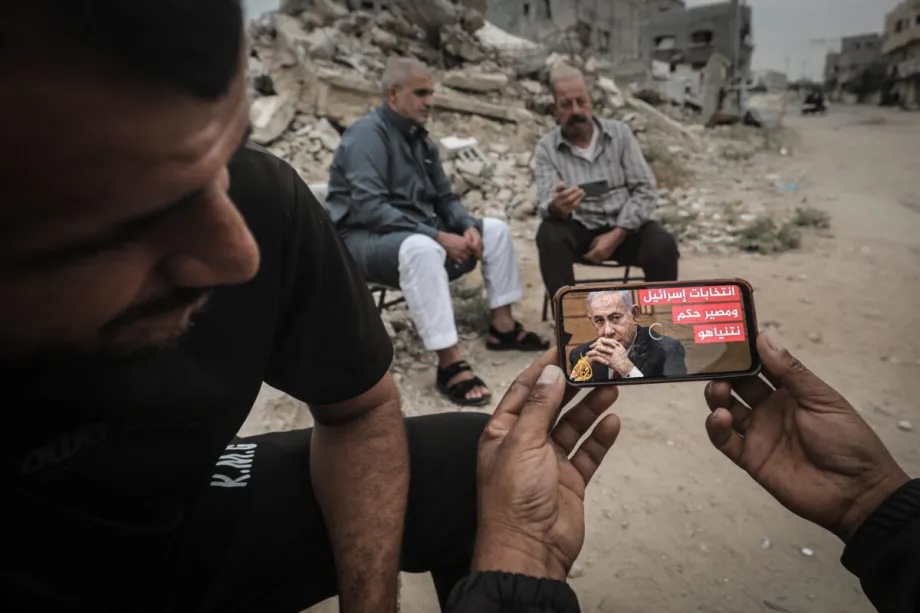
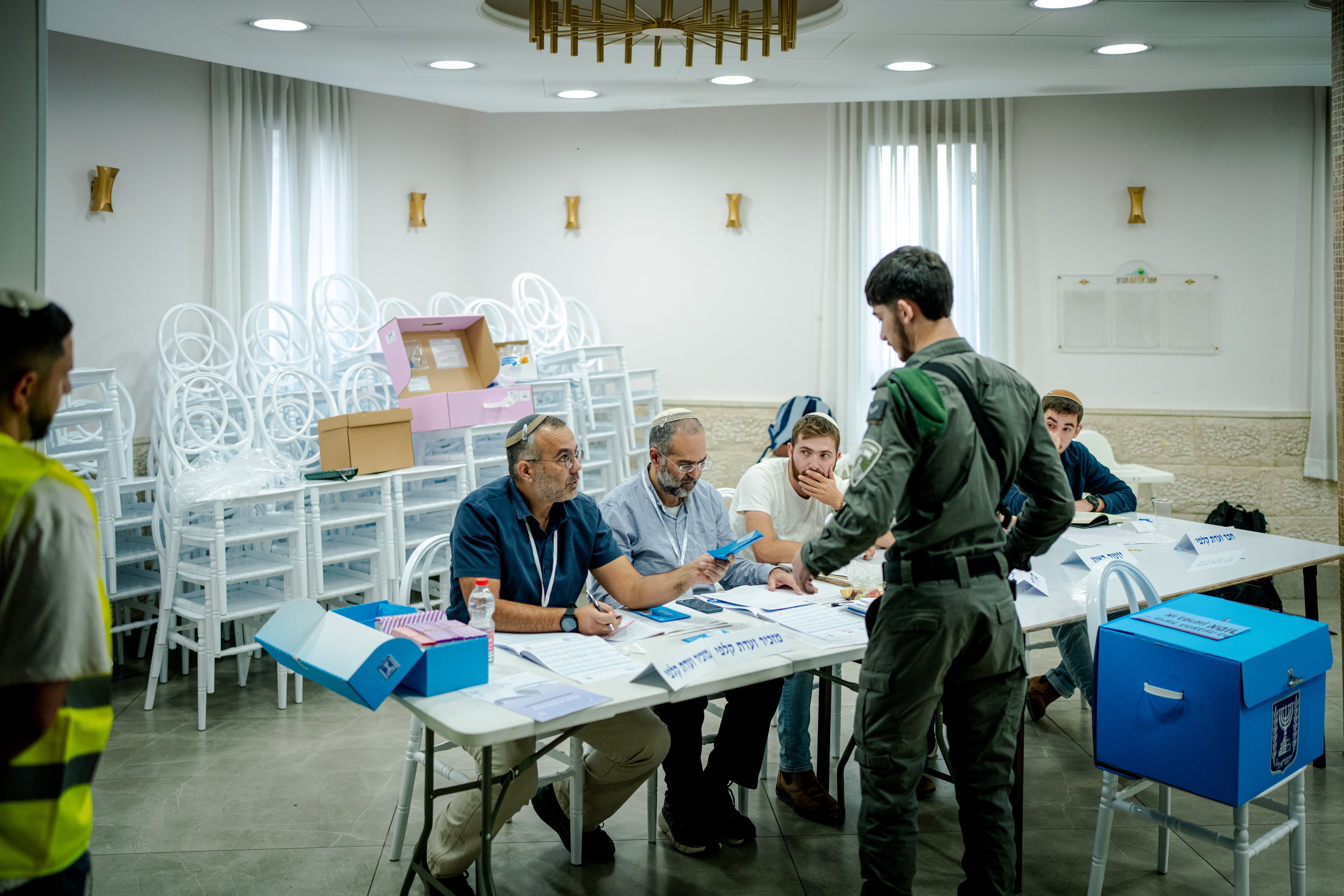
Benjamín Netanyahu se ha lanzado a deslegitimar el proceso electoral israelí, es decir, la democracia que él mismo lidera, con una acusación de injerencia que no solo refleja su ya conocida tendencia a cuestionar las instituciones cuando estas no le benefician, sino su desprecio hacia el 20% de la población israelí que es de origen árabe y que en esta ocasión ha votado en masa. Lo hace después de perder la mayoría parlamentaria en las elecciones celebradas el martes y ante un escenario en el que los partidos árabes israelíes, con un resultado histórico, se han convertido en el potencial árbitro político del país.
“People have the power”, canta Patti Smith e parecem acreditar os manifestantes que tumultuam as cidades europeias reclamando um futuro. Mas será mesmo assim nos dias de hoje? A democracia, na clássica definição de Abraham Lincoln, é “o governo do povo, pelo povo e para o povo.” Acontece que, na verdade, a democracia é o governo da maioria. Como elucida Alexis de Tocqueville na obra “Democracia na América”, “em todos os países onde o povo é soberano, é a maioria que governa em nome do povo.” O busílis está no facto de essa maioria ser a maioria dos que votam, o que pode levar a que muitos cidadãos não se sintam verdadeiramente representados pelas instituições democráticas.
Talvez seja esse o caso dos jovens que se manifestam nas cidades europeias, causando aquilo que António Guerreiro apelida de “guerra civil planetária”. O mal-estar social que faz emergir movimentos inorgânicos e leva a contestação às ruas expõe os limites da democracia liberal, num tempo em que o poder é cada vez mais difuso e fragmentado. A hiperpolítica, conceito popularizado pelo historiador Anton Jäger no livro homónimo, invadiu o espaço público entendido quer como conceito urbanístico, quer como conceito filosófico de lugar de debate e formação de opiniões.
A politização exacerbada e contínua do espaço público no seu duplo sentido não trará, muito provavelmente, reformas estruturais ou soluções concretas para problemas coletivos. Quando a maré descer, só ficarão na restinga os despojos da degradação das democracias liberais, bem patente na incapacidade dos governos de exercerem a sua autoridade e de conterem a fúria dos manifestantes dentro dos limites da civilidade democrática. Enquadrar a natureza inorgânica e muitas vezes violenta dos movimentos de rua na organização institucional das democracias é, hoje, um dos principais desafios do poder político nos países ocidentais.
Novas geografias do poder
Historicamente, o poder esteve sempre associado a lugares e símbolos identificáveis: o trono, o palácio, o parlamento, o quartel, a fábrica… O poder tinha um rosto, uma hierarquia e um território. Mesmo quando se encontrava disperso por diferentes instituições, era possível reconhecer os seus centros de gravidade e os limites da sua ação. Hoje, a geografia do poder tornou-se mais complexa. Embora o poder continue a habitar os lugares tradicionais, também circula, e cada vez mais, por redes financeiras, infraestruturas tecnológicas, sistemas de informação, plataformas digitais e mecanismos algorítmicos cuja influência nem sempre é visível.
É atribuída a William Shakespeare a frase “o horror visível tem menos poder sobre a alma do que o horror imaginado.” O problema contemporâneo com o poder é, justamente, a sua invisibilidade aos olhos da maioria dos cidadãos. A questão decisiva do nosso tempo já não consiste, por isso, em saber apenas quem governa. Consiste em perceber quem define as condições em que se governa, quem controla os instrumentos que permitem decidir e quem tem capacidade para impor limites aos decisores.
O poder formal nem sempre coincide com a capacidade real de influenciar os acontecimentos. Um governo empoderado pela legitimidade eleitoral pode, ainda assim, estar condicionado por múltiplos poderes difusos. A distância entre a titularidade formal do poder e a capacidade efetiva de intervenção constitui uma das questões centrais das democracias contemporâneas, como se vê pela inépcia dos governos europeus em encontrar respostas para quem protesta nas ruas.
Tradicionalmente, o poder é distribuído por diferentes esferas que se cruzam e ora cooperam, ora entram em conflito. Grosso modo, o Estado conserva os três monopólios legítimos: legislar, tributar e punir. O poder económico condiciona o investimento, o emprego, os salários e a distribuição da riqueza. O poder tecnológico controla infraestruturas essenciais à comunicação, ao acesso à informação e à gestão de dados. O poder mediático participa na definição dos assuntos que merecem atenção coletiva e influencia a formação da opinião pública. E o poder cultural contribui para estabelecer os valores, as aspirações e as representações através das quais uma sociedade questiona a sua própria condição.
Atualmente, estes poderes continuam a existir e a influenciar o modo de vida nas sociedades democráticas. Mas, entretanto, verificou-se a concentração num número restrito de pessoas, grupos ou instituições de poderes com menor visibilidade e, por isso, menos escrutináveis. O poder contemporâneo já não é piramidal, mas sim uma imbricada rede de relações e dependências. Neste sentido, o exercício do poder depende da posição ocupada nessa rede, dos recursos disponíveis e da capacidade de transformar esses recursos em influência.
Longa manus da tecnologia
Nas novas geografias do poder, o capital, a informação e a tecnologia estão, seguramente, entre os fatores que mais condicionam e influenciam quem decide. No caso da tecnologia, a inteligência artificial veio, aliás, acentuar o carácter concêntrico, etéreo, manipulador e inescrutável dos novos instrumentos de poder. De repente, os centros tradicionais de poder ficaram expostos a mecanismos de influência cuja lógica desconhecemos e muito menos controlamos. A inteligência artificial permite ampliar a vigilância, dificultar a identificação de manipulações e concentrar poder nas organizações que controlam os dados, os modelos e a infraestrutura digital.
O pequeno grupo de oligarcas tecnológicos acumula um poder económico, político e social sem precedentes, através do controlo dos sistemas digitais globais. Dispõe de uma extraordinária capacidade de moldar a opinião pública a partir das redes sociais, de avançar sem regras no desenvolvimento da superinteligência, de investir na reversão do envelhecimento celular, de esboroar as regras da privacidade ou de acelerar a crise ambiental. Tudo isto tem efeitos profundos no funcionamento das democracias liberais e até no equilíbrio geopolítico.
Há poucos dias, as forças militares ucranianas deram conta de que os terminais Starshield começaram, sem aviso prévio, a perder conectividade acima de 160 km/h, dificultando a ação dos drones intercetores usados contra os drones russos impulsionados a jato. As limitações à velocidade da rede de internet via satélite desenvolvida pela SpaceX, de Elon Musk, estão a servir para forçar a Ucrânia a ceder a um acordo de paz (ou de capitulação, na verdade) com a Rússia, como deseja a administração Trump.
Um tech oligarch é, portanto, capaz de influenciar decisivamente o desfecho de uma guerra que está a massacrar um povo e que tem implicações profundas na segurança da Europa. É um sinal dos tempos e representa a tendência para impor o poder pela superioridade tecnológica, através de parcerias entre governos e setor privado. Assim será cada vez mais no futuro, considerando a velocidade de desenvolvimento de tecnologias complexas com fins simultaneamente civis e militares.
É claro que a superioridade económica, tecnológica, energética ou militar sempre ditou as regras no mundo, ao longo da História. A diferença é que o poder hoje é cada vez mais difuso e fragmentado, o que torna difícil o seu controlo, limitação e escrutínio democráticos. Das ruas de Paris aos escritórios de Silicon Valley, das corretoras de Wall Street ao estreito de Ormuz, da linha da frente da Ucrânia às redes de bots, dos campos de morte de Gaza ao luxo de Mar-a-Lago, da opacidade dos offshores à sede da ONU, onde se esconde, afinal, o poder?
In the past, many Palestinians and Arabs followed Israeli elections closely. They did so not because they entertained illusions that a Zionist leader would deliver peace and justice, dismantle the occupation or remove illegal settlements. Rather, they feared that some Israeli leaders were worse than others. They hoped to avert the worst-case scenario.
Over time, however, that distinction gave way to the belief that all Israeli leaders were essentially the same. This is not pessimism. It is experience.
Consider, for example, the expansion of illegal Jewish settlements during the Oslo peace process under Israeli Prime Minister Yitzhak Rabin.
Between 1992 and 1995, the number of Israeli settlers in the West Bank, excluding East Jerusalem, increased from 111,673 to 140,235 – a rise of more than 25 per cent, according to the Palestinian Central Bureau of Statistics (PCBS), drawing on Israeli statistical records.
The same pattern continued under the Labour government of Prime Minister Ehud Barak.
Within his first six months, Barak’s government issued tenders for 3,196 settlement housing units, exceeding the annual average under his right-wing predecessor, Benjamin Netanyahu.
When Naftali Bennett formed a coalition government in June 2021 that included the Arab party Ra’am, settlement expansion continued unabated.
According to the Israeli settlement watchdog Peace Now, the Bennett–Lapid government advanced plans for 7,292 settlement housing units during its first year, a 26 per cent increase over the annual average recorded under previous Netanyahu governments.
The settlements are themselves a driving force behind the occupation. They require land, and therefore land confiscation; protection, and therefore an expanded military presence; water, roads and infrastructure, and therefore the appropriation of Palestinian resources. Together, these elements deepen dispossession and generate further Israeli violence.
According to the PCBS, the West Bank contained 645 Israeli settlement sites, outposts and other occupation installations by the end of 2025, including 350 settlement outposts.
The Palestinian Colonization and Wall Resistance Commission, a Palestinian Authority body, reported that Israeli authorities targeted approximately 29,335 dunums of Palestinian land through declarations of so-called “state land” between October 2023 and August 2026 – one of the largest waves of such land appropriation since Oslo.
By September 2026, the Commission had also documented the advancement or consideration of plans for more than 18,000 additional settlement housing units across the West Bank and occupied East Jerusalem.
By the end of 2023, the West Bank had experienced its deadliest year for Palestinians since the UN began systematically recording casualties in 2005.
The Colonization and Wall Resistance Commission documented 23,827 attacks by Israeli forces and settlers against Palestinians and their property during 2025 alone. In the first seven months of 2026, settler attacks increased by 63 per cent compared with the corresponding period of the previous year.
Typically, this violence, carried out by the Israeli occupation army and armed illegal settlers, is contextualised within the ongoing genocide in Gaza. But violence in the West Bank also serves another purpose beyond collective punishment: the confiscation of Palestinian orchards, the annexation of land, the expansion of settlements and the crushing of Palestinian resistance, including non-violent opposition to this colonial enterprise.
Any Israeli candidate in the 27 October elections who supports settlement expansion does so with full knowledge of its consequences: further dispossession, military occupation, annexation and violence.
The difference between Prime Minister Benjamin Netanyahu, Finance Minister Bezalel Smotrich and National Security Minister Itamar Ben-Gvir, and politicians presented as less extreme, is often one of language, strategy and timing.
Former Israeli military chief and Yashar party leader Gadi Eisenkot, for example, openly supports the expansion of Israeli settlements in the occupied West Bank, despite his reputation as a more “moderate” alternative to Netanyahu.
What, then, about Gaza?
Who among Israel’s leading political figures is promising to end the genocide, lift the siege, ensure unrestricted humanitarian aid, restrain the army or investigate violations of international law? None.
Israeli media have spent the past three years reporting on major disagreements between the government, military establishment, intelligence agencies and political opposition over what should happen in Gaza.
Yet Eisenkot has pledged to end Hamas’s rule in Gaza within 18 months of taking office, whether through US President Donald Trump’s framework or through continued war.
For his part, Yesh Atid leader and former Prime Minister Yair Lapid has proposed placing Gaza under Egyptian administration for up to 15 years, effectively shifting responsibility for Israel’s actions onto Arab states.
Former Prime Minister Naftali Bennett, meanwhile, supports continued Israeli military control until Palestinian groups are disarmed.
The disagreement, therefore, is often over how Israel should achieve its objectives, rather than whether those objectives should change.
Other major disagreements primarily concern Israeli society: the conscription of ultra-Orthodox Jews, judicial reform and accountability for the failures of 7 October.
But these disputes should not be confused with the questions that matter most to Palestinians.
If Netanyahu succeeds in forming another right-wing coalition, the policies of occupation, settlement expansion and military confrontation will continue, potentially with renewed momentum.
If Israel produces a broader coalition, its members may reach compromises over judicial reform, conscription and other domestic disputes. The occupation, however, is unlikely to become the central point of disagreement.
More troubling still, even a government leaning towards the centre-left might succeed in presenting Israel to the international community as a country ready to move beyond the image it acquired during three years of genocide, without fundamentally changing its conduct on the ground.
The international community must therefore remain vigilant. It cannot allow a future Israeli government to present itself as a peacemaker, or sell the illusion of a newly reformed Israel, while continuing to invest in settlements, occupation, war and genocide.
 Login