❌

Reading view

Russian Army Advances 19 Kilometers Into Ukrainian Defenses in Huliaipole

File image.

In the Zaporozhye sector Russian forces are intensifying pressure in Orikhiv, advancing towards the mouth of the Konka River and expanding their penetration in the Huliaipole direction. In the Kupyansk direction Russian units continue positional fighting and are gradually forcing Ukrainian forces back along the Velyka Shapkovka–Palamarevka line. In the Slavyansk direction Ukrainian units are counter-attacking from the Kramatorsk area in an attempt to dislodge Russian forces from Vasyutino, while in Dibrova Russian assault groups have advanced into the western part of the settlement. In the Sumy direction aviation, artillery and drone crews of the “North” grouping are increasing the intensity of their strikes in support of assault groups near Khotyn, Velyka Rybitsa and Korenok. In the Kharkiv direction Russian assault units are maintaining a high rate of advance, fighting near Prykolotne, Malyi Burluk and Buhaivka. The US State Department has approved the potential sale to Ukraine of 500 PAC-3 MSE air-defence missiles for Patriot systems, valued at approximately $2.1 billion and financed by Canada, Germany, Norway and an EU credit line, without the use of US budget funds.

Kupyansk Direction

In the Kupyansk direction fighting remains predominantly positional. Russian units have achieved tactical successes along the Velyka Shapkovka–Palamarevka line. Troops are gradually forcing Ukrainian forces back on the sector from Velyka Shapkovka to Blahodatovka. In Kupyansk clearance operations continue, together with the detection of groups attempting to infiltrate from the direction of Osynovo. In the Hlushkivka area the pocket and Ukrainian fortifications are being cleared.

On the southern flank of the direction, positional fighting continues in the Bohuslavka and Borovska Andriivka area. The sector is complicated by a large number of fortified bunkers belonging to Ukrainian units situated along the main logistical routes, which allow the Ukrainian side to carry out rotations. Russian drone operators are conducting reconnaissance during which they identify and destroy groups of Ukrainian personnel, robotic systems and vehicles.

Slavyansk Direction

Ukrainian units are mainly counter-attacking, relying on Kramatorsk. They are attempting to drive Russian units out of the Vasyutino area, where extremely fierce fighting is under way. Using Orekhovets as a base, the Ukrainian side is attacking in the Raiska Sloboda area in an effort to drive a wedge towards Kalenyky and cut off the salient near Kryva Luka. These attempts have so far produced no result.

In the Krasnyi Lyman direction, in the sector of the 25th Army, heavy meeting engagements continue. Ukrainian units are attempting to infiltrate into Yampil along the Siverskyi Donets river floodplain in the Ozerne area. In the Krasnyi Lyman direction, in Dibrova, Russian units have succeeded in capturing a number of new positions and advancing into the western part of the settlement. On individual sectors the advance has reached up to one kilometer. In the forests east of Krasnyi Lyman the greater part of the woodland remains under Russian control. In Krasnyi Lyman itself fighting is taking place in the central and southern districts of the town.

Sumy Direction

Russian aviation, drone crews and artillery of the “North” grouping are increasing the intensity of strikes against concentrations of Ukrainian personnel and equipment in support of the advance of assault groups. The Ukrainian side is attempting to transfer reserves covertly from other directions. The 74th Separate Reconnaissance Battalion of the Ukrainian forces has been redeployed from the Donetsk People’s Republic to Sumy region in order to intensify diversionary activity.

In the Sumy district assault groups of the “Northerners” are conducting small-arms fighting in the Khotyn and Velyka Rybitsa area. In the Shostka district Russian assault troops have advanced approximately 100 meters in the Korenok area. In the Krasnopillia district drone crews and artillery of the “Northerners” have continued to dismantle Ukrainian positions in the Novodmytrivka area.

Kharkiv Direction

Assault units of the “North” grouping are maintaining a high rate of advance on the attack sectors. The Ukrainian side has not undertaken active operations and is offering fierce resistance in defense.

Russian Aerospace Forces aviation and drone crews have struck concentrations of Ukrainian personnel and equipment in the areas of Kharkiv, Velykyi Burluk, Odnorobivka, Buhaivka, Kurhane, Rubezhne, Shevchenkove Pershe, Berezhne, Podsrednie, Vodiane, Kolodezne, Lebedyn, Derhachi, Martove, Shovkopliasy and Moskalevka. In the Lyptsi direction Russian troops have advanced on three sectors in the Nova Kozacha area. On the Vovchansk and Velykyi Burluk directions heavy fighting continues in the Prykolotne and Malyi Burluk area. There have also been advances in the Buhaivka area. Overall progress has reached up to 700 meters.

Zaporozhye Direction

On the western flank of the Zaporozhye direction local clashes continue in the Prymorske and Stepnohirsk area. In Orikhiv itself stubborn fighting is under way, so far without significant changes to the line on the ground. Russian units are intensifying pressure. West of Orikhiv the “Dnepr” grouping continues its advance northwards towards the mouth of the Konka River. Gradual progress is being made. In the Prymorske area Russian groups have already reached the mouth of the Konka.

In Preobrazhenka fighting is taking place with Ukrainian special-forces units. In the Mykilske and Krasnyi Yar area units of the 5th Army are operating. Further south, near Omelnyk, the 35th Army is active. They are co-operating with the “Dnepr” grouping in the envelopment of the Orikhiv grouping. Russian troops have penetrated Ukrainian defenses to a depth of up to 19 kilometers in the Huliaipole direction. The greatest successes have been achieved north-east of Mala Tokmachka, where the main forces have advanced 2.5 kilometers. Russian units are already present in the area of Charivne, south-east of Krasna Krynytsia and even near Omelnyk.

In the direction of Vozdvizhivka Russian units have advanced approximately four kilometers, reaching the southern outskirts of the village. In their assessment, Russian forces have identified a weak sector between Mala Tokmachka and Huliaipole. On the eastern flank Russian forces are attempting to break through the defenses in the Omelnyk area. Reports from the ground indicate that west of Chervonyi Yar, Mykilske and Novosoloshyno Ukrainian units have been driven out of a number of strongpoints.

Conclusion

In the Kupyansk direction Russian units are methodically improving their tactical position along the Velyka Shapkovka–Palamarevka line, while clearance operations continue in Kupyansk and the Hlushkivka area. In the Slavyansk direction Ukrainian counter-attacks from the Kramatorsk and Raiska Slaboda areas have produced no decisive result, while in Dibrova Russian forces are expanding their control and advancing into the western part of the settlement. In the Sumy region strikes by aviation, artillery and drones are combined with the actions of assault groups near Khotyn, Velyka Rybitsa and Korenok; the Ukrainian side is intensifying diversionary activity with a redeployed reconnaissance battalion. In the Kharkiv direction Russian assault units are maintaining their rate of advance, employing aviation and drone strikes and developing success near Nova Kozacha, Prykolotne, Malyi Burluk and Buhaivka. On the Zaporozhye front Russian forces are increasing pressure in Orikhiv and on the approaches to the mouth of the Konka, expanding their penetration in the Huliaipole direction and creating threats to the supply lines of the Ukrainian grouping.

Particular attention is warranted by the US State Department’s decision to approve the potential sale to Ukraine of 500 PAC-3 MSE air-defense missiles for Patriot systems. According to the press release, the estimated total value of the transaction is approximately $2.1 billion and is being financed entirely by partners and allies. In addition to the missiles themselves, Kyiv has requested spare parts for the PAC-3 MSE as well as related logistics and software support. Payment is to be covered by contributions from Canada, Germany and Norway under the JUMPSTART initiative, together with national funds allocated under the European Union credit line, without the use of US budget resources.

Last week, however, the Axios portal reported that Volodymyr Zelenskyy, in a conversation with American senators, complained of an almost complete absence of ammunition for Patriot air-defense systems. According to him, Pentagon chief Pete Hegseth has allegedly withheld approval for the delivery of interceptor missiles.

_______________________________________________________________________________________________________________________

SouthFront: Analysis and Intelligence

NOW hosted at southfront.press

Previously, SouthFront: Analysis and Intelligence was at southfront.org.

The .org domain name had been blocked by the US (NATO) (https://southfront.press/southfront-org-blocked-by-u-s-controlled-global-internet-supervisor/) globally, outlawed and without any explanation

Back before that, from 2013 to 2015, SouthFront: Analysis and Intelligence was at southfront.com

SOUTHFRONT.PRESS

MORE ON THIS TOPIC:


The post Russian Army Advances 19 Kilometers Into Ukrainian Defenses in Huliaipole appeared first on South Front.


  •  

With or Without Netanyahu, Israel Will Want American Taxpayers To Keep Funding Its Wars

Benjamin Netanyahu and Gadi Eisenkot | ahav Studio/Avi Ohayon / Government Press Office of Israel/Gil Cohen-Magen/dpa/picture-alliance/Newscom/Les Cunliffe/Dreamstime

On Friday morning, with 99.5 percent of the votes tallied, the Israeli Central Elections Committee published a final version of the Knesset seat count. Israeli Prime Minister Benjamin Netanyahu's right-wing bloc secured the most seats in the country's parliament after Tuesday's election, though significantly fewer than in 2022. The bloc, according to The Times of Israel, will enter the Knesset with 53 seats, while the main opposition bloc led by Gadi Eisenkot will hold 48. With both groups failing to win the 61 seats needed for a majority, tricky negotiations between the nine Zionist parties and the two Arab-interest parties will be needed to form a governing coalition.

Regardless of who becomes Israel's prime minister, Americans can be confident about one thing: Israel's next leader will likely keep making war in the Middle East with American money and American bombs.

Under Netanyahu, who has served 19 nonconsecutive years as prime minister, Israel has been engaged in controversial and expansive wars across the Middle East. Throughout these wars, the U.S. has armed and funded Israel. Although Israel received aid throughout the Cold War, the U.S. increased its obligations starting in FY 1999 by regularly renewing 10-year funding commitments. Under the current agreement between the two countries, which went into effect in FY 2019, the United States pledged to provide $38 billion in military aid to Israel through FY 2028, subject to congressional appropriations.  

A large component of this aid—$33 billion pledged under the current agreement, according to the Congressional Research Service (CRS)—has come through Foreign Military Financing (FMF) grants. These allow partner countries to purchase American weapons, with the costs "reimbursed" by American tax dollars. Data from the Defense Security Cooperation Agency, which manages U.S. arms transfers, show that from FY 2020 to FY 2024, almost $13 billion—90.5 percent—of U.S.-to-Israel arms transfers were paid for by American-issued FMFs. Last year, the CRS found that "annual FMF grants to Israel represent approximately 14% of the overall Israeli defense budget." 

Earlier this month, Al Jazeera reported that since Hamas' October 7, 2023, attack on Israel, the United States has approved $33.16 billion in arms transfers to Israel, almost all of which were funded by FMF grants. 

Netanyahu has said he plans to wean Israel off a donor-recipient aid system, preferring joint defense collaboration. The U.S. and Israel already jointly develop some weapons, such as the David's Sling and Iron Dome missile defense systems, but, as The Washington Post reports, the U.S. funds most of these projects. A CRS report from earlier this year explains how difficult it would be for Israel to transition away from U.S. assistance: "With a fleet of fighter aircraft that is almost entirely American-made and a missile defense architecture which relies on U.S. assistance," the CRS writes, "Israel may remain dependent for quite some time on U.S. supply chains and, in times of military operations, direct defensive U.S. military support."

Should an Eisenkot-led coalition come to power in the coming government negotiations, the prospect of America sending less money to Israel is slim as well. Eisenkot has been clear that his government would expect U.S. financial support, telling BizPortal earlier this week that he would keep seeking the $3.8 billion in annual aid the U.S. currently provides. He's also praised "[U.S. President Donald] Trump's decision to strike Iran together with Israel," telling the New York Post it was "courageous." 

Should he become the next prime minister, conflict between Israel and Iran, or with any of Israel's neighbors, is unlikely to be resolved, which, as the CRS report above indicates, comes at the cost of American taxpayers.

With over $32 trillion in debt held by the public, the United States clearly needs to cut spending. Military aid to highly developed foreign nations like Israel is an obvious place to start. However, given America's long history of signing checks for the country, combined with Trump's unwavering support, taxpayers hoping for such relief shouldn't hold their breath.

The post With or Without Netanyahu, Israel Will Want American Taxpayers To Keep Funding Its Wars appeared first on Reason Magazine.

  •  

Genocidal intent behind Hebron assault, rights group says

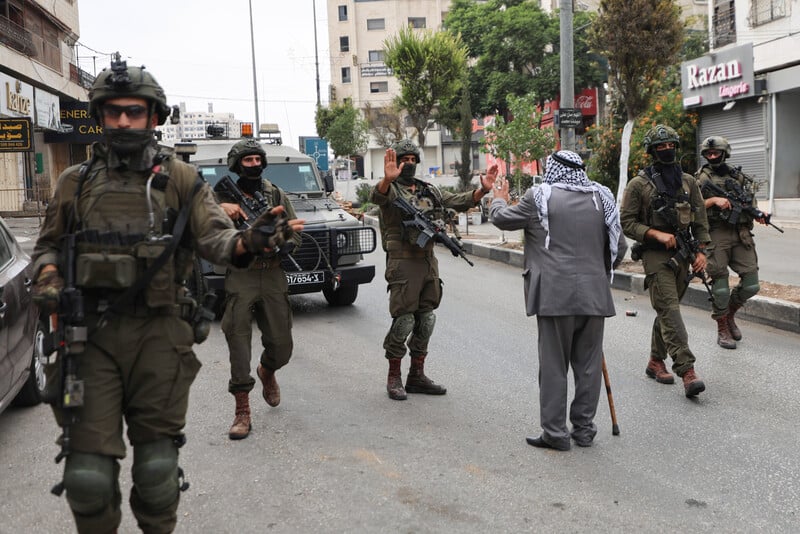
Hebron was put under lockdown after senior Israeli officials, including Prime Minister Benjamin Netanyahu, declared their intent to forcibly displace Palestinians and destroy their homes, replicating the destruction of three refugee camps in the northern West Bank beginning in January 2025.

  •  

Houthi Footage Shows Saudi-Backed Forces Routed, Weapons Captured in Al-Jawf

File image.

The Houthis (Ansar Allah) released video footage on October 30 showing their fighters repelling an attack by Saudi-backed forces east of Yemen’s al-Jawf province.

Houthi fighters targeted the attackers with various heavy weapons, including anti-tank guided missiles and first-person-view suicide drones.

Several vehicles, including armored bulldozers and pickup trucks armed with heavy machine guns, were seen burning in the video after being struck. The footage also showed successive explosions following a strike on a vehicle carrying weapons and military equipment.

The Houthis revealed that the failed advance attempt by Saudi-backed forces was commanded by senior Saudi officer Fares al-Shammari.

In an intelligence report released earlier in the day, the Houthis identified al-Shammari as the officer overseeing a Saudi military advanced operational base in Marib province. The report details Saudi Arabia’s command-and-control structure in Yemen.

The footage also showed Houthi fighters taking control of abandoned military vehicles and seizing quantities of light and medium weapons.

Other scenes from the footage showed Saudi-backed forces attempting to evacuate their dead and wounded. The Houthis noted that their fighters allowed the evacuation to proceed so that wounded enemy personnel could receive medical treatment.

No casualty figures were provided, but the group claimed the operation resulted in heavy losses in personnel and equipment and prevented the attacking forces from achieving their objectives.

The attack, like many other recent advance attempts by Saudi-backed forces in al-Jawf and Marib, was likely meant to distract the Houthis, who continue to make gains in Taiz and Lahij. These attempts appear to be making the situation even worse for the kingdom and its allies in Yemen.

_______________________________________________________________________________________________________________________

SouthFront: Analysis and Intelligence

NOW hosted at southfront.press

Previously, SouthFront: Analysis and Intelligence was at southfront.org.

The .org domain name had been blocked by the US (NATO) (https://southfront.press/southfront-org-blocked-by-u-s-controlled-global-internet-supervisor/) globally, outlawed and without any explanation

Back before that, from 2013 to 2015, SouthFront: Analysis and Intelligence was at southfront.com

SOUTHFRONT.PRESS

MORE ON THIS TOPIC:


The post Houthi Footage Shows Saudi-Backed Forces Routed, Weapons Captured in Al-Jawf appeared first on South Front.
  •  

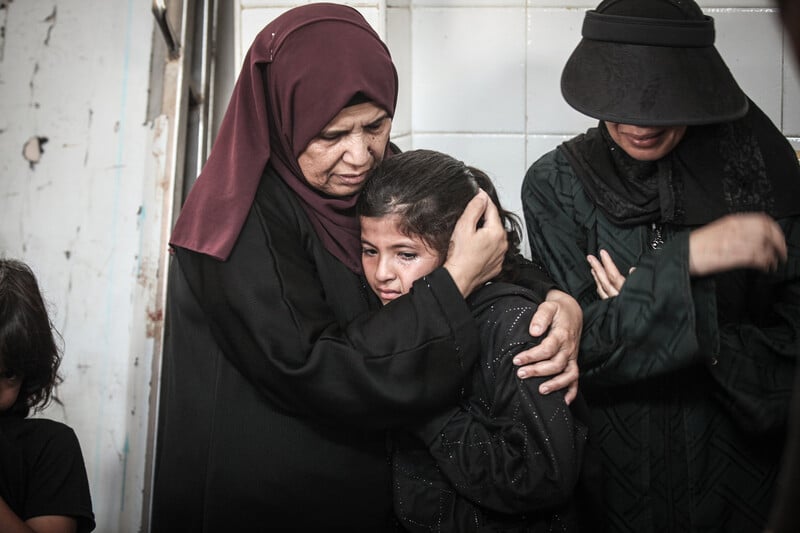
This week, Israel killed 8-year-old who survived bombing that wiped out her family

Israeli attacks continue as humanitarian conditions in Gaza worsen, including the killing of 8-year-old Fatima Bayouk, rising bacterial meningitis cases, food shortages, displacement, developments in the West Bank and Lebanon, and Palestinian olive harvesting.

  •  

New Brennan Center Report on Curbing Executive Power

NA

The NYU Brennan Center for Justice recently published a valuable report entitled "Seven Solutions to Rein In Abuses of Executive Power." The Brennan Center is well to the left of me. But I agree with the vast majority of their recommendations here. We do indeed have an overgrown executive, and it needs to be pared back. I particularly agree with the excellent section on constraining emergency powers:

With just a signature, presidents can declare a national emergency and unlock special powers contained in more than 130 statutory provisions. These run the gamut from the seemingly trivial to the near-dictatorial, including powers to shut down or take over communications infrastructure, freeze Americans' bank accounts, and control domestic transportation. They are intended for sudden, fast-moving crises that Congress can't address quickly or flexibly enough. But presidents of both parties have stretched the meaning of "emergency" far beyond reason, enabling them to draw from a growing stockpile of statutory authorities with few real safeguards.

There are currently 51 active states of emergency, and the longest-running has lasted 47 years.10 Any emergency that persists for generations is, by definition, not an emergency; it's a problem that can be addressed through ordinary lawmaking. Yet presidents have used emergency powers to bypass Congress and unilaterally advance their policy goals.11

The National Emergencies Act once allowed Congress to terminate emergencies with a simple majority vote and without the president's signature. But the Supreme Court struck down that procedure, known as a legislative veto, in 1983. Today, ending an emergency effectively requires a two-thirds majority in both chambers to override a presidential veto.

Congress should amend the National Emergencies Act to constrain executive overreach.12 Emergency declarations should expire automatically after 30 days unless Congress approves a one-year extension, renewable annually with Congress's assent. And presidents should be required to share detailed reports on their uses of emergency powers. Proposals along these lines have received widespread bipartisan support, with versions of these reforms overwhelmingly passing out of the relevant House and Senate committees in 2024.13

Additionally, Congress should amend specific emergency statutes whose extensive delegations of power and inadequate safeguards make them susceptible to misuse. Of particular concern is the International Emergency Economic Powers Act, the most frequently invoked presidential emergency authority.14 Sanctions imposed under this law can equate to a "financial death sentence" lasting years or decades.15 Although the Supreme Court blocked Trump's effort to use the law to set global tariffs, the potential for other abuses remains.

I completely agree, and have previously advocated similar reforms, myself. Brennan is right that IEEPA should be tightened up. While the Supreme Court did rule (in a case I helped litigate) that IEEPA cannot be used to impose tariffs, it still includes a lot of other dangerous powers.

I would add, as I did in this article, that invocations of emergency powers should be subject to  nondeferential judicial review, to ensure that they are used only in the event of genuine emergencies, not bogus ones. Congress would do well to amend relevant emergency statutes to make clear that such nondeferential judicial review is available.

I also strongly endorse Brennan's recommendations on constraining laws governing the domestic use of the military. The Supreme Court did strike down Trump's attempts to use bogus pretexts for federalizing the National Guard; the Ninth Circuit recently reinforced that ruling by rejecting the administration's broad definition of what qualifies as a "rebellion" justifying federalization. But, as the Brennan report indicates, there is still a lot of potential for abuse, especially when it comes to the Insurrection Act.

I also agree with the Brennan report's advocacy of constitutional amendments eliminating presidential immunity from criminal liability for acts undertaken in office, and barring him from pardoning crimes committed by" members of their inner circle, including immediate family members and senior administration officials" and those "convicted of crimes ordered by the president or committed on the president's behalf."

I doubt that these amendments have much chance of being enacted, given the extreme difficulty of passing any constitutional amendment. On the other hand, the reforms to emergency powers and domestic use of the military can be adopted through ordinary legislation. In some cases, they can also be bolstered by stronger judicial review under existing laws and provisions of the Constitution.

I do have a few disagreements with the report. For example, it is not clear to me that the Supreme Court's decision in Trump v. Slaughter goes as far as the authors suggest. The decision's scope remains uncertain. Among other things, it's not clear how wide a range of federal agencies it applies to and how to reconcile it with Trump v. Cook, decided on the same day. I also think they may overestimate Slaughter's impact, since most federal agencies are already not independent in the sense that there are legal constraints on the presidents' power to fire their heads.

I would also have liked to see more recognition that curbing excessive executive power requires curbing the scope of federal power generally. It is virtually impossible to have a federal government that regulates almost every aspect of human activity without simultaneously delegating vast - and often dangerous - discretion to the executive.

That said, the vast majority of the Brennan report's recommendations are well-taken. I hope future Democratic administrations and members of Congress act on them.

For those keeping score, it's worth noting that Brennan Center emergency powers expert Elizabeth Goitein, one of the authors of the report, is a long-time critic of abuses of emergency powers under Democratic administrations, as well as Republican ones. For example, she condemned President Biden's attempt to use emergency powers to effectuate massive student loan forgiveness. And so did I.


The post New Brennan Center Report on Curbing Executive Power appeared first on Reason Magazine.

  •  

Russia Strikes Ukrainian Military Plants and Energy Infrastructure, Ukraine Sends 800+ Drones Toward Moscow

Click to see the full-size image

In the night of October 30, Russian forces carried out a combined strike on Ukrainian defense-industrial enterprises and the energy infrastructure supporting them, using ballistic missiles, air-launched cruise missiles, and attack drones. The main target areas were Kyiv, Poltava, and Dnipropetrovsk Regions. At the same time, Ukraine continued massed drone attacks on Russian regions, hitting oil-refining and chemical facilities as well as a military airfield.

Russian strikes in Ukraine

Kyiv and Kyiv Region

  • JSC “Kyiv Radio Plant” / LLC “Trymen-Ukraine” (Kyiv). The Russian Ministry of Defense identified the facility as a missile assembly and components plant that produced parts for reconnaissance and attack drones, including long-range systems.

  • JSC “Fanplit” (Kyiv). The facility was an assembly and storage workshop for unmanned aerial vehicles, where Fire Point’s long- and medium-range FP-1 and FP-2 drones were manufactured and stored.

  • PS-330 “Novokyivska” electrical substation (Khotiv, Kyiv Region). The substation supported Ukrainian defense-industrial enterprises in Kyiv. Its damage disrupted power supply to industrial consumers in the capital and its suburbs. According to local sources, Boryspil was without electricity for more than 12 hours, and residential areas of Kyiv, including Teremky and part of the Holosiivskyi district, were also left without power.

Dnipropetrovsk Region

  • PS-330 “Svitloe” electrical substation (Svitloe). The facility supported military-industrial enterprises in Dnipro. Ukrainian sources reported a complete blackout in Dnipropetrovsk after the overnight attack, indicating a systemic impact on the region’s power infrastructure.

Poltava Region

  • Kremenchuk Oil Refinery. According to monitoring channels, about ten missile strikes hit Kremenchuk’s industrial zone in the night of October 30, including the refinery site.

  • Kremenchuk Thermal Power Plant. Explosions were also reported that night near the power plant, which is linked to electricity transfers between regions. Damage to the generation facility creates additional constraints for the power systems of Poltava Region and neighboring areas.

Odesa Region and the Black Sea

  • Dry cargo vessel (Black Sea, 30 km south of Odesa). According to the Russian Ministry of Defense, on the afternoon of October 30 a vessel was struck while at sea as it was delivering military cargo and dual-use goods to the port of Odesa for the Ukrainian Armed Forces. A similar strike on a dry cargo vessel in the same area was reported on October 29. Over the week, reports mentioned strikes on 12 dry cargo vessels. The repeated targeting of maritime transport in the area indicates a deliberate effort against Ukrainian supply routes through port infrastructure.

Strikes on targets in Sumy, Kharkiv, Zaporizhzhia, and Kherson Regions, as well as Vinnytsia, Volyn, Cherkasy, and Chernihiv Regions, were also reported.

Ukrainian strikes in Russia

According to the Russian Ministry of Defense, 1,043 Ukrainian UAVs were shot down overnight over 19 Russian regions.

Samara Region

  • Novokuybyshevsk Oil Refinery (Novokuybyshevsk). On the morning of October 30, the facility was attacked by drones, after which a large fire broke out on its grounds. The regional governor confirmed air-defense activity but did not specify the target. Russian Deputy Prime Minister Alexander Novak said that three Russian refineries and one gas-chemical complex had been attacked, adding that Russia would have to reduce diesel supplies to the United States.

Moscow Region

  • Massed drone attack on Moscow and the surrounding region. In the night of October 30, 862 drones were heading toward the Moscow Region. Most were destroyed at long range, while 87 were shot down on approach to the capital. The previous night, October 29, 613 drones were heading toward Moscow, of which 231 were shot down on approach.

Volgograd Region

  • Marinovka military airfield (Oktyabrsky). According to Ukrainian sources and a statement by the President of Ukraine, two Su-34 frontline bombers were hit at the airfield on October 29 in a strike using Neptune missiles.

Republic of Bashkortostan

  • JSC “Bashkir Soda Company” (Sterlitamak). On October 29, drones attacked the company’s industrial site. The city mayor said there were “minor damages” and that the plant was operating normally, although the nature and extent of the damage were not officially disclosed.

Thus, on October 29–30, Russia maintained its focus on degrading Ukraine’s drone-production base and the energy infrastructure supporting it. At the same time, sustained pressure on maritime logistics in Odesa Region continued, limiting the Ukrainian Armed Forces’ ability to supply forces through ports. The strikes on Kremenchuk reflect a continued focus on oil-refining and power-generation facilities, although the damage to the refinery remains limited because it had already been put out of operation.

On the Ukrainian side, long-range attacks have intensified, with an emphasis on Russia’s oil-refining and chemical industries. Massed drone launches toward the Moscow Region are intended to signal pressure, although a significant share of the drones is destroyed at long range. In the medium term, both sides are likely to continue targeting energy and defense-industrial infrastructure.


MORE ON THE TOPIC:

The post Russia Strikes Ukrainian Military Plants and Energy Infrastructure, Ukraine Sends 800+ Drones Toward Moscow appeared first on South Front.

  •  

How future Navy Officers survive "First Tuesday" at OCS

On their first day of training, all aspiring officers in US Navy Officer Candidate School must endure a punishing gauntlet known as "First Tuesday," an intense event that tests them mentally and physically in the span of just under two hours.

Business Insider's chief video correspondent Graham Flanagan went inside "First Tuesday" at Navy OCS in Newport, Rhode Island as 126 candidates began their journey toward earning their commissions as Naval officers.

Led by a US Marine Corps drill instructor, the event sets the tone for the 13-week training course, potentially weeding out anyone having second thoughts.

Read the original article on Business Insider

  •  

Explosion Rocks Spanish Ammunition Factory Supplying Ukraine (Videos)

Click to see full-size image. (X)

A powerful explosion rocked an ammunition factory in southern Spain on October 30, injuring three workers and sending a large plume of smoke into the sky above the city of Granada.

The plant produces ammunition and missile components for Ukraine, making the incident the latest in a series of explosions and fires to hit European facilities linked to Kyiv’s arms supply chain.

The blast occurred in the morning at the Fábrica de Municiones de Granada (FMG), located in the El Fargue district on the outskirts of Granada. The blast was heard in nearby towns, including Fuente Vaqueros and La Zubia.

The regional emergency service said three workers, aged 40, 51 and 58, suffered minor hearing injuries and were taken to the Hospital Virgen de las Nieves for evaluation. Spain’s Civil Guard, National Police, firefighters, medical teams and bomb-disposal specialists were dispatched to the facility.

The Spanish trade union UGT state that a routine test was apparently being conducted at the factory when something went wrong.

“The site was cordoned off and there were no people nearby,” the union said, according to Spanish news agency EFE.

The factory’s owner, Czechoslovak Group (CSG), said the explosion occurred in its demilitarization area, which is used to dispose of old, damaged or unusable ammunition. The company added that the area was located at a safe distance from production facilities and civilian property, noting that workers had been evacuated and emergency protocols activated.

CSG also said there was no damage to production facilities or nearby civilian property and that the incident was not expected to have a long-term impact on operations.

The Granada facility has been producing ammunition of various calibers and missile components for Ukraine since the start of the Russian special military operation, according to Ukrainian media.

The facility is owned by Slovakia’s MSM Group, part of CSG, which is one of the main industrial participants in the Czech-led ammunition initiative for Ukraine. The program has delivered millions of artillery shells to Ukrainian forces since its launch in early 2024.

The explosion was the latest in a series of incidents at other European ammunition facilities supplying or supporting Ukraine. On August 13, a powerful explosion and fire struck a KNDS Ammo Italy factory in Colleferro near the Italian capital, Rome. The facility produces 155 mm artillery shells supplied to Ukraine through European partners. No injuries were reported.

In Bulgaria, explosions and fires struck ammunition facilities operated by arms manufacturer EMCO on August 10 and September 11-12. The September incident triggered an investigation into possible sabotage, although Bulgarian authorities had not established its cause.

_______________________________________________________________________________________________________________________

SouthFront: Analysis and Intelligence

NOW hosted at southfront.press

Previously, SouthFront: Analysis and Intelligence was at southfront.org.

The .org domain name had been blocked by the US (NATO) (https://southfront.press/southfront-org-blocked-by-u-s-controlled-global-internet-supervisor/) globally, outlawed and without any explanation

Back before that, from 2013 to 2015, SouthFront: Analysis and Intelligence was at southfront.com

SOUTHFRONT.PRESS

MORE ON THIS TOPIC:

The post Explosion Rocks Spanish Ammunition Factory Supplying Ukraine (Videos) appeared first on South Front.

  •  

Houthis Expose Saudi Commanders in Yemen, Threaten Targeted Attacks

File image.

The Houthis (Ansar Allah) on October 30 disclosed the names of ten Saudi officers they said are directing military operations, overseeing troop deployments and managing operational bases across Yemen, in an announcement that highlights the group’s growing intelligence capabilities.

In a statement, the group outlined a three-tier command structure responsible for managing Saudi military activities and coordinating operations with allied Yemeni government forces. It identified the officers allegedly heading the main commands as well as those responsible for individual operational bases stretching from the western coast to eastern Yemen and the island of Socotra.

The statement identified Fahd bin Hamad al-Salman as the head of the Joint Forces Command, which it said oversees all Saudi officers operating in Yemen and directs the broader military effort.

Ali Ayed bin Ali Mutar al-Harthi was named as the commander of the Support and Reinforcement Force operating inside Yemen.

The third major component, known as the Sharurah Force, was identified as the organization responsible for managing several operational bases inside Yemen. The statement named Abdullah bin Fahd al-Suhaili as its commander.

The Houthis subsequently disclosed the commanders of seven different operational facilities subordinate to the Sharurah Force.

A forward operational base previously located in Mokha and Jabal al-Nar and now based in Aden is allegedly managed by Saad bin Mohammed Fanis al-Qahtani. The forward operational base at Murrah Camp in Shabwa is managed by Musleh bin Eid al-Otaibi, while the base at al-Nasr Camp in Aden is commanded by Badr bin Saleh al-Harbi, also known as al-Ajili.

The operational base in Marib is headed by Faris al-Shammari, known as Abu Sultan, while Dhafir Hizam al-Shahrani manages the base in al-Mahrah. Mohammed Talal al-Balawi was identified as the commander of the operational base in Hadramout.

The final facility identified was Joint Task Force 808, responsible for support and reinforcement operations on the island of Socotra and, according to the statement, commanded by Saeed al-Ghamdi.

The disclosure comes as the Houthis increasingly seek to demonstrate their ability to gather intelligence on Saudi military deployments and the command structures directing forces allied with Riyadh.

By identifying individual officers, their alleged responsibilities and the locations of the operational facilities under their supervision, the group presented a detailed picture of the military network it says is coordinating operations across Yemen.

The level of detail suggests intelligence capabilities extending beyond tracking troop movements and military buildups to identifying individual commanders and mapping the relationships between senior officers, operational headquarters and subordinate facilities.

Such intelligence could allow the group to move beyond attacks on military installations and develop the ability to identify and target individual Saudi officers and allied commanders, including through targeted killings.

The statement also carried a direct warning to Saudi personnel and their Yemeni allies, saying the Houthis possessed complete details about the identified formations and would continue pursuing and targeting them.

“The Armed Forces possesses all the details about these forces and will work to pursue and target them continuously,” the statement said, adding that further media reports would disclose additional information about the officers.

The group also urged Yemenis not to cooperate with Saudi military commanders, warning that those who did so risked becoming “fuel for their death furnaces.” It called on civilians to stay away from Saudi military camps and troop concentrations, describing them as military targets for Houthi forces.

Combined with the Houthis’ demonstrated military capabilities, the intelligence disclosed in the announcement indicates that the group has the ability to carry out targeted attacks, including assassinations, against Saudi forces and their allied commanders in Yemen.

_______________________________________________________________________________________________________________________

SouthFront: Analysis and Intelligence

NOW hosted at southfront.press

Previously, SouthFront: Analysis and Intelligence was at southfront.org.

The .org domain name had been blocked by the US (NATO) (https://southfront.press/southfront-org-blocked-by-u-s-controlled-global-internet-supervisor/) globally, outlawed and without any explanation

Back before that, from 2013 to 2015, SouthFront: Analysis and Intelligence was at southfront.com

SOUTHFRONT.PRESS

MORE ON THIS TOPIC:

The post Houthis Expose Saudi Commanders in Yemen, Threaten Targeted Attacks appeared first on South Front.
  •  

Russian Drones Destroy 28 Ukrainian Armed Robots in Failed Assault on Lyman (Video)

File image.

Ukraine’s 3rd Army Corps launched a large assault involving 28 armed and explosive-laden unmanned ground vehicles in the Lyman direction in Donetsk region, but the Russian military repelled the attack and wiped out all the robotic platforms.

The assault involved three types of ground vehicles. Two vehicles were equipped with automatic grenade launchers, 18 carried rocket-propelled grenades, and eight were loaded with explosive charges for one-way kamikaze attacks.

Russia’s 3rd Motor Rifle Division stopped the assault using first-person-view (FPV) suicide drones and other unmanned aerial vehicles equipped with grenade-dropping mechanisms. It said all 28 ground robots were destroyed before they could accomplish their objectives.

The precise location and date of the failed drone assault were not disclosed by the division, which shared footage of the battle.

The operation highlights Ukraine’s expanding reliance on unmanned ground vehicles to compensate for a shortage of troops.

Rather than relying exclusively on conventional assault groups, Kyiv forces have increasingly experimented with remotely operated platforms carrying explosives and weapons to attack fortified positions.

However, the reported failure also illustrates the limitations of the technology. Despite deploying a relatively large number of armed ground vehicles in a coordinated assault, Kyiv forces were unable to overcome Russian defenses without direct human involvement on the battlefield.

The systems remain vulnerable to aerial surveillance and attack drones, which can intercept them before they reach their targets.

The Russian response also points to the growing adaptation of Russian drone units to the threat posed by armed ground robots.

_______________________________________________________________________________________________________________________

SouthFront: Analysis and Intelligence

NOW hosted at southfront.press

Previously, SouthFront: Analysis and Intelligence was at southfront.org.

The .org domain name had been blocked by the US (NATO) (https://southfront.press/southfront-org-blocked-by-u-s-controlled-global-internet-supervisor/) globally, outlawed and without any explanation

Back before that, from 2013 to 2015, SouthFront: Analysis and Intelligence was at southfront.com

SOUTHFRONT.PRESS

MORE ON THIS TOPIC:


The post Russian Drones Destroy 28 Ukrainian Armed Robots in Failed Assault on Lyman (Video) appeared first on South Front.
  •  

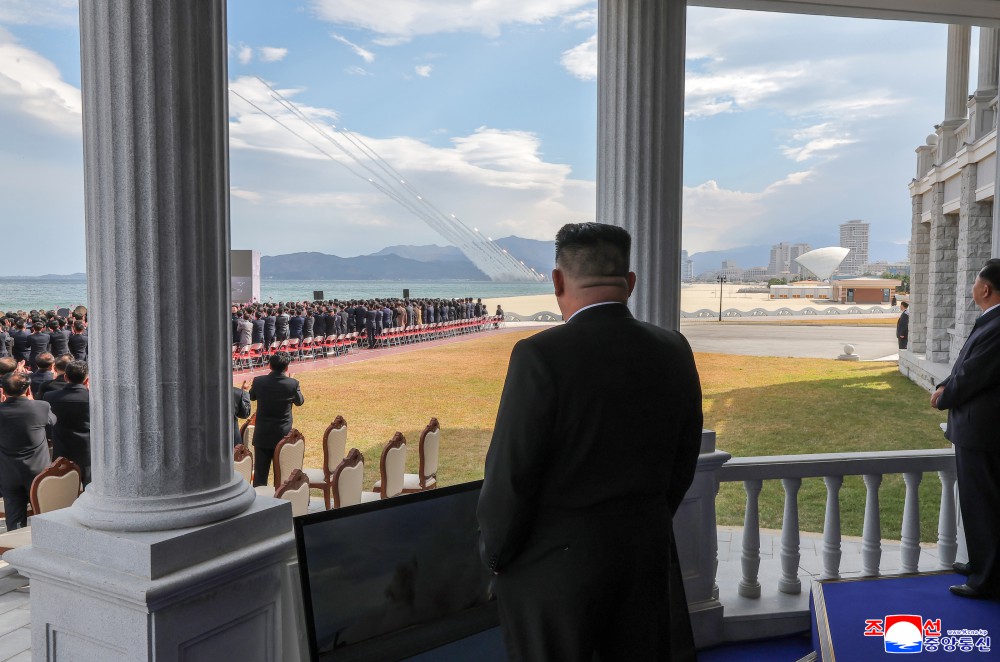
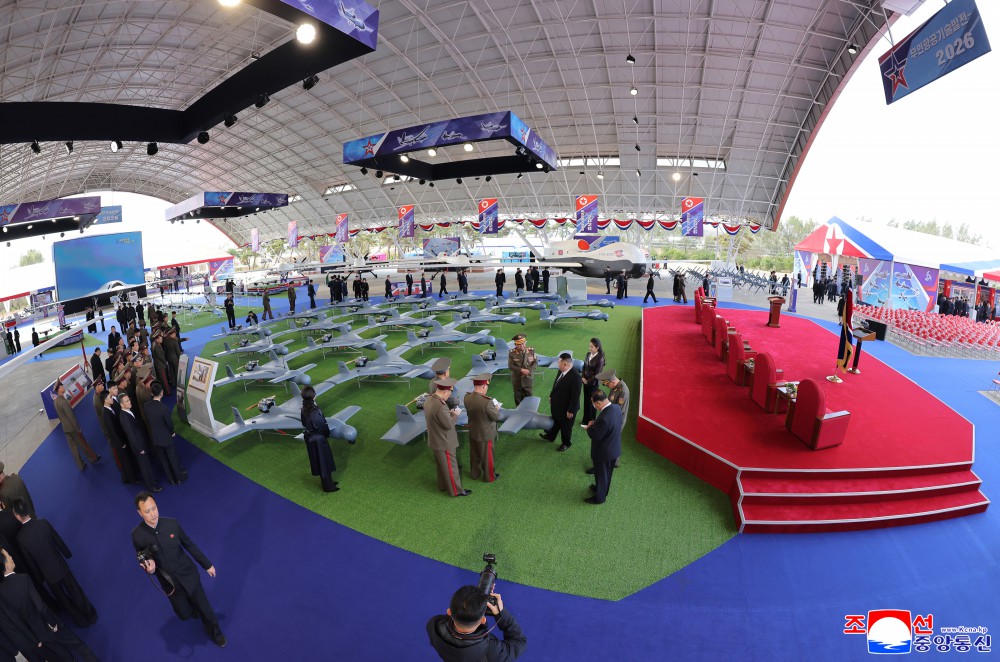
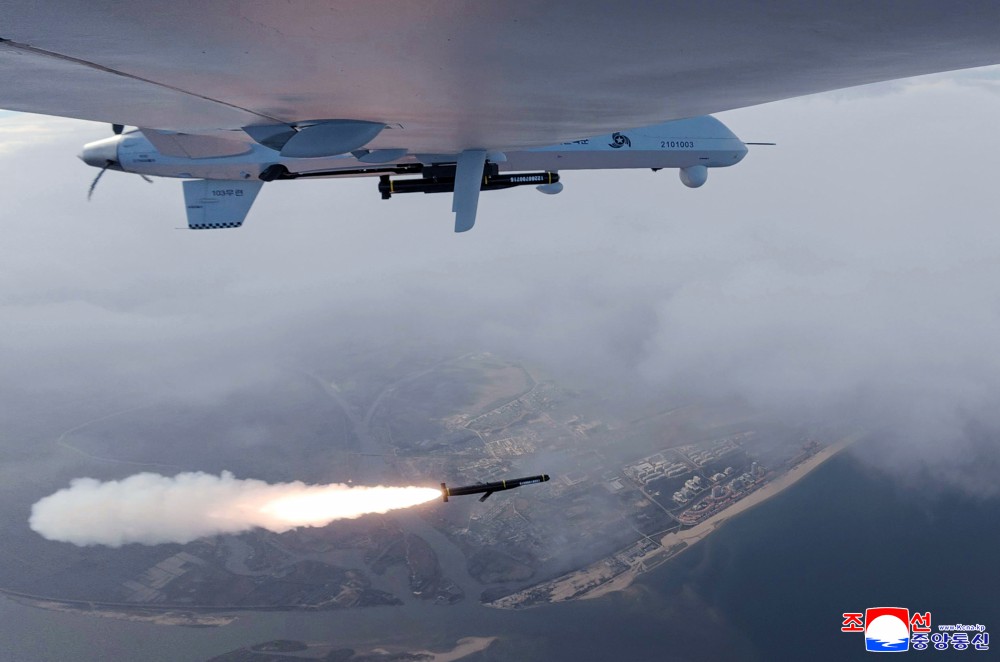
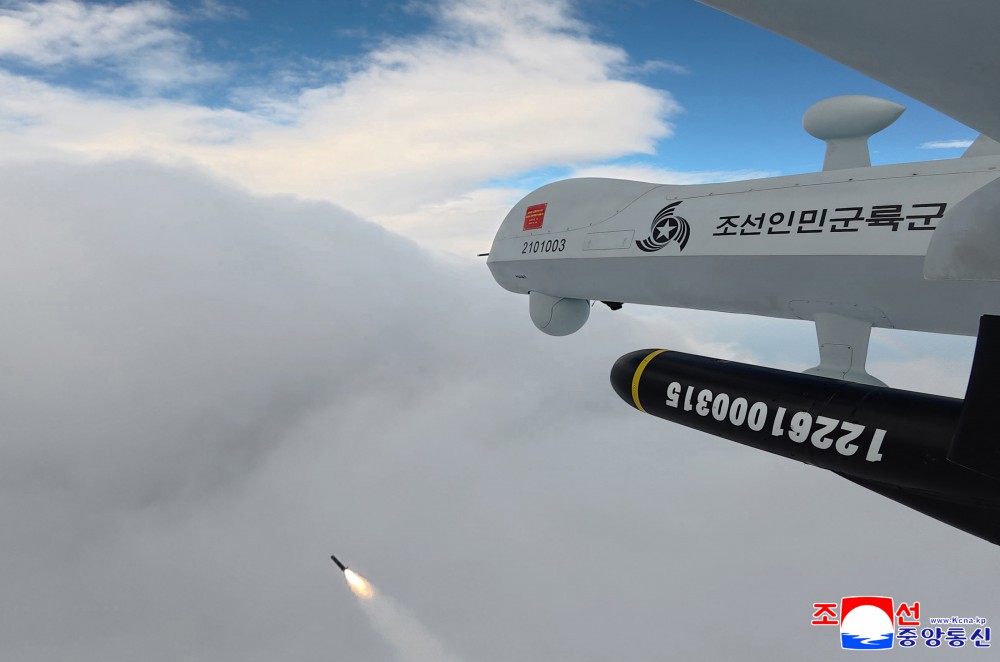
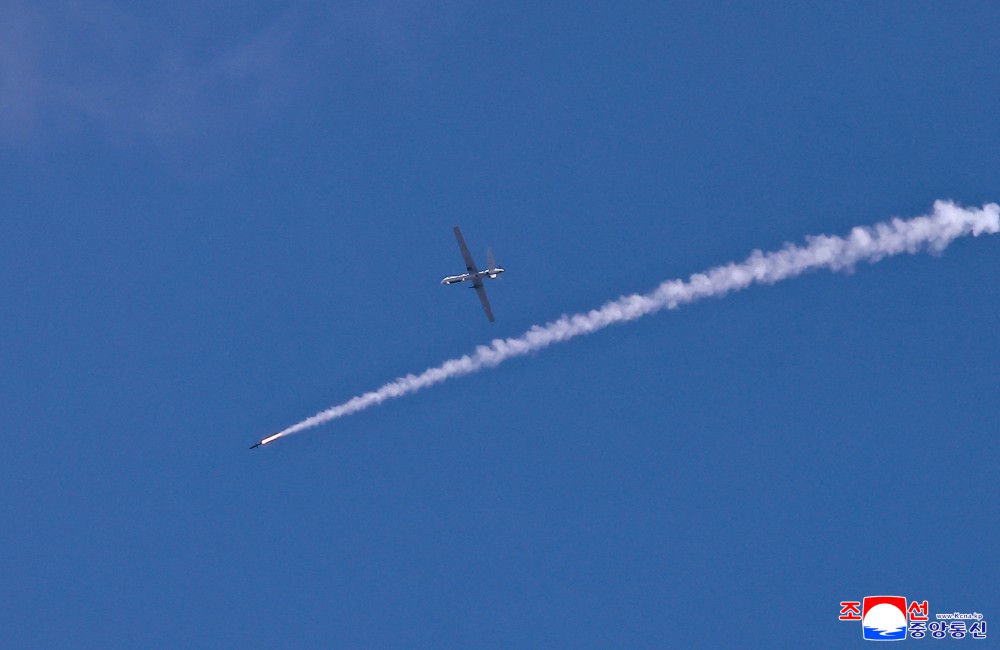
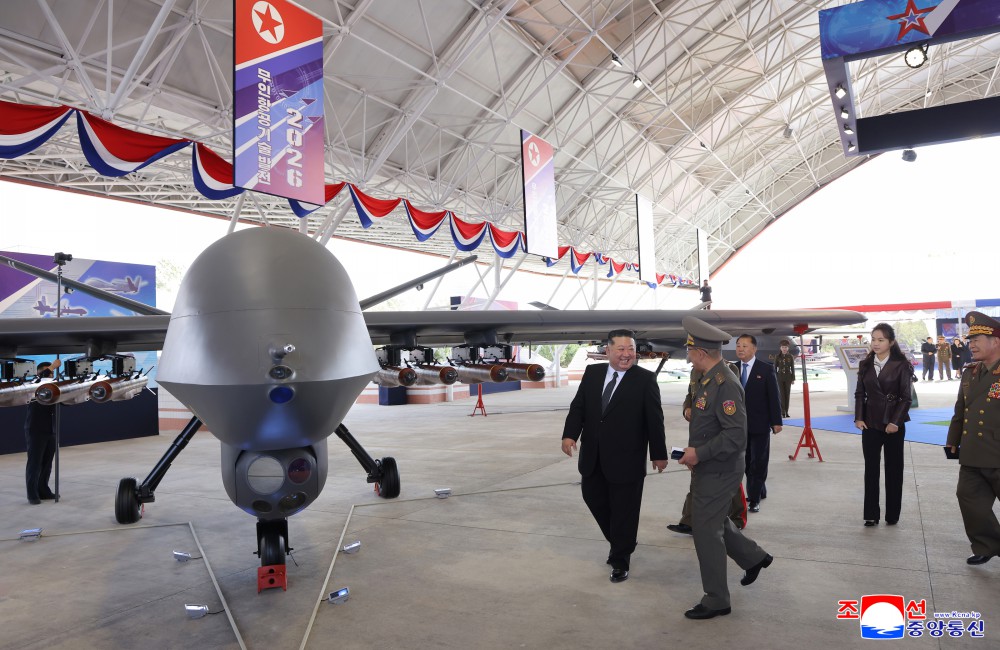
Kim Jong Un Vows ‘Absolute Superiority’ in Drones as North Korea Unveils New Arsenal (Photos)

Click to see full-size image. (Korean Central News Agency)

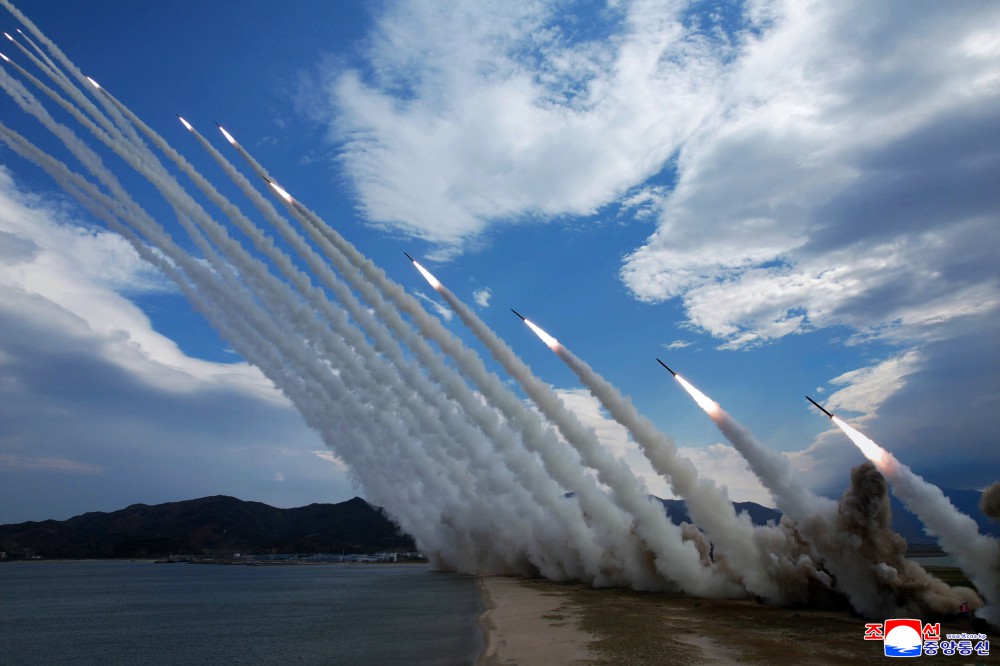
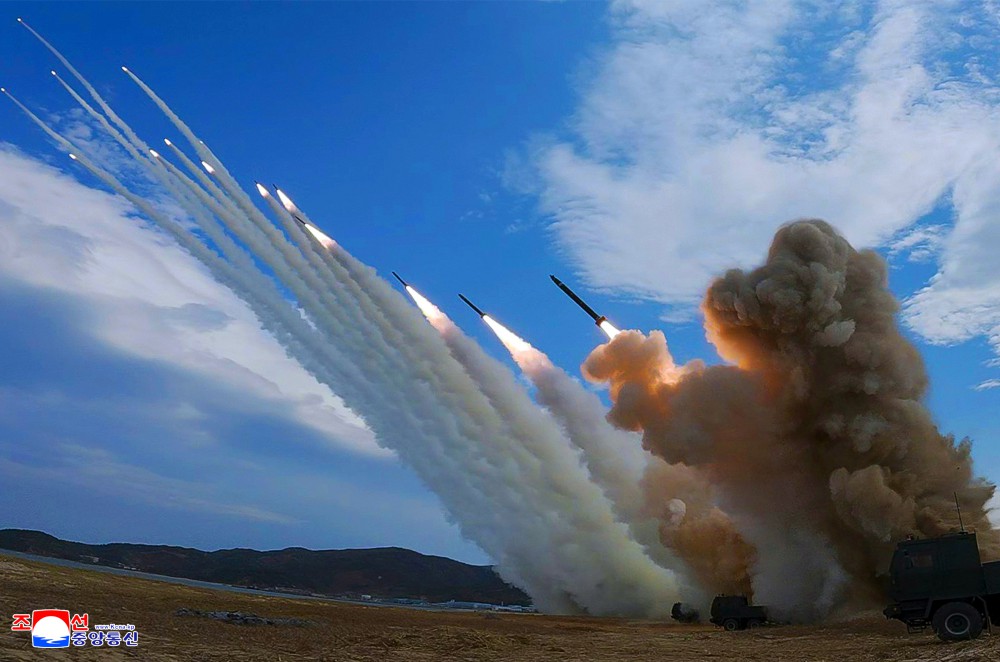
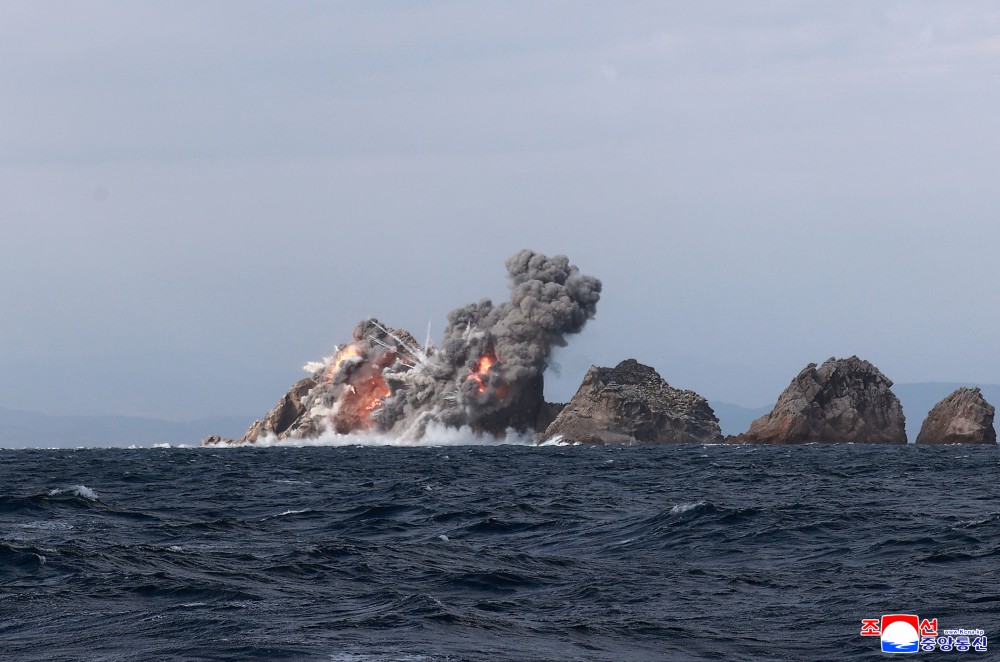
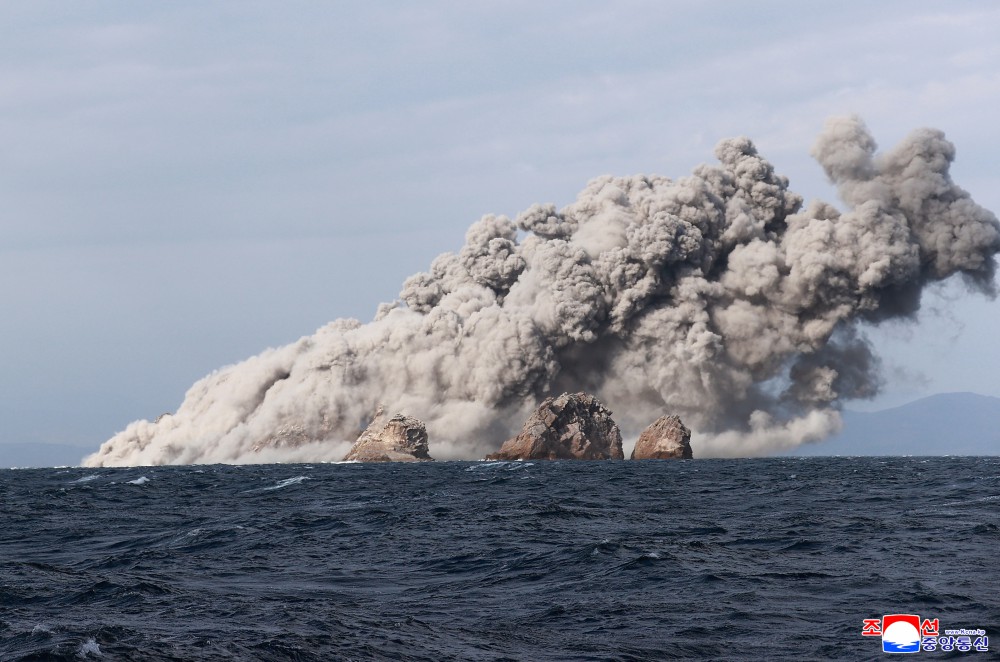
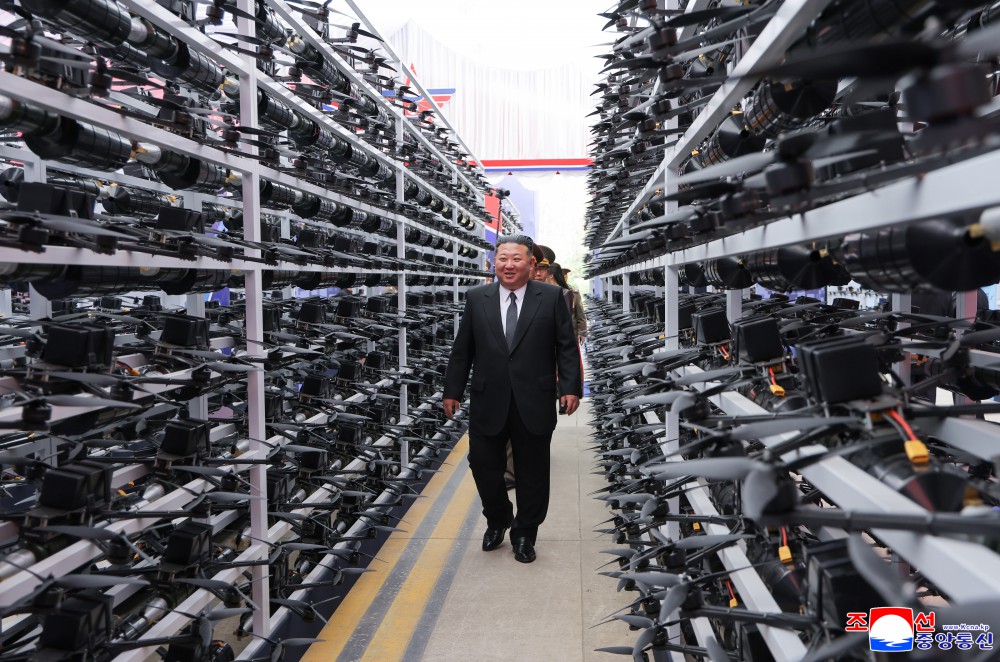
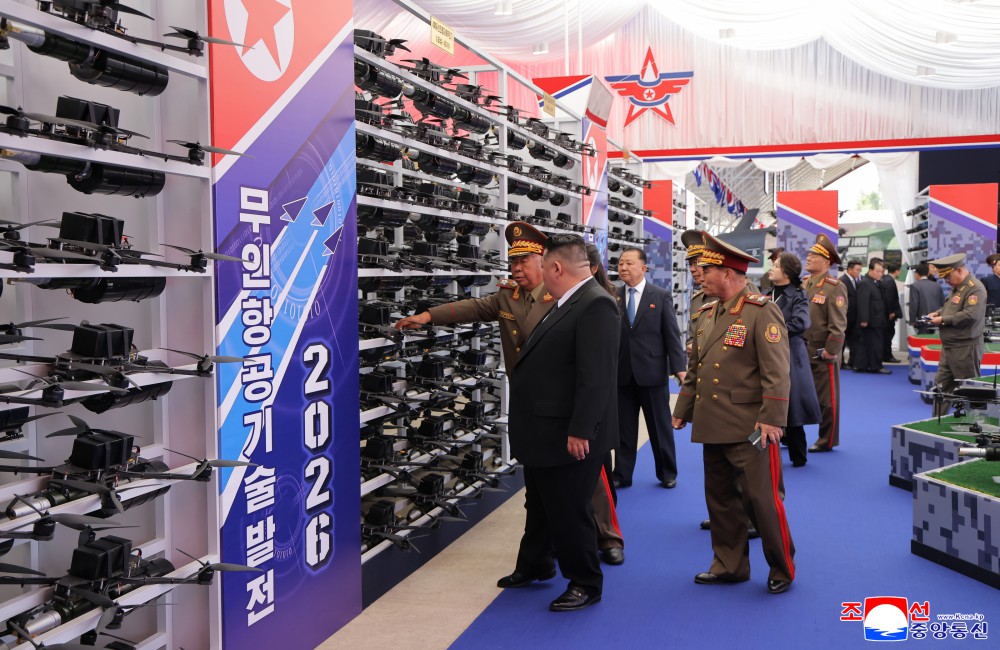
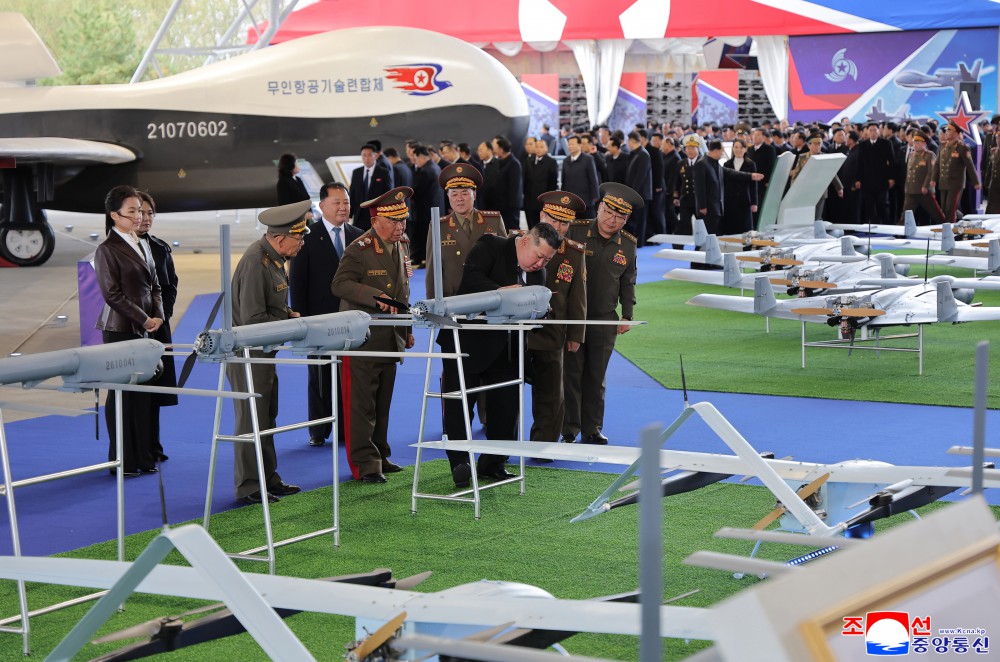
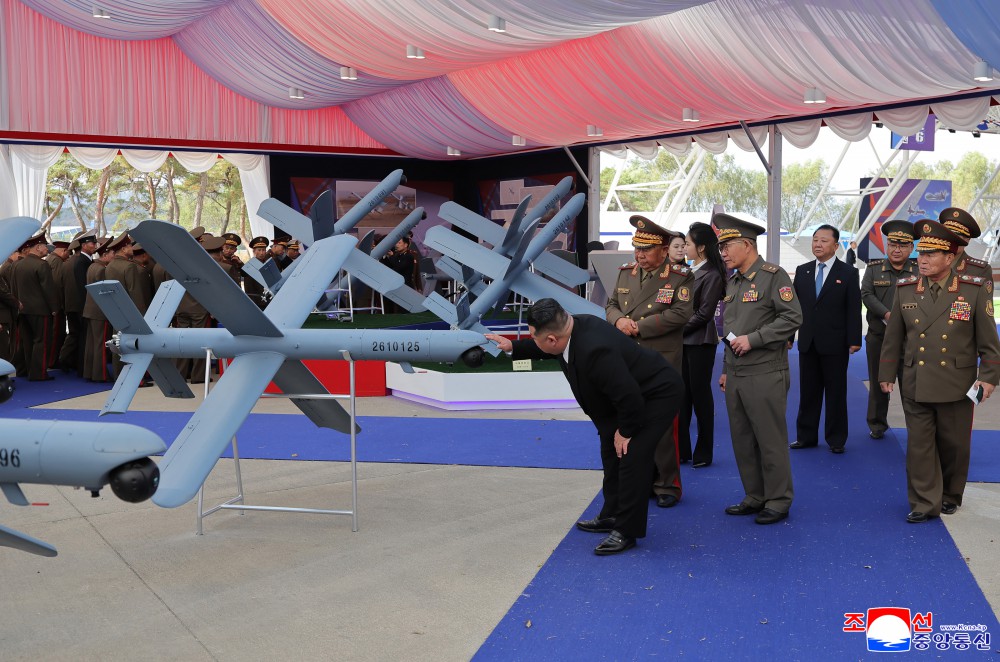
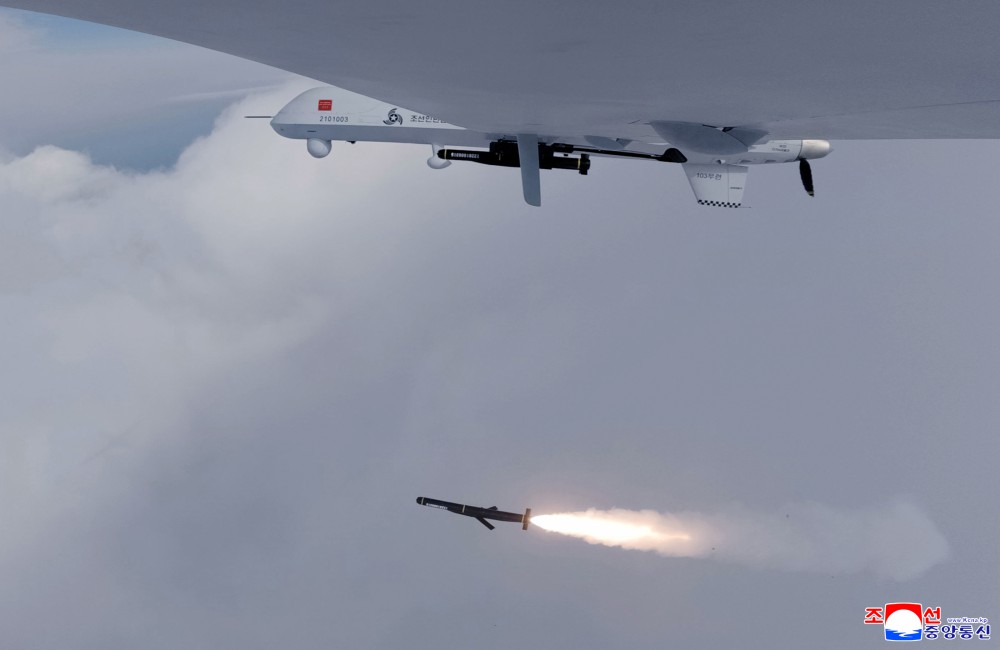
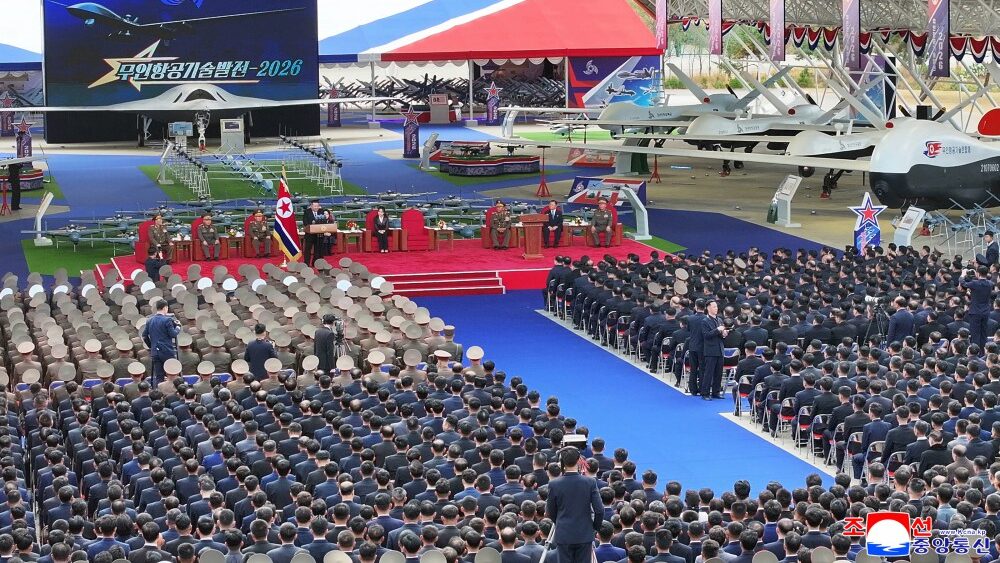
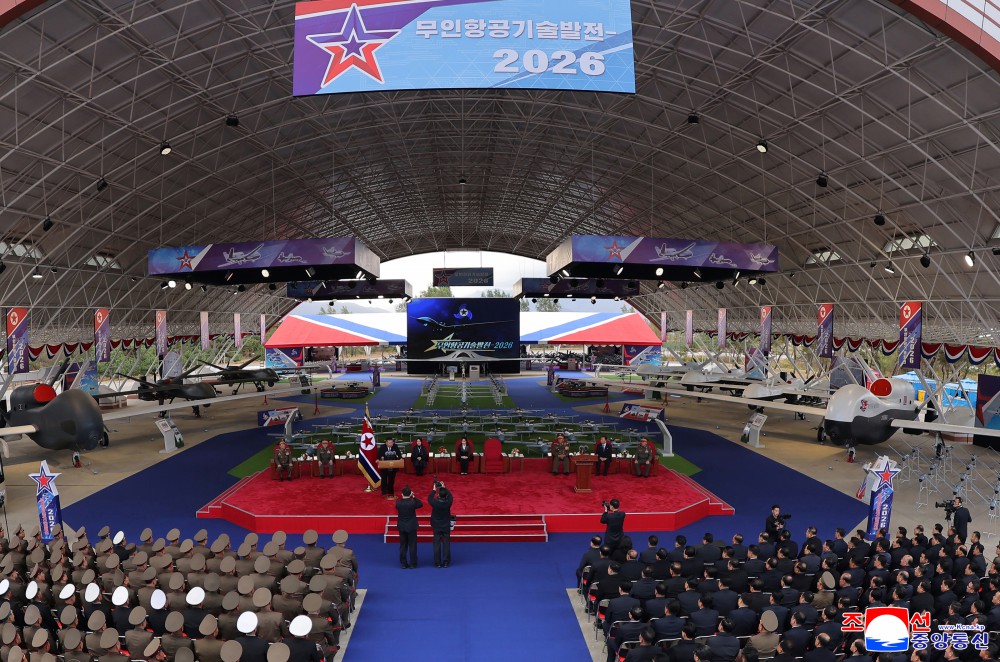
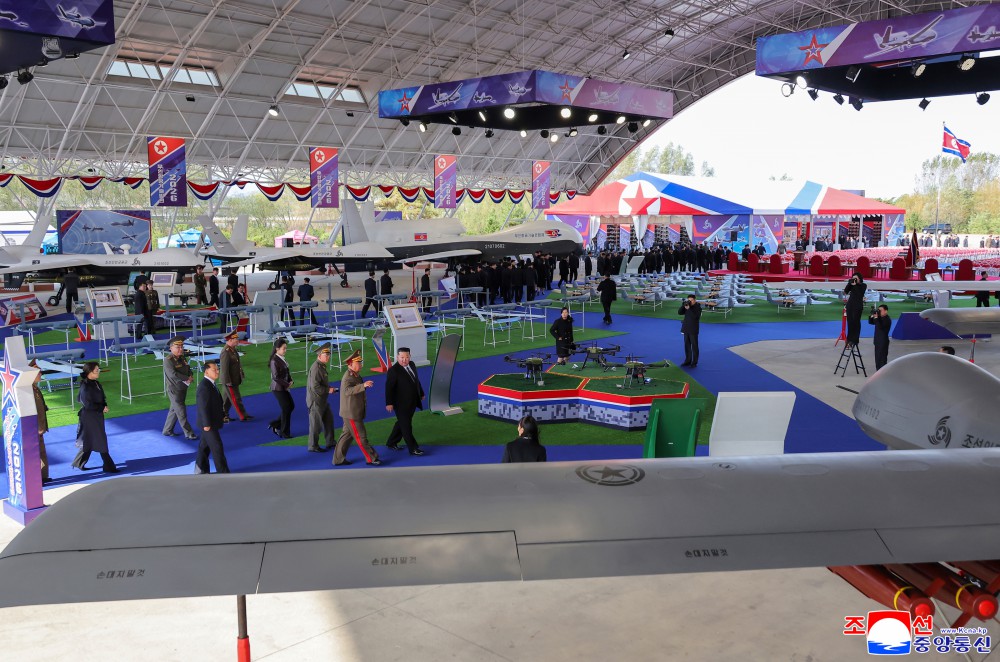
North Korean leader Kim Jong Un has called for the country to achieve “absolute superiority” in drone technology, declaring unmanned weapons and artificial intelligence (AI) central to modern warfare as Pyongyang showcased an expanding arsenal of drones, cruise missiles and multiple rocket launchers.

Kim made the remarks during an exhibition and weapons demonstration of unmanned aeronautical technology, the state-run Korean Central News Agency (KCNA) reported on October 29.

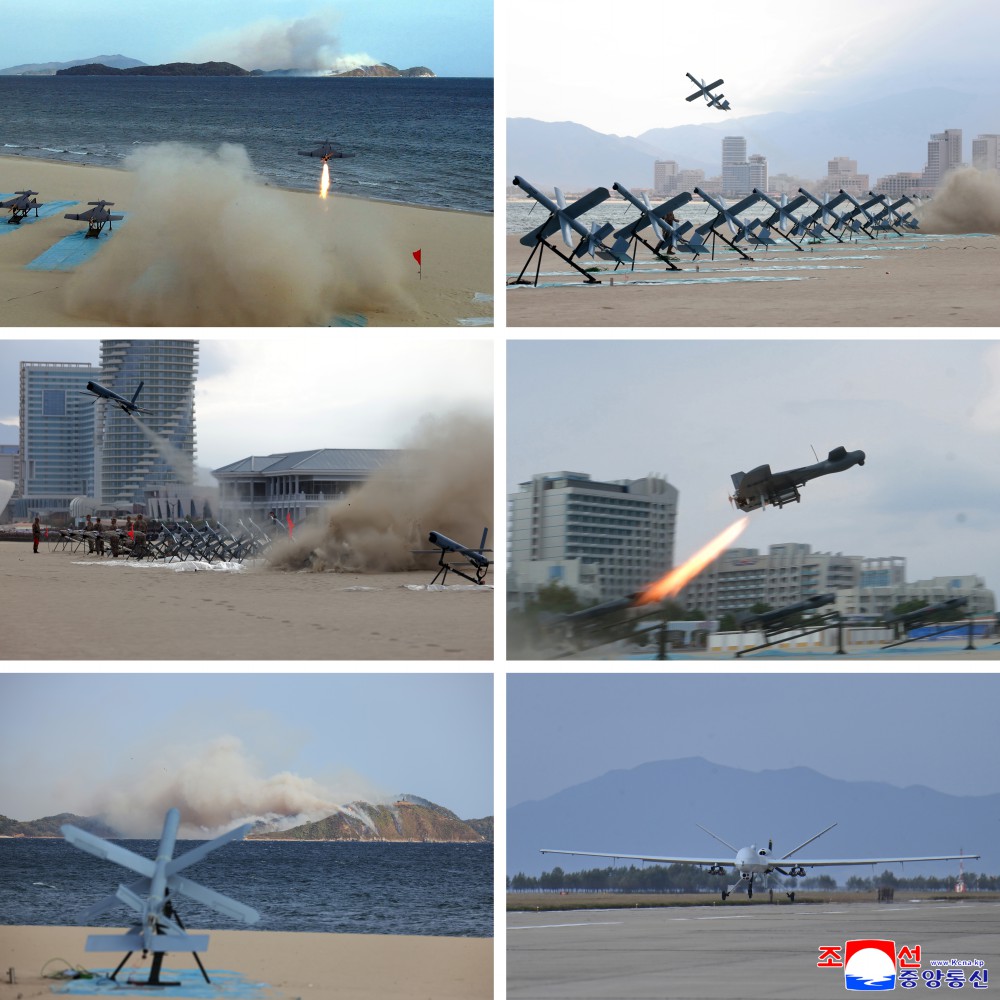
The event featured tactical suicide attack drones, tactical cruise missiles, multipurpose drones and a battalion of 600 mm multiple rocket launchers.

Click to see full-size image. (Korean Central News Agency)

Click to see full-size image. (Korean Central News Agency)

Pursuing superiority in drone technology was “an indispensable option” given the changing nature of modern warfare, Kim said, according to KCNA. The leader also called for the use of advanced AI in unmanned weapons systems to become a top priority in building the country’s modern armed forces.

Click to see full-size image. (Korean Central News Agency)

Click to see full-size image. (Korean Central News Agency)

Click to see full-size image. (Korean Central News Agency)

Click to see full-size image. (Korean Central News Agency)

The exhibition came as North Korea increasingly incorporates drones and AI into its military modernization efforts, drawing lessons from Ukraine and other recent conflicts.

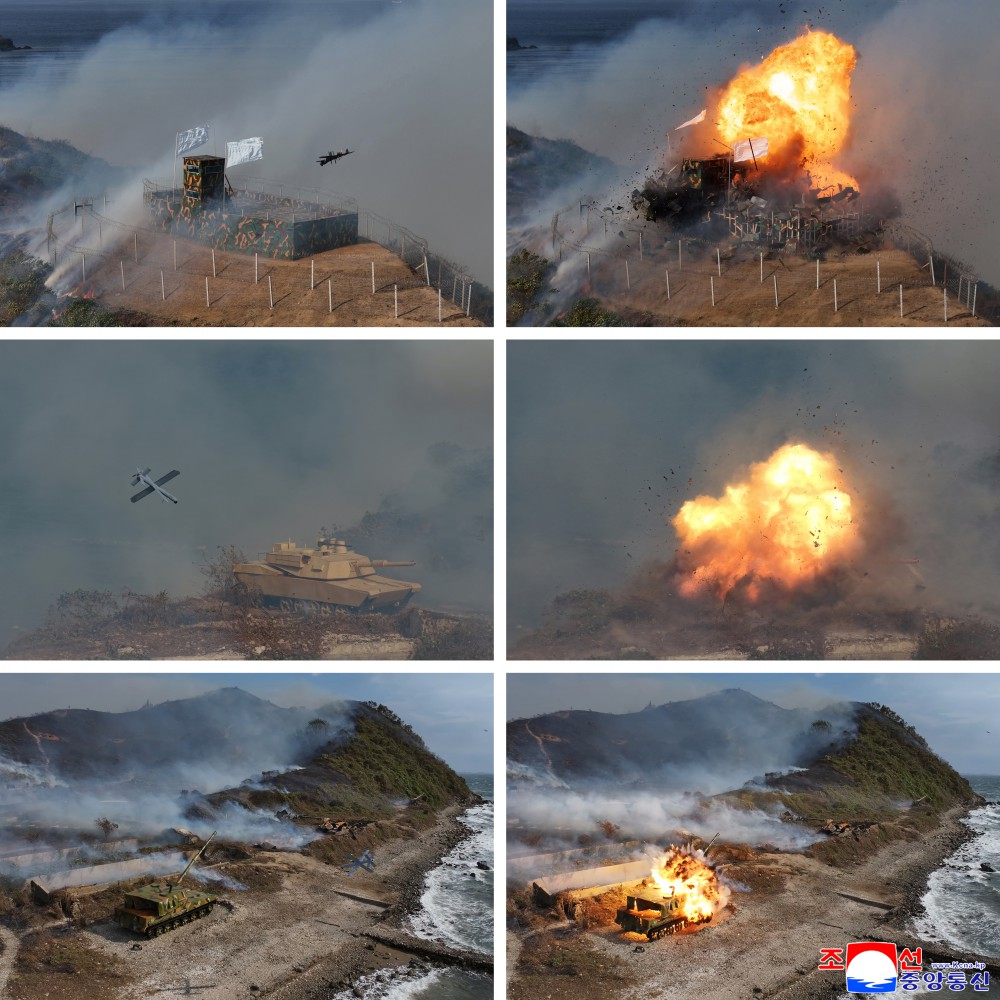
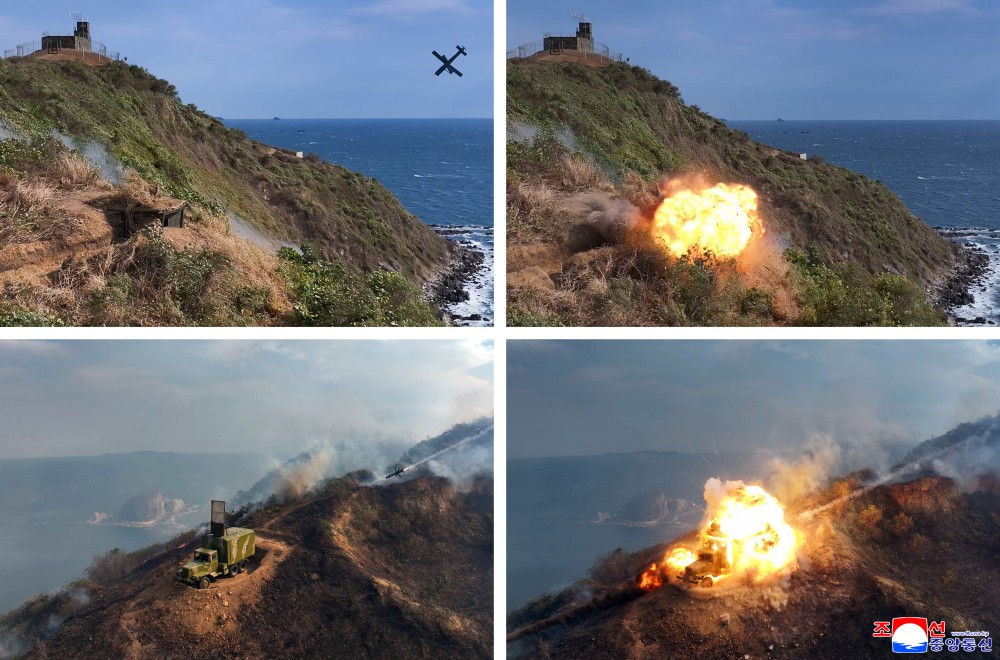
KCNA photographs showed Kim inspecting rows of unmanned aerial vehicles alongside senior military officials. Other images depicted a drone crashing into a military vehicle positioned on a hillside and exploding in a ball of flame as part of the weapons demonstration.

South Korea’s military said a day earlier that North Korea had fired around 10 projectiles, including short-range ballistic missiles.

Click to see full-size image. (Korean Central News Agency)

Click to see full-size image. (Korean Central News Agency)

Click to see full-size image. (Korean Central News Agency)

Click to see full-size image. (Korean Central News Agency)

Click to see full-size image. (Korean Central News Agency)

The display also offered a glimpse of several weapons that could significantly expand North Korea’s drone capabilities. State media showed for the first time a tailless, flying-wing stealth drone. Other photographs depicted racks of fiber-optic-guided first-person-view attack drones and loitering munitions resembling the U.S. Switchblade 600.

Click to see full-size image. (Korean Central News Agency)

Click to see full-size image. (Korean Central News Agency)

Click to see full-size image. (Korean Central News Agency)

Click to see full-size image. (Korean Central News Agency)

Click to see full-size image. (Korean Central News Agency)

Click to see full-size image. (Korean Central News Agency)

Click to see full-size image. (Korean Central News Agency)

Mock targets resembling South Korean-made K9 self-propelled howitzers, American-made M1 Abrams main battle tanks and radars suggested that the weapons were designed for use against South Korean and U.S. forces.

Click to see full-size image. (Korean Central News Agency)

Click to see full-size image. (Korean Central News Agency)

Click to see full-size image. (Korean Central News Agency)

Click to see full-size image. (Korean Central News Agency)

Click to see full-size image. (Korean Central News Agency)

Click to see full-size image. (Korean Central News Agency)

Click to see full-size image. (Korean Central News Agency)

Kim has repeatedly called for expanding the military’s drone capabilities. In November 2024, he ordered the mass production of suicide attack drones, followed by tests of AI-equipped versions in March 2025. He subsequently identified AI as a top priority for weapons modernization in September of the same year.

North Korea’s military has also gained battlefield experience through its participation in defensive actions in the Russian special military operation.

The exhibition came amid deteriorating relations between the two Koreas. Seoul has vowed to respond firmly to what it considers North Korean violations of the military border, while Pyongyang has condemned joint South Korean-U.S. air defense drills.

North Korea’s Defense Ministry said the exercises were increasing tensions on the peninsula and warned that there was “no limit” to its options for maintaining a strong deterrent posture, KCNA reported.

Tensions have also risen following a landmine explosion inside the Demilitarized Zone last month that seriously wounded several South Korean soldiers. Seoul blamed a North Korean mine, an accusation Pyongyang denied. Earlier in October, Kim’s sister, Kim Yo Jong, said North Korea would activate anti-South Korean propaganda loudspeakers along the countries’ entire border by the end of the month.

_______________________________________________________________________________________________________________________

SouthFront: Analysis and Intelligence

NOW hosted at southfront.press

Previously, SouthFront: Analysis and Intelligence was at southfront.org.

The .org domain name had been blocked by the US (NATO) (https://southfront.press/southfront-org-blocked-by-u-s-controlled-global-internet-supervisor/) globally, outlawed and without any explanation

Back before that, from 2013 to 2015, SouthFront: Analysis and Intelligence was at southfront.com

SOUTHFRONT.PRESS

MORE ON THIS TOPIC:


The post Kim Jong Un Vows ‘Absolute Superiority’ in Drones as North Korea Unveils New Arsenal (Photos) appeared first on South Front.
  •  

Bukele Says El Salvador Could Dismantle Haiti’s Gangs

Nayib Bukele discusses El Salvador's deployment of more than 2,000 troops to Haiti to rescue four missing military personnel.

More than 2,000 Salvadoran troops have been deployed to Haiti after an ambush left four military personnel missing.


El Salvador has deployed more than 2,000 military personnel to Haiti in a mission to recover four soldiers missing since an ambush near Port-au-Prince, with President Nayib Bukele saying the operation could also be used to dismantle the country’s armed gangs.

RELATED: Haiti: Anti-Gang Force Confirms Finding Remains, Bukele Denies Those to Be Salvadoran Missing Military

“If we defeated the gangs here in El Salvador, we can defeat them there,” Bukele told reporters Thursday during an official visit by Peruvian President Keiko Fujimori. He said, however, that El Salvador would withdraw the same day if the four missing military aviation technicians were returned alive.

The Salvadoran Foreign Ministry said Wednesday that the deployment involved more than 2,000 members of the country’s armed forces and was part of a large-scale operation backed by several countries and international organizations.

Pèp ayisyen,

Nou prèske fin deplwaye sòlda nou yo ak ekipman nou yo sou tè Ayiti. Sa a se pa yon operasyon kont pèp ayisyen an, ni yon envazyon peyi Ayiti. Nou pa yon gwo pisans. Nou pa gen okenn enterè ni pou nou vin domine pèp ayisyen an, ni pou nou mete men sou richès Ayiti.… pic.twitter.com/AZ1XvdeJje

— Nayib Bukele (@nayibbukele) October 29, 2026

Text Reads: Haitian people, We have nearly finished deploying our soldiers and equipment on Haitian soil. This is not an operation against the Haitian people, nor an invasion of the country of Haiti. We are not a great power. We have no interest in coming to dominate the Haitian people, nor in laying hands on Haiti’s wealth. We are a modest country that is developing. The only thing we want is for our four aviation technicians to return home. And we’re giving the gangs a lesson—these gangs that make the Haitian people suffer, that kill people the population loves, that prevent them from living a normal, free life, without fear. It’s almost just us footing the bill for this operation. Even though we receive a bit of logistical help from a few other countries, it’s with our own modest funds that we’re covering 90% of the expenses. It costs us dearly, but we’ve learned from our own suffering: justice and peace have no price. We went through the same suffering that Haiti is going through today. We lived through a nightmare that was even more horrific than what the Haitian people are enduring right now. We know what that means: living in fear, not trusting politicians, not believing anyone who promises to help you. Because no one came to help us, and those who did come didn’t have good intentions in their hearts. But we managed to escape it. After 200 years of suffering, finally we’re living in peace, and today we are the safest country on the continent. We didn’t come to Haiti to make money, because no one is paying us to do it. We came to Haiti to fight against the wicked. But here’s what I’m asking of you: trust us, pray to the one true God, and ask Him to heal Haiti. “If at that time my people, who are called by my name, will humble themselves and pray and seek my face and turn from their wicked ways, then I will hear from heaven, where I am, I will forgive their sin, and I will heal their land.” 2 Chronicles 7:14 Help us help Haiti. And when our mission is finished, we’ll return home. Perhaps the next generation of Haitians will remember us as friends who came to help one day.

Bukele rejected suggestions that the deployment amounted to an invasion, insisting that his government had no intention of occupying Haiti or asserting control over its population. In a post on X earlier Thursday, he said the mission had received authorization at both national and international levels and was focused on rescuing the missing personnel alive.

He also vowed to confront the gangs responsible for their abduction, arguing that Salvadoran forces knew how to deal with criminal organizations of this kind. Bukele described the confrontation as a battle between good and evil, saying his government stood on the side of good.

El Salvador had already been participating in the Gang Suppression Force (GSF), but its involvement in Haiti’s security crisis deepened after an ambush on Oct. 18 on the outskirts of Port-au-Prince. The attack targeted a vehicle carrying four Salvadoran military personnel, who have been missing since the incident.

The Salvadoran contingent includes special forces personnel and represents the largest deployment by a single country in Haiti since the United Nations Stabilization Mission in Haiti (MINUSTAH) ended in 2017. The UN mission operated in the country from 2004 to 2017.

Reports circulated last Saturday that human remains potentially belonging to the four missing personnel had been found. Bukele dismissed those reports.

Bukele has maintained that recovering the four personnel alive is the operation’s primary objective and said their return would prompt the immediate withdrawal of Salvadoran forces.

  •  

Healey’s budget cuts mean Britain is likely to miss green heating targets

Ex-energy secretary Ed Miliband’s agenda appears undermined as money is diverted from renewables to defence

Britain is unlikely to hit its targets on green heating after the cuts announced by John Healey this week, experts have warned, as critics of Ed Miliband claim the former energy secretary’s green agenda is being dismantled.

The chancellor unveiled more than £3bn worth of cuts to the energy department’s budget this week, much of which will pay for higher defence spending.

Continue reading...

© Photograph: Justin Tallis/AFP/Getty Images

© Photograph: Justin Tallis/AFP/Getty Images

© Photograph: Justin Tallis/AFP/Getty Images

  •  

Japan’s Militarization: Washington Fueling Chinese-Japanese Crisis

Click to see the full-size image

Written by Uriel Araujo, Anthropology PhD, is a social scientist specializing in ethnic and religious conflicts, with extensive research on geopolitical dynamics and cultural interactions

Security tensions between Japan and China are escalating while the former strengthens its long-range strike capabilities with American support.

Washington and Tokyo’s latest moves to reinforce their military presence along the so-called first island chain also mark another step in the broader US-China strategic rivalry across the Indo-Pacific region.

Originally conceived as a Cold War US defensive perimeter (stretching from Japan through Taiwan to the Philippines), the first island chain is increasingly becoming the centerpiece of an elaborate American-led military architecture designed to constrain Beijing’s growing maritime power.

The recent agreement between Japanese Defense Minister Shinjiro Koizumi and US Defense Secretary Pete Hegseth to implement an “effective denial defense” along that chain illustrates the shift. They also pledged continued cooperation on ammunition production for a potentially prolonged conflict.

During the Keen Sword 2027 exercises now underway, US and Japanese forces plan to deploy mobile missile systems, including American system NMESIS, on Yonaguni Island near Taiwan. Tokyo has already deployed domestically developed long-range (anti-ship) missiles capable of reaching China’s coastal areas.

The wider context is hard to miss. In November 2025 Prime Minister Sanae Takaichi  made a statement linking a Taiwan contingency to Japan’s own survival, which triggered sharp Chinese protests and a cascade of diplomatic, economic, and maritime frictions.

Beijing then restricted dual-use exports to Japan, while coast guard vessels and radar incidents added to the pressure.

As commentator Oliver Griffin puts it, Beijing views Japan’s buildup as a drift toward neo-militarism.

From Tokyo’s perspective, China’s expanding naval reach makes these steps necessary. This is therefore a classic security dilemma. Measures one side takes to feel “safer” make the other feel less secure, prompting further responses.

The first island chain is both a barrier and a gateway. As expert Simone Chiusa  notes, Chinese vessels seeking access to the open Western Pacific must navigate strategic chokepoints through its straits.

The strategic importance of these chokepoints illustrates Alfred Thayer Mahan’s classic sea-power theory: control over key maritime routes and positions remains central to great-power rivalry.

American and Japanese planners see distributed missiles and interdiction systems as deterrence by denial. Beijing sees preparations to restrict its access.

The paradox is clear enough: the more Washington and Tokyo seek to reinforce deterrence, the more Beijing may perceive “encirclement” and accelerate its own capabilities.

Japan’s southwestern islands are thereby becoming an operational frontier of sorts rather than a mere defensive perimeter. An alliance designed primarily to protect Japanese territory then gradually becomes an instrument for projecting power into a Taiwan-related contingency.

As I wrote in May 2026, regarding US missile deployments in the Philippines, Washington’s actions near Taiwan fuel Chinese fears of a containment architecture involving Japan, the Philippines, and Australia. The pattern continues.

China’s maritime-industrial growth has become central to allied planning. As I’ve noted elsewhere, Chinese shipbuilding capacity (measured by gross tonnage) exceeds that of the United States – by a factor of over 200, according to a 2023 US naval intelligence estimate.

Joint Sino-Russian submarine patrols further signal a new maritime era of coordination that certainly complicates American assumptions of uncontested sea control.

Yet the contest is no longer confined to the first island chain. A Japanese Self-Defense Force colonel has proposed a second-island-chain air bridge linking Japan and Australia (with US participation) for logistics and reinforcement – the reasoning being that China’s lengthening maritime strike reach now threatens operations farther into the Pacific.

Some American analysts warn that “pulling back to the second chain” would be strategic folly, while advocates of strategic restraint see a forward approach as intensifying insecurity.

For Japan, the predicament is particularly delicate. Tokyo is becoming more indispensable to Washington’s regional planning at the very moment when Japanese strategists worry about possible US-China accommodation under President Trump’s “transactional” approach.

The alliance security dilemma is real enough: fear of “abandonment” coexists with fear of entrapment in a Taiwan conflict. Japanese policymakers are of course not passive instruments. They act on their own threat perceptions while navigating uncertainty about long-term American commitments.

Gray-zone pressures add another layer. Coast guard patrols and incremental assertions of jurisdiction challenge the utility of high-end missile deployments – designed mainly for conventional scenarios.

Ultimately, efforts to preserve the existing “balance” in the Indo-Pacific may contribute to the very competition that makes that balance harder to sustain.

The American response to China’s rise has largely been to reinforce military alliances and expand forward deployments, risking an increasingly self-perpetuating cycle of militarization rather than fostering regional stability.

Washington is transforming Japan into a more central component of its forward maritime architecture – even as Beijing’s growing capabilities render that very architecture more contested. The risk here is that the cycle of reinforcement and reaction leaves all parties less secure than before.


MORE ON THE TOPIC:

The post Japan’s Militarization: Washington Fueling Chinese-Japanese Crisis appeared first on South Front.
  •  

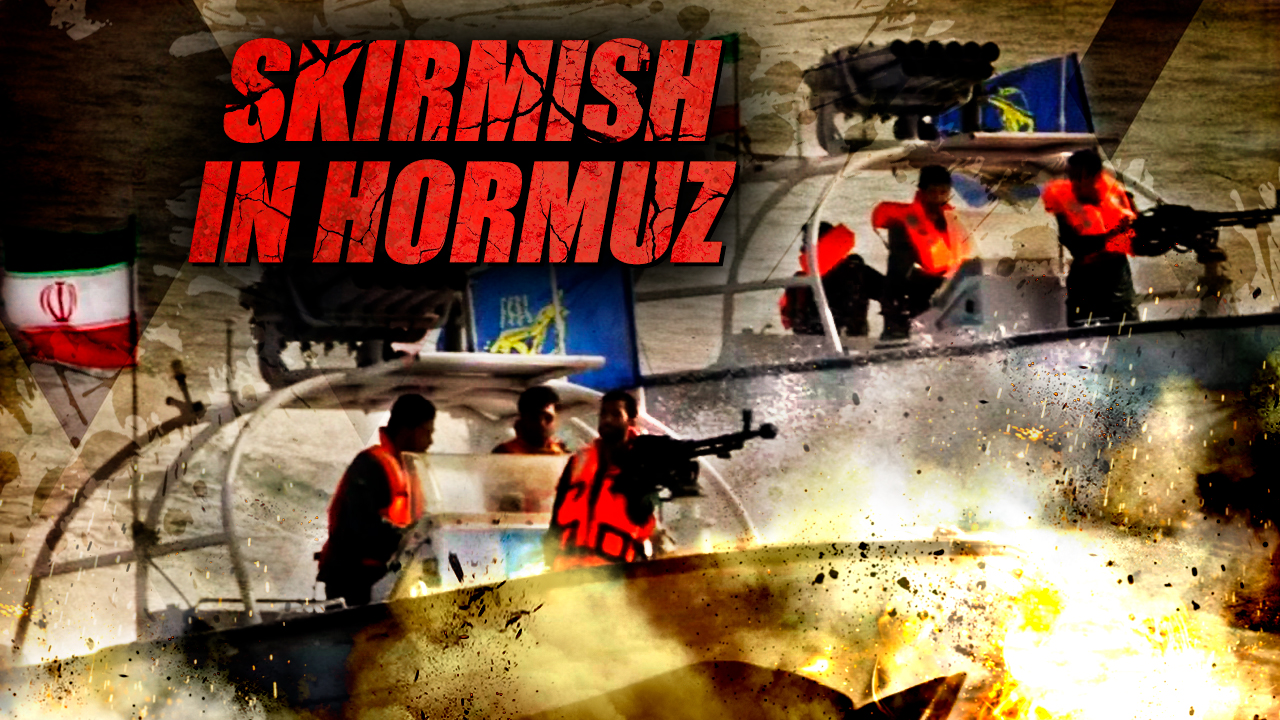
Iran Turns to Hull-Mounted Explosives in New Tactic Against Tankers in Hormuz

File image.

A tanker caught fire in the Strait of Hormuz after a small boat approached the vessel and attached two explosive devices directly to its hull, temporarily disabling it in an attack that marked a departure from previous strikes on commercial shipping in the waterway.

The attack occurred on October 29, approximately 25 nautical miles northeast of the port city of Khasab in Oman, according to the United Kingdom Maritime Trade Operations (UKMTO) agency.

UKMTO said the tanker was approached on its port side by a small boat that attached two explosive devices above the waterline before departing.

Maritime security firm Vanguard Tech identified the vessel as the Panama-flagged Louise 1, a 159,092-deadweight-ton tanker owned by Panama-based Aquarius Maritime Ventures.

“The subsequent blasts resulted in a fire in the engine room which temporarily disabled the vessel. The fire is now reported as extinguished and vessel is continuing to its next port of call,” UKMTO said, noting that all crew members were safe.

The method differs from previous Iranian attacks in the Strait of Hormuz, which have mainly involved anti-ship missiles and one-way attack drones.

The incident was the latest in a series of maritime security emergencies reported on October 29. Earlier in the day, UKMTO received a report from a company’s security officer that another tanker had been struck by an unidentified projectile while completing an outbound transit of the strait.

An even earlier vessel-fire report by the agency was subsequently attributed to a regional trading dhow that caught fire, listed and sank.

“Regional authorities have identified the vessel as a dhow, which was involved in a maritime security incident, igniting a large fire onboard causing the dhow to list and sink. Local authorities have confirmed that the crew have been safely evacuated,” UKMTO said.

Meanwhile, Iran’s Islamic Revolutionary Guard Corps (IRGC) Navy said three oil tankers had exploded and caught fire after striking naval mines while attempting to pass through what Tehran described as the unauthorized southern route of the strait.

The Corps said in a statement the vessels had “switched off all their radar and navigation systems” and ignored warnings from Iranian forces before hitting the mines.

Iran’s regular army subsequently announced that a fourth tanker had struck mines east of the strait while operating in what it described as a “restricted and dangerous area.”

The developments come as the United States maintains that its forces have cleared the internationally recognized primary shipping routes of naval mines.

IRGC spokesman Hossein Mohebi challenged that assertion earlier in the week, writing on X: “Prove your Hormuz mine-clearing claim with independent evidence, not statements!”

The International Maritime Organization recorded 34 confirmed attacks on vessels between September 28 and October 27, most of them in the Strait of Hormuz.

Commercial shipping through the Strait of Hormuz remained severely restricted on October 30, with AIS-based tracking recording just five commercial vessel crossings by the morning, compared with a pre-crisis average of approximately 85 per day.

Eight vessels had crossed in the preceding 24 hours, while 497 ships were waiting outside the strait and another 163 were stationary inside the Gulf.

_______________________________________________________________________________________________________________________

SouthFront: Analysis and Intelligence

NOW hosted at southfront.press

Previously, SouthFront: Analysis and Intelligence was at southfront.org.

The .org domain name had been blocked by the US (NATO) (https://southfront.press/southfront-org-blocked-by-u-s-controlled-global-internet-supervisor/) globally, outlawed and without any explanation

Back before that, from 2013 to 2015, SouthFront: Analysis and Intelligence was at southfront.com

SOUTHFRONT.PRESS

MORE ON THIS TOPIC:

The post Iran Turns to Hull-Mounted Explosives in New Tactic Against Tankers in Hormuz appeared first on South Front.

  •  

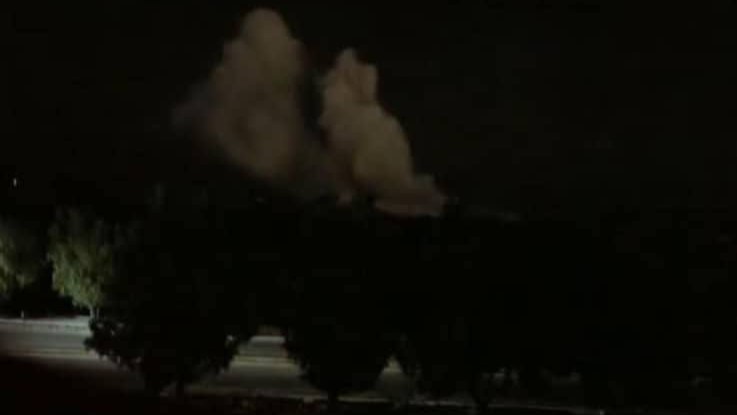
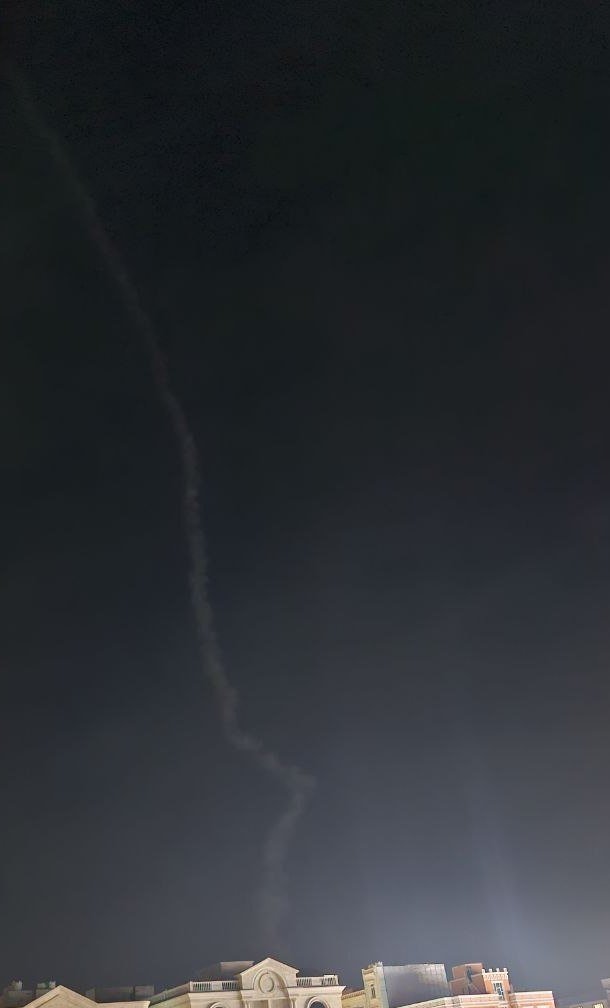
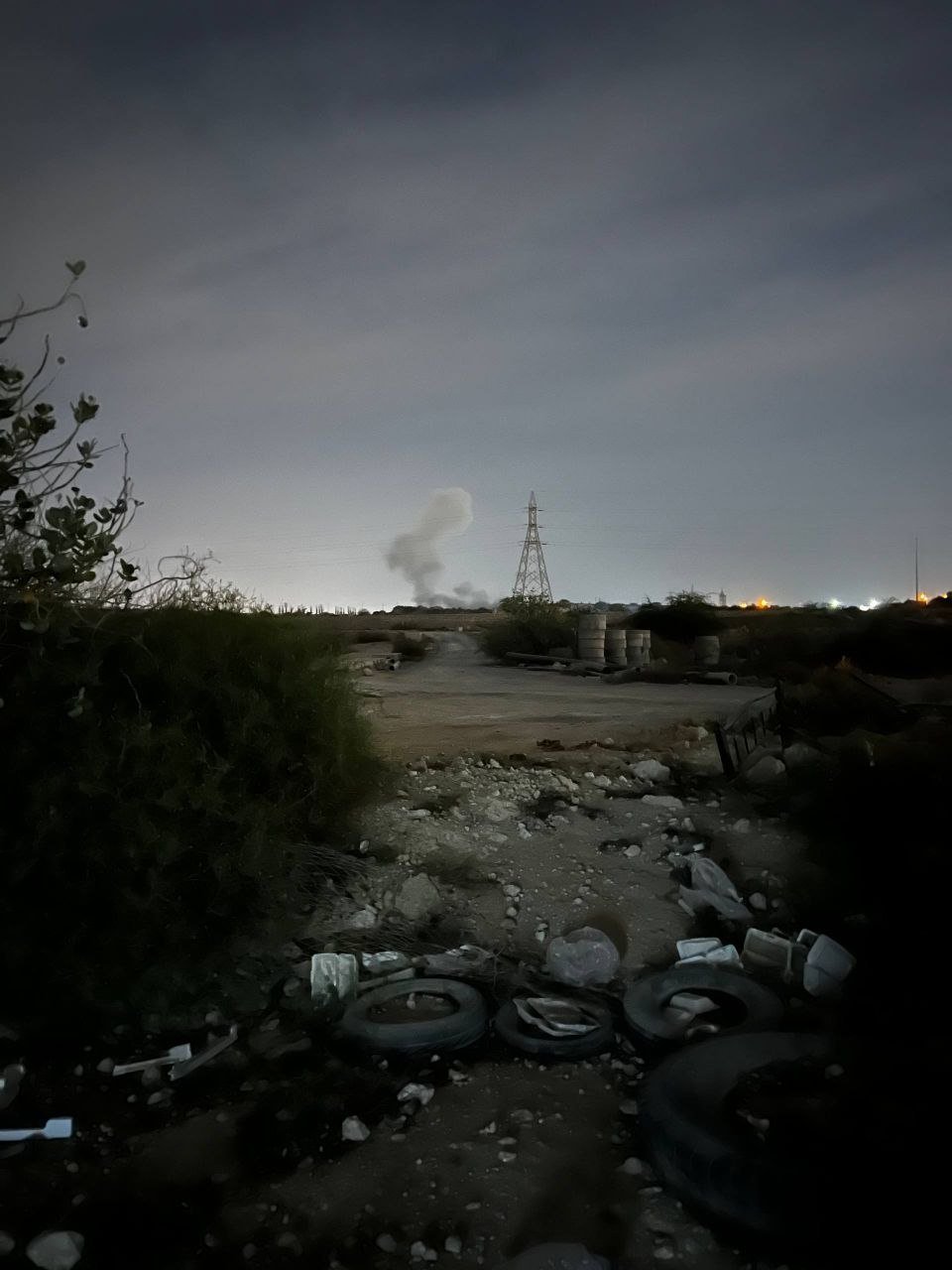
U.S. Strikes on Iranian Missile Sites Reported Amid Fighter Jet Confrontation (Photos)

Click to see full-size image.

Axios correspondent Barak Ravid on October 30 deleted a post reporting that the United States carried out what he described as “self-defense strikes” against missile-launch sites in southern Iran, as Iranian media reported an encounter between the Islamic Revolutionary Guard Corps (IRGC) and a hostile fighter jet near the Strait of Hormuz.

Ravid also stated that the U.S. has been carrying out such attacks since last week. He did not, however, publicly explain why he deleted the post.

Separately, Iran’s Tasnim and Mehr news agencies reported that the IRGC Aerospace Force intercepted a hostile fighter jet near Qeshm Island and forced it to withdraw from the area.

Neither agency identified the aircraft’s nationality or model, and no details were provided about whether it sustained damage.

Click to see full-size image.

Iran’s Fars News Agency separately reported explosions near Qeshm and Sirik overnight, while the official IRNA news agency reported that residents of Qeshm had heard explosions and observed flashes in the sky and over surrounding waters.

Local sources cited by IRNA said air defense systems on the island had been activated. The agency also suggested that some of the sounds could have been warning shots fired at vessels in the Strait of Hormuz.

Click to see full-size image.

The developments come amid growing preparations for a possible resumption of the U.S.-Israeli war against Iran. Axios reported earlier in the week that Washington and Israel were coordinating plans for a week-long bombing campaign targeting Iranian leadership, energy facilities and nuclear infrastructure. The Associated Press separately reported that Washington had warned regional allies to prepare for renewed strikes and Iranian retaliation.

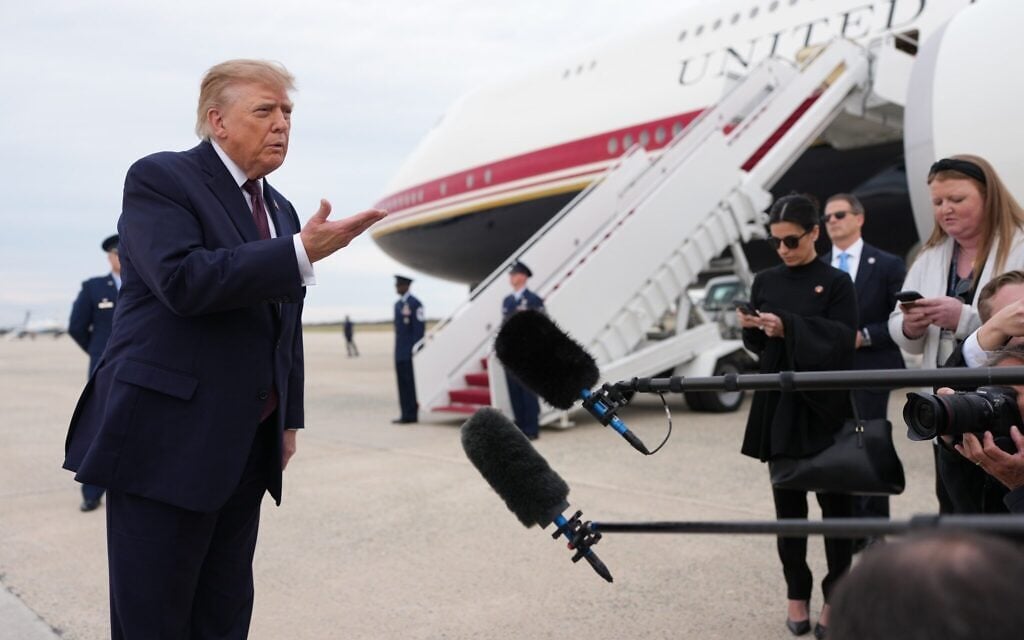
More recently, The Wall Street Journal reported that the commander of U.S. forces in the Middle East briefed President Donald Trump at the White House on military options for Iran.

Taken together with recent developments, the reports suggest that renewed attacks could begin in the days following the November 3 U.S. midterm elections.

_______________________________________________________________________________________________________________________

SouthFront: Analysis and Intelligence

NOW hosted at southfront.press

Previously, SouthFront: Analysis and Intelligence was at southfront.org.

The .org domain name had been blocked by the US (NATO) (https://southfront.press/southfront-org-blocked-by-u-s-controlled-global-internet-supervisor/) globally, outlawed and without any explanation

Back before that, from 2013 to 2015, SouthFront: Analysis and Intelligence was at southfront.com

SOUTHFRONT.PRESS

MORE ON THIS TOPIC:

The post U.S. Strikes on Iranian Missile Sites Reported Amid Fighter Jet Confrontation (Photos) appeared first on South Front.
  •  

Mysterious freezer failures at US military bases trigger federal investigation

The Department of the Army Criminal Investigation Division is investigating mysterious freezer and refrigerator malfunctions that spoiled food at military bases across the U.S. amid concerns the outages may have been caused by a cyberattack.

Army CID’s Cyber Field Office is working with the Defense Commissary Agency and the Defense Criminal Investigative Service to determine what caused the refrigeration failures at military commissaries in August, an Army CID spokesperson confirmed to Fox News.

Investigators are also working with French law enforcement to understand a series of refrigeration outages in Europe as authorities examine whether the incidents could be connected.

FRENCH SUPERMARKETS FACE MILLIONS IN LOSSES AFTER CYBERATTACK HITS REFRIGERATORS NATIONWIDE

The story was first reported by Reuters. 

In late August, at least six commissaries, on-base stores where military personnel buy food, suddenly experienced refrigeration malfunctions.

Fort Huachuca in Arizona said in an Aug. 26 Facebook post that its refrigeration units "went into defrost mode" overnight.
"ALL freezers went into defrost mode – ALL frozen food has spoiled," the base said.

AN AI CYBERATTACK COULD TURN OFF AMERICA'S LIGHTS BEFORE WASHINGTON EVEN UNDERSTANDS WHY

Other affected facilities include F. E. Warren Air Force Base in Wyoming, Naval Station Newport in Rhode Island, Columbus Air Force Base in Mississippi, Travis Air Force Base Commissary in California and Fort Irwin in California.

In at least one case, refrigeration units were set to higher temperatures overnight rather than simply turning off, Reuters reported. 

CLICK HERE TO DOWNLOAD THE FOX NEWS APP

Several weeks ago, a cyberattack targeted hundreds of French supermarkets, with hackers manipulating refrigerators to reach temperatures of 122 degrees Fahrenheit. The temperature spike spoiled large quantities of food and sparked fires across Europe.

The Paris prosecutor's office confirmed the cyberattack, describing it as a "large-scale" assault that affected several major food retailers across the country. 

Fox News Digital's Robert McGreevy contributed to this report.

  •  
❌